CV Tag: Bioinformatics

  • Funded Doctoral Positions at the International Max Planck Research School for Intelligent Systems (IMPRS-IS)

    Funded Doctoral Positions at the International Max Planck Research School for Intelligent Systems (IMPRS-IS)

    The school is a key element of to accelerate basic research and commercial development in artificial intelligence and robotics. IMPRS-IS seeks students who want to earn a doctorate while contributing to world-leading research in areas such as:

    • Artificial Intelligence

    • Biomedical Technology

    • Computational Cognitive Science

    • Computer Vision and Graphics

    • Control Systems and Optimization

    • Data Science and Visualization

    • Haptics and Human-Computer Interaction

    • Machine Learning

    • Micro- and Nano-Robotics

    • Natural Language Processing

    • Neuroscience

    • Perceptual Inference

    • Robotics and Human-Robot Interaction

    • Soft Robotics and Materials

    Renowned faculty include Sahar Abdelnabi, Rediet Abebe, Amirreza Aghakhani, Aamir Ahmad, Buse Aktaş, Frank Allgöwer, Maksym Andriushchenko, Kai Arras, Robert Bamler, Philipp Berens, Matthias Bethge, Michael J. Black, Wieland Brendel, Andrés Bruhn, Andreas Bulling, Martin Butz, Manfred Claassen, Maximilian Dax, Katharina Eggensperger, Benedikt Ehinger, Carsten Eickhoff, Andreas Geiger, Jonas Geiping, Antonia Georgopoulou, Martin A. Giese, Thilo Hagendorff, Moritz Hardt, Florian Hartmann, Daniel Häufle, Matthias Hein, Philipp Hennig, Niels Henze, Christian Holm, Andrea Iannelli, Christoph Keplinger, Mario Krenn, Katherine J. Kuchenbecker, Hilde Kuehne, Anja Lauer, Hendrik Lensch, Anna Levina, Shiwei Liu, Nicole Ludwig, Sabine Ludwigs, Jakob Macke, Georg Martius, Kristof Meding, Celestine Mendler-Dünner, Michael Mühlebach, Philipp Müller, Sven Nahnsen, Mathias Niepert, Seong Joon Oh, Antonio Orvieto, Aniket Pal, Nico Pfeifer, Gerard Pons-Moll, Michael Pradel, C. David Remy, Kerstin Ritter, Philipp Rothemund, Konstantin Rusch, Renate Sachse, Samira Samadi, Harry Scells, Dieter Schmalstieg, Syn Schmitt, Bernhard Schölkopf, Sabine Schulte im Walde, Janneke Schwaner, Michael Sedlmair, Thomas Speck, Steffen Staab, Ingo Steinwart, Alexander Verl, Claire Vernade, Ulrike von Luxburg, Daniel Weiskopf, Felix Wichmann, Bob Williamson, Andreas Wortmann, Thomas Wortmann, and Charley Wu.

    Associated faculty include R. Harald Baayen, Franz Baumdicker, Peter Dayan, Jonathan Fiene, Volker Franz, Ksenia Keplinger, Miriam Klopotek, Kay Nieselt, Senya Polikovsky, Peter Pott, Gunther Richter, Cornelia Sindermann, Maria Wirzberger, Isabell Wochner, and Thomas Wolfers.

    About the program:

    Intelligent systems that can successfully perceive, act, and learn in complex environments hold great potential for aiding society. The school seeks doctoral students who are curious, creative, and passionate about research to join and help advance human knowledge about intelligent systems.

    • Admitted students can join the program starting in 2026.

    • You will be mentored by an internationally renowned faculty.

    • You will register as a university doctoral student and conduct research.

    • IMPRS-IS offers a wide variety of scientific seminars, workshops, and social activities.

    • All aspects of the program are in English.

    • Your doctoral degree will be conferred when you successfully complete your doctoral project.

    • Dedicated staff members will assist you throughout your time as a doctoral student.

    IMPRS-IS is an equal opportunity employer dedicated to excellence through diversity and does not discriminate on the basis of age, race, sex, disability, sexual orientation, national origin, religion, marital status, gender identity, or any other non-job-related criteria. They believe in the importance of a multicultural community of students, faculty, and staff who seek to advance our commitment to diversity and inclusion. IMPRS-IS strives to create and maintain working and learning environments that are inclusive, equitable, and welcoming.

    Admission will be competitive. If selected, you will receive funding via an employment contract, subject to the rules of the Max Planck Society and the two participating universities.

    Application deadline: 

    November 16, 2025 (End of Day, AoE)

    Selection interviews: 

    February 5–13, 2026

    Apply now: 

    https://imprs.is.mpg.de/application

    For more information, please visit https://imprs.is.mpg.de.

  • Cyber Valley Research Fund drives advancements in soft robotics

    Cyber Valley Research Fund drives advancements in soft robotics

    Dr. Ardian Jusufi and his team researched innovative materials that improve proprioception (the body’s ability to sense movement and position) in unpredictable and irregular environments. Insights from the project have deepened understanding of how the body moves and interacts with its environment. These advancements in soft active materials and sensors will revolutionize the fields of biomedical devices and soft robotics.  

    Some of the project’s key achievements include:  

    • Enhanced pumping system performance: The project team improved a hydrogel-encapsulated soft actuator pumping system. The system demonstrated improved competitive pressure and fluid velocity performance, offering potential insights for cardiovascular and renal applications. 

    • Addressing sensor challenges: The project addressed the inherent trade-offs of soft sensors. While offering greater flexibility and sensitivity, these sensors often lack robustness, repeatability, linearity, and durability. Various use cases were evaluated to balance these trade-offs effectively. 

    • Innovative manufacturing and materials: The team developed advanced manufacturing techniques and synthesized new materials responsive to environmental stimuli, such as hydrodynamic pressure. This was relevant for studying locomotion, like the undulatory swimming of fish, using fluidic actuators. 

    • System integration with mobile soft actuators: Soft sensors were integrated with mobile soft fluidic actuators in robots. This integration provided valuable insights into the neuromechanics of movement, particularly in aquatic environments. 

    • Electroactive polymer-driven pumping systems: The team aimed to reduce the tissue stress associated with traditional implanted pumps. Although current limitations related to in-body electricity use means that these systems are not yet feasible for in vivo applications, the research marks significant progress in understanding the biomechanics of movement. 

    This project yielded the following publications:  

    1. Souri H, Banerjee H, Jusufi A, Radacsi N, Stokes A, Park I, Sitti M, Amjadi M. Advanced Int. Sys. 2 (8) 2000039. Wearable and Stretchable Strain Sensors: Materials, Sensing Mechanisms, and Applications. 2020. Advanced Intelligent Systems, Volume: 2, Issue: 8, 2020. DOI: https://doi.org/10.1002/aisy.202000039 
    2. Banerjee H, Kalairaj MS, Ren H, and Jusufi A*. Advanced Engineering Materials. Strong, Ultrastretchable Hydrogel-Based Multilayered Soft Actuator Composites Enhancing Biologically Inspired Pumping Systems. [Cover inside] Adv. Eng. Mater 2021, 23, 2100121. 
    3. Wright B, Vogt D, Wood R, Jusufi A*. IEEE International Conference on Soft Robotics (RoboSoft). Soft Sensors for Curvature Estimation under Water in a Soft Robotic Fish. COEX, Seoul, Korea, 2019.
    4. Siddall R, Fukushima T, Bardhi D, Perteshoni B, Morina A, Hasimja E, Dujaka Y, Haziri G, Martin L, Banerjee H, Jusufi A*. Advanced Robotics 35 (7). Compliance, Mass Distribution and Contact Forces in Cursorial and Scansorial Locomotion with Biorobotic Physical Models. 2021. https://www.tandfonline.com/doi/full/10.1080/01691864.2021.1887760.
    5. Fukushima Toshihiko, Robert Siddall,Fabian Schwab, Severine Toussaint, Greg Byrnes, John Nyakatura, and Ardian Jusufi. Inertial tail effects during righting of squirrels in unexpected falls: From behavior to robotics. Integrative and Comparative Biology, icab 023, 2021.
    6. Lin Yu-Hsiang, Siddall R, Schwab F, Fukushima T, Banerjee H, Youngjoon Baek, Daniel Vogt, Yong-Lae Park, and Jusufi A. Modeling and control of a soft robotic fish with integrated soft sensing. Advanced Intelligent Systems, 2000244, 2021.
    7. Fabian Schwab, Elias T Lunsford, Taehwa Hong, Fabian Wiesemüller, Kovac M, Park YL, Akanyeti O, Liao J C, and Jusufi A. Body caudal undulation measured by soft sensors and emulated by soft artificial muscles. Integrative and Comparative Biology, 2021.
    8. Fabian Schwab, Fabian Wiesemüller, Claudio Mucignat, Yong-Lae Park, Ivan Lunati,Mirko Kovac, and Ardian Jusufi. Undulatory swimming performance explored with a biorobotic fish and measured by soft sensors and particle image velocimetry. Frontiers in Robotics and AI, page 387, 2021.
    9. Robert Siddall, Greg Byrnes, Rob J. Full and Ardian Jusufi, Tails stabilize landing of gliding geckos crashing head-first into tree trunks', Communications Biology, 2021. 

    This research project primarily aimed to expand knowledge of biomechanics through robophysical models, rather than immediate practical applications. It started in April 2020 and concluded in February 2023. Dr. Ardian Jusufi was formerly a Max Planck Research Group Leader at the MPI for Intelligent Systems (March 2018–January 2024). He is now Head of Soft Kinetic group in the Engineering Sciences Department of the Empa Swiss Federal Labs for Materials Science and Technology. 

  • Science Hub Research Symposium 2024

    Science Hub Research Symposium 2024


    This two-day event will bring research communities together to highlight the latest innovations and breakthroughs. Attendees can look forward to keynote speeches, lightning talks, breakout sessions, and networking opportunities.


    What?

    The event will cover a range of topics, including:

    • Haptic intelligence and the simulation of clothing pressure fields
    • Physically plausible object pose refinement in cluttered scenes and insights into what foundation models know about 3D humans
    • Advances in machine learning, such as root cause analysis at Amazon, thermodynamics-guided techniques to improve aluminum recycling, and making time series classification more understandable using multiple instance learning
    • Cutting-edge research in document-level relation extraction and entity linking, deep selective state-space models, and improving decision-making with machine learning

    Further program information can be found here.


    When and where?

    On September 16th, the event will take place at MPI-IS Tübingen.

    On September 17th, the event will take place at Amazon Entwicklungszentrum in Tübingen.


    Registration

    Please RSVP through the event website.

  • Cyber Valley grants 500K to CELL’n’ROLL via 2023 Innovation Fellowship Program

    Cyber Valley grants 500K to CELL’n’ROLL via 2023 Innovation Fellowship Program

    CELL’n’ROLL aims to develop next-generation diagnostic solutions for detecting complex diseases such as cancer. Leveraging robotics, artificial intelligence, and microtechnology, the initiative aims to democratize access to these diagnostic tools worldwide. CELL’n’ROLL envisions a future where diagnostics are not only swift and precise but also accessible in resource-constrained settings by harnessing the power of robotics, artificial intelligence, and microfluidics. 

    The CELL’n’ROLL team consists of Postdoctoral Researchers Alp Can Karacakol, Erdost Yildiz, and the project leader Ugur Bozuyuk. As emerging scientific talents, the team comprises three scientists from the Max Planck Institute for Intelligent Systems, each with interdisciplinary expertise spanning medicine and engineering, and a collective experience exceeding three years of collaboration. Additionally, the team benefits from mentorship provided by international experts from academia and industry. 

    The Innovation Fellowship program will support their journey from outstanding research to practical application. The program’s aim is to bridge the gap between research and commercial application by fostering scientific breakthroughs that add value to science, economy, and society. The Innovation Fellowship program is funded by the Carl-Zeiss-Stiftung (CZS) and offers talented individuals or teams the opportunity to translate their research into tangible applications. With a duration of up to 24 months, researchers work on a project that is not yet commercially viable and requires time for further development and product transformation in a research environment. The program focuses on application-oriented research related to artificial intelligence and robotics. Its goal is to create an innovative spin-off from the project after the funding term has ended.  

    With its mission of creating “an open environment for scientific breakthroughs”, the Carl Zeiss Foundation is an essential Cyber Valley partner. The foundation aims to accompany the entrepreneurial path of young talent from research to application. It strives to achieve scientific breakthroughs that support research, the economy, and society through funding elementary research and specific applications.  

    The next Cyber Valley Innovation Fellowship call for proposals will be announced in April 2024. Scientists employed by the Max Planck Institute for Intelligent Systems, the University of Stuttgart, and the University of Tübingen are eligible to apply. All external scientists affiliated with these Institutes may also apply.  

    About Cyber Valley  

    Cyber Valley is Europe’s largest and leading center for excellence in artificial intelligence and modern robotics. Its mission and public mandate are to advocate for research, development, application, and acceptance of technologies and methods in the field of intelligent systems. Cyber Valley encourages entrepreneurship by uniting scientific excellence with innovation and technology transfer. In addition, Cyber Valley facilitates critical reflection on the ethical and social implications of AI through public engagement. Cyber Valley envisions a future in which the full potential of intelligent systems is leveraged for the greater good of the world. Cyber Valley GmbH, with locations in Stuttgart in Tübingen, is owned by the State of Baden-Württemberg and the Max Planck Society.  
     

    About the Carl-Zeiss-Stiftung  

    The Carl-Zeiss-Stiftung’s mission is to create an open environment for scientific breakthroughs. As a partner of excellence in science, it supports basic research as well as applied sciences in the STEM subject areas (science, technology, and mathematics). Founded in 1889 by the physicist and mathematician Ernst Abbe, the Carl-Zeiss-Stiftung is one of the oldest and biggest private science funding institutions in Germany. It is the sole owner of Carl Zeiss AG and SCHOTT AG. Its projects are financed from the dividend distributions of the two foundation companies.  

    About CELL’n’ROLL 

    CELL’n’ROLL, established two years ago, is driven by a team of three dedicated scientists with varied expertise, spanning engineering and medicine. Their collective passion lies in pioneering cutting-edge diagnostic systems for the detection of complex diseases, such as cancer. They envision a future where diagnostics are not only swift and precise but also accessible in resource-constrained settings by harnessing the power of robotics, artificial intelligence, and microfluidics. 

  • University of Stuttgart successful with cluster draft proposals

    University of Stuttgart successful with cluster draft proposals

    "The decision of the panel of experts offers us the opportunity to sharpen and further expand our excellent profile as an interdisciplinary university with great strength in research. We will seize this opportunity and use our cutting-edge research to make an even greater contribution to solving major global challenges," explains Prof. Wolfram Ressel, Rector of the University of Stuttgart. Ressel was delighted with the success of the cluster outlines, congratulated the scientists at the University of Stuttgart and their cooperation partners, and thanked everyone involved for their commitment. Initiatives for the clusters of excellence "Bionic Intelligence for Health" and "Chem4Quant" are eligible to apply.

    Bionic Intelligence for Health: New approaches to the therapy and diagnosis of neuronal diseases

    “The Bionic Intelligence for Health cluster project is searching for fundamentally new approaches to integrate technology and medicine in order to better diagnose and treat neuronal diseases. It thus addresses one of the greatest challenges facing our healthcare system and our society as a whole", says Wolfram Ressel.

    In the Bionic Intelligence for Health cluster project, an interdisciplinary research team is combining the neuronal and physical intelligence of the human body with a fundamentally new approach to intelligent technology. The aim is to better recognize neuronal diseases, treat them adaptively, and thereby improve the quality of life of those affected in their everday lives. To this end, innovative technical systems are to be intelligently integrated with the body. The cluster project is an initiative of the University of Stuttgart in cooperation with the University of Tübingen. The Max Planck Institute for Intelligent Systems in Stuttgart and Tübingen as well as the Max Planck Institute for Biological Cybernetics in Tübingen are involved as cooperation partners. The project builds on the complementary expertise of outstanding scientists from the fields of neuroscience, materials science, biomechanics and systems theory, among others. It benefits from the excellent Stuttgart-Tübingen ecosystem and has the potential to significantly reduce the social challenges posed by neuronal diseases.

    Chem4Quant: Chemical platform for high-precision quantum architectures

    "Quantum technology has the potential to revolutionize numerous applications, such as making communication secure or exponentially accelerating computing power. Our cluster initiative Chem4Quant researches novel quantum materials and structures and thus makes a fundamentally new contribution to achieving this goal”, says Wolfram Ressel.

    Researchers from the Karlsruhe Institute of Technology (KIT), the University of Ulm and the University of Stuttgart want to purposefully develop material structures for future quantum technologies in the joint Chem4Quant initiative. Despite the breakthroughs already achieved in quantum technologies, many of the platforms currently in use are limited in terms of scalability, adjustability, positionability, and error correction. Chem4Quant is therefore proposing a fundamentally new approach with a chemistry-based platform: Chemically, precisely-definable quantum architectures can be used to plan atomically accurate material structures and their quantum properties in a targeted manner. For example, qubits can be positioned in electrical or photonic components with a precision below the nanometer range. The initiative aims to develop novel qubit materials and create the first components for the future quantum internet. Chem4Quant can draw on globally unique expertise in the field of molecular quantum systems as well as established collaborations.

    Successful Clusters of Excellence apply for further funding period

    "Our already very successful Clusters of Excellence Integrative Computational Design and Construction for Architecture (IntCDC) and Data-integrated Simulation Science (SimTech) also stand for cutting-edge interdisciplinary research that uses fundamentally new investigative approaches and methods to advance solutions for social challenges," emphasizes Ressel.  For example, IntCDC is paving the way towards greater sustainability in the construction industry, and thus making a decisive contribution to the development of a climate- and environmentally-friendly society. With its innovative data-based simulation models, SimTech enables significant progress in the research, testing, and application of new technologies. Both Clusters of Excellence are now applying for a further funding period.

    IntCDC: Research for more sustainability in the construction industry

    Launched in 2019, the Integrative Computational Design and Construction for Architecture (IntCDC) cluster uses digital technologies to rethink planning and construction in an integrative and interdisciplinary approach, and thus enable greater sustainability in the construction industry. To this end, the University of Stuttgart and the Max Planck Institute for Intelligent Systems (MPI-IS) merge their internationally recognized research expertise. More than 150 scientists from the fields of architecture, computer science and robotics, engineering, production and systems technology as well as the humanities and social sciences are currently working together to modernize the construction sector. They are focusing on the co-design of integrative computer-based planning and construction methods, on cyber-physical manufacturing and construction processes, as well as on next-generation sustainable material and construction systems. In the second funding phase, the cluster aims to take up new initiatives and scientific challenges in order to lay the methodological foundations for sustainable architecture.

    SimTech: New simulation models for science and innovation

    Without simulations, advances in science and technological innovations for the benefit of society are not possible. Since 2019, researchers at the Cluster of Excellence Data-integrated Simulation Science (SimTech) have been working on new data-driven methods that go beyond improving the applicability and accuracy of simulation models. The systematic integration of data into simulation science is also changing the way science and technology are conducted. Developments include data-based representations of physical phenomena, new methods for designing and optimizing micro-materials, and data-based models for optimizing control processes and algorithms. Although we have already come a long way in data-integrated simulation science, there is still a great deal of untapped potential in dealing with knowledge and understanding. This untapped potential will be the focus of research in the next funding phase and will be systematically integrated into models, methods, and algorithms in the future in order to further promote our insights.

    Press contact

    Dr. Florian Krüger, University of Stuttgart, Head of University Communi­ca­tions, Phone: +49 711 685-82555.

    Dr. Jutta Witte, University of Stuttgart, University Communi­ca­tions, Phone: +49 711 685-82176.

  • Bionic Intelligence in Cyber Valley

    Bionic Intelligence in Cyber Valley

    The new Center for Bionic Intelligence Tübingen Stuttgart (BITS) aims to optimize the interaction between humans and technical systems in a fundamentally new way.

    Scientists from the University of Stuttgart, the University of Tübingen, the Max Planck Institute for Intelligent Systems and the Max Planck Institute for Biological Cybernetics are conducting research on intelligent bionic systems that will aid understanding and treatment of certain diseases of the central nervous system. Diagnoses will become more accurate, treatments more efficient and the illnesses more tolerable. Those affected by such disorders already use orthoses or communication aids. However, these systems cannot fully adapt themselves to the needs of the patient or the environment in order to fully compensate limitations or restore failed bodily functions. In interdisciplinary projects, BITS members develop individually tailored medical aids.

    Bionic systems can be found almost everywhere in everyday life: A Velcro fastener on a backpack is inspired by the burdock, suction cups are modeled on the form of an octopus tentacle. Both inventions are based on phenomena from the animal and plant world. Researchers at the University of Stuttgart, the University of Tübingen, the Max Planck Institute for Intelligent Systems and the Max Planck Institute for Biological Cybernetics are taking this one step further: Their vision is to optimize interaction between humans and technical systems so that, by using various signals and intelligent physical principles, the technical system is able to provide support when humans need it. The users are in control at all times.

    "We want to push the boundaries of what has been possible until now," says Professor Syn Schmitt, BITS spokesperson at the University of Stuttgart. "With bionic systems, such as novel robotic prostheses, we aim to create new intelligent diagnostic and treatment options that offer support in everyday life for patients with physical and neurological limitations."


    Diagnosis and treatment: Smart, flexible and ethical

    Technical assistance systems are already being used for therapeutic purposes, but they fall far short of the efficiency and flexibility that would be required to replace missing or impaired functions, or to support the diagnosis and treatment of complex mental disorders. The scientists of the newly founded BITS are jointly researching the development of bionic systems to adapt them to meet patients' individual needs, to compensate for impaired motor function in the everyday lives of those affected, and to support diagnostic and rehabilitation procedures. Social and ethical dimensions are considered from the very beginning.

    "The goal is to develop alternatives that work perfectly for individuals," adds Professor Martin Giese, BITS spokesperson at the University of Tübingen. "Forging efficient interactions between people and technology, requires not only optimal data and information processing, but also the exploitation of intelligent physical principles in people and the technical system." 

    The challenge here is to design technical components that interact with the nervous systems and muscular apparatus in a highly efficiently way and that adapt flexibly and individually to the patient's position. "To do this, we rely on functional materials that respond to different body-specific stimuli," adds Professor Sabine Ludwigs, also a BITS spokesperson at the University of Stuttgart.


    Interdisciplinary collaboration: From biomedicine to robotics and computer science

    The key to success is interdisciplinary cooperation between experts from different fields, such as biomedicine, neuromechanics, materials science, soft and biorobotics, physics, electrical engineering, social science, ethics, neuroscience, and computer science. "Each and every member of our team is an expert in their field," says Schmitt. "We try to transfer all this knowledge into workable solutions that allow people to interact with technical systems on multiple levels. We believe that affected individuals will benefit from such systems, and that science will gain a better understanding of humans."

    The research work within BITS encompasses everything from robotic orthoses that function as an everyday aid for people with muscle tremors, for example, to wearable sensors to improve diagnostics for obsessive-compulsive disorders, to so-called in-body micro- and nano-robots that can transport drugs specifically to the brain or enable new forms of brain stimulation. "At BITS, we want to build on previous successes and strengthen our collaborations to permanently establish intelligent systems in medicine, treatment and rehabilitation," emphasizes Giese. 


    About Cyber Valley

    Cyber Valley is Europe’s largest and leading research consortium in the field of artificial intelligence (AI) and modern robotics. It has a mission and a public mandate to advocate for entrepreneurship, research, development, application, and acceptance of technologies and methods in the field of intelligent systems. The company envisions a future where the full potential of intelligent systems is leveraged for the greater good of the world. 
    The Cyber Valley Community brings together partners from science, industry, and society, along with AI researchers and entrepreneurs. The Cyber Valley GmbH is funded by the state of Baden-Württemberg and acts as the central organizer, service provider, and host for the community. While the GmbH operates from Stuttgart and Tübingen, Cyber Valley has a larger scope: As a national and European driving force, it attracts the best people from all over the world to create the future with AI.


    About the Center for Bionic Intelligence Tübingen Stuttgart

    At the interdisciplinary research center BITS, approximately 50 scientists have been engaged in various projects since May 2023. BITS members bring together wide-ranging expertise from a variety of disciplines, including biomedicine, neuromechanics, materials science, soft and biorobotics, physics, electrical engineering, social science, ethics, neuroscience and computer science. The research work is intended to contribute to the technical implementation of bionic systems and help to establish these in the medical sector. This will significantly reduce the ever-increasing social burden of mental and neurological disorders, as well as individual suffering. To this end, BITS combines the complementary expertise of the Universities of Stuttgart and Tübingen and the Max Planck Institutes for Intelligent Systems and Biological Cybernetics. BITS is part of Cyber Valley, Europe's largest research consortium in robotics and artificial intelligence.

    Expert Contact

    • Prof. Dr. Syn Schmitt, University of Stuttgart, Institute for Modelling and Simulation of Biomechanical Systems
    • Prof. Sabine Ludwigs, University of Stuttgart, Institute of Polymer Chemistry
    • Prof. Martin Giese, University of Tübingen, Section for Computational Sensomotorics

    About Cyber Valley

    Cyber Valley is Europe’s largest and leading research consortium in the field of artificial intelligence (AI) and modern robotics. Cyber Valley has a public mandate: As advocates for entrepreneurship, research, development, application, and acceptance of technologies and methods in the field of intelligent systems are at the forefront. The company envisions a future where the full potential of intelligent systems is leveraged for the greater good of the world.  

  • Using Deep Learning to make Better Models of the Brain

    Using Deep Learning to make Better Models of the Brain

    The brain of Drosophila, which is one of the best known model organisms in biology, is interesting to both neuroscientists and computer scientists for several reasons. “Fruit flies only have tiny brains in comparison to mammals,” explains Macke, “Nevertheless, these animals have astonishing capabilities, such as highly precise control of their flight. They can use landmarks to orient themselves and respond rapidly when predators approach.” Despite its massive capacity, the brain of Drosophila only uses nanowatts of energy, making it far more energy-efficient than any computer.

    In recent decades biological research has succeeded in analyzing the brain of the fruit fly at a high level of detail. “We now have access to the brain’s circuitry, but until now we haven’t been able to build any models that can solve tasks which are as challenging as those solved by real Drosophila brains.” Meanwhile, recent advances in Deep Learning have made it possible to create artificial neuronal networks that can carry out extremely complicated calculations. However, these artificial networks have become very different in architecture and functioning to biological ones.

    “We want to bring these two worlds back together,” explains the AI researcher, “Our goal now is to create artificial neuronal networks that, in composition and structure, are similar to the brain of fruit flies, but at the same time can perform similarly complex computations.” This requires innovative machine learning methods, which will be developed and applied in the project, in close cooperation with Srinivas Turaga from the Janelia Research Campus in Ashburn, Virginia, and other researchers. Such methods could also be used for neuroscientific research into animals with more complex brains, such as fish or mammals.  
     

    About

    Dr. Jakob Macke (born 1982) has been appointed to the professorship for Machine Learning in Science at the Faculty of Mathematics and Natural Sciences at the University of Tübingen. This professorship was established in the Cluster of Excellence “Machine Learning – New Perspectives for the Sciences” as of the summer semester 2020. Macke is also a member of the Tübingen AI Center, which is funded by the federal government, and is speaker of the “Bernstein Center for Computational Neuroscience Tübingen”. 

    More Information

  • Accident or murder?

    Accident or murder?

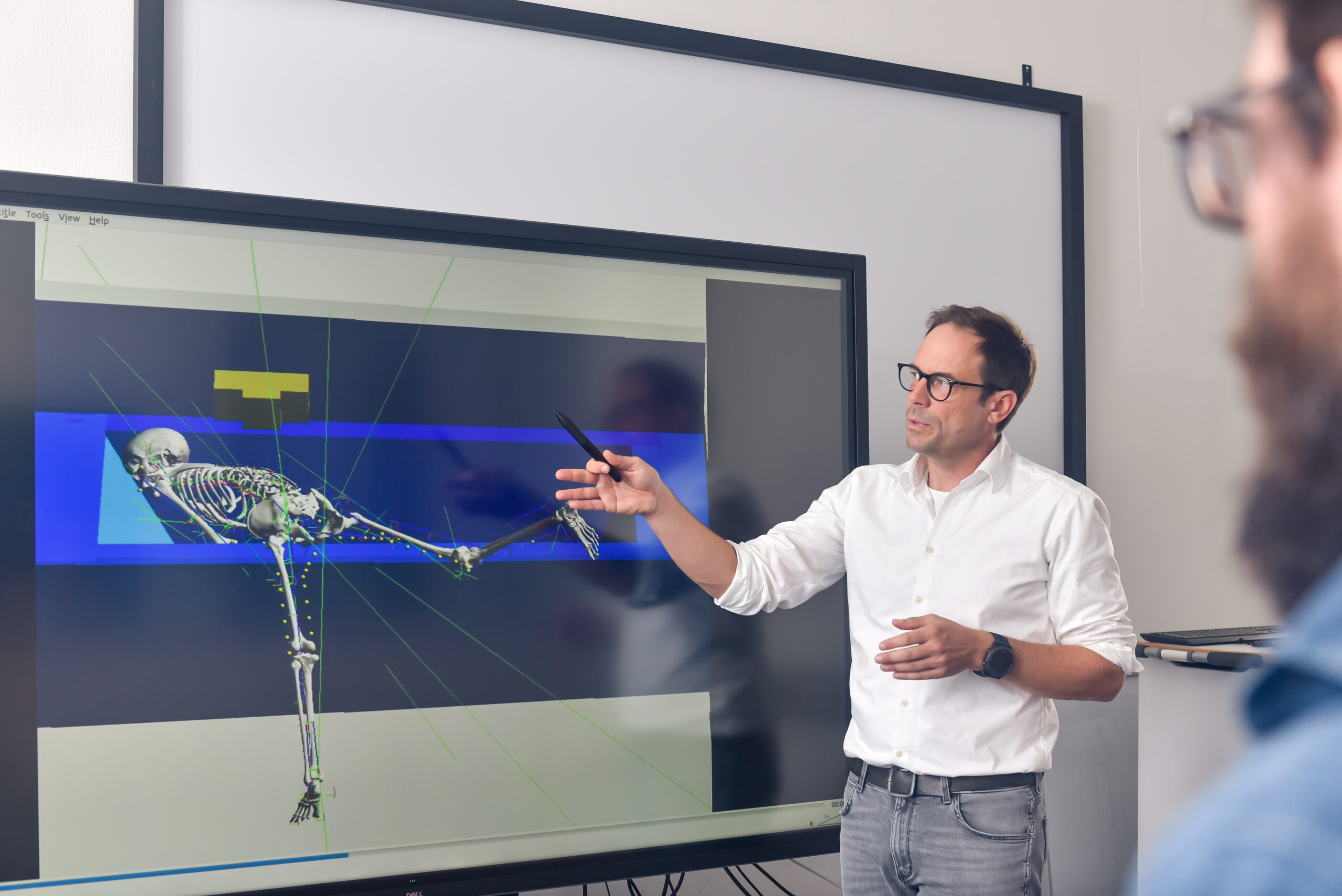
    The new, computer-aided biomechanical simulation method, which came into play in the expert opinion and was one of the main reasons why the investigation was reopened, was developed by a team of scientists under the leadership of Prof. Syn Schmitt. The Doctor of Physics is one of the heads of the Institute for Modeling and Simulation of Biomechanical Systems and is doing research in the SimTech Cluster of Excellence at the University of Stuttgart. He is concerned with autonomous, muscle-driven systems. For example, he uses simulations to reproduce human movement patterns. Depending on how heavy, how tall, or how old the model person is, different movement patterns are computed and a “digital human model” is created. In order to check whether the corresponding calculations are correct, the team feeds the data into robotic systems and thus verifies that the computed and simulated movements could take place in reality.

    How did the conviction come about?

    The case is as follows: 87-year-old Lieselotte Kortüm was found dead in her bathtub, which was filled with water. She had two hematomas on the back of her head. At the time, there were several indications that it was an accident, such as the woman’s age and a pre-existing condition that often leads to falls. However, the judges and the forensic medical expert at the time ruled out the possibility that the hematomas could have been caused by a fall. They also said that the position in which the body was found could not be explained by a fall without external influence. The caretaker Manfred Genditzki, who helped Kortüm and other residents with their daily chores, was the last person to enter the apartment. Embezzlement, the initially assumed motive, had to be discarded later. Instead, it was assumed that there had been an argument. This is how the caretaker was finally convicted as a murderer. Genditzki has been in prison for 13 years. He never confessed to the crime, but repeatedly protested his innocence.

    Biomechanical simulation is recognized as a forensic expert report

    After four years of imprisonment, attorney Regina Rick took over the defense of Genditzki. In order to get the case reopened, she commissioned Prof. Syn Schmitt, among others, to provide an expert opinion. Already during the appeal in 2011, Schmitt was requested as an expert by the defense attorney at the time. Back then, however, he was still at the beginning of his research. Today, the method developed by the Stuttgart scientists is recognized by the Higher Regional Court in Munich and, for this case, is used for a forensic expert opinion for the first time.

    In August 2022, the Higher Regional Court in Munich decided that the reopening of the case is justified and that a new main trial must take place. Genditzki, convicted of murder and imprisoned for 13 years, was released immediately – which was a sensation. The main reason given for ordering the reopening was the change in the evidence due to the biomechanical expert report by Schmitt and the thermodynamic expert report by Prof. Niels Hansen, Deputy Head of the Institute of Thermodynamics and Thermal Process Engineering at the University of Stuttgart as well as a new witness statement. Based on the thermodynamic expert report medical examiner Prof. Gita Mall was able to narrow down the time of death.

    The expert opinions from the two scientists of the University of Stuttgart are an important basis for the reopening of the case

    Using the biological data of the deceased woman, such as height, weight, the specific weight distribution in elderly people, and bone lengths, Schmitt’s team created a person-specific model. Schmitt and his team then started from an initial state: the person-specific model of Ms. Kortüm in front of the bathtub filled with water. The aim was to reconstruct the incident. Based on the assumed initial situation, can the simulation represent the final state found? The final state – that is the body lying in the bathtub, the two hematomas as well as the shoes and the cane of the dead woman in front of the bathtub. “In principle, the circumstances surrounding the case are not important for our work. We are only interested in whether the final state can be reached naturally, that is without external influence, from the assumed initial position. We want to find the truth,” Schmitt points out. “Using our method, we are able to determine, objectively and transparently, which movements are possible depending on the laws of physics.” This is exactly what is important for solving the case.

    The simulation clearly supports the view that it may have been an accident

    The scientists conducted numerous simulations of the incident. “Simulation is also a question of probability,” Schmitt explains. All simulations lead to the same result: They show that a fall without external influence is probable. Thus, the simulation clearly supports the view that the incident may have been an accident.

    The thermodynamic expert report allows conclusions to be drawn about the time of death

    The Stuttgart scientist Prof. Niels Hansen was able to narrow down the approximate water temperature at the time the body was found. This allows conclusions to be drawn about how long the body had been in the water and thus about the time of death. The expert opinion of medical examiner Gita Mall, which is based on Hansen’s investigations, suggests a time of death that lies considerably outside the time window assumed by the trial court.

    One of the most famous criminal cases of the past 15 years is reopened and scientists from the SimTech Cluster of Excellence at the University of Stuttgart provided the essential prerequisites.


    About Syn Schmitt

    What does the simulation scientist do when he isn’t working on an expert report for a murder trial? He’s working at the Institute for Modeling and Simulation of Biomechanical Systems and in the SimTech Cluster of Excellence at the University of Stuttgart as part of an interdisciplinary team of 20 scientists from the fields of simulation science, physics, mechanical engineering, and medical engineering. The team is concerned with computer-aided biophysics and biorobotics. “We’re trying to understand the movement patterns of humans or animals. Our language is mathematics and we use it to describe the models,” Schmitt explains. The scientists are also working in close cooperation with the Hertie Institute for Clinical Brain Research at the University Hospital Tübingen and with the Spine Center at the Diakonie-Klinikum hospital in Stuttgart. The research findings could be used in future for the development of prostheses or orthoses and for robotics. The simulation scientist is also involved in research on Artificial Intelligence and modern robotics at Cyber Valley.

    Many other unfamiliar activities are associated with his role as an expert witness in a murder trial. He was in contact with the Ministry of Justice, especially in connection with the recognition of the simulation method as legal evidence. He also has to face questions from the media.

    What does he think about the case? “I separate the emotional side from the professional task. That’s really important to me. Dealing with this case for about five years has advanced our research. We took an even closer look and it was demonstrated that medical examiners and simulation scientists can work well together.” Syn Schmitt would be pleased if the method also found its way into the training of forensic pathologists or into examination laboratories: “It can support traditional forensic medicine, especially in the reconstruction of falls.”

    About Niels Hansen

    Prof. Niels Hansen is the Deputy Head of the Institute of Thermodynamics and Thermal Process Engineering (ITT) at the University of Stuttgart. The ITT presents the fields of thermodynamics and thermal process engineering in research and teaching. It is an important link between the engineering sciences and the natural sciences. Thermodynamics is a basic discipline in the natural and engineering sciences. It deals with the various manifestations of energy and their conversion into each other.

    Hansen conducts research on molecular models, which he uses to make predictions of macroscopic thermodynamic properties. In addition to quantitative predictions, molecular-simulation methods also allow a molecular interpretation of physical processes that often cannot be made visible by measurements. The ITT is involved in several interdisciplinary research networks, such as the Collaborative Research Centers “Interface-Driven Multi-Field Processes in Porous Media – Flow, Transport and Deformation” and “Molecular Heterogeneous Catalysis in Confined Geometries” as well as the SimTech Cluster of Excellence.

  • ERC Starting Grant for Philipp Berens

    ERC Starting Grant for Philipp Berens

    Vision is one of the most important senses for many animals as well as for humans. However, the retina of the eye, which is also called the retina, has not been fully explored to date. The amacrine cells in particular still puzzle researchers. These special nerve cells are cross-connected with the other nerve cell layers of the retina and form the main class of inhibitory cells. More than 60 types of amacrine cells are now known from the mouse retina – they differ, for example, in their appearance, function and circuitry. They are particularly challenging for modeling because their activity is difficult to measure and their function can only be inferred from their interconnection in the network.
     
    To better understand their role, Philipp Berens and his team are developing a new type of model in their ERC project “Next generation mechanistic models of retinal interneurons” (NextMechMod). Models have always played an important role in the history of research on information processing in the nervous system. Alan Lloyd Hodgkin and Andrew Fielding Huxley received the Nobel Prize in Medicine in 1963 for their biophysical model of ionic currents during excitation and inhibition at the nerve cell membrane, presented in 1952. This model, while very detailed, is difficult to fit to measured data. This is easier for statistical models, but these lack the relationship to biological reality.
     
    To capitalize on their respective strengths, Berens aims to develop a new generation of hybrid mechanistic model that combines the different model levels. To do this, he is taking advantage of the latest advances in machine learning and “computational neuroscience”. His team is working closely with collaborators to make the models realistic with data obtained from imaging techniques and with methods from genetics. In doing so, he hopes to develop a toolbox to decipher the role of amacrine cells during the natural processing of visual information. A better understanding of the functions of the healthy eye can form the basis for new therapies for eye diseases.
     
    Philipp Berens studied bioinformatics and philosophy at the University of Tübingen, where he also received his PhD in 2013. After spending time as a postdoctoral researcher at the Bernstein Center for Computational Neuroscience, he joined the Tübingen Institute for Ophthalmic Research as a research group leader in 2016. There, he was appointed in 2018 to a Heisenberg Professorship for “Data Science for Vision Research” funded by the German Research Foundation. Together with Professor Ulrike von Luxburg, Philipp Berens heads the Cluster of Excellence “Machine Learning: New Perspectives for Science”. He is a member of the Tübingen AI Center.