CV Tag: Deep Learning

  • 18th European Workshop on Reinforcement Learning (EWRL 2025)

    18th European Workshop on Reinforcement Learning (EWRL 2025)


    What?

    The 2025 edition of EWRL will be an exciting event for researchers worldwide, both for the presentation of top-quality papers, but also as a forum for ample discussion of open problems and future research directions.

    Past editions of EWRL can be found here.

    Reinforcement learning is an active field of research which deals with the problem of sequential decision making in unknown (and often) stochastic and/or partially observable environments. Recently there has been a wealth of impressive empirical results, including those coupling Deep Learning function approximators with Reinforcement Learning algorithms, as well as significant theoretical advances. Both types of advances are of major importance and the conference aims to create a forum to discuss such interesting results, their applications, consequences, and research perspectives. 


    When?

    September 17th–19th, 2025


    Where?

    EWRL18 will be located in the historical University of Tübingen, Germany. Tübingen is a lovely, vibrant university town in southern Germany, known for its rich history and scenic streets. Check out tourist information here!


    Call for papers

    The organizing committee invites submissions to the 18th European Workshop on Reinforcement Learning (EWRL 2025). There will be no proceedings for EWRL 2025. Papers may be submitted to one of two tracks:

    Regular track: unpublished work. Papers submitted to this track are unpublished, though they may be concurrently under review at another venue. These papers will be subjected to the full review process.

    Fast track: published work. Papers that are already accepted at one of the venues listed below may be submitted to this track. They will not receive new reviews, but will be checked for relevance to the topics of interest to EWRL.
    Submissions are handled through OpenReview. Submitted papers will be reviewed by the program committee in a double-blind procedure. Final decisions will be taken by the program chairs based on the reviews. There will be no author/reviewer discussion phase. Only accepted papers will be publicly released, while rejected or withdrawn manuscripts will be kept confidential.

    Submitted papers should follow the EWRL template linked below. There is a limit of 9 pages, excluding references and appendix. Authors of accepted papers will be allowed an additional page to prepare the camera-ready version. There is no page limit for the fast track. All accepted papers will be presented as posters.

    For any questions, please contact the organizers at ewrl2025@gmail.com.


    Fast track instructions

    For submission to the fast track, the selection committee will consider papers accepted at the following venues: NeurIPS, ICML, ICLR, RLC, AAAI, IJCAI, AISTATS, COLT, UAI, ALT, ICRA, IROS, CoRL, RAL, TMLR, JMLR, ECAI. If you want to submit a paper that was accepted at a different archival venue and you believe that this venue should be included in the list above, please let the conference organizers know. In the submission process, you will be required to provide a link to the online proceedings page showing your accepted article. If your paper is accepted but not yet published online, please send the acceptance confirmation to ewrl2025@gmail.com.


    Info

    Paper submission opens: April 23rd
    Paper deadline: May 30th June 3rd (11:59pm AOE)
    Notification of acceptance: July 31st July 16th
    Page limit – doesn’t apply to fast track: 9 pages excluding references and appendix (+1 page for final version)
    Paper format: Download
    Paper submissions: via Openreview


    Call for Contributed Talks

    In an effort to bring novel and diverse viewpoints to EWRL this year’s workshop has a special call for contributed talks. Early-career researchers are invited to submit proposals for an invited talk at EWRL 2025. Accepted authors will be given a 15-minute time slot for their presentation at the workshop.

    The content of talks should relate to or be on topics in the area of reinforcement learning. If your talk is on a paper you submitted to the main track of EWRL, you can reference it in your proposal.


    Submission guidelines

    Submit one pdf document (see template here) including:

    Abstract of your talk: 1-2 pages. This should include a preliminary title and abstract, a short description of the content, and a brief description of the anticipated outcome of your talk (e.g. increase awareness of an open problem, presenting new/emerging results, call-to-action etc.)
    A brief CV (see template) indicating your current and past positions, and a short list of related contributions to the topic of your talk. Do not include any metrics such as: Number of papers, citations, impact factors etc. (See also the section Special Review Criteria below)


    Special Review Criteria

    The speaker/author must be an early-career researcher: You are currently enrolled in a PhD program, or are a postdoctoral researcher who has received their PhD within the last three years (Researchers at Assistant Professor level are eligible if they started their position at most three years ago).
    For the evaluation of your submission, the selection committee will adhere to the principles laid out in the San Francisco Declaration on Research Assessment: They will review your submission based on its (scientific) content, and not on reputation or publication metrics.


    Info

    Talk submission deadline: June 15th
    Notification of acceptance: July 9th July 17th
    Talk submissions: via Openreview
  • Using Deep Learning to make Better Models of the Brain

    Using Deep Learning to make Better Models of the Brain

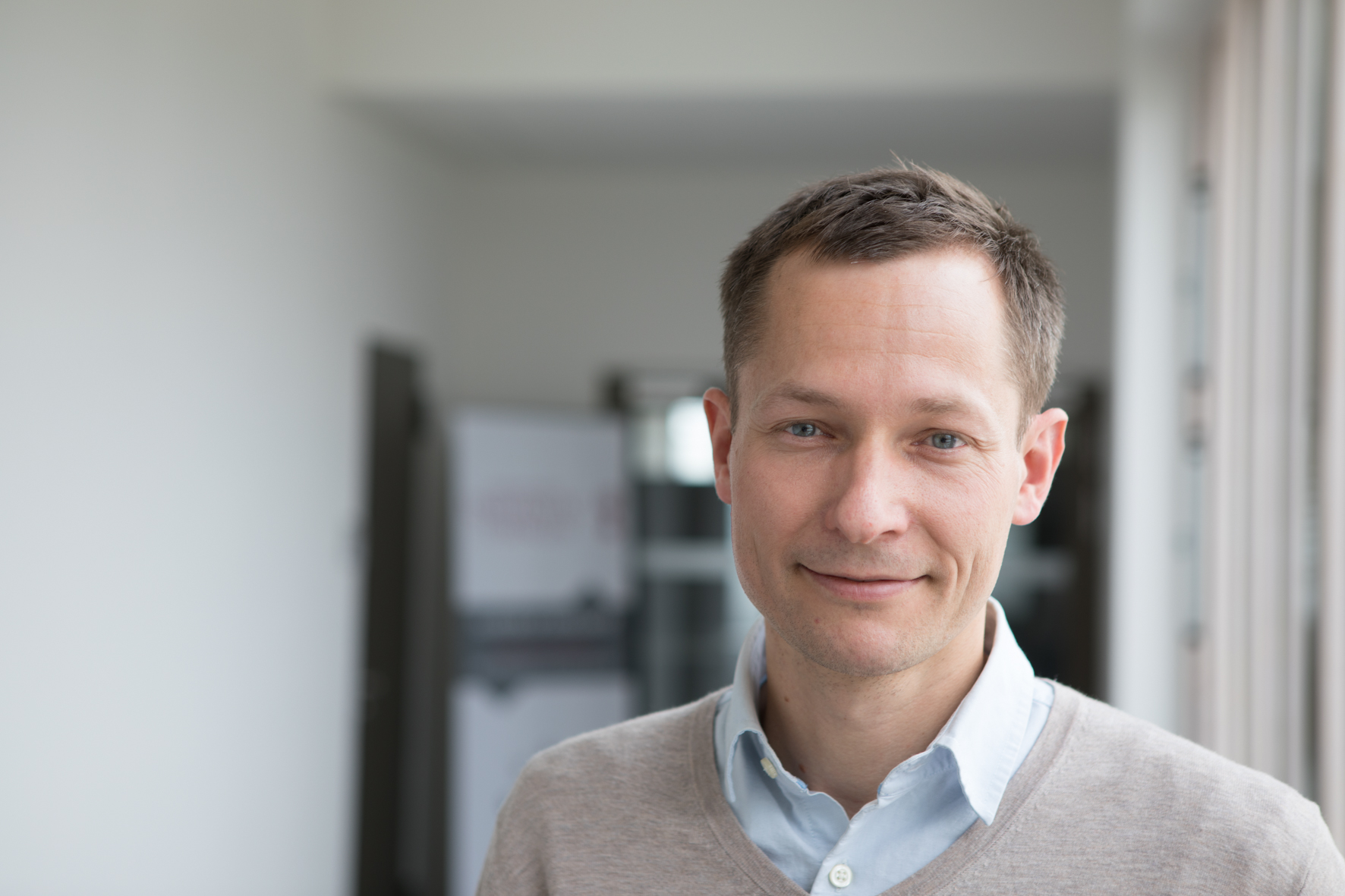
    The brain of Drosophila, which is one of the best known model organisms in biology, is interesting to both neuroscientists and computer scientists for several reasons. “Fruit flies only have tiny brains in comparison to mammals,” explains Macke, “Nevertheless, these animals have astonishing capabilities, such as highly precise control of their flight. They can use landmarks to orient themselves and respond rapidly when predators approach.” Despite its massive capacity, the brain of Drosophila only uses nanowatts of energy, making it far more energy-efficient than any computer.

    In recent decades biological research has succeeded in analyzing the brain of the fruit fly at a high level of detail. “We now have access to the brain’s circuitry, but until now we haven’t been able to build any models that can solve tasks which are as challenging as those solved by real Drosophila brains.” Meanwhile, recent advances in Deep Learning have made it possible to create artificial neuronal networks that can carry out extremely complicated calculations. However, these artificial networks have become very different in architecture and functioning to biological ones.

    “We want to bring these two worlds back together,” explains the AI researcher, “Our goal now is to create artificial neuronal networks that, in composition and structure, are similar to the brain of fruit flies, but at the same time can perform similarly complex computations.” This requires innovative machine learning methods, which will be developed and applied in the project, in close cooperation with Srinivas Turaga from the Janelia Research Campus in Ashburn, Virginia, and other researchers. Such methods could also be used for neuroscientific research into animals with more complex brains, such as fish or mammals.  
     

    About

    Dr. Jakob Macke (born 1982) has been appointed to the professorship for Machine Learning in Science at the Faculty of Mathematics and Natural Sciences at the University of Tübingen. This professorship was established in the Cluster of Excellence “Machine Learning – New Perspectives for the Sciences” as of the summer semester 2020. Macke is also a member of the Tübingen AI Center, which is funded by the federal government, and is speaker of the “Bernstein Center for Computational Neuroscience Tübingen”. 

    More Information

  • Machine Learning for Covid-19 Risk Awareness from Contact Tracing – Max Planck Lecture

    Machine Learning for Covid-19 Risk Awareness from Contact Tracing – Max Planck Lecture

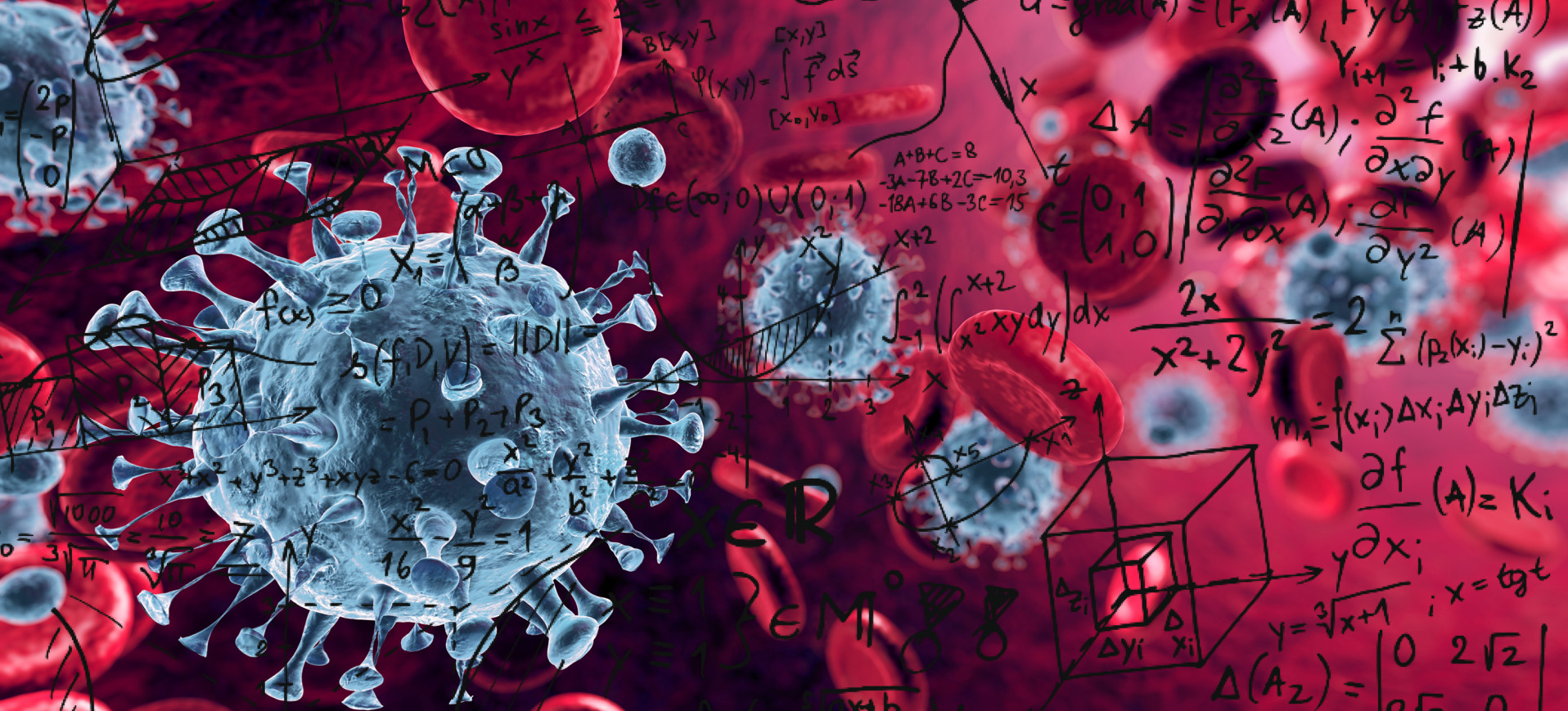
    The Covid-19 pandemic has spread rapidly worldwide, overwhelming manual contact tracing in many countries, resulting in widespread lockdowns for emergency containment. Large-scale digital contact tracing (DCT) has emerged as a potential solution to resume economic and social activity without triggering a second outbreak. Various DCT methods have been proposed, each making trade-offs between privacy, mobility restriction, and public health. Many approaches model infection and encounters as binary events. With such approaches, called binary contact tracing, once a case is confirmed by a positive lab test result, it is propagated to people who were contacts of the infected person, typically recommending that these individuals should self-quarantine. This approach ignores the inherent uncertainty in contacts and the infection process, which could be used to tailor messaging to high-risk individuals, and prompt proactive testing or earlier self-quarantine. It also does not make use of observations such as symptoms or pre-existing medical conditions, which could be used to make more accurate risk predictions. Methods which may use such information have been proposed, but these typically require access to the graph of social interactions and/or centralization of sensitive personal data, which is incompatible with reasonable privacy and security constraints. We use an agent-based epidemiological simulation to develop and test ML methods that can be deployed to a smartphone to locally predict an individual's risk of infection from their contact history and other information, while respecting strong privacy and security constraints. We use this risk score to provide personalized recommendations to the user via an app, an approach we call probabilistic risk awareness (PRA). We show that PRA can significantly reduce spread of the disease compared to other methods, for equivalent average mobility and realistic assumptions about app adoption, and thereby save lives.


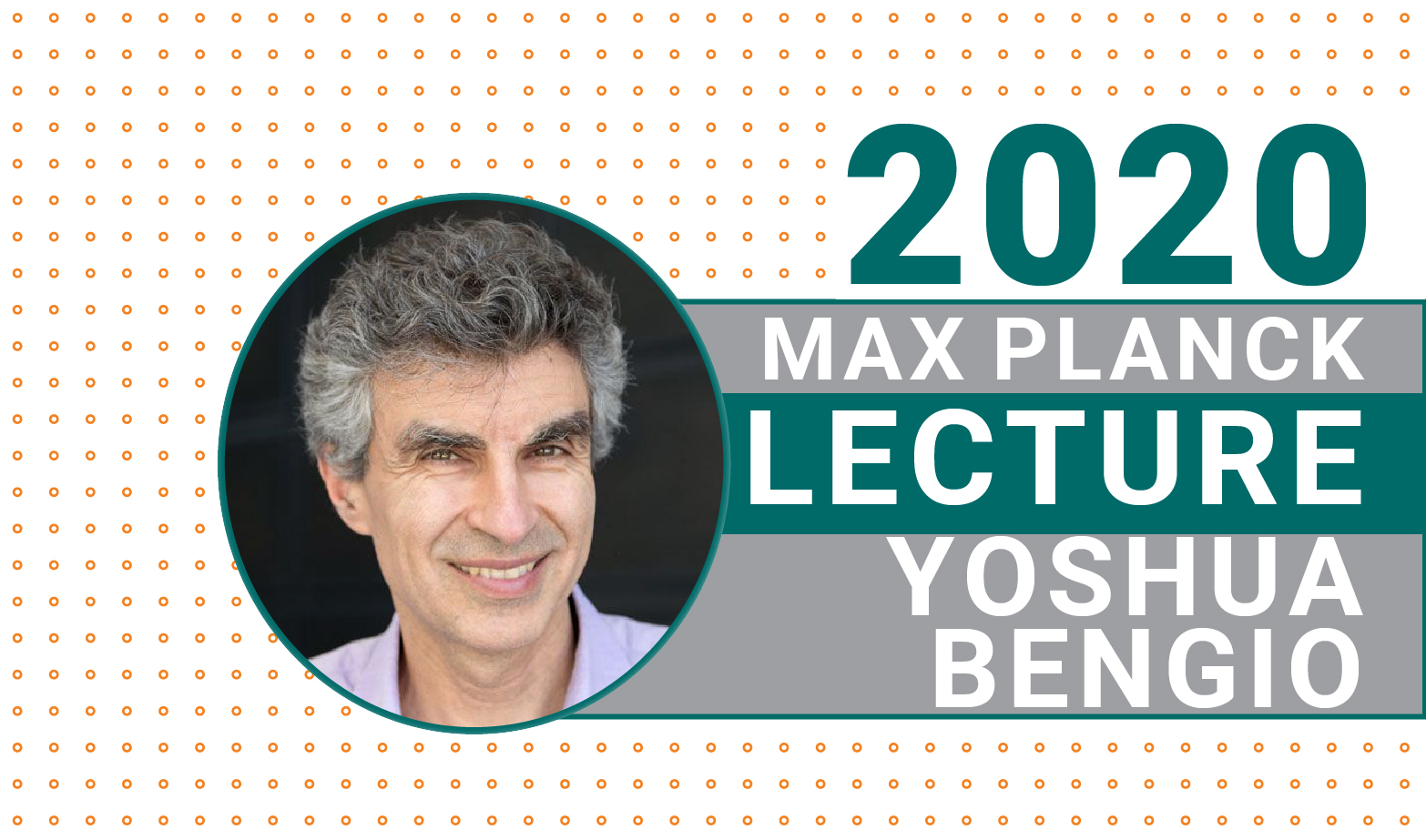
    As you may have read on Twitter, Professor Geoffrey Hinton has decided to cancel his talk at the 2020 Max Planck Lecture for scientific reasons. While we are very sorry that Professor Hinton will not be able to speak, we are pleased to announce that one of his fellow Alan Turing Award recipients has generously offered to hold the lecture. 


    Live transmission will take place on the event website on the day of the talk at 5:30 pm CEST.


    Biography: 

    Yoshua Bengio is recognized as one of the world’s leading experts in artificial intelligence and a pioneer in deep learning. Since 1993, he has been a professor in the Department of Computer Science and Operational Research at the Université de Montréal. He is the founder and scientific director of Mila, the Quebec Institute of Artificial Intelligence, the world’s largest university-based research group in deep learning. He is a member of the NeurIPS board and co-founder and general chair for the ICLR conference, as well as program director of the CIFAR program on Learning in Machines and Brains.In 2018, Yoshua Bengio ranked as the computer scientist with the most new citations, worldwide, thanks to his many publications. In 2019, he received the ACM A.M. Turing Award, “the Nobel Prize of Computing”, jointly with Geoffrey Hinton and Yann LeCun for conceptual and engineering breakthroughs that have made deep neural networks a critical component of computing. In 2020 he was nominated Fellow of the Royal Society of London.


    About the Max Planck Lecture

    In the past, Max Planck Lecture was hosted by Stuttgart’s Max Planck institutes, the Max Planck Institute for Intelligent Systems (MPI-IS) and the Max Planck Institute for Solid State Research (MPI-FKF). Since 2003, these two institutes have alternately organized the Max Planck Lecture once per year. 

    The Max Planck Lecture is given by outstanding scientists and leaders who are internationally recognized in their field. MPI-IS is delighted to announce that our 2020 speaker is Professor Yoshua Bengio from Université de Montréal.

    Max Planck Lectures are designed to be accessible to a wide audience including scientists, industry practitioners, government decision makers, and the general public interested in science and technology.

    Previous Max Planck Lectures.


  • ELLIS against Covid-19

    ELLIS against Covid-19

    Agenda

    * Speakers and talk titles are subject to change

    * All times in Central European Summer Time (CEST)

    Time Session
    1:30pm 1:35pm

    Introduction

    • Sepp Hochreiter
    1:35pm – 2:20pm

    Epidemiology & modeling

    • Peter Grünwald (10 min): The BCG CORONA and BCG-CORONA-ELDERLY Clinical Trials.
    • Alessandro Betti, Marco Gori (10 min): Learning the Dynamic SIR Model: An Optimal Control Approach
    • Johannes Zierenberg (10 min): Inferring COVID-19 spreading rates and potential change points for case number forecasts
    • Questions & discussion (15 min)

    2:20pm – 3:05pm

    Data, privacy and ML challenges

    • Antti Honkela (10 min): Privacy-preserving contact statistics collection for COVID-19 epidemic management
    • Thomas M. Hermans and Andre Loesekrug-Pietri (5 min):  The JEDI Grand Challenge
    • Kostas Kavoussanakis (5 min): Rapid Assistance in Modelling the Pandemic (RAMP)
    • Rolf Apweiler (10 min):  The European COVID-19 Research Data Platform 
    • Questions & discussion (15 min)

    3:05pm – 3:30pm

    Images

    • Victoria Schpacovitch, Katharina Morik (10 min): Resource optimising real-time analysis of artifactious image sequences for the detection of nano-objects
    • Plamen Angelov (5 min): COVID-19 CT Scan Classification via Explainable Deep Learning
    • Questions & discussion (10 min)
    3:30pm – 3:35pm

    Concluding discussion


    Send questions and comments to the speakers here: https://forms.gle/pBohVJyVQBYNbNy36

    The event will be livestreamed. You can watch it on YouTube: https://youtu.be/3VsKaiJB4Mc

  • Ausstellung ‚Künstliche Intelligenz‘ an Bord der MS Wissenschaft 2019

    Ausstellung ‚Künstliche Intelligenz‘ an Bord der MS Wissenschaft 2019

    Gestern ging es los! Der Künstlerische Spiegel des Cyber Valley Start-ups DeepArt fährt mit auf der MS Wissenschaft, einem ehemaliges Güterfrachtschiff. In diesem Jahr steuert sie mit einer Mitmach-Ausstellung zu künstlicher Intelligenz 27 Städte in Deutschland an – von Berlin bis Würzburg. Vom 12. bis 16. September legt die MS Wissenschaft in Esslingen bei Stuttgart an. Mehr Infos gibt es hier: https://ms-wissenschaft.de/

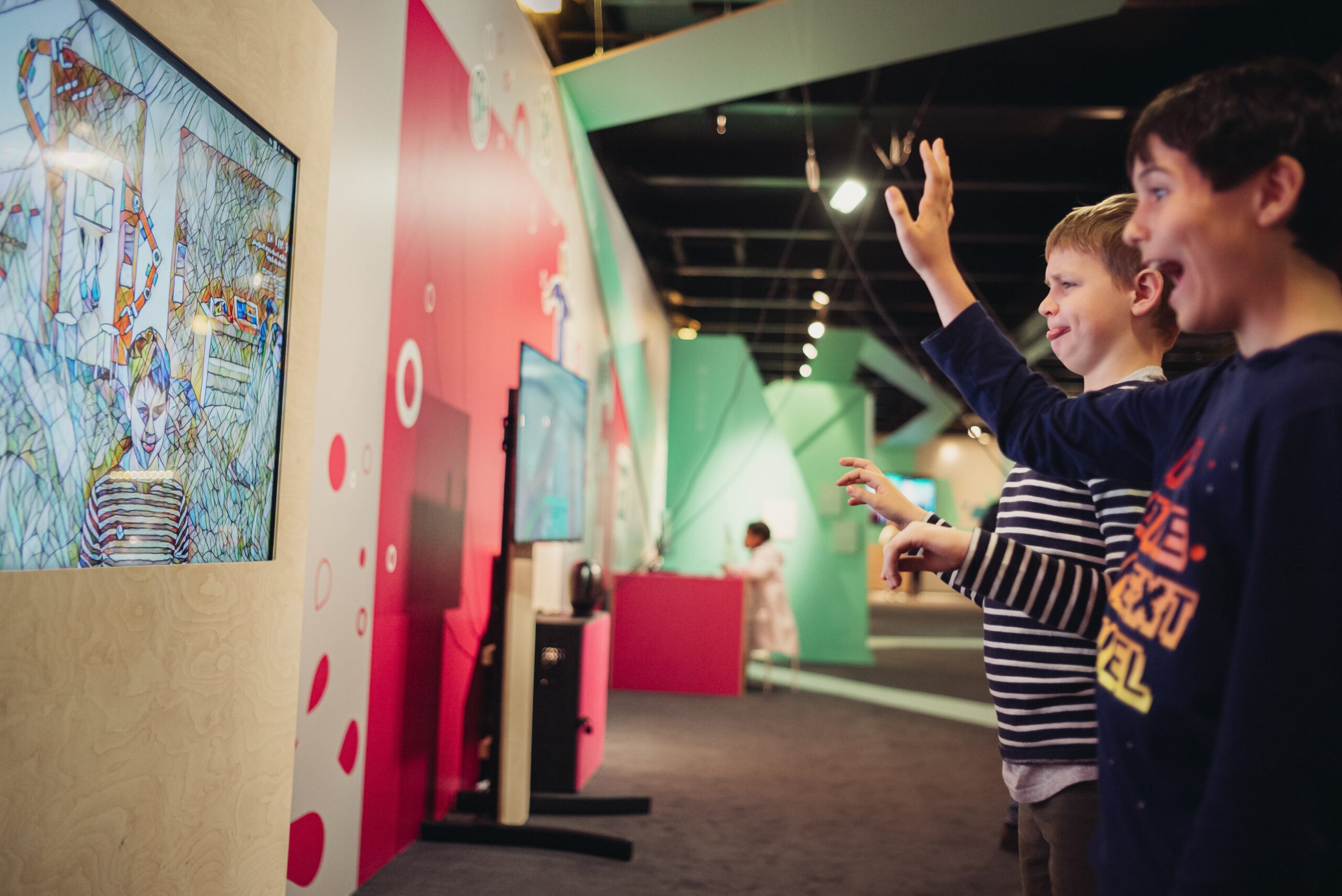
    Mit dem künstlerischen Spiegel wird ein (live) Bild zu einem Kunstwerk. Doch wie „sehen“ und „verstehen“ Maschinen Kunstwerke? Wenn eine künstliche Intelligenz ein Gemälde betrachtet, sollte sie es nicht nur in seine Objekte zerlegen können. Sie muss dazu auch den verwendeten Stil der Künstlerin oder des Künstlers entschlüsseln. Wenn sie das beherrscht, kann sie im gleichen Stil sogar neue Kunstwerke schaffen – in Echtzeit von jeder Person, die vor der Kamera herumhüpft. Vorübergehende Besucher werden nämlich dabei gefilmt und in Echtzeit auf dem Monitor in verschiedenen Kunststilen dargestellt. Der künstlerische Spiegel ist ein Forschungsexponat der Universität Tübingen, die Partner im Cyber Valley ist und woraus das Start-up DeepArt hervorging.

    Vom 12.09. – 16.09.2019 legt das Schiff in Esslingen an der Liegestelle Färbertörlesweg, Nähe Pliensauturm, an.

    Alle Interessierten sind herzlich eingeladen, die Ausstellung zu besuchen. Sie spricht insbesondere auch Schulklassen, Familien und Jugendliche an. Wir empfehlen den Besuch der Ausstellung ab einem Alter von 12 Jahren. Viele Ausstellungsstücke sind aber auch für jüngere Kinder geeignet.

    Der Eintritt ist frei.

    Bundesforschungsministerin Anja Karliczek (Mitte) hat sich natürlich auch die Ausstellung auf der MS Wissenschaft angesehen:


    Quelle der Fotos: Ilja Hendel/WiD