CV Tag: Health Cluster

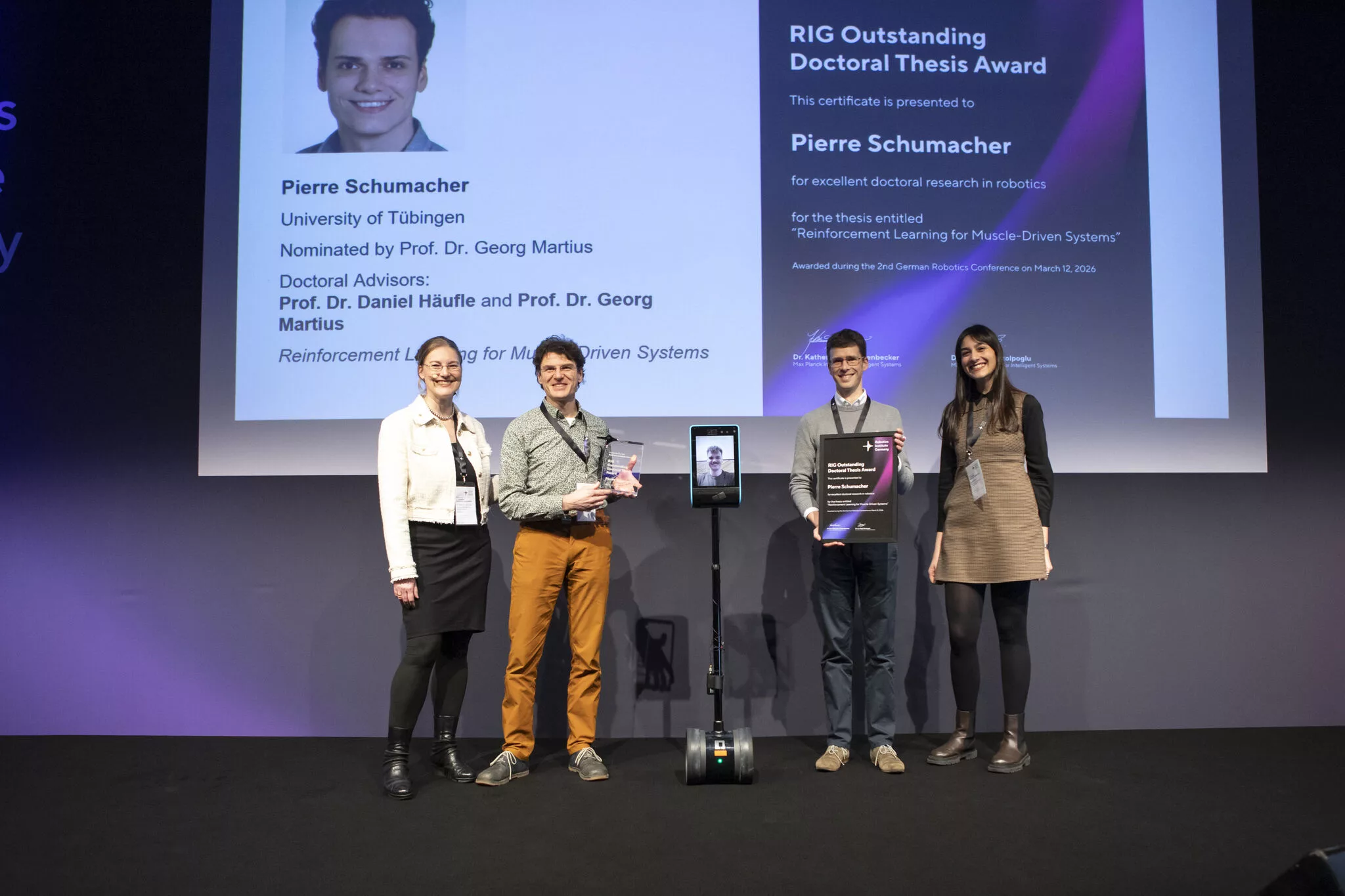
  • Pierre Schumacher receives RIG “Outstanding Doctoral Thesis Award” at the German Robotics Conference 2026

    Pierre Schumacher receives RIG “Outstanding Doctoral Thesis Award” at the German Robotics Conference 2026

    Pierre Schumacher has been selected as one of the two recipients of the “RIG Outstanding Doctoral Thesis Award”, recognizing exceptional doctoral research in robotics in Germany. The award was officially announced during the “RIG Heroes Award Night 2026” at the German Robotics Conference 2026, organized by the Robotics Institute Germany (RIG), in Cologne on March 12.

    Schumacher’s dissertation, “Reinforcement Learning for Muscle-Driven Systems,” was selected from 27 nominations submitted by 16 institutions across Germany. Following an extensive evaluation process, an international selection committee chose two equal awardees, citing Schumacher’s work for its “scientific depth, originality, and impact”.

    Pierre Schumacher conducted his doctoral research at the Max Planck Institute for Intelligent Systems in Tübingen under the supervision of Prof. Georg Martius (University of Tübingen) and Prof. Daniel Häufle (Hertie Institute for Clinical Brain Research) funded by the Cyber Valley Research grant “Learning effcient control of non-linear muscle-driven systems: Morphological computation as guiding principle”. His project was part of the Cluster of Excellence “Machine Learning: New Perspectives for Science” and the Center for Bionic Intelligence Tübingen Stuttgart (BITS). His dissertation, “Reinforcement Learning for Muscle-Driven Systems,” addresses challenges in controlling complex, highly overactuated robotic and biomechanical systems by developing new machine learning methods.

    A central contribution of the work is the development of DEP-RL, a reinforcement learning approach that improves exploration and learning in systems with many redundant actuators, such as musculoskeletal models. Using this method, Schumacher demonstrated efficient learning for tasks involving complex simulated bodies, including a human model with dozens of muscles and animal-inspired locomotion systems.

    Pierre’s research also explored how muscle-like actuation can improve learning performance and robustness in robotic systems. In collaborative studies, Schumacher and colleagues showed that musculoskeletal models can lead to more data-efficient and stable learning in anthropomorphic control tasks. More recent work demonstrated that reinforcement learning can produce natural and robust bipedal walking in musculoskeletal simulations without relying on motion-capture demonstrations.

    Schumacher began his academic path with a trinational bachelor’s degree in physics that took him to universities in France, Luxembourg, and Germany. After completing his B.Sc. in physics in Saarbrücken 2017, he shifted toward computational approaches and pursued a master’s degree at Goethe University Frankfurt in Frankfurt am Main. In 2021, he joined the Max Planck Institute for Intelligent Systems and the Hertie Institute for Clinical Brain Research in Tübingen with Prof. Georg Martius and Prof. Daniel Häufle for his PhD in Computer Science, which he completed in 2025.Schumacher’s expertise has also attracted industry attention: he joined MyoLab, a startup based in New York focusing on musculoskeletal control technologies, last year.

    The RIG Outstanding Doctoral Thesis Award highlights emerging researchers whose doctoral work significantly advances robotics research in Germany. Schumacher’s selection underscores the growing importance of combining machine learning, biomechanics, and embodied intelligence to enable the next generation of adaptive robotic systems.

  • Mira Vision accelerates innovation at VENTURE SPRIN-D

    Mira Vision accelerates innovation at VENTURE SPRIN-D

    At VENTURE SPRIN-D 2025, over 50 teams presented their innovative ideas to more than 250 international investors. The event featured live pitches, a networking exhibition area, and opportunities to make valuable connections. Alongside other members of the Cyber Valley Community, Cyber Valley Start-up MIRA Vision seized this opportunity to show how they are revolutionizing the health industry.

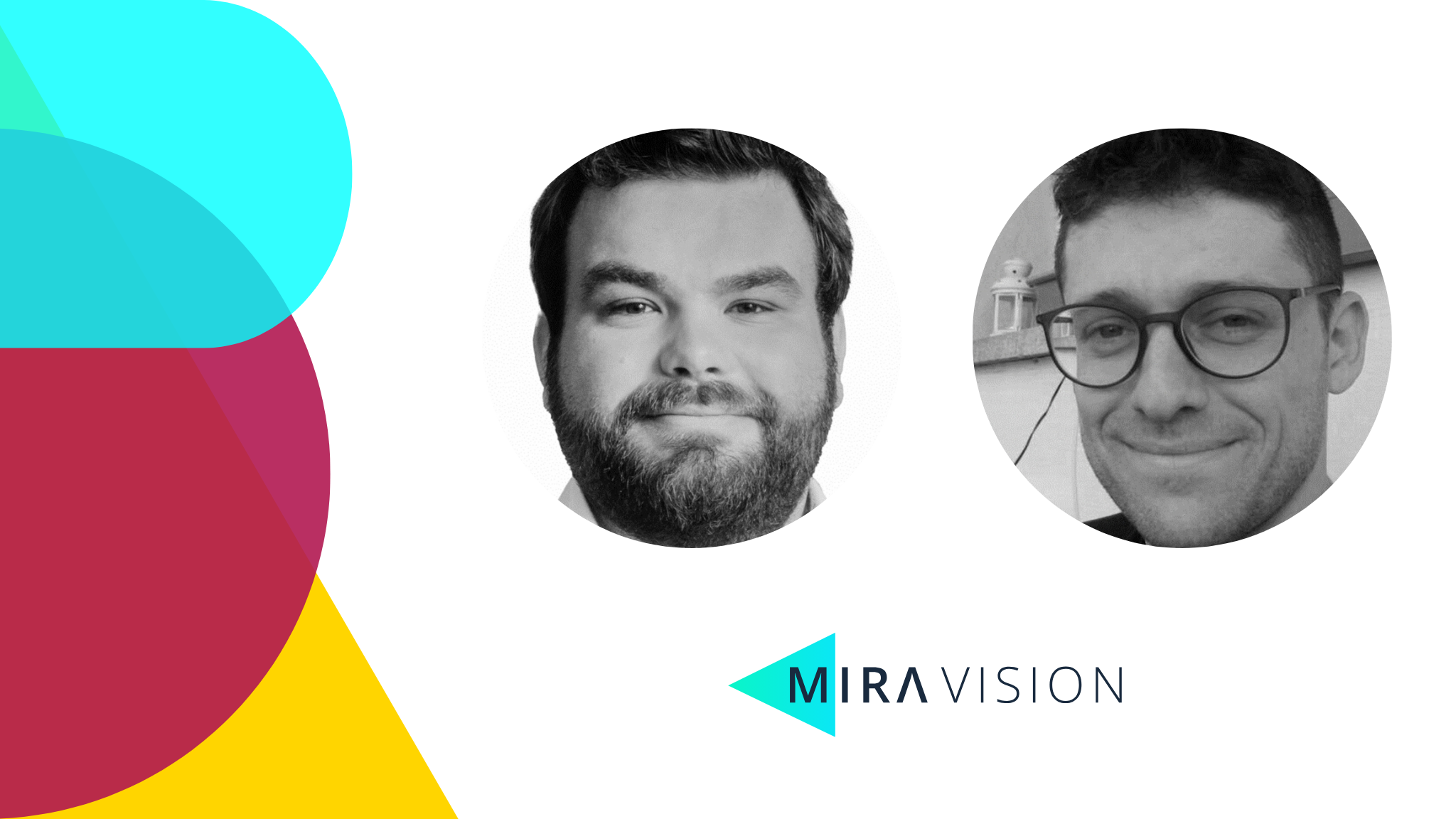
    We interviewed MIRA Vision founders, Lukas Mürdter and Leonid Mill, to gain insights into VENTURE SPRIN-D and what their start-up is all about. 

    Cyber Valley: How has attending this event impacted Mira Vision? What were your key takeaways? 
     
    Leonid Mill, MIRA Vision CTO & Founder, explains, “Attending the VENTURE SPRIN-D event was an outstanding experience for us. VENTURE SPRIN-D showcased the incredible innovation power of all the SPRIN-D portfolio start-ups, and it was truly inspiring to be part of such a dynamic environment. We deeply appreciated the opportunity to be part of this ecosystem and to participate and pitch on stage during the Superconnector session — it was a fantastic moment for us.” 

    “The event provided an excellent platform to connect with like-minded entrepreneurs, industry experts, and investors. We had the pleasure of engaging in valuable conversations, receiving insightful feedback from investors, and exchanging ideas with other forward-thinking innovators.” 

    “Overall, it was an exceptional opportunity that has positively impacted our journey, and we are grateful to have been part of it. Shoutout to SPRIN-D for this amazing event, creating such an inspiring platform that brings together so many bright minds and visionary thinkers – it’s initiatives like this that truly accelerate innovation,” Mill concludes.  

    Cyber Valley: What is MIRA Vision? How is it already revolutionizing the health industry? 

    CEO & Founder, Lukas Mürdter, explains: “MIRA Vision is a pioneering company in medical diagnostics. We use synthetic intelligence to analyze pathological images faster, more accurately, and at a fraction of the cost compared to traditional methods. By relying on fully parametric synthetic training data – not real patient data and without using generative models – we’re solving three of the biggest issues in medical AI: bias, privacy, and data scarcity.”  

    Mürdter further clarifies, “Right now, we’re already outperforming state-of-the-art models in key areas with just a fraction of the resources that are normally needed to train such systems. This means not only better diagnostics but also global accessibility – even in regions with limited infrastructure.” 

    Cyber Valley: Where do you see MIRA Vision being used in the future?  

    Lukas emphasizes, “Our vision goes beyond pathology. We see MIRA Vision as the backbone of diagnostics across all image-based disciplines – radiology, dermatology, ophthalmology, even surgery. Wherever an image can be taken, MIRA will analyze it. Ultimately, we want to give every doctor on this planet an AI-powered assistant that helps detect diseases early, accurately, and affordably – no matter where they are.” 

    Cyber Valley: What are your plans to make a positive impact on the world? 

    Lukas responds enthusiastically, “By being radically different – and radically better. Instead of building another AI that requires millions of patient records and insane GPU farms, we’ve designed a lightweight, scalable system built on expert-guided synthetic data. Our platform works out of the box, is regulation-friendly, and can be used for free in non-commercial settings.” 

    “We’re opening the platform to the global pathology community, offering unmatched accuracy, no data privacy concerns, and unbeatable economics. Once they start using it – they won’t want to stop. That’s how we scale. And yes – we’re just getting started,” Mürdter concludes.

  • Cyber Valley unites AI and robotics expertise for the healthcare sector

    Cyber Valley unites AI and robotics expertise for the healthcare sector

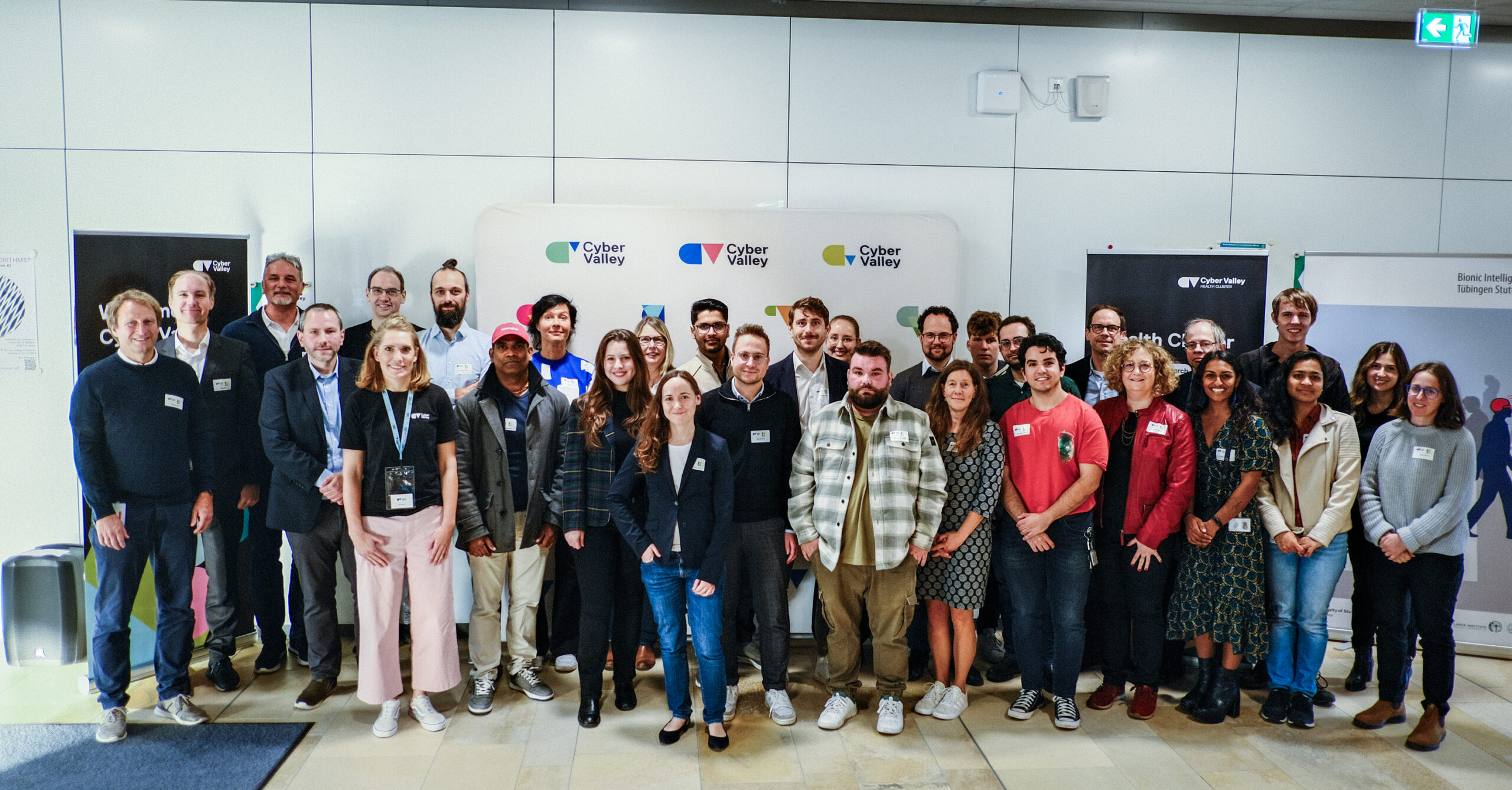
    Stuttgart, October 28, 2024 – The Cyber Valley Health Cluster officially launched last Thursday with a public kickoff event in Tübingen. This initiative launched by Cyber Valley aims to unite the forces of science, industry, and start-ups to improve people’s long-term health through artificial intelligence and modern robotics. 

    Collaboration between research and industry for AI-driven health technologies 

    The Cyber Valley Health Cluster aims to integrate research, practice, and technology. It promotes joint projects between AI experts, scientists, and companies to develop innovative solutions for current and future challenges in the healthcare sector. The Health Cluster emphasizes interdisciplinary knowledge exchange, enabling new approaches and solutions that go beyond individual technological advances.  

    Rebecca C. Reisch, Managing Director of Cyber Valley GmbH, highlights the importance of this collaboration: “The Cyber Valley Health Cluster is more than an academic endeavor; it’s a collaborative alliance that encourages exchange between industry, start-ups, and research. The Health Cluster is where AI-based solutions can be developed to address the most pressing challenges in modern medicine and beyond.”

    Strong Cyber Valley Partners and Friends are already on board  

    The Cyber Valley Health Cluster is backed by strong partnerships. Among the already confirmed Cyber Valley Partners are well-known players such as Boehringer Ingelheim, ZEISS, the University of Tübingen, the University of Stuttgart, and the Max Planck Institute for Intelligent Systems (MPI-IS). These partners are investing significantly in the Cyber Valley Community and are playing a central role in the further development of the Health Cluster. 

    In addition, the Cyber Valley Health Cluster is supported by numerous committed Cyber Valley Friends who enrich the network with their expertise and connections. These include Immatics, Cegat, Ovesco, BIOPRO Baden-Württemberg, BioRegio STERN Management, as well as the Medical Innovations Incubator, and the start-ups Osora and Cerebri.  Further candidates are already under consideration.  

    Reisch emphasizes the role of the Cyber Valley Community: “Together with our Partners and Friends, we are creating an environment that drives the development of technologies that are not only groundbreaking but also practical and ethical. Because only by working together do we have the chance to establish Baden-Württemberg and the whole of Germany at the forefront of global AI health innovations.” 

    Long-term goal: a lasting healthcare alliance 

    The Cyber Valley Health Cluster supports start-ups and innovation projects to create real value by generating new jobs and health solutions. Health Cluster participants moreover benefit from extensive connections and new networking opportunities that enable the development of pioneering healthcare solutions and rapid knowledge transfer between research and industry. 

    The long-term goal of the Cyber Valley Health Cluster is to create a lasting and active community, pooling health expertise to enable interdisciplinary teams to tackle global health challenges. Further events and interaction formats are planned for the Cyber Valley Health Cluster in the coming months. 

    About Cyber Valley 

    Cyber Valley is Europe’s largest and leading center for excellence in artificial intelligence and modern robotics. Its mission and public mandate are to advocate for the research, development, application, and acceptance of technologies and methods in the field of intelligent systems. Cyber Valley encourages entrepreneurship by uniting scientific excellence with innovation and technology transfer. In addition, Cyber Valley facilitates critical reflection on the ethical and social implications of AI through public engagement. Cyber Valley envisions a future in which the full potential of intelligent systems is leveraged for the greater good of the world. 

    Media Contact: 

    Laura Neusser 
    Public Outreach Manager 
    Cyber Valley GmbH 
    laura.neusser@cyber-valley.de 

  • Cyber Valley grants 500K to CELL’n’ROLL via 2023 Innovation Fellowship Program

    Cyber Valley grants 500K to CELL’n’ROLL via 2023 Innovation Fellowship Program

    CELL’n’ROLL aims to develop next-generation diagnostic solutions for detecting complex diseases such as cancer. Leveraging robotics, artificial intelligence, and microtechnology, the initiative aims to democratize access to these diagnostic tools worldwide. CELL’n’ROLL envisions a future where diagnostics are not only swift and precise but also accessible in resource-constrained settings by harnessing the power of robotics, artificial intelligence, and microfluidics. 

    The CELL’n’ROLL team consists of Postdoctoral Researchers Alp Can Karacakol, Erdost Yildiz, and the project leader Ugur Bozuyuk. As emerging scientific talents, the team comprises three scientists from the Max Planck Institute for Intelligent Systems, each with interdisciplinary expertise spanning medicine and engineering, and a collective experience exceeding three years of collaboration. Additionally, the team benefits from mentorship provided by international experts from academia and industry. 

    The Innovation Fellowship program will support their journey from outstanding research to practical application. The program’s aim is to bridge the gap between research and commercial application by fostering scientific breakthroughs that add value to science, economy, and society. The Innovation Fellowship program is funded by the Carl-Zeiss-Stiftung (CZS) and offers talented individuals or teams the opportunity to translate their research into tangible applications. With a duration of up to 24 months, researchers work on a project that is not yet commercially viable and requires time for further development and product transformation in a research environment. The program focuses on application-oriented research related to artificial intelligence and robotics. Its goal is to create an innovative spin-off from the project after the funding term has ended.  

    With its mission of creating “an open environment for scientific breakthroughs”, the Carl Zeiss Foundation is an essential Cyber Valley partner. The foundation aims to accompany the entrepreneurial path of young talent from research to application. It strives to achieve scientific breakthroughs that support research, the economy, and society through funding elementary research and specific applications.  

    The next Cyber Valley Innovation Fellowship call for proposals will be announced in April 2024. Scientists employed by the Max Planck Institute for Intelligent Systems, the University of Stuttgart, and the University of Tübingen are eligible to apply. All external scientists affiliated with these Institutes may also apply.  

    About Cyber Valley  

    Cyber Valley is Europe’s largest and leading center for excellence in artificial intelligence and modern robotics. Its mission and public mandate are to advocate for research, development, application, and acceptance of technologies and methods in the field of intelligent systems. Cyber Valley encourages entrepreneurship by uniting scientific excellence with innovation and technology transfer. In addition, Cyber Valley facilitates critical reflection on the ethical and social implications of AI through public engagement. Cyber Valley envisions a future in which the full potential of intelligent systems is leveraged for the greater good of the world. Cyber Valley GmbH, with locations in Stuttgart in Tübingen, is owned by the State of Baden-Württemberg and the Max Planck Society.  
     

    About the Carl-Zeiss-Stiftung  

    The Carl-Zeiss-Stiftung’s mission is to create an open environment for scientific breakthroughs. As a partner of excellence in science, it supports basic research as well as applied sciences in the STEM subject areas (science, technology, and mathematics). Founded in 1889 by the physicist and mathematician Ernst Abbe, the Carl-Zeiss-Stiftung is one of the oldest and biggest private science funding institutions in Germany. It is the sole owner of Carl Zeiss AG and SCHOTT AG. Its projects are financed from the dividend distributions of the two foundation companies.  

    About CELL’n’ROLL 

    CELL’n’ROLL, established two years ago, is driven by a team of three dedicated scientists with varied expertise, spanning engineering and medicine. Their collective passion lies in pioneering cutting-edge diagnostic systems for the detection of complex diseases, such as cancer. They envision a future where diagnostics are not only swift and precise but also accessible in resource-constrained settings by harnessing the power of robotics, artificial intelligence, and microfluidics. 

  • Bionic Intelligence in Cyber Valley

    Bionic Intelligence in Cyber Valley

    The new Center for Bionic Intelligence Tübingen Stuttgart (BITS) aims to optimize the interaction between humans and technical systems in a fundamentally new way.

    Scientists from the University of Stuttgart, the University of Tübingen, the Max Planck Institute for Intelligent Systems and the Max Planck Institute for Biological Cybernetics are conducting research on intelligent bionic systems that will aid understanding and treatment of certain diseases of the central nervous system. Diagnoses will become more accurate, treatments more efficient and the illnesses more tolerable. Those affected by such disorders already use orthoses or communication aids. However, these systems cannot fully adapt themselves to the needs of the patient or the environment in order to fully compensate limitations or restore failed bodily functions. In interdisciplinary projects, BITS members develop individually tailored medical aids.

    Bionic systems can be found almost everywhere in everyday life: A Velcro fastener on a backpack is inspired by the burdock, suction cups are modeled on the form of an octopus tentacle. Both inventions are based on phenomena from the animal and plant world. Researchers at the University of Stuttgart, the University of Tübingen, the Max Planck Institute for Intelligent Systems and the Max Planck Institute for Biological Cybernetics are taking this one step further: Their vision is to optimize interaction between humans and technical systems so that, by using various signals and intelligent physical principles, the technical system is able to provide support when humans need it. The users are in control at all times.

    "We want to push the boundaries of what has been possible until now," says Professor Syn Schmitt, BITS spokesperson at the University of Stuttgart. "With bionic systems, such as novel robotic prostheses, we aim to create new intelligent diagnostic and treatment options that offer support in everyday life for patients with physical and neurological limitations."


    Diagnosis and treatment: Smart, flexible and ethical

    Technical assistance systems are already being used for therapeutic purposes, but they fall far short of the efficiency and flexibility that would be required to replace missing or impaired functions, or to support the diagnosis and treatment of complex mental disorders. The scientists of the newly founded BITS are jointly researching the development of bionic systems to adapt them to meet patients' individual needs, to compensate for impaired motor function in the everyday lives of those affected, and to support diagnostic and rehabilitation procedures. Social and ethical dimensions are considered from the very beginning.

    "The goal is to develop alternatives that work perfectly for individuals," adds Professor Martin Giese, BITS spokesperson at the University of Tübingen. "Forging efficient interactions between people and technology, requires not only optimal data and information processing, but also the exploitation of intelligent physical principles in people and the technical system." 

    The challenge here is to design technical components that interact with the nervous systems and muscular apparatus in a highly efficiently way and that adapt flexibly and individually to the patient's position. "To do this, we rely on functional materials that respond to different body-specific stimuli," adds Professor Sabine Ludwigs, also a BITS spokesperson at the University of Stuttgart.


    Interdisciplinary collaboration: From biomedicine to robotics and computer science

    The key to success is interdisciplinary cooperation between experts from different fields, such as biomedicine, neuromechanics, materials science, soft and biorobotics, physics, electrical engineering, social science, ethics, neuroscience, and computer science. "Each and every member of our team is an expert in their field," says Schmitt. "We try to transfer all this knowledge into workable solutions that allow people to interact with technical systems on multiple levels. We believe that affected individuals will benefit from such systems, and that science will gain a better understanding of humans."

    The research work within BITS encompasses everything from robotic orthoses that function as an everyday aid for people with muscle tremors, for example, to wearable sensors to improve diagnostics for obsessive-compulsive disorders, to so-called in-body micro- and nano-robots that can transport drugs specifically to the brain or enable new forms of brain stimulation. "At BITS, we want to build on previous successes and strengthen our collaborations to permanently establish intelligent systems in medicine, treatment and rehabilitation," emphasizes Giese. 


    About Cyber Valley

    Cyber Valley is Europe’s largest and leading research consortium in the field of artificial intelligence (AI) and modern robotics. It has a mission and a public mandate to advocate for entrepreneurship, research, development, application, and acceptance of technologies and methods in the field of intelligent systems. The company envisions a future where the full potential of intelligent systems is leveraged for the greater good of the world. 
    The Cyber Valley Community brings together partners from science, industry, and society, along with AI researchers and entrepreneurs. The Cyber Valley GmbH is funded by the state of Baden-Württemberg and acts as the central organizer, service provider, and host for the community. While the GmbH operates from Stuttgart and Tübingen, Cyber Valley has a larger scope: As a national and European driving force, it attracts the best people from all over the world to create the future with AI.


    About the Center for Bionic Intelligence Tübingen Stuttgart

    At the interdisciplinary research center BITS, approximately 50 scientists have been engaged in various projects since May 2023. BITS members bring together wide-ranging expertise from a variety of disciplines, including biomedicine, neuromechanics, materials science, soft and biorobotics, physics, electrical engineering, social science, ethics, neuroscience and computer science. The research work is intended to contribute to the technical implementation of bionic systems and help to establish these in the medical sector. This will significantly reduce the ever-increasing social burden of mental and neurological disorders, as well as individual suffering. To this end, BITS combines the complementary expertise of the Universities of Stuttgart and Tübingen and the Max Planck Institutes for Intelligent Systems and Biological Cybernetics. BITS is part of Cyber Valley, Europe's largest research consortium in robotics and artificial intelligence.

    Expert Contact

    • Prof. Dr. Syn Schmitt, University of Stuttgart, Institute for Modelling and Simulation of Biomechanical Systems
    • Prof. Sabine Ludwigs, University of Stuttgart, Institute of Polymer Chemistry
    • Prof. Martin Giese, University of Tübingen, Section for Computational Sensomotorics

    About Cyber Valley

    Cyber Valley is Europe’s largest and leading research consortium in the field of artificial intelligence (AI) and modern robotics. Cyber Valley has a public mandate: As advocates for entrepreneurship, research, development, application, and acceptance of technologies and methods in the field of intelligent systems are at the forefront. The company envisions a future where the full potential of intelligent systems is leveraged for the greater good of the world.  
  • Data Paradoxes: The Politics of Intensified Data Sourcing in Contemporary Healthcare

    Data Paradoxes: The Politics of Intensified Data Sourcing in Contemporary Healthcare

    Der Vortrag ist auf Englisch und findet am 14. November 2022, von 14:00 bis 15:30 Uhr im Herdweg 51, Raum 51.01 statt.

    In contemporary healthcare, everybody seems to want more data, of higher quality, on more people, and to use this data for a wider range of purposes. In theory, such pervasive data collection should lead to a healthcare system in which data can quickly, efficiently, and un­ambi­guously be interpreted and pro­­vide better care for patients, more efficient administration, en­hanced options for re­search, and accel­erated economic growth. In practice, however, data are difficult to interpret and the many pur­poses often un­der­mine one another. Focusing on Denmark, a world leader in health­care data infra­structures, Klaus Hoeyer shares the perspec­tives of differ­rent stakeholders, from epidemiologists to hospital mana­gers, from patients to physicians, analyzing the social dynamics set in motion by data intensi­fication and calling special atten­tion to that which cannot be easily coded in a database.
     

  • AI & Health

    AI & Health

    Forscher:innen, Start-ups und Investoren werden aus verschiedenen Blickwinkeln Einblicke in dieses Thema geben und ihre Erfahrungen und Ideen teilen.

    Wissenschaftler:innen, Gründer:innen, Studierende und alle, die sich für das Thema "AI & Health" interessieren, sind herzlich eingeladen, am Donnerstag, den 19. Mai, 14:00-15:30 Uhr MESZ dabei zu sein.

    Sprecher:innen

    Alona Shagan
    Postdoc, Max Planck Institut für Intelligente Systeme

    Milad Geravand
    CEO, Deep Care GmbH

    Manuel Heurich
    CEO, BinDoc GmbH

    Stephan Rauscher
    Partner, UNI-X

    Registrierung

    Bitte hier registrieren. Das Event findet via Zoom und in englischer Sprache statt.

    Kontakt

    Oliwia Gust –  Event Manager
    Telefon: +49 7071 601 1554
    Mobil: +49 151 4075 6302 
    E-Mail: oliwia.gust@cyber-valley.de

  • Heilen mit Algorithmen?

    Heilen mit Algorithmen?

    Einen Impuls über die rechtlichen Fragen des KI-Einsatzes in der (Bio-)Medizin gibt Fruzsina Molnár-Gábor. Anschließend kommt Cordula Kropp mit ihr und dem Arzt Götz Martin Richter ins Gespräch.

    Prof. Dr. jur. Fruzsina Molnár-Gábor, Heinz-Maier-Leibnitz-Preisträgerin (2020) ist Professorin an der Universität Heidelberg, Mitglied der Jungen Akademie der Berlin-Brandenburgischen Akademie der Wissenschaften und der Nationalen Akademie der Naturforscher Leopoldina sowie des Europäischen Ethikrats. Ihre Forschungsschwerpunkte liegen u.a. im Bereich des Medizin- und Datenschutzrechts.
    Prof. Dr. med. Götz Martin Richter ist Ärztlicher Direktor der Klinik für Diagnostische und Interventionelle Radiologie am Klinikum Stuttgart. Er setzt im Rahmen einer Studie Künstliche Intelligenz beim Auffinden von Brust- und Prostatakrebs ein.
    Prof. Dr. Cordula Kropp ist Soziologin mit dem Schwerpunkt Risiko- und Technikforschung. am Institut für Sozialwissenschaften der Universität Stuttgart. Unter ihrer Leitung untersuchte das TechnikRadar 2021 die Einstellungen der Deutschen zur Digitalisierung des Gesundheitssystems.

    Eine Veranstaltung des Internationalen Zentrums für Kultur- und Technikforschung (IZKT) und des Zentrums für Interdisziplinäre Risiko- und Innovationsforschung (ZIRIUS) der Universität Stuttgart im Rahmen des Stuttgarter Wissenschaftsfestivals 2022.

    Zugleich in der Reihe „Fragen an KollegIn KI“ im Rahmen des „Wissenschaftsjahres 2022 – Nachgefragt!“, gefördert vom Bundesministerium für Bildung und Forschung (BMBF). Ein Projekt der Universität Stuttgart: Interchange Forum for Reflecting on Intelligent Systems (IRIS), Internationales Zentrum für Kultur- und Technikforschung (IZKT) und der Hochschule der Medien in Kooperation mit der Stadtbibliothek Stuttgart.