CV Tag: Optimization

  • Amazon and Max Planck Society announce recipients of gift awards

    Amazon and Max Planck Society announce recipients of gift awards

    In line with that goal, the Science Hub is sponsoring the following research projects:

    • “Non-verbal interpersonal synchrony analysis tool (nVISA-online)”: Senya Polikovsky, research engineer, Max Planck Institute for Intelligent Systems

    “Interpersonal synchrony (In-Sync), the spontaneous synchronization of behavioral, affective, and even physiological responses in contexts of social interaction, offers a useful insight into the quality and smoothness of interactions between social partners. Automatic assessment of In-Sync could provide objective tools for studying the interactive abilities of people with psychiatric conditions and the degree of therapeutic alliance in psychotherapy, as well as online human-to-human and avatar-to-human interactions. Body movement dynamics are central to the analysis of In-Sync. Besides that, facial expression, gaze interaction, audio signals, and physiological measures such as electrodermal activity, heart rate variability, or breathing rates can be used to detect In-Sync. The goal of our proposed research is to extend In-Sync analysis to online scenarios. We would like to identify the instruments and the procedures for the detection of In-Sync in online therapy sessions.”

    • “Accurate 3D body shape and clothing estimation from a single image”: Gerard Pons-Moll, senior researcher, Max Planck Institute for Informatics, and professor, University of Tübingen, endowed by the Carl Zeiss Foundation

    “This research aims to reconstruct a 3-D digital human from a single RGB photograph, using a combination of 3-D neural implicit functions to represent worn garments and a parametric model to represent and control the pose and shape of the underlying body. A key novelty is to incorporate feedback in the deep body estimation network, ensuring that the 3-D body mesh is consistent with its projection onto the photo.”

    • “Learning clothing pressure fields via high-fidelity finite element analysis”: Gokhan Serhat, research scientist, Max Planck Institute for Intelligent Systems, and assistant professor, KU Leuven

    “Accurate estimation of clothing pressure on the human body is crucial to understanding physical factors that influence clothing comfort. Such estimation requires the ability to express contact pressure fields in terms of different body sizes and types and garment sizes and material properties. However, such pressure fields are generally too complex to be modeled by analytical methods. Experimentation also has certain drawbacks, since it does not provide information about internal stresses, and precise measurement of the contact pressure between a pair of curved soft bodies is difficult. The intricate anatomy of the human body may require elaborate finite-element models with several thousand elements for capturing deformation mechanics accurately. Such large models inherently induce high computational costs and are likely to suffer from the aforementioned numerical issues. The proposed study aims to address this problem by developing a deformation model based on deep neural networks trained with the data from finite-element analysis.”

    • “Material estimation of clothing for controllable human avatars”: Justus Thies, research group leader, Max Planck Institute for Intelligent Systems, and professor, Technical University Darmstadt

    “A key challenge for controllable human avatars is the reconstruction and animation of clothing. While data-driven, person-specific reconstruction methods show promising results, the extrapolation to novel poses with realistic deformations of clothing is limited. In contrast to data-driven methods, physics simulation can be used to model the dynamically changing clothing. In this project, we want to explore material estimation of human clothing for such simulations. Specifically, we are interested in predicting material properties such as stiffness or stretch that influence the motion-dependent deformation of the clothing. Besides these mechanical material properties, we are also interested in predicting material properties for the appearance of clothing that allow for re-renderings under novel poses.”


  • ETH Zurich launches joint initiative for trustworthy AI

    ETH Zurich launches joint initiative for trustworthy AI

    In spring 2024 the new Alps supercomputer goes live at the Swiss National Supercomputing Centre (CSCS) of ETH Zurich in Lugano. Boasting the next generation of more than 10,000 graphics processing units (GPUs), Alps is one of the world’s most powerful computers for applications in the field of artificial intelligence (AI). This new computer gives Swiss scientists access to the sort of computing power only available to the world’s biggest tech companies.

    Transparency and Open Source

    The initiative aims to develop and train new large language models (LLM). These must be transparent, deliver comprehensible results, and ensure legal, ethical, and scientific criteria are met. “Unlike the large language models that are usually available in the public domain today, the Swiss AI Initiative strongly emphasized transparency and Open Source. Everyone must be able to understand how the models were trained, the sort of data used, and how results are recovered,” stresses Jan Hesthaven, Provost and Vice President for Academic Affairs at EPFL.

    To develop such models, the Swiss AI Initiative will use ten million GPU hours on the new Alps computer over the next 12 months, equivalent to the computing power of a single GPU running at full load for over 1,100 years. Switzerland is therefore the first country in the world to operate a research infrastructure on the next-generation NVIDIA Grace Hopper Superchip.

    Swiss AI Initiative is already up and running

    This additional computing capacity will be used to develop new, industry-specific AI-based models for use in different areas such as robotics, medicine, climate sciences, or diagnostics. In addition, the Initiative will also explore fundamental questions in the development and use of LLM models, such as: What form will future interaction between humans and AI take? What is the appropriate ethical framework? How do we manage security and data privacy? What new approaches can be used to scale up models and make them more energy efficient?

    AI for industry and public administration

    The Swiss AI Initiative has set itself the goal of bringing together science, industry, and politics to collaborate in shaping and driving forward the development and use of artificial intelligence in Switzerland. Existing partnerships with companies, hospitals, and public-sector bodies will be expanded further. Swisscom’s CTO Gerd Niehage commented: “Here at Swisscom we welcome the Swiss AI Initiative, especially as we are convinced this will be an important building block in Switzerland’s digital future. It accelerates the digital transformation and creates new capabilities our country needs to play a dominant role in the area of generative artificial intelligence. For Swisscom, AI solutions like the Swiss AI Initiative are a key element of innovative digital solutions that our customers can trust.”

    The software infrastructure, accumulated expertise and base models developed in Switzerland should be transferable as openly and directly as possible to society and industry. To remain competitive, SME’s will also have to rely increasingly on the use of AI in the future. Like public services, they will be able to directly benefit from the open Swiss AI Initiative. On top of that, the Swiss AI Initiative is developing a program for supporting start-ups in the area of artificial intelligence.

    Networking researchers all over Switzerland

    ETH Zurich and EPFL operate their own AI centers that will work closely together in the future, along with the Swiss Data Science Center, to conduct world-class, interdisciplinary AI research. This initiative aims to pool the specialist knowledge of around a dozen Swiss universities, technical universities, and research institutes. Over the past few months over 75 professors from all over Switzerland have signed up for the initiative. In addition, other international researchers have also been invited to work together on the development of multilingual, cross-border, open-source LLMs. ETH Zurich and EPFL are already members of ELLIS, the European network of AI excellence, which incudes some 40 AI hot spots in Europe. 

    Press contact

    Markus Gross

    ETH Zurich
    Switzerland

  • Research project on artificial intelligence for sustainable road construction launched

    Research project on artificial intelligence for sustainable road construction launched

    Road construction causes around 400 million tonnes of CO2 emissions globally every year. This corresponds to about 7.5 per cent of the maximum annual amount that may be emitted worldwide in order to still achieve the climate target of 1.5 degrees Celsius global warming. Even on medium-sized construction sites with 2,500 tonnes of asphalt to be laid, about 4,000 trees need a whole year to compensate for the CO2 emissions of about 50 tonnes. In the KInaStra research project, CO2 emissions in asphalt road construction are to be analysed transparently using digital technologies and reduced by AI-based optimisation algorithms, without any negative impact on quality, costs and time.

    The project results should help construction companies to carry out road construction projects more sustainably through CO2-optimised planning and process control. KInaStra thus creates the prerequisites for efficiently meeting the sustainability requirements of the coming years, including those of public clients. At the same time, the project strengthens economic sustainability as resources become scarcer and more expensive.

    The goal of the project team from practice and science is the development of intelligent, data-driven real-time control procedures by means of machine learning. The results will be digital tools for CO2 reporting and decision support. Sensors and interfaces will be used to collect data across the entire asphalt supply chain. In the cloud, this data will then be analysed in real time using AI processes. This will make it possible to derive recommendations for action for the personnel carrying out the construction work.

    Project participants

    Smart Site Solutions GmbH is launching the research project together with Reif Bauunternehmung GmbH & Co. KG, Makadamlabor Schwaben GmbH and the University of Hohenheim. Cyber Valley supports the KInaStra project consortium as an associated partner. Other associated partners are Bauwirtschaft Baden-Württemberg e.V., Bundesanstalt für Straßenwesen, Deutscher Asphaltverband e.V. and infraTest Digital Solutions GmbH. The KInaStra project is part of the innovation funding programme "InvestBw – Digitalisation and Artificial Intelligence" and is funded by the Baden-Württemberg Ministry of Economics, Labour and Tourism on the basis of a decision by the Baden-Württemberg state government.

    Contact

    Dr. Marcus Müller
    Smart Site Solutions GmbH, Zugäckerstrasse 42, 72622 Nürtingen
    +49 (0) 7022 2081847
    marcus.mueller@smartsitesolutions.de
     

  • Female Leadership in Cyber Valley – Frauenwirtschaftstage 2020

    Female Leadership in Cyber Valley – Frauenwirtschaftstage 2020

    Agenda

    • Begrüßung
    • Einführung in das Cyber Valley-Projekt
    • Podiumsdiskussion mit weiblichen Führungskräften aus dem Cyber Valley-Ökosystem
    • Fragerunde
    • Netzwerken in Break-Out-Rooms
    • Schlussbemerkungen

    Teilnehmerinnen

    Prof. Dr. Zeynep Akata

    Professorin für Erklärbares Maschinelles Lernen, Exzellenzcluster „Maschinelles Lernen: Neue Perspektiven für die Wissenschaften“, Universität Tübingen

    Dr. Caterina De Bacco

    Cyber Valley Max Planck Forschungsgruppenleiterin, Physik für Inferenz und Optimierung, Max-Planck-Institut für Intelligente Systeme

    Dr. Katherine J. Kuchenbecker

    Geschäftsführende Direktorin und Direktorin der Abteilung für Haptische Intelligenz, Max-Planck-Institut für Intelligente Systeme

    Naureen Mahmood, M.Sc.

    Geschäftsführerin, Meshcapade GmbH, Tübingen

    Prof. Dr. Nicole Radde

    Professorin für Systemtheorie in der Systembiologie, Exzellenzcluster „SimTech“, Universität Stuttgart

    Jun.-Prof. Maria Wirzberger

    Juniorprofessorin für Lehren und Lernen mit intelligenten Systemen, Institut für Erziehungswissenschaft, Universität Stuttgart

    Registrierung

    Bitte melden Sie sich hier an – Teilnehmer*innen inklduiert männlich, weiblich und divers. Die Veranstaltung findet als Zoom-Konferenz und auf Englisch statt.

    Kontakt

    Oliwia Gust, Cyber Valley Event Manager
     +49 7071 6011554
     +49 151 40756302
    oliwia.gust@cyber-valley.de

    Organisation

    Cyber Valley in Kooperation mit dem Max-Planck-Institut für Intelligente Systeme sowie den Gleichstellungsbüros der Universitäten Stuttgart und Tübingen. Die Veranstaltung findet im Rahmen der Frauenwirtschaftstage 2020 statt.

  • AI Research in Cyber Valley: Talks on Science and Society

    AI Research in Cyber Valley: Talks on Science and Society

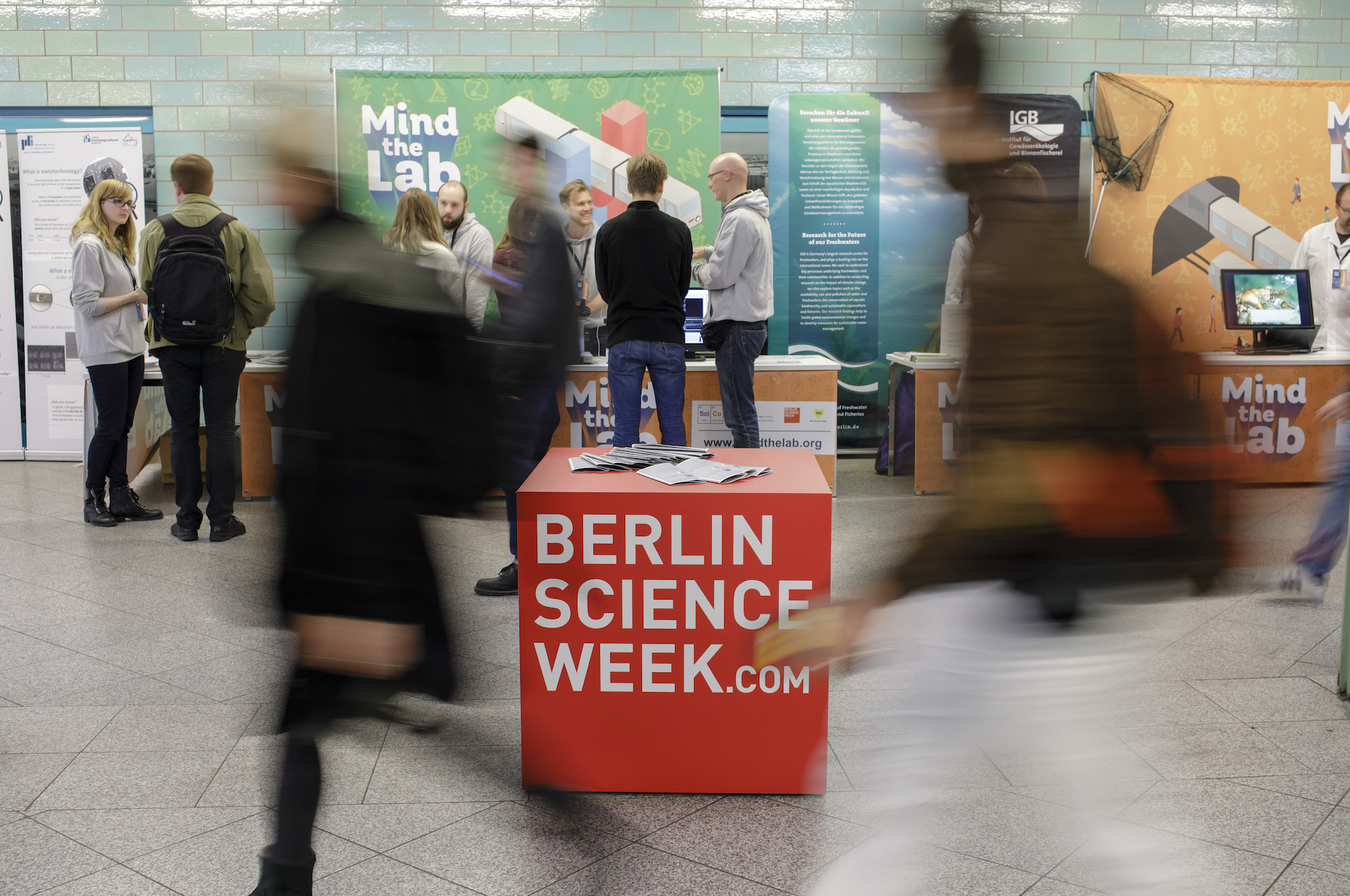
    Tübingen/Stuttgart: On November 6, 2019, Cyber Valley will be hosting an afternoon of public lectures at Berlin Science Week, where scientists from the research consortium’s partner institutions will present their research in the field of artificial intelligence (AI). At the "AI Research in Cyber Valley: Talks on Science and Society" event, scientists from the Max Planck Institute for Intelligent Systems, the University of Tübingen, and the University of Stuttgart will discuss topics ranging from nanorobots for surgery and brain-computer interfaces, to fairness in machine learning and the ethics of AI. The researchers aim to illustrate the interdisciplinary nature of the field, while at the same time addressing how AI will change society.

    Event: "AI research in Cyber Valley: Talks on Science and Society"

    Date: November 6, 2019

    Time: 4:00 p.m. – 7:30 p.m.

    Location: Berlin Museum of Natural History, New Lecture Hall, Invalidenstrasse 43, 10115 Berlin

    Language: English

    Admission: Free

    Speakers:

    Tian Qiu

    Tian Qiu was recently appointed leader of the new Cyber Valley Biomedical Systems Research Group at the University of Stuttgart. Prior to this, he completed his post-doctoral work at the Max Planck Institute for Intelligent Systems in Stuttgart. His research focuses on creating new devices and microsystems for biomedical applications. The aim is to integrate actuation, sensing, and computation to advance minimally invasive medical procedures.

    Talk: Nanorobots Inside Us – How Nanotechnology could Change Surgery

    Fabian Sinz

    Fabian Sinz is an award-winning scientist whose research interests lie in the combination of machine learning, computational neuroscience, and neural data. In 2018, he was appointed leader of the newly established independent Cyber Valley Neuronal Intelligence Research Group at the University of Tübingen. He is also currently an Adjunct Assistant Professor at the Baylor College of Medicine’s Center for Neuroscience and Artificial Intelligence in Houston, Texas.

    Talk: Real inception – Gaining Insights into the Brain by Controlling Real Neurons with AI

    Matthias Hohmann

    Matthias Hohmann is a PhD student in the Empirical Inference Department at the Max Planck Institute for Intelligent Systems in Tübingen. His research focuses on making participation in neuroscience more accessible, especially for people with rare diseases. The goal is to improve quality of life, support caregivers, and break down barriers in basic research. For his current project, he developed an app that makes participation in large-scale neuroscientific studies from home possible, without expert supervision.

    Talk: From the Lab into the Wild: A Platform for At-Home Participation in Neuroscientific Studies

    Caterina De Bacco

    Caterina De Bacco leads the Cyber Valley Physics for Inference and Optimization Research Group at the Max Planck Institute for Intelligent Systems in Tübingen. In her research, she develops models and algorithms based on the principles of statistical physics. The aim is to understand, optimize, and predict relations between the properties of complex large-scale interacting systems. Before joining MPI-IS, she was a postdoc at Columbia University’s Data Science Institute in New York.

    Talk: Physics for Inference and Optimization

    Isabel Valera

    Isabel Valera leads the Probabilistic Learning Research Group at the Max Planck Institute for Intelligent Systems in Tübingen. Her research focuses on the development of machine learning methods that are flexible, robust, and fair. She obtained her PhD in 2014 in Multimedia and Communications from the University Carlos III in Madrid, and then worked at the MPI for Software Systems as a postdoctoral fellow, and at the University of Cambridge as an associated researcher.

    Talk: Fairness in Artificial Intelligence: Challenges and Recent Advances

    Thilo Hagendorff

    Thilo Hagendorff is a media and technology ethicist. He received his doctorate in sociology in 2013 and has since been a research associate at the University of Tübingen’s International Center for Ethics in the Sciences and Humanities (IZEW). In 2019, he began working for the "Machine Learning: New Perspectives for Science" Excellence Cluster. He is also a lecturer at the University of Tübingen and at the University of Potsdam’s Hasso Plattner Institute.

    Talk: A Comprehensive Overview of AI Ethics