CV Tag: Research Fund

  • 2018: Building a network of excellent scientists—interview with Caterina De Bacco

    2018: Building a network of excellent scientists—interview with Caterina De Bacco


    In 2016, important actors from science, industry, and politics founded the Cyber Valley Consortium, which became the first Innovation Campus in Baden-Württemberg. Ten years on in 2026, we’re revisiting the most important milestones from the last decade. Each month, we’ll focus on a particular year since Cyber Valley’s beginning. 

    This month, we’re looking back to 2018, when the first Cyber Valley Research Groups were established. One of these research groups was led by Caterina De Bacco: between 2018 and 2024, she led the Physics for Inference and Optimization group at the Max Planck Institute for Intelligent Systems before becoming an Associate Professor at Delft University of Technology.

    In the following interview, she explains how Cyber Valley’s network of scientists and innovators provided a thriving environment for her research, and how her research could be used for managing traffic in transportation networks.

    What were your research group’s main aims and outcomes?

    In my group, we were combining expertise from physics, mathematics, and statistics to effectively model complex systems; systems made of many individual elements that interact in complex ways, often referred to as networks. Our research approach aimed at developing mathematically rigorous models to learn patterns from network data or to optimize the design of these systems. We studied applications like clustering, anomaly detection, or optimal transport on networks, spanning various domains, in particular, the social sciences and engineering.

    How did your research address real-world challenges, and what kind of applications or long-term benefits could it have?

    Learning patterns from network data has applications in a variety of domains, as network data is ubiquitous. One of the challenges is to perform these inferences efficiently. Hence, special focus is given to the development of interpretable and principled models that are also computationally efficient, so that practitioners such as social scientists and engineers can use them without needing large resources, making these tools accessible to a wider audience. All the models we developed have a corresponding open-source implementation of the codes available online. With our models, practitioners can detect hidden clusters of similar nodes from network data or estimate the likelihood that certain observations are anomalous.

    In addition, our research on optimal transport has natural applications in managing traffic in transportation or communication networks. With our models, we can design optimal networks that can be used by network managers to assess the efficiency of existing transportation infrastructures.

    Cyber Valley is a network of leading research institutions, industry partners, and start-ups working in AI and robotics. How did being part of this network shape your research, skills, or career path?

    The exposure to this diverse network of experts was beneficial for the creative process of stimulating ideas, ideation. You have the feeling that there is always something cutting-edge going on around you, and you are among the first ones to know. There are not that many ecosystems connecting research and technology at this high level, so being immersed in it gives you valuable stimuli and ideas.


    The Cyber Valley Research Fund was also an important support for advancing our research (I obtained two grants from it). With little administrative burden and a smooth application and reporting process, I could focus mainly on the research itself, in contrast to other mainstream funding opportunities, where you end up spending much more time on non-research-related activities. As a result, our research thrived during these years, with an even higher level of productivity than we originally planned.

    How did your experience as a Cyber Valley Research Group Leader prepare you for your next career step?

    The opportunity to combine freedom and resources was unique and extremely valuable. This allowed me to grow in several aspects that are important for an academic career beyond pure research, for example, managerial responsibilities. Being able to independently manage a budget and to make key decisions (such as recruiting, deciding how to contribute to teaching) gives you a sense of responsibility and agency that makes you grow significantly faster compared to other young academics who are not as independent. As scientists, we are required to take on different roles (managers, mentors, supervisors, teachers, accountants, fundraisers) that we must learn on the job, as we are usually only trained in the science itself. To be able to effectively learn all these skills, I needed to be given the opportunity. The independence and support I got from Cyber Valley were key in this respect.

    As a result, I could start my next career step (as an Associate Professor at Delft University of Technology) with a significant advantage in terms of experience, compared to my peers. Needless to say, being a Cyber Valley Group Leader played a big role in increasing my chances of finding the right job for my next career step.

    To celebrate Cyber Valley’s ten-year anniversary, we’ll be sharing a variety of content across our website and social media channels reflecting on milestones from the last decade. Stay tuned for the next installments!

  • From perception to constrained decisions

    From perception to constrained decisions


    Georg Martius’ project, “Embedding combinatorial reasoning into learning control policies” addressed a practical gap in AI’s basic machinery: connecting data-driven neural networks with decision-making so they can adhere to clear structures, rules, and constraints. The project developed foundations for integrating combinatorial optimization into learning systems. It has potential applications wherever planning and resource allocation are central, such as in robotics and logistics. The project was funded by the Cyber Valley Research Fund and was carried out between 2021 and 2024. 

    Martius’ project addressed a key limitation of today’s machine-learning systems. While neural networks can learn powerful representations from data (for example, from images or sensor signals), many real-world decisions must also follow strict rules, such as budgets, capacities, safety limits, or “must/ must not” constraints. These rule-based decisions are often handled by specialized optimization software, but such tools are traditionally difficult to integrate into learning-based systems.

    Martius’ research created methods that make it easier to combine neural networks with combinatorial optimization components. This enables systems to learn from data while also drawing on proven optimization techniques to make decisions that respect constraints. Rather than replacing classical solvers, the project developed ways to use them as trainable building blocks inside larger learning pipelines.

    The project also explored “neuro-algorithmic” approaches to decision-making and control, investigating how structured algorithms can improve generalization to new problems compared with purely data-driven approaches.

    Overall, the project provides a foundation for building AI systems that connect perception with constraint-aware decision modules. This is an important step toward robust solutions in areas such as robotics, planning, logistics, and resource allocation.

    This project produced the following peer-reviewed publications:  

    Anselm Paulus, Michal Rolínek, Vít Musil, Brandon Amos, and Georg Martius. “CombOptNet: Fit the Right NP-Hard Problem by Learning Integer Programming Constraints”. In: Proceedings of the 38th International Conference on Machine Learning. Vol. 139. Proceedings of Machine Learning Research. PMLR, July 2021, pp. 8443–8453. url: https://proceedings.mlr.press/v139/paulus21a.html. 

    Marin Vlastelica, Michal Rolinek, and Georg Martius. “Neuro-algorithmic Policies Enable Fast Combinatorial Generalization”. In: Proceedings of the 2021 International Conference on Machine Learning (ICML). July 2021. url: https://proceedings.mlr.press/v139/vlastelica21a.html. 

    Marco Bagatella, Mirek Olšák, Michal Rolínek, and Georg Martius. “Planning from Pixels in Environments with Combinatorially Hard Search Spaces”. In: Advances in Information Processing Systems (NeurIPS 2021). 2021. url: https://openreview.net/forum?id=XgGUUaKgips. 

    Subham Sahoo, Anselm Paulus, Marin Vlastelica, Vít Musil, Volodymyr Kuleshov, and Georg Martius. “Backpropagation through Combinatorial Algorithms: Identity with Projection Works”. In: Proceedings of the Eleventh International Conference on Learning Representations. May 2023. url:  https://openreview.net/forum?id=JZMR727O29. 

    A. Paulus, G. Martius, and V. Musil. “LPGD: A General Framework for Backpropagation through Embedded Optimization Layers”. In: Proceedings of the 41st International Conference on Machine Learning (ICML). Vol. 235. Proceedings of Machine Learning Research. PMLR, July 2024, pp. 39989–40014. url: https://proceedings.mlr.press/v235/paulus24a.html. 

    Georg Martius is a Professor in the Department of Computer Science at the University of Tübingen.


    About the Cyber Valley Research Fund

    The Cyber Valley Research Fund was established to support Cyber Valley research groups undertake basic research in the fields of artificial intelligence and robotics. The fund totaled five million euros, including contributions from six of Cyber Valley’s founding corporate partners: Amazon, BMW, Bosch, IAV, Mercedes-Benz, Porsche, and ZF. It supported 20 research projects, the first of which began in 2020, and the final of which will conclude in 2026.

  • The Cyber Valley Research Fund Symposium 2025

    The Cyber Valley Research Fund Symposium 2025

    Cyber Valley Research Fund Projects 

    The symposium began with a presentation by Dmitry Kobak (Hertie Institute for AI in Brain Health, University of Tübingen) on “Contrastive Learning for Dimensionality Reduction and Visualization of Transcriptomic Data.” He highlighted a new method for visualizing image data using self-supervised learning that combines contrastive learning with neighbor embedding to create clear 2D visualizations. 

    Tian Qiu (Professor at the Dresden University of Technology and Head of Smart Technologies for Tumor Therapy, German Cancer Research Center Dresden) gave the next presentation: “The Cyber-Physical Twin of Human Organs”. His research created digital and physical replicas of human organs that combine the benefits of physical and digital models, which make it easier to collect, analyze, and model difficult-to-obtain medical data. 

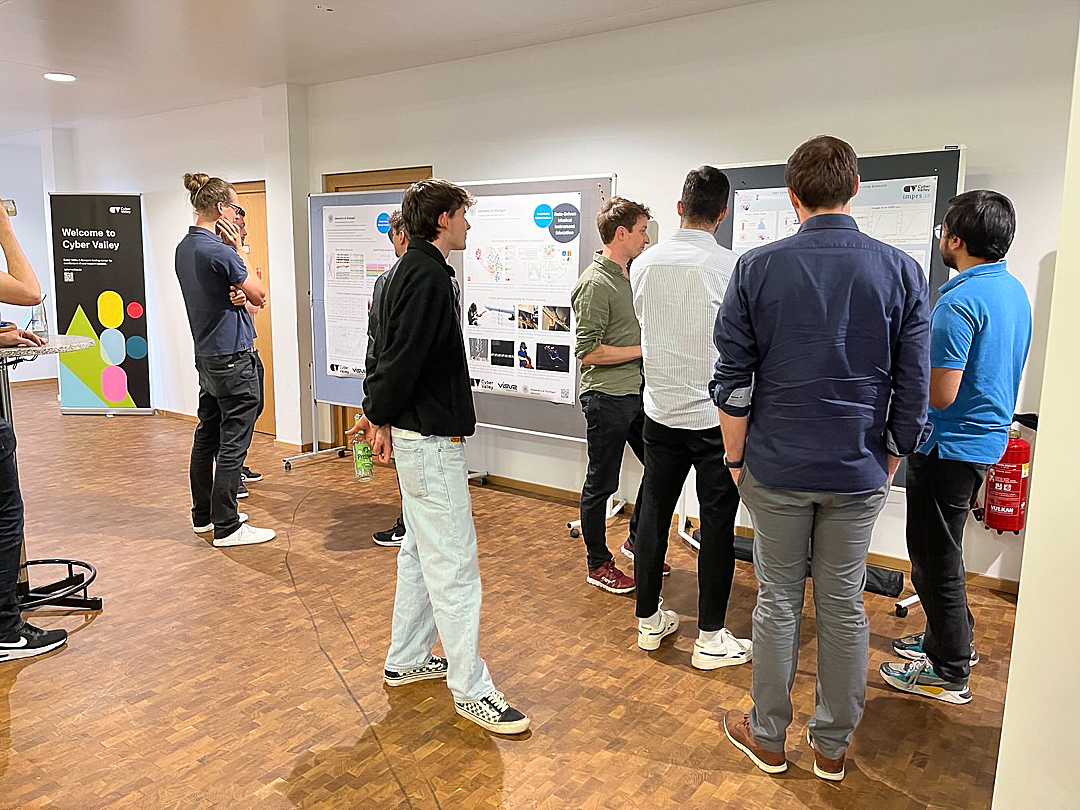
    Poster session at the Cyber Valley Research Fund Symposium. Photo: Cyber Valley

    Fabian Sinz (Professor of Machine Learning, University of Göttingen) presented the third Cyber Valley Research Fund project: “Mechanisms of Representation Transfer”. Sinz discussed the transference of strong visual processing skills between artificial neural networks and biological ones. 

    Fraunhofer covers robotics and GenAI 

    The Cyber Valley Research Fund also welcomed two talks from Fraunhofer IPA and Fraunhofer IAO. Werner Kraus (Head of Robot and Assistive Systems and Leader of the AI Innovation Center, Fraunhofer IPA) presented a review of the European Robotics Forum that took place in March 2025 in Stuttgart – the first time the conference has happened in Germany. Chandan Kumar (Team Leader of Interaction Design and Technologies at Fraunhofer Institute for Industrial Engineering IAO) then gave insights on “Smart Innovation with LLM-Powered Agents”. 

    Cyber Valley Research Fund Projects – (Flight) Robotics 

    Two projects led by Aamir Ahmad (Tenure-track Professor of Flight Robotics and Deputy Director of Research at the Institute of Flight Mechanics and Controls, University of Stuttgart, and Research Group Leader at the Max Planck Institute for Intelligent Systems) came next. Ahmad’s first project “WildCap – Autonomous Animal Motion Capture for Wildlife Conservation” developed autonomous flying robots that monitor wild animals using onboard sensors and wireless communication. He highlighted that AI methods enable them to detect, track, and interpret behavior, and how they adapt based on monitoring accuracy. 

    Christian Gall (Research Associate at the University of Stuttgart’s Institute of Flight Mechanics and Controls) is part of Ahmad’s research group and led the second project “Decision Making for Environmental Energy Exploitation with Small Aircraft”. Gall introduced a learning approach that permits aircraft to autonomously detect and exploit thermal updrafts. 

    Cyber Valley Research Fund Industry Partners 

    Four representatives from Cyber Valley’s industry partners shared their research in the first afternoon session. Mohsen Kaboli (Head of AI, Robotics and Cognitive Vehicle Research at BMW Group, and Professor of Embodied AI, Robotics, and Tactile Intelligence at the Eindhoven University of Technology) spoke about “Embodied Interactive Visuo-Tactile Perception and Learning for Robotic Grasp and Manipulation”. Maximilian Rabus (Product Manager and Data Strategist at Porsche AG) subsequently presented on “Data Fuels Performance: Insights into Porsche’s Data-Driven Development”, followed by Alexander Joos (Senior Vice President of Digital Solutions Powertrain at IAV GmbH) on “The Modern Development in the Age of AI”. 

    Cyber Valley Research Projects from Clusters of Excellence 

    The afternoon continued with a talk from Paul-Christian Bürkner (Professor of Computational Statistics at TU Dortmund University) on “Meta-uncertainty in Bayesian model comparison”. He highlighted the methods to quantify meta-uncertainty – the uncertainty over model probabilities in Bayesian model comparison – using theory and simulations to better understand the limits of scientific inference. 

    Next, Nicolas Kubail-Kalousdian (Institute of Computational Design and Construction, University of Stuttgart) gave his talk “Task and Motion Planning for Collaborative Robotic Construction with Irregular Materials”. His research developed a robotic construction system that combines reinforcement learning and logic-geometric programming to autonomously build with irregular, renewable materials like bamboo. The system showcases a sustainable, adaptive approach to low-carbon construction using mobile robots and intelligent material handling. 

    Cyber Valley Research Fund Projects – Specific research areas 

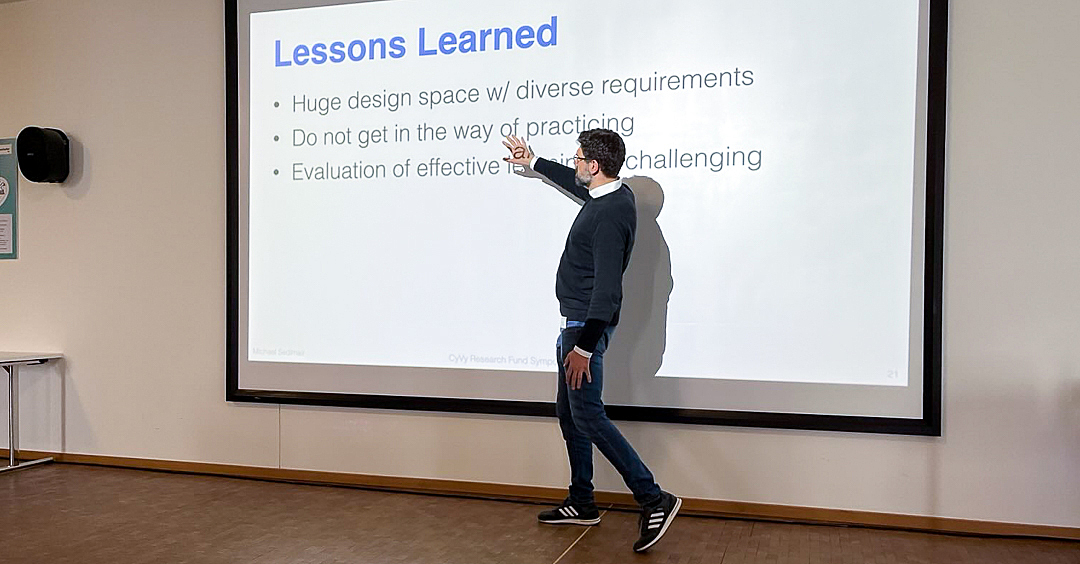
    In the symposium’s concluding session, Michael Sedlmair (Professor for Augmented Reality and Virtual Reality, University of Stuttgart) began by exploring how AI can support musical creativity. In “InstruData – Data-Driven Musical Instrument Education” he discussed how his research project used AI to augment creative processes through human-centered design. 

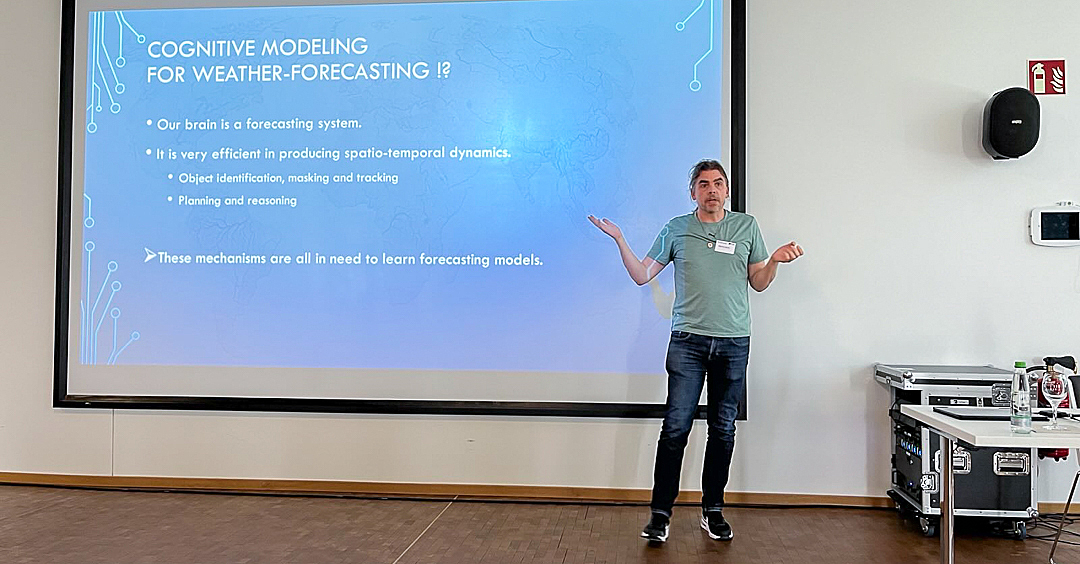
    Next, Martin Butz (Professor in Cognitive Modeling, University of Tübingen) discussed spatiotemporal forecasting models in “Neural Generative Weather Forecasting”. This project developed deep-learning models for forecasting spatiotemporal phenomena, ranging from local precipitation to global weather patterns. It utilized physics-informed, modular architectures and tailored data structures to improve prediction accuracy across diverse environmental scenarios. 

    In the final presentation, Falk Lieder (Assistant Professor of Psychology and Director of the Rational Altruism Lab, University of California Los Angeles) explained how his research has improved human decision-making. His project, “A Scalable Machine Learning Approach to Improving Human Decision Making”, developed computational tools which optimize decision-making strategies that outperform human intuition in areas like education, health, and finance. By integrating these strategies into educational software, they improved the quality of users’ decisions, resulting in smarter, more informed choices in real-world scenarios. 

    The Cyber Valley Research Fund Symposium demonstrated the research excellence in AI and modern robotics generated through the support of Cyber Valley’s founding industry partners. The day was rounded off by a lively networking session, which included discussions on open research questions and future collaborations. 

  • Cyber Valley Research Fund Symposium 2025

    Cyber Valley Research Fund Symposium 2025

    Since 2019, the Cyber Valley Research Fund (CVRF) has been driving innovation in machine learning, computer vision, and robotics, thanks to the generous support of Cyber Valley’s industry founding partners. With a total funding of five million euros, twenty groundbreaking research projects have been brought to life.

    The event will feature presentations of several completed CVRF projects and offer exciting networking opportunities in collaboration with the AI Innovation Center of Fraunhofer IPA and Fraunhofer IAO. We are thrilled to welcome experts from Cyber Valley’s founding partners, including IAV, Porsche, and BMW, who will share their insights and highlights from their cutting-edge research and projects.

    Time

    Activity

    10:00Introduction Cyber Valley GmbH & Fraunhofer Institute for Manufacturing Engineering and Automation IPA
    10:15 – 11:15

    Cyber Valley Research Fund Projects – Neural networks & biomedical


    Dmitry Kobak – Hertie Institute for AI in Brain Health, Department of Data Science, University of Tübingen: “Contrastive learning for dimensionality reduction and visualization of transcriptomic data”


    Abstract and speaker’s biography >>


    Biography
    Dmitry Kobak studied computer science and physics in St. Peterburg, then did a PhD in computational neurosience at Imperial College London, followed by a postdoc at the Champalimaud Institute in Lisbon. He is currently a group leader in the Department of Data Science of the Hertie AI institute at Tübingen University, working on machine learning and data science for biological applications. He is interested in self-supervised and unsupervised learning, in particular contrastive learning, manifold learning, and dimensionality reduction for 2D visualization of scientific datasets. He is also interested in statistical forensics and has been involved in the analysis of Russian electoral falsifications, war fatalities, and Covid-19 excess mortality.
    Abstract
    In his talk, he will present their work on self-supervised visualization of image data. Visualization methods based on the nearest neighbor graph, such as t-SNE or UMAP, are widely used for visualizing high-dimensional data. Yet, these approaches only produce meaningful results if the nearest neighbors themselves are meaningful. For images represented in pixel space this is not the case, as distances in pixel space are often not capturing our sense of similarity and therefore neighbors are not semantically close. This problem can be circumvented by self-supervised approaches based on contrastive learning, such as SimCLR, relying on data augmentation to generate implicit neighbors, but these methods do not produce two-dimensional embeddings suitable for visualization. Their method, called t-SimCNE, combines ideas from contrastive learning and neighbor embeddings, and trains a parametric mapping from the high-dimensional pixel space into two dimensions.


    Tian Qiu– Cyber Valley Group leader, University of Stuttgart – Head of Smart Technologies for Tumor Therapy, German Cancer Research Center (DKFZ) Dresden, Dresden University of Technology: “The cyber physical twin of human organs”
    Abstract and speaker’s biography >>


    Biography
    Tian Qiu is the department head of the “Smart Technology for Tumor Therapy” at the German Cancer Research Center (DKFZ) Site Dresden. He is also a professor at the Faculty of Medicine and the Faculty of Electrical and Computer Engineering, Technical University Dresden. He received the Bachelor and Master from Tsinghua University, China; and the Ph.D. from Swiss Federal Institute of Technology at Lausanne (EPFL), Switzerland. He did his postdoctoral research at Max Planck Institute for Intelligent Systems, and led the Cyber Valley research group at the University of Stuttgart, before joining DKFZ. His main research interest is micro/nano-robotics for minimally-invasive medicine. He received many awards, including the Nomination for the Big-on-Small Award at the IEEE MARSS conference and the ERC Starting Grant “VIBEBOT”.
    Abstract
    The project aims to develop the cyber-physical twin of human organs that combines the advantages of physical and cyber models, to facilitate the sensing of hard-to-acquire biomedical data under realistic conditions and to allow the analysis and modelling using this data. For the physical models, we optimized the workflow of 3D printing and soft material molding to realize complex anatomy with realistic materials. We developed new hydrogel materials that can be resected and coagulated as real soft tissues with real surgical instrument. For the cyber models, we implemented a variety of sensing modalities into the physical models, such as optical imaging, ultrasound imaging and electrical sensing, to generate data for a quantitative evaluation of surgical outcome and feedback to the surgeon in real time to improve their surgical skills. Augmented Reality (AR) facilitated models are achieved and tested by surgeons.


    Fabian Sinz– IRG Neuronal Intelligence – Institute for Bioinformatics and Medical Informatics, University of Tübingen – Professor – Department for Machine Learning – Faculty for Mathematics and computer Science, University of Göttingen: “Mechanisms of representation transfer”
    Abstract and speaker’s biography >>


    Biography
    Dr. Fabian H. Sinz is a Professor for Machine Learning at the Georg August University Göttingen. He holds a Dr. rer. nat from the University Tübingen (Max Planck Institute for Biological Cybernetics) and a Diploma in Bioinformatics. His research bridges neuroscience and machine learning, focusing on visual systems modeling and robust AI. Before his current position, he held roles at Baylor College of Medicine as Research Assistant Professor and Machine Learning Coordinator, led an independent research group at University Tübingen, and worked as a postdoctoral researcher in Tübingen and Houston. Dr. Sinz and his group frequently publish in high rank journals including Nature, Nature Neuroscience, and Science, and at top AI conferences like NeurIPS and ICLR. His work has been recognized with awards including an ERC Consolidator Grant in 2024. He serves on multiple academic committees and maintains professional memberships in organizations including the ELLIS Society and Bernstein Network for Computational Neuroscience.
    Abstract
    The project investigated how to transfer robust visual processing capabilities between artificial neural networks and from biological to artificial systems. Key findings included: 1) common functional transfer methods struggle with transferring even simple equivariance properties; 2) multi-task learning with monkey visual cortex data can improve network robustness against image distortions; and 3) networks co-trained with biological data show enhanced sensitivity to humanly salient image regions. The team developed several approaches, including a novel self-supervised contrastive learning algorithm and the HARD (Hard Augmentations for Robust Distillation) framework for transferring inductive biases between networks. These advances contribute to the broader goal of creating artificial vision systems that better mimic the generalization capabilities of biological vision while maintaining high performance on specific tasks.


    11:15 – 11:30

    Coffee and Networking

    11:30 – 12:10

    Robotics and GenAI at Fraunhofer Institutes


    Werner Kraus– Head of department robot and assistive systems – Leader AI Innovation Center, Fraunhofer IPA: “Recap European Robotics Forum 2025 and Outlook on current activities in robotics”
    Abstract and speaker’s biography >>


    Biography
    TBD
    Abstract
    TBD


    Chandan Kumar– Team Leader – Interaction Design & Technologies, Fraunhofer Institute for Industrial Engineering IAO “Smart Innovation with LLM-Powered Agents“
    Abstract and speaker’s biography >>


    Biography
    Dr. Chandan Kumar leads the Interaction Design and Technologies research group at the Fraunhofer Institute for Industrial Engineering IAO in Stuttgart. His work lies at the intersection of human-computer interaction and artificial intelligence, with a focus on intuitive, human-centered applications. Dr. Kumar holds a Ph.D. in Computer Science from the University of Oldenburg (2016) and has authored over 40 scientific publications. His research spans information retrieval, multimodal interaction, eye tracking, personalization, and visualization. He currently leads projects on data analytics, generative AI, and multi-agent LLMs, with applications in knowledge management, resource planning, customer research, and smarter innovation. His team collaborates closely with industry partners to translate research into real-world impact and shape emerging human-AI interaction strategies.
    Abstract
    TBD


    12:10 – 12:50

    Cyber Valley – Research Fund Projects – (Flight) Robotics


    Aamir Ahmad– Flight Robotics Group, Institute of Flight Mechanics and Controls (IFR) – Department of Aerospace Engineering and Geodesy, University of Stuttgart and Robot Perception Group – Perceiving Systems Department, Max Plank Institute for Intelligent Systems: “ Wildcap – Autonomous Animal Motion Capture for Wildlife Conservation”


    Abstract and speaker’s biography >>


    Biography
    Aamir Ahmad is a tenure-track professor of Flight Robotics and the deputy director of research at the Institute of Flight Mechanics and Controls, University of Stuttgart, Germany. He is also a Research Group Leader at the Max Planck Institute (MPI) for Intelligent Systems in Tübingen, where he was previously a research scientist (2016–2020). He was awarded the Marie-Curie Intra-European Postdoctoral Fellowship 2013 at the MPI for Biological Cybernetics, Tübingen (2014–2016). He obtained his Ph.D. in Electrical and Computer Engineering from the University of Lisbon, Portugal, in 2013 and undergraduate degree in Civil Engineering (B-Tech) from the Indian Institute of Technology (IIT), Kharagpur, in 2008. His research interests include aerial robotics, multi-robot systems, deep learning and reinforcement learning for aerial robots, formation control, aerial vision, localization, target tracking and simultaneous localization and mapping (SLAM). He is one of the recipients of the prestigious award “KI-Champions Baden-Württemberg 2024” for his project “WildCap – Intelligent Aerial Robots for Wildlife Conservation”.
    Abstract
    In this talk, we will present WildCap’s research on teams of aerial robots, including both multi-rotor drones and airships, that use only their on-board resources (camera and computer) and cooperate with each other via wireless communication to autonomously detect, track, follow and infer the behaviour of wild animals, all in their natural habitat. We will discuss the AI-based methods developed for these monitoring functionalities, and for the monitoring accuracy-driven autonomous control of these robot teams. We will also touch upon our work on synthetic data generation that fuels several of our AI-based methods. Finally, we will show how we are deploying these drones to understand the behavior of Grévy’s zebras in Kenya and Przewalski’s horses in Hungary.


    Christian Gall– Research associate at the University of Stuttgart’s Institute of Flight Mechanics and Controls: “ Decision Making for Environmental Energy Exploitation with Small Aircraft”
    Abstract and speaker’s biography >>


    Biography
    Christian Gall is a research associate at the University of Stuttgart’s Institute of Flight Mechanics and Controls. He received his B.S. and M.S. degrees in Aerospace Engineering from the University of Stuttgart, where he specialized in system dynamics and automation engineering. In addition, he spent a year at the University of Virginia in the U.S., focusing on robotics and machine learning.
    Abstract
    At the moment, there are large investments and developments in the field of individual mobility, such as urban air mobility vehicles and unmanned aircraft applications, e.g., for medical transportation or rescue purposes. The majority of these small aircraft are based on electric propulsion and thus, their endurance is limited. In the case of fixed-wing aircraft, the endurance can be significantly improved by exploiting energy from the atmospheric environment. Hence, a deep reinforcement learning approach to the autonomous localization and exploitation of thermal updrafts is presented and validated in real-world flight tests. As the resulting policy directly maps from the aircraft’s position and climb rate to control commands, a deep neural network that can detect thermal updrafts and estimate their position, strength, and spread in a human-readable manner is additionally presented.


    12:50 – 14:00

    Lunch & Poster Session

    14:00 – 14:50
    Cyber Valley Research Fund Industry Partners – Industry points of view
     

    Mohsen Kaboli– – Lead & PI AI and Robotic Research of BMW Group and Professor of Embodied AI, Robotics and tactile Intelligence, Eindhoven University of Technology (NL); Director of RoboTac Lab: “ Embodied interactive visuo-tactile perception and learning for robotic grasp and manipulation”

    Abstract and speaker’s biography >>

    Biography Dr. Mohsen Kaboli is a professor of Embodied AI, Robotics, and Tactile Intelligence at Eindhoven University of Technology (TU/e) in the Netherlands. He is the head of Embodied Interactive Perception & Robot Learning Lab (RoboTac). Additionally, he is the Lead & PI of AI, Robotics research lab at BMW Group, Center of Invention in Munich, Germany, a role he has held since 2018. Previously, Dr. Kaboli held the position of assistant professor at the Institute for Brain and Cognition at Radboud University in the Netherlands from 2019 to 2022. He was a group leader of tactile robotic and postdoctoral research fellow at the Institute for Advanced Studies (IAS), the Technical University of Munich (TUM), Germany from September 2017 till August 2018. He received his Ph.D. degree with the highest distinction (summa cum laude) in robotics focusing on interactive tactile perception and learning in robotics from TUM in 2017. He was awarded the best European Ph.D. thesis prize in robotics, Georges Giralt Ph.D. Award (finalist). Abstract This talk explores embodied interactive visuo-tactile perception and active learning as a foundation for robotic grasping and manipulation. By integrating predictive and interactive perception, robots can actively engage with objects, refining their understanding through both visual and tactile feedback. I will discuss the role of shared visuo-tactile representations in enabling real-time adaptation, as well as visuo-tactile perception cross-modalperception for dexterous manipulation. The talk will highlight key challenges and future directions in developing robotic systems that can intelligently interact, actively learn, and generalize across diverse tasks and embodiments.
     Maximilian Rabus– Product Manager & Data strategist – Data-Driven Development – Data Science & Governance, Dr.h.c. F. Porsche AG: “Data Fuels Performance: Insights into Porsche´s data-driven development” Abstract and speaker’s biography >> Biography After completing his master’s degree in Automotive and Engine Technology at the University of Stuttgart, Maximilian Rabus joined Porsche in 2018. His initial focus was on establishing Artificial Intelligence as an alternative validation method in passive safety development. In late 2020, he took on the newly created role for Data Science and Digital Transformation in Body Development at Porsche. Since 2024, he has been a product manager in the Data-Driven Development department and, as a Data Domain Manager, is responsible for defining and implementing the data strategy in the vehicle development domain. His doctoral research at the University of Freiburg focused on integrating Data Science and Artificial Intelligence into conventional development processes. His particular interest lies in Explainable AI and the future-oriented organization and management of data.
     Alexander Joos–Senior Vice President Digital Solutions Powertrain, TD-X | Powertrain Systems – IAV GmbH: “The modern development in the age of AI” Abstract and speaker’s biography >> Biography https://www.linkedin.com/in/dr-alexander-joos-91b647127/
    14:50 – 15:30Cyber Valley – Research Fund Projects- Clusters of Excellence


    Paul-Christian Bürkner– Cluster of Excellence SimTech, Research Group for Bayesian Statistics, University of Stuttgart – Full Professor of Computational Statistics –Department of Statistics, Dortmund University of Technology: “Meta-uncertainty in Bayesian model comparison”
    Abstract and speaker’s biography >>


    Biography
    Paul Bürkner is a statistician with a focus on probabilistic (Bayesian) methods currently working as a Full Professor of Computational Statistics at TU Dortmund University, Department of Statistics. Having originally studied psychology and mathematics, his core research is nowadays located somewhere between statistics and machine learning, with applications in almost all quantitative sciences.
    Abstract
    In experiments and observational studies, scientists gather data to learn more about the world. However, what we can learn from a single data set is always limited, and we are inevitably left with some remaining uncertainty. It is of utmost importance to take this uncertainty into account when drawing conclusions if we want to make real scientific progress. Formalizing and quantifying uncertainty is thus at the heart of statistical methods aiming to obtain insights from data. Numerous research questions in basic science are concerned with comparing multiple scientific theories to understand which of them is more likely to be true, or at least closer to the truth. To compare these theories, scientists translate them into statistical models and then investigate how well the models’ predictions match the gathered real-world data. One widely applied approach to compare statistical models is Bayesian model comparison (BMC). Relying on BMC, researchers obtain the probability that each of the competing models is true (or is closest to the truth) given the data. These probabilities are measures of uncertainty and, yet, are also uncertain themselves. This is what we call meta-uncertainty (uncertainty over uncertainties). Meta-uncertainty affects the conclusions we can draw from model comparisons and, consequently, the conclusions we can draw about the underlying scientific theories. However, we have only just begun to unpack and to understand all of the implications. This project contributes to this endeavor by developing and evaluating methods for quantifying meta-uncertainty in BMC. Building upon mathematical theory of meta-uncertainty, we will utilize extensive model simulations as an additional source of information, which enable us to quantify so-far implicit yet important assumptions of BMC. What is more, we will be able to differentiate between a closed world, where the true model is assumed to be within the set of considered models, and an open world, where the true model may not be within that set — a critical distinction in the context of model comparison procedures.


    Nicolas Kubail-Kalousdian– Institute of Computational Design and Construction (ICD), University of Stuttgart “Task and motion planning for collaborative Robotic construction with irregular materials”

    Abstract and speaker’s biography >>

    Biography Nicolas Kubail Kalousdian is a PhD candidate at the Institute for Computational Design and Construction (ICD), University of Stuttgart, and the Principal Autonomy Engineer at Greensight, in Boston, MA. His research focuses on AI-driven task and motion planning for autonomous robotic construction with natural, deformable materials. At GreenSight, he leads autonomy efforts for DARPA, USAF, and NSF-funded projects. He has lectured internationally and published in IEEE RAL and Advanced Science. Nicolas holds an M.Sc. from the University of Stuttgart (ITECH) and has been supported by both German and U.S. research funding programs. Abstract This project, Task and Motion Planning for Collaborative Robotic Construction with Deformable Materials, investigates the integration of robotics and artificial intelligence into architectural construction using natural, anisotropic materials. Departing from the prevailing reliance on rigid, standardized materials, the project advances a material-robot co-design framework that enables autonomous, sustainable construction in dynamic environments. It explores how distributed robotic systems can manipulate deformable elements through reinforcement learning (RL) and logic-geometric programming (LGP), forming a hybrid planning paradigm that adapts to material variability while preserving structural intent. The project developed a custom mobile robotic platform capable of transporting, bending, and aligning bamboo elements in simulation and physical experiments. Reinforcement learning, augmented by domain randomization and curriculum learning, was employed to teach dynamic motor skills under material uncertainty. In parallel, LGP was used to plan multi-step assembly sequences respecting geometric and structural constraints. A high-fidelity simulation environment, incorporating real-time feedback and mechanical modeling of bamboo, supported robust policy development. The culmination was an architectural-scale demonstrator capable of collaborative transport and assembly tasks, validating the feasibility of robotically constructing with irregular, renewable materials. Despite challenges in gripper implementation and hardware integration, the project demonstrated the potential for robotic systems to support low-carbon, scalable construction methods. The findings establish a foundation for follow-on work in adaptive construction robotics, emphasizing sustainability, system modularity, and material intelligence. This work contributes to the evolving landscape of autonomous building technologies, extending their reach into ecologically responsible practices using naturally variable materials.
    15:30 – 15:45

    Coffee and Networking

    15:45 – 16:45Cyber Valley – Research Fund Projects – Specific research areas
     

    Michael Sedlmair – Professor for Augmented Reality und Virtual Reality, Managing Director VIS – Visualization Research Center (VISUS) and Institute for Visualization and Interactive Systems (VIS), University of Stuttgart. “InstruData – Data-driven Musical Instrument Education”

    Abstract and speaker’s biography >>

    Biography Michael Sedlmair is a professor at the University of Stuttgart, where he leads the Human-Computer Interaction research group. He earned his Ph.D. in Computer Science from the University of Munich in 2010. His career path has included positions at Jacobs University Bremen, the University of Vienna, the University of British Columbia in Vancouver, and BMW Group Research and Technology in Munich. His research focuses on immersive analytics, situated visualization, novel interaction technologies, visual and interactive machine learning, perceptual modeling for visualization, and the methodological and theoretical foundations underlying these areas. Abstract This talk explores the intersection of human creativity and artificial intelligence in the domain of music. I will present two projects that highlight different facets of this interaction. The first focuses on AI-powered tools to support musical instrument practice, using data and motion capture to provide real-time, visual feedback that enhances learning for students and professionals alike. The second is a design study on a visual analytics interface for AI-assisted music composition, which enables composers to explore and co-create music with generative models. Together, these projects demonstrate how AI can meaningfully augment both the technical and creative processes in music through human-centered design.
     Martin Butz– Neuro-Cognitive Modeling Group, Department of Computer Science – University of Tübingen: “Neural Generative Weather Forecasting” Abstract and speaker’s biography >> Biography Martin Butz is a professor at the Faculty of Science, University of Tübingen, Germany. His main background lies in computer science and machine learning. His interdisciplinary research agenda integrates the fields of cognitive and developmental psychology, computational neuroscience, robotics as well as parts of the geosciences. His current main research foci include learning conceptual, compositional, causal structures from data as well as developing machine learning algorithms for understanding atmospheric dynamics and hydrological processes. He has published three monographs, numerous edited books and special issues, and more than 200 peer reviewed conference and journal articles. Abstract Forecasting spatiotemporal dynamics is a challenge that has many facets. In the talk I will present some spatiotemporal forecasting models developed in our group. The models span from local precipitation now casting, over hydro-logical forecasting, to mid-range global weather forecasting (up to two weeks) models. The focus will lie on how to develop physics-informed modular deep learning architectures, how to design a suitable data structure, and how to tune the involved loss components for the targeted problem.
     Falk Lieder– Rationality Enhancement, Max-Planck-Institute for Intelligent Systems – Assistant Professor of Psychology – Director of the Rational Altruism Lab, University of California Los Angeles (USA): “A scalable machine learning approach to improving human decision making” Abstract and speaker’s biography >> Biography Falk Lieder is Assistant Professor of Psychology at the University of California, Los Angeles. He completed his Ph.D. in Tom Griffiths’s Computational Cognitive Science Lab at UC Berkeley in May 2018. His dissertation “Beyond bounded rationality: Reverse-Engineering and Enhancing Human Intelligence” won the Glushko Dissertation Prize in Cognitive Science. He then became a Max Planck Research Group Leader at the MPI for Intelligent Systems in Tübingen, Germany, where he led the Rationality Enhancement Group until June 2023. He joined the psychology department of UCLA in July 2023. Dr. Lieder has published 50 peer-reviewed articles that have collectively been cited more than 5000 times. His most influential contribution to cognitive science thus far has been the development of a new cognitive modeling paradigm known as resource-rational analysis (Lieder & Griffiths, 2020). Abstract People have to make many difficult decisions about their education, career, health, and finances. To make such decisions wisely, people need clever, far-sighted decision strategies. But many people lack appropriate decision strategies and consequently make choices that they later regret. A natural solution is to teach people clever strategies for making good decisions. Unfortunately, very few clever decision strategies are known explicitly. To address this bottleneck, we developed computational methods for discovering optimal strategies for human decision-making. The discovered strategies are significantly better than people’s intuitive strategies. We also developed educational software that teaches these strategies to people. Training people with this software significantly increased the quality of their decisions. We extended this approach to increasingly more realistic scenarios, including project selection.
    16:45 – 17:00

    Closing greetings Cyber Valley GmbH and Fraunhofer Institute for Manufacturing Engineering and Automation

    17:30

    Networking


    Registration

    As spaces are limited, please register in advance via Eventbrite.

  • Cyber Valley Research Fund project optimizes focus and productivity

    Cyber Valley Research Fund project optimizes focus and productivity

    Unlike conventional attention training programs that rely on unrelated tasks or video games, ACTrain seamlessly integrates into the work environment, allowing users to enhance focus while actively engaged in their tasks. Users can specify the documents or applications on which they wish to concentrate and set a desired focus duration. The app then delivers real-time feedback on attention levels, transforming the workspace into a dynamic gym for strengthening focus and attention skills.  

    ACTrain uses a unique point system that is awarded based on a mathematical principle, which aligns short-term rewards with long-term value, helping users see the benefits of staying focused over time. The software is available for free on both Mac and Windows platforms at https://osf.io/8f6hx/. 

    Additionally, Lieder and his team collaborated with the non-profit organization Solve Education to integrate this point system into their educational game, The Dawn of Civilization, designed to help disadvantaged youth in developing countries learn English. An experiment revealed that this optimized point system led to significantly enhanced learning outcomes. 

    ACTrain is poised to redefine productivity and learning, enabling individuals to more effectively achieve goals and sustain focus in an ever more distracting world. 

    This project yielded the following peer-reviewed publications:  

    1. Wirzberger, M., Lado, A., Prentice, M., Oreshnikov, I., Passy, J.-C., Stock, A., & Lieder, F. (2024). Optimal feedback improves behavioral focus during self-regulated computer-based work. Scientific Reports, 14(3134). https://doi.org/10.1038/s41598-024-53388-3 
    2. Kukamjad, T., Pauly, R., Heindrich, L., Amo, V., & Lieder, F. (2024, May). Evaluation of Brain Point Intervention in The Dawn of Civilization. UCLA Psychology Undergraduate Research Conference.  https://doi.org/10.13140/RG.2.2.11284.48008 
    3. Pauly, R., Heindrich, L., Amo, V., & Lieder, F. (2022, June). What to learn next? Aligning gamification rewards to long-term goals using reinforcement learning. The 5th Multidisciplinary Conference on Reinforcement Learning and Decision Making (RLDM2022). https://doi.org/10.13140/RG.2.2.32661.19684 
    4. Teo. J., Pauly, R., Heindrich, L., Amo, V., & Lieder, F. (2021, June). Leveraging AI to support the self-directed learning of disadvantaged youth in developing countries. The first Life Improvement Science Conference. https://is.mpg.de/publications/paulyteoheindrichamolieder2021lisa-leveraging 
    5. Wirzberger, M., Lado, A., Eckerstorfer, L., Oreshnikov, I., Passy, J. C., Stock, A., Shenhav, A., & Lieder, F. (2020). How to navigate everyday distractions: Leveraging optimal feedback to train attention control. CogSci 2020. https://www.cognitivesciencesociety.org/cogsci20/papers/0380/ 
    6. Wirzberger, M., Oreshnikov, I., Passy, J., Lado, A., Shenhav, A., Lieder, F. (2020). ACTrain: Ein KI-basiertes Aufmerksamkeitstraining für die Wissensarbeit. 66th Spring Conference of the German Ergonomics Society. https://doi.org/10.13140/RG.2.2.14709.50406 

    Dr. Falk Lieder is now an Assistant Professor of Psychology at UCLA and the Director of the Rational Altruism Lab. 

  • Cyber Valley Research Fund drives advancements in soft robotics

    Cyber Valley Research Fund drives advancements in soft robotics

    Dr. Ardian Jusufi and his team researched innovative materials that improve proprioception (the body’s ability to sense movement and position) in unpredictable and irregular environments. Insights from the project have deepened understanding of how the body moves and interacts with its environment. These advancements in soft active materials and sensors will revolutionize the fields of biomedical devices and soft robotics.  

    Some of the project’s key achievements include:  

    • Enhanced pumping system performance: The project team improved a hydrogel-encapsulated soft actuator pumping system. The system demonstrated improved competitive pressure and fluid velocity performance, offering potential insights for cardiovascular and renal applications. 

    • Addressing sensor challenges: The project addressed the inherent trade-offs of soft sensors. While offering greater flexibility and sensitivity, these sensors often lack robustness, repeatability, linearity, and durability. Various use cases were evaluated to balance these trade-offs effectively. 

    • Innovative manufacturing and materials: The team developed advanced manufacturing techniques and synthesized new materials responsive to environmental stimuli, such as hydrodynamic pressure. This was relevant for studying locomotion, like the undulatory swimming of fish, using fluidic actuators. 

    • System integration with mobile soft actuators: Soft sensors were integrated with mobile soft fluidic actuators in robots. This integration provided valuable insights into the neuromechanics of movement, particularly in aquatic environments. 

    • Electroactive polymer-driven pumping systems: The team aimed to reduce the tissue stress associated with traditional implanted pumps. Although current limitations related to in-body electricity use means that these systems are not yet feasible for in vivo applications, the research marks significant progress in understanding the biomechanics of movement. 

    This project yielded the following publications:  

    1. Souri H, Banerjee H, Jusufi A, Radacsi N, Stokes A, Park I, Sitti M, Amjadi M. Advanced Int. Sys. 2 (8) 2000039. Wearable and Stretchable Strain Sensors: Materials, Sensing Mechanisms, and Applications. 2020. Advanced Intelligent Systems, Volume: 2, Issue: 8, 2020. DOI: https://doi.org/10.1002/aisy.202000039 
    2. Banerjee H, Kalairaj MS, Ren H, and Jusufi A*. Advanced Engineering Materials. Strong, Ultrastretchable Hydrogel-Based Multilayered Soft Actuator Composites Enhancing Biologically Inspired Pumping Systems. [Cover inside] Adv. Eng. Mater 2021, 23, 2100121. 
    3. Wright B, Vogt D, Wood R, Jusufi A*. IEEE International Conference on Soft Robotics (RoboSoft). Soft Sensors for Curvature Estimation under Water in a Soft Robotic Fish. COEX, Seoul, Korea, 2019.
    4. Siddall R, Fukushima T, Bardhi D, Perteshoni B, Morina A, Hasimja E, Dujaka Y, Haziri G, Martin L, Banerjee H, Jusufi A*. Advanced Robotics 35 (7). Compliance, Mass Distribution and Contact Forces in Cursorial and Scansorial Locomotion with Biorobotic Physical Models. 2021. https://www.tandfonline.com/doi/full/10.1080/01691864.2021.1887760.
    5. Fukushima Toshihiko, Robert Siddall,Fabian Schwab, Severine Toussaint, Greg Byrnes, John Nyakatura, and Ardian Jusufi. Inertial tail effects during righting of squirrels in unexpected falls: From behavior to robotics. Integrative and Comparative Biology, icab 023, 2021.
    6. Lin Yu-Hsiang, Siddall R, Schwab F, Fukushima T, Banerjee H, Youngjoon Baek, Daniel Vogt, Yong-Lae Park, and Jusufi A. Modeling and control of a soft robotic fish with integrated soft sensing. Advanced Intelligent Systems, 2000244, 2021.
    7. Fabian Schwab, Elias T Lunsford, Taehwa Hong, Fabian Wiesemüller, Kovac M, Park YL, Akanyeti O, Liao J C, and Jusufi A. Body caudal undulation measured by soft sensors and emulated by soft artificial muscles. Integrative and Comparative Biology, 2021.
    8. Fabian Schwab, Fabian Wiesemüller, Claudio Mucignat, Yong-Lae Park, Ivan Lunati,Mirko Kovac, and Ardian Jusufi. Undulatory swimming performance explored with a biorobotic fish and measured by soft sensors and particle image velocimetry. Frontiers in Robotics and AI, page 387, 2021.
    9. Robert Siddall, Greg Byrnes, Rob J. Full and Ardian Jusufi, Tails stabilize landing of gliding geckos crashing head-first into tree trunks', Communications Biology, 2021. 

    This research project primarily aimed to expand knowledge of biomechanics through robophysical models, rather than immediate practical applications. It started in April 2020 and concluded in February 2023. Dr. Ardian Jusufi was formerly a Max Planck Research Group Leader at the MPI for Intelligent Systems (March 2018–January 2024). He is now Head of Soft Kinetic group in the Engineering Sciences Department of the Empa Swiss Federal Labs for Materials Science and Technology. 

  • Cyber Valley Research Fund improves human decision-making with AI

    Cyber Valley Research Fund improves human decision-making with AI

    From February 2020 to February 2024, Dr. Falk Lieder led a major project supported by the Research Fund, titled “A Scalable Machine Learning Approach to Improve Human Decision Making,”. The project aimed to prepare for a future where effective decision-making is crucial. 

    Good decision-making involves planning, gathering relevant information, and handling uncertainty. As automation transforms the workforce by taking over routine tasks, the demand for jobs requiring decision-making in complex and novel situations will rise. Future roles will emphasize critical thinking and adaptability. To prepare, society must focus on retraining workers and equipping the next generation with advanced decision-making skills. 

    Lieder’s project leveraged artificial intelligence to uncover optimal decision strategies that help individuals navigate complex challenges. The team also designed and tested interactive tutorials, allowing participants to learn and apply these strategies effectively. 

    They evaluated their approach on a series of more realistic decision problems, ranging from an abstract planning task without uncertainty, to planning under uncertainty, to a company choosing between alternative projects. In each case, the new AI methods found decision strategies that outperformed both human decision-making and strategies identified by previous techniques. 

    Their interactive tutorials improved decision-making by explaining the strategy in clear language, demonstrating it through examples, and offering hands-on practice with feedback. In all three applications, individuals who completed the AI-driven strategy tutorials made better decisions than those who practiced decision-making independently. 

    This project yielded the following peer-reviewed publications: 

    1.  Consul, S., Heindrich, L., Stojchewski, J., & Lieder, F. (2022), Improving Human Decision-Making by Discovering Efficient Strategies for Hierarchical Planning, Computational Brain & Behavior, 5(2), 185-216. https://doi.org/10.1007/s42113-022-00128-3 

    2. Callaway, F., Jain, Y. R., van Opheusden, B., Das, P., Iwama, G., Gul, S., Krueger, P.M., Becker, F., Griffiths, T. L., & Lieder, F. (2022). Leveraging Artificial Intelligence to Improve People's Planning Strategies. PNAS, 119 (12) e2117432119. https://doi.org/10.1073/pnas.2117432119 

    3.  Mehta, A., Jain, Y. R., Kemtur, A., Stojcheski, J., Consul, S., Tosic, M., & Lieder, F. (2022). Leveraging machine learning to automatically derive robust decision strategies from imperfect knowledge of the real world. Computational Brain & Behavior, 5(3), 343-377. https://doi.org/10.1007/s42113-022-00141-6 

    4.  Becker, F., Skirzynski, J., van Opheusden, B., & Lieder, F. (2022). Boosting human farsightedness with automatically discovered planning instructions. Computational Brain & Behavior, 5(4), 467–490. https://doi.org/10.1007/s42113-022-00149-y 

    5. Skirzynski, J., Jain, Y. R., & Lieder, F. (2024). Automatic discovery and description of human planning strategies. Behavior Research Methods, 56(3), 1065-1103. https://doi.org/10.3758/s13428-023-02062-z 

    6. Skirzyński, J., Becker, F., Lieder, F. (2021). Automatic Discovery of Interpretable Planning Strategies. Machine Learning, 110, pp. 2641–2683. https://doi.org/10.1007/s10994-021-05963-2

    7. Kemtur, A., Jain, Y. R., Mehta, A., Callaway, F., Consul, S., Stojcheski, J., & Lieder, F. (2020). Leveraging machine learning to automatically derive robust planning strategies from biased models of the environment. Proceedings of the 42nd Annual Meeting of the Cognitive Science Society. 

    Preprints of articles yet to be published: 

    1. Heindrich, L., Consul, C. & Lieder, F. (2024). Leveraging AI to improve human planning in large partially observable environments. arXiv Preprint. https://arxiv.org/abs/2302.02785 

    2.  Heindrich, L., & Lieder, F. (2024). Leveraging automatic strategy discovery to teach people how to select better projects. https://arxiv.org/abs/2406.04082 

    Dr. Falk Lieder is now an Assistant Professor of Psychology at UCLA and the Director of the Rational Altruism Lab. 

  • Cyber Valley Research Fund advances robotic perception techniques

    Cyber Valley Research Fund advances robotic perception techniques

    Current autonomous systems still lack the capabilities of humans in scene perception and object manipulation tasks. Jörg Stückler and his team developed a method that combines differentiable physics and deep learning to estimate an object’s position, orientation, and velocity, while also simultaneously determining the friction between an object and its surface. The team also explored how understanding an object’s dynamics could improve control strategies, such as predicting how a robot’s actions will impact the object and guiding it to a desired location.  

    Their findings inspire new methods and approaches that adapt robotics object manipulation skills to the physical properties of objects. Although the research is still in its scientific development stage, it has the potential to revolutionize applications by enabling robots to manipulate objects more flexibly and adaptively.  

    This project yielded the following publications: 


    1. Kandukuri, R. K., Strecke, M., Stueckler, J. Physics-Based Rigid Body Object Tracking and Friction Filtering From RGB-D Videos. Accepted for International Conference on 3D Vision (3DV), 2024. Preprint arXiv:2309.15703. 

    2. EV-SynPhys and EV-RealPhys datasets accompanying at https://keeper.mpdl.mpg.de/d/5ec213b655b44e40a382/ 

    3. The 3DV 2024 paper was presented as poster presentation at the International Conference on 3D Vision 2024. Parts of the results reported in the paper have been also presented in a keynote given at the IEEE International Conference on Multi-Sensor Fusion and Integration / Symposium on Sensor and Data Fusion (MFI/SDF) in Bonn in November 2023. Parts of the project results have been presented at the Cyber Valley Research Fund symposium in November 2023. 

    This research project started in June 2020 and concluded in December 2023. Dr. Jörg Stückler is now a Professor of Computer Science at the University of Augsburg. 

  • Cyber Valley Research Fund drives research excellence

    Cyber Valley Research Fund drives research excellence

    One notable project supported by the Research Fund was Caterina De Bacco’s project “Relaxing Restrictive Independence Assumptions in Networks”. The project aimed to improve our understanding of fundamental patterns in networks through advanced probabilistic generative models. It began in April 2020 and concluded in December 2023.

    By leveraging the growing availability of rich datasets, De Bacco’s project developed advanced network models to capture complex interactions within various domains. The project team created a model that combines node information with network structure to analyze multilayer networks. By developing analytical approximations, the project addressed the complexity of real-world interactions, incorporating features like reciprocity and multiplexity.
     
    Extending beyond the concept of conditional independence, the research team developed two new methods for modeling connections between nodes. One uses Poisson distributions and relies on pseudo-likelihood approximations, while the other utilizes Bivariate-Bernoulli distributions. Both methods provide a better understanding of network interactions.
     
    Additionally, the project delved into how the developed ideas and methods could be applied to generalized data sets, specifically hypergraphs, where the interactions involve groups of nodes, and further developed their generative models. These models present several advantages for hypergraph analysis and can effectively identify communities and predict missing connections.
     
    These new models represent a major advancement in network analysis, offering reliable and scalable solutions for understanding complex interactions. The project has set the stage for future research and two more models are currently in development, focusing on multilayer networks with additional information and hierarchical structures. 
     
     
    This project yielded the following publications:

    1. M. Contisciani, E. A. Power, and C. De Bacco. “Community detection with node attributes in multilayer networks”. Scientific Reports 10.1 (2020), page 15736.

    2. K.Higham, M. Contisciani, and C. De Bacco. “Multilayer patent citation networks: A comprehensive analytical framework for studying explicit technological relationships”. Technological Forecasting and Social Change 179 (2022), page 121628.

    3. H. Safdari, M. Contisciani,and C. De Bacco. “Generative model for reciprocity and community detection in networks”. Physical Review Research 2 (2021).

    4. M. Contisciani, H. Safdari, and C. De Bacco. “Community detection and reciprocity in networks by jointly modelling pairs of edges”. Journal of Complex Networks 10.4 (2022).

    5. H. Safdari, M. Contisciani, and C. De Bacco. “Reciprocity, community detection, and link prediction in dynamic networks”. Journal of Physics: Complexity 3.1 (2022).

    6. C. De Bacco, M. Contisciani, J. Cardoso-Silva, H. Safdari, G. Lima Borges, D. Baptista, T. Sweet, J.-G. Young, J. Koster, C. T. Ross, R. McElreath, D. Redhead, and E. A. Power. “Latent network models to account for noisy, multiply reported social network data”. Journal of the Royal Statistical Society Series A: Statistics in Society 183 (2023).

    7. H. Safdari, M. Contisciani, and C. De Bacco. “Anomaly, reciprocity, and community detection in networks”. Physical Review Research 5.3 (2023).

    8. M. Contisciani, F. Battiston, and C. De Bacco. “Inference of hyperedges and overlapping communities in hypergraphs”. Nature Communications 13.1 (2022).

    9. N. Ruggeri, M. Contisciani, F. Battiston, and C. De Bacco. “Community detection in large hypergraphs”. Science Advances 28 (2023).

    10. Q. F. Lotito, M. Contisciani, C. De Bacco, L. Di Gaetano, L. Gallo, A. Montresor, F. Musciotto, N. Ruggeri, and F. Battiston. “Hypergraphx: a library for higher-order network analysis”. Journal of Complex Networks 11.3 (2023).

  • Cyber-physical twins of human organs

    Cyber-physical twins of human organs

    Dr. Tian Qiu led the project in collaboration with three medical departments at the University Hospitals in Tübingen and Freiburg. The project team successfully created and studied six highly realistic organ models, including the kidney, bladder, prostate, liver, vagina, and brain. These models combine the advantages of physical and cyber models to improve the collection of hard-to-get biomedical data under realistic conditions for analysis and modeling.

    For the physical models, the project team optimized 3D printing and soft material molding techniques to replicate the anatomy and texture of human organs. Additionally, they engineered new hydrogel materials that behave like real soft tissue in surgical procedures. The team also created a brain model comprising composite hydrogel that exhibits life-like mechanical properties and high optical transparency, enabling high-resolution imaging. 

    The project’s cyber models incorporated sensing technologies such as optical imaging, ultrasound imaging, and electrical sensing. These integrated systems can generate large amounts of data, making possible real-time feedback and quantitative evaluation of surgical outcomes. The project also leveraged Augmented Reality (AR) to enhance medical training. Medics participated in initial trials by applying the new cyber-physical organ models to optimize surgical instruments and digital surgical training.  

    The Cyber Valley Research Fund has allocated five million euros to promote innovation and scientific excellence. Research groups were encouraged to submit project proposals that were evaluated according to ethical and societal considerations.  
     

    This project yielded the following peer-reviewed publications:

    1. Choi et al. (2021): Soft urinary bladder phantom for endoscopic training, Ann. Biomed. Eng., 49, 2412-2420, DOI: 10.1007/s10439-021-02793-0 

    2. Hackner et al. (2021): Panoramic imaging assessment of different bladder phantoms – an evaluation study, Urology, 156, e103-e110, DOI: 10.1016/j.urology.2021.05.036

    3. Kim et al. (2022): A high-fidelity artificial urological system for the quantitative assessment of endoscopic skills, J. Funct. Biomater., 13(4)301, DOI: 10.3390/jfb13040301 

    4. Tan et al. (2021): Soft liver phantom with a hollow biliary system, Ann. Biomed. Eng., 49, 2139-2149, DOI: 10.1007/s10439-021-02726-x 

    5. Tonyali S., Mueller A.-S. et al. (2024): Automated and quantitative surgical technique evaluation for TURP. In preparation

    6. Mueller A.-S., et al. (2024): Surgical training of bladder tumor resection on hydrogel models with quantitative assessment based on 3D ultrasound scanning. In preparation

    7. Li et al. (2020): Realistic full urinary tract phantom for endoscopic training, The European Association of Endoscopic Surgery (EAES), Poster 

    8. Kim et al. (2021): Organ Phantom for the Assessment of Robotic Surgeries, Hamlyn Symposium on Medical Robotics (HSMR), Poster 

    9. Kim et al. (2021): Computer-assisted quantitative assessment of endo. skills based on a urological phantom, 55th DGBMT Ann. Conf. on Biomed. Eng., Talk, 66, S212-217, Link to abstract

    10. Kim et al. (2022): A hybrid surgical simulator for interactive endoscopic training, IEEE Inter. Conf. of the Engineering in Medicine and Biology Society (EMBC), Poster, DOI: 10.1109/EMBC48229.2022.9871697 

    11. Tan et al. (2021): A realistic liver phantom for the training and quantitative evaluation of endoscopic skills, 17th World Congress of Endo. Surgery (WCES), Poster, 344272, P201 

    12. Mueller A.-S., et al. (2023): Surgical training of tumor resection on hydrogel models with quantitative assessment based on 3D ultrasound scanning. DKFK German Cancer Research Congress (GCRC). Poster 

    13. Fischer, F.; et al. (2023): Wireless force sensing of a micro-robot penetrating a viscoelastic solid, International Nonlinear Dynamics Conference (NODYCON), Talk 

    14. Fischer, F. et al. (2022): 3D fabrication of microvascular networks on artificial organ models for endoscopic surgical simulation. Poster. Future 3D Additive Manufacturing – The 3DMM2O Conference

    Public events and public media reports: 

    1. Presentation of German Chancellor Dr. Merkel during virtual visit of Cyber Valley, 2020; Link to article

    2. University of Stuttgart representing at Hannover Messe 2023; Link to article

    3. Stuttgarter Zeitung; Link to article

    4. Spotify, Cyber Valley Podcast, AI in Medicine; Link to spotify episode