CV Tag: University of Tübingen

  • 18th European Workshop on Reinforcement Learning (EWRL 2025)

    18th European Workshop on Reinforcement Learning (EWRL 2025)


    What?

    The 2025 edition of EWRL will be an exciting event for researchers worldwide, both for the presentation of top-quality papers, but also as a forum for ample discussion of open problems and future research directions.

    Past editions of EWRL can be found here.

    Reinforcement learning is an active field of research which deals with the problem of sequential decision making in unknown (and often) stochastic and/or partially observable environments. Recently there has been a wealth of impressive empirical results, including those coupling Deep Learning function approximators with Reinforcement Learning algorithms, as well as significant theoretical advances. Both types of advances are of major importance and the conference aims to create a forum to discuss such interesting results, their applications, consequences, and research perspectives. 


    When?

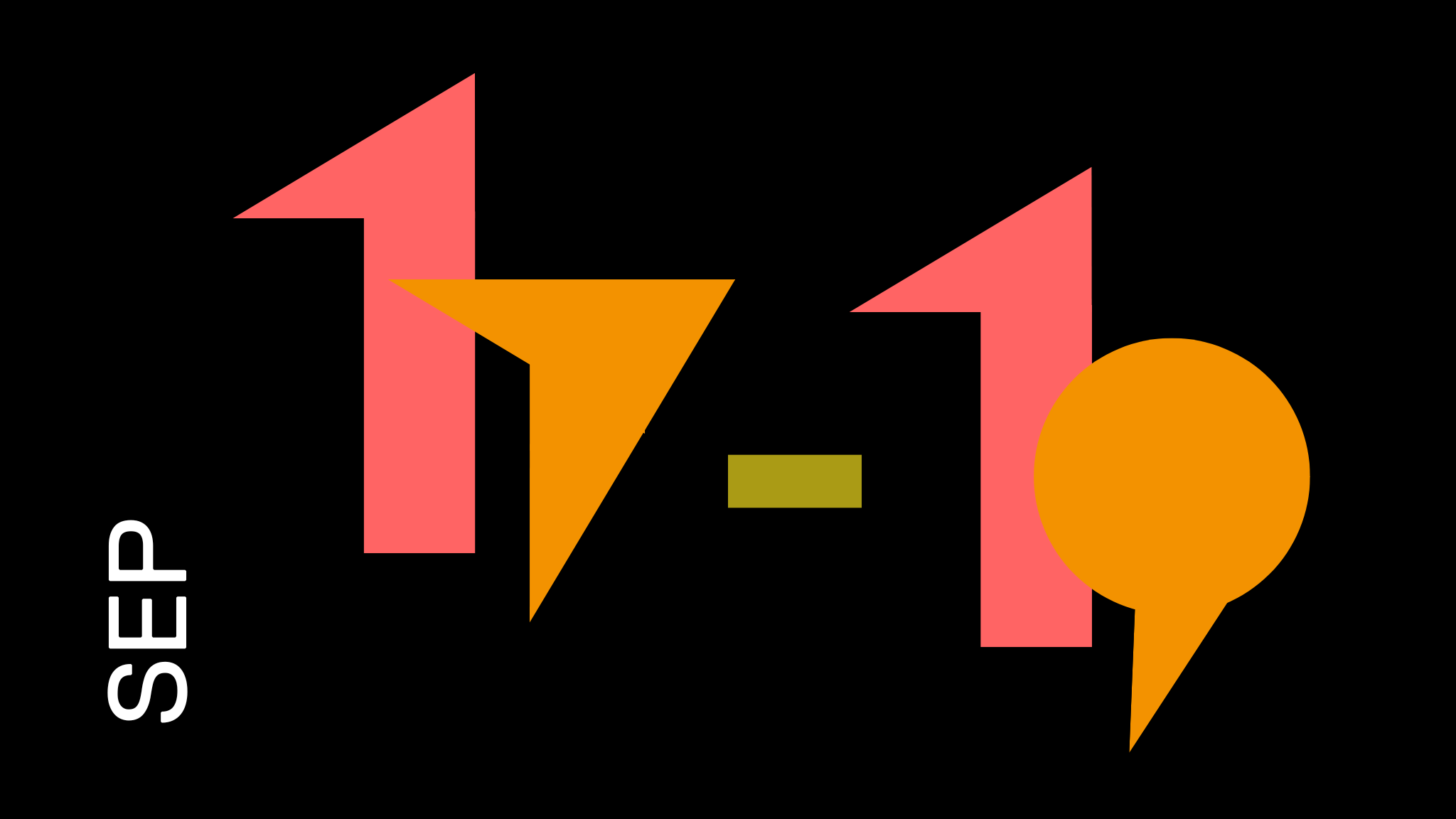
    September 17th–19th, 2025


    Where?

    EWRL18 will be located in the historical University of Tübingen, Germany. Tübingen is a lovely, vibrant university town in southern Germany, known for its rich history and scenic streets. Check out tourist information here!


    Call for papers

    The organizing committee invites submissions to the 18th European Workshop on Reinforcement Learning (EWRL 2025). There will be no proceedings for EWRL 2025. Papers may be submitted to one of two tracks:

    Regular track: unpublished work. Papers submitted to this track are unpublished, though they may be concurrently under review at another venue. These papers will be subjected to the full review process.

    Fast track: published work. Papers that are already accepted at one of the venues listed below may be submitted to this track. They will not receive new reviews, but will be checked for relevance to the topics of interest to EWRL.
    Submissions are handled through OpenReview. Submitted papers will be reviewed by the program committee in a double-blind procedure. Final decisions will be taken by the program chairs based on the reviews. There will be no author/reviewer discussion phase. Only accepted papers will be publicly released, while rejected or withdrawn manuscripts will be kept confidential.

    Submitted papers should follow the EWRL template linked below. There is a limit of 9 pages, excluding references and appendix. Authors of accepted papers will be allowed an additional page to prepare the camera-ready version. There is no page limit for the fast track. All accepted papers will be presented as posters.

    For any questions, please contact the organizers at ewrl2025@gmail.com.


    Fast track instructions

    For submission to the fast track, the selection committee will consider papers accepted at the following venues: NeurIPS, ICML, ICLR, RLC, AAAI, IJCAI, AISTATS, COLT, UAI, ALT, ICRA, IROS, CoRL, RAL, TMLR, JMLR, ECAI. If you want to submit a paper that was accepted at a different archival venue and you believe that this venue should be included in the list above, please let the conference organizers know. In the submission process, you will be required to provide a link to the online proceedings page showing your accepted article. If your paper is accepted but not yet published online, please send the acceptance confirmation to ewrl2025@gmail.com.


    Info

    Paper submission opens: April 23rd
    Paper deadline: May 30th June 3rd (11:59pm AOE)
    Notification of acceptance: July 31st July 16th
    Page limit – doesn’t apply to fast track: 9 pages excluding references and appendix (+1 page for final version)
    Paper format: Download
    Paper submissions: via Openreview


    Call for Contributed Talks

    In an effort to bring novel and diverse viewpoints to EWRL this year’s workshop has a special call for contributed talks. Early-career researchers are invited to submit proposals for an invited talk at EWRL 2025. Accepted authors will be given a 15-minute time slot for their presentation at the workshop.

    The content of talks should relate to or be on topics in the area of reinforcement learning. If your talk is on a paper you submitted to the main track of EWRL, you can reference it in your proposal.


    Submission guidelines

    Submit one pdf document (see template here) including:

    Abstract of your talk: 1-2 pages. This should include a preliminary title and abstract, a short description of the content, and a brief description of the anticipated outcome of your talk (e.g. increase awareness of an open problem, presenting new/emerging results, call-to-action etc.)
    A brief CV (see template) indicating your current and past positions, and a short list of related contributions to the topic of your talk. Do not include any metrics such as: Number of papers, citations, impact factors etc. (See also the section Special Review Criteria below)


    Special Review Criteria

    The speaker/author must be an early-career researcher: You are currently enrolled in a PhD program, or are a postdoctoral researcher who has received their PhD within the last three years (Researchers at Assistant Professor level are eligible if they started their position at most three years ago).
    For the evaluation of your submission, the selection committee will adhere to the principles laid out in the San Francisco Declaration on Research Assessment: They will review your submission based on its (scientific) content, and not on reputation or publication metrics.


    Info

    Talk submission deadline: June 15th
    Notification of acceptance: July 9th July 17th
    Talk submissions: via Openreview

  • Tübingen AI Summer Poster Event 2025

    Tübingen AI Summer Poster Event 2025


    This event at the Tübingen AI Center will spotlight recent machine learning papers published in top-tier venues. You are invited to present your poster if your paper has been accepted at one of the following conferences since December 2024:

    NeurIPS, ICML, ICLR, JMLR, CVPR, ICCV, ECCV, IJCV, PAMI, RSS, CoRL, TRO, IJRR, Science Robotics, ACL, EMNLP, KDD, AAAI, IJCAI, COLT, UAI, AAMAS, AISTATS, TACL, SIGIR, WSDM, ACM Multimedia, SIGGRAPH, KDD, ACM FAccT

    Otherwise, join to mingle, exchange, and wrap up the day with drinks and snacks! 


    When?

    Friday, July 11
    14:00–18:00


    Where?

    Tübingen AI Research Building, ground floor coffee lounge
    Maria-von-Linden-Straße 6, 72076 Tübingen


    Register

    Register here if you'd like to attend or present a poster.

  • AutoML School 2025

    AutoML School 2025


    Scope

    AutoML has become a cornerstone in the toolkit of many developers and researchers. With the rise of foundation models, AutoML's potential has expanded even further, enabling smarter, more powerful, and scalable solutions. Although there is exponentially growing interest in the intersection of AutoML and foundation models, they are rarely taught at universities, leaving a significant gap between cutting-edge research and disseminated knowledge. This school consists of introductory, state-of-the-art, and application lectures for AutoML and Foundation Models covering core topics such as:

    • Hyperparameter optimization and model selection

    • Applying and scaling foundation models

    • Automated model compression, and pruning

    • LLMs for efficient experimentation

    • Explainability methods

    • … and many more (stay tuned while we assemble our schedule)


    Target Group

    The AutoML School is a yearly research training event tailored for graduate and postgraduate students, research engineers, and industry practitioners who want to learn about AutoML. However, there are no formal prerequisites, and everyone is welcome.


    Date

    June 10–13, 2025


    Venue

    Tübingen, Germany

    Registration Link

    Registration Infos | Schedule

  • Postdoc Days 2024

    Postdoc Days 2024


    Über die Veranstaltung:

    Die Universität Tübingen freut sich, Postdoktoranden, Nachwuchsgruppenleiter und Juniorprofessoren bei den Postdoc Days 2024 begrüßen zu dürfen. Im Rahmen der Veranstaltung können die Teilnehmenden die verschiedenen Beratungsmöglichkeiten der Universität Tübingen kennenlernen, gezielte Informationen zu Themen der Postdoc-Phase erhalten und sich mit anderen Postdocs vernetzen.

    Das abwechslungsreiche Programm, das sowohl online als auch vor Ort stattfindet, bietet verschiedene Workshops, Networking-Gelegenheiten und eine Podiumsdiskussion am ersten Tag. Eine perfekte Gelegenheit, um sich Unterstützung zu holen, Kontakte zu knüpfen und die eigene Karriere voranzutreiben. Dies ist die perfekte Gelegenheit, um Orientierung zu bekommen, Kontakte zu knüpfen und die eigene Karriere voranzubringen.


    Wann?

    18.–19. September 2024


    Wo?

    18. September: online via Zoom + Abendveranstaltung in Präsenz

    (Alte Aula, Münzgasse 30, 72070 Tübingen)

    19. September: online via Zoom


    Interesse?

    Weitere Informationen zum Programm und die Anmeldelinks für die Workshops finden Sie auf der Postdoc Days-Website.

  • Hype oder Hoffnung?

    Hype oder Hoffnung?


    Maschinelles Lernen ist nicht das Wundermittel, mit dem wir unseren Planeten retten können. Keine einzelne Lösung wird den Klimawandel "reparieren". Aber viele Anwendungen, die auf maschinellem Lernen basieren, haben großes Potenzial. Manchmal wird Künstliche Intelligenz bereits eingesetzt. Oft sind die Anwendungen noch Ideen. Wie kann man über die faszinierenden Lösungen berichten ohne falsche Erwartungen zu wecken?
     

    Wann?

    25. Januar, 2024, 12:00-13:00 Uhr


    Wie?

    Zur Anmeldung via zoom: Registrierung zum Event


    Was?

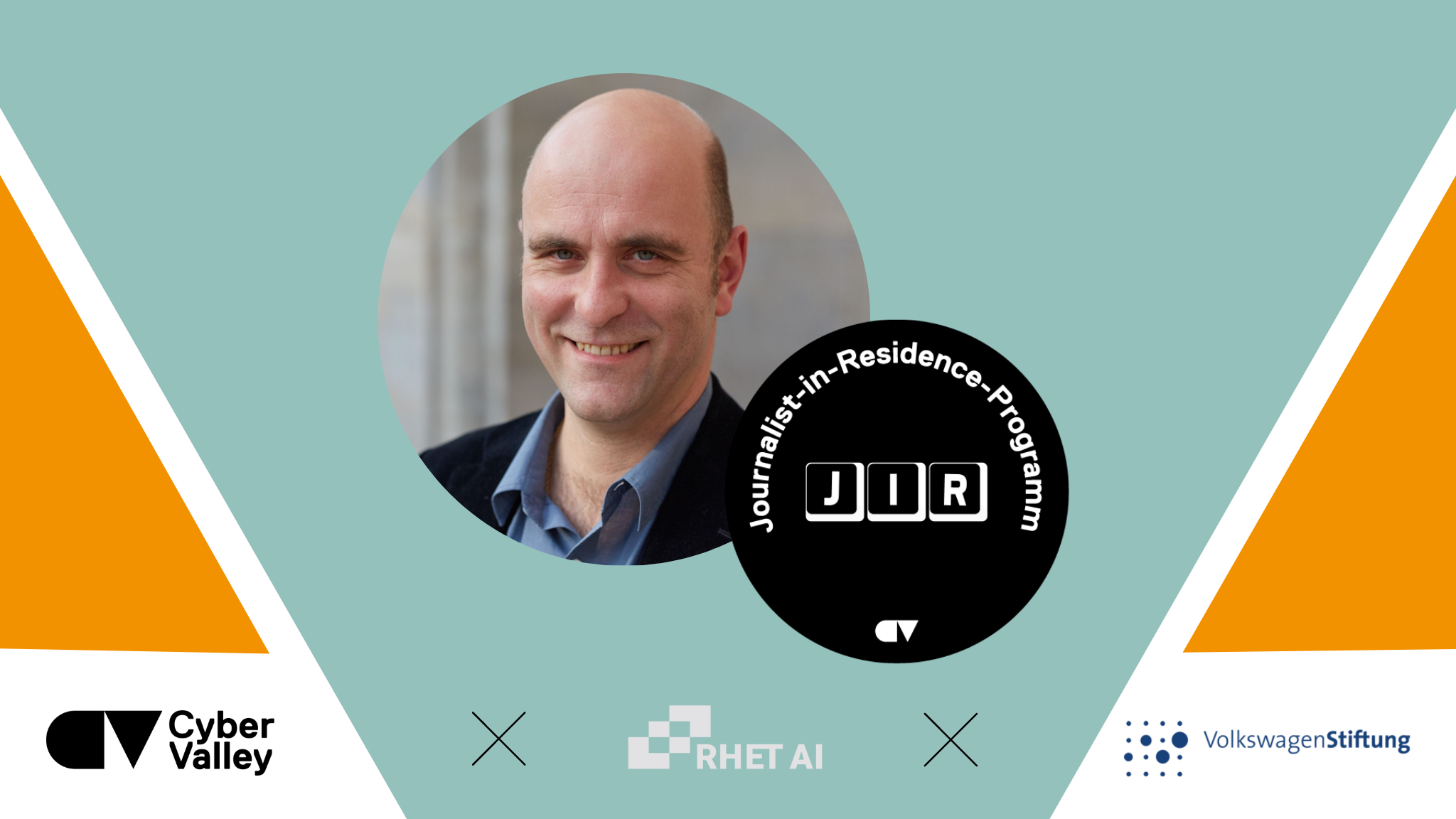
    Tobias Asmuth, “Journalist-in-Residence" im Cyber Valley, spricht mit Prof. Dr. Lynn Kaack (Assistenzprofessorin für Informatik und öffentliche Ordnung an der Hertie School) und Wieland Brendel, der am Max-Planck-Institut für Intelligente Systeme die unabhängige Forschungsgruppe „Robust Machine Learning“ leitet.

    Um an dieser Veranstaltung teilzunehmen, registrieren Sie sich bitte hier und wir senden Ihnen einen Link zur Online-Veranstaltung.
    Die Veranstaltung wird aufgezeichnet. Die Veranstaltung findet auf Deutsch statt. 


    Über Cyber Valley Journalist-in-Residence 

    In einem drei- bis sechsmonatigen Aufenthalt erforschen ein oder zwei Journalisten, wie KI-Anwendungen für guten Journalismus genutzt werden können und wie Journalist*innen sicherstellen können, dass ihre Berichterstattung über die Technologien hinter dem Schlagwort "künstliche Intelligenz" angemessen und evidenzbasiert ist. Die Journalist*innen werden von einer unabhängigen Jury ausgewählt. In dieser Zeit kann der oder die Journalist-in-Residence zu einer selbst gewählten Fragestellung im Austausch mit KI-Forschenden unterschiedlicher Disziplinen recherchieren – absolut unabhängig. Cyber Valley erwartet in dieser Zeit ausdrücklich keine Berichterstattung über KI-Themen oder über Cyber Valley. Das Programm findet zweimal jährlich in einer Kooperation zwischen Cyber Valley und dem Zentrum für Rhetorische Wissenschaftskommunikation – Forschung zur Künstlichen Intelligenz (RHET AI Center) statt. Es wird von der Volkswagen Stiftung gefördert.

  • Bionic Intelligence in Cyber Valley

    Bionic Intelligence in Cyber Valley

    The new Center for Bionic Intelligence Tübingen Stuttgart (BITS) aims to optimize the interaction between humans and technical systems in a fundamentally new way.

    Scientists from the University of Stuttgart, the University of Tübingen, the Max Planck Institute for Intelligent Systems and the Max Planck Institute for Biological Cybernetics are conducting research on intelligent bionic systems that will aid understanding and treatment of certain diseases of the central nervous system. Diagnoses will become more accurate, treatments more efficient and the illnesses more tolerable. Those affected by such disorders already use orthoses or communication aids. However, these systems cannot fully adapt themselves to the needs of the patient or the environment in order to fully compensate limitations or restore failed bodily functions. In interdisciplinary projects, BITS members develop individually tailored medical aids.

    Bionic systems can be found almost everywhere in everyday life: A Velcro fastener on a backpack is inspired by the burdock, suction cups are modeled on the form of an octopus tentacle. Both inventions are based on phenomena from the animal and plant world. Researchers at the University of Stuttgart, the University of Tübingen, the Max Planck Institute for Intelligent Systems and the Max Planck Institute for Biological Cybernetics are taking this one step further: Their vision is to optimize interaction between humans and technical systems so that, by using various signals and intelligent physical principles, the technical system is able to provide support when humans need it. The users are in control at all times.

    "We want to push the boundaries of what has been possible until now," says Professor Syn Schmitt, BITS spokesperson at the University of Stuttgart. "With bionic systems, such as novel robotic prostheses, we aim to create new intelligent diagnostic and treatment options that offer support in everyday life for patients with physical and neurological limitations."


    Diagnosis and treatment: Smart, flexible and ethical

    Technical assistance systems are already being used for therapeutic purposes, but they fall far short of the efficiency and flexibility that would be required to replace missing or impaired functions, or to support the diagnosis and treatment of complex mental disorders. The scientists of the newly founded BITS are jointly researching the development of bionic systems to adapt them to meet patients' individual needs, to compensate for impaired motor function in the everyday lives of those affected, and to support diagnostic and rehabilitation procedures. Social and ethical dimensions are considered from the very beginning.

    "The goal is to develop alternatives that work perfectly for individuals," adds Professor Martin Giese, BITS spokesperson at the University of Tübingen. "Forging efficient interactions between people and technology, requires not only optimal data and information processing, but also the exploitation of intelligent physical principles in people and the technical system." 

    The challenge here is to design technical components that interact with the nervous systems and muscular apparatus in a highly efficiently way and that adapt flexibly and individually to the patient's position. "To do this, we rely on functional materials that respond to different body-specific stimuli," adds Professor Sabine Ludwigs, also a BITS spokesperson at the University of Stuttgart.


    Interdisciplinary collaboration: From biomedicine to robotics and computer science

    The key to success is interdisciplinary cooperation between experts from different fields, such as biomedicine, neuromechanics, materials science, soft and biorobotics, physics, electrical engineering, social science, ethics, neuroscience, and computer science. "Each and every member of our team is an expert in their field," says Schmitt. "We try to transfer all this knowledge into workable solutions that allow people to interact with technical systems on multiple levels. We believe that affected individuals will benefit from such systems, and that science will gain a better understanding of humans."

    The research work within BITS encompasses everything from robotic orthoses that function as an everyday aid for people with muscle tremors, for example, to wearable sensors to improve diagnostics for obsessive-compulsive disorders, to so-called in-body micro- and nano-robots that can transport drugs specifically to the brain or enable new forms of brain stimulation. "At BITS, we want to build on previous successes and strengthen our collaborations to permanently establish intelligent systems in medicine, treatment and rehabilitation," emphasizes Giese. 


    About Cyber Valley

    Cyber Valley is Europe’s largest and leading research consortium in the field of artificial intelligence (AI) and modern robotics. It has a mission and a public mandate to advocate for entrepreneurship, research, development, application, and acceptance of technologies and methods in the field of intelligent systems. The company envisions a future where the full potential of intelligent systems is leveraged for the greater good of the world. 
    The Cyber Valley Community brings together partners from science, industry, and society, along with AI researchers and entrepreneurs. The Cyber Valley GmbH is funded by the state of Baden-Württemberg and acts as the central organizer, service provider, and host for the community. While the GmbH operates from Stuttgart and Tübingen, Cyber Valley has a larger scope: As a national and European driving force, it attracts the best people from all over the world to create the future with AI.


    About the Center for Bionic Intelligence Tübingen Stuttgart

    At the interdisciplinary research center BITS, approximately 50 scientists have been engaged in various projects since May 2023. BITS members bring together wide-ranging expertise from a variety of disciplines, including biomedicine, neuromechanics, materials science, soft and biorobotics, physics, electrical engineering, social science, ethics, neuroscience and computer science. The research work is intended to contribute to the technical implementation of bionic systems and help to establish these in the medical sector. This will significantly reduce the ever-increasing social burden of mental and neurological disorders, as well as individual suffering. To this end, BITS combines the complementary expertise of the Universities of Stuttgart and Tübingen and the Max Planck Institutes for Intelligent Systems and Biological Cybernetics. BITS is part of Cyber Valley, Europe's largest research consortium in robotics and artificial intelligence.

    Expert Contact

    • Prof. Dr. Syn Schmitt, University of Stuttgart, Institute for Modelling and Simulation of Biomechanical Systems
    • Prof. Sabine Ludwigs, University of Stuttgart, Institute of Polymer Chemistry
    • Prof. Martin Giese, University of Tübingen, Section for Computational Sensomotorics

    About Cyber Valley

    Cyber Valley is Europe’s largest and leading research consortium in the field of artificial intelligence (AI) and modern robotics. Cyber Valley has a public mandate: As advocates for entrepreneurship, research, development, application, and acceptance of technologies and methods in the field of intelligent systems are at the forefront. The company envisions a future where the full potential of intelligent systems is leveraged for the greater good of the world.