Network Role: Corporate

  • Mirelo AI: Die Zukunft der KI aus dem Cyber Valley gestalten

    Mirelo AI: Die Zukunft der KI aus dem Cyber Valley gestalten

    Cyber Valley gratuliert Mirelo AI zu einem bedeutenden Meilenstein in der Unternehmensentwicklung. Das 2023 gegründete Start-up hat gemeinsam mit seinen Gründern Carl Johann Simon-Gabriel und Florian Wenzel eine Seed-Finanzierungsrunde in Höhe von 41 Millionen US-Dollar abgeschlossen, angeführt von Andreessen Horowitz (a16z) und Index Ventures. Diese Runde zählt zu den größten Frühphasenfinanzierungen innerhalb des Cyber Valley-Ökosystems bis heute.

    Der Werdegang von Carl Johann Simon-Gabriel steht exemplarisch für den erfolgreichen Transfer von Spitzenforschung in unternehmerische Innovation. Nach seiner Promotion bei Prof. Bernhard Schölkopf am Max-Planck-Institut für Intelligente Systeme in Tübingen sammelte er mehrere Jahre Erfahrung in führenden Technologieunternehmen in den USA, bevor er 2023 Mirelo AI mitbegründete.

    Mirelo AI entwickelt generative KI-Modelle zur automatischen Erzeugung hochwertiger, produktionsreifer Soundeffekte direkt aus Videomaterial. Die Technologie eröffnet neue Möglichkeiten für Anwendungen in Film, Gaming und Werbung und adressiert einen bislang kaum automatisierten Bereich audiovisueller Produktion.

    Gegründet im Jahr 2023, ist Mirelo AI seit 2024 Mitglied im Cyber Valley Startup Network. Die erfolgreiche Finanzierungsrunde unterstreicht das Potenzial des Unternehmens ebenso wie die Stärke des regionalen KI-Ökosystems, in dem wissenschaftliche Exzellenz, unternehmerische Ambition und internationale Sichtbarkeit zusammenkommen.

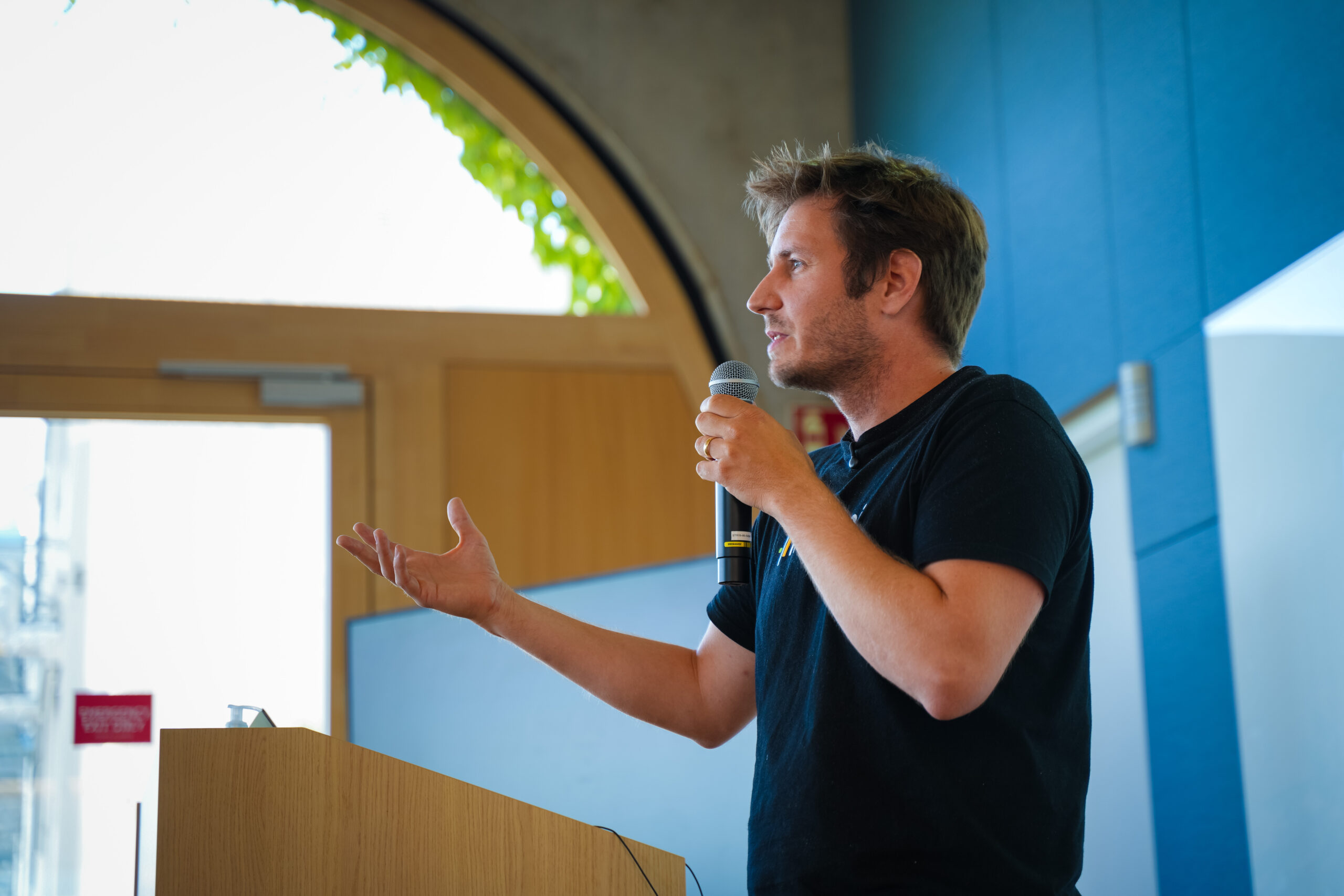
    Image: Flügelmann

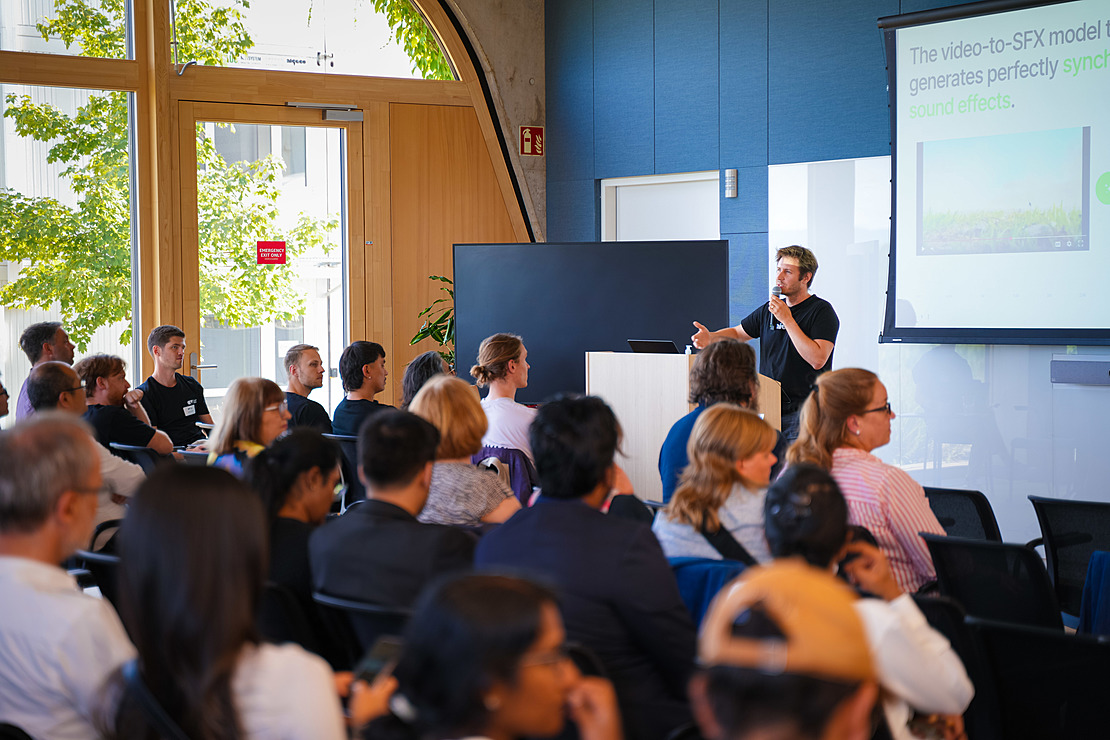
    Im Rahmen des Demo Day des Cyber Valley AI Incubator (Batch #6) war Carl Johann Simon-Gabriel als Keynote Speaker zu Gast und teilte seine Erfahrungen mit der nächsten Generation von Gründerinnen und Gründern. Dabei betonte er:

    „Cyber Valley ist eine großartige Initiative für aufstrebende KI-Startups, insbesondere weil sie in der weltbekannten KI-Forschungsszene und dem Talentpool Tübingens verwurzelt ist.“

    Mirelo AI wächst weiter und arbeitet aktiv am Ausbau seines Teams im Bereich generativer KI für Audio und Video. Weitere Informationen zu offenen Positionen finden sich auf der Website des Unternehmens.

    Related Start-Ups

    • Mirelo AI

      Mirelo AI

  • Cyber Valley at Heilbronn Slush’D

    Cyber Valley at Heilbronn Slush’D

    Heilbronn Slush’D is organized by Campus Founders, a start-up and innovation hub based in Heilbronn. The event was sold out, with over 1,000 participants from across Europe taking part in talks, panel discussions, workshops, and networking sessions. The festival enabled start-ups and founders to connect with key stakeholders and develop their ideas.

    For CELLnROLL (recipients of the Cyber Valley Innovation Fellowship Program) Heilbronn Slush’D was ‘an inspiring event bringing together founders, investors, and innovation leaders from across Europe.’ Following the event, they were ‘inspired, energized, and full of new ideas for what’s next!’

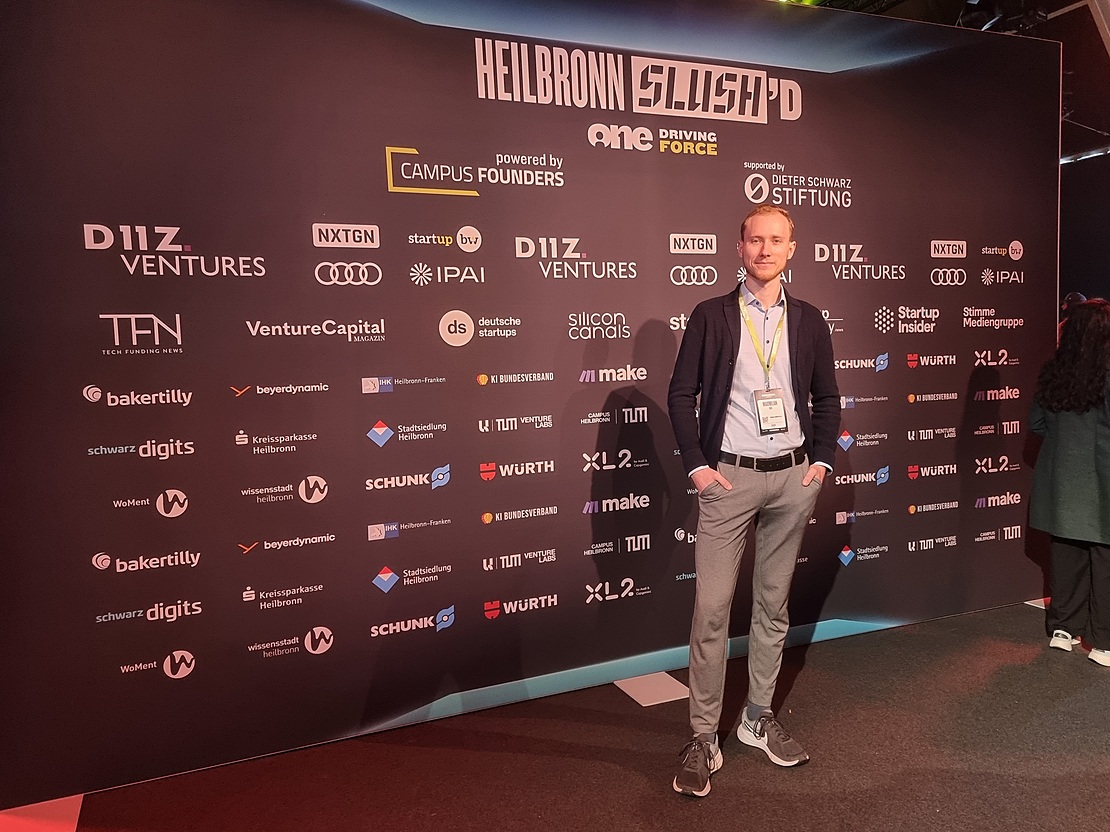
    Maximilian Bode, Co-founder of Cyber Valley Start-up Biocompile, was in attendance for the first time: ‘Despite the bad weather, it was a great experience!‘ For Max, events like Heilbronn Slush’D are ‚places where the most interesting people meet.’

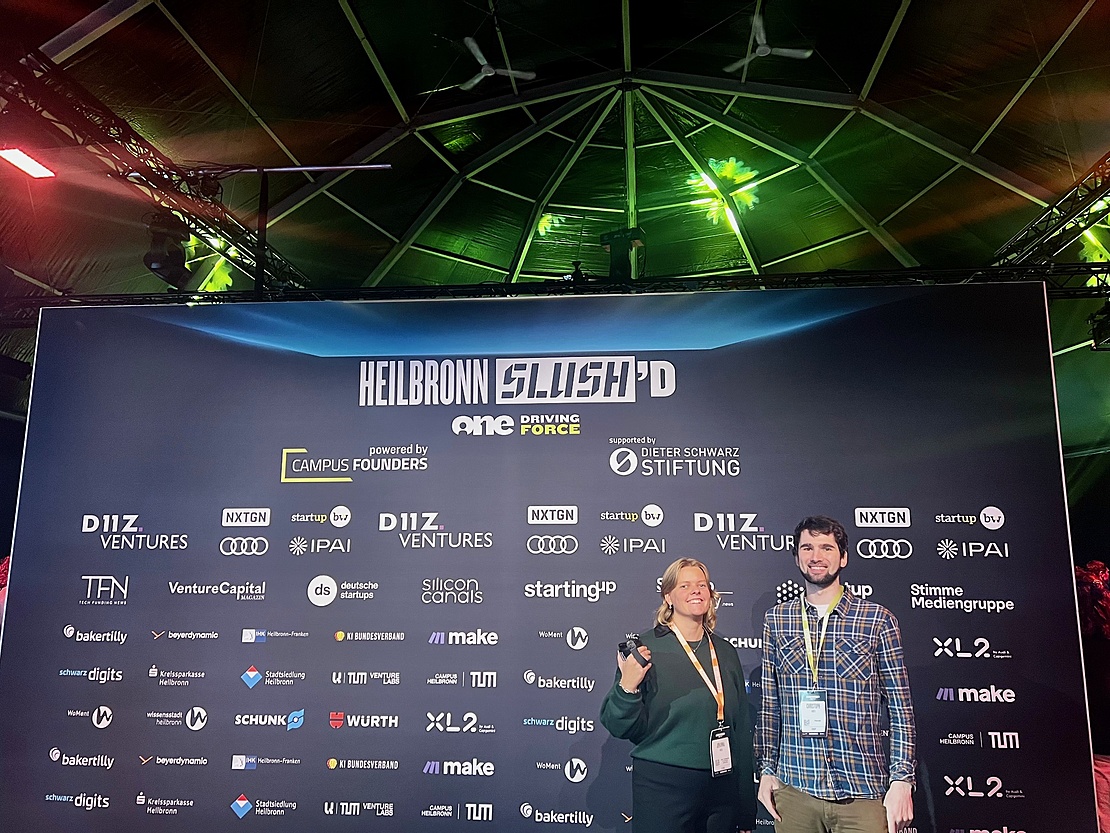
    Maximilian Bode (Biocompile) at Heilbronn Slush'D. Photo courtesy of Maximilian Bode.

    Maximilian Bode (Biocompile) at Heilbronn Slush’D. Photo courtesy of Maximilian Bode

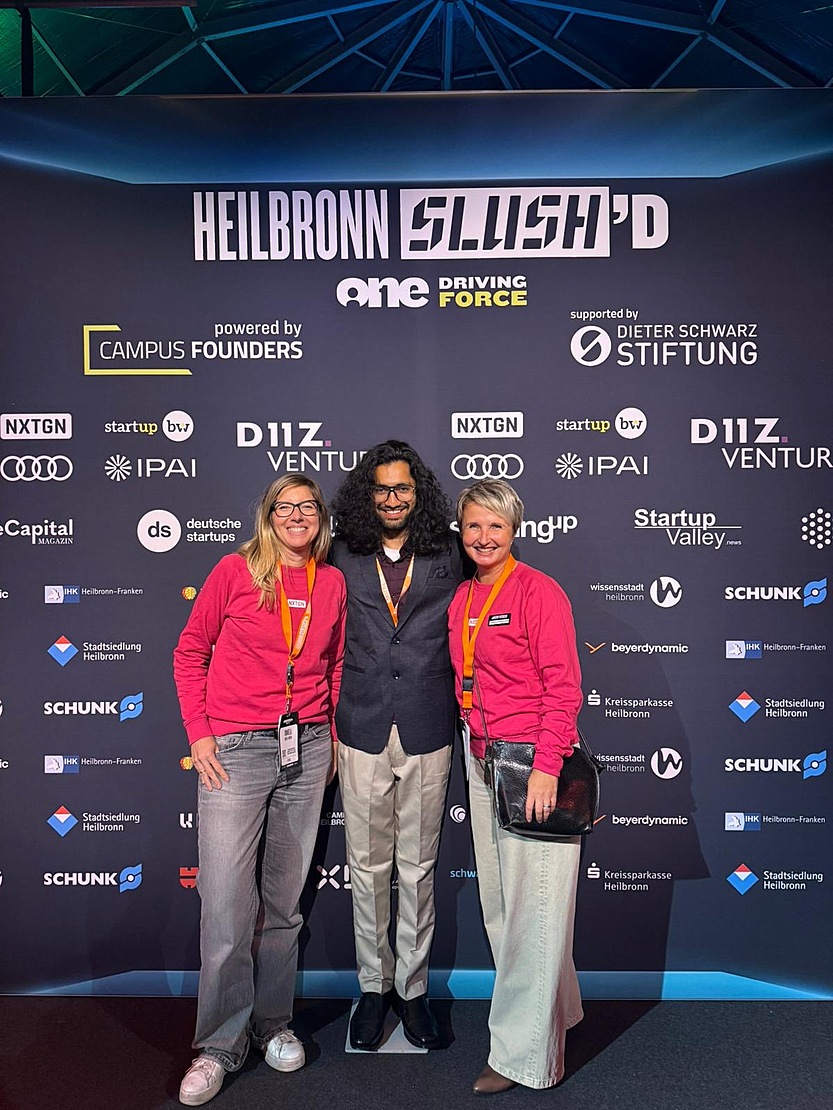
    Johanna Kreßel from the University of Tübingen’s Startup Center also shared her impressions from her first time at Heilbronn Slush’D: ‘I really enjoyed the energy and open atmosphere that made it so easy to connect and have meaningful conversations.’

    Johanna Kreßel at Heilbronn Slush'D. Photo courtesy of Johanna Kreßel

    Johanna Kreßel (Tübingen Startup Center) at Heilbronn Slush’D. Photo courtesy of Johanna Kreßel

    KIT Gründerschmiede took part too. For them, Heilbronn Slush’D ‘was again a real experience – not only because of the wild weather, but above all because of the incredible energy that could be felt between impulses on stage, networking around the campfire, and conversations at the food trucks.’

    KIT Gründerschmeide at Heilbronn Slush'D

    KIT Gründerschmiede at Heilbronn Slush’D. Photo courtesy of KIT Gründerschmiede

    Members of the Cyber Valley Start-up Network have been recognized at previous iterations of the festival. Ventus Technologies secured the top prize of €100,000 in investment in 2023, followed by Tabularis AI claiming the same award in 2024. These examples show how Cyber Valley start-ups have benefited from the support provided by Campus Founders at Heilbronn Slush’D.

    By attending Heilbronn Slush’D, members of the Cyber Valley Community demonstrated the value of collaboration and were impressed by the growing momentum in Heilbronn. Through their scientific expertise and diverse perspectives, they are playing an essential role in the success of Germany’s research and innovation ecosystem.

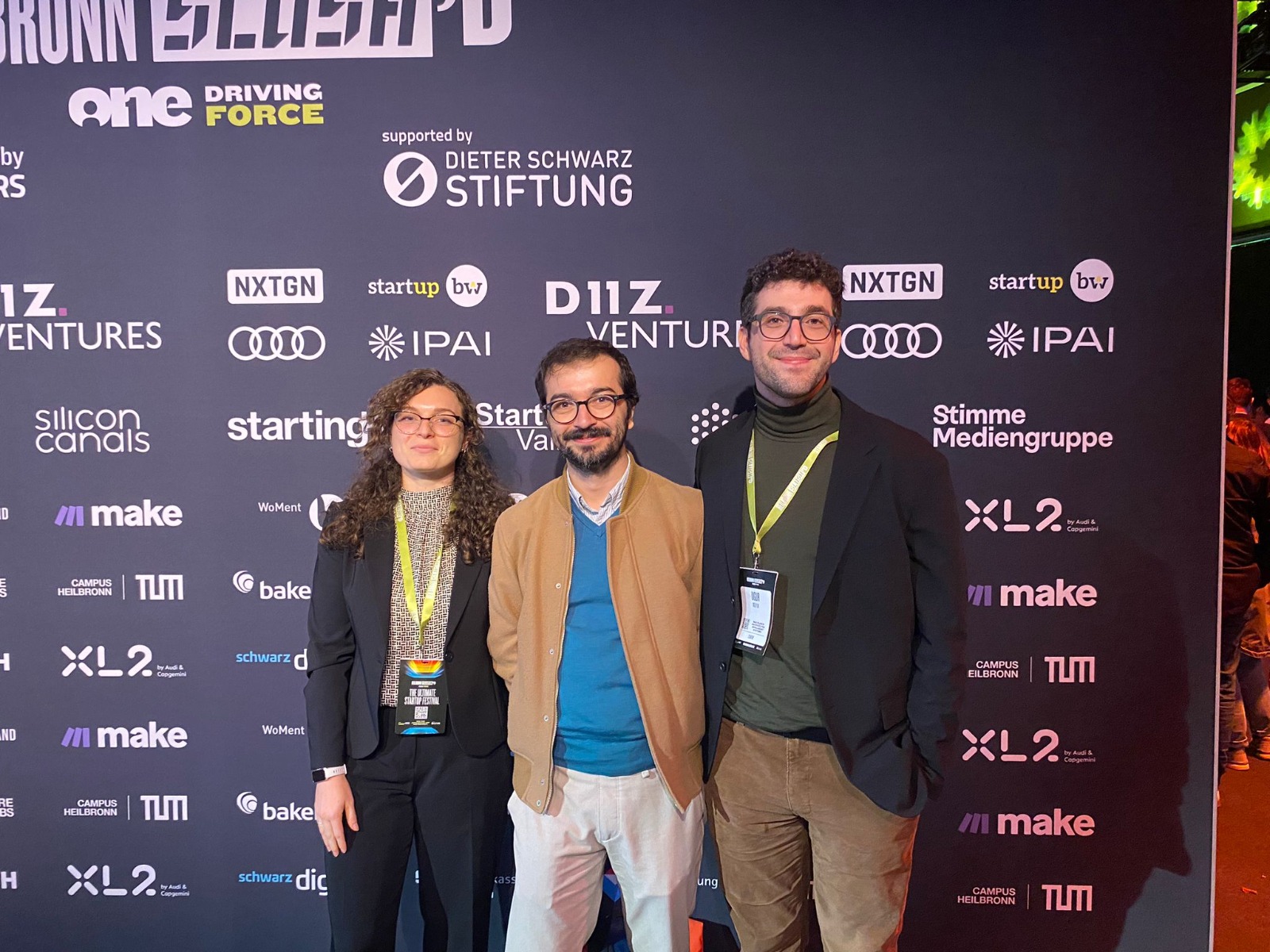
    Photo courtesy of Heilbronn Slush’D

  • Cyber Valley announces partnership with SPRIND

    Cyber Valley announces partnership with SPRIND

    SPRIND, the Federal Agency for Breakthrough Innovation, funds groundbreaking projects, alternative approaches, and spin-offs. Through this new partnership, Cyber Valley and SPRIND will foster creative solutions beyond conventional paths. 

    This partnership seeks to explore next-level AI technologies, venturing beyond popular concepts like Large Language Models (LLMs), Transformers, and Diffusion Models. It will focus on championing alternative approaches to AI, encouraging bold thinking, and exploring uncharted territories. This collaboration signals a significant step toward redefining the possibilities of artificial intelligence. 

    Leading the charge for this initiative is Mirko Holzer, Innovation Manager at SPRIND, “This partnership is all about pushing boundaries and bringing bold ideas to life. With Cyber Valley, we are creating the perfect launchpad for disruptive technologies that have the power to reshape science and society.”   

    Florian Mayer, COO of Cyber Valley, shares the enthusiasm, “It’s fantastic to see SPRIND committing significant resources and funding to such a vital area of innovation. We are thrilled to join forces and pave the way for the next wave of groundbreaking AI technologies.” 

    Alternative approaches 

    Through this collaboration, SPRIND and Cyber Valley are looking for innovators who are working on new and alternative approaches to artificial intelligence (AI), transformative artificial intelligence (TAI), and artificial general intelligence (AGI). The goal is to find alternative, bold, even speculative ideas that diverge from established AI pathways such as diffusion models, large-scale language models, and/or generally transformer-based architectures. 
     

    The partnership supports visionary AI methods, emphasizing:   

    • New Architectures: Energy-efficient designs inspired by biological systems, non-neural paradigms, quantum-inspired models, adaptive systems, and generative models simulating environments. 

    • New Learning Paradigms: Innovative methods like federated learning, causal learning, reinforcement learning, active learning, and synthetic data ecosystems to redefine how machines learn. 

    • New Hardware Approaches: Breakthroughs in neuromorphic, photonic, holographic, and biohybrid computing, as well as robotic systems with embodied cognition and sensory integration. 

    • Innovations outside the mainstream: Bold ideas such as meta-learning, swarm intelligence, digital organisms, evolutionary algorithms, and AI systems with emotional and self-aware intelligence. 

  • Cyber Valley bündelt KI- & Robotik-Kompetenzen für das Gesundheitswesen

    Cyber Valley bündelt KI- & Robotik-Kompetenzen für das Gesundheitswesen

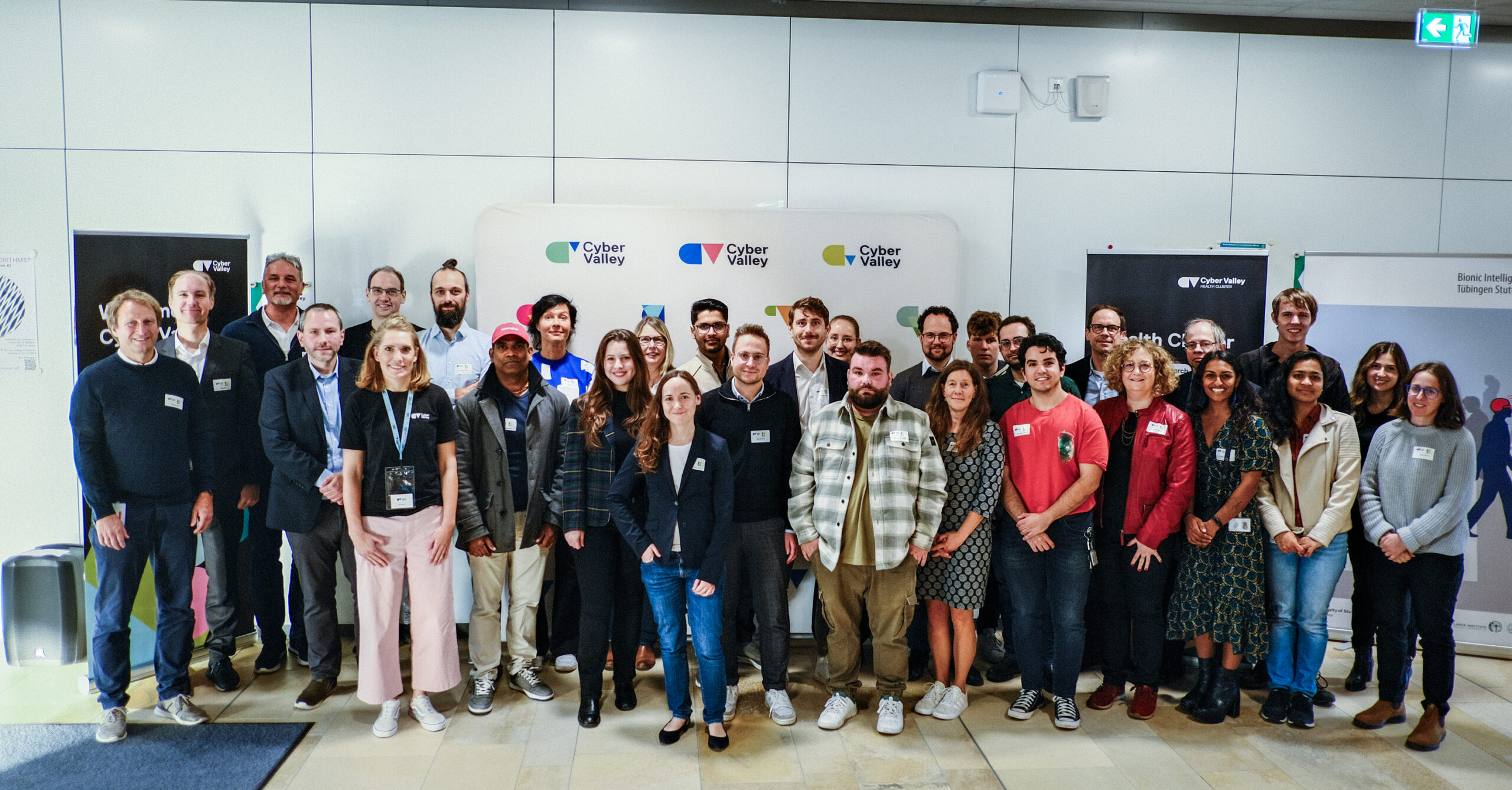
    Stuttgart, 28. Oktober 2024 – Am letzten Donnerstag fiel der offizielle Startschuss für das Cyber Valley Health Cluster mit einem öffentlichen Kickoff-Event am Standort Tübingen. Diese Initiative, die von Cyber Valley ins Leben gerufen wurde, zielt darauf ab, die Kräfte von Wissenschaft, Industrie und Start-ups zu vereinen und durch den Einsatz von Künstlicher Intelligenz und moderner Robotik die Gesundheit aller langfristig zu verbessern.  

    Synergien zwischen Forschung und Industrie für KI-getriebene Gesundheitstechnologien 

    Das Health Cluster setzt auf eine enge Verzahnung von Forschung, Praxis und Technologie. Es fördert gemeinsame Projekte zwischen KI-Expertinnen und -Experten, Forschenden und Unternehmen, um innovative Lösungen für aktuelle und zukünftige Herausforderungen im Gesundheitswesen zu entwickeln. Dabei liegt der Fokus auf interdisziplinärem Wissensaustausch, der neue Ansätze und Lösungen ermöglicht, die über einzelne technologische Fortschritte hinausgehen.   

    Rebecca C. Reisch, Geschäftsführerin der Cyber Valley GmbH, hebt die Bedeutung dieser Zusammenarbeit hervor: „Das Cyber Valley Health Cluster ist mehr als nur eine akademische Initiative; es ist eine kollaborative Allianz, die den Austausch zwischen Industrie, Start-ups und Forschung fördert. Das Health Cluster bietet den Rahmen, um KI-basierte Lösungen zu entwickeln, die zur Bewältigung der drängendsten Herausforderungen der modernen Medizin und darüber hinaus beitragen.“

    Starke Cyber Valley Partner und Freunde sind bereits an Bord  

    Das Cyber Valley Health Cluster wird von starken Partnerschaften getragen und unterstützt. Zu den bereits bestätigten Partnern zählen namhafte Akteure wie Boehringer Ingelheim, ZEISS, die Universität Tübingen, die Universität Stuttgart sowie das renommierte Max-Planck-Institut für Intelligente Systeme (MPI-IS). Diese investieren maßgeblich in die Cyber Valley Community und spielen eine zentrale Rolle bei der Weiterentwicklung des Clusters.  

    Darüber hinaus wird das Cyber Valley Health Cluster von einer Vielzahl engagierter ‘Friends’ unterstützt, die das Netzwerk durch ihre Expertise und Vernetzung bereichern. Zu diesen zählen Immatics, Cegat, Ovesco, BIOPRO Baden-Württemberg, BioRegio STERN Management, sowie der Medical Innovations Incubator und die Start-ups Osora und Cerebri.   Weitere sind bereits in Planung.  

    Reisch unterstrich die Rolle der Cyber Valley Community: „Gemeinsam mit unseren Partnern und Freunden schaffen wir ein Umfeld, das die Entwicklung von Technologien vorantreibt, die nicht nur wegweisend, sondern auch praktikabel und ethisch sind. Denn nur gemeinsam haben wir die Chance, Baden-Württemberg und ganz Deutschland an die Spitze der globalen KI-Gesundheitsinnovationen zu etablieren.“ 

    Langfristiges Ziel: Eine enge und nachhaltige Gesundheits-Allianz 

    Das Cyber Valley Health Cluster wird gezielt Start-ups und Innovationsprojekte unterstützen, um den Wissenstransfer zwischen Forschung und Industrie zu fördern. Teilnehmende des Clusters profitieren von einem weitreichenden Netzwerk und neuen Verknüpfungsmöglichkeiten, die einen schnellen Transfer und die Entwicklung zukunftsweisender Lösungen ermöglichen. 

    Das langfristige Ziel des Clusters ist es, eine nachhaltige und aktive Community mit gebündelter Gesundheits-Expertise zu schaffen, in der interdisziplinäre Teams zusammenarbeiten, um globale Gesundheitsherausforderungen zu bewältigen. In den kommenden Monaten sind weitere Veranstaltungen und Interaktionsformate für das Cyber Valley Health Cluster geplant.  

    Über Cyber Valley 

    Cyber Valley ist Europas größtes und führendes Zentrum für Exzellenz in künstlicher Intelligenz und moderner Robotik. Die Mission und der öffentliche Auftrag bestehen darin, sich für Forschung, Entwicklung, Anwendung und Akzeptanz von Technologien sowie Methoden intelligenter Systeme einzusetzen. Cyber Valley fördert die Gründung von KI-Start-ups, indem es wissenschaftliche Exzellenz mit Innovation und Technologietransfer verbindet. Außerdem unterstützt Cyber Valley die kritische Reflexion der ethischen und sozialen Auswirkungen von KI. Cyber Valley strebt eine Zukunft an, in der das Potenzial intelligenter Systeme zum Wohle der Gesellschaft voll ausgeschöpft wird.  

    Pressekontakt: 

    Laura Neusser 
    Public Outreach Manager 
    Cyber Valley GmbH 
    laura.neusser@cyber-valley.de 

  • Amazon and Max Planck Society announce recipients of gift awards

    Amazon and Max Planck Society announce recipients of gift awards

    In line with that goal, the Science Hub is sponsoring the following research projects:

    • “Non-verbal interpersonal synchrony analysis tool (nVISA-online)”: Senya Polikovsky, research engineer, Max Planck Institute for Intelligent Systems

    “Interpersonal synchrony (In-Sync), the spontaneous synchronization of behavioral, affective, and even physiological responses in contexts of social interaction, offers a useful insight into the quality and smoothness of interactions between social partners. Automatic assessment of In-Sync could provide objective tools for studying the interactive abilities of people with psychiatric conditions and the degree of therapeutic alliance in psychotherapy, as well as online human-to-human and avatar-to-human interactions. Body movement dynamics are central to the analysis of In-Sync. Besides that, facial expression, gaze interaction, audio signals, and physiological measures such as electrodermal activity, heart rate variability, or breathing rates can be used to detect In-Sync. The goal of our proposed research is to extend In-Sync analysis to online scenarios. We would like to identify the instruments and the procedures for the detection of In-Sync in online therapy sessions.”

    • “Accurate 3D body shape and clothing estimation from a single image”: Gerard Pons-Moll, senior researcher, Max Planck Institute for Informatics, and professor, University of Tübingen, endowed by the Carl Zeiss Foundation

    “This research aims to reconstruct a 3-D digital human from a single RGB photograph, using a combination of 3-D neural implicit functions to represent worn garments and a parametric model to represent and control the pose and shape of the underlying body. A key novelty is to incorporate feedback in the deep body estimation network, ensuring that the 3-D body mesh is consistent with its projection onto the photo.”

    • “Learning clothing pressure fields via high-fidelity finite element analysis”: Gokhan Serhat, research scientist, Max Planck Institute for Intelligent Systems, and assistant professor, KU Leuven

    “Accurate estimation of clothing pressure on the human body is crucial to understanding physical factors that influence clothing comfort. Such estimation requires the ability to express contact pressure fields in terms of different body sizes and types and garment sizes and material properties. However, such pressure fields are generally too complex to be modeled by analytical methods. Experimentation also has certain drawbacks, since it does not provide information about internal stresses, and precise measurement of the contact pressure between a pair of curved soft bodies is difficult. The intricate anatomy of the human body may require elaborate finite-element models with several thousand elements for capturing deformation mechanics accurately. Such large models inherently induce high computational costs and are likely to suffer from the aforementioned numerical issues. The proposed study aims to address this problem by developing a deformation model based on deep neural networks trained with the data from finite-element analysis.”

    • “Material estimation of clothing for controllable human avatars”: Justus Thies, research group leader, Max Planck Institute for Intelligent Systems, and professor, Technical University Darmstadt

    “A key challenge for controllable human avatars is the reconstruction and animation of clothing. While data-driven, person-specific reconstruction methods show promising results, the extrapolation to novel poses with realistic deformations of clothing is limited. In contrast to data-driven methods, physics simulation can be used to model the dynamically changing clothing. In this project, we want to explore material estimation of human clothing for such simulations. Specifically, we are interested in predicting material properties such as stiffness or stretch that influence the motion-dependent deformation of the clothing. Besides these mechanical material properties, we are also interested in predicting material properties for the appearance of clothing that allow for re-renderings under novel poses.”