News Category: 10 Years Cyber Valley

  • 2023: Three new AI institutes at Cyber Valley

    2023: Three new AI institutes at Cyber Valley

    In 2016, important actors from science, industry, and politics founded the Cyber Valley Consortium, which became the first Innovation Campus in Baden-Württemberg. Ten years on in 2026, we’re revisiting the most significant milestones from the last decade. Each month, we’ll focus on a particular year since Cyber Valley’s beginning. 

    This month, we’re looking back to 2023, when three new AI institutions within the Cyber Valley Innovation Campus were founded: the Institute for Artificial Intelligence at the University of Stuttgart, the Tübingen AI Center, and the Center for Bionic Intelligence Tübingen Stuttgart. Since 2023, these institutes have played a key role in advancing Cyber Valley’s mission: turning excellent AI and robotics research into a better future for all. Below, we recount why these institutes were established, their main achievements, and their future plans.

    Center for Bionic Intelligence Tübingen Stuttgart (BITS)

    The Center for Bionic Intelligence Tübingen Stuttgart (BITS) was founded to establish a new approach for integrating intelligent technical systems with humans. It aims to improve understanding and treatment of certain neurological and psychiatric diseases and develop individually tailored medical aids for patients. BITS brings together scientists from four institutions: the Universities of Stuttgart and Tübingen, and the Max Planck Institutes for Intelligent Systems and for Biological Cybernetics.

    Since its founding in 2023, its main achievements include new in-body agents that can be controlled inside living animals to stimulate movement behavior and novel on-body soft devices to suppress the shaking body in tremor patients. The latter received the 2025 innovation prize of the German Parkinson Foundation. In the future, BITS will go beyond medical devices to investigate and develop hybrid cybernetic control-loop systems that closely integrate humans and technology, including in the fields of ergonomics and occupational health and safety research.
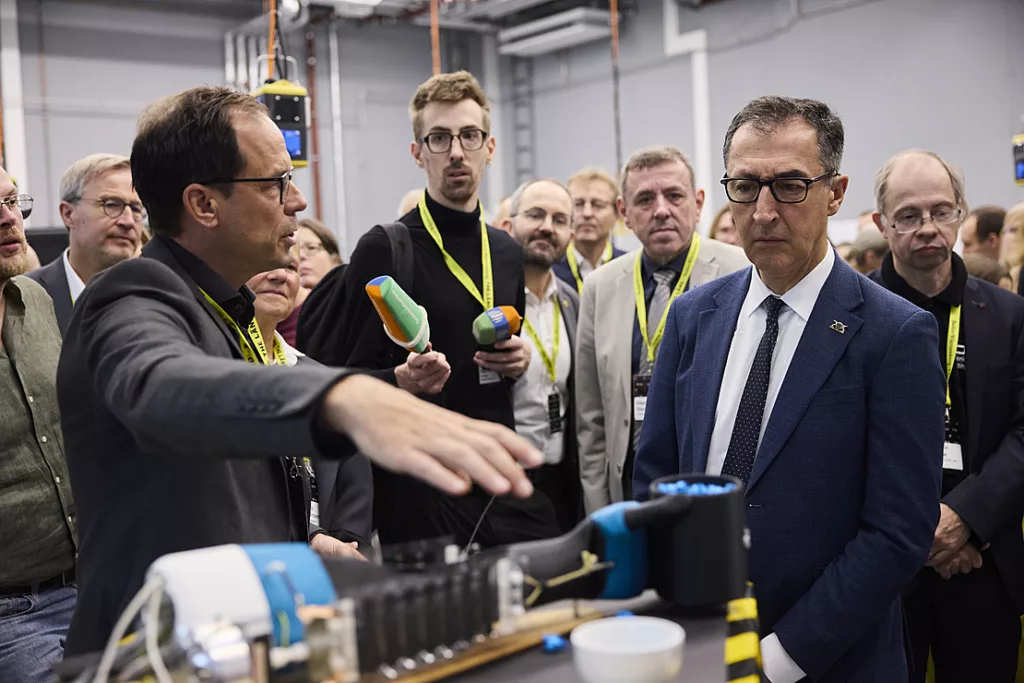
    BITS
    BITS at Cyber Valley Day on September 9, 2026. Photo: Christian Borth

    The Institute for Artificial Intelligence, University of Stuttgart

    The Institute for Artificial Intelligence at the University of Stuttgart was founded to undertake internationally outstanding AI research while supporting its transfer for the benefit of industry and society. The Institute also aims to reflect on AI’s societal impact by monitoring AI and ensuring AI compliance through joint research with industries, the humanities, and social sciences.

    Since 2023, the Institute has celebrated several important milestones. By drawing on physical principles, the Institute has created more reliable machine learning models that have applications in molecular and materials simulations. Moreover, PhD student Bo Xiong won the award for the best computer science dissertation of the German-Austrian-Swiss Association for Computer Science. Meanwhile, the Institute’s spin-off company, Semanux GmbH, is helping those with motor disabilities to participate in the digital sphere without support of third parties.

    In the future, the Institute plans to develop reliable AI methods that support scientists and engineers. It will accelerate the discovery of new drugs and materials, while developing new engineering products. A further goal is to enable non-experts to adapt and co-design robotic systems that they work and interact with.
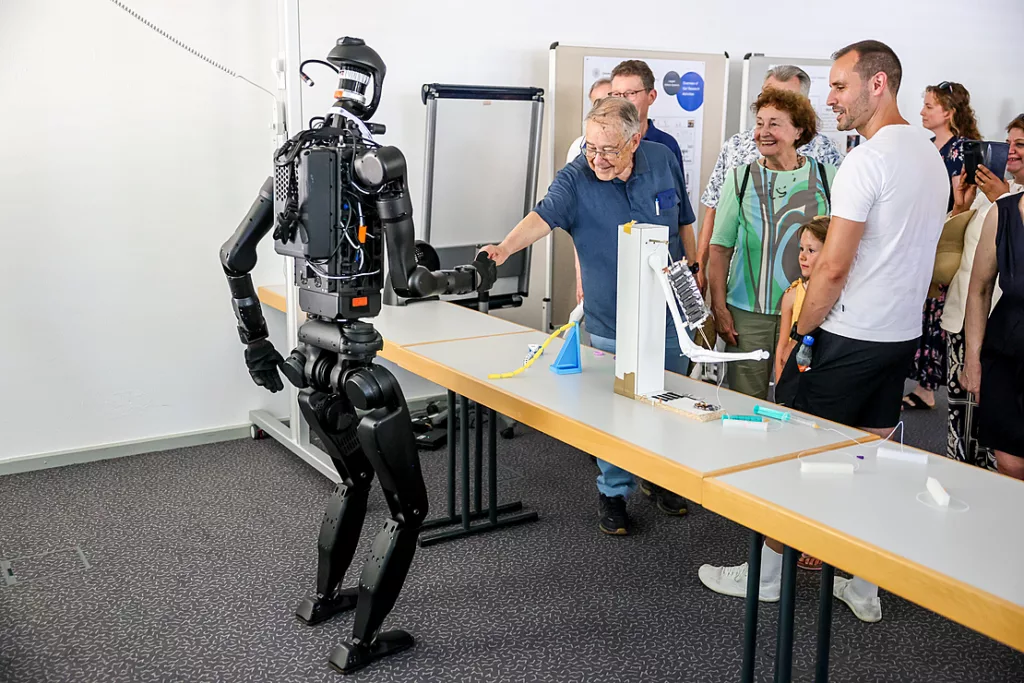
    Institute of Artificial Intelligence, University of Stuttgart in June 2026. Photo: Universität Stuttgart/Uli Regenscheit
    Institute of Artificial Intelligence, University of Stuttgart in June 2026. Photo: Universität Stuttgart/Uli Regenscheit

    Tübingen AI Center, University of Tübingen

    In 2023, the Tübingen AI Center at the University of Tübingen was established as a permanent national AI center. The Center aims to shape the next generation of machine learning and develop more robust, efficient, and accountable learning systems.

    Since its establishment as a national AI competence center, the Tübingen AI Center has played a key role in strengthening the region’s research and innovation ecosystem. It has brought together more than 300 scientists across 32 research groups and has established strong links between research, education, and entrepreneurship. Its growing technology transfer activities have helped turn research into products, tools, and start-ups.

    Looking ahead, the Center plans to appoint more professors and increase its transfer activities even further. Recent spin-offs, including two Tübingen-affiliated teams selected for SPRIND’s Next Frontier AI program in 2026, and several focused research organizations, illustrate what this may entail.
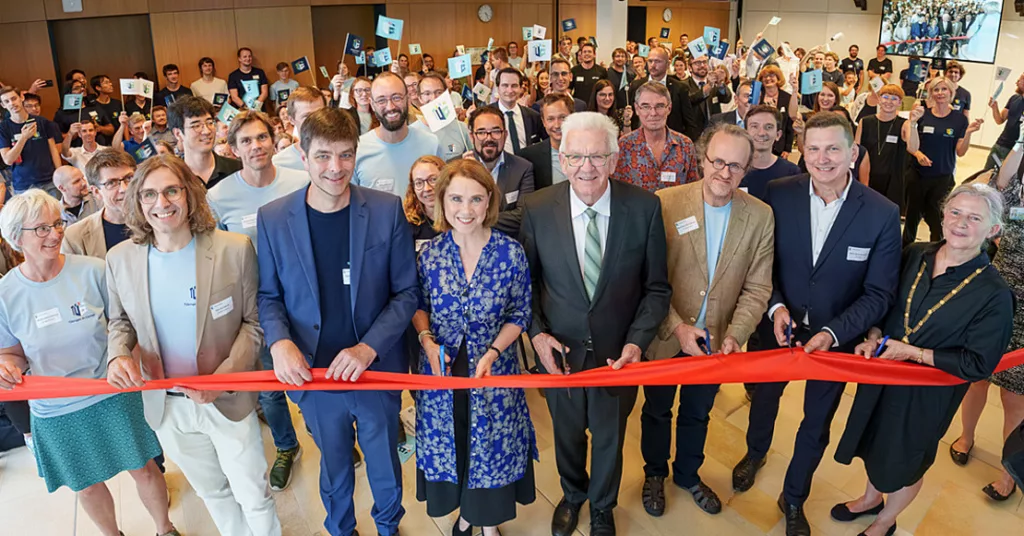
    Kick-Off des Tübingen AI Centers am 18.Juli 2023 in Tübingen mit Ministerpräsident Winfried Kretschmann, Ministerin für Hochschulen, Forschungs- und Kunsteinrichtungen Petra Olschowski, Parlamentarischer Staatssekretär des BMBF, Mario Brandenburg
    Inauguration of the Tübingen AI Center in 2023. Photo: Wolfram Scheible

    To celebrate Cyber Valley’s ten-year anniversary, we’ll be sharing a variety of content across our website and social media channels reflecting on milestones from the last decade. Stay tuned for the next installments!
  • Cyber Valley Day 2026

    Cyber Valley Day 2026

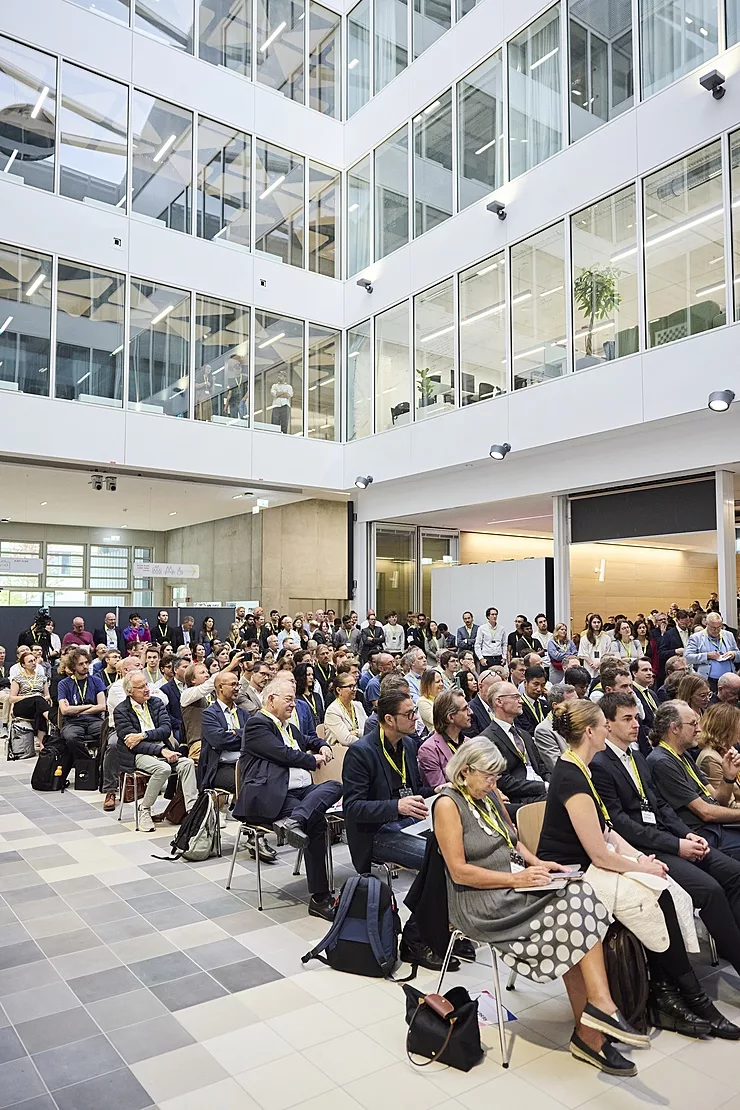
    On September 9, more than 850 guests came to Tübingen to celebrate a very special milestone: ten years of the Cyber Valley Innovation Campus. Researchers, start-ups, investors, policymakers, partners from industry and society, as well as many other guests gathered for a day full of inspiring talks, surprising keynotes, a research exhibition, start-up presentations, investor sessions, and networking.

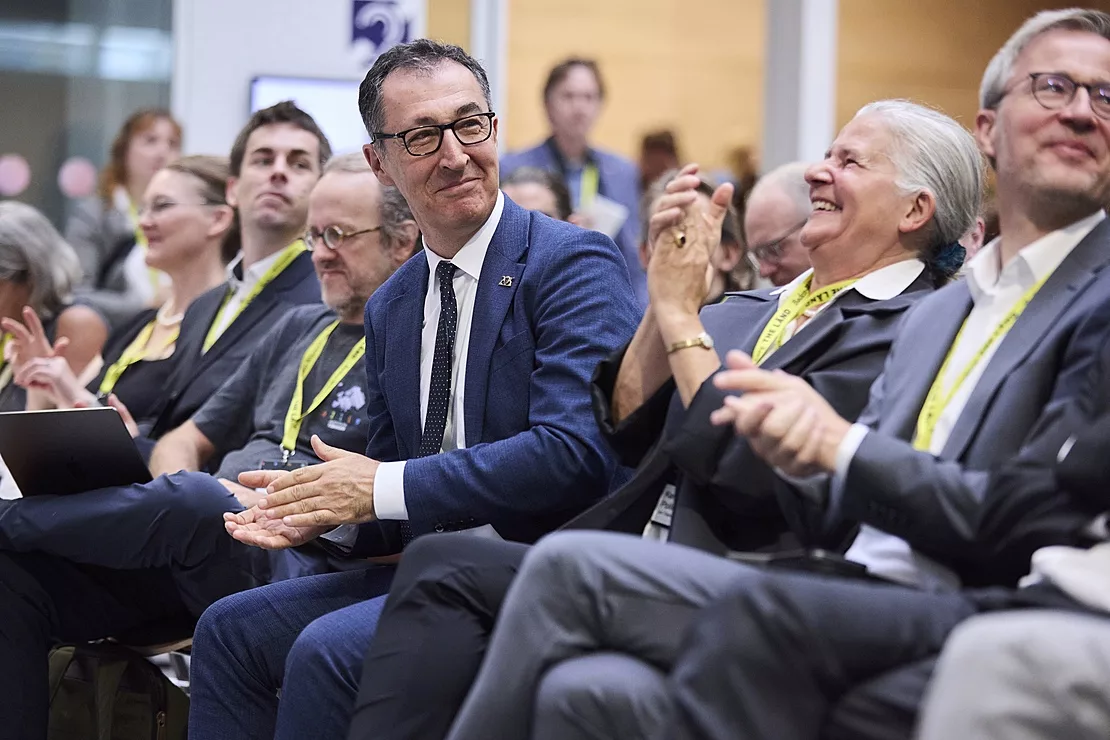
    Cyber Valley Day opened with welcome addresses from leading representatives from politics, science, and our Innovation Campus: Moritz Hardt, Director at the Max Planck Institute for Intelligent Systems; Cem Özdemir, Minister President of Baden-Württemberg; Boris Palmer, Lord Mayor of Tübingen; Karla Pollmann, President of the University of Tübingen; Simone Schwanitz, Secretary General of the Max Planck Society; and Florian Mayer, Managing Director of Cyber Valley GmbH, welcomed guests to the anniversary celebration.

    Cem Özdemir_Minister President
    © Christian Borth

    Scientific program at the main stage

    Hosted by Linda Behringer, press officer at the Max Planck Institute for Intelligent Systems, the main stage program brought together voices from across the international AI and innovation landscape.

    A keynote by Manuela Veloso, Herbert A. Simon University Professor Emerita at Carnegie Mellon University, provided one of the early highlights of the day. Throughout the program, the Cyber Valley Voices sessions on the main stage featured leading researchers from across our Innovation Campus, including Bernhard Schölkopf from the ELLIS Institute Tübingen, Matthias Bethge from the Tübingen AI Center at the University of Tübingen, Tamim Asfour from the Karlsruhe Institute of Technology, Katherine J. Kuchenbecker from the Max Planck Institute for Intelligent Systems, Steffen Staab from the University of Stuttgart, and Werner Kraus from Fraunhofer IPA.

    In the Auditorium, C. David Remy and Philipp Rothemund from the University of Stuttgart, as well as Chandan Kumar from Fraunhofer IAO, shared insights into their research. The afternoon continued with a keynote by Alex Smola, CEO and co-founder of Boson AI, as well as a talk by Rafael Laguna de la Vera from the Federal Agency for Disruptive Innovation (SPRIN-D).

    © Christian Borth

    Surprise keynote speaker

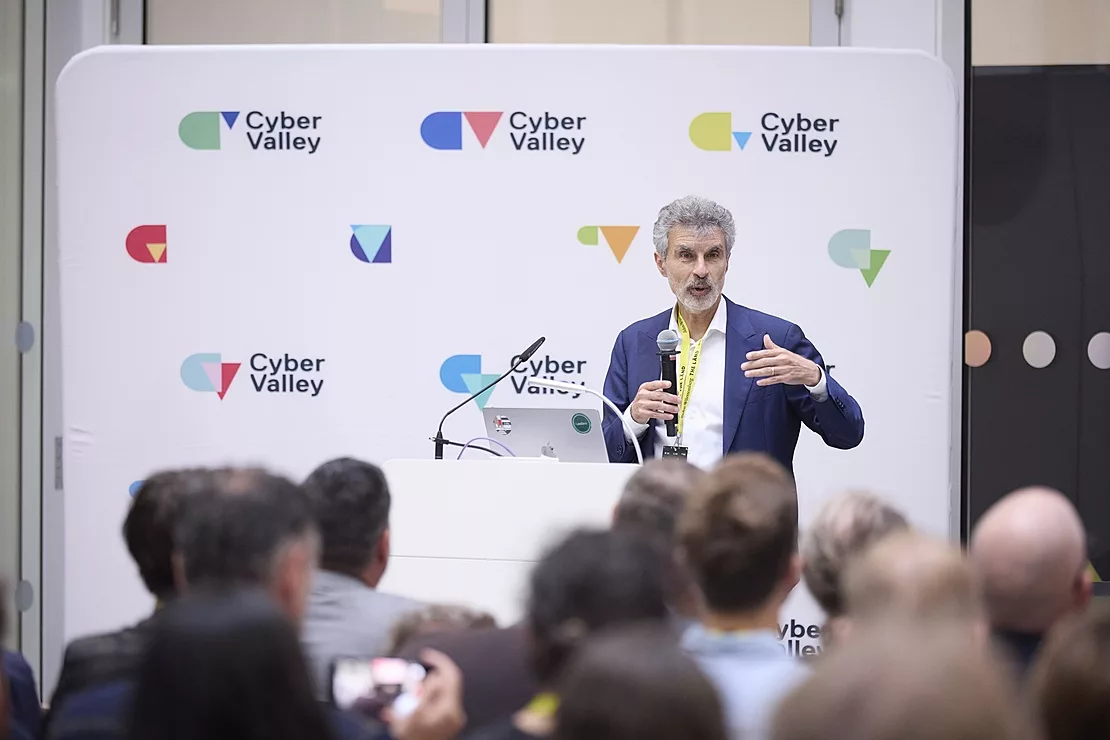
    One of the biggest highlights of the day was our surprise keynote speaker: Yoshua Bengio, one of the pioneers of modern artificial intelligence. He has become one of the most prominent voices discussing the societal implications of AI, discussing questions regarding safety, and he calls for a responsible development of AI. Having Yoshua Bengio join us for our anniversary was very special!

    Cyber Valley Day 10 Year Anniversary
    © Christian Borth

    From excellent scientific ideas to real-world applications and impact

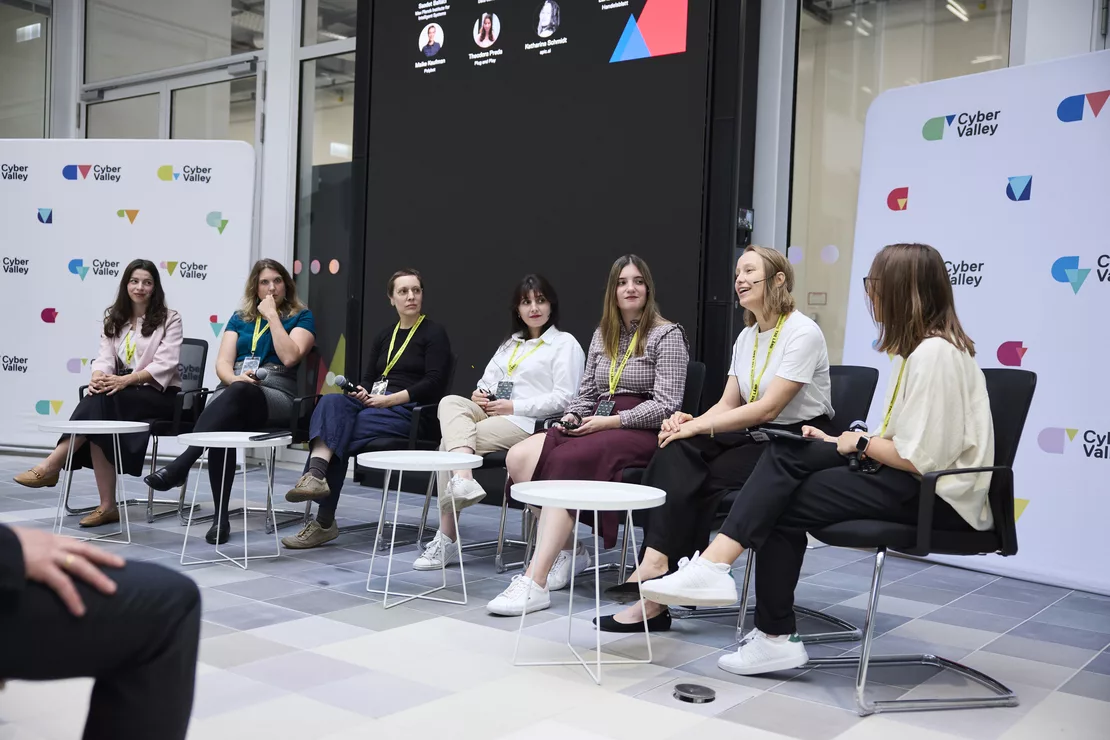
    The panel discussion “Building what’s next: How bold ideas move from research to impact” brought together researchers, founders, and innovation experts to discuss how ambitious ideas can move beyond research and into society and industry. Moderated by Larissa Holzki from Handelsblatt, the discussion featured Saadet Baltaci and Antonia Georgopoulou from the Max Planck Institute for Intelligent Systems, Aline Defranceski from Data Coffee, Maike Kaufman from Polybot, Theodora Preda from Plug and Play, and Katharina Schmidt from apic.ai.

    © Christian Borth

    The Cyber Valley Start-up Voices session offered further perspectives on innovation and entrepreneurship, with contributions from Prashanth Halady of Bosch, Mario Krenn of Feyer, and Jonas Müller of Black Forest Labs.

    Research from our Innovation Campus

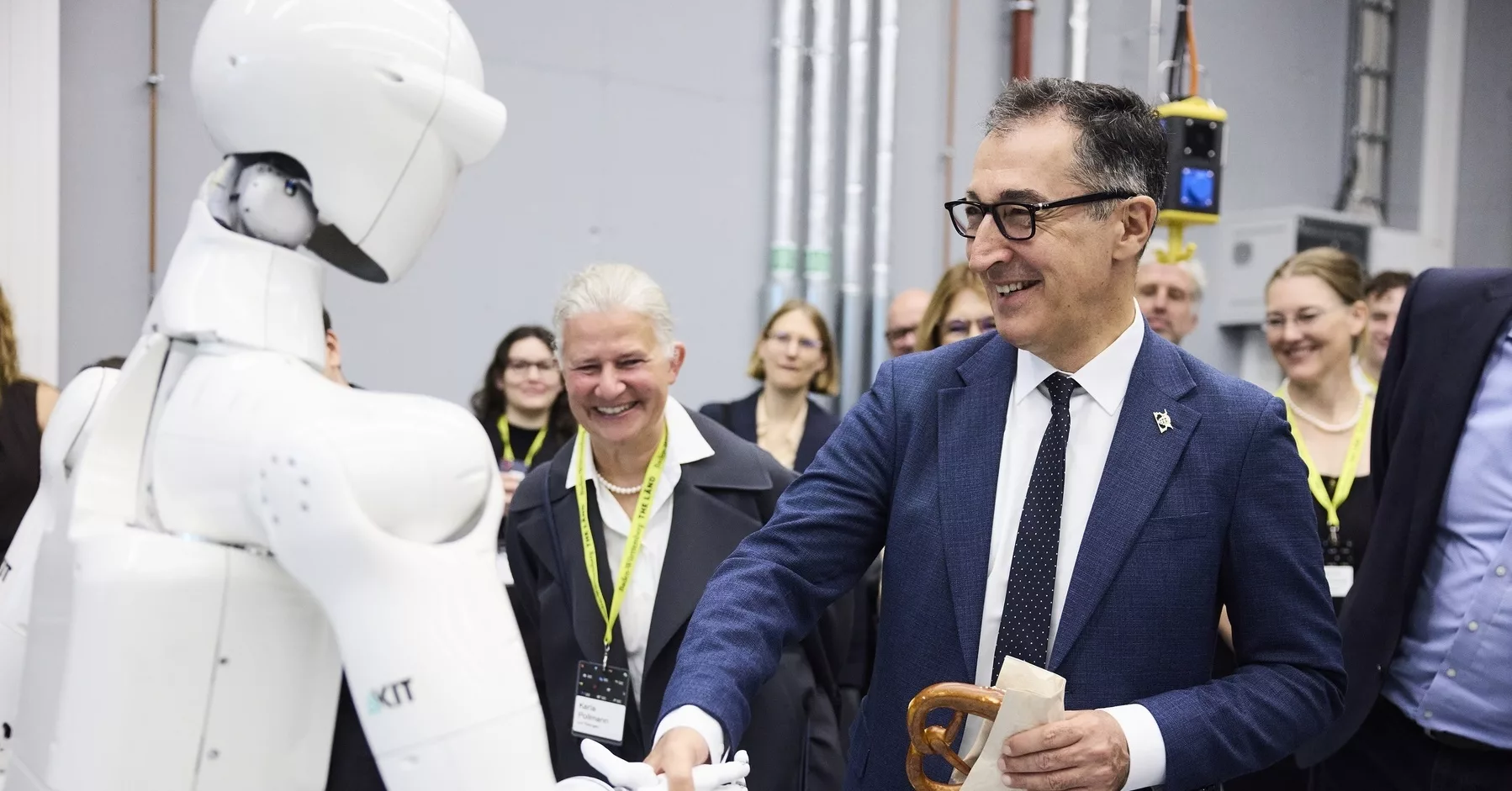
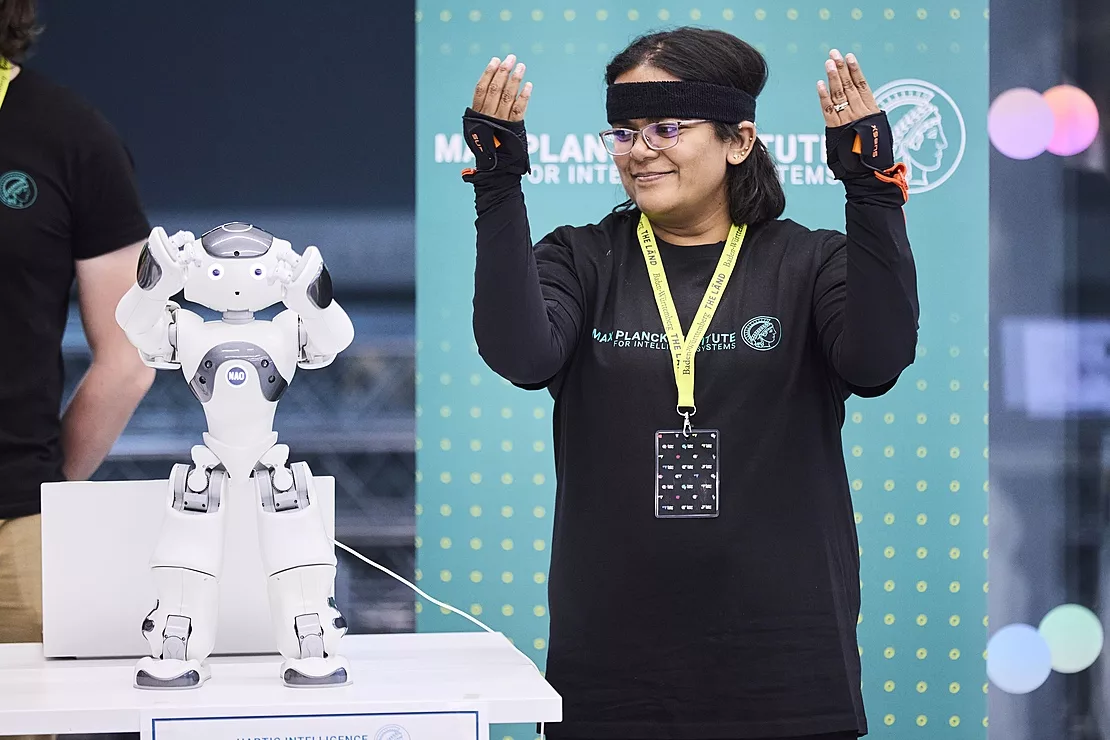
    The exhibition with more than 40 exhibitors on the ground floor brought together academic partners, research projects, and organizations from across our Innovation Campus, including the Max Planck Institute for Intelligent Systems, the Haptic Intelligence Department, Max Planck Foundation, the IMPRS-IS, the University of Stuttgart (IntCDC, IRIS, MLIP, KI-SIR), the University of Tübingen (ML Cluster, Tübingen AI Center), Bionic Intelligence Tübingen Stuttgart (BITS), ELLIS Institute Tübingen, Hertie Institute for AI in Brain Health, ARENA2036, BWKI, Cyber Valley GmbH and PAB, High Performance Humanoid Technologies Lab (H²T) from KIT, KE:SAI, Oktonex, Polybot, Prior Labs, and more!

    Robot at Cyber Valley Day
    © Christian Borth

    A stage for the next generation of founders

    On the sixth floor, the Start-up Basecamp put entrepreneurship and emerging innovation at the center of the conversation.
    Start-ups and initiatives including Bergsonne Labs, Denkbox, NUVUS, Computomics, Feyer, MaiTY, Istari AI, TextVerstehen, Tanocrix, Data Coffee, Yugen Space, IntegraSkin, MIRA vision, the Startup Center Tübingen, and the Tübingen AI Center presented their work and connected with researchers, investors, and other members of the ecosystem.

    An investor “Ask Me Anything” session also gave researchers and future founders the opportunity to gain practical insights into early-stage investment and entrepreneurship. Representatives from Capnamic, Fly Ventures, AI Fund, and Mätch VC shared their perspectives on what investors look for and what researchers should consider when exploring the path from research to start-up.
    During more than 40 1:1 sessions with investors, researchers and prospective founders had the opportunity to discuss their individual ideas, receive tailored feedback, and explore potential pathways toward funding and venture creation.

    Cyber Valley Day start-ups
    © Christian Borth

    Special announcement

    The final highlight of the day was grubel, which announced its launch during Cyber Valley Day. Founded by Moritz Hardt, Reinhard Heckel, Vedant Nanda and Navid Rekabsaz, grubel is building AI systems specialized to individual legal matters. Its vision: every matter should be able to build its own AI by combining data curation, adaptation, and evaluation to create specialized systems that can deliver high performance while keeping sensitive data under the customer’s control. We’re excited to see this research-driven venture take its next step and look forward to following its journey! 

    © Christian Borth

    Looking ahead

    Ten years ago, a group of visionary partners laid the foundation for Cyber Valley. Today, it has grown into a vibrant ecosystem connecting excellent research, entrepreneurship, industry, and society. Thank you to everyone who joined us and helped make this celebration a very memorable day!

  • 2022: Hector Foundation supports founding of ELLIS Institute Tübingen

    2022: Hector Foundation supports founding of ELLIS Institute Tübingen

    In 2016, important actors from science, industry, and politics founded the Cyber Valley Consortium, which became the first Innovation Campus in Baden-Württemberg. Ten years on in 2026, we’re revisiting the most significant milestones from the last decade. Each month, we’ll focus on a particular year since Cyber Valley’s beginning. 

    This month, we’re looking back to 2022, when the Hector Foundation announced that it would support the establishment of the ELLIS Institute Tübingen with 100 million euros. The Institute was created to attract the world’s best machine learning talent to Baden-Württemberg by offering them outstanding conditions for undertaking pioneering AI research. Celestine Mendler-Dünner was among the first group leaders recruited to join the ELLIS Institute. In the following interview, she explains what it was like to play a crucial role at the ELLIS Institute from its beginning and how it has advanced her research and career.

    Why did you want to join the ELLIS Institute? What advantages did you see it offering?

    As the first institute of its kind, the ELLIS Institute Tübingen promised to be something very special and I did not want to miss the opportunity of being part of it. And this turned out to be an incredible journey. The ELLIS Institute offers a unique environment for research with full academic freedom and the financial means to pursue impactful research. This is hard to find elsewhere. Centered within the striving Tübingen AI ecosystem, it offered a strong reason for me personally to continue my research career in Europe.

    How would you describe the experience of being among the first PIs (group leaders) shaping the Institute in its formative phase?

    It was an exciting opportunity to help shape a new institute as one of the first PIs. Many things still had to be built, from office space, to outreach, to internal processes which was very enjoyable with a team that was committed to making things possible as efficiently as possible. I am very proud of how the institute has grown and the visibility it has gained globally.

    ELLIS places strong emphasis on building AI that is aligned with social values. How does the institute support this mission?

    The institute and the Tübingen AI community play a leading role in building the technical foundations for addressing social questions in AI. With the flexibility we have here to pursue research that does not immediately create economic value we can center objectives, such as social values and the common good, in our core efforts, which I am very thankful for.

    How has the ELLIS Institute supported your career and what are the next steps?

    It allowed me to push the frontiers of research with minimal distraction, and benefit from close collaboration with the Max Planck Institute for Intelligent Systems, as well as the Tübingen AI Center and the ELLIS Network more broadly. This was an invaluable asset at a pivotal stage of my career. This fall I will move on to take up a professorship at ETH Zurich and I am very excited about the next chapter. I will deeply miss Tübingen and I look forward to staying connected with the wonderful people I have met here.

    To celebrate Cyber Valley’s ten-year anniversary, we’ll be sharing a variety of content across our website and social media channels reflecting on milestones from the last decade. Stay tuned for the next installments!
  • 2021: Founding of Cyber Valley GmbH—Interview with Florian K. Mayer

    2021: Founding of Cyber Valley GmbH—Interview with Florian K. Mayer

    In 2016, important actors from science, industry, and politics founded the Cyber Valley Consortium, which became the first Innovation Campus in Baden-Württemberg. Ten years on in 2026, we’re revisiting the most important milestones from the last decade. Each month, we’ll focus on a particular year since Cyber Valley’s beginning. 

    This month, we’re looking back to 2021, when the Cyber Valley initiative transitioned into being a GmbH (a registered German company). Cyber Valley GmbH’s Managing Director, Florian Mayer, had already been deeply involved in the initiative since the beginning and has continued to play a vital role for the company. In the following interview, he reflects on what it was like to work for Cyber Valley at the beginning and how it continues to fulfill its mission of transforming AI and robotics research into a sustainable future for all.  

    What was it like when you started working for the Cyber Valley initiative? What was its original mission? 

    When I started at Cyber Valley, there was a real sense of excitement in the air. You felt like you were part of something new and special. That enthusiasm was contagious; many people wanted to play an active role in building one of Europe’s leading centers for artificial intelligence and robotics. 

    Cyber Valley’s mission was—and still is—to create an attractive and internationally visible ecosystem for AI and robotics. Researchers should not only be able to conduct excellent basic research but also have better opportunities to translate their findings into concrete applications and innovations. Silicon Valley has been and remains an important model in this regard: a place where cutting-edge research, entrepreneurship, and social progress are closely intertwined. 

    What were the biggest challenges during the transition from initiative to GmbH?  

    The biggest challenge during the transition from an initiative to a GmbH was undoubtedly the discussions about the appropriate legal form and the future governance structure. Various models, such as a GmbH, a gGmbH, or an association, were thoroughly examined and discussed. Such decisions set the course for the future and therefore had to be carefully weighed. 

    Furthermore, it is inherently challenging to reconcile the interests and expectations of a large number of diverse stakeholders. In Cyber Valley, universities, research institutions, companies, and public partners work closely together. However, it is precisely this diversity that makes the collaboration particularly exciting and is ultimately one of the ecosystem’s greatest strengths. 

    What has personally surprised you the most in the journey since becoming a GmbH? 

    What surprised me most was how well-known and respected the name Cyber Valley had already become in its early years, even before the GmbH was founded. In a relatively short time, Cyber Valley had made a name for itself both nationally and internationally. 

    I was also impressed by how successfully the partners have managed to attract outstanding scientists from all over the world to the region. This concentration of talent is extraordinary and has played a major role in establishing Cyber Valley’s reputation today as one of Europe’s leading AI ecosystems. 

    Cyber Valley aims to turn AI and robotics research into a more sustainable future for everyone. What does that mean to you?  

    This means a great deal to me because I see enormous potential in AI and robotics for Baden-Württemberg, Germany, and Europe. Our region boasts excellent basic research and numerous internationally recognized research institutions. At the same time, there remains great potential to translate scientific findings even more effectively into innovative products, services, and business models. 

    This is precisely where ecosystems like Cyber Valley can make an important contribution. They bring together science, business, and society and create the conditions that allow innovations to find their way into practical application more quickly. In doing so, they make an important contribution to the future viability of our business location and to shaping technological progress in a sustainable way. 

    What responsibility do organizations like Cyber Valley have in shaping how AI affects society? 

    In my opinion, organizations like Cyber Valley GmbH bear a very great responsibility. Technological innovation alone is not enough: just as important is the question of how these technologies are used in society and what impact they have on people and institutions. Cyber Valley GmbH has therefore made promoting societal acceptance of new technologies a core part of its mission. Those who fail to adequately consider the ethical, social, and societal implications of AI run the risk of losing public trust. An important step in this direction was the establishment of the Public Advisory Board back in 2019. This created a framework early on to incorporate societal perspectives and critical questions into the further development of the ecosystem. 

    What makes the Cyber Valley ecosystem unique compared to other AI hubs? 

    Cyber Valley is unique because it is not limited to a single location. The ecosystem spans the various locations of its partners, thereby bringing together diverse areas of expertise and perspectives. The participating universities and research institutions have a wide range of scientific focuses, ensuring that a particularly broad spectrum of AI and robotics research is covered. 

    Added to this is its strong integration into one of the world’s most innovative economic regions. Baden-Württemberg boasts a high concentration of technology-oriented companies, global market leaders, and industrial expertise. This combination of excellent research, international talent development, and a strong industrial base creates ideal conditions for the successful transfer of research findings into practical applications and sets Cyber Valley apart from many other AI hubs worldwide. 

    To celebrate Cyber Valley’s ten-year anniversary, we’ll be sharing a variety of content across our website and social media channels reflecting on milestones from the last decade. Stay tuned for the next installments! 
  • 2021: Critically reflecting on how AI is impacting society—Interview with IRIS

    2021: Critically reflecting on how AI is impacting society—Interview with IRIS

    In 2016, important actors from science, industry, and politics founded the Cyber Valley Consortium, which became the first Innovation Campus in Baden-Württemberg. Ten years on in 2026, we’re revisiting the most important milestones from the last decade. Each month, we’ll focus on a particular year since Cyber Valley’s beginning.

    This month, we’re looking back to 2021, when the Interchange Forum of Reflecting on Intelligent Systems (IRIS) was founded at the University of Stuttgart. IRIS aims to bring researchers together to critically reflect on the foundations, mechanisms, implications, and effects of intelligent systems in research, teaching, and society.

    Steffen Staab and Maria Wirzberger have led the project since its beginning. In the following interview, they reflect on key moments since the project’s founding and why IRIS’s work is critical for ensuring AI is used responsibly.

    What was the original motivation behind starting IRIS? What problems did it seek to address?

    The University of Stuttgart is a technically oriented university. Many of our colleagues, including ourselves, develop and investigate intelligent systems. By intelligent systems, we do not only refer to artificial intelligence systems, though these are included and are at the heart of what we do personally. We also refer to, for example, urban, traffic, or biological systems that exhibit beneficial or detrimental emergent properties resulting from perception, intelligent processing, and (re-)action, including system resilience or failure, among others.

    Specifying the desired behavior of such intelligent systems is notoriously difficult and requires reflecting on the implications for individuals, groups, or society at large. This is a transdisciplinary challenge that must include not only technical disciplines but also the humanities and the social sciences, as well as society at large. IRIS serves as a forum for people within and beyond our university to gather and address these challenges.

    Addressing the outlined challenges, we focus on three core dimensions: research, teaching, and public engagement. In research, we address timely questions at disciplinary intersections, for example, how AI is shaping political opinion and public discourse, or how it changes workplace characteristics in safety-critical domains. In teaching, we offer students and educators opportunities to foster a critical and reflective mindset towards the potential ethical and social impacts of intelligent systems. In public engagement, we foster dialog with the public through various formats that explain our research to society and provide a platform for citizens to share their thoughts and concerns about technological advances.

    Looking back over the past five years, which activities or initiatives from IRIS were a particular highlight for you and why do they stand out?

    IRIS was started in early 2021, i.e., before the ChatGPT moment in November 2022. So one of the highlights in research was the hiring of junior research groups who started in 2023. They have all contributed significantly to studying the implications of chatbots and, later on, agentic AI: how AI may violate ethical constraints, can be deceptive, or be biased.

    Other highlights included our joint online summer school with NoBias in the fall of 2021, which attracted more than 100 doctoral and postdoctoral researchers. Or the ACM Web Science Conference in summer 2024, which featured prominent keynotes from the US, China, and Europe from a variety of academic disciplines.

    In teaching, our highlights include the implementation of course offerings for both schools and higher education, targeting the promotion of a critical mindset towards the unintended side effects of intelligent systems in personal and professional domains. Focusing on teaching at the University of Stuttgart alone, we have reached almost 3000 students so far and, due to their positive feedback, are currently expanding our offering, encouraged by the rectorate. On a related note, we were even successful in acquiring third-party funding for developing a digital learning offer for schools, focusing, among other things, on cyberbullying and algorithmic manipulation.

    Finally, a particular highlight in public engagement constitutes our proposal “Questions to Colleague AI”, representing one of 26 projects funded by the former Federal Ministry of Education and Research as part of the Year of Science 2022. This project brought to life a variety of high-profile events, and featured, among others, a special concert with the Stuttgart Chamber Orchestra performing a novel AI-composed music piece, a debate series with leading panelists, and a virtual citizen’s council moderated by a specifically developed AI bot.

    Why is it important to draw on expertise from different disciplines when critically reflecting on AI’s impact on society?

    Different disciplines have memories of when past situations caused problems of a similar nature. We may, for example, unfortunately observe some transhumanists raising fascist-like talking points today, and there is a broad literature about the dangers that result from such points of view. Different disciplines have developed a range of methodologies to analyze and solve new problems and cultivated diverging portfolios that can be leveraged to build and refine reflective capacities among involved stakeholders. Hence, restricting ourselves to only a few technical disciplines would severely limit our ability to comprehensively address high-impact, newly emerging societal consequences.

    In what ways has being part of Cyber Valley supported IRIS in achieving its aims?

    Cyber Valley provides an ecosystem of like-minded people across both the Universities of Stuttgart and Tübingen, the Max Planck and Fraunhofer Institutes, and various companies and foundations, sparking regular opportunities for dialog and exchange. In addition to several local colleagues at our institution as part of cross-site initiatives like the Center for Bionic Intelligence Tübingen Stuttgart (BITS), we are also connected to colleagues located in Tübingen and, until recently, have benefited from recurring inputs from Professor Bob Williamson as a wise, encouraging, and incredibly motivating member of the IRIS International Advisory Board. Also, Dr. Ksenia Keplinger from the Stuttgart site of the Max Planck Institute for Intelligent Systems is actively involved in IRIS as an associated member.

    Has anything about how we think about “responsible AI” changed since IRIS was founded, and if so, how?

    When IRIS was founded, “responsible AI” was still a niche topic. Now, its importance has been globally recognized, particularly with the European AI Act as a visible and binding legal framework, which has been defined as a mandatory standard across member states. With the rapidly increasing capabilities of current AI, its challenges have become tremendously more severe and urgent. Even more so, if we consider emerging critical dynamics such as sycophancy and the resulting emotional addiction to conversational AI. These observations demonstrate the significant influence AI has on individuals and on interpersonal relationships. Related challenges cannot be tackled from a technical perspective alone, making IRIS’s contributions even more significant.

    The University of Stuttgart has also been in conversation with Maria Wirzberger and Steffen Staab, asking them to reflect on how IRIS is shaping an AI future that supports society. Read the full interview here.

    To celebrate Cyber Valley’s ten-year anniversary, we’ll be sharing a variety of content across our website and social media channels reflecting on milestones from the last decade. Stay tuned for the next installments! 
  • 2020: Founding the Cyber Valley Investor Network—Interview with Alex Diehl

    2020: Founding the Cyber Valley Investor Network—Interview with Alex Diehl

    In 2016, important actors from science, industry, and politics founded the Cyber Valley Consortium, which became the first Innovation Campus in Baden-Württemberg. Ten years on in 2026, we’re revisiting the most important milestones from the last decade. Each month, we’ll focus on a particular year since Cyber Valley’s beginning. 

    This month, we’re looking back to 2020, when the Cyber Valley Investor Network was founded. The network was established to bring together venture capital (VC) firms to support Cyber Valley scientists in transferring their research into applications that benefit people, industry, and society.

    Alex Diehl, Senior Advisor at Cyber Valley GmbH, played a pivotal role in establishing the Cyber Valley Investor Network. In the following interview, he describes his initial ambitions for the network, how it has supported Cyber Valley scientists, and where he sees the network developing in the future.

    What was the motivation behind founding the Cyber Valley Investor Network, and what gap did it aim to close?

    We had a surplus of brilliant AI talent in our academic institutions, but the region lacked a defined start-up ecosystem. Our researchers were world-class, yet they had almost no touchpoints with venture culture or experienced founders. In the global AI race, deep-tech teams need to understand the venture-backed “playbook” early—otherwise, they risk making structural or capital mistakes that can kill a company before it starts. We founded the Investor Network to bridge this gap by “importing” global expertise. We wanted our researchers to meet VCs and angels who could provide that mentorship early on, even while our local ecosystem was still in its infancy.

    Beyond capital, what role do investors play in supporting researchers and start-ups moving toward long-term applications?

    It’s about operational excellence from day one. The start-up journey is a series of unpredictable pivots, and a great VC acts like an additional co-founder who is focused entirely on the company’s trajectory. There is a whole suite of “operational hygiene” that shouldn’t be reinvented: shareholder contracts, cap table management, go-to-market planning, and hiring incentives. An investor provides the proven methods for these tasks so the founders can focus on the tech. Beyond the check, they provide the “blueprint” and the network to transform a research project into a scalable, professional organization.

    Why are investors engaging with scientists working on basic research so early, and what value do both sides gain?

    Unlike the SaaS era, where founders could build on mature, standardized technology, AI and robotics are deeply technical and evolving in real-time. In deeptech, the science is the competitive advantage. By engaging early, investors help scientists translate a technical breakthrough into a viable business model before the first line of commercial code is even written. For investors, it’s a front-row seat to the next frontier of innovation; for scientists, it ensures their research has a clear, responsible path to real-world impact from the very beginning.

    What would you say has been the biggest success story for the Cyber Valley Investor Network so far?

    The real success story is that we’ve ignited a cultural movement. We started nearly eight years ago with only a handful of start-ups, and now we’re seeing a big number of teams, significant follow-on investments from global VCs and even several exits. Beyond the capital, the most important shift is the surge of interest from researchers who are now eager to participate in our incubator programs and become AI and robotics entrepreneurs. The fact that partners from Japan, Canada, France, the US, and others are now looking toward Cyber Valley and ELLIS proves we have achieved some international relevance, at least to a degree.

    Looking ahead, how do you see the Investor Network evolving to support Cyber Valley’s goal of turning AI and robotics research into a sustainable future?

    We have passed the point of critical momentum where the network is now evolving organically. It has become much larger and more informal, with global VCs proactively reaching out to visit hubs like Tübingen, Stuttgart, Karlsruhe, Freiburg, Heidelberg, and Heilbronn to see the innovation happening in Baden-Württemberg. As “THE AI Länd” continues to accelerate as a community, I think the focus will be on maintaining this energy to ensure our research translates into a sustainable and impactful future for everyone.

    Since the Investor Network’s founding in 2020, Cyber Valley has grown to include:

    • 40+ investor partners and friends actively engaging across the network
    • 100+ Baden-Württemberg start-ups working across AI, robotics, and deep tech
    • Seven batches of the Cyber Valley AI Incubator, supporting more than 150 future founders and entrepreneurial researchers
    • More than €1 billion invested into start-ups connected to Cyber Valley’s broader ecosystem in recent years
    • International investor engagement spanning Europe, North America, and Asia

    The Investor Network has evolved from offering an initial access point for investors to building long-term relationships between them and researchers. “What is exciting now is seeing founders from our ecosystem engage with international investors with growing confidence while still maintaining the grounded and collaborative culture that makes Baden-Württemberg unique”—Blanca Büechl (Business Development Manager: Investors, Cyber Valley GmbH).

    Reach out to Blanca Büechl (blanca.bueechl@cyber-valley.de) to find out more about the Investor Network and how you can play a pivotal role in turning AI and robotics research into real-world solutions for a better future for all.

    To celebrate Cyber Valley’s ten-year anniversary, we’ll be sharing a variety of content across our website and social media channels reflecting on milestones from the last decade. Stay tuned for the next installments! 
  • 2019: Reducing construction waste with AI—interview with Optocycle

    2019: Reducing construction waste with AI—interview with Optocycle

    In 2016, important actors from science, industry, and politics founded the Cyber Valley Consortium, which became the first Innovation Campus in Baden-Württemberg. Ten years on in 2026, we’re revisiting the most important milestones from the last decade. Each month, we’ll focus on a particular year since Cyber Valley’s beginning. 

    This month, we’re looking back to 2019, when the Cyber Valley Start-up Network was founded to build and nurture a community of start-up entrepreneurs. The Cyber Valley Start-up Network has grown rapidly over the past years, from the initial seven founding members at the end of 2019 to more than 100 start-ups in 2026.

    In 2022, Optocycle joined the Start-up Network. Optocycle develops AI-based systems for the optical classification of construction waste. Their technology enables optimal use of demolition material, promoting a circular economy.

    In the following interview, CEO Max-Frederick Gerken explains how the idea for Optocycle emerged, how being part of the Start-up Network has supported the company’s development, and how AI-driven material classification can contribute to a more circular and sustainable construction industry.

    How did the idea for Optocycle originate, and what problem were you initially trying to solve?

    Interestingly, we didn’t start in construction. Initially, we were building AI to recognize fruits and vegetables at supermarket checkouts. The pivot came when a contact from the recycling industry highlighted a much bigger problem: construction waste is still classified manually: slow, subjective, and inefficient.

    We realized that the core issue is missing data. That’s why we built Optocycle: combining optical sensor systems with AI to create a reliable, real-time data layer for material flows and enable true circular construction.

    How did your research and experience within the Cyber Valley ecosystem contribute to founding the company?

    It didn’t directly contribute to founding the company, as Optocycle was already established at that point. However, we did benefit from funding within the Cyber Valley ecosystem, which supported us in scaling our team and further developing our technology. Beyond that, the ongoing exchange within the network has been consistently valuable and interesting.

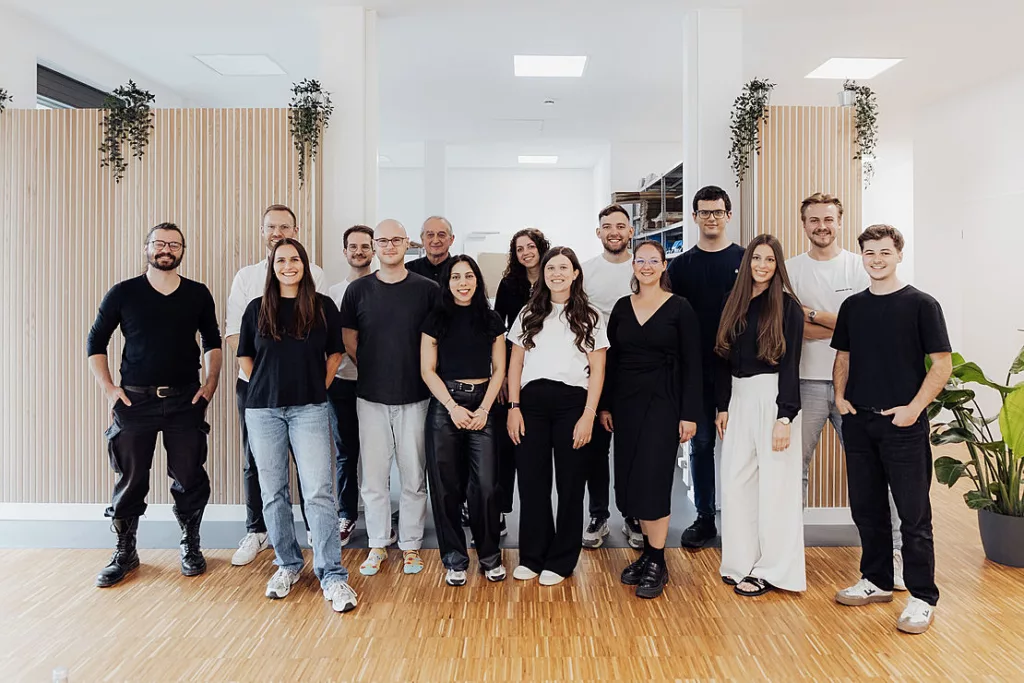
    The Optocycle team | (c) Optocycle

    How do you see Optocycle’s work contributing to a future where AI research has a long‑term, positive, and sustainable impact on society?

    At Optocycle, we see our work as a very applied example of how AI can drive tangible, long-term positive impact, particularly in industries that have historically been difficult to transform, such as construction and circular materials management.

    Our core contribution lies in using AI and advanced sensing technologies to make material flows transparent and measurable. This is a prerequisite for any functioning circular economy. Today, a significant share of valuable materials is still downcycled or lost entirely because there is insufficient data about their composition and quality. By generating reliable, real-time data, we enable better decision-making across the value chain, from sorting and recycling to reintegration into new products.

    From a sustainability perspective, this directly contributes to reducing waste, lowering CO₂ emissions, and preserving finite resources. But beyond the environmental aspect, we also see a structural impact: AI, when deployed thoughtfully, can help modernize traditionally analog industries and make them more efficient, data-driven, and resilient.

    Importantly, we believe that the long-term societal value of AI will depend less on abstract breakthroughs and more on its integration into real-world systems. Our approach is therefore to embed AI into physical processes with clear economic and ecological benefits. This ensures that the technology is not only innovative, but also scalable, economically viable, and aligned with sustainability goals

    What was the biggest lesson you learned from your founding journey? And what advice would you give to others who are considering taking the leap?

    The biggest lesson from our founding journey has been the importance of building solutions strictly around real customer needs, not for the sake of technology or innovation itself. Especially in deeptech and AI, there’s a strong temptation to develop sophisticated solutions first and look for applications later. In practice, that approach rarely leads to sustainable businesses.

    What truly made a difference for us was maintaining a strong customer focus from early on: deeply understanding pain points, validating assumptions quickly, and iterating based on real-world feedback. This ensures that what you build is not only technically impressive, but also commercially relevant and scalable.

    For anyone considering taking the leap, the advice would be: stay as close to your customers as possible. Talk to them early, challenge your own assumptions, and be willing to adapt your solution, even if that means pivoting away from your original idea. Execution matters, but direction matters more, and that should always be guided by real demand.

    To celebrate Cyber Valley’s ten-year anniversary, we’ll be sharing a variety of content across our website and social media channels reflecting on milestones from the last decade. Stay tuned for the next installments! 
  • 2018: Building a network of excellent scientists—interview with Caterina De Bacco

    2018: Building a network of excellent scientists—interview with Caterina De Bacco


    In 2016, important actors from science, industry, and politics founded the Cyber Valley Consortium, which became the first Innovation Campus in Baden-Württemberg. Ten years on in 2026, we’re revisiting the most important milestones from the last decade. Each month, we’ll focus on a particular year since Cyber Valley’s beginning. 

    This month, we’re looking back to 2018, when the first Cyber Valley Research Groups were established. One of these research groups was led by Caterina De Bacco: between 2018 and 2024, she led the Physics for Inference and Optimization group at the Max Planck Institute for Intelligent Systems before becoming an Associate Professor at Delft University of Technology.

    In the following interview, she explains how Cyber Valley’s network of scientists and innovators provided a thriving environment for her research, and how her research could be used for managing traffic in transportation networks.

    What were your research group’s main aims and outcomes?

    In my group, we were combining expertise from physics, mathematics, and statistics to effectively model complex systems; systems made of many individual elements that interact in complex ways, often referred to as networks. Our research approach aimed at developing mathematically rigorous models to learn patterns from network data or to optimize the design of these systems. We studied applications like clustering, anomaly detection, or optimal transport on networks, spanning various domains, in particular, the social sciences and engineering.

    How did your research address real-world challenges, and what kind of applications or long-term benefits could it have?

    Learning patterns from network data has applications in a variety of domains, as network data is ubiquitous. One of the challenges is to perform these inferences efficiently. Hence, special focus is given to the development of interpretable and principled models that are also computationally efficient, so that practitioners such as social scientists and engineers can use them without needing large resources, making these tools accessible to a wider audience. All the models we developed have a corresponding open-source implementation of the codes available online. With our models, practitioners can detect hidden clusters of similar nodes from network data or estimate the likelihood that certain observations are anomalous.

    In addition, our research on optimal transport has natural applications in managing traffic in transportation or communication networks. With our models, we can design optimal networks that can be used by network managers to assess the efficiency of existing transportation infrastructures.

    Cyber Valley is a network of leading research institutions, industry partners, and start-ups working in AI and robotics. How did being part of this network shape your research, skills, or career path?

    The exposure to this diverse network of experts was beneficial for the creative process of stimulating ideas, ideation. You have the feeling that there is always something cutting-edge going on around you, and you are among the first ones to know. There are not that many ecosystems connecting research and technology at this high level, so being immersed in it gives you valuable stimuli and ideas.


    The Cyber Valley Research Fund was also an important support for advancing our research (I obtained two grants from it). With little administrative burden and a smooth application and reporting process, I could focus mainly on the research itself, in contrast to other mainstream funding opportunities, where you end up spending much more time on non-research-related activities. As a result, our research thrived during these years, with an even higher level of productivity than we originally planned.

    How did your experience as a Cyber Valley Research Group Leader prepare you for your next career step?

    The opportunity to combine freedom and resources was unique and extremely valuable. This allowed me to grow in several aspects that are important for an academic career beyond pure research, for example, managerial responsibilities. Being able to independently manage a budget and to make key decisions (such as recruiting, deciding how to contribute to teaching) gives you a sense of responsibility and agency that makes you grow significantly faster compared to other young academics who are not as independent. As scientists, we are required to take on different roles (managers, mentors, supervisors, teachers, accountants, fundraisers) that we must learn on the job, as we are usually only trained in the science itself. To be able to effectively learn all these skills, I needed to be given the opportunity. The independence and support I got from Cyber Valley were key in this respect.

    As a result, I could start my next career step (as an Associate Professor at Delft University of Technology) with a significant advantage in terms of experience, compared to my peers. Needless to say, being a Cyber Valley Group Leader played a big role in increasing my chances of finding the right job for my next career step.

    To celebrate Cyber Valley’s ten-year anniversary, we’ll be sharing a variety of content across our website and social media channels reflecting on milestones from the last decade. Stay tuned for the next installments!
  • 2017: Training outstanding doctoral students at IMPRS-IS – Interview with Leila Masri

    2017: Training outstanding doctoral students at IMPRS-IS – Interview with Leila Masri


    In 2016, important actors from science, industry, and politics founded the Cyber Valley Consortium, which became the first Innovation Campus in Baden-Württemberg. Ten years on in 2026, we’re revisiting the most important milestones from the last decade. Each month, we’ll focus on a particular year since Cyber Valley’s beginning. 

    This month, we’re looking back to 2017 when Cyber Valley’s graduate school, the International Max Planck Research School for Intelligent Systems (IMPRS-IS), was founded. IMPRS-IS trains outstanding doctoral students from around the world and supports them in their PhD research so they can use their AI expertise to build a better future in Europe.

    Leila Masri has been the scientific coordinator at IMPRS-IS since 2017. She has supported its growth into one of Germany’s largest doctoral programs, now comprising more than 300 doctoral researchers and nearly 100 faculty members. Committed to fostering diversity in science, she also contributes to initiatives broadening access to research, including the CaCTüS and RIGI internship programs in Tübingen and Stuttgart. In the following interview, she reflects on IMPRS-IS’s founding and what makes the graduate school unique.

    When you helped launch IMPRS-IS in 2017, what vision did you have for the program, both for the students and for the broader research community?

    As a scientist myself, I completed my PhD in Tübingen and Kiel and later worked as a postdoctoral researcher in Austria. Throughout my academic career, I have been deeply committed to supporting students and teaching, an interest I further developed by earning a university teaching diploma from the University of Stuttgart. When Michael J. Black and Katherine J. Kuchenbecker at the Max Planck Institute for Intelligent Systems (MPI-IS) launched IMPRS-IS in 2017 and were looking for a coordinator, it felt like a natural fit. My vision was to help build a welcoming international community where doctoral researchers and faculty could connect, exchange ideas, and thrive together, while providing an environment in which excellent research can flourish. It has been incredibly rewarding to see this vision come to life.

    Looking back over the past years, which moments or milestones felt particularly defining for IMPRS-IS, and why do they stand out to you personally?

    Looking back, one of the defining milestones was how quickly IMPRS-IS grew. Our original goal was to build a doctoral program with around 100 PhD students over six years, so reaching that number in less than two years was incredibly encouraging. Over those six years, we ended up recruiting more than 400 doctoral researchers, making IMPRS-IS one of the largest yet youngest doctoral programs in Germany.

    Furthermore, we had long wanted to organize industry visits so our students could see how research works outside academia and exchange ideas with researchers working in industry. Interestingly, this happened quite naturally through our alumni, who started hosting us at companies like Bosch, with a visit to Amazon coming up soon; both also partners in Cyber Valley. That organic development has been particularly rewarding to see.

    From your perspective, what is unique about IMPRS-IS? What distinguishes it from other doctoral training programs? 

    What makes the program special is how it brings together the Max Planck Institute for Intelligent Systems with the Universities of Stuttgart and Tübingen. This gives doctoral researchers access to both cutting-edge research infrastructure and strong academic networks. The focus on intelligent systems naturally connects AI, robotics, engineering, and related fields, and the close ties to the Cyber Valley ecosystem help link fundamental research with industry and innovation.

    At the same time, the structured doctoral program – with thesis advisory committees, Think & Link gatherings, annual boot camps, and professional development opportunities – provides valuable support to its doctoral students as well as to its senior scientists. Furthermore, beyond all the institutional and program strengths, what truly sets IMPRS-IS apart for me is its people and culture. It genuinely feels like a home: a place defined by trust, support, warmth, and collaboration. 

    That strong sense of community, alongside research excellence, is what makes IMPRS-IS truly unique.

    IMPRS-IS students come from a broad range of backgrounds, but do you think that they share any particular mindsets or qualities?

    Yes – although IMPRS-IS students come from very different academic, cultural, and personal backgrounds, I do think they share common mindsets and qualities. The program is highly international, with doctoral researchers from over 35 countries, more than 60% non-German speakers, and about 28% female researchers, alongside a wide range of academic backgrounds and expertise. That diversity enriches the research they conduct, as people approach problems in different ways and contribute their own personal touch to the research they pursue.
    There’s a noticeable culture of empathy, openness, and mutual support – people are approachable, willing to exchange ideas, and genuinely invested in each other’s academic and personal success.

    What aspects of the program are you personally most proud of today?

    Honestly, I don’t think I can point to one single aspect in isolation – what I’m most proud of is really the people who make IMPRS-IS what it is. The program’s success stems from the collective effort and commitment of many individuals: the strong guidance from our spokesperson Katherine J. Kuchenbecker, the steady support of the executive board and coordination office, and the genuine engagement of faculty members and scholars who are consistently willing to support doctoral researchers. That level of dedication creates an environment where doctoral candidates feel encouraged, guided, and valued. We can now measure this success: IMPRS-IS has attracted top-tier scientists from around the world, involves nearly 100 faculty members, hosts over 300 doctoral candidates, and has graduated more than 150 PhD students since 2017.

    Combined with the program’s diversity, interdisciplinarity, and culture of openness and mutual support, IMPRS-IS is not just a strong academic program – it is a place where people can thrive both scientifically and personally.

    To celebrate Cyber Valley’s ten-year anniversary, we’ll be sharing a variety of content across our website and social media channels reflecting on milestones from the last decade. Stay tuned for the next installments!