News Category: Investor Network

  • Cyber Valley AI Incubator Batch #9 culminates in Demo Day

    Cyber Valley AI Incubator Batch #9 culminates in Demo Day

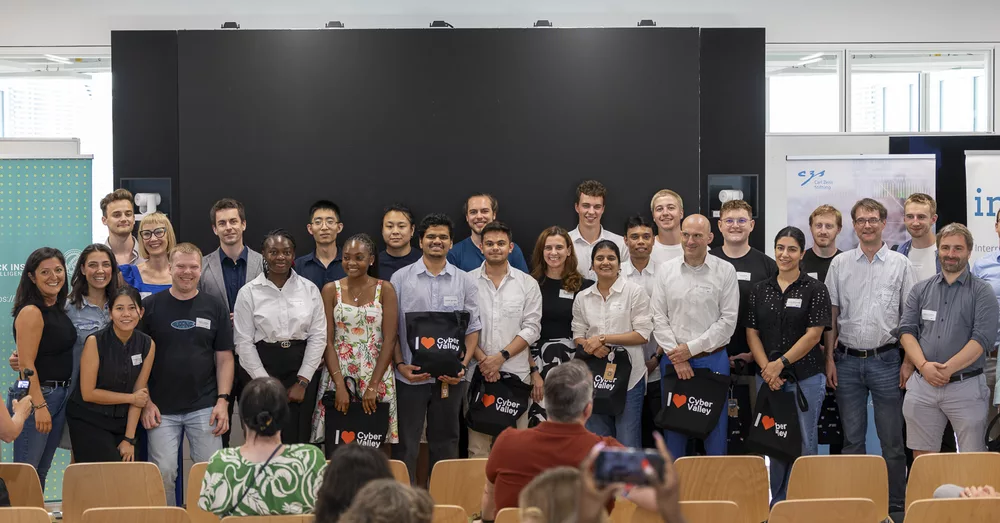
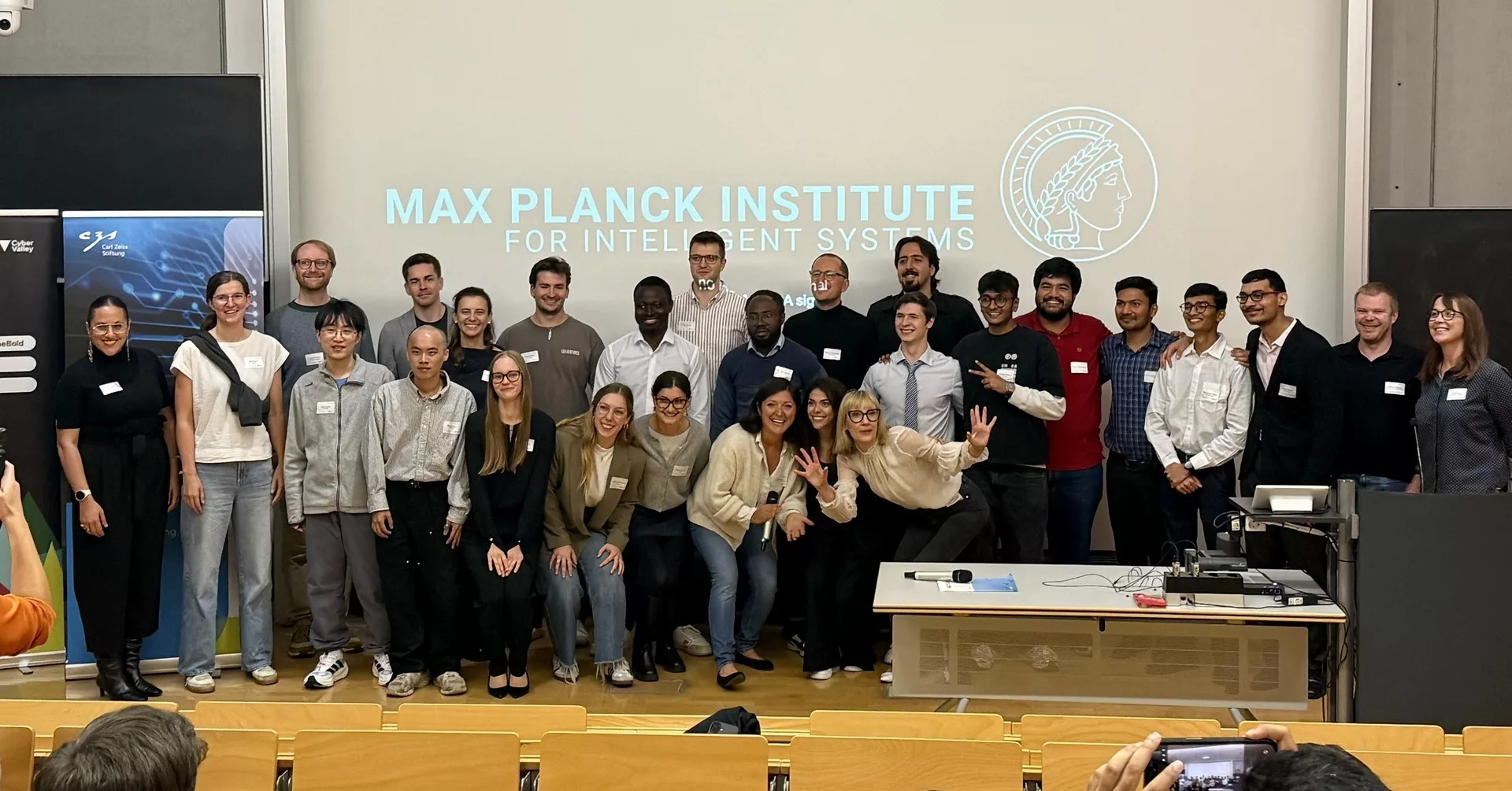
    The Batch #9 of the Cyber Valley AI Incubator concluded successfully with its Demo Day on October 16, where seven emerging AI ventures presented their innovations to an audience of founders, investors, researchers, and members of the AI community. Made possible through the generous funding of the Carl Zeiss Foundation (CSZ), organized by the Max Planck Institute for Intelligent Systems (MPI-IS) and the International Max Planck Research School for Intelligent Systems (IMPRS-IS), the Cyber Valley AI Incubator continues to foster research-driven AI entrepreneurship by helping innovators transform cutting-edge ideas into start-up ventures. 

    Hosted at the MPI-IS in Stuttgart, Demo Day marked the culmination of two weeks of intensive workshops exploring customer needs, business models, funding, prototyping, and pitching. The event opened with welcome remarks from Christoph Keplinger and Leila Masri of the Max Planck Institute for Intelligent Systems (MPI-IS), who reflected on the achievements of batch 9 and the growing impact of the AI Incubator. Lukas Findeisen of the Carl-Zeiss-Stiftung, the program’s principal sponsor, highlighted the foundation’s continued commitment to advancing innovation and research-driven entrepreneurship. 

    A highlight of the evening was the keynote address by Theodora Preda, partner at Plug and Play, who shared insights into the investor mindset and investing dynamics, offering perspectives on how investors assess opportunities, and what founders should understand when approaching the investment landscape.  

    The spotlight then turned to the batch 9 teams, who presented their final venture pitches before an expert jury consisting of: 

    • Christoph Keplinger (Director, Max Planck Institute for Intelligent Systems) 
    • Daisy De Souza Paiva (Senior Program Manager, ZEISS Ventures) 
    • Maximilian Worms (Analyst, LEA Ventures) 

    With all seven teams demonstrating an exceptionally high standard, selecting the winners proved challenging. 

    The following ventures were recognized for their outstanding achievements: 

    Best Pitch Award: Voclair, founded by Rustom Firdosh Bhesania, Mehryar Lessani, Deepam Maurya
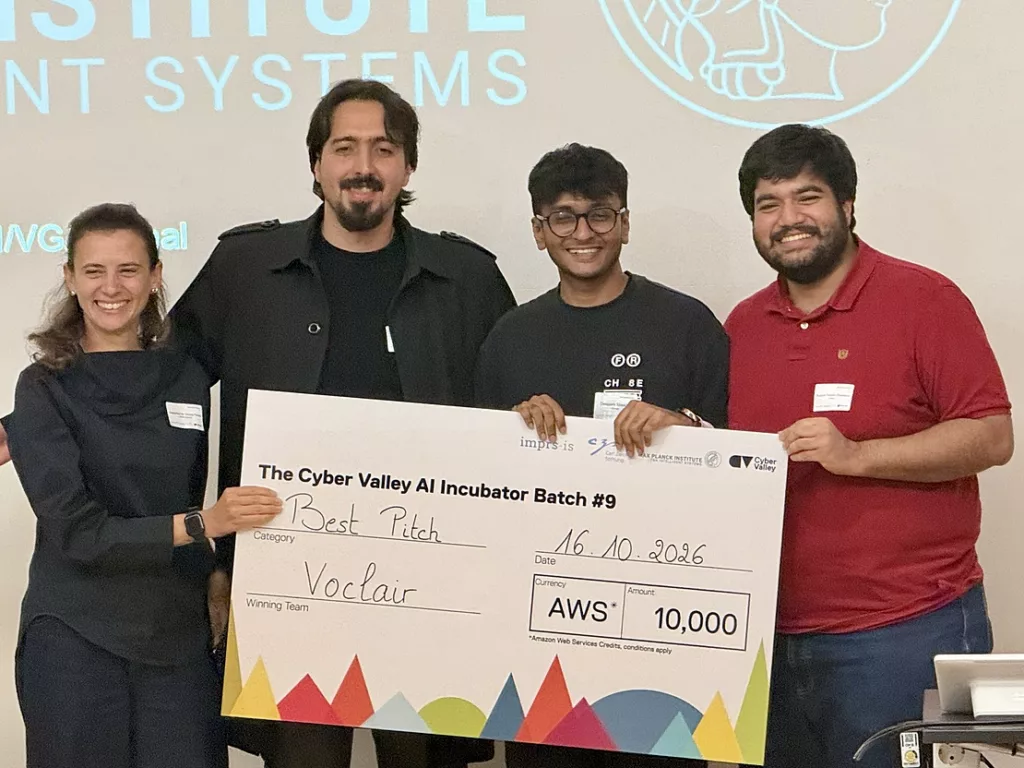
    AI Incubator Demo Day: Best Pitch Award
    Jury member Daisy De Souza Paiva, Founders Mehryar Lessani, Deepam Maurya, Rustom Firdosh Bhesania (from left to right). Copyright: Cyber Valley GmbH

    Best Business Model Award: TANOCRIX, founded by Marta Kriukova, Bolun Liang, Wei-Bo Tang 
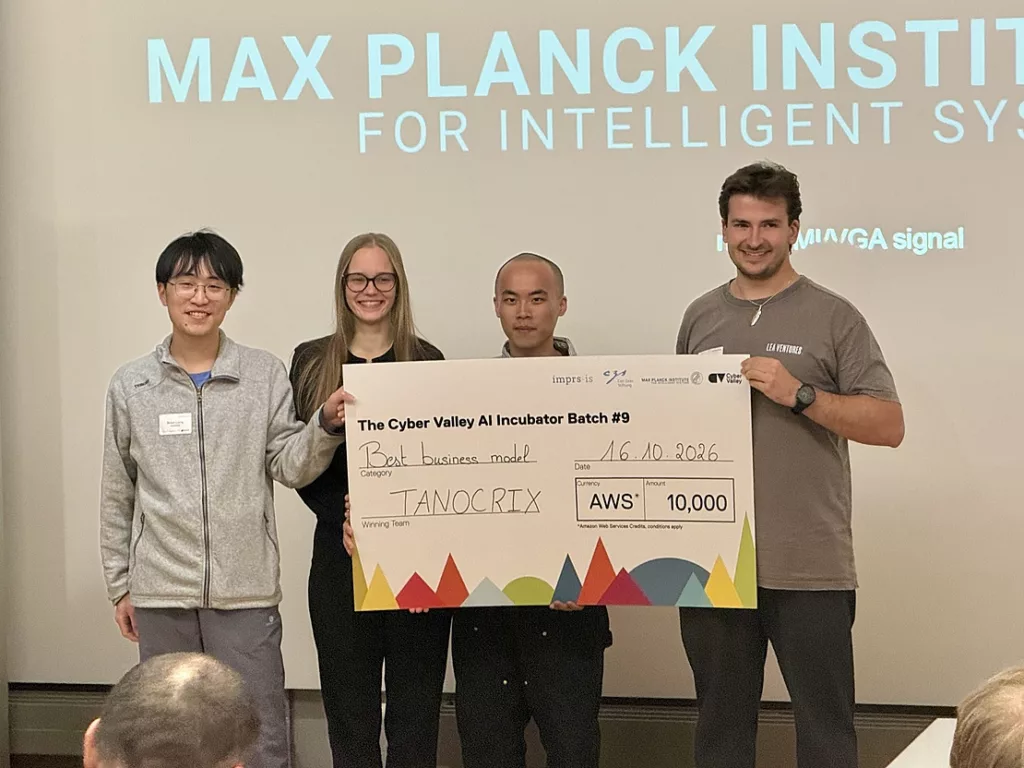
    Cyber Valley AI Incubator Demo Day, Best Business Model Award
    Founders Bolun Liang, Marta Kriukova, Wei-Bo Tang, jury member Maximilian Worms (from left to right). Copyright: Cyber Valley GmbH

    Best use of AI Award: Angel, founded by Melis Ilayda Bal, Stefano Esposito, Michela Petriconi, Marko Zaric
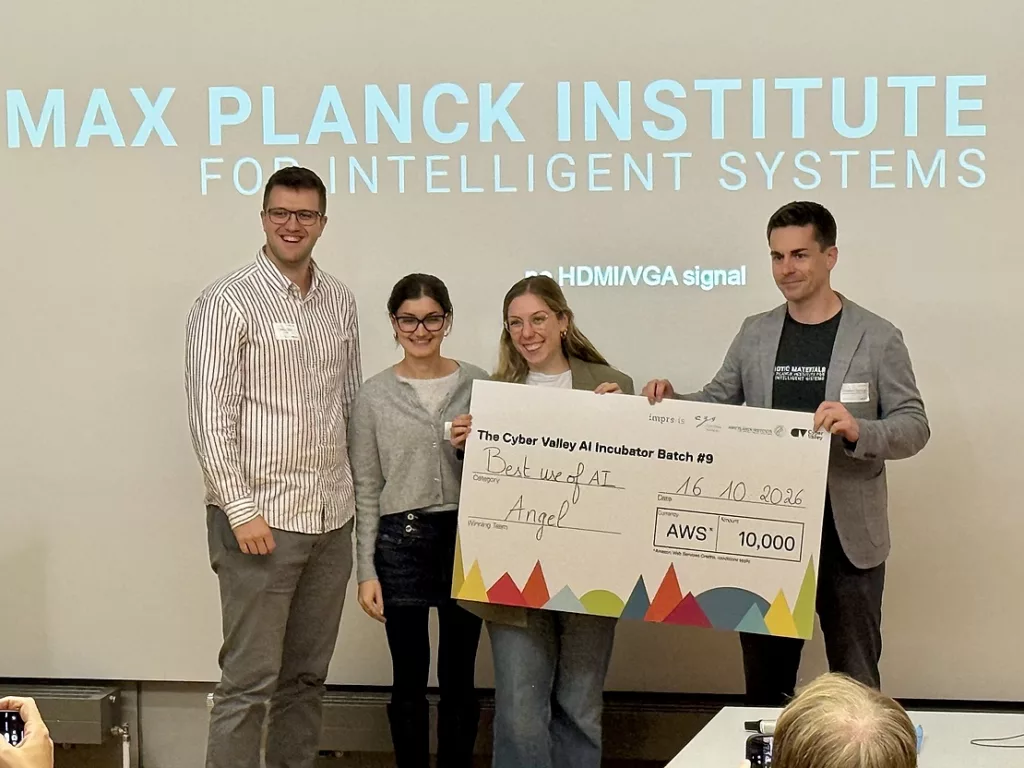
    Cyber Valley AI Incubator Demo Day, Best use of AI Award
    Founders Marko Zaric, Melis Ilayda Bal, Michela Petriconi, jury member Christoph Keplinger (from left to right) Copyright: Cyber Valley GmbH

    Each winning team received $10,000 in AWS Credits, generously provided by Amazon, to support the continued development and scaling of their AI solutions. 

    The evening concluded with a networking reception, providing participants, mentors, investors, and guests with the opportunity to celebrate the achievements of Batch 9 and strengthen connections across the Cyber Valley innovation ecosystem.

    About the Cyber Valley AI Incubator 

    Organized by the International Max Planck Research School for Intelligent Systems (IMPRS-IS) and the Max Planck Institute for Intelligent Systems (MPI-IS), the Cyber Valley AI Incubator continues to play a key role in supporting research-driven entrepreneurship within the Cyber Valley ecosystem. The program is made possible through the generous support of the Carl Zeiss Foundation, whose commitment to advancing innovation and scientific entrepreneurship enables researchers and innovators to bring their AI ideas closer to real-world application. 

    The Cyber Valley AI Incubator is designed to help researchers, engineers, and aspiring entrepreneurs bridge the gap between scientific discovery and startup creation. Open to participants from fields including artificial intelligence, robotics, computer vision, machine learning, biomedical technology, and data science, the program combines entrepreneurial education with mentorship from experienced founders, investors, and innovation experts.


  • Success stories from the Cyber Valley Innovation Campus: July–September 2026

    Success stories from the Cyber Valley Innovation Campus: July–September 2026

    The Cyber Valley Innovation Campus brings top scientists to Baden-Württemberg to advance AI and robotics research. These scientists are paving the way for the application of their research for the benefit of people, industry, and society.

    Members of the Cyber Valley Innovation Campus include the Max Planck Institute for Intelligent Systems (MPI-IS), Universities of Tübingen and Stuttgart, Fraunhofer IAO and IPA, ELLIS Institute Tübingen, and Karlsruhe Institute for Technology (KIT). As leading research institutions, they have announced the following exciting developments between July and September 2026.

    Frank Allgöwer recognized for outstanding scientific contributions

    The European Control Association (EUCA) and the Asian Control Association (ACA) have welcomed Frank Allgöwer as a fellow, recognizing his outstanding contributions to the field of systems and control engineering. Allgöwer is the first European to become a fellow at the ACA, which is one of the highest honors bestowed by the Asian control engineering community. Read more.

    Jakob Macke and Kashyap Chitta join the ELLIS Institute Tübingen

    Jakob Macke and Kashyap Chitta have joined the ELLIS Institute Tübingen, both as Principal Investigators and Hector Endowed Fellows.

    Macke is already an established figure in the Tübingen machine learning and computational neuroscience ecosystem and will shape the Institute’s research direction. Read more.

    Chitta is an expert in autonomous systems and physical AI, and will lead a new research group: the Physical AI Lab. The group focuses on understanding how machines interact with the physical world. Read more.

    Andrea Iannelli awarded ERC Starting Grant

    The European Research Council (ERC) is providing EUR 1.65 million in funding for Andrea Iannelli’s research project on autonomous systems that can adapt to complex tasks and changing environments while in operation. Gaining a Starting Grant is considered a highly prestigious achievement for early-career researchers in Europe. Read more.

    Marcel Binz joins the Max Planck Institute for Biological Cybernetics

    Marcel Binz has begun his research on a unified theory of human cognition using computational models at the Max Planck Institute for Biological Cybernetics. These models aim to simulate, predict, and explain human behavior in diverse situations.

    Binz’s research examines the central building blocks of human cognition by addressing three challenges: 1) the technical challenge of building such models in the first place; 2) the scientific challenge of using these models to understand human cognition; 3) the applied challenge of translating this into real-world applications. Read more.

    AI Incubator alumni SKAI receives EXIST Startup Grant

    SKAI participated in the Cyber Valley AI Incubator in 2024 to develop a company that applies AI for the cosmetics industry. With the support of the EXIST Startup Grant, the team will be able to focus on developing SKAI and preparing for its launch in the coming months. Read more (German).

    Ontic Labs and Feyer selected for SPRIND’s Next Frontier AI Challenge

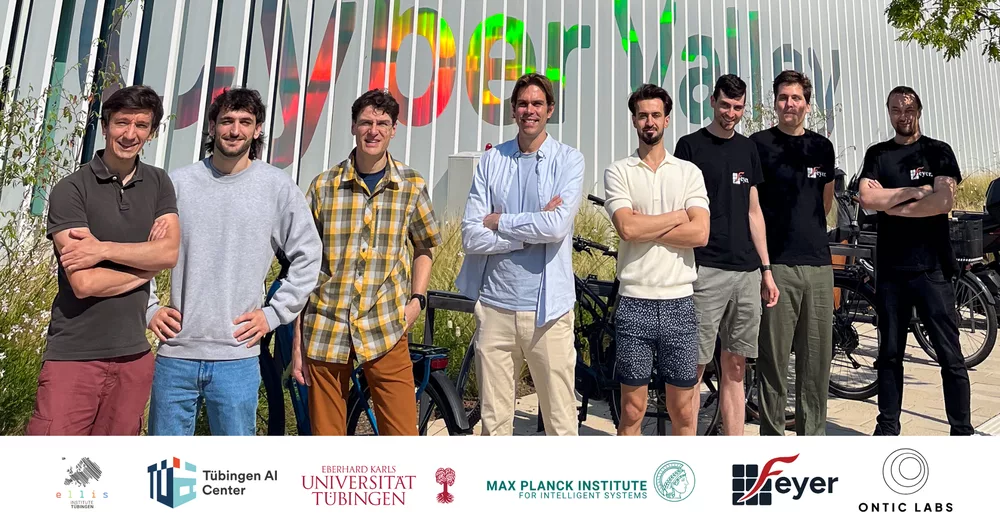
    Ontic Labs and Feyer were selected for the first stage of the German Federal Agency for Breakthrough Innovation’s (SPRIND) Next Frontier AI Challenge. The two start-ups are both spin-outs from institutions from the Cyber Valley Innovation Campus, including the ELLIS Institute Tübingen, Max Planck Institute for Intelligent Systems, Tübingen AI Center, and the University of Tübingen. Each team will receive €3 million to develop technologies that go beyond today’s AI models. Read more. 

    Makysm Andriushchenko co-founds Exponential Security Labs

    Makysm Andriushchenko has co-founded the start-up Exponential Security Labs. Andriushchenko is a Principal Investigator at the ELLIS Institute Tübingen and leads the AI Safety and Alignment group.

    The Tübingen-based start-up aims to improve the security and reliability of AI agents. Its work is based on decades of basic research in adversarial robustness and AI safety, showcasing how AI research can be applied to solve real-world problems. Read more.

    EIT awards funding for the C-VENTURE project

    The University of Tübingen has successfully applied for funding from the EIT (European Institute of Innovation and Technology) Higher Education Initiative together with five partner universities and innovation partners. The funding will support the C-VENTURE Project, of which the Tübingen Startup Center is a part. The Project will connect the fragmented initiatives that support entrepreneurship and knowledge transfer from thet different universities into a cohesive system. Read more (German). 

    Stay up to date with the latest news and success stories from Cyber Valley by registering for our email newsletter.

  • Call for applications: SPRIND launches Next Frontier Robotics Challenge

    Call for applications: SPRIND launches Next Frontier Robotics Challenge

    Europe needs a breakthrough in robotics. That’s why SPRIND, the German Federal Agency for Breakthrough Innovation, has launched the Next Frontier Robotics Challenge.

    Without breakthroughs of our own, we risk critical dependencies. That‘s why SPRIND is launching Next Frontier Robotics – a €90m challenge to build a modular, interoperable European robotics ecosystem for complex physical work such as in logistics, maintenance, and construction. We have the experience and the best talent in mechanical engineering, precision mechanics, automation, precision manufacturing, and computer science to shape the next era of robotics from Europe – and keep safety and sovereignty in European hands.

    The goal

    Develop full-stack robot platforms that handle complex physical tasks in real environments or novel robotic hardware components with breakthrough capabilities.

    What’s in it for you

    • Up to €7.2 million in non-dilutive funding per team across 4 stages (36 months total) – with potential follow-on funding for the most successful
    • Venture development support, coaching, and direct access to potential customers, investors, and industry partners
    • Join a community of world-class teams working at the forefront of robotics

    Who should apply

    Visionary innovators from all domains: individuals, startups, research institutions and established companies located in the EU, EFTA or UK. You should ideally already be incorporated, or have a clear plan to get there. You can appply via two tracks: 

    Track 1 Integrated Platforms challenges teams to develop full-stack robotic systems that orchestrate hardware, software and AI to master real-world use-cases autonomously.

    Track 2 Hardware Components focuses on modular hardware components such as gripping systems, artificial skin or tactile sensors that deliver a radical performance leap over the state of the art.

    Interested? 

    The call is open until October 22, 2026.

    Apply now: https://www.sprind.org/en/actions/challenges/next-frontier-robotics

    To introduce the SPRIND challenge as well as the team behind the scenes and to answer any open questions,  SPRIND is hosting Roadshows in Tübingen (Cyber Valley), Munich (TUM),  Zurich (ETH).

    Learn more: https://luma.com/Next-Frontier-Robotics.

  • Cyber Valley Day 2026

    Cyber Valley Day 2026

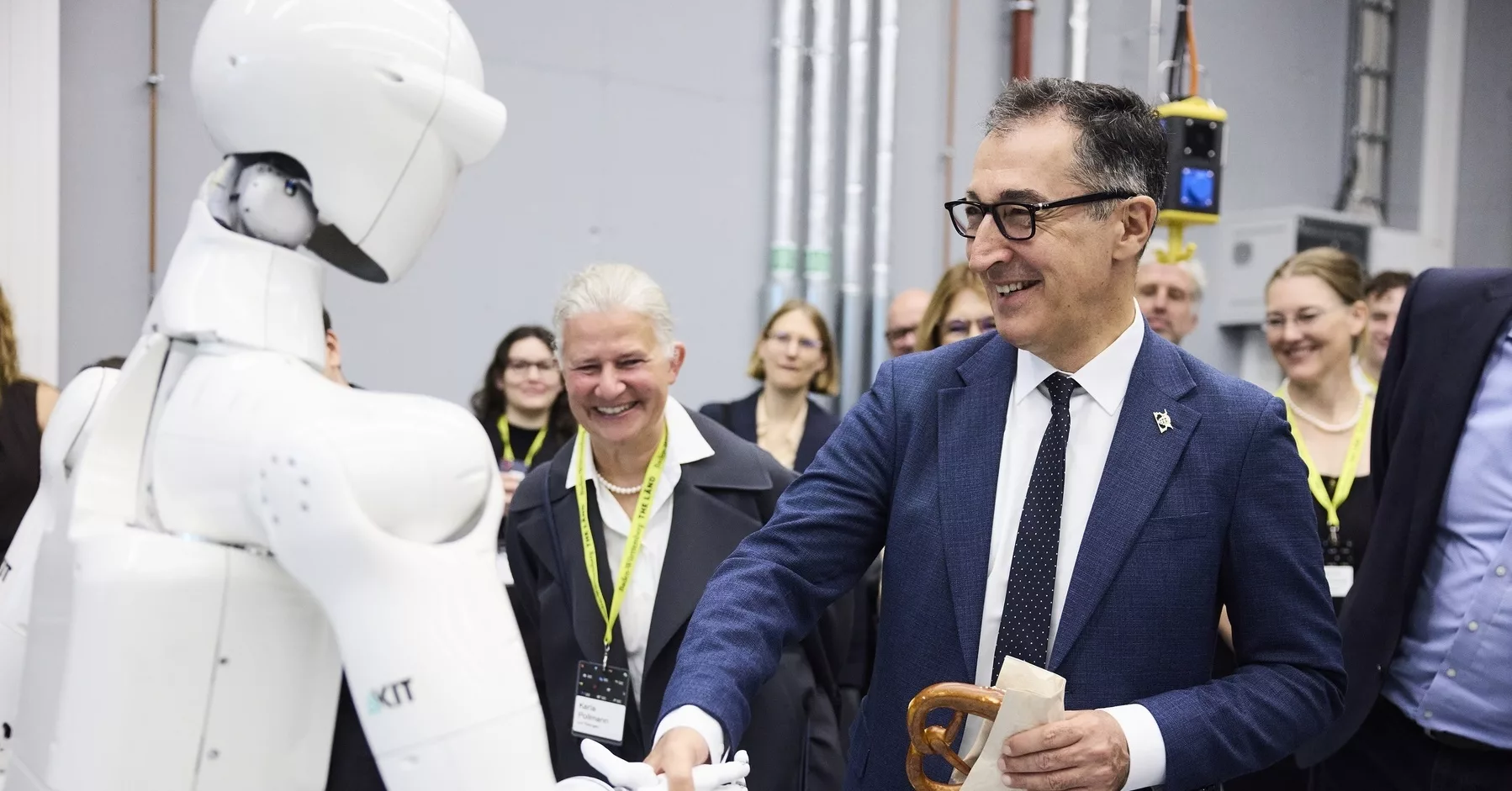
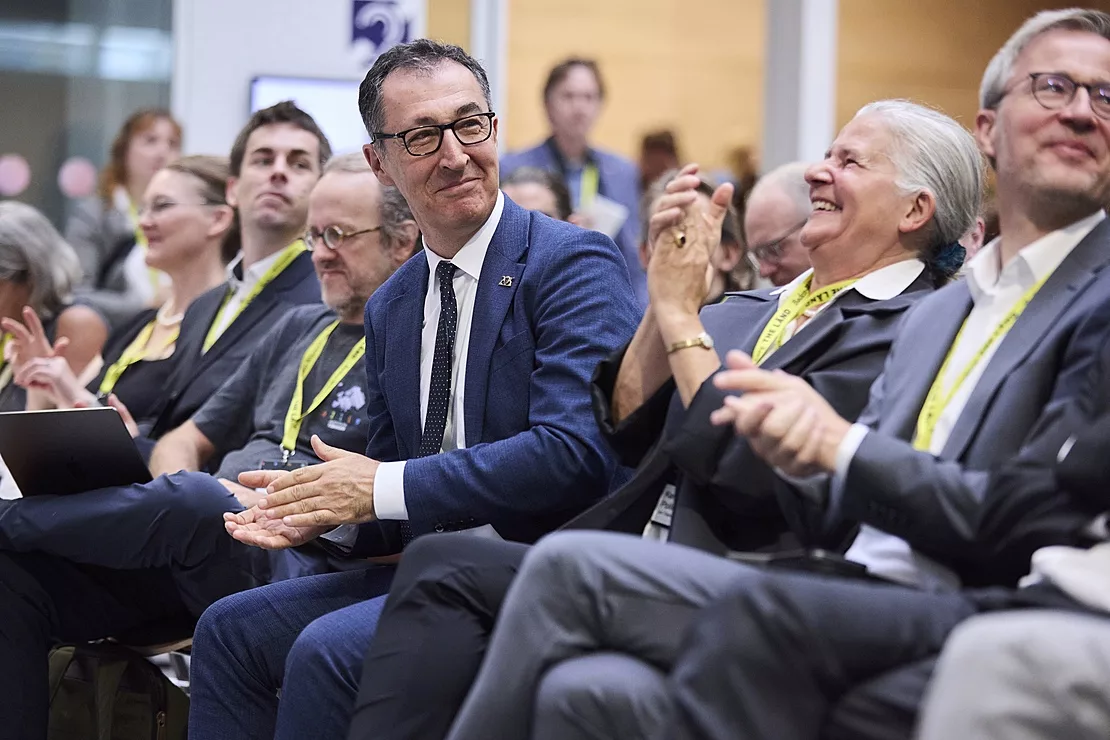
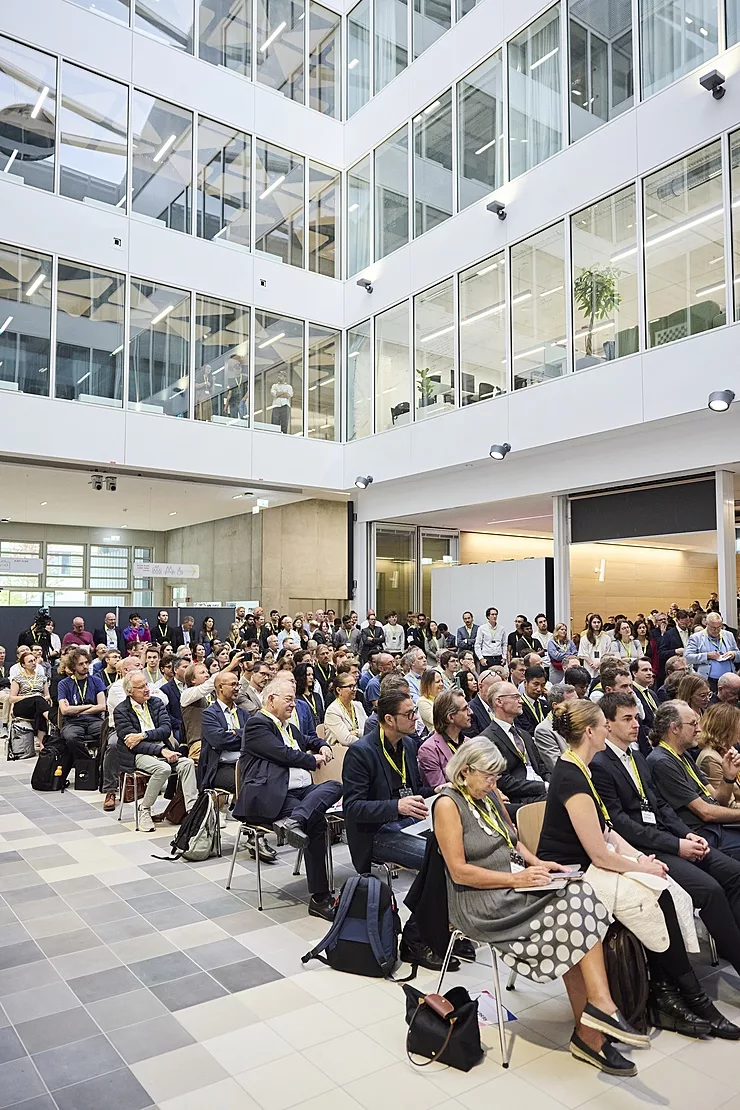
    On September 9, more than 850 guests came to Tübingen to celebrate a very special milestone: ten years of the Cyber Valley Innovation Campus. Researchers, start-ups, investors, policymakers, partners from industry and society, as well as many other guests gathered for a day full of inspiring talks, surprising keynotes, a research exhibition, start-up presentations, investor sessions, and networking.

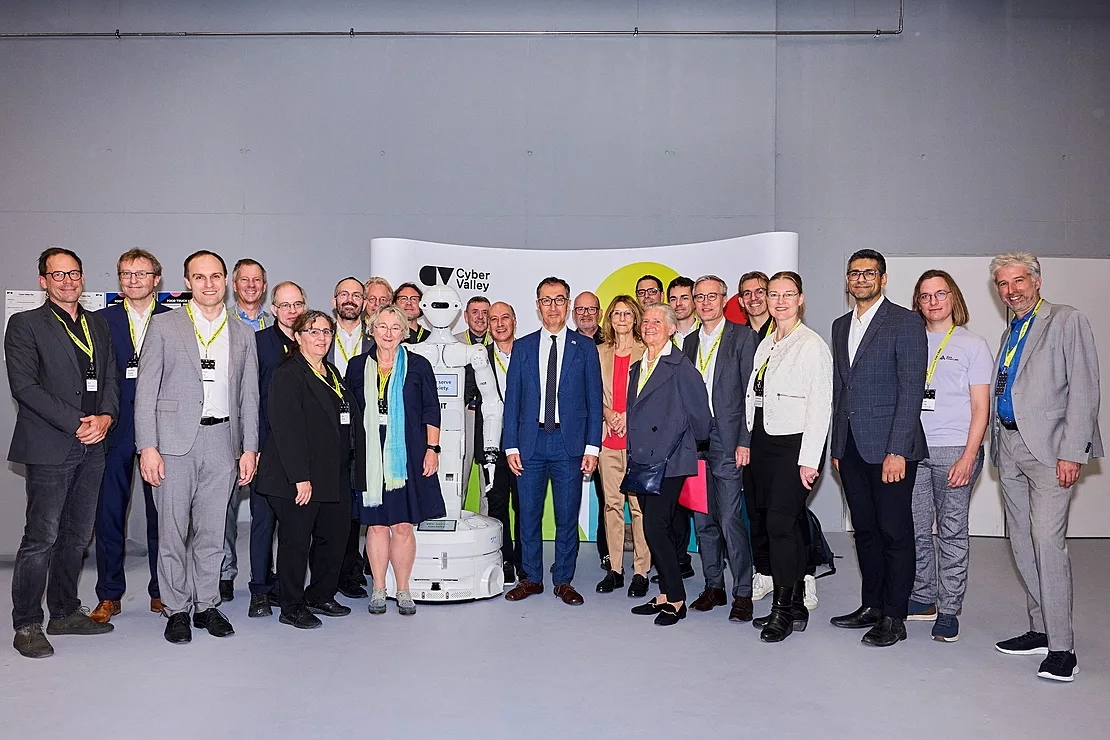
    Cyber Valley Day opened with welcome addresses from leading representatives from politics, science, and our Innovation Campus: Moritz Hardt, Director at the Max Planck Institute for Intelligent Systems; Cem Özdemir, Minister President of Baden-Württemberg; Boris Palmer, Lord Mayor of Tübingen; Karla Pollmann, President of the University of Tübingen; Simone Schwanitz, Secretary General of the Max Planck Society; and Florian Mayer, Managing Director of Cyber Valley GmbH, welcomed guests to the anniversary celebration.

    Cem Özdemir_Minister President
    © Christian Borth

    Scientific program at the main stage

    Hosted by Linda Behringer, press officer at the Max Planck Institute for Intelligent Systems, the main stage program brought together voices from across the international AI and innovation landscape.

    A keynote by Manuela Veloso, Herbert A. Simon University Professor Emerita at Carnegie Mellon University, provided one of the early highlights of the day. Throughout the program, the Cyber Valley Voices sessions on the main stage featured leading researchers from across our Innovation Campus, including Bernhard Schölkopf from the ELLIS Institute Tübingen, Matthias Bethge from the Tübingen AI Center at the University of Tübingen, Tamim Asfour from the Karlsruhe Institute of Technology, Katherine J. Kuchenbecker from the Max Planck Institute for Intelligent Systems, Steffen Staab from the University of Stuttgart, and Werner Kraus from Fraunhofer IPA.

    In the Auditorium, C. David Remy and Philipp Rothemund from the University of Stuttgart, as well as Chandan Kumar from Fraunhofer IAO, shared insights into their research. The afternoon continued with a keynote by Alex Smola, CEO and co-founder of Boson AI, as well as a talk by Rafael Laguna de la Vera from the Federal Agency for Disruptive Innovation (SPRIN-D).

    © Christian Borth

    Surprise keynote speaker

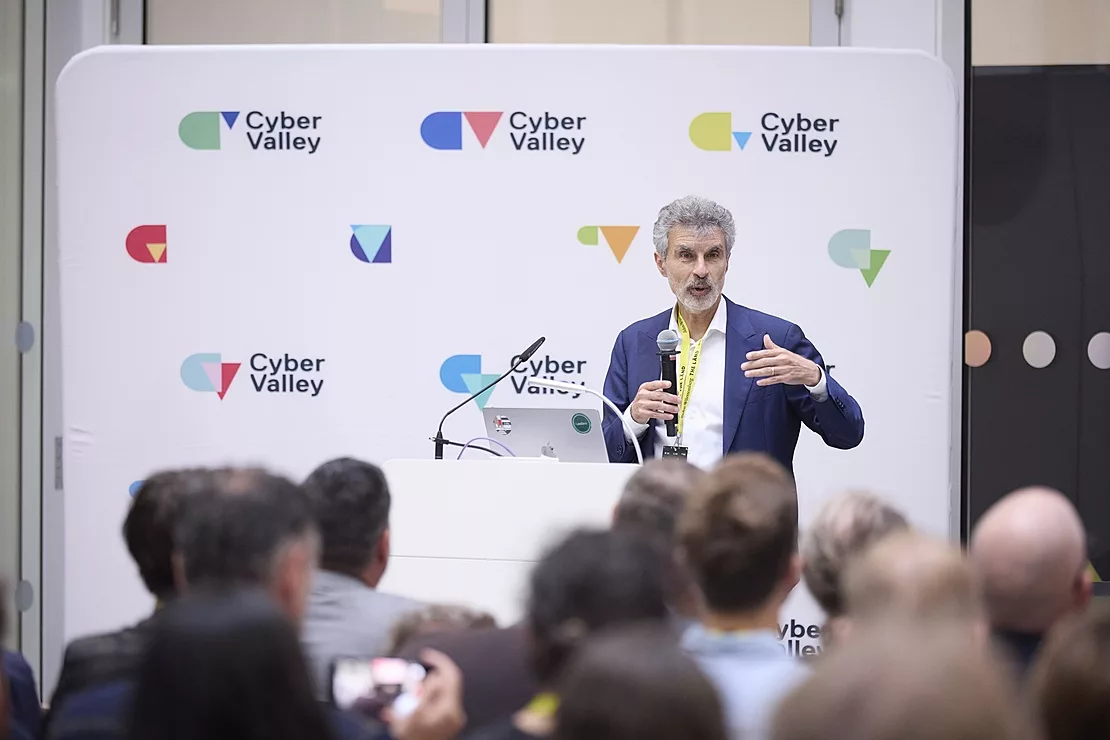
    One of the biggest highlights of the day was our surprise keynote speaker: Yoshua Bengio, one of the pioneers of modern artificial intelligence. He has become one of the most prominent voices discussing the societal implications of AI, discussing questions regarding safety, and he calls for a responsible development of AI. Having Yoshua Bengio join us for our anniversary was very special!

    Cyber Valley Day 10 Year Anniversary
    © Christian Borth

    From excellent scientific ideas to real-world applications and impact

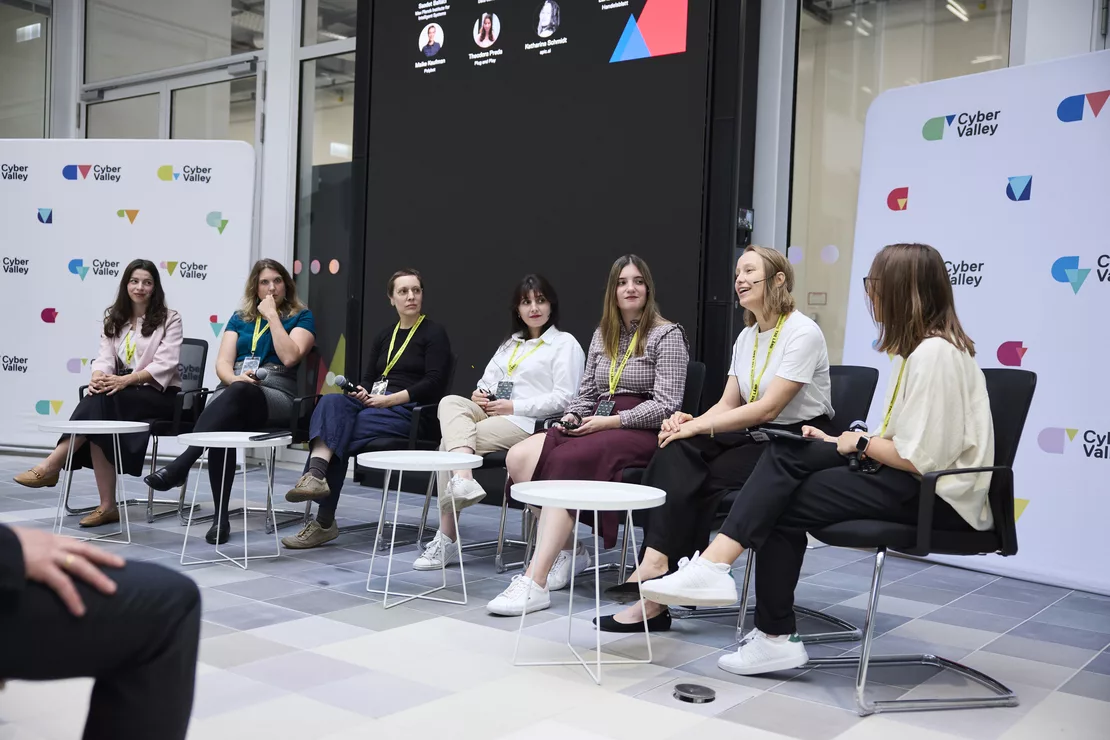
    The panel discussion “Building what’s next: How bold ideas move from research to impact” brought together researchers, founders, and innovation experts to discuss how ambitious ideas can move beyond research and into society and industry. Moderated by Larissa Holzki from Handelsblatt, the discussion featured Saadet Baltaci and Antonia Georgopoulou from the Max Planck Institute for Intelligent Systems, Aline Defranceski from Data Coffee, Maike Kaufman from Polybot, Theodora Preda from Plug and Play, and Katharina Schmidt from apic.ai.

    © Christian Borth

    The Cyber Valley Start-up Voices session offered further perspectives on innovation and entrepreneurship, with contributions from Prashanth Halady of Bosch, Mario Krenn of Feyer, and Jonas Müller of Black Forest Labs.

    Research from our Innovation Campus

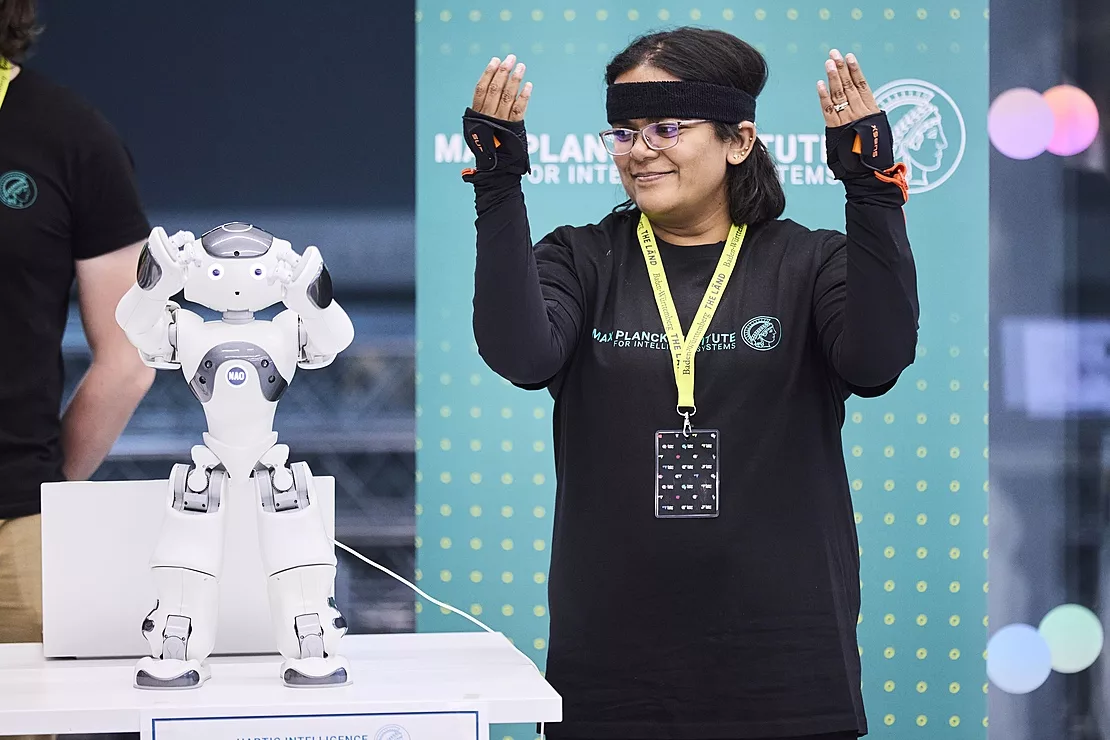
    The exhibition with more than 40 exhibitors on the ground floor brought together academic partners, research projects, and organizations from across our Innovation Campus, including the Max Planck Institute for Intelligent Systems, the Haptic Intelligence Department, Max Planck Foundation, the IMPRS-IS, the University of Stuttgart (IntCDC, IRIS, MLIP, KI-SIR), the University of Tübingen (ML Cluster, Tübingen AI Center), Bionic Intelligence Tübingen Stuttgart (BITS), ELLIS Institute Tübingen, Hertie Institute for AI in Brain Health, ARENA2036, BWKI, Cyber Valley GmbH and PAB, High Performance Humanoid Technologies Lab (H²T) from KIT, KE:SAI, Oktonex, Polybot, Prior Labs, and more!

    Robot at Cyber Valley Day
    © Christian Borth

    A stage for the next generation of founders

    On the sixth floor, the Start-up Basecamp put entrepreneurship and emerging innovation at the center of the conversation.
    Start-ups and initiatives including Bergsonne Labs, Denkbox, NUVUS, Computomics, Feyer, MaiTY, Istari AI, TextVerstehen, Tanocrix, Data Coffee, Yugen Space, IntegraSkin, MIRA vision, the Startup Center Tübingen, and the Tübingen AI Center presented their work and connected with researchers, investors, and other members of the ecosystem.

    An investor “Ask Me Anything” session also gave researchers and future founders the opportunity to gain practical insights into early-stage investment and entrepreneurship. Representatives from Capnamic, Fly Ventures, AI Fund, and Mätch VC shared their perspectives on what investors look for and what researchers should consider when exploring the path from research to start-up.
    During more than 40 1:1 sessions with investors, researchers and prospective founders had the opportunity to discuss their individual ideas, receive tailored feedback, and explore potential pathways toward funding and venture creation.

    Cyber Valley Day start-ups
    © Christian Borth

    Special announcement

    The final highlight of the day was grubel, which announced its launch during Cyber Valley Day. Founded by Moritz Hardt, Reinhard Heckel, Vedant Nanda and Navid Rekabsaz, grubel is building AI systems specialized to individual legal matters. Its vision: every matter should be able to build its own AI by combining data curation, adaptation, and evaluation to create specialized systems that can deliver high performance while keeping sensitive data under the customer’s control. We’re excited to see this research-driven venture take its next step and look forward to following its journey! 

    © Christian Borth

    Looking ahead

    Ten years ago, a group of visionary partners laid the foundation for Cyber Valley. Today, it has grown into a vibrant ecosystem connecting excellent research, entrepreneurship, industry, and society. Thank you to everyone who joined us and helped make this celebration a very memorable day!

  • Cyber Valley AI Incubator announces batch #8 winners

    Cyber Valley AI Incubator announces batch #8 winners

    The Cyber Valley AI Incubator batch 8 has successfully concluded with its Demo Day, where seven emerging AI ventures presented their innovations to an audience of founders, investors, researchers, industry leaders, and members of the wider AI community. Made possible through the generous support of the Carl Zeiss Foundation (CSZ), the program continues to foster research-driven AI entrepreneurship by helping innovators transform cutting-edge ideas into startup ventures.

    Photo: A. Posada @MPI-IS

    The event opened with welcome remarks from Christoph Keplinger and Leila Masri of the Max Planck Institute for Intelligent Systems (MPI-IS), who reflected on the achievements of batch 8 and the growing impact of the AI Incubator. Phil-Alan Gärtig of the Carl-Zeiss-Stiftung, the program’s principal sponsor, highlighted the foundation’s continued commitment to advancing innovation and research-driven entrepreneurship.

    In his keynote, “Towards Visual Intelligence: From Image Generation to Physical AI,” Axel Sauer explored the evolution of generative AI and the development of increasingly capable AI models. Drawing on the work of Black Forest Labs, he shared perspectives on the rapid progress of AI technologies and their potential to shape the future of visual intelligence and embodied AI systems.

    Photo: A. Posada @MPI-IS

    The spotlight then turned to the batch 8 teams, who presented their final venture pitches before an expert jury consisting of:

    • Daisy Paiva (ZEISS Ventures)
    • Franziska Ivens (Silicon Allee Venture Lab at Fraunhofer Heinrich Hertz Institute)
    • Christoph Keplinger (Max Planck Institute for Intelligent Systems)

    With an exceptionally high standard across all seven teams, selecting the winners proved to be a challenging task.
     

    Read the full press release on the Max Planck Institute for Intelligent System’s website. 

  • From Cyber Valley to Europe’s AI frontier

    From Cyber Valley to Europe’s AI frontier

    Ontic Labs and Feyer.ai have been selected for the first stage of the German Federal Agency for Breakthrough Innovation’s (SPRIND) Next Frontier AI Challenge. The two start-ups are among just ten teams across Europe that have been selected and will receive €3 million to develop technologies beyond today’s AI models. 

    Ontic Labs and Feyer.ai have been selected for the first stage of the German Federal Agency for Breakthrough Innovation’s (SPRIND) Next Frontier AI Challenge. The two start-ups are among just ten teams across Europe that have been selected and will receive €3 million to develop technologies beyond today’s AI models. 

    Of the three selected teams from Germany, two originate from the Cyber Valley ecosystem in Baden-Württemberg as spin-outs from several of Cyber Valley’s academic partners, including the ELLIS Institute Tübingen, Max Planck Institute for Intelligent Systems, Tübingen AI Center, and the University of Tübingen. Their success highlights the growing momentum with which AI research is being translated into innovative companies and how excellent AI research from Baden-Württemberg is playing a key role in the European race for frontier AI models.

    The Next Frontier AI Challenge is aimed at European teams developing fundamental AI technologies with exceptionally high innovation potential. The goal is to promote new approaches that go beyond the current state of the art and can have a long-term economic and societal impact.

    “Ontic Labs and Feyer.ai are excellent examples of what the Cyber Valley ecosystem is designed to achieve: turning outstanding research into technologies with societal and economic relevance,” said Florian K. Mayer, Managing Director of Cyber Valley GmbH. “Their success reflects the strength of the innovation pipeline in Baden-Württemberg, where leading researchers, entrepreneurs, and partners work together to transform scientific advances into new ventures and applications.”

    Ontic Labs: Building AI for Physical Intelligence

    Ontic Labs is developing a foundation model for physical intelligence. The company aims to enable machines to understand the physical dynamics of their environment rather than only recognizing visual patterns. This could allow robots to predict future states, reason about physical interactions, and operate more effectively in complex real-world settings.

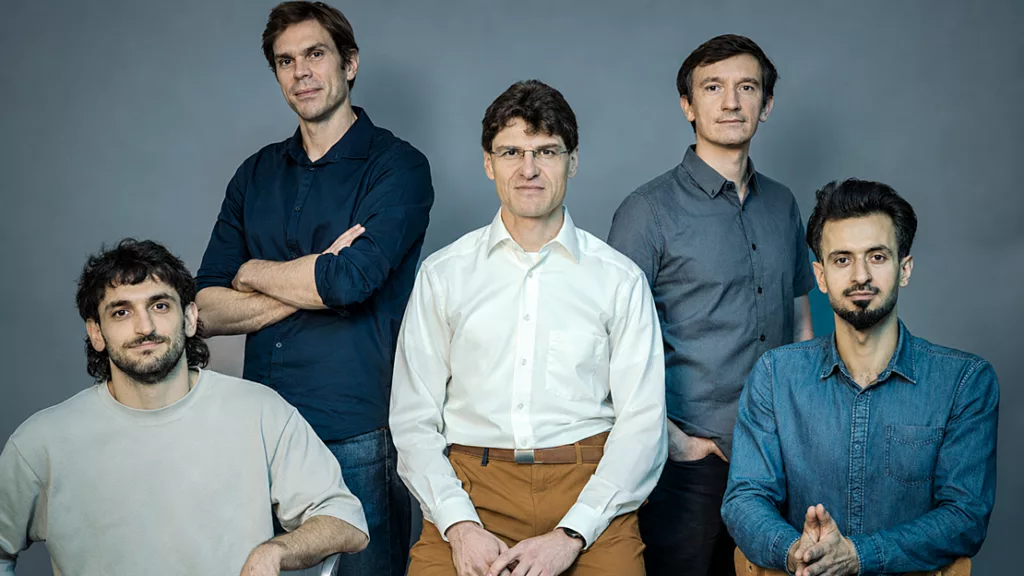
    The company brings together researchers from the Max Planck Institute for Intelligent Systems, the University of Tübingen’s Cluster of Excellence Machine Learning: New Perspectives for Science, the Tübingen AI Center, and the ELLIS Institute Tübingen. Ontic Labs was founded by Omid Taheri, Mikel Zhobro, Wieland Brendel, Georg Martius, and Gerard Pons-Moll.

    Ontic Labs team. Photo: SPRIND

    Feyer.ai: AI for Industrial Hardware Innovation

    Feyer.ai develops AI systems that autonomously design new industrial hardware. Its approach combines modern AI methods with physics-based simulations to generate and evaluate technical solutions. By applying AI-driven invention to industrial challenges, Feyer.ai aims to accelerate the development of new technologies across fields including photonics, quantum technologies, microscopy, semiconductor manufacturing, and energy systems.

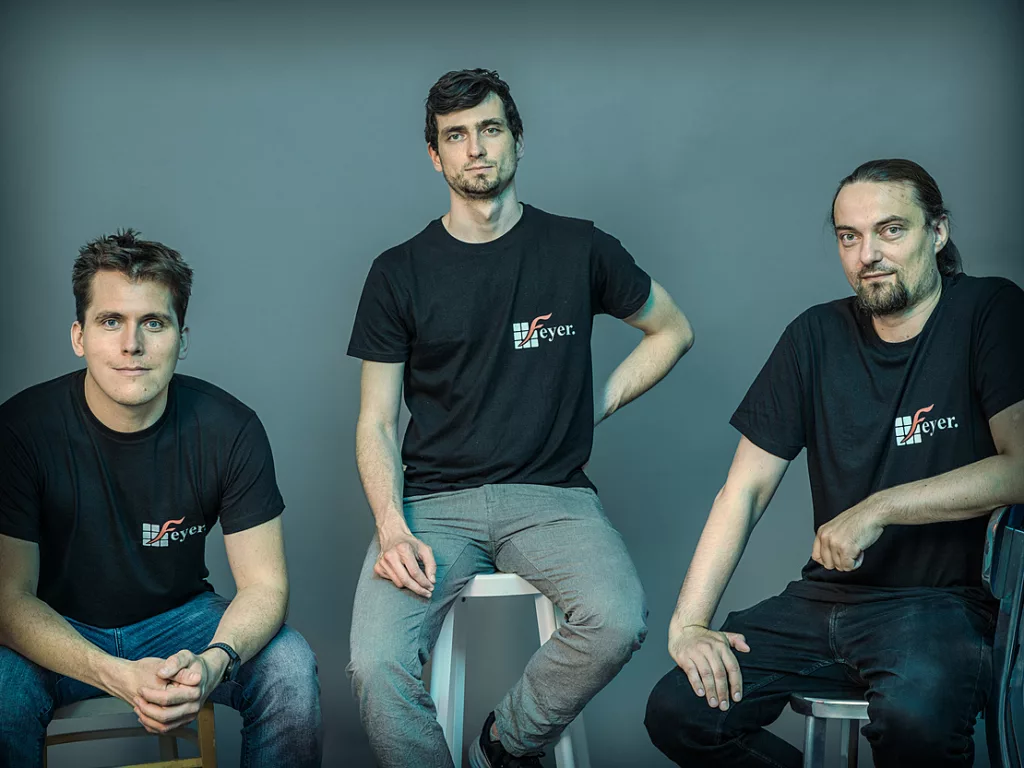
    The company emerged from the research group of Mario Krenn, Professor at the Cluster of Excellence Machine Learning: New Perspectives for Science at the University of Tübingen. The founding team consists of Jonathan Klimesch, Sören Arlt, and Mario Krenn.

    Feyer team. Photo: SPRIND

    The selection of Ontic Labs and Feyer.ai reflects the strength of the Cyber Valley ecosystem, which connects leading AI research with entrepreneurship and start-up support. Both companies build on research conducted at institutions that are central to Baden-Württemberg’s AI landscape and demonstrate how advances in AI research are being translated into to real-world impact, powering industry, and driving Europe’s sustainable future.

    Read SPRIND’s press release here.

    Read the press release from the University of Tübingen (in German) here.

  • 2020: Founding the Cyber Valley Investor Network—Interview with Alex Diehl

    2020: Founding the Cyber Valley Investor Network—Interview with Alex Diehl

    In 2016, important actors from science, industry, and politics founded the Cyber Valley Consortium, which became the first Innovation Campus in Baden-Württemberg. Ten years on in 2026, we’re revisiting the most important milestones from the last decade. Each month, we’ll focus on a particular year since Cyber Valley’s beginning. 

    This month, we’re looking back to 2020, when the Cyber Valley Investor Network was founded. The network was established to bring together venture capital (VC) firms to support Cyber Valley scientists in transferring their research into applications that benefit people, industry, and society.

    Alex Diehl, Senior Advisor at Cyber Valley GmbH, played a pivotal role in establishing the Cyber Valley Investor Network. In the following interview, he describes his initial ambitions for the network, how it has supported Cyber Valley scientists, and where he sees the network developing in the future.

    What was the motivation behind founding the Cyber Valley Investor Network, and what gap did it aim to close?

    We had a surplus of brilliant AI talent in our academic institutions, but the region lacked a defined start-up ecosystem. Our researchers were world-class, yet they had almost no touchpoints with venture culture or experienced founders. In the global AI race, deep-tech teams need to understand the venture-backed “playbook” early—otherwise, they risk making structural or capital mistakes that can kill a company before it starts. We founded the Investor Network to bridge this gap by “importing” global expertise. We wanted our researchers to meet VCs and angels who could provide that mentorship early on, even while our local ecosystem was still in its infancy.

    Beyond capital, what role do investors play in supporting researchers and start-ups moving toward long-term applications?

    It’s about operational excellence from day one. The start-up journey is a series of unpredictable pivots, and a great VC acts like an additional co-founder who is focused entirely on the company’s trajectory. There is a whole suite of “operational hygiene” that shouldn’t be reinvented: shareholder contracts, cap table management, go-to-market planning, and hiring incentives. An investor provides the proven methods for these tasks so the founders can focus on the tech. Beyond the check, they provide the “blueprint” and the network to transform a research project into a scalable, professional organization.

    Why are investors engaging with scientists working on basic research so early, and what value do both sides gain?

    Unlike the SaaS era, where founders could build on mature, standardized technology, AI and robotics are deeply technical and evolving in real-time. In deeptech, the science is the competitive advantage. By engaging early, investors help scientists translate a technical breakthrough into a viable business model before the first line of commercial code is even written. For investors, it’s a front-row seat to the next frontier of innovation; for scientists, it ensures their research has a clear, responsible path to real-world impact from the very beginning.

    What would you say has been the biggest success story for the Cyber Valley Investor Network so far?

    The real success story is that we’ve ignited a cultural movement. We started nearly eight years ago with only a handful of start-ups, and now we’re seeing a big number of teams, significant follow-on investments from global VCs and even several exits. Beyond the capital, the most important shift is the surge of interest from researchers who are now eager to participate in our incubator programs and become AI and robotics entrepreneurs. The fact that partners from Japan, Canada, France, the US, and others are now looking toward Cyber Valley and ELLIS proves we have achieved some international relevance, at least to a degree.

    Looking ahead, how do you see the Investor Network evolving to support Cyber Valley’s goal of turning AI and robotics research into a sustainable future?

    We have passed the point of critical momentum where the network is now evolving organically. It has become much larger and more informal, with global VCs proactively reaching out to visit hubs like Tübingen, Stuttgart, Karlsruhe, Freiburg, Heidelberg, and Heilbronn to see the innovation happening in Baden-Württemberg. As “THE AI Länd” continues to accelerate as a community, I think the focus will be on maintaining this energy to ensure our research translates into a sustainable and impactful future for everyone.

    Since the Investor Network’s founding in 2020, Cyber Valley has grown to include:

    • 40+ investor partners and friends actively engaging across the network
    • 100+ Baden-Württemberg start-ups working across AI, robotics, and deep tech
    • Seven batches of the Cyber Valley AI Incubator, supporting more than 150 future founders and entrepreneurial researchers
    • More than €1 billion invested into start-ups connected to Cyber Valley’s broader ecosystem in recent years
    • International investor engagement spanning Europe, North America, and Asia

    The Investor Network has evolved from offering an initial access point for investors to building long-term relationships between them and researchers. “What is exciting now is seeing founders from our ecosystem engage with international investors with growing confidence while still maintaining the grounded and collaborative culture that makes Baden-Württemberg unique”—Blanca Büechl (Business Development Manager: Investors, Cyber Valley GmbH).

    Reach out to Blanca Büechl (blanca.bueechl@cyber-valley.de) to find out more about the Investor Network and how you can play a pivotal role in turning AI and robotics research into real-world solutions for a better future for all.

    To celebrate Cyber Valley’s ten-year anniversary, we’ll be sharing a variety of content across our website and social media channels reflecting on milestones from the last decade. Stay tuned for the next installments! 

  • Ein weiterer Meilenstein für KI aus der Region Stuttgart

    Ein weiterer Meilenstein für KI aus der Region Stuttgart

    Die Zukunft der künstlichen Intelligenz (KI) macht im Herzen von Baden-Württemberg einen wichtigen Schritt nach vorn. Das Höchstleistungsrechenzentrum Stuttgart (HLRS) wird als neuer Partner das Programm ‚KI-D@ARENA2036-X‘ mit seinem Wissen und Rechenkapazitäten unterstützen.

    Das Programm wird gemeinsam von ARENA2036, Cyber Valley GmbH, DeepScenario, waveye sowie den Technischen Informations- und Kommunikationsdiensten der Universität Stuttgart (TIK) umgesetzt.

    Mit dem HLRS kommt ein bedeutender Partner hinzu. Dadurch erhält das Programm Zugang zum Infrastrukturprojekt HammerHAI. Ab Mitte des Jahres können damit umfangreiche KI-Rechenressourcen entlang der gesamten Entwicklungskette genutzt werden – von kleineren Systemen direkt an Maschinen oder Geräten bis hin zu leistungsstarken Hochleistungsrechnern. Dadurch wird es möglich, auch sehr große und komplexe KI-Modelle zu trainieren und einzusetzen.

    Eine Infrastruktur, die KI-Entwicklung beschleunigt

    Im Rahmen der Initiative bauen die Partner eine offene IT- und Dateninfrastruktur einschließlich des Zugangs zu einem Datenraum für den souveränen Austausch von Daten auf. Ziel ist es, Unternehmen einen einfachen Zugang zu leistungsfähigen Ressourcen für KI-Anwendungen zu ermöglichen – von der ersten Idee bis zur praktischen Anwendung im Unternehmen. Dabei steht ein Modell im Mittelpunkt: die Vernetzung von KI-Systemen und Daten. Unternehmen können die bereitgestellte Infrastruktur nutzen, ohne selbst große technische Systeme aufbauen zu müssen. Die Nutzung soll zu wettbewerbsfähigen Kosten möglich sein. Besonders profitieren davon Start-ups sowie kleine und mittlere Unternehmen (KMU), deren Innovationsfähigkeit und Wettbewerbsstärke dadurch gestärkt werden.

    In Baden-Württemberg entsteht so ein skalierbares, transparentes und kooperativ gestaltetes System. Statt einer Blackbox setzt das Projekt bewusst auf eine offene Infrastruktur.

    Diese basiert auf drei zentralen Bausteinen:

    Eigene Hardware einbringen:

    Unternehmen können eigene Rechenhardware integrieren und damit die verfügbaren Rechenkapazitäten flexibel erweitern und individuelle Anforderungen abbilden.

    Gemeinsamer Datenraum:

    Ein skalierbarer, kollaborativer Datenraum mit Marktplätzen ermöglicht es verschiedenen Organisationen, gemeinsam an Datensätzen, KI-Modellen und konkreten Anwendungsfällen zu arbeiten.

    Hochleistungsrechnen mit HammerHAI:

    Leistungsstarke Hochleistungsrechen-Ressourcen ermöglichen das Training und den Einsatz besonders großer KI-Modelle.


    Ein Programm, das Unternehmen schneller voranbringt

    Teilnehmende Unternehmen des ‚KI-D@ARENA2036-X‘-Programmes profitieren von einem praxisnahen Zugang zu leistungsfähiger KI-Infrastruktur und einem starken Innovationsnetzwerk.

    Das Programm bietet unter anderem:

    • die Möglichkeit, neue Ideen und Proof-of-Concepts ohne hohe Anfangsinvestitionen zu testen und umzusetzen,
    • den Zugang zu leistungsstarker Hochleistungs-IT, ohne selbst ein eigenes Rechenzentrum betreiben zu müssen,
    • den fachlichen Austausch mit anderen KI-Entwickler:innen, die vor vergleichbaren technologischen Herausforderungen stehen,
    • sowie eine reale Testumgebung in der ARENA2036, die Anforderungen aus unterschiedlichen Branchen bündelt.

    Damit unterstützt das Programm Unternehmen nicht nur bei ihren Projekten – es beschleunigt aktiv die Entwicklung und Umsetzung neuer KI-Anwendungen.

    Stimmen aus dem Projektteam:

    Prof. Dr. Peter Middendorf, Rektor der Universität Stuttgart:

    „Die IT- und Dateninfrastruktur der ‚KI-D@ARENA2036-X‘ ist ein weiterer wichtiger Baustein unseres Innovationsökosystems. Die Universität Stuttgart trägt mit ihren Technischen Informations- und Kommunikationsdiensten und als Partner der ARENA2036 zum Erfolg dieses Projektes bei. Umso mehr freue ich mich, dass jetzt mit dem Höchstleistungsrechenzentrum Stuttgart HLRS ein weiterer starker Partner hinzukommt, der mit seiner leistungsfähigen Recheninfrastruktur Unternehmen und Start-ups bei der Erprobung und Optimierung modernster KI-Anwendungen unterstützt.“

    Dr. Alexander Lahl, Regionaldirektor des Verband Region Stuttgart:

    „Gemeinsam mit dem Infrastrukturprojekt HammerHAI entsteht ein bedeutender Nukleus, der von großem Nutzen für Start-ups und insbesondere kleinen und mittleren Unternehmen sein wird. Wir stärken damit den Standort Region Stuttgart bei KI-Anwendungen und Datenraumkapazitäten enorm, durch unsere Förderung von Innovationszentren sichern wir die Transparenz solcher Leistungen und damit die Wettbewerbsfähigkeit der Unternehmen der Region. Und es macht auch deutlich: die Stärke der Region Stuttgart ist das Miteinander.“

    Michael Kaiser, Geschäftsführer der Wirtschaftsförderung Region Stuttgart GmbH (WRS):

    „Die Zusammenarbeit der ‚KI-D@ARENA2036-X‘ mit dem HLRS und dessen europäischer AI Factory HammerHAI ist ein weiterer wichtiger Baustein für das KI-Ökosystem der Region Stuttgart. Damit ist es für Unternehmen möglich, dank effizienter Hochleistungsrechner sehr große KI-Modelle zu trainieren und zu nutzen – und das ohne eigenes Rechenzentrum. Gerade für kleine und mittelgroße Firmen entstehen dadurch neue Chancen in der KI-Entwicklung und -Anwendung.“

    Angelina Jukic, Programm Managerin bei der Cyber Valley GmbH:

    „Unser Ziel im ‚KI-D@ARENA2036-X‘-Programm ist es, ein stark vernetztes Ökosystem zu schaffen, das Forschung, Start-ups und Industrie näher zusammenbringt und die Entwicklung sowie das Training von KI-Modellen effizienter gestaltet. HammerHAI zählt dabei zu den führenden AI Factories Deutschlands und arbeitet gemeinsam mit ARENA2036 an zukunftsweisenden Lösungen.“


    Projektstand und Ausblick:

    Nach dem erfolgreichen Aufbau der grundlegenden Infrastruktur im ersten Projektjahr wird das Programm im Jahr 2026 den operativen Zugang zu den verfügbaren Rechen- und Datenressourcen ermöglichen.

    Über das ‚KI-D@ARENA2036-X‘-Programm:

    Das Programm ‚KI-D@ARENA2036-X‘ wird gemeinsam von ARENA2036, Cyber Valley GmbH, DeepScenario, waveye sowie den Technischen Informations- und Kommunikationsdiensten (TIK) der Universität Stuttgart umgesetzt. Ziel ist der Aufbau einer kollaborativen Infrastruktur, die KI-Innovationen in Baden-Württemberg schneller, sicherer und wirtschaftlich nachhaltig voranbringt.

    Das Programm wird vom Verband Region Stuttgart im Rahmen seines Kofinanzierungsprogramms für Künstliche Intelligenz als Förderprojekt von 2024 bis 2027 mit insgesamt 685.000 Euro gefördert.

    Pressekontakt:

    Silke Dutz

    Public Outreach Manager

    Email: silke.dutz@cyber-valley.de

  • DenkBox, kausable, and polybot join the Cyber Valley Start-up Network

    DenkBox, kausable, and polybot join the Cyber Valley Start-up Network

    Cyber Valley welcomes three new members to its Start-up Network: DenkBox, kausable, and polybot. These start-ups are using bold ideas and groundbreaking technologies to shape the future of AI and robotics in Baden-Württemberg.

    polybot envisions unlocking a sustainable future for humanity’s food production. The start-up builds small, dexterous robots that can perform a variety of complex, labor-intensive tasks, like weeding, precision pruning, and harvesting delicate crops like tomatoes and cucumbers. By automating manual fieldwork, polybot helps farmers address labor shortages while boosting long-term productivity and sustainability.

    DenkBox uses the latest open-source LLMs to provide a locally hosted AI chatbot. The start-up puts its users’ privacy first: it does not require connection to an external cloud, ensuring full compliance with GDPR. Meanwhile, DenkBox offers access to state-of-the-art open-source LLMs. The start-up offers both hardware and software from a single source, requiring minimal IT configuration that integrates seamlessly into existing infrastructures.


    kausable is pioneering a new reasoning-first approach to AI, moving beyond pattern-based large language models. Their agentic AI learns in-context from only a few examples, opens new domains without retraining, and generalizes across tasks and modalities. Backed by leading investors such as Mätch VC, LDV Partners, and experts from Black Forest Labs, kausable is building efficient, general-purpose intelligence that is made in Europe.


    The Cyber Valley Community is excited to welcome DenkBox, kausable, and polybot to its growing ecosystem. These start-ups are strengthening Cyber Valley’s mission to unite groundbreaking science with innovation and technology transfer to solve real-world problems.

    The Cyber Valley Start-up Network

    The Cyber Valley Start-up Network brings together more than 90 innovative AI and robotics start-ups across Baden-Württemberg, forming a strong and growing entrepreneurial community within one of Europe’s leading AI and robotics ecosystems. The network spans a broad range of applications and industries, from foundational AI technologies to applied and industry-specific solutions. Connected through their close ties to Cyber Valley, members benefit from access to world-class research, industry partners, investors, and public stakeholders, jointly strengthening the region’s AI and robotics ecosystem.

  • Navigating Investment Landscapes with SPRIND

    Navigating Investment Landscapes with SPRIND

    Leading the charge: Mirko Holzer 

    At the forefront of this initiative is Mirko Holzer, Deputy Director AI &Robotics  at SPRIND. With deep expertise in innovation management, Holzer ensures that promising start-ups and researchers get the resources they need to bring their groundbreaking ideas to life.  

    Holzer explains: “The partnership with Cyber Valley combines the best of both worlds: promising start-ups from first-class AI research meet the bold, unconventional funding culture of SPRIND. Together, we create an environment in which visionary ideas are not only conceived but also implemented. We look forward to supporting the next generation of AI pioneers and taking innovation in Germany to the next level!” 

    How to secure funding with SPRIND 

    SPRIND offers flexible financing models to help start-ups transform research into real-world applications. If traditional venture capital isn’t enough, SPRIND can step in with direct investments. 

    The step-by-step guide to getting funded 

    1. Research and eligibility: Ensure your AI venture aligns with SPRIND’s mission of breakthrough innovation. They look for high-impact, high-risk ideas with real-world applications. 

    2. Connecting with SPRIND: Early engagement with Mirko Holzer and his team is encouraged, as they can provide insights into the best funding options. 

    3. Preparing a proposal: SPRIND seeks strong teams, groundbreaking ideas, and a clear path to impact. Highlighting how innovation stands out is important. 

    4. Funding models and terms: SPRIND offers grants for research and development, equity investments, convertible loans, and co-investments with private investors, covering up to 70% of a financing round. 

    5. Validation phase: Selected teams can enter a validation phase, receiving expert coaching while participating in SPRIND’s network.  

    6. Showcase at VENTURE SPRIND: Top teams can present their ideas at SPRIND’s flagship event, where top investors and industry leaders gather to discover groundbreaking innovations.   

    “Research and development are incredibly expensive, and we can cover a large part of the development costs. The rest is covered by private investment,” explains Holzer. “Our financing is usually in the single-digit million range but can be higher if we see the potential and the need for it.” 


    Success Story: Polybot’s Journey 

    Polybot – one of the latest Cyber Valley projects supported by SPRIND – is a next-generation agricultural robot. SPRIND has provided Polybot with a seven-month validation contract starting in February 2025, giving them financial support, coaching, and access to a powerful innovation network. This partnership will turn Polybot’s cutting-edge research into real-world applications, strengthening Baden-Württemberg as an innovation hub. 

    Polybot’s team will: 

    • Join SPRIND’s expert-led programs 

    • Work closely with innovation managers 

    • Gain access to valuable investor networks 

    • Showcase their technology at VENTURE SPRIND 

    “SPRIND not only provides financial support but is also very active in the entire innovation landscape. This starts with the improvement of IP regulations and spin-off conditions through high-level workshops on VC funding and team building and extends to the organization of international venture events. These programs are just as valuable to us as the financial support,” says Wieland Brendel, Polybot project leader. 

    The collaboration between Cyber Valley and SPRIND demonstrates the potential of artificial intelligence research when applied to solving real-world problems, encouraging bold thinking and exploring uncharted territories in the field. 

    About SPRIND     

    SPRIND is Germany’s Federal Agency for Breakthrough Innovation, dedicated to funding transformative ventures that tackle the world’s toughest challenges, with a strong focus on AI. Their mission is to identify radical thinkers, invest in high-risk ideas, and connect teams with powerful networks across industry, academia, and government. SPRIND's comprehensive support includes financing, team building, and connecting innovators with key networks, ensuring that transformative progress aligns with fundamental humanistic values.