User Group: Unternehmen

  • Kyutai and ELLIS Tübingen launch KE:SAI

    Kyutai and ELLIS Tübingen launch KE:SAI

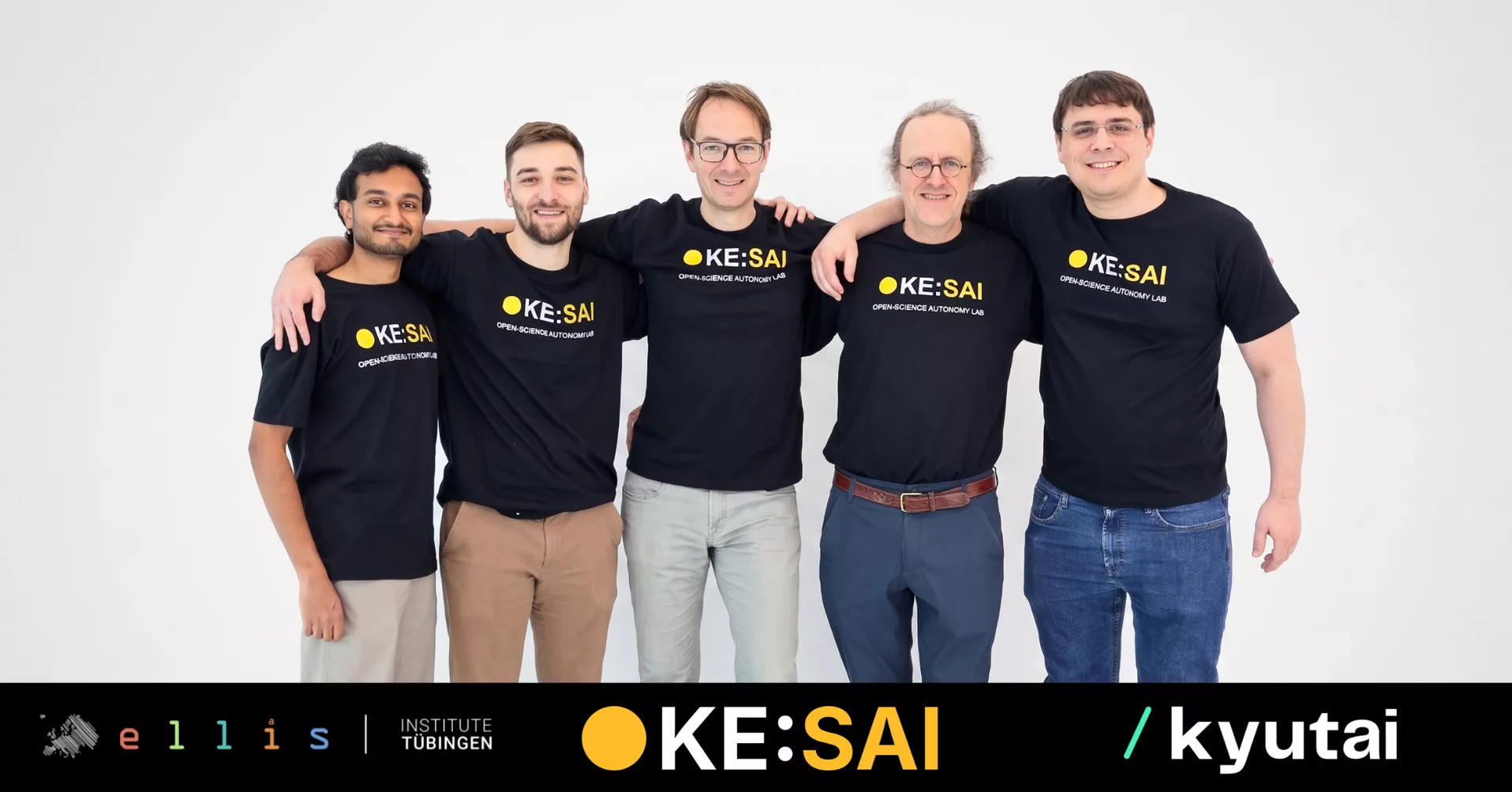
    TÜBINGEN, Germany and PARIS, France—May 20, 2026. Kyutai and ELLIS Tübingen announce the official launch of KE:SAI—Kyutai ELLIS Scalable Autonomous Intelligence. KE:SAI is a non-profit open science research laboratory dedicated to the next frontier of artificial intelligence: systems that can understand and act in the real world.
     

    KE:SAI brings together two of Europe’s most prominent AI brands to address the fundamental challenges of world models and physical AI. Founded in Paris in 2023, Kyutai has emerged as one of Europe’s leading AI laboratories, with a focus on breakthrough research with immediate and lasting impact, and a team driven by a shared commitment to openness and excellence. It was originally funded by the iliad Group, CMA CGM and Eric and Wendy Schmidt’s philanthropy.

    The ELLIS Institute Tübingen has established itself as a leading center for foundational AI research, attracting top machine learning talent and providing state-of-the-art facilities in Tübingen, Germany. Funded by the Hector Foundation and the State of Baden-Württemberg, and collaborating closely with the Max Planck Institute for Intelligent Systems and the University of Tübingen, it is part of the European Laboratory for Learning and Intelligent Systems, a pan-European network of excellence in machine learning.
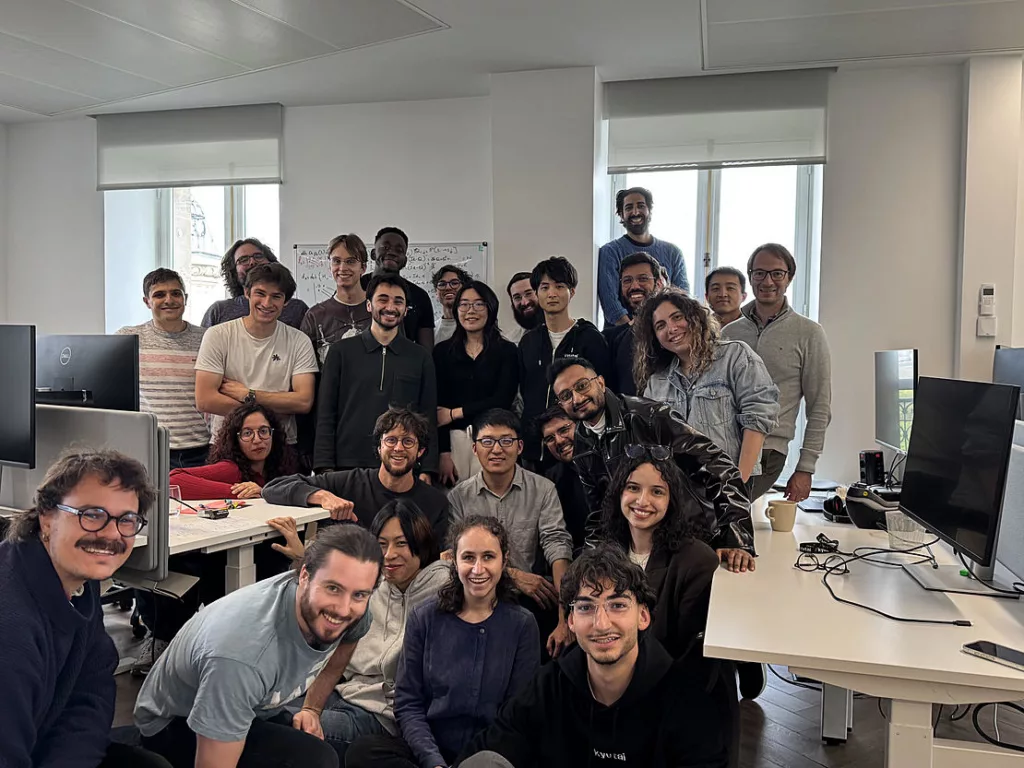
    © KE:SAI

    KE:SAI has offices in Tübingen and Paris. It provides the specialized resources necessary to conduct world-class frontier research in physical intelligence, including high-performance compute infrastructure and hardware prototyping. By integrating foundational open research and the agility of modern startups, KE:SAI will develop a fully open technology stack for physical AI. Unlike related areas of AI, where sharing of algorithms and models triggered an explosion of innovation, physical AI has yet to benefit from this flywheel. KE:SAI’s mission is to accelerate this transition and democratize physical AI. With Europe’s ecosystem of global automotive and manufacturing leaders, KE:SAI’s open science approach will rapidly translate to real-world industrial scale, establishing itself at the forefront of open-source physical AI.

    Cem Özdemir, Minister-President of Baden-Württemberg, says: “I am delighted that Kyutai, the internationally renowned AI research lab based in Paris, is now setting up shop in our AI ecosystem in Tübingen. We extend a warm welcome to them! Bienvenue and welcome. Kyutai’s establishment in Tübingen demonstrates that Baden-Württemberg is at the heart of European AI research. In Tübingen, brilliant minds meet first-class infrastructure. In addition to the Cyber Valley Innovation Campus, with the ELLIS Institute, the Max Planck Institute, and the participating universities, our innovation landscape includes other powerhouses such as the IPAI in Heilbronn or the AI Factory HammerHAI, to name just a few highlights. With the new KE:SAI research lab, top-tier talent is now advancing outstanding research excellence in the fields of 3D computer vision, data-driven simulation, causality, and physical AI. Kyutai and Baden-Württemberg are focusing on scientific excellence to enable world-leading AI research with the goal of achieving Europe’s digital sovereignty. I thank everyone involved who contributed to this success.”

    Read the full press release here.

  • 2020: Founding the Cyber Valley Investor Network—Interview with Alex Diehl

    2020: Founding the Cyber Valley Investor Network—Interview with Alex Diehl

    In 2016, important actors from science, industry, and politics founded the Cyber Valley Consortium, which became the first Innovation Campus in Baden-Württemberg. Ten years on in 2026, we’re revisiting the most important milestones from the last decade. Each month, we’ll focus on a particular year since Cyber Valley’s beginning. 

    This month, we’re looking back to 2020, when the Cyber Valley Investor Network was founded. The network was established to bring together venture capital (VC) firms to support Cyber Valley scientists in transferring their research into applications that benefit people, industry, and society.

    Alex Diehl, Senior Advisor at Cyber Valley GmbH, played a pivotal role in establishing the Cyber Valley Investor Network. In the following interview, he describes his initial ambitions for the network, how it has supported Cyber Valley scientists, and where he sees the network developing in the future.

    What was the motivation behind founding the Cyber Valley Investor Network, and what gap did it aim to close?

    We had a surplus of brilliant AI talent in our academic institutions, but the region lacked a defined start-up ecosystem. Our researchers were world-class, yet they had almost no touchpoints with venture culture or experienced founders. In the global AI race, deep-tech teams need to understand the venture-backed “playbook” early—otherwise, they risk making structural or capital mistakes that can kill a company before it starts. We founded the Investor Network to bridge this gap by “importing” global expertise. We wanted our researchers to meet VCs and angels who could provide that mentorship early on, even while our local ecosystem was still in its infancy.

    Beyond capital, what role do investors play in supporting researchers and start-ups moving toward long-term applications?

    It’s about operational excellence from day one. The start-up journey is a series of unpredictable pivots, and a great VC acts like an additional co-founder who is focused entirely on the company’s trajectory. There is a whole suite of “operational hygiene” that shouldn’t be reinvented: shareholder contracts, cap table management, go-to-market planning, and hiring incentives. An investor provides the proven methods for these tasks so the founders can focus on the tech. Beyond the check, they provide the “blueprint” and the network to transform a research project into a scalable, professional organization.

    Why are investors engaging with scientists working on basic research so early, and what value do both sides gain?

    Unlike the SaaS era, where founders could build on mature, standardized technology, AI and robotics are deeply technical and evolving in real-time. In deeptech, the science is the competitive advantage. By engaging early, investors help scientists translate a technical breakthrough into a viable business model before the first line of commercial code is even written. For investors, it’s a front-row seat to the next frontier of innovation; for scientists, it ensures their research has a clear, responsible path to real-world impact from the very beginning.

    What would you say has been the biggest success story for the Cyber Valley Investor Network so far?

    The real success story is that we’ve ignited a cultural movement. We started nearly eight years ago with only a handful of start-ups, and now we’re seeing a big number of teams, significant follow-on investments from global VCs and even several exits. Beyond the capital, the most important shift is the surge of interest from researchers who are now eager to participate in our incubator programs and become AI and robotics entrepreneurs. The fact that partners from Japan, Canada, France, the US, and others are now looking toward Cyber Valley and ELLIS proves we have achieved some international relevance, at least to a degree.

    Looking ahead, how do you see the Investor Network evolving to support Cyber Valley’s goal of turning AI and robotics research into a sustainable future?

    We have passed the point of critical momentum where the network is now evolving organically. It has become much larger and more informal, with global VCs proactively reaching out to visit hubs like Tübingen, Stuttgart, Karlsruhe, Freiburg, Heidelberg, and Heilbronn to see the innovation happening in Baden-Württemberg. As “THE AI Länd” continues to accelerate as a community, I think the focus will be on maintaining this energy to ensure our research translates into a sustainable and impactful future for everyone.

    Since the Investor Network’s founding in 2020, Cyber Valley has grown to include:

    • 40+ investor partners and friends actively engaging across the network
    • 100+ Baden-Württemberg start-ups working across AI, robotics, and deep tech
    • Seven batches of the Cyber Valley AI Incubator, supporting more than 150 future founders and entrepreneurial researchers
    • More than €1 billion invested into start-ups connected to Cyber Valley’s broader ecosystem in recent years
    • International investor engagement spanning Europe, North America, and Asia

    The Investor Network has evolved from offering an initial access point for investors to building long-term relationships between them and researchers. “What is exciting now is seeing founders from our ecosystem engage with international investors with growing confidence while still maintaining the grounded and collaborative culture that makes Baden-Württemberg unique”—Blanca Büechl (Business Development Manager: Investors, Cyber Valley GmbH).

    Reach out to Blanca Büechl (blanca.bueechl@cyber-valley.de) to find out more about the Investor Network and how you can play a pivotal role in turning AI and robotics research into real-world solutions for a better future for all.

    To celebrate Cyber Valley’s ten-year anniversary, we’ll be sharing a variety of content across our website and social media channels reflecting on milestones from the last decade. Stay tuned for the next installments! 

  • AI Launchpad at Cyber Valley

    AI Launchpad at Cyber Valley

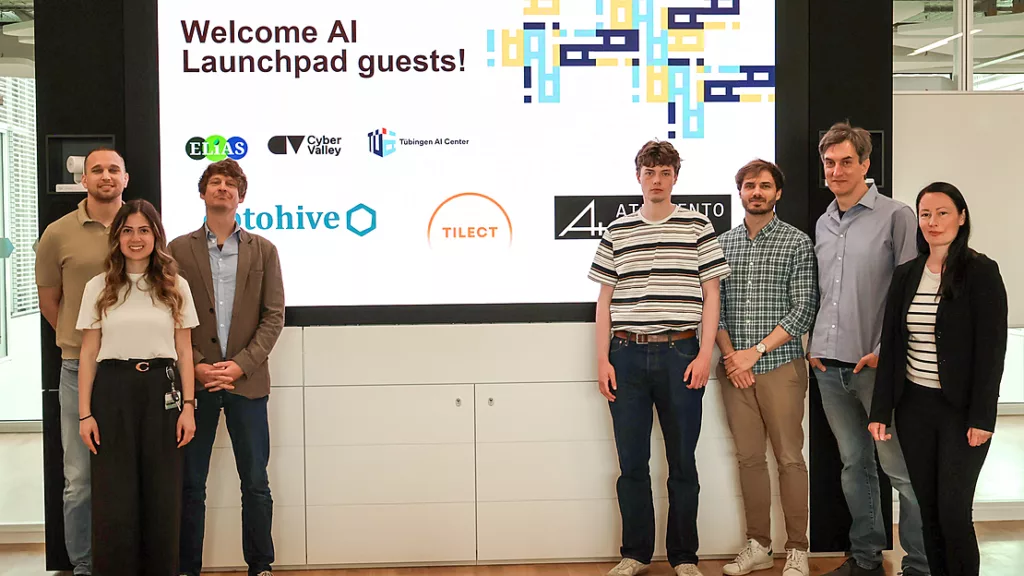
    The Cyber Valley AI Launchpad took place at Cyber Valley’s Tübingen Hub for the first time on 4–8 May 2026, bringing together early-stage AI start-ups from leading European innovation ecosystems for a week of mentoring, networking, and ecosystem exploration. Born out of Rise Europe and co-organized by ELIAS (European Lighthouse of AI for Sustainability), Tübingen AI Center, and Cyber Valley GmbH, the program supports AI start-ups as they grow from research into scalable, market-ready ventures. 

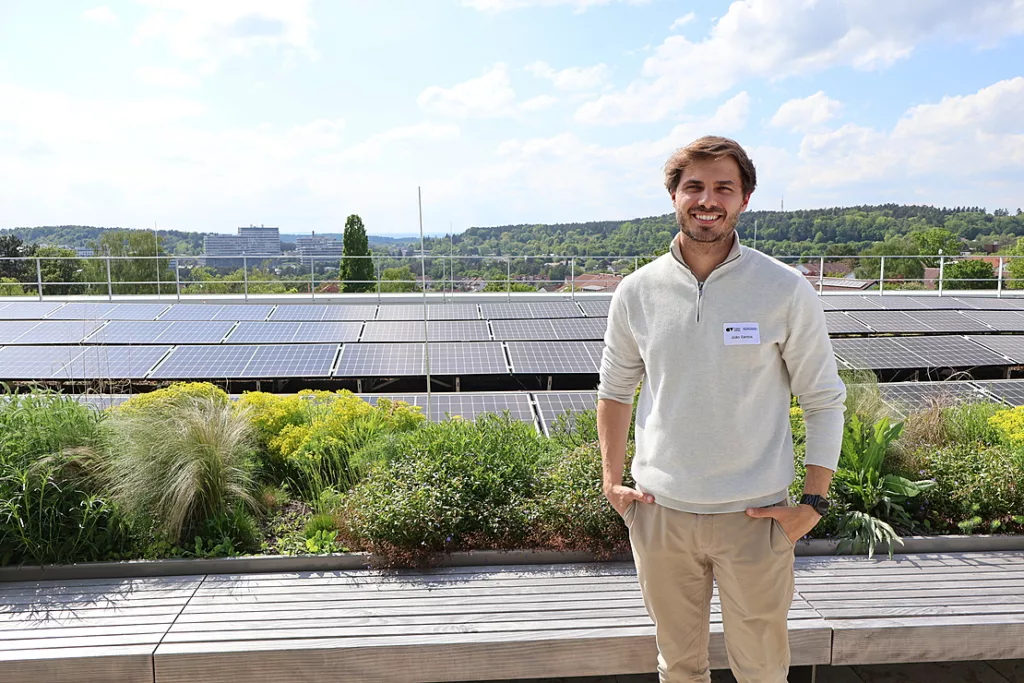
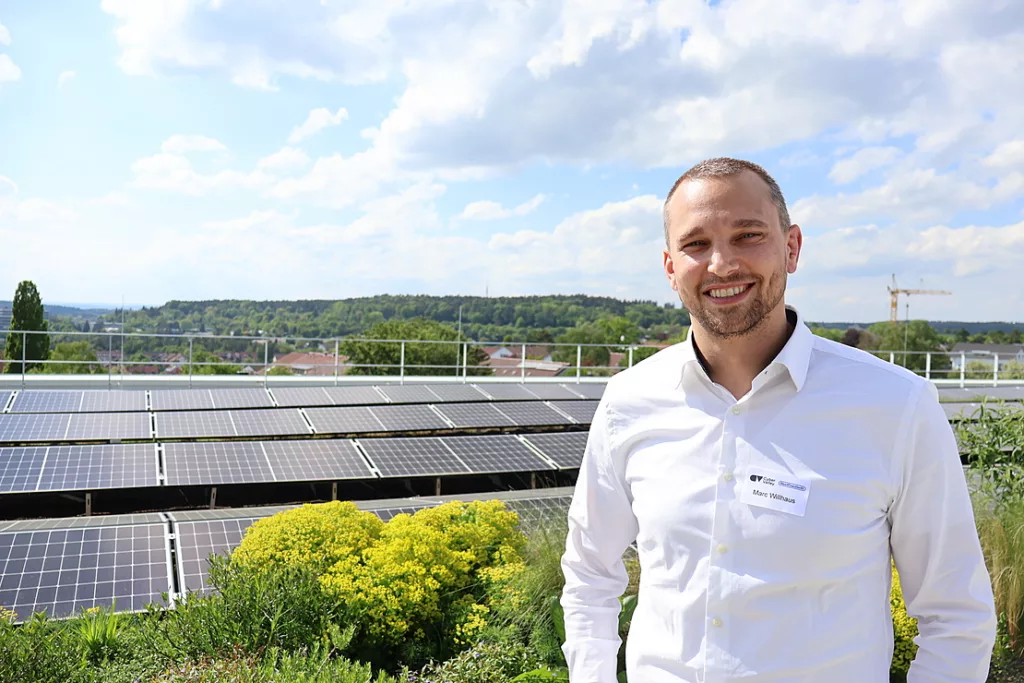
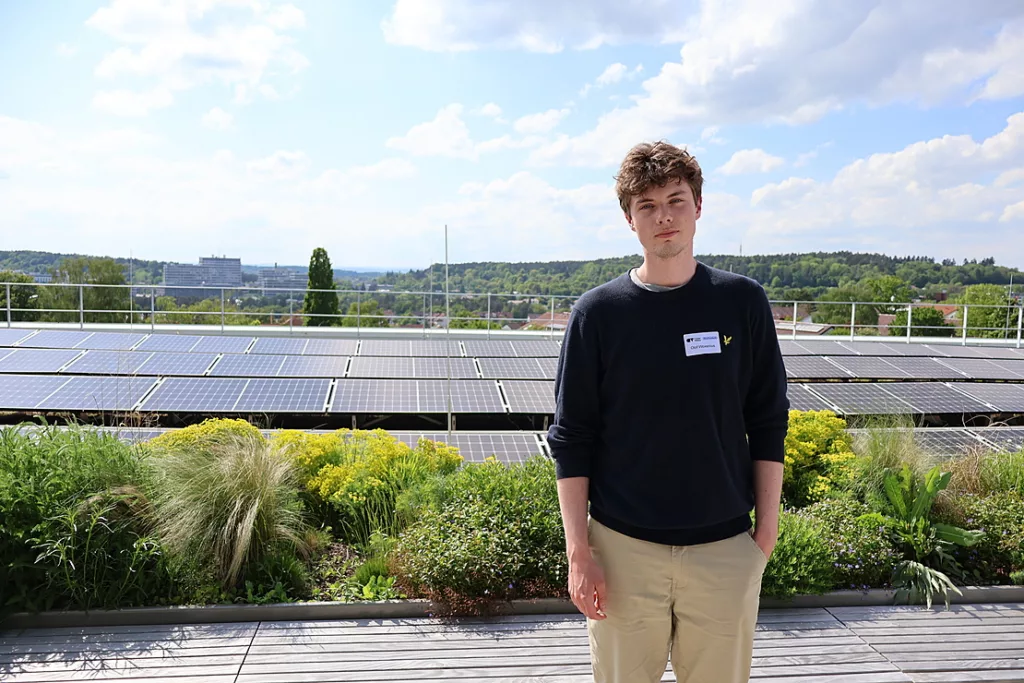
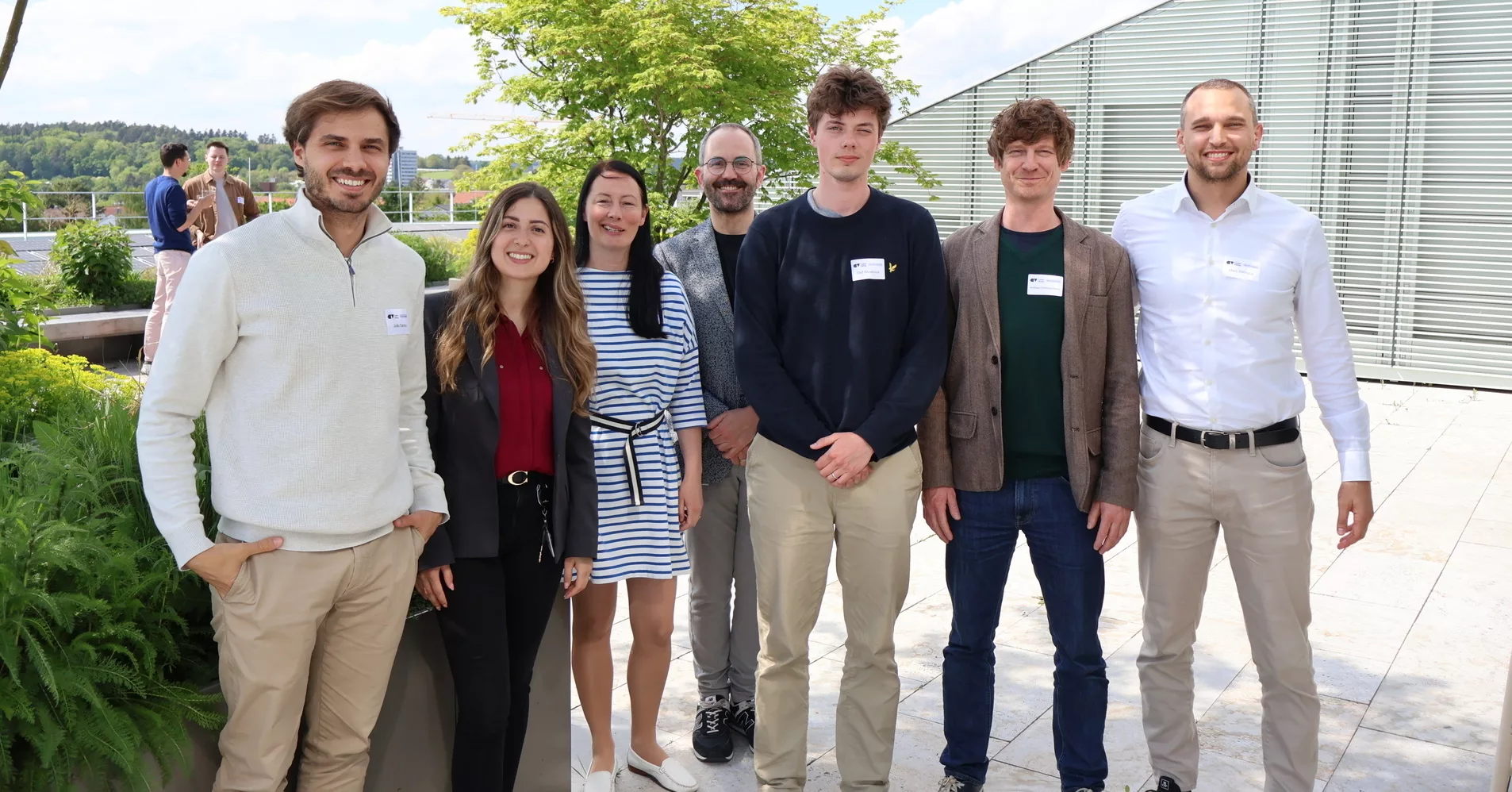
    We welcomed Joao Santos (Tilect, Campus Founders), Marc Willhaus (Optohive, ETH Zurich), and Olof Woxenius (Atramen.to, KTH Innovation) to Tübingen. The goal of the week was to connect these start-ups with research institutions, scientists, corporates, and investors within the Cyber Valley ecosystem.

    Program highlights 

    Throughout the week, the three participants engaged in mentoring sessions, goal-setting workshops, and networking activities across Tübingen and Stuttgart. The start-ups presented their ventures, defined concrete objectives for the program, and explored the Cyber Valley ecosystem through guided tours and meetings with local stakeholders. 

    Key highlights included a visit to Baden-Württemberg International in Stuttgart, where participants gained insights into doing business in Germany and into collaboration opportunities with corporate innovation teams in industrial AI. An investor insights session with Bosch Venture Capital provided perspectives on venture investment strategies, funding expectations, and positioning AI technologies for the market. 

    Participants additionally benefited from high-level mentoring provided by Peter Gehler (Professor for Machine Learning Engineering and Technology Transfer at the Tübingen AI Center) and Kerstin Ritter ( Professor of Machine Learning for Clinical Neuroscience at the University of Tübingen and Director at the Hertie Institute for AI in Brain Health). 

    Photo: Cyber Valley

    The program brought the local start-up community together, including at a Founders Breakfast that encouraged informal discussions and peer learning among founders. The week concluded with participation in the Next Frontier AI Roadshow, organized by SPRIND—Federal Agency for Disruptive Innovation in collaboration with Cyber Valley. The event brought together researchers, founders, investors, and ecosystem partners for input talks from SPRIND, a Q&A session, and networking opportunities, giving the start-ups further visibility and access to the broader German AI community. 

    Overall, the week served as a platform for collaboration between research-driven AI start-ups, industry stakeholders, and the broader AI innovation ecosystem, strengthening connections between European AI hubs and Cyber Valley and supporting our mission to turn excellent research into a sustainable future for everyone. 

    Here’s what the participants took away from the week, in their own words: 

    Joao Santos (Tilect, Campus Founders)

    Photo: Cyber Valley

    “It was inspiring to collaborate so closely with Cyber Valley and Tübingen AI Center throughout the week. Tübingen has a truly unique ecosystem, an impressive blend of state-of-the-art research and academia combined with a strong entrepreneurial spirit that fuels deep-tech start-ups working on some of the most advanced topics in the world. My biggest takeaway was seeing how naturally these worlds connect here, and how much that accelerates what early-stage founders can build.” 

    Marc Willhaus (Optohive, ETH Zürich)

    Photo: Cyber Valley

    „My personal highlight was seeing how active and fast-growing the Baden-Württemberg ecosystem is. We had the chance to dive in and connect with brilliant minds and entrepreneurs across the region. The exchange was genuinely inspiring and recharged our entrepreneurial energy. Cyber Valley is an impressive initiative, and I am confident many strong ventures will spark out of it. 

    Europe stands strong in research, development, and entrepreneurship, but we too often operate in silos and underestimate what other European hubs are building. Being locally present matters, and a single in-person meeting can be the spark for something much bigger.“ 

    Olof Woxenius (Atramen.to, KTH Innovation): 

    Photo: Cyber Valley

    „I was very impressed by the diverse and welcoming ecosystem of founders, academics, and facilitators in Cyber Valley. I strongly believe that Tübingen is, and will continue to be, a positive example for European AI innovation. Visit Cyber Valley and see for yourself!“

  • Building with bamboo for a low-carbon future

    Building with bamboo for a low-carbon future

    Nicolas Kubail Kalousdian and Achim Menges have successfully completed their project “Task and Motion Planning for Collaborative Robotic Construction with Deformable Materials”. The project created a robotic system capable of constructing buildings with bamboo. By using this natural and sustainable material, this robotic system enables more sustainable and low-carbon building practices, demonstrating how AI and robotics research can solve real-world problems. 

    The project was funded by the Cyber Valley Research Fund and was carried out between 2021 and 2024 at the Institute of Computational Design and Construction (ICD), University of Stuttgart. It addressed the challenges of using robotic manipulation when constructing with non-standardized, flexible materials like bamboo.

    The project’s key achievements included:

    Robotic system development

    The project designed and implemented a custom mobile robotic system optimized for handling bamboo. To ensure effective manipulation of this material, the research team designed the robot’s kinematics and control strategies in response to its flexible and anisotropic structure.

    Task and motion planning (TAMP)

    The research team developed a hybrid approach using Reinforcement Learning and Logic-Geometric Programming. Reinforcement Learning was used for dynamic adaptation in bending tasks, while Logic-Geometric Programming was applied for structured, multi-step planning of construction sequences. This approach meant the robotic system could combine adaptability and precision.

    Simulation and learning framework

    To model bamboo’s mechanical behavior, the project developed a high-fidelity simulation environment to train the robotic system’s Reinforcement Learning policies, before being used in the real world. The researchers improved this transfer from simulation to reality by using Domain Randomization and Curriculum Learning techniques, so that the robotic system could work reliably with real bamboo.

    Experimental validation

    In both simulated and real-world experiments, the robotic system successfully demonstrated reaching, transporting, and assembling bamboo elements. The researchers also tested cooperation between multiple robots, showing the potential for large-scale autonomous construction.

    Architectural scale demonstrator

    The project culminated in the development of a full-scale robotic demonstrator that could execute key construction tasks. Although some mechanical and electrical components required further refinement, the demonstrator proved the feasibility of robotic bamboo construction.

    By contributing to the advancement of robotic construction methodologies, the outcome of this research project enabled robots to work with natural, renewable materials in a scalable and adaptive manner. In doing so, it provides a pathway to more sustainable, low-carbon building practices, fulfilling the Cyber Valley mission of turning AI and robotics research into a sustainable future for everyone.

    This project produced the following peer-reviewed publications: 

    N. K. Kalousdian et al., “Learning Robotic Manipulation of Natural Materials With Variable Properties for Construction Tasks”. In: IEEE Robotics and Automation Letters, Vol. 7, No. 2, April 2022, pp. 5749-5756. DOI: 10.1109/LRA.2022.3159288.

    About the Cyber Valley Research Fund

    The Cyber Valley Research Fund was established to support Cyber Valley research groups undertake basic research in the fields of artificial intelligence and robotics. The fund totaled five million euros, including contributions from six of Cyber Valley’s founding corporate partners: Amazon, BMW, Bosch, IAV, Mercedes-Benz, Porsche, and ZF. It supported 20 research projects, the first of which began in 2020, and the final of which will conclude in 2026.

  • Last month at Cyber Valley

    Last month at Cyber Valley

    There was a lot happening at Cyber Valley last month: here’s a quick roundup of our highlights. Read on to discover how Cyber Valley is translating excellent research into real-world applications for a better future for everyone. 

    Cyber Valley at VENTURE SPRIND 2026 

    On April 14, Cyber Valley hosted a session at VENTURE SPRIND 2026 at the Futurium in Berlin. 

    The session explored how the Cyber Valley ecosystem, together with the Federal Agency for Breakthrough Innovation (SPRIN-D), supports the transition from research to market. Scientists and founders who have experienced this journey shared practical insights into what makes research transfer successful. The discussion highlighted key elements such as strong ecosystem support, effective funding structures, and the shift from research to building a company. 

    Many thanks to Alex Diehl (Senior Advisor at Cyber Valley GmbH), Martin Kiefel (Co-founder of polybot), and Wieland Brendel (University of Tübingen, ELLS Institute Tübingen, and Co-founder of polybot) for their contributions. 

    Exchange with FastCode AI Labs 

    On April 20, Arjun Jain, founder of FastCode AI Labs, visited Cyber Valley in Tübingen to discuss potential collaboration. 

    FastCode AI Labs helps organizations harness AI to transform how they innovate, operate, and compete from research to real-world deployment. Now registered in Baden-Württemberg, FastCode AI Labs is applying to join the Cyber Valley Start-up Network. Thank you for the visit. We look forward to welcoming you to the network! 

    Delegation visit from JTC Singapore 

    On April 23, we welcomed a delegation from JTC Corporation to Cyber Valley in Stuttgart. The corporation is Singapore’s master developer behind the Jurong Innovation District (JID), the country’s leading advanced manufacturing hub. 

    The delegation, including Christine Wong (Assistant CEO, Cluster Group), Lim Junwei (Director, Industrial Estates (North) Cluster), and Jessica Chen (Manager, Precision Engineering Department), received an overview of the regional ecosystem. With JTC’s network of around 700 start-ups and Cyber Valley’s network of more than 100, there is strong potential for collaboration, including a possible joint exchange initiative. 

    Spektrum der Wissenschaft readers visit  

    On April 24, we had the pleasure of welcoming readers from “Spektrum der Wissenschaft” at Cyber Valley in Tübingen. 

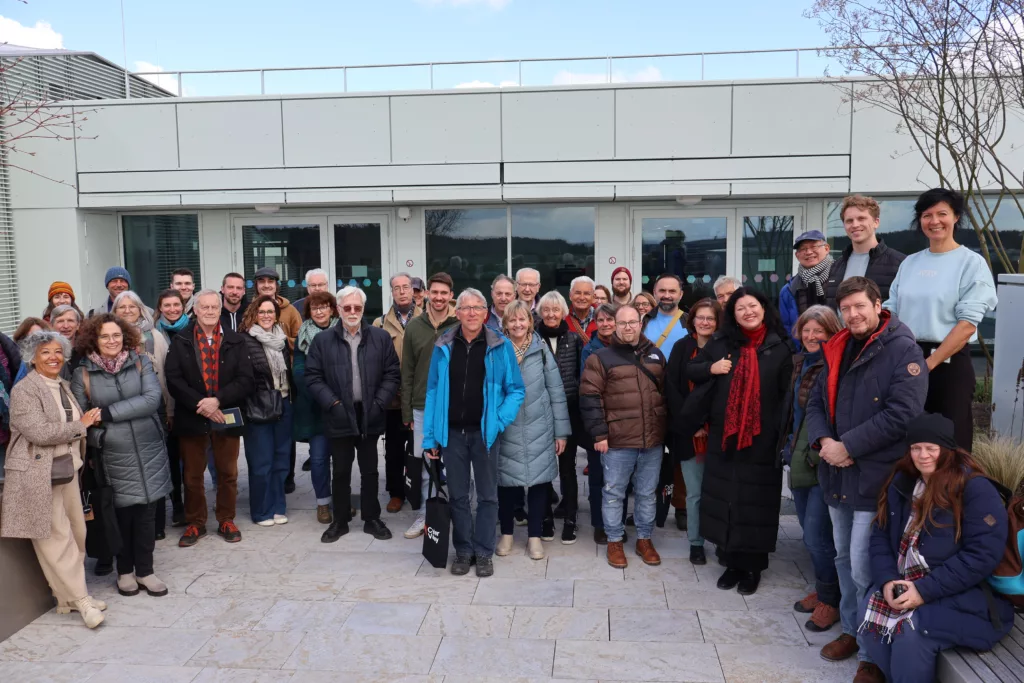
    Organized by the Max Planck Institute for Biological Cybernetics, guests enjoyed neuroscientific talks and lab visits. Moreover, they got a glimpse into one of Europe’s leading centers for AI and modern robotics, showing them how excellent research can be transferred into real-world applications that benefit society. After an introduction to the Cyber Valley Innovation Campus, there was plenty of time for questions and the chance to enjoy the view of the Swabian Alb from our roof terrace. Thanks for the visit and the lively discussions! 

    Cyber Valley Impulse on health and life sciences 

    On April 28, the Cyber Valley Impulse on health and life sciences took place in Tübingen. Experts from science and industry shared insights on how AI-driven technologies can enhance healthcare, biomedical research, and life-science applications. 

    Thanks to our excellent speakers and contributors: Katja Mombaur (High Performance Humanoid Technologies (H2T), Institute for Anthropomatics and Robotics (IAR), Karlsruher Institut für Technologie (KIT)), Max B. Schäfer (Institut für Medizingerätetechnik, Universität Stuttgart), Andrea Leibfried (Health + Life Science Alliance Heidelberg Mannheim), Yannick Sauer (Carl Zeiss Vision International GmbH), Christian M. Schürch; (Vicinity Bio GmbH), and Klara Altintoprak (BioRegio STERN Management GmbH).

    The next Impulse on govtech and cyber security will happen on June 16 in Karlsruhe. Registration will open in early June. Find out more.

  • 2019: Reducing construction waste with AI—interview with Optocycle

    2019: Reducing construction waste with AI—interview with Optocycle

    In 2016, important actors from science, industry, and politics founded the Cyber Valley Consortium, which became the first Innovation Campus in Baden-Württemberg. Ten years on in 2026, we’re revisiting the most important milestones from the last decade. Each month, we’ll focus on a particular year since Cyber Valley’s beginning. 

    This month, we’re looking back to 2019, when the Cyber Valley Start-up Network was founded to build and nurture a community of start-up entrepreneurs. The Cyber Valley Start-up Network has grown rapidly over the past years, from the initial seven founding members at the end of 2019 to more than 100 start-ups in 2026.

    In 2022, Optocycle joined the Start-up Network. Optocycle develops AI-based systems for the optical classification of construction waste. Their technology enables optimal use of demolition material, promoting a circular economy.

    In the following interview, CEO Max-Frederick Gerken explains how the idea for Optocycle emerged, how being part of the Start-up Network has supported the company’s development, and how AI-driven material classification can contribute to a more circular and sustainable construction industry.

    How did the idea for Optocycle originate, and what problem were you initially trying to solve?

    Interestingly, we didn’t start in construction. Initially, we were building AI to recognize fruits and vegetables at supermarket checkouts. The pivot came when a contact from the recycling industry highlighted a much bigger problem: construction waste is still classified manually: slow, subjective, and inefficient.

    We realized that the core issue is missing data. That’s why we built Optocycle: combining optical sensor systems with AI to create a reliable, real-time data layer for material flows and enable true circular construction.

    How did your research and experience within the Cyber Valley ecosystem contribute to founding the company?

    It didn’t directly contribute to founding the company, as Optocycle was already established at that point. However, we did benefit from funding within the Cyber Valley ecosystem, which supported us in scaling our team and further developing our technology. Beyond that, the ongoing exchange within the network has been consistently valuable and interesting.

    The Optocycle team | (c) Optocycle

    How do you see Optocycle’s work contributing to a future where AI research has a long‑term, positive, and sustainable impact on society?

    At Optocycle, we see our work as a very applied example of how AI can drive tangible, long-term positive impact, particularly in industries that have historically been difficult to transform, such as construction and circular materials management.

    Our core contribution lies in using AI and advanced sensing technologies to make material flows transparent and measurable. This is a prerequisite for any functioning circular economy. Today, a significant share of valuable materials is still downcycled or lost entirely because there is insufficient data about their composition and quality. By generating reliable, real-time data, we enable better decision-making across the value chain, from sorting and recycling to reintegration into new products.

    From a sustainability perspective, this directly contributes to reducing waste, lowering CO₂ emissions, and preserving finite resources. But beyond the environmental aspect, we also see a structural impact: AI, when deployed thoughtfully, can help modernize traditionally analog industries and make them more efficient, data-driven, and resilient.

    Importantly, we believe that the long-term societal value of AI will depend less on abstract breakthroughs and more on its integration into real-world systems. Our approach is therefore to embed AI into physical processes with clear economic and ecological benefits. This ensures that the technology is not only innovative, but also scalable, economically viable, and aligned with sustainability goals

    What was the biggest lesson you learned from your founding journey? And what advice would you give to others who are considering taking the leap?

    The biggest lesson from our founding journey has been the importance of building solutions strictly around real customer needs, not for the sake of technology or innovation itself. Especially in deeptech and AI, there’s a strong temptation to develop sophisticated solutions first and look for applications later. In practice, that approach rarely leads to sustainable businesses.

    What truly made a difference for us was maintaining a strong customer focus from early on: deeply understanding pain points, validating assumptions quickly, and iterating based on real-world feedback. This ensures that what you build is not only technically impressive, but also commercially relevant and scalable.

    For anyone considering taking the leap, the advice would be: stay as close to your customers as possible. Talk to them early, challenge your own assumptions, and be willing to adapt your solution, even if that means pivoting away from your original idea. Execution matters, but direction matters more, and that should always be guided by real demand.

    To celebrate Cyber Valley’s ten-year anniversary, we’ll be sharing a variety of content across our website and social media channels reflecting on milestones from the last decade. Stay tuned for the next installments! 

  • Cyber Valley Impulse on govtech and cybersecurity

    Cyber Valley Impulse on govtech and cybersecurity

    This edition of Cyber Valley Impulse focuses on govTech and cybersecurity. Experts from research, industry, the public sector, and the innovation ecosystem will exchange insights on how AI-driven technologies can strengthen digital governance, enhance public services, and improve cybersecurity resilience.

    As part of the Cyber Valley Impulse event series, this edition highlights applications of intelligent systems in government technology and cybersecurity. Advances in artificial intelligence, machine learning, and data-driven approaches are reshaping public services, digital governance, and cybersecurity, creating new opportunities for secure, efficient, and citizen-centric innovation.

    The event provides a platform for knowledge exchange, discussion, and networking between academia, industry, and the innovation ecosystem.

    What to expect

    • Insights into current developments and challenges in AI for health and life sciences.
    • A science marketplace to showcase emerging AI projects in the field.
    • Exchange between researchers, industry practitioners, and innovators.
    • Opportunities for collaboration and community building within the region.
    • Informal networking with experts and stakeholders.

    Program

    A detailed agenda, speakers, and session format will be announced soon.

  • Next Frontier AI Roadshow at Cyber Valley

    Next Frontier AI Roadshow at Cyber Valley

    SPRIND is coming to Cyber Valley as part of its Next Frontier AI roadshow—Europe’s most radical initiative for genuine technological independence in AI. Sign up for a chance to learn more about frontier AI, the challenge and to connect with like-minded individuals.

    ​SPRIND is creating the conditions for Europe to discover and define the next frontier in AI—not by catching up, but by leaping forward with entirely new paradigms. Through massive funding (initially €125 million, non-dilutive), radical technological freedom, and a foundation of European values, SPRIND is establishing the environment to build three new Frontier AI Labs for research and deployment in Europe.

    As a leading center of excellence in AI research and robotics, Cyber Valley is proud to host this stop of the roadshow, bringing together top talent from academia, startups, and industry in our ecosystem.

    ​This isn’t your typical tech conference. No auditorium marathons. No sitting through panels while secretly checking your phone. This is an open, interactive ecosystem designed to go deep into what frontier AI actually means, to hear from Europe’s AI leaders, and know more about the initiative and the challenge.

    ​It’s designed to turn curiosity into clear intent, and strangers into potential co-founders.

    ​Who should attend–and why

    Top AI talent and promising juniors. Researchers with radical ideas. Engineers ready to build. Anyone who believes Europe can set the standard, not just keep up.

    Doors open at 14:00. Program starts at 14:45.

    Come if

    • ​You’re already certain you’re applying and want to meet potential co-founders and sharpen your thesis
    • ​You’re on the fence and need to see whether this is actually for you
    • ​You have a team but need more people to fill key roles
    • ​You’re flying solo with a strong idea and need to find your first collaborator
    • ​You work at a big lab and wonder „could I do this myself?“
    • ​You’re a professor, investor or run an AI network with access to the right people and teams

    What’s on the agenda

    Inputs on the Initiative, to shake up assumptions about where the next S-curve actually is.

    Open Q&A on the fundamentals of frontier AI, the labs we want you to build, and how the €125M → €1B funding path works. Ask us anything.

    Networking and the opportunity for 1:1 time with the Next Frontier AI team. Questions about your application, your idea, the fine print? We’re excited to talk. 

    Pressure-test your frontier thesis. Not a pitch. Not a spotlight. Just an open table for real feedback on your thinking.

    ​Food and drinks throughout – Continuous, distributed, designed to keep conversations going. No forced breaks. Standing, grazing, talking.

  • Der letzte Monat im Cyber Valley

    Der letzte Monat im Cyber Valley

    Letzten Monat war bei Cyber Valley einiges los. Hier gibt’s eine kleine Übersicht unserer Highlights:

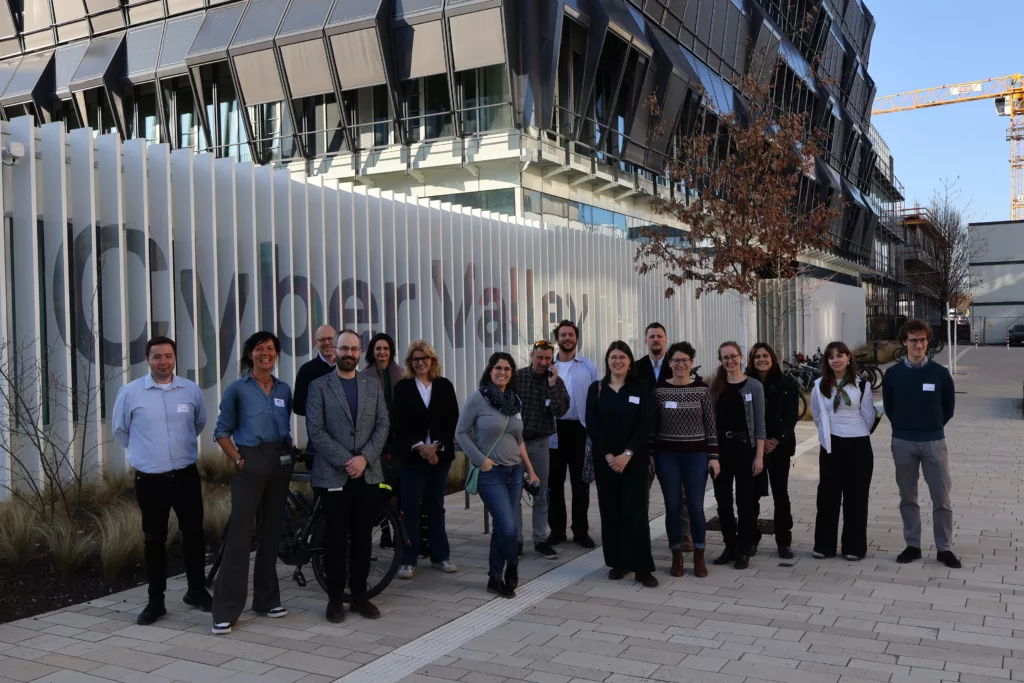
    Am 4. März besuchten Journalistinnen und Journalisten aus Europa das Cyber Valley in Tübingen. Das Programm, organisiert in Zusammenarbeit mit dem Deutsch-Französischen Institut Ludwigsburg, bot einen Überblick über Forschung, Innovation und Zusammenarbeit auf unserem Innovationscampus. Der Nachmittag begann mit Beiträgen von Florian K. Mayer (CEO der Cyber Valley GmbH), Tobias Leismann (Managing Director am ELLIS Institute Tübingen) und Philipp Hennig (Direktor am Tübingen AI Center). Christoph Koch, ehemaliger „Journalist in Residence“, gab Einblicke in das Journalist-in-Residence-Programm. Anschließend folgten Pitches aus dem Cyber Valley Start-up Network von Laura Neusser (Chief Communication Officer bei Optocycle) und Anand Waghmare (CEO & Co-Founder von Yugen Space). Abgerundet wurde der Nachmittag durch Laborbesuche bei Tsvetelina Alexiadis und Michael Muehlebach am Max-Planck-Institut für Intelligente Systeme sowie bei Martin Kiefel, Co-Founder von polybot.

    Image: Cyber Valley GmbH

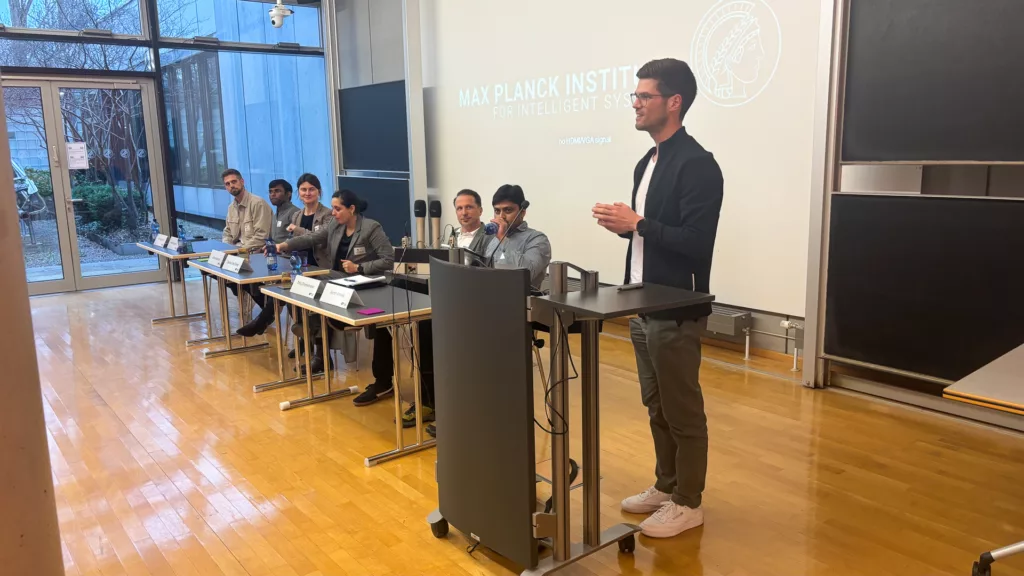
    Am 17. März startete die neue Veranstaltungsreihe „Cyber Valley Impulse“ mit dem Schwerpunkt „Mobility and Aerospace“. Forschende, Start-ups, Unternehmen und Investoren trafen sich am Max-Planck-Institut für Intelligente Systeme in Stuttgart, um über bildbasierte Wahrnehmung für Flugroboter, KI in Luft- und Raumfahrtsystemen, autonomes Fahren und neue Finanzierungsmöglichkeiten im Bereich Mobilitätstechnologien zu diskutieren. Zu den Referenten und Referentinnen gehörten: Aamir Ahmad (Universität Stuttgart), Thilo Zimmermann (InnovationsCampus Mobilität der Zukunft), Zamira Daw Perez (Institut für Flugzeugsysteme), Ulrike Weinrich (FKFS Forschungsinstitut für Kraftfahrzeugtechnik und Antriebssysteme), Anand Waghmare (Yugen Space) und Frederik Boenke (NUVUS).

    Image: Cyber Valley GmbH

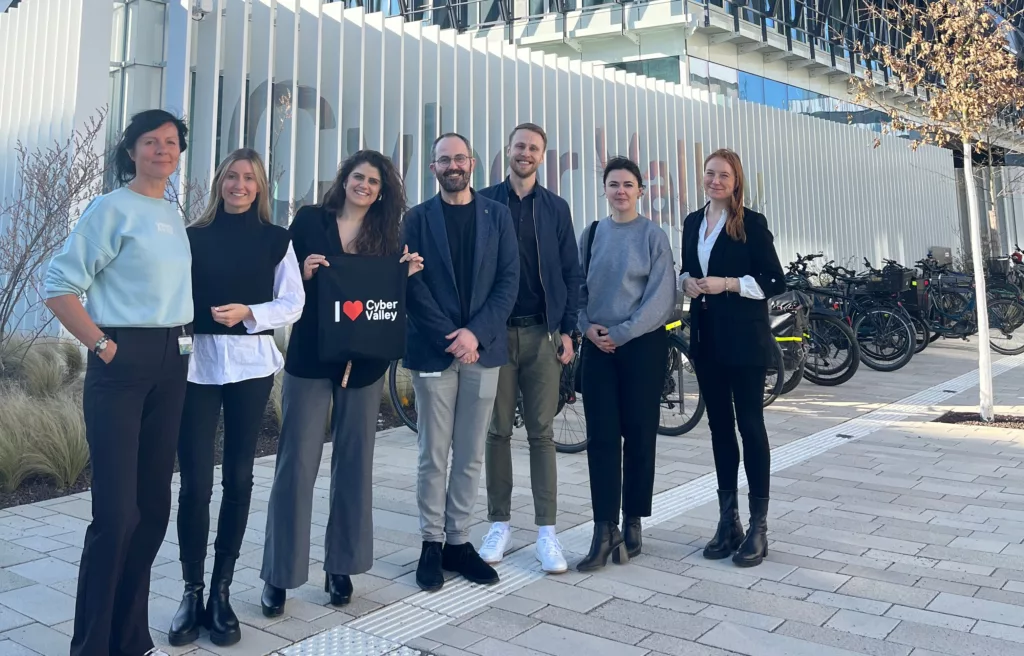
    Am 19. März konnten wir Vertreterinnen von IPAI und der IPAI Foundation im Cyber Valley in Tübingen zu einem spannenden Austausch über zukünftige Kooperationsmöglichkeiten begrüßen: Jana Strattner, Tamara Pyter und Sofia Willhauk– drei treibende Kräfte hinter der Mission von IPAI, ein lebendiges Ökosystem für angewandte künstliche Intelligenz aufzubauen.

    Indem wir unsere Stärken bündeln und zusammenarbeiten, können wir noch größeren Mehrwert für das gesamte Ökosystem in Baden-Württemberg schaffen – im Sinne eines verantwortungsvollen Ansatzes, der auch die sozialen und ethischen Auswirkungen von KI berücksichtigt. Der Austausch machte unsere gemeinsamen Ziele deutlich: den Transfer von KI-Forschung in Anwendungen zu beschleunigen, Netzwerke zu stärken und sinnvolle Kooperationen über Regionen hinweg aufzubauen. Durch diese Zusammenarbeit wollen wir Brücken zwischen Forschung, Gesellschaft und Industrie schlagen, um gemeinsam ein lebendiges Ökosystem für angewandte KI in Baden-Württemberg zu gestalten.

    Image: Cyber Valley GmbH

    Am 27. März besuchten Vertreterinnen und Vertreter der Tourismus und Stadtmarketing Tübingen GmbH das Cyber Valley in Tübingen. Die Tübinger Stadtführerinnen und Stadtführer sowie Stocherkahn-Fahrer und -Fahrerinnen erhielten zunächst eine Einführung in den Innovationscampus, bevor sie zu einer geführten Tour über den Campus in Tübingen starteten.

    Unsere Mission ist es, Forschung zu KI und Robotik in reale Lösungen zu überführen, die Menschen, Industrie und Gesellschaft zugutekommen. Ein wichtiger Teil davon ist der Austausch mit der Öffentlichkeit. Deshalb freuen wir uns, unsere kommenden Campus Tours in Tübingen anzukündigen, bei denen alle Interessierten den Campus erkunden und mehr über die hier stattfindende Forschung erfahren können. Die Termine werden bald bekannt gegeben.

    Image: Cyber Valley GmbH

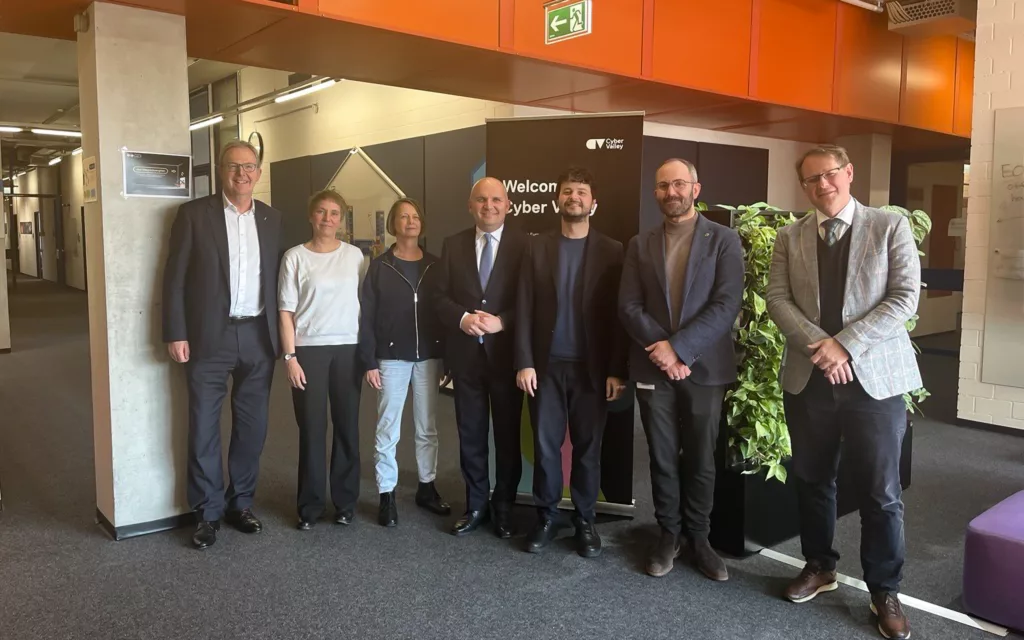
    Am 30. März hießen wir die Mitglieder des Europäisches Parlamentes Ilhan Kyuchyuk, Axel Voss, Brando Benifei und Anze Erbeznik im Cyber Valley in Stuttgart zu einem Austausch über die sich entwickelnde KI-Landschaft in Europa willkommen. Gemeinsam mit Regina Ammicht Quinn und Jessica Heesen vom Internationalen Zentrum für Ethik in den Wissenschaften der Eberhard Karls Universität Tübingen sowie Florian K. Mayer, CEO der Cyber Valley GmbH, diskutierten sie zentrale Entwicklungen, die das europäische KI-Ökosystem prägen. Themen waren unter anderem die europäische KI-Gesetzgebung und der EU Artificial Intelligence Act, die ethischen Implikationen von KI, digitale Autonomie sowie neue Fragen rund um unser digitales Nachleben.

    Image: Cyber Valley GmbH
  • Ein weiterer Meilenstein für KI aus der Region Stuttgart

    Ein weiterer Meilenstein für KI aus der Region Stuttgart

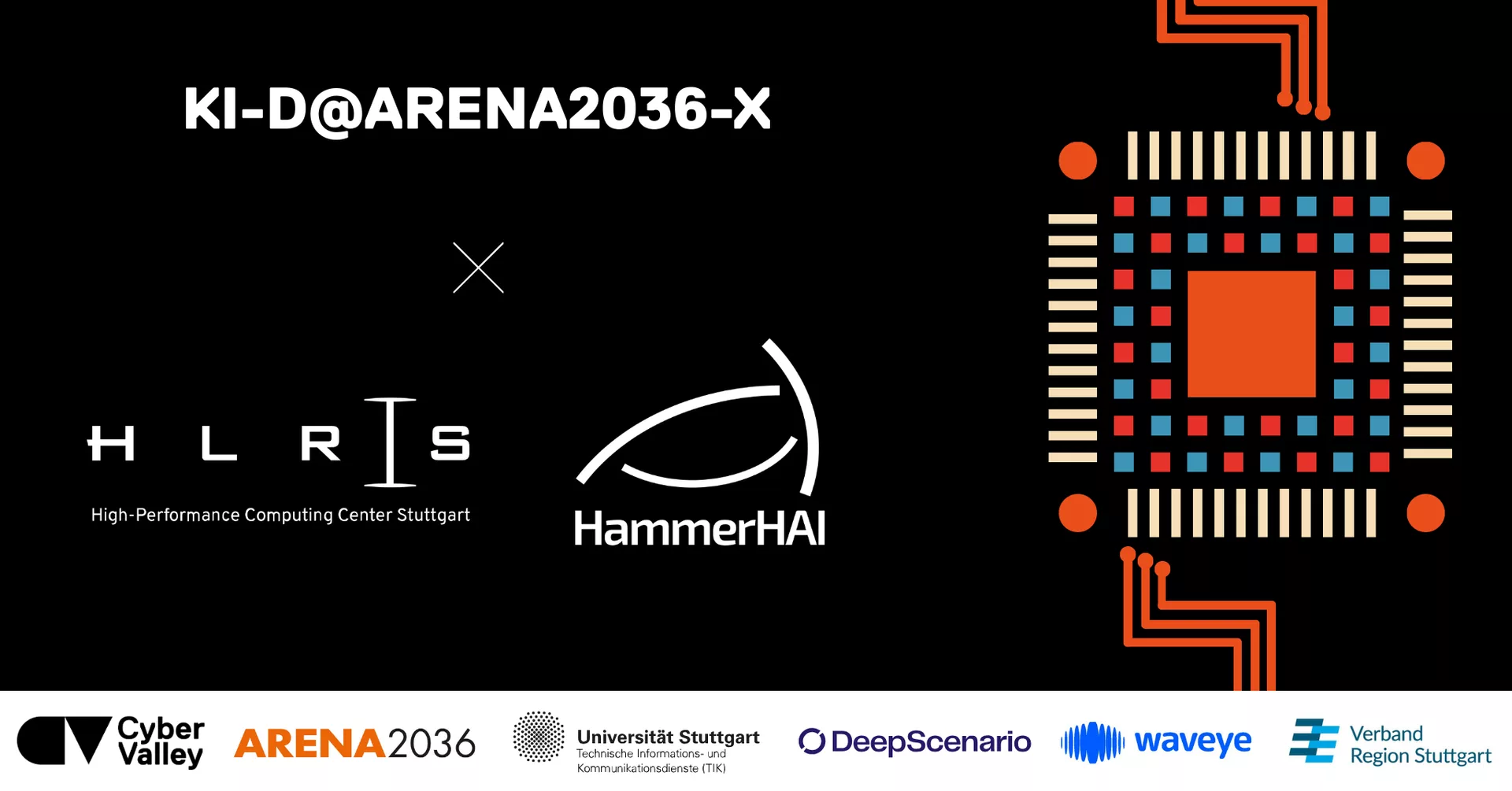
    Die Zukunft der künstlichen Intelligenz (KI) macht im Herzen von Baden-Württemberg einen wichtigen Schritt nach vorn. Das Höchstleistungsrechenzentrum Stuttgart (HLRS) wird als neuer Partner das Programm ‚KI-D@ARENA2036-X‘ mit seinem Wissen und Rechenkapazitäten unterstützen.

    Das Programm wird gemeinsam von ARENA2036, Cyber Valley GmbH, DeepScenario, waveye sowie den Technischen Informations- und Kommunikationsdiensten der Universität Stuttgart (TIK) umgesetzt.

    Mit dem HLRS kommt ein bedeutender Partner hinzu. Dadurch erhält das Programm Zugang zum Infrastrukturprojekt HammerHAI. Ab Mitte des Jahres können damit umfangreiche KI-Rechenressourcen entlang der gesamten Entwicklungskette genutzt werden – von kleineren Systemen direkt an Maschinen oder Geräten bis hin zu leistungsstarken Hochleistungsrechnern. Dadurch wird es möglich, auch sehr große und komplexe KI-Modelle zu trainieren und einzusetzen.

    Eine Infrastruktur, die KI-Entwicklung beschleunigt

    Im Rahmen der Initiative bauen die Partner eine offene IT- und Dateninfrastruktur einschließlich des Zugangs zu einem Datenraum für den souveränen Austausch von Daten auf. Ziel ist es, Unternehmen einen einfachen Zugang zu leistungsfähigen Ressourcen für KI-Anwendungen zu ermöglichen – von der ersten Idee bis zur praktischen Anwendung im Unternehmen. Dabei steht ein Modell im Mittelpunkt: die Vernetzung von KI-Systemen und Daten. Unternehmen können die bereitgestellte Infrastruktur nutzen, ohne selbst große technische Systeme aufbauen zu müssen. Die Nutzung soll zu wettbewerbsfähigen Kosten möglich sein. Besonders profitieren davon Start-ups sowie kleine und mittlere Unternehmen (KMU), deren Innovationsfähigkeit und Wettbewerbsstärke dadurch gestärkt werden.

    In Baden-Württemberg entsteht so ein skalierbares, transparentes und kooperativ gestaltetes System. Statt einer Blackbox setzt das Projekt bewusst auf eine offene Infrastruktur.

    Diese basiert auf drei zentralen Bausteinen:

    Eigene Hardware einbringen:

    Unternehmen können eigene Rechenhardware integrieren und damit die verfügbaren Rechenkapazitäten flexibel erweitern und individuelle Anforderungen abbilden.

    Gemeinsamer Datenraum:

    Ein skalierbarer, kollaborativer Datenraum mit Marktplätzen ermöglicht es verschiedenen Organisationen, gemeinsam an Datensätzen, KI-Modellen und konkreten Anwendungsfällen zu arbeiten.

    Hochleistungsrechnen mit HammerHAI:

    Leistungsstarke Hochleistungsrechen-Ressourcen ermöglichen das Training und den Einsatz besonders großer KI-Modelle.


    Ein Programm, das Unternehmen schneller voranbringt

    Teilnehmende Unternehmen des ‚KI-D@ARENA2036-X‘-Programmes profitieren von einem praxisnahen Zugang zu leistungsfähiger KI-Infrastruktur und einem starken Innovationsnetzwerk.

    Das Programm bietet unter anderem:

    • die Möglichkeit, neue Ideen und Proof-of-Concepts ohne hohe Anfangsinvestitionen zu testen und umzusetzen,
    • den Zugang zu leistungsstarker Hochleistungs-IT, ohne selbst ein eigenes Rechenzentrum betreiben zu müssen,
    • den fachlichen Austausch mit anderen KI-Entwickler:innen, die vor vergleichbaren technologischen Herausforderungen stehen,
    • sowie eine reale Testumgebung in der ARENA2036, die Anforderungen aus unterschiedlichen Branchen bündelt.

    Damit unterstützt das Programm Unternehmen nicht nur bei ihren Projekten – es beschleunigt aktiv die Entwicklung und Umsetzung neuer KI-Anwendungen.

    Stimmen aus dem Projektteam:

    Prof. Dr. Peter Middendorf, Rektor der Universität Stuttgart:

    „Die IT- und Dateninfrastruktur der ‚KI-D@ARENA2036-X‘ ist ein weiterer wichtiger Baustein unseres Innovationsökosystems. Die Universität Stuttgart trägt mit ihren Technischen Informations- und Kommunikationsdiensten und als Partner der ARENA2036 zum Erfolg dieses Projektes bei. Umso mehr freue ich mich, dass jetzt mit dem Höchstleistungsrechenzentrum Stuttgart HLRS ein weiterer starker Partner hinzukommt, der mit seiner leistungsfähigen Recheninfrastruktur Unternehmen und Start-ups bei der Erprobung und Optimierung modernster KI-Anwendungen unterstützt.“

    Dr. Alexander Lahl, Regionaldirektor des Verband Region Stuttgart:

    „Gemeinsam mit dem Infrastrukturprojekt HammerHAI entsteht ein bedeutender Nukleus, der von großem Nutzen für Start-ups und insbesondere kleinen und mittleren Unternehmen sein wird. Wir stärken damit den Standort Region Stuttgart bei KI-Anwendungen und Datenraumkapazitäten enorm, durch unsere Förderung von Innovationszentren sichern wir die Transparenz solcher Leistungen und damit die Wettbewerbsfähigkeit der Unternehmen der Region. Und es macht auch deutlich: die Stärke der Region Stuttgart ist das Miteinander.“

    Michael Kaiser, Geschäftsführer der Wirtschaftsförderung Region Stuttgart GmbH (WRS):

    „Die Zusammenarbeit der ‚KI-D@ARENA2036-X‘ mit dem HLRS und dessen europäischer AI Factory HammerHAI ist ein weiterer wichtiger Baustein für das KI-Ökosystem der Region Stuttgart. Damit ist es für Unternehmen möglich, dank effizienter Hochleistungsrechner sehr große KI-Modelle zu trainieren und zu nutzen – und das ohne eigenes Rechenzentrum. Gerade für kleine und mittelgroße Firmen entstehen dadurch neue Chancen in der KI-Entwicklung und -Anwendung.“

    Angelina Jukic, Programm Managerin bei der Cyber Valley GmbH:

    „Unser Ziel im ‚KI-D@ARENA2036-X‘-Programm ist es, ein stark vernetztes Ökosystem zu schaffen, das Forschung, Start-ups und Industrie näher zusammenbringt und die Entwicklung sowie das Training von KI-Modellen effizienter gestaltet. HammerHAI zählt dabei zu den führenden AI Factories Deutschlands und arbeitet gemeinsam mit ARENA2036 an zukunftsweisenden Lösungen.“


    Projektstand und Ausblick:

    Nach dem erfolgreichen Aufbau der grundlegenden Infrastruktur im ersten Projektjahr wird das Programm im Jahr 2026 den operativen Zugang zu den verfügbaren Rechen- und Datenressourcen ermöglichen.

    Über das ‚KI-D@ARENA2036-X‘-Programm:

    Das Programm ‚KI-D@ARENA2036-X‘ wird gemeinsam von ARENA2036, Cyber Valley GmbH, DeepScenario, waveye sowie den Technischen Informations- und Kommunikationsdiensten (TIK) der Universität Stuttgart umgesetzt. Ziel ist der Aufbau einer kollaborativen Infrastruktur, die KI-Innovationen in Baden-Württemberg schneller, sicherer und wirtschaftlich nachhaltig voranbringt.

    Das Programm wird vom Verband Region Stuttgart im Rahmen seines Kofinanzierungsprogramms für Künstliche Intelligenz als Förderprojekt von 2024 bis 2027 mit insgesamt 685.000 Euro gefördert.

    Pressekontakt:

    Silke Dutz

    Public Outreach Manager

    Email: silke.dutz@cyber-valley.de