The Tübingen AI Center invites applications for two tenured full professorships (W3) in Machine Learning and Intelligent Systems, to start as soon as possible. The successful candidates will be appointed at the University of Tübingen. The positions provide generous, permanent core funding (e.g. for PhD students or postdocs) and substantially reduced teaching responsibilities.
They are a federal competence center for AI education and research. Their research pushes the boundaries in numerous aspects of intelligence, including algorithms and models for machine learning, autonomous, causal, and agentic intelligence, as well as interaction with humans, markets, and society at large. Their core mission is to educate and empower the next generation of researchers to build the technological foundations of a competitive, sustainable, sovereign European society – through excellence in teaching, active technology transfer and societal action. They invite applications in all areas of machine learning, artificial intelligence, and related disciplines.
They seek internationally renowned candidates who pursue compelling long-term research agendas that complement and extend their expertise. Your application should explicitly articulate how you intend to contribute to their mission. They offer competitive budgets and compensation packages, with permanent funds allocated for research staff.
Candidates will be evaluated based on their potential for further growth in scientific excellence, considering past scientific contributions as well as the novelty, creativity, and uniqueness of their research vision.
Required qualifications include a PhD or equivalent degree with exceptional expertise in machine learning as well as postdoctoral qualifications and teaching experience equivalent to the requirements of a full professorship. Teaching and research are conducted in English.
The University of Tübingen is committed to equity and diversity and actively promotes equal opportunities. Female academics, in particular, are explicitly invited to apply, as are candidates from outside Germany. Applications from equally qualified candidates with disabilities will be given preference.
For more information on professorships, the hiring process, and the German academic system, please click here.
Location: The center is located near Stuttgart in the historic university town of Tübingen, a beautiful location in southwest Germany close to a large natural preserve. Major cities such as Zurich, Munich and Frankfurt can be reached within a few hours by public transport. Stuttgart airport, with many direct flights to major international cities, is just half an hour away.
Technological innovations are transforming the world, the way we live and the way we work. Today, this transformation is driven above all by advances in robotics and AI. This two-day event will explore how these technologies are reshaping life sciences and healthcare, from early drug discovery to personalized diagnostics and therapies.
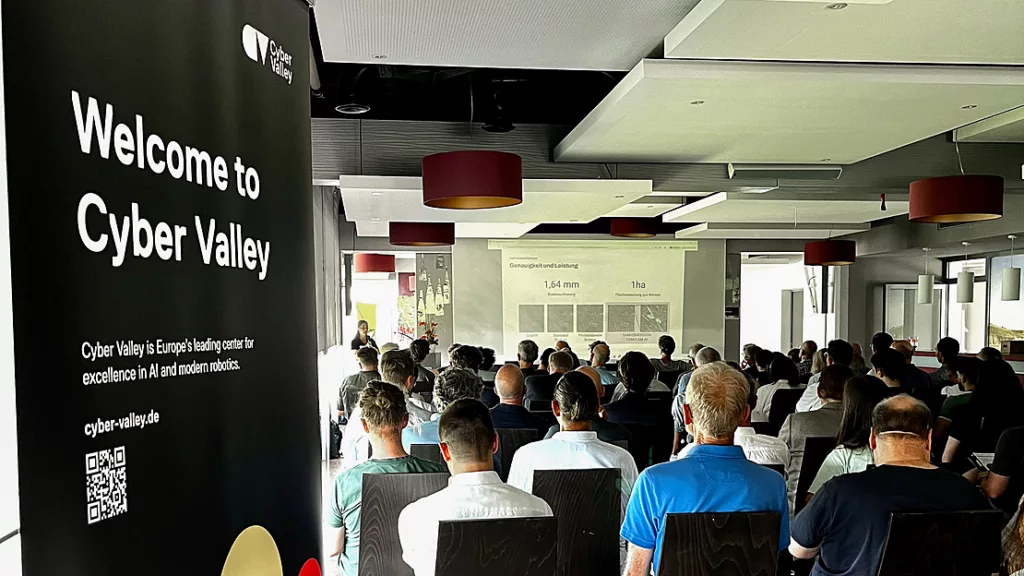
On 20 October, the Cyber Valley campus in Tübingen will host inspiring keynotes, real-world case studies, and open discussions on the lab of the future, right in the heart of one of Europe’s leading AI ecosystems.
In the first half of the day, we will spotlight the latest advances in robotics combined with AI for life science applications. Participants will gain a clear picture of where research and development stand today, how mature the technologies already are, and which concrete use cases are emerging across pharma, biotech, and diagnostics – from automated sample handling to multi-purpose robotic systems to humanoid robots.
In the second half of the day, the focus will shift to cutting-edge AI for life sciences. Leading researchers and industry experts will present the newest findings in areas such as AI-driven drug discovery, predictive toxicology, image-based cell analysis, and decision support. Real-world use cases will demonstrate how AI is being deployed today in Life Science environments, what value it delivers, and how organizations are overcoming regulatory, data, and implementation challenges.
On 21 October, hands-on workshops and deep dives at the nICLAS innovation center in Stuttgart will let participants work closely with experts on lab automation, robotics, and AI.
Day two is about concrete methods, tools, and best practices that can be transferred into your own organization. Live demos, interactive sessions, and co-creation formats offer the chance to test technologies, learn from real implementations, and benchmark your own roadmap.
We invite top-tier speakers and participants from universities, research institutes, pharma and diagnostics companies, robotics and high-tech – with plenty of time for meaningful networking and the start of new, high-level collaborations.
The event is jointly organised by Cyber Valley, Lab Automation Network, and Fraunhofer IPA, bringing together their communities of users, technology providers, and researchers in one place.
Target group
Users, Vendors, scientists, decision makers, lab automation enthusiasts, AI, and data scientists
Benefit
High-quality talks with real-world applications, Time for networking and starting collaborations, overview of current trends, challenges, and available solutions
09:00 Martin Winter and Richard Rösch, LAN and Fraunhofer IPA Welcome @nICLAS
09:10 Kevin-Maximilian Kron, Boston Dynamics Cutting Through the Hype: A Reality Check for Humanoid Robots in Industry „How Robotics Is Redefining Work, Processes, and Value Creation“
10:00 Werner Kraus and Florian Jordan, Fraunhofer IPA EmbodiedAI in Lab Automation
10:20 Charly Coulon, invite / ISPE Same Robot, Any Lab: Digitalization as integrating target for People, Lab-IT and Automation
10:40 Coffee break
11:10 Arun Damodaran, Aatek Influence of Physical AI in Life Sciences & Pharma integrations
11:30 Dennis Knobbe, TUM Robotic Lab Assistance as a Service: Augmenting Scientists Toward Autonomous Knowledge Discovery.
11:50 Aziza El Hariry, Roche The End of the Empty Lab: Human-Robot Coexistence in a Shared Workspace
12:15 Lunch break
13:45 Loic Roche, Atinary From Automation to Autonomy: the Rise of Self-Driving Labs
14:30 Jonas Binder, Abbvie From Simulation to Prediction: Modeling Risk in Biopharmaceuticals
14:50 Ralf Mikut, KIT Applied Artificial Intelligence for the Analysis of Cells, Stem-Cell Based Systems and Zebrafish
15:10 Coffee break
15:50 Saskia Biskup, CeGaT Precision diagnostics for precision therapy – pharmacy of the future
16:10 Patrick Günther, Aimed Analytics The AI-enabled lab needs more than automation: Connecting experiments, omics analysis, and biological insight
16:30 Maria Sedykh, Lonza AI Applied to Pharma Manufacturing Deviation Management: Clustering for Trending and Recurrence Analysis
17:00 Wrap Up
Day 2—Workshops
Lab automation in action: make it a success and avoid pitfalls Discover how to turn lab automation from a risky investment into a practical improvement journey: learn how to start small and identify quick wins, de-risk early and create real value in the lab that runs and is used.
Getting ready for AI AI starts with data. How do you access, connect, and prepare your lab data – and what does it take to go from raw data to real AI use cases in your LifeScience company?
When Robots take over What does it really take to bring a robot into your lab? This workshop walks you through the full journey – from choosing the right system to programming your first protocol and running automated workflows.
On September 9, 2026, we are celebrating our ten-year anniversary at the Cyber Valley building in Tübingen.
The event shines a spotlight on the scientific backbone of our ecosystem, the Cyber Valley Innovation Campus, while bringing together the people, ideas, and organizations that make Cyber Valley what it is today. Throughout the day, you can look forward to inspiring talks from leading researchers and innovators, an exhibition showcasing cutting-edge research projects, and plenty of opportunities to connect across disciplines and organizations.
The exhibition will highlight the diversity of the Cyber Valley community and offer a space for participants to discover new projects, exchange ideas, and start conversations with researchers, entrepreneurs, and partners from across the ecosystem. Start-ups from the Cyber Valley network will present their work and connect with visitors, while dedicated networking opportunities and an investor program will help foster new collaborations and future ventures.
Beyond the stage program, the anniversary celebration is designed as a meeting point for the entire community. Our shared goal is to strengthen Cyber Valley, create new connections, and further grow the sense of community that has shaped the ecosystem over the past decade. We are all Cyber Valley, and this celebration is something we create together.
Join us to network with distinguished guests from science, politics, industry, and society, enjoy the exhibition and start-up showcase, and end the day with refreshments from a food truck food court.
With contributions from:
Max Planck Institute for Intelligent Systems (MPI-IS)
ELLIS Institute Tübingen
University of Tübingen
University of Stuttgart
Fraunhofer IPA and IAO
Karlsruhe Institute of Technology (KIT)
Start-ups from the Cyber Valley ecosystem
Welcome speeches from Cem Özdemir (Minister President of Baden-Württemberg), Boris Palmer (Mayor of Tübingen), Simone Schwanitz (Secretary General of the Max Planck Society), and Karla Pollmann (President of the University of Tübingen)
Inputs from Bernhard Schölkopf (MPI-IS and ELLIS), Katherine J. Kuchenbecker (MPI-IS), Matthias Bethge (Tübingen AI Center), Werner Kraus (Fraunhofer IPA), Tamim Asfour (KIT), Steffen Staab (University of Stuttgart), Rafael Laguna de la Vera (SPRIN-D), David Remy (University of Stuttgart), Naureen Mahmood (Epic Games), Mario Krenn (Feyer), Jonas Müller (Black Forest Labs), Manuela Veloso (JPMorganChase AI Resarch).
…and many more!
Agenda
10:00-12:30 | Inputs from key players from the Cyber Valley ecosystem 12:30-13:30 | Lunch 13:30-17:00 | Inputs from key players from the Cyber Valley ecosystem, exhibition, networking opportunities, and start-up presentations 17:30-20:00 | Networking and complimentary refreshments at the food truck food court
When registering, please indicate whether you will be staying for networking and refreshments from 17:30.
Please note that a shuttle bus from KIT to Tübingen is planned. Further details and timings will be communicated closer to the event.
We look forward to celebrating this special anniversary with you.
Michael Sedlmair, Frank Heyen, and their research team have completed their research project “InstruData—Data-driven Musical Instrument Education”. The project was funded by the Cyber Valley Research Fund and was carried out between 2022 and 2025 at the University of Stuttgart. Its aim was to develop a music education tool to support musicians by providing them with automatically generated visual feedback so they can check for mistakes when practicing independently.
Learning to play an instrument requires dedication, hard work, and plenty of independent practice. Not everyone has access to a teacher, and even with one, a musician cannot expect to receive constant and appropriate feedback when practicing their instrument. To address this problem, this research project developed a collection of data-driven techniques and tools that use data taken from a musician’s practice session to provide visual feedback. The resulting Visual Analytics web-tool enables musicians to detect errors and improve their style.
The visualization tools& helped make practicing more efficient. The project designed two methods that automatically assign colors to parts of the sheet music to make its structure easier to see, so that it is easier for the musician to see repeats and changes. Moreover, the visualization tools can show in real time how consistently the musician is playing, for example, a specific rhythm over multiple repetitions.
The research group also wanted to produce a practice support tool that did not take time away from actually practicing. Consequently, they designed a way to control the software running on a computer or similar device directly through the instrument. Using the electric guitar as a preliminary case, the group developed an on-screen menu that follows the grid-like guitar fretboard, so that the musician can use the guitar as a controller. This set-up did not require any modification of the guitar or additional hardware.
With some refinement and user-experience engineering, the tools developed by this project could be turned into smartphone or web apps that support musicians when practicing independently. The researchers do not conceive of the visualization tools developed by this project as replacing traditional music education, but rather as a support for musicians when practicing independently. In this respect, this project aligns with Cyber Valley’s mission to translate cutting-edge research into real-world applications for a better future.
This project produced the following peer-reviewed publications:
Simeon Rau, Frank Heyen, Stefan Wagner, & Michael Sedlmair (2022). Visualization for AI-Assisted Composing. In Proceedings of the 23rd International Society for Music Information Retrieval Conference (ISMIR). https://doi.org/10.5281/zenodo.7316618 (open access)
Lucchas R Skreinig, Denis Kalkofen, Ana Stanescu, Peter Mohr, Frank Heyen, Shohei Mori, Michael Sedlmair, Dieter Schmalstieg, & Alexander Plopski (2023). guitARhero: Interactive Augmented Reality Guitar Tutorials. In IEEE Transactions on Visualization and Computer Graphics (TVCG). https://doi.org/10.1109/TVCG.2023.3320266 (open access)
Frank Heyen, Quynh Quang Ngo, & Michael Sedlmair (2023). Visual Overviews for Sheet Music Structure. In the 24th International Society for Music Information Retrieval Conference (ISMIR). https://doi.org/10.5281/zenodo.10265383 (open access)
Simeon Rau, Frank Heyen, Benedikt Brachtel & Michael Sedlmair (2025). MAICO: A Visualization Design Study on AI-Assisted Music Composition. In IEEE Transactions on Visualization and Computer Graphics (TVCG). https://doi.org/10.1109/TVCG.2025.3539779
Frank Heyen, Marius Labudda, Michael Sedlmair, & Andreas Fender (2025). GuitarPie: Using the Fretboard of an Electric Guitar for Audio-Based Pie Menu Interaction. In Proceedings of the 38th Annual ACM Symposium on User Interface Software and Technology (UIST). https://doi.org/10.1145/3746059.3747799 (open access)
Frank Heyen, Michael Gleicher, Michael Sedlmair (2026). Make the Unhearable Visible: Exploring Visualization for Musical Instrument Practice. In IEEE Transactions on Visualization and Computer Graphics (TVCG). https://doi.org/10.1109/TVCG.2026.3658216
About the Cyber Valley Research Fund
The Cyber Valley Research Fund was established to support Cyber Valley research groups undertake basic research in the fields of artificial intelligence and robotics. The fund totaled five million euros, including contributions from six of Cyber Valley’s founding corporate partners: Amazon, BMW, Bosch, IAV, Mercedes-Benz, Porsche, and ZF. It supported 20 research projects, the first of which began in 2020, and the final of which will conclude in 2026.
MATVIS secures AI agents. They inspect traffic inline, on any model and any infrastructure, and stop prompt injection, PII leakage, data exfiltration and shadow AI before they reach anything that matters. Model-agnostic, ISO 27001 certified, and deployed inside their customers‘ own environments so their data never leaves.
Founded in Tübingen in 2023. Enterprise customers run them in production today, most of them working against AI Act and NIS2 deadlines, so they can deploy AI with confidence.
Your role
As one of their two Machine Learning Leads, you will:
Own core detection and analysis features end to end: dataset collection, training, evaluation, deployment, and everything that breaks afterwards.
Work across the full threat surface: prompt injection, jailbreaks, PII detection and redaction, content filtering, data exfiltration, agent misuse.
Build the parts of the detection stack that are not models: traffic analysis for Policy Autopilot, parametrization, and the business logic that turns a signal into a decision.
Build and defend the benchmark harness. Detection rate, false positive rate and latency are product metrics here, and customers feel all three.
Design security into the pipeline itself. They build their detection infrastructure in house, from data provenance through to their own training and evaluation tooling.
Ship containerized services into Docker and Kubernetes environments.
Debug across the full stack, from model output through runtime, container and network.
Must have
Full MLOps ownership. You have taken a model from raw data into production and kept it running.
Strong Python and PyTorch.
A security instinct: pentesting, red teaming, CTF, bug bounty or adversarial ML. If you can attack systems and train models, they are interested regardless of what your degree says.
Benchmarking and evaluation discipline.
Clear written communication and a collaborative, adaptable way of working. Small team, high async load.
Docker and REST APIs.
Fluent English, written and spoken.
Nice to have
Experience attacking LLM applications that were already in production.
Kubernetes, SQL.
German.
What they offer
Competitive salary based on industry standards.
Tübingen, in the middle of Cyber Valley, next to the Max Planck Institute, ELLIS and the Tübingen AI Center. Or remote within Germany.
Flexible working hours.
A team small enough that what you build ships within weeks.
Connect with them and apply now!
Take the next step in your career and apply today. Send them your CV as a PDF to career@matvis.com with Machine Learning Lead in the subject line. No cover letter needed. If you have public work, such as CVEs, CTF write-ups, papers or repositories, send the links. They count for more than the CV. They read every application and reply either way.
MATVIS is committed to diversity and inclusion. They strive to build a diverse team and welcome applications from people of different backgrounds, skin color, religion, sexual identity, gender, disability or age. Follow them on LinkedIn to stay up to date with what’s happening at MATVIS.
There was a lot happening at Cyber Valley last month. Here’s a quick roundup of our highlights—find out how Cyber Valley’s mission to translate excellent research into real-world applications for a better future for everyone came to life.
Lindau Nobel Laureate Meeting at Lake Constance
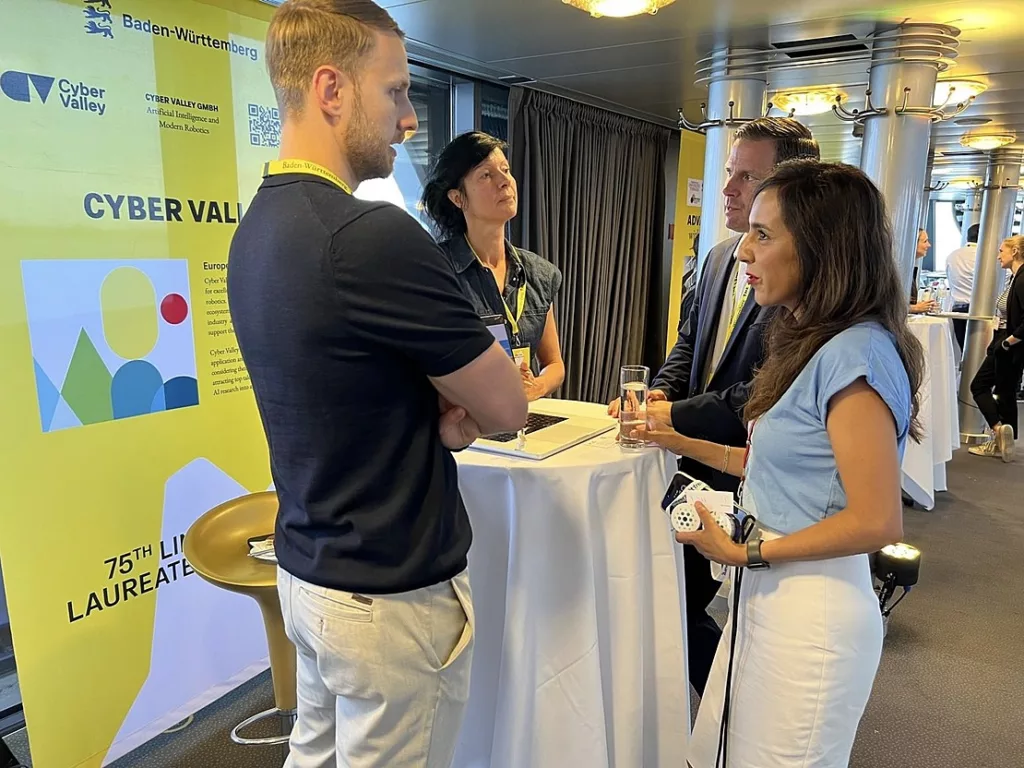
On July 3, we took part in the 75th Lindau Nobel Laureate Meeting, where around 75 Nobel laureates and several hundred young scientists from around the world gathered for a boat trip across Lake Constance to the island of Mainau.
Invited to introduce the Cyber Valley in a three-minute pitch, we presented our mission to translate excellent AI research into practical applications. We also welcomed participants at the Cyber Valley booth and discussed career opportunities with young researchers.
The day concluded with a high-ranking panel discussion, „How to Rebuild Trust in Science?“ on the island of Mainau with Nobel Laureate of 2011 Saul Perlmutter, Nobel Laureate of 2013 Randy W. Schekman, Nobel Laureate of 2018 Donna Strickland, and others. The discussion explored how in an age of misinformation and polarization, education can rebuild trust in science. The panel explored the foundations of credibility, curiosity, and critical thinking in a rapidly changing world.
Photo: Cyber Valley
International researchers in Tübingen
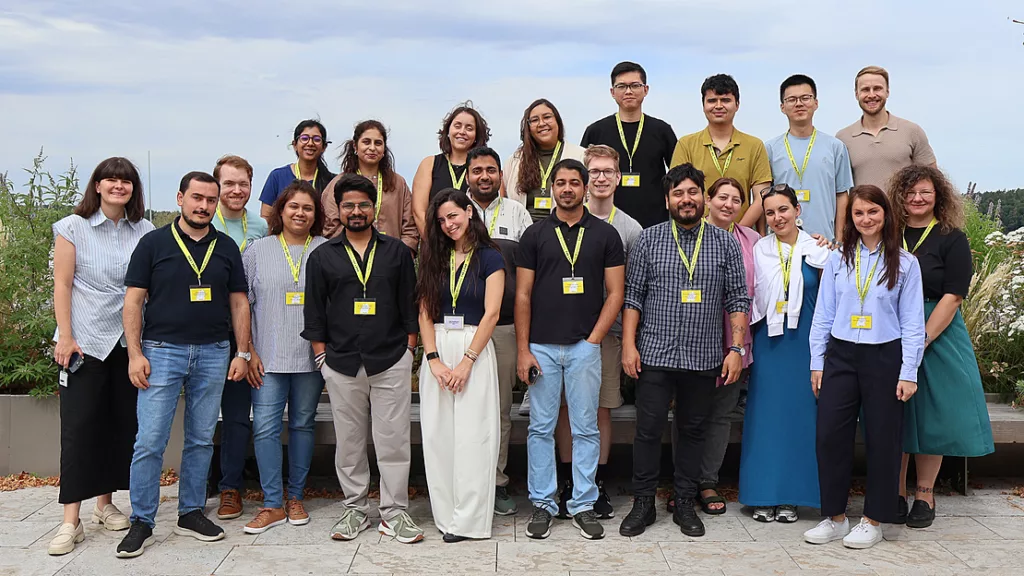
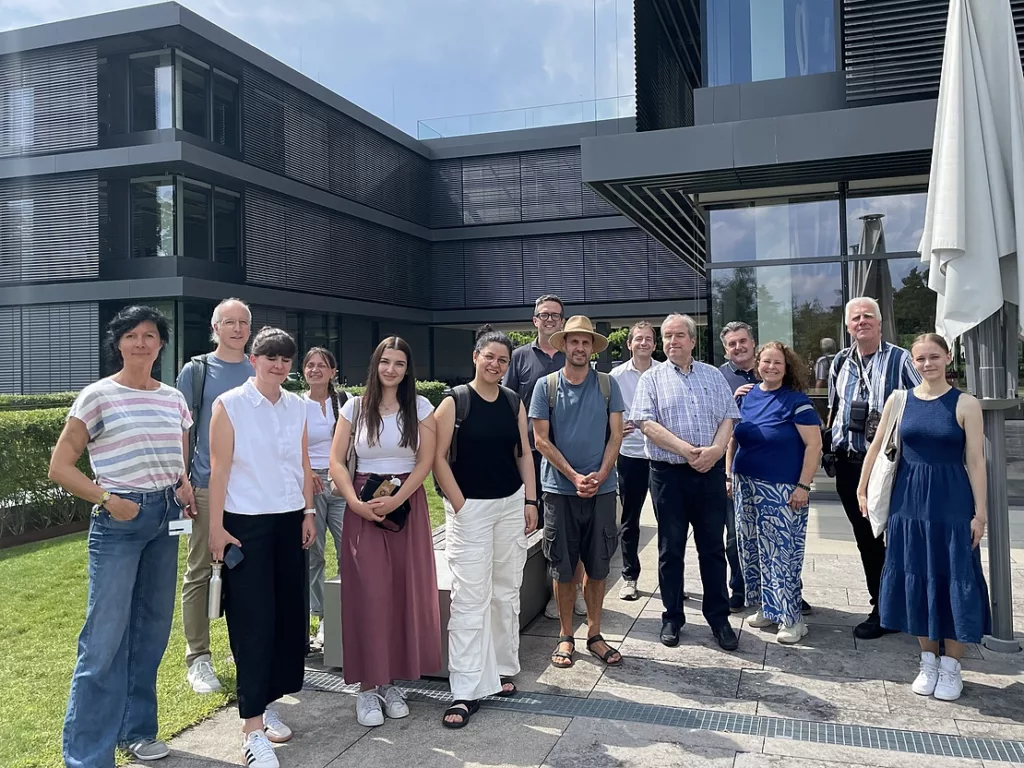
One week later, it was a pleasure to welcome a group of early-career researchers to Tübingen on July 7 after the Lindau Nobel Laureate Meetings.
During their stop at Cyber Valley, around 18 international PhD and postdoc researchers explored AI research and career opportunities in Baden-Württemberg. The visit included exchange with our network, lab tours, and insights from academia and start-ups.
The program included talks by Anand Waghmare (Yugen Space), Colin Dumont (Tübingen AI Center), and Ivan De Araujo (Max Planck Institute for Biological Cybernetics), as well as a lab visit to the Max Planck Institute for Biology.
Such exchanges demonstrate the importance of collaboration for the Cyber Valley mission: turning AI and robotics research into a more sustainable future for all.
Photo: Cyber Valley
Cyber Valley Impulse on agriculture, sustainability, and the environment
On July 8, the Cyber Valley Impulse on agriculture, sustainability, and the environment, co-hosted with Zukunftsstiftung Remstal, took place in Weinstadt. Experts from research and industry came together to exchange ideas and explore real-world applications. The event considered the applications of intelligent systems in agriculture, landscape management, and sustainability. With advances in AI, machine learning, and robotics, new forms of agricultural and landscape-care automation are becoming increasingly realistic, opening up questions about which tasks robots should take on first, what kinds of farming systems and landscapes we want to create, and how research, industry, and practice can contribute to this transformation.
Thanks to all our speakers and start-ups for sharing their insights and driving the conversation forward: Wieland Brendel (ELLIS Institute Tübingen, Max-Planck-Institut für Intelligente Systeme), Paul Hofmann (ELLIS Institute Tübingen, Max-Planck-Institut für Intelligente Systeme), Peter Ohlhausen (Fakultät NXT Nachhaltigkeit und Technologie – Hochschule Reutlingen), Zoe Rühlmann (SAM-DIMENSION), Christian Dreischer (Computomics), Johannes Schwegler (Zukunftsstiftung Remstal, TREEO)), Martin Kiefel and Sebastian Blaes(polybot), and Andy Clifton (enerlace).
Photo: Cyber Valley
Cyber Valley AI Incubator Batch #8: Demo Day
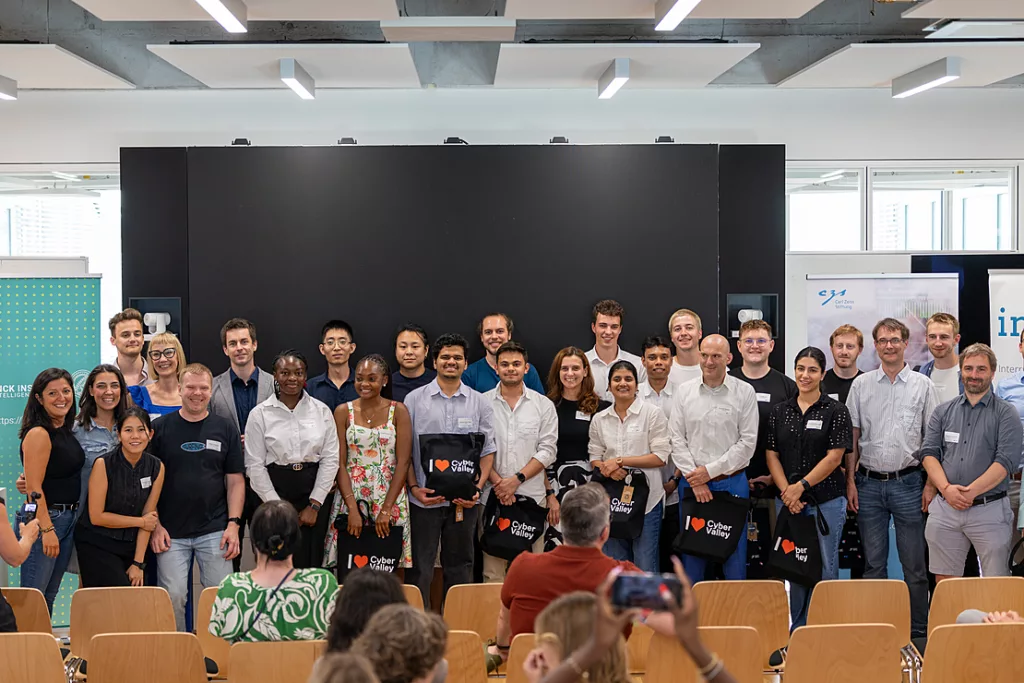
The Demo Day of the Cyber Valley AI Incubator, hosted at Cyber Valley in Tübingen, brought together a full auditorium of founders, investors, researchers, industry leaders, and AI enthusiasts to celebrate the next generation of AI start-ups on July 10.
The event opened with remarks from Christoph Keplinger and Leila Masri (Max-Planck-Institut für Intelligente Systeme), who reflected on the remarkable journey of Batch #8. We also welcomed Phil-Alan Gaertig, PhD from the Carl-Zeiss-Stiftung, whose continued support makes this program possible. The keynote, Axel Sauer from Black Forest Labs, introduced the company’s work and shared valuable insights into the development of AI models and the future of visual intelligence.
The spotlight then turned to the seven AI Incubator teams, who pitched their ideas before an outstanding jury consisting of: Daisy Paiva (ZEISS Ventures), Franziska Ivens (Silicon Allee at Fraunhofer Heinrich Hertz Institute HHI), and Christoph Keplinger (Max-Planck-Institut für Intelligente Systeme).
Selecting the winners was no easy task, as every team demonstrated impressive innovation, technical excellence, and entrepreneurial potential.
Congratulations to our award winners!
Audience and presentation award:
Sehnsora: Mohammed Raihan Soniwala, Shweta K. Yograj Yadav, and Abhishek Vijay P.
Best business model award:
CoGraph: Magnus T. Hornstein and Bela Thraen.
Use of AI award:
OptiGrocer: Ifeoma Veronica Nwabufo and Ornela Megne.
Thanks to all founders, mentors, trainers, jury members, speakers, partners, and guests who made this journey so memorable. We can’t wait to see where these start-ups go next. Congratulations to all teams for an outstanding Demo Day!
The Cyber Valley AI Incubator empowers scientists and entrepreneurs with promising AI ideas to begin their entrepreneurial journey. Over several weeks, participants receive hands-on training, mentoring, and access to leading experts, founders, and investors. Each full-day session focuses on a specific topic — from team building and market analysis to prototyping, business models, and pitching — equipping participants with actionable insights and a growing network.
The Cyber Valley AI Incubator is funded by the Carl-Zeiss-Stiftung and organized by the Max Planck Institute for Intelligent Systems.
Photo: MPI-IS
Campus Tour in Tübingen
It was a pleasure to welcome so many interested guests to our Campus Tour in Tübingen on July 16!
As part of our new Cyber Valley Innovation Campus Tours series, participants get an exclusive behind-the-scenes look at Europe’s largest center for excellence in AI and robotics. In addition to an introductory presentation, guests can join a guided tour of the Campus in Tübingen and learn more about the people, research, and innovation driving the ecosystem.
At Cyber Valley, our mission is to translate AI and robotics research into real-world solutions that benefit people, industry, and society. Engaging with the public and opening our doors to the community is an important part of that mission.
Photo: Cyber Valley
Ontic Labs and Feyer selected for SPRIND’s Next Frontier AI Challenge
Ontic Labs and Feyer have been selected for the first stage of the German Federal Agency for Breakthrough Innovation’s (SPRIND) Next Frontier AI Challenge. The two start-ups are among just ten teams across Europe that have been selected and will receive €3 million to develop technologies beyond today’s AI models.
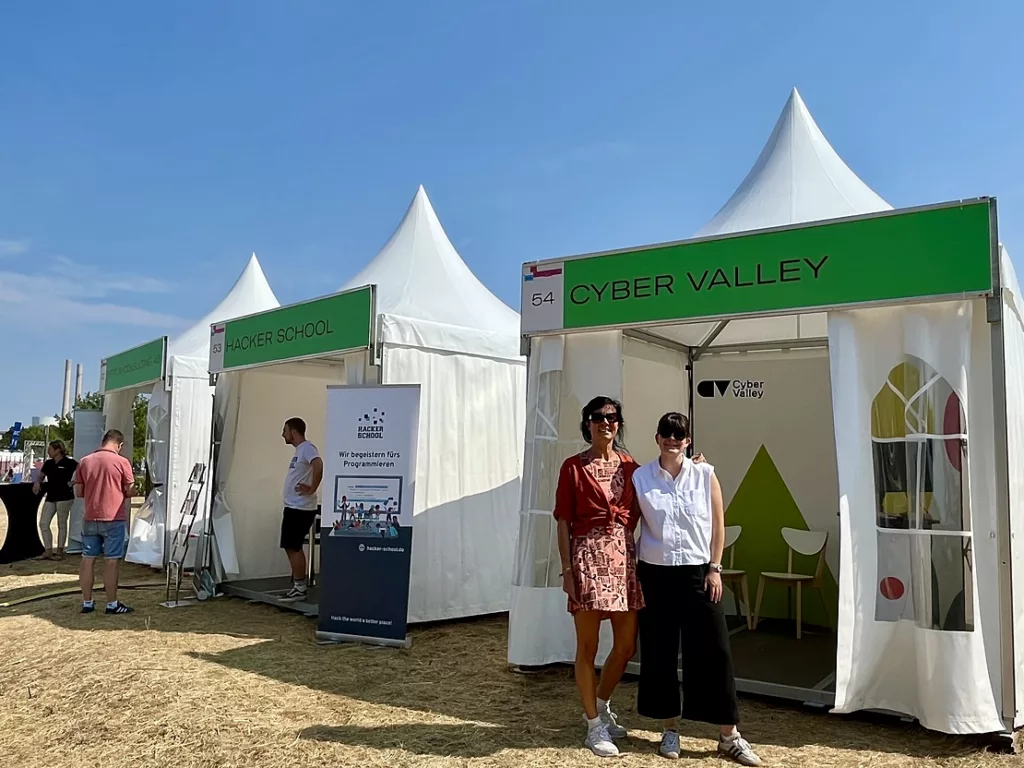
On July 25 and 26, we had a great time at the KI Festival by IPAI Foundation in Heilbronn!
During the weekend, we had the pleasure of joining the KI Festival with our own booth. It was a great opportunity to connect with the Heilbronn community, engage with a curious public, and meet inspiring innovators and companies while sharing more about the Cyber Valley ecosystem. A big thank you to everyone who stopped by our booth and took the time to chat with us!
We are grateful to the IPAI Foundation for bringing together such a great community and creating a great space for exchange around AI and innovation.
We’re looking forward to future collaborations with IPAI and to continuing to strengthen the AI ecosystem together!
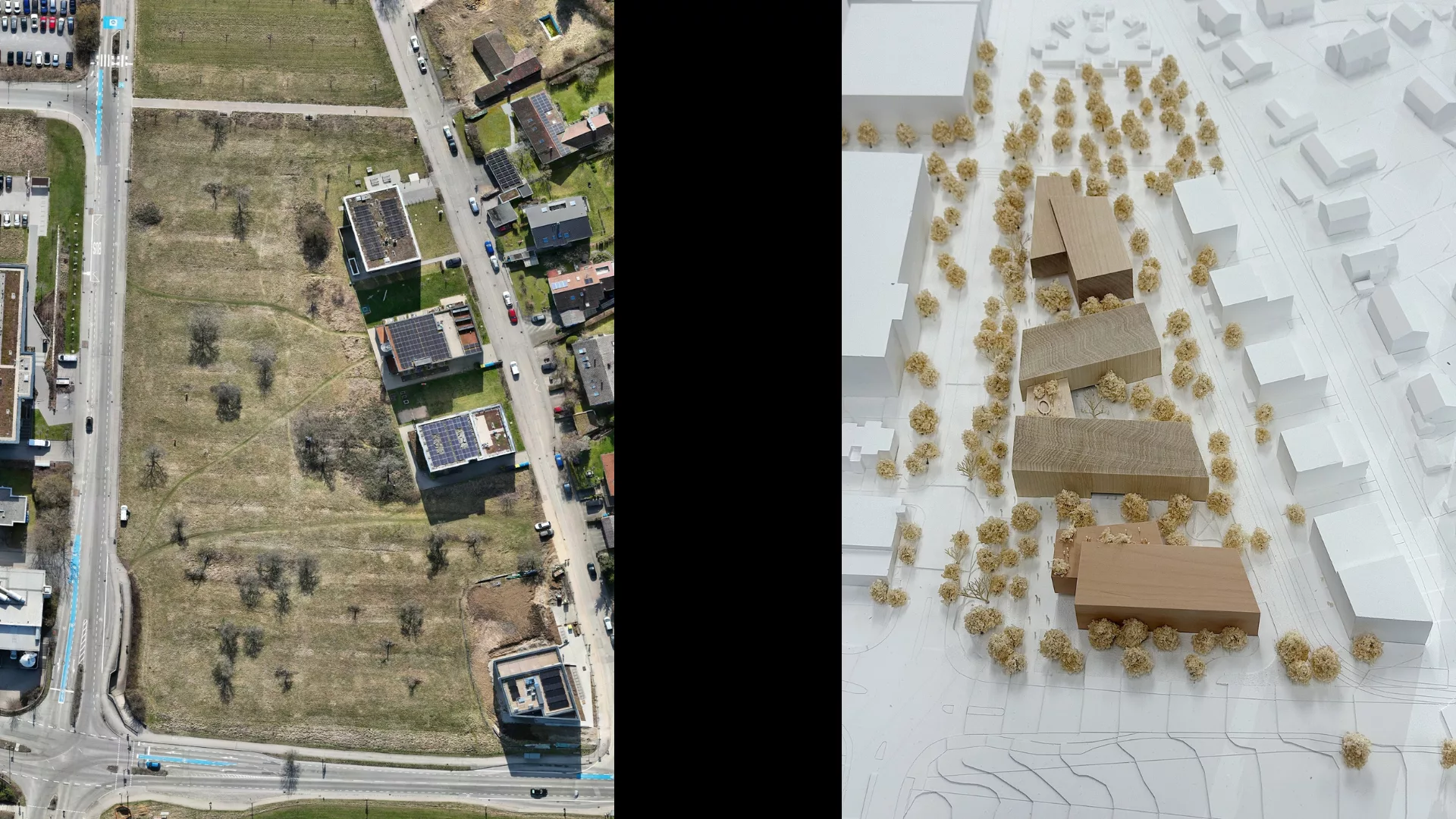
Tübingen is gaining a new flagship project in its science and research landscape: With the construction of the “Cyber Valley Start-up Campus” in Tübingen at the “Obere Viehweide” Science and Technology Park, a forward-looking hub is being created with a focus on startups in the field of artificial intelligence (AI). It is now clear what the buildings of the Tübingen-Reutlingen Technology Park (TTR) will look like in the future: The architectural firm 121 Architekten GmbH Florian Danner & Suleiman Mukarker, Tübingen, together with Machleidt GmbH, Berlin, and freiraumconcept Landschaftsarchitekten PartGmbB, Rottenburg a. N., have won first prize in the architectural competition. The jury reached this decision at its meeting on Friday, July 24, 2026.
New space for over 1,000 workstations
The planned spaces are designed to accommodate over 1,000 workstations, allowing for highly flexible use. The site is part of a dynamically growing innovation ecosystem featuring companies in the fields of medicine, biotechnology, and AI research, as well as university institutions, Cyber Valley GmbH, the ELLIS Institute, the Tübingen AI Center, and the Max Planck Institutes.
Daniel Häufle, Georg Martius, and Pierre Schumacher have completed their project “Learning efficient control of non-linear muscle-driven systems: Morphological computation as guiding principle”. The project was funded by the Cyber Valley Research Fund and was carried out between 2021 and 2024 at the University of Tübingen. Its aim was to test whether morphological computation can improve how computer models of the human body learn to replicate its movements.
Morphological computation (MC) is the process by which the body moves and interacts with the world without relying on the brain to calculate the exact forces that need to be applied by each muscle and joint. For example, the brain only needs to give the simple instruction “close your hand”, while low-level reflex arcs, in-built neural architectures, and muscle properties automatically coordinate the exact forces, timing, and adjustments needed to successfully perform the movement.
The researchers first developed a new learning approach that allows computer models of the human body with many muscles to learn complex movements more effectively. They found that having many muscles makes learning harder, but by guiding the learning process more carefully, they were able to produce stable, human-like movements such as walking, even across uneven terrain. Building on this, they showed that adding simple, muscle-like properties makes movements more robust and natural, both in simulation and on real robots. Remarkably, a walking pattern learned in simulation worked on a real robot without extra training.
The project demonstrated that morphological computation can advance computer models of the human body. The research represents the first step towards bringing the full diversity of human movement to artificial systems and robotics. With potentially broad applications across various industries, such as healthcare, rehabilitation, prosthetics, and advanced manufacturing, it aligns with Cyber Valley’s mission to translate cutting-edge research into real-world applications for a better future.
This project produced the following peer-reviewed publications:
The Cyber Valley Research Fund was established to support Cyber Valley research groups undertake basic research in the fields of artificial intelligence and robotics. The fund totaled five million euros, including contributions from six of Cyber Valley’s founding corporate partners: Amazon, BMW, Bosch, IAV, Mercedes-Benz, Porsche, and ZF. It supported 20 research projects, the first of which began in 2020, and the final of which will conclude in 2026.
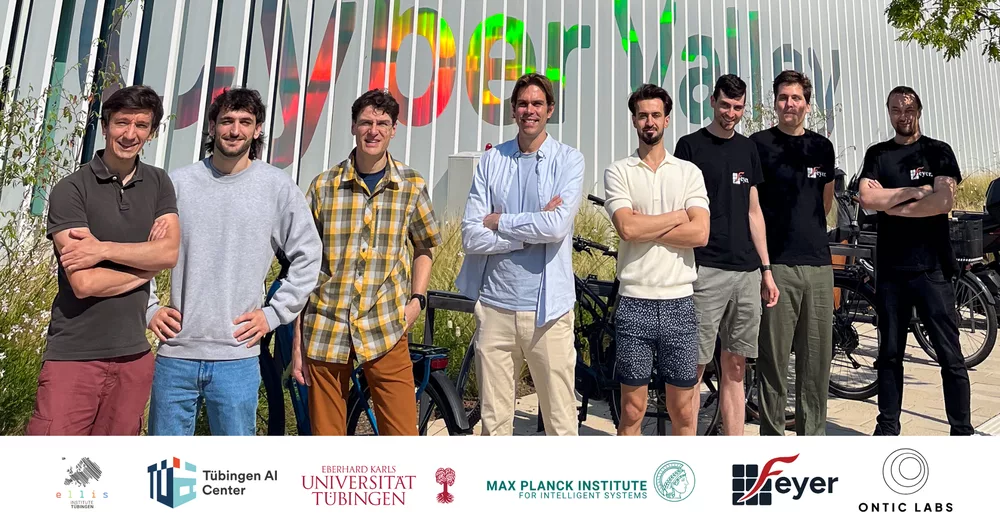
Ontic Labs and Feyer.ai have been selected for the first stage of the German Federal Agency for Breakthrough Innovation’s (SPRIND) Next Frontier AI Challenge. The two start-ups are among just ten teams across Europe that have been selected and will receive €3 million to develop technologies beyond today’s AI models.
Ontic Labs and Feyer.ai have been selected for the first stage of the German Federal Agency for Breakthrough Innovation’s (SPRIND) Next Frontier AI Challenge. The two start-ups are among just ten teams across Europe that have been selected and will receive €3 million to develop technologies beyond today’s AI models.
Of the three selected teams from Germany, two originate from the Cyber Valley ecosystem in Baden-Württemberg as spin-outs from several of Cyber Valley’s academic partners, including the ELLIS Institute Tübingen, Max Planck Institute for Intelligent Systems, Tübingen AI Center, and the University of Tübingen. Their success highlights the growing momentum with which AI research is being translated into innovative companies and how excellent AI research from Baden-Württemberg is playing a key role in the European race for frontier AI models.
The Next Frontier AI Challenge is aimed at European teams developing fundamental AI technologies with exceptionally high innovation potential. The goal is to promote new approaches that go beyond the current state of the art and can have a long-term economic and societal impact.
“Ontic Labs and Feyer.ai are excellent examples of what the Cyber Valley ecosystem is designed to achieve: turning outstanding research into technologies with societal and economic relevance,” said Florian K. Mayer, Managing Director of Cyber Valley GmbH. “Their success reflects the strength of the innovation pipeline in Baden-Württemberg, where leading researchers, entrepreneurs, and partners work together to transform scientific advances into new ventures and applications.”
Ontic Labs: Building AI for Physical Intelligence
Ontic Labs is developing a foundation model for physical intelligence. The company aims to enable machines to understand the physical dynamics of their environment rather than only recognizing visual patterns. This could allow robots to predict future states, reason about physical interactions, and operate more effectively in complex real-world settings.
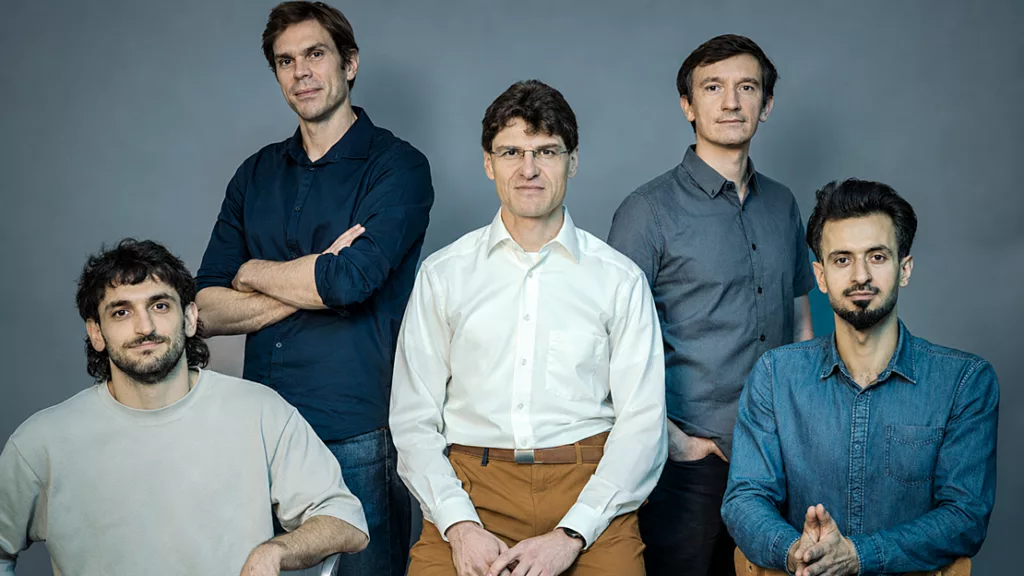
The company brings together researchers from the Max Planck Institute for Intelligent Systems, the University of Tübingen’s Cluster of Excellence Machine Learning: New Perspectives for Science, the Tübingen AI Center, and the ELLIS Institute Tübingen. Ontic Labs was founded by Omid Taheri, Mikel Zhobro, Wieland Brendel, Georg Martius, and Gerard Pons-Moll.
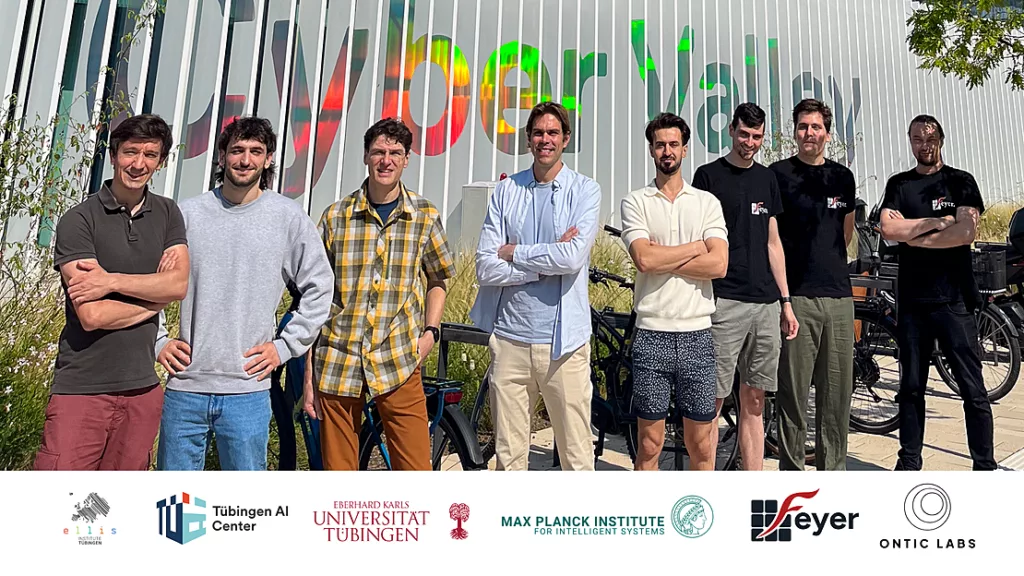
Ontic Labs team. Photo: SPRIND
Feyer.ai: AI for Industrial Hardware Innovation
Feyer.ai develops AI systems that autonomously design new industrial hardware. Its approach combines modern AI methods with physics-based simulations to generate and evaluate technical solutions. By applying AI-driven invention to industrial challenges, Feyer.ai aims to accelerate the development of new technologies across fields including photonics, quantum technologies, microscopy, semiconductor manufacturing, and energy systems.
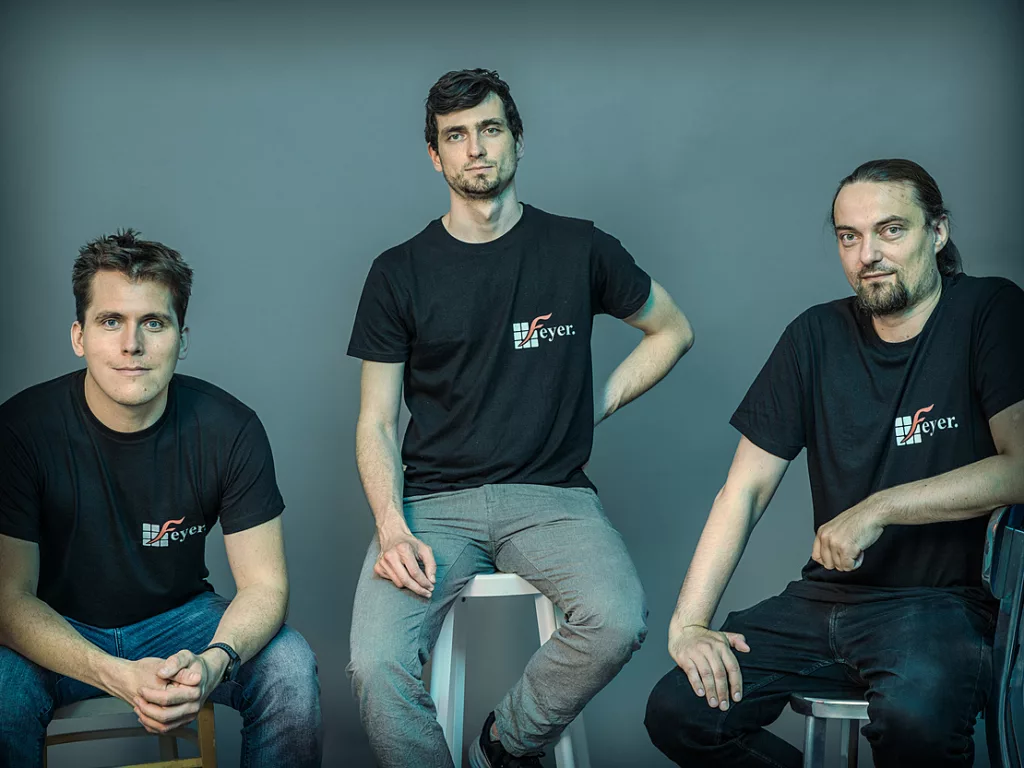
The company emerged from the research group of Mario Krenn, Professor at the Cluster of Excellence Machine Learning: New Perspectives for Science at the University of Tübingen. The founding team consists of Jonathan Klimesch, Sören Arlt, and Mario Krenn.
Feyer team. Photo: SPRIND
The selection of Ontic Labs and Feyer.ai reflects the strength of the Cyber Valley ecosystem, which connects leading AI research with entrepreneurship and start-up support. Both companies build on research conducted at institutions that are central to Baden-Württemberg’s AI landscape and demonstrate how advances in AI research are being translated into to real-world impact, powering industry, and driving Europe’s sustainable future.
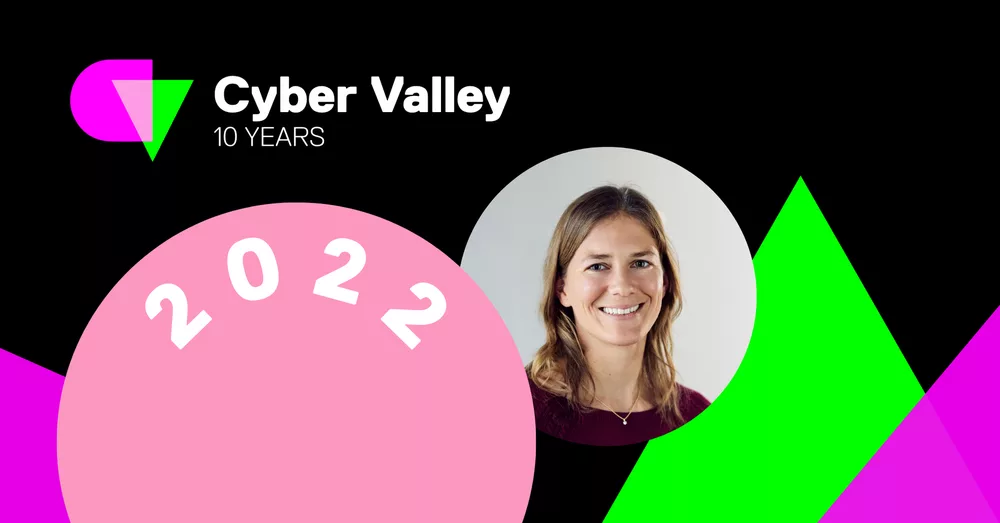
In 2016, important actors from science, industry, and politics founded the Cyber Valley Consortium, which became the first Innovation Campus in Baden-Württemberg. Ten years on in 2026, we’re revisiting the most significant milestones from the last decade. Each month, we’ll focus on a particular year since Cyber Valley’s beginning.
This month, we’re looking back to 2022, when the Hector Foundation announced that it would support the establishment of the ELLIS Institute Tübingen with 100 million euros. The Institute was created to attract the world’s best machine learning talent to Baden-Württemberg by offering them outstanding conditions for undertaking pioneering AI research. Celestine Mendler-Dünner was among the first group leaders recruited to join the ELLIS Institute. In the following interview, she explains what it was like to play a crucial role at the ELLIS Institute from its beginning and how it has advanced her research and career.
Why did you want to join the ELLIS Institute? What advantages did you see it offering?
As the first institute of its kind, the ELLIS Institute Tübingen promised to be something very special and I did not want to miss the opportunity of being part of it. And this turned out to be an incredible journey. The ELLIS Institute offers a unique environment for research with full academic freedom and the financial means to pursue impactful research. This is hard to find elsewhere. Centered within the striving Tübingen AI ecosystem, it offered a strong reason for me personally to continue my research career in Europe.
How would you describe the experience of being among the first PIs (group leaders) shaping the Institute in its formative phase?
It was an exciting opportunity to help shape a new institute as one of the first PIs. Many things still had to be built, from office space, to outreach, to internal processes which was very enjoyable with a team that was committed to making things possible as efficiently as possible. I am very proud of how the institute has grown and the visibility it has gained globally.
ELLIS places strong emphasis on building AI that is aligned with social values. How does the institute support this mission?
The institute and the Tübingen AI community play a leading role in building the technical foundations for addressing social questions in AI. With the flexibility we have here to pursue research that does not immediately create economic value we can center objectives, such as social values and the common good, in our core efforts, which I am very thankful for.
How has the ELLIS Institute supported your career and what are the next steps?
It allowed me to push the frontiers of research with minimal distraction, and benefit from close collaboration with the Max Planck Institute for Intelligent Systems, as well as the Tübingen AI Center and the ELLIS Network more broadly. This was an invaluable asset at a pivotal stage of my career. This fall I will move on to take up a professorship at ETH Zurich and I am very excited about the next chapter. I will deeply miss Tübingen and I look forward to staying connected with the wonderful people I have met here.
To celebrate Cyber Valley’s ten-year anniversary, we’ll be sharing a variety of content across our website and social media channels reflecting on milestones from the last decade. Stay tuned for the next installments!