
Als Teil der Science & Innovation Days 2022 gibt es am Samstag, 2. Juli, einen Tag der offenen Tür auf dem Max-Planck-Campus Tübingen. Die Max-Planck-Institute für Biologie, für biologische Kybernetik und für Intelligente Systeme sowie das Friedrich-Miescher-Laboratorium präsentieren sich der Öffentlichkeit: Wir laden alle Interessierten von nah und fern herzlich ein, Einblicke in die aktuelle Forschung und die Arbeit in unseren Einrichtungen zu gewinnen. Bei Rundgängen, Ausstellungen und Mitmach-Angeboten wird sich alles um die Themen Genetik, Evolution, Hirnforschung und künstliche Intelligenz drehen.
Event Month: July
-
#SIDays22 – Wie gut versteht eine Maschine die Natur?
Als Teil der Science & Innovation Days 2022 gibt es am Samstag, 2. Juli, einen Tag der offenen Tür auf dem Max-Planck-Campus Tübingen. Die Max-Planck-Institute für Biologie, für biologische Kybernetik und für Intelligente Systeme sowie das Friedrich-Miescher-Laboratorium präsentieren sich der Öffentlichkeit: Wir laden alle Interessierten von nah und fern herzlich ein, Einblicke in die aktuelle Forschung und die Arbeit in unseren Einrichtungen zu gewinnen. Bei Rundgängen, Ausstellungen und Mitmach-Angeboten wird sich alles um die Themen Genetik, Evolution, Hirnforschung und künstliche Intelligenz drehen.
-
#SIDays22 – Was macht Cyber Valley?
Als Teil der Science & Innovation Days 2022 gibt es am Samstag, 2. Juli, einen Tag der offenen Tür auf dem Max-Planck-Campus Tübingen. Die Max-Planck-Institute für Biologie, für biologische Kybernetik und für Intelligente Systeme sowie das Friedrich-Miescher-Laboratorium präsentieren sich der Öffentlichkeit: Wir laden alle Interessierten von nah und fern herzlich ein, Einblicke in die aktuelle Forschung und die Arbeit in unseren Einrichtungen zu gewinnen. Bei Rundgängen, Ausstellungen und Mitmach-Angeboten wird sich alles um die Themen Genetik, Evolution, Hirnforschung und künstliche Intelligenz drehen.
-
Wissensbasiertes maschinelles Lernen und seine Anwendungen
Trotz der bemerkenswerten Fortschritte, die in den letzten Jahrzehnten bei den Techniken des maschinellen Lernens (ML) und bei datengesteuerten Verfahren der künstlichen Intelligenz allgemein erzielt wurden, sind die meisten ML-Ansätze derzeit nicht in der Lage, interpretierbare Informationen und Wissen aus Daten zu extrahieren. Außerdem können Vorhersagen, die aus rein datengesteuerten Modellen gewonnen werden, physikalisch inkonsistent oder sogar unplausibel sein. Derzeit wird intensiv untersucht, wie man vorhandenes (Experten-)Wissen in das ML-Design einbeziehen kann, um diesen Herausforderungen zu begegnen. Die sorgfältige Integration von Vorwissen über einen Prozess, wie z. B. physikalische oder chemische Erkenntnisse, in das Lernverfahren verbessert nicht nur die Qualität der gelernten Repräsentation, sondern beschleunigt auch den Lernprozess mit weniger Datenproben.
Diese Summer School zielt darauf ab, den Teilnehmenden ein grundlegendes Verständnis dafür zu vermitteln, wie verschiedene Aspekte des Wissens inkl. etablierter Simulationsparadigmen in moderne Lernarchitekturen eingebracht werden können.
Confirmed speakers
- Prof. George Em Karniadakis und Prof. Khemraj Shukla (beide Brown University)
- Prof. Tilman Plehn und Dr. Anja Butter (beide Universität Heidelberg)
- Prof. Pietro Faccioli (Universität Trient)
- Prof. Pascal Friederich (Karlsruher Institut für Technologie)
Zielgruppe
Die SimTech Summer School richtet sich in erster Linie an Masterstudierende, Promovierende und early PostDocs.
-

Workshop: KI in der Arbeitswelt, Teil 2
Welf Schröter, Forum Soziale Technikgestaltung, und Rebecca Beiter, Cyber Valley Public Engagement Managerin, arbeiten in einem Workshop gemeinsam mit Ihnen heraus, ob und wie an Ihrem Arbeitsplatz „künstliche Intelligenz“ (KI) zum Einsatz kommt. Wie können solche Systeme unsere Arbeitswelt unterstützen, ohne Arbeitsplätze zu gefährden? Wie wollen wir mit „Kolleg:in KI“ zusammenarbeiten? Herr Schröter gibt in seinem 45-minütigen Vortrag einen Überblick über Chancen und Risiken für Arbeitnehmer:innen und die Möglichkeiten zur Mitbestimmung. In der anschließenden Diskussion möchten wir über Prinzipien sprechen, wie „KI“ in der Arbeitswelt im Sinne fairer Arbeitsbedingungen eingesetzt werden soll.
Zielgruppe: Berufstätige Personen sowie Interessierte. Vorwissen über KI ist nicht notwendig. Der Workshop ist kostenfrei. Die Veranstaltung findet online statt.
Zielgruppe: Berufstätige Personen sowie Interessierte. Vorwissen über künstliche Intelligenz ist nicht notwendig.
Anmeldung: Über die vhs Stuttgart: zur Anmeldung.Eine Veranstaltung in Zusammenarbeit mit Cyber Valley, dem Forum Soziale Technikgestaltung und der vhs Business Akademie.
-

Online-Workshop: KI in der Arbeitswelt
In seinem Einstiegsvortrag zeigt Dr. Matthias Peissner Beispiele aus der Arbeitswelt und spricht über Chancen und Risiken, wenn „Kollegin KI“ in die Unternehmen einzieht. Er leitet den Forschungsbereich Mensch-Technik-Interaktion beim Fraunhofer-Institut für Arbeitswirtschaft und Organisation IAO. Im zweiten Teil der Veranstaltung ist ihre Meinung gefragt: Gemeinsam mit Ihnen möchten Prinzipien erarbeiten, wie KI in der Arbeitswelt eingesetzt werden soll. Der interaktive Workshop leistet einen Beitrag zu einer Initiative der Global Partnership on AI zur Formulierung von Prinzipien für faire Arbeitsbedingungen mit KI. Der Workshop ist kostenfrei und findet online via Zoom statt.
Zielgruppe: Berufstätige Personen sowie Interessierte. Vorwissen über künstliche Intelligenz ist nicht notwendig.
Zum Zoom-Meeting, Meeting-ID: 821 3575 5806, Kenncode: 369856
Eine Veranstaltung in Zusammenarbeit mit Cyber Valley, dem Fraunhofer-Institut für Arbeitswirtschaft und Organisation IAO und der vhs Business Akademie. -
KI-Sprechstunde
Am 12. Juli stellt sich Dr. Georg Martius, Gruppenleiter am Max-Planck-Institut für Intelligente Systeme Tübingen, den Fragen der Bürger:innen.
Moderation: Patrick Klügel
Registrierung
Bitte registrieren Sie sich hier, die Sitzung wird in deutscher Sprache via Zoom abgehalten.
Kontakt
Patrick Klügel – Public Engagement Manager
Mobile: + 49 151 74238237
E-mail: patrick.kluegel@cyber-valley.de -
AI in Social Innovation & Impact
In dieser Veranstaltung zeigen unsere Referent:innen Ansätze und Möglichkeiten auf, wie KI-Expertise in diesem Kontext genutzt werden kann und präsentieren Beispiele, wie KI-Forschung in innovative Bereiche oder sogar einem Start-up integriert werden kann.
Sprecher:innen für dieses Event sind:
Lorena Jaume-Palasí
Founder and Executive Director,The Ethical Tech Society
Lynn Kaack
Researcher ETH Zürich, Chair and Co-Founder of Climate Change AI
Raphael Menges
Postdoc Associate University of Stuttgart and Founder Semanux
Jörn-Philipp Lies
CEO & Co-Founder eye2you
Zhijing Jin
Ph.D. student MPI-IS, Empirical InferenceWissenschaftler:innen, Gründer:innen, Studierende und alle, die sich für dieses Thema interessieren, sind am Donnerstag, 15. Juli, von 14:00 bis 15:30 Uhr herzlich eingeladen!
Registrierung
Bitte hier registrieren. Das Meeting findet via Zoom und in englischer Sprache statt.
Kontakt
Oliwia Gust – Cyber Valley Event Manager
Telefon: +49 7071 601 1554
Mobil: +49 151 4075 6302
E-Mail: oliwia.gust@cyber-valley.de -
Cyber Valley Research Forum (virtual)
At this edition of the event, we will focus on the University of Stuttgart's Cyber Valley groups as well as on a recently established group at the University of Tübingen. In addition, our partners from Fraunhofer IPA and IAO will present the AI Innovation Center "Learning Systems" and their AI-related areas of research.
Due to COVID-19 restrictions, the workshop will be held online (Zoom). If you would like to participate, please register here.
Schedule
13:30 Welcome 13:30 – 13:40 AI Innovation Center “Learning Systems”
https://www.ki-fortschrittszentrum.de13:40 – 14:00 Dr. Tian Qiu
Biomedical Microsystems, Institute of Physical Chemistry, University of Stuttgart
Title: Augmented Reality Organ Phantom for the Generation of Biomedical Data
Abstract:
Biomedical data of the human body is complex and difficult to acquire for safety, ethical, legal, and technical reasons. Building a realistic organ phantom based on rapid prototyping and augmented reality technologies is one of our group's research focuses. The phantom system represents the anatomy and the material properties of real organs. Moreover, the model can sense what it experiences and generate a large amount of data, which is not even possible with a real organ. The data will offer unique opportunities to train surgeons and optimize surgeries, and to develop new medical instruments and life protection systems.14:00 – 14:20 Prof. Dr. Michael Sedlmair
Virtual Reality and Augmented Reality, Visualization Research Center (VISUS), University of Stuttgart
Title: VR/AR research at VISUS
Abstract:
I will introduce several examples of current Virtual/Augmented Reality (VR/AR) projects from the Visualization Research Center (VISUS) at the University of Stuttgart. Much of our work focuses on how data visualization can be meaningfully combined with VR/AR. Also referred to as Immersive Analytics, this combination is a popular topic. However, many things can go wrong. We will look at some of these pitfalls, identify ways of overcoming them, and outline scenarios that could have a truly significant and lasting effect.14:20 – 14:40 Prof. Dr. Jakob Macke
Machine Learning in Science, Cluster of Excellence "Machine Learning", University of Tübingen
Title: Simulation-based inference: Bridging the gap between machine learning and scientific modelling
Abstract:
Many fields of science and engineering make extensive use of complex simulations that describe the structure and dynamics of the process being investigated. These models are derived from knowledge of the underlying mechanisms and are of critical importance for scientific hypothesis-building. However, linking such complex models to high-dimensional empirical data can be challenging. My group develops computational tools that aim to bridge the gap between data-driven machine learning and theory-driven, scientific modelling, with a focus on applications in the life sciences. In this talk, I will focus on our recent work on using neural conditional density estimators to perform Bayesian inference on simulation-based models. I will demonstrate the efficiency and flexibility of this approach and highlight applications to dynamical models of biological systems and source-reconstruction in biological imaging.14:40 – 15:00 Prof. Dr. Alexander Brem
Entrepreneurship in Technology and Digitization, Institute of Entrepreneurship in Technology and Science, University of Stuttgart
Title: How AI-driven applications enhance Innovation and Entrepreneurship
Abstract:
Artificial intelligence (AI) is changing how entrepreneurs and companies innovate. Startups and established companies are developing a wide range of AI-driven applications, addressing different tasks along the innovation process. These tasks include, just to mention a few, the detection of emerging technologies and trends, the identification of customer needs or lead users, the generation of user feedback from emotional facial recognition, or the automated creation of new product designs.
In light of such rapid developments, we offer an overview on how AI is being current used in creativity, innovation, and entrepreneurship. We describe how technology and management researchers in these fields are studying the applications and impact of AI. Finally, we outline the current research areas (still emerging) and suggest areas for further management research using AI and research on AI’s impact on innovation and entrepreneurship processes.15:00 – 15:25 Fraunhofer Institute for Manufacturing Engineering and Automation (IPA)
Dependable AI built on Explainability, Verification and Uncertainty Quantification
(Nina Schaaf, Xinyang Wu, Marcel Albus)Computer Vision for Quality Control and Robotics
(Bernd Meese, Johannes Stoll)Cognitive Robotics: Deep Learning for Robotic Grasping and Assembly
(Marius Moosmann, Arik Lämmle)15:25 – 15:50 Fraunhofer Institute for Industrial Engineering (IAO)
X-tended Reality@Fraunhofer IAO – Labs and Usecases in the field of Building Construction
(Alexandros Giannakidis, Günter Wenzel)AI-based solutions for text documents analysis
(Maximilien Kintz)Applied Neuroscience and Neuroadaptive Technology
(Katharina Lingelbach, Mathias Vukelic)Variable and adaptive driving behaviour and vehicle interior: Robust, safe and fun with AI
(Frederik Diederichs, Mathias Vukelic, Matthias Bues)15:50 – 16:00 Wrap-up -
2020 Intelligent Systems Summer Colloquium
MPI-IS cordially invites you to attend the 2020 Intelligent Systems Summer Colloquium
Please see below for the schedule.
The Max Planck Institute for Intelligent Systems is delighted to invite you to its annual scientific summer colloquium, formerly referred to as the Günter Petzow Colloquium.
Date: Friday, July 24, 2020
Virtual Meetup Time: 2:00 p.m.The event will commence at 2:00 pm that day and include four scientific presentations as well as a Ph.D. graduation ceremony. This year, it will be held virtually through a stable video-conferencing service. All current and former employees, friends of the institute, and the interested public are invited to this event.
On the occasion of this year's summer colloquium, the Stuttgart site of the Max Planck Institute for Intelligent Systems will award the 15th annual Günter Petzow Prize to a young scientist from the institute for outstanding research in the field of materials science. Professor Günter Petzow was a Director at the Max Planck Institute for Metals Research in Stuttgart between 1973 and 1994. He is internationally renowned for his trend-setting research on multicomponent materials.
The Günter Petzow Prize is funded by the Stifterverband für die Deutsche Wissenschaft and Volkswagen AG.
Given his outstanding research success here at MPI-IS, the selection committee has chosen to bestow upon:
Dr. Hakan Ceylan
the
2020 Günter Petzow Prize.Dr. Hakan Ceylan is a senior research scientist in the Physical Intelligence Department. He will be awarded this prize for his achievements in developing new design principles, materials, and manufacturing strategies that enable untethered soft robots as small as a single cell.
Professor Metin Sitti will introduce Dr. Ceylan, who will then deliver a 25-minute presentation on his research.
The final part of the colloquium will be a graduation ceremony for all of the MPI-IS Ph.D. students who completed their degree in the last year.
Live transmission of the summer colloquium and the graduation ceremony will take place on the event website.
Schedule
14:00
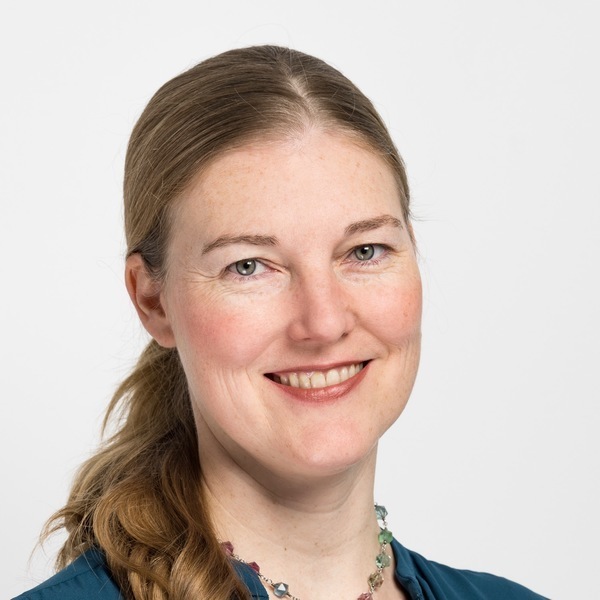
Opening by Katherine J. Kuchenbecker, Ph.D. (Managing Director)
Max Planck Institute for Intelligent Systems, Stuttgart
14:15
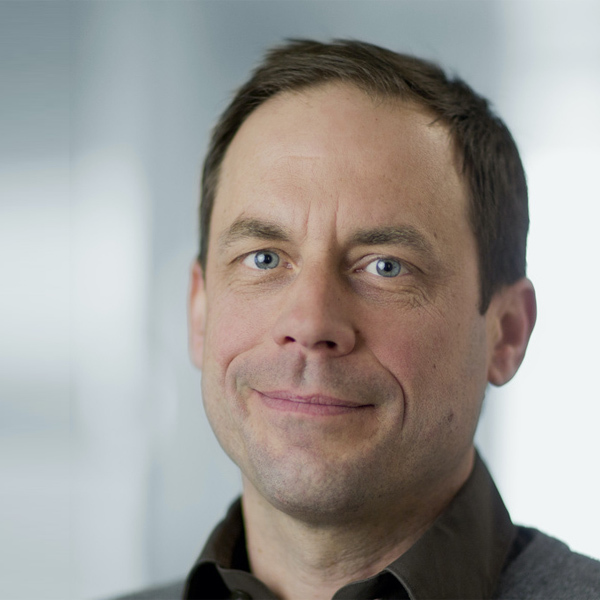
Professor Syn Schmitt
Morphological computation: from hopping robots to micro swimmers to human walking
Institute for Modelling and Simulation of Biomechanical Systems, University of Stuttgart
Abstract and speaker’s short biography >>
Biological motion is fascinating. Especially locomotion plays a crucial part in the evolution of life. Highly evolved structures, like bones connected by joints and soft tissues and contracting proteins in a muscle-tendon unit, enable and prescribe the respective species' specific locomotion pattern. Most importantly, biological motion is autonomously learned, it is untethered as there is no external energy supply and typical for vertebrates, it's muscle-driven.
This talk will focus on structures, which facilitate motion by their design and present criteria to measure to which extent a specific motion pattern is facilitated, i.e. morphological computation (MC). We will discuss, whether assessing MC helps in understanding how biology solves challenges, like non-linearity of materials, redundancy of actuators, delays of sensor signals and finally, learning motion.
Syn Schmitt studied physics at the University of Stuttgart and graduated from the University of Tuebingen with a PhD in Theoretical Astrophysics (topic: muscle modelling / computational biophysics). In 2012, Schmitt was appointed as Juniorprofessor (assistant professor) at the University of Stuttgart. Since 2018, he is full professor of "Computational Biophysics and Biorobotics" at the University of Stuttgart and in 2019 he founded the Institute for Modelling and Simulation of Biomechanical Systems, together with his colleague Oliver Roehrle. Syn Schmitt is fellow of the Stuttgart Center for Simulation Science (SimTech) and a faculty member of the International Max Planck Research School for Intelligent Systems (IMPRS-IS). Recently, he was appointed as Adjunct Professor in the School of Mechanical, Medical and Process Engineering of the Queensland University of Technology in Brisbane, Australia. His research focuses on autonomous muscle-driven motion with special interests in design principles of the locomotion apparatus, non-linear dynamics of locomotion, motor control and morphological computation in biological and technical systems.
14:45 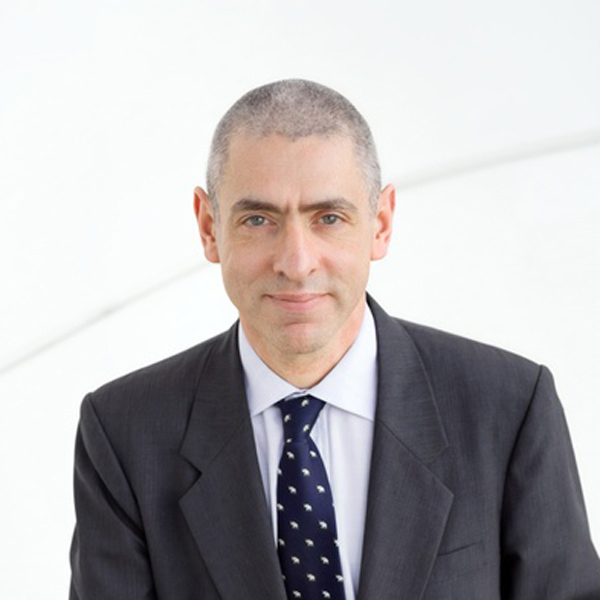
Peter Dayan, Ph.D.
Model based and model free interactions: inference, influence and confidence
Computational Neuroscience, Max Planck Institute for Biological Cybernetics, Tübingen
Abstract and speaker’s short biography >>
An influential reinforcement learning framework proposes that behaviour is jointly governed by model-free (MF) and model-based (MB) controllers. Whereas the former learns the values of actions directly from past encounters, the latter uses a cognitive map of the task to calculate them prospectively. Considerable attention has been paid to how these systems interact during choice, however, how they interact in more general facets of decision-making such as learning and confidence is unclear. Using variants of a simple task that lays out limpidly various aspects of the interaction, we show how MB information resolves uncertainty and focuses MF learning, and discuss unexpected facets of their joint contribution to confidence.
Peter Dayan read Mathematics at Cambridge, studied for his PhD with David Willshaw in Edinburgh, and did postdocs with Terry Sejnowski at the Salk Institute and Geoff Hinton in Toronto. He was an assistant professor in the Department of Brain and Cognitive Sciences at MIT, and was a founding faculty member of the Gatsby Computational Neuroscience Unit at UCL, which he then ran for 15 years. He is currently a Director at the Max Planck Institute for Biological Cybernetics. His interests include affective decision making and neural reinforcement learning.
15:15 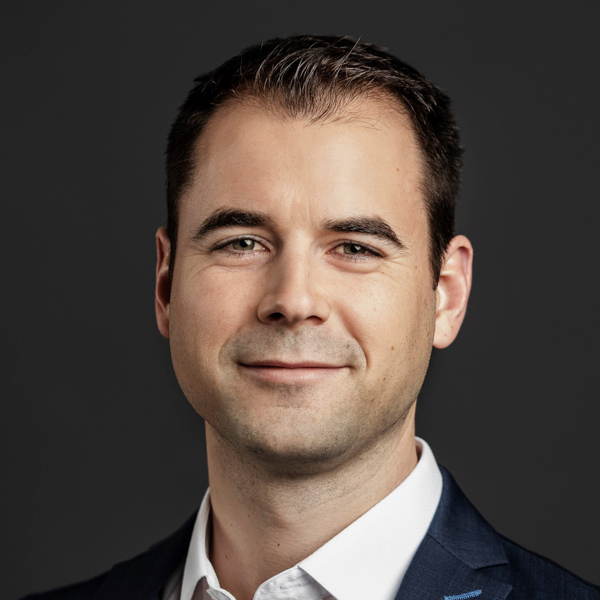
Professor Marco Hutter
From legged robots to digital fabrication
Institute of Robotics and Intelligent Systems (IRIS), ETH Zürich
Abstract and speaker’s short biography >>
Recent development in robotics, machine automation and intelligence has led to systems that are skilled and mature enough for real-world deployment. For example, quadrupedal robots have reached a level of mobility to navigate complex environments, which enables them to take over inspection or surveillance jobs in place like offshore industrial plants, in underground areas, or on construction sites. In this talk, I will present our research work with the quadruped ANYmal, mobile manipulators and automated construction machines, and explain some of the underlying technologies for locomotion control, manipulation, environment perception, and mission autonomy. I will show how these robots can learn and plan complex manoeuvres, how they can navigate through unknown environments and how they are able to conduct surveillance, inspection or construction tasks with super-human precision.
Marco is an assistant professor for robotic systems at ETH Zurich, associate member of MPI-ETH Learning Center, and founder of ANYbotics AG. He studied mechanical engineering and completed his doctoral degree in robotics at ETH. Marco’s research interests are in the development of novel machines and actuation concepts together with the underlying control, planning, and learning algorithms for locomotion and manipulation. Marco is part of the National Centre of Competence in Research (NCCR) Robotics and NCCR Digital Fabrication and PI in various international projects (e.g. EU Thing) and challenges (e.g. DARPA SubT). His work has been recognized with a number of awards and prestigious grants such as the Branco Weiss Fellowship, ETH medal, IEEE/RAS Early Career Award or ERC Starting Grant.
15:45 Günter Petzow Prize Award Ceremony16:00 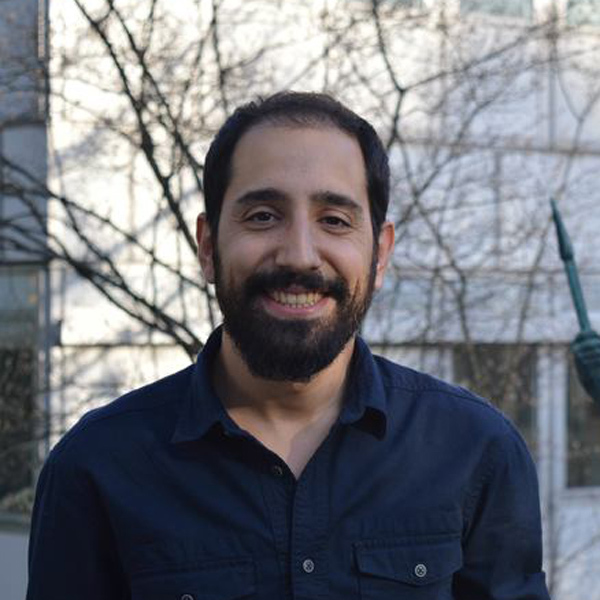
Dr. Hakan Ceylan, Winner of the 2020 Günter Petzow Prize
Cell-Size Robots for Minimally Invasive Medical Interventions and Targeted Delivery
Physical Intelligence Department, Max Planck Institute for Intelligent Systems, Stuttgart
Abstract and speaker’s short biography >>
Untethered mobile robots the size of a human cell can make a disruptive impact in medicine. Their small size and wireless mobility can enable access and navigation in small, confined, hard-to-reach, and sensitive inner body sites, such as the central nervous system, the circulatory system, and the fetus. At these locations, such tiny machines can provide new ways of minimally invasive surgical interventions, remain inside for long durations as semi-implantable devices, and deliver targeted diagnosis and therapy with high precision and repeatability. To achieve these goals, however, there are many scientific and technical challenges to overcome. In this talk, I will present design, fabrication and control of cell-sized mobile robots for medical applications. I will demonstrate that the realization of coupled sensing, response and motion, the pillars of a robotic system, requires new materials and fabrication routes that can produce highly integrated systems that successfully interact with the environment. I will explore alternative power sources and design principles that would realistically sustain robotic operations at the microscopic size scales. I will demonstrate medical microrobots with the capabilities of moving around, sensing, responding to the local pathological information, and performing specific diagnostic and therapeutic tasks as orderly executed operations using their smart composite material architectures. Upon completing their functions, most of the microrobots I have developed are enzymatically degradable at the physiological conditions. Given the progress and the status of this emerging field, I will finally be providing a translational perspective on medical microrobotics research with an application-oriented, integrative design approach where powering, materials, fabrication, control, localization and medical functionalities need to be considered altogether at the same time. I will discuss the complexity of the challenges ahead and the potential directions to overcome them.
Hakan Ceylan is a senior research scientist at Max Planck Institute for Intelligent Systems, Stuttgart, Germany, working on medical microrobots, bioinspired materials, molecular engineering, and intelligence at microscopic length scales. He received the BSc. degree in molecular biology and genetics (with high honor) and the Ph.D. degree in materials science and nanotechnology in 2010 and 2014, respectively, from Bilkent University, Ankara, Turkey. Dr. Ceylan was a post-doctoral researcher during 2014-2017 at Max Planck Institute for Intelligent Systems. He has been an associate member of Max Planck ETH Center for Learning Systems since 2015, the first joint institute of Max Planck Society and ETH Zurich. Dr. Ceylan’s inventions have resulted in one granted two pending patents and over twenty publications in the internationally renowned peer-reviewed journals. He has received several best paper, best talk and science-as-art awards as an extension of his research output. His studies have been publicized by Bayern2 radio, PC Magazine and a number of other printed and web-based German and international media. In 2019, PC Magazine featured Dr. Ceylan’s medical microrobot project among "5 amazing projects that will change the future of healthcare".
16:30 
Ph.D. Graduation Ceremony
We congratulate 15 young researchers who successfully defended their doctoral thesis during the past year
Opening words from Professor Michael J. Black, Max Planck Institute for Intelligent Systems, Tübingen
List of graduating Ph.D. students >>
Six world-class universities are awarding doctoral degrees to this year’s batch of graduating students, who are affiliated either directly with MPI-IS or indirectly through our doctoral programs (Cam-Tue, CLS, CMU, and IMPRS-IS).
University of Cambridge
Matthias Bauer, Empirical Inference Department, Max Planck Institute for Intelligent Systems, Tübingen (Cam-Tue)
Paul Rubenstein, Empirical Inference Department, Max Planck Institute for Intelligent Systems, Tübingen (Cam-Tue)Carnegie Mellon University
Mehmet Berk Yigit, Physical Intelligence Department, Max Planck Institute for Intelligent Systems, Stuttgart
Xiaoguang Dong, Physical Intelligence Department, Max Planck Institute for Intelligent Systems, StuttgartTechnical University of Darmstadt
Dieter Büchler, Empirical Inference Department, Max Planck Institute for Intelligent Systems, Tübingen and Technical University of Darmstadt
Sebastian Gomez-Gonzales, Empirical Inference Department, Max Planck Institute for Intelligent Systems, Tübingen and Technical University of DarmstadtUniversity of Pennsylvania
Siyao Hu, Haptic Intelligence Department, Max Planck Institute for Intelligent Systems, StuttgartEberhard Karls University Tübingen
Anurag Ranjan, Perceiving Systems Department, Max Planck Institute for Intelligent Systems, Tübingen (CLS associate)
Joel Janai, Autonomous Vision Group and Perceiving Systems Department, Max Planck Institute for Intelligent Systems, Tübingen
Lars Mescheder, Autonomous Vision Group, Max Planck Institute for Intelligent Systems, Tübingen
Matthias Kümmerer, Computational Neuroscience & Machine Learning Group, University of Tübingen (IMPRS-IS)
Siyavash Haghiri, Theory of Machine Learning Group, University of Tübingen
Steve Heim, Dynamic Locomotion Group, Max Planck Institute for Intelligent Systems, Stuttgart (CLS associate)ETH Zürich
Ceren Yasa, Physical Intelligence Department, Max Planck Institute for Intelligent Systems, Stuttgart (CLS associate)
Öncay Yasa, Physical Intelligence Department, Max Planck Institute for Intelligent Systems, Stuttgart17:30 Closing by Katherine J. Kuchenbecker, Ph.D. (Managing Director)
Max Planck Institute for Intelligent Systems, Stuttgart