Event Month: September

  • Startup:con Tübingen #6

    Startup:con Tübingen #6

    Am  Donnerstag, dem 22.09.2022, ab 15:30 Uhr startet die sechste Runde der Startup:con Tübingen im Brauwerk Freistil.

    Erfolgreiche Kommunikation ist für Start-ups essenziell. Daher befasst sich das Netzwerk-Event des Startup Center der Universität Tübingen dieses Mal mit den Themen Marketing & PR.

    Darauf könnt ihr euch freuen:

    • Live-Podcast-Show mit dem Podcastduo von Spätzle Valley (Chris Veit und Sebastian Demuth)
    • Learn from the best mit den Startups Marktpilot und Kernique – Wie kommunizieren Start-ups erfolgreich? 
    • Open Pitches: Stelle dich und/oder dein Start-up vor!
    • Lerne andere Start-ups, Supporter und Gründungsinteressierte kennen
    • Live-Musik und Lounge im Freistil Biergarten

    Trefft außerdem Patrick Klügel (Public Engagement Manager) und Tobias Dürr (Innovation Manager) am Cyber Valley Stand und sichert euch ein kostenloses Ticket für eine Führung durch den KI-Makerspace.

    Treffpunkt ist im Brauwerk Freistil in der Wöhrdstr. 25 in Tübingen und die ersten 100 Anmeldungen erhalten ein Freigetränk.


    Registrierung

    Hier könnt ihr euch anmelden.
  • ETFA 2022

    ETFA 2022

    Über die ETFA

    Die ETFA 2022 ist die 27. Konferenz der IEEE Industrial Electronics Society (IES), die sich auf die neuesten Entwicklungen und neuen Technologien im Bereich der Industrieautomation konzentriert. Ziel der Konferenz ist die Verbreitung neuartiger Ideen und aufkommender Trends, Forschungsergebnisse und praktischer Errungenschaften. Die ETFA 2022 findet vom 6. bis 9. September 2022 statt. Sie bietet die Gelegenheit, sich zu vernetzen, Partnerschaften aufzubauen und Ideen auszutauschen, sowohl mit Branchenführern als auch mit einer Vielzahl erfahrener Wissenschaftler:innen, Entwickler:innen und Praktiker:innen aus verschiedenen Branchen, Universitäten und Forschungsinstituten.


    Cyber Valley auf der ETFA

    Cyber Valley, Europas größtes KI-Forschungskonsortium, wird auf der ETFA 2022 ab dem 7.September mit einem Stand vertreten sein und spannende Einblicke in die KI-Forschung sowie Innovationen und Start-ups aus dem Themenfeld der künstlichen Intelligenz. Kommen Sie gerne vorbei!


    Ort

    Die Konferenz ETFA 2022 findet an der Universität Stuttgart statt, Pfaffenwaldring 47, 70569 Stuttgart, Deutschland.


    Anmeldung

    Zur Anmeldung

  • NoBIAS Summer School 2021

    Die Liste der Referent:innen umfasst:

    • Krishna Gummadi,
    • Ricardo Baeza-Yates,
    • Alexandra Olteanu,
    • Stephanie Law,
    • Mathias Niepert,
    • Hinrich Schuetze,
    • Katharina Kinder-Kurlanda
    • und Annette Zimmermann.

    Termin: 20.–22. September 2021, ab 9:30 Uhr CEST.

    Die Anmeldung ist kostenlos. Sie können sich für eine, zwei oder alle drei Sitzungen anmelden. Einzelheiten zur Anmeldung, den detaillierten Zeitplan sowie Informationen zu den Abstracts und den Referent:innen finden Sie unter https://nobias-project.eu/index.php/nobias-summer-school/.

  • Research Forum

    Research Forum

    Aufgrund der COVID-19-Beschränkungen wird der Workshop online (Zoom) abgehalten. Wenn Sie teilnehmen möchten, registrieren Sie sich bitte hier.


    Schedule
    14:00 Welcome
    14:05 – 14:15

    Prof. Achim Menges

    Institute for Computational Design and Construction, University of Stuttgart, IntCDC

    Title: Introduction to IntCDC

    Abstract: The vision of the Cluster of Excellence Integrative Computational Design and Construction for Architecture (IntCDC) is to harness the full potential of digital technologies in order to rethink design, fabrication and construction based on integration and interdisciplinarity, with the goal of enabling game-changing innovation in the building sector as it can only occur through highly integrative fundamental research in an interdisciplinary, large-scale research undertaking.

    14:15 – 14:35

    Prof. Dr.-Ing Cristina Tarín

    Institute for System Dynamics, University of Stuttgart, IntCDC

    Title: Co-Design for Architecture, Engineering and Construction using Bipartite Graphs

    Abstract: The architecture, engineering and construction (AEC) industry consists of several players from different domains. They usually work in a sequential process, which is slow, costly and problems are identified in late stages. Co-design helps to identify and predict problems in early stages throughout different domains such that the design, engineering, manufacturing and construction process can be improved. We present an approach to enable co-design using bipartite graphs, which are capable to integrate expert knowledge, physical models and machine learning models from different domains. The different models form a computational network, which allows e.g. the architect to automatically analyze the feasibility of manufacturing a design.

    14:35 – 14:55

    Prof. Dr.-Ing. Peter Middendorf

    Institute of Aircraft Design, University of Stuttgart, IntCDC

    Title: Data-driven approaches for fiber composites technologies and simulation

    Abstract: Fibre composites for lightweight and wide-span architecture applications are one research area within IntCDC. The technology focus is laid here on freeform winding using collaborative robotics and the respective winding path is generated in a co-design approach. Whilst this is a collaborative effort from a group of IntCDC PIs, there is also a growing activity of supporting data-driven approaches at the Institute of Aircraft Design to make use of various sensor data along the process chain of a composite structure and thus to overcome limitations of classical modelling and simulation techniques.

    14:55 – 15:15

    Tenure-Track Prof. Dr. Thomas Wortmann

    Chair for Computing in Architecture, Institute for Computational Design and Construction, University of Stuttgart, IntCDC

    Title: AI for AEC

    Abstract: Tenure-Track Prof. Wortmann will present examples of the rich opportunities to apply AI in the Architecture, Engineering and Construction (AEC) sector, including architectural design optimization, modelling design and construction processes, predicting wind flow around buildings, predicting the behavior of heterogenous materials, and adaptive robotic control. Ultimately, these applications contribute to a reimagining of how our built environment is planned and constructed, which is an urgent need in light of the impending climate catastrophe.

    15:15 – 15:35

    Dr. Nicole Ludwig

    Machine Learning in Sustainable Energy Systems, Cluster of Excellence Machine Learning: New Perspectives for Science, University of Tübingen

    Title: Forecasting Sustainable Energy under Uncertain Weather

    Abstract: The increasing share of sustainable energy generation in the electricity system comes with significant challenges. One of the main challenges is the volatility of sustainable energy generation, due to their dependency on the weather. To efficiently integrate sustainable energy into the grid, the expected electricity supply and demand have to be forecast accurately. In this talk I will introduce the challenges we face when forecasting weather-dependent energy supply and demand and how probabilistic machine learning can help alleviate some of these challenges.

    15:35 – 15:55

    Dr. Bedartha Goswami

    Machine Learning in Climate Science, Cluster of Excellence Machine Learning: New Perspectives for Science, University of Tübingen

    Title: Uncovering hidden structure in climate data

    Abstract: The last decades have witnessed an unprecedented increase in data related to climatic processes all around the globe, which contain till yet undiscovered mechanisms of how the climate functions and how it is currently changing. We present the idea of "climate networks," which allow us to reveal non-trivial patterns in databases of climate data, and reveal potentially new climatic mechanisms and connections that have not been studied till date. We will look at how climate networks are estimated, what they can do for us, and three examples of how they are used in practice. Towards the end, we will also talk briefly about other projects that are ongoing in the "Machine Learning for Climate Science" research group, in the hope that we find common interests for cross-pollination of ideas and efforts.

    15:55 – 16:15

    Prof. Dr. Thomas Scholten

    Chair of Soil Science and Geomorphology, Department of Geosciences, University of Tübingen

    Title: Machine Learning in Soil Science

    Abstract: Soils are the most important basis for our nutrition. Their quality determines the food security of the world. Machine learning methods help to determine the underlying soil properties and to predict their spatial distribution on Earth. The presentation will explain the underlying theoretical approach of state factors and address the concept of relevant range of scales for multi-scale contextual spatial modeling of soil properties. Further, I will show results from my research of different parts of the world and demonstrate the potential of data-driven models for geo- and environmental science.

    16:15 – 16:30 Wrap-up
  • AI & Gaming

    AI & Gaming

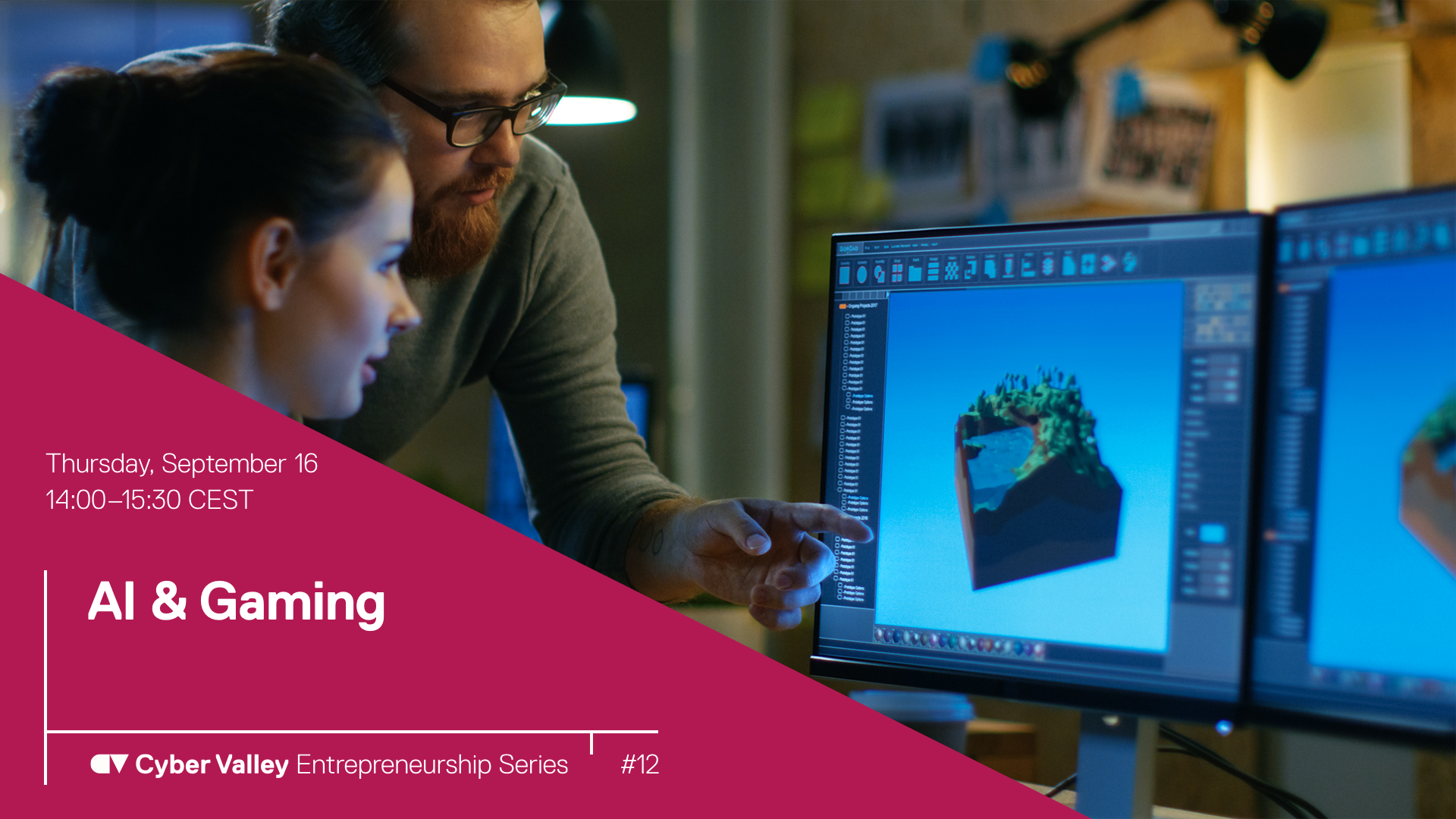
    Mit der kommenden Veranstaltung der Entrepreneurship Series zum Thema „AI & Gaming“ greift Cyber Valley dieses Potenzial auf. Bei der Veranstaltung diskutieren Wissenschaftler:innen über aktuelle Forschungsherausforderungen. Darüber hinaus werden Start-ups und Investor:innen ihre Erfahrungen und Praxisbeispiele teilen.

    Wissenschaftler:innen, Gründer:innen, Student:innen und alle, die sich für das Thema interessieren, sind herzlich eingeladen, am Donnerstag, den 16. September, von 14:00 bis 15:30 Uhr dabei zu sein.
     
    Wenn du KI-Expert:in und Spielefan bist, lies gern mehr über AI GameDev – Europas ersten forschungsgetriebenen Wettbewerb zur Verbesserung der Spieltechnologie – für KI-Wissenschaftler:innen und Start-ups. Wenn du deine Ideen in diesem Bereich einbringen und wertvolle Erfahrungen sammeln möchtest, kannst du dich bis zum 26. September 2021 bewerben.


    Sprecher:innen für dieses Event

    Ben Cole
    Entrepreneur und Creative Technologist, ehemaliger Head of Software for Technicolor MPC North America, Academy of Motion Picture Arts and Sciences Technical Achievement Award Gewinner

    Christian Becker-Asano
    Professor an der Hochschule der Medien & Direktor des Humanoid Lab

    Judith Baatz, Felix Krieglstein & Julia Mönch
    Wissenschaftliche Mitarbeiter:innen der Universität Stuttgart und TU Chemnitz, Projektteam BeeLife

    Fabian Schrodt
    Gründer & CEO Quantum Gaming GmbH

    Stefan Langefeld
    Investor & Start-up Mentor, ehemaliger Head of TV and Movies Central and Eastern Europe Apple Inc.


    Registrierung

    Bitte hier registrieren. Das Meeting findet via Zoom und in englischer Sprache statt.


    Kontakt

    Oliwia Gust – Cyber Valley Event Manager
    Telefon: +49 7071 601 1554
    Mobil: +49 151 4075 6302 
    E-Mail: oliwia.gust@cyber-valley.de

  • Zweiter Workshop, Mental Effort

    Zweiter Workshop, Mental Effort

    Detaillierte Beschreibung des Workshops, der in englischer Sprache abgehalten wird:

    We can all feel exhausted after a day of work, even if we have spent it sitting at a desk. The intuitive concept of mental effort pervades virtually all domains of human information processing and has become an indispensable ingredient for general theories of cognition. However, inconsistent use of the term across cognitive sciences, including cognitive psychology, education, human-factors engineering and artificial intelligence, makes it one of the least well-defined theoretical constructs across fields.

    The purpose of our two-day workshop is to bridge this gap by (a) offering hands-on tutorials on different computational approaches used to model mental effort and by (b) fostering discussion about the operationalization of mental effort among scientists from different research communities and modeling backgrounds.

    Key questions of discussion will include (but are not limited to):

    ● What are the experimental phenomena that lay a foundation for theories of mental effort?

    ● What is the common ground in operationalizing mental effort across different domains of cognitive science?

    ● Which modeling approach(es) is (are) best suited to answer which questions regarding mental effort?

    The workshop is specifically designed to attract scholars with expertise in different modeling

    Call for abstracts and registration

    Are you working on a project or thesis related to mental effort and want to discuss your ideas?

    If so, we are inviting you to present a poster during our virtual poster session.

    Registration and Call for Submission Closes: July 15, 2021

  • AI & Health

    AI & Health

    Schedule

    • Opening remarks
    • Start-Ups
    • Investors
    • Discussion
    • Closing Remarks
    Opening

    Alex Diehl

    Senior Advisor Cyber Valley

    Start-Ups

    Computomics GmbH (Start-Up, Tübingen)

    Sebastian Schultheiss

    "Computomics’ data analysis experts offer custom services for next-gen sequencing projects – from crop science to metagenomics."


    AIRAmed GmbH (Start-Up, Tübingen)

    Christiane Lindig & Tobias Lindig

    "Artificial intelligence makes neuroradiology measurable, Individual and objective."


    Curedatis (Early Stage Start-Up, Stuttgart)

    Robert Radloff

    "Current methods for evidence generation and synthesis do not scale to meet the demands, imposed by the exponentional growth of the evidence base."


    eye2you GmbH (Start-Up, Tübingen)

    Jörn-Philipp Lies

    "We want to make retinal eye care more accessible to everybody by leveraging the power of cutting-edge AI with the ubiquity of smartphones."


    Grazia Equity GmbH (Investor, Stuttgart)

    Benedikt Battke

    "Capital for entrepreneurs."


    Apollo Health Ventures (Investor, Hamburg)

    Victor Bustos

    "Apollo Health Ventures develops interventions with the potential to prevent or reverse age-related diseases and extend healthy human lifespan."

    Discussion

    Wieland Brendel

    Machine learning researcher at the University of Tübingen & Co-Founder of Layer7 AI


    Alexander Brem

    Chaired Professor of Entrepreneurship in Technology and Digitization, 
    endowed by the Daimler Fund in the Stifterverband, at the University of Stuttgart

    -Moderator-

    Closing

    Alex Diehl

    Senior Advisor Cyber Valley

  • Ausstellung ‚Künstliche Intelligenz‘ an Bord der MS Wissenschaft 2019

    Ausstellung ‚Künstliche Intelligenz‘ an Bord der MS Wissenschaft 2019

    Gestern ging es los! Der Künstlerische Spiegel des Cyber Valley Start-ups DeepArt fährt mit auf der MS Wissenschaft, einem ehemaliges Güterfrachtschiff. In diesem Jahr steuert sie mit einer Mitmach-Ausstellung zu künstlicher Intelligenz 27 Städte in Deutschland an – von Berlin bis Würzburg. Vom 12. bis 16. September legt die MS Wissenschaft in Esslingen bei Stuttgart an. Mehr Infos gibt es hier: https://ms-wissenschaft.de/

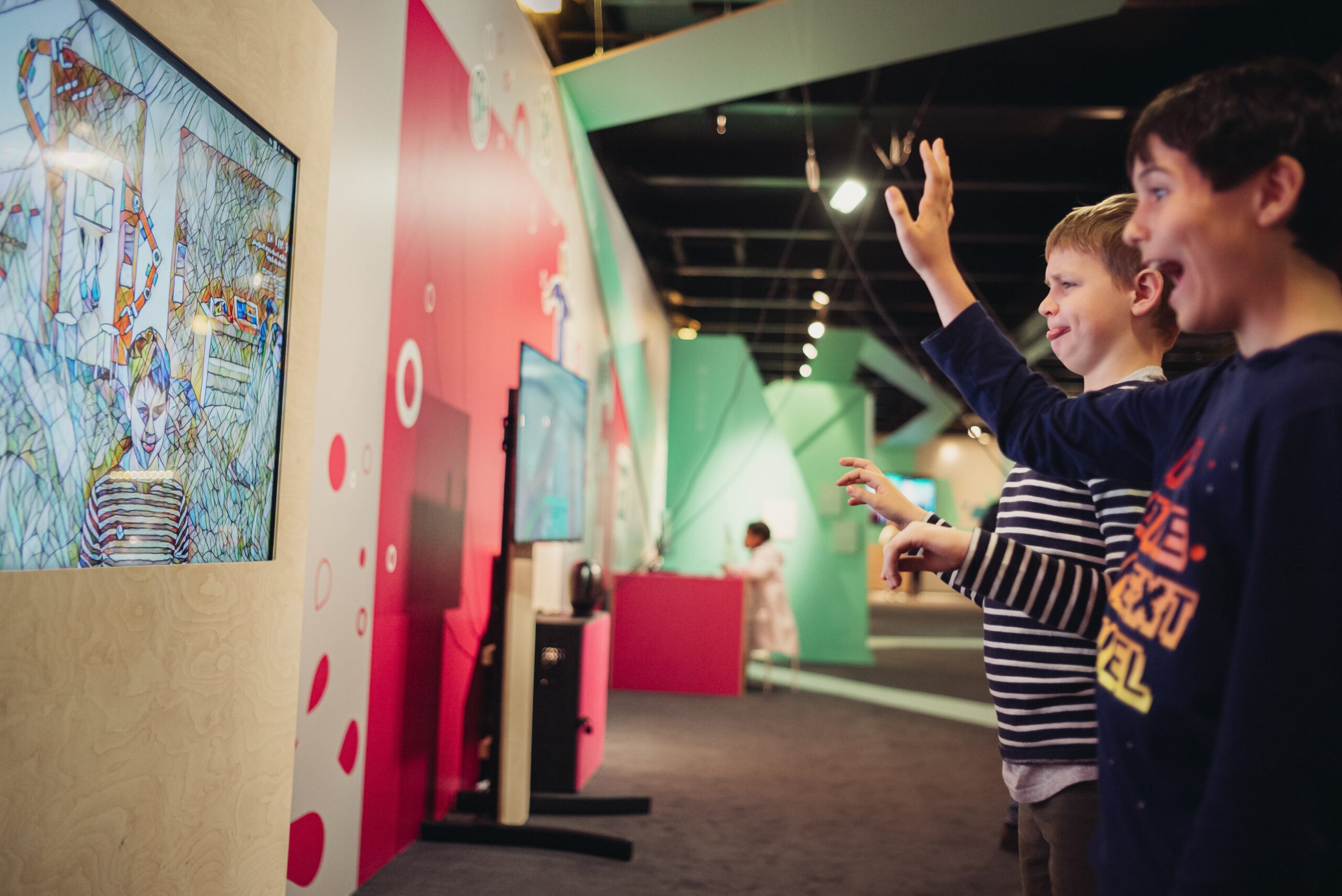
    Mit dem künstlerischen Spiegel wird ein (live) Bild zu einem Kunstwerk. Doch wie „sehen“ und „verstehen“ Maschinen Kunstwerke? Wenn eine künstliche Intelligenz ein Gemälde betrachtet, sollte sie es nicht nur in seine Objekte zerlegen können. Sie muss dazu auch den verwendeten Stil der Künstlerin oder des Künstlers entschlüsseln. Wenn sie das beherrscht, kann sie im gleichen Stil sogar neue Kunstwerke schaffen – in Echtzeit von jeder Person, die vor der Kamera herumhüpft. Vorübergehende Besucher werden nämlich dabei gefilmt und in Echtzeit auf dem Monitor in verschiedenen Kunststilen dargestellt. Der künstlerische Spiegel ist ein Forschungsexponat der Universität Tübingen, die Partner im Cyber Valley ist und woraus das Start-up DeepArt hervorging.

    Vom 12.09. – 16.09.2019 legt das Schiff in Esslingen an der Liegestelle Färbertörlesweg, Nähe Pliensauturm, an.

    Alle Interessierten sind herzlich eingeladen, die Ausstellung zu besuchen. Sie spricht insbesondere auch Schulklassen, Familien und Jugendliche an. Wir empfehlen den Besuch der Ausstellung ab einem Alter von 12 Jahren. Viele Ausstellungsstücke sind aber auch für jüngere Kinder geeignet.

    Der Eintritt ist frei.

    Bundesforschungsministerin Anja Karliczek (Mitte) hat sich natürlich auch die Ausstellung auf der MS Wissenschaft angesehen:


    Quelle der Fotos: Ilja Hendel/WiD