

Brings AI-powered health coaching to the office workplace. The AI coach Isa analyzes posture, movement and hydration via sensor technology and gives employees real-time individual recommendations.
Network Role: Health Cluster
-

Ambigate
Transfers physiotherapy expertise into an AI platform. The app detects movements via smartphone camera and gives patients real-time feedback on correct exercise execution.
-

Deep Scenario
Transforms ordinary camera footage into precise spatial understanding. The AI platform extracts 3D structure, motion and context from standard video streams for autonomous systems in automotive, transport and robotics.
-

AIRAmed
Transfers clinical expertise from the University Hospital Tübingen into AI software. AIRAscore objectively measures brain volumes from MRI scans and supports doctors in early diagnosis of neurodegenerative diseases such as Alzheimer’s.
-
Cytolytics
Uses machine learning to automate the analysis of cell samples. The platform supports oncologists and pharmaceutical researchers with precise evaluation of medical data for cancer diagnostics.
-
Mira Vision accelerates innovation at VENTURE SPRIN-D
At VENTURE SPRIN-D 2025, over 50 teams presented their innovative ideas to more than 250 international investors. The event featured live pitches, a networking exhibition area, and opportunities to make valuable connections. Alongside other members of the Cyber Valley Community, Cyber Valley Start-up MIRA Vision seized this opportunity to show how they are revolutionizing the health industry.
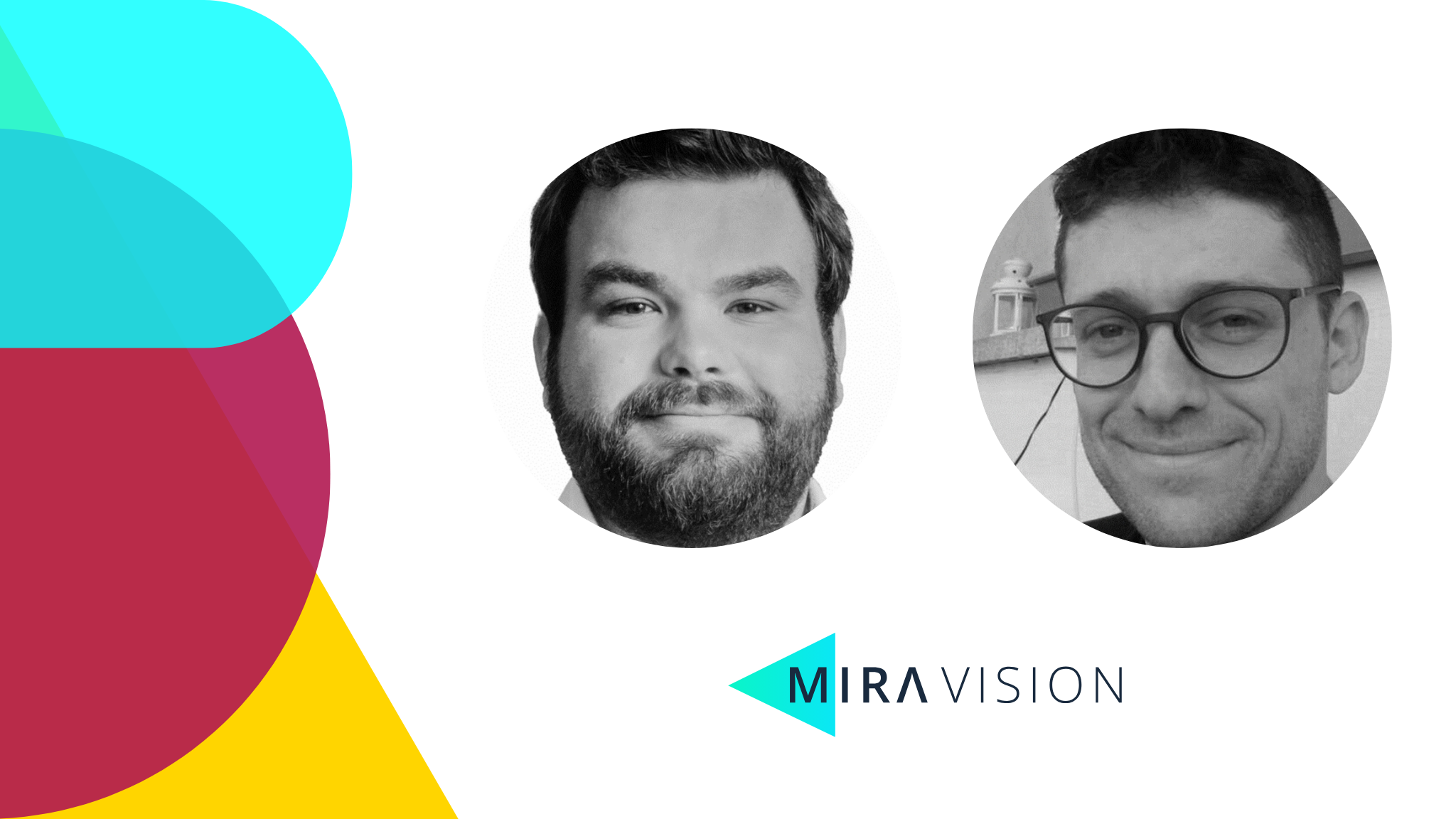
We interviewed MIRA Vision founders, Lukas Mürdter and Leonid Mill, to gain insights into VENTURE SPRIN-D and what their start-up is all about.
Cyber Valley: How has attending this event impacted Mira Vision? What were your key takeaways?
Leonid Mill, MIRA Vision CTO & Founder, explains, “Attending the VENTURE SPRIN-D event was an outstanding experience for us. VENTURE SPRIN-D showcased the incredible innovation power of all the SPRIN-D portfolio start-ups, and it was truly inspiring to be part of such a dynamic environment. We deeply appreciated the opportunity to be part of this ecosystem and to participate and pitch on stage during the Superconnector session — it was a fantastic moment for us.”“The event provided an excellent platform to connect with like-minded entrepreneurs, industry experts, and investors. We had the pleasure of engaging in valuable conversations, receiving insightful feedback from investors, and exchanging ideas with other forward-thinking innovators.”
“Overall, it was an exceptional opportunity that has positively impacted our journey, and we are grateful to have been part of it. Shoutout to SPRIN-D for this amazing event, creating such an inspiring platform that brings together so many bright minds and visionary thinkers – it’s initiatives like this that truly accelerate innovation,” Mill concludes.
Cyber Valley: What is MIRA Vision? How is it already revolutionizing the health industry?
CEO & Founder, Lukas Mürdter, explains: “MIRA Vision is a pioneering company in medical diagnostics. We use synthetic intelligence to analyze pathological images faster, more accurately, and at a fraction of the cost compared to traditional methods. By relying on fully parametric synthetic training data – not real patient data and without using generative models – we’re solving three of the biggest issues in medical AI: bias, privacy, and data scarcity.”
Mürdter further clarifies, “Right now, we’re already outperforming state-of-the-art models in key areas with just a fraction of the resources that are normally needed to train such systems. This means not only better diagnostics but also global accessibility – even in regions with limited infrastructure.”
Cyber Valley: Where do you see MIRA Vision being used in the future?
Lukas emphasizes, “Our vision goes beyond pathology. We see MIRA Vision as the backbone of diagnostics across all image-based disciplines – radiology, dermatology, ophthalmology, even surgery. Wherever an image can be taken, MIRA will analyze it. Ultimately, we want to give every doctor on this planet an AI-powered assistant that helps detect diseases early, accurately, and affordably – no matter where they are.”
Cyber Valley: What are your plans to make a positive impact on the world?
Lukas responds enthusiastically, “By being radically different – and radically better. Instead of building another AI that requires millions of patient records and insane GPU farms, we’ve designed a lightweight, scalable system built on expert-guided synthetic data. Our platform works out of the box, is regulation-friendly, and can be used for free in non-commercial settings.”
“We’re opening the platform to the global pathology community, offering unmatched accuracy, no data privacy concerns, and unbeatable economics. Once they start using it – they won’t want to stop. That’s how we scale. And yes – we’re just getting started,” Mürdter concludes.
-
Cyber Valley unites AI and robotics expertise for the healthcare sector
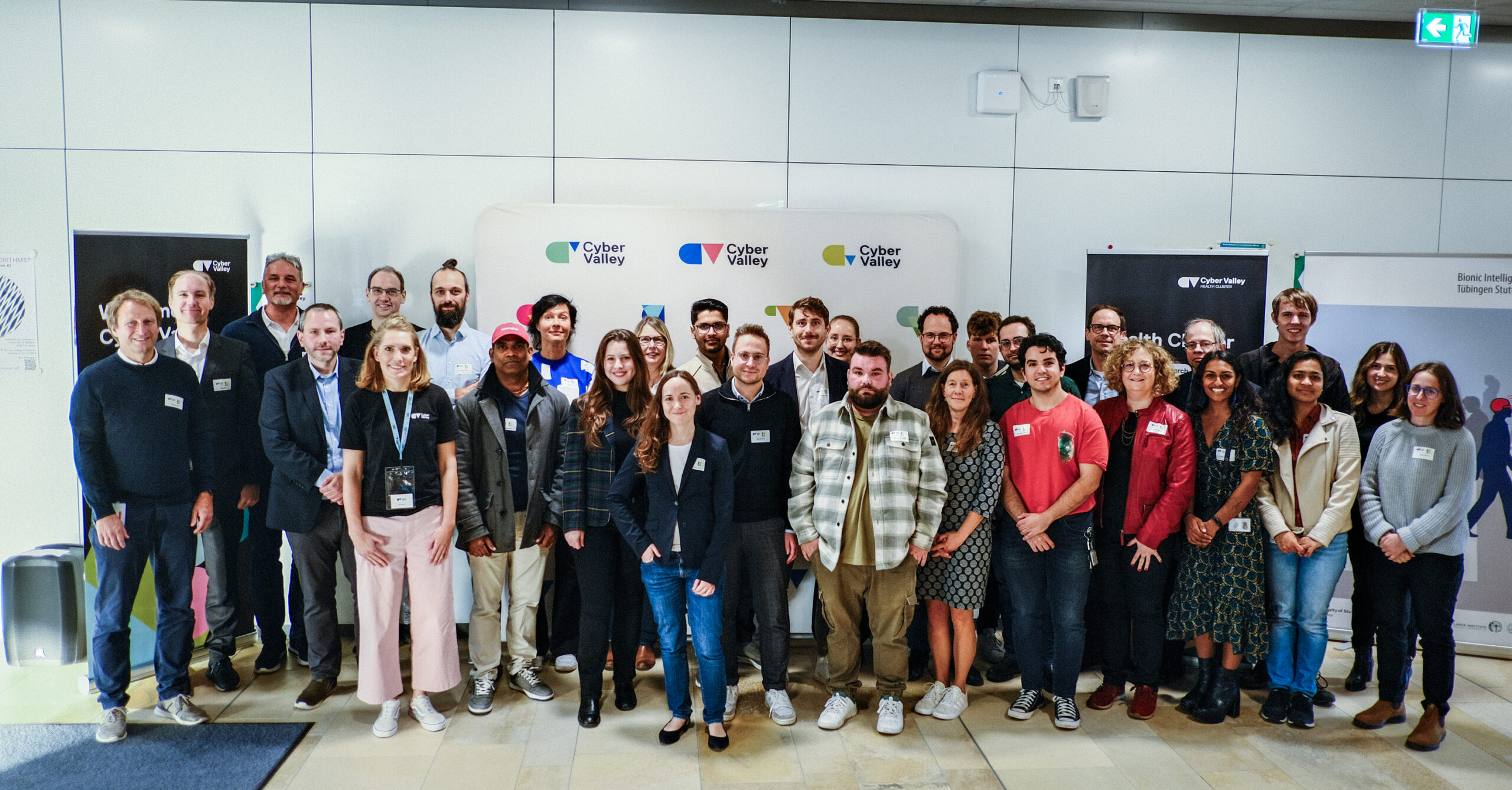
Stuttgart, October 28, 2024 – The Cyber Valley Health Cluster officially launched last Thursday with a public kickoff event in Tübingen. This initiative launched by Cyber Valley aims to unite the forces of science, industry, and start-ups to improve people’s long-term health through artificial intelligence and modern robotics.
Collaboration between research and industry for AI-driven health technologies
The Cyber Valley Health Cluster aims to integrate research, practice, and technology. It promotes joint projects between AI experts, scientists, and companies to develop innovative solutions for current and future challenges in the healthcare sector. The Health Cluster emphasizes interdisciplinary knowledge exchange, enabling new approaches and solutions that go beyond individual technological advances.
Rebecca C. Reisch, Managing Director of Cyber Valley GmbH, highlights the importance of this collaboration: “The Cyber Valley Health Cluster is more than an academic endeavor; it’s a collaborative alliance that encourages exchange between industry, start-ups, and research. The Health Cluster is where AI-based solutions can be developed to address the most pressing challenges in modern medicine and beyond.”
Strong Cyber Valley Partners and Friends are already on board
The Cyber Valley Health Cluster is backed by strong partnerships. Among the already confirmed Cyber Valley Partners are well-known players such as Boehringer Ingelheim, ZEISS, the University of Tübingen, the University of Stuttgart, and the Max Planck Institute for Intelligent Systems (MPI-IS). These partners are investing significantly in the Cyber Valley Community and are playing a central role in the further development of the Health Cluster.
In addition, the Cyber Valley Health Cluster is supported by numerous committed Cyber Valley Friends who enrich the network with their expertise and connections. These include Immatics, Cegat, Ovesco, BIOPRO Baden-Württemberg, BioRegio STERN Management, as well as the Medical Innovations Incubator, and the start-ups Osora and Cerebri. Further candidates are already under consideration.
Reisch emphasizes the role of the Cyber Valley Community: “Together with our Partners and Friends, we are creating an environment that drives the development of technologies that are not only groundbreaking but also practical and ethical. Because only by working together do we have the chance to establish Baden-Württemberg and the whole of Germany at the forefront of global AI health innovations.”
Long-term goal: a lasting healthcare alliance
The Cyber Valley Health Cluster supports start-ups and innovation projects to create real value by generating new jobs and health solutions. Health Cluster participants moreover benefit from extensive connections and new networking opportunities that enable the development of pioneering healthcare solutions and rapid knowledge transfer between research and industry.
The long-term goal of the Cyber Valley Health Cluster is to create a lasting and active community, pooling health expertise to enable interdisciplinary teams to tackle global health challenges. Further events and interaction formats are planned for the Cyber Valley Health Cluster in the coming months.
About Cyber Valley
Cyber Valley is Europe’s largest and leading center for excellence in artificial intelligence and modern robotics. Its mission and public mandate are to advocate for the research, development, application, and acceptance of technologies and methods in the field of intelligent systems. Cyber Valley encourages entrepreneurship by uniting scientific excellence with innovation and technology transfer. In addition, Cyber Valley facilitates critical reflection on the ethical and social implications of AI through public engagement. Cyber Valley envisions a future in which the full potential of intelligent systems is leveraged for the greater good of the world.
Media Contact:
Laura Neusser
Public Outreach Manager
Cyber Valley GmbH
laura.neusser@cyber-valley.de -

Cyber Valley grants 500K to CELL’n’ROLL via 2023 Innovation Fellowship Program
CELL’n’ROLL aims to develop next-generation diagnostic solutions for detecting complex diseases such as cancer. Leveraging robotics, artificial intelligence, and microtechnology, the initiative aims to democratize access to these diagnostic tools worldwide. CELL’n’ROLL envisions a future where diagnostics are not only swift and precise but also accessible in resource-constrained settings by harnessing the power of robotics, artificial intelligence, and microfluidics.
The CELL’n’ROLL team consists of Postdoctoral Researchers Alp Can Karacakol, Erdost Yildiz, and the project leader Ugur Bozuyuk. As emerging scientific talents, the team comprises three scientists from the Max Planck Institute for Intelligent Systems, each with interdisciplinary expertise spanning medicine and engineering, and a collective experience exceeding three years of collaboration. Additionally, the team benefits from mentorship provided by international experts from academia and industry.
The Innovation Fellowship program will support their journey from outstanding research to practical application. The program’s aim is to bridge the gap between research and commercial application by fostering scientific breakthroughs that add value to science, economy, and society. The Innovation Fellowship program is funded by the Carl-Zeiss-Stiftung (CZS) and offers talented individuals or teams the opportunity to translate their research into tangible applications. With a duration of up to 24 months, researchers work on a project that is not yet commercially viable and requires time for further development and product transformation in a research environment. The program focuses on application-oriented research related to artificial intelligence and robotics. Its goal is to create an innovative spin-off from the project after the funding term has ended.
With its mission of creating “an open environment for scientific breakthroughs”, the Carl Zeiss Foundation is an essential Cyber Valley partner. The foundation aims to accompany the entrepreneurial path of young talent from research to application. It strives to achieve scientific breakthroughs that support research, the economy, and society through funding elementary research and specific applications.
The next Cyber Valley Innovation Fellowship call for proposals will be announced in April 2024. Scientists employed by the Max Planck Institute for Intelligent Systems, the University of Stuttgart, and the University of Tübingen are eligible to apply. All external scientists affiliated with these Institutes may also apply.
About Cyber Valley
Cyber Valley is Europe’s largest and leading center for excellence in artificial intelligence and modern robotics. Its mission and public mandate are to advocate for research, development, application, and acceptance of technologies and methods in the field of intelligent systems. Cyber Valley encourages entrepreneurship by uniting scientific excellence with innovation and technology transfer. In addition, Cyber Valley facilitates critical reflection on the ethical and social implications of AI through public engagement. Cyber Valley envisions a future in which the full potential of intelligent systems is leveraged for the greater good of the world. Cyber Valley GmbH, with locations in Stuttgart in Tübingen, is owned by the State of Baden-Württemberg and the Max Planck Society.
About the Carl-Zeiss-Stiftung
The Carl-Zeiss-Stiftung’s mission is to create an open environment for scientific breakthroughs. As a partner of excellence in science, it supports basic research as well as applied sciences in the STEM subject areas (science, technology, and mathematics). Founded in 1889 by the physicist and mathematician Ernst Abbe, the Carl-Zeiss-Stiftung is one of the oldest and biggest private science funding institutions in Germany. It is the sole owner of Carl Zeiss AG and SCHOTT AG. Its projects are financed from the dividend distributions of the two foundation companies.
About CELL’n’ROLL
CELL’n’ROLL, established two years ago, is driven by a team of three dedicated scientists with varied expertise, spanning engineering and medicine. Their collective passion lies in pioneering cutting-edge diagnostic systems for the detection of complex diseases, such as cancer. They envision a future where diagnostics are not only swift and precise but also accessible in resource-constrained settings by harnessing the power of robotics, artificial intelligence, and microfluidics.
-

University of Stuttgart successful with cluster draft proposals
"The decision of the panel of experts offers us the opportunity to sharpen and further expand our excellent profile as an interdisciplinary university with great strength in research. We will seize this opportunity and use our cutting-edge research to make an even greater contribution to solving major global challenges," explains Prof. Wolfram Ressel, Rector of the University of Stuttgart. Ressel was delighted with the success of the cluster outlines, congratulated the scientists at the University of Stuttgart and their cooperation partners, and thanked everyone involved for their commitment. Initiatives for the clusters of excellence "Bionic Intelligence for Health" and "Chem4Quant" are eligible to apply.
Bionic Intelligence for Health: New approaches to the therapy and diagnosis of neuronal diseases
“The Bionic Intelligence for Health cluster project is searching for fundamentally new approaches to integrate technology and medicine in order to better diagnose and treat neuronal diseases. It thus addresses one of the greatest challenges facing our healthcare system and our society as a whole", says Wolfram Ressel.
In the Bionic Intelligence for Health cluster project, an interdisciplinary research team is combining the neuronal and physical intelligence of the human body with a fundamentally new approach to intelligent technology. The aim is to better recognize neuronal diseases, treat them adaptively, and thereby improve the quality of life of those affected in their everday lives. To this end, innovative technical systems are to be intelligently integrated with the body. The cluster project is an initiative of the University of Stuttgart in cooperation with the University of Tübingen. The Max Planck Institute for Intelligent Systems in Stuttgart and Tübingen as well as the Max Planck Institute for Biological Cybernetics in Tübingen are involved as cooperation partners. The project builds on the complementary expertise of outstanding scientists from the fields of neuroscience, materials science, biomechanics and systems theory, among others. It benefits from the excellent Stuttgart-Tübingen ecosystem and has the potential to significantly reduce the social challenges posed by neuronal diseases.
Chem4Quant: Chemical platform for high-precision quantum architectures
"Quantum technology has the potential to revolutionize numerous applications, such as making communication secure or exponentially accelerating computing power. Our cluster initiative Chem4Quant researches novel quantum materials and structures and thus makes a fundamentally new contribution to achieving this goal”, says Wolfram Ressel.
Researchers from the Karlsruhe Institute of Technology (KIT), the University of Ulm and the University of Stuttgart want to purposefully develop material structures for future quantum technologies in the joint Chem4Quant initiative. Despite the breakthroughs already achieved in quantum technologies, many of the platforms currently in use are limited in terms of scalability, adjustability, positionability, and error correction. Chem4Quant is therefore proposing a fundamentally new approach with a chemistry-based platform: Chemically, precisely-definable quantum architectures can be used to plan atomically accurate material structures and their quantum properties in a targeted manner. For example, qubits can be positioned in electrical or photonic components with a precision below the nanometer range. The initiative aims to develop novel qubit materials and create the first components for the future quantum internet. Chem4Quant can draw on globally unique expertise in the field of molecular quantum systems as well as established collaborations.
Successful Clusters of Excellence apply for further funding period
"Our already very successful Clusters of Excellence Integrative Computational Design and Construction for Architecture (IntCDC) and Data-integrated Simulation Science (SimTech) also stand for cutting-edge interdisciplinary research that uses fundamentally new investigative approaches and methods to advance solutions for social challenges," emphasizes Ressel. For example, IntCDC is paving the way towards greater sustainability in the construction industry, and thus making a decisive contribution to the development of a climate- and environmentally-friendly society. With its innovative data-based simulation models, SimTech enables significant progress in the research, testing, and application of new technologies. Both Clusters of Excellence are now applying for a further funding period.
IntCDC: Research for more sustainability in the construction industry
Launched in 2019, the Integrative Computational Design and Construction for Architecture (IntCDC) cluster uses digital technologies to rethink planning and construction in an integrative and interdisciplinary approach, and thus enable greater sustainability in the construction industry. To this end, the University of Stuttgart and the Max Planck Institute for Intelligent Systems (MPI-IS) merge their internationally recognized research expertise. More than 150 scientists from the fields of architecture, computer science and robotics, engineering, production and systems technology as well as the humanities and social sciences are currently working together to modernize the construction sector. They are focusing on the co-design of integrative computer-based planning and construction methods, on cyber-physical manufacturing and construction processes, as well as on next-generation sustainable material and construction systems. In the second funding phase, the cluster aims to take up new initiatives and scientific challenges in order to lay the methodological foundations for sustainable architecture.
SimTech: New simulation models for science and innovation
Without simulations, advances in science and technological innovations for the benefit of society are not possible. Since 2019, researchers at the Cluster of Excellence Data-integrated Simulation Science (SimTech) have been working on new data-driven methods that go beyond improving the applicability and accuracy of simulation models. The systematic integration of data into simulation science is also changing the way science and technology are conducted. Developments include data-based representations of physical phenomena, new methods for designing and optimizing micro-materials, and data-based models for optimizing control processes and algorithms. Although we have already come a long way in data-integrated simulation science, there is still a great deal of untapped potential in dealing with knowledge and understanding. This untapped potential will be the focus of research in the next funding phase and will be systematically integrated into models, methods, and algorithms in the future in order to further promote our insights.
Press contact
Dr. Florian Krüger, University of Stuttgart, Head of University Communications, Phone: +49 711 685-82555.
Dr. Jutta Witte, University of Stuttgart, University Communications, Phone: +49 711 685-82176.
