News Category: Start-up Network

  • 2019: Reducing construction waste with AI—interview with Optocycle

    2019: Reducing construction waste with AI—interview with Optocycle

    In 2016, important actors from science, industry, and politics founded the Cyber Valley Consortium, which became the first Innovation Campus in Baden-Württemberg. Ten years on in 2026, we’re revisiting the most important milestones from the last decade. Each month, we’ll focus on a particular year since Cyber Valley’s beginning. 

    This month, we’re looking back to 2019, when the Cyber Valley Start-up Network was founded to build and nurture a community of start-up entrepreneurs. The Cyber Valley Start-up Network has grown rapidly over the past years, from the initial seven founding members at the end of 2019 to more than 100 start-ups in 2026.

    In 2022, Optocycle joined the Start-up Network. Optocycle develops AI-based systems for the optical classification of construction waste. Their technology enables optimal use of demolition material, promoting a circular economy.

    In the following interview, CEO Max-Frederick Gerken explains how the idea for Optocycle emerged, how being part of the Start-up Network has supported the company’s development, and how AI-driven material classification can contribute to a more circular and sustainable construction industry.

    How did the idea for Optocycle originate, and what problem were you initially trying to solve?

    Interestingly, we didn’t start in construction. Initially, we were building AI to recognize fruits and vegetables at supermarket checkouts. The pivot came when a contact from the recycling industry highlighted a much bigger problem: construction waste is still classified manually: slow, subjective, and inefficient.

    We realized that the core issue is missing data. That’s why we built Optocycle: combining optical sensor systems with AI to create a reliable, real-time data layer for material flows and enable true circular construction.

    How did your research and experience within the Cyber Valley ecosystem contribute to founding the company?

    It didn’t directly contribute to founding the company, as Optocycle was already established at that point. However, we did benefit from funding within the Cyber Valley ecosystem, which supported us in scaling our team and further developing our technology. Beyond that, the ongoing exchange within the network has been consistently valuable and interesting.
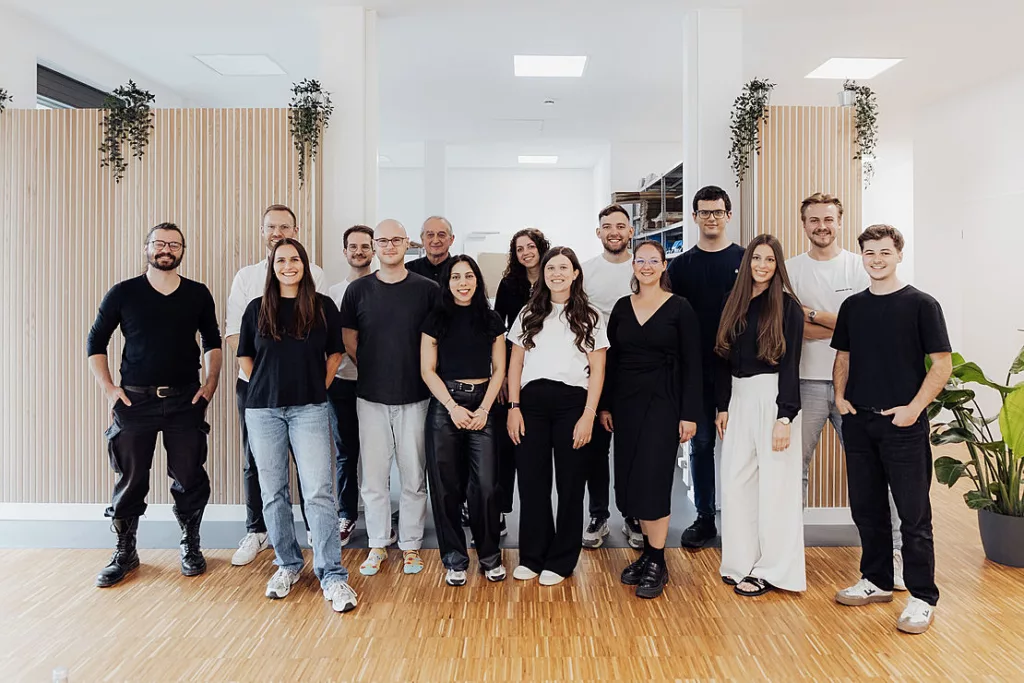
    The Optocycle team | (c) Optocycle

    How do you see Optocycle’s work contributing to a future where AI research has a long‑term, positive, and sustainable impact on society?

    At Optocycle, we see our work as a very applied example of how AI can drive tangible, long-term positive impact, particularly in industries that have historically been difficult to transform, such as construction and circular materials management.

    Our core contribution lies in using AI and advanced sensing technologies to make material flows transparent and measurable. This is a prerequisite for any functioning circular economy. Today, a significant share of valuable materials is still downcycled or lost entirely because there is insufficient data about their composition and quality. By generating reliable, real-time data, we enable better decision-making across the value chain, from sorting and recycling to reintegration into new products.

    From a sustainability perspective, this directly contributes to reducing waste, lowering CO₂ emissions, and preserving finite resources. But beyond the environmental aspect, we also see a structural impact: AI, when deployed thoughtfully, can help modernize traditionally analog industries and make them more efficient, data-driven, and resilient.

    Importantly, we believe that the long-term societal value of AI will depend less on abstract breakthroughs and more on its integration into real-world systems. Our approach is therefore to embed AI into physical processes with clear economic and ecological benefits. This ensures that the technology is not only innovative, but also scalable, economically viable, and aligned with sustainability goals

    What was the biggest lesson you learned from your founding journey? And what advice would you give to others who are considering taking the leap?

    The biggest lesson from our founding journey has been the importance of building solutions strictly around real customer needs, not for the sake of technology or innovation itself. Especially in deeptech and AI, there’s a strong temptation to develop sophisticated solutions first and look for applications later. In practice, that approach rarely leads to sustainable businesses.

    What truly made a difference for us was maintaining a strong customer focus from early on: deeply understanding pain points, validating assumptions quickly, and iterating based on real-world feedback. This ensures that what you build is not only technically impressive, but also commercially relevant and scalable.

    For anyone considering taking the leap, the advice would be: stay as close to your customers as possible. Talk to them early, challenge your own assumptions, and be willing to adapt your solution, even if that means pivoting away from your original idea. Execution matters, but direction matters more, and that should always be guided by real demand.

    To celebrate Cyber Valley’s ten-year anniversary, we’ll be sharing a variety of content across our website and social media channels reflecting on milestones from the last decade. Stay tuned for the next installments! 

  • Another milestone for AI from the Stuttgart region

    Another milestone for AI from the Stuttgart region

    The future of Artificial Intelligence (AI) is taking an important step forward in the heart of Baden-Württemberg: the High-Performance Computing Center Stuttgart (HLRS) is joining the ‘KI-D@ARENA2036-X” program as a new partner, contributing its expertise and computing capacity. 

    The program is jointly driven by ARENA2036, Cyber Valley GmbH, DeepScenario, waveye, and the Technical Information and Communication Services of the University of Stuttgart (TIK).

    With HLRS joining the initiative, the program gains an important new partner. This collaboration provides access to the infrastructure project HammerHAI. Starting in mid-year, extensive AI computing resources will be available across the entire development chain—from smaller systems directly integrated into machines or devices to powerful high-performance computing systems. This will make it possible to train and deploy very large and complex AI models.

    Infrastructure designed to accelerate AI development

    As part of the initiative, the partners are building an open IT and data infrastructure, including access to a data space for the sovereign exchange of data. The goal is to provide companies with easy access to powerful resources for AI applications—from the initial idea to practical deployment within companies. At the center of this effort is the networking of AI systems and data. Companies will be able to use the provided infrastructure without having to build large technical systems themselves. Access will be offered at competitive costs. Start-ups as well as small and medium-sized enterprises (SMEs) will particularly benefit, strengthening their innovative capacity and competitiveness.

    This will create a scalable, transparent, and collaboratively designed system in Baden-Württemberg. Instead of a black-box approach, the project deliberately focuses on an open infrastructure.

    This infrastructure is built on three key components:

    Integrating own hardware

    Companies can integrate their own computing hardware, allowing them to flexibly expand available computing capacity and address individual requirements.

    Shared data space

    A scalable, collaborative data space with marketplaces enables different organizations to work together on datasets, AI models, and concrete use cases.

    High-performance computing with HammerHAI

    Powerful high-performance computing resources enable the training and deployment of particularly large AI models.


    A program that accelerates companies

    Participating companies in the ‘KI-D@ARENA2036-X’ program benefit from practical access to powerful AI infrastructure and a strong innovation network.

    The program offers, among other things:

    • the opportunity to test and implement new ideas and proof-of-concepts without high upfront investments
    • access to powerful high-performance IT without having to operate their own data center
    • professional exchange with other AI developers facing similar technological challenges
    • a real-world testing environment at ARENA2036 that brings together requirements from different industries

    This means the program not only supports companies in their projects—it actively accelerates the development and implementation of new AI applications.

    Voices from the project team

    Prof. Dr. Peter Middendorf, Rector of the University of Stuttgart:

    “The IT and data infrastructure of ‘KI-D@ARENA2036-X’ is another important building block in our innovation ecosystem. The University of Stuttgart contributes to the success of this project through its Technical Information and Communication Services and as a partner of ARENA2036. I am therefore particularly pleased that the High-Performance Computing Center Stuttgart (HLRS) is now joining as another strong partner. With its powerful computing infrastructure, HLRS will support companies and start-ups in testing and optimizing state-of-the-art AI applications.”

    Dr. Alexander Lahl, Regional Director of the Verband Region Stuttgart:

    “Together with the HammerHAI infrastructure project, an important nucleus for AI development is emerging in the region. Start-ups and especially small and medium-sized enterprises will benefit greatly from this initiative. Through our support, we are significantly strengthening the Stuttgart Region as a location for AI applications and data infrastructures. At the same time, this project highlights the importance of collaboration across research, industry, and regional partners.”

    Michael Kaiser, Managing Director of Wirtschaftsförderung Region Stuttgart GmbH (WRS):

    “The collaboration between ‘KI-D@ARENA2036-X’ and HLRS and its European AI Factory HammerHAI is another important building block for the AI ecosystem of the Stuttgart Region. It enables companies to train and use very large AI models using efficient high-performance computers—without having to operate their own data center. This opens up new opportunities in AI development and application, especially for small and medium-sized companies.”

    Angelina Jukic, Program Manager at Cyber Valley GmbH:

    “Our goal within the KI-D@ARENA2036-X program is to create a highly connected ecosystem that brings together research, start-ups, and industry. This will make the development and training of AI models more efficient. HammerHAI is one of Germany’s leading AI computing infrastructures and works together with ARENA2036 on forward-looking solutions.”


    Project status and outlook

    Following the successful establishment of the basic infrastructure during the first year of the project, the program will enable operational access to the available computing and data resources in 2026.

    About the KI-D@ARENA2036-X program

    The KI-D@ARENA2036-X program is jointly implemented by ARENA2036, Cyber Valley GmbH, DeepScenario, waveye, and the Technical Information and Communication Services (TIK) of the University of Stuttgart. The goal is to build a collaborative infrastructure that accelerates AI innovation in Baden-Württemberg while ensuring security, transparency, and long-term economic sustainability.

    The program is funded by the Verband Region Stuttgart within the Co-Financing Program for Artificial Intelligence from 2024 to 2027 with a total of €685,000.

    Presscontact:

    Silke Dutz

    Public Outreach Manager      

    Email: silke.dutz@cyber-valley.de   

  • Cyber Valley Start-up Meshcapade draws Epic Games to Tübingen

    Cyber Valley Start-up Meshcapade draws Epic Games to Tübingen


    Meshcapade has been acquired by Epic Games. As part of the acquisition, Epic Games is establishing a presence in Cyber Valley. The Meshcapade team will join Epic’s AI research team, contributing to technologies for Unreal Engine and MetaHuman.

    Meshcapade, is a spin-off of the Max Planck Institute for Intelligent Systems (MPI-IS) in Tübingen and one of the earliest members of the Cyber Valley Start-up Network. The start-up develops advanced technologies for the creation and animation of digital humans. Founded in 2018, the start-up received the inaugural Max Planck Startup Award from the Stifterverband in 2022. Epic Games is a U.S. game developer and creator of Unreal Engine, a game development technology. 

    Meshcapade’s technology builds on the Institute’s SMPL (Skinned Multi-Person Linear) body model, a highly realistic 3D representation of the human body trained on thousands of 3D scans. Licensed through Max Planck Innovation, the technology transfer arm of the Max Planck Society, SMPL has become the de facto standard for 3D human representation in both academia and industry. The technology was developed by co-founders Naureen Mahmood and Talha Zaman together with Michael J. Black, Director of Perceiving Systems at MPI-IS. 

    The Meshcapade team will now join Epic Games, which is opening a new office in Tübingen. This move strengthens Epic’s presence in Cyber Valley, one of Europe’s leading AI innovation ecosystems, and underscores the region’s role as a hub for cutting-edge research and industry collaboration in artificial intelligence, computer vision, and digital human technologies. 

    Read the full news story from the Max Planck Society here:

    https://www.mpg.de/26082348/max-planck-spin-off-meshcapade-draws-epic-games-to-tuebingen

  • DenkBox, kausable, and polybot join the Cyber Valley Start-up Network

    DenkBox, kausable, and polybot join the Cyber Valley Start-up Network

    Cyber Valley welcomes three new members to its Start-up Network: DenkBox, kausable, and polybot. These start-ups are using bold ideas and groundbreaking technologies to shape the future of AI and robotics in Baden-Württemberg.

    polybot envisions unlocking a sustainable future for humanity’s food production. The start-up builds small, dexterous robots that can perform a variety of complex, labor-intensive tasks, like weeding, precision pruning, and harvesting delicate crops like tomatoes and cucumbers. By automating manual fieldwork, polybot helps farmers address labor shortages while boosting long-term productivity and sustainability.

    DenkBox uses the latest open-source LLMs to provide a locally hosted AI chatbot. The start-up puts its users’ privacy first: it does not require connection to an external cloud, ensuring full compliance with GDPR. Meanwhile, DenkBox offers access to state-of-the-art open-source LLMs. The start-up offers both hardware and software from a single source, requiring minimal IT configuration that integrates seamlessly into existing infrastructures.


    kausable is pioneering a new reasoning-first approach to AI, moving beyond pattern-based large language models. Their agentic AI learns in-context from only a few examples, opens new domains without retraining, and generalizes across tasks and modalities. Backed by leading investors such as Mätch VC, LDV Partners, and experts from Black Forest Labs, kausable is building efficient, general-purpose intelligence that is made in Europe.


    The Cyber Valley Community is excited to welcome DenkBox, kausable, and polybot to its growing ecosystem. These start-ups are strengthening Cyber Valley’s mission to unite groundbreaking science with innovation and technology transfer to solve real-world problems.

    The Cyber Valley Start-up Network

    The Cyber Valley Start-up Network brings together more than 90 innovative AI and robotics start-ups across Baden-Württemberg, forming a strong and growing entrepreneurial community within one of Europe’s leading AI and robotics ecosystems. The network spans a broad range of applications and industries, from foundational AI technologies to applied and industry-specific solutions. Connected through their close ties to Cyber Valley, members benefit from access to world-class research, industry partners, investors, and public stakeholders, jointly strengthening the region’s AI and robotics ecosystem.

  • Mirelo AI: Shaping the Future of AI from Cyber Valley

    Mirelo AI: Shaping the Future of AI from Cyber Valley

    Carl Johann Simon-Gabriel’s career exemplifies the successful translation of cutting-edge research into entrepreneurial innovation. After completing his PhD under the supervision of Prof. Bernhard Schölkopf at the Max Planck Institute for Intelligent Systems in Tübingen, he spent several years working in leading technology companies in the United States before co-founding Mirelo AI.

    Mirelo AI develops generative AI models capable of producing high-quality, production-ready sound effects directly from video content. This technology addresses a largely untapped area of audiovisual production and offers substantial potential for applications in film, gaming, and advertising.

    Founded in 2023, since joining the Cyber Valley Startup Network in 2024, Mirelo AI has become a strong example of how scientific excellence, ambitious vision, and effective execution converge within the region’s AI ecosystem. The successful completion of this seed round underscores both the company’s potential and the international relevance of the Cyber Valley research and innovation environment.

    Image: Flügelmann

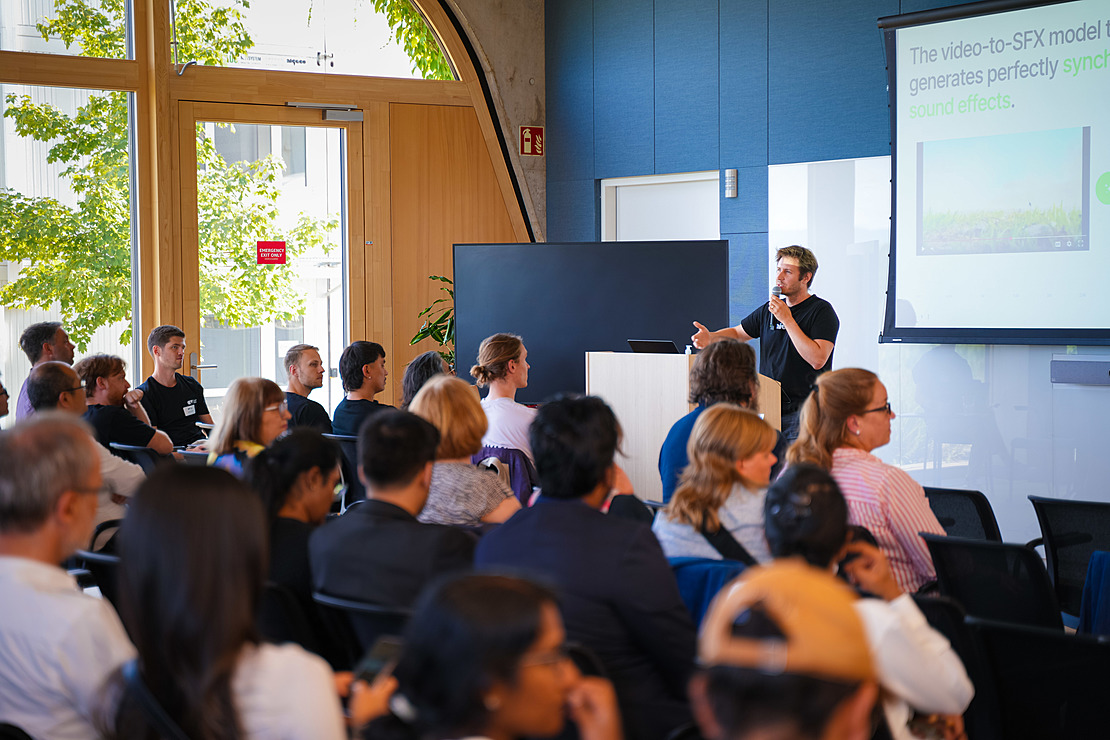
    At the Demo Day of the Cyber Valley AI Incubator (Batch #6), Carl Johann Simon-Gabriel participated as a keynote speaker, sharing insights from his entrepreneurial journey and inspiring the next generation of founders. Reflecting on his experience, he noted:

    “Cyber Valley is a great initiative for emerging AI startups, especially because it is rooted in Tübingen’s world-renowned AI research scene and its talent pool.”

    Mirelo AI is continuing to expand its team and is actively recruiting talent to develop next-generation generative AI models for audio and video. Open positions are available on the company’s website: Mirelo.ai

    Related Start-Ups

    • Mirelo AI

      Mirelo AI

  • Cyber Valley at Heilbronn Slush’D

    Cyber Valley at Heilbronn Slush’D

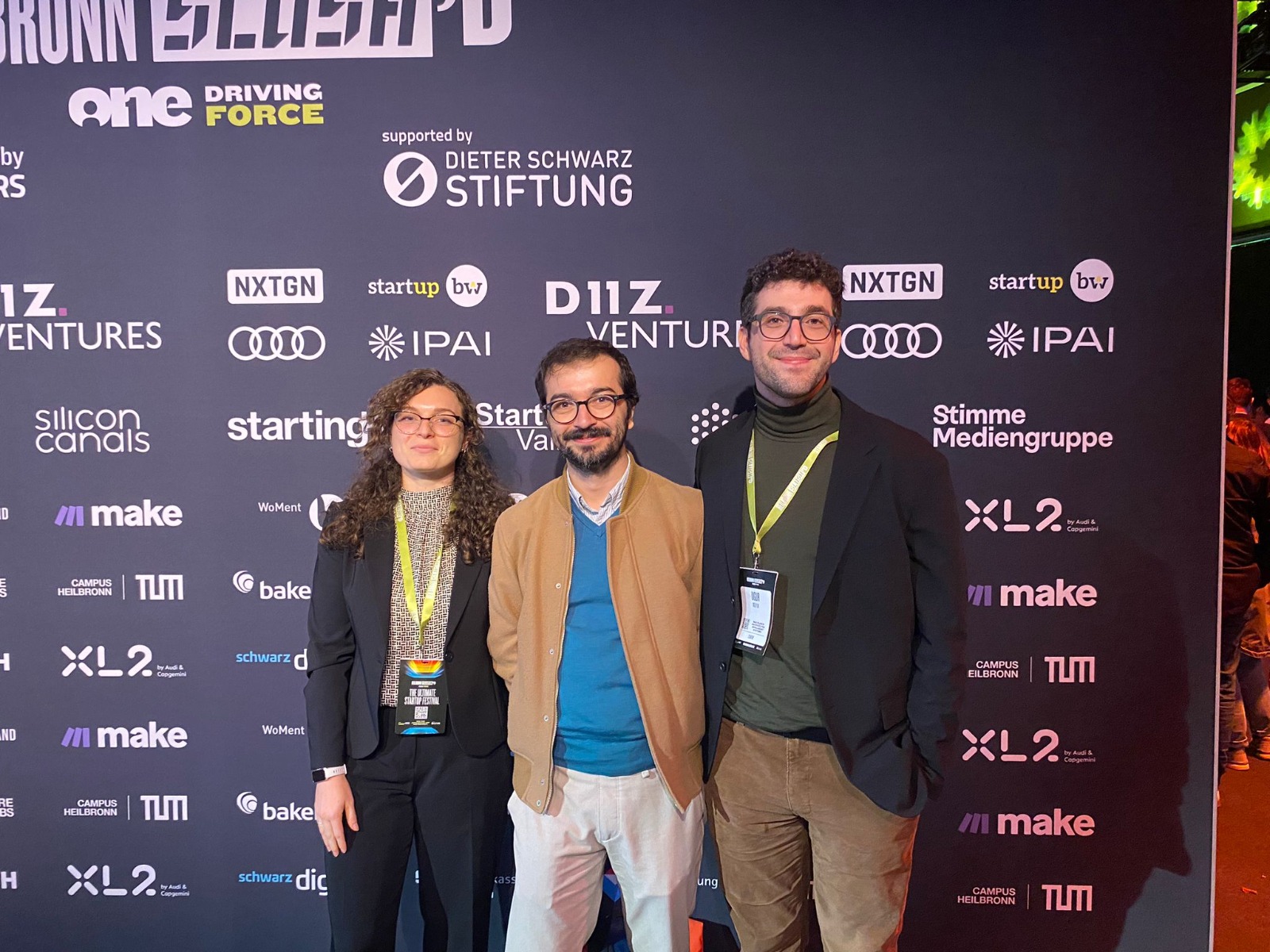
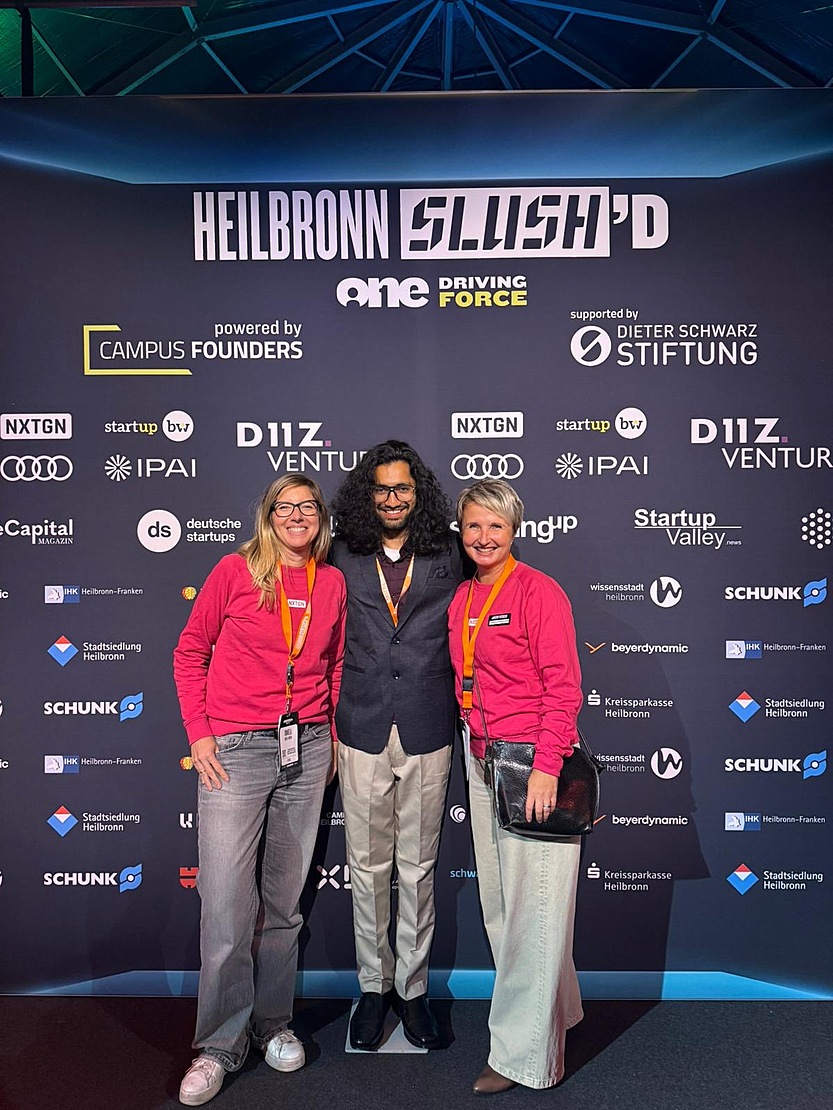
    Heilbronn Slush’D is organized by Campus Founders, a start-up and innovation hub based in Heilbronn. The event was sold out, with over 1,000 participants from across Europe taking part in talks, panel discussions, workshops, and networking sessions. The festival enabled start-ups and founders to connect with key stakeholders and develop their ideas.

    For CELLnROLL (recipients of the Cyber Valley Innovation Fellowship Program) Heilbronn Slush’D was ‘an inspiring event bringing together founders, investors, and innovation leaders from across Europe.’ Following the event, they were ‘inspired, energized, and full of new ideas for what’s next!’

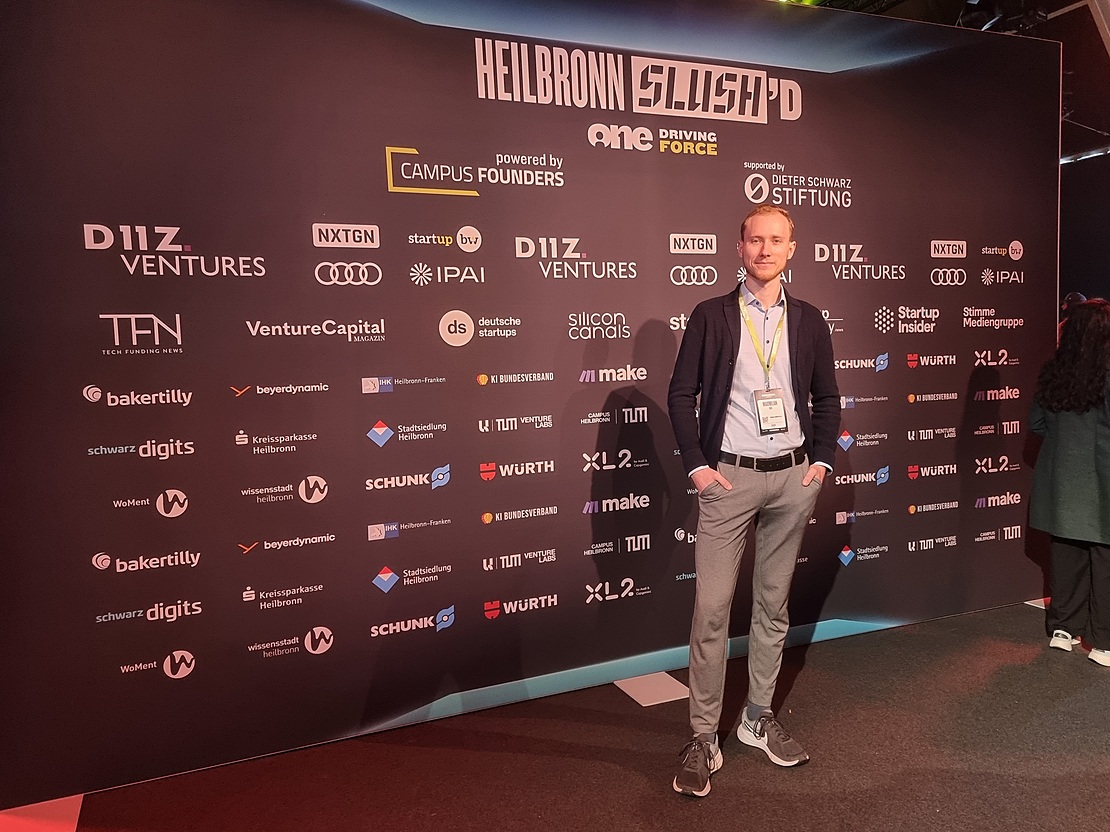
    Maximilian Bode, Co-founder of Cyber Valley Start-up Biocompile, was in attendance for the first time: ‘Despite the bad weather, it was a great experience!’ For Max, events like Heilbronn Slush’D are ‘places where the most interesting people meet.’

    Maximilian Bode (Biocompile) at Heilbronn Slush'D. Photo courtesy of Maximilian Bode.

    Maximilian Bode (Biocompile) at Heilbronn Slush’D. Photo courtesy of Maximilian Bode

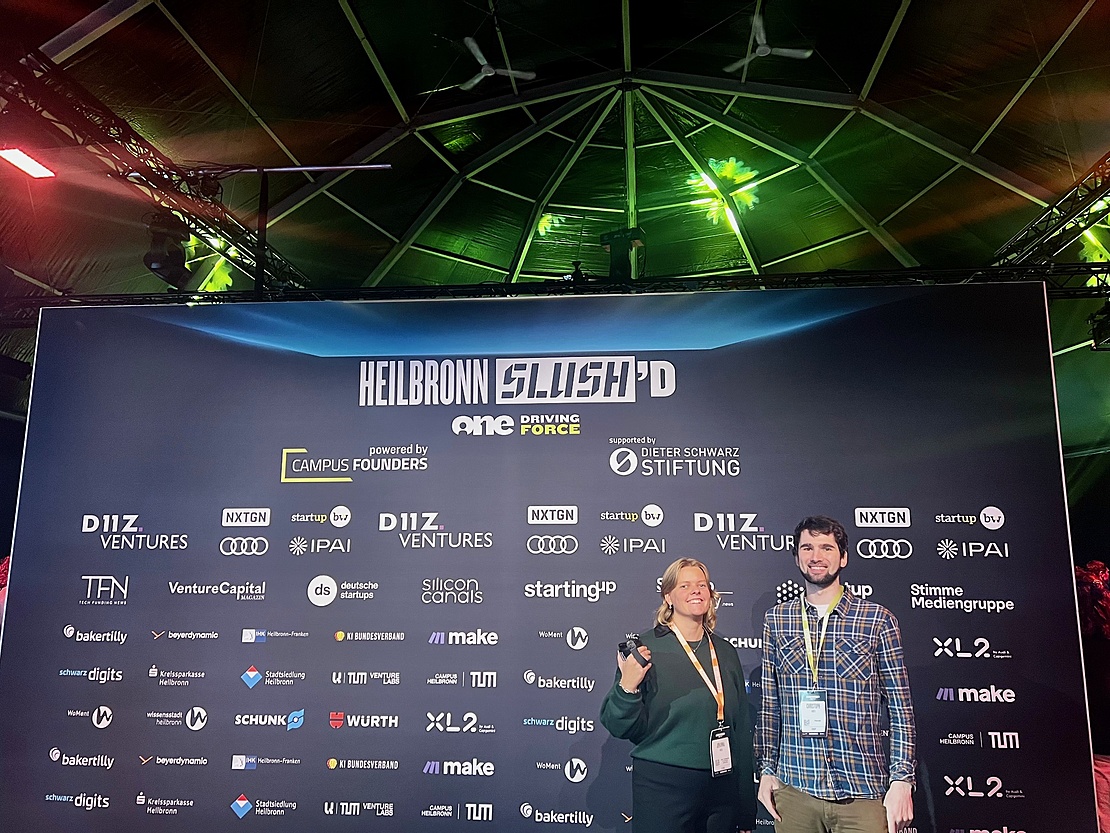
    Johanna Kreßel from the University of Tübingen’s Startup Center also shared her impressions from her first time at Heilbronn Slush’D: ‘I really enjoyed the energy and open atmosphere that made it so easy to connect and have meaningful conversations.’

    Johanna Kreßel at Heilbronn Slush'D. Photo courtesy of Johanna Kreßel

    Johanna Kreßel (Tübingen Startup Center) at Heilbronn Slush’D. Photo courtesy of Johanna Kreßel

    KIT Gründerschmiede took part too. For them, Heilbronn Slush’D ‘was again a real experience – not only because of the wild weather, but above all because of the incredible energy that could be felt between impulses on stage, networking around the campfire, and conversations at the food trucks.’

    KIT Gründerschmeide at Heilbronn Slush'D

    KIT Gründerschmiede at Heilbronn Slush’D. Photo courtesy of KIT Gründerschmiede

    Members of the Cyber Valley Start-up Network have been recognized at previous iterations of the festival. Ventus Technologies secured the top prize of €100,000 in investment in 2023, followed by Tabularis AI claiming the same award in 2024. These examples show how Cyber Valley start-ups have benefited from the support provided by Campus Founders at Heilbronn Slush’D.

    By attending Heilbronn Slush’D, members of the Cyber Valley Community demonstrated the value of collaboration and were impressed by the growing momentum in Heilbronn. Through their scientific expertise and diverse perspectives, they are playing an essential role in the success of Germany’s research and innovation ecosystem.

    Photo courtesy of Heilbronn Slush’D

  • UTokyo IPC and Cyber Valley launch ‘Valley and Sunrise’

    UTokyo IPC and Cyber Valley launch ‘Valley and Sunrise’

    The Valley and Sunrise program originates from a strategic partnership between Cyber Valley, Europe’s leading center for excellence in AI and modern robotics, and UTokyo IPC, the venture investment arm of the University of Tokyo. It opens up UTokyo IPC’s academic and corporate networks to Cyber Valley start-ups, accelerating their market entry and commercialization in Japan and offering them a competitive advantage in global markets.

    Selected start-ups will receive:

    • Up to €50,000 in financial support for initial market entry.
    • Access to Japanese corporate executives, strategic investors, and regulatory expertise.
    • Customized Proof of Concept (PoC) partnerships with top-tier Japanese enterprises. 
    • Six months of personalized mentorship, networking opportunities, and guidance for successful market integration.

    Applications for Valley and Sunrise will be open from November 5 until December 5, 2025, with selected start-ups beginning the program in spring 2026. Up to two start-ups from the Cyber Valley Start-up Network will participate in the program. 

    Florian Mayer, Managing Director, Cyber Valley GmbH:

    ‘The Valley and Sunrise program offers German start-ups a unique opportunity to gain insights and connections in one of the world’s most advanced economies. The program encourages cross-border innovation between Germany and Japan, supporting deep-tech start-ups from the Cyber Valley ecosystem in Baden-Württemberg to thrive on a global scale.’

    Angelina Jukic, Program Manager, Cyber Valley GmbH:

    ‘This initiative has come to life through our close collaboration with UTokyo IPC. The Valley and Sunrise program turns our shared vision into reality – connecting German AI and robotics start-ups with Japan’s leading investors, corporates, and researchers, and strengthening collaboration between our two innovation ecosystems.’

    Hideki Nagasaka, Partner & Director, 1stRound, UTokyo IPC:

    ‘Through our collaboration with Cyber Valley, we are building a truly global platform, empowering German start-ups not only to succeed in the Japanese market but also to thrive internationally. We envision a dynamic ecosystem where innovation seamlessly flows between Germany, Japan, and beyond, creating lasting global impact.’

    About UTokyo IPC

    UTokyo Innovation Platform Co., Ltd. (UTokyo IPC) is a venture capital firm wholly owned by the University of Tokyo, established in 2016 to strengthen Japan’s global industrial competitiveness through startup investment and ecosystem building.

    As a public–private venture capital firm, UTokyo IPC has invested in more than 80 university-affiliated startups and venture funds both in Japan and overseas.
    Beyond investment, UTokyo IPC operates the Startup Building Program, which supports the commercialization of research outcomes; 1stRound, Japan’s largest academia-linked accelerator; and DeepTech Dive, a program dedicated to cultivating deep-tech talent. In 2024, UTokyo IPC launched the ASA Fund under the Tokyo Metropolitan Government’s initiative to promote global collaboration and establish Japan as a hub for deep-tech innovation.

    About Cyber Valley

    Cyber Valley is Europe’s largest and leading center for excellence in artificial intelligence and modern robotics. Its mission and public mandate are to advocate for research, development, application, and acceptance of technologies and methods in intelligent systems. Cyber Valley encourages entrepreneurship by uniting scientific excellence with innovation and technology transfer. In addition, Cyber Valley facilitates critical reflection on the ethical and social implications of AI through public engagement. Cyber Valley envisions a future in which the full potential of intelligent systems is leveraged for the greater good of the world.  
     

    Media Contact

    Hazel Rowland, Cyber Valley GmbH: hazel.rowland@cyber-valley.de
    Akiko Tsuchiya, UTokyo IPC: info2@utokyo-ipc.co.jp

  • Expanding the AI Frontier: DxOmics and pi_optimal join the Start-up Network

    Expanding the AI Frontier: DxOmics and pi_optimal join the Start-up Network


    DxOmics

    DxOmics is revolutionizing genetic diagnostics and research with AI-driven software that decodes complex genomic data. Their solutions support everything from cancer detection to rare disease diagnosis, all while enabling personalized treatment strategies. With cloud-based bioinformatics, smart clinical reporting, and AI classifiers at their core, DxOmics helps researchers, clinicians, and biotech pioneers unlock the future of precision medicine.

    pi_optimal

    With pi_optimal, reinforcement learning (RL) becomes refreshingly simple and accessible. Their open-source platform reduces the complexity of implementing RL to just a few lines of code – no deep ML expertise required. Built for developers, scientists, and visionary businesses, pi_optimal is democratizing cutting-edge AI and empowering users to solve complex optimization problems and build smarter systems, faster.

    By joining the Cyber Valley Start-up Network, DxOmics and pi_optimal help strengthen the Community with their innovative approaches to applied AI – from decoding the human genome to scaling intelligent decision-making across industries.  

    Welcome to the Community!

  • Cyber Valley Welcomes Two New Start-ups: SKAI and Tensor AI Solutions

    Cyber Valley Welcomes Two New Start-ups: SKAI and Tensor AI Solutions

    SKAI

    SKAI is on a mission to revolutionize dermatology with the use of AI. Their smart beauty assistant uses brain-inspired AI to provide hyper-personalized, science-backed skincare recommendations for both, consumers and dermatologists. By combining intuitive design with advanced AI, SKAI creates user experiences that are both quick, intelligent, and empathetic – making expert-level skincare acessible for everyone. 


    Tensor AI Solutions 

    Tensor AI Solutions provides customers with transparent and reliable AI software to automate their processes in an efficient and controllable way. From data assessment to prototyping and deployment, the start-up delivers tailor-made solutions for sectors like manufacturing, logistics, and finance — turning raw data into real-world impact.

    By joining the Cyber Valley Start-up Network, SKAI and Tensor AI Solutions bring new dimensions of innovation — from AI in beauty to enterprise transformation — strengthening the Community's mission to lead the charge in applied AI research and entrepreneurship. 

    Welcome aboard, SKAI and Tensor AI solutions.

  • Mira Vision accelerates innovation at VENTURE SPRIN-D

    Mira Vision accelerates innovation at VENTURE SPRIN-D

    At VENTURE SPRIN-D 2025, over 50 teams presented their innovative ideas to more than 250 international investors. The event featured live pitches, a networking exhibition area, and opportunities to make valuable connections. Alongside other members of the Cyber Valley Community, Cyber Valley Start-up MIRA Vision seized this opportunity to show how they are revolutionizing the health industry.

    We interviewed MIRA Vision founders, Lukas Mürdter and Leonid Mill, to gain insights into VENTURE SPRIN-D and what their start-up is all about. 

    Cyber Valley: How has attending this event impacted Mira Vision? What were your key takeaways? 
     
    Leonid Mill, MIRA Vision CTO & Founder, explains, “Attending the VENTURE SPRIN-D event was an outstanding experience for us. VENTURE SPRIN-D showcased the incredible innovation power of all the SPRIN-D portfolio start-ups, and it was truly inspiring to be part of such a dynamic environment. We deeply appreciated the opportunity to be part of this ecosystem and to participate and pitch on stage during the Superconnector session — it was a fantastic moment for us.” 

    “The event provided an excellent platform to connect with like-minded entrepreneurs, industry experts, and investors. We had the pleasure of engaging in valuable conversations, receiving insightful feedback from investors, and exchanging ideas with other forward-thinking innovators.” 

    “Overall, it was an exceptional opportunity that has positively impacted our journey, and we are grateful to have been part of it. Shoutout to SPRIN-D for this amazing event, creating such an inspiring platform that brings together so many bright minds and visionary thinkers – it’s initiatives like this that truly accelerate innovation,” Mill concludes.  

    Cyber Valley: What is MIRA Vision? How is it already revolutionizing the health industry? 

    CEO & Founder, Lukas Mürdter, explains: “MIRA Vision is a pioneering company in medical diagnostics. We use synthetic intelligence to analyze pathological images faster, more accurately, and at a fraction of the cost compared to traditional methods. By relying on fully parametric synthetic training data – not real patient data and without using generative models – we’re solving three of the biggest issues in medical AI: bias, privacy, and data scarcity.”  

    Mürdter further clarifies, “Right now, we’re already outperforming state-of-the-art models in key areas with just a fraction of the resources that are normally needed to train such systems. This means not only better diagnostics but also global accessibility – even in regions with limited infrastructure.” 

    Cyber Valley: Where do you see MIRA Vision being used in the future?  

    Lukas emphasizes, “Our vision goes beyond pathology. We see MIRA Vision as the backbone of diagnostics across all image-based disciplines – radiology, dermatology, ophthalmology, even surgery. Wherever an image can be taken, MIRA will analyze it. Ultimately, we want to give every doctor on this planet an AI-powered assistant that helps detect diseases early, accurately, and affordably – no matter where they are.” 

    Cyber Valley: What are your plans to make a positive impact on the world? 

    Lukas responds enthusiastically, “By being radically different – and radically better. Instead of building another AI that requires millions of patient records and insane GPU farms, we’ve designed a lightweight, scalable system built on expert-guided synthetic data. Our platform works out of the box, is regulation-friendly, and can be used for free in non-commercial settings.” 

    “We’re opening the platform to the global pathology community, offering unmatched accuracy, no data privacy concerns, and unbeatable economics. Once they start using it – they won’t want to stop. That’s how we scale. And yes – we’re just getting started,” Mürdter concludes.