User Group: General Public

  • A perspective on Yoshua Bengio’s lecture at Cyber Valley Day

    A perspective on Yoshua Bengio’s lecture at Cyber Valley Day

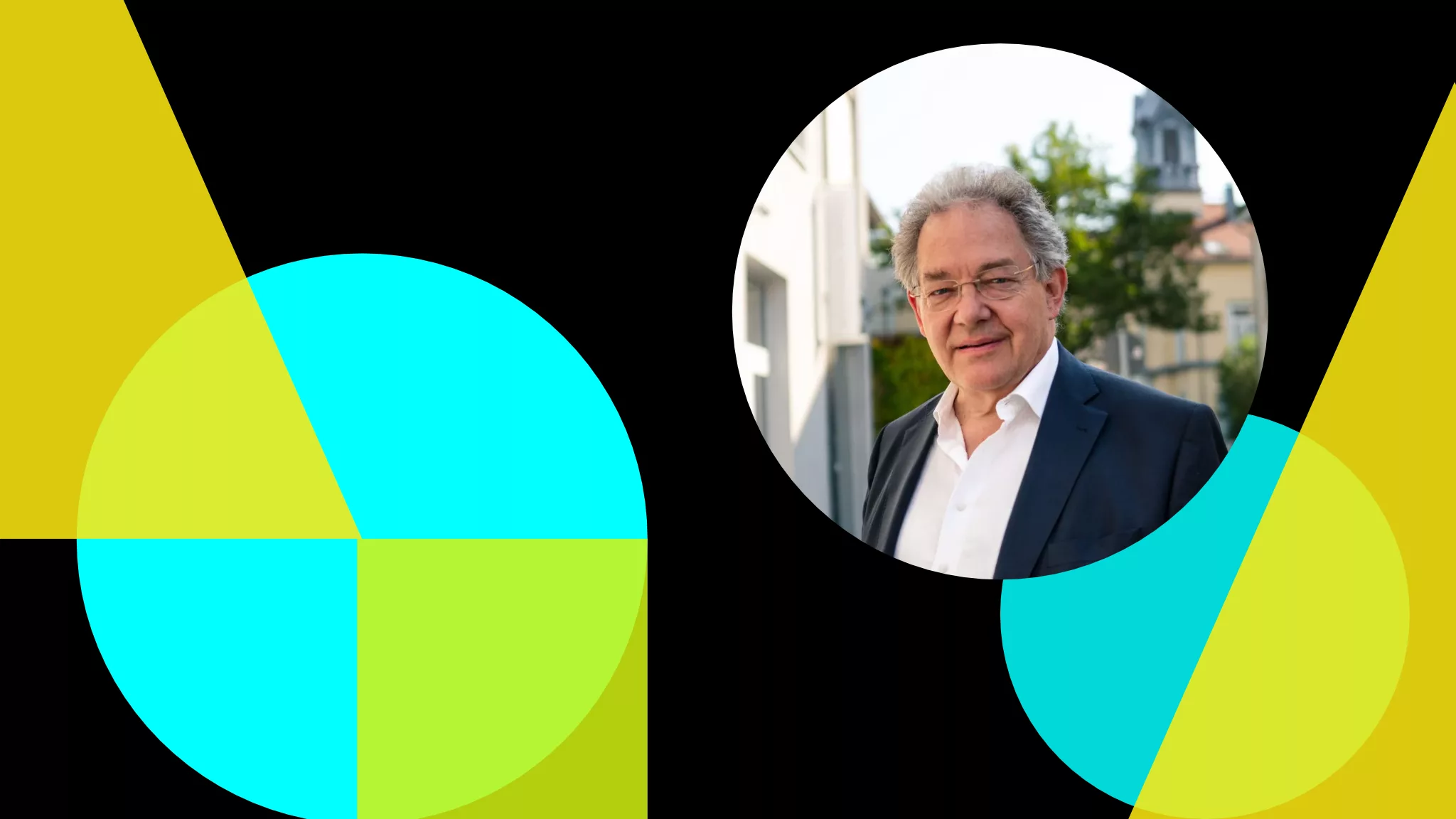
    “AI ethics and society” is a new series of articles written by members of the Cyber Valley Public Advisory Board (PAB) on ethical issues surrounding AI. In this first article from the series, Deputy Spokesperson of the PAB and former Director of the World Ethos Institute Tübingen, Ulrich Hemel reflects on Yoshua Bengio’s lecture at Cyber Valley Day and whether it is possible to embed “objective” ethical values into AI models.

    Daten sind Macht [Data is power] is the title of a new book by Katharina Schüller. How we deal with power is an eternal question. Does the state exert control? Does civil society have control? Or do companies regulate themselves? Since all researchers deal with data, data ethics is important even if it is ignored.

    Cyber Valley is currently the only major AI institution in the world to have established a Public Advisory Board to examine the social and ethical issues surrounding AI. The members are appointed by the Ministry of Science in Baden-Württemberg and represent diverse perspectives, professions, and roles. The Public Advisory Board’s task is to provide expert guidance on ethical issues and to advise stakeholders in Cyber Valley on the societal and political implications of AI. After all, ethical questions concern not only the individual but also how we all live together: Political ethics comes into play alongside individual ethics.

    The “outbreaks” of AI agents from their test environments in the summer of 2026 demonstrate just how critical ethical issues have become. Who is responsible? Should the company or should the government be held responsible for implementing the necessary regulations? And how should we act—as individuals, as companies, as a society?
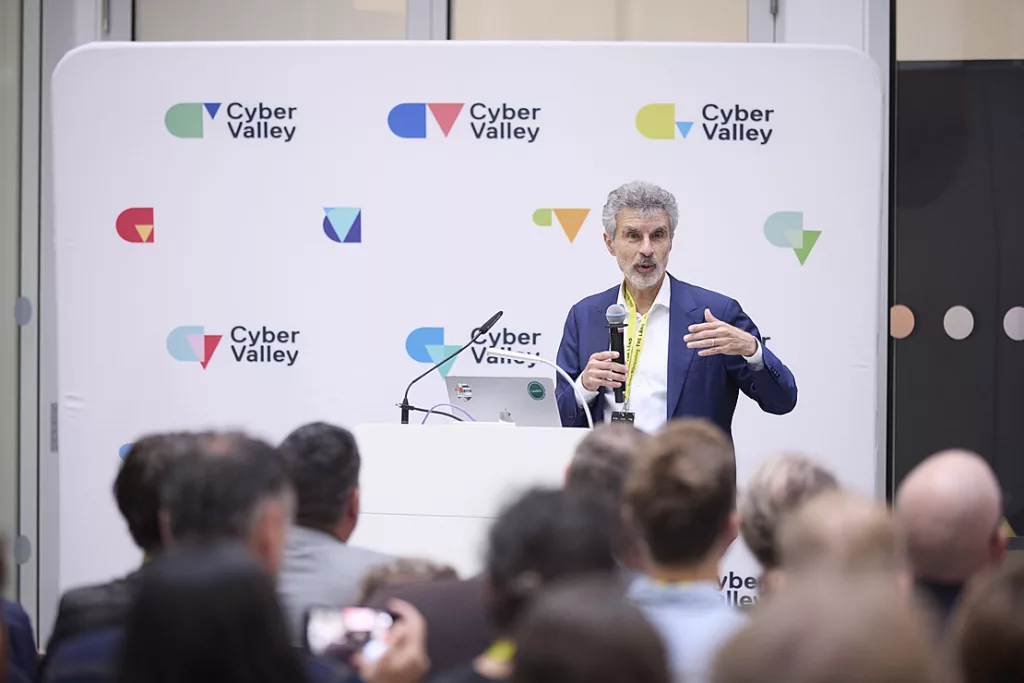
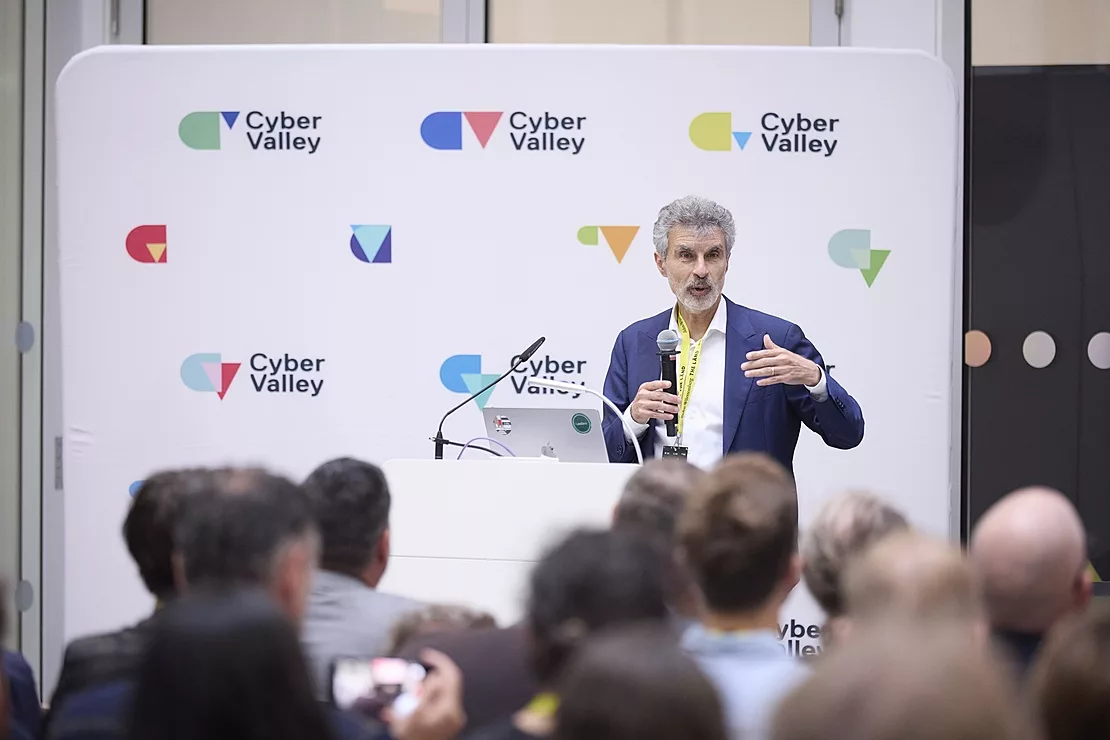
    Yoshua Bengio at Cyber Valley Day on September 9, 2026. Photo: Christian Borth

    At Cyber Valley’s tenth anniversary celebrations, Yoshua Bengio presented his idea of value-based AI development as objectively as possible. That sounds good, but what’s behind it? After all, when it comes to ethical questions, it’s clear that they cannot be considered apart from one’s own perspective. It makes a difference whether I am female or male, have children or do not have children, am disabled or not, and whether I approach a topic as a young researcher from the Global South or as an older white scientist from Europe. In other words, values and principles are always accompanied by perspectives and interests, some of which we are aware of, and some of which arise “implicitly” from the reality of our lives.

    The idea of “objective” ethics therefore does not hold up to philosophical scrutiny. We can make our positions transparent, and we can refer to overarching principles such as “humanity.” We can collect relevant data and possibly agree on which data should be considered “relevant.” We can and we should opt for “ethics by design” but we must transparently show our ethical standpoint and background. As a matter of fact, we can never avoid context-dependent interpretations.

    When taking an ethical perspective, it is therefore difficult to claim that one can or even wants to embed “objective” ethical values into AI models. On the contrary, anyone who neither recognizes nor transparently acknowledges their own limitations and perspectives lacks either the necessary reflection or transparency regarding their own contextual assumptions.
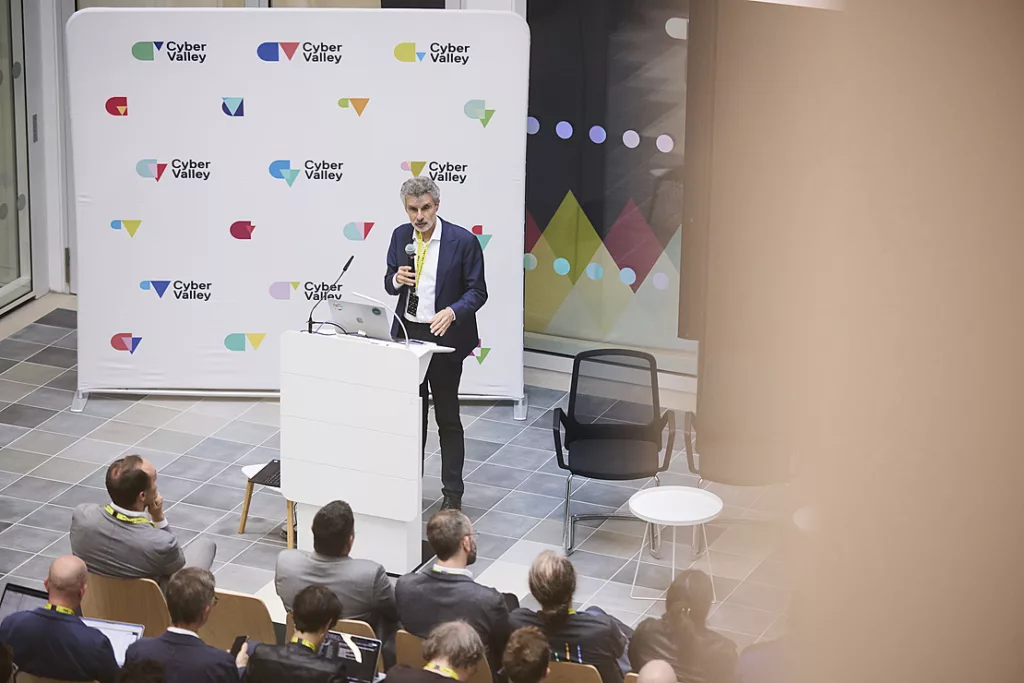
    Yoshua Bengio at Cyber Valley Day on September 9, 2026. Photo: Christian Borth

    Yoshua Bengio’s lecture could therefore serve as an invitation to a broader conversation. What assumptions do we bring to our research? How can we disclose the premises of our own research and thereby bring them into the realm of public discussion? How do we avoid the tactics of instrumental and “combative” ethical rhetoric, in which ethical terms are used unethically because they are primarily aimed at advancing one’s own interests?

    The appeal of a good, public ethical discourse is that it yields long-term benefits for how we live together in society. When different perspectives are given a voice, diversity becomes tangible in a positive sense, while raising awareness of risks and opportunities. Such risks can easily be overlooked—even when they are without any malicious intent—when we avoid such discourse.

    The same applies to Cyber Valley: in the medium term, improved skills in the art of ethical argumentation and dialog will be reflected in an improved breadth and depth of research. And that’s exactly what it’s all about: the invitation to think about the consequences and prerequisites in the context of AI research, always with the big question: What kind of world do we want to live in? The discussion on this is open; the invitation to it stands!

    Further reading

    Ulrich Hemel, From Wild West to a World in Balance: AI and the Future of Global Civil Society, in: Reinhard Kahle, Harald Mieg, and Michael Resch (eds.), AI and Society, Jahrbuch Wissenschaftsforschung 2024 der Gesellschaft für Wissenschaftsforschung (Berlin: University Publishing, 2026), pp. 133–155. 

    Ulrich Hemel, Datenethik zwischen gesellschaftlichem Anspruch und betrieblicher Praxis, in: Andreas Gillhuber, Göran Kauermann, Wolfgang Hausner (eds.), Künstliche Intelligenz und Data Science in Theorie und Praxis, Von Algorithmen und Methoden zur praktischen Umsetzung in Unternehmen (Berlin: Springer, 2023), pp. 93–105. 

    Katharina Schüller, Daten sind Macht, Kompetentes Entscheiden im Zeitalter von KI (Frankfurt/M. und New York: Campus 2025).

    Stay tuned for further perspectives from the Cyber Valley Public Advisory Board on “AI ethics and society”.

  • Fremdsprachensekretär:in

    Die Geschäftsstelle des Exzellenzclusters „Maschinelles Lernen – Neue Perspektiven für die Wissenschaft“ sucht für die administrative Unterstützung zum nächstmöglichen Zeitpunkt eine:n         

    Fremdsprachensekretär:in (m/w/d, E 9a TV-L, 50%)

    befristet bis zum 31.12.2032.

    Das Aufgabengebiet umfasst die administrative Unterstützung der Professur “Machine Learning Methods in Business and Economics” und dabei insbesondere die

    • selbstständige Korrespondenz mit (inter)nationalen Wissenschaftler:innen
    • Unterstützung bei allen administrativen Angelegenheiten, insbesondere bei der Bewirtschaftung von Drittmitteln und der Personalverwaltung
    • Betreuung von in- und ausländischen Mitarbeiter:innen und Gastwissenschaftler:innen
    • Unterstützung der Geschäftsführung bei der Finanzverwaltung
    • Organisation und Durchführung von Konferenzen und Workshops mit in- und ausländischen Teilnehmer:innen inkl. technische Betreuung
    • und vielfältige allgemeine Sekretariatsaufgaben.

    Vorausgesetzt wird eine einschlägige Ausbildung im Bereich Fremdsprachensekretariat oder eine vergleichbare Qualifikation. Englisch ist als Fremdsprache obligatorisch, als zweite Fremdsprache wird Französisch vorausgesetzt.

    Gute Kenntnisse im Umgang mit Office- und Internetanwendungen werden ebenfalls vorausgesetzt. Berufserfahrungen aus Verwaltungstätigkeiten in Hochschulen oder forschungsnahen Einrichtungen sind von Vorteil.

    Erwartet wird sowohl die Fähigkeit zu selbständiger Arbeit als auch zur Arbeit nach Vorgaben. Zuverlässigkeit, Engagement, Kommunikationsfähigkeit sowie Flexibilität und die Bereitschaft, sich in Neues einzuarbeiten runden Ihr Profil ab.

    Sie bieten einen interessanten, vielseitigen Arbeitsplatz mit Gestaltungsspielraum in einem motivierten Team und einem international geprägten Umfeld.

    Die Universität Tübingen setzt sich für die Ziele der Gleichstellung und Diversität ein und fördert aktiv Chancengleichheit. Schwerbehinderte werden bei gleicher Eignung bevorzugt eingestellt.

    Ihre Bewerbung mit den üblichen Unterlagen schicken Sie bitte per E-Mail als eine einzige PDF-Datei bis zum 6. November 2026 an die Geschäftsstelle des Exzellenzclusters (ml-in-science@uni-tuebingen.de).

    Die Einstellung erfolgt durch die Zentrale Verwaltung der Universität Tübingen.

  • Success stories from the Cyber Valley Innovation Campus: July–September 2026

    Success stories from the Cyber Valley Innovation Campus: July–September 2026

    The Cyber Valley Innovation Campus brings top scientists to Baden-Württemberg to advance AI and robotics research. These scientists are paving the way for the application of their research for the benefit of people, industry, and society.

    Members of the Cyber Valley Innovation Campus include the Max Planck Institute for Intelligent Systems (MPI-IS), Universities of Tübingen and Stuttgart, Fraunhofer IAO and IPA, ELLIS Institute Tübingen, and Karlsruhe Institute for Technology (KIT). As leading research institutions, they have announced the following exciting developments between July and September 2026.

    Frank Allgöwer recognized for outstanding scientific contributions

    The European Control Association (EUCA) and the Asian Control Association (ACA) have welcomed Frank Allgöwer as a fellow, recognizing his outstanding contributions to the field of systems and control engineering. Allgöwer is the first European to become a fellow at the ACA, which is one of the highest honors bestowed by the Asian control engineering community. Read more.

    Jakob Macke and Kashyap Chitta join the ELLIS Institute Tübingen

    Jakob Macke and Kashyap Chitta have joined the ELLIS Institute Tübingen, both as Principal Investigators and Hector Endowed Fellows.

    Macke is already an established figure in the Tübingen machine learning and computational neuroscience ecosystem and will shape the Institute’s research direction. Read more.

    Chitta is an expert in autonomous systems and physical AI, and will lead a new research group: the Physical AI Lab. The group focuses on understanding how machines interact with the physical world. Read more.

    Andrea Iannelli awarded ERC Starting Grant

    The European Research Council (ERC) is providing EUR 1.65 million in funding for Andrea Iannelli’s research project on autonomous systems that can adapt to complex tasks and changing environments while in operation. Gaining a Starting Grant is considered a highly prestigious achievement for early-career researchers in Europe. Read more.

    Marcel Binz joins the Max Planck Institute for Biological Cybernetics

    Marcel Binz has begun his research on a unified theory of human cognition using computational models at the Max Planck Institute for Biological Cybernetics. These models aim to simulate, predict, and explain human behavior in diverse situations.

    Binz’s research examines the central building blocks of human cognition by addressing three challenges: 1) the technical challenge of building such models in the first place; 2) the scientific challenge of using these models to understand human cognition; 3) the applied challenge of translating this into real-world applications. Read more.

    AI Incubator alumni SKAI receives EXIST Startup Grant

    SKAI participated in the Cyber Valley AI Incubator in 2024 to develop a company that applies AI for the cosmetics industry. With the support of the EXIST Startup Grant, the team will be able to focus on developing SKAI and preparing for its launch in the coming months. Read more (German).

    Ontic Labs and Feyer selected for SPRIND’s Next Frontier AI Challenge

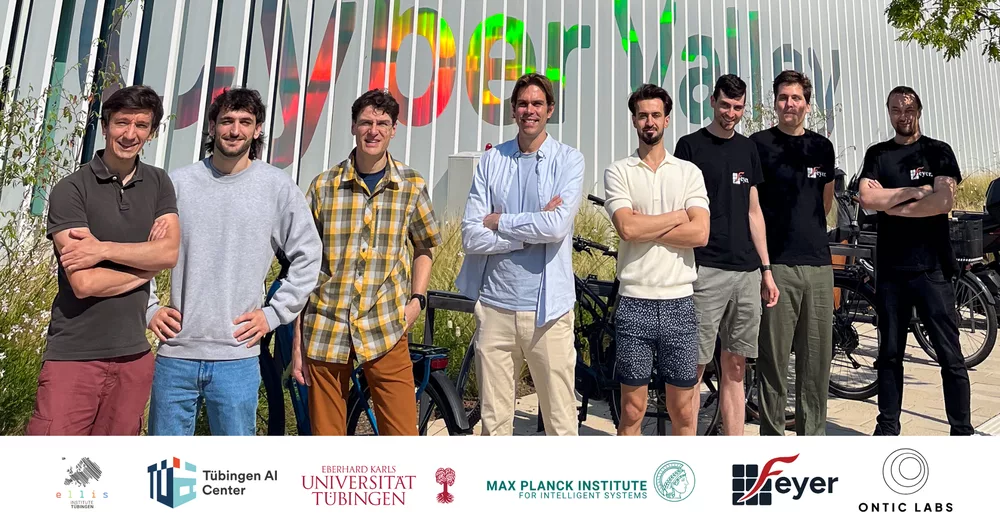
    Ontic Labs and Feyer were selected for the first stage of the German Federal Agency for Breakthrough Innovation’s (SPRIND) Next Frontier AI Challenge. The two start-ups are both spin-outs from institutions from the Cyber Valley Innovation Campus, including the ELLIS Institute Tübingen, Max Planck Institute for Intelligent Systems, Tübingen AI Center, and the University of Tübingen. Each team will receive €3 million to develop technologies that go beyond today’s AI models. Read more. 

    Makysm Andriushchenko co-founds Exponential Security Labs

    Makysm Andriushchenko has co-founded the start-up Exponential Security Labs. Andriushchenko is a Principal Investigator at the ELLIS Institute Tübingen and leads the AI Safety and Alignment group.

    The Tübingen-based start-up aims to improve the security and reliability of AI agents. Its work is based on decades of basic research in adversarial robustness and AI safety, showcasing how AI research can be applied to solve real-world problems. Read more.

    EIT awards funding for the C-VENTURE project

    The University of Tübingen has successfully applied for funding from the EIT (European Institute of Innovation and Technology) Higher Education Initiative together with five partner universities and innovation partners. The funding will support the C-VENTURE Project, of which the Tübingen Startup Center is a part. The Project will connect the fragmented initiatives that support entrepreneurship and knowledge transfer from thet different universities into a cohesive system. Read more (German). 

    Stay up to date with the latest news and success stories from Cyber Valley by registering for our email newsletter.

  • Last month at Cyber Valley: September

    Last month at Cyber Valley: September

    There was a lot happening at Cyber Valley last month. Here’s a quick roundup of our highlights from September. Find out how Cyber Valley’s mission to translate excellent research into real-world applications for a better future for everyone came to life.

    Celebrating ten years of the Cyber Valley Innovation Campus: Cyber Valley Day 2026

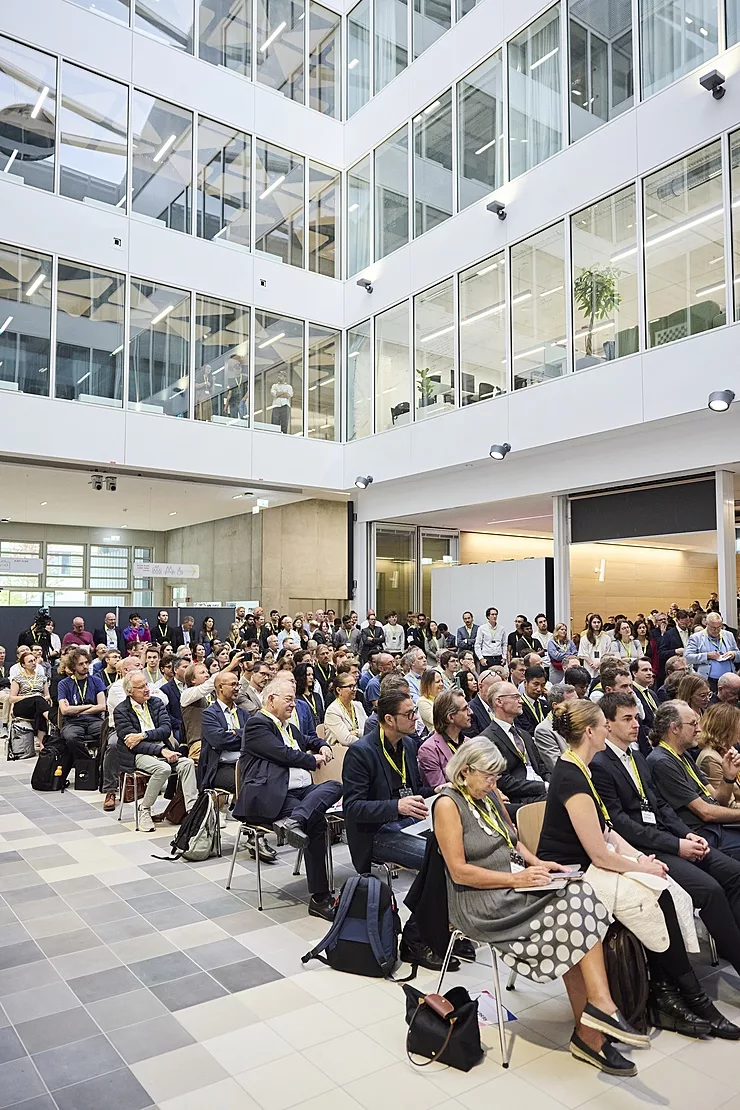
    On September 9, more than 850 guests came to Tübingen to celebrate a very special milestone: ten years of the Cyber Valley Innovation Campus. Researchers, start-ups, investors, policymakers, partners from industry and society, as well as many other guests gathered for a day full of inspiring talks, surprising keynotes, a research exhibition, start-up presentations, investor sessions, and networking.

    Read the full article about our anniversary event here.

    Cyber Valley Day
    Copyright: Christian Borth

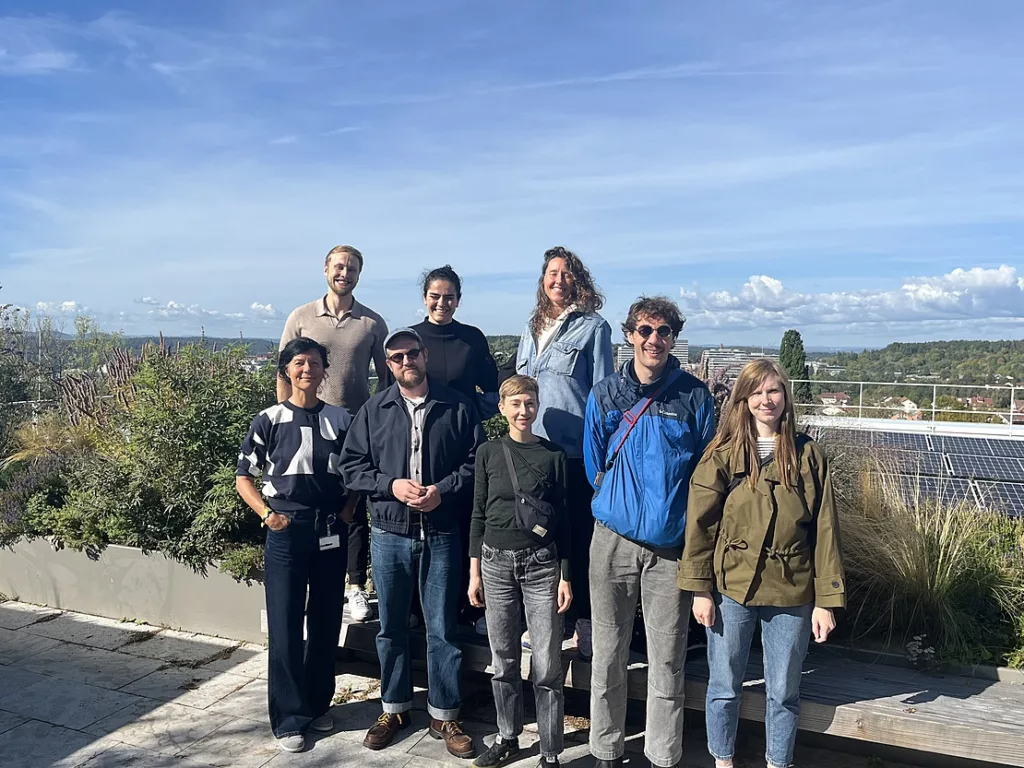
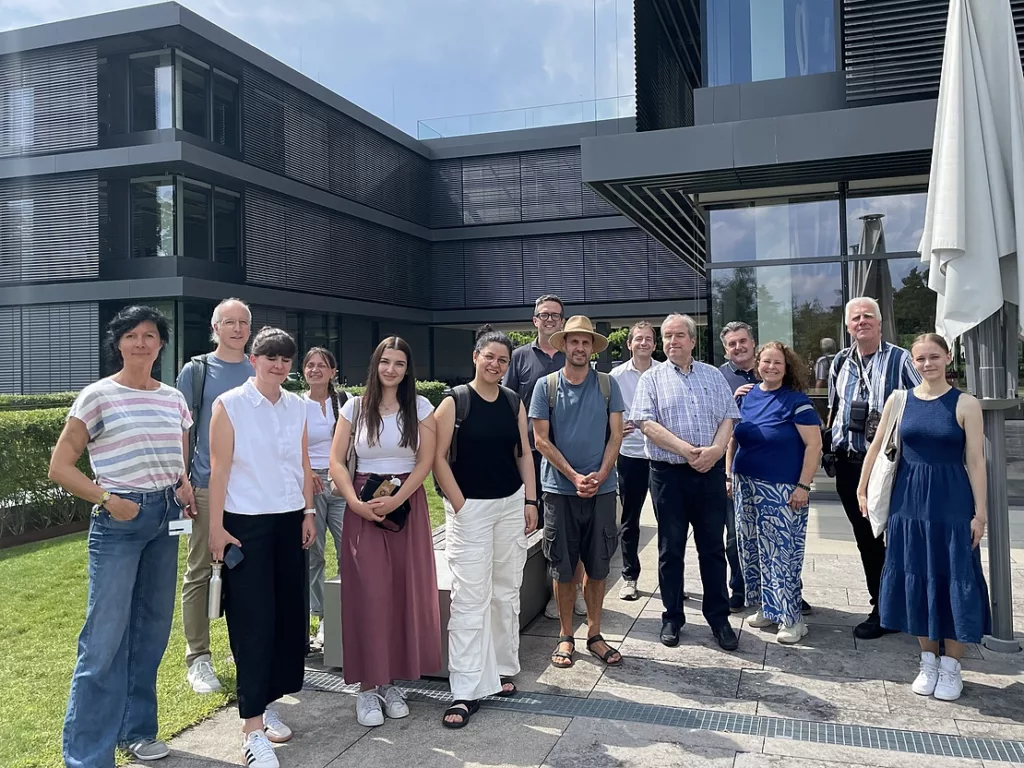
    Welcoming Tech Fellowship journalists from Publix Berlin

    On September 17, we welcomed participants of the Tech Journalism Fellowship from “Publix Berlin – Haus für Journalismus und Öffentlichkeit” in Tübingen. The group included Fatemeh Khodadadian, Bastian Hosan, Sonja Peteranderl, Jonathan Kemper, and Carina Schroeder, accompanied by Dr. Eva von Grafenstein.

    This year’s fellowship focuses on the topic of “Ethical AI” and brings together journalists from Tagesspiegel Background, DER SPIEGEL, Deutschlandfunk, heise, WIRED, and DIE ZEIT for a year of exploring and reporting on artificial intelligence.

    As part of a week-long visit to Baden-Württemberg to learn about the region’s AI ecosystem, the fellows gained insights into research activities and technology transfer across our Innovation Campus. Our discussions also addressed current developments, open questions, and challenges in AI and robotics.

    TECH_Journalists
    Copyright: Cyber Valley

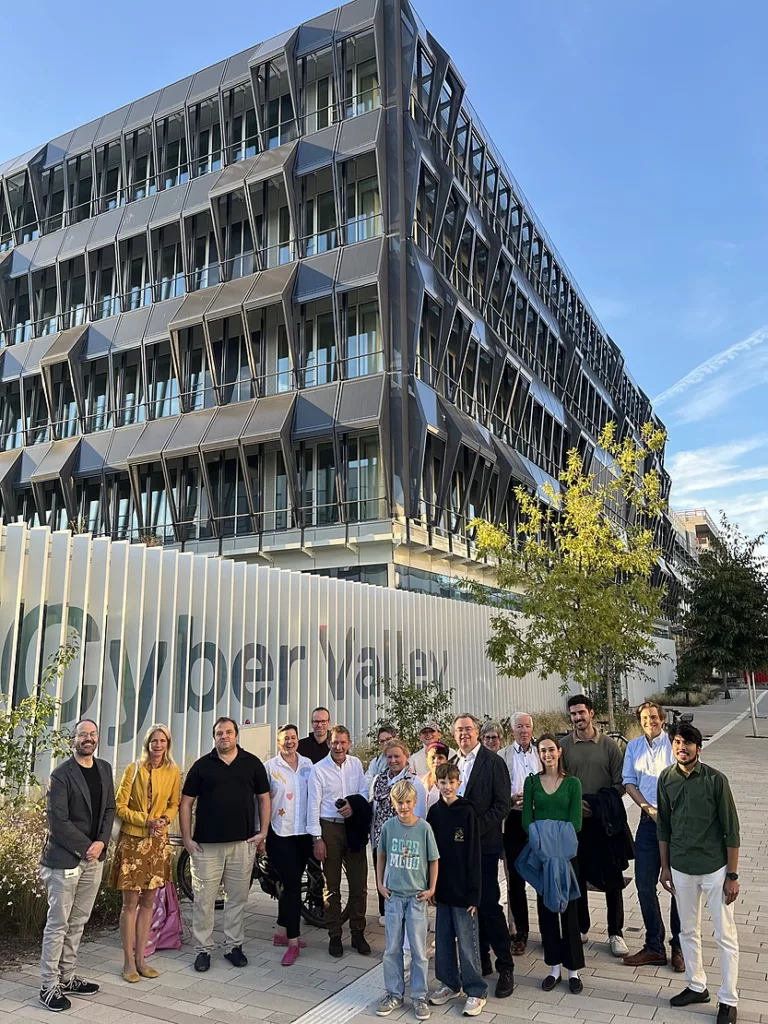
    Visit of Rotary Club Rottenburg in Tübingen

    On September 23, members of the Rotary Club Rottenburg visited our campus in Tübingen for an introduction to our ecosystem and our activities at the intersection of AI, research, and innovation.

    CEO Florian Mayer guided the visitors through the building, offering insights into the history of the campus. Silke Dutz introduced the Innovation Campus, its mission, and its role in advancing AI research and technology in the region.

    The visit was organised by Benjamin Jetter and Melanie Jetter in collaboration with the Rotary Club Rottenburg and provided an opportunity to learn more about Cyber Valley and engage in discussions about the region’s innovation landscape.

    RotaryClub Reutlingen
    Copyright: Cyber Valley

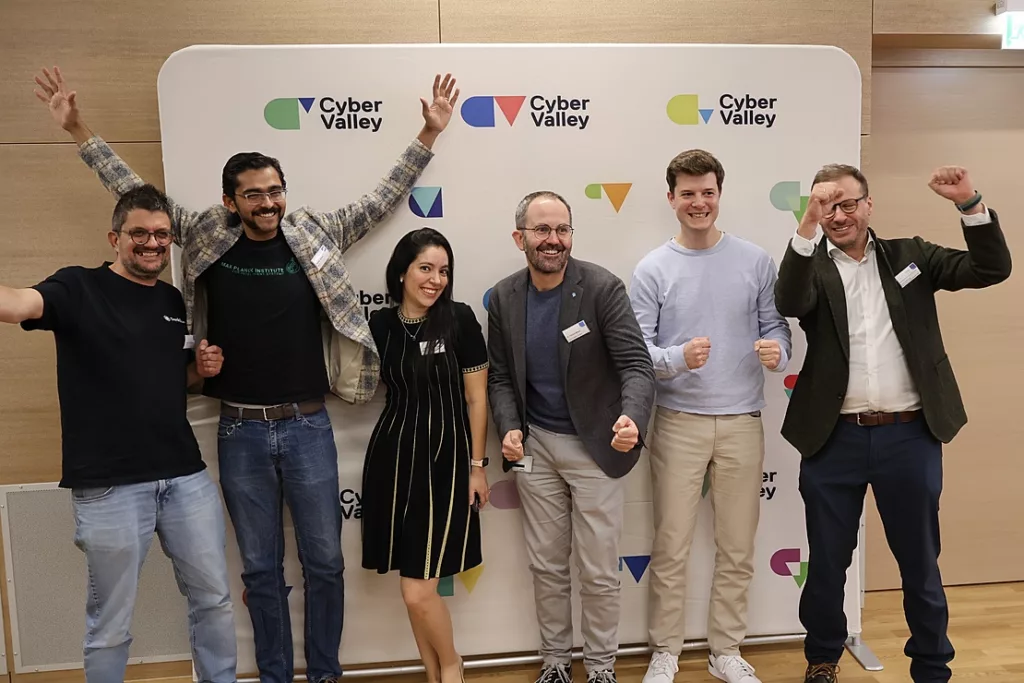
    Co-Hosting event with Marketing Club Neckar-Alb 

    On September 24, Cyber Valley and the Marketing Club Neckar-Alb e.V. co-hosted an evening dedicated to startups, technology, and knowledge transfer in Tübingen.
    Moderated by Christoph Koppensteiner, the event opened with a conversation with our CEO Florian Mayer followed by presentations from four startups from our Start-up Network. The Start-ups introduced their businesses, technologies, and current activities:

    • Maddox AI, represented by Cornelius Widmaier
    • Spotium, represented by Patrick Duffner, who stepped in for Lisa Raab and Nico Raab
    • DenkBox GmbH, represented by Hannes Planatscher
    • MaiTY, represented by Partha Ghosh and Valentina Rodríguez Pasmiño

    A subsequent panel discussion explored emerging technologies, new applications, and the opportunities and challenges AI presents for businesses and society. The evening concluded with networking over food and drinks, providing participants with further opportunities to exchange ideas and establish connections.

    Marketing Club Neckar-Alb e.V.
    Copyright: Cyber Valley

    Open Lab Day at KI-Fortschrittszentrum Stuttgart

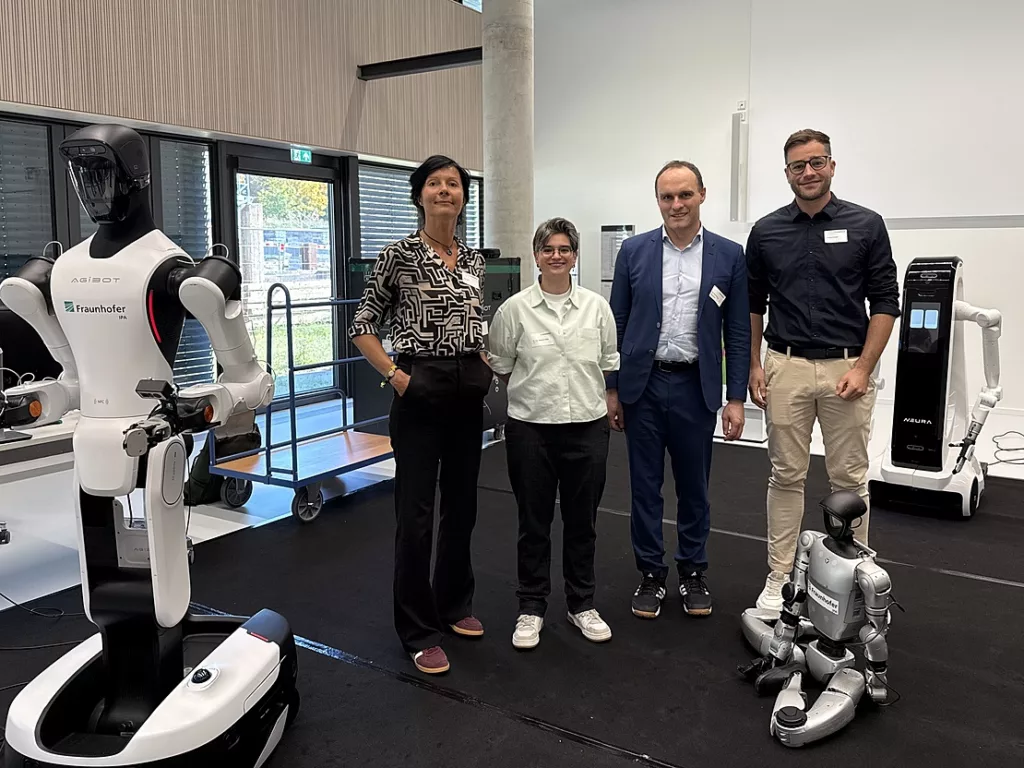
    On September 30, we participated in the Open Lab Day of the KI-Fortschrittszentrum in Stuttgart. Organised by Fraunhofer IAO, Fraunhofer IPA, and the Institute of Human Factors and Technology Management (IAT) at the University of Stuttgart, the event welcomed more than 120 participants from industry and research.

    The programme focused on the practical application of AI and robotics, addressing both technological possibilities and regulatory considerations. As a partner of the KI-Fortschrittszentrum, we contributed to the event with a welcome adress and an introduction to our ecosystem and role in advancing AI research and innovation.
    Participants gained insights into a range of current topics, including generative and agentic AI, humanoid robotics, AI compliance, and the EU AI Act. Guided tours of the Reallabor provided hands-on insights into practical applications, featuring demonstrations of AI-based quality inspection, service assistants, humanoid robots, intelligent process control, and AI-supported document processing.

    The event offered a great opportunity for exchange between companies, researchers, and robotics experts, showing the wide range of innovative technologies, research activities, and practical applications developed across our Innovation Campus.

    Open Lab Day of the KI-Fortschrittszentrum
    Copyright: Cyber Valley
  • 2023: Three new AI institutes at Cyber Valley

    2023: Three new AI institutes at Cyber Valley

    In 2016, important actors from science, industry, and politics founded the Cyber Valley Consortium, which became the first Innovation Campus in Baden-Württemberg. Ten years on in 2026, we’re revisiting the most significant milestones from the last decade. Each month, we’ll focus on a particular year since Cyber Valley’s beginning. 

    This month, we’re looking back to 2023, when three new AI institutions within the Cyber Valley Innovation Campus were founded: the Institute for Artificial Intelligence at the University of Stuttgart, the Tübingen AI Center, and the Center for Bionic Intelligence Tübingen Stuttgart. Since 2023, these institutes have played a key role in advancing Cyber Valley’s mission: turning excellent AI and robotics research into a better future for all. Below, we recount why these institutes were established, their main achievements, and their future plans.

    Center for Bionic Intelligence Tübingen Stuttgart (BITS)

    The Center for Bionic Intelligence Tübingen Stuttgart (BITS) was founded to establish a new approach for integrating intelligent technical systems with humans. It aims to improve understanding and treatment of certain neurological and psychiatric diseases and develop individually tailored medical aids for patients. BITS brings together scientists from four institutions: the Universities of Stuttgart and Tübingen, and the Max Planck Institutes for Intelligent Systems and for Biological Cybernetics.

    Since its founding in 2023, its main achievements include new in-body agents that can be controlled inside living animals to stimulate movement behavior and novel on-body soft devices to suppress the shaking body in tremor patients. The latter received the 2025 innovation prize of the German Parkinson Foundation. In the future, BITS will go beyond medical devices to investigate and develop hybrid cybernetic control-loop systems that closely integrate humans and technology, including in the fields of ergonomics and occupational health and safety research.

    BITS
    BITS at Cyber Valley Day on September 9, 2026. Photo: Christian Borth

    The Institute for Artificial Intelligence, University of Stuttgart

    The Institute for Artificial Intelligence at the University of Stuttgart was founded to undertake internationally outstanding AI research while supporting its transfer for the benefit of industry and society. The Institute also aims to reflect on AI’s societal impact by monitoring AI and ensuring AI compliance through joint research with industries, the humanities, and social sciences.

    Since 2023, the Institute has celebrated several important milestones. By drawing on physical principles, the Institute has created more reliable machine learning models that have applications in molecular and materials simulations. Moreover, PhD student Bo Xiong won the award for the best computer science dissertation of the German-Austrian-Swiss Association for Computer Science. Meanwhile, the Institute’s spin-off company, Semanux GmbH, is helping those with motor disabilities to participate in the digital sphere without support of third parties.

    In the future, the Institute plans to develop reliable AI methods that support scientists and engineers. It will accelerate the discovery of new drugs and materials, while developing new engineering products. A further goal is to enable non-experts to adapt and co-design robotic systems that they work and interact with.

    Institute of Artificial Intelligence, University of Stuttgart in June 2026. Photo: Universität Stuttgart/Uli Regenscheit
    Institute of Artificial Intelligence, University of Stuttgart in June 2026. Photo: Universität Stuttgart/Uli Regenscheit

    Tübingen AI Center, University of Tübingen

    In 2023, the Tübingen AI Center at the University of Tübingen was established as a permanent national AI center. The Center aims to shape the next generation of machine learning and develop more robust, efficient, and accountable learning systems.

    Since its establishment as a national AI competence center, the Tübingen AI Center has played a key role in strengthening the region’s research and innovation ecosystem. It has brought together more than 300 scientists across 32 research groups and has established strong links between research, education, and entrepreneurship. Its growing technology transfer activities have helped turn research into products, tools, and start-ups.

    Looking ahead, the Center plans to appoint more professors and increase its transfer activities even further. Recent spin-offs, including two Tübingen-affiliated teams selected for SPRIND’s Next Frontier AI program in 2026, and several focused research organizations, illustrate what this may entail.

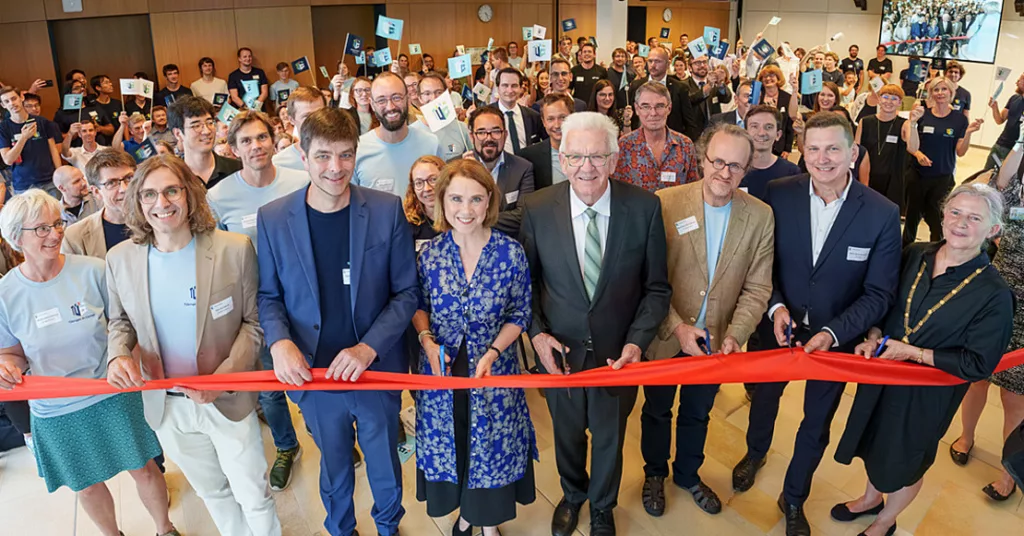
    Kick-Off des Tübingen AI Centers am 18.Juli 2023 in Tübingen mit Ministerpräsident Winfried Kretschmann, Ministerin für Hochschulen, Forschungs- und Kunsteinrichtungen Petra Olschowski, Parlamentarischer Staatssekretär des BMBF, Mario Brandenburg
    Inauguration of the Tübingen AI Center in 2023. Photo: Wolfram Scheible

    To celebrate Cyber Valley’s ten-year anniversary, we’ll be sharing a variety of content across our website and social media channels reflecting on milestones from the last decade. Stay tuned for the next installments!

  • Cyber Valley Day 2026

    Cyber Valley Day 2026

    On September 9, more than 850 guests came to Tübingen to celebrate a very special milestone: ten years of the Cyber Valley Innovation Campus. Researchers, start-ups, investors, policymakers, partners from industry and society, as well as many other guests gathered for a day full of inspiring talks, surprising keynotes, a research exhibition, start-up presentations, investor sessions, and networking.

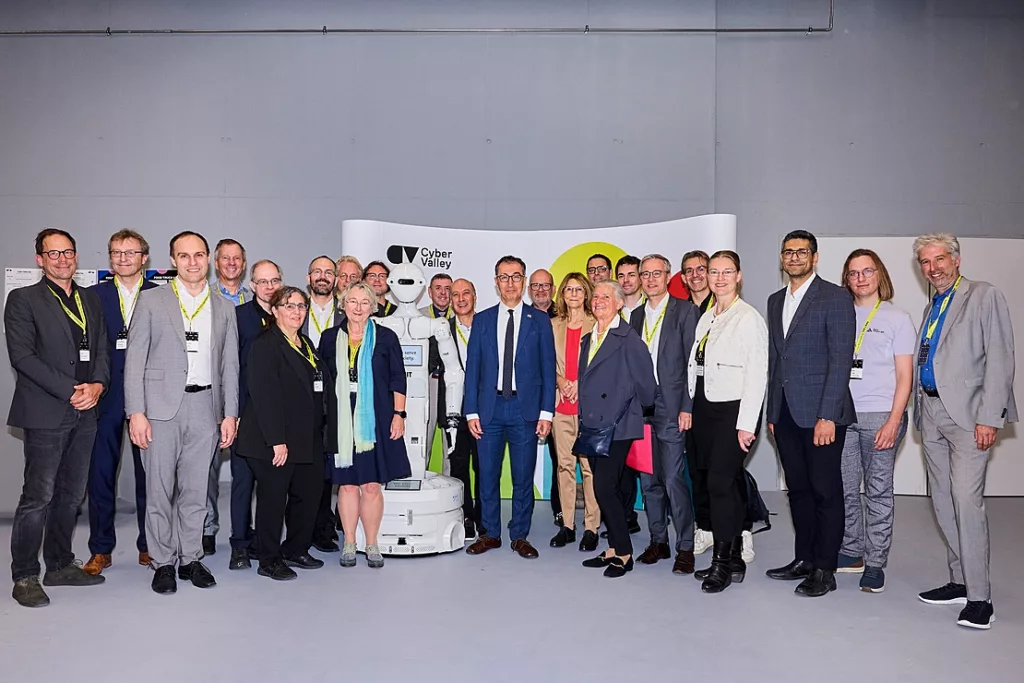
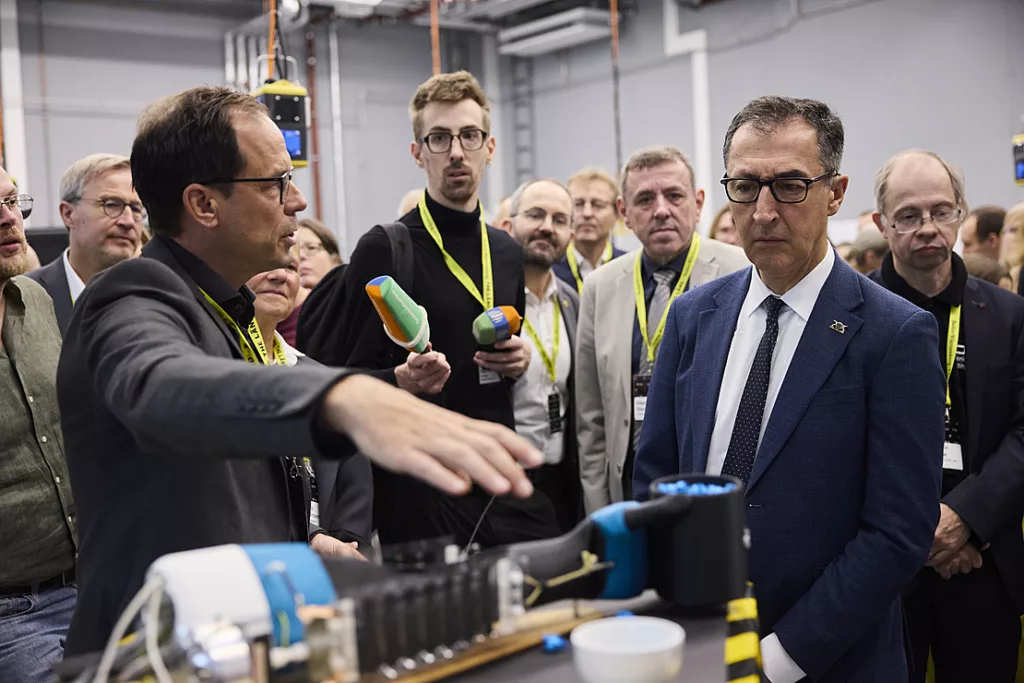
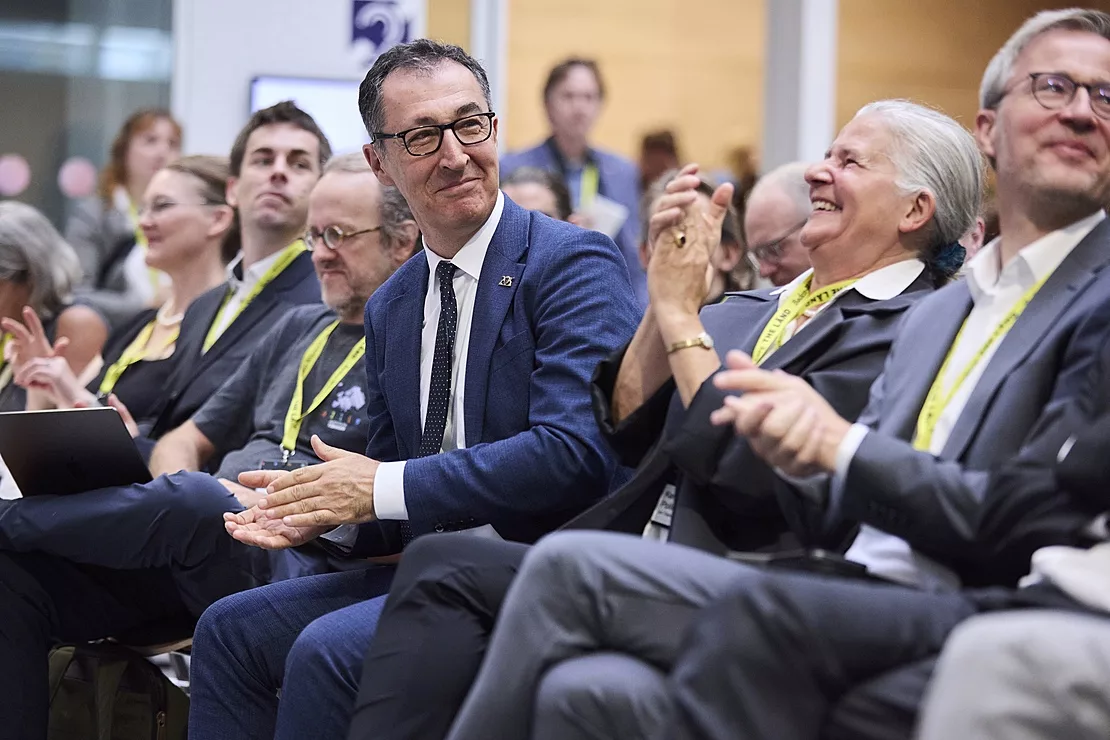
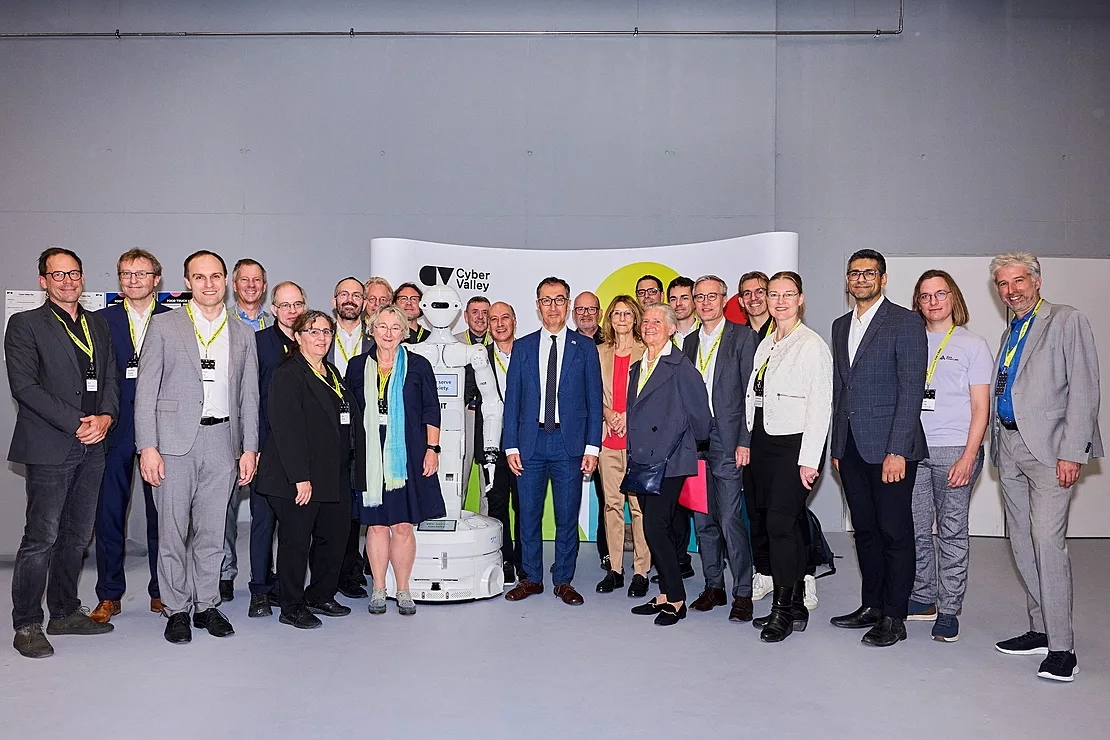
    Cyber Valley Day opened with welcome addresses from leading representatives from politics, science, and our Innovation Campus: Moritz Hardt, Director at the Max Planck Institute for Intelligent Systems; Cem Özdemir, Minister President of Baden-Württemberg; Boris Palmer, Lord Mayor of Tübingen; Karla Pollmann, President of the University of Tübingen; Simone Schwanitz, Secretary General of the Max Planck Society; and Florian Mayer, Managing Director of Cyber Valley GmbH, welcomed guests to the anniversary celebration.

    Cem Özdemir_Minister President
    © Christian Borth

    Scientific program at the main stage

    Hosted by Linda Behringer, press officer at the Max Planck Institute for Intelligent Systems, the main stage program brought together voices from across the international AI and innovation landscape.

    A keynote by Manuela Veloso, Herbert A. Simon University Professor Emerita at Carnegie Mellon University, provided one of the early highlights of the day. Throughout the program, the Cyber Valley Voices sessions on the main stage featured leading researchers from across our Innovation Campus, including Bernhard Schölkopf from the ELLIS Institute Tübingen, Matthias Bethge from the Tübingen AI Center at the University of Tübingen, Tamim Asfour from the Karlsruhe Institute of Technology, Katherine J. Kuchenbecker from the Max Planck Institute for Intelligent Systems, Steffen Staab from the University of Stuttgart, and Werner Kraus from Fraunhofer IPA.

    In the Auditorium, C. David Remy and Philipp Rothemund from the University of Stuttgart, as well as Chandan Kumar from Fraunhofer IAO, shared insights into their research. The afternoon continued with a keynote by Alex Smola, CEO and co-founder of Boson AI, as well as a talk by Rafael Laguna de la Vera from the Federal Agency for Disruptive Innovation (SPRIN-D).

    © Christian Borth

    Surprise keynote speaker

    One of the biggest highlights of the day was our surprise keynote speaker: Yoshua Bengio, one of the pioneers of modern artificial intelligence. He has become one of the most prominent voices discussing the societal implications of AI, discussing questions regarding safety, and he calls for a responsible development of AI. Having Yoshua Bengio join us for our anniversary was very special!

    Cyber Valley Day 10 Year Anniversary
    © Christian Borth

    From excellent scientific ideas to real-world applications and impact

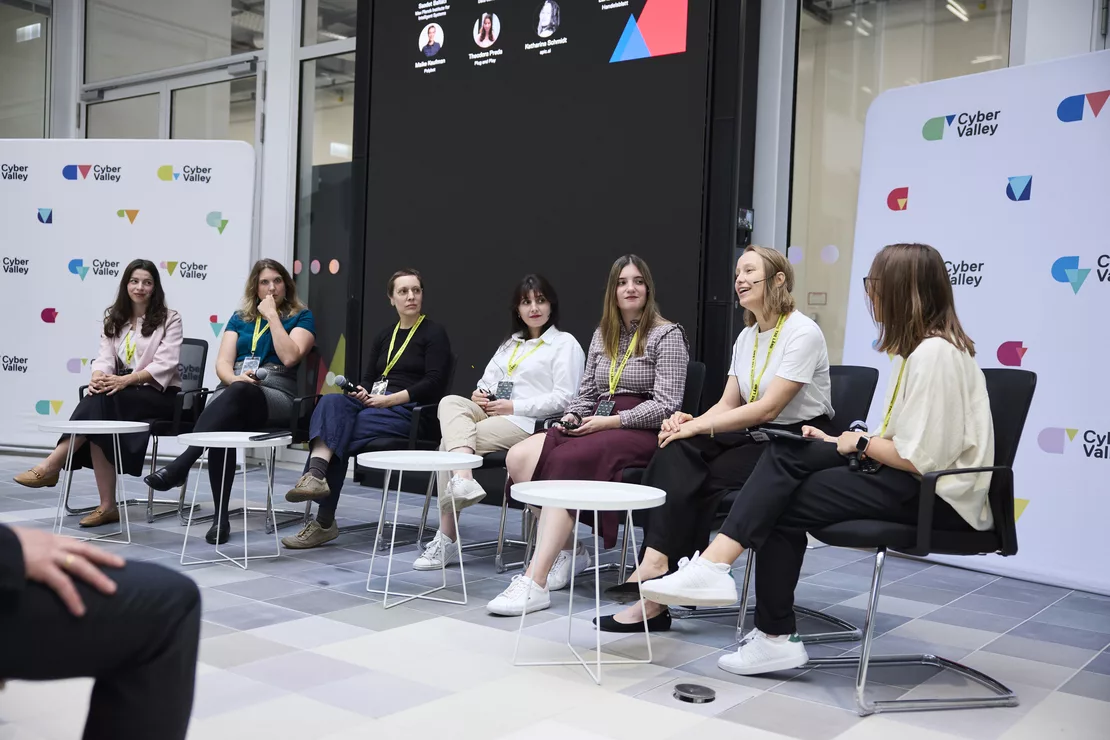
    The panel discussion “Building what’s next: How bold ideas move from research to impact” brought together researchers, founders, and innovation experts to discuss how ambitious ideas can move beyond research and into society and industry. Moderated by Larissa Holzki from Handelsblatt, the discussion featured Saadet Baltaci and Antonia Georgopoulou from the Max Planck Institute for Intelligent Systems, Aline Defranceski from Data Coffee, Maike Kaufman from Polybot, Theodora Preda from Plug and Play, and Katharina Schmidt from apic.ai.

    © Christian Borth

    The Cyber Valley Start-up Voices session offered further perspectives on innovation and entrepreneurship, with contributions from Prashanth Halady of Bosch, Mario Krenn of Feyer, and Jonas Müller of Black Forest Labs.

    Research from our Innovation Campus

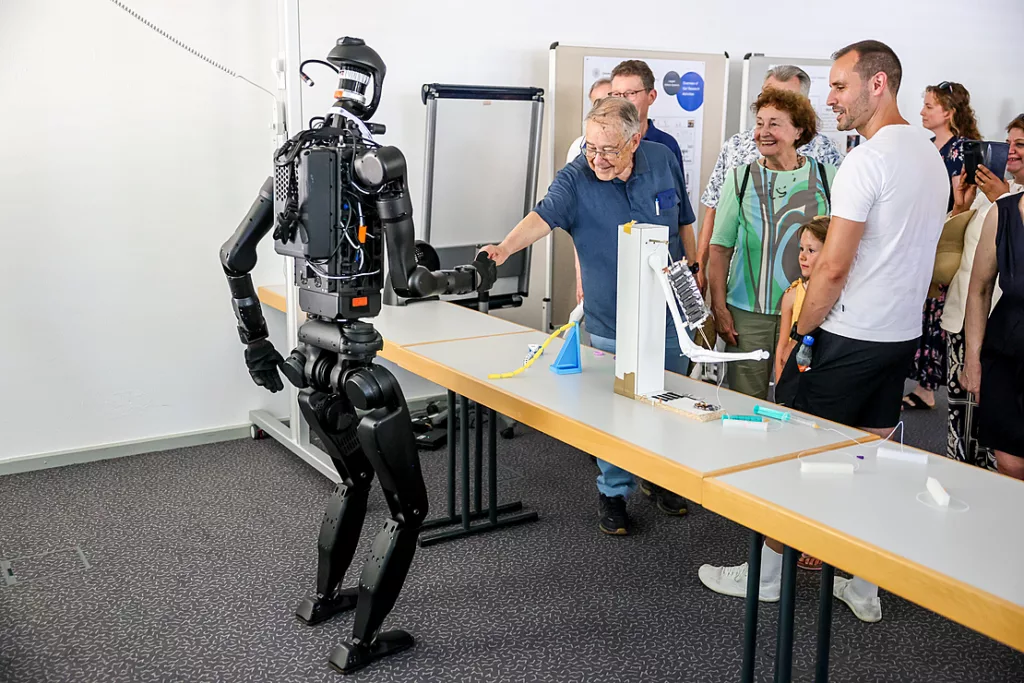
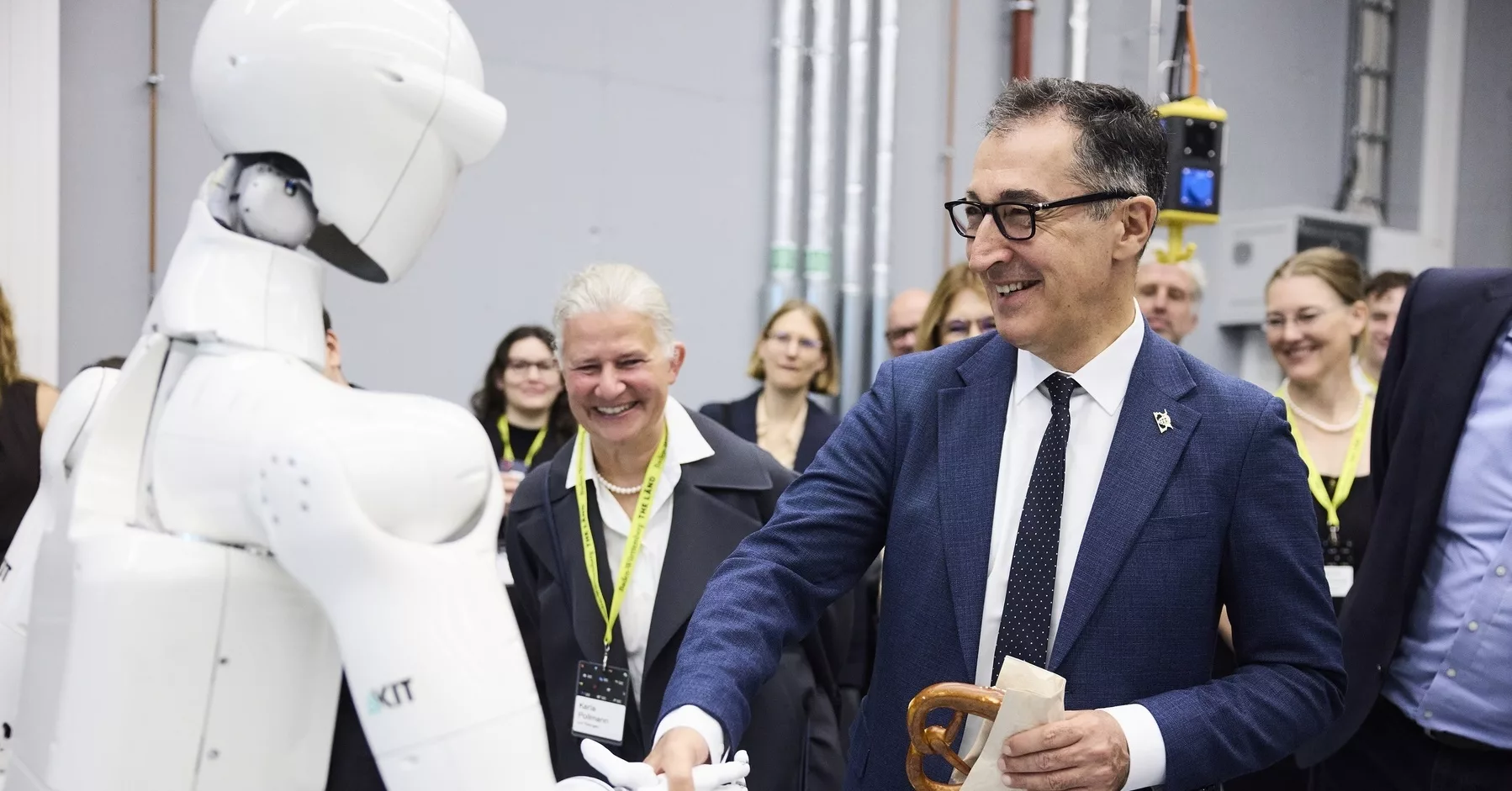
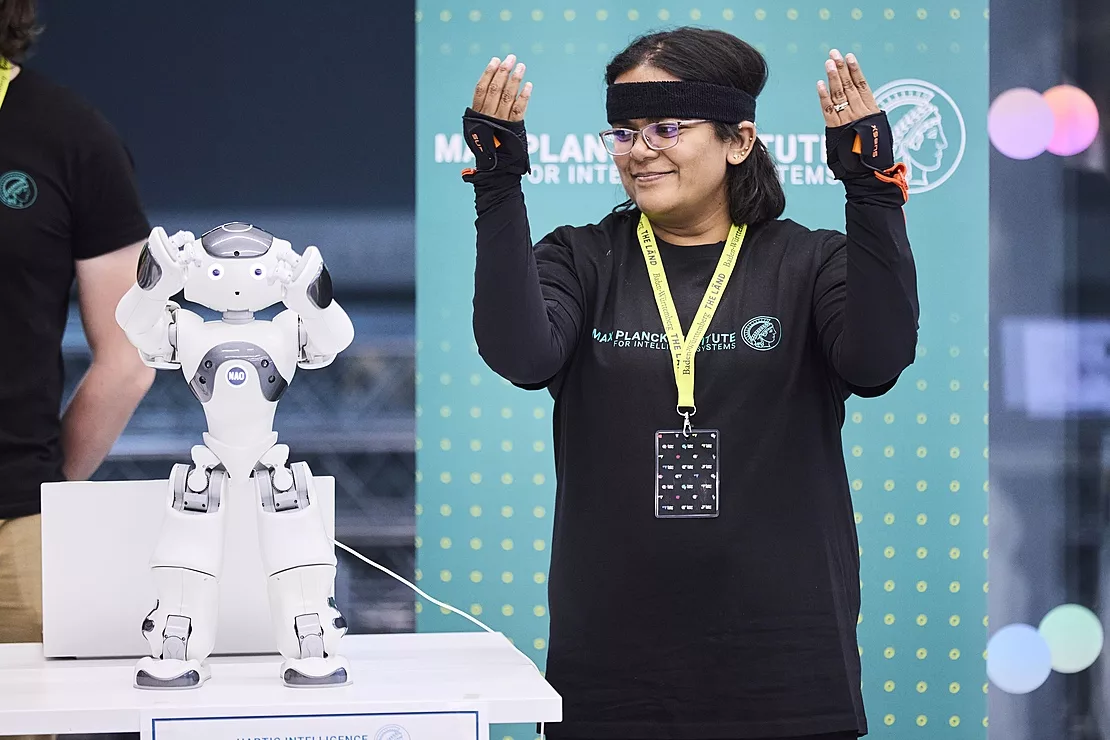
    The exhibition with more than 40 exhibitors on the ground floor brought together academic partners, research projects, and organizations from across our Innovation Campus, including the Max Planck Institute for Intelligent Systems, the Haptic Intelligence Department, Max Planck Foundation, the IMPRS-IS, the University of Stuttgart (IntCDC, IRIS, MLIP, KI-SIR), the University of Tübingen (ML Cluster, Tübingen AI Center), Bionic Intelligence Tübingen Stuttgart (BITS), ELLIS Institute Tübingen, Hertie Institute for AI in Brain Health, ARENA2036, BWKI, Cyber Valley GmbH and PAB, High Performance Humanoid Technologies Lab (H²T) from KIT, KE:SAI, Oktonex, Polybot, Prior Labs, and more!

    Robot at Cyber Valley Day
    © Christian Borth

    A stage for the next generation of founders

    On the sixth floor, the Start-up Basecamp put entrepreneurship and emerging innovation at the center of the conversation.
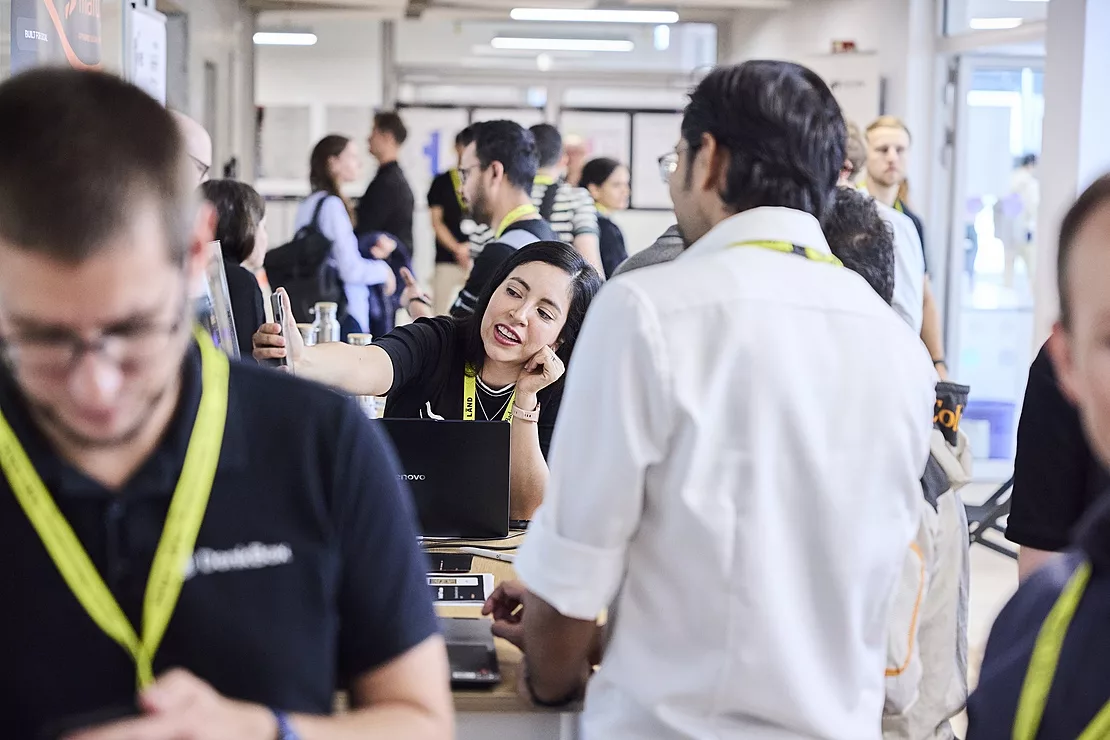
    Start-ups and initiatives including Bergsonne Labs, Denkbox, NUVUS, Computomics, Feyer, MaiTY, Istari AI, TextVerstehen, Tanocrix, Data Coffee, Yugen Space, IntegraSkin, MIRA vision, the Startup Center Tübingen, and the Tübingen AI Center presented their work and connected with researchers, investors, and other members of the ecosystem.

    An investor “Ask Me Anything” session also gave researchers and future founders the opportunity to gain practical insights into early-stage investment and entrepreneurship. Representatives from Capnamic, Fly Ventures, AI Fund, and Mätch VC shared their perspectives on what investors look for and what researchers should consider when exploring the path from research to start-up.
    During more than 40 1:1 sessions with investors, researchers and prospective founders had the opportunity to discuss their individual ideas, receive tailored feedback, and explore potential pathways toward funding and venture creation.

    Cyber Valley Day start-ups
    © Christian Borth

    Special announcement

    The final highlight of the day was grubel, which announced its launch during Cyber Valley Day. Founded by Moritz Hardt, Reinhard Heckel, Vedant Nanda and Navid Rekabsaz, grubel is building AI systems specialized to individual legal matters. Its vision: every matter should be able to build its own AI by combining data curation, adaptation, and evaluation to create specialized systems that can deliver high performance while keeping sensitive data under the customer’s control. We’re excited to see this research-driven venture take its next step and look forward to following its journey! 

    © Christian Borth

    Looking ahead

    Ten years ago, a group of visionary partners laid the foundation for Cyber Valley. Today, it has grown into a vibrant ecosystem connecting excellent research, entrepreneurship, industry, and society. Thank you to everyone who joined us and helped make this celebration a very memorable day!

  • Cyber Valley Day 2026

    Cyber Valley Day 2026

    On September 9, 2026, we are celebrating our ten-year anniversary at the Cyber Valley building in Tübingen.

    The event shines a spotlight on the scientific backbone of our ecosystem, the Cyber Valley Innovation Campus, while bringing together the people, ideas, and organizations that make Cyber Valley what it is today. Throughout the day, you can look forward to inspiring talks from leading researchers and innovators, an exhibition showcasing cutting-edge research projects, and plenty of opportunities to connect across disciplines and organizations.

    The exhibition will highlight the diversity of the Cyber Valley community and offer a space for participants to discover new projects, exchange ideas, and start conversations with researchers, entrepreneurs, and partners from across the ecosystem. Start-ups from the Cyber Valley network will present their work and connect with visitors, while dedicated networking opportunities and an investor program will help foster new collaborations and future ventures.

    Beyond the stage program, the anniversary celebration is designed as a meeting point for the entire community. Our shared goal is to strengthen Cyber Valley, create new connections, and further grow the sense of community that has shaped the ecosystem over the past decade. We are all Cyber Valley, and this celebration is something we create together.

    Join us to network with distinguished guests from science, politics, industry, and society, enjoy the exhibition and start-up showcase, and end the day with refreshments from a food truck food court.

    With contributions from:

    • Max Planck Institute for Intelligent Systems (MPI-IS)
    • ELLIS Institute Tübingen
    • University of Tübingen
    • University of Stuttgart
    • Fraunhofer IPA and IAO
    • Karlsruhe Institute of Technology (KIT)
    • Start-ups from the Cyber Valley ecosystem
    • Welcome speeches from Cem Özdemir (Minister President of Baden-Württemberg), Boris Palmer (Mayor of Tübingen), Simone Schwanitz (Secretary General of the Max Planck Society), and Karla Pollmann (President of the University of Tübingen)
    • Inputs from Bernhard Schölkopf (MPI-IS and ELLIS), Katherine J. Kuchenbecker (MPI-IS), Matthias Bethge (Tübingen AI Center), Werner Kraus (Fraunhofer IPA), Tamim Asfour (KIT), Steffen Staab (University of Stuttgart), Rafael Laguna de la Vera (SPRIN-D), David Remy (University of Stuttgart), Naureen Mahmood (Epic Games), Mario Krenn (Feyer), Jonas Müller (Black Forest Labs), Manuela Veloso (JPMorganChase AI Resarch).
    • …and many more!

    Agenda

    10:00-12:30 | Inputs from key players from the Cyber Valley ecosystem
    12:30-13:30 | Lunch
    13:30-17:00 | Inputs from key players from the Cyber Valley ecosystem, exhibition, networking opportunities, and start-up presentations
    17:30-20:00 | Networking and complimentary refreshments at the food truck food court


    When registering, please indicate whether you will be staying for networking and refreshments from 17:30.

    Please note that a shuttle bus from KIT to Tübingen is planned. Further details and timings will be communicated closer to the event.

    We look forward to celebrating this special anniversary with you.

  • Last month at Cyber Valley: July

    Last month at Cyber Valley: July

    There was a lot happening at Cyber Valley last month. Here’s a quick roundup of our highlights—find out how Cyber Valley’s mission to translate excellent research into real-world applications for a better future for everyone came to life. 

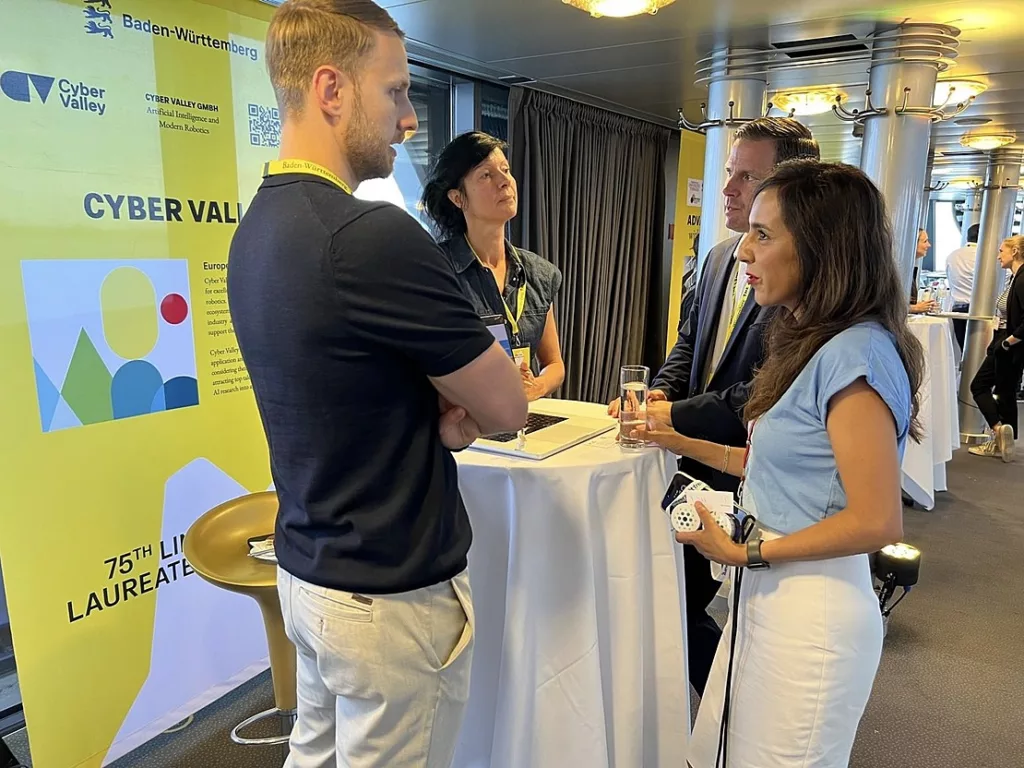
    Lindau Nobel Laureate Meeting at Lake Constance 

    On July 3, we took part in the 75th Lindau Nobel Laureate Meeting, where around 75 Nobel laureates and several hundred young scientists from around the world gathered for a boat trip across Lake Constance to the island of Mainau. 

    Invited to introduce the Cyber Valley in a three-minute pitch, we presented our mission to translate excellent AI research into practical applications. We also welcomed participants at the Cyber Valley booth and discussed career opportunities with young researchers. 

    The day concluded with a high-ranking panel discussion, “How to Rebuild Trust in Science?” on the island of Mainau with Nobel Laureate of 2011 Saul Perlmutter, Nobel Laureate of 2013 Randy W. Schekman, Nobel Laureate of 2018 Donna Strickland, and others. The discussion explored how in an age of misinformation and polarization, education can rebuild trust in science. The panel explored the foundations of credibility, curiosity, and critical thinking in a rapidly changing world. 

    Photo: Cyber Valley

    International researchers in Tübingen 

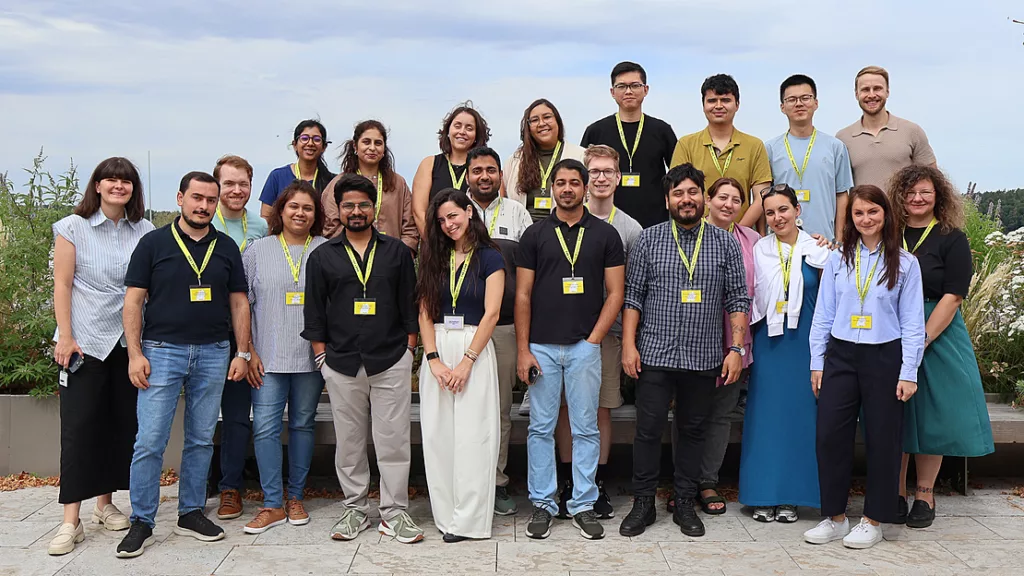
    One week later, it was a pleasure to welcome a group of early-career researchers to Tübingen on July 7 after the Lindau Nobel Laureate Meetings. 

    During their stop at Cyber Valley, around 18 international PhD and postdoc researchers explored AI research and career opportunities in Baden-Württemberg. The visit included exchange with our network, lab tours, and insights from academia and start-ups. 

    The program included talks by Anand Waghmare (Yugen Space), Colin Dumont (Tübingen AI Center), and Ivan De Araujo (Max Planck Institute for Biological Cybernetics), as well as a lab visit to the Max Planck Institute for Biology. 

    Such exchanges demonstrate the importance of collaboration for the Cyber Valley mission: turning AI and robotics research into a more sustainable future for all.

    Photo: Cyber Valley

    Cyber Valley Impulse on agriculture, sustainability, and the environment 

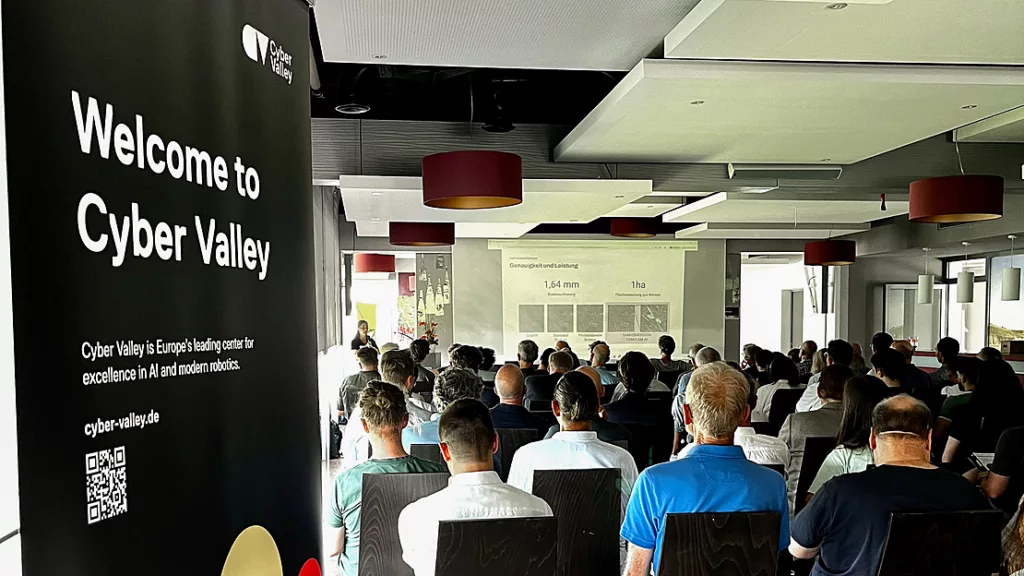
    On July 8, the Cyber Valley Impulse on agriculture, sustainability, and the environment, co-hosted with Zukunftsstiftung Remstal, took place in Weinstadt. Experts from research and industry came together to exchange ideas and explore real-world applications. The event considered the applications of intelligent systems in agriculture, landscape management, and sustainability. With advances in AI, machine learning, and robotics, new forms of agricultural and landscape-care automation are becoming increasingly realistic, opening up questions about which tasks robots should take on first, what kinds of farming systems and landscapes we want to create, and how research, industry, and practice can contribute to this transformation. 

    Thanks to all our speakers and start-ups for sharing their insights and driving the conversation forward: Wieland Brendel (ELLIS Institute Tübingen, Max-Planck-Institut für Intelligente Systeme), Paul Hofmann (ELLIS Institute Tübingen, Max-Planck-Institut für Intelligente Systeme), Peter Ohlhausen (Fakultät NXT Nachhaltigkeit und Technologie – Hochschule Reutlingen), Zoe Rühlmann (SAM-DIMENSION), Christian Dreischer (Computomics), Johannes Schwegler (Zukunftsstiftung Remstal, TREEO)), Martin Kiefel and Sebastian Blaes(polybot), and Andy Clifton (enerlace). 

    Photo: Cyber Valley 

    Cyber Valley AI Incubator Batch #8: Demo Day 

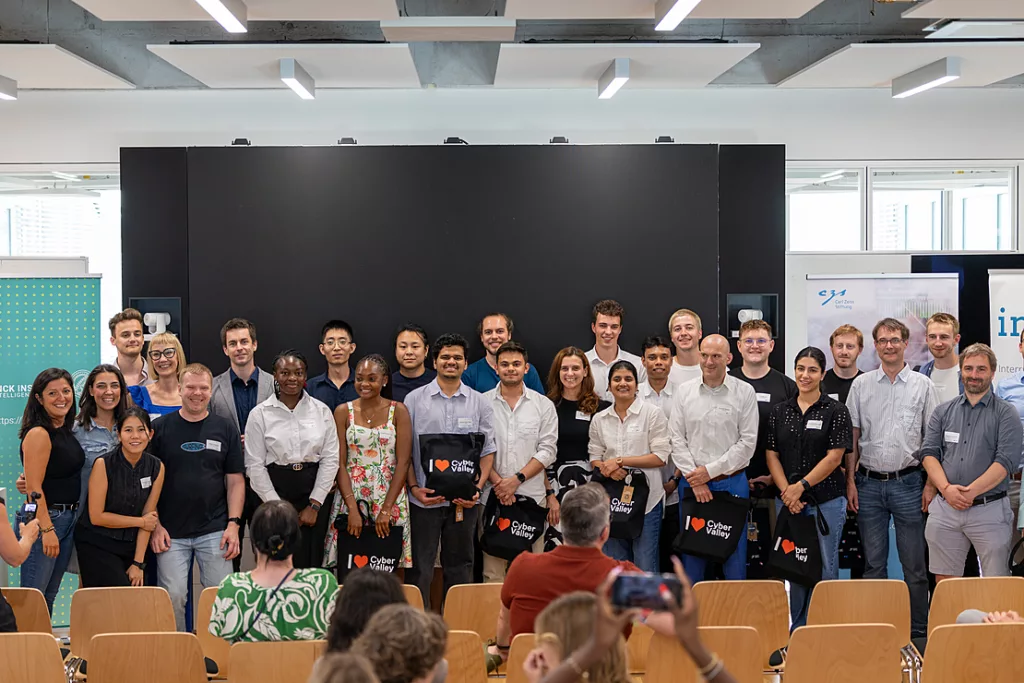
    The Demo Day of the Cyber Valley AI Incubator, hosted at Cyber Valley in Tübingen, brought together a full auditorium of founders, investors, researchers, industry leaders, and AI enthusiasts to celebrate the next generation of AI start-ups on July 10. 

    The event opened with remarks from Christoph Keplinger and Leila Masri (Max-Planck-Institut für Intelligente Systeme), who reflected on the remarkable journey of Batch #8. We also welcomed Phil-Alan Gaertig, PhD from the Carl-Zeiss-Stiftung, whose continued support makes this program possible. The keynote, Axel Sauer from Black Forest Labs, introduced the company’s work and shared valuable insights into the development of AI models and the future of visual intelligence. 

    The spotlight then turned to the seven AI Incubator teams, who pitched their ideas before an outstanding jury consisting of: Daisy Paiva (ZEISS Ventures), Franziska Ivens (Silicon Allee at Fraunhofer Heinrich Hertz Institute HHI), and Christoph Keplinger (Max-Planck-Institut für Intelligente Systeme). 

    Selecting the winners was no easy task, as every team demonstrated impressive innovation, technical excellence, and entrepreneurial potential. 

    Congratulations to our award winners! 

    • Audience and presentation award: 

    Sehnsora: Mohammed Raihan Soniwala, Shweta K. Yograj Yadav, and Abhishek Vijay P. 

    • Best business model award: 

    CoGraph: Magnus T. Hornstein and Bela Thraen. 

    • Use of AI award: 

    OptiGrocer: Ifeoma Veronica Nwabufo and Ornela Megne. 

    Thanks to all founders, mentors, trainers, jury members, speakers, partners, and guests who made this journey so memorable. We can’t wait to see where these start-ups go next. Congratulations to all teams for an outstanding Demo Day!  

    The Cyber Valley AI Incubator empowers scientists and entrepreneurs with promising AI ideas to begin their entrepreneurial journey. Over several weeks, participants receive hands-on training, mentoring, and access to leading experts, founders, and investors. Each full-day session focuses on a specific topic — from team building and market analysis to prototyping, business models, and pitching — equipping participants with actionable insights and a growing network. 

    The Cyber Valley AI Incubator is funded by the Carl-Zeiss-Stiftung and organized by the Max Planck Institute for Intelligent Systems.

    Photo: MPI-IS

    Campus Tour in Tübingen 

    It was a pleasure to welcome so many interested guests to our Campus Tour in Tübingen on July 16! 

    As part of our new Cyber Valley Innovation Campus Tours series, participants get an exclusive behind-the-scenes look at Europe’s largest center for excellence in AI and robotics. In addition to an introductory presentation, guests can join a guided tour of the Campus in Tübingen and learn more about the people, research, and innovation driving the ecosystem. 

    At Cyber Valley, our mission is to translate AI and robotics research into real-world solutions that benefit people, industry, and society. Engaging with the public and opening our doors to the community is an important part of that mission.  

    Photo: Cyber Valley

    Ontic Labs and Feyer selected for SPRIND’s Next Frontier AI Challenge 

    Ontic Labs and Feyer have been selected for the first stage of the German Federal Agency for Breakthrough Innovation’s (SPRIND) Next Frontier AI Challenge. The two start-ups are among just ten teams across Europe that have been selected and will receive €3 million to develop technologies beyond today’s AI models.  

    Read more here: https://cyber-valley.de/en/news/two-cyber-valley-start-ups-selected-to-shape-europe-s-frontier-ai-future 

    Photo: Cyber Valley 

    KI Festival by IPAI Foundation in Heilbronn 

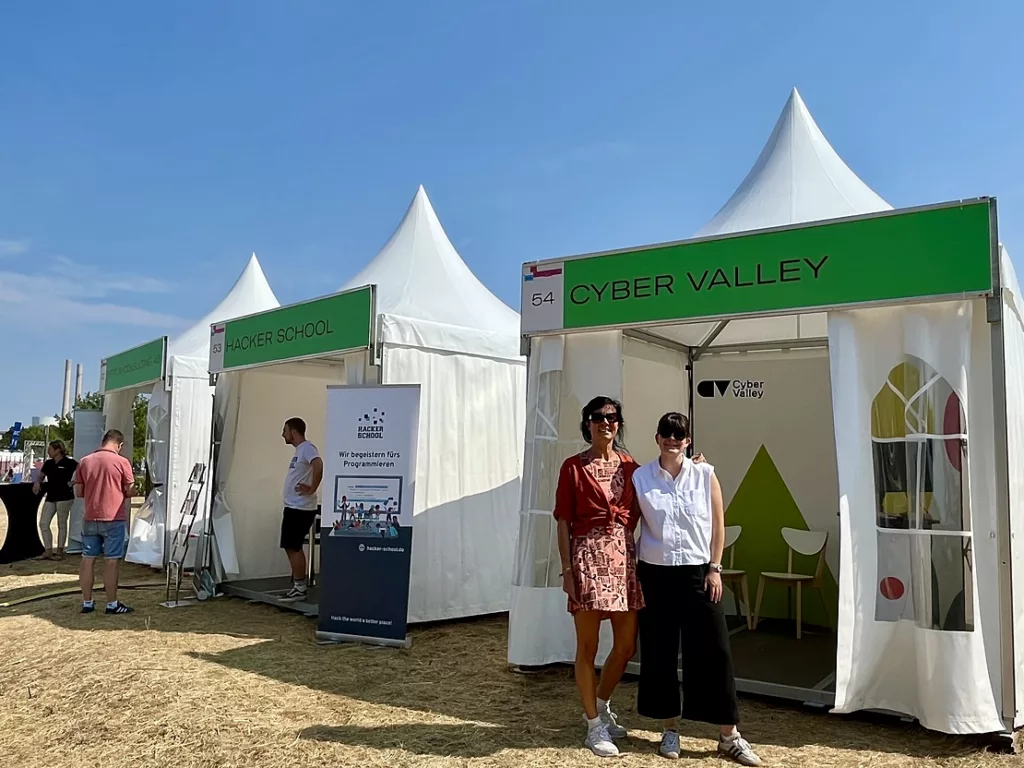
    On July 25 and 26, we had a great time at the KI Festival by IPAI Foundation in Heilbronn!  

    During the weekend, we had the pleasure of joining the KI Festival with our own booth. It was a great opportunity to connect with the Heilbronn community, engage with a curious public, and meet inspiring innovators and companies while sharing more about the Cyber Valley ecosystem. A big thank you to everyone who stopped by our booth and took the time to chat with us!  

    We are grateful to the IPAI Foundation for bringing together such a great community and creating a great space for exchange around AI and innovation. 

    We’re looking forward to future collaborations with IPAI and to continuing to strengthen the AI ecosystem together!  

    Photo: Cyber Valley
  • Plans for new buildings at the “Cyber Valley Start-up Campus” in Tübingen

    Plans for new buildings at the “Cyber Valley Start-up Campus” in Tübingen

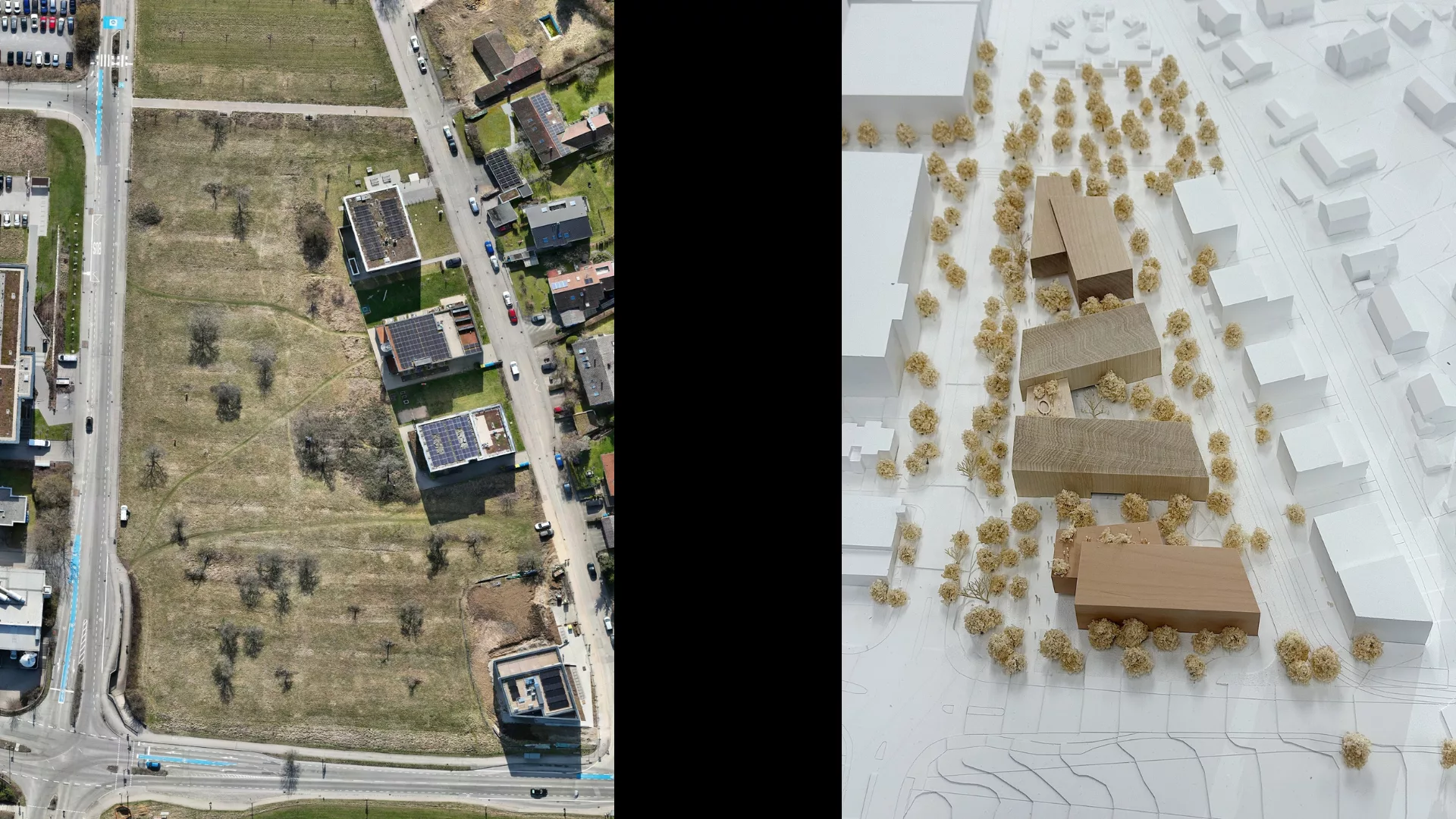
    Tübingen is gaining a new flagship project in its science and research landscape: With the construction of the “Cyber Valley Start-up Campus” in Tübingen at the “Obere Viehweide” Science and Technology Park, a forward-looking hub is being created with a focus on startups in the field of artificial intelligence (AI). It is now clear what the buildings of the Tübingen-Reutlingen Technology Park (TTR) will look like in the future: The architectural firm 121 Architekten GmbH Florian Danner & Suleiman Mukarker, Tübingen, together with Machleidt GmbH, Berlin, and freiraumconcept Landschaftsarchitekten PartGmbB, Rottenburg a. N., have won first prize in the architectural competition. The jury reached this decision at its meeting on Friday, July 24, 2026.

    New space for over 1,000 workstations

    The planned spaces are designed to accommodate over 1,000 workstations, allowing for highly flexible use. The site is part of a dynamically growing innovation ecosystem featuring companies in the fields of medicine, biotechnology, and AI research, as well as university institutions, Cyber Valley GmbH, the ELLIS Institute, the Tübingen AI Center, and the Max Planck Institutes.

    Read the full press release from the L-Bank in German here

  • From Cyber Valley to Europe’s AI frontier

    From Cyber Valley to Europe’s AI frontier

    Ontic Labs and Feyer.ai have been selected for the first stage of the German Federal Agency for Breakthrough Innovation’s (SPRIND) Next Frontier AI Challenge. The two start-ups are among just ten teams across Europe that have been selected and will receive €3 million to develop technologies beyond today’s AI models. 

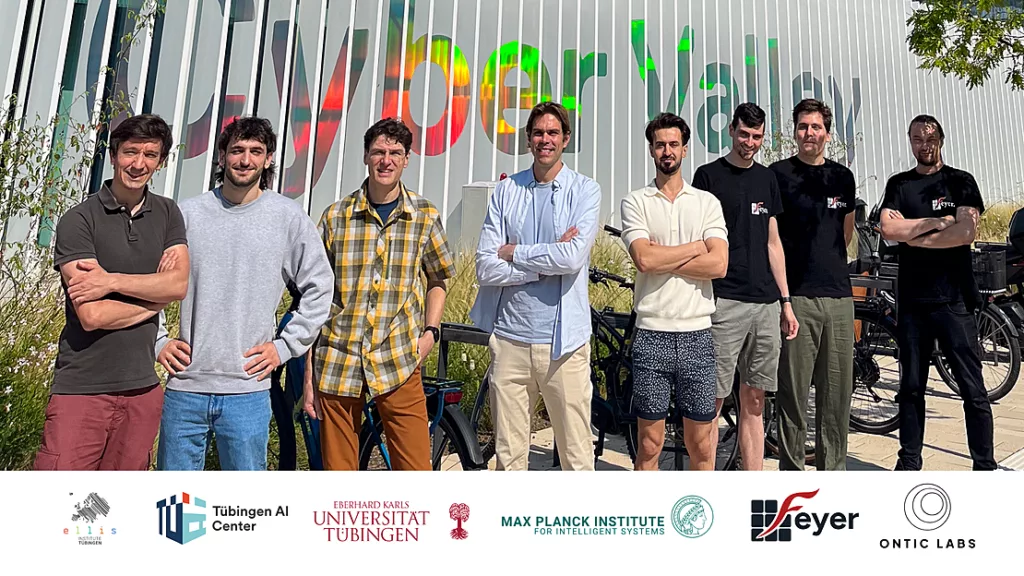
    Ontic Labs and Feyer.ai have been selected for the first stage of the German Federal Agency for Breakthrough Innovation’s (SPRIND) Next Frontier AI Challenge. The two start-ups are among just ten teams across Europe that have been selected and will receive €3 million to develop technologies beyond today’s AI models. 

    Of the three selected teams from Germany, two originate from the Cyber Valley ecosystem in Baden-Württemberg as spin-outs from several of Cyber Valley’s academic partners, including the ELLIS Institute Tübingen, Max Planck Institute for Intelligent Systems, Tübingen AI Center, and the University of Tübingen. Their success highlights the growing momentum with which AI research is being translated into innovative companies and how excellent AI research from Baden-Württemberg is playing a key role in the European race for frontier AI models.

    The Next Frontier AI Challenge is aimed at European teams developing fundamental AI technologies with exceptionally high innovation potential. The goal is to promote new approaches that go beyond the current state of the art and can have a long-term economic and societal impact.

    “Ontic Labs and Feyer.ai are excellent examples of what the Cyber Valley ecosystem is designed to achieve: turning outstanding research into technologies with societal and economic relevance,” said Florian K. Mayer, Managing Director of Cyber Valley GmbH. “Their success reflects the strength of the innovation pipeline in Baden-Württemberg, where leading researchers, entrepreneurs, and partners work together to transform scientific advances into new ventures and applications.”

    Ontic Labs: Building AI for Physical Intelligence

    Ontic Labs is developing a foundation model for physical intelligence. The company aims to enable machines to understand the physical dynamics of their environment rather than only recognizing visual patterns. This could allow robots to predict future states, reason about physical interactions, and operate more effectively in complex real-world settings.

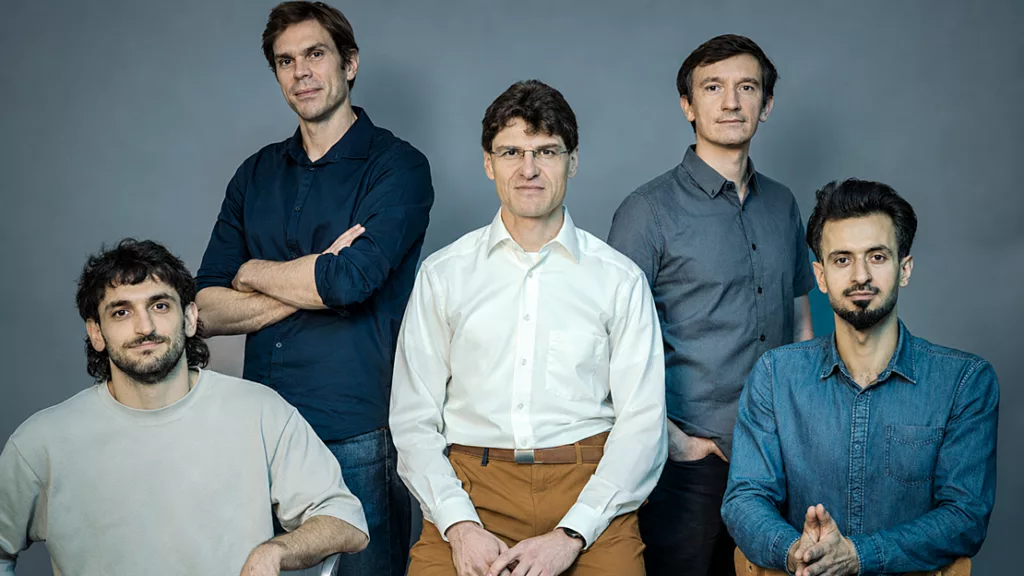
    The company brings together researchers from the Max Planck Institute for Intelligent Systems, the University of Tübingen’s Cluster of Excellence Machine Learning: New Perspectives for Science, the Tübingen AI Center, and the ELLIS Institute Tübingen. Ontic Labs was founded by Omid Taheri, Mikel Zhobro, Wieland Brendel, Georg Martius, and Gerard Pons-Moll.

    Ontic Labs team. Photo: SPRIND

    Feyer.ai: AI for Industrial Hardware Innovation

    Feyer.ai develops AI systems that autonomously design new industrial hardware. Its approach combines modern AI methods with physics-based simulations to generate and evaluate technical solutions. By applying AI-driven invention to industrial challenges, Feyer.ai aims to accelerate the development of new technologies across fields including photonics, quantum technologies, microscopy, semiconductor manufacturing, and energy systems.

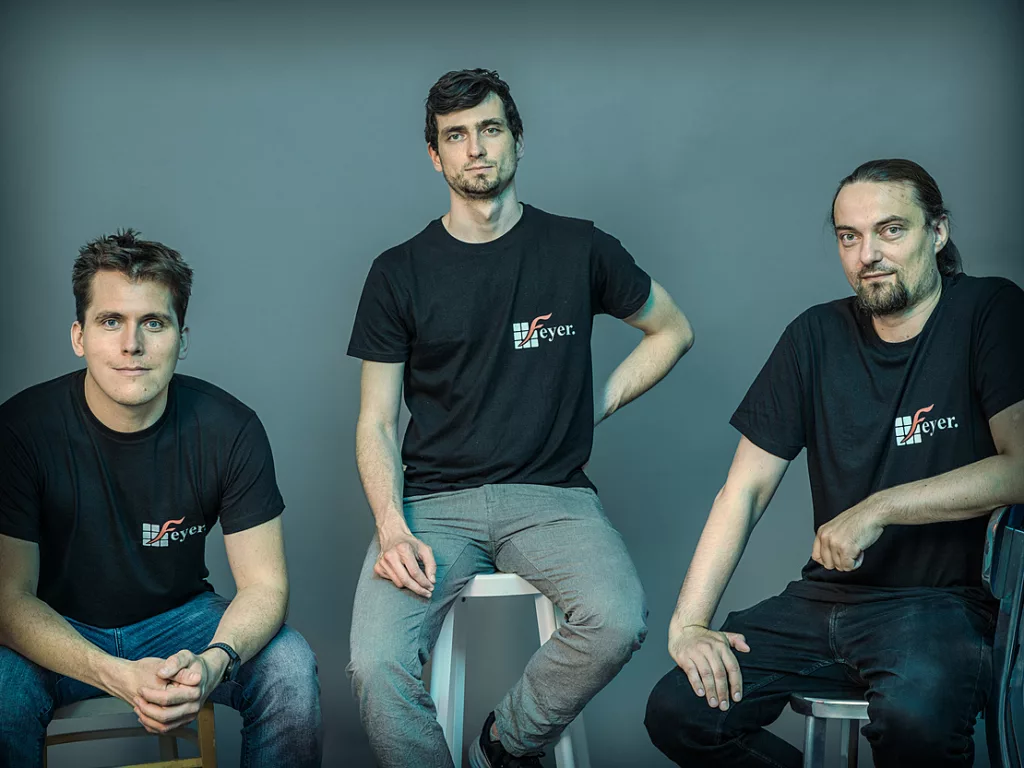
    The company emerged from the research group of Mario Krenn, Professor at the Cluster of Excellence Machine Learning: New Perspectives for Science at the University of Tübingen. The founding team consists of Jonathan Klimesch, Sören Arlt, and Mario Krenn.

    Feyer team. Photo: SPRIND

    The selection of Ontic Labs and Feyer.ai reflects the strength of the Cyber Valley ecosystem, which connects leading AI research with entrepreneurship and start-up support. Both companies build on research conducted at institutions that are central to Baden-Württemberg’s AI landscape and demonstrate how advances in AI research are being translated into to real-world impact, powering industry, and driving Europe’s sustainable future.

    Read SPRIND’s press release here.

    Read the press release from the University of Tübingen (in German) here.