CV Tag: Max Planck Institute for Intelligent Systems

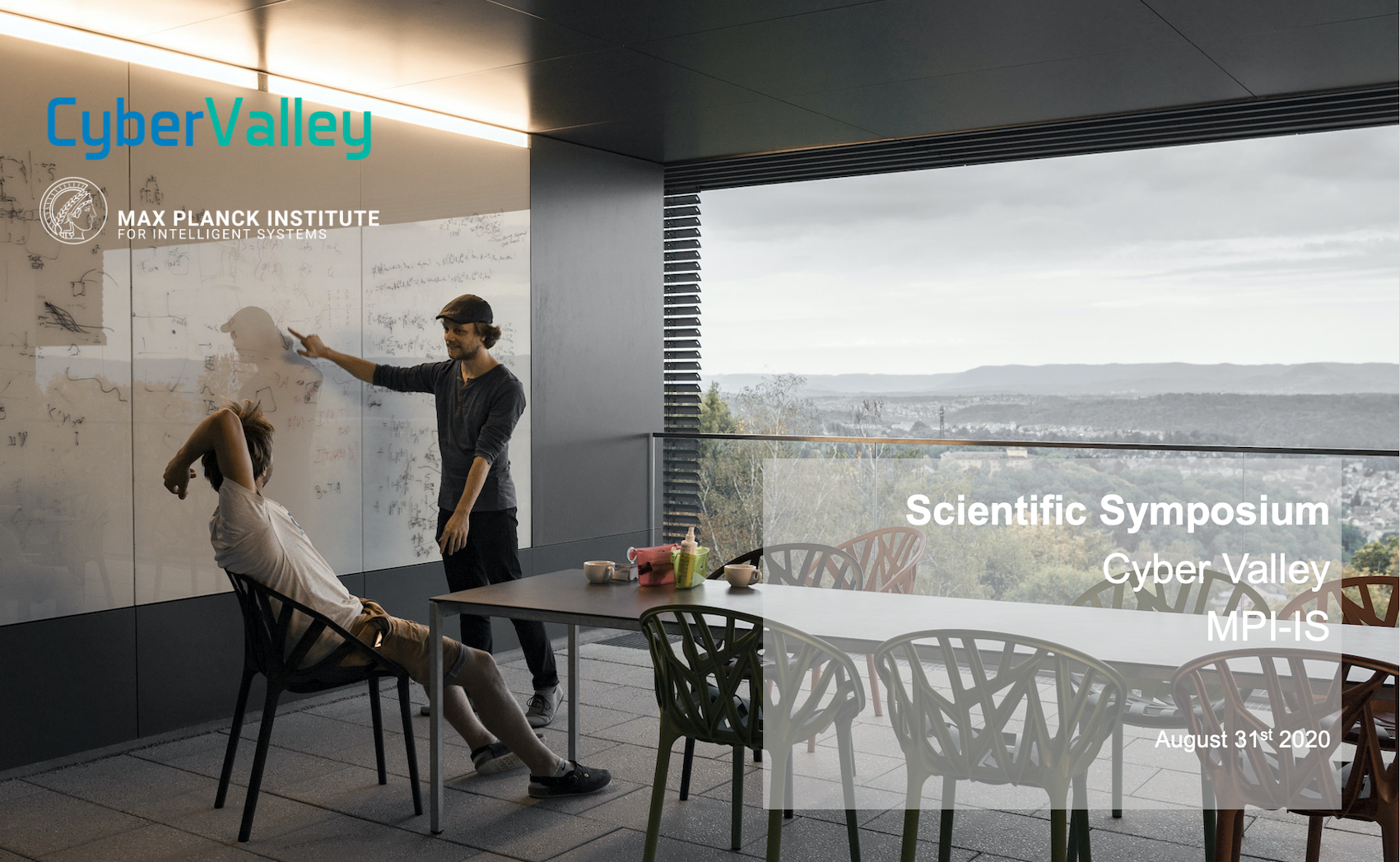
  • Scientific Symposium

    Scientific Symposium


    Schedule (CEST)

    __________________________________________

    8:55 am – 9:00 am    Opening remarks

    9:00 am – 11:00 am    Presentations | Part One

    11:00 am – 2:00 pm    – Break –

    2:00 pm – 4:00 pm    Presentations | Part Two 

    __________________________________________


    Justus Thies

    Technical University of Munich, Germany

    Talk: Monday, August 31, 2020 – 9:00-9:30 am

    Neural Rendering and Representation Learning for 3D Holograms of Humans

    Communicating via text messages, audio-, or video-calls is a part of our modern society. As a next evolution step, we already see early implementations of virtual 3D telepresence systems and personalized avatars. Capturing natural motions and expressions as well as the photorealistic reproduction of images under free views are challenging. With the rise of deep learning methods and, especially, neural rendering, we see immense progress to succeed in these challenges. In this talk, I will give an overview of my previous and ongoing research about image synthesis of humans, the underlying representation of appearance, geometry, and motion to allow for explicit and implicit control over the synthesis process. Specifically, I will talk about my work on facial reenactment and neural rendering. 


    Jochen Müller

    Harvard University, Cambridge, USA

    Wyss Institute for Biologically Inspired Engineering

    Talk: Monday, August 31, 2020 – 9:30-10:00 am

    A computational approach to the creation of digital matter

    Human creativity, combined with bioinspiration and modern, computational tools is now able to derive the most captivating designs, elevating both structural appearance and functionality to unprecedented levels. The physical realization of these designs, however, remains a bottleneck. On the other end, the grand challenge in manufacturing is to create a process that is economical, fast, repeatable, and that enables the desired design freedom in both geometric complexity and choice of materials. Digital Fabrication and, in particular, Additive Manufacturing (AM) has emerged as a potent alternative to conventional manufacturing and is considered by many the holy grail. Despite this hype, however, AM still lacks behind the expectations and is often not able to handle the required complexity, which significantly limits progress in major research fields.

    In my talk, I will address both the digital design of novel materials and structures with outstanding properties, and the fabrication thereof. First, I will present recent research that shows how the mutual exclusivity between stiffness and toughness can be overcome in mechanical metamaterials and how we can integrate (multi-)functionality, such as actuation and sensing, on a materials-level. Second, I will demonstrate AM-based solutions specifically tailored to these design paradigms that cannot be fabricated in any other way. Third, I will address the general limitations of AM and show how they can be (partially) overcome, with the ultimate goal of solving the grand challenge. Finally, I will outline potential next steps and provide a perspective on how the proposed, data-driven design approaches can dictate the future direction of the whole field.


    Christian Rupprecht

    University of Oxford, UK

    Talk: Monday, August 31, 2020 – 10:00-10:30 am

    Minimally Supervised Learning

    We know that deep learning works exceptionally well with copious amounts of annotated training examples. Collecting this data is often tedious, expensive and sometimes even infeasible. This talk explores what we can learn from a reduced amount of annotated data and how including physical priors about the world can substitute manual supervision. We will show how incorporating explicit knowledge about the world in the model can lead to more interpretable predictions and better generalization.  


    Mateusz Malinowski

    DeepMind, London, UK

    Talk: Monday, August 31, 2020 – 10:30-11:00  am

    no image

    Towards Scalable Visual Reasoning

    With deep learning and large-scale datasets, we have seen a seismic shift in computer vision, where more traditional problems such as image recognition on ImageNet are one-by-one tackled with many successes. However, can we build and investigate architectures that go beyond simple classification?

    In the first part of the talk, I will talk about my work on visual question answering. In this line of research, we ask machines various questions about the visual scene. Within that paradigm, we can test the "reasoning" capabilities beyond the typical classification. During the talk, I will also shortly mention related works on grounding language into percepts and actions as well as building a symbolic proof system using deep learning.

    In the second part of the talk, I will briefly introduce my recent work on more scalable and biologically plausible training on temporal input streams such as videos. The underlying hypothesis is that we can exploit various redundancies in such signals to approximate the standard backpropagation algorithm accordingly.


    Seyed-Moohsen Moosavi-Dezfooli

    Institute for Machine Learning, ETH Zurich, Switzerland

    Talk: Monday, August 31, 2020 – 2:00-2:30 pm

    Geometric aspects of adversial robustness of deep networks

    Despite showing impressive classification performance on many challenging benchmarks, generally in well-controlled settings, deep networks are intriguingly vulnerable to adversarial perturbations. It is indeed relatively easy to design noise that can change the estimated label of the classifier. The decision boundaries learned by state-of-the-art image classifiers are known to lie close to data samples. That is precisely why they exhibit such a poor performance under l_p-norm adversarial perturbations. The study of this high-dimensional phenomenon is proven to be a challenging yet extremely crucial task; it will eventually bring important benefits in safety-critical applications of machine learning such as self-driving cars, autonomous robots, and medical imaging.

    In this talk, I will present some geometric insight about deep networks' decision boundaries and how their geometry contributes to the l_p-norm robustness properties of such classifiers. Furthermore, I will demonstrate how these observations can be exploited to design efficient methods to evaluate and improve the robustness of state-of-the-art image classifiers. In particular, I will show how controlling curvature of the decision boundary can be critical to improve l_p adversarial robustness, and how, by exploiting curvature, computationally efficient algorithms can be derived to measure robustness properties.


    Rebekka Burkholz

    Harvard T.H. Chan School of Public Health, Boston, USA

    Talk: Monday, August 31, 2020 – 2:30-3:00 pm

    Cascade Processes in Machine Learning

    Cascade processes have been proven useful in modeling such diverse phenomena as epidemic spreading, signaling in biological networks, information propagation in social media, financial systemic risk, and the reorganization of international trade networks. In this talk, we will focus on two model classes, load redistribution and spreading models, and use them as means to an end to improve and develop machine learning algorithms. We will leverage the fact that load redistribution models correspond one-to-one to the evaluation of deep neural networks. We will derive successful initialization strategies and speed up model training based on analytic insights for random graph ensembles. We will further discuss how we can utilize these improvements for the inference of gene regulatory networks.


    Antonio Vergari

    University of California, Los Angeles, USA

    Talk: Monday, August 31, 2020 – 3:00-3:30 pm

    From Simple Inference to Complex Probabilistic Reasoning

    Probabilistic reasoning is generally considered to be the framework-of-choice to enable and support decision making under uncertainty in real-world scenarios. Ideally, we would like a probabilistic ML system that is deployed in the wild to be able to i) allow humans (or other AI agents) to pose arbitrary and articulated queries, that is questions about states of the world; ii) to provide guarantees on their results; iii) to deal with complex, heterogeneous and potentially structured data and, moreover iv) to support chaining several inference steps together. In this talk, I will argue that the above desiderata are still unmet in the current landscape of probabilistic ML. Even the most prominent paradigm nowadays, deep generative modeling, is able to provide only a shallow, simplistic, form of inference and struggles when dealing with complex queries or data. I will then delineate how my past and current research aimed at closing this gap. Specifically, I will touch some recent works investigating principled frameworks within dealing with complex tasks such as reasoning about the behavior of classifiers or dealing with algebraic constraints over heterogeneous data can be done elegantly and efficiently. Lastly I will talk about some future research perspectives: extending these complex probabilistic reasoning routines to interactive and relational settings while allowing for approximations with guarantees.


    Roberto Calandra

    Facebook AI Research, USA

    Talk: Monday, August 31, 2020 – 3:30-4:00 pm

    Towards Embodied Intelligence

    The creation of intelligent embodied artificial agents has long been a dream for roboticists and artificial intelligence researchers alike. In this talk, I will argue for several key advances that I believe are necessary before we can achieve this dream, and in particular two of these key research areas: multi-modal sensing, and data-efficient learning for fast adaptation. Regarding multi-modal sensing, I will discuss the importance of using alternative sensor modalities in addition to vision, and will present my recent research on using touch sensing to allow robots to perceive, understand, and interact with the world around them. About data-efficient learning, I will discuss the use of model-based reinforcement learning — which explicitly creates models of the world — and present some of my recent works to understand and overcome the limitations of current approaches


  • Female Leadership in Cyber Valley – Frauenwirtschaftstage 2020

    Female Leadership in Cyber Valley – Frauenwirtschaftstage 2020

    Agenda

    • Begrüßung
    • Einführung in das Cyber Valley-Projekt
    • Podiumsdiskussion mit weiblichen Führungskräften aus dem Cyber Valley-Ökosystem
    • Fragerunde
    • Netzwerken in Break-Out-Rooms
    • Schlussbemerkungen

    Teilnehmerinnen

    Prof. Dr. Zeynep Akata

    Professorin für Erklärbares Maschinelles Lernen, Exzellenzcluster „Maschinelles Lernen: Neue Perspektiven für die Wissenschaften“, Universität Tübingen

    Dr. Caterina De Bacco

    Cyber Valley Max Planck Forschungsgruppenleiterin, Physik für Inferenz und Optimierung, Max-Planck-Institut für Intelligente Systeme

    Dr. Katherine J. Kuchenbecker

    Geschäftsführende Direktorin und Direktorin der Abteilung für Haptische Intelligenz, Max-Planck-Institut für Intelligente Systeme

    Naureen Mahmood, M.Sc.

    Geschäftsführerin, Meshcapade GmbH, Tübingen

    Prof. Dr. Nicole Radde

    Professorin für Systemtheorie in der Systembiologie, Exzellenzcluster „SimTech“, Universität Stuttgart

    Jun.-Prof. Maria Wirzberger

    Juniorprofessorin für Lehren und Lernen mit intelligenten Systemen, Institut für Erziehungswissenschaft, Universität Stuttgart

    Registrierung

    Bitte melden Sie sich hier an – Teilnehmer*innen inklduiert männlich, weiblich und divers. Die Veranstaltung findet als Zoom-Konferenz und auf Englisch statt.

    Kontakt

    Oliwia Gust, Cyber Valley Event Manager
     +49 7071 6011554
     +49 151 40756302
    oliwia.gust@cyber-valley.de

    Organisation

    Cyber Valley in Kooperation mit dem Max-Planck-Institut für Intelligente Systeme sowie den Gleichstellungsbüros der Universitäten Stuttgart und Tübingen. Die Veranstaltung findet im Rahmen der Frauenwirtschaftstage 2020 statt.

  • 2020 Intelligent Systems Summer Colloquium

    2020 Intelligent Systems Summer Colloquium

    MPI-IS cordially invites you to attend the 2020 Intelligent Systems Summer Colloquium

    Please see below for the schedule.

    The Max Planck Institute for Intelligent Systems is delighted to invite you to its annual scientific summer colloquium, formerly referred to as the Günter Petzow Colloquium.

    Date: Friday, July 24, 2020
    Virtual Meetup Time: 2:00 p.m.

    The event will commence at 2:00 pm that day and include four scientific presentations as well as a Ph.D. graduation ceremony. This year, it will be held virtually through a stable video-conferencing service. All current and former employees, friends of the institute, and the interested public are invited to this event.

    On the occasion of this year's summer colloquium, the Stuttgart site of the Max Planck Institute for Intelligent Systems will award the 15th annual Günter Petzow Prize to a young scientist from the institute for outstanding research in the field of materials science. Professor Günter Petzow was a Director at the Max Planck Institute for Metals Research in Stuttgart between 1973 and 1994. He is internationally renowned for his trend-setting research on multicomponent materials.

    The Günter Petzow Prize is funded by the Stifterverband für die Deutsche Wissenschaft and Volkswagen AG.

    Given his outstanding research success here at MPI-IS, the selection committee has chosen to bestow upon:

    Dr. Hakan Ceylan
    the
    2020 Günter Petzow Prize.

    Dr. Hakan Ceylan is a senior research scientist in the Physical Intelligence Department. He will be awarded this prize for his achievements in developing new design principles, materials, and manufacturing strategies that enable untethered soft robots as small as a single cell.

    Professor Metin Sitti will introduce Dr. Ceylan, who will then deliver a 25-minute presentation on his research.

    The final part of the colloquium will be a graduation ceremony for all of the MPI-IS Ph.D. students who completed their degree in the last year.

    Live transmission of the summer colloquium and the graduation ceremony will take place on the event website.


    Schedule

    14:00

    Opening by Katherine J. Kuchenbecker, Ph.D. (Managing Director)

    Max Planck Institute for Intelligent Systems, Stuttgart

    14:15

    Professor Syn Schmitt

    Morphological computation: from hopping robots to micro swimmers to human walking

    Institute for Modelling and Simulation of Biomechanical Systems, University of Stuttgart

    Abstract and speaker’s short biography >>

    Biological motion is fascinating. Especially locomotion plays a crucial part in the evolution of life. Highly evolved structures, like bones connected by joints and soft tissues and contracting proteins in a muscle-tendon unit, enable and prescribe the respective species' specific locomotion pattern. Most importantly, biological motion is autonomously learned, it is untethered as there is no external energy supply and typical for vertebrates, it's muscle-driven.

    This talk will focus on structures, which facilitate motion by their design and present criteria to measure to which extent a specific motion pattern is facilitated, i.e. morphological computation (MC). We will discuss, whether assessing MC helps in understanding how biology solves challenges, like non-linearity of materials, redundancy of actuators, delays of sensor signals and finally, learning motion.

    Syn Schmitt studied physics at the University of Stuttgart and graduated from the University of Tuebingen with a PhD in Theoretical Astrophysics (topic: muscle modelling / computational biophysics). In 2012, Schmitt was appointed as Juniorprofessor (assistant professor) at the University of Stuttgart. Since 2018, he is full professor of "Computational Biophysics and Biorobotics" at the University of Stuttgart and in 2019 he founded the Institute for Modelling and Simulation of Biomechanical Systems, together with his colleague Oliver Roehrle. Syn Schmitt is fellow of the Stuttgart Center for Simulation Science (SimTech) and a faculty member of the International Max Planck Research School for Intelligent Systems (IMPRS-IS). Recently, he was appointed as Adjunct Professor in the School of Mechanical, Medical and Process Engineering of the Queensland University of Technology in Brisbane, Australia. His research focuses on autonomous muscle-driven motion with special interests in design principles of the locomotion apparatus, non-linear dynamics of locomotion, motor control and morphological computation in biological and technical systems.

    14:45

    Peter Dayan, Ph.D.

    Model based and model free interactions: inference, influence and confidence

    Computational Neuroscience, Max Planck Institute for Biological Cybernetics, Tübingen

    Abstract and speaker’s short biography >>

    An influential reinforcement learning framework proposes that behaviour is jointly governed by model-free (MF) and model-based (MB) controllers. Whereas the former learns the values of actions directly from past encounters, the latter uses a cognitive map of the task to calculate them prospectively. Considerable attention has been paid to how these systems interact during choice, however, how they interact in more general facets of decision-making such as learning and confidence is unclear. Using variants of a simple task that lays out limpidly various aspects of the interaction, we show how MB information resolves uncertainty and focuses MF learning, and discuss unexpected facets of their joint contribution to confidence.

    Peter Dayan read Mathematics at Cambridge, studied for his PhD with David Willshaw in Edinburgh, and did postdocs with Terry Sejnowski at the Salk Institute and Geoff Hinton in Toronto. He was an assistant professor in the Department of Brain and Cognitive Sciences at MIT, and was a founding faculty member of the Gatsby Computational Neuroscience Unit at UCL, which he then ran for 15 years. He is currently a Director at the Max Planck Institute for Biological Cybernetics. His interests include affective decision making and neural reinforcement learning.

    15:15

    Professor Marco Hutter

    From legged robots to digital fabrication

    Institute of Robotics and Intelligent Systems (IRIS), ETH Zürich

    Abstract and speaker’s short biography >>

    Recent development in robotics, machine automation and intelligence has led to systems that are skilled and mature enough for real-world deployment. For example, quadrupedal robots have reached a level of mobility to navigate complex environments, which enables them to take over inspection or surveillance jobs in place like offshore industrial plants, in underground areas, or on construction sites. In this talk, I will present our research work with the quadruped ANYmal, mobile manipulators and automated construction machines, and explain some of the underlying technologies for locomotion control, manipulation, environment perception, and mission autonomy. I will show how these robots can learn and plan complex manoeuvres, how they can navigate through unknown environments and how they are able to conduct surveillance, inspection or construction tasks with super-human precision.

    Marco is an assistant professor for robotic systems at ETH Zurich, associate member of MPI-ETH Learning Center, and founder of ANYbotics AG. He studied mechanical engineering and completed his doctoral degree in robotics at ETH. Marco’s research interests are in the development of novel machines and actuation concepts together with the underlying control, planning, and learning algorithms for locomotion and manipulation. Marco is part of the National Centre of Competence in Research (NCCR) Robotics and NCCR Digital Fabrication and PI in various international projects (e.g. EU Thing) and challenges (e.g. DARPA SubT). His work has been recognized with a number of awards and prestigious grants such as the Branco Weiss Fellowship, ETH medal, IEEE/RAS Early Career Award or ERC Starting Grant.

    15:45
    Günter Petzow Prize Award Ceremony
    16:00

    Dr. Hakan Ceylan, Winner of the 2020 Günter Petzow Prize

    Cell-Size Robots for Minimally Invasive Medical Interventions and Targeted Delivery

    Physical Intelligence Department, Max Planck Institute for Intelligent Systems, Stuttgart

    Abstract and speaker’s short biography >>

    Untethered mobile robots the size of a human cell can make a disruptive impact in medicine. Their small size and wireless mobility can enable access and navigation in small, confined, hard-to-reach, and sensitive inner body sites, such as the central nervous system, the circulatory system, and the fetus. At these locations, such tiny machines can provide new ways of minimally invasive surgical interventions, remain inside for long durations as semi-implantable devices, and deliver targeted diagnosis and therapy with high precision and repeatability. To achieve these goals, however, there are many scientific and technical challenges to overcome. In this talk, I will present design, fabrication and control of cell-sized mobile robots for medical applications. I will demonstrate that the realization of coupled sensing, response and motion, the pillars of a robotic system, requires new materials and fabrication routes that can produce highly integrated systems that successfully interact with the environment. I will explore alternative power sources and design principles that would realistically sustain robotic operations at the microscopic size scales. I will demonstrate medical microrobots with the capabilities of moving around, sensing, responding to the local pathological information, and performing specific diagnostic and therapeutic tasks as orderly executed operations using their smart composite material architectures. Upon completing their functions, most of the microrobots I have developed are enzymatically degradable at the physiological conditions. Given the progress and the status of this emerging field, I will finally be providing a translational perspective on medical microrobotics research with an application-oriented, integrative design approach where powering, materials, fabrication, control, localization and medical functionalities need to be considered altogether at the same time. I will discuss the complexity of the challenges ahead and the potential directions to overcome them.

    Hakan Ceylan is a senior research scientist at Max Planck Institute for Intelligent Systems, Stuttgart, Germany, working on medical microrobots, bioinspired materials, molecular engineering, and intelligence at microscopic length scales. He received the BSc. degree in molecular biology and genetics (with high honor) and the Ph.D. degree in materials science and nanotechnology in 2010 and 2014, respectively, from Bilkent University, Ankara, Turkey. Dr. Ceylan was a post-doctoral researcher during 2014-2017 at Max Planck Institute for Intelligent Systems. He has been an associate member of Max Planck ETH Center for Learning Systems since 2015, the first joint institute of Max Planck Society and ETH Zurich. Dr. Ceylan’s inventions have resulted in one granted two pending patents and over twenty publications in the internationally renowned peer-reviewed journals. He has received several best paper, best talk and science-as-art awards as an extension of his research output. His studies have been publicized by Bayern2 radio, PC Magazine and a number of other printed and web-based German and international media. In 2019, PC Magazine featured Dr. Ceylan’s medical microrobot project among "5 amazing projects that will change the future of healthcare".

    16:30

    Ph.D. Graduation Ceremony

    We congratulate 15 young researchers who successfully defended their doctoral thesis during the past year

    Opening words from Professor Michael J. Black, Max Planck Institute for Intelligent Systems, Tübingen

    List of graduating Ph.D. students >>

    Six world-class universities are awarding doctoral degrees to this year’s batch of graduating students, who are affiliated either directly with MPI-IS or indirectly through our doctoral programs (Cam-Tue, CLS, CMU, and IMPRS-IS).

    University of Cambridge
    Matthias Bauer, Empirical Inference Department, Max Planck Institute for Intelligent Systems, Tübingen (Cam-Tue)
    Paul Rubenstein, Empirical Inference Department, Max Planck Institute for Intelligent Systems, Tübingen (Cam-Tue)

    Carnegie Mellon University
    Mehmet Berk Yigit, Physical Intelligence Department, Max Planck Institute for Intelligent Systems, Stuttgart
    Xiaoguang Dong, Physical Intelligence Department, Max Planck Institute for Intelligent Systems, Stuttgart

    Technical University of Darmstadt
    Dieter Büchler, Empirical Inference Department, Max Planck Institute for Intelligent Systems, Tübingen and Technical University of Darmstadt
    Sebastian Gomez-Gonzales, Empirical Inference Department, Max Planck Institute for Intelligent Systems, Tübingen and Technical University of Darmstadt

    University of Pennsylvania
    Siyao Hu, Haptic Intelligence Department, Max Planck Institute for Intelligent Systems, Stuttgart

    Eberhard Karls University Tübingen
    Anurag Ranjan, Perceiving Systems Department, Max Planck Institute for Intelligent Systems, Tübingen (CLS associate)
    Joel Janai, Autonomous Vision Group and Perceiving Systems Department, Max Planck Institute for Intelligent Systems, Tübingen
    Lars Mescheder, Autonomous Vision Group, Max Planck Institute for Intelligent Systems, Tübingen
    Matthias Kümmerer, Computational Neuroscience & Machine Learning Group, University of Tübingen (IMPRS-IS)
    Siyavash Haghiri, Theory of Machine Learning Group, University of Tübingen
    Steve Heim, Dynamic Locomotion Group, Max Planck Institute for Intelligent Systems, Stuttgart (CLS associate)

    ETH Zürich
    Ceren Yasa, Physical Intelligence Department, Max Planck Institute for Intelligent Systems, Stuttgart (CLS associate)
    Öncay Yasa, Physical Intelligence Department, Max Planck Institute for Intelligent Systems, Stuttgart

    17:30

    Closing by Katherine J. Kuchenbecker, Ph.D. (Managing Director)

    Max Planck Institute for Intelligent Systems, Stuttgart

  • Workshop

    Workshop

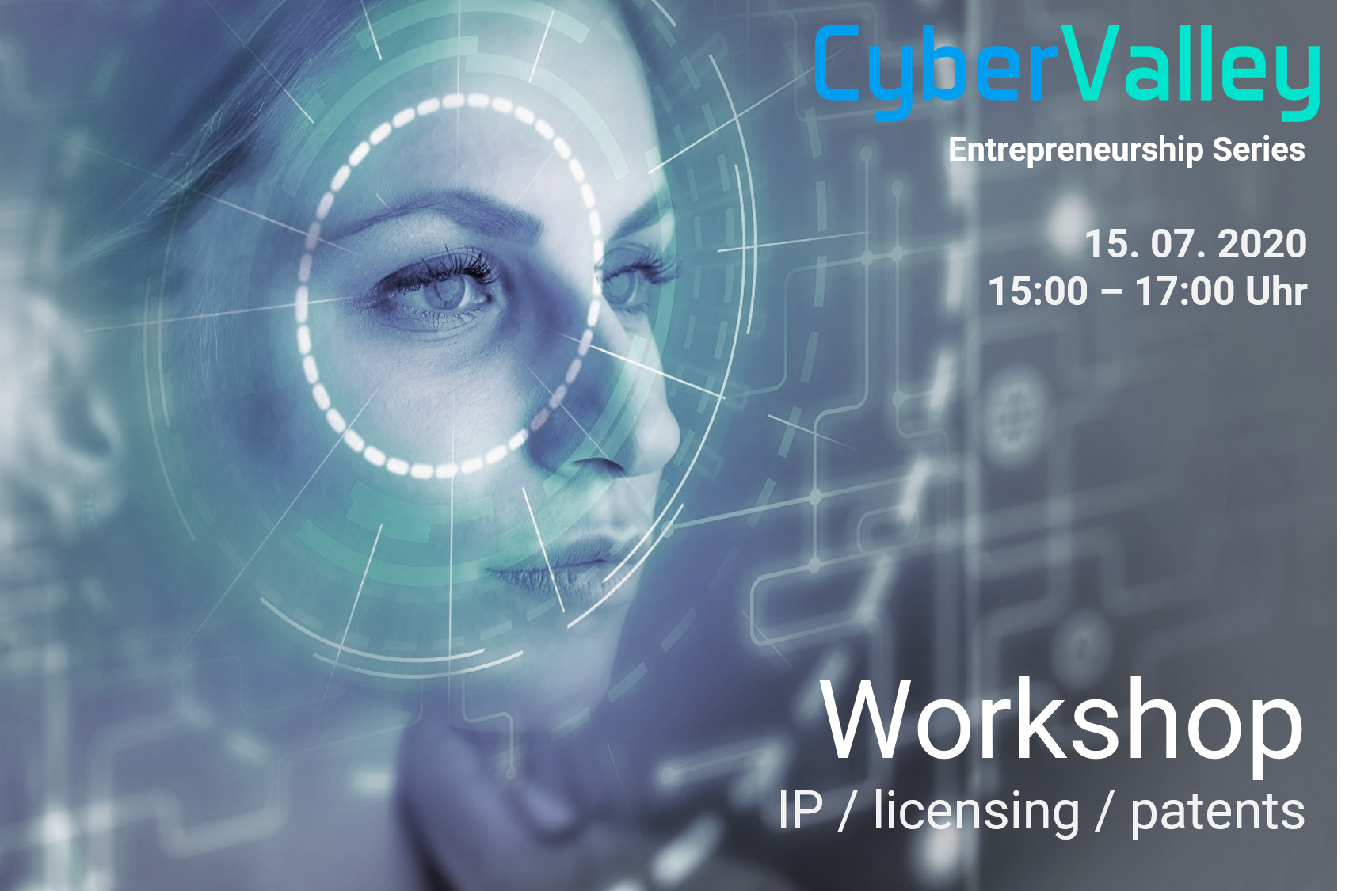
    Due to COVID-19 restrictions, the workshop will be virtual (Zoom). If you would like to participate, please register here.
     
    Drawing on an example, our experts will describe a new technology's route to market as well as the relevant legal regulations. They will address a range of topics, including: invention, ownership, know-how, software, open source license, patent law, earnings, and many others.
    While the event is virtual, participants will be invited to interact with the experts and discuss concrete questions and challenges.
     
    Our experts have extensive experience in the relevant fields and look forward to sharing their profound knowledge. They are located at the technology transfer departments of the Universities of Stuttgart and Tübingen, Max Planck Innovation GmbH, the legal department of the Max Planck Society, and an external guest from the law firm Boehmert & Boehmert. We also have a founder with us, who can report from her own experience regarding the practical implementation.
     
    Our experts:
    Universities:
    Dr. Rolf Hecker, Head of Technology Transfer & Start-ups, University of Tübingen
    Dr. Ralf Kaun, Head of Knowledge and Technology Transfer, University of Stuttgart
     
    Max Planck Innovation:
    Dr. Bernd Ctortecka, Senior Patent- & License Manager
    Dr. Wolfgang Tröger, Senior Patent- & License Manager
    Dr. Andreas Vogler, Patent- & License Manager
    Dr. Florian Kirschenhofer, Senior Start-up & Portfolio Manager
    Simone Bund, Ass. jur. Patent- & License Manager
     
    Max Planck Society Legal Department:
    Sabine Krabichler, Shareholdings, Cooperations, Technology Transfer
    Maximillian Funk, IT Law and Data Protection Law
     
    Boehmert & Boehmert:
    Dr. Matthias Hofman, German Patent Attorney, European Patent and Trade Mark Attorney (external guest)
     
    Meshcapade (Cyber Valley Start-up Network Member):
    Naureen Mahmood, CEO
     
    Cyber Valley:
    Alexander Diehl, Senior Advisor
    Professor Alexander Brem, Entrepreneurship in Technology and Digitization
    Tobias Dürr, Innovation Manager


  • Machine Learning for Covid-19 Risk Awareness from Contact Tracing – Max Planck Lecture

    Machine Learning for Covid-19 Risk Awareness from Contact Tracing – Max Planck Lecture

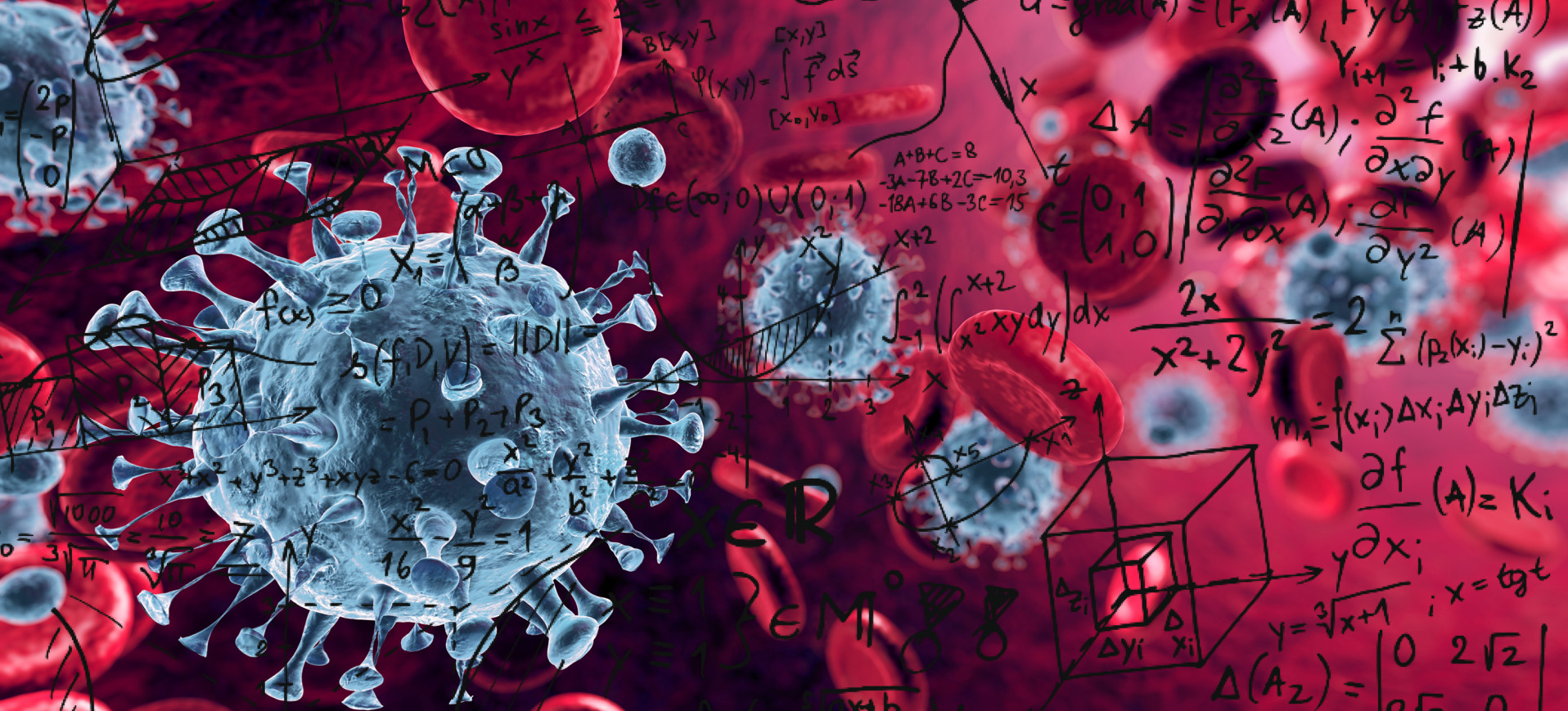
    The Covid-19 pandemic has spread rapidly worldwide, overwhelming manual contact tracing in many countries, resulting in widespread lockdowns for emergency containment. Large-scale digital contact tracing (DCT) has emerged as a potential solution to resume economic and social activity without triggering a second outbreak. Various DCT methods have been proposed, each making trade-offs between privacy, mobility restriction, and public health. Many approaches model infection and encounters as binary events. With such approaches, called binary contact tracing, once a case is confirmed by a positive lab test result, it is propagated to people who were contacts of the infected person, typically recommending that these individuals should self-quarantine. This approach ignores the inherent uncertainty in contacts and the infection process, which could be used to tailor messaging to high-risk individuals, and prompt proactive testing or earlier self-quarantine. It also does not make use of observations such as symptoms or pre-existing medical conditions, which could be used to make more accurate risk predictions. Methods which may use such information have been proposed, but these typically require access to the graph of social interactions and/or centralization of sensitive personal data, which is incompatible with reasonable privacy and security constraints. We use an agent-based epidemiological simulation to develop and test ML methods that can be deployed to a smartphone to locally predict an individual's risk of infection from their contact history and other information, while respecting strong privacy and security constraints. We use this risk score to provide personalized recommendations to the user via an app, an approach we call probabilistic risk awareness (PRA). We show that PRA can significantly reduce spread of the disease compared to other methods, for equivalent average mobility and realistic assumptions about app adoption, and thereby save lives.


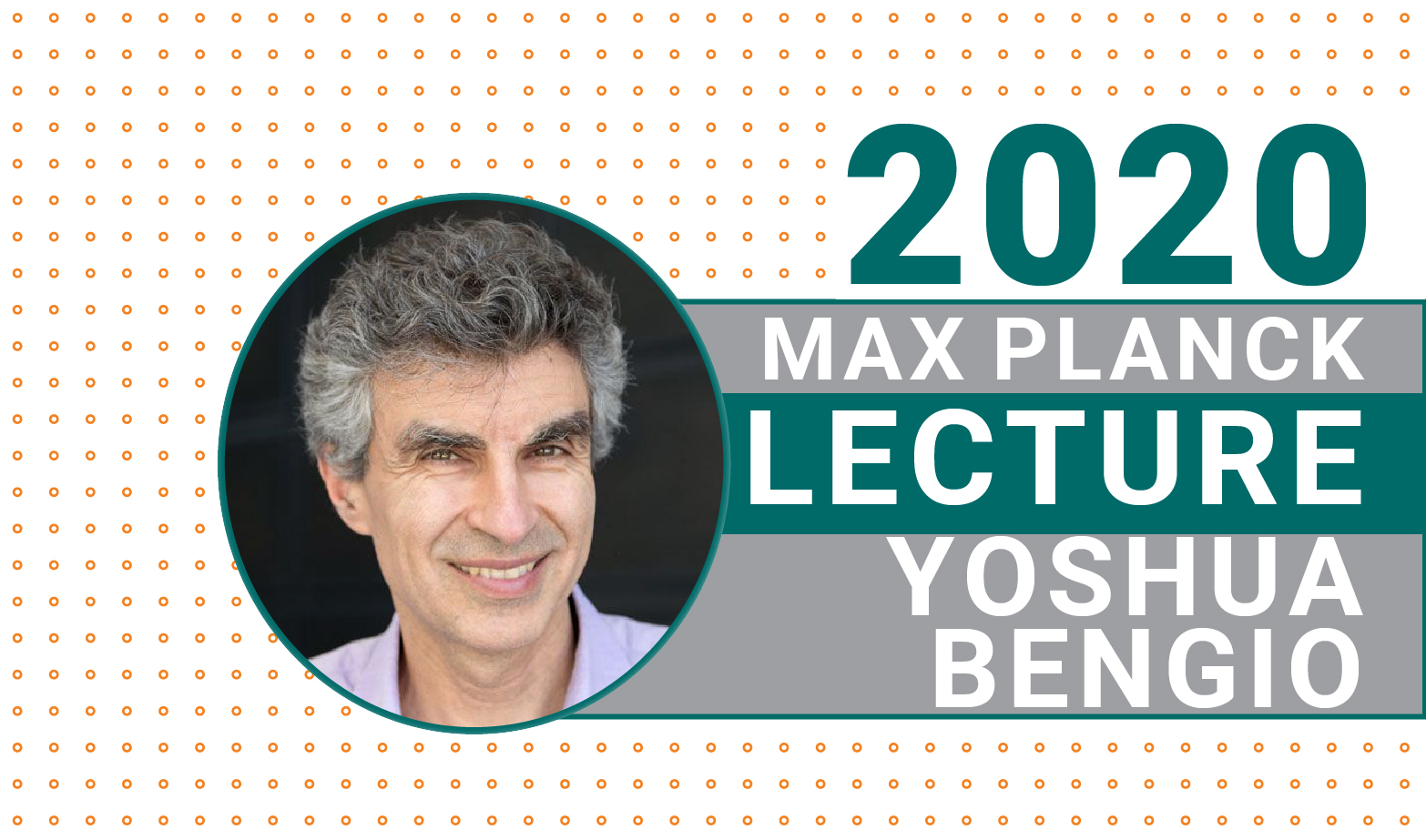
    As you may have read on Twitter, Professor Geoffrey Hinton has decided to cancel his talk at the 2020 Max Planck Lecture for scientific reasons. While we are very sorry that Professor Hinton will not be able to speak, we are pleased to announce that one of his fellow Alan Turing Award recipients has generously offered to hold the lecture. 


    Live transmission will take place on the event website on the day of the talk at 5:30 pm CEST.


    Biography: 

    Yoshua Bengio is recognized as one of the world’s leading experts in artificial intelligence and a pioneer in deep learning. Since 1993, he has been a professor in the Department of Computer Science and Operational Research at the Université de Montréal. He is the founder and scientific director of Mila, the Quebec Institute of Artificial Intelligence, the world’s largest university-based research group in deep learning. He is a member of the NeurIPS board and co-founder and general chair for the ICLR conference, as well as program director of the CIFAR program on Learning in Machines and Brains.In 2018, Yoshua Bengio ranked as the computer scientist with the most new citations, worldwide, thanks to his many publications. In 2019, he received the ACM A.M. Turing Award, “the Nobel Prize of Computing”, jointly with Geoffrey Hinton and Yann LeCun for conceptual and engineering breakthroughs that have made deep neural networks a critical component of computing. In 2020 he was nominated Fellow of the Royal Society of London.


    About the Max Planck Lecture

    In the past, Max Planck Lecture was hosted by Stuttgart’s Max Planck institutes, the Max Planck Institute for Intelligent Systems (MPI-IS) and the Max Planck Institute for Solid State Research (MPI-FKF). Since 2003, these two institutes have alternately organized the Max Planck Lecture once per year. 

    The Max Planck Lecture is given by outstanding scientists and leaders who are internationally recognized in their field. MPI-IS is delighted to announce that our 2020 speaker is Professor Yoshua Bengio from Université de Montréal.

    Max Planck Lectures are designed to be accessible to a wide audience including scientists, industry practitioners, government decision makers, and the general public interested in science and technology.

    Previous Max Planck Lectures.


  • ELLIS against Covid-19

    ELLIS against Covid-19

    Agenda

    * Speakers and talk titles are subject to change

    * All times in Central European Summer Time (CEST)

    Time Session
    1:30pm 1:35pm

    Introduction

    • Sepp Hochreiter
    1:35pm – 2:20pm

    Epidemiology & modeling

    • Peter Grünwald (10 min): The BCG CORONA and BCG-CORONA-ELDERLY Clinical Trials.
    • Alessandro Betti, Marco Gori (10 min): Learning the Dynamic SIR Model: An Optimal Control Approach
    • Johannes Zierenberg (10 min): Inferring COVID-19 spreading rates and potential change points for case number forecasts
    • Questions & discussion (15 min)

    2:20pm – 3:05pm

    Data, privacy and ML challenges

    • Antti Honkela (10 min): Privacy-preserving contact statistics collection for COVID-19 epidemic management
    • Thomas M. Hermans and Andre Loesekrug-Pietri (5 min):  The JEDI Grand Challenge
    • Kostas Kavoussanakis (5 min): Rapid Assistance in Modelling the Pandemic (RAMP)
    • Rolf Apweiler (10 min):  The European COVID-19 Research Data Platform 
    • Questions & discussion (15 min)

    3:05pm – 3:30pm

    Images

    • Victoria Schpacovitch, Katharina Morik (10 min): Resource optimising real-time analysis of artifactious image sequences for the detection of nano-objects
    • Plamen Angelov (5 min): COVID-19 CT Scan Classification via Explainable Deep Learning
    • Questions & discussion (10 min)
    3:30pm – 3:35pm

    Concluding discussion


    Send questions and comments to the speakers here: https://forms.gle/pBohVJyVQBYNbNy36

    The event will be livestreamed. You can watch it on YouTube: https://youtu.be/3VsKaiJB4Mc

  • ELLIS against Covid-19

    ELLIS against Covid-19

    Agenda

    * Speakers and talk titles are subject to change

    * All times in Central European Summer Time (CEST)

    Time Session
    1:30pm 1:40pm

    Introduction

    • Max Welling
    1:40pm – 2:40pm

    Diagnostics: molecular and imaging

    • Fabian Theis (15 min): "Leveraging single-cell transcriptomics to understand the molecular basis for SARS-CoV-2 distribution in the population"
    • Victor Greiff (15 min): "Methods for mining the adaptive immune repertoire for SARS-CoV-2 diagnostics and therapeutics"
    • Clarisa Sanchez (15 min): "CT analysis using machine learning to address COVID-19"
    • Questions & Discussion (15 min)
    2:40pm – 3:20pm

    Modeling and tracing

    • Bernhard Schölkopf (15 min): "COVID-19 machine learning projects at Max Planck Institute"
    • Luca Feretti (15 min): "Quantifying SARS-CoV-2 transmission suggests epidemic control with digital contact tracing"
    • Questions & Discussion (10 min)
    3:20pm – 3:50pm

    Data & platforms

    • Mads Nielsen (5 min): "Overview of Danish ICU risk assessment study"
    • Russ Taylor (5 min): "Telerobotics for Intensive Care Unit"
    • Cecilia Mascolo (5 min): "Mobile Health Diagnostics through Audio Signals: a COVID-19 case study"
    • Questions & Discussion (15 min)
    3:50pm – 4:00pm

    Concluding discussions

    • General Discussion and Wrap-Ups (10 min)
    • End of meeting


    Send questions and comments to the speakers here: https://forms.gle/u1YngqpimVPuwYZT6

  • ELLIS against Covid-19

    ELLIS against Covid-19

    Agenda

    * Speakers and talk titles are subject to change

    * All times in Central European Summer Time (CEST)

    Time Session
    1:30pm 1:45pm

    Introduction

    1:45pm – 2:30pm

    Outbreak prediction / tracking & epidemiological modelling

    • Nuria Oliver (15 min): "Data Science to fight against COVID-19" (link to recording)
    • Richard Neher (15 min): "Tracking SARS-Cov-2 using viral genomes and projecting its spread" (link to recording)
    • Questions & Discussion
    2:30pm – 2:55pm

    Viral & host genome sequencing

    • Chris Mason (15 min): "A Rapid, International COVID-19 and Microbial Monitoring Network" (link to recording)
    • Questions & Discussion
    2:55pm – 3:40pm

    Drug development

    • Guenter Klambauer (15 min): "Screening for SARS-CoV inhibitors" (link to recording)
    • Yoshua Bengio (15 min): "COVID-19 research at MILA" (link to recording)
    • Questions & Discussion
    3:40pm – 4:05pm

    Healthcare management

    • Mihaela van der Schaar (15 min): "Using machine learning and PHE data to help hospitals cope with COVID-19" (link to recording)
    • Questions & Discussion
    4:05pm – 4:30pm

    Data, resource, open challenges & community platforms

    • Fred Hamprecht (5 min): "COVID: volunteering for machine learners" (link to recording)
    • Devvret Rishi (5 min): "Understanding COVID-19 with the help of a million data scientists" (link to recording)
    • Questions
    4:30pm – 5:00pm

    Concluding discussions