|
14:00
|
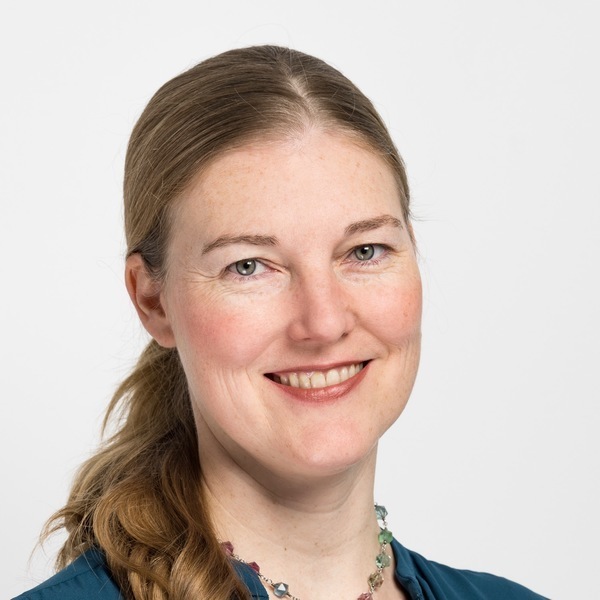
Opening by Katherine J. Kuchenbecker, Ph.D. (Managing Director)
Max Planck Institute for Intelligent Systems, Stuttgart
|
|
14:15
|
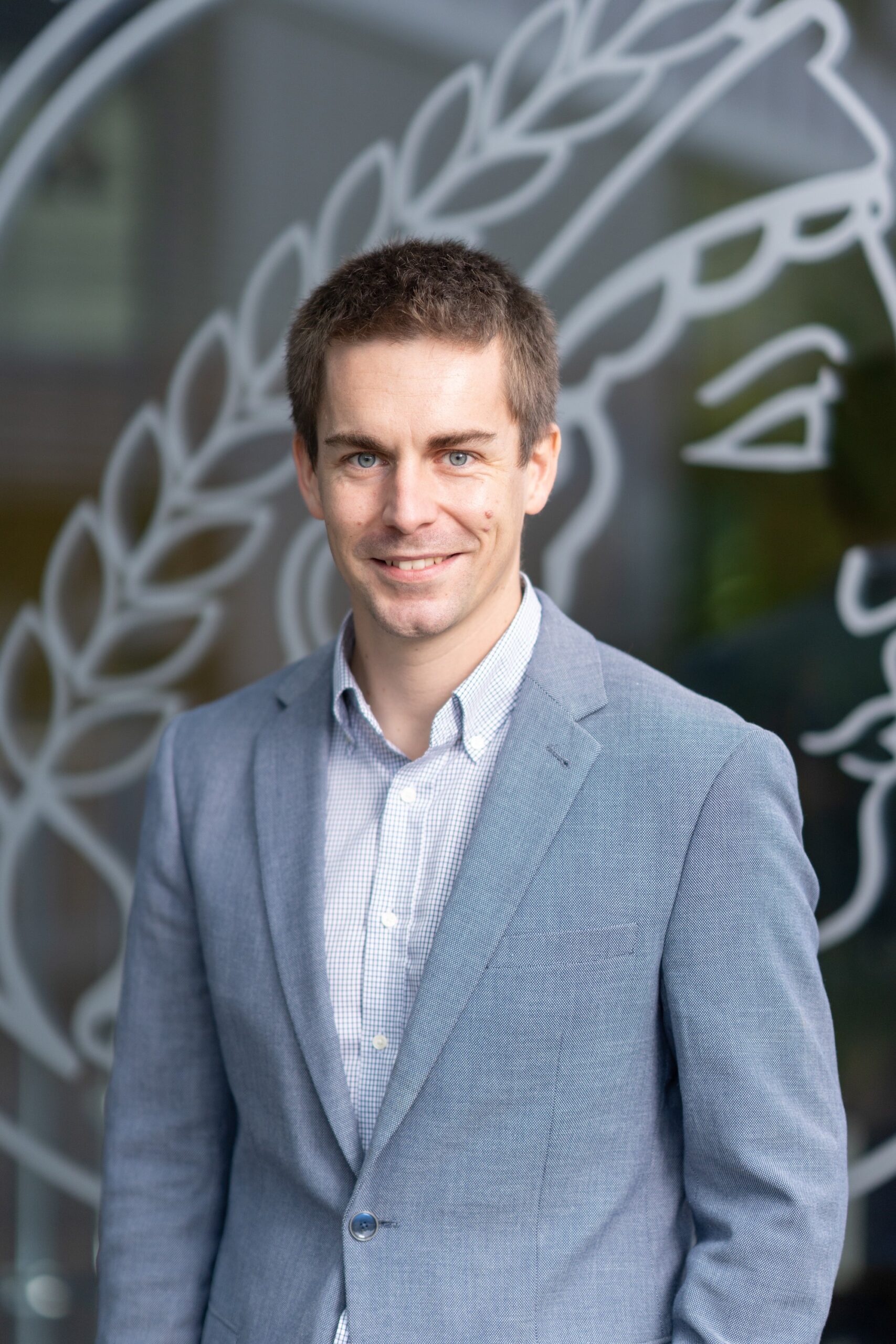
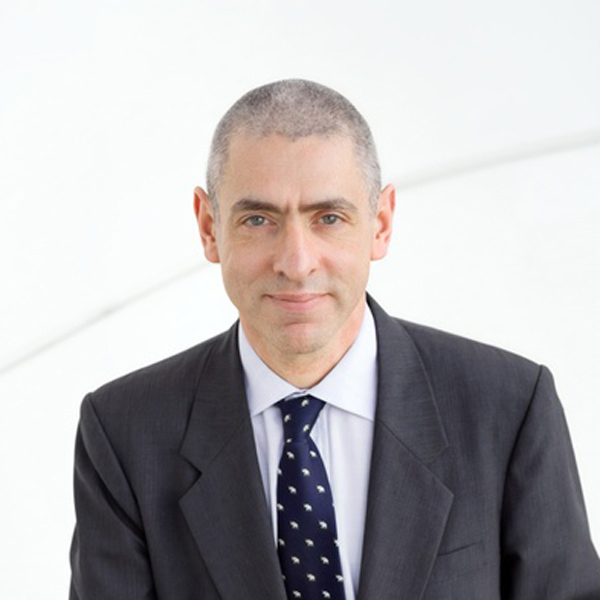
Professor Syn Schmitt
Morphological computation: from hopping robots to micro swimmers to human walking
Institute for Modelling and Simulation of Biomechanical Systems, University of Stuttgart
Abstract and speaker’s short biography >>
Biological motion is fascinating. Especially locomotion plays a crucial part in the evolution of life. Highly evolved structures, like bones connected by joints and soft tissues and contracting proteins in a muscle-tendon unit, enable and prescribe the respective species' specific locomotion pattern. Most importantly, biological motion is autonomously learned, it is untethered as there is no external energy supply and typical for vertebrates, it's muscle-driven.
This talk will focus on structures, which facilitate motion by their design and present criteria to measure to which extent a specific motion pattern is facilitated, i.e. morphological computation (MC). We will discuss, whether assessing MC helps in understanding how biology solves challenges, like non-linearity of materials, redundancy of actuators, delays of sensor signals and finally, learning motion.
Syn Schmitt studied physics at the University of Stuttgart and graduated from the University of Tuebingen with a PhD in Theoretical Astrophysics (topic: muscle modelling / computational biophysics). In 2012, Schmitt was appointed as Juniorprofessor (assistant professor) at the University of Stuttgart. Since 2018, he is full professor of "Computational Biophysics and Biorobotics" at the University of Stuttgart and in 2019 he founded the Institute for Modelling and Simulation of Biomechanical Systems, together with his colleague Oliver Roehrle. Syn Schmitt is fellow of the Stuttgart Center for Simulation Science (SimTech) and a faculty member of the International Max Planck Research School for Intelligent Systems (IMPRS-IS). Recently, he was appointed as Adjunct Professor in the School of Mechanical, Medical and Process Engineering of the Queensland University of Technology in Brisbane, Australia. His research focuses on autonomous muscle-driven motion with special interests in design principles of the locomotion apparatus, non-linear dynamics of locomotion, motor control and morphological computation in biological and technical systems.
|
| 14:45 |
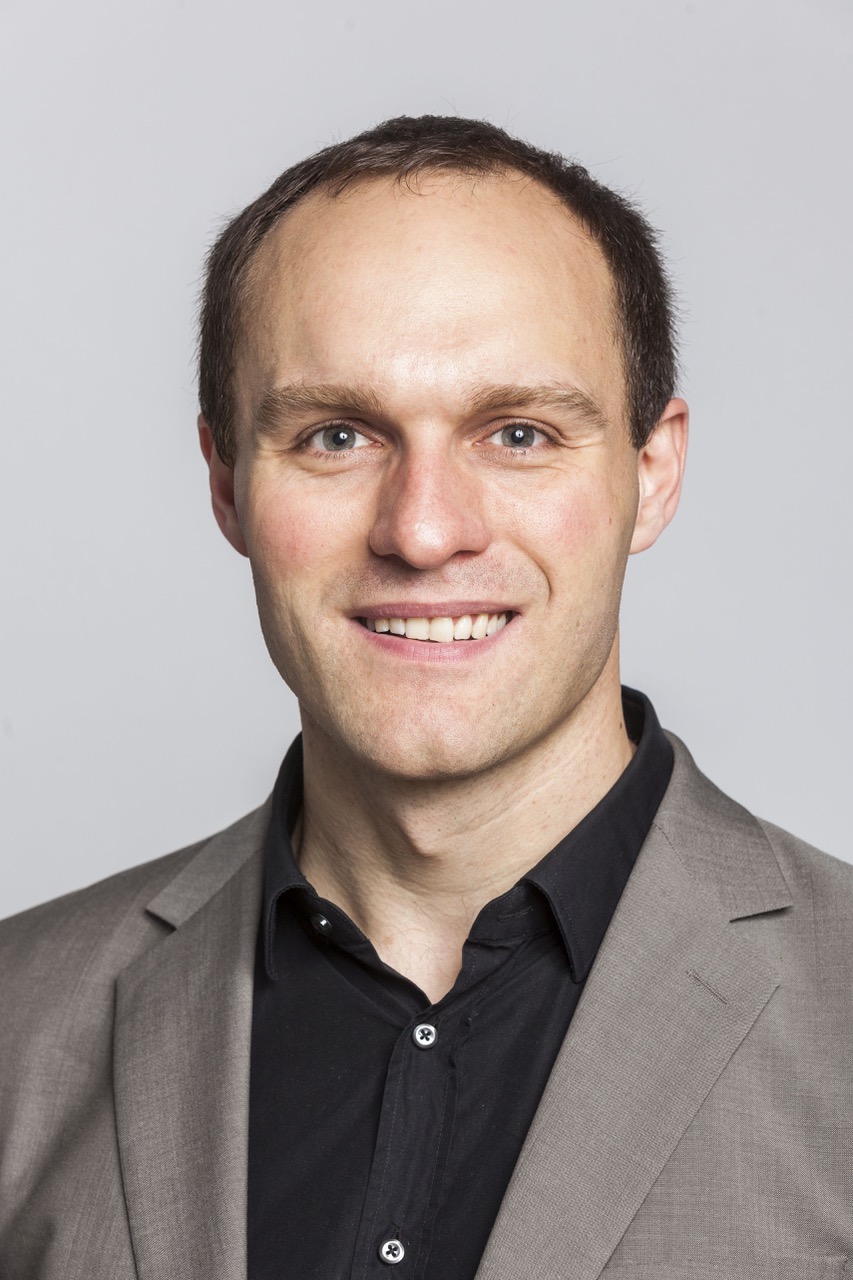
Peter Dayan, Ph.D.
Model based and model free interactions: inference, influence and confidence
Computational Neuroscience, Max Planck Institute for Biological Cybernetics, Tübingen
Abstract and speaker’s short biography >>
An influential reinforcement learning framework proposes that behaviour is jointly governed by model-free (MF) and model-based (MB) controllers. Whereas the former learns the values of actions directly from past encounters, the latter uses a cognitive map of the task to calculate them prospectively. Considerable attention has been paid to how these systems interact during choice, however, how they interact in more general facets of decision-making such as learning and confidence is unclear. Using variants of a simple task that lays out limpidly various aspects of the interaction, we show how MB information resolves uncertainty and focuses MF learning, and discuss unexpected facets of their joint contribution to confidence.
Peter Dayan read Mathematics at Cambridge, studied for his PhD with David Willshaw in Edinburgh, and did postdocs with Terry Sejnowski at the Salk Institute and Geoff Hinton in Toronto. He was an assistant professor in the Department of Brain and Cognitive Sciences at MIT, and was a founding faculty member of the Gatsby Computational Neuroscience Unit at UCL, which he then ran for 15 years. He is currently a Director at the Max Planck Institute for Biological Cybernetics. His interests include affective decision making and neural reinforcement learning.
|
| 15:15 |
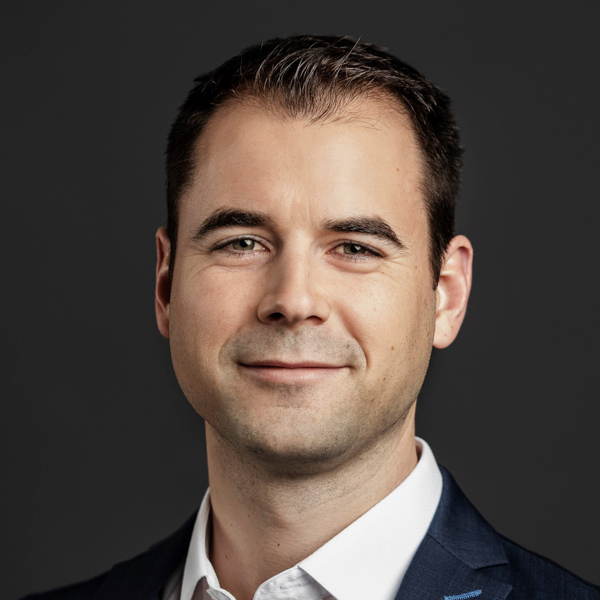
Professor Marco Hutter
From legged robots to digital fabrication
Institute of Robotics and Intelligent Systems (IRIS), ETH Zürich
Abstract and speaker’s short biography >>
Recent development in robotics, machine automation and intelligence has led to systems that are skilled and mature enough for real-world deployment. For example, quadrupedal robots have reached a level of mobility to navigate complex environments, which enables them to take over inspection or surveillance jobs in place like offshore industrial plants, in underground areas, or on construction sites. In this talk, I will present our research work with the quadruped ANYmal, mobile manipulators and automated construction machines, and explain some of the underlying technologies for locomotion control, manipulation, environment perception, and mission autonomy. I will show how these robots can learn and plan complex manoeuvres, how they can navigate through unknown environments and how they are able to conduct surveillance, inspection or construction tasks with super-human precision.
Marco is an assistant professor for robotic systems at ETH Zurich, associate member of MPI-ETH Learning Center, and founder of ANYbotics AG. He studied mechanical engineering and completed his doctoral degree in robotics at ETH. Marco’s research interests are in the development of novel machines and actuation concepts together with the underlying control, planning, and learning algorithms for locomotion and manipulation. Marco is part of the National Centre of Competence in Research (NCCR) Robotics and NCCR Digital Fabrication and PI in various international projects (e.g. EU Thing) and challenges (e.g. DARPA SubT). His work has been recognized with a number of awards and prestigious grants such as the Branco Weiss Fellowship, ETH medal, IEEE/RAS Early Career Award or ERC Starting Grant.
|
| 15:45 |
Günter Petzow Prize Award Ceremony
|
| 16:00 |
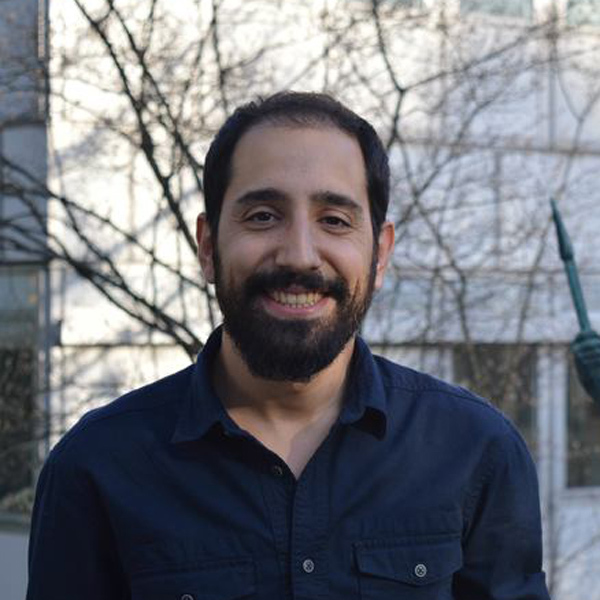
Dr. Hakan Ceylan, Winner of the 2020 Günter Petzow Prize
Cell-Size Robots for Minimally Invasive Medical Interventions and Targeted Delivery
Physical Intelligence Department, Max Planck Institute for Intelligent Systems, Stuttgart
Abstract and speaker’s short biography >>
Untethered mobile robots the size of a human cell can make a disruptive impact in medicine. Their small size and wireless mobility can enable access and navigation in small, confined, hard-to-reach, and sensitive inner body sites, such as the central nervous system, the circulatory system, and the fetus. At these locations, such tiny machines can provide new ways of minimally invasive surgical interventions, remain inside for long durations as semi-implantable devices, and deliver targeted diagnosis and therapy with high precision and repeatability. To achieve these goals, however, there are many scientific and technical challenges to overcome. In this talk, I will present design, fabrication and control of cell-sized mobile robots for medical applications. I will demonstrate that the realization of coupled sensing, response and motion, the pillars of a robotic system, requires new materials and fabrication routes that can produce highly integrated systems that successfully interact with the environment. I will explore alternative power sources and design principles that would realistically sustain robotic operations at the microscopic size scales. I will demonstrate medical microrobots with the capabilities of moving around, sensing, responding to the local pathological information, and performing specific diagnostic and therapeutic tasks as orderly executed operations using their smart composite material architectures. Upon completing their functions, most of the microrobots I have developed are enzymatically degradable at the physiological conditions. Given the progress and the status of this emerging field, I will finally be providing a translational perspective on medical microrobotics research with an application-oriented, integrative design approach where powering, materials, fabrication, control, localization and medical functionalities need to be considered altogether at the same time. I will discuss the complexity of the challenges ahead and the potential directions to overcome them.
Hakan Ceylan is a senior research scientist at Max Planck Institute for Intelligent Systems, Stuttgart, Germany, working on medical microrobots, bioinspired materials, molecular engineering, and intelligence at microscopic length scales. He received the BSc. degree in molecular biology and genetics (with high honor) and the Ph.D. degree in materials science and nanotechnology in 2010 and 2014, respectively, from Bilkent University, Ankara, Turkey. Dr. Ceylan was a post-doctoral researcher during 2014-2017 at Max Planck Institute for Intelligent Systems. He has been an associate member of Max Planck ETH Center for Learning Systems since 2015, the first joint institute of Max Planck Society and ETH Zurich. Dr. Ceylan’s inventions have resulted in one granted two pending patents and over twenty publications in the internationally renowned peer-reviewed journals. He has received several best paper, best talk and science-as-art awards as an extension of his research output. His studies have been publicized by Bayern2 radio, PC Magazine and a number of other printed and web-based German and international media. In 2019, PC Magazine featured Dr. Ceylan’s medical microrobot project among "5 amazing projects that will change the future of healthcare".
|
| 16:30 |
Ph.D. Graduation Ceremony
We congratulate 15 young researchers who successfully defended their doctoral thesis during the past year
Opening words from Professor Michael J. Black, Max Planck Institute for Intelligent Systems, Tübingen
List of graduating Ph.D. students >>
Six world-class universities are awarding doctoral degrees to this year’s batch of graduating students, who are affiliated either directly with MPI-IS or indirectly through our doctoral programs (Cam-Tue, CLS, CMU, and IMPRS-IS).
University of Cambridge
Matthias Bauer, Empirical Inference Department, Max Planck Institute for Intelligent Systems, Tübingen (Cam-Tue)
Paul Rubenstein, Empirical Inference Department, Max Planck Institute for Intelligent Systems, Tübingen (Cam-Tue)
Carnegie Mellon University
Mehmet Berk Yigit, Physical Intelligence Department, Max Planck Institute for Intelligent Systems, Stuttgart
Xiaoguang Dong, Physical Intelligence Department, Max Planck Institute for Intelligent Systems, Stuttgart
Technical University of Darmstadt
Dieter Büchler, Empirical Inference Department, Max Planck Institute for Intelligent Systems, Tübingen and Technical University of Darmstadt
Sebastian Gomez-Gonzales, Empirical Inference Department, Max Planck Institute for Intelligent Systems, Tübingen and Technical University of Darmstadt
University of Pennsylvania
Siyao Hu, Haptic Intelligence Department, Max Planck Institute for Intelligent Systems, Stuttgart
Eberhard Karls University Tübingen
Anurag Ranjan, Perceiving Systems Department, Max Planck Institute for Intelligent Systems, Tübingen (CLS associate)
Joel Janai, Autonomous Vision Group and Perceiving Systems Department, Max Planck Institute for Intelligent Systems, Tübingen
Lars Mescheder, Autonomous Vision Group, Max Planck Institute for Intelligent Systems, Tübingen
Matthias Kümmerer, Computational Neuroscience & Machine Learning Group, University of Tübingen (IMPRS-IS)
Siyavash Haghiri, Theory of Machine Learning Group, University of Tübingen
Steve Heim, Dynamic Locomotion Group, Max Planck Institute for Intelligent Systems, Stuttgart (CLS associate)
ETH Zürich
Ceren Yasa, Physical Intelligence Department, Max Planck Institute for Intelligent Systems, Stuttgart (CLS associate)
Öncay Yasa, Physical Intelligence Department, Max Planck Institute for Intelligent Systems, Stuttgart
|
| 17:30 |
Closing by Katherine J. Kuchenbecker, Ph.D. (Managing Director)
Max Planck Institute for Intelligent Systems, Stuttgart
|