CV Tag: University of Stuttgart

  • Beyond the Thesis – Das Leben nach dem Studium

    Beyond the Thesis – Das Leben nach dem Studium


    About the program: 

    This isn't your typical lecture series. It's an opportunity to engage in an open dialogue with others who've been or who are right where you are. Gain insights from those who've made these choices and are eager to share their experiences in academia and industry in a relaxed atmosphere. Hurry as space is limited to 30 participants!

    Three researchers in very different fields and roles are invited to debate and discuss, moderated by doctoral researcher Jonas Kneifl, the interesting topic of how to shape a career:

    • Inga Berre, Professor, Director VISTA Center for Modeling of Coupled Subsurface Dynamics, University of Bergen
    • Florian Leucht, Steering Wheel Hub Platform R&D Manager at Valeo 
    • Luiz Chamon, Independent Junior Research Group Leader on Information Systems (ELLIS-SimTech)

    You are also invited to mingle and connect over refreshments following the panel. 

    Join SimTech for an evening of enlightening conversations and invaluable networking opportunities as you chart your course toward a fulfilling career. The event will be held in English and is specifically not restricted to SimTech researchers and students.


    When? 

    May 15, 2024 at 18:00 CEST (discussions commencing at 18:30 CEST) 


    Where? 

    Entrepreneurship Café frei[Raum], Pfaffenwaldring 45, 

    University of Stuttgart, Campus Vaihingen 


    Interested?

    Please register here.


  • #KIdeasInMotion

    #KIdeasInMotion


    Programm – Praxisnahe Einblicke in die KI Welt


    11.45-13.15 Uhr: Workshop mit GEBIT Solutions

    Aktuelle Entwicklungen in KI und praktische Anwendung im Handel

    Erhaltet einen umfassenden Überblick über den Stand der KI im Handel. Von generativen und diskriminativen KI-Konzepten bis hin zu praxisnahen Anwendungsbeispielen wie intelligenter Artikelerkennung für Kassen und unternehmensinternen Wissensdatenbanken basierend auf Large Language Models (LLMs).

    Mit Matti Frind und Felix Kleinsteuber, Werkstudierende bei GEBIT Solutions.


    14.15-15.45 Uhr: Workshop mit Drees und Sommer

    Lösungsstrategien für die fünf größten Herausforderungen in der Bau- und Immobilienbranche 2035

    Wie kann die Bau- und Immobilienbranche der Zukunft gestaltet werden? Ob neue Ansätze für nachhaltiges Bauen oder der Einsatz von KI: Taucht ein in innovative Ansätze!

    Mit Frieder Blum, Junior Innovation Manager, und Selina Weigele, Innovation Manager von Drees und Sommer.


    16.15-17.15 Uhr: Keynote, Anja Unglaub von Bosch Power Tools und Bastian Kruse, Bosch Digital

    Vom Werkzeug zum Meisterwerk: KI in Vertrieb und Marketing bei Bosch PowerTools

    Freut euch auf eine inspirierende Keynote von Anja Unglaub, Senior Vice President bei Bosch Power Tools und Bastian Kruse, Chief Product Owner bei Bosch Digital. In ihrer Keynote teilen sie Einblicke in die transformative Kraft von KI im Business und zeigen, wie KI strategische Geschäftsziele unterstützt und die Zukunft gestaltet.


    Ab 17:15 Uhr: Networking mit Peers und Unternehmen

    Nutzt die Gelegenheit, euch mit anderen Studierenden zu vernetzen, Ideen auszutauschen und Kontakte für zukünftige Projekte und Karrieremöglichkeiten mit teilnehmenden Unternehmen zu knüpfen!


    Wo? 

    Universität Stuttgart, Campus Vaihingen


    Wann? 

    2. Mai 2024, ab 11:45 Uhr 


    Anmeldung: 

    Die Anmeldung ist bis zum 28. April 2024 hier möglich.


  • Brave Conversations Stuttgart 2024

    Brave Conversations Stuttgart 2024

    When?

    May 21, 2024, 9:00–13:00 CEST

    Where?

    Room 00.150

    University of Stuttgart

    Universitätsstraße 34

    70569 Stuttgart, Vaihingen

    Germany

    Brave Conversations Stuttgart 2024 takes place within the context of a world undergoing significant social, political, and technological change:

      • 2024 is the year which seems the most number of human beings participating in ‘democratic’ elections, something that has been described as an ‘election extravaganza’. Read more.
      • Technology companies are releasing more and more powerful Large Language Models and Machine Learning systems and Intelligent Agents. Read more.
      • They are also rapidly developing and releasing new ways of interacting with technologies such as Augmented Reality. Read more.
      • Social Media companies are under increasing scrutiny by governments and regulatory authorities around online safety. Read more.
      • Progress on human longevity is becoming increasingly interesting with progress being made on the Science of Ageing. Read more.
      • It is hoped that renewable energy sources will achieve one-third of global power generation in 2024. Read more.

    Within all of these themes perhaps the most important is not the technological advances, but what the implications are for humans and the human systems within which we live. This is what Brave Conversations seeks to explore. We can’t go down every rabbit hole but we can peek into a few and see if we can draw out themes that impact each of us in our daily lives, to explore how we can retain our humanity and our agency in the Age of Smart Machines.

    We will be exploring

      • What is the definition of a human in the Age of the Smart Machine?
      • What is the role of a human in this Age of the Smart Machine?
      • How do we retain our humanity whilst harnessing the power of Smart Machines to improve life for all on Planet Earth?

    For more information please visit Brave Conversations and IRIS.

    Registration is free but mandatory and space is limited. If you would like to join, please register here.

    Organising Committee

    Sierra Kaiser – University of Stuttgart

    Anni Rowland-Campbell, Intersticia and Web Science Trust

  • Entrepreneurial Ecosystem Spring School

    Entrepreneurial Ecosystem Spring School


    In this Research Spring School, we aim to provide a unique opportunity for early-career researchers to network, collaborate, and test research ideas with fellow academics involved in research on the configuration, mechanisms, and evolutionary dynamics of Entrepreneurial Ecosystems. Expect a dynamic three-day program featuring intensive feedback sessions, interactive workshops, and discussions with leading academics and peers worldwide.


    Topics:

    • The evolutionary dynamics of entrepreneurial ecosystems
    • Unlocking the mechanisms within and between entrepreneurial ecosystems
    • Inclusiveness of entrepreneurial ecosystems
    • Theoretical challenges towards entrepreneurial ecosystem research
    • Methods for entrepreneurial ecosystem research, with a specific interest in longitudinal studies, web scraping, and natural language processing approaches


    The program will include:

    • Keynote Sessions: Erik Stam (Utrecht University), Niels Bosma (Utrecht University), Christina Theodoraki (TBS Education), Bernd Wurth (University of Glasgow), Friederike Welter (University Siegen), Angelo Cavallo (Politecnico di Milano), Karim Messeghem (University of Montpellier)
    • A Meet the Editors Session: Erik Stam (ET&P), Christina Theodoraki (SBEJ, JSBM), Riccardo Fini (JMS), Jean-Michael Sahut (Management & Prospective/Gestion 2000)
    • Paper Development Workshops
    • A Methods Workshop
    • An Interactive Session to discuss the future of entrepreneurial ecosystem research


    Scientific committee: 

    Erik Stam (Universiteit Utrecht, Netherlands), Christina Theodoraki (TBS Education, France), Niels Bosma (Universiteit Utrecht, Netherlands), Didier Chabaud (IAE Paris – Sorbonne Business School, Chaire ETI – IAE Paris Sorbonne School, France), Grégory GUENEAU, PhD (ADALIA School of Business, Morocco), Alexander Brem (University of Stuttgart, Germany), Ferran Giones Valls (University of Stuttgart, Germany), Andreas Wahl (University of Stuttgart, Germany), Sophia Hess (University of Stuttgart, Germany)


    Sponsors: 

    Gründermotor, Académie de l'Entrepreneuriat et de l'Innovation, AIREPME – Association Internationale de Recherche en Entrepreneuriat et PME, EUROPEAN ACADEMY OF MANAGEMENT, Entrepreneurial Ecosystem Lab, Landeshauptstadt Stuttgart


    Deadline for abstract submission: March 7 2024

    Submission system: https://ecosys24.sciencesconf.org/

  • 119 of the world’s most cited researchers are from Stuttgart

    119 of the world’s most cited researchers are from Stuttgart

    The latest update of a database published by Elsevier provides information on the most cited researchers in 2022 for each scientific field, including extensive figures on publications, citations, self-citation rates, and indices. The dataset contains more than 200,000 authors and takes into account the different publication cultures of the individual subject areas by including the top 2 percent of the world's most frequently cited researchers in their field in the list.

    These include 119 academics from the University of Stuttgart, which are spread across a total of 12 departments and listed as follows.

    Discipline

    # of scientists at the University of Stuttgart in the top 2%

    Physics & Astronomy

    35

    Engineering

    21

    Enabling & Strategic Technologies    

    16

    Information & Communication Technologies    

    11

    Biomedical Research    

    7

    Mathematics & Statistics    

    7

    Built Environment & Design

    3

    Clinical Medicine    

    3

    Psychology & Cognitive Sciences    

    2

    Economics & Business    

    1

    Philosophy & Theology    

    1

    Total number

    119

    Strong individual performances in a global comparison

    Over 20 percent of the University of Stuttgart's current faculty members are accounted for.

    The researchers from the University of Stuttgart, active in the year under review, are listed below as the most frequently cited in their respective fields (in alphabetical order):

    Scientists

     Occupies place # in the field of…

    Allgöwer, Frank 605 of 106.863 in Industrial Engineering & Automation
    Bárdossy, András 148 of 57.175 in Environmental Engineering
    Birkmann, Joern 41 of 21.624 in Strategic, Defence & Security Studies
    Brem, Alexander 209 of 52.318 in Business & Management
    Brink, Stephan ten 310 of 197.500 in Networking & Telecommunications
    Buchmeiser, Michael R. 345 of 108.979 in Polymers
    Bulling, Andreas 60 of 14.370 in Human Factors
    Bürkner, Paul Christian 26 of 21.194 in Statistics & Probability
    Dressel, Martin 1595 of 295.432 in Applied Physics
    Giessen, Harald 205 of 64.789 in Optics
    Hauer, Bernhard 570 of 161.671 in Organic Chemistry
    Hilfer, Rudolf 277 of 50.409 in Fluids & Plasmas
    Jeltsch, Albert 334 of 204.091 in Biochemistry & Molecular Biology
    Kaim, Wolfgang 70 of 72.729 in Inorganic & Nuclear Chemistry
    Kästner, Johannes 271 of 100.804 in Chemical Physics
    Kontermann, Roland E. 646 of 147.556 in Immunology
    Liu, Na 474 of 117.692 in Nanoscience & Nanotechnology
    Lutz, Eric 191 of 73.580 in General Physics
    Menges, Achim 2 of 1.681 in Architecture
    Seifert, Udo 17 of 50.409 in Fluids & Plasmas
    Speck, Thomas 253 of 50.409 in Fluids & Plasmas
    Steinwart, Ingo 1578 of 356.955 in Artificial Intelligence & Image Processing
    Weitkamp, Jens 127 of 38.735 in Physical Chemistry
    Werner, Hans Joachim 97 of 100.804 in Chemical Physics
    Wrachtrup, Jörg 371 of 295.432 in Applied Physics
    Yang, Bin 335 of 197.500 in Networking & Telecommunications

    More names of top-cited scientists can be found in the database.

    Cyber Valley would like to congratulate these and all other researchers on their success!

  • WebSci’24:

    WebSci’24:


    The conference will present quantitative, qualitative, and mixed methods research, including techniques from the social sciences and computer science, as well as work exploring web-based data collection and research ethics. Other sessions will also present studies that combine analyses of web data and other types of data (e.g., from surveys or interviews) and help better understand user behavior online and offline.

    Keynotes and papers for this conference are now fixed. See the conference website for more information. 


    When?

    May 21–24, 2024


    Where?

    Stuttgart, Germany


    This event is organized by the University of Stuttgart and hosted by the Interchange Forum for Reflecting on Intelligent Systems (IRIS).

  • EuroEAP 2024 kommt nach Stuttgart!

    EuroEAP 2024 kommt nach Stuttgart!


    What is EuroEAP?

    The EuroEAP international conference, organized by the EuroEAP Society with a not-for-profit distinctive character and always held in Europe, primarily aims to share the latest advances and findings in this emerging field. It gathers experts from all over the world in a highly multidisciplinary event driven by scientific quality and industrial impact, with an organization that enables significant opportunities for one-to-one discussions in a friendly atmosphere. Today, the event expands its scope to the larger international and diverse research community of soft smart materials and soft transducers. The event is conceived as an exclusive forum for international experts and professionals seeking scientific quality, industrial impact, and opportunities for cooperation.


    When?

    June 11–13

    Important deadlines:

    • Hotel reservation (special rate): 10 APRIL 2024 (70 pre-booked rooms)
    • Early registration & abstract submission: 10 APRIL 2024
    • Deadline for registration: 10 MAY 2024


    Where?

    Max Planck Institute for Intelligent Systems 

    Heisenbergstrasse 3 | 70569 Stuttgart | Germany


    How to contribute and/or attend?

    Please have a look here: EuroEAP Platform


    Curious to see what awaits you there?

    Get exclusive insights in advance: The program 


    Tuesday, 11 June

    • A social dinner will be organized on Tuesday evening in the Stuttgart city center.
    • Transport from the MPI to the dinner and from the dinner to the hotel will be provided.
    • The cost to attend this event is covered by the conference registration fee.
    • More details will be released closer to the conference start.


    Wednesday, 12 June

    Castle tour:

    A castle tour for the participants of the conference will be organized on Wednesday. We will get a guided tour through Residenzschloss Ludwigsburg, one of the most beautiful baroque castles in Germany.
    The tour will start at 16:00.


    Social dinner:

    • Following the castle tour, there will be a social dinner at the restaurant Württemberger Hof (http://www.wuerttemberger-hof-ludwigsburg.de/), which is in walking distance from the castle.
    • The dinner will start at 19:00.
    • Transport from the MPI to Ludwigsburg and from the dinner to the hotel will be provided.
    • The cost to attend this event is covered by the conference registration fee.


    Accompanying persons

    • The castle tour and social dinners are open to accompanying people.
    • The participation fees for each accompanying person will be announced closer to the conference start.
    • The fees should be paid in cash at the conference desk (credit cards are NOT acceptable).
    • Attendees willing to join the castle tour and the social dinners should specify the option (including the number of accompanying persons) during the online registration to the conference.


    Thursday, 13 June

    SOFTWEAR Days:

    This year there is a satellite event to the EuroEAP 2024 conference: SOFTWEAR Days 2024. There will be an oral session also open to all EuroEAP participants, free of charge, on Thursday 13th of June in the afternoon at the same venue and room as the EuroEAP 2024. Oral presentations will be given by the SOFTWEAR PhD students presenting their research.

    A few slots have also been reserved for presentations by other PhD students outside SOFTWEAR. The topic of the presentation must be in the broad category of soft actuators for wearables. If you, as a non-SOFTWEAR student, want to give an oral presentation (15 mins incl. questions), please contact edwin.jager@liu.se.

    SOFTWEAR is a Marie Skłodowska-Curie Actions Doctoral Network in the emerging and rapidly growing field of wearables, with a unique focus on soft actuators for wearables and exoskeletons. The primary objective of SOFTWEAR is to train young researchers in the multidisciplinary science of soft actuators for integration in wearables and augmenting textiles. This will be achieved by merging chemistry, physics, mechanics, electronics, textile technology, design, human-technology interaction, and ethics in a truly interdisciplinary manner, while teaching essential skills in ethics, product development, IPR, and industrial realization, thus providing a unique added value to the careers of the researchers. For more information, see: https://softwear-dn.eu/


    EuroEAP Society Challenge:

    During the EuroEAP 2024, we’ll be having a challenge with € 400 worth of prizes. It is an open competition where teams of talented researchers can showcase a project of their choice and compete with colleagues in academia and industry. The final aim of the Challenge is to captivate and inspire the imagination of experts and the public alike with the possibilities that soft smart materials and soft transducers empower. More information on the challenge web page:
    http://www.euroeap.eu/index.php/euroeap-society-challenge-home.


    Deadlines

    • Enrolment: 23 APRIL 2024
    • Final submission: 23 MAY 2024


    Cyber Valley is looking forward to this event happening within the Cyber Valley community and welcomes our international guests!

  • Cyber Valley scientist Steffen Staab appointed Fellow of ACM

    Cyber Valley scientist Steffen Staab appointed Fellow of ACM

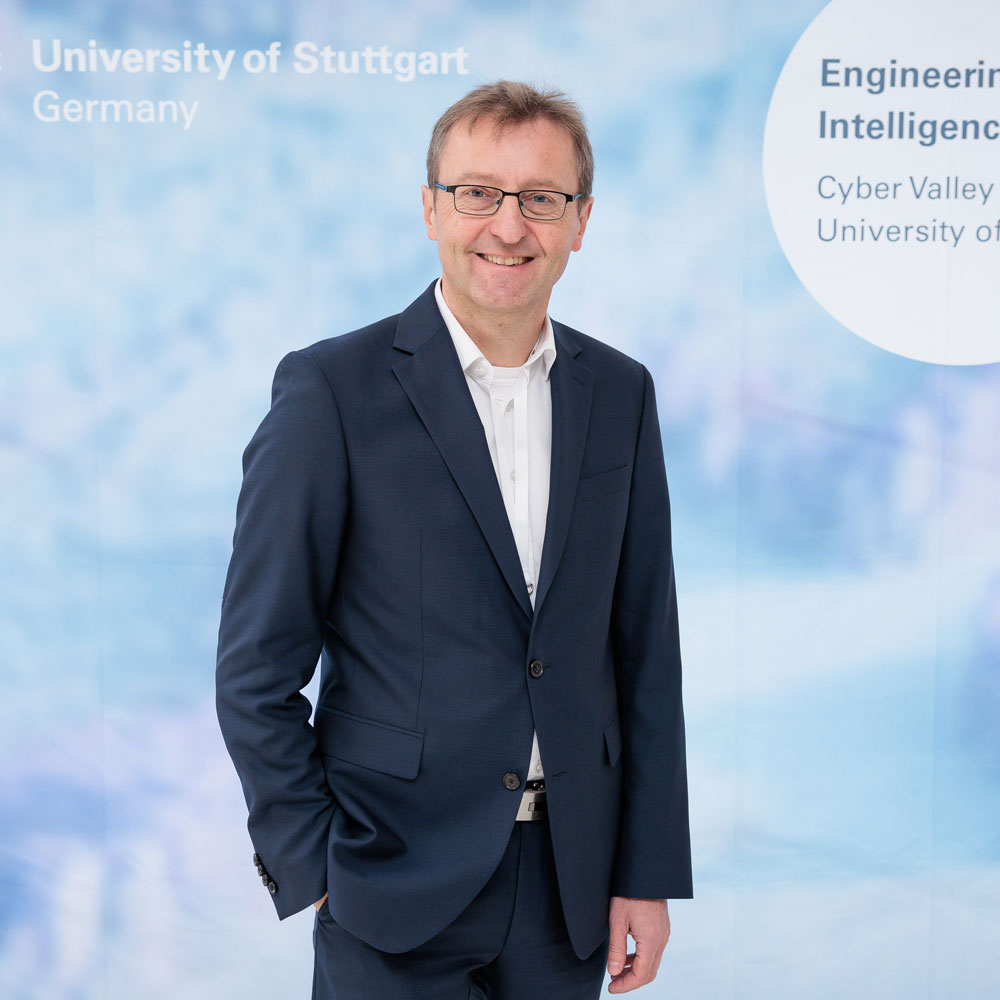
    "I am delighted to have been honored with this title, which has only been awarded to a few German-speaking researchers to date," said Staab. The 54-year-old is researching ways in which computers can be made to solve complex problems through data and knowledge-based learning. "Up to now,” Staab explains, “artificial intelligence algorithms have been trained using datasets, which however, are often insufficient to comprehensively train an algorithm. This is why,” he continues, “my team and I are looking into ways to solve this problem by exploiting existing knowledge, which we have so far made insufficient use of." The computer scientist is pursuing this problem through interdisciplinary collaboration at the University of Stuttgart, within the "Data-integrated Simulation Science" (SimTech) Cluster of Excellence and in Cyber Valley, Europe's leading academic and industry consortium for AI research.

    Better synthetic fertilizer and cancer simulations

    Examples that illustrate Staab's research include artificial fertilizers and cancer. It would be ideal for both the agricultural sector and society in general if only the minimum amount of fertilizer were spread over a field to achieve the necessary concentration in the soil, which is not so easy because soil conditions vary greatly. Cancer is also subject to wide variations: whereas one tumor may grow in a branching form, another may remain compact, which has implications in terms of treatment. Researchers, such as Staab, are currently working at SimTech on the development of simulations that make such complex processes more predictable.

    As Staab explains: "We often don't know which part of the complex mathematical description – which is the starting point for a simulation – is of particular relevance when it comes to achieving meaningful results." Yet this would be important for the simulation. “This,” he continues, “is where AI algorithms can help but we need to train them on existing data, which is often rather scarce. If, however, we could also draw upon existing knowledge, the simulations could be carried out in a more stringent and realistic manner.” In many cases in fact, this knowledge is already available from laboratory studies carried out by other researchers – in some cases many years ago – on both synthetic fertilizers and tumors. "One could also refer to our approach as knowledge-infused simulation science," says Staab.

    About the Association for Computing Machinery

    The ACM is the world's largest and oldest scientific association for computer science. It comprises experts from the fields of education and research and aims to promote computer science both as a science and as a profession. The ACM also awards the Turing Prize, the highest honor in computer science. To be selected as an ACM Fellow, one's personal achievements in the fields studied by the ACM members must be outstanding.

    About Prof. Steffen Staab

    Steffen Staab was born in Würzburg in 1970 and studied Computer Science and Computer Linguistics at both the University of Erlangen-Nuremberg and the University of Pennsylvania. He received his doctorate in Computer Science from the University of Freiburg in 1998. He then went on to work at the University of Stuttgart’s Institute of Human Factors and Technology Management (IAT) as well as at the Fraunhofer Institute for Industrial Engineering (IAO), and later moved to the University of Karlsruhe (now known as KIT). In 2004, Staab was appointed Professor of Databases and Information Systems at the University of Koblenz and Landau, where he founded the Institute for Web Science and Technologies (WeST) in 2009. He has also held the Chair for Web and Computer Science at the University of Southampton since March 2015.

    Staab took up a Cyber Valley Professorship for Analytical Computing at the University of Stuttgart in February 2020. He founded the University's Institute for Artificial Intelligence where he serves as Managing Director and is also one of the two spokespersons for the SimTech Cluster of Excellence.

    Expert contact: 

    Prof. Steffen Staab, University of Stuttgart, Institute for Artificial Intelligence, Phone: +49 711 685-88100, E-Mail: steffen.staab@ki.uni-stuttgart.de

    Media contact:

    Lydia Lehmann, University of Stuttgart, University Communications, 
    Phone: +49 711 685-82297, E-Mail: lydia.lehmann@hkom.uni-stuttgart.de