Network Role: Partner

  • Cyber Valley welcomes five new start-ups to its Start-up Network

    Cyber Valley welcomes five new start-ups to its Start-up Network

    Hellstern Medical 

    Hellstern Medical develops innovative ergonomic solutions for operating rooms, with a focus on reducing surgeon fatigue and pain during long procedures. Their flagship product is the NOAC (Surgeon Support System), an intelligent robotic exoskeleton device that uses motion capture technology to hold surgeons in any desired position at the operating table. The company uses operating room data to drive automation and revolutionize surgical procedures through the integration of robotics and artificial intelligence (AI). 

    Textverstehen  

    TextVerstehen specializes in developing artificial intelligence (AI) technologies for text understanding and natural language processing. The company is developing AI models and algorithms that analyze text data, enabling applications such as automated text summarization, question answering, and content analysis. 

    OSORA 

    OSORA is a software company that has developed a predictive analytics tool for simulating and analyzing the healing process of bone fractures. Using digital twin technology, their software is designed to provide patient-specific predictions of how a particular bone fracture will heal over time. 

    Enerlace 

    Enerlace develops innovative software solutions that enhance visualization and reporting capabilities to speed up the deployment of renewable energy. By providing these solutions, the company seeks to help wind farm operators and other industry players optimize their operations, improve efficiency, and ultimately drive the growth of sustainable wind energy production. 

    Semanux 

    Semanux is dedicated to fostering digital independence, particularly those with motor disabilities. With their innovative Semanux Access software, users can intuitively control their computers not just with their hands, but also with their head, eyes, and feet. This innovation opens a new realm of possibilities for accessibility in technology. 

    In joining the Cyber Valley Start-up Network, these five start-ups enhance the diversity and collaborative culture of the Cyber Valley Community. 

  • Cyber Valley heißt fünf neue Start-ups willkommen

    Cyber Valley heißt fünf neue Start-ups willkommen

    Fünf Start-ups haben sich dem Cyber Valley Start-up Network angeschlossen: IPS, Mirelo AI, Kora Labs, Logikon und Octomind. Diese dynamischen Unternehmen repräsentieren die modernsten Anwendungen künstlicher Intelligenz in verschiedenen Bereichen und versprechen, ihre jeweiligen Branchen zu revolutionieren und den technologischen Fortschritt voranzutreiben.

    IPS

    Inline Process Solutions (IPS) transformiert industrielle Abläufe durch den Einsatz von KI-gesteuerter Sensortechnologie und Bildanalyse in chemischen Anlagen. Diese Technologie minimiert Störungen und den Energieverbrauch und optimiert Prozesse mit unvergleichlicher Präzision.

    Kora Labs

    Kora Labs setzt KI-basierte Management-Tools ein, um den Düngemitteleinsatz zu optimieren, die Erträge zu maximieren und die Verschwendung im Agrarsektor zu minimieren. Durch die Priorisierung der Effizienz ermöglicht Kora Labs den Landwirten, höhere Erträge bei geringeren Inputkosten zu erzielen und so das Wirtschaftswachstum zu fördern.

    Logikon AI

    Logikon AI verbessert die Zuverlässigkeit von KI durch die Entwicklung von KI-Anwendungen zur Bewertung und Steuerung fortschrittlicher großer Sprachmodellsysteme (Large Language Models, kurz LLM). Die Tools und Metriken des Start-ups können LLM-Schlussfolgerungen automatisch debuggen und bewerten, was eine schnellere Entwicklung, einen zuverlässigen Einsatz und eine höhere Schlussfolgerungsqualität fortgeschrittener LLM-Anwendungen ermöglicht. 

    Mirelo AI

    Mirelo AI transformiert Multimedia-Erlebnisse durch die Verschmelzung von Musik und Multimedia. Durch die Entwicklung grundlegender Musikmodelle (Foundation Models) und -anwendungen steigert das Start-up das Engagement und die Kreativität in Videos und Spielen.


    Octomind

    Octomind definiert die Zuverlässigkeit von Software neu, indem es eine End-to-End-Testplattform einführt, die Fehler für Entwickler präventiv identifiziert und behebt und so die Zuverlässigkeit von Software erheblich verbessert.

    Mit ihrem Beitritt zum Cyber Valley Start-up Network stärken diese fünf Start-ups die Vielfalt und die Kultur der Zusammenarbeit innerhalb der Cyber Valley Community. Wir freuen uns, sie an Bord zu haben!

  • „Cyber and the City“ – Team der Universität Tübingen gewinnt Kommunikationspreis

    „Cyber and the City“ – Team der Universität Tübingen gewinnt Kommunikationspreis

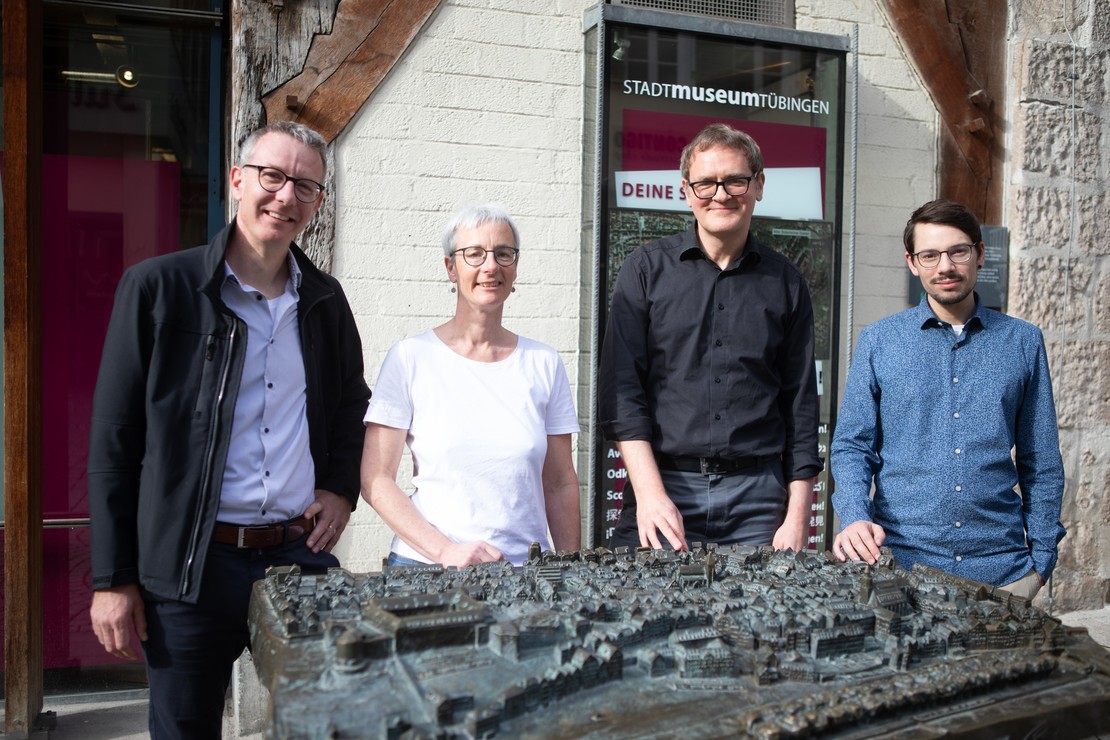
    Die Ausstellung war von Februar 2023 bis Januar 2024 im Stadtmuseum Tübingen zu sehen und ist interdisziplinär und gemeinsam mit dem Stadtmuseum Tübingen, insbesondere dessen Ausstellungskurator Guido Szymanska, konzipiert und umgesetzt worden. Teil des Ausstellungsteams waren außerdem mehr als 30 Studierende der Empirischen Kulturwissenschaft und des Masterstudiengangs Machine Learning der Universität Tübingen.

    Ulrike von Luxburg: „Die Ausstellung konnte nur deshalb so überzeugen, weil wir von Anfang an verschiedene Perspektiven auf das Thema eingebracht und mitgedacht haben. Die Studierenden mit ihren diversen Hintergründen, Meinungen und Herangehensweisen und die langjährige Erfahrung von dem Kurator des Stadtmuseums, Guido Szymanska, wie man abstrakte Ideen in konkrete Exponate umsetzen kann, haben die Ausstellung so erfolgreich gemacht.

    Die Jury aus Wissenschaftsjournalistinnen und -journalisten, Kommunikations- und PR-Fachleuten unter dem Vorsitz von DFG-Vizepräsident Professor Dr. Johannes Grave würdigte bei ihrer Entscheidung, dass das Team „Cyber and the City“ das so abstrakte wie kontroverse Thema Künstliche Intelligenz in die Lebens- und Erfahrungswelt der Menschen holt. Zudem eröffne es einen Dialograum, in dem sehr unterschiedliche Positionen und Interessen verhandelt werden können.

    Dazu habe das Team in einer erfolgreichen interdisziplinären Zusammenarbeit von Informatik und Empirischer Kulturwissenschaft eine Ausstellung im Tübinger Stadtmuseum und ein Begleitprogramm entworfen. Studierende der beiden Disziplinen erarbeiteten die Grundlagen für die Ausstellung und die weiteren Kommunikationsformate und bezogen dabei Interessengruppen, Bürgerinnen und Bürger, Aktivistinnen und Aktivisten oder auch Entscheidungsträgerinnen und Entscheidungsträger in die Konzeption und Umsetzung ein. Auf diese Weise, so die Jury des Communicator-Preises, sei eine Kommunikationsplattform entstanden, die eine gemeinsame Sprache zu Herausforderungen und Chancen von Künstlicher Intelligenz findet und sowohl Befürworterinnen und Befürworter als auch Skeptikerinnen und Skeptiker von KI zu Wort kommen lässt.

    Flankiert wurde die Ausstellung von einem umfangreichen Begleitprogramm, in das sich die an der Ausstellung beteiligten Akteurinnen und Akteure mit eigenen Veranstaltungen einbringen konnten. Zu den Veranstaltungen zählten etwa die „Retro Gaming Night meets KI“ sowie die in Kooperation mit dem SWR veranstaltete Podiumsdiskussion „Wer kontrolliert KI?“. Die Ausstellung zog insgesamt mehr als 40.000 Besucherinnen und Besucher unterschiedlicher Altersgruppen an. Durch Ausstellung und Begleitprogramm entstand so insgesamt ein Dialograhmen, der die am Standort sehr kontrovers geführte Diskussion rund um Künstliche Intelligenz versachlicht hat, ohne dabei Emotionen und Positionierungen zu ignorieren.

    Die Jury für den Communicator-Preis hob hervor, dass die lokale Verortung der Kommunikation bei diesem Projekt eine besondere Bedeutung habe: Künstliche Intelligenz – als global wirksames und zugleich schwer greifbares Thema – wurde hier am konkreten Fall, als Konsequenz von kontroversen Debatten in der Stadt und gemeinsam mit lokalen Akteurinnen und Akteuren verhandelt. Und dies geschah nicht in digitalen Foren, sondern im direkten Austausch der Beteiligten. Damit sei es dem Team hervorragend gelungen, ein schwieriges Thema leicht, humorvoll und dabei sachlich und intelligent umzusetzen. Insgesamt, so die Jury, sehe sie in der Arbeit des Teams den gelungenen Weg einer dialogischen Wissenschaftskommunikation, die weit über den Standort und das konkrete Thema hinausweise. Insbesondere vor dem Hintergrund der aktuellen Dialogkultur, in der verschiedene Argumente und Positionen kaum noch in einen konstruktiven Austausch zu bringen sind, sei dies ein besonders ermutigendes Projekt.

    Der „Communicator-Preis – Wissenschaftspreis des Stifterverbandes“ wird seit dem Jahr 2000 verliehen und gilt als der wichtigste Preis seiner Art in Deutschland. Ausgezeichnet werden Wissenschaftlerinnen und Wissenschaftler, die in ihrer Wissenschaftskommunikation besonders kreativ sind, neue, auch mutige Wege gehen und ihre Zielgruppen auf geeignete und wirksame Weise ansprechen. Sie sollen zudem die gesellschaftliche Dimension ihrer Forschung erkennen und ihr Wissen in öffentliche Debatten, Meinungsbildungsprozesse und Entscheidungen einbringen. Das Preisgeld soll die Ausgezeichneten in ihrem Engagement unterstützen und auch die Umsetzung neuer Projekte ermöglichen.

    Die Jury wählte das nun ausgezeichnete Team in einem mehrstufigen Auswahlprozess aus 38 Be- werbungen und Vorschlägen aus. Verliehen wird der Communicator-Preis im Rahmen der Jahresversammlung der DFG am 1. Juli 2024 in Potsdam.

  • Cyber Valley feiert eine neue Partnerschaft mit UTokyo IPC

    Cyber Valley feiert eine neue Partnerschaft mit UTokyo IPC

    (Stuttgart, 30.04.2024) The strategic alliance is Cyber Valley's first collaboration with UTokyo IPC, promising a range of exciting opportunities between Europe and Japan. The LOI establishes the framework for various programs aimed at promoting innovation from cutting-edge research by building bridges between scientific, corporate and start-up networks.  

    Rebecca C. Reisch, Managing Director of Cyber Valley, remarks, “Together, this alliance is set to not only benefit our respective regions, but it will also make a significant contribution to innovation on a global scale. By pooling our shared commitment to excellence and advancements, we will foster a cross-cultural exchange of ideas towards AI and robotics.” 

    The highlights of this partnership include a dedicated market exploration trip, offering participating start-ups a unique opportunity to expand within international markets by connecting with essential partners, investors, and customers. Additionally, the collaboration offers the potential of non-dilutive funding to facilitate the growth of start-ups into these markets.  

    Exclusive networking opportunities with major corporations, including venture capital firms in the targeted markets, are also included in the program. Start-ups will benefit from monthly mentoring sessions over a six-month period, fostering sustainable growth and knowledge exchange. Additionally, they will have the chance to undertake proof-of-concept projects with corporate partners, further solidifying their market presence. 

    UTokyo IPC, established in 2016 by the University of Tokyo, operates as an investment company dedicated to expanding the University's innovative ecosystem. It drives innovation through three core business perspectives: investment, incubation (1st round), and human resource assistance (DeepTech Dive). It supports affiliated start-ups in five fields: healthcare/agriculture, space, robotics/hardware, IT/services, and artificial intelligence. The organization is a key player in Japanese innovation, having invested in and/or supported more than 140 start-ups so far. 

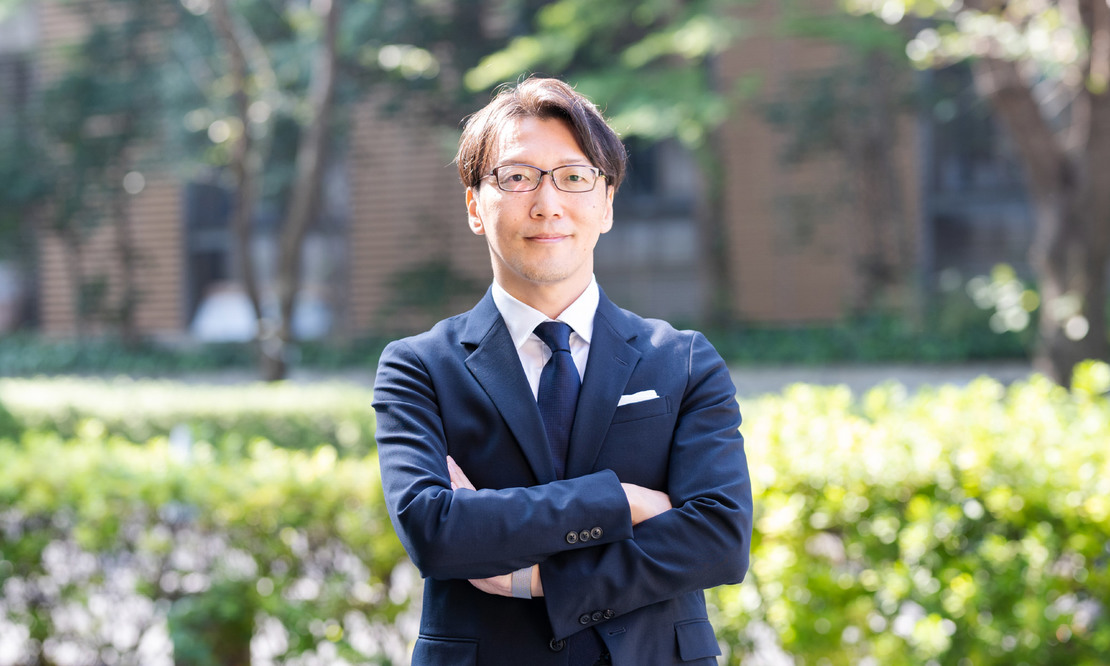
    Kosuke Ueda, President and CEO of UTokyo, elaborates, "UTokyo IPC, as a wholly owned subsidiary of the University of Tokyo, works diligently to create and nurture university-related startups and to build a startup ecosystem, in collaboration with a wide range of stakeholders including academia, government and municipalities, corporations, and venture capitals. In particular, we are intensifying our cooperation with Cyber Valley, which leads Europe in AI and robotics, leveraging its extensive research network and rich experience in societal implementation. This enhances the commercialization of valuable technologies and ideas from universities and research institutions beyond international frameworks. By doing so, we aim to provide value to Europe's advanced start-up ecosystem, fully leverage Japan's deep tech potential, and contribute to the creation of start-ups that tackle global challenges, thereby fostering the development of a global innovation ecosystem." 
    Through this collaboration, Cyber Valley and UTokyo IPC aim to foster innovation, accelerate growth in the advancement of artificial intelligence and modern robotics, and connect thriving communities for start-ups in both Europe and Japan. 

    About Cyber Valley 

    Cyber Valley is Europe’s largest and leading center for excellence in artificial intelligence and modern robotics. Its mission and public mandate are to advocate for research, development, application, and acceptance of technologies and methods in the field of intelligent systems. Cyber Valley encourages entrepreneurship by uniting scientific excellence with innovation and technology transfer. In addition, Cyber Valley facilitates critical reflection on the ethical and social implications of AI through public engagement. Cyber Valley envisions a future in which the full potential of intelligent systems is leveraged for the greater good of the world.   

    About UTokyo Innovation Platform Co., Ltd. (UTokyo IPC) 

    UTokyo IPC was established in 2016 as a wholly owned subsidiary of the University of Tokyo, aiming to further develop the venture ecosystem cultivated in and around the University of Tokyo. Alongside investing in over 60 university-related start-ups both domestically and internationally through two funds, UTokyo IPC provides comprehensive hands-on support, including human resource assistance. It also operates "1stRound", Japan's largest cross-university accelerator, co-sponsored by 14 universities. This program is designed to accelerate the commercialization of cutting-edge technologies and ideas emerging from universities. By collaborating with a broad spectrum of stakeholders, including universities, corporations, venture capitals, and the government, UTokyo IPC plays a pivotal role in the global innovation landscape, fostering cross-border collaboration and the development of transformative technologies. 

  • Amazon and Max Planck Society announce recipients of gift awards

    Amazon and Max Planck Society announce recipients of gift awards

    In line with that goal, the Science Hub is sponsoring the following research projects:

    • “Non-verbal interpersonal synchrony analysis tool (nVISA-online)”: Senya Polikovsky, research engineer, Max Planck Institute for Intelligent Systems

    “Interpersonal synchrony (In-Sync), the spontaneous synchronization of behavioral, affective, and even physiological responses in contexts of social interaction, offers a useful insight into the quality and smoothness of interactions between social partners. Automatic assessment of In-Sync could provide objective tools for studying the interactive abilities of people with psychiatric conditions and the degree of therapeutic alliance in psychotherapy, as well as online human-to-human and avatar-to-human interactions. Body movement dynamics are central to the analysis of In-Sync. Besides that, facial expression, gaze interaction, audio signals, and physiological measures such as electrodermal activity, heart rate variability, or breathing rates can be used to detect In-Sync. The goal of our proposed research is to extend In-Sync analysis to online scenarios. We would like to identify the instruments and the procedures for the detection of In-Sync in online therapy sessions.”

    • “Accurate 3D body shape and clothing estimation from a single image”: Gerard Pons-Moll, senior researcher, Max Planck Institute for Informatics, and professor, University of Tübingen, endowed by the Carl Zeiss Foundation

    “This research aims to reconstruct a 3-D digital human from a single RGB photograph, using a combination of 3-D neural implicit functions to represent worn garments and a parametric model to represent and control the pose and shape of the underlying body. A key novelty is to incorporate feedback in the deep body estimation network, ensuring that the 3-D body mesh is consistent with its projection onto the photo.”

    • “Learning clothing pressure fields via high-fidelity finite element analysis”: Gokhan Serhat, research scientist, Max Planck Institute for Intelligent Systems, and assistant professor, KU Leuven

    “Accurate estimation of clothing pressure on the human body is crucial to understanding physical factors that influence clothing comfort. Such estimation requires the ability to express contact pressure fields in terms of different body sizes and types and garment sizes and material properties. However, such pressure fields are generally too complex to be modeled by analytical methods. Experimentation also has certain drawbacks, since it does not provide information about internal stresses, and precise measurement of the contact pressure between a pair of curved soft bodies is difficult. The intricate anatomy of the human body may require elaborate finite-element models with several thousand elements for capturing deformation mechanics accurately. Such large models inherently induce high computational costs and are likely to suffer from the aforementioned numerical issues. The proposed study aims to address this problem by developing a deformation model based on deep neural networks trained with the data from finite-element analysis.”

    • “Material estimation of clothing for controllable human avatars”: Justus Thies, research group leader, Max Planck Institute for Intelligent Systems, and professor, Technical University Darmstadt

    “A key challenge for controllable human avatars is the reconstruction and animation of clothing. While data-driven, person-specific reconstruction methods show promising results, the extrapolation to novel poses with realistic deformations of clothing is limited. In contrast to data-driven methods, physics simulation can be used to model the dynamically changing clothing. In this project, we want to explore material estimation of human clothing for such simulations. Specifically, we are interested in predicting material properties such as stiffness or stretch that influence the motion-dependent deformation of the clothing. Besides these mechanical material properties, we are also interested in predicting material properties for the appearance of clothing that allow for re-renderings under novel poses.”

  • IntegraSkin, MiraVision, and SPAICE drive the Cyber Valley Start-up Network forward

    IntegraSkin, MiraVision, and SPAICE drive the Cyber Valley Start-up Network forward

    The three innovative start-ups offer groundbreaking solutions in their respective fields. IntegraSkin focuses on personalized medicine for skin diseases; MIRA Vision revolutionizes image analysis in microscopy and digital pathology through AI; and SPAICE pioneers autonomous space maintenance.  

    IntegraSkin combines molecular biological methods and AI to offer personalized medical treatment, focusing on chronic inflammatory skin conditions. Skin conditions affect 90% of individuals at some point in their lifetimes. Severe cases can disrupt lives and social interactions, often leading to a cycle of trial-and-error treatments. IntegraSkin is highly motivated to change this narrative, aiming to identify optimal treatments for dermatological conditions and provide effective solutions. 

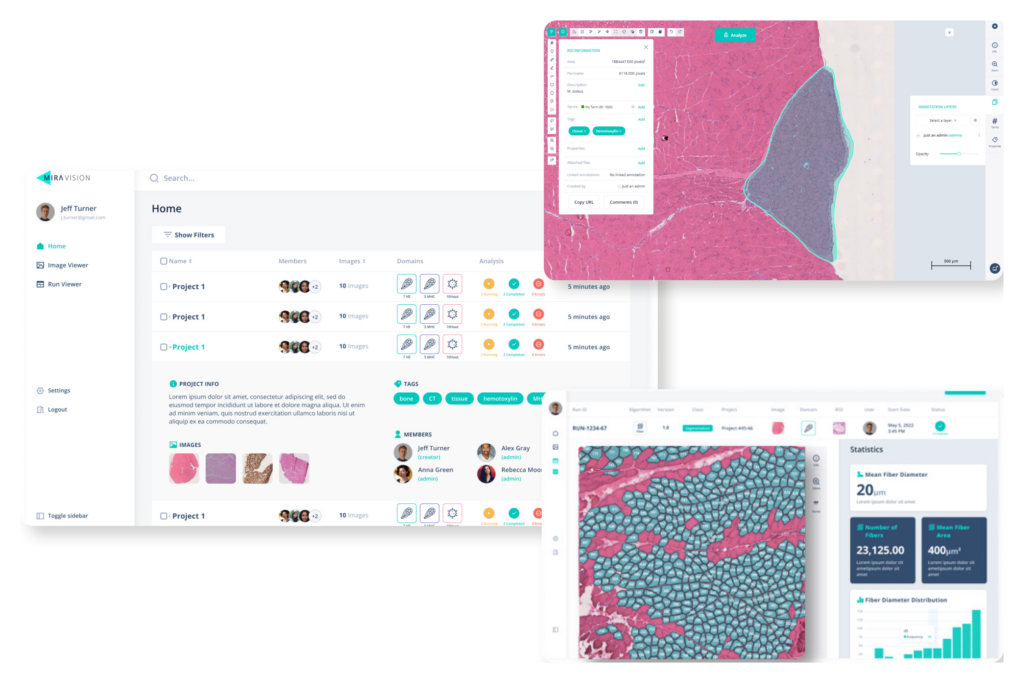
    MIRA Vision is an AI-powered platform designed for quantitative image analysis in microscopy and digital pathology. It streamlines the process by offering fast, accurate, and reproducible analysis, significantly enhancing researchers' and pathologists' capabilities. With its innovative and patented technology, MIRA Vision integrates machine intelligence into microscopy, enabling users to analyze data at previously unattainable scales. Users can upload their image data, define regions of interest, select AI-assisted analysis, and explore the results, making complex analyses accessible in just four simple steps. 

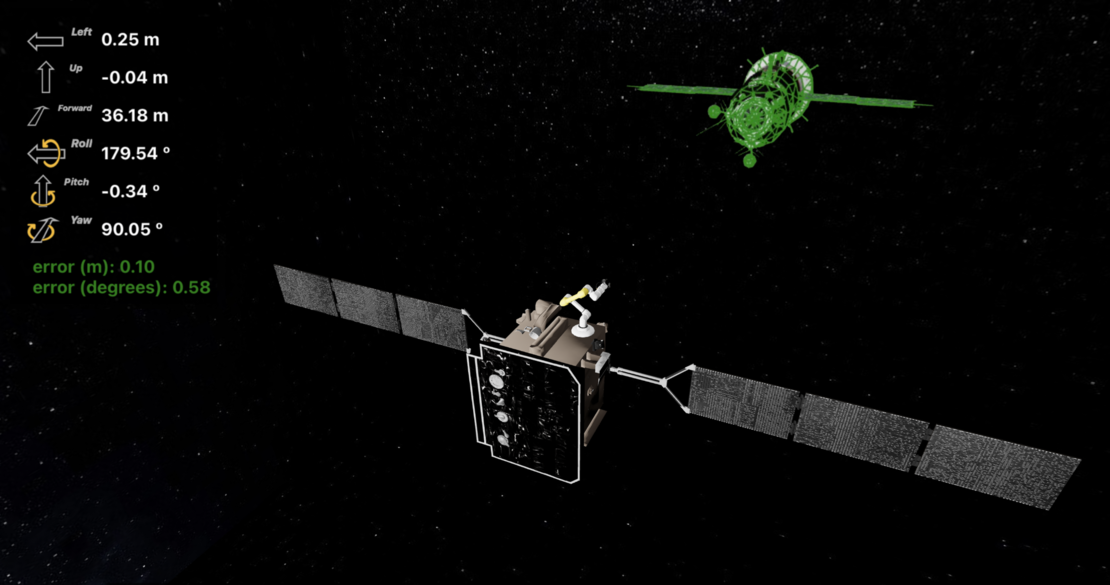
    SPAICE offers the first fully autonomous solution for In-Orbit Services, specializing in tasks in the realm of space operations, including satellite life extension and debris removal. Their software is delivered through a plug-and-play servicing platform that includes sensors, robotic arms, and a computing unit. Their solutions can affordably enhance satellite lifespans by more than 50%, boost their revenue generation by more than 50%, and reduce collision risks by more than 20%. SPAICE enhances navigation by optimizing fuel consumption, enabling real-time onboard planning, and improving safety and precision in space operations. Founded by a top-tier team from prestigious institutions, SPAICE is currently validating multiple solutions through Proof-of-Concepts (PoCs) with leading European and US space entities. 

    These start-ups showcase the diverse applications of AI across various domains. Joining the Cyber Valley Start-up Network opens up numerous collaboration opportunities with the Cyber Valley Community. These three new additions will advance research and development in artificial intelligence, foster interdisciplinary synergy, and drive technological innovation forward. 

  • Universität Stuttgart mit Clusterskizzen erfolgreich

    Universität Stuttgart mit Clusterskizzen erfolgreich

    "The decision of the panel of experts offers us the opportunity to sharpen and further expand our excellent profile as an interdisciplinary university with great strength in research. We will seize this opportunity and use our cutting-edge research to make an even greater contribution to solving major global challenges," explains Prof. Wolfram Ressel, Rector of the University of Stuttgart. Ressel was delighted with the success of the cluster outlines, congratulated the scientists at the University of Stuttgart and their cooperation partners, and thanked everyone involved for their commitment. Initiatives for the clusters of excellence "Bionic Intelligence for Health" and "Chem4Quant" are eligible to apply.

    Bionic Intelligence for Health: New approaches to the therapy and diagnosis of neuronal diseases

    “The Bionic Intelligence for Health cluster project is searching for fundamentally new approaches to integrate technology and medicine in order to better diagnose and treat neuronal diseases. It thus addresses one of the greatest challenges facing our healthcare system and our society as a whole", says Wolfram Ressel.

    In the Bionic Intelligence for Health cluster project, an interdisciplinary research team is combining the neuronal and physical intelligence of the human body with a fundamentally new approach to intelligent technology. The aim is to better recognize neuronal diseases, treat them adaptively, and thereby improve the quality of life of those affected in their everday lives. To this end, innovative technical systems are to be intelligently integrated with the body. The cluster project is an initiative of the University of Stuttgart in cooperation with the University of Tübingen. The Max Planck Institute for Intelligent Systems in Stuttgart and Tübingen as well as the Max Planck Institute for Biological Cybernetics in Tübingen are involved as cooperation partners. The project builds on the complementary expertise of outstanding scientists from the fields of neuroscience, materials science, biomechanics and systems theory, among others. It benefits from the excellent Stuttgart-Tübingen ecosystem and has the potential to significantly reduce the social challenges posed by neuronal diseases.

    Chem4Quant: Chemical platform for high-precision quantum architectures

    "Quantum technology has the potential to revolutionize numerous applications, such as making communication secure or exponentially accelerating computing power. Our cluster initiative Chem4Quant researches novel quantum materials and structures and thus makes a fundamentally new contribution to achieving this goal”, says Wolfram Ressel.

    Researchers from the Karlsruhe Institute of Technology (KIT), the University of Ulm and the University of Stuttgart want to purposefully develop material structures for future quantum technologies in the joint Chem4Quant initiative. Despite the breakthroughs already achieved in quantum technologies, many of the platforms currently in use are limited in terms of scalability, adjustability, positionability, and error correction. Chem4Quant is therefore proposing a fundamentally new approach with a chemistry-based platform: Chemically, precisely-definable quantum architectures can be used to plan atomically accurate material structures and their quantum properties in a targeted manner. For example, qubits can be positioned in electrical or photonic components with a precision below the nanometer range. The initiative aims to develop novel qubit materials and create the first components for the future quantum internet. Chem4Quant can draw on globally unique expertise in the field of molecular quantum systems as well as established collaborations.

    Successful Clusters of Excellence apply for further funding period

    "Our already very successful Clusters of Excellence Integrative Computational Design and Construction for Architecture (IntCDC) and Data-integrated Simulation Science (SimTech) also stand for cutting-edge interdisciplinary research that uses fundamentally new investigative approaches and methods to advance solutions for social challenges," emphasizes Ressel.  For example, IntCDC is paving the way towards greater sustainability in the construction industry, and thus making a decisive contribution to the development of a climate- and environmentally-friendly society. With its innovative data-based simulation models, SimTech enables significant progress in the research, testing, and application of new technologies. Both Clusters of Excellence are now applying for a further funding period.

    IntCDC: Research for more sustainability in the construction industry

    Launched in 2019, the Integrative Computational Design and Construction for Architecture (IntCDC) cluster uses digital technologies to rethink planning and construction in an integrative and interdisciplinary approach, and thus enable greater sustainability in the construction industry. To this end, the University of Stuttgart and the Max Planck Institute for Intelligent Systems (MPI-IS) merge their internationally recognized research expertise. More than 150 scientists from the fields of architecture, computer science and robotics, engineering, production and systems technology as well as the humanities and social sciences are currently working together to modernize the construction sector. They are focusing on the co-design of integrative computer-based planning and construction methods, on cyber-physical manufacturing and construction processes, as well as on next-generation sustainable material and construction systems. In the second funding phase, the cluster aims to take up new initiatives and scientific challenges in order to lay the methodological foundations for sustainable architecture.

    SimTech: New simulation models for science and innovation

    Without simulations, advances in science and technological innovations for the benefit of society are not possible. Since 2019, researchers at the Cluster of Excellence Data-integrated Simulation Science (SimTech) have been working on new data-driven methods that go beyond improving the applicability and accuracy of simulation models. The systematic integration of data into simulation science is also changing the way science and technology are conducted. Developments include data-based representations of physical phenomena, new methods for designing and optimizing micro-materials, and data-based models for optimizing control processes and algorithms. Although we have already come a long way in data-integrated simulation science, there is still a great deal of untapped potential in dealing with knowledge and understanding. This untapped potential will be the focus of research in the next funding phase and will be systematically integrated into models, methods, and algorithms in the future in order to further promote our insights.

    Press contact

    Dr. Florian Krüger, University of Stuttgart, Head of University Communi­ca­tions, Phone: +49 711 685-82555.

    Dr. Jutta Witte, University of Stuttgart, University Communi­ca­tions, Phone: +49 711 685-82176.

  • NEURA Robotics joins the Cyber Valley Start-up Network

    NEURA Robotics joins the Cyber Valley Start-up Network

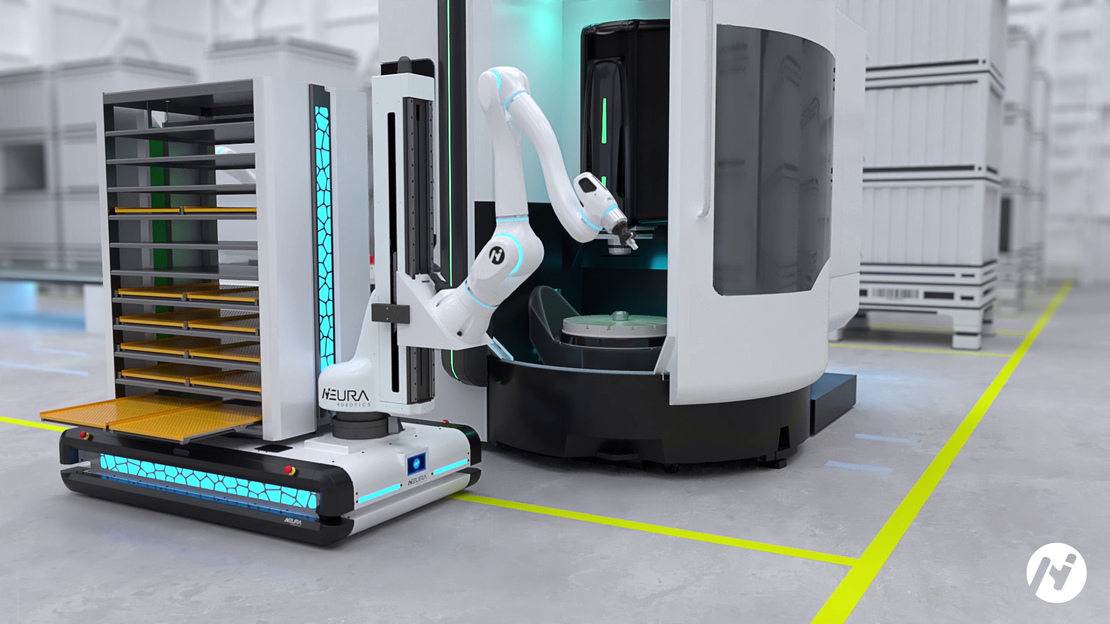
    NEURA Robotics was founded in 2019 in Metzingen near Stuttgart. The start-up builds robotics assistants to collaborate naturally with humans. Among its products is the world’s first commercially available cognitive robot MAiRA, which integrates AI and a Touchless Safe Human Detection sensor technology to perceive its surroundings and easily adapt to different environments. Its other products include:
     

    • LARA, a Lightweight Agile Robotic Assistant that combines a lightweight design with industrial performance.         
    • MAV, a Multi-Sensing Autonomous Vehicle that can autonomously move and load any type of good
    • MiPA, an intelligent, versatile robotic assistant designed to support people in various domains

    MAV MAIRA

    With these robotic assistants, NEURA Robotics has laid the groundwork for humans and robots to work hand-in-hand. By enabling seamless interaction with humans in existing environments, NEURA eliminates the need for complex and expensive safety systems. Their guiding principle, “we serve humanity”, underscores their commitment to creating attractive, safer, and more sociable workspaces.

    NEURA Robotics‘ unique approach is to develop key components in-house, including AI, control software, sensors and mechanical parts. Under the leadership of founder David Reger, they have made remarkable advances in environmental perception, control engineering, materials science and artificial intelligence, and are on track to bring the first cognitive humanoid robot to market.

  • Bewerbt Euch für den Bundeswettbewerb KI 2024!

    Bewerbt Euch für den Bundeswettbewerb KI 2024!

    Der Bundeswettbewerb KI läuft von Frühjahr bis Herbst und findet auf Bundesebene statt. Der Wettbewerb steht unter der Schirmherrschaft von Ministerpräsident Winfried Kretschmann. Hauptförderer ist die Carl-Zeiss-Stiftung.

    Hier der Fahrplan für den #BWKI2024:

    Bis 16. Juni 2024: Meldet euch an, gründet euer Team und reicht euren Ideenvorschlag ein!
    Am 15. September 2024 ist die Frist der Projektabgabe!
    Mitte November 2024 werden die 10 besten Projekte zum Finale eingeladen.

    Der Bundeswettbewerb wurde 2018 am heutigen Tübingen AI Center ins Leben gerufen und ermutigt seitdem Jugendliche, ihr Können aktiv im KI-Forschungsumfeld unter Beweis zu stellen. Weitere Informationen zur Teilnahme am Bundeswettbewerb 2024 sind hier zu finden.