News Category: Innovation Campus

  • Success stories from the Cyber Valley Innovation Campus: July–September 2026

    Success stories from the Cyber Valley Innovation Campus: July–September 2026

    The Cyber Valley Innovation Campus brings top scientists to Baden-Württemberg to advance AI and robotics research. These scientists are paving the way for the application of their research for the benefit of people, industry, and society.

    Members of the Cyber Valley Innovation Campus include the Max Planck Institute for Intelligent Systems (MPI-IS), Universities of Tübingen and Stuttgart, Fraunhofer IAO and IPA, ELLIS Institute Tübingen, and Karlsruhe Institute for Technology (KIT). As leading research institutions, they have announced the following exciting developments between July and September 2026.

    Frank Allgöwer recognized for outstanding scientific contributions

    The European Control Association (EUCA) and the Asian Control Association (ACA) have welcomed Frank Allgöwer as a fellow, recognizing his outstanding contributions to the field of systems and control engineering. Allgöwer is the first European to become a fellow at the ACA, which is one of the highest honors bestowed by the Asian control engineering community. Read more.

    Jakob Macke and Kashyap Chitta join the ELLIS Institute Tübingen

    Jakob Macke and Kashyap Chitta have joined the ELLIS Institute Tübingen, both as Principal Investigators and Hector Endowed Fellows.

    Macke is already an established figure in the Tübingen machine learning and computational neuroscience ecosystem and will shape the Institute’s research direction. Read more.

    Chitta is an expert in autonomous systems and physical AI, and will lead a new research group: the Physical AI Lab. The group focuses on understanding how machines interact with the physical world. Read more.

    Andrea Iannelli awarded ERC Starting Grant

    The European Research Council (ERC) is providing EUR 1.65 million in funding for Andrea Iannelli’s research project on autonomous systems that can adapt to complex tasks and changing environments while in operation. Gaining a Starting Grant is considered a highly prestigious achievement for early-career researchers in Europe. Read more.

    Marcel Binz joins the Max Planck Institute for Biological Cybernetics

    Marcel Binz has begun his research on a unified theory of human cognition using computational models at the Max Planck Institute for Biological Cybernetics. These models aim to simulate, predict, and explain human behavior in diverse situations.

    Binz’s research examines the central building blocks of human cognition by addressing three challenges: 1) the technical challenge of building such models in the first place; 2) the scientific challenge of using these models to understand human cognition; 3) the applied challenge of translating this into real-world applications. Read more.

    AI Incubator alumni SKAI receives EXIST Startup Grant

    SKAI participated in the Cyber Valley AI Incubator in 2024 to develop a company that applies AI for the cosmetics industry. With the support of the EXIST Startup Grant, the team will be able to focus on developing SKAI and preparing for its launch in the coming months. Read more (German).

    Ontic Labs and Feyer selected for SPRIND’s Next Frontier AI Challenge

    Ontic Labs and Feyer were selected for the first stage of the German Federal Agency for Breakthrough Innovation’s (SPRIND) Next Frontier AI Challenge. The two start-ups are both spin-outs from institutions from the Cyber Valley Innovation Campus, including the ELLIS Institute Tübingen, Max Planck Institute for Intelligent Systems, Tübingen AI Center, and the University of Tübingen. Each team will receive €3 million to develop technologies that go beyond today’s AI models. Read more. 

    Makysm Andriushchenko co-founds Exponential Security Labs

    Makysm Andriushchenko has co-founded the start-up Exponential Security Labs. Andriushchenko is a Principal Investigator at the ELLIS Institute Tübingen and leads the AI Safety and Alignment group.

    The Tübingen-based start-up aims to improve the security and reliability of AI agents. Its work is based on decades of basic research in adversarial robustness and AI safety, showcasing how AI research can be applied to solve real-world problems. Read more.

    EIT awards funding for the C-VENTURE project

    The University of Tübingen has successfully applied for funding from the EIT (European Institute of Innovation and Technology) Higher Education Initiative together with five partner universities and innovation partners. The funding will support the C-VENTURE Project, of which the Tübingen Startup Center is a part. The Project will connect the fragmented initiatives that support entrepreneurship and knowledge transfer from thet different universities into a cohesive system. Read more (German). 

    Stay up to date with the latest news and success stories from Cyber Valley by registering for our email newsletter.

  • 2023: Three new AI institutes at Cyber Valley

    2023: Three new AI institutes at Cyber Valley

    In 2016, important actors from science, industry, and politics founded the Cyber Valley Consortium, which became the first Innovation Campus in Baden-Württemberg. Ten years on in 2026, we’re revisiting the most significant milestones from the last decade. Each month, we’ll focus on a particular year since Cyber Valley’s beginning. 

    This month, we’re looking back to 2023, when three new AI institutions within the Cyber Valley Innovation Campus were founded: the Institute for Artificial Intelligence at the University of Stuttgart, the Tübingen AI Center, and the Center for Bionic Intelligence Tübingen Stuttgart. Since 2023, these institutes have played a key role in advancing Cyber Valley’s mission: turning excellent AI and robotics research into a better future for all. Below, we recount why these institutes were established, their main achievements, and their future plans.

    Center for Bionic Intelligence Tübingen Stuttgart (BITS)

    The Center for Bionic Intelligence Tübingen Stuttgart (BITS) was founded to establish a new approach for integrating intelligent technical systems with humans. It aims to improve understanding and treatment of certain neurological and psychiatric diseases and develop individually tailored medical aids for patients. BITS brings together scientists from four institutions: the Universities of Stuttgart and Tübingen, and the Max Planck Institutes for Intelligent Systems and for Biological Cybernetics.

    Since its founding in 2023, its main achievements include new in-body agents that can be controlled inside living animals to stimulate movement behavior and novel on-body soft devices to suppress the shaking body in tremor patients. The latter received the 2025 innovation prize of the German Parkinson Foundation. In the future, BITS will go beyond medical devices to investigate and develop hybrid cybernetic control-loop systems that closely integrate humans and technology, including in the fields of ergonomics and occupational health and safety research.

    BITS
    BITS at Cyber Valley Day on September 9, 2026. Photo: Christian Borth

    The Institute for Artificial Intelligence, University of Stuttgart

    The Institute for Artificial Intelligence at the University of Stuttgart was founded to undertake internationally outstanding AI research while supporting its transfer for the benefit of industry and society. The Institute also aims to reflect on AI’s societal impact by monitoring AI and ensuring AI compliance through joint research with industries, the humanities, and social sciences.

    Since 2023, the Institute has celebrated several important milestones. By drawing on physical principles, the Institute has created more reliable machine learning models that have applications in molecular and materials simulations. Moreover, PhD student Bo Xiong won the award for the best computer science dissertation of the German-Austrian-Swiss Association for Computer Science. Meanwhile, the Institute’s spin-off company, Semanux GmbH, is helping those with motor disabilities to participate in the digital sphere without support of third parties.

    In the future, the Institute plans to develop reliable AI methods that support scientists and engineers. It will accelerate the discovery of new drugs and materials, while developing new engineering products. A further goal is to enable non-experts to adapt and co-design robotic systems that they work and interact with.

    Institute of Artificial Intelligence, University of Stuttgart in June 2026. Photo: Universität Stuttgart/Uli Regenscheit
    Institute of Artificial Intelligence, University of Stuttgart in June 2026. Photo: Universität Stuttgart/Uli Regenscheit

    Tübingen AI Center, University of Tübingen

    In 2023, the Tübingen AI Center at the University of Tübingen was established as a permanent national AI center. The Center aims to shape the next generation of machine learning and develop more robust, efficient, and accountable learning systems.

    Since its establishment as a national AI competence center, the Tübingen AI Center has played a key role in strengthening the region’s research and innovation ecosystem. It has brought together more than 300 scientists across 32 research groups and has established strong links between research, education, and entrepreneurship. Its growing technology transfer activities have helped turn research into products, tools, and start-ups.

    Looking ahead, the Center plans to appoint more professors and increase its transfer activities even further. Recent spin-offs, including two Tübingen-affiliated teams selected for SPRIND’s Next Frontier AI program in 2026, and several focused research organizations, illustrate what this may entail.

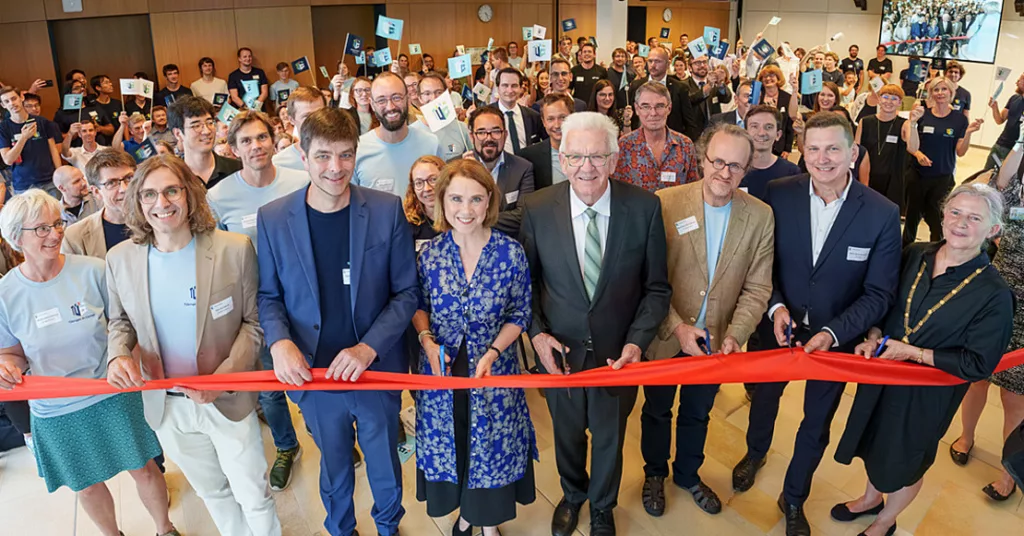
    Kick-Off des Tübingen AI Centers am 18.Juli 2023 in Tübingen mit Ministerpräsident Winfried Kretschmann, Ministerin für Hochschulen, Forschungs- und Kunsteinrichtungen Petra Olschowski, Parlamentarischer Staatssekretär des BMBF, Mario Brandenburg
    Inauguration of the Tübingen AI Center in 2023. Photo: Wolfram Scheible

    To celebrate Cyber Valley’s ten-year anniversary, we’ll be sharing a variety of content across our website and social media channels reflecting on milestones from the last decade. Stay tuned for the next installments!

  • Cyber Valley Day 2026

    Cyber Valley Day 2026

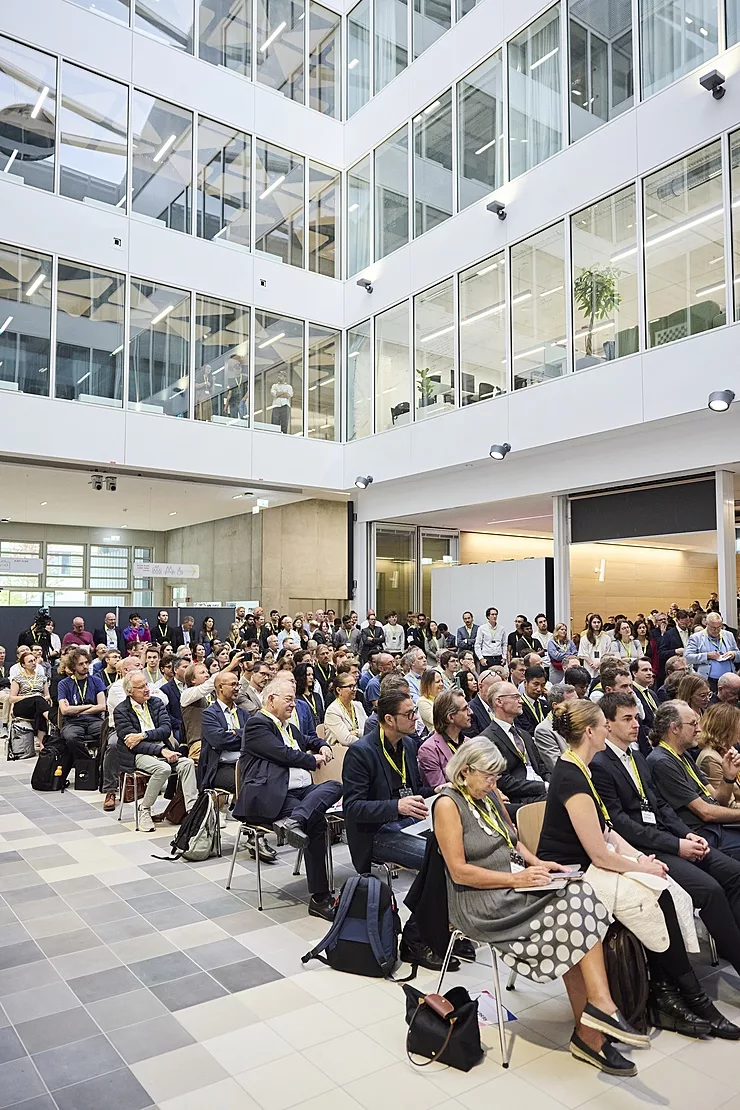
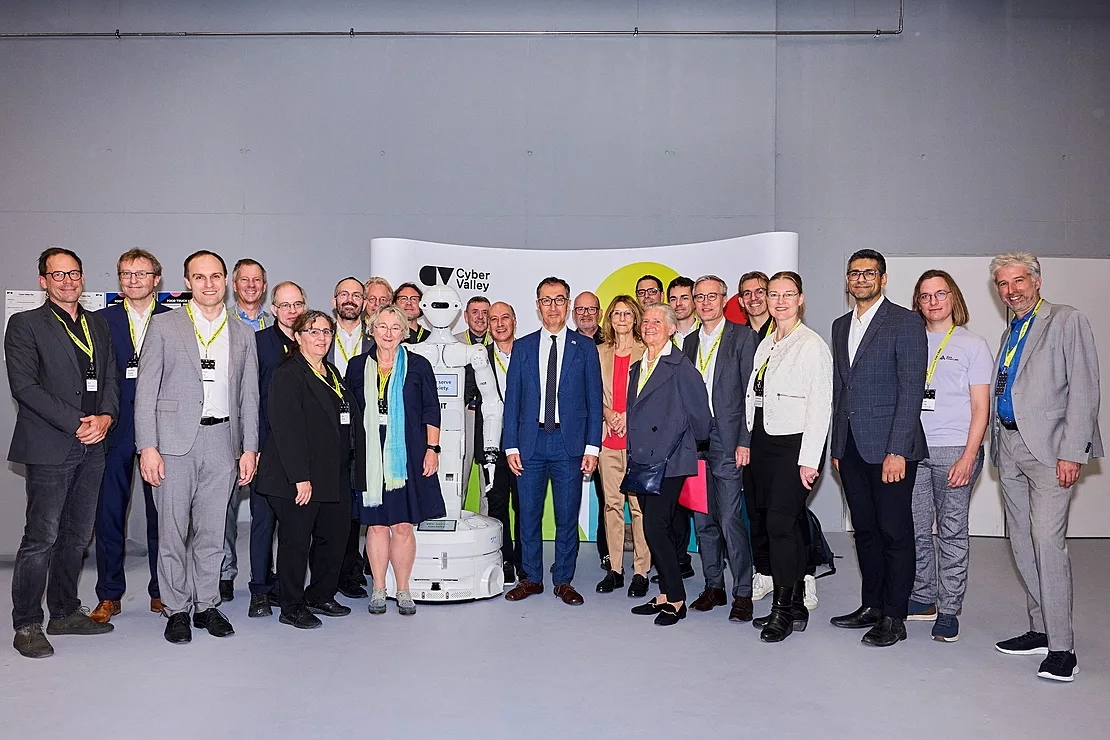
    On September 9, more than 850 guests came to Tübingen to celebrate a very special milestone: ten years of the Cyber Valley Innovation Campus. Researchers, start-ups, investors, policymakers, partners from industry and society, as well as many other guests gathered for a day full of inspiring talks, surprising keynotes, a research exhibition, start-up presentations, investor sessions, and networking.

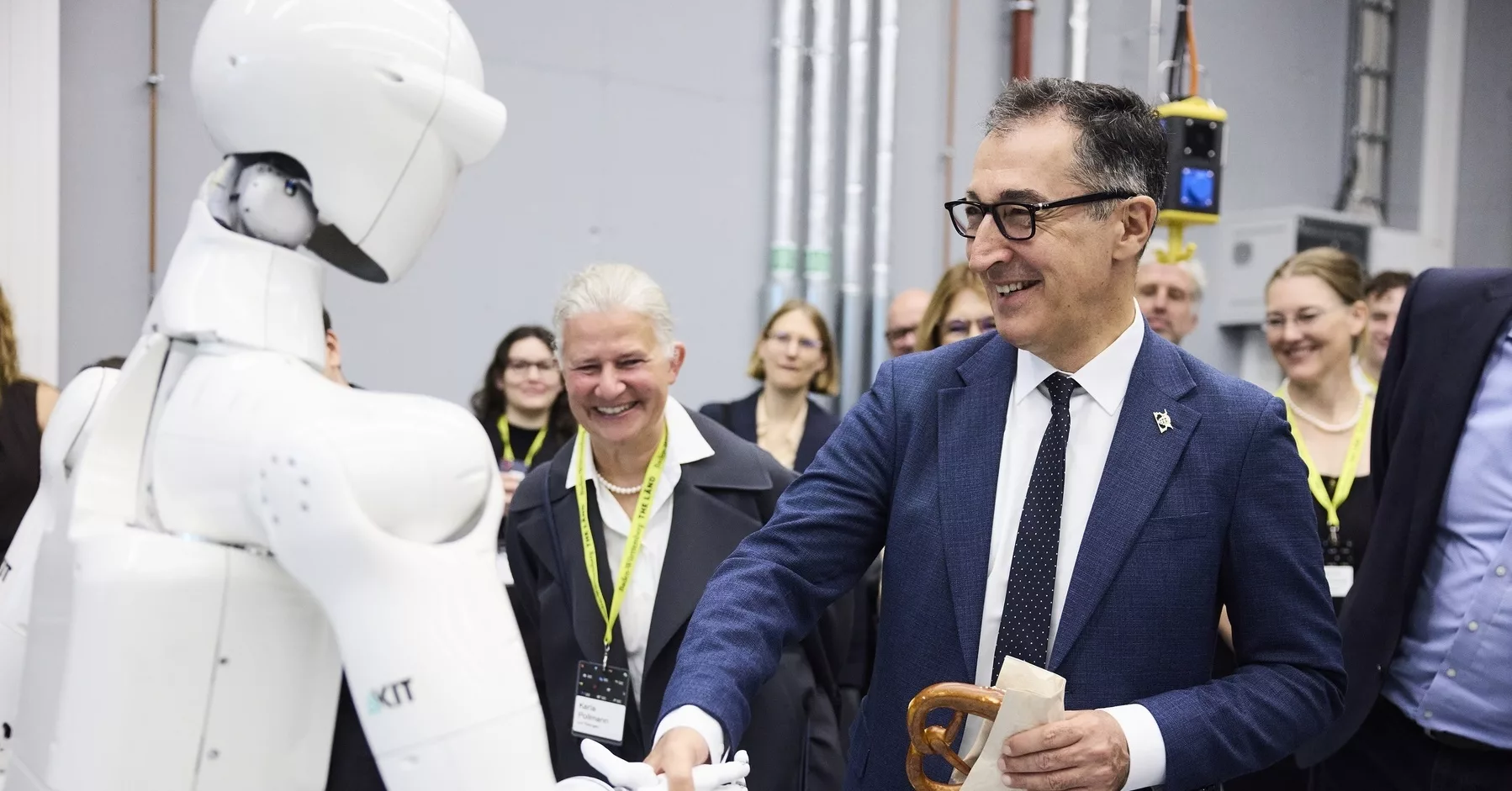
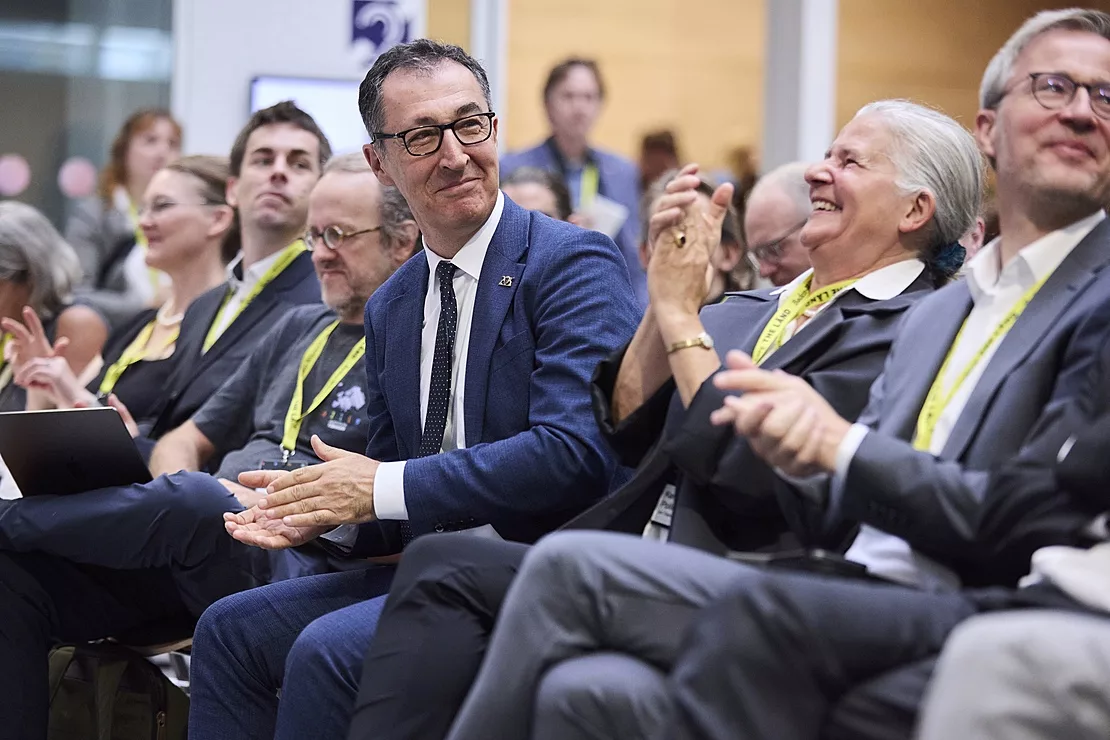
    Cyber Valley Day opened with welcome addresses from leading representatives from politics, science, and our Innovation Campus: Moritz Hardt, Director at the Max Planck Institute for Intelligent Systems; Cem Özdemir, Minister President of Baden-Württemberg; Boris Palmer, Lord Mayor of Tübingen; Karla Pollmann, President of the University of Tübingen; Simone Schwanitz, Secretary General of the Max Planck Society; and Florian Mayer, Managing Director of Cyber Valley GmbH, welcomed guests to the anniversary celebration.

    Cem Özdemir_Minister President
    © Christian Borth

    Scientific program at the main stage

    Hosted by Linda Behringer, press officer at the Max Planck Institute for Intelligent Systems, the main stage program brought together voices from across the international AI and innovation landscape.

    A keynote by Manuela Veloso, Herbert A. Simon University Professor Emerita at Carnegie Mellon University, provided one of the early highlights of the day. Throughout the program, the Cyber Valley Voices sessions on the main stage featured leading researchers from across our Innovation Campus, including Bernhard Schölkopf from the ELLIS Institute Tübingen, Matthias Bethge from the Tübingen AI Center at the University of Tübingen, Tamim Asfour from the Karlsruhe Institute of Technology, Katherine J. Kuchenbecker from the Max Planck Institute for Intelligent Systems, Steffen Staab from the University of Stuttgart, and Werner Kraus from Fraunhofer IPA.

    In the Auditorium, C. David Remy and Philipp Rothemund from the University of Stuttgart, as well as Chandan Kumar from Fraunhofer IAO, shared insights into their research. The afternoon continued with a keynote by Alex Smola, CEO and co-founder of Boson AI, as well as a talk by Rafael Laguna de la Vera from the Federal Agency for Disruptive Innovation (SPRIN-D).

    © Christian Borth

    Surprise keynote speaker

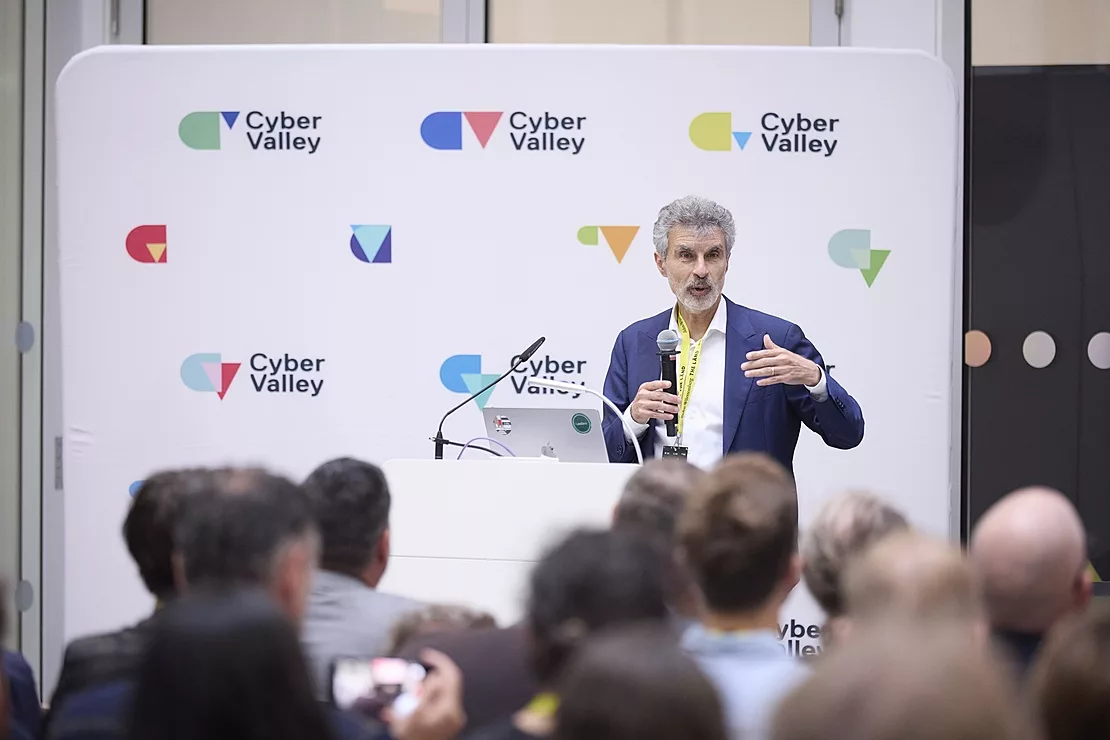
    One of the biggest highlights of the day was our surprise keynote speaker: Yoshua Bengio, one of the pioneers of modern artificial intelligence. He has become one of the most prominent voices discussing the societal implications of AI, discussing questions regarding safety, and he calls for a responsible development of AI. Having Yoshua Bengio join us for our anniversary was very special!

    Cyber Valley Day 10 Year Anniversary
    © Christian Borth

    From excellent scientific ideas to real-world applications and impact

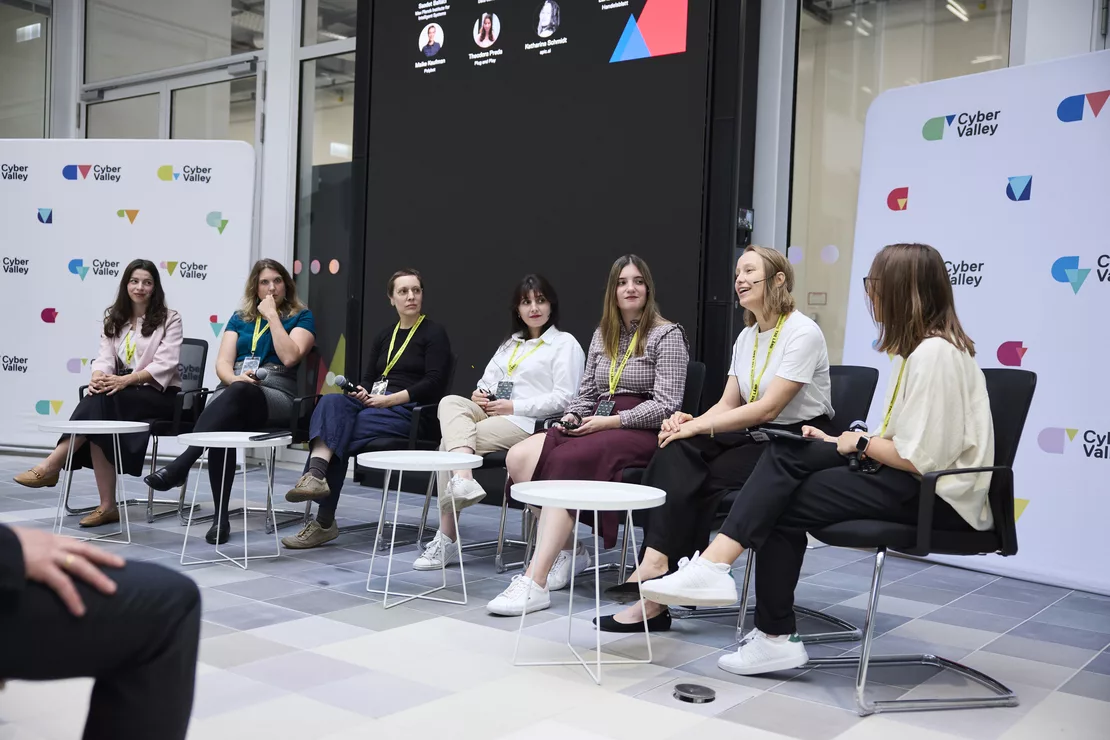
    The panel discussion “Building what’s next: How bold ideas move from research to impact” brought together researchers, founders, and innovation experts to discuss how ambitious ideas can move beyond research and into society and industry. Moderated by Larissa Holzki from Handelsblatt, the discussion featured Saadet Baltaci and Antonia Georgopoulou from the Max Planck Institute for Intelligent Systems, Aline Defranceski from Data Coffee, Maike Kaufman from Polybot, Theodora Preda from Plug and Play, and Katharina Schmidt from apic.ai.

    © Christian Borth

    The Cyber Valley Start-up Voices session offered further perspectives on innovation and entrepreneurship, with contributions from Prashanth Halady of Bosch, Mario Krenn of Feyer, and Jonas Müller of Black Forest Labs.

    Research from our Innovation Campus

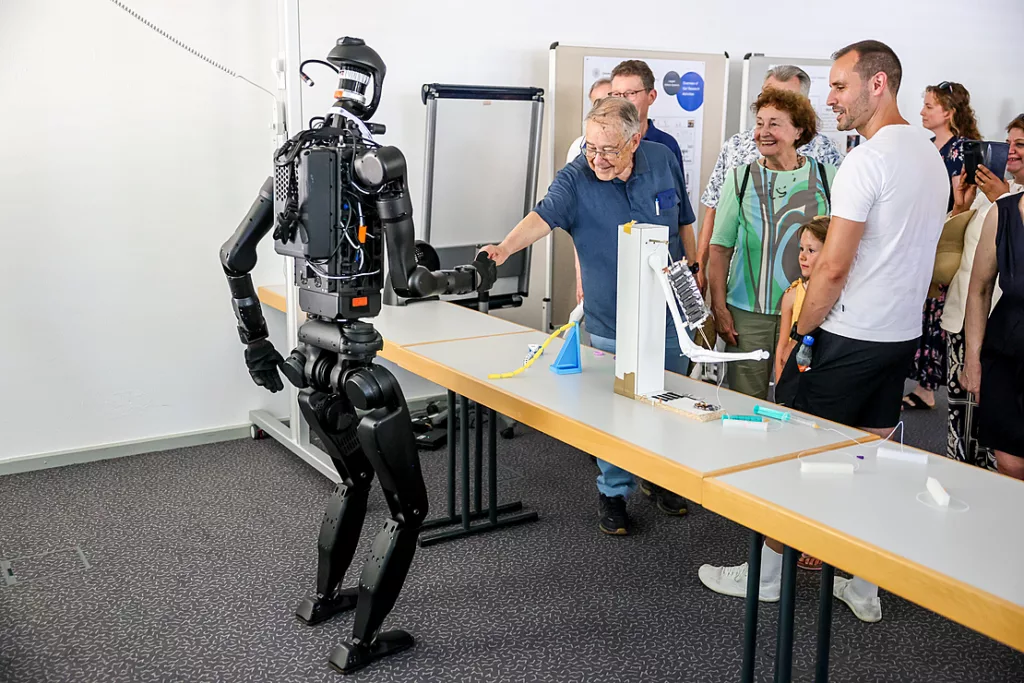
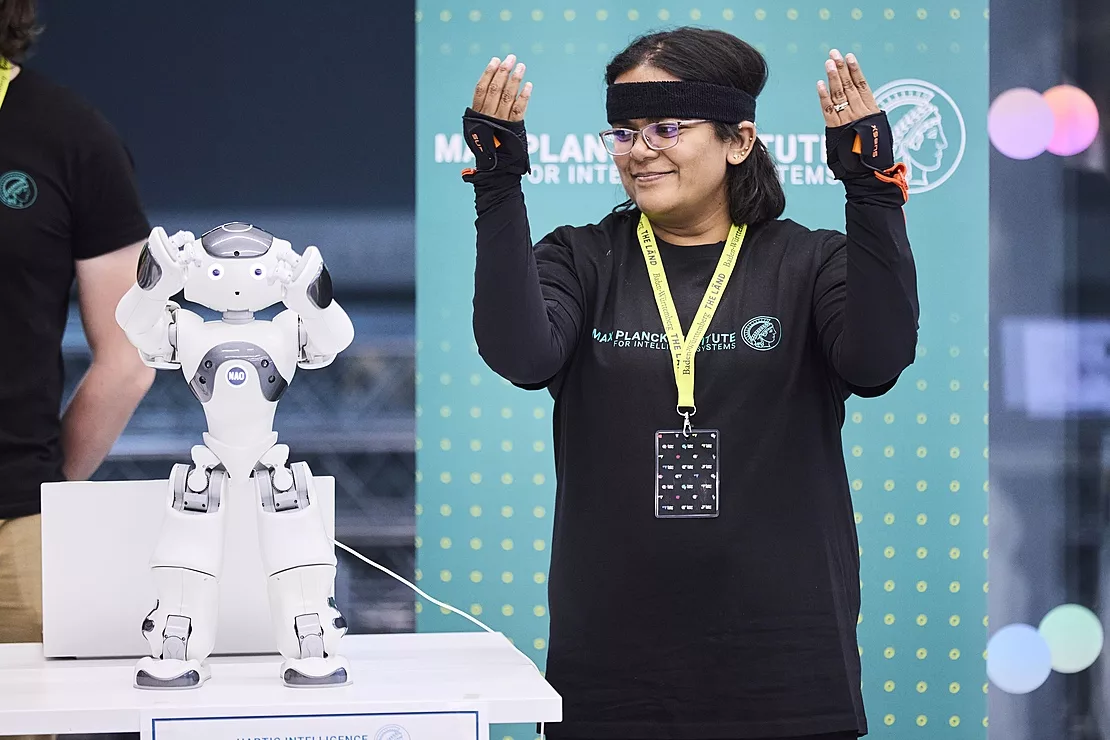
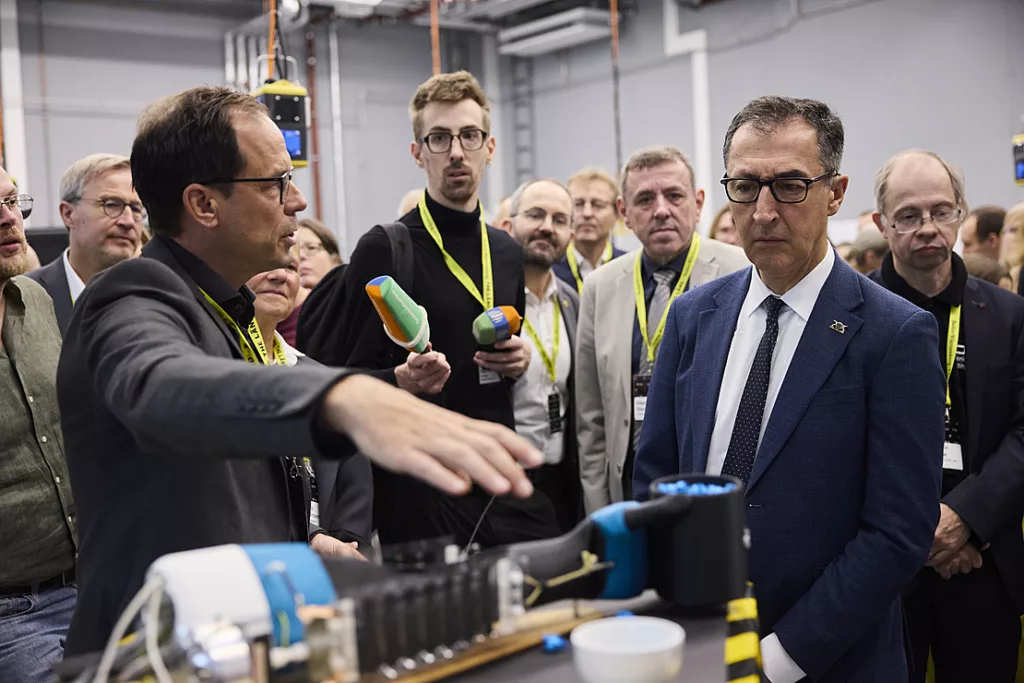
    The exhibition with more than 40 exhibitors on the ground floor brought together academic partners, research projects, and organizations from across our Innovation Campus, including the Max Planck Institute for Intelligent Systems, the Haptic Intelligence Department, Max Planck Foundation, the IMPRS-IS, the University of Stuttgart (IntCDC, IRIS, MLIP, KI-SIR), the University of Tübingen (ML Cluster, Tübingen AI Center), Bionic Intelligence Tübingen Stuttgart (BITS), ELLIS Institute Tübingen, Hertie Institute for AI in Brain Health, ARENA2036, BWKI, Cyber Valley GmbH and PAB, High Performance Humanoid Technologies Lab (H²T) from KIT, KE:SAI, Oktonex, Polybot, Prior Labs, and more!

    Robot at Cyber Valley Day
    © Christian Borth

    A stage for the next generation of founders

    On the sixth floor, the Start-up Basecamp put entrepreneurship and emerging innovation at the center of the conversation.
    Start-ups and initiatives including Bergsonne Labs, Denkbox, NUVUS, Computomics, Feyer, MaiTY, Istari AI, TextVerstehen, Tanocrix, Data Coffee, Yugen Space, IntegraSkin, MIRA vision, the Startup Center Tübingen, and the Tübingen AI Center presented their work and connected with researchers, investors, and other members of the ecosystem.

    An investor “Ask Me Anything” session also gave researchers and future founders the opportunity to gain practical insights into early-stage investment and entrepreneurship. Representatives from Capnamic, Fly Ventures, AI Fund, and Mätch VC shared their perspectives on what investors look for and what researchers should consider when exploring the path from research to start-up.
    During more than 40 1:1 sessions with investors, researchers and prospective founders had the opportunity to discuss their individual ideas, receive tailored feedback, and explore potential pathways toward funding and venture creation.

    Cyber Valley Day start-ups
    © Christian Borth

    Special announcement

    The final highlight of the day was grubel, which announced its launch during Cyber Valley Day. Founded by Moritz Hardt, Reinhard Heckel, Vedant Nanda and Navid Rekabsaz, grubel is building AI systems specialized to individual legal matters. Its vision: every matter should be able to build its own AI by combining data curation, adaptation, and evaluation to create specialized systems that can deliver high performance while keeping sensitive data under the customer’s control. We’re excited to see this research-driven venture take its next step and look forward to following its journey! 

    © Christian Borth

    Looking ahead

    Ten years ago, a group of visionary partners laid the foundation for Cyber Valley. Today, it has grown into a vibrant ecosystem connecting excellent research, entrepreneurship, industry, and society. Thank you to everyone who joined us and helped make this celebration a very memorable day!

  • Success stories from the Cyber Valley Innovation Campus: April–June 2026

    Success stories from the Cyber Valley Innovation Campus: April–June 2026

    The Cyber Valley Innovation Campus brings top scientists to Baden-Württemberg to advance AI and robotics research. These scientists are paving the way for the application of their research for the benefit of people, industry, and society.

    Members of the Cyber Valley Innovation Campus include the Max Planck Institute for Intelligent Systems (MPI-IS), Universities of Tübingen and Stuttgart, Fraunhofer IAO and IPA, ELLIS Institute Tübingen, and Karlsruhe Institute for Technology (KIT). As leading research institutions, they have announced the following exciting developments between April and June 2026.

    Aamir Ahmad’s research group develops algorithms to monitor endangered wildlife

    Researchers at the University of Stuttgart are advancing species conservation by making animal identification easier. By combining AI with ecological data, the Flight Robotics and Perception Group, led by Aamir Ahmad, has developed algorithms that enable faster, more precise monitoring, unlocking new possibilities to protect endangered species. Read more.

    Three scientists from MPI-IS serve on the EU AI Act Scientific Panel

    Sahar Abdelnabi, Maksym Andriushchenko, and Zhijing Jin (all MPI-IS) are joining 60 experts on the AI Act Scientific Panel, which will advise the EU AI Office on the implementation of the AI Act. The Scientific Panel’s main responsibilities include alerting the AI Office to systemic risks, advising on GPAI classification and evaluation methodologies, and supporting market surveillance activities. Read more.

    Kristof Meding becomes a member of Die Junge Akademie

    Kristof Meding, head of the Computational Law Lab at the University of Tübingen’s CZS Institute for Artificial Intelligence,  has been appointed to Die Junge Akademie. The academy admits outstanding young academics from different academic disciplines and creative fields to explore interdisciplinary work and encourage dialog between academia and society. Read more.

    ELLIS Institute Tübingen and Kyutai launch KE:SAI

    KE:SAI is a non-profit open science research laboratory dedicated to the next frontier of artificial intelligence: systems that can understand and act in the real world. The research is being led by a founding team of renowned experts, including Andreas Geiger (University of Tübingen), and Bernhard Schölkopf (MPI-IS, ELLIS Institute Tübingen, and University of Tübingen). Read more.

    MPI-IS and University of Stuttgart scientists build an easy-to-control and energy-efficient flying robot  

    Researchers have developed a bird-inspired robot, nicknamed “Floaty”, that stays airborne by adapting its shape and exploiting wind currents, rather than relying on propellers. Using a learned aerodynamic model, it can remain stable, recover from disturbances, and has potential applications such as inspecting industrial sites or helping control rockets during re-entry. Read more.

    Stay up to date with the latest news and success stories from Cyber Valley by registering for our email newsletter.
  • Success stories from the Cyber Valley Innovation Campus

    Success stories from the Cyber Valley Innovation Campus

    The Cyber Valley Innovation Campus brings top scientists to Baden-Württemberg to advance AI and robotics research. These scientists are paving the way for the commercial application of their research to the benefit of people, industry, and society.

    Members of the Cyber Valley Innovation Campus include the Max Planck Institute for Intelligent Systems (MPI-IS), Universities of Tübingen and Stuttgart, Fraunhofer IAO and IPA, ELLIS Institute Tübingen, and Karlsruhe Institute for Technology (KIT). As leading research institutions, they have announced the following exciting developments since the start of 2026.

    Bernhard Schölkopf joins UN global AI panel

    Bernhard Schölkopf (Scientific Director of the ELLIS Institute Tübingen, Director of Empirical Inference at the MPI-IS, and Co-Director of the Tübingen AI Center) has been appointed to the United Nations’ International AI Scientific Panel. Schölkopf will represent Germany while contributing to the international dialog on AI governance. Read more.

    André Biedenkapp awarded Emmy Noether funding for research on generalization in reinforcement learning at KIT

    Over the next three years, André Biedenkapp will receive approximately 1.2 million euros for his Emmy-Noether research group. Biedenkapp’s research is funded by the Deutsche Forschungsgemeinschaft (DFG) and will examine how AI systems can better transfer their learned behavior to unknown situations. Read more about his research project here (German).

    Jens Kober joins ELLIS Unit Stuttgart and Fraunhofer IPA

    On March 1, Jens Kober joined the University of Stuttgart as a full professor at the Institute for Artificial Intelligence. His position is a joint appointment, as he is additionally Research Team Lead at Fraunhofer IPA, showcasing the importance of collaboration between Cyber Valley Innovation Campus members. Kober was previously Associate Professor at TU Delft and Co-director of the ELLIS Unit Delft. Read more here.

    ELLIS Institute Tübingen cooperates with the UK on AI safety

    Maksym Andriushchenko and Bernhard Schölkopf from the ELLIS Institute Tübingen contributed to the second annual International AI Safety Report commissioned by the UK government. The report was authored by more than 100 leading AI experts and considers the latest scientific findings on AI’s risks and capabilities. Read more.

    Meanwhile, other scientists from the ELLIS Institute Tübingen are working with the UK’s Department for Science, Innovation and Technology. Sahar Abdelnabi, Maksym Andriushchenko, and Jonas Geiping have been granted two years of funding to research AI safety. Read more.

    Peer Nowack begins project on climate change and AI at KIT

    In collaboration with the Carl-Zeiss-Stiftung, Peer Nowack is exploring the concept of an “AI world model”. This approach uses AI to model long-term changes in global and regional weather patterns. The project will continue until 2031 and has an initial funding budget of five million euros. Read more about the project here.

    Maksym Andriushchenko awarded a grant for research into AI safety at ELLIS Institute Tübingen

    Coefficient Giving has awarded Maksym Andriushchenko, Principal Investigator at the ELLIS Institute Tübingen, a grant of one million dollars for his “AI Safety and Alignment” research group. His research will play a pivotal role in AI safety by reducing the risks from general-purpose AI models and ensuring that AI is deployed safely. Read more here.

    Maria Wirzberger and Thomas Wortmann appointed as W3 professors at the University of Stuttgart

    Two Cyber Valley fellows— Maria Wirzberger and Thomas Wortmann—have been appointed as W3 professors at the University of Stuttgart. As spokesperson for IRIS, Wirzberger continues to play a pivotal role in Cyber Valley’s public engagement activities. In 2021, Wortmann was appointed as the first architect at IMPRS-IS to expand the frontiers of computational methods in architecture, engineering, and construction.

    Renate Sachse joins MPI-IS in Stuttgart as an Independent Research Group Leader

    Since January 1, Renate Sachse has been leading the independent research group “Mechanics of Intelligent Structures”. Her group develops high-fidelity simulation models to capture the complex, nonlinear deformation behavior of thin-walled, compliant, and soft robotic systems. Read more here.

  • Funded Doctoral Positions at the International Max Planck Research School for Intelligent Systems (IMPRS-IS)

    Funded Doctoral Positions at the International Max Planck Research School for Intelligent Systems (IMPRS-IS)

    The school is a key element of to accelerate basic research and commercial development in artificial intelligence and robotics. IMPRS-IS seeks students who want to earn a doctorate while contributing to world-leading research in areas such as:

    • Artificial Intelligence

    • Biomedical Technology

    • Computational Cognitive Science

    • Computer Vision and Graphics

    • Control Systems and Optimization

    • Data Science and Visualization

    • Haptics and Human-Computer Interaction

    • Machine Learning

    • Micro- and Nano-Robotics

    • Natural Language Processing

    • Neuroscience

    • Perceptual Inference

    • Robotics and Human-Robot Interaction

    • Soft Robotics and Materials

    Renowned faculty include Sahar Abdelnabi, Rediet Abebe, Amirreza Aghakhani, Aamir Ahmad, Buse Aktaş, Frank Allgöwer, Maksym Andriushchenko, Kai Arras, Robert Bamler, Philipp Berens, Matthias Bethge, Michael J. Black, Wieland Brendel, Andrés Bruhn, Andreas Bulling, Martin Butz, Manfred Claassen, Maximilian Dax, Katharina Eggensperger, Benedikt Ehinger, Carsten Eickhoff, Andreas Geiger, Jonas Geiping, Antonia Georgopoulou, Martin A. Giese, Thilo Hagendorff, Moritz Hardt, Florian Hartmann, Daniel Häufle, Matthias Hein, Philipp Hennig, Niels Henze, Christian Holm, Andrea Iannelli, Christoph Keplinger, Mario Krenn, Katherine J. Kuchenbecker, Hilde Kuehne, Anja Lauer, Hendrik Lensch, Anna Levina, Shiwei Liu, Nicole Ludwig, Sabine Ludwigs, Jakob Macke, Georg Martius, Kristof Meding, Celestine Mendler-Dünner, Michael Mühlebach, Philipp Müller, Sven Nahnsen, Mathias Niepert, Seong Joon Oh, Antonio Orvieto, Aniket Pal, Nico Pfeifer, Gerard Pons-Moll, Michael Pradel, C. David Remy, Kerstin Ritter, Philipp Rothemund, Konstantin Rusch, Renate Sachse, Samira Samadi, Harry Scells, Dieter Schmalstieg, Syn Schmitt, Bernhard Schölkopf, Sabine Schulte im Walde, Janneke Schwaner, Michael Sedlmair, Thomas Speck, Steffen Staab, Ingo Steinwart, Alexander Verl, Claire Vernade, Ulrike von Luxburg, Daniel Weiskopf, Felix Wichmann, Bob Williamson, Andreas Wortmann, Thomas Wortmann, and Charley Wu.

    Associated faculty include R. Harald Baayen, Franz Baumdicker, Peter Dayan, Jonathan Fiene, Volker Franz, Ksenia Keplinger, Miriam Klopotek, Kay Nieselt, Senya Polikovsky, Peter Pott, Gunther Richter, Cornelia Sindermann, Maria Wirzberger, Isabell Wochner, and Thomas Wolfers.

    About the program:

    Intelligent systems that can successfully perceive, act, and learn in complex environments hold great potential for aiding society. The school seeks doctoral students who are curious, creative, and passionate about research to join and help advance human knowledge about intelligent systems.

    • Admitted students can join the program starting in 2026.

    • You will be mentored by an internationally renowned faculty.

    • You will register as a university doctoral student and conduct research.

    • IMPRS-IS offers a wide variety of scientific seminars, workshops, and social activities.

    • All aspects of the program are in English.

    • Your doctoral degree will be conferred when you successfully complete your doctoral project.

    • Dedicated staff members will assist you throughout your time as a doctoral student.

    IMPRS-IS is an equal opportunity employer dedicated to excellence through diversity and does not discriminate on the basis of age, race, sex, disability, sexual orientation, national origin, religion, marital status, gender identity, or any other non-job-related criteria. They believe in the importance of a multicultural community of students, faculty, and staff who seek to advance our commitment to diversity and inclusion. IMPRS-IS strives to create and maintain working and learning environments that are inclusive, equitable, and welcoming.

    Admission will be competitive. If selected, you will receive funding via an employment contract, subject to the rules of the Max Planck Society and the two participating universities.

    Application deadline: 

    November 16, 2025 (End of Day, AoE)

    Selection interviews: 

    February 5–13, 2026

    Apply now: 

    https://imprs.is.mpg.de/application

    For more information, please visit https://imprs.is.mpg.de.

  • 75 doctoral students join the Cyber Valley Innovation Campus

    75 doctoral students join the Cyber Valley Innovation Campus

    The International Max Planck Research School for Intelligent Systems (IMPRS-IS) has officially concluded its 2025 recruitment round, welcoming 75 new scholars to its esteemed doctoral program. Representing 21 nationalities, the incoming class is the ninth generation of researchers to join the school, reinforcing IMPRS-IS’s position as a hub for global talent in the field of intelligent systems.

    This year’s recruitment process drew remarkable interest, with 888 completed applications submitted from over 70 countries. Following an intensive multi-stage evaluation process involving 128 scientific reviewers, more than 200 candidates were invited to a dynamic nine-day interview symposium. The event featured research presentations, in-depth interviews, and a keynote address by Professor Georg Martius, providing candidates and faculty with an opportunity to connect and collaborate on cutting-edge ideas.

    The selected cohort reflects IMPRS-IS’s ongoing commitment to diversity and inclusion, with 32% of the new scholars identifying as female. The program emphasizes scientific excellence, interdisciplinary collaboration, and global perspectives in advancing the frontiers of machine learning, robotics, computer vision, and related fields.

    The new scholars are expected to contribute to the vibrant research environment across the Max Planck Institute for Intelligent Systems and its partner institutions, including the University of Tübingen and the University of Stuttgart.

    As the new academic year begins, IMPRS-IS looks forward to the fresh perspectives and innovative work this incoming class will bring to the community.

  • Cyber Valley celebrates the launch of ELLIS Institute Finland

    Cyber Valley celebrates the launch of ELLIS Institute Finland

    The new institute is part of the European Laboratory for Learning and Intelligent Systems (ELLIS) – a pan-European AI research network that is an important player in the Cyber Valley Community. It will position Finland as a key player in AI, attract international talent, and drive cutting-edge research. This announcement marks a major step towards achieving Cyber Valley’s vision of a closely connected, pan-European AI research network, strengthening Europe’s global standing in AI and machine learning.

    The Finnish Ministry of Education and Culture has pledged substantial financial backing, committing €10 million annually from 2025 to 2028, in addition to a launch-phase investment of €6 million. Further support comes from the Post Scriptum Foundation, established by Peter Sarlin, CEO and co-founder of Silo AI. Silo AI joined the Cyber Valley Community in June 2024 at Cyber Valley Days. The foundation has pledged an additional €10 million to fund up to 15 professorships at the ELLIS Institute Finland. 

    This ELLIS Institute, which will be based at Aalto University, is the second in the prestigious pan-European ELLIS network, following the establishment of the first institute in Tübingen, Germany, in 2023. Aalto University will lead the initiative in Finland, working collaboratively with other Finnish universities.

    The new institute will build on the achievements of the Finnish Center for Artificial Intelligence (FCAI), which currently hosts ELLIS Unit Helsinki—the Finnish node of ELLIS. Professor Samuel Kaski, director of FCAI and ELLIS Unit Helsinki, will play a central role in the development of ELLIS Institute Finland.

    This initiative underlines Finland’s commitment to becoming a major hub for AI research and innovation, leveraging its longstanding expertise to address both local and global challenges through AI-driven solutions.

    Cyber Valley is proud to support and collaborate with ELLIS Institute Finland. Together, we look forward to advancing European AI research, fostering collaborative innovation, and addressing global challenges through the power of intelligent systems. This marks a significant step in uniting Europe’s AI efforts, strengthening our shared goals and vision for a more connected, forward-thinking AI research ecosystem.