News Category: Start-up Network

  • 2019: Reducing construction waste with AI—interview with Optocycle

    2019: Reducing construction waste with AI—interview with Optocycle

    In 2016, important actors from science, industry, and politics founded the Cyber Valley Consortium, which became the first Innovation Campus in Baden-Württemberg. Ten years on in 2026, we’re revisiting the most important milestones from the last decade. Each month, we’ll focus on a particular year since Cyber Valley’s beginning. 

    This month, we’re looking back to 2019, when the Cyber Valley Start-up Network was founded to build and nurture a community of start-up entrepreneurs. The Cyber Valley Start-up Network has grown rapidly over the past years, from the initial seven founding members at the end of 2019 to more than 100 start-ups in 2026.

    In 2022, Optocycle joined the Start-up Network. Optocycle develops AI-based systems for the optical classification of construction waste. Their technology enables optimal use of demolition material, promoting a circular economy.

    In the following interview, CEO Max-Frederick Gerken explains how the idea for Optocycle emerged, how being part of the Start-up Network has supported the company’s development, and how AI-driven material classification can contribute to a more circular and sustainable construction industry.

    How did the idea for Optocycle originate, and what problem were you initially trying to solve?

    Interestingly, we didn’t start in construction. Initially, we were building AI to recognize fruits and vegetables at supermarket checkouts. The pivot came when a contact from the recycling industry highlighted a much bigger problem: construction waste is still classified manually: slow, subjective, and inefficient.

    We realized that the core issue is missing data. That’s why we built Optocycle: combining optical sensor systems with AI to create a reliable, real-time data layer for material flows and enable true circular construction.

    How did your research and experience within the Cyber Valley ecosystem contribute to founding the company?

    It didn’t directly contribute to founding the company, as Optocycle was already established at that point. However, we did benefit from funding within the Cyber Valley ecosystem, which supported us in scaling our team and further developing our technology. Beyond that, the ongoing exchange within the network has been consistently valuable and interesting.
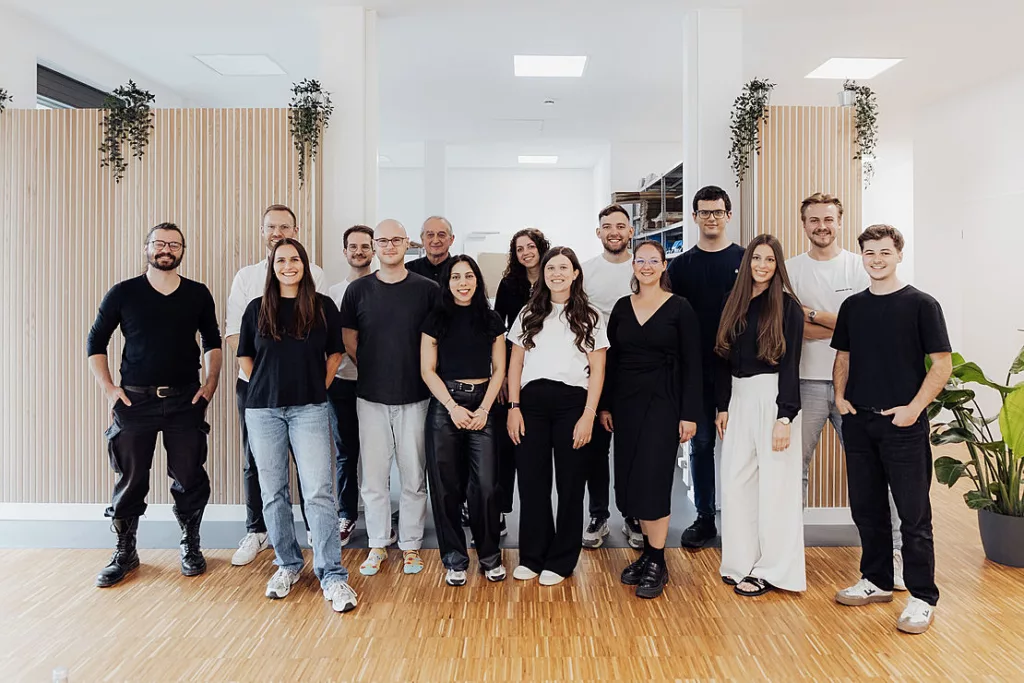
    The Optocycle team | (c) Optocycle

    How do you see Optocycle’s work contributing to a future where AI research has a long‑term, positive, and sustainable impact on society?

    At Optocycle, we see our work as a very applied example of how AI can drive tangible, long-term positive impact, particularly in industries that have historically been difficult to transform, such as construction and circular materials management.

    Our core contribution lies in using AI and advanced sensing technologies to make material flows transparent and measurable. This is a prerequisite for any functioning circular economy. Today, a significant share of valuable materials is still downcycled or lost entirely because there is insufficient data about their composition and quality. By generating reliable, real-time data, we enable better decision-making across the value chain, from sorting and recycling to reintegration into new products.

    From a sustainability perspective, this directly contributes to reducing waste, lowering CO₂ emissions, and preserving finite resources. But beyond the environmental aspect, we also see a structural impact: AI, when deployed thoughtfully, can help modernize traditionally analog industries and make them more efficient, data-driven, and resilient.

    Importantly, we believe that the long-term societal value of AI will depend less on abstract breakthroughs and more on its integration into real-world systems. Our approach is therefore to embed AI into physical processes with clear economic and ecological benefits. This ensures that the technology is not only innovative, but also scalable, economically viable, and aligned with sustainability goals

    What was the biggest lesson you learned from your founding journey? And what advice would you give to others who are considering taking the leap?

    The biggest lesson from our founding journey has been the importance of building solutions strictly around real customer needs, not for the sake of technology or innovation itself. Especially in deeptech and AI, there’s a strong temptation to develop sophisticated solutions first and look for applications later. In practice, that approach rarely leads to sustainable businesses.

    What truly made a difference for us was maintaining a strong customer focus from early on: deeply understanding pain points, validating assumptions quickly, and iterating based on real-world feedback. This ensures that what you build is not only technically impressive, but also commercially relevant and scalable.

    For anyone considering taking the leap, the advice would be: stay as close to your customers as possible. Talk to them early, challenge your own assumptions, and be willing to adapt your solution, even if that means pivoting away from your original idea. Execution matters, but direction matters more, and that should always be guided by real demand.

    To celebrate Cyber Valley’s ten-year anniversary, we’ll be sharing a variety of content across our website and social media channels reflecting on milestones from the last decade. Stay tuned for the next installments! 

  • Ein weiterer Meilenstein für KI aus der Region Stuttgart

    Ein weiterer Meilenstein für KI aus der Region Stuttgart

    Die Zukunft der künstlichen Intelligenz (KI) macht im Herzen von Baden-Württemberg einen wichtigen Schritt nach vorn. Das Höchstleistungsrechenzentrum Stuttgart (HLRS) wird als neuer Partner das Programm ‚KI-D@ARENA2036-X‘ mit seinem Wissen und Rechenkapazitäten unterstützen.

    Das Programm wird gemeinsam von ARENA2036, Cyber Valley GmbH, DeepScenario, waveye sowie den Technischen Informations- und Kommunikationsdiensten der Universität Stuttgart (TIK) umgesetzt.

    Mit dem HLRS kommt ein bedeutender Partner hinzu. Dadurch erhält das Programm Zugang zum Infrastrukturprojekt HammerHAI. Ab Mitte des Jahres können damit umfangreiche KI-Rechenressourcen entlang der gesamten Entwicklungskette genutzt werden – von kleineren Systemen direkt an Maschinen oder Geräten bis hin zu leistungsstarken Hochleistungsrechnern. Dadurch wird es möglich, auch sehr große und komplexe KI-Modelle zu trainieren und einzusetzen.

    Eine Infrastruktur, die KI-Entwicklung beschleunigt

    Im Rahmen der Initiative bauen die Partner eine offene IT- und Dateninfrastruktur einschließlich des Zugangs zu einem Datenraum für den souveränen Austausch von Daten auf. Ziel ist es, Unternehmen einen einfachen Zugang zu leistungsfähigen Ressourcen für KI-Anwendungen zu ermöglichen – von der ersten Idee bis zur praktischen Anwendung im Unternehmen. Dabei steht ein Modell im Mittelpunkt: die Vernetzung von KI-Systemen und Daten. Unternehmen können die bereitgestellte Infrastruktur nutzen, ohne selbst große technische Systeme aufbauen zu müssen. Die Nutzung soll zu wettbewerbsfähigen Kosten möglich sein. Besonders profitieren davon Start-ups sowie kleine und mittlere Unternehmen (KMU), deren Innovationsfähigkeit und Wettbewerbsstärke dadurch gestärkt werden.

    In Baden-Württemberg entsteht so ein skalierbares, transparentes und kooperativ gestaltetes System. Statt einer Blackbox setzt das Projekt bewusst auf eine offene Infrastruktur.

    Diese basiert auf drei zentralen Bausteinen:

    Eigene Hardware einbringen:

    Unternehmen können eigene Rechenhardware integrieren und damit die verfügbaren Rechenkapazitäten flexibel erweitern und individuelle Anforderungen abbilden.

    Gemeinsamer Datenraum:

    Ein skalierbarer, kollaborativer Datenraum mit Marktplätzen ermöglicht es verschiedenen Organisationen, gemeinsam an Datensätzen, KI-Modellen und konkreten Anwendungsfällen zu arbeiten.

    Hochleistungsrechnen mit HammerHAI:

    Leistungsstarke Hochleistungsrechen-Ressourcen ermöglichen das Training und den Einsatz besonders großer KI-Modelle.


    Ein Programm, das Unternehmen schneller voranbringt

    Teilnehmende Unternehmen des ‚KI-D@ARENA2036-X‘-Programmes profitieren von einem praxisnahen Zugang zu leistungsfähiger KI-Infrastruktur und einem starken Innovationsnetzwerk.

    Das Programm bietet unter anderem:

    • die Möglichkeit, neue Ideen und Proof-of-Concepts ohne hohe Anfangsinvestitionen zu testen und umzusetzen,
    • den Zugang zu leistungsstarker Hochleistungs-IT, ohne selbst ein eigenes Rechenzentrum betreiben zu müssen,
    • den fachlichen Austausch mit anderen KI-Entwickler:innen, die vor vergleichbaren technologischen Herausforderungen stehen,
    • sowie eine reale Testumgebung in der ARENA2036, die Anforderungen aus unterschiedlichen Branchen bündelt.

    Damit unterstützt das Programm Unternehmen nicht nur bei ihren Projekten – es beschleunigt aktiv die Entwicklung und Umsetzung neuer KI-Anwendungen.

    Stimmen aus dem Projektteam:

    Prof. Dr. Peter Middendorf, Rektor der Universität Stuttgart:

    „Die IT- und Dateninfrastruktur der ‚KI-D@ARENA2036-X‘ ist ein weiterer wichtiger Baustein unseres Innovationsökosystems. Die Universität Stuttgart trägt mit ihren Technischen Informations- und Kommunikationsdiensten und als Partner der ARENA2036 zum Erfolg dieses Projektes bei. Umso mehr freue ich mich, dass jetzt mit dem Höchstleistungsrechenzentrum Stuttgart HLRS ein weiterer starker Partner hinzukommt, der mit seiner leistungsfähigen Recheninfrastruktur Unternehmen und Start-ups bei der Erprobung und Optimierung modernster KI-Anwendungen unterstützt.“

    Dr. Alexander Lahl, Regionaldirektor des Verband Region Stuttgart:

    „Gemeinsam mit dem Infrastrukturprojekt HammerHAI entsteht ein bedeutender Nukleus, der von großem Nutzen für Start-ups und insbesondere kleinen und mittleren Unternehmen sein wird. Wir stärken damit den Standort Region Stuttgart bei KI-Anwendungen und Datenraumkapazitäten enorm, durch unsere Förderung von Innovationszentren sichern wir die Transparenz solcher Leistungen und damit die Wettbewerbsfähigkeit der Unternehmen der Region. Und es macht auch deutlich: die Stärke der Region Stuttgart ist das Miteinander.“

    Michael Kaiser, Geschäftsführer der Wirtschaftsförderung Region Stuttgart GmbH (WRS):

    „Die Zusammenarbeit der ‚KI-D@ARENA2036-X‘ mit dem HLRS und dessen europäischer AI Factory HammerHAI ist ein weiterer wichtiger Baustein für das KI-Ökosystem der Region Stuttgart. Damit ist es für Unternehmen möglich, dank effizienter Hochleistungsrechner sehr große KI-Modelle zu trainieren und zu nutzen – und das ohne eigenes Rechenzentrum. Gerade für kleine und mittelgroße Firmen entstehen dadurch neue Chancen in der KI-Entwicklung und -Anwendung.“

    Angelina Jukic, Programm Managerin bei der Cyber Valley GmbH:

    „Unser Ziel im ‚KI-D@ARENA2036-X‘-Programm ist es, ein stark vernetztes Ökosystem zu schaffen, das Forschung, Start-ups und Industrie näher zusammenbringt und die Entwicklung sowie das Training von KI-Modellen effizienter gestaltet. HammerHAI zählt dabei zu den führenden AI Factories Deutschlands und arbeitet gemeinsam mit ARENA2036 an zukunftsweisenden Lösungen.“


    Projektstand und Ausblick:

    Nach dem erfolgreichen Aufbau der grundlegenden Infrastruktur im ersten Projektjahr wird das Programm im Jahr 2026 den operativen Zugang zu den verfügbaren Rechen- und Datenressourcen ermöglichen.

    Über das ‚KI-D@ARENA2036-X‘-Programm:

    Das Programm ‚KI-D@ARENA2036-X‘ wird gemeinsam von ARENA2036, Cyber Valley GmbH, DeepScenario, waveye sowie den Technischen Informations- und Kommunikationsdiensten (TIK) der Universität Stuttgart umgesetzt. Ziel ist der Aufbau einer kollaborativen Infrastruktur, die KI-Innovationen in Baden-Württemberg schneller, sicherer und wirtschaftlich nachhaltig voranbringt.

    Das Programm wird vom Verband Region Stuttgart im Rahmen seines Kofinanzierungsprogramms für Künstliche Intelligenz als Förderprojekt von 2024 bis 2027 mit insgesamt 685.000 Euro gefördert.

    Pressekontakt:

    Silke Dutz

    Public Outreach Manager

    Email: silke.dutz@cyber-valley.de

  • Cyber Valley Start-up Meshcapade draws Epic Games to Tübingen

    Cyber Valley Start-up Meshcapade draws Epic Games to Tübingen


    Meshcapade has been acquired by Epic Games. As part of the acquisition, Epic Games is establishing a presence in Cyber Valley. The Meshcapade team will join Epic’s AI research team, contributing to technologies for Unreal Engine and MetaHuman.

    Meshcapade, is a spin-off of the Max Planck Institute for Intelligent Systems (MPI-IS) in Tübingen and one of the earliest members of the Cyber Valley Start-up Network. The start-up develops advanced technologies for the creation and animation of digital humans. Founded in 2018, the start-up received the inaugural Max Planck Startup Award from the Stifterverband in 2022. Epic Games is a U.S. game developer and creator of Unreal Engine, a game development technology. 

    Meshcapade’s technology builds on the Institute’s SMPL (Skinned Multi-Person Linear) body model, a highly realistic 3D representation of the human body trained on thousands of 3D scans. Licensed through Max Planck Innovation, the technology transfer arm of the Max Planck Society, SMPL has become the de facto standard for 3D human representation in both academia and industry. The technology was developed by co-founders Naureen Mahmood and Talha Zaman together with Michael J. Black, Director of Perceiving Systems at MPI-IS. 

    The Meshcapade team will now join Epic Games, which is opening a new office in Tübingen. This move strengthens Epic’s presence in Cyber Valley, one of Europe’s leading AI innovation ecosystems, and underscores the region’s role as a hub for cutting-edge research and industry collaboration in artificial intelligence, computer vision, and digital human technologies. 

    Read the full news story from the Max Planck Society here:

    https://www.mpg.de/26082348/max-planck-spin-off-meshcapade-draws-epic-games-to-tuebingen

  • DenkBox, kausable, and polybot join the Cyber Valley Start-up Network

    DenkBox, kausable, and polybot join the Cyber Valley Start-up Network

    Cyber Valley welcomes three new members to its Start-up Network: DenkBox, kausable, and polybot. These start-ups are using bold ideas and groundbreaking technologies to shape the future of AI and robotics in Baden-Württemberg.

    polybot envisions unlocking a sustainable future for humanity’s food production. The start-up builds small, dexterous robots that can perform a variety of complex, labor-intensive tasks, like weeding, precision pruning, and harvesting delicate crops like tomatoes and cucumbers. By automating manual fieldwork, polybot helps farmers address labor shortages while boosting long-term productivity and sustainability.

    DenkBox uses the latest open-source LLMs to provide a locally hosted AI chatbot. The start-up puts its users’ privacy first: it does not require connection to an external cloud, ensuring full compliance with GDPR. Meanwhile, DenkBox offers access to state-of-the-art open-source LLMs. The start-up offers both hardware and software from a single source, requiring minimal IT configuration that integrates seamlessly into existing infrastructures.


    kausable is pioneering a new reasoning-first approach to AI, moving beyond pattern-based large language models. Their agentic AI learns in-context from only a few examples, opens new domains without retraining, and generalizes across tasks and modalities. Backed by leading investors such as Mätch VC, LDV Partners, and experts from Black Forest Labs, kausable is building efficient, general-purpose intelligence that is made in Europe.


    The Cyber Valley Community is excited to welcome DenkBox, kausable, and polybot to its growing ecosystem. These start-ups are strengthening Cyber Valley’s mission to unite groundbreaking science with innovation and technology transfer to solve real-world problems.

    The Cyber Valley Start-up Network

    The Cyber Valley Start-up Network brings together more than 90 innovative AI and robotics start-ups across Baden-Württemberg, forming a strong and growing entrepreneurial community within one of Europe’s leading AI and robotics ecosystems. The network spans a broad range of applications and industries, from foundational AI technologies to applied and industry-specific solutions. Connected through their close ties to Cyber Valley, members benefit from access to world-class research, industry partners, investors, and public stakeholders, jointly strengthening the region’s AI and robotics ecosystem.

  • Mirelo AI: Die Zukunft der KI aus dem Cyber Valley gestalten

    Mirelo AI: Die Zukunft der KI aus dem Cyber Valley gestalten

    Cyber Valley gratuliert Mirelo AI zu einem bedeutenden Meilenstein in der Unternehmensentwicklung. Das 2023 gegründete Start-up hat gemeinsam mit seinen Gründern Carl Johann Simon-Gabriel und Florian Wenzel eine Seed-Finanzierungsrunde in Höhe von 41 Millionen US-Dollar abgeschlossen, angeführt von Andreessen Horowitz (a16z) und Index Ventures. Diese Runde zählt zu den größten Frühphasenfinanzierungen innerhalb des Cyber Valley-Ökosystems bis heute.

    Der Werdegang von Carl Johann Simon-Gabriel steht exemplarisch für den erfolgreichen Transfer von Spitzenforschung in unternehmerische Innovation. Nach seiner Promotion bei Prof. Bernhard Schölkopf am Max-Planck-Institut für Intelligente Systeme in Tübingen sammelte er mehrere Jahre Erfahrung in führenden Technologieunternehmen in den USA, bevor er 2023 Mirelo AI mitbegründete.

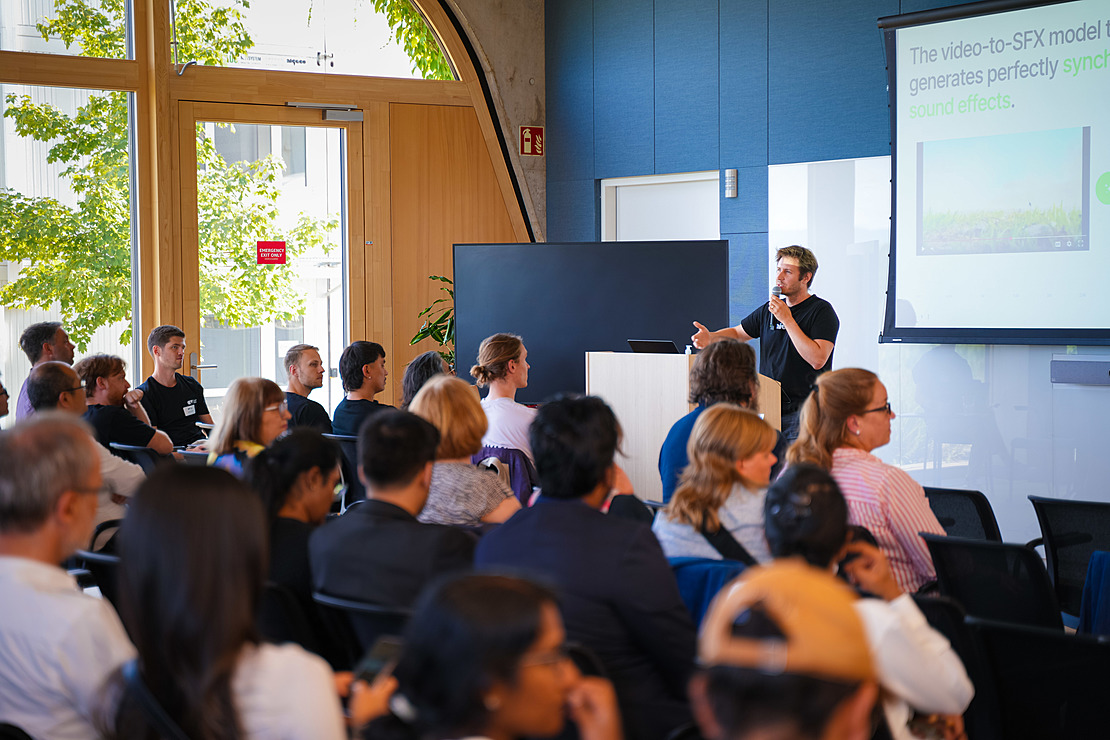
    Mirelo AI entwickelt generative KI-Modelle zur automatischen Erzeugung hochwertiger, produktionsreifer Soundeffekte direkt aus Videomaterial. Die Technologie eröffnet neue Möglichkeiten für Anwendungen in Film, Gaming und Werbung und adressiert einen bislang kaum automatisierten Bereich audiovisueller Produktion.

    Gegründet im Jahr 2023, ist Mirelo AI seit 2024 Mitglied im Cyber Valley Startup Network. Die erfolgreiche Finanzierungsrunde unterstreicht das Potenzial des Unternehmens ebenso wie die Stärke des regionalen KI-Ökosystems, in dem wissenschaftliche Exzellenz, unternehmerische Ambition und internationale Sichtbarkeit zusammenkommen.

    Image: Flügelmann

    Im Rahmen des Demo Day des Cyber Valley AI Incubator (Batch #6) war Carl Johann Simon-Gabriel als Keynote Speaker zu Gast und teilte seine Erfahrungen mit der nächsten Generation von Gründerinnen und Gründern. Dabei betonte er:

    „Cyber Valley ist eine großartige Initiative für aufstrebende KI-Startups, insbesondere weil sie in der weltbekannten KI-Forschungsszene und dem Talentpool Tübingens verwurzelt ist.“

    Mirelo AI wächst weiter und arbeitet aktiv am Ausbau seines Teams im Bereich generativer KI für Audio und Video. Weitere Informationen zu offenen Positionen finden sich auf der Website des Unternehmens.

    Related Start-Ups

    • Mirelo AI

      Mirelo AI

  • Cyber Valley at Heilbronn Slush’D

    Cyber Valley at Heilbronn Slush’D

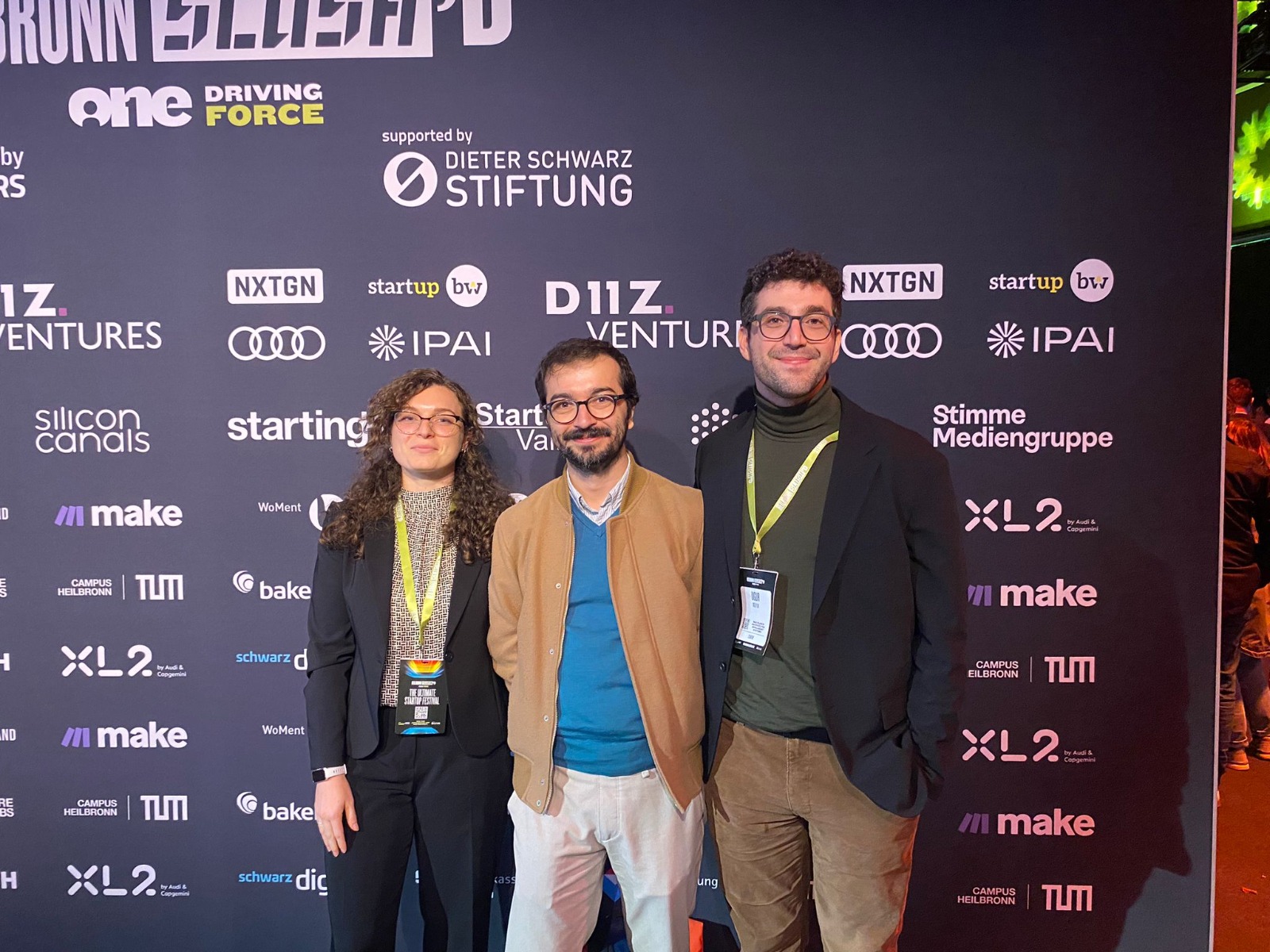
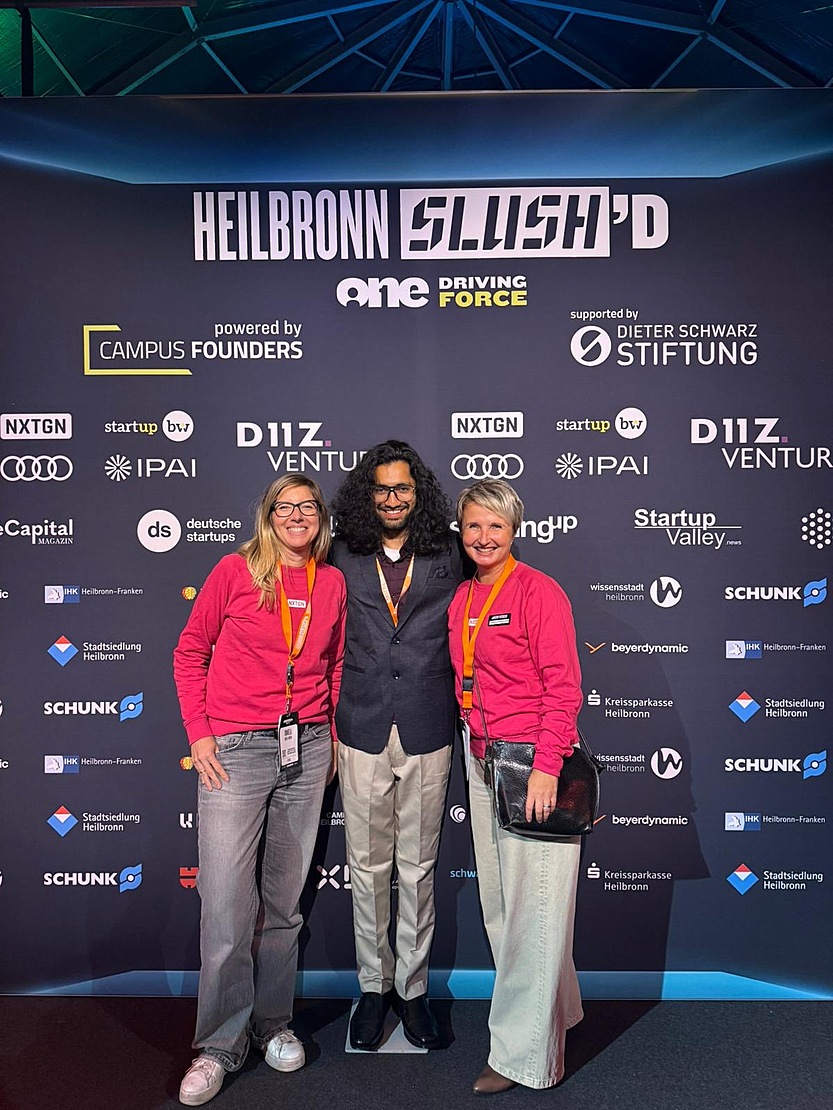
    Heilbronn Slush’D is organized by Campus Founders, a start-up and innovation hub based in Heilbronn. The event was sold out, with over 1,000 participants from across Europe taking part in talks, panel discussions, workshops, and networking sessions. The festival enabled start-ups and founders to connect with key stakeholders and develop their ideas.

    For CELLnROLL (recipients of the Cyber Valley Innovation Fellowship Program) Heilbronn Slush’D was ‘an inspiring event bringing together founders, investors, and innovation leaders from across Europe.’ Following the event, they were ‘inspired, energized, and full of new ideas for what’s next!’

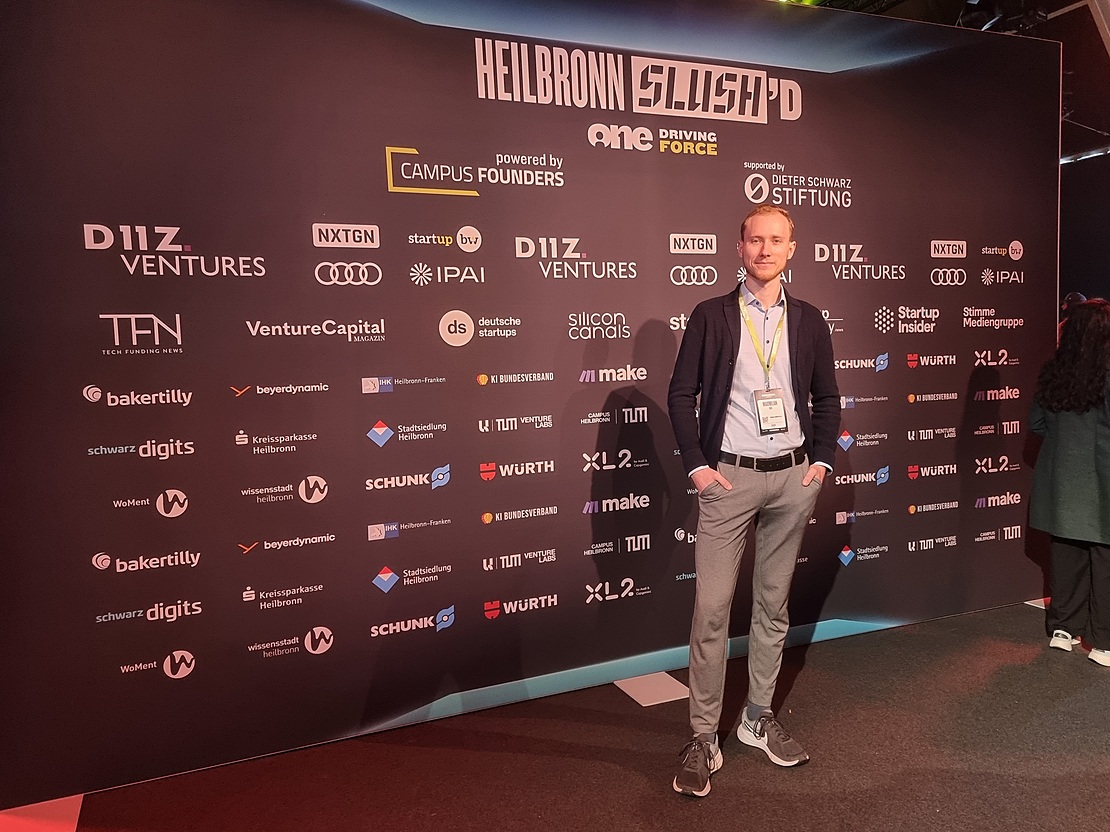
    Maximilian Bode, Co-founder of Cyber Valley Start-up Biocompile, was in attendance for the first time: ‘Despite the bad weather, it was a great experience!‘ For Max, events like Heilbronn Slush’D are ‚places where the most interesting people meet.’

    Maximilian Bode (Biocompile) at Heilbronn Slush'D. Photo courtesy of Maximilian Bode.

    Maximilian Bode (Biocompile) at Heilbronn Slush’D. Photo courtesy of Maximilian Bode

    Johanna Kreßel from the University of Tübingen’s Startup Center also shared her impressions from her first time at Heilbronn Slush’D: ‘I really enjoyed the energy and open atmosphere that made it so easy to connect and have meaningful conversations.’

    Johanna Kreßel at Heilbronn Slush'D. Photo courtesy of Johanna Kreßel

    Johanna Kreßel (Tübingen Startup Center) at Heilbronn Slush’D. Photo courtesy of Johanna Kreßel

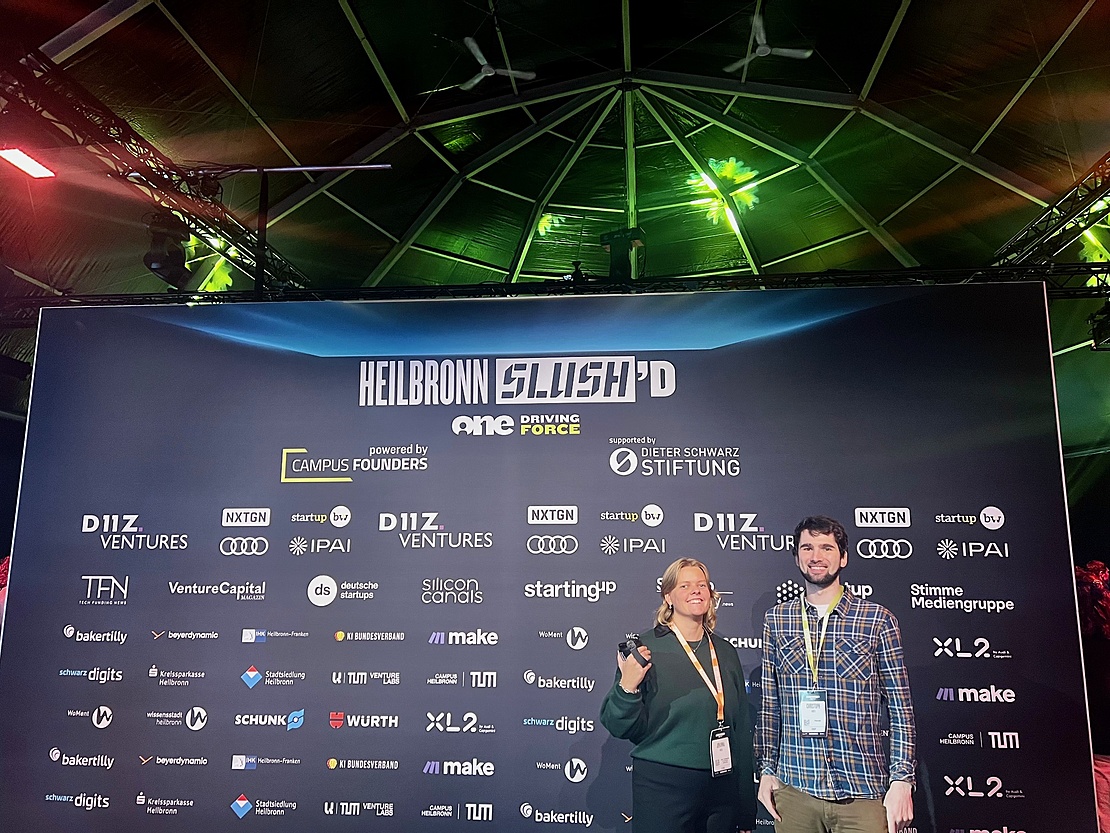
    KIT Gründerschmiede took part too. For them, Heilbronn Slush’D ‘was again a real experience – not only because of the wild weather, but above all because of the incredible energy that could be felt between impulses on stage, networking around the campfire, and conversations at the food trucks.’

    KIT Gründerschmeide at Heilbronn Slush'D

    KIT Gründerschmiede at Heilbronn Slush’D. Photo courtesy of KIT Gründerschmiede

    Members of the Cyber Valley Start-up Network have been recognized at previous iterations of the festival. Ventus Technologies secured the top prize of €100,000 in investment in 2023, followed by Tabularis AI claiming the same award in 2024. These examples show how Cyber Valley start-ups have benefited from the support provided by Campus Founders at Heilbronn Slush’D.

    By attending Heilbronn Slush’D, members of the Cyber Valley Community demonstrated the value of collaboration and were impressed by the growing momentum in Heilbronn. Through their scientific expertise and diverse perspectives, they are playing an essential role in the success of Germany’s research and innovation ecosystem.

    Photo courtesy of Heilbronn Slush’D

  • UTokyo IPC und Cyber Valley starten gemeinsames Valley-and-Sunrise-Programm

    UTokyo IPC und Cyber Valley starten gemeinsames Valley-and-Sunrise-Programm

    STUTTGART/ TÜBINGEN und TOKIO, 28. Oktober 2025 – Cyber Valley und UTokyo IPC geben den Start Start von „Valley and Sunrise“ bekannt. Das Programm zur Markterschließung unterstützt deutsche Start-ups aus den Bereichen KI und Robotik dabei, das Innovationsökosystem Japans zu erkunden und dort zu expandieren.

    Das Valley-and-Sunrise-Programm ist das Ergebnis einer strategischen Partnerschaft zwischen Cyber Valley, Europas führendem Zentrum für Exzellenz in KI und moderner Robotik, und UTokyo IPC, dem Venture-Investment-Arm der Universität Tokio. Es eröffnet deutschen KI- und Robotik-Start-ups aus dem Cyber-Valley-Ökosystem den Zugang zu den akademischen und unternehmerischen Netzwerken von UTokyo IPC, beschleunigt ihren Markteintritt und die Kommerzialisierung in Japan und verschafft ihnen damit einen Wettbewerbsvorteil auf den globalen Märkten.

    Ausgewählte Start-ups erhalten :

    • Bis zu 50.000 Euro Förderung für den ersten Markteintritt.
    • Zugang zu japanischen Unternehmensvertreter:innen, strategischen Investor:innen und regulatorischer Expertise.
    • Individuelle „Proof of Concept“ (PoC)-Partnerschaften mit führenden japanischen Unternehmen.
    • Sechs Monate individuelles Mentoring, Networking-Möglichkeiten und Unterstützung für eine erfolgreiche Markteinführung.

    Bewerbungen für das Market Exploration Program sind vom 05. November bis 05.Dezember 2025 möglich. Die ausgewählten Start-ups starten das Programm im Frühjahr 2026. Es werden bis zu zwei Start-ups aus dem Cyber Valley Start-up Network teilnehmen.

    Florian Mayer, Geschäftsführer, Cyber Valley GmbH:

    „Das Valley-and-Sunrise-Programm bietet deutschen Start-ups eine einzigartige Chance, Einblicke und wertvolle Kontakte in einer der fortschrittlichsten Volkswirtschaften der Welt zu gewinnen. Das Programm fördert grenzüberschreitende Innovation zwischen Deutschland und Japan und unterstützt Deeptech-Start-ups aus dem Cyber-Valley-Ökosystem in Baden-Württemberg dabei, sich international erfolgreich zu positionieren.“

    Angelina Jukic, Programm Managerin, Cyber Valley GmbH:

    „Diese Initiative ist aus unserer engen Zusammenarbeit mit UTokyo IPC entstanden. Das Valley-and-Sunrise-Programm setzt unsere gemeinsame Vision in die Tat um – deutsche KI- und Robotik-Start-ups mit Japans führenden Investor:innen, Unternehmen und Forschenden zu vernetzen und die Kooperation zwischen unseren beiden Innovationsökosystemen zu stärken.“

    Hideki Nagasaka, Partner & Direktor, 1stRound, UTokyo IPC:

    „Durch unsere Zusammenarbeit mit Cyber Valley entsteht eine wirklich globale Plattform, die deutsche Start-ups dabei unterstützt, nicht nur im japanischen Markt erfolgreich zu sein, sondern auch international zu wachsen. Wir streben ein dynamisches Ökosystem an, in dem Innovationen nahtlos zwischen Deutschland, Japan und darüber hinaus fließen und so eine nachhaltige globale Wirkung erzielen.“

    Über UTokyo IPC

    UTokyo Innovation Platform Co., Ltd. (UTokyo IPC) ist eine Risikokapitalgesellschaft, die sich vollständig im Besitz der Universität Tokio befindet und 2016 gegründet wurde, um die globale industrielle Wettbewerbsfähigkeit Japans durch Investitionen in Start-ups und den Aufbau von Ökosystemen zu stärken.

    Als öffentlich-private Risikokapitalgesellschaft hat UTokyo IPC in mehr als 80 universitätsnahe Start-ups und Risikokapitalfonds in Japan und im Ausland investiert.

    Neben Investitionen betreibt UTokyo IPC das Startup-Building-Programm, das die Kommerzialisierung von Forschungsergebnissen unterstützt, 1stRound, Japans größten akademischen Accelerator, und DeepTech Dive, ein Programm zur Förderung von Deep-Tech-Talenten. Im Jahr 2024 startete UTokyo IPC den ASA-Fond im Rahmen einer Initiative der Stadtverwaltung von Tokio, um die globale Zusammenarbeit zu fördern und Japan als Zentrum für Deep-Tech-Innovationen zu etablieren.

    Über Cyber Valley

    Cyber Valley ist Europas führendes Zentrum für Exzellenz in künstlicher Intelligenz und moderner Robotik. Durch den Aufbau eines dynamischen Ökosystems sowie die Förderung reibungsloser Zusammenarbeit und eines schnellen Wissensaustauschs zwischen Wissenschaft, Wirtschaft und Gesellschaft gestalten wir eine Zukunft, in der das volle Potenzial intelligenter Systeme zum Wohle der Gesellschaft ausgeschöpft werden soll.

    Pressekontakt

    Hazel Rowland, Cyber Valley GmbH: hazel.rowland@cyber-valley.de
    Akiko Tsuchiya, UTokyo IPC: info2@utokyo-ipc.co.jp

  • Expanding the AI Frontier: DxOmics and pi_optimal join the Start-up Network

    Expanding the AI Frontier: DxOmics and pi_optimal join the Start-up Network


    DxOmics

    DxOmics is revolutionizing genetic diagnostics and research with AI-driven software that decodes complex genomic data. Their solutions support everything from cancer detection to rare disease diagnosis, all while enabling personalized treatment strategies. With cloud-based bioinformatics, smart clinical reporting, and AI classifiers at their core, DxOmics helps researchers, clinicians, and biotech pioneers unlock the future of precision medicine.

    pi_optimal

    With pi_optimal, reinforcement learning (RL) becomes refreshingly simple and accessible. Their open-source platform reduces the complexity of implementing RL to just a few lines of code – no deep ML expertise required. Built for developers, scientists, and visionary businesses, pi_optimal is democratizing cutting-edge AI and empowering users to solve complex optimization problems and build smarter systems, faster.

    By joining the Cyber Valley Start-up Network, DxOmics and pi_optimal help strengthen the Community with their innovative approaches to applied AI – from decoding the human genome to scaling intelligent decision-making across industries.  

    Welcome to the Community!

  • Cyber Valley Welcomes Two New Start-ups: SKAI and Tensor AI Solutions

    Cyber Valley Welcomes Two New Start-ups: SKAI and Tensor AI Solutions

    SKAI

    SKAI is on a mission to revolutionize dermatology with the use of AI. Their smart beauty assistant uses brain-inspired AI to provide hyper-personalized, science-backed skincare recommendations for both, consumers and dermatologists. By combining intuitive design with advanced AI, SKAI creates user experiences that are both quick, intelligent, and empathetic – making expert-level skincare acessible for everyone. 


    Tensor AI Solutions 

    Tensor AI Solutions provides customers with transparent and reliable AI software to automate their processes in an efficient and controllable way. From data assessment to prototyping and deployment, the start-up delivers tailor-made solutions for sectors like manufacturing, logistics, and finance — turning raw data into real-world impact.

    By joining the Cyber Valley Start-up Network, SKAI and Tensor AI Solutions bring new dimensions of innovation — from AI in beauty to enterprise transformation — strengthening the Community's mission to lead the charge in applied AI research and entrepreneurship. 

    Welcome aboard, SKAI and Tensor AI solutions.

  • Mira Vision accelerates innovation at VENTURE SPRIN-D

    Mira Vision accelerates innovation at VENTURE SPRIN-D

    At VENTURE SPRIN-D 2025, over 50 teams presented their innovative ideas to more than 250 international investors. The event featured live pitches, a networking exhibition area, and opportunities to make valuable connections. Alongside other members of the Cyber Valley Community, Cyber Valley Start-up MIRA Vision seized this opportunity to show how they are revolutionizing the health industry.

    We interviewed MIRA Vision founders, Lukas Mürdter and Leonid Mill, to gain insights into VENTURE SPRIN-D and what their start-up is all about. 

    Cyber Valley: How has attending this event impacted Mira Vision? What were your key takeaways? 
     
    Leonid Mill, MIRA Vision CTO & Founder, explains, “Attending the VENTURE SPRIN-D event was an outstanding experience for us. VENTURE SPRIN-D showcased the incredible innovation power of all the SPRIN-D portfolio start-ups, and it was truly inspiring to be part of such a dynamic environment. We deeply appreciated the opportunity to be part of this ecosystem and to participate and pitch on stage during the Superconnector session — it was a fantastic moment for us.” 

    “The event provided an excellent platform to connect with like-minded entrepreneurs, industry experts, and investors. We had the pleasure of engaging in valuable conversations, receiving insightful feedback from investors, and exchanging ideas with other forward-thinking innovators.” 

    “Overall, it was an exceptional opportunity that has positively impacted our journey, and we are grateful to have been part of it. Shoutout to SPRIN-D for this amazing event, creating such an inspiring platform that brings together so many bright minds and visionary thinkers – it’s initiatives like this that truly accelerate innovation,” Mill concludes.  

    Cyber Valley: What is MIRA Vision? How is it already revolutionizing the health industry? 

    CEO & Founder, Lukas Mürdter, explains: “MIRA Vision is a pioneering company in medical diagnostics. We use synthetic intelligence to analyze pathological images faster, more accurately, and at a fraction of the cost compared to traditional methods. By relying on fully parametric synthetic training data – not real patient data and without using generative models – we’re solving three of the biggest issues in medical AI: bias, privacy, and data scarcity.”  

    Mürdter further clarifies, “Right now, we’re already outperforming state-of-the-art models in key areas with just a fraction of the resources that are normally needed to train such systems. This means not only better diagnostics but also global accessibility – even in regions with limited infrastructure.” 

    Cyber Valley: Where do you see MIRA Vision being used in the future?  

    Lukas emphasizes, “Our vision goes beyond pathology. We see MIRA Vision as the backbone of diagnostics across all image-based disciplines – radiology, dermatology, ophthalmology, even surgery. Wherever an image can be taken, MIRA will analyze it. Ultimately, we want to give every doctor on this planet an AI-powered assistant that helps detect diseases early, accurately, and affordably – no matter where they are.” 

    Cyber Valley: What are your plans to make a positive impact on the world? 

    Lukas responds enthusiastically, “By being radically different – and radically better. Instead of building another AI that requires millions of patient records and insane GPU farms, we’ve designed a lightweight, scalable system built on expert-guided synthetic data. Our platform works out of the box, is regulation-friendly, and can be used for free in non-commercial settings.” 

    “We’re opening the platform to the global pathology community, offering unmatched accuracy, no data privacy concerns, and unbeatable economics. Once they start using it – they won’t want to stop. That’s how we scale. And yes – we’re just getting started,” Mürdter concludes.