User Group: Unternehmen

  • Vier Motoren für Europa – Künstliche Intelligenz als Chance für die Gesellschaft

    Vier Motoren für Europa – Künstliche Intelligenz als Chance für die Gesellschaft


    On the occasion of the handover of the presidency from Baden-Württemberg to Lombardy, a reception with a panel discussion will take place in the Mercedes-Benz Museum. With a special focus on “Artificial intelligence as an opportunity for society”, attendees will gain insights into examples of AI applications with social benefits from the regions of the Four Motors for Europe.


    When?

    Date: April 11, 2024

    Time: 18:00–22:00


    Where?

    Mercedes-Benz Museum
    Mercedesstraße 100
    70372 Stuttgart


    What?

    Welcome:
    Florian Hassler, State Secretary for Political Coordination and Europe in the State Ministry of Baden-Württemberg 

    Keynote:
    Dr. Wieland Brendel, Hector-endowed ELLIS Fellow, ELLIS Institute Tübingen, Max Planck Institute for Intelligent Systems, Tübingen AI Center

    Panel discussion with moderation by Rebecca C. Reisch, Managing Director Cyber Valley

    • Auvergne-Rhône-Alpes: N.N.
    • Baden-Württemberg: Max-Frederick Gerken, CEO and Co-Founder, Optocycle
    • Lombardy: Sara Uboldi, Head of Solutions, Intellico s.r.l.

    Closing:
    Dr. Patrick Rapp, State Secretary at the Ministry of Economic Affaris, Labour and Tourism Baden-Württemberg


    Registration

    Registration for this event is necessary, please register via this form.

  • Amazon and Max Planck Society announce recipients of gift awards

    Amazon and Max Planck Society announce recipients of gift awards

    In line with that goal, the Science Hub is sponsoring the following research projects:

    • “Non-verbal interpersonal synchrony analysis tool (nVISA-online)”: Senya Polikovsky, research engineer, Max Planck Institute for Intelligent Systems

    “Interpersonal synchrony (In-Sync), the spontaneous synchronization of behavioral, affective, and even physiological responses in contexts of social interaction, offers a useful insight into the quality and smoothness of interactions between social partners. Automatic assessment of In-Sync could provide objective tools for studying the interactive abilities of people with psychiatric conditions and the degree of therapeutic alliance in psychotherapy, as well as online human-to-human and avatar-to-human interactions. Body movement dynamics are central to the analysis of In-Sync. Besides that, facial expression, gaze interaction, audio signals, and physiological measures such as electrodermal activity, heart rate variability, or breathing rates can be used to detect In-Sync. The goal of our proposed research is to extend In-Sync analysis to online scenarios. We would like to identify the instruments and the procedures for the detection of In-Sync in online therapy sessions.”

    • “Accurate 3D body shape and clothing estimation from a single image”: Gerard Pons-Moll, senior researcher, Max Planck Institute for Informatics, and professor, University of Tübingen, endowed by the Carl Zeiss Foundation

    “This research aims to reconstruct a 3-D digital human from a single RGB photograph, using a combination of 3-D neural implicit functions to represent worn garments and a parametric model to represent and control the pose and shape of the underlying body. A key novelty is to incorporate feedback in the deep body estimation network, ensuring that the 3-D body mesh is consistent with its projection onto the photo.”

    • “Learning clothing pressure fields via high-fidelity finite element analysis”: Gokhan Serhat, research scientist, Max Planck Institute for Intelligent Systems, and assistant professor, KU Leuven

    “Accurate estimation of clothing pressure on the human body is crucial to understanding physical factors that influence clothing comfort. Such estimation requires the ability to express contact pressure fields in terms of different body sizes and types and garment sizes and material properties. However, such pressure fields are generally too complex to be modeled by analytical methods. Experimentation also has certain drawbacks, since it does not provide information about internal stresses, and precise measurement of the contact pressure between a pair of curved soft bodies is difficult. The intricate anatomy of the human body may require elaborate finite-element models with several thousand elements for capturing deformation mechanics accurately. Such large models inherently induce high computational costs and are likely to suffer from the aforementioned numerical issues. The proposed study aims to address this problem by developing a deformation model based on deep neural networks trained with the data from finite-element analysis.”

    • “Material estimation of clothing for controllable human avatars”: Justus Thies, research group leader, Max Planck Institute for Intelligent Systems, and professor, Technical University Darmstadt

    “A key challenge for controllable human avatars is the reconstruction and animation of clothing. While data-driven, person-specific reconstruction methods show promising results, the extrapolation to novel poses with realistic deformations of clothing is limited. In contrast to data-driven methods, physics simulation can be used to model the dynamically changing clothing. In this project, we want to explore material estimation of human clothing for such simulations. Specifically, we are interested in predicting material properties such as stiffness or stretch that influence the motion-dependent deformation of the clothing. Besides these mechanical material properties, we are also interested in predicting material properties for the appearance of clothing that allow for re-renderings under novel poses.”

  • IntegraSkin, MiraVision, and SPAICE drive the Cyber Valley Start-up Network forward

    IntegraSkin, MiraVision, and SPAICE drive the Cyber Valley Start-up Network forward

    The three innovative start-ups offer groundbreaking solutions in their respective fields. IntegraSkin focuses on personalized medicine for skin diseases; MIRA Vision revolutionizes image analysis in microscopy and digital pathology through AI; and SPAICE pioneers autonomous space maintenance.  

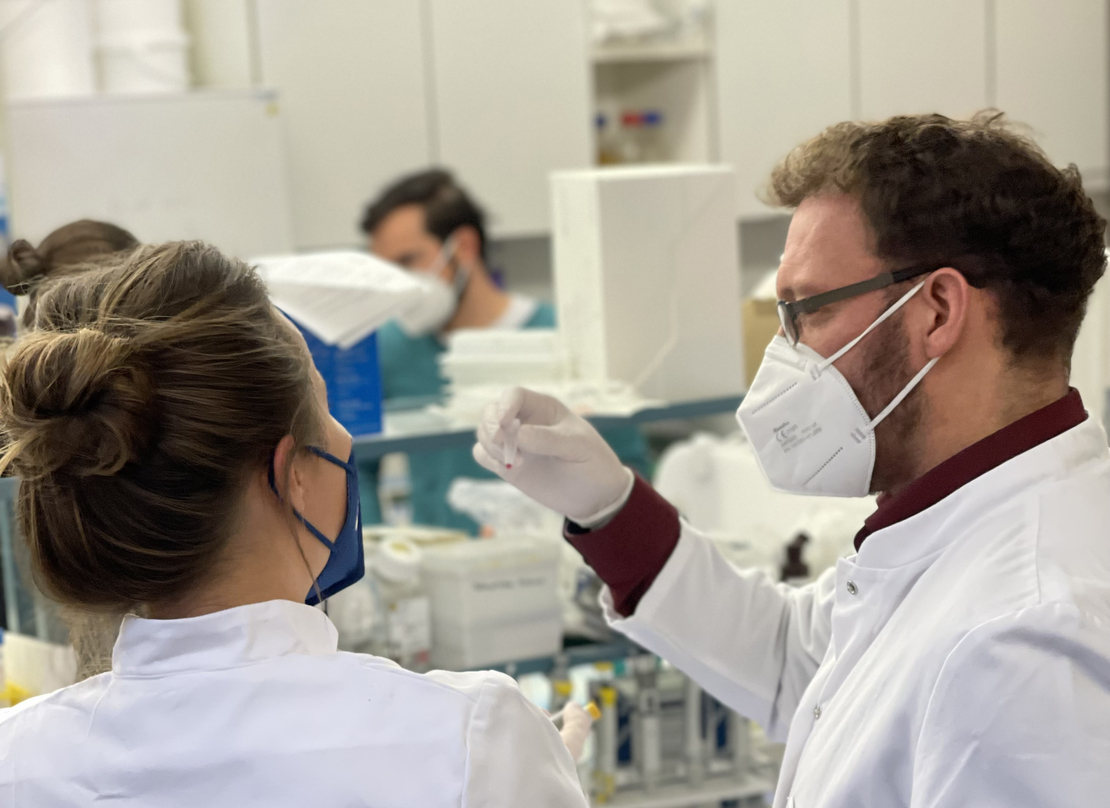
    IntegraSkin combines molecular biological methods and AI to offer personalized medical treatment, focusing on chronic inflammatory skin conditions. Skin conditions affect 90% of individuals at some point in their lifetimes. Severe cases can disrupt lives and social interactions, often leading to a cycle of trial-and-error treatments. IntegraSkin is highly motivated to change this narrative, aiming to identify optimal treatments for dermatological conditions and provide effective solutions. 

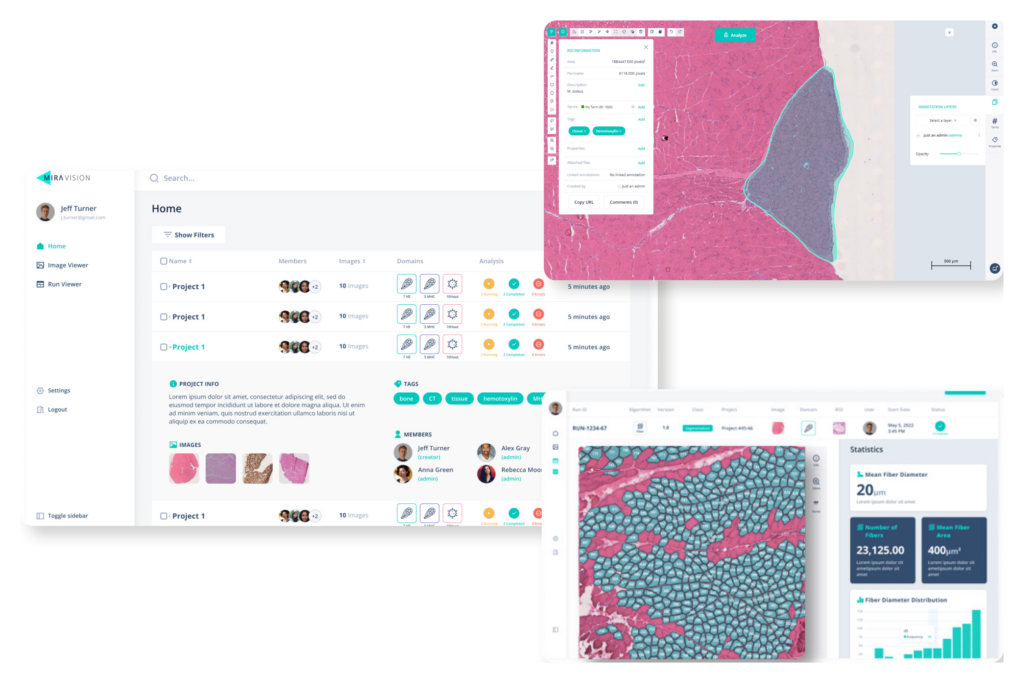
    MIRA Vision is an AI-powered platform designed for quantitative image analysis in microscopy and digital pathology. It streamlines the process by offering fast, accurate, and reproducible analysis, significantly enhancing researchers' and pathologists' capabilities. With its innovative and patented technology, MIRA Vision integrates machine intelligence into microscopy, enabling users to analyze data at previously unattainable scales. Users can upload their image data, define regions of interest, select AI-assisted analysis, and explore the results, making complex analyses accessible in just four simple steps. 

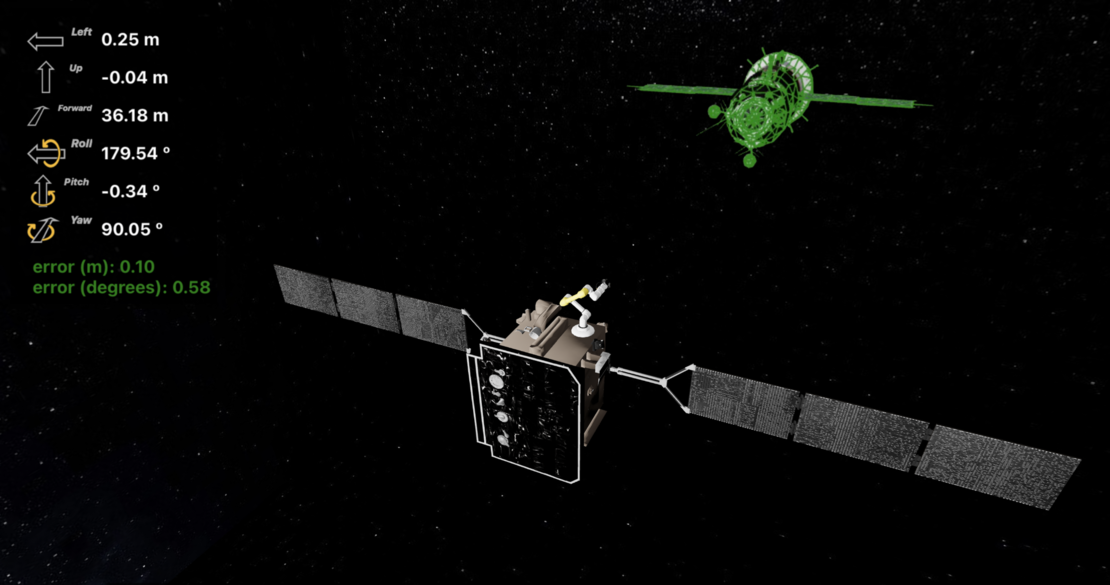
    SPAICE offers the first fully autonomous solution for In-Orbit Services, specializing in tasks in the realm of space operations, including satellite life extension and debris removal. Their software is delivered through a plug-and-play servicing platform that includes sensors, robotic arms, and a computing unit. Their solutions can affordably enhance satellite lifespans by more than 50%, boost their revenue generation by more than 50%, and reduce collision risks by more than 20%. SPAICE enhances navigation by optimizing fuel consumption, enabling real-time onboard planning, and improving safety and precision in space operations. Founded by a top-tier team from prestigious institutions, SPAICE is currently validating multiple solutions through Proof-of-Concepts (PoCs) with leading European and US space entities. 

    These start-ups showcase the diverse applications of AI across various domains. Joining the Cyber Valley Start-up Network opens up numerous collaboration opportunities with the Cyber Valley Community. These three new additions will advance research and development in artificial intelligence, foster interdisciplinary synergy, and drive technological innovation forward. 

  • NEURA Robotics joins the Cyber Valley Start-up Network

    NEURA Robotics joins the Cyber Valley Start-up Network

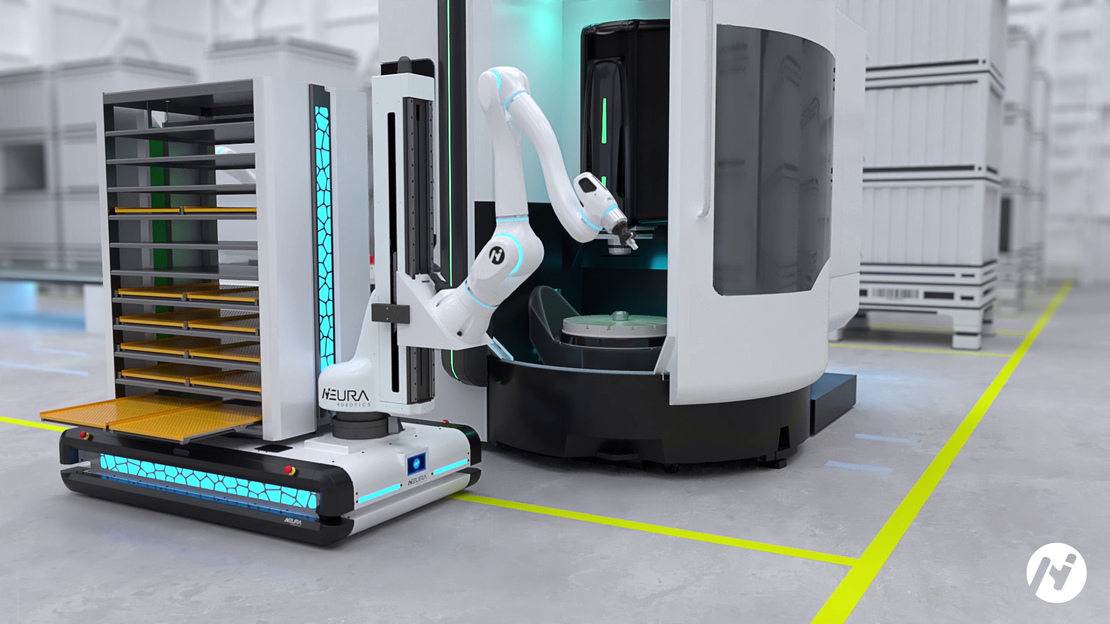
    NEURA Robotics was founded in 2019 in Metzingen near Stuttgart. The start-up builds robotics assistants to collaborate naturally with humans. Among its products is the world’s first commercially available cognitive robot MAiRA, which integrates AI and a Touchless Safe Human Detection sensor technology to perceive its surroundings and easily adapt to different environments. Its other products include:
     

    • LARA, a Lightweight Agile Robotic Assistant that combines a lightweight design with industrial performance.         
    • MAV, a Multi-Sensing Autonomous Vehicle that can autonomously move and load any type of good
    • MiPA, an intelligent, versatile robotic assistant designed to support people in various domains

    MAV MAIRA

    With these robotic assistants, NEURA Robotics has laid the groundwork for humans and robots to work hand-in-hand. By enabling seamless interaction with humans in existing environments, NEURA eliminates the need for complex and expensive safety systems. Their guiding principle, “we serve humanity”, underscores their commitment to creating attractive, safer, and more sociable workspaces.

    NEURA Robotics‘ unique approach is to develop key components in-house, including AI, control software, sensors and mechanical parts. Under the leadership of founder David Reger, they have made remarkable advances in environmental perception, control engineering, materials science and artificial intelligence, and are on track to bring the first cognitive humanoid robot to market.

  • ETH Zurich launches joint initiative for trustworthy AI

    ETH Zurich launches joint initiative for trustworthy AI

    In spring 2024 the new Alps supercomputer goes live at the Swiss National Supercomputing Centre (CSCS) of ETH Zurich in Lugano. Boasting the next generation of more than 10,000 graphics processing units (GPUs), Alps is one of the world’s most powerful computers for applications in the field of artificial intelligence (AI). This new computer gives Swiss scientists access to the sort of computing power only available to the world’s biggest tech companies.

    Transparency and Open Source

    The initiative aims to develop and train new large language models (LLM). These must be transparent, deliver comprehensible results, and ensure legal, ethical, and scientific criteria are met. “Unlike the large language models that are usually available in the public domain today, the Swiss AI Initiative strongly emphasized transparency and Open Source. Everyone must be able to understand how the models were trained, the sort of data used, and how results are recovered,” stresses Jan Hesthaven, Provost and Vice President for Academic Affairs at EPFL.

    To develop such models, the Swiss AI Initiative will use ten million GPU hours on the new Alps computer over the next 12 months, equivalent to the computing power of a single GPU running at full load for over 1,100 years. Switzerland is therefore the first country in the world to operate a research infrastructure on the next-generation NVIDIA Grace Hopper Superchip.

    Swiss AI Initiative is already up and running

    This additional computing capacity will be used to develop new, industry-specific AI-based models for use in different areas such as robotics, medicine, climate sciences, or diagnostics. In addition, the Initiative will also explore fundamental questions in the development and use of LLM models, such as: What form will future interaction between humans and AI take? What is the appropriate ethical framework? How do we manage security and data privacy? What new approaches can be used to scale up models and make them more energy efficient?

    AI for industry and public administration

    The Swiss AI Initiative has set itself the goal of bringing together science, industry, and politics to collaborate in shaping and driving forward the development and use of artificial intelligence in Switzerland. Existing partnerships with companies, hospitals, and public-sector bodies will be expanded further. Swisscom’s CTO Gerd Niehage commented: “Here at Swisscom we welcome the Swiss AI Initiative, especially as we are convinced this will be an important building block in Switzerland’s digital future. It accelerates the digital transformation and creates new capabilities our country needs to play a dominant role in the area of generative artificial intelligence. For Swisscom, AI solutions like the Swiss AI Initiative are a key element of innovative digital solutions that our customers can trust.”

    The software infrastructure, accumulated expertise and base models developed in Switzerland should be transferable as openly and directly as possible to society and industry. To remain competitive, SME’s will also have to rely increasingly on the use of AI in the future. Like public services, they will be able to directly benefit from the open Swiss AI Initiative. On top of that, the Swiss AI Initiative is developing a program for supporting start-ups in the area of artificial intelligence.

    Networking researchers all over Switzerland

    ETH Zurich and EPFL operate their own AI centers that will work closely together in the future, along with the Swiss Data Science Center, to conduct world-class, interdisciplinary AI research. This initiative aims to pool the specialist knowledge of around a dozen Swiss universities, technical universities, and research institutes. Over the past few months over 75 professors from all over Switzerland have signed up for the initiative. In addition, other international researchers have also been invited to work together on the development of multilingual, cross-border, open-source LLMs. ETH Zurich and EPFL are already members of ELLIS, the European network of AI excellence, which incudes some 40 AI hot spots in Europe. 

    Press contact

    Markus Gross

    ETH Zurich
    Switzerland

  • EuroEAP 2024 kommt nach Stuttgart!

    EuroEAP 2024 kommt nach Stuttgart!


    What is EuroEAP?

    The EuroEAP international conference, organized by the EuroEAP Society with a not-for-profit distinctive character and always held in Europe, primarily aims to share the latest advances and findings in this emerging field. It gathers experts from all over the world in a highly multidisciplinary event driven by scientific quality and industrial impact, with an organization that enables significant opportunities for one-to-one discussions in a friendly atmosphere. Today, the event expands its scope to the larger international and diverse research community of soft smart materials and soft transducers. The event is conceived as an exclusive forum for international experts and professionals seeking scientific quality, industrial impact, and opportunities for cooperation.


    When?

    June 11–13

    Important deadlines:

    • Hotel reservation (special rate): 10 APRIL 2024 (70 pre-booked rooms)
    • Early registration & abstract submission: 10 APRIL 2024
    • Deadline for registration: 10 MAY 2024


    Where?

    Max Planck Institute for Intelligent Systems 

    Heisenbergstrasse 3 | 70569 Stuttgart | Germany


    How to contribute and/or attend?

    Please have a look here: EuroEAP Platform


    Curious to see what awaits you there?

    Get exclusive insights in advance: The program 


    Tuesday, 11 June

    • A social dinner will be organized on Tuesday evening in the Stuttgart city center.
    • Transport from the MPI to the dinner and from the dinner to the hotel will be provided.
    • The cost to attend this event is covered by the conference registration fee.
    • More details will be released closer to the conference start.


    Wednesday, 12 June

    Castle tour:

    A castle tour for the participants of the conference will be organized on Wednesday. We will get a guided tour through Residenzschloss Ludwigsburg, one of the most beautiful baroque castles in Germany.
    The tour will start at 16:00.


    Social dinner:

    • Following the castle tour, there will be a social dinner at the restaurant Württemberger Hof (http://www.wuerttemberger-hof-ludwigsburg.de/), which is in walking distance from the castle.
    • The dinner will start at 19:00.
    • Transport from the MPI to Ludwigsburg and from the dinner to the hotel will be provided.
    • The cost to attend this event is covered by the conference registration fee.


    Accompanying persons

    • The castle tour and social dinners are open to accompanying people.
    • The participation fees for each accompanying person will be announced closer to the conference start.
    • The fees should be paid in cash at the conference desk (credit cards are NOT acceptable).
    • Attendees willing to join the castle tour and the social dinners should specify the option (including the number of accompanying persons) during the online registration to the conference.


    Thursday, 13 June

    SOFTWEAR Days:

    This year there is a satellite event to the EuroEAP 2024 conference: SOFTWEAR Days 2024. There will be an oral session also open to all EuroEAP participants, free of charge, on Thursday 13th of June in the afternoon at the same venue and room as the EuroEAP 2024. Oral presentations will be given by the SOFTWEAR PhD students presenting their research.

    A few slots have also been reserved for presentations by other PhD students outside SOFTWEAR. The topic of the presentation must be in the broad category of soft actuators for wearables. If you, as a non-SOFTWEAR student, want to give an oral presentation (15 mins incl. questions), please contact edwin.jager@liu.se.

    SOFTWEAR is a Marie Skłodowska-Curie Actions Doctoral Network in the emerging and rapidly growing field of wearables, with a unique focus on soft actuators for wearables and exoskeletons. The primary objective of SOFTWEAR is to train young researchers in the multidisciplinary science of soft actuators for integration in wearables and augmenting textiles. This will be achieved by merging chemistry, physics, mechanics, electronics, textile technology, design, human-technology interaction, and ethics in a truly interdisciplinary manner, while teaching essential skills in ethics, product development, IPR, and industrial realization, thus providing a unique added value to the careers of the researchers. For more information, see: https://softwear-dn.eu/


    EuroEAP Society Challenge:

    During the EuroEAP 2024, we’ll be having a challenge with € 400 worth of prizes. It is an open competition where teams of talented researchers can showcase a project of their choice and compete with colleagues in academia and industry. The final aim of the Challenge is to captivate and inspire the imagination of experts and the public alike with the possibilities that soft smart materials and soft transducers empower. More information on the challenge web page:
    http://www.euroeap.eu/index.php/euroeap-society-challenge-home.


    Deadlines

    • Enrolment: 23 APRIL 2024
    • Final submission: 23 MAY 2024


    Cyber Valley is looking forward to this event happening within the Cyber Valley community and welcomes our international guests!

  • Cyber Valley welcomes AZOWO and Vectis Finance to the Start-up Network

    Cyber Valley welcomes AZOWO and Vectis Finance to the Start-up Network

    AZOWO is a unique platform offering integrated solutions in the mobility sector, including fleet management software, car and bike sharing, and real-time vehicle data. Their cloud software empowers companies, cities, and municipalities to efficiently implement innovative mobility services. AZOWO’s mission is to enable customers to build, transform, and manage critical processes in shared, connected, electric, and autonomous mobility. Leveraging artificial intelligence, the start-up incorporates advanced features like a unique booking algorithm and an AI document management system into their software platform. By doing so, they aim to facilitate the quick and effective realization of innovative solutions in the ever-changing field of mobility.

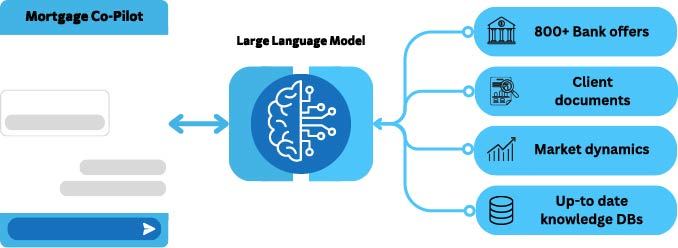
    Vectis Finance is on a mission to revolutionize the mortgage advisory industry through a cutting-edge LLM-based platform, comparing financing offers of more than 800 banks. Essentially, the platform serves as a digital co-pilot that is available 24/7, empowering homebuyers to establish new benchmarks in both speed and transparency. This puts the customer at the center of the mortgage process, while saving time for both mortgage advisors and other partners like real estate agents.

    By becoming part of the Cyber Valley Start-up Network, AZOWO and Vectis Finance have joined an AI community commited to advancing technology and fostering collaboration among start-ups, researchers, and industry partners. 

  • Cerebri and Tabularis.AI join the Cyber Valley Start-Up Network

    Cerebri and Tabularis.AI join the Cyber Valley Start-Up Network

    Cerebri is a pioneering medical diagnostic start-up dedicated to transforming EEG diagnostics and accessibility. The electroencephalogram (EEG) is a medical test used to measure the electrical activity of the brain. With a mission to democratize EEG technology, Cerebri seeks to make expert-grade evaluations universally available, transcending geographical boundaries. The start-up addresses challenges in routine and emergency medicine, offering an innovative platform that combines easy-to-use EEG hardware with expert-level evaluation as a service. By integrating artificial intelligence, Cerebri enhances EEG diagnostics, making it more accessible and comprehensible for individuals worldwide.

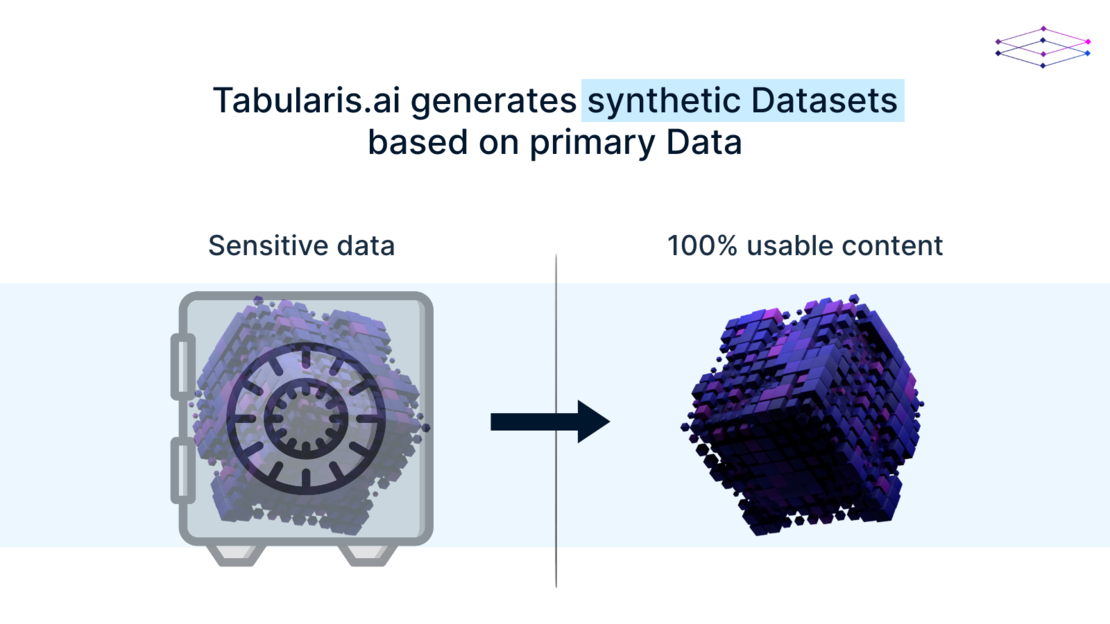
    Tabularis.AI is a start-up specializing in generating synthetic data that allows for training machine learning algorithms while maintaining the quality of real data without compromising data privacy concerns. With Tabularis.AI, organizations can open up their data, leading to increased efficiency and reduced costs. This is particularly beneficial for tasks like evaluating sensitive customer data, preparing development data, or generating AI training data. Tabularis.AI enables the sharing of data insights while protecting sensitive information, fostering collaboration across teams and companies.

    By becoming part of the Cyber Valley Start-up Network, Cerebri and Tabularis.AI have joined a vibrant AI community dedicated to advancing technology and promoting collaboration among start-ups, researchers, and industry partners. 

  • European Sovereignty in the AI Era

    European Sovereignty in the AI Era


    The discussions will center around key questions regarding the current European regulatory framework concerning transparency, fairness, and accountability, as well as the establishment of a robust European data governance framework. Within this overarching theme, the focus will be on the transformative impact of artificial intelligence on the efficiency of public institutions.

    How can we ensure the ethical use of AI technologies within public institutions? How can governments guarantee transparency in AI decision-making processes and address and mitigate biases in AI algorithms used in public services? How are governments tackling the security challenges associated with AI applications in critical areas such as defense and national security? Furthermore, what initiatives are being undertaken to enhance the AI literacy and skills of public servants?

    Finally, the aim is to address the role of investments and capital for start-ups and academic institutions in Europe to ensure sustained growth and competitiveness in the AI sector. Eager engagement in insightful conversations and collaborative exploration at this event is anticipated.


    When

    Thursday, January 18th, 2024


    Where

    AI House Davos


    Speakers

    • Jonas Andrulis: Founder, Aleph Alpha
    • Christian Lindner: Federal Minister of Finance, Germany
    • Dr. Rainer Esser: CEO, DIE ZEIT
    • Jochen Wegner: Editor in Chief, ZEIT Online, Moderator
  • Join the global forum for AI progress at AI House Davos

    Join the global forum for AI progress at AI House Davos

    • AI House Davos will bring together leaders in industry, civil society, government, the investing community, and academics to drive the global conversation on artificial intelligence.

    • Confirmed speakers include: Yann LeCun (VP of Meta), Kay Firth-Butterfield (CEO of Good Tech Advisory), Amy Webb (CEO of Future Today Institute), Arvind Krishna (CEO of IBM), Jonas Andrulis (CEO of Aleph Alpha), Theresa May (former Prime Minister of the UK), and Christian Lindner (Germany’s Finance Minister). 

    • Cyber Valley, contributor to the AI House program, invites you to its sessions. 

    Davos, Switzerland. We are pleased to announce the upcoming opening of AI House Davos during the World Economic Forum (WEF) Annual Meeting from January 15-19, 2024. Registration for a packed calendar of events is now open on the AI House website.

    Understanding AI’s current and future capabilities has never been more important. AI will undoubtedly be the dominant discussion at this year’s WEF Annual Meeting, and AI House Davos will be a crucial global forum to bring the deepest discussions on AI to life, from how AI can benefit humankind to how world economies can provide a catalyst for sustainable innovation. 

    The AI House will bring together leaders across diverse sectors — from academics to industry, as well as government, and entrepreneurship — to facilitate deep discussions and collaboration geared toward safeguarding the future of artificial intelligence. The AI House is a dedicated platform with a multidisciplinary and multi-stakeholder approach working to address the challenges and opportunities facing the artificial intelligence ecosyste. This includes conversations surrounding responsible growth, scaling, and regulation. 

    Speakers at AI House include Yann LeCun (VP of Meta), Kay Firth-Butterfield (CEO of Good Tech Advisory), Amy Webb (CEO of Future Today Institute), Arvind Krishna (CEO of IBM), Jonas Andrulis (CEO of Aleph Alpha), Theresa May (former Prime Minister of the UK), Christian Lindner (Germany’s Finance Minister), and many more. Confirmed speakers can be found on the website.


    Cyber Valley events at AI House Davos

    AI House Davos events with Cyber Valley contributions

    Five major themes will be covered throughout the week. Monday will focus on the current state of AI. An Opening Ceremony will take place where the AI House initiators will discuss the activities planned for the week. On Tuesday, a dive into AI’s opportunities and risks will take place. Wednesday will focus on applications of AI. Thursday will look toward the next frontier. On Friday, the program will conclude with a review of the week and a look ahead to the future.

    Members of the press should join the waitlists for the specific sessions at AI House they wish to attend. Invitations are at the discretion of the session organizer. Press inquiries about AI House should be sent to steven.perlberg@merantix.com. 

    AI House is a joint initiative led by Merantix, ETH AI Center, Swisscom, UTokyo Institute for AI and Beyond, Hewlett Packard Enterprise (HPE), and G42. AI House partners and sponsors include the European Commission, European Innovation Council, European AI Forum, Automation Anywhere, EPFL, EY, TÜV AI Lab, Cyber Valley and many more. Forbes, Handelsblatt, and Devex are the media partners. 

    The AI House is perfectly positioned in the heart of the Davos promenade. Just 750 meters from the congress center, this central location ensures seamless access to all the key events in Davos. Find AI House on Promenade 68, Davos Platz.

    Faheem Ahamed, Group CMO of G42, said: “At G42, we embrace a global, inclusive approach to the future of AI. As the Initiator Partner of AI House Davos, we eagerly anticipate engaging with organizations and individuals who share our dedication to leading-edge scientific research, transformative AI applications, and effective regulation. Together, we can accelerate AI's positive impact on society and the global economy, cultivating an ecosystem that fuels innovation while steadfastly upholding ethical standards in the advancement and integration of this transformative technology.”

    Masami Hagiya, Director of UTokyo Institute for AI and Beyond, said: “As AI technologies spread, all aspects of human society are affected and need to change to build a better world. The multi-stakeholder approach of AI House is a suitable framework for discussing issues from different perspectives of human society. The panel on ‘AI Governance and Safety: G7 Hiroshima AI process’ is a typical topic involving multiple stakeholders. Also, UTokyo Institute for AI and Beyond will host ‘AI and Higher Education,’ focusing on how higher education should evolve as generative AI gradually replaces many aspects of human intelligence. ‘Harmony of Coexistence’ will touch on human intelligence and AI from various perspectives.”

    Dr. Rasmus Rothe, CTO and Co-Founder of Merantix, said: “What the AI landscape really needs now in order to thrive is a vibrant community bringing together all the different stakeholders, from investors, startups, academics, regulators, government leaders, and corporates, to discuss AI’s future, learn about AI’s current application in the real world, and create some meaningful new collaborations leveraging AI’s potential. That’s why we initiated AI House, and it’s why Davos is the perfect venue for these discussions.”

    Evan Sparks, Vice President and General Manager for AI Solutions and Supercomputing Cloud, Hewlett Packard Enterprise, said: “AI will have a transformative societal impact. As a fundamental technology, AI will solve complex scientific challenges and make breakthroughs in drug discovery, provide accurate medical diagnosis faster, predict and prevent catastrophic weather events, and advance renewable energy to help us transition to a net-zero world. However, to make AI beneficial to humanity, we must make it accessible, sustainable, and responsible, and the power of collaboration will help us get there. As co-initiators of AI House Davos, we look forward to being a part of an important initiative that will bring together stakeholders across private and public sectors to design, develop, and deliver efficient and ethical AI solutions to benefit the greater good.”

    Dr. Alexander Ilic, Founder and Executive Director of ETH AI Center, said: “In the imminent future, we anticipate many breakthroughs in AI research to catalyze significant advancements towards achieving the Sustainable Development Goals – marking a new era of progress and innovation. From education to healthcare to sustainability, AI is a technology that should be accessible, trustworthy, and safe for everybody. The AI House Davos therefore serves as a central hub, fostering and expediting collaboration between global key stakeholders from academia, industry, NGOs, start-ups, and civil society, all dedicated to realizing our shared vision.”

    Laure Willemin, Executive Vice President of Data, Analytics & AI at Swisscom, said: “The AI House Davos is the start of a joint journey towards a common understanding of AI. Switzerland is the right place to host the AI pioneers from all over the world to meet, connect and shape AI. As one of the most competitive and innovative countries, with its renowned universities, Switzerland plays a leading role in AI research and AI development. Swisscom is excited to be part of this journey and committed to develop trusted AI solutions to the benefit of Switzerland.”

    More information about the AI House and its initiators, partners, and sponsors can be found here. 

    Media contact:
    Steven Perlberg
    Head of Communications at Merantix
    steven.perlberg@merantix.com 

    Media contact for Cyber Valley at AI House Davos:
    Hazel Rowland
    Cyber Valley Media Manager
    Hazel.Rowland@cyber-valley.de