User Group: Investor:innen

  • Mirelo AI: Die Zukunft der KI aus dem Cyber Valley gestalten

    Mirelo AI: Die Zukunft der KI aus dem Cyber Valley gestalten

    Cyber Valley gratuliert Mirelo AI zu einem bedeutenden Meilenstein in der Unternehmensentwicklung. Das 2023 gegründete Start-up hat gemeinsam mit seinen Gründern Carl Johann Simon-Gabriel und Florian Wenzel eine Seed-Finanzierungsrunde in Höhe von 41 Millionen US-Dollar abgeschlossen, angeführt von Andreessen Horowitz (a16z) und Index Ventures. Diese Runde zählt zu den größten Frühphasenfinanzierungen innerhalb des Cyber Valley-Ökosystems bis heute.

    Der Werdegang von Carl Johann Simon-Gabriel steht exemplarisch für den erfolgreichen Transfer von Spitzenforschung in unternehmerische Innovation. Nach seiner Promotion bei Prof. Bernhard Schölkopf am Max-Planck-Institut für Intelligente Systeme in Tübingen sammelte er mehrere Jahre Erfahrung in führenden Technologieunternehmen in den USA, bevor er 2023 Mirelo AI mitbegründete.

    Mirelo AI entwickelt generative KI-Modelle zur automatischen Erzeugung hochwertiger, produktionsreifer Soundeffekte direkt aus Videomaterial. Die Technologie eröffnet neue Möglichkeiten für Anwendungen in Film, Gaming und Werbung und adressiert einen bislang kaum automatisierten Bereich audiovisueller Produktion.

    Gegründet im Jahr 2023, ist Mirelo AI seit 2024 Mitglied im Cyber Valley Startup Network. Die erfolgreiche Finanzierungsrunde unterstreicht das Potenzial des Unternehmens ebenso wie die Stärke des regionalen KI-Ökosystems, in dem wissenschaftliche Exzellenz, unternehmerische Ambition und internationale Sichtbarkeit zusammenkommen.

    Image: Flügelmann

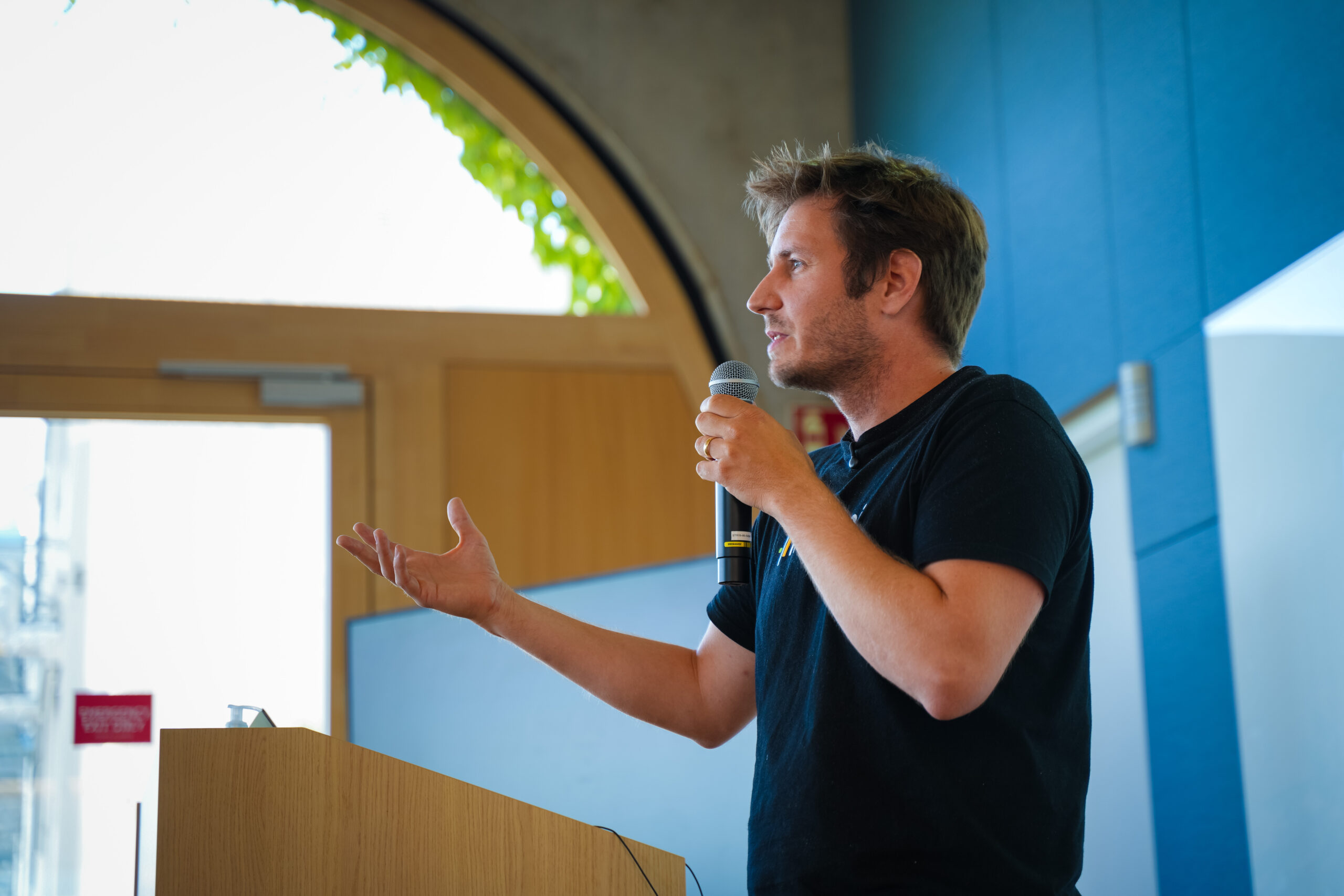
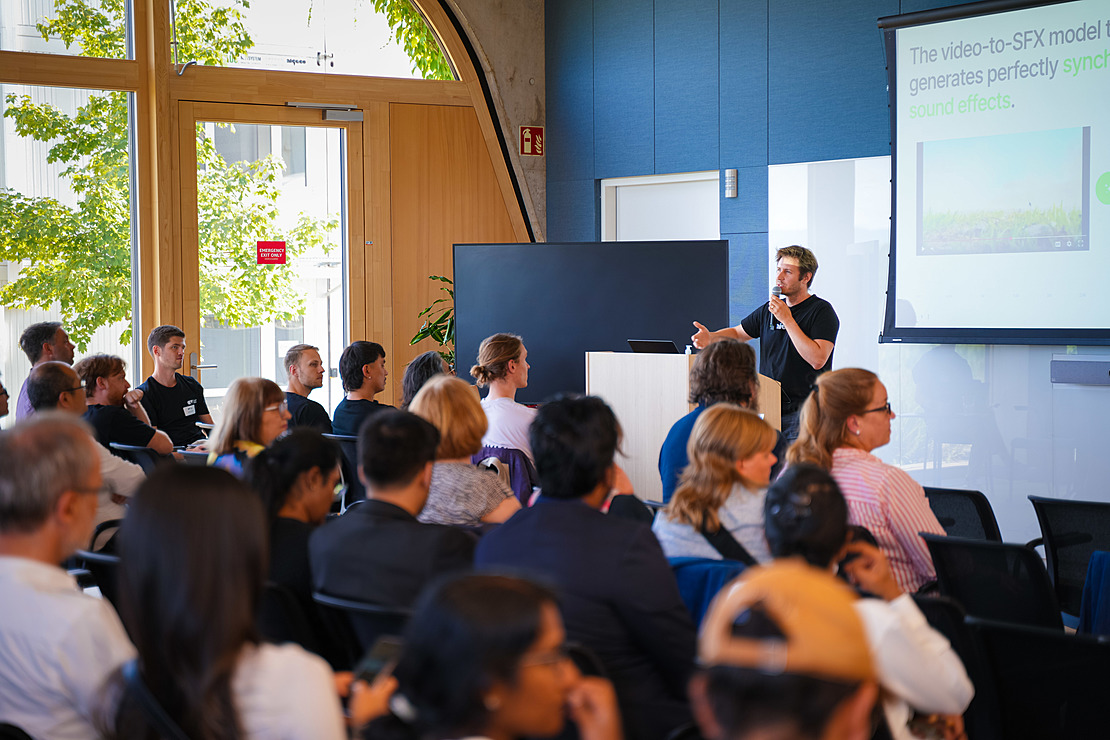
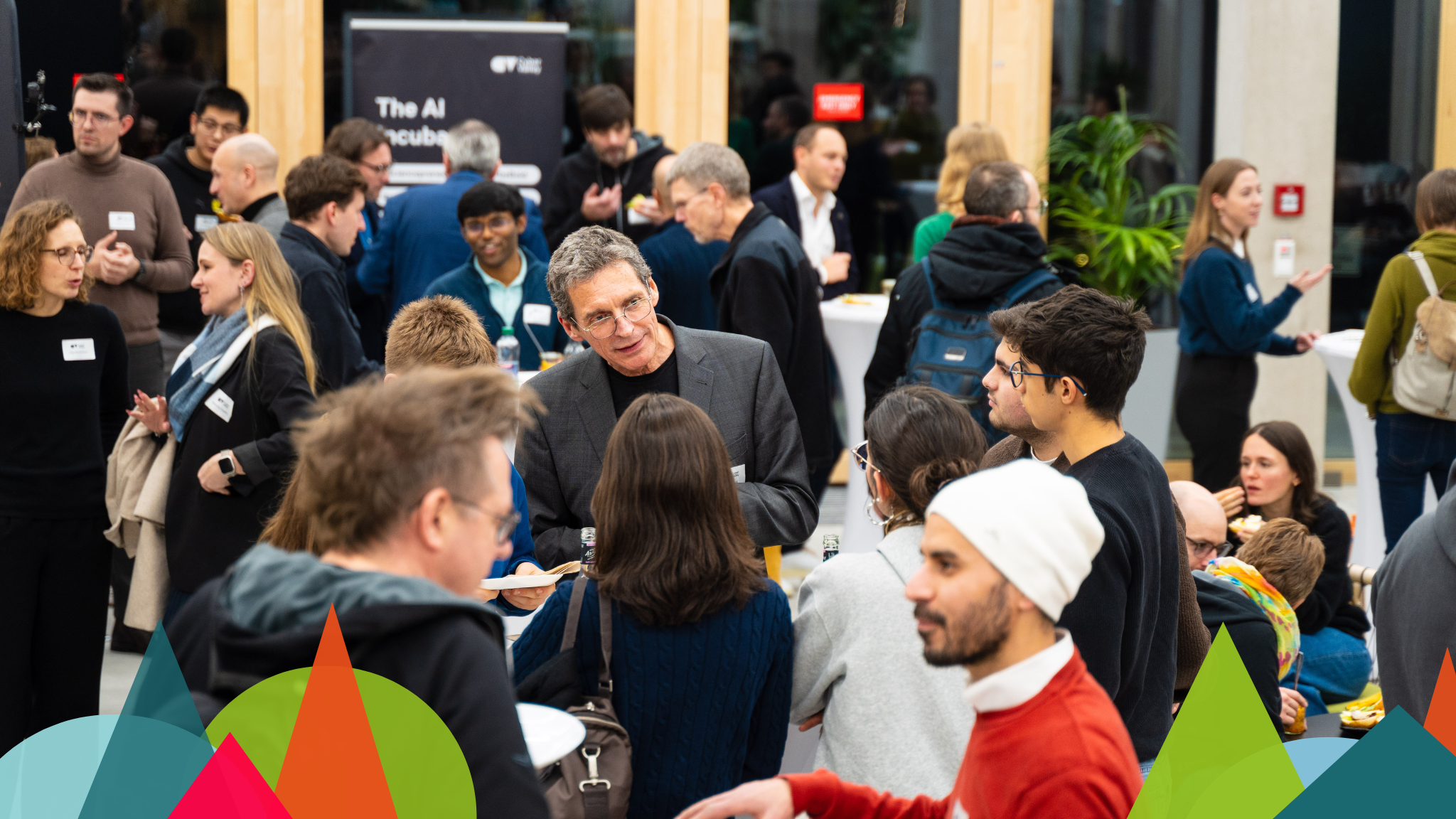
    Im Rahmen des Demo Day des Cyber Valley AI Incubator (Batch #6) war Carl Johann Simon-Gabriel als Keynote Speaker zu Gast und teilte seine Erfahrungen mit der nächsten Generation von Gründerinnen und Gründern. Dabei betonte er:

    „Cyber Valley ist eine großartige Initiative für aufstrebende KI-Startups, insbesondere weil sie in der weltbekannten KI-Forschungsszene und dem Talentpool Tübingens verwurzelt ist.“

    Mirelo AI wächst weiter und arbeitet aktiv am Ausbau seines Teams im Bereich generativer KI für Audio und Video. Weitere Informationen zu offenen Positionen finden sich auf der Website des Unternehmens.

    Related Start-Ups

    • Mirelo AI

      Mirelo AI

  • VC Ask-Me-Anything: Insights for Future Founders & Researchers

    VC Ask-Me-Anything: Insights for Future Founders & Researchers

    This event is aimed especially at PhD Students, researchers, and aspiring founders in Tübingen who would like to gain first-hand insights into how venture capitalists think and build early connections without the pressure of pitching.

    The event is jointly organized by the Tübingen AI Center and Cyber Valley GmbH. 

    Participants

    Meet Representatives from:

    What to expect

    • Insights into how venture capitalists evaluate early-stage companies

    • Practical advice on fundraising, market trends, and early start-up decisions

    • An open Q&A in an informal setting

    • Networking over pizza and drinks after the session


    The panel will be moderated by Professor Peter Gehler focused on tech transfer at Tübingen AI Center.

  • Cyber Valley at Heilbronn Slush’D

    Cyber Valley at Heilbronn Slush’D

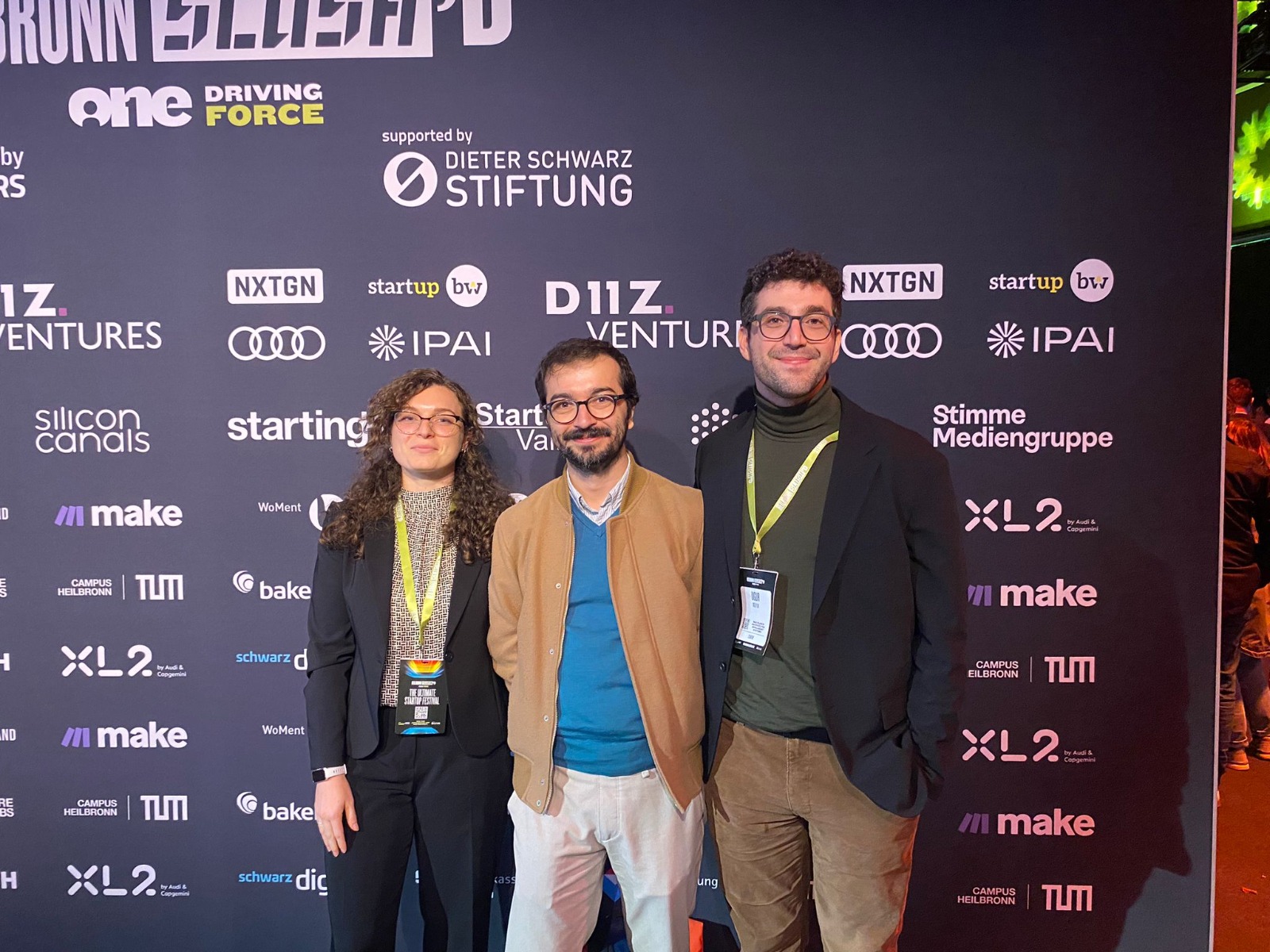
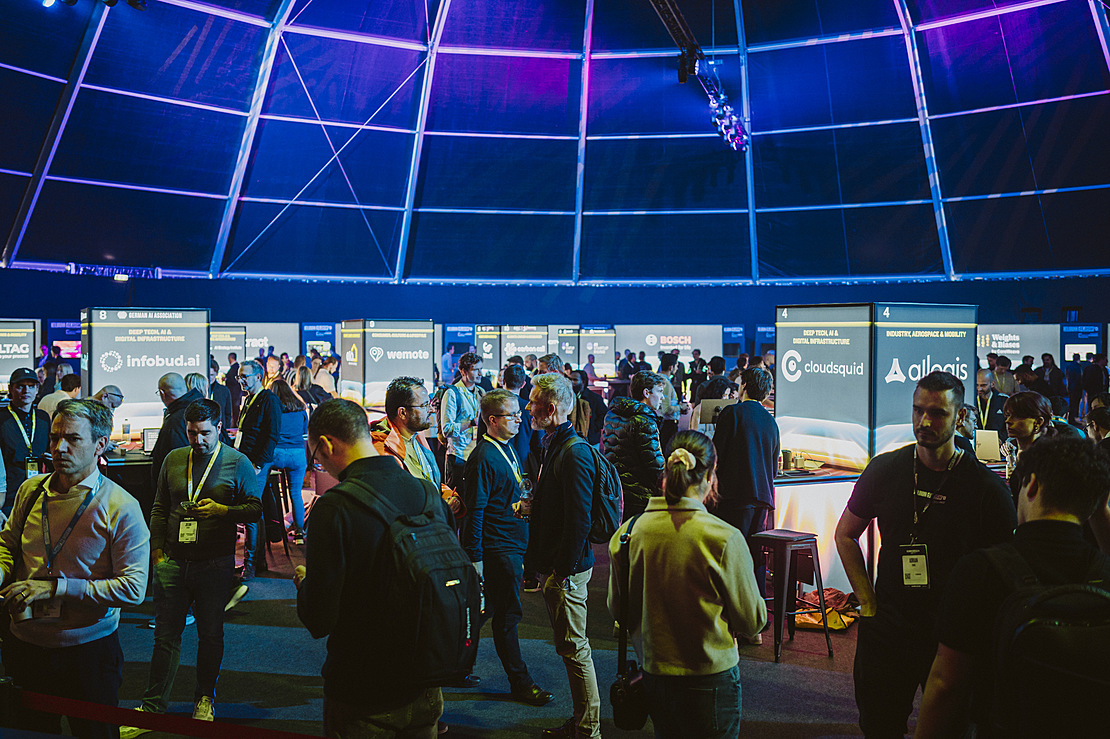
    Heilbronn Slush’D is organized by Campus Founders, a start-up and innovation hub based in Heilbronn. The event was sold out, with over 1,000 participants from across Europe taking part in talks, panel discussions, workshops, and networking sessions. The festival enabled start-ups and founders to connect with key stakeholders and develop their ideas.

    For CELLnROLL (recipients of the Cyber Valley Innovation Fellowship Program) Heilbronn Slush’D was ‘an inspiring event bringing together founders, investors, and innovation leaders from across Europe.’ Following the event, they were ‘inspired, energized, and full of new ideas for what’s next!’

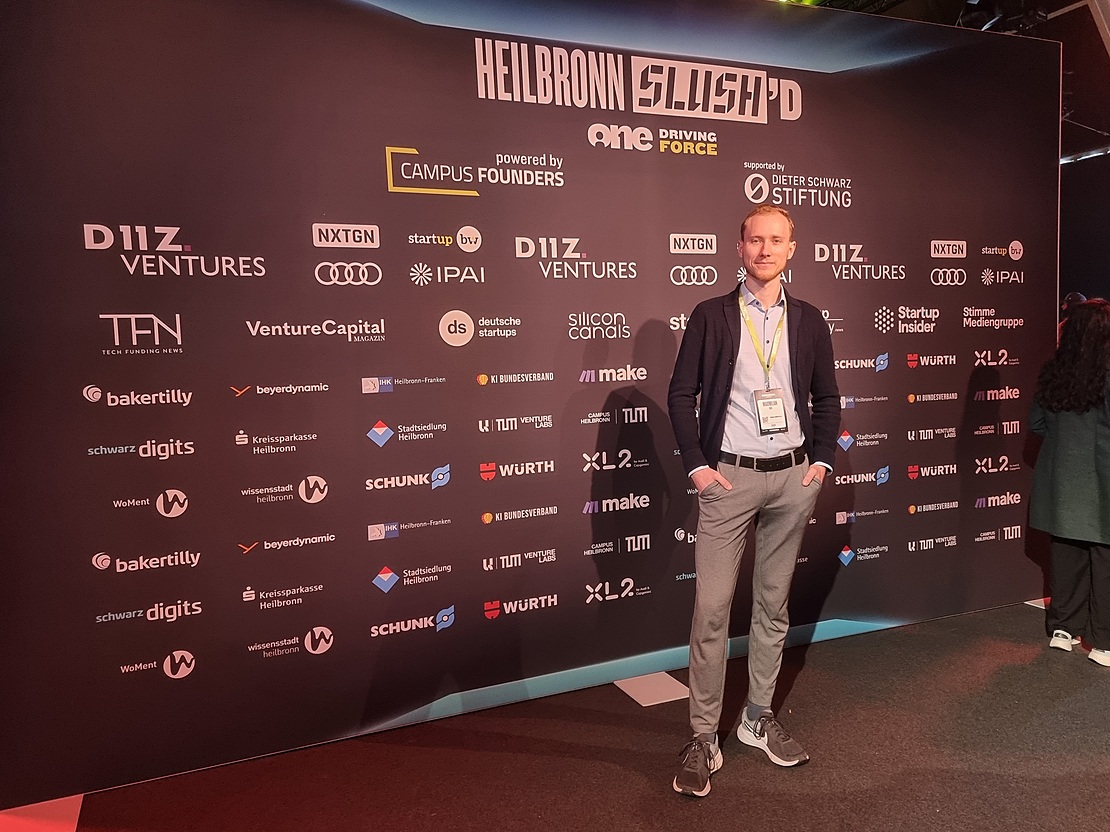
    Maximilian Bode, Co-founder of Cyber Valley Start-up Biocompile, was in attendance for the first time: ‘Despite the bad weather, it was a great experience!‘ For Max, events like Heilbronn Slush’D are ‚places where the most interesting people meet.’

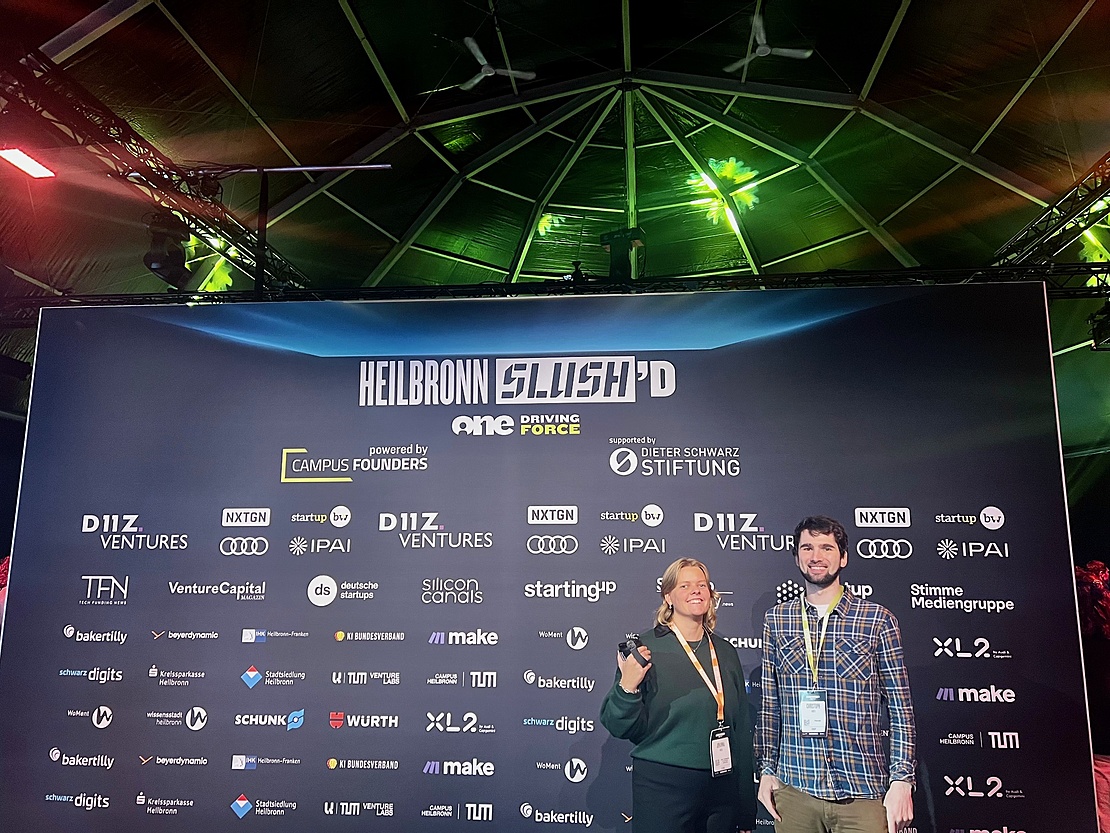
    Maximilian Bode (Biocompile) at Heilbronn Slush'D. Photo courtesy of Maximilian Bode.

    Maximilian Bode (Biocompile) at Heilbronn Slush’D. Photo courtesy of Maximilian Bode

    Johanna Kreßel from the University of Tübingen’s Startup Center also shared her impressions from her first time at Heilbronn Slush’D: ‘I really enjoyed the energy and open atmosphere that made it so easy to connect and have meaningful conversations.’

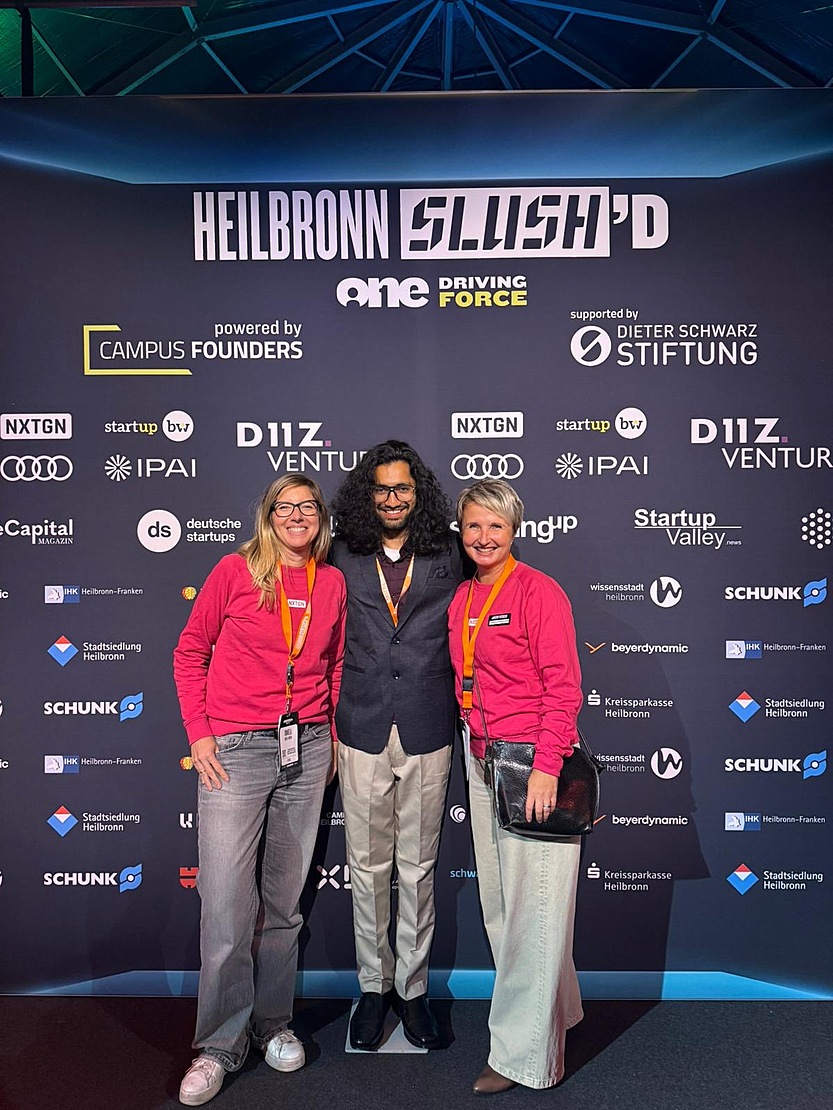
    Johanna Kreßel at Heilbronn Slush'D. Photo courtesy of Johanna Kreßel

    Johanna Kreßel (Tübingen Startup Center) at Heilbronn Slush’D. Photo courtesy of Johanna Kreßel

    KIT Gründerschmiede took part too. For them, Heilbronn Slush’D ‘was again a real experience – not only because of the wild weather, but above all because of the incredible energy that could be felt between impulses on stage, networking around the campfire, and conversations at the food trucks.’

    KIT Gründerschmeide at Heilbronn Slush'D

    KIT Gründerschmiede at Heilbronn Slush’D. Photo courtesy of KIT Gründerschmiede

    Members of the Cyber Valley Start-up Network have been recognized at previous iterations of the festival. Ventus Technologies secured the top prize of €100,000 in investment in 2023, followed by Tabularis AI claiming the same award in 2024. These examples show how Cyber Valley start-ups have benefited from the support provided by Campus Founders at Heilbronn Slush’D.

    By attending Heilbronn Slush’D, members of the Cyber Valley Community demonstrated the value of collaboration and were impressed by the growing momentum in Heilbronn. Through their scientific expertise and diverse perspectives, they are playing an essential role in the success of Germany’s research and innovation ecosystem.

    Photo courtesy of Heilbronn Slush’D

  • Demo Day of the Cyber Valley AI Incubator

    Demo Day of the Cyber Valley AI Incubator


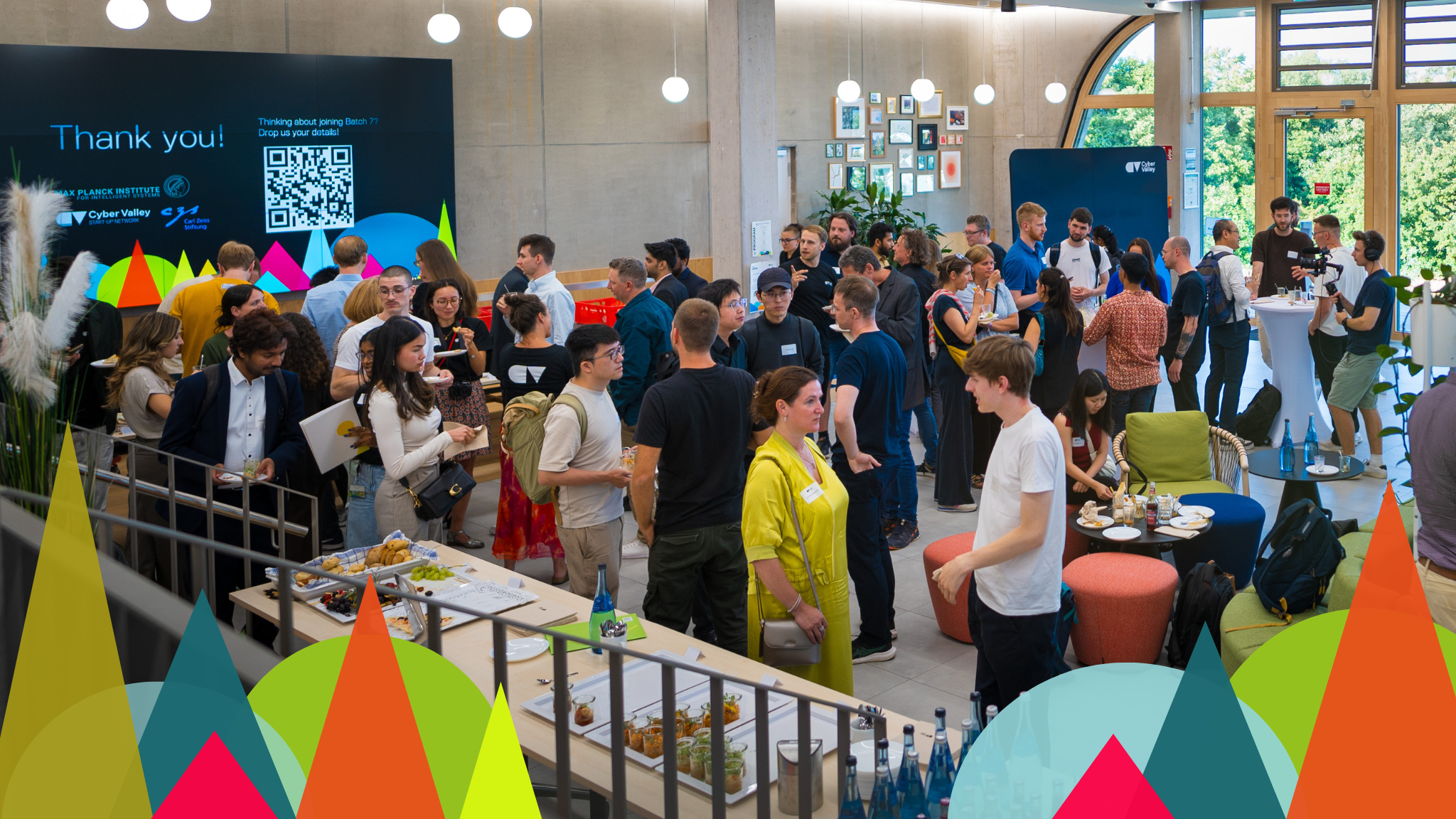
    Over the past six weeks, the Batch #7 teams of the Cyber Valley AI Incubator have been developing their AI-powered start-up ideas, guided by mentors from the Cyber Valley Community. Now, they’re ready to pitch their ventures to a panel of judges and an audience of investors, researchers, corporate leaders, and entrepreneurs.

    The jury will recognize top-performing teams, who will win exciting prizes. Discover cutting-edge AI solutions and connect with key players from the region’s thriving AI landscape in an energetic atmosphere over drinks and finger food.


    When? 

    Thursday, November 20, 2025
    16:00–19:45 CET


    Where? 

    Amazon Research & Development Center

    Friedrich-Mieschler-Straße 4, 72076 Tübingen 


    Registration

    Please register via Eventbrite in advance as the number of participants is limited.


    The Cyber Valley AI Incubator

    The Cyber Valley AI Incubator is a six-week program for AI talent with brilliant ideas. It encourages scientists, technologists, and business talent to found their own companies, fostering the next generation of AI start-ups. The AI Incubator equips participants with the right knowledge, tools, and skills to transfer their groundbreaking AI and robotics research into products and applications.

    It covers topics such as AI prototyping, product-market fit, business strategy, and funding. The program also provides participants with access to a network of experts, mentors, founders, and investors who offer guidance and inspiration on their journey into the AI business world. 

    The Cyber Valley AI Incubator is organized by the Max Planck Institute for Intelligent Systems and funded by the Carl-Zeiss-Stiftung.


  • Green AI Day 2025

    Green AI Day 2025


    Was Sie erwartet:

    • Keynotes, Panels und Start-up Pitches rund um #GreenAI
    • 6 interaktive Breakout-Sessions zu Themen wie Ressourceneffizienz, Bildung, Industrie, Europa, Regulatorik und Verwaltung
    • Matchmaking, Afterparty und Catering


    Warum dabei sein?

    Weil KI ein Schlüssel zur Nachhaltigkeit ist – und wir sie verantwortungsvoll gestalten müssen. Der Green AI Day zeigt, wie das gelingen kann.


    Wann?

    Donnerstag, 25. September 2025, 12:00 – 22:00 Uhr


    Wo?

    Perkins Park, Stuttgart


    Interesse?

    Die Tickets für diese Veranstaltung sind limitiert. Falls Sie es noch nicht getan haben, können Sie sich hier anmelden unter: https://pretix.eu/GreenAIDay/2025/

    Weiter Informationen und Updates zum Programm finden Sie hier.


    Die Veranstaltung ist eine Kooperation der Wirtschaftsförderung der Landeshauptstadt Stuttgart, der Wirtschaftsförderung Region Stuttgart GmbH sowie der KI-Allianz Baden-Württemberg – und hat sich in den letzten beiden Jahren als überregionales Branchenevent etabliert.

  • Expanding the AI Frontier: DxOmics and pi_optimal join the Start-up Network

    Expanding the AI Frontier: DxOmics and pi_optimal join the Start-up Network


    DxOmics

    DxOmics is revolutionizing genetic diagnostics and research with AI-driven software that decodes complex genomic data. Their solutions support everything from cancer detection to rare disease diagnosis, all while enabling personalized treatment strategies. With cloud-based bioinformatics, smart clinical reporting, and AI classifiers at their core, DxOmics helps researchers, clinicians, and biotech pioneers unlock the future of precision medicine.

    pi_optimal

    With pi_optimal, reinforcement learning (RL) becomes refreshingly simple and accessible. Their open-source platform reduces the complexity of implementing RL to just a few lines of code – no deep ML expertise required. Built for developers, scientists, and visionary businesses, pi_optimal is democratizing cutting-edge AI and empowering users to solve complex optimization problems and build smarter systems, faster.

    By joining the Cyber Valley Start-up Network, DxOmics and pi_optimal help strengthen the Community with their innovative approaches to applied AI – from decoding the human genome to scaling intelligent decision-making across industries.  

    Welcome to the Community!

  • Demo Day of the AI Incubator and Summer Meet-up

    Demo Day of the AI Incubator and Summer Meet-up

    Over the past six weeks, the Batch #6 teams of the AI Incubator have been working intensively to bring their AI-driven ideas to life, with expert mentorship and support from members of the Cyber Valley Community. Now they will present their final start-up ideas to a jury and an esteemed audience of investors, researchers, corporate leaders, and other entrepreneurs.

    The top teams will be recognized by the jury and have the opportunity to win attractive prizes. This special edition of the event combines the final presentations with a vibrant Summer Meet-up—featuring networking, drinks, finger food, and an energetic atmosphere to celebrate innovation and community.

    When?

    Thursday, July 10, 2025, 16:00–19:45

    Where?

    Amazon Research & Development Center

    Friedrich-Miescher-Straße 4, 72076 Tübingen

    Schedule

    16:00–16:15: Welcome & Drinks

    16:15–16:25: Introduction to Batch #6 of the AI Incubator

    16:25–16:30: Welcome speech by Carl Zeiss Stiftung

    16:30–17:00: Pitches from the AI Incubator Teams

    17:00–17:20: Coffee break

    17:20–17:55: Pitches from the AI Incubator Teams

    17:55–19:00: Keynote & Award ceremony

    19:00: Networking with drinks & fingerfood

    Registration

    Please register via Eventbrite in advance as the number of participants is limited.

    The AI Incubator

    The AI Incubator is a six-week program for AI talents with brilliant ideas. The program encourages scientists, technologists, and business talent to found their own companies, fostering the next generation of AI start-ups. The AI Incubator equips participants with the right knowledge, tools, and skills to transfer their cutting-edge AI and robotics research into products and applications.

    It covers topics such as, AI prototyping, product-market fit, business strategy, and funding. The program also provides participants with access to a network of experts, mentors, founders, and investors who offer guidance and inspiration on their journey into the AI business world.

    The Cyber Valley AI Incubator is organized by the Max Planck Institute for Intelligent Systems, and funded by the Carl-Zeiss-Stiftung.

  • The Cyber Valley Research Fund Symposium 2025

    The Cyber Valley Research Fund Symposium 2025

    Cyber Valley Research Fund Projects 

    The symposium began with a presentation by Dmitry Kobak (Hertie Institute for AI in Brain Health, University of Tübingen) on “Contrastive Learning for Dimensionality Reduction and Visualization of Transcriptomic Data.” He highlighted a new method for visualizing image data using self-supervised learning that combines contrastive learning with neighbor embedding to create clear 2D visualizations. 

    Tian Qiu (Professor at the Dresden University of Technology and Head of Smart Technologies for Tumor Therapy, German Cancer Research Center Dresden) gave the next presentation: “The Cyber-Physical Twin of Human Organs”. His research created digital and physical replicas of human organs that combine the benefits of physical and digital models, which make it easier to collect, analyze, and model difficult-to-obtain medical data. 

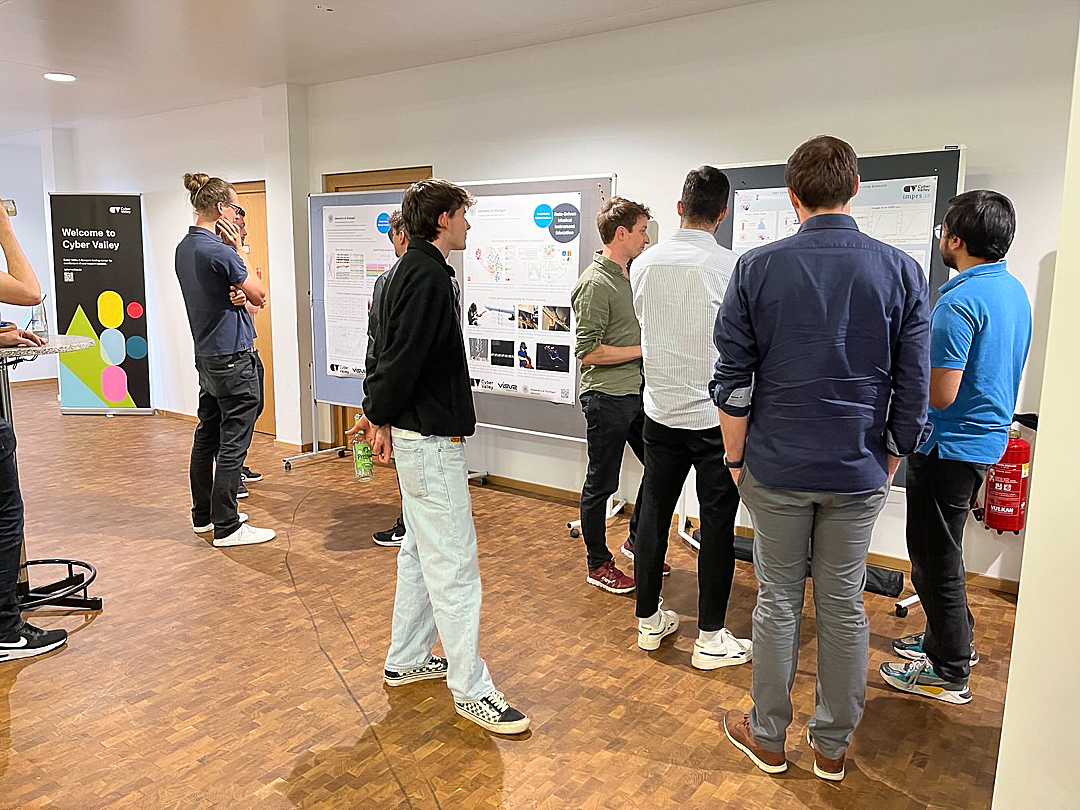
    Poster session at the Cyber Valley Research Fund Symposium. Photo: Cyber Valley

    Fabian Sinz (Professor of Machine Learning, University of Göttingen) presented the third Cyber Valley Research Fund project: “Mechanisms of Representation Transfer”. Sinz discussed the transference of strong visual processing skills between artificial neural networks and biological ones. 

    Fraunhofer covers robotics and GenAI 

    The Cyber Valley Research Fund also welcomed two talks from Fraunhofer IPA and Fraunhofer IAO. Werner Kraus (Head of Robot and Assistive Systems and Leader of the AI Innovation Center, Fraunhofer IPA) presented a review of the European Robotics Forum that took place in March 2025 in Stuttgart – the first time the conference has happened in Germany. Chandan Kumar (Team Leader of Interaction Design and Technologies at Fraunhofer Institute for Industrial Engineering IAO) then gave insights on “Smart Innovation with LLM-Powered Agents”. 

    Cyber Valley Research Fund Projects – (Flight) Robotics 

    Two projects led by Aamir Ahmad (Tenure-track Professor of Flight Robotics and Deputy Director of Research at the Institute of Flight Mechanics and Controls, University of Stuttgart, and Research Group Leader at the Max Planck Institute for Intelligent Systems) came next. Ahmad’s first project “WildCap – Autonomous Animal Motion Capture for Wildlife Conservation” developed autonomous flying robots that monitor wild animals using onboard sensors and wireless communication. He highlighted that AI methods enable them to detect, track, and interpret behavior, and how they adapt based on monitoring accuracy. 

    Christian Gall (Research Associate at the University of Stuttgart’s Institute of Flight Mechanics and Controls) is part of Ahmad’s research group and led the second project “Decision Making for Environmental Energy Exploitation with Small Aircraft”. Gall introduced a learning approach that permits aircraft to autonomously detect and exploit thermal updrafts. 

    Cyber Valley Research Fund Industry Partners 

    Four representatives from Cyber Valley’s industry partners shared their research in the first afternoon session. Mohsen Kaboli (Head of AI, Robotics and Cognitive Vehicle Research at BMW Group, and Professor of Embodied AI, Robotics, and Tactile Intelligence at the Eindhoven University of Technology) spoke about “Embodied Interactive Visuo-Tactile Perception and Learning for Robotic Grasp and Manipulation”. Maximilian Rabus (Product Manager and Data Strategist at Porsche AG) subsequently presented on “Data Fuels Performance: Insights into Porsche’s Data-Driven Development”, followed by Alexander Joos (Senior Vice President of Digital Solutions Powertrain at IAV GmbH) on “The Modern Development in the Age of AI”. 

    Cyber Valley Research Projects from Clusters of Excellence 

    The afternoon continued with a talk from Paul-Christian Bürkner (Professor of Computational Statistics at TU Dortmund University) on “Meta-uncertainty in Bayesian model comparison”. He highlighted the methods to quantify meta-uncertainty – the uncertainty over model probabilities in Bayesian model comparison – using theory and simulations to better understand the limits of scientific inference. 

    Next, Nicolas Kubail-Kalousdian (Institute of Computational Design and Construction, University of Stuttgart) gave his talk “Task and Motion Planning for Collaborative Robotic Construction with Irregular Materials”. His research developed a robotic construction system that combines reinforcement learning and logic-geometric programming to autonomously build with irregular, renewable materials like bamboo. The system showcases a sustainable, adaptive approach to low-carbon construction using mobile robots and intelligent material handling. 

    Cyber Valley Research Fund Projects – Specific research areas 

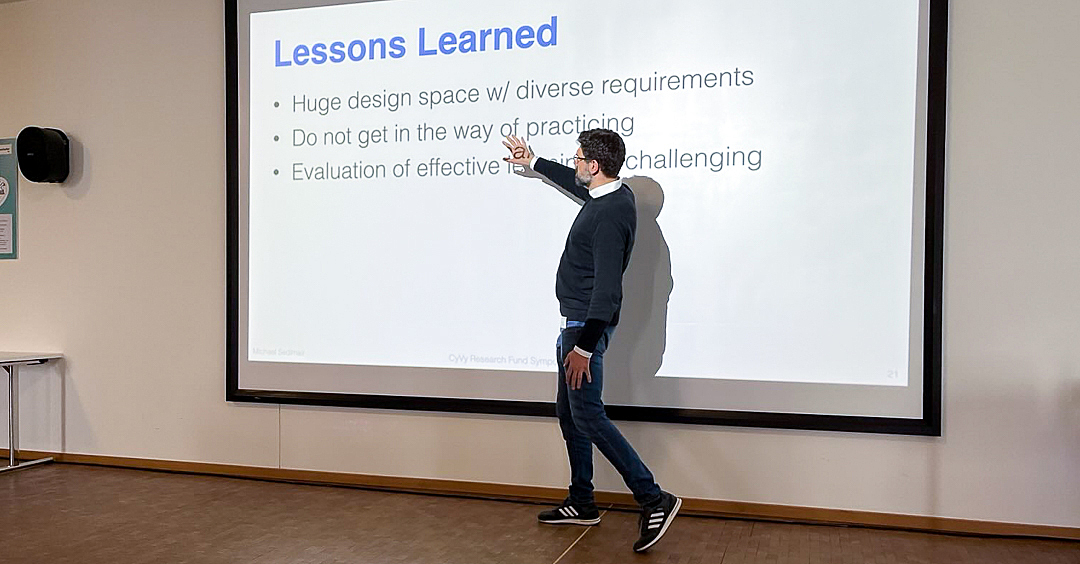
    In the symposium’s concluding session, Michael Sedlmair (Professor for Augmented Reality and Virtual Reality, University of Stuttgart) began by exploring how AI can support musical creativity. In “InstruData – Data-Driven Musical Instrument Education” he discussed how his research project used AI to augment creative processes through human-centered design. 

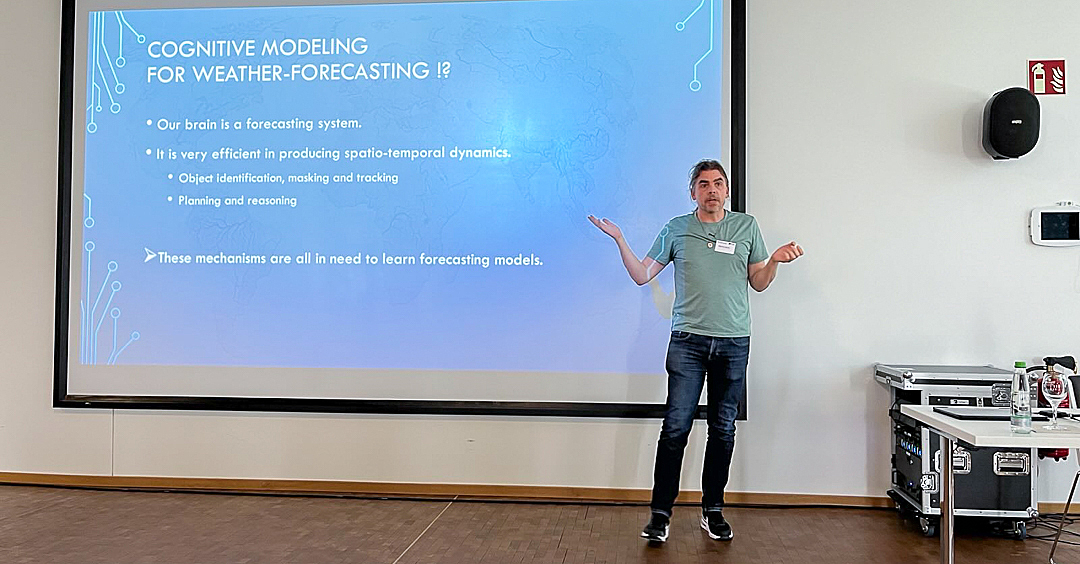
    Next, Martin Butz (Professor in Cognitive Modeling, University of Tübingen) discussed spatiotemporal forecasting models in “Neural Generative Weather Forecasting”. This project developed deep-learning models for forecasting spatiotemporal phenomena, ranging from local precipitation to global weather patterns. It utilized physics-informed, modular architectures and tailored data structures to improve prediction accuracy across diverse environmental scenarios. 

    In the final presentation, Falk Lieder (Assistant Professor of Psychology and Director of the Rational Altruism Lab, University of California Los Angeles) explained how his research has improved human decision-making. His project, “A Scalable Machine Learning Approach to Improving Human Decision Making”, developed computational tools which optimize decision-making strategies that outperform human intuition in areas like education, health, and finance. By integrating these strategies into educational software, they improved the quality of users’ decisions, resulting in smarter, more informed choices in real-world scenarios. 

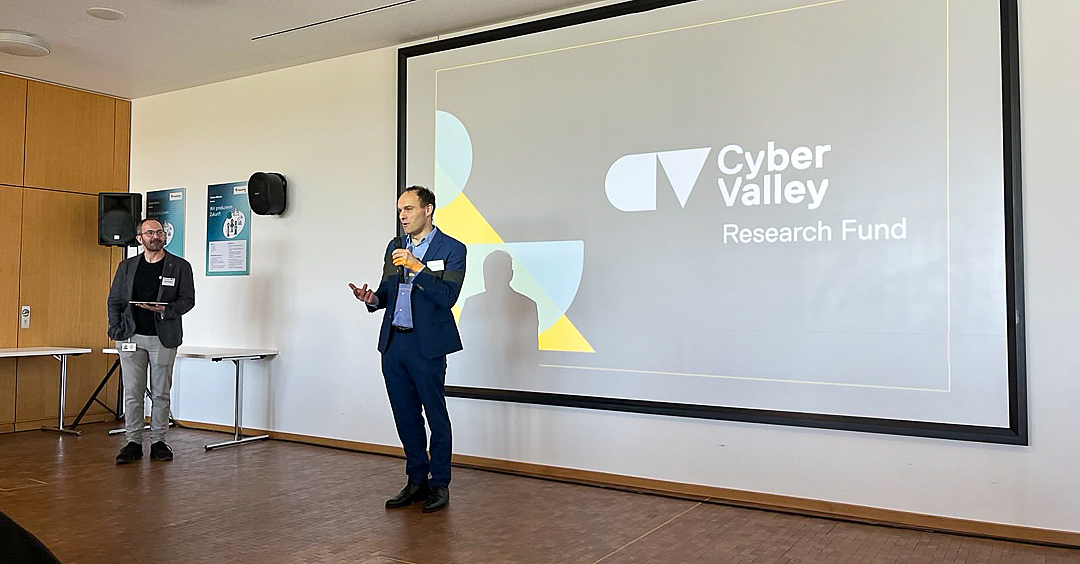
    The Cyber Valley Research Fund Symposium demonstrated the research excellence in AI and modern robotics generated through the support of Cyber Valley’s founding industry partners. The day was rounded off by a lively networking session, which included discussions on open research questions and future collaborations. 

  • Cyber Valley Research Fund Symposium 2025

    Cyber Valley Research Fund Symposium 2025

    Since 2019, the Cyber Valley Research Fund (CVRF) has been driving innovation in machine learning, computer vision, and robotics, thanks to the generous support of Cyber Valley’s industry founding partners. With a total funding of five million euros, twenty groundbreaking research projects have been brought to life.

    The event will feature presentations of several completed CVRF projects and offer exciting networking opportunities in collaboration with the AI Innovation Center of Fraunhofer IPA and Fraunhofer IAO. We are thrilled to welcome experts from Cyber Valley’s founding partners, including IAV, Porsche, and BMW, who will share their insights and highlights from their cutting-edge research and projects.

    Time

    Activity

    10:00Introduction Cyber Valley GmbH & Fraunhofer Institute for Manufacturing Engineering and Automation IPA
    10:15 – 11:15

    Cyber Valley Research Fund Projects – Neural networks & biomedical


    Dmitry Kobak – Hertie Institute for AI in Brain Health, Department of Data Science, University of Tübingen: “Contrastive learning for dimensionality reduction and visualization of transcriptomic data”


    Abstract and speaker’s biography >>


    Biography
    Dmitry Kobak studied computer science and physics in St. Peterburg, then did a PhD in computational neurosience at Imperial College London, followed by a postdoc at the Champalimaud Institute in Lisbon. He is currently a group leader in the Department of Data Science of the Hertie AI institute at Tübingen University, working on machine learning and data science for biological applications. He is interested in self-supervised and unsupervised learning, in particular contrastive learning, manifold learning, and dimensionality reduction for 2D visualization of scientific datasets. He is also interested in statistical forensics and has been involved in the analysis of Russian electoral falsifications, war fatalities, and Covid-19 excess mortality.
    Abstract
    In his talk, he will present their work on self-supervised visualization of image data. Visualization methods based on the nearest neighbor graph, such as t-SNE or UMAP, are widely used for visualizing high-dimensional data. Yet, these approaches only produce meaningful results if the nearest neighbors themselves are meaningful. For images represented in pixel space this is not the case, as distances in pixel space are often not capturing our sense of similarity and therefore neighbors are not semantically close. This problem can be circumvented by self-supervised approaches based on contrastive learning, such as SimCLR, relying on data augmentation to generate implicit neighbors, but these methods do not produce two-dimensional embeddings suitable for visualization. Their method, called t-SimCNE, combines ideas from contrastive learning and neighbor embeddings, and trains a parametric mapping from the high-dimensional pixel space into two dimensions.


    Tian Qiu– Cyber Valley Group leader, University of Stuttgart – Head of Smart Technologies for Tumor Therapy, German Cancer Research Center (DKFZ) Dresden, Dresden University of Technology: “The cyber physical twin of human organs”
    Abstract and speaker’s biography >>


    Biography
    Tian Qiu is the department head of the “Smart Technology for Tumor Therapy” at the German Cancer Research Center (DKFZ) Site Dresden. He is also a professor at the Faculty of Medicine and the Faculty of Electrical and Computer Engineering, Technical University Dresden. He received the Bachelor and Master from Tsinghua University, China; and the Ph.D. from Swiss Federal Institute of Technology at Lausanne (EPFL), Switzerland. He did his postdoctoral research at Max Planck Institute for Intelligent Systems, and led the Cyber Valley research group at the University of Stuttgart, before joining DKFZ. His main research interest is micro/nano-robotics for minimally-invasive medicine. He received many awards, including the Nomination for the Big-on-Small Award at the IEEE MARSS conference and the ERC Starting Grant “VIBEBOT”.
    Abstract
    The project aims to develop the cyber-physical twin of human organs that combines the advantages of physical and cyber models, to facilitate the sensing of hard-to-acquire biomedical data under realistic conditions and to allow the analysis and modelling using this data. For the physical models, we optimized the workflow of 3D printing and soft material molding to realize complex anatomy with realistic materials. We developed new hydrogel materials that can be resected and coagulated as real soft tissues with real surgical instrument. For the cyber models, we implemented a variety of sensing modalities into the physical models, such as optical imaging, ultrasound imaging and electrical sensing, to generate data for a quantitative evaluation of surgical outcome and feedback to the surgeon in real time to improve their surgical skills. Augmented Reality (AR) facilitated models are achieved and tested by surgeons.


    Fabian Sinz– IRG Neuronal Intelligence – Institute for Bioinformatics and Medical Informatics, University of Tübingen – Professor – Department for Machine Learning – Faculty for Mathematics and computer Science, University of Göttingen: “Mechanisms of representation transfer”
    Abstract and speaker’s biography >>


    Biography
    Dr. Fabian H. Sinz is a Professor for Machine Learning at the Georg August University Göttingen. He holds a Dr. rer. nat from the University Tübingen (Max Planck Institute for Biological Cybernetics) and a Diploma in Bioinformatics. His research bridges neuroscience and machine learning, focusing on visual systems modeling and robust AI. Before his current position, he held roles at Baylor College of Medicine as Research Assistant Professor and Machine Learning Coordinator, led an independent research group at University Tübingen, and worked as a postdoctoral researcher in Tübingen and Houston. Dr. Sinz and his group frequently publish in high rank journals including Nature, Nature Neuroscience, and Science, and at top AI conferences like NeurIPS and ICLR. His work has been recognized with awards including an ERC Consolidator Grant in 2024. He serves on multiple academic committees and maintains professional memberships in organizations including the ELLIS Society and Bernstein Network for Computational Neuroscience.
    Abstract
    The project investigated how to transfer robust visual processing capabilities between artificial neural networks and from biological to artificial systems. Key findings included: 1) common functional transfer methods struggle with transferring even simple equivariance properties; 2) multi-task learning with monkey visual cortex data can improve network robustness against image distortions; and 3) networks co-trained with biological data show enhanced sensitivity to humanly salient image regions. The team developed several approaches, including a novel self-supervised contrastive learning algorithm and the HARD (Hard Augmentations for Robust Distillation) framework for transferring inductive biases between networks. These advances contribute to the broader goal of creating artificial vision systems that better mimic the generalization capabilities of biological vision while maintaining high performance on specific tasks.


    11:15 – 11:30

    Coffee and Networking

    11:30 – 12:10

    Robotics and GenAI at Fraunhofer Institutes


    Werner Kraus– Head of department robot and assistive systems – Leader AI Innovation Center, Fraunhofer IPA: “Recap European Robotics Forum 2025 and Outlook on current activities in robotics”
    Abstract and speaker’s biography >>


    Biography
    TBD
    Abstract
    TBD


    Chandan Kumar– Team Leader – Interaction Design & Technologies, Fraunhofer Institute for Industrial Engineering IAO “Smart Innovation with LLM-Powered Agents“
    Abstract and speaker’s biography >>


    Biography
    Dr. Chandan Kumar leads the Interaction Design and Technologies research group at the Fraunhofer Institute for Industrial Engineering IAO in Stuttgart. His work lies at the intersection of human-computer interaction and artificial intelligence, with a focus on intuitive, human-centered applications. Dr. Kumar holds a Ph.D. in Computer Science from the University of Oldenburg (2016) and has authored over 40 scientific publications. His research spans information retrieval, multimodal interaction, eye tracking, personalization, and visualization. He currently leads projects on data analytics, generative AI, and multi-agent LLMs, with applications in knowledge management, resource planning, customer research, and smarter innovation. His team collaborates closely with industry partners to translate research into real-world impact and shape emerging human-AI interaction strategies.
    Abstract
    TBD


    12:10 – 12:50

    Cyber Valley – Research Fund Projects – (Flight) Robotics


    Aamir Ahmad– Flight Robotics Group, Institute of Flight Mechanics and Controls (IFR) – Department of Aerospace Engineering and Geodesy, University of Stuttgart and Robot Perception Group – Perceiving Systems Department, Max Plank Institute for Intelligent Systems: “ Wildcap – Autonomous Animal Motion Capture for Wildlife Conservation”


    Abstract and speaker’s biography >>


    Biography
    Aamir Ahmad is a tenure-track professor of Flight Robotics and the deputy director of research at the Institute of Flight Mechanics and Controls, University of Stuttgart, Germany. He is also a Research Group Leader at the Max Planck Institute (MPI) for Intelligent Systems in Tübingen, where he was previously a research scientist (2016–2020). He was awarded the Marie-Curie Intra-European Postdoctoral Fellowship 2013 at the MPI for Biological Cybernetics, Tübingen (2014–2016). He obtained his Ph.D. in Electrical and Computer Engineering from the University of Lisbon, Portugal, in 2013 and undergraduate degree in Civil Engineering (B-Tech) from the Indian Institute of Technology (IIT), Kharagpur, in 2008. His research interests include aerial robotics, multi-robot systems, deep learning and reinforcement learning for aerial robots, formation control, aerial vision, localization, target tracking and simultaneous localization and mapping (SLAM). He is one of the recipients of the prestigious award „KI-Champions Baden-Württemberg 2024“ for his project „WildCap – Intelligent Aerial Robots for Wildlife Conservation“.
    Abstract
    In this talk, we will present WildCap’s research on teams of aerial robots, including both multi-rotor drones and airships, that use only their on-board resources (camera and computer) and cooperate with each other via wireless communication to autonomously detect, track, follow and infer the behaviour of wild animals, all in their natural habitat. We will discuss the AI-based methods developed for these monitoring functionalities, and for the monitoring accuracy-driven autonomous control of these robot teams. We will also touch upon our work on synthetic data generation that fuels several of our AI-based methods. Finally, we will show how we are deploying these drones to understand the behavior of Grévy’s zebras in Kenya and Przewalski’s horses in Hungary.


    Christian Gall– Research associate at the University of Stuttgart’s Institute of Flight Mechanics and Controls: “ Decision Making for Environmental Energy Exploitation with Small Aircraft”
    Abstract and speaker’s biography >>


    Biography
    Christian Gall is a research associate at the University of Stuttgart’s Institute of Flight Mechanics and Controls. He received his B.S. and M.S. degrees in Aerospace Engineering from the University of Stuttgart, where he specialized in system dynamics and automation engineering. In addition, he spent a year at the University of Virginia in the U.S., focusing on robotics and machine learning.
    Abstract
    At the moment, there are large investments and developments in the field of individual mobility, such as urban air mobility vehicles and unmanned aircraft applications, e.g., for medical transportation or rescue purposes. The majority of these small aircraft are based on electric propulsion and thus, their endurance is limited. In the case of fixed-wing aircraft, the endurance can be significantly improved by exploiting energy from the atmospheric environment. Hence, a deep reinforcement learning approach to the autonomous localization and exploitation of thermal updrafts is presented and validated in real-world flight tests. As the resulting policy directly maps from the aircraft’s position and climb rate to control commands, a deep neural network that can detect thermal updrafts and estimate their position, strength, and spread in a human-readable manner is additionally presented.


    12:50 – 14:00

    Lunch & Poster Session

    14:00 – 14:50
    Cyber Valley Research Fund Industry Partners – Industry points of view
     

    Mohsen Kaboli– – Lead & PI AI and Robotic Research of BMW Group and Professor of Embodied AI, Robotics and tactile Intelligence, Eindhoven University of Technology (NL); Director of RoboTac Lab: “ Embodied interactive visuo-tactile perception and learning for robotic grasp and manipulation”

    Abstract and speaker’s biography >>

    Biography Dr. Mohsen Kaboli is a professor of Embodied AI, Robotics, and Tactile Intelligence at Eindhoven University of Technology (TU/e) in the Netherlands. He is the head of Embodied Interactive Perception & Robot Learning Lab (RoboTac). Additionally, he is the Lead & PI of AI, Robotics research lab at BMW Group, Center of Invention in Munich, Germany, a role he has held since 2018. Previously, Dr. Kaboli held the position of assistant professor at the Institute for Brain and Cognition at Radboud University in the Netherlands from 2019 to 2022. He was a group leader of tactile robotic and postdoctoral research fellow at the Institute for Advanced Studies (IAS), the Technical University of Munich (TUM), Germany from September 2017 till August 2018. He received his Ph.D. degree with the highest distinction (summa cum laude) in robotics focusing on interactive tactile perception and learning in robotics from TUM in 2017. He was awarded the best European Ph.D. thesis prize in robotics, Georges Giralt Ph.D. Award (finalist). Abstract This talk explores embodied interactive visuo-tactile perception and active learning as a foundation for robotic grasping and manipulation. By integrating predictive and interactive perception, robots can actively engage with objects, refining their understanding through both visual and tactile feedback. I will discuss the role of shared visuo-tactile representations in enabling real-time adaptation, as well as visuo-tactile perception cross-modalperception for dexterous manipulation. The talk will highlight key challenges and future directions in developing robotic systems that can intelligently interact, actively learn, and generalize across diverse tasks and embodiments.
     Maximilian Rabus– Product Manager & Data strategist – Data-Driven Development – Data Science & Governance, Dr.h.c. F. Porsche AG: “Data Fuels Performance: Insights into Porsche´s data-driven development” Abstract and speaker’s biography >> Biography After completing his master’s degree in Automotive and Engine Technology at the University of Stuttgart, Maximilian Rabus joined Porsche in 2018. His initial focus was on establishing Artificial Intelligence as an alternative validation method in passive safety development. In late 2020, he took on the newly created role for Data Science and Digital Transformation in Body Development at Porsche. Since 2024, he has been a product manager in the Data-Driven Development department and, as a Data Domain Manager, is responsible for defining and implementing the data strategy in the vehicle development domain. His doctoral research at the University of Freiburg focused on integrating Data Science and Artificial Intelligence into conventional development processes. His particular interest lies in Explainable AI and the future-oriented organization and management of data.
     Alexander Joos–Senior Vice President Digital Solutions Powertrain, TD-X | Powertrain Systems – IAV GmbH: “The modern development in the age of AI” Abstract and speaker’s biography >> Biography https://www.linkedin.com/in/dr-alexander-joos-91b647127/
    14:50 – 15:30Cyber Valley – Research Fund Projects- Clusters of Excellence


    Paul-Christian Bürkner– Cluster of Excellence SimTech, Research Group for Bayesian Statistics, University of Stuttgart – Full Professor of Computational Statistics –Department of Statistics, Dortmund University of Technology: “Meta-uncertainty in Bayesian model comparison”
    Abstract and speaker’s biography >>


    Biography
    Paul Bürkner is a statistician with a focus on probabilistic (Bayesian) methods currently working as a Full Professor of Computational Statistics at TU Dortmund University, Department of Statistics. Having originally studied psychology and mathematics, his core research is nowadays located somewhere between statistics and machine learning, with applications in almost all quantitative sciences.
    Abstract
    In experiments and observational studies, scientists gather data to learn more about the world. However, what we can learn from a single data set is always limited, and we are inevitably left with some remaining uncertainty. It is of utmost importance to take this uncertainty into account when drawing conclusions if we want to make real scientific progress. Formalizing and quantifying uncertainty is thus at the heart of statistical methods aiming to obtain insights from data. Numerous research questions in basic science are concerned with comparing multiple scientific theories to understand which of them is more likely to be true, or at least closer to the truth. To compare these theories, scientists translate them into statistical models and then investigate how well the models‘ predictions match the gathered real-world data. One widely applied approach to compare statistical models is Bayesian model comparison (BMC). Relying on BMC, researchers obtain the probability that each of the competing models is true (or is closest to the truth) given the data. These probabilities are measures of uncertainty and, yet, are also uncertain themselves. This is what we call meta-uncertainty (uncertainty over uncertainties). Meta-uncertainty affects the conclusions we can draw from model comparisons and, consequently, the conclusions we can draw about the underlying scientific theories. However, we have only just begun to unpack and to understand all of the implications. This project contributes to this endeavor by developing and evaluating methods for quantifying meta-uncertainty in BMC. Building upon mathematical theory of meta-uncertainty, we will utilize extensive model simulations as an additional source of information, which enable us to quantify so-far implicit yet important assumptions of BMC. What is more, we will be able to differentiate between a closed world, where the true model is assumed to be within the set of considered models, and an open world, where the true model may not be within that set — a critical distinction in the context of model comparison procedures.


    Nicolas Kubail-Kalousdian– Institute of Computational Design and Construction (ICD), University of Stuttgart “Task and motion planning for collaborative Robotic construction with irregular materials”

    Abstract and speaker’s biography >>

    Biography Nicolas Kubail Kalousdian is a PhD candidate at the Institute for Computational Design and Construction (ICD), University of Stuttgart, and the Principal Autonomy Engineer at Greensight, in Boston, MA. His research focuses on AI-driven task and motion planning for autonomous robotic construction with natural, deformable materials. At GreenSight, he leads autonomy efforts for DARPA, USAF, and NSF-funded projects. He has lectured internationally and published in IEEE RAL and Advanced Science. Nicolas holds an M.Sc. from the University of Stuttgart (ITECH) and has been supported by both German and U.S. research funding programs. Abstract This project, Task and Motion Planning for Collaborative Robotic Construction with Deformable Materials, investigates the integration of robotics and artificial intelligence into architectural construction using natural, anisotropic materials. Departing from the prevailing reliance on rigid, standardized materials, the project advances a material-robot co-design framework that enables autonomous, sustainable construction in dynamic environments. It explores how distributed robotic systems can manipulate deformable elements through reinforcement learning (RL) and logic-geometric programming (LGP), forming a hybrid planning paradigm that adapts to material variability while preserving structural intent. The project developed a custom mobile robotic platform capable of transporting, bending, and aligning bamboo elements in simulation and physical experiments. Reinforcement learning, augmented by domain randomization and curriculum learning, was employed to teach dynamic motor skills under material uncertainty. In parallel, LGP was used to plan multi-step assembly sequences respecting geometric and structural constraints. A high-fidelity simulation environment, incorporating real-time feedback and mechanical modeling of bamboo, supported robust policy development. The culmination was an architectural-scale demonstrator capable of collaborative transport and assembly tasks, validating the feasibility of robotically constructing with irregular, renewable materials. Despite challenges in gripper implementation and hardware integration, the project demonstrated the potential for robotic systems to support low-carbon, scalable construction methods. The findings establish a foundation for follow-on work in adaptive construction robotics, emphasizing sustainability, system modularity, and material intelligence. This work contributes to the evolving landscape of autonomous building technologies, extending their reach into ecologically responsible practices using naturally variable materials.
    15:30 – 15:45

    Coffee and Networking

    15:45 – 16:45Cyber Valley – Research Fund Projects – Specific research areas
     

    Michael Sedlmair – Professor for Augmented Reality und Virtual Reality, Managing Director VIS – Visualization Research Center (VISUS) and Institute for Visualization and Interactive Systems (VIS), University of Stuttgart. “InstruData – Data-driven Musical Instrument Education”

    Abstract and speaker’s biography >>

    Biography Michael Sedlmair is a professor at the University of Stuttgart, where he leads the Human-Computer Interaction research group. He earned his Ph.D. in Computer Science from the University of Munich in 2010. His career path has included positions at Jacobs University Bremen, the University of Vienna, the University of British Columbia in Vancouver, and BMW Group Research and Technology in Munich. His research focuses on immersive analytics, situated visualization, novel interaction technologies, visual and interactive machine learning, perceptual modeling for visualization, and the methodological and theoretical foundations underlying these areas. Abstract This talk explores the intersection of human creativity and artificial intelligence in the domain of music. I will present two projects that highlight different facets of this interaction. The first focuses on AI-powered tools to support musical instrument practice, using data and motion capture to provide real-time, visual feedback that enhances learning for students and professionals alike. The second is a design study on a visual analytics interface for AI-assisted music composition, which enables composers to explore and co-create music with generative models. Together, these projects demonstrate how AI can meaningfully augment both the technical and creative processes in music through human-centered design.
     Martin Butz– Neuro-Cognitive Modeling Group, Department of Computer Science – University of Tübingen: “Neural Generative Weather Forecasting” Abstract and speaker’s biography >> Biography Martin Butz is a professor at the Faculty of Science, University of Tübingen, Germany. His main background lies in computer science and machine learning. His interdisciplinary research agenda integrates the fields of cognitive and developmental psychology, computational neuroscience, robotics as well as parts of the geosciences. His current main research foci include learning conceptual, compositional, causal structures from data as well as developing machine learning algorithms for understanding atmospheric dynamics and hydrological processes. He has published three monographs, numerous edited books and special issues, and more than 200 peer reviewed conference and journal articles. Abstract Forecasting spatiotemporal dynamics is a challenge that has many facets. In the talk I will present some spatiotemporal forecasting models developed in our group. The models span from local precipitation now casting, over hydro-logical forecasting, to mid-range global weather forecasting (up to two weeks) models. The focus will lie on how to develop physics-informed modular deep learning architectures, how to design a suitable data structure, and how to tune the involved loss components for the targeted problem.
     Falk Lieder– Rationality Enhancement, Max-Planck-Institute for Intelligent Systems – Assistant Professor of Psychology – Director of the Rational Altruism Lab, University of California Los Angeles (USA): “A scalable machine learning approach to improving human decision making” Abstract and speaker’s biography >> Biography Falk Lieder is Assistant Professor of Psychology at the University of California, Los Angeles. He completed his Ph.D. in Tom Griffiths’s Computational Cognitive Science Lab at UC Berkeley in May 2018. His dissertation “Beyond bounded rationality: Reverse-Engineering and Enhancing Human Intelligence” won the Glushko Dissertation Prize in Cognitive Science. He then became a Max Planck Research Group Leader at the MPI for Intelligent Systems in Tübingen, Germany, where he led the Rationality Enhancement Group until June 2023. He joined the psychology department of UCLA in July 2023. Dr. Lieder has published 50 peer-reviewed articles that have collectively been cited more than 5000 times. His most influential contribution to cognitive science thus far has been the development of a new cognitive modeling paradigm known as resource-rational analysis (Lieder & Griffiths, 2020). Abstract People have to make many difficult decisions about their education, career, health, and finances. To make such decisions wisely, people need clever, far-sighted decision strategies. But many people lack appropriate decision strategies and consequently make choices that they later regret. A natural solution is to teach people clever strategies for making good decisions. Unfortunately, very few clever decision strategies are known explicitly. To address this bottleneck, we developed computational methods for discovering optimal strategies for human decision-making. The discovered strategies are significantly better than people’s intuitive strategies. We also developed educational software that teaches these strategies to people. Training people with this software significantly increased the quality of their decisions. We extended this approach to increasingly more realistic scenarios, including project selection.
    16:45 – 17:00

    Closing greetings Cyber Valley GmbH and Fraunhofer Institute for Manufacturing Engineering and Automation

    17:30

    Networking


    Registration

    As spaces are limited, please register in advance via Eventbrite.

  • Cyber Valley Welcomes Two New Start-ups: SKAI and Tensor AI Solutions

    Cyber Valley Welcomes Two New Start-ups: SKAI and Tensor AI Solutions

    SKAI

    SKAI is on a mission to revolutionize dermatology with the use of AI. Their smart beauty assistant uses brain-inspired AI to provide hyper-personalized, science-backed skincare recommendations for both, consumers and dermatologists. By combining intuitive design with advanced AI, SKAI creates user experiences that are both quick, intelligent, and empathetic – making expert-level skincare acessible for everyone. 


    Tensor AI Solutions 

    Tensor AI Solutions provides customers with transparent and reliable AI software to automate their processes in an efficient and controllable way. From data assessment to prototyping and deployment, the start-up delivers tailor-made solutions for sectors like manufacturing, logistics, and finance — turning raw data into real-world impact.

    By joining the Cyber Valley Start-up Network, SKAI and Tensor AI Solutions bring new dimensions of innovation — from AI in beauty to enterprise transformation — strengthening the Community's mission to lead the charge in applied AI research and entrepreneurship. 

    Welcome aboard, SKAI and Tensor AI solutions.