Cyber Valley is happy to host Cyber Valley Days – an exceptional three-day forum for the Cyber Valley community. Focused solely on AI, Cyber Valley Days features a wide program that emphasizes entrepreneurship and scientific innovation originating from Baden-Württemberg.
Join us for Day 2 of Cyber Valley Days – Investor Day, where you'll have the opportunity to connect with investors and start-ups from the Cyber Valley Community, gaining invaluable firsthand insights through panel discussions and start-up demos.
By registering for this event, I grant permission to Cyber Valley GmbH and ELLIS Institute Tübingen gGmbH to use pictures, videos, and electronic media images in any promotional presentation within its community – offline and online, exclusively for non-profit-making purposes.
During the Cyber Valley Days, pictures will be taken and videos will be recorded. These materials may be sent out to the media and used for internal and external communication purposes. These files will be stored in a secure location and only authorized staff will have access to them. They will be kept as long as they are relevant, and after that time, they will be destroyed or archived.
ELLIS Institute Tübingen – Scientific Symposium & Opening Ceremony
We are thrilled to invite you to the grand opening ceremony of the ELLIS Institute in Tübingen!
Founded on the broader vision of the European Laboratory for Learning and Intelligent Systems (ELLIS), the ELLIS Institute Tübingen is the first ELLIS Institute in Europe, set to become a world-class center for outstanding and free research in machine learning and artificial intelligence.
We look forward to welcoming you to an engaging program featuring scientific presentations, distinguished guests, and insight into the vision of the ELLIS Institute, as well as the future of AI in Tübingen and Europe.
When
20 June 2024 | 09:00–18:00
What
09:00 | Arrival & Registration
09:15 | Scientific Symposium I
12:00 | Lunch
13:30 | Scientific Symposium II
16:30 | ELLIS Institute Tübingen – Opening Ceremony
By registering for this event, I grant permission to Cyber Valley GmbH and ELLIS Institute Tübingen gGmbH to use pictures, videos, and electronic media images in any promotional presentation within its community – offline and online, exclusively for non-profit-making purposes.
During the Cyber Valley Days, pictures will be taken and videos will be recorded. These materials may be sent out to the media and used for internal and external communication purposes. These files will be stored in a secure location and only authorized staff will have access to them. They will be kept as long as they are relevant and after that time, they will be destroyed or archived.
Cyber Valley is happy to host Cyber Valley Days, an exceptional three-day forum for the Cyber Valley community.
Focused solely on AI, Cyber Valley Days features a wide program that emphasizes entrepreneurship and scientific innovation originating from Baden-Württemberg.
When
19 June 2024 | 09:30 – 17:00
What
09:30 | Arrival & Registration
10:00 | Welcome & Opening
12:00 | Lunch
14:00 | AI Incubator Demo Day
16:00 | Networking
In parallel, you can meet the Cyber Valley Community at our EXPO from 10:00 to 14:00.
With an invite-only audience of around 150 hand-selected researchers, spinoff founders, universities, TTOs, VCs, industry, and ecosystem players, this summit is a launchpad for innovation, inspiration, and invaluable connections. We will bridge the gap between academia and entrepreneurship through talks, workshops, 1-on-1 meetings, panels, and a poster competition.
This is a continuation of First Momentum’s successful Clueless No Moreonline panels that were attended by more than 150 aspiring scientist founders and joined by VCs like Lakestar, Earlybird, and UVC, as well as research-driven founders from Wandelbots, DeepDrive, and Kipu Quantum.
Our Speakers:
Dr. Stephan Herrmann (Co-Founder & CEO at Reverion)
Stephan is a physicist and engineer and the strategic mastermind and inventor of Reverion’s technology. Formerly heading a research group at TUM, he is now CEO and managing director of Reverion. As spin-off from the TU Munich, Reverion is paving the way to 100% renewable, decarbonized future by making the most of biogas.
As a VC, Ana is interested in everything Climate Tech and Energy related. She has a background in Nuclear Fusion, doing her PhD at the Max Planck Institute for Plasma Physics and a research stint at MIT. Ana continued her career as an Engineering Lead at the world’s biggest fusion startup, Commonwealth Fusion Systems in the US, before joining First Momentum.
Dr. Fleming Bruckmaier (Co-Founder & CTO at QuantumDiamonds)
QuantumDiamonds is building a global quantum sensing platform that enables advancements across a variety of fields, from semiconductor manufacturing to biotechnology and chemistry. With a PhD in Quantumsensing from the TU Munich, their CTO Fleming is responsible for improving existing and developing new diamond materials for quantum sensing applications.
Barbara Diehl (Chief Partnership Officer at SPRIN-D)
Barbara aims to facilitate new disruptive innovations from Germany and support scientists through public funding. Before SPRIN-D, Barbara was Director of Transfer and Innovation at the Helmholtz-Gemeinschaft, and leading early-stage investment programs and an executive education program at the University of Oxford's Entrepreneurship Centre and the Innovation Academy at the University College Dublin.
Tom is Sifted’s Digital Editor covering university spinouts. Sifted is Europe’s leading tech and startup media outlet. Backed by the Financial Times, its newsletter reaches more than 150,000 founders, VCs and other members of the startup ecosystem in Europe.
Wolfgang is a co-founder of 1E9, creating optimistic journalism about future technologies and innovations, but also developing a new kind of tech journalism – journalism that is created together with the tech community. Before 1E9, he was a Burns Fellow at The Verge, a Vox Media brand, in New York, and Editorial Director of WIRED Germany.
In line with that goal, the Science Hub is sponsoring the following research projects:
“Non-verbal interpersonal synchrony analysis tool (nVISA-online)”: Senya Polikovsky, research engineer, Max Planck Institute for Intelligent Systems
“Interpersonal synchrony (In-Sync), the spontaneous synchronization of behavioral, affective, and even physiological responses in contexts of social interaction, offers a useful insight into the quality and smoothness of interactions between social partners. Automatic assessment of In-Sync could provide objective tools for studying the interactive abilities of people with psychiatric conditions and the degree of therapeutic alliance in psychotherapy, as well as online human-to-human and avatar-to-human interactions. Body movement dynamics are central to the analysis of In-Sync. Besides that, facial expression, gaze interaction, audio signals, and physiological measures such as electrodermal activity, heart rate variability, or breathing rates can be used to detect In-Sync. The goal of our proposed research is to extend In-Sync analysis to online scenarios. We would like to identify the instruments and the procedures for the detection of In-Sync in online therapy sessions.”
“Accurate 3D body shape and clothing estimation from a single image”: Gerard Pons-Moll, senior researcher, Max Planck Institute for Informatics, and professor, University of Tübingen, endowed by the Carl Zeiss Foundation
“This research aims to reconstruct a 3-D digital human from a single RGB photograph, using a combination of 3-D neural implicit functions to represent worn garments and a parametric model to represent and control the pose and shape of the underlying body. A key novelty is to incorporate feedback in the deep body estimation network, ensuring that the 3-D body mesh is consistent with its projection onto the photo.”
“Learning clothing pressure fields via high-fidelity finite element analysis”: Gokhan Serhat, research scientist, Max Planck Institute for Intelligent Systems, and assistant professor, KU Leuven
“Accurate estimation of clothing pressure on the human body is crucial to understanding physical factors that influence clothing comfort. Such estimation requires the ability to express contact pressure fields in terms of different body sizes and types and garment sizes and material properties. However, such pressure fields are generally too complex to be modeled by analytical methods. Experimentation also has certain drawbacks, since it does not provide information about internal stresses, and precise measurement of the contact pressure between a pair of curved soft bodies is difficult. The intricate anatomy of the human body may require elaborate finite-element models with several thousand elements for capturing deformation mechanics accurately. Such large models inherently induce high computational costs and are likely to suffer from the aforementioned numerical issues. The proposed study aims to address this problem by developing a deformation model based on deep neural networks trained with the data from finite-element analysis.”
“Material estimation of clothing for controllable human avatars”: Justus Thies, research group leader, Max Planck Institute for Intelligent Systems, and professor, Technical University Darmstadt
“A key challenge for controllable human avatars is the reconstruction and animation of clothing. While data-driven, person-specific reconstruction methods show promising results, the extrapolation to novel poses with realistic deformations of clothing is limited. In contrast to data-driven methods, physics simulation can be used to model the dynamically changing clothing. In this project, we want to explore material estimation of human clothing for such simulations. Specifically, we are interested in predicting material properties such as stiffness or stretch that influence the motion-dependent deformation of the clothing. Besides these mechanical material properties, we are also interested in predicting material properties for the appearance of clothing that allow for re-renderings under novel poses.”
The three innovative start-ups offer groundbreaking solutions in their respective fields. IntegraSkin focuses on personalized medicine for skin diseases; MIRA Vision revolutionizes image analysis in microscopy and digital pathology through AI; and SPAICE pioneers autonomous space maintenance.
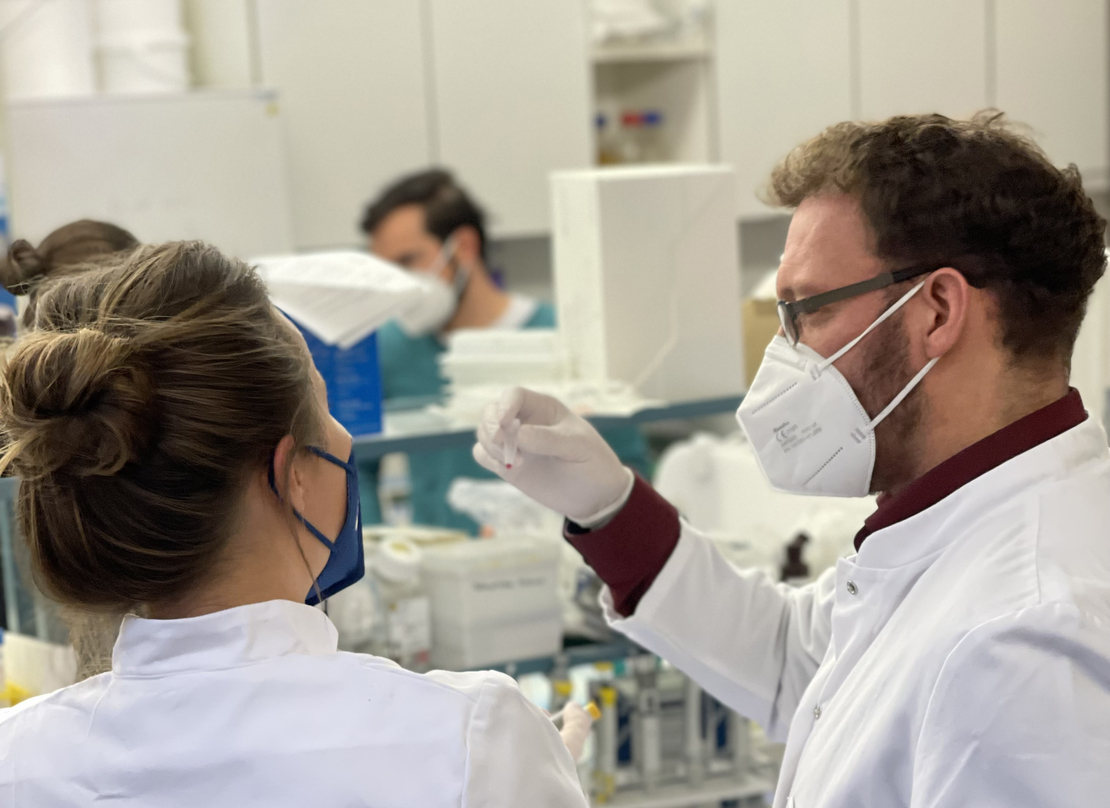
IntegraSkin combines molecular biological methods and AI to offer personalized medical treatment, focusing on chronic inflammatory skin conditions. Skin conditions affect 90% of individuals at some point in their lifetimes. Severe cases can disrupt lives and social interactions, often leading to a cycle of trial-and-error treatments. IntegraSkin is highly motivated to change this narrative, aiming to identify optimal treatments for dermatological conditions and provide effective solutions.
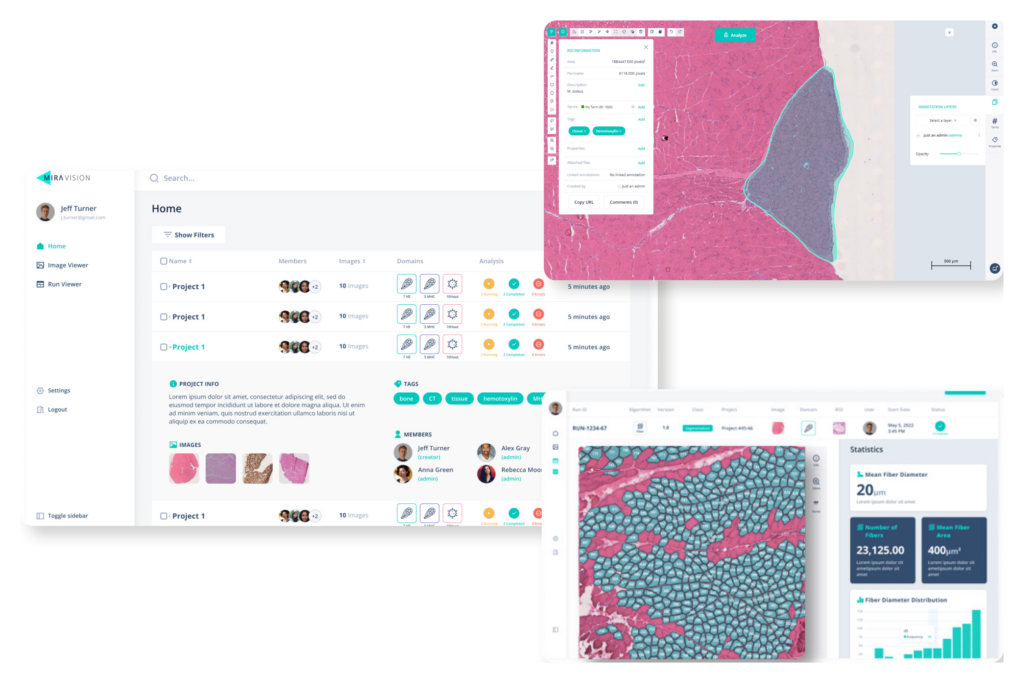
MIRA Vision is an AI-powered platform designed for quantitative image analysis in microscopy and digital pathology. It streamlines the process by offering fast, accurate, and reproducible analysis, significantly enhancing researchers' and pathologists' capabilities. With its innovative and patented technology, MIRA Vision integrates machine intelligence into microscopy, enabling users to analyze data at previously unattainable scales. Users can upload their image data, define regions of interest, select AI-assisted analysis, and explore the results, making complex analyses accessible in just four simple steps.
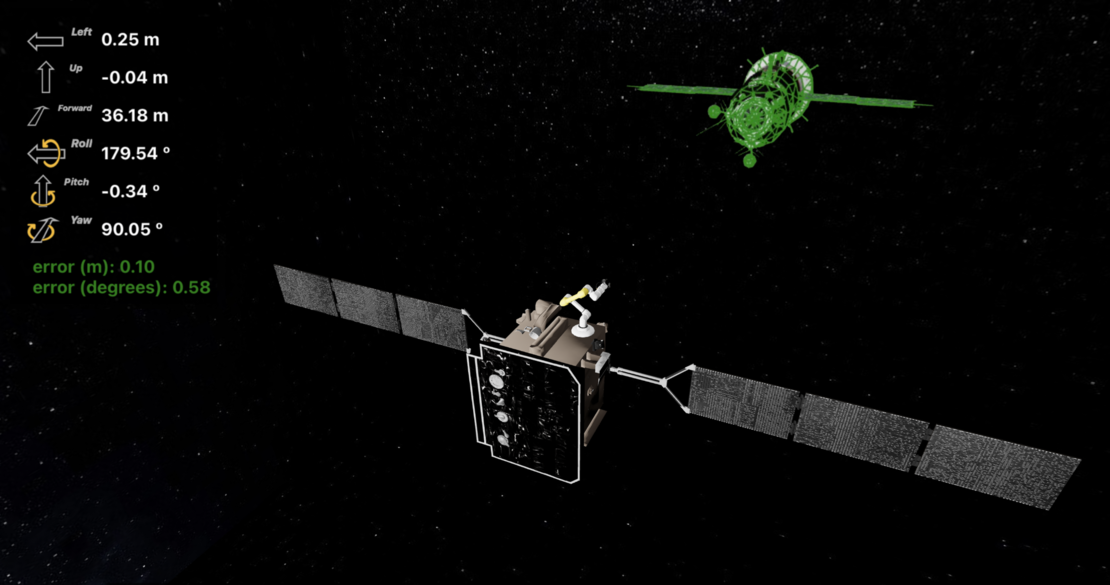
SPAICE offers the first fully autonomous solution for In-Orbit Services, specializing in tasks in the realm of space operations, including satellite life extension and debris removal. Their software is delivered through a plug-and-play servicing platform that includes sensors, robotic arms, and a computing unit. Their solutions can affordably enhance satellite lifespans by more than 50%, boost their revenue generation by more than 50%, and reduce collision risks by more than 20%. SPAICE enhances navigation by optimizing fuel consumption, enabling real-time onboard planning, and improving safety and precision in space operations. Founded by a top-tier team from prestigious institutions, SPAICE is currently validating multiple solutions through Proof-of-Concepts (PoCs) with leading European and US space entities.
These start-ups showcase the diverse applications of AI across various domains. Joining the Cyber Valley Start-up Network opens up numerous collaboration opportunities with the Cyber Valley Community. These three new additions will advance research and development in artificial intelligence, foster interdisciplinary synergy, and drive technological innovation forward.
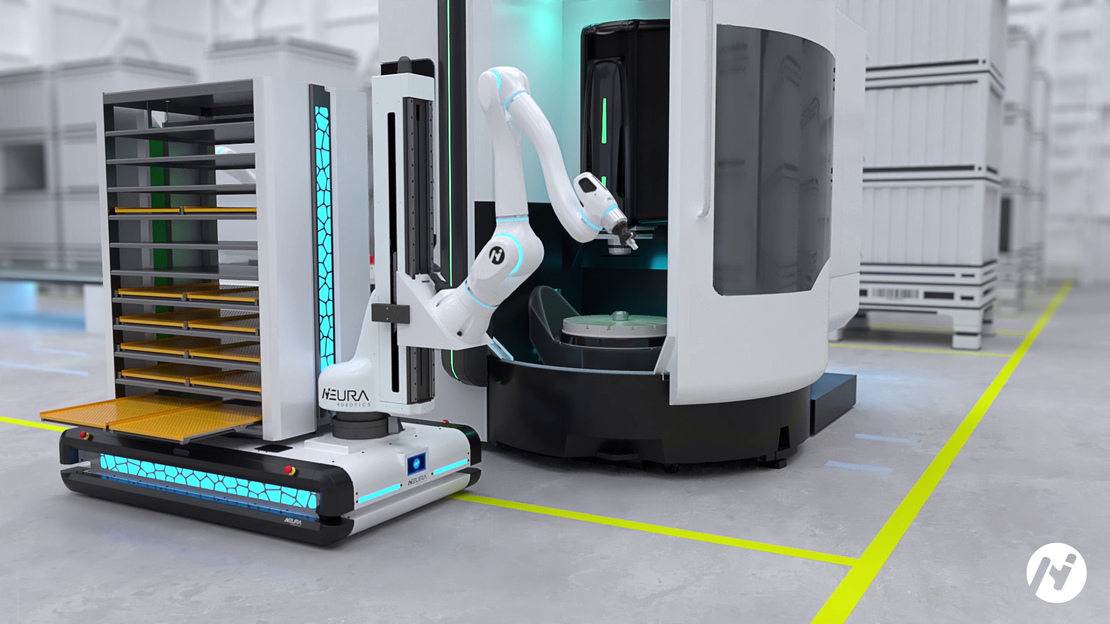
NEURA Robotics was founded in 2019 in Metzingen near Stuttgart. The start-up builds robotics assistants to collaborate naturally with humans. Among its products is the world’s first commercially available cognitive robot MAiRA, which integrates AI and a Touchless Safe Human Detection sensor technology to perceive its surroundings and easily adapt to different environments. Its other products include:
LARA, a Lightweight Agile Robotic Assistant that combines a lightweight design with industrial performance.
MAV, a Multi-Sensing Autonomous Vehicle that can autonomously move and load any type of good
MiPA, an intelligent, versatile robotic assistant designed to support people in various domains
With these robotic assistants, NEURA Robotics has laid the groundwork for humans and robots to work hand-in-hand. By enabling seamless interaction with humans in existing environments, NEURA eliminates the need for complex and expensive safety systems. Their guiding principle, “we serve humanity”, underscores their commitment to creating attractive, safer, and more sociable workspaces.
NEURA Robotics‘ unique approach is to develop key components in-house, including AI, control software, sensors and mechanical parts. Under the leadership of founder David Reger, they have made remarkable advances in environmental perception, control engineering, materials science and artificial intelligence, and are on track to bring the first cognitive humanoid robot to market.
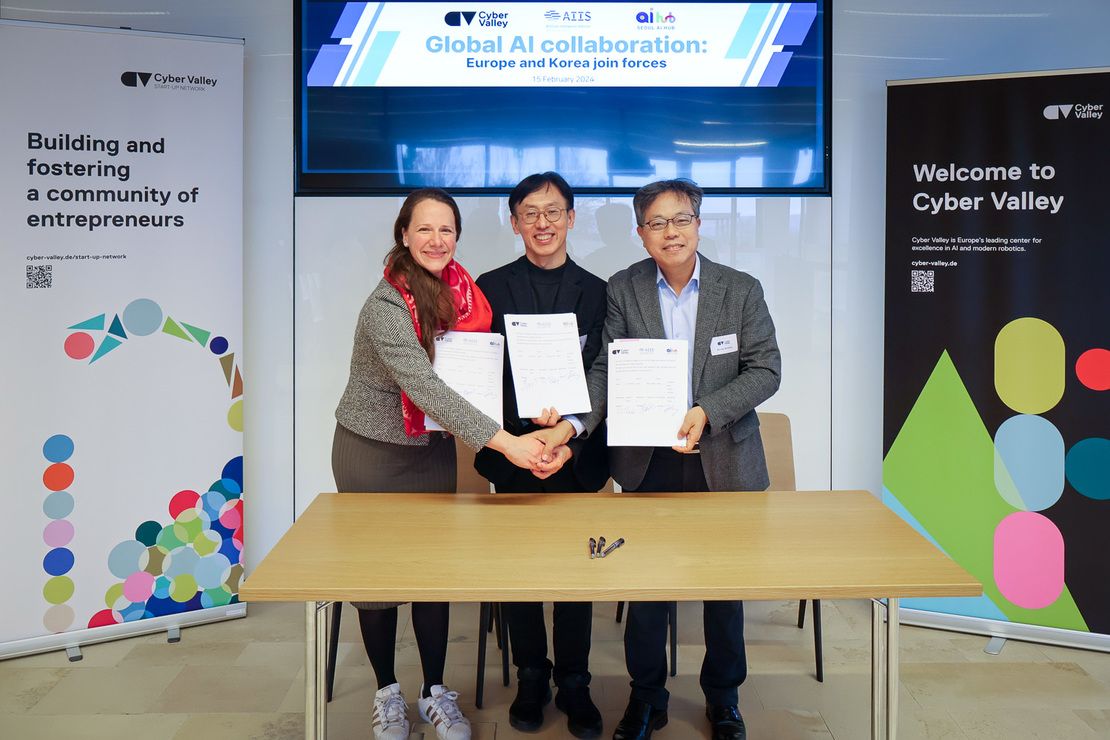
(Tübingen, 15.02.24) – An official Memoranda of Understanding (MOU) signing ceremony took place on February 15th, 2024, at the Max Planck Institute for Intelligent Systems (MPI-IS) in Tübingen, Germany. This collaboration marks a historic achievement, as it signifies the first official partnership between Cyber Valley and two significant artificial intelligence institutes in Asia.
The ceremony was attended by Rebecca C. Reisch, Managing Director of Cyber Valley, who warmly welcomed the Chief of the Seoul AI Hub, Jong-min Ham, as well as the Director of Artificial Intelligence Institute Seoul National University (AIIS), Byoung-Tak Zhang, highlighting the significance of this unique event. The ceremony featured presentations by two start-ups from the Cyber Valley Community – NeurCG and Tabularis.AI – who underscored the benefits of being situated in Baden Württemberg. Following the ceremony, attendees enjoyed a tour of MPI-IS Tübingen, along with a special lab tour.
Strengthening partnership on a global scale
The MOU serves as a testament to the commitment of both organizations to foster innovation and collaboration in the field of artificial intelligence. It opens avenues for extensive networking opportunities in Asia and Europe, laying the foundation for future advancements and partnerships.
Rebecca C. Reisch elaborates, „The partnership with AI Hub Seoul and the Artificial Intelligence Institute of Seoul National University marks Cyber Valley’s first-ever collaboration between South Korea’s premier AI institutes. This collaboration is poised to transform the artificial intelligence landscape across Asia and Europe, making a lasting impact. The impact of #bettertogether is particularly evident here, where our goal is to advance the growth of start-ups through the collective use of our resources.”
Key highlights of the collaboration between the three parties include the sharing of resources, with a specific focus on establishing a funding network and investment avenues for start-ups. Joint research projects and start-up research residencies are also integral components of this partnership, providing a platform for shared exploration and development.
Innovation and Growth: Seoul AI Hub and AIIS
The Seoul AI Hub was established in December 2017 by the city of Seoul and has evolved significantly since then. Thus far, it has facilitated the growth of over 360+ AI start-ups, with particular note on the recent successful IPO of Crowdworks among its portfolio.
The Seoul AI Hub plays a role in supporting AI start-ups in Korea. Its assistance spans technical problem-solving, overseas expansion, and management support, among other areas. The strategic location near Gangnam, a pivotal hub in the IT industry with research facilities of major companies, further enhances seamless communication with industry members. The Seoul AI Hub has emerged as a vital stepping stone in the AI start-up realm.
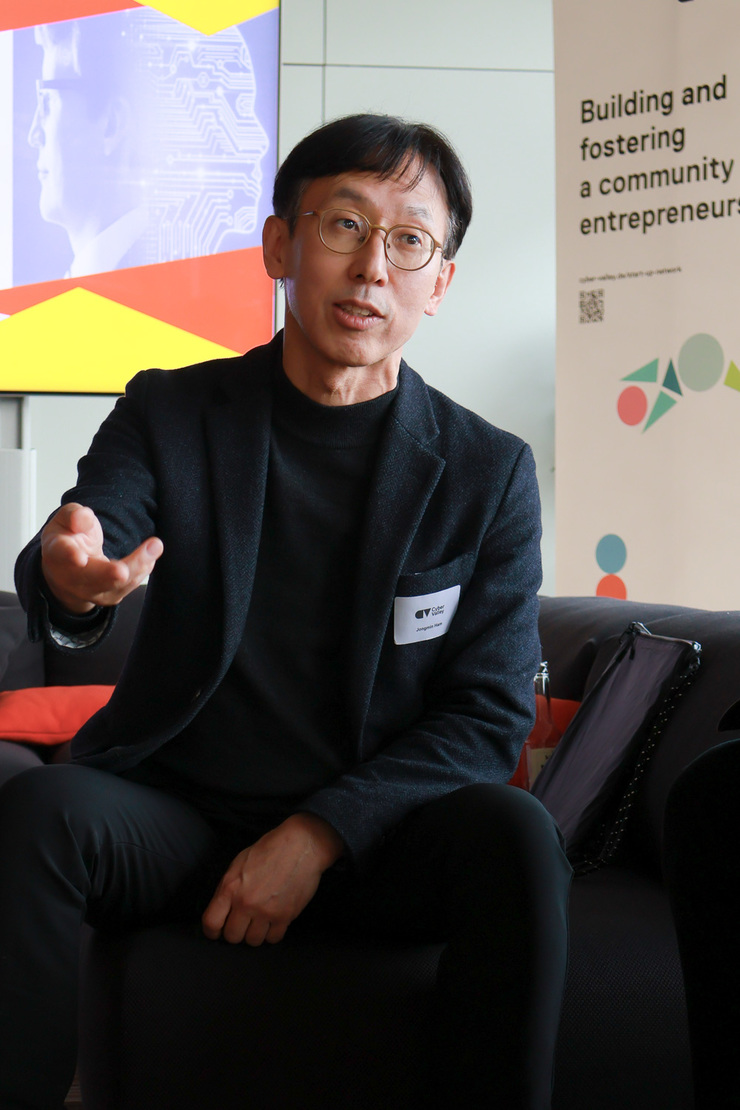
Jongmin Ham, Chief of Seoul AI Hub, said, “We have great expectations for jointly fostering and supporting Korean AI start-ups through our collaboration with Cyber Valley and AIIS.” He added, “We hope that our global AI network has paved the way for Korean AI start-ups to thrive in the European market.“
Established in 2019, the AIIS is an interdisciplinary research institute committed to consolidating and promoting AI-related research. Positioned as a central hub for research in Core AI and X+AI domains, AIIS encourages collaboration among researchers from various disciplines. Their guiding principles include a commitment to AI for All Research, AI for All Industries, and AI for All People. Presently, AIIS boasts approximately 300 affiliated faculty members actively engaged in its initiatives.
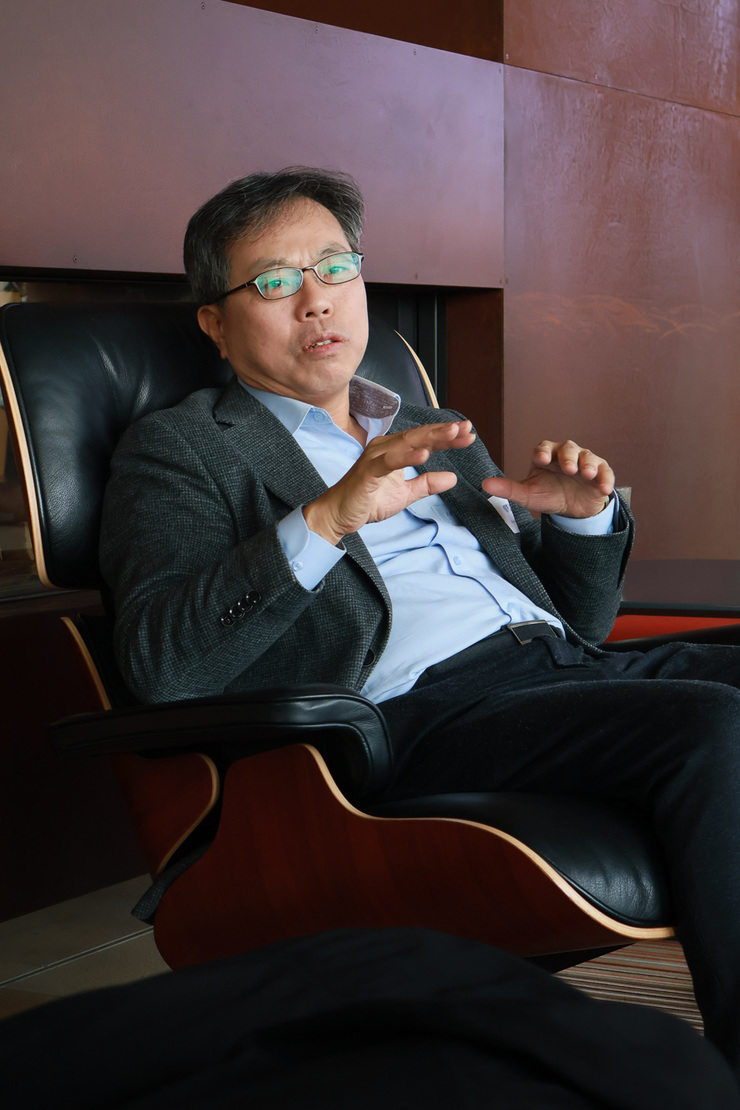
Byoung-Tak Zhang, Director of the AIIS, said, “ Byoung-Tak Zhang, Director of the AIIS, said, “Since the beginning of the AIIS in 2019, we have always envisioned a global network of specialists in the AI field collaborating with one another to become more than the sum of our parts.” He added, “We are excited to partner with some of the brightest minds in the AI field here at Cyber Valley along with Seoul AI Hub and eagerly anticipate what the future holds for all of us.”
Cyber Valley, Seoul AI Hub, and Artificial Intelligence Institute of Seoul National University (AIIS) are excited about the prospects this collaboration brings and anticipate the positive impact it will have on the global AI community.
About Cyber Valley
Cyber Valley is Europe’s largest and leading center for excellence in artificial intelligence and modern robotics. Its mission and public mandate are to advocate for research, development, application, and acceptance of technologies and methods in the field of intelligent systems. Cyber Valley encourages entrepreneurship by uniting scientific excellence with innovation and technology transfer. In addition, Cyber Valley facilitates critical reflection on the ethical and social implications of AI through public engagement. Cyber Valley envisions a future in which the full potential of intelligent systems is leveraged for the greater good of the world.
About Seoul AI Hub
Seoul AI Hub is a non-for-profit organization that was established in 2017 by the Seoul Metropolitan Government in order to foster the AI industry. In this regard, Seoul AI Hub now cultivates AI human resources, provides accelerating programs to 250+ membership AI start-ups, and tries to form synergistic connections within the industry.
About Artificial Intelligence Institute of Seoul National University (AIIS)
Artificial Intelligence Institute of Seoul National University is an intercollegiate research institute established in 2019, committed to integrating and supporting AI-related research. As a hub of AI research both in Core AI and X+AI areas, Seoul National University’s 300+ professors and 2,000+ researchers of diverse disciplines collaborate through AIIS.
The EuroEAP international conference, organized by the EuroEAP Society with a not-for-profit distinctive character and always held in Europe, primarily aims to share the latest advances and findings in this emerging field. It gathers experts from all over the world in a highly multidisciplinary event driven by scientific quality and industrial impact, with an organization that enables significant opportunities for one-to-one discussions in a friendly atmosphere. Today, the event expands its scope to the larger international and diverse research community of soft smart materials and soft transducers. The event is conceived as an exclusive forum for international experts and professionals seeking scientific quality, industrial impact, and opportunities for cooperation.
When?
June 11–13
Important deadlines:
Hotel reservation (special rate): 10 APRIL 2024 (70 pre-booked rooms)
Early registration & abstract submission: 10 APRIL 2024
A social dinner will be organized on Tuesday evening in the Stuttgart city center.
Transport from the MPI to the dinner and from the dinner to the hotel will be provided.
The cost to attend this event is covered by the conference registration fee.
More details will be released closer to the conference start.
Wednesday, 12 June
Castle tour:
A castle tour for the participants of the conference will be organized on Wednesday. We will get a guided tour through Residenzschloss Ludwigsburg, one of the most beautiful baroque castles in Germany.
The tour will start at 16:00.
Social dinner:
Following the castle tour, there will be a social dinner at the restaurant Württemberger Hof (http://www.wuerttemberger-hof-ludwigsburg.de/), which is in walking distance from the castle.
The dinner will start at 19:00.
Transport from the MPI to Ludwigsburg and from the dinner to the hotel will be provided.
The cost to attend this event is covered by the conference registration fee.
Accompanying persons
The castle tour and social dinners are open to accompanying people.
The participation fees for each accompanying person will be announced closer to the conference start.
The fees should be paid in cash at the conference desk (credit cards are NOT acceptable).
Attendees willing to join the castle tour and the social dinners should specify the option (including the number of accompanying persons) during the online registration to the conference.
Thursday, 13 June
SOFTWEAR Days:
This year there is a satellite event to the EuroEAP 2024 conference: SOFTWEAR Days 2024. There will be an oral session also open to all EuroEAP participants, free of charge, on Thursday 13th of June in the afternoon at the same venue and room as the EuroEAP 2024. Oral presentations will be given by the SOFTWEAR PhD students presenting their research.
A few slots have also been reserved for presentations by other PhD students outside SOFTWEAR. The topic of the presentation must be in the broad category of soft actuators for wearables. If you, as a non-SOFTWEAR student, want to give an oral presentation (15 mins incl. questions), please contact edwin.jager@liu.se.
SOFTWEAR is a Marie Skłodowska-Curie Actions Doctoral Network in the emerging and rapidly growing field of wearables, with a unique focus on soft actuators for wearables and exoskeletons. The primary objective of SOFTWEAR is to train young researchers in the multidisciplinary science of soft actuators for integration in wearables and augmenting textiles. This will be achieved by merging chemistry, physics, mechanics, electronics, textile technology, design, human-technology interaction, and ethics in a truly interdisciplinary manner, while teaching essential skills in ethics, product development, IPR, and industrial realization, thus providing a unique added value to the careers of the researchers. For more information, see: https://softwear-dn.eu/
EuroEAP Society Challenge:
During the EuroEAP 2024, we’ll be having a challenge with € 400 worth of prizes. It is an open competition where teams of talented researchers can showcase a project of their choice and compete with colleagues in academia and industry. The final aim of the Challenge is to captivate and inspire the imagination of experts and the public alike with the possibilities that soft smart materials and soft transducers empower. More information on the challenge web page: http://www.euroeap.eu/index.php/euroeap-society-challenge-home.
Deadlines
Enrolment: 23 APRIL 2024
Final submission: 23 MAY 2024
Cyber Valley is looking forward to this event happening within the Cyber Valley community and welcomes our international guests!
Philipp Hennig is Professor of Machine Learning Methods in the Department of Informatics at the University of Tübingen, part of Cyber Valley, and a member of the board of the Tübingen AI Center and the cluster of excellence Machine Learning: New Perspectives for Science.
ANUBIS objectives
The ANUBIS project aims to manage the computing resources of scientific AI applications comprehensively and consistently. In climate models, geological and neuroscientific simulations, many inference problems occur in which information or a data set is used to indirectly deduce or “infer” the information that is actually being sought. "To solve such inference problems, we need large amounts of data and large computing resources," Hennig explains. "A single partial data set from climate research, for example, can be as large as 100 terabytes (i.e. 100,000 gigabytes)."
Data processing challenges
In the project, what a computer does – computing – is regarded as a source of information. This information relates to questions that cannot be answered definitively and perfectly (such as "What will the weather be like in 10 years' time?"). Such questions usually consist of an infinite number of sub-questions that are not fully answered by the calculation. Therefore, while the computer is answering these sub-questions, it should simultaneously keep a record of which parts of the question have already been answered and how well. This is not so easy, because the record-keeping itself is also a calculation. For the whole thing to remain feasible, the record-keeping must therefore be simpler than the calculation itself.
Innovative approaches to solutions
To do this, it will be necessary to extend modern machine learning methods so that their functionality harmonizes with the new concept. The advantages of the extended methodology are not only more economical algorithms, but also new functionality. "It will then be easier for researchers from the geosciences, climate sciences and neurosciences, for example, to flexibly incorporate very different types of data such as specific measurements, simulation data and expert knowledge into their code," says Hennig. "The uncertainty of the information from the different data sources must be quantified. Neither was possible with the previous methods."