User Group: Promovierende

  • Cyber Valley Days: Day 2

    Cyber Valley Days: Day 2

    Apéro & Cyber Valley Days Meet-up

    Cyber Valley is happy to host the Cyber Valley Days – an exceptional three-day forum for the Cyber Valley Community. Focused solely on AI, Cyber Valley Days features a wide program that emphasizes entrepreneurship and scientific innovation originating from Baden-Württemberg.

    Join us for Day 2 of Cyber Valley Days – Apéro & Cyber Valley Days Meet-up.

    We look forward to meeting you, sharing some food, and drinks, and stimulating conversations!


    When

    20 June 2024 | 18:00–20:30


    What

    Apéro & Cyber Valley Days Meet-up


    Where

    MPI Tübingen

    Max-Planck-Ring 4

    72076 Tübingen


    Register for Apéro & Cyber Valley Days Meet-up.


    __________________________________________


    By registering for this event, I grant permission to Cyber Valley GmbH and ELLIS Institute Tübingen gGmbH to use pictures, videos, and electronic media images in any promotional presentation within its community – offline and online, exclusively for non-profit-making purposes.

    During the Cyber Valley Days, pictures will be taken and videos will be recorded. These materials may be sent out to the media and used for internal and external communication purposes. These files will be stored in a secure location and only authorized staff will have access to them. They will be kept as long as they are relevant and after that time, they will be destroyed or archived.

    Further information on Cyber Valley data protection can be found at: https://cyber-valley.de/en/privacy-policy


  • Cyber Valley Days: Day 2

    Cyber Valley Days: Day 2


    ELLIS Institute Tübingen – Scientific Symposium & Opening Ceremony

    We are thrilled to invite you to the grand opening ceremony of the ELLIS Institute in Tübingen!

    Founded on the broader vision of the European Laboratory for Learning and Intelligent Systems (ELLIS), the ELLIS Institute Tübingen is the first ELLIS Institute in Europe, set to become a world-class center for outstanding and free research in machine learning and artificial intelligence.

    We look forward to welcoming you to an engaging program featuring scientific presentations, distinguished guests, and insight into the vision of the ELLIS Institute, as well as the future of AI in Tübingen and Europe.


    When

    20 June 2024 | 09:00–18:00


    What

    09:00 | Arrival & Registration

    09:15 | Scientific Symposium I

    12:00 | Lunch

    13:30 | Scientific Symposium II

    16:30 | ELLIS Institute Tübingen – Opening Ceremony

    18:00 | Apéro & CVD Meet-up (please register here for Apéro)


    Where

    MPI Tübingen

    Max-Planck-Ring 4

    72076 Tübingen


    Register to attend the ELLIS Institute Tübingen Symposium & Opening.

    ______________________________________________________


    By registering for this event, I grant permission to Cyber Valley GmbH and ELLIS Institute Tübingen gGmbH to use pictures, videos, and electronic media images in any promotional presentation within its community – offline and online, exclusively for non-profit-making purposes.

    During the Cyber Valley Days, pictures will be taken and videos will be recorded. These materials may be sent out to the media and used for internal and external communication purposes. These files will be stored in a secure location and only authorized staff will have access to them. They will be kept as long as they are relevant and after that time, they will be destroyed or archived.

    Further information on Cyber Valley data protection can be found at: https://cyber-valley.de/en/privacy-policy


  • Cyber Valley Days: Day 1

    Cyber Valley Days: Day 1


    Connecting AI in the länd

    Cyber Valley is happy to host Cyber Valley Days, an exceptional three-day forum for the Cyber Valley community.

    Focused solely on AI, Cyber Valley Days features a wide program that emphasizes entrepreneurship and scientific innovation originating from Baden-Württemberg.


    When

    19 June 2024 | 09:30 – 17:00


    What

    09:30 | Arrival & Registration

    10:00 | Welcome & Opening

    12:00 | Lunch

    14:00 | AI Incubator Demo Day

    16:00 | Networking


    In parallel, you can meet the Cyber Valley Community at our EXPO from 10:00 to 14:00.


    Where

    MPI Stuttgart

    Heisenbergstraße 1

    70569 Stuttgart


    Register for the Opening, Community Expo & AI Incubator Demo Day.


  • Cyber Valley AI Incubator unveils promising path for the leaders of tomorrow

    Cyber Valley AI Incubator unveils promising path for the leaders of tomorrow

    The first day of the AI Incubator commenced with equipping participants with the essential knowledge and skills needed to navigate the entrepreneurial landscape. A highlight of the day was the insightful keynote presentation delivered by Lukas Teichmann, founder of NODE Robotics. Teichmann shared his journey of founding a successful start-up, offering valuable personal insights and inspiration. As the day came to an end, participants engaged in team matching, collaborative group work, and the vibrant exchange of ideas.

    The AI Incubator equips participants with the right knowledge, tools, and skills to transfer their cutting-edge AI and robotics research into products and applications. It is organized as a collaborative effort among the Cyber Valley Community and generously funded by the Carl-Zeiss-Stiftung. “The AI Incubator offers young, talented scientists an excellent opportunity to benefit from the broad expertise in Cyber Valley and to take the next steps in shaping the future," says Dr. Felix Streiter, Managing Director, Carl-Zeiss-Stiftung. "We are pleased to be part of this program and thus promote the transfer from cutting-edge research into practice." 

    Rebecca C. Reisch, Managing Director, Cyber Valley, emphasized the importance of the AI Incubator for the start-up community. “We are proud to have another batch of the AI Incubator adding value to our ecosystem thanks to the generous support of the Carl-Zeiss-Stiftung. The program offers a real opportunity to start companies out of research and network with investors. We want to support them in playing a leading role in shaping the next generation of AI start-ups made in THE LÄND.” 

    The program is open to students, PhDs, scientists, technologists, and business talent from the Cyber Valley Community, as well as interested individuals from Baden-Württemberg. While having a team or a specific idea is not a prerequisite for participation, the program offers potential opportunities for collaboration and idea development. “If you’re thinking about building an AI or robotics start-up – teaming up with some of the most talented young scientists from the European Machine Learning community, this might be for you,” says Alexander Rudolf Diehl, Senior Advisor, Cyber Valley.  

    The AI Incubator Batch #4 will culminate in a Demo Day, during which participants will pitch their final ideas to a jury and an audience comprising of investors, corporations, researchers, and entrepreneurs. The program will end during Cyber Valley Days, bringing all stakeholders together from June 19th to June 21st, 2024. As the AI Incubator occurs twice a year, the next batch will start in October 2024.

  • Beyond the Thesis – Das Leben nach dem Studium

    Beyond the Thesis – Das Leben nach dem Studium


    About the program: 

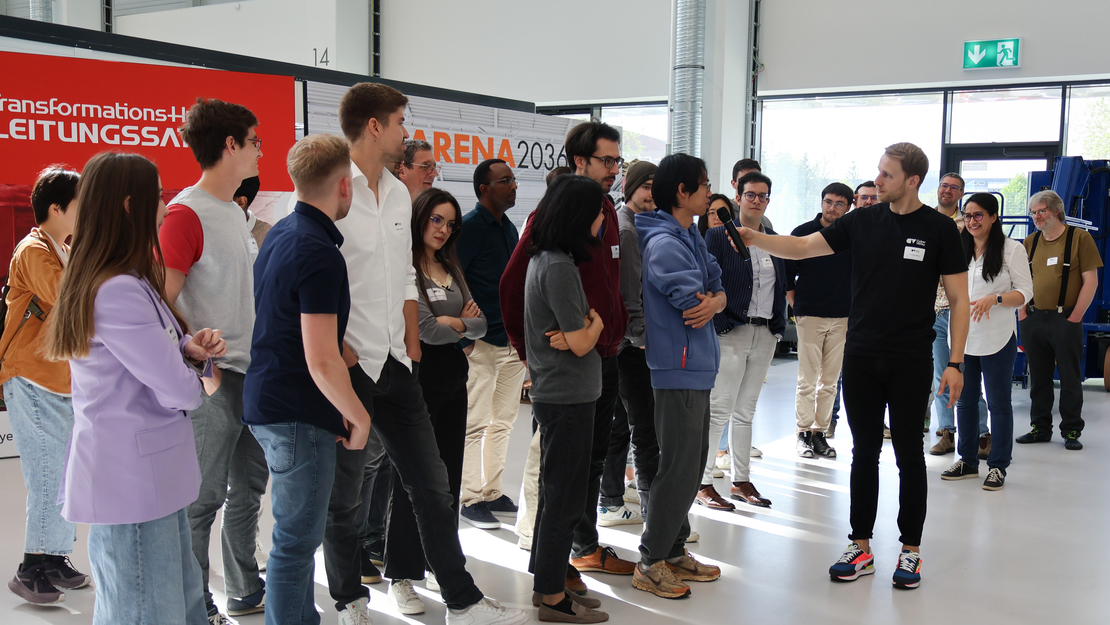
    This isn't your typical lecture series. It's an opportunity to engage in an open dialogue with others who've been or who are right where you are. Gain insights from those who've made these choices and are eager to share their experiences in academia and industry in a relaxed atmosphere. Hurry as space is limited to 30 participants!

    Three researchers in very different fields and roles are invited to debate and discuss, moderated by doctoral researcher Jonas Kneifl, the interesting topic of how to shape a career:

    • Inga Berre, Professor, Director VISTA Center for Modeling of Coupled Subsurface Dynamics, University of Bergen
    • Florian Leucht, Steering Wheel Hub Platform R&D Manager at Valeo 
    • Luiz Chamon, Independent Junior Research Group Leader on Information Systems (ELLIS-SimTech)

    You are also invited to mingle and connect over refreshments following the panel. 

    Join SimTech for an evening of enlightening conversations and invaluable networking opportunities as you chart your course toward a fulfilling career. The event will be held in English and is specifically not restricted to SimTech researchers and students.


    When? 

    May 15, 2024 at 18:00 CEST (discussions commencing at 18:30 CEST) 


    Where? 

    Entrepreneurship Café frei[Raum], Pfaffenwaldring 45, 

    University of Stuttgart, Campus Vaihingen 


    Interested?

    Please register here.


  • „Cyber and the City“ – Team der Universität Tübingen gewinnt Kommunikationspreis

    „Cyber and the City“ – Team der Universität Tübingen gewinnt Kommunikationspreis

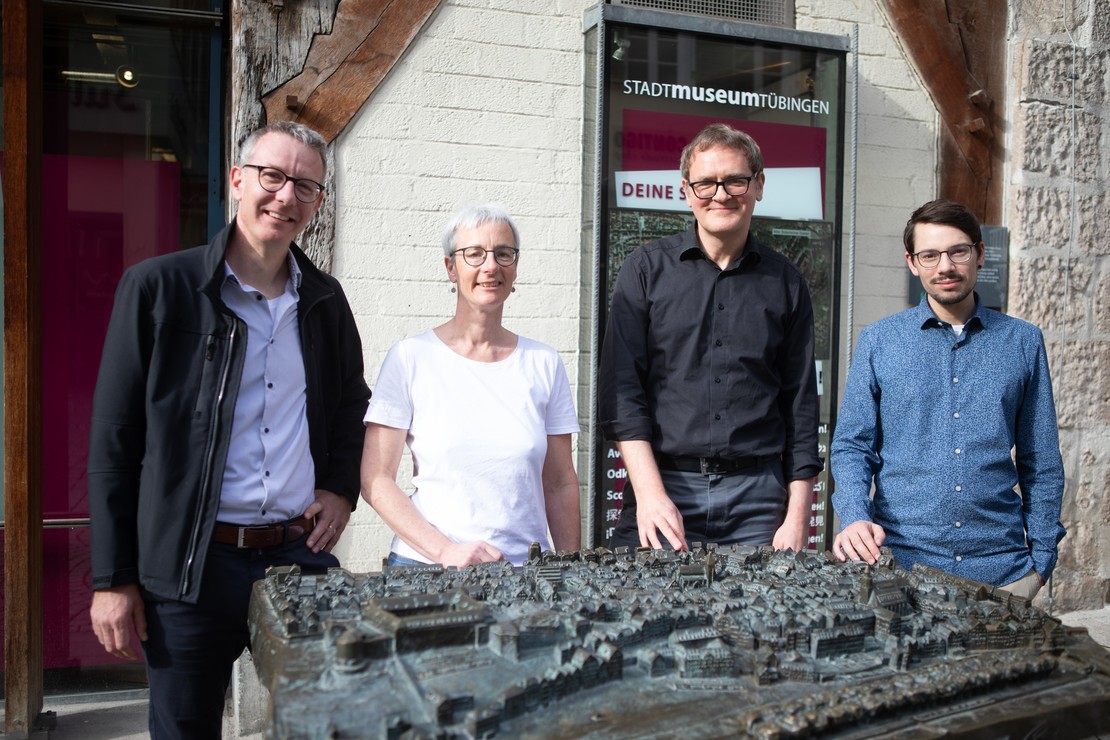
    Die Ausstellung war von Februar 2023 bis Januar 2024 im Stadtmuseum Tübingen zu sehen und ist interdisziplinär und gemeinsam mit dem Stadtmuseum Tübingen, insbesondere dessen Ausstellungskurator Guido Szymanska, konzipiert und umgesetzt worden. Teil des Ausstellungsteams waren außerdem mehr als 30 Studierende der Empirischen Kulturwissenschaft und des Masterstudiengangs Machine Learning der Universität Tübingen.

    Ulrike von Luxburg: „Die Ausstellung konnte nur deshalb so überzeugen, weil wir von Anfang an verschiedene Perspektiven auf das Thema eingebracht und mitgedacht haben. Die Studierenden mit ihren diversen Hintergründen, Meinungen und Herangehensweisen und die langjährige Erfahrung von dem Kurator des Stadtmuseums, Guido Szymanska, wie man abstrakte Ideen in konkrete Exponate umsetzen kann, haben die Ausstellung so erfolgreich gemacht.

    Die Jury aus Wissenschaftsjournalistinnen und -journalisten, Kommunikations- und PR-Fachleuten unter dem Vorsitz von DFG-Vizepräsident Professor Dr. Johannes Grave würdigte bei ihrer Entscheidung, dass das Team „Cyber and the City“ das so abstrakte wie kontroverse Thema Künstliche Intelligenz in die Lebens- und Erfahrungswelt der Menschen holt. Zudem eröffne es einen Dialograum, in dem sehr unterschiedliche Positionen und Interessen verhandelt werden können.

    Dazu habe das Team in einer erfolgreichen interdisziplinären Zusammenarbeit von Informatik und Empirischer Kulturwissenschaft eine Ausstellung im Tübinger Stadtmuseum und ein Begleitprogramm entworfen. Studierende der beiden Disziplinen erarbeiteten die Grundlagen für die Ausstellung und die weiteren Kommunikationsformate und bezogen dabei Interessengruppen, Bürgerinnen und Bürger, Aktivistinnen und Aktivisten oder auch Entscheidungsträgerinnen und Entscheidungsträger in die Konzeption und Umsetzung ein. Auf diese Weise, so die Jury des Communicator-Preises, sei eine Kommunikationsplattform entstanden, die eine gemeinsame Sprache zu Herausforderungen und Chancen von Künstlicher Intelligenz findet und sowohl Befürworterinnen und Befürworter als auch Skeptikerinnen und Skeptiker von KI zu Wort kommen lässt.

    Flankiert wurde die Ausstellung von einem umfangreichen Begleitprogramm, in das sich die an der Ausstellung beteiligten Akteurinnen und Akteure mit eigenen Veranstaltungen einbringen konnten. Zu den Veranstaltungen zählten etwa die „Retro Gaming Night meets KI“ sowie die in Kooperation mit dem SWR veranstaltete Podiumsdiskussion „Wer kontrolliert KI?“. Die Ausstellung zog insgesamt mehr als 40.000 Besucherinnen und Besucher unterschiedlicher Altersgruppen an. Durch Ausstellung und Begleitprogramm entstand so insgesamt ein Dialograhmen, der die am Standort sehr kontrovers geführte Diskussion rund um Künstliche Intelligenz versachlicht hat, ohne dabei Emotionen und Positionierungen zu ignorieren.

    Die Jury für den Communicator-Preis hob hervor, dass die lokale Verortung der Kommunikation bei diesem Projekt eine besondere Bedeutung habe: Künstliche Intelligenz – als global wirksames und zugleich schwer greifbares Thema – wurde hier am konkreten Fall, als Konsequenz von kontroversen Debatten in der Stadt und gemeinsam mit lokalen Akteurinnen und Akteuren verhandelt. Und dies geschah nicht in digitalen Foren, sondern im direkten Austausch der Beteiligten. Damit sei es dem Team hervorragend gelungen, ein schwieriges Thema leicht, humorvoll und dabei sachlich und intelligent umzusetzen. Insgesamt, so die Jury, sehe sie in der Arbeit des Teams den gelungenen Weg einer dialogischen Wissenschaftskommunikation, die weit über den Standort und das konkrete Thema hinausweise. Insbesondere vor dem Hintergrund der aktuellen Dialogkultur, in der verschiedene Argumente und Positionen kaum noch in einen konstruktiven Austausch zu bringen sind, sei dies ein besonders ermutigendes Projekt.

    Der „Communicator-Preis – Wissenschaftspreis des Stifterverbandes“ wird seit dem Jahr 2000 verliehen und gilt als der wichtigste Preis seiner Art in Deutschland. Ausgezeichnet werden Wissenschaftlerinnen und Wissenschaftler, die in ihrer Wissenschaftskommunikation besonders kreativ sind, neue, auch mutige Wege gehen und ihre Zielgruppen auf geeignete und wirksame Weise ansprechen. Sie sollen zudem die gesellschaftliche Dimension ihrer Forschung erkennen und ihr Wissen in öffentliche Debatten, Meinungsbildungsprozesse und Entscheidungen einbringen. Das Preisgeld soll die Ausgezeichneten in ihrem Engagement unterstützen und auch die Umsetzung neuer Projekte ermöglichen.

    Die Jury wählte das nun ausgezeichnete Team in einem mehrstufigen Auswahlprozess aus 38 Be- werbungen und Vorschlägen aus. Verliehen wird der Communicator-Preis im Rahmen der Jahresversammlung der DFG am 1. Juli 2024 in Potsdam.


  • Lecture series in the ELLIS network

    Lecture series in the ELLIS network

    Find an overview of the different initiatives below and visit the units’ web pages for more information on upcoming sessions. Many of the talks can be joined online.

    Unit Stuttgart

    The ELLIS Unit in Stuttgart regularly invites outstanding scientists to present their latest research projects. Learn more about past and upcoming sessions and about how to join them here.

    Unit Alicante

    With the Distinguished Speaker Series, ELLIS Alicante invites top AI researchers from around the world to present their work to the team of ELLIS Alicante. In collaboration with the University of Alicante, the event is open to any student and researcher of the university. Find all the details here.

    Unit Cambridge

    The Cambridge ELLIS Unit Seminar Series holds talks by leading researchers in the area of machine learning and AI. Learn more about upcoming sessions here.

    Unit Helsinki

    The distinguished lecture series organized by the ELLIS Unit in Helsinki is open for everyone and can be joined online. Find all information and registration details here.

    Unit Jena

    The ELLIS Unit Jena organizes the AI4Good hosted online webinar series „AI for Earth and Sustainability Science“. The series highlights seminal and recent progress in AI-enabled modelling and understanding of the Earth system from local to global scale and AI-science based diagnosis, prediction, and remedy of environmental crises. Interdisciplinary researchers from academia, industry, UN and government agencies as well as NGOs will talk about tackling systemic real-world challenges with AI, including disaster risk reduction and preparedness, environmental degradation, climate change, societal impacts and dynamics, and the sustainable and responsible use of natural resources such as water and energy. The webinar series is curated by the ELLIS Unit Jena and the ELLIS Program “Machine Learning for Earth and Climate Sciences”.

    Unit Lisbon

    The ELLIS Lisbon & Unbabel seminars on Machine Learning and Natural Language Processing, organised jointly by members of the ELLIS Unit Lisbon & Portuguese translation start-up Unbabel, aim to provide, on a regular basis, an outlet for discussion of the latest research on Machine Learning and Natural Language Processing by researchers and students from all over the world. The seminars are open to all and streamed online. Find all details and information here.

    Unit Munich

    The Munich AI Lectures are a joint initiative of the ELLIS Unit Munich, the Munich Center for Machine Learning (MCML), the Munich Data Science Institute (MDSI) at TUM, the Center for Advanced Studies (CAS) at LMU, and the Konrad Zuse School of Excellence in Reliable AI (relAI). On a monthly basis, they invite top-level AI researchers to give the audience a glimpse into their work and the future of AI. Join them for the next sessions here.

    ELLIS Student & Postdoc Reading Groups

    As part of its educational activities, ELLIS aims to connect PhDs and postdocs in the network and supports them in creating opportunities to discuss science. Currently, two student-led reading groups on machine learning-related topics (Human-Centric Machine Learning & Mathematics of Deep Learning) meet regularly to discuss a paper the group previously voted on. ELLIS Reading Groups are initiated and organized by ELLIS PhD students and postdocs across Europe. Take a look at this page for details and upcoming sessions.

    Artificial Intelligence Doctoral Academy (AIDA)

    AIDA, the Artificial Intelligence Doctoral Academy, has been created to nurture a new generation of AI talent by offering knowledge and expertise in AI through educational and training activities. It’s a joint initiative of the EU-funded projects ELISE, AI4media, VISION, HUMANE AI and TAILOR. ELLIS Fellows often participate in the AIDA AI Excellence Lecture Series. Find a list of upcoming sessions here and an overview of past sessions here.

  • ELLIS Doctoral Symposium 2024

    ELLIS Doctoral Symposium 2024


    What is ELLIS?

    The European Laboratory for Learning and Intelligent Systems (ELLIS) is a pan-European AI network of excellence which focuses on fundamental science, technical innovation and societal impact. Founded in 2018, ELLIS builds upon machine learning as the driver for modern AI and aims to secure Europe’s sovereignty in this competitive field by creating a multi-centric AI research laboratory. ELLIS has established 41 units in 16 different countries in Europe. It has also launched the ELLIS PhD Program, one of Europe’s most competitive PhD programs which aims to foster and educate the best talent in machine learning and related research areas by pairing outstanding students with leading academic and industrial researchers across Europe. The ELLIS PhD Program has received funding from the European Union’s Horizon research and innovation programme under ELIAS Grant Agreement No. 101120237 (2023-2027) and from the Horizon Europe research and innovation programme under ELISE Grant Agreement No. 951847 (2020–2024).


    What is EDS2024?

    The ELLIS Doctoral Symposium is an annual conference for ELLIS PhD students and other PhD students to meet in person and share knowledge about machine learning. The ELLIS Doctoral Symposium 2024 (EDS2024) is the fourth edition, which is co-organised by the University of Tübingen and the Institut Polytechnique de Paris, and will be held in Paris, France. It is expected to host 150 attendees during one week from Monday, August 26 to Friday, August 30.

    The focus of this year’s symposium is AI & Sustainability.

    Participants are expected to prepare a poster or a tooling session with a strong machine-learning component. The topic of the poster or tooling session is completely open, as the ELLIS Programs bring together researchers from multiple disciplines within the machine learning community (Computer Vision, NLP, Theoretical ML, Reinforcement Learning, Human-Centric ML, etc.). If upon registering you are unsure about the material you wish to present, do feel free to submit a tentative title. EDS2024 follows in the footsteps of the previous EDS iterations held in Helsinki (EDS2023), Alicante (EDS2022) and Tübingen (EDS2021). Save the date and join us for keynotes, poster & tooling sessions and social events in the beautiful City of Light!

    Students requiring a short-stay visa for the event can apply here.

  • 119 of the world’s most cited researchers are from Stuttgart

    119 of the world’s most cited researchers are from Stuttgart

    The latest update of a database published by Elsevier provides information on the most cited researchers in 2022 for each scientific field, including extensive figures on publications, citations, self-citation rates, and indices. The dataset contains more than 200,000 authors and takes into account the different publication cultures of the individual subject areas by including the top 2 percent of the world's most frequently cited researchers in their field in the list.

    These include 119 academics from the University of Stuttgart, which are spread across a total of 12 departments and listed as follows.

    Discipline

    # of scientists at the University of Stuttgart in the top 2%

    Physics & Astronomy

    35

    Engineering

    21

    Enabling & Strategic Technologies    

    16

    Information & Communication Technologies    

    11

    Biomedical Research    

    7

    Mathematics & Statistics    

    7

    Built Environment & Design

    3

    Clinical Medicine    

    3

    Psychology & Cognitive Sciences    

    2

    Economics & Business    

    1

    Philosophy & Theology    

    1

    Total number

    119

    Strong individual performances in a global comparison

    Over 20 percent of the University of Stuttgart's current faculty members are accounted for.

    The researchers from the University of Stuttgart, active in the year under review, are listed below as the most frequently cited in their respective fields (in alphabetical order):

    Scientists

     Occupies place # in the field of…

    Allgöwer, Frank 605 of 106.863 in Industrial Engineering & Automation
    Bárdossy, András 148 of 57.175 in Environmental Engineering
    Birkmann, Joern 41 of 21.624 in Strategic, Defence & Security Studies
    Brem, Alexander 209 of 52.318 in Business & Management
    Brink, Stephan ten 310 of 197.500 in Networking & Telecommunications
    Buchmeiser, Michael R. 345 of 108.979 in Polymers
    Bulling, Andreas 60 of 14.370 in Human Factors
    Bürkner, Paul Christian 26 of 21.194 in Statistics & Probability
    Dressel, Martin 1595 of 295.432 in Applied Physics
    Giessen, Harald 205 of 64.789 in Optics
    Hauer, Bernhard 570 of 161.671 in Organic Chemistry
    Hilfer, Rudolf 277 of 50.409 in Fluids & Plasmas
    Jeltsch, Albert 334 of 204.091 in Biochemistry & Molecular Biology
    Kaim, Wolfgang 70 of 72.729 in Inorganic & Nuclear Chemistry
    Kästner, Johannes 271 of 100.804 in Chemical Physics
    Kontermann, Roland E. 646 of 147.556 in Immunology
    Liu, Na 474 of 117.692 in Nanoscience & Nanotechnology
    Lutz, Eric 191 of 73.580 in General Physics
    Menges, Achim 2 of 1.681 in Architecture
    Seifert, Udo 17 of 50.409 in Fluids & Plasmas
    Speck, Thomas 253 of 50.409 in Fluids & Plasmas
    Steinwart, Ingo 1578 of 356.955 in Artificial Intelligence & Image Processing
    Weitkamp, Jens 127 of 38.735 in Physical Chemistry
    Werner, Hans Joachim 97 of 100.804 in Chemical Physics
    Wrachtrup, Jörg 371 of 295.432 in Applied Physics
    Yang, Bin 335 of 197.500 in Networking & Telecommunications

    More names of top-cited scientists can be found in the database.

    Cyber Valley would like to congratulate these and all other researchers on their success!