User Group: PhD Student

  • Cyber Valley AI Incubator Batch #9 culminates in Demo Day

    Cyber Valley AI Incubator Batch #9 culminates in Demo Day

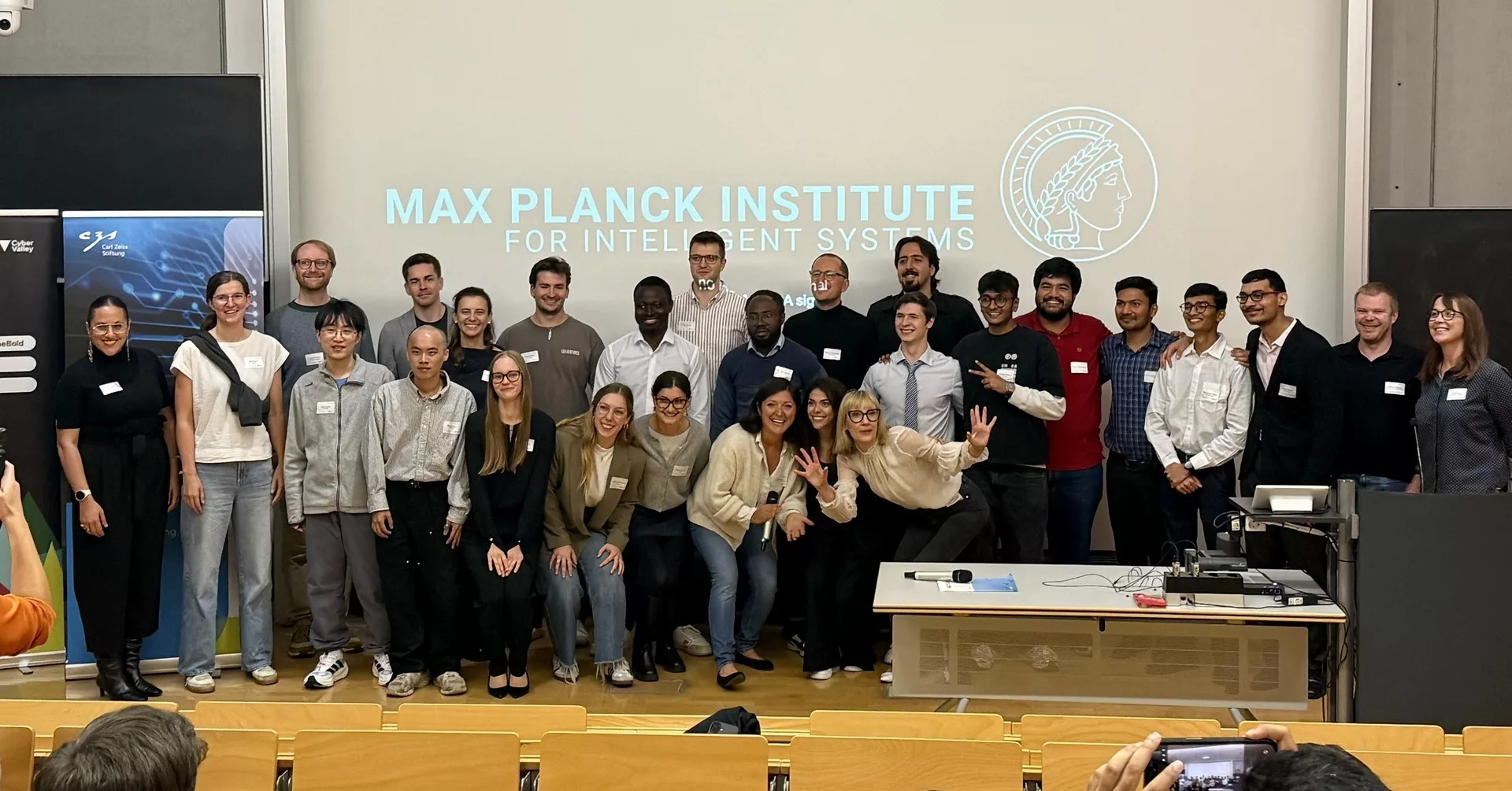
    The Batch #9 of the Cyber Valley AI Incubator concluded successfully with its Demo Day on October 16, where seven emerging AI ventures presented their innovations to an audience of founders, investors, researchers, and members of the AI community. Made possible through the generous funding of the Carl Zeiss Foundation (CSZ), organized by the Max Planck Institute for Intelligent Systems (MPI-IS) and the International Max Planck Research School for Intelligent Systems (IMPRS-IS), the Cyber Valley AI Incubator continues to foster research-driven AI entrepreneurship by helping innovators transform cutting-edge ideas into start-up ventures. 

    Hosted at the MPI-IS in Stuttgart, Demo Day marked the culmination of two weeks of intensive workshops exploring customer needs, business models, funding, prototyping, and pitching. The event opened with welcome remarks from Christoph Keplinger and Leila Masri of the Max Planck Institute for Intelligent Systems (MPI-IS), who reflected on the achievements of batch 9 and the growing impact of the AI Incubator. Lukas Findeisen of the Carl-Zeiss-Stiftung, the program’s principal sponsor, highlighted the foundation’s continued commitment to advancing innovation and research-driven entrepreneurship. 

    A highlight of the evening was the keynote address by Theodora Preda, partner at Plug and Play, who shared insights into the investor mindset and investing dynamics, offering perspectives on how investors assess opportunities, and what founders should understand when approaching the investment landscape.  

    The spotlight then turned to the batch 9 teams, who presented their final venture pitches before an expert jury consisting of: 

    • Christoph Keplinger (Director, Max Planck Institute for Intelligent Systems) 
    • Daisy De Souza Paiva (Senior Program Manager, ZEISS Ventures) 
    • Maximilian Worms (Analyst, LEA Ventures) 

    With all seven teams demonstrating an exceptionally high standard, selecting the winners proved challenging. 

    The following ventures were recognized for their outstanding achievements: 

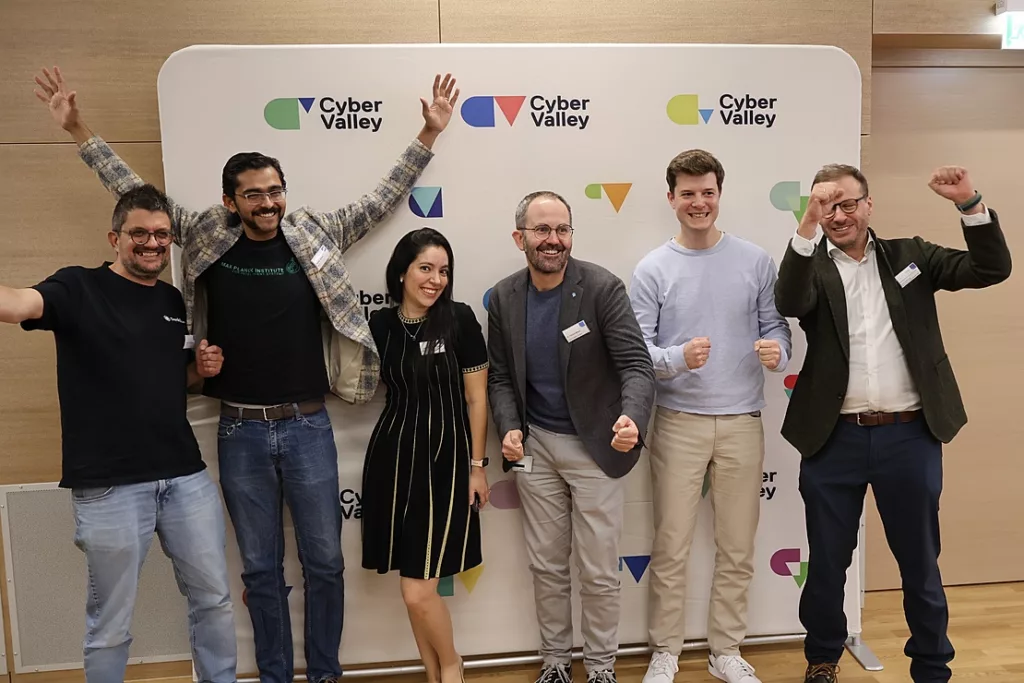
    Best Pitch Award: Voclair, founded by Rustom Firdosh Bhesania, Mehryar Lessani, Deepam Maurya
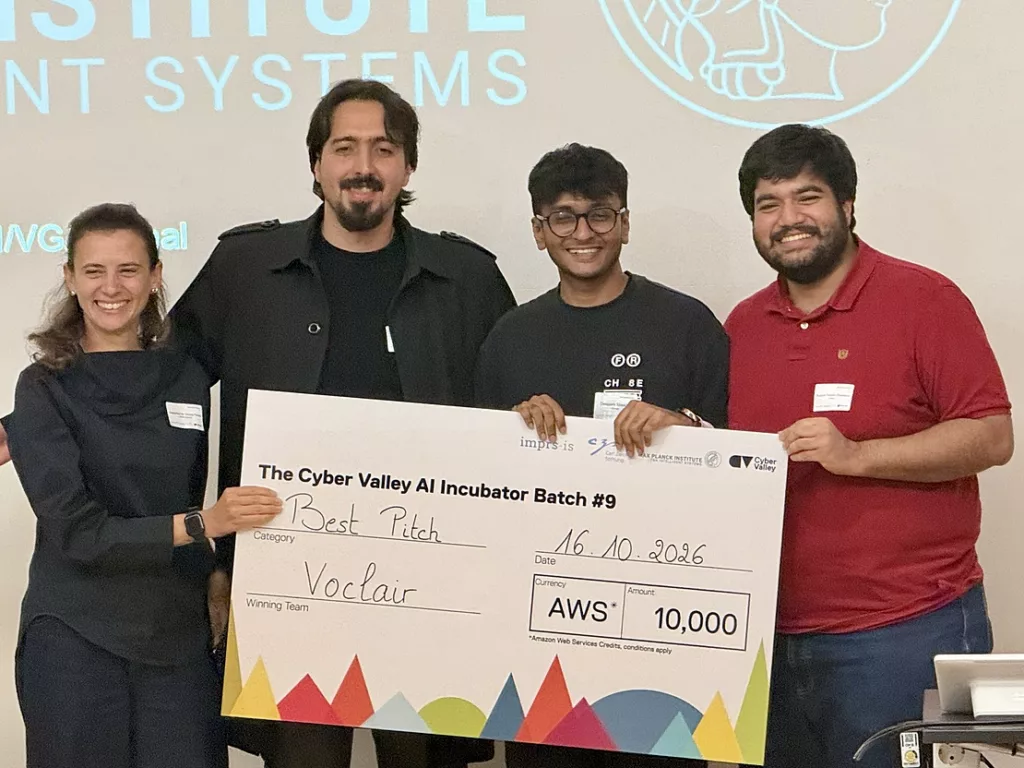
    AI Incubator Demo Day: Best Pitch Award
    Jury member Daisy De Souza Paiva, Founders Mehryar Lessani, Deepam Maurya, Rustom Firdosh Bhesania (from left to right). Copyright: Cyber Valley GmbH

    Best Business Model Award: TANOCRIX, founded by Marta Kriukova, Bolun Liang, Wei-Bo Tang 
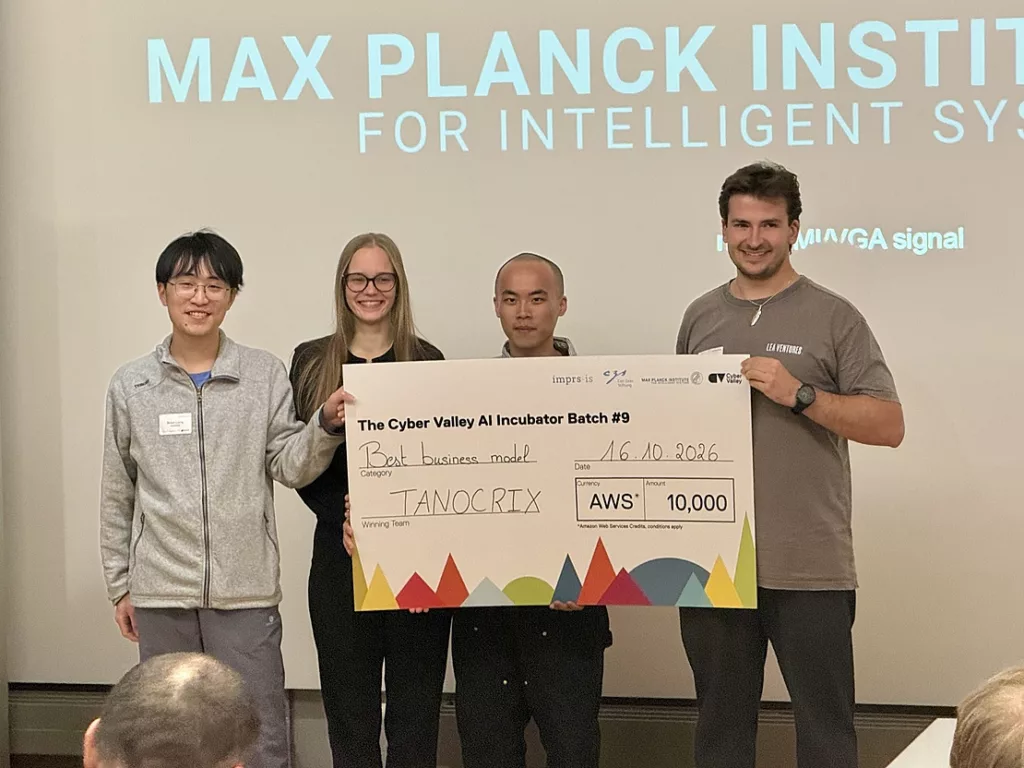
    Cyber Valley AI Incubator Demo Day, Best Business Model Award
    Founders Bolun Liang, Marta Kriukova, Wei-Bo Tang, jury member Maximilian Worms (from left to right). Copyright: Cyber Valley GmbH

    Best use of AI Award: Angel, founded by Melis Ilayda Bal, Stefano Esposito, Michela Petriconi, Marko Zaric
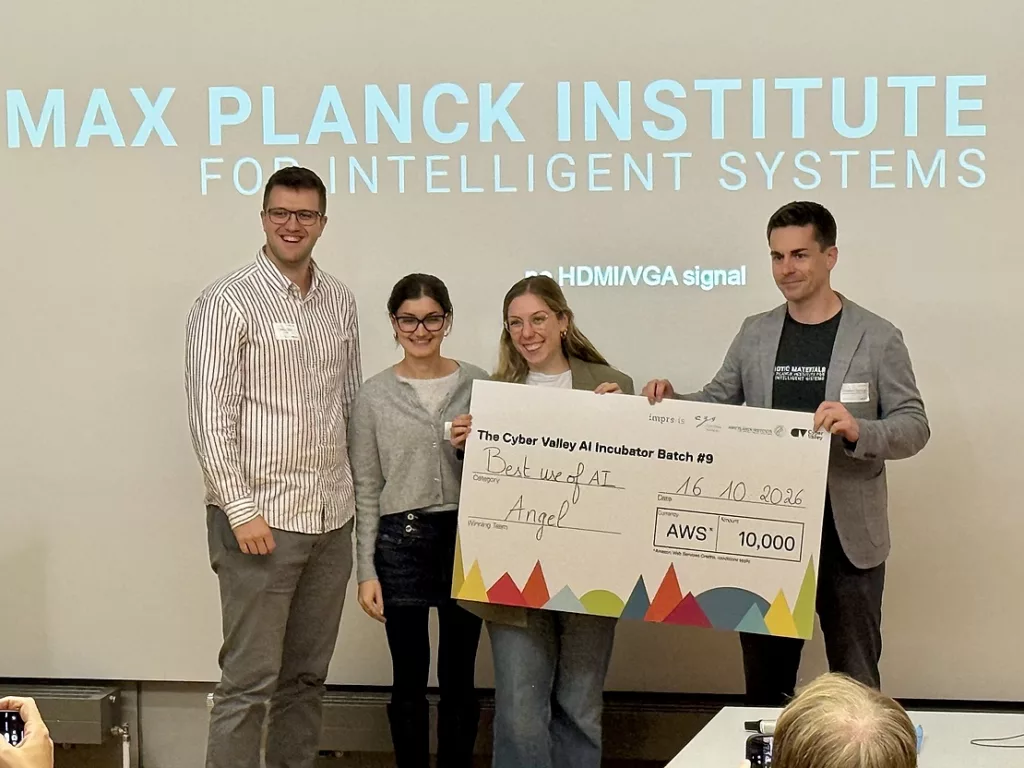
    Cyber Valley AI Incubator Demo Day, Best use of AI Award
    Founders Marko Zaric, Melis Ilayda Bal, Michela Petriconi, jury member Christoph Keplinger (from left to right) Copyright: Cyber Valley GmbH

    Each winning team received $10,000 in AWS Credits, generously provided by Amazon, to support the continued development and scaling of their AI solutions. 

    The evening concluded with a networking reception, providing participants, mentors, investors, and guests with the opportunity to celebrate the achievements of Batch 9 and strengthen connections across the Cyber Valley innovation ecosystem.

    About the Cyber Valley AI Incubator 

    Organized by the International Max Planck Research School for Intelligent Systems (IMPRS-IS) and the Max Planck Institute for Intelligent Systems (MPI-IS), the Cyber Valley AI Incubator continues to play a key role in supporting research-driven entrepreneurship within the Cyber Valley ecosystem. The program is made possible through the generous support of the Carl Zeiss Foundation, whose commitment to advancing innovation and scientific entrepreneurship enables researchers and innovators to bring their AI ideas closer to real-world application. 

    The Cyber Valley AI Incubator is designed to help researchers, engineers, and aspiring entrepreneurs bridge the gap between scientific discovery and startup creation. Open to participants from fields including artificial intelligence, robotics, computer vision, machine learning, biomedical technology, and data science, the program combines entrepreneurial education with mentorship from experienced founders, investors, and innovation experts.

  • Founding team wanted for a new biotech company

    Dr. Christoph Ratzke is looking for a founding team to build a new startup. He is a microbiologist and biophysicist who leads the Systems Biology of Microbial Communities junior research group at the University of Tübingen’s Interfaculty Institute of Microbiology and Infection Medicine (IMIT) and the Cluster of Excellence “Controlling Microbes to Fight Infections” (CMFI).

    ML-designed microbial communities

    Most chemicals and materials are still made from fossil resources. Microbial communities can make them from waste instead, if we learn to design and control them. Ratzke wants to build a company around that: designing microbial communities rationally, with machine learning, to replace as much chemistry as possible with biology.

    Ratzke is preparing an application to a current challenge of SPRIND, Germany’s Federal Agency for Breakthrough Innovation, on this topic, which funds selected teams for up to three years.

    He is looking for members of the starting team with expertise in one or more of 

    • High-throughput experimental biology

    Building and manipulating microbial communities at large scale

    • Mass spectrometry

    MS-based metabolite analysis and data handling in high throughput

    • Machine learning

    Predicting and optimising microbial community function

    You would be part of a startup from day one, shape it from the start, and do science with a direct environmental impact. It also means uncertainty, pressure and fast change. These are positions in the company, not academic posts: the goal is a product and a business.

    More than a specific skill, Ratzke am looking for people who are proactive and motivated, work independently, communicate well and are good to have on a team. Ideally you have a PhD or postdoc experience.

    If the startup is selected in December, work would start in early 2027 in Tübingen.

    Interested, or know someone who might be? Write Ratzke a few lines about yourself and why this interests you, ideally by 25 October.

  • Doctoral researcher/ PhD student: Agentic AI

    The Institute for Artificial Intelligence, Analytic Computing group, at the University of Stuttgart invites applications for a full-time position as a doctoral researcher/PhD student for three years working on knowledge graphs for use in agentic AI.

    What will you contribute?

    You will undertake foundational research on using knowledge graphs as part of Agentic AI.

    You will advise and tutor bachelor’s, master’s, and PhD students in the computer and data science programs of the department on topics related to your research.

    What is your profile?

    You have a master’s degree in computer science or a related discipline. You enjoy interacting and collaborating with other team members. You are forward-thinking, you seek confirmation by applying your research ideas not only to toy problems, but also to real-world problems. You have experience in logical representations as well as foundation models. You are willing to go from problem analysis in real-world applications to method development, data collection, and formal and empirical evaluation. You enjoy precise analytical thinking and apply scientific rigor in your research practice and writing, and you intend to publish successfully in relevant conferences and/or journals.

    What do they offer?

    They provide a friendly yet challenging interdisciplinary research environment and support your academic career in successfully extending your academic profile through cutting-edge publications. The Institute for Artificial Intelligence is part of Cyber Valley, the largest and most prestigious research center for AI in Europe. Through the International Max Planck Research School for Intelligent Systems, the ELLIS Unit Stuttgart, and the ELLIS Network as a whole, they offer excellent opportunities for collaboration from local to international levels. The salary amounts to German TV-L E13, which starts at approx. 60,000 Euro per year (before taxation), depending on your experience.

    How to apply?

    Applications should be submitted via the International Max Planck Research School for Intelligent Systems application portal. Submit your application with the required documents and indicate Prof. Staab as your targeted PhD advisor. In particular, documents will have to include:

    1. a motivational/cover letter that highlights why you are the right fit for this specific position,
    2. a curriculum vitae,
    3. scans of all your original final transcripts and diploma certificates from each university degree (Bachelor, Master, Doctorate). Please include translations into English or German. Translations done by the applicant themselves will be accepted. The group has more than 10 nationalities, and they can likely confirm the accuracy of your translation internally,
    4. Letters of recommendation (if possible).

    Email applications (whether exclusively or in parallel) will be considered a malus.

    Women who apply will be given preferential consideration in areas in which they are underrepresented, provided they have the same aptitude, qualifications, and professional performance. Severely disabled applicants with equal qualifications will be given priority.

    More questions?

    Please visit their website to learn more about their research.

    Personal inquiries can be directed to Prof. Staab.

  • Doctoral Researcher/ PhD student: Knowledge Graphs

    The Institute for Artificial Intelligence, Analytic Computing group, at the University of Stuttgart invites applications for a full-time position as a doctoral researcher/PhD student for three years working on Causal Representation and Queries in Deterministic and Probabilistic Knowledge Graphs.

    What will you contribute?

    You will undertake foundational research on representing probabilistic and causal dependencies in knowledge graphs that can be used in engineering applications for answering complex queries.

    You will advise and tutor bachelor’s, master’s, and PhD students in the computer and data science programs of the department on topics related to your research.

    What is your profile?

    You have a master’s degree in computer science or a related discipline. You enjoy interacting and collaborating with other team members. You are forward-thinking; you seek confirmation by applying your research ideas not only to toy problems, but also to real-world problems. You have experience in logical representations as well as data and knowledge engineering. You are willing to go from problem analysis in real-world applications to method development, data collection, and formal and empirical evaluation. You enjoy precise analytical thinking and apply scientific rigor in your research practice and writing, and you intend to publish successfully in relevant conferences and/or journals.

    What do they offer?

    They provide a friendly yet challenging interdisciplinary research environment and support your academic career in successfully extending your academic profile through cutting-edge publications. The Institute for Artificial Intelligence is part of Cyber Valley, the largest and most prestigious research center for AI in Europe. Through the International Max Planck Research School for Intelligent Systems, the ELLIS Unit Stuttgart, and the ELLIS Network as a whole, they offer excellent opportunities for collaboration from local to international levels. The salary amounts to German TV-L E13, which starts at approx. 60,000 Euro per year (before taxation), depending on your experience.

    How to apply?

    Applications should be submitted via the International Max Planck Research School for Intelligent Systems application portal. Submit your application with the required documents and indicate Prof. Staab as your targeted PhD advisor. In particular, documents will have to include:

    1. a motivational/cover letter that highlights why you are the right fit for this specific position,
    2. a curriculum vitae,
    3. scans of all your original final transcripts and diploma certificates from each university degree (Bachelor, Master, Doctorate). Please include translations into English or German. Translations done by the applicant themselves will be accepted. The group has more than 10 nationalities, and they can likely confirm the accuracy of your translation internally.
    4. Letters of recommendation (if possible).

    Email applications (whether exclusively or in parallel) will be considered a malus.

    Women who apply will be given preferential consideration in areas in which they are underrepresented, provided they have the same aptitude, qualifications, and professional performance. Severely disabled applicants with equal qualifications will be given priority.

    More questions?

    Please visit their website to learn more about their research.

    Personal inquiries can be directed to Prof. Staab.

  • Doctoral Researcher/ PhD student

    The Institute for Artificial Intelligence, Analytic Computing group at the University of Stuttgart invites applications for a full-time position as a doctoral researcher/PhD student for the years 2027–2029 (100% TV-L E13), working on semantic understanding of user interfaces and predicting of eye gaze.

    What will you contribute?

    You will undertake foundational research on using VLMs and VLAs for predicting user actions and attention in different situations: sole user interaction, parasocial user interactions, and collaborative user interactions.

    You will advise and tutor bachelor’s and master’s students in the computer science programs of the department on topics related to your research.

    What is your profile?

    You have a master’s degree in computer science or a related discipline. You enjoy interacting and collaborating with other team members. You are forward-thinking; you seek confirmation by applying your research ideas not only to toy problems, but also to real-world problems. You have experience with human-computer studies and are willing to go from problem analysis to method development to data collection and evaluation. You enjoy precise analytical thinking and apply scientific rigor in your research practice and writing, and you intend to publish successfully in relevant conferences and/or journals.

    What do they offer?

    They provide a friendly yet challenging interdisciplinary research environment and support your academic career in successfully extending your academic profile through cutting-edge publications. The Institute for Artificial Intelligence is part of Cyber Valley, the largest and most prestigious research center for AI in Europe. Through the International Max Planck Research School for Intelligent Systems, the ELLIS Unit Stuttgart, and the ELLIS Network as a whole, they offer excellent opportunities for collaboration from local to international levels. The salary amounts to German TV-L E13, which starts at approx. 60,000 Euro per year (before taxation), depending on your experience.

    How to apply?

    Applications should be submitted via the International Max Planck Research School for Intelligent Systems application portal. Submit your application with the required documents and indicate Prof. Staab as your targeted PhD advisor. In particular, documents should include:

    1. a motivational/cover letter that highlights why you are the right fit for this specific position,
    2. a curriculum vitae,
    3. scans of all your original final transcripts and diploma certificates from each university degree (Bachelor, Master, Doctorate). Please include translations into English or German. Translations done by the applicant themselves will be accepted. The group has more than 10 nationalities, and they can likely confirm the accuracy of your translation internally.
    4. Letters of recommendation (if possible).

    Email applications (whether exclusively or in parallel) will be considered a malus.

    Women who apply will be given preferential consideration in areas in which they are underrepresented, provided they have the same aptitude, qualifications, and professional performance. Severely disabled applicants with equal qualifications will be given priority.

    More questions?

    Check out this page for more details. Please visit their website to learn more about their research.

    Personal inquiries can be directed to Prof. Staab.

  • Last month at Cyber Valley: September

    Last month at Cyber Valley: September

    There was a lot happening at Cyber Valley last month. Here’s a quick roundup of our highlights from September. Find out how Cyber Valley’s mission to translate excellent research into real-world applications for a better future for everyone came to life.

    Celebrating ten years of the Cyber Valley Innovation Campus: Cyber Valley Day 2026

    On September 9, more than 850 guests came to Tübingen to celebrate a very special milestone: ten years of the Cyber Valley Innovation Campus. Researchers, start-ups, investors, policymakers, partners from industry and society, as well as many other guests gathered for a day full of inspiring talks, surprising keynotes, a research exhibition, start-up presentations, investor sessions, and networking.

    Read the full article about our anniversary event here.

    Cyber Valley Day
    Copyright: Christian Borth

    Welcoming Tech Fellowship journalists from Publix Berlin

    On September 17, we welcomed participants of the Tech Journalism Fellowship from “Publix Berlin – Haus für Journalismus und Öffentlichkeit” in Tübingen. The group included Fatemeh Khodadadian, Bastian Hosan, Sonja Peteranderl, Jonathan Kemper, and Carina Schroeder, accompanied by Dr. Eva von Grafenstein.

    This year’s fellowship focuses on the topic of “Ethical AI” and brings together journalists from Tagesspiegel Background, DER SPIEGEL, Deutschlandfunk, heise, WIRED, and DIE ZEIT for a year of exploring and reporting on artificial intelligence.

    As part of a week-long visit to Baden-Württemberg to learn about the region’s AI ecosystem, the fellows gained insights into research activities and technology transfer across our Innovation Campus. Our discussions also addressed current developments, open questions, and challenges in AI and robotics.

    TECH_Journalists
    Copyright: Cyber Valley

    Visit of Rotary Club Rottenburg in Tübingen

    On September 23, members of the Rotary Club Rottenburg visited our campus in Tübingen for an introduction to our ecosystem and our activities at the intersection of AI, research, and innovation.

    CEO Florian Mayer guided the visitors through the building, offering insights into the history of the campus. Silke Dutz introduced the Innovation Campus, its mission, and its role in advancing AI research and technology in the region.

    The visit was organised by Benjamin Jetter and Melanie Jetter in collaboration with the Rotary Club Rottenburg and provided an opportunity to learn more about Cyber Valley and engage in discussions about the region’s innovation landscape.

    RotaryClub Reutlingen
    Copyright: Cyber Valley

    Co-Hosting event with Marketing Club Neckar-Alb 

    On September 24, Cyber Valley and the Marketing Club Neckar-Alb e.V. co-hosted an evening dedicated to startups, technology, and knowledge transfer in Tübingen.
    Moderated by Christoph Koppensteiner, the event opened with a conversation with our CEO Florian Mayer followed by presentations from four startups from our Start-up Network. The Start-ups introduced their businesses, technologies, and current activities:

    • Maddox AI, represented by Cornelius Widmaier
    • Spotium, represented by Patrick Duffner, who stepped in for Lisa Raab and Nico Raab
    • DenkBox GmbH, represented by Hannes Planatscher
    • MaiTY, represented by Partha Ghosh and Valentina Rodríguez Pasmiño

    A subsequent panel discussion explored emerging technologies, new applications, and the opportunities and challenges AI presents for businesses and society. The evening concluded with networking over food and drinks, providing participants with further opportunities to exchange ideas and establish connections.

    Marketing Club Neckar-Alb e.V.
    Copyright: Cyber Valley

    Open Lab Day at KI-Fortschrittszentrum Stuttgart

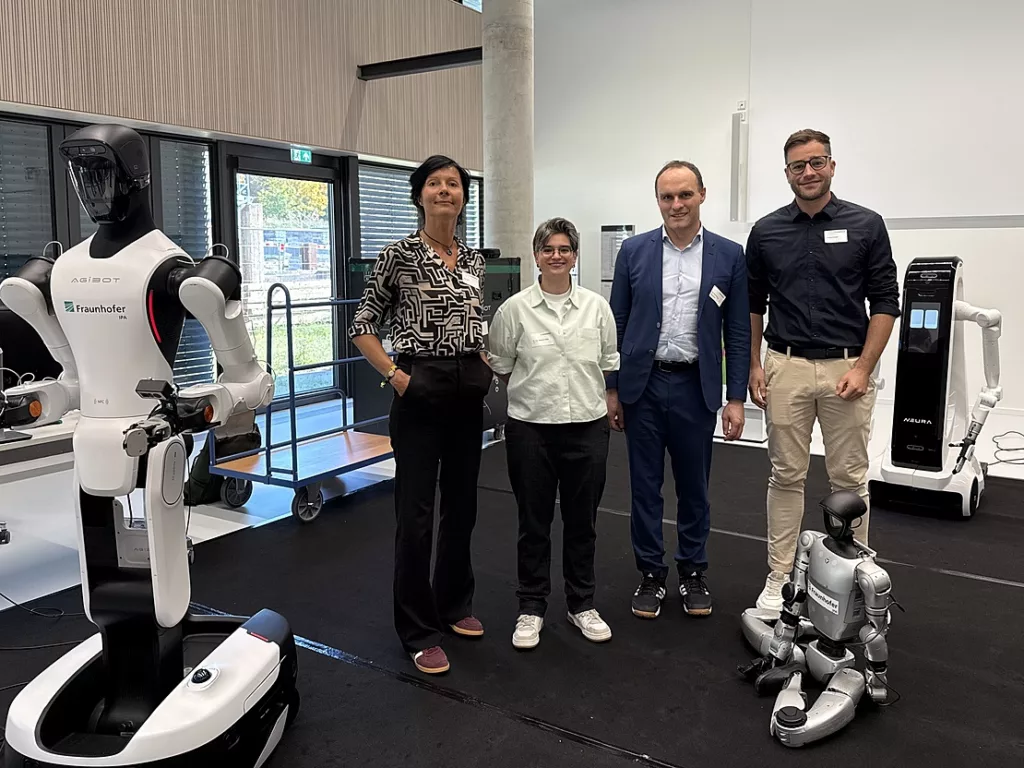
    On September 30, we participated in the Open Lab Day of the KI-Fortschrittszentrum in Stuttgart. Organised by Fraunhofer IAO, Fraunhofer IPA, and the Institute of Human Factors and Technology Management (IAT) at the University of Stuttgart, the event welcomed more than 120 participants from industry and research.

    The programme focused on the practical application of AI and robotics, addressing both technological possibilities and regulatory considerations. As a partner of the KI-Fortschrittszentrum, we contributed to the event with a welcome adress and an introduction to our ecosystem and role in advancing AI research and innovation.
    Participants gained insights into a range of current topics, including generative and agentic AI, humanoid robotics, AI compliance, and the EU AI Act. Guided tours of the Reallabor provided hands-on insights into practical applications, featuring demonstrations of AI-based quality inspection, service assistants, humanoid robots, intelligent process control, and AI-supported document processing.

    The event offered a great opportunity for exchange between companies, researchers, and robotics experts, showing the wide range of innovative technologies, research activities, and practical applications developed across our Innovation Campus.

    Open Lab Day of the KI-Fortschrittszentrum
    Copyright: Cyber Valley
  • PostDoc: Foundation Models for Knowledge Graphs

    The Institute for Artificial Intelligence, Analytic Computing group, at the University of Stuttgart invites applications for a full-time position as PostDoc for 2 years (100% TV-L E13; possibly extensible) working on Foundation Models for Knowledge Graphs.

    What will you contribute?

    You will undertake foundational research on automating the management of data and knowledge by techniques that combine machine learning, logics, and natural language understanding. Your work will facilitate data integration, data analysis, and human-data interaction. You will define and lead upcoming projects in this area. You will advise and tutor bachelor’s, master’s, and PhD students in the computer and data science programs of the department on topics related to your research.

    What is your profile?

    You enjoy interacting and collaborating with other team members. You are forward-thinking, you seek confirmation by applying your research ideas not only to toy problems, but also to real-world problems. You enjoy precise analytical thinking and apply scientific rigor in your research practice and writing, as also evidenced by successful publications in relevant conferences and/or journals.

    What do they offer?

    They provide a friendly yet challenging interdisciplinary research environment and support your academic career in successfully extending your academic profile through cutting-edge publications. The Institute for Artificial Intelligence is part of Cyber Valley, the largest and most prestigious research center for AI in Europe. Through the International Max Planck Research School for Intelligent Systems, the ELLIS Unit Stuttgart, and the ELLIS Network as a whole, they offer excellent opportunities for collaboration from local to international levels. The salary amounts to German TV-L E13, which ranges from 62,000 to 71,000 Euro per year (before taxation), depending on your experience.

    How to apply?

    Applications submitted before November 16, 2026, will receive preferential treatment. Applications will be accepted until the position is filled. Please submit the following documents to apply:
    1. a motivation/cover letter that highlights why you are the right fit for this specific position,
    2. a curriculum vitae,
    3. scans of all your original final transcripts and diploma certificates from each university degree (Bachelor, Master, Doctorate). Please include translations into English or German. They accept translations made by yourself. They have more than 10 nationalities in their group, and they can likely confirm the accuracy of your translation internally.
    4. Submit your applications via this link.
    5. Email applications will be ignored.

    Women who apply will be given preferential consideration in areas in which they are underrepresented, provided they have the same aptitude, qualifications, and professional performance. Severely disabled applicants with equal qualifications will be given priority.

    More questions?

    Personal inquiries can be directed to Prof. Staab.

  • 2023: Three new AI institutes at Cyber Valley

    2023: Three new AI institutes at Cyber Valley

    In 2016, important actors from science, industry, and politics founded the Cyber Valley Consortium, which became the first Innovation Campus in Baden-Württemberg. Ten years on in 2026, we’re revisiting the most significant milestones from the last decade. Each month, we’ll focus on a particular year since Cyber Valley’s beginning. 

    This month, we’re looking back to 2023, when three new AI institutions within the Cyber Valley Innovation Campus were founded: the Institute for Artificial Intelligence at the University of Stuttgart, the Tübingen AI Center, and the Center for Bionic Intelligence Tübingen Stuttgart. Since 2023, these institutes have played a key role in advancing Cyber Valley’s mission: turning excellent AI and robotics research into a better future for all. Below, we recount why these institutes were established, their main achievements, and their future plans.

    Center for Bionic Intelligence Tübingen Stuttgart (BITS)

    The Center for Bionic Intelligence Tübingen Stuttgart (BITS) was founded to establish a new approach for integrating intelligent technical systems with humans. It aims to improve understanding and treatment of certain neurological and psychiatric diseases and develop individually tailored medical aids for patients. BITS brings together scientists from four institutions: the Universities of Stuttgart and Tübingen, and the Max Planck Institutes for Intelligent Systems and for Biological Cybernetics.

    Since its founding in 2023, its main achievements include new in-body agents that can be controlled inside living animals to stimulate movement behavior and novel on-body soft devices to suppress the shaking body in tremor patients. The latter received the 2025 innovation prize of the German Parkinson Foundation. In the future, BITS will go beyond medical devices to investigate and develop hybrid cybernetic control-loop systems that closely integrate humans and technology, including in the fields of ergonomics and occupational health and safety research.

    BITS
    BITS at Cyber Valley Day on September 9, 2026. Photo: Christian Borth

    The Institute for Artificial Intelligence, University of Stuttgart

    The Institute for Artificial Intelligence at the University of Stuttgart was founded to undertake internationally outstanding AI research while supporting its transfer for the benefit of industry and society. The Institute also aims to reflect on AI’s societal impact by monitoring AI and ensuring AI compliance through joint research with industries, the humanities, and social sciences.

    Since 2023, the Institute has celebrated several important milestones. By drawing on physical principles, the Institute has created more reliable machine learning models that have applications in molecular and materials simulations. Moreover, PhD student Bo Xiong won the award for the best computer science dissertation of the German-Austrian-Swiss Association for Computer Science. Meanwhile, the Institute’s spin-off company, Semanux GmbH, is helping those with motor disabilities to participate in the digital sphere without support of third parties.

    In the future, the Institute plans to develop reliable AI methods that support scientists and engineers. It will accelerate the discovery of new drugs and materials, while developing new engineering products. A further goal is to enable non-experts to adapt and co-design robotic systems that they work and interact with.

    Institute of Artificial Intelligence, University of Stuttgart in June 2026. Photo: Universität Stuttgart/Uli Regenscheit
    Institute of Artificial Intelligence, University of Stuttgart in June 2026. Photo: Universität Stuttgart/Uli Regenscheit

    Tübingen AI Center, University of Tübingen

    In 2023, the Tübingen AI Center at the University of Tübingen was established as a permanent national AI center. The Center aims to shape the next generation of machine learning and develop more robust, efficient, and accountable learning systems.

    Since its establishment as a national AI competence center, the Tübingen AI Center has played a key role in strengthening the region’s research and innovation ecosystem. It has brought together more than 300 scientists across 32 research groups and has established strong links between research, education, and entrepreneurship. Its growing technology transfer activities have helped turn research into products, tools, and start-ups.

    Looking ahead, the Center plans to appoint more professors and increase its transfer activities even further. Recent spin-offs, including two Tübingen-affiliated teams selected for SPRIND’s Next Frontier AI program in 2026, and several focused research organizations, illustrate what this may entail.

    Kick-Off des Tübingen AI Centers am 18.Juli 2023 in Tübingen mit Ministerpräsident Winfried Kretschmann, Ministerin für Hochschulen, Forschungs- und Kunsteinrichtungen Petra Olschowski, Parlamentarischer Staatssekretär des BMBF, Mario Brandenburg
    Inauguration of the Tübingen AI Center in 2023. Photo: Wolfram Scheible

    To celebrate Cyber Valley’s ten-year anniversary, we’ll be sharing a variety of content across our website and social media channels reflecting on milestones from the last decade. Stay tuned for the next installments!

  • Cyber Valley Day 2026

    Cyber Valley Day 2026

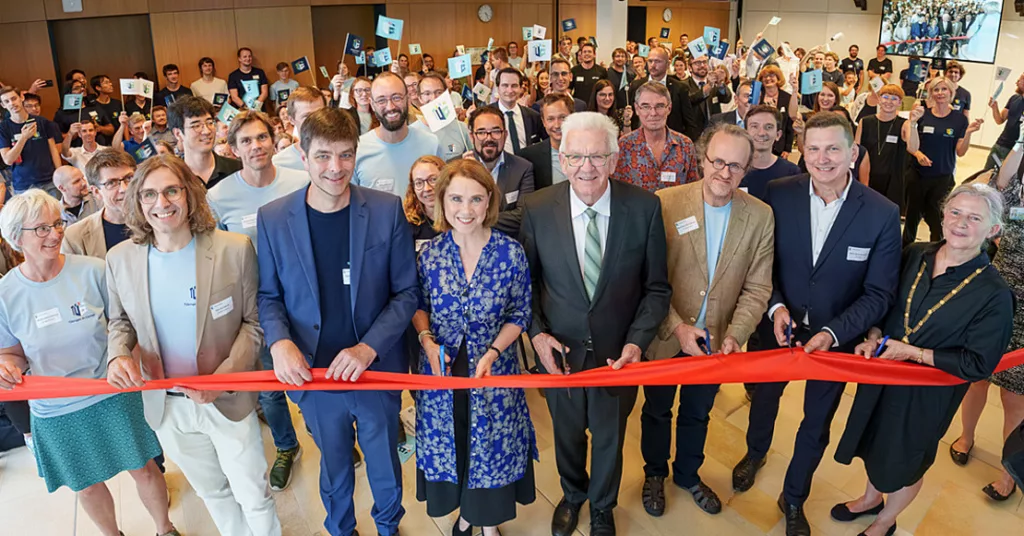
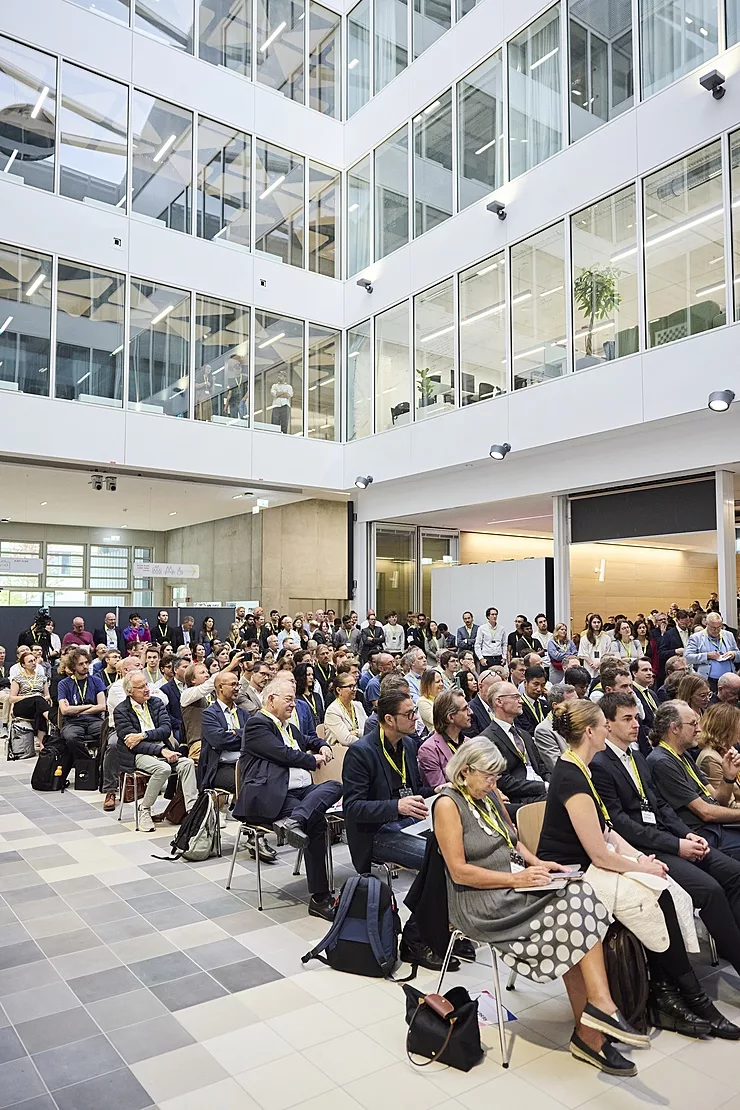
    On September 9, more than 850 guests came to Tübingen to celebrate a very special milestone: ten years of the Cyber Valley Innovation Campus. Researchers, start-ups, investors, policymakers, partners from industry and society, as well as many other guests gathered for a day full of inspiring talks, surprising keynotes, a research exhibition, start-up presentations, investor sessions, and networking.

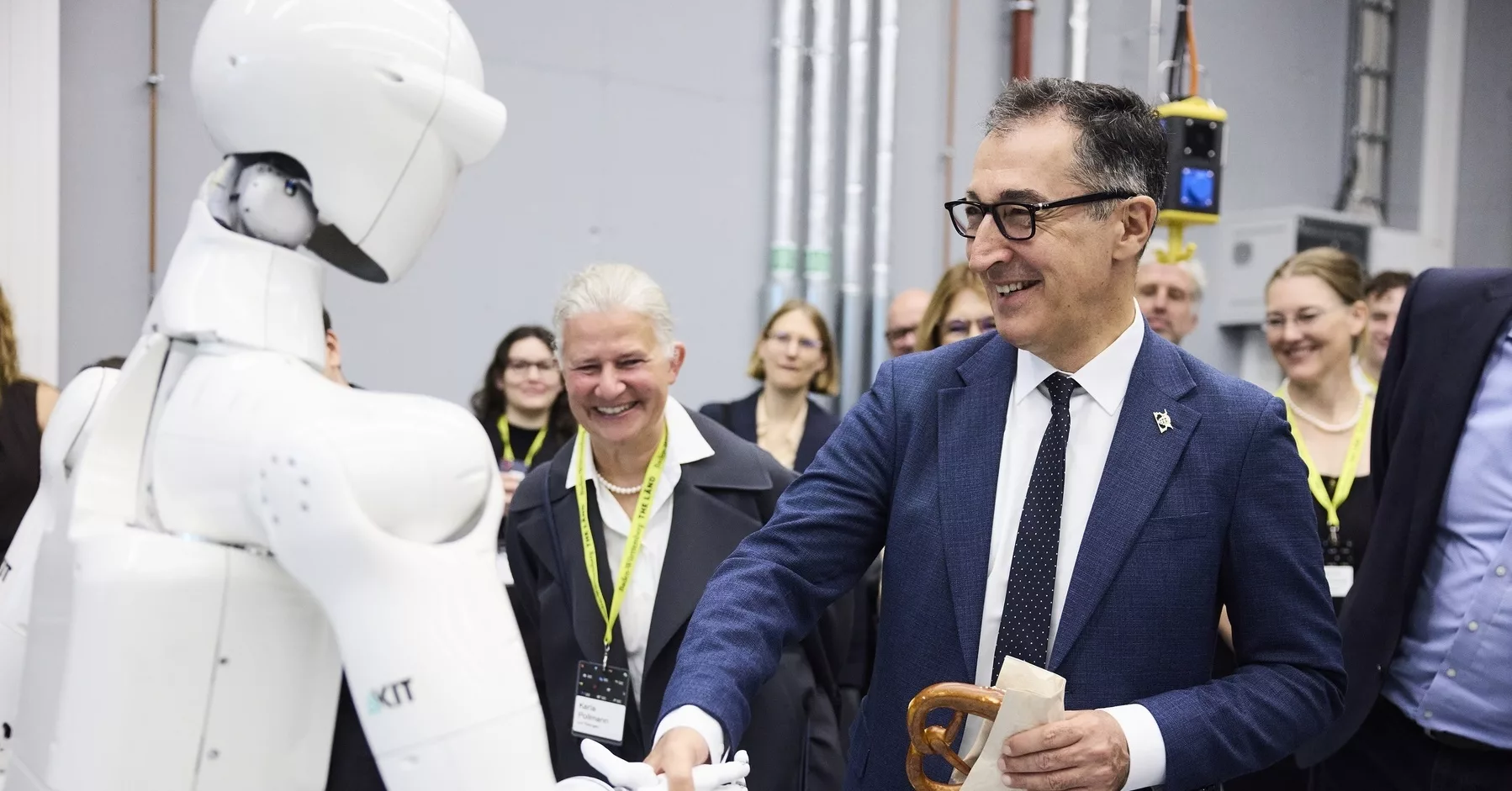
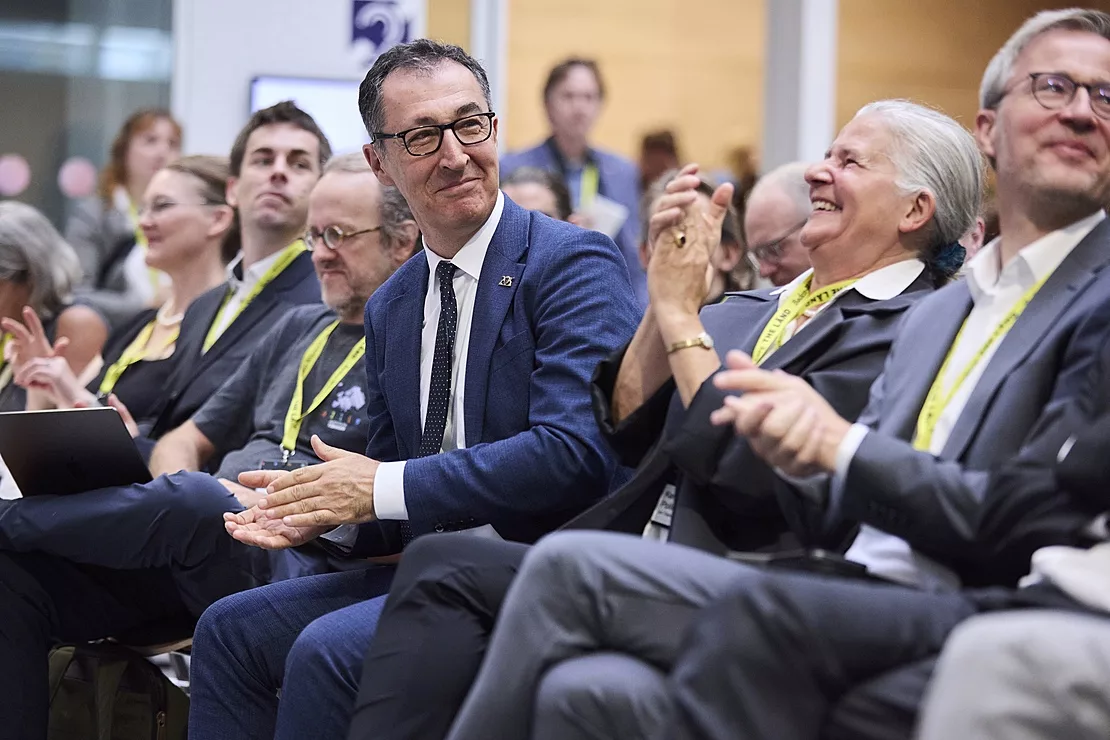
    Cyber Valley Day opened with welcome addresses from leading representatives from politics, science, and our Innovation Campus: Moritz Hardt, Director at the Max Planck Institute for Intelligent Systems; Cem Özdemir, Minister President of Baden-Württemberg; Boris Palmer, Lord Mayor of Tübingen; Karla Pollmann, President of the University of Tübingen; Simone Schwanitz, Secretary General of the Max Planck Society; and Florian Mayer, Managing Director of Cyber Valley GmbH, welcomed guests to the anniversary celebration.

    Cem Özdemir_Minister President
    © Christian Borth

    Scientific program at the main stage

    Hosted by Linda Behringer, press officer at the Max Planck Institute for Intelligent Systems, the main stage program brought together voices from across the international AI and innovation landscape.

    A keynote by Manuela Veloso, Herbert A. Simon University Professor Emerita at Carnegie Mellon University, provided one of the early highlights of the day. Throughout the program, the Cyber Valley Voices sessions on the main stage featured leading researchers from across our Innovation Campus, including Bernhard Schölkopf from the ELLIS Institute Tübingen, Matthias Bethge from the Tübingen AI Center at the University of Tübingen, Tamim Asfour from the Karlsruhe Institute of Technology, Katherine J. Kuchenbecker from the Max Planck Institute for Intelligent Systems, Steffen Staab from the University of Stuttgart, and Werner Kraus from Fraunhofer IPA.

    In the Auditorium, C. David Remy and Philipp Rothemund from the University of Stuttgart, as well as Chandan Kumar from Fraunhofer IAO, shared insights into their research. The afternoon continued with a keynote by Alex Smola, CEO and co-founder of Boson AI, as well as a talk by Rafael Laguna de la Vera from the Federal Agency for Disruptive Innovation (SPRIN-D).

    © Christian Borth

    Surprise keynote speaker

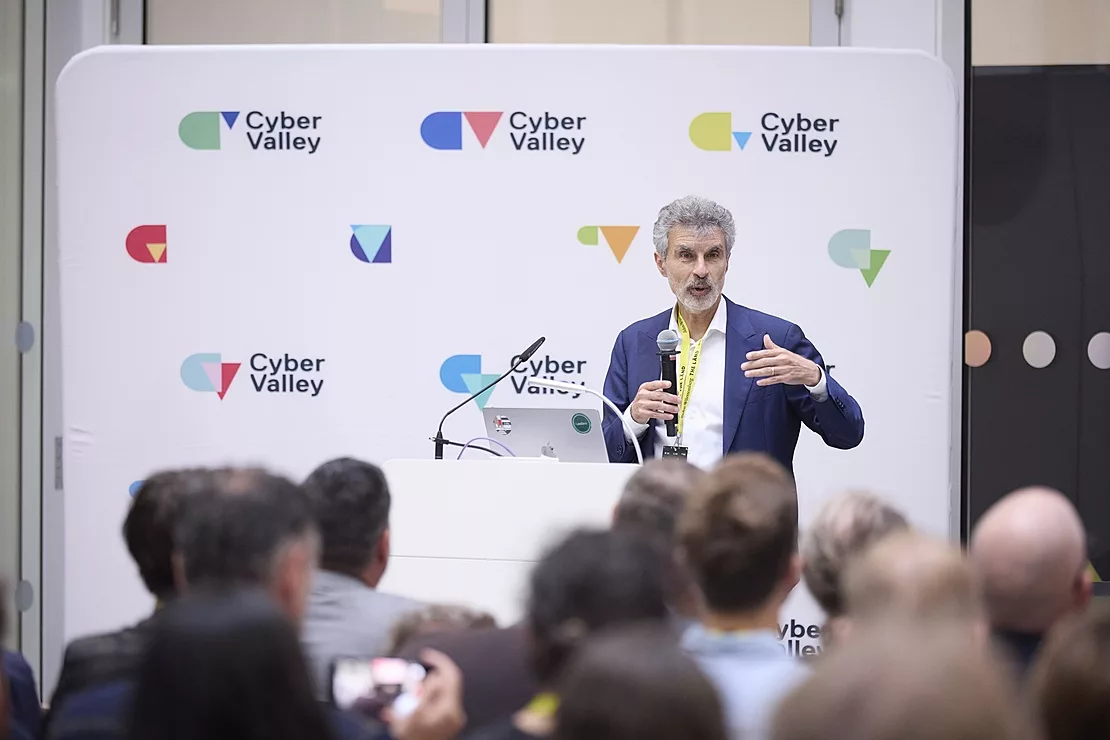
    One of the biggest highlights of the day was our surprise keynote speaker: Yoshua Bengio, one of the pioneers of modern artificial intelligence. He has become one of the most prominent voices discussing the societal implications of AI, discussing questions regarding safety, and he calls for a responsible development of AI. Having Yoshua Bengio join us for our anniversary was very special!

    Cyber Valley Day 10 Year Anniversary
    © Christian Borth

    From excellent scientific ideas to real-world applications and impact

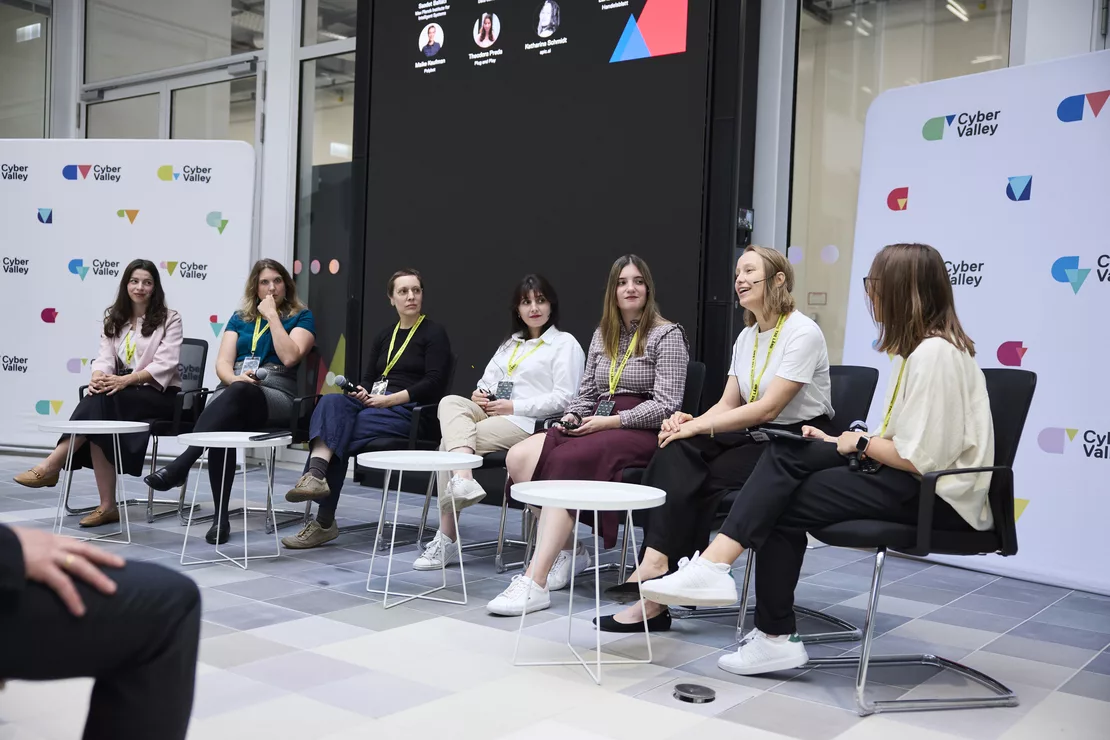
    The panel discussion “Building what’s next: How bold ideas move from research to impact” brought together researchers, founders, and innovation experts to discuss how ambitious ideas can move beyond research and into society and industry. Moderated by Larissa Holzki from Handelsblatt, the discussion featured Saadet Baltaci and Antonia Georgopoulou from the Max Planck Institute for Intelligent Systems, Aline Defranceski from Data Coffee, Maike Kaufman from Polybot, Theodora Preda from Plug and Play, and Katharina Schmidt from apic.ai.

    © Christian Borth

    The Cyber Valley Start-up Voices session offered further perspectives on innovation and entrepreneurship, with contributions from Prashanth Halady of Bosch, Mario Krenn of Feyer, and Jonas Müller of Black Forest Labs.

    Research from our Innovation Campus

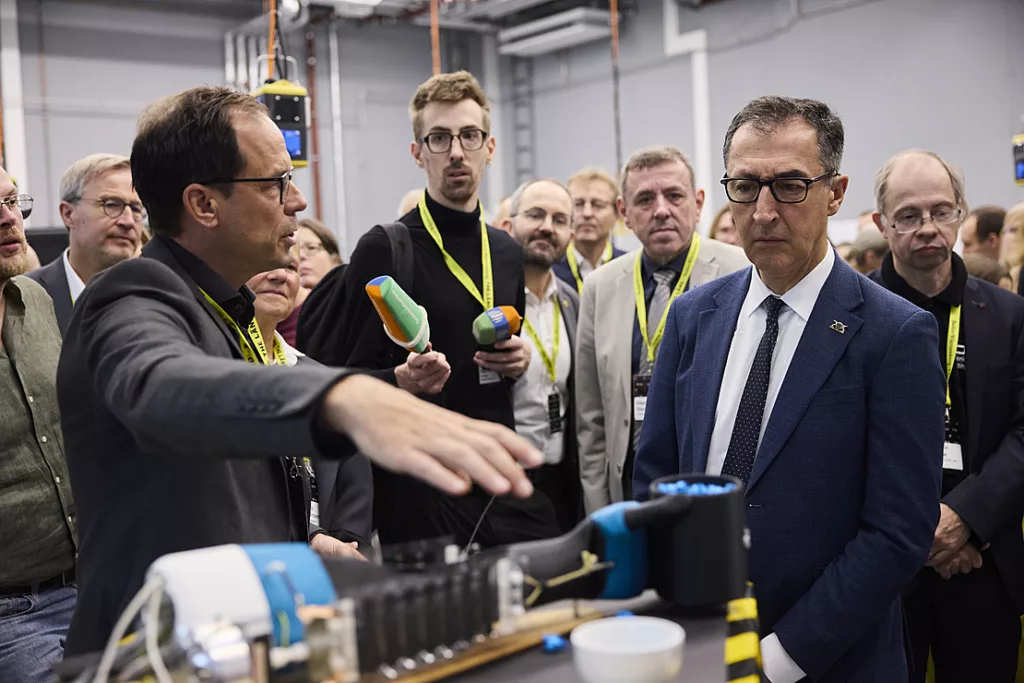
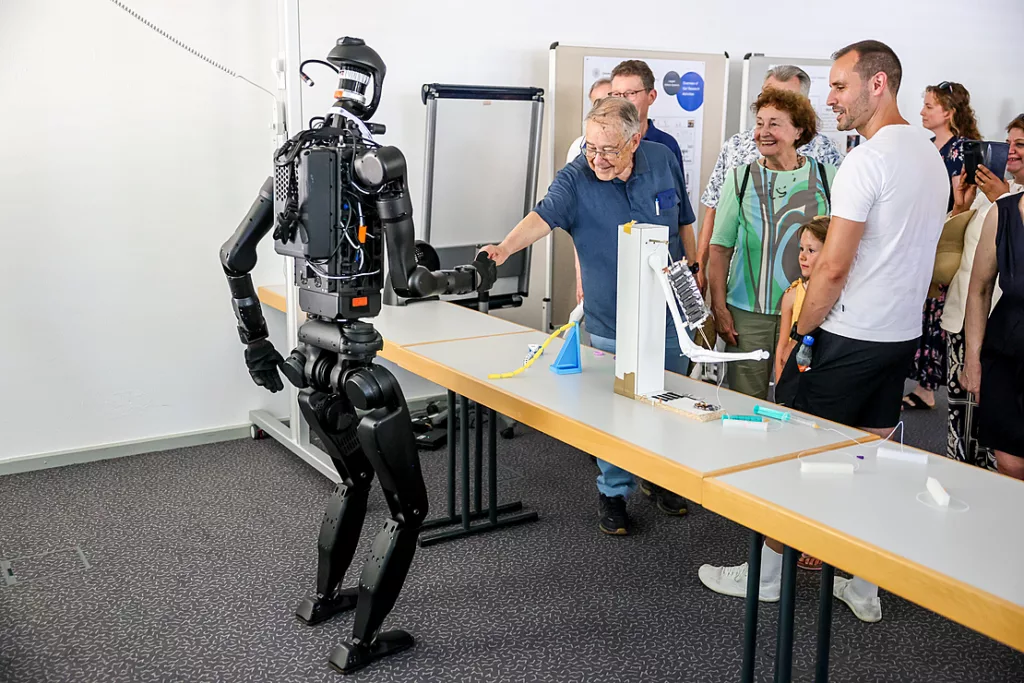
    The exhibition with more than 40 exhibitors on the ground floor brought together academic partners, research projects, and organizations from across our Innovation Campus, including the Max Planck Institute for Intelligent Systems, the Haptic Intelligence Department, Max Planck Foundation, the IMPRS-IS, the University of Stuttgart (IntCDC, IRIS, MLIP, KI-SIR), the University of Tübingen (ML Cluster, Tübingen AI Center), Bionic Intelligence Tübingen Stuttgart (BITS), ELLIS Institute Tübingen, Hertie Institute for AI in Brain Health, ARENA2036, BWKI, Cyber Valley GmbH and PAB, High Performance Humanoid Technologies Lab (H²T) from KIT, KE:SAI, Oktonex, Polybot, Prior Labs, and more!

    Robot at Cyber Valley Day
    © Christian Borth

    A stage for the next generation of founders

    On the sixth floor, the Start-up Basecamp put entrepreneurship and emerging innovation at the center of the conversation.
    Start-ups and initiatives including Bergsonne Labs, Denkbox, NUVUS, Computomics, Feyer, MaiTY, Istari AI, TextVerstehen, Tanocrix, Data Coffee, Yugen Space, IntegraSkin, MIRA vision, the Startup Center Tübingen, and the Tübingen AI Center presented their work and connected with researchers, investors, and other members of the ecosystem.

    An investor “Ask Me Anything” session also gave researchers and future founders the opportunity to gain practical insights into early-stage investment and entrepreneurship. Representatives from Capnamic, Fly Ventures, AI Fund, and Mätch VC shared their perspectives on what investors look for and what researchers should consider when exploring the path from research to start-up.
    During more than 40 1:1 sessions with investors, researchers and prospective founders had the opportunity to discuss their individual ideas, receive tailored feedback, and explore potential pathways toward funding and venture creation.

    Cyber Valley Day start-ups
    © Christian Borth

    Special announcement

    The final highlight of the day was grubel, which announced its launch during Cyber Valley Day. Founded by Moritz Hardt, Reinhard Heckel, Vedant Nanda and Navid Rekabsaz, grubel is building AI systems specialized to individual legal matters. Its vision: every matter should be able to build its own AI by combining data curation, adaptation, and evaluation to create specialized systems that can deliver high performance while keeping sensitive data under the customer’s control. We’re excited to see this research-driven venture take its next step and look forward to following its journey! 

    © Christian Borth

    Looking ahead

    Ten years ago, a group of visionary partners laid the foundation for Cyber Valley. Today, it has grown into a vibrant ecosystem connecting excellent research, entrepreneurship, industry, and society. Thank you to everyone who joined us and helped make this celebration a very memorable day!

  • Research internship for PhD students

    Feyer is building algorithms that can discover new optical, quantum, and other physical technologies. For this they are building AI models that learn from differentiable physics simulators.

    The research

    Their design methods, built on differentiable physics simulators, have already discovered new experiments that were built and tested in laboratories. With funding from SPRIND’s Next Frontier AI Challenge, they are now building a new generation of optimizers for physics design.
    Most optimizers use only loss values and local gradients. The Neural Explorer also receives the simulator’s computational graph, including its topology, operations, intermediate values and gradients. It learns to propose larger moves that may escape local optima.

    Research topics

    • Graph neural architectures and representations for large JAX computational graphs
    • Learned optimizers, non-local search and combinations of neural and classical methods
    • Scalable data generation, GPU training and rigorous equal-compute benchmarks

    Who you are

    • An enrolled PhD researcher in ML, optimization, scientific computing, differentiable programming or a related field
    • A careful researcher who can design clear experiments for open-ended questions
    • Excellent Python skills; experience with JAX or a comparable autodiff stack
    • Comfort working independently in a small research team

    Physics expertise is welcome, but not required.

    Duration: 3 to 6 months

    Start: Flexible / ideally ASAP

    Location: Tübingen AI Center or Munich Urban Colab

    Format: Paid, 80% to full-time internship

    Application

    Send your CV, a short note on fit, preferred dates and desired duration to careers@feyer.ai.

    For questions, contact klimesch.jonathan@gmail.com.