User Group: Entrepreneur

  • Cyber Valley Start-up Incubation Program

    Cyber Valley Start-up Incubation Program

    Inhalt

    Ihr braucht kein Team, keine Vorkenntnisse und kein Gründungsprojekt. Alle Werkzeuge, die ihr für eine erfolgreiche Gründung benötigt, werden euch zur Verfügung gestellt. Gemeinsam mit erfahrenen Start-up Coaches erhaltet ihr Einblicke in Themen wie Team Building, Marktanalyse, Proto- und Pretotyping, Businessmodelle und Start-up Pitches. Am Ende bekommt ihr die Chance, euer Start-up Projekt vor einer hochklassigen Jury zu präsentieren und ihr könnt wertvolle Preise gewinnen.

    Zielgruppe

    Der Inkubator richtet sich an alle Wissenschaftler:innen aus dem Cyber Valley Ökosystem – und darüber hinaus. Doktorand:innen der International Max Planck Research School for Intelligent Systems (IMPRS-IS) erhalten darüber hinaus 3 Credit Points, wenn sie den Kurs erfolgreich absolvieren.

    Ablauf und Termine

    Der Inkubator ist als sechswöchiges Programm geplant mit jeweils einem Vor-Ort-Workshop pro Woche (10:00–18:00). Die einzelnen Termine werden abwechselnd in Stuttgart und Tübingen stattfinden. Es wird einen Shuttlebus für Teilnehmer:innen des jeweils anderen Standortes geben. Sollte die Pandemie Vor-Ort-Veranstaltungen nicht erlauben, wird die Veranstaltung virtuell stattfinden. Die Termine sind:

    • Freitag, 1. April 2022
    • Freitag, 8. April 2022
    • Freitag, 22. April 2022
    • Freitag, 29. April 2022
    • Freitag, 6. Mai 2022
    • Freitag, 13. Mai 2022 (finales Pitch Event)

    Bewerbung

    Um sich für das Cyber Valley Start-up Incubation Program zu bewerben, wird ein Lebenslauf und ein Motivationsschreiben benötigt. Aus dem Motivationsschreiben (ca. eine Seite) soll hervorgehen, warum die Bewerber:innen sich für das Programm interessieren und welches Problem aus ihrem (Forschungs-)Alltag sie mit einem Start-up gerne lösen möchten. Doktorand:innen benötigen außerdem eine schriftliche Erlaubnis ihrer Doktormutter oder ihres Doktorvaters, dass sie an den sechs Terminen teilnehmen dürfen (eine E-Mail genügt).

    Nur noch wenige Plätze verfügbar. Bitte sendet euren Lebenslauf, euer Motivationsschreiben und die schriftliche Erlaubnis eurer Doktormutter bzw. eures Doktorvaters an tobias.duerr@cyber-valley.de.

    Sprache

    Das Programm wird in englischer Sprache angeboten.

    Fragen?

    Wendet euch gerne an Tobias Dürr, wenn ihr Fragen habt.


  • ML deployed to fast-track industrial optimization process

    ML deployed to fast-track industrial optimization process

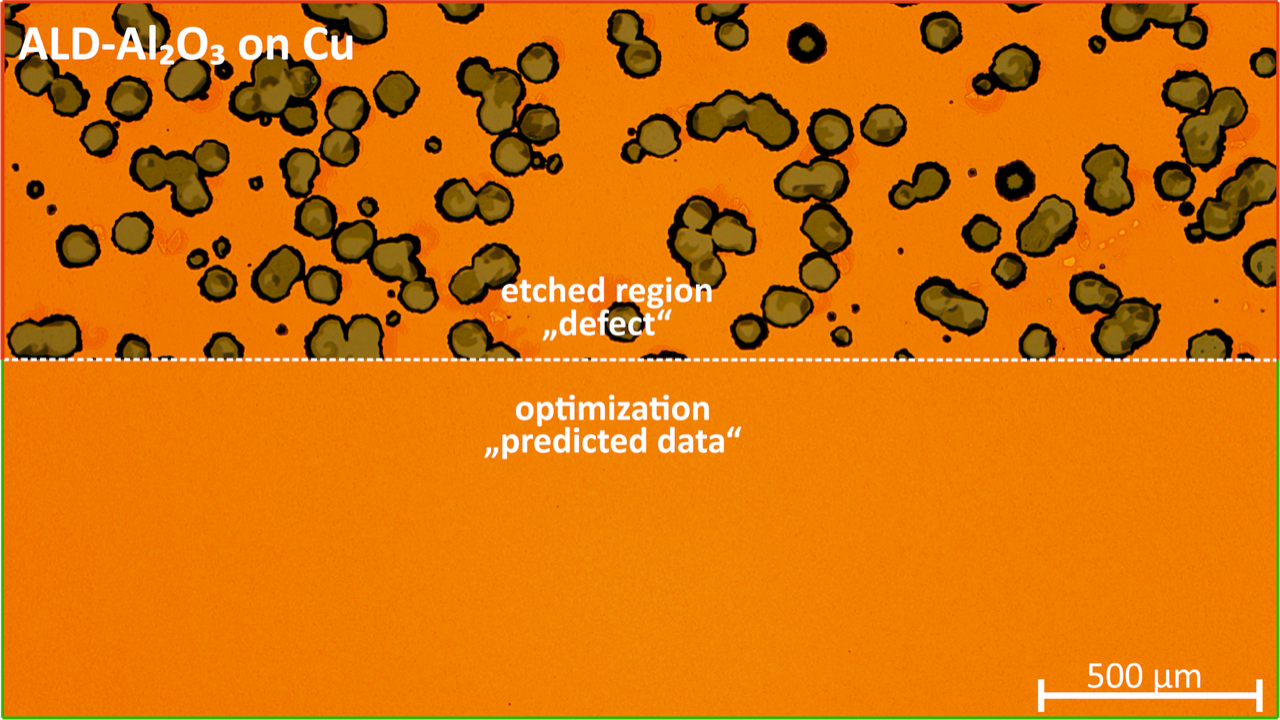
    Microchips are a building component of practically every electrical product. One metal very common in the production of these chips is copper. This soft metal is essential in the manufacturing of microchip-based products, as it offers both electrical and thermal conductivity. However, for copper to unleash its full potential, its corrosion must be avoided. In the production process of microchips, it is therefore necessary to coat the copper with a thin layer of ceramic material: aluminum oxide. This encapsulating process is called Atomic Layer Deposition or ALD in short.

    The optimization of the coating process is tedious and costly

    The coating of copper is not a dip-and-go process. It takes a lot of engineering expertise, many hours of manual labor, and tedious trials to find the optimum deposition parameters for the layer to be defect-free (i.e., without any holes, dents, or gaps) and to be as thin as possible. Firstly, because there is little space in microchips often the size of a dust mite. Secondly, aluminum oxide is costly: scaled up to the production of thousands if not millions of microchips, even a few nanometers more width of the coating layer puts a dent in the margin. And thirdly, gaps and dents are the back door for corrosion to find its way in after all. 

    An interdisciplinary team of researchers at the Max Planck Institute for Intelligent Systems, the Max Planck Institute for Solid State Research, the Technical University of Munich, and Robert Bosch GmbH – an industrial partner in the Cyber Valley research network – has found a way to minimize defects in the layer, to fast-track the optimization process and to reduce the costs resulting from coating copper used in microchips. They deployed Bayesian Machine Learning methods and found that the optimization process can be speeded up fifteenfold compared to taking a conventional optimization approach.

    Bayesian optimization

    “Imperfections in the coating layer can be reduced by having a thicker coating film, however then it costs more and the layer takes up more space. Many iterations are necessary for engineers to find the ideal coating with little to few defects. On an industrial scale, it takes even more time, weeks maybe months, and hence it costs thousands of euros for each iteration. Therefore, reducing the optimization process from 30 or 40 steps to only two or three through Bayesian optimization is quite an achievement,” says Gül Dogan, a Ph.D. student both in the Modern Magnetic Systems Department at the Max-Planck-Institute for Intelligent Systems (MPI-IS) and with Robert Bosch GmbH. She is the first author of Bayesian Machine Learning for Efficient Minimization of Defects in ALD Passivation Layers, recently published in the journal Applied Materials and Interfaces.

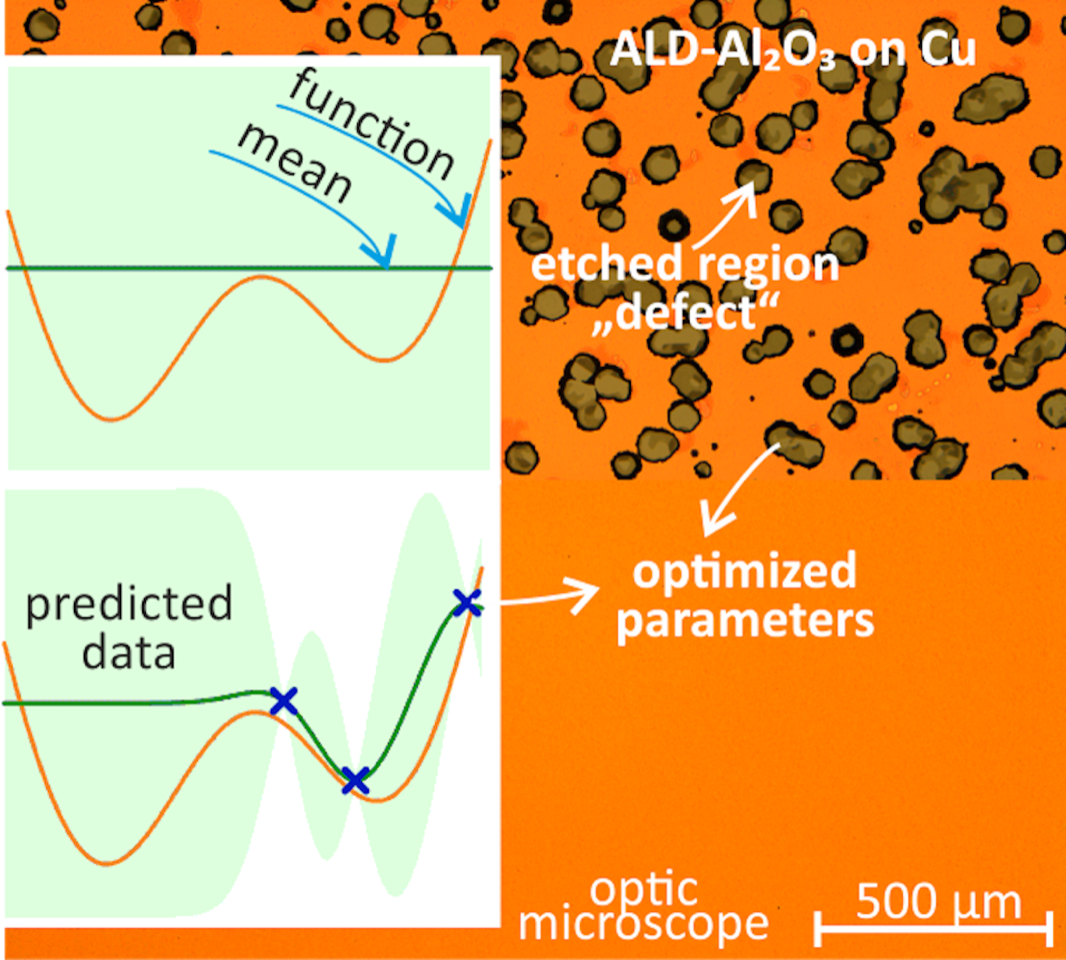
    Figure 1: As the system collects new data points – the blue markers in the lower image – it updates the prediction about the system and based on this prediction, Bayesian optimization suggests a new parameter set to be tested.

    “We use machine learning to perform better than exhaustive conventional search and optimization methods. Our algorithm collaborates with the experts and learns from their experience – with success: We have virtually no film-porosity and hence significantly reduce the corrosion,” Sinan Demir adds, who is a Ph.D. student in the Physical Intelligence Department at MPI-IS, led by Prof. Metin Sitti.

    Several parameters determine how good the coating outcome is: how long the copper surface is pretreated using Ar/H2 plasma to clean the material, the deposition temperature above 200 °C, and a 60 ms pulse time applying the aluminum oxide. All parameters and their interplay influence the corrosion resistance. The algorithm was capable of finding the optimal parameter set in only a few iterations.

    Learnings can be transferred

    “Let’s assume the system performance is defined by this orange function seen in Figure 1. Just assume that our parameters affect the production process according to this function. We start with no knowledge at all. As we collect new data points – the blue markers in the lower image – we update the prediction about the system and based on this prediction, Bayesian optimization suggests a new parameter set to be tested, which can improve the performance of the system. Then, we do the experiment by using this new parameter set. We continue testing and choosing new parameters sets until we reach our final goal or design criteria,” Demir continues.

    The coating of copper is one optimization challenge. In materials science, there are many more. “This is the advantage of Bayesian Machine Learning methods. The learnings you gain from one optimization process can be transferred to different materials and processes in all areas of materials science. You don’t start at zero, you can scale it up,” Demir concludes.

  • From researcher to founder

    From researcher to founder

    Organ models as a safe testing environment

    Every day, people lie on operating tables. According to the German online portal Statista, doctors performed more than 15 million operations on inpatients in hospitals nationwide in 2020. Vast amounts of data have been generated in the process. It is difficult for artificial intelligence (AI) researchers to obtain it. There are legal, ethical and technical reasons for this. In contrast, the situation is quite different for interventions on artificial organ models: There, for example, there are no reservations when data and possible deficits are recorded. Tian Qiu has created such organ models. In his vision, all hospitals and medical faculties will soon have them. He is sure that biomedical engineers as well as medical practitioners can learn from them. Now he wants to found a company.

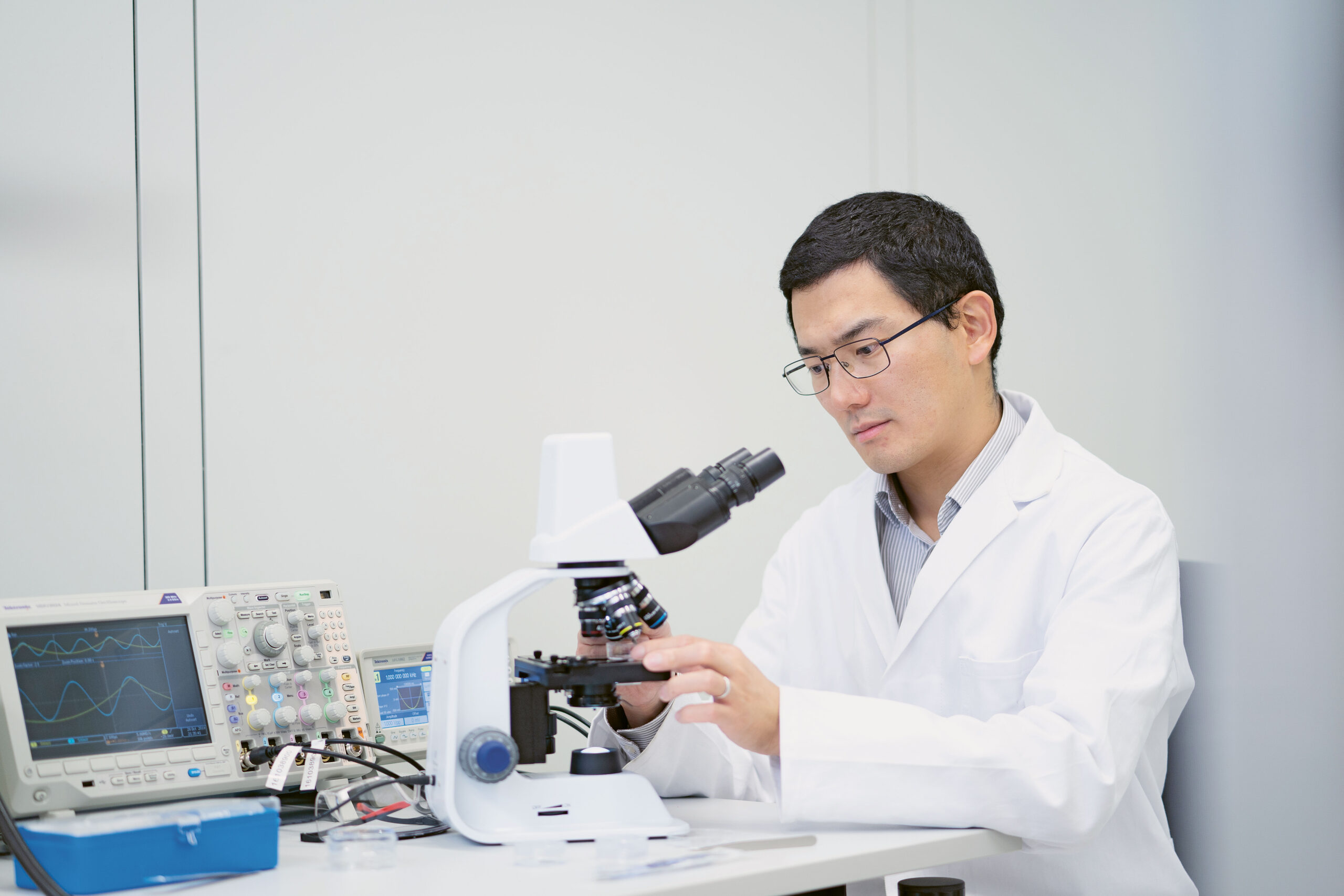
    Tian Qiu has been Cyber Valley research group leader for “Biomedical Microsystems” since 2019. The group is based at the Institute of Physical Chemistry at the University of Stuttgart. Previously, he studied Mechanical and Biomedical Engineering at Tsinghua University in Beijing, which is considered China’s leading technical university. In 2012, he came to Europe, earned a Ph.D. in Biotechnology and Bioengineering at the Swiss Ecole Polytechnique Fédérale de Lausanne (EPFL), and conducted research at the Max Planck Institute for Intelligent Systems (MPI-IS). There he developed microrobots that could move through the body and perform minimally-invasive procedures. The only problem was: how to practice? There was no realistic test environment for such robots. “I'm an engineer, I know technology, I can build things. Why not an organ?” Qiu said to himself. The exciting thing about this is that, up to now, surgical training has lacked training opportunities that come close to an operation situation on humans.

    In cooperation with the Department of Urology at the University Hospital in Freiburg, the researchers have therefore developed a series of artificial organs, including the kidney, bladder and prostate – the model of a urinary tract. Surgeons can use it to practice endoscopies inside the bladder or to detect kidney stones. The hardware is flanked by software. During the procedure, sensors on the organ models measure, for example, how precisely and quickly the surgeons proceed. The data serves as feedback for their work – at the same time, researchers can feed it into AI algorithm and train the computer to automatically evaluating the surgical performance, for example. Augmented Reality Surgical Simulator is the name of this computer-based training assistant for surgeons. After years of basic research, the model for urologists is ready for series production. “If there is demand, we can bring the system to market,” says Qiu. However, mass production is no longer a task for an academic research group. Industry is needed for that.

    From research to business?

    Together with Prof. Peer Fischer from the MPI-IS in Stuttgart, Prof. Arkadiusz Miernik from the University Hospital in Freiburg and Dr. Kurt Ruffieux serial entrepreneur in the medical industry, Qiu now wants to found a start-up. But how does one go from being a scientist to an entrepreneur? “It is not enough to have an idea and prove in publications that the technology works,” says Qiu. Founding has far more challenges – and raises questions whose answers are not part of an engineering degree: Where will funding come from? Who wants to invest? Where to position yourself in the market? Who should buy? What do customers want? Qiu: “We believe in our technology. But is it really the technology the market needs?”

    He finds like-minded people and expertise in unfamiliar business territory in the Cyber Valley ecosystem. Its start-up network, with its regular events, helps to drive his project forward, says Qiu. At symposiums, for example, existing startups have presented and shared what promises success – and what went wrong. The start-up coaches from Prof. Alexander Brem’s Institute for Entrepreneurship and Innovation Research at the University of Stuttgart also provided significant support. The Max-Planck-Innovation GmbH, an organization of the Max Planck Society that promotes the transfer of inventions into company foundations, is helping Qiu and his partners apply for funding from the federal research ministry, as well as with patenting and licensing. The team has applied for patents in the European Union, the U.S. and China – the largest markets for the medical industry. Scientists at German universities and research institutions are not necessarily concerned with the spin-off of their ideas, even if their research would actually allow them to do so. In Silicon Valley in the USA, for example, or in Israel, the start-up culture is more pronounced and less conservative, says Qiu. Cyber Valley could change that, he believes.

    However, with IAV, BMW, ZF, Bosch, Daimler and Porsche, six of the current seven Cyber Valley industrial partners are carmakers or suppliers. “It could really help us if more partners from the medical industry were to join,” says Qiu. The industry is strongly represented in the region; Qiu points, for example, around 400 medical instrument companies in Tuttlingen, and also strong biomedical industry in the region Tübingen.

    The response to the cyber-physical organ twins is promising. Qiu and his partners are currently in contact with ten medical technology companies, some of them international, that have expressed interest. For example, Tian and his team recently sent their EndoUroTrainer to Canada to train urological surgeries. At a workshop in Canada, urologists tested a new surgical method for the treatment of prostate enlargement, a condition that affects around a quarter of men over the age of 50 and increases with age up to 90 percent. So, the need seems to be there.

    The urinary tract model is only the beginning

    The principle of the artificial urinary tract can be transferred to other specialties such as neurosurgery. Qiu could also imagine designing an artificial brain, for example. But therein lies the crux. “There are so many medical departments and organs that we won't run out of work,” says the founder. “But as a young startup, we don't have the resources to tackle all the organs. We have to carefully choose the right one.” Another sticking point: On the one hand, they say, it's a matter of getting through the initial phase and filling current voids in the market – while at the same time inventing new things to take medical education to a new level in the long term. For the beginning, the founders plan to employ three to five people. First and foremost, they are looking for a project manager with a technical background and experience in the industry.

    The data from the artificial organs make surgical work measurable and assessable. They can provide instructors with clues as to who is ready for real operating rooms and patients. Junior surgeons can see what they need to improve in their performance. In Qiu’s ideal, the Augmented Reality Surgical Simulator has become the standard training system in a few years. He believes that AI is indispensable in medicine – and that its potential is far from exhausted. He does not share the concern that doctors could possibly lose their jobs: Highly qualified doctors would be difficult to replace completely by robots. However, many are skeptical as to whether AI is already developed enough to work just as well as a human assistant. For patients, on the other hand, the idea of robots operating on their own could stir up fears, says Qiu. As with self-driving cars, there are still many questions to be answered, such as ethical as well as legal questions. What is important to him is that his development should support medical professionals rather than replace them. “The AI can do its job and then be checked by a human surgeon. What’s the problem there?“


  • Meet the AI GameDev winners

    Meet the AI GameDev winners

    “We will see gaming everywhere in our lives – and at the same time AI. And these two things will become more and more coupled. These intelligent systems will then feed into games and make them smarter and I think there’ll be a virtuous cycle of AI making games better and then games making AI better”, said Michael J. Black, Managing Director at the Max Planck Institute for Intelligent Systems and Cyber Valley spokesperson. “I see the future being much more of a merger of the real world, the virtual world, and AI – providing the interface between the physical and the virtual.”

    Out of the numerous submissions for the gaming competition, seven nominees were selected for the award ceremony as their ideas all had the potential to step up the gaming industry either in terms of creation or interactivity. Out of them, three start-ups and research groups had the possibility to secure one of the three prizes. The winners are:

    Main award for mlxar: generating 3D architecture models for the gaming industry

    The Austrian start-up mlxar (machine learning extended architecture) took the first prize and won the main award powered by Square Enix for the most innovative AI solution. mlxar uses AI to generate 3D architecture models for the gaming industry. “Architecture design is a manual, inefficient and time-consuming process – this is a problem when designing one building, and it’s a huge problem when designing an entire city, level or world, which is exactly what happens in video game design and the film industry”, said Ben James, CEO of mlxar. “Our AI innovation is not a replacement for the designer – it is a way of making expert knowledge scalable and ultimately creating new type of creative tool that helps humans augment their own intuition and sensibilities.”

    Content creation capacity is outnumbered by content demand, which is why this market is already larger than all the other entertainment industries combined. mlxar’s underlying technology innovation allows for the creative generation of architecture assets at a faster pace than the current state-of-the-art competitors. Their algorithms evolve depending on the input, e .g. the desired style preferences and design constraints of the user. This results in infinite architecture solutions, including yet unknown designs. mxlar’s contribution secured the team a visit to Tokyo, Japan, where they now get the chance to examine a potential cooperation with Square Enix on practical use of their technology in production.

    Scientific award for GRAF: 3D-aware image synthesis from 2D images

    Katja Schwarz successfully qualified with GRAF and took home the Scientific Award powered by Cyber Valley for the most promising scientific performance. GRAF (Generative Radiance Fields) is a proposal for a framework for 3D-aware image synthesis from raw unposed 2D images. “The creation of 3D assets is key for developing realistic gaming environments and virtual reality. However, 3D content creation requires a large design effort, making it a time and cost intensive process”, said Katja Schwarz from the Autonomous Vision Group at the University of Tübingen. “Even with large design effort, results are not yet entirely photo-realistic.” GRAF addresses these challenges with a data driven approach. The goal is to learn 3D-consistent assets from data to reduce the cost of manual design efforts and improve photo-realism of the created content. Most existing data driven approaches require 3D assets for training. In contrast, their pipeline learns to generate 3D-consistent assets from raw unposed 2D images. This is particularly important because 3D ground truth data is difficult to obtain in real world settings while images are ubiquitous.

    The initial prize linked to this award was a Cyber Valley tour and meeting with top AI researchers, including a visit to the Max Planck Institute for Intelligent Systems (MPI-IS) Stuttgart and Tübingen, Germany. As the team is part of Cyber Valley, the prize will be adapted in an adequate manner.

    Audience award for Kinetix: Transformation of 2D videos into 3D animated content

    The French start-up Kinetix SAS won the audience award powered by IT-Farm. This project received the most votes during the AI GameDev award show. Kinetix democratizes the character animation using AI and they enable creators to transform any 2D video into 3D animated avatars so that anyone can populate and tell stories in the metaverse. The metaverse is a hypothetical iteration of the internet that supports persistent 3D online virtual environments through traditional personal computers and virtual and augmented reality headsets. As of now, 3D production is limited due to slow and technical animation techniques. “Animating one minute takes four weeks of work, even for trained professional 3D animators. We will allow non-technical creatives to access 3D character animation that is too technical for them today”, said Yassine Tahi, CEO of Kinetix SAS. “We leverage the latest research in deep learning with our research team to go beyond the state of the art.”

    Current 3D animation software requires deep technical expertise and is not accessible to most of the creators. It can only be used offline and lacks the aspect of collaboration. Kinetix seeks to bridge the gap between the rising demand and the cost as well as technical literacy needed to generate 3D animated content. Their solution allows creators to generate and edit 3D animated content through the automation brought by the recent breakthroughs in deep learning. Kinetix will get an exclusive business or fundraising mentorship by IT-Farm covering topics such as fundraising advice, sales pitch reviews, or business plan development.

    About AI GameDev

    During Thursday’s award ceremony, a jury selected the winners of the main award and the scientific award. “The two things we really paid attention to were the novelty and the scientific quality of the work”, said Michael Sedlmair, Professor for Augmented Reality and Virtual Reality at the University of Stuttgart and AI GameDev jury member. “If these two aspects were paired with lots of potential for great impact on the gaming market, that is how we knew we had a worthy AI GameDev award winner.” Along with Sedlmair, Remi Driancourt (GM & Director of Research, Square Enix), Hasegawa Isamu (Senior Manager, Square Enix), Shinya Kasuga (Partner, IT-Farm), Oliver Passek (Advisor for film and media, Ministry of Science, Research and the Arts, Baden-Württemberg), Johanna Pirker (Assistant Professor, Graz University of Technology), and Miyake Youichiro (Lead AI Researcher, Square Enix) were members of the jury.

    For AI GameDev, Cyber Valley joined forces with game developer Square Enix and venture capitalist firm IT-Farm and called for submissions throughout August and September. In October, Cyber Valley researchers as well as representatives of Square Enix and IT-Farm then nominated seven finalists for Thursday’s award ceremony.

    Cyber Valley’s fifth anniversary

    The AI GameDev marked the first festive gathering in the month of December which is a special occasion for Cyber Valley: the research consortium in the Stuttgart-Tübingen region was founded five years ago. Cyber Valley, as an internationally renowned hotspot for AI, has successfully grown in the areas of research and innovation over the past years: professorships within the ecosystem have been appointed, Cyber Valley research groups have been founded and a start-up network as well as an investor network have been set up. AI GameDev marks yet another highlight on an impressive streak of events aiming at applying AI in promising contexts, this time in the format of a gaming competition.

  • Igniting the potential of AI

    Igniting the potential of AI

    Das virtuelle Event mit dem Titel „Igniting the potential of AI“ wird am 15. Dezember, 16:00–18:00 Uhr MEZ stattfinden. Zahlreiche renommierte Referent:innen geben Einblicke in Forschung und Innovation im Cyber Valley Ökosystem und beleuchten allgemein das Innovationspotenzial von KI.
     
    In diesem Event bringen wir spannende Eindrücke und Expert:innen aus Politik, Forschung, Start-up, Industrie und Investment zusammen. Eine detaillierte Agenda folgt in Kürze.

    Wir freuen uns darauf, viele von Ihnen bei unserem Jubiläumsevent zu begrüßen!


    Registrierung

    Bitte hier registrieren. Das Event findet via Zoom und in englischer Sprache statt.


    Sprecher:innen

    Grußwort von Winfried Kretschmann
    Ministerpräsident von Baden-Württemberg

    Grußwort von Theresia Bauer
    Ministerin für Wissenschaft, Forschung und Kunst Baden-Württemberg

    Michael Pfeiffer
    Global Head of AI Research, Bosch Center for Artificial Intelligence

    Michael J. Black
    Cyber Valley Sprecher und Direktor am Max-Planck-Institut für Intelligente Systeme

    Setareh Maghsudi
    Juniorprofessorin, Universität Tübingen

    Alexander Brem
    Direktor, Institut für Entrepreneurship und Innovationsforschung
    Inhaber des Lehrstuhls für Entrepreneurship in Technologie und Digitalisierung, gefördert vom Daimler-Fonds im Stifterverband

    Serina Pinar
    Gründerin und Chief Strategy Officer, Cytolytics GmbH

    Jonas Andrulis
    Gründer und CEO, Aleph Alpha GmbH

    Uwe Horstmann
    General Partner und Co-Founder, Project A Ventures


    Kontakt

    Julia Schmaus – Innovation Manager
    E-Mail: julia.schmaus@cyber-valley.de
    Telefon: +49 7071 601 1546
    Mobil: +49 151 6452 0213

  • Digitales S-TEC Spitzentreffen 2021 – Transformation: NOW & NEXT!

    Digitales S-TEC Spitzentreffen 2021 – Transformation: NOW & NEXT!

    Die Digitalkonferenz des Stuttgarter Technologie- und Innovationscampus (S-TEC) richtet ihren Blick nicht nur auf vielfältige Branchen und Transformationstreiber, sondern bietet den Spitzen aller Unternehmen einen Zugang zu aktuellen Forschungserkenntnissen. Von 13.00 bis 18.00 Uhr werden gegenwärtig bedeutsame sowie zukunftsrelevante Transformationsaspekte in vertiefenden Themensessions beleuchtet, von denen die Teilnehmenden zwei auswählen können. Anhand zahlreicher Erfahrungsberichte und Anwendungsbeispiele erhalten sie wertvolle Handlungsempfehlungen für den eigenen Umgang mit Transformationsthemen. Im Format »Meet the Experts« können Erfahrungen, Ideen und Fragen anschließend mit Expertinnen und Experten ausgetauscht werden. Außerdem erwartet die Teilnehmenden ein Ausblick in das Zukunftsthema Quantum Computing.

    Agenda:
    13.00 Uhr I Begrüßung
    13.15 Uhr I Keynote der baden-württembergischen Wirtschaftsministerin
    13.30 Uhr I Branchen in der Transformation
    15.00 Uhr I Meet the Experts
    15.30 Uhr I Treiber der Transformation
    17.00 Uhr I Meet the Experts
    17.30 Uhr I Blitzlicht-Vortrag Quantum Computing
    17.45 Uhr I Q&A und Ausblick
    18.00 Uhr I Veranstaltungsende

    Mehr Informationen unter: https://s-tec.de/spitzentreffen-transformation-now-next/

    Die Veranstaltung richtet sich an: Vertretende aus der höheren Leitungsebene der Industrie (branchenübergreifend) sowie an Vertretende aus kleinen und mittleren Unternehmen (KMU).

    Beginn: Mittwoch, 24. November 2021, 13:00 Uhr    
    Ende: Mittwoch, 24. November 2021, 18:00 Uhr    
    Ort: Online    

    Teilnahmegebühr: 195 €
    Anmeldung unter: https://s.fhg.de/s-tec-spitzentreffen-transformation

    Ansprechpartner:
    Dr. Stephan Wilhelm
    Leiter Kommunikation und Netzwerk
    Fraunhofer IAO
    Nobelstr. 12
    70569 Stuttgart

    Telefon +49 711 970-2240
    stephan.wilhelm@iao.fraunhofer.de


  • AI GameDev award show live on YouTube

    AI GameDev award show live on YouTube

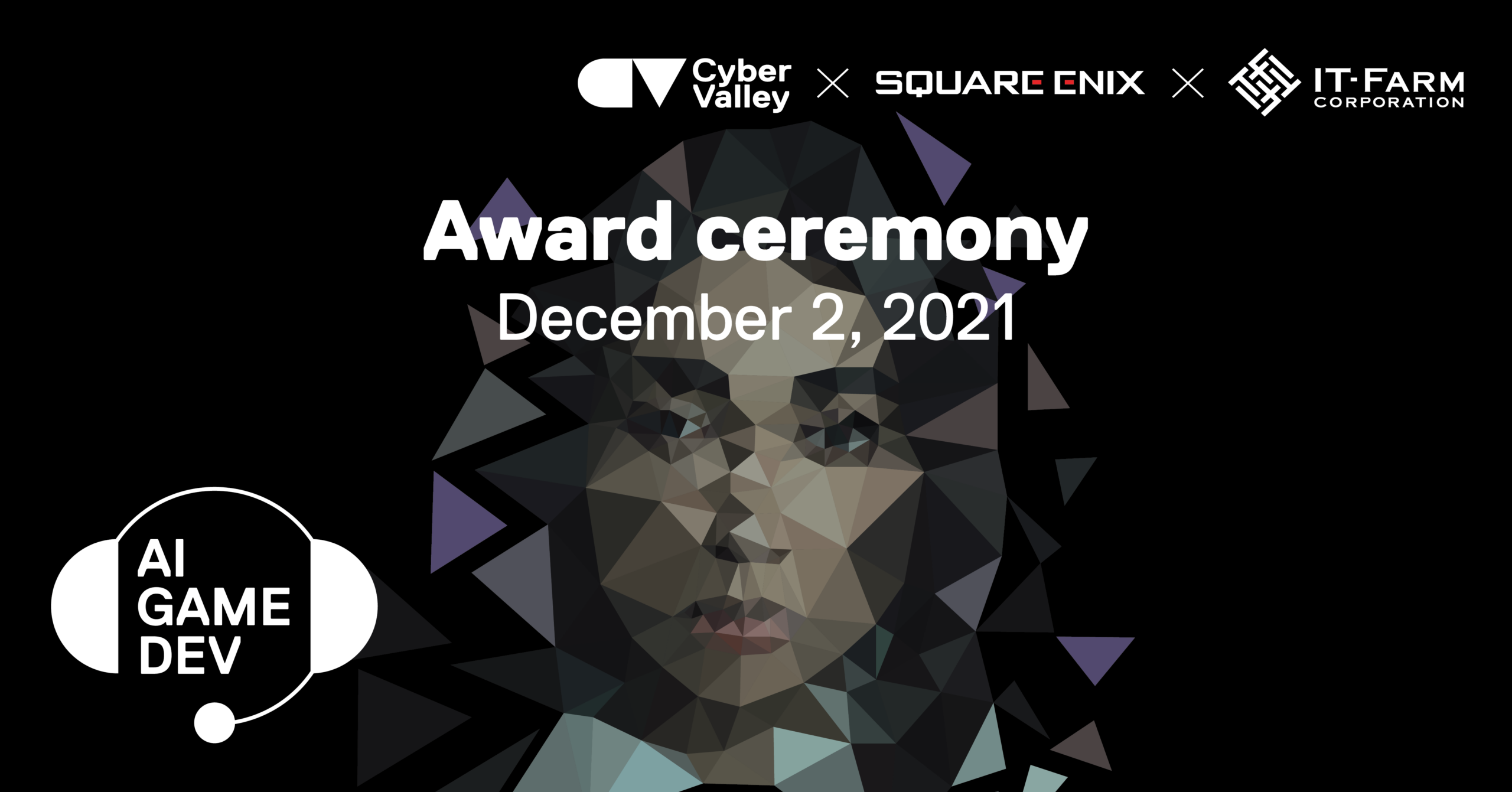
    Their submissions to the gaming competition either point in the direction of supporting creation or enhancing interactivity and the finalists all have either a scientific or entrepreneurial background and come from cities all over Europe. The AI GameDev award ceremony will be streamed live on the Cyber Valley YouTube channel on December 2, 2021, from 10:00 to 12:00 CET.

    The finalists are:

    • Automated Playtesting Algorithm
      Dr. Christian Guckelsberger, Department of Computer Science, Aalto University, Finland; Game AI Research Group, Queen Mary University of London, United Kingdom
    • Evija
      Michael Stettler, Werner Reichardt Centre for Integrative Neuroscience, University of Tübingen, Germany
    • GRAF
      Katja Schwarz, Autonomous Vision Group, Department of Computer Science, University of Tübingen, Germany
    • Kinetix SAS
      Start-up from Paris, France
    • Mlxar
      Start-up from Vienna, Austria
    • NeurCG
      Victoria Fernandez Abrevaya and Partha Ghosh, Perceiving Systems research group, Max Planck Institute for Intelligent Systems, Tübingen, Germany
    • Savitr
      Nitin Saini, Perceiving Systems research group, Max Planck Institute for Intelligent Systems, Tübingen, Germany

    For AI GameDev, Cyber Valley joined forces with game developer Square Enix and venture capitalist IT-Farm and called for submissions throughout August and September. In October, Cyber Valley researchers as well as representatives of Square Enix, and IT-Farm then decided on the finalists of the competition, making use of criteria such as benefit, competition, and progress.

    The seven finalists were recently notified about their successful submission and are now busy preparing for the award ceremony. Their innovative ideas are going to be captured in short videos which are then going to be aired publicly for the first time throughout the live stream. Following up, the finalists are going to answer questions from the jury. These are the jury members: Remi Driancourt (GM & Director of Research, Square Enix), Hasegawa Isamu (Senior Manager, Square Enix), Shinya Kasuga (Partner, IT-Farm), Oliver Passek (Advisor for film and media, Ministry of Science, Research and the Arts, Baden-Württemberg), Johanna Pirker (Assistant Professor, Graz University of Technology), Michael Sedlmair (Professor, University of Stuttgart) and Miyake Youichiro (Lead AI Researcher, Square Enix).

    The awards which can be won are threefold: main award, scientific award, and audience award. The main award is powered by Square Enix for the most innovative AI solution and consists of a visit to Tokyo, Japan, where the respective winners will examine a potential cooperation with Square Enix on practical use of their technology in production. The scientific award is powered by Cyber Valley for the most promising scientific performance and the prize is an exclusive Cyber Valley tour and meeting with top AI researchers, including a visit to the Max Planck Institute for Intelligent Systems in Stuttgart and Tübingen, Germany. The third prize at stake is the audience award powered by IT-Farm. The winners of this prize will be chosen by the audience and receive an exclusive business or fundraising mentorship by IT-Farm covering topics such as fundraising advice, sales pitch review, or business plan development.

    The award ceremony of the AI GameDev also falls within the five-year anniversary month of Cyber Valley and as such marks a special occasion. Cyber Valley as an internationally renowned hotspot for AI has successfully grown in the areas of research and innovation over the past years: professorships within the ecosystem have been appointed, Cyber Valley research groups have been founded and a start-up network as well as an investor network have been set up.

  • Unternehmerinnen-Frühstück

    Was ist Cyber Valley? Warum ist KI für alle, insbesondere Gründer:innen relevant? Oliwia Gust (Event Manager für Cyber Valley, Max-Planck-Institut Tübingen) und Julia Schmaus (Innovation Manager für Cyber Valley) geben mit ihrem Impuls einen Einblick in diese für viele noch immer neue, unbekannte Welt.

    Das Event findet via Zoom am Mittwoch, 27.10.2021 von 8:00 – 9:00 Uhr statt. Weitere Informationen und Anmeldung zu diesem Event finden Sie hier.

    Dieses Event wird organisiert von OIC Open Innovation Campus Westspitze (Ulrike Landmann, Kontaktstelle Frau und Beruf &
    Marlies Mittler, ubf-Unternehmensberatung und Open Innovation Campus).

  • KI: Implikationen für Innovation und Entrepreneurship

    KI: Implikationen für Innovation und Entrepreneurship

    Künstliche Intelligenz (KI) ist ein aufstrebendes Technologiefeld mit einem immensen Transformationspotenzial. Dies zeigt sich in vielen neuen Produkten und Dienstleistungen, sowie in neuen Prozessen und Abläufen. In diesem Zusammenhang zeigt dieser Beitrag anhand verschiedener Anwendungsbeispiele auf, wie digitale Technologien zum einen das Management von Innovationen verändern, und zum anderen unser Bild von Entrepreneuren neu definieren.

    Das Event wird digital via WebEx abgehalten. Um dem Event beizutreten, klicken Sie hier.


    Diese Veranstaltung ist Teil der Ringvorlesung „Intelligente Systeme für eine zukunftsfähige Gesellschaft – Wirtschafts-, sozial-, erziehungs- und rechtswissenschaftliche Perspektiven“ der Fakultät Wirtschafts- und Sozialwissenschaften der Universität Stuttgart. Weitere Veranstaltungen dieser Reihe finden Sie hier.