User Group: Investor

  • AI House Davos: Catalyzing AI tech transfer in Europe

    AI House Davos: Catalyzing AI tech transfer in Europe


    It will address the facilitation of cross-sector AI innovation (like ELLIS), discussing the synergy between academia, industry, and government to accelerate tech transfer, drive economic growth, and meet societal needs with cutting-edge AI solutions.


    When?

    Wed, 17. January 2024, 10:30 – 10:55


    Format

    • Round table
    • Open to the press


    Speakers

    • Bernhard Schölkopf, Professor – Max Planck Institute for Intelligent Systems & ETH
    • Alexander Diehl, Investor & Entrepreneur
    • Rebecca C. Reisch, CEO Cyber Valley


    Moderator

    • Julian Enz, Chief Innovation Office, Cyber Valley


    Further information


  • AI House Davos: AI & Sustainability

    AI House Davos: AI & Sustainability


    This roundtable will explore how AI technologies are being applied to tackle critical sustainability challenges. Discussions will examine real-world AI innovations in areas such as renewable energy, resource conservation, and climate change mitigation. Emphasizing actionable solutions, we'll consider the role of AI in driving environmental progress, enhancing global sustainability efforts, and the partnerships propelling this mission forward.


    When?

    Wednesday, January 17 2024, 11:30-12:00 CET


    Where?

    Partner Room 2, AI House Davos, Promenade 68, 7270 Davos Platz


    Format

    • Roundtable
    • Open to the press
    • Interactive panel discussion
    • Audience Q&A


    Speakers

    • Christoph Kellenberger, Sustainable Architect
    • Max Gercken, CEO Optocycle
    • Dieter Gerdemann, MD & Partner Sustainability, A.T. Kearney
    • Samuel Widmann, Entrepreneur and ex-Google Maps CEO
       

    Moderators

    • Julian Enz, Director Innovation & Economy (CIO), Cyber Valley
    • Rebecca Beiter, Director Communications & Society (CCO), Cyber Valley


    Further information

    Register


  • AI House Davos: Frontiers of AI & ML

    AI House Davos: Frontiers of AI & ML


    Exploring cutting-edge developments in machine learning and AI, this discussion delves into recent research breakthroughs including related fields like computational neuroscience. Focused on advanced algorithms, neural network innovations, and deep learning techniques, we'll address challenges and future directions in AI, with insights from leading European AI researchers. Emphasis will be on scientific depth, practical applications, and ethical considerations. 


    When?

    Wednesday, January 17, 2024, 16:15-16:45


    Where?

    Partner Room 3, AI House Davos, Promenade 68, 7270 Davos Platz


    Format

    • Round table
    • Open to the press


    Speakers

    • Bernhard Schölkopf, Director of the ELLIS-Institute, Director Max Planck Institute for Intelligent Systems & Cyber Valley Speaker
    • Tobias Bonhoeffer, Director of the Max Planck Institute for Biological Intelligence
    • Auguste von Bayern, Group Leader Max Planck Institute for Biological Intelligence
    • Evan Sparks, Vice President of AI and High Performance Computing at HPI


    Moderator

    • Alexander Diehl, Investor & Entrepreneur, Cyber Valley 


    Further information

    Register

  • Expanding the Cyber Valley Start-up Network: Welcoming mine&make and nuvus

    Expanding the Cyber Valley Start-up Network: Welcoming mine&make and nuvus

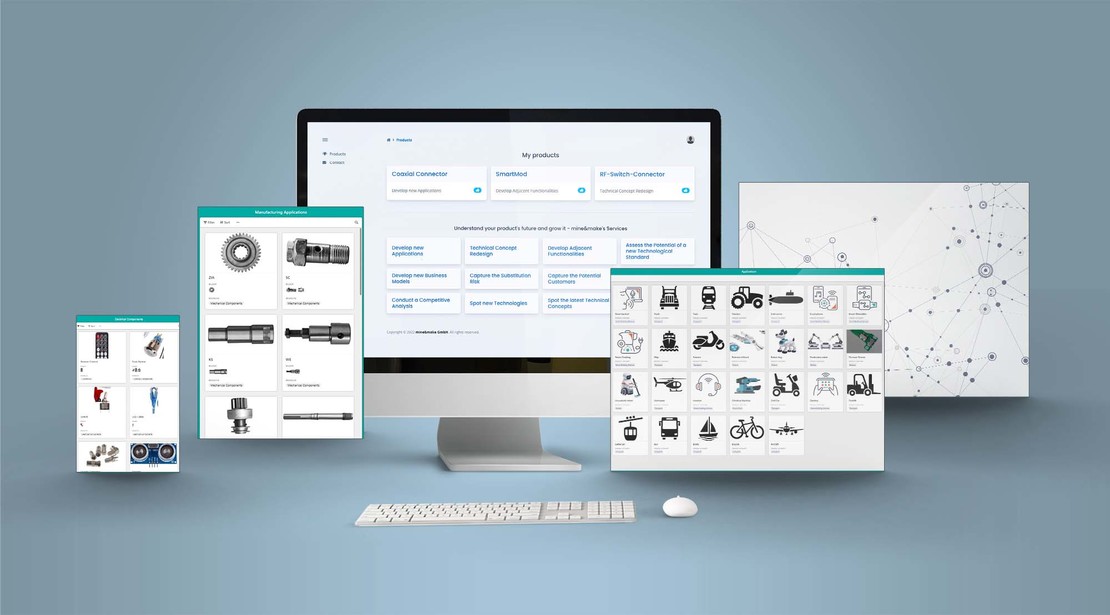
    Mine&make GmbH has successfully crafted an AI-based business development platform tailored to individual requirements. The company provides customized insights into business opportunities, empowering each customer to expand across diverse industries. Mine&make not only identifies these opportunities but also undertakes the responsibility of carrying out and implementing them. Leveraging artificial intelligence, the platform analyzes individual products and technical competencies to to unveil prospects such as new applications, adjacent functionalities, new technologies, expansion into untapped market fields, and the formulation of high-potential product strategies.

    The platform, powered by a AI-based Insights Engine, serves multifunctional purposes in research and development (R&D), marketing, and sales. Mine&make is dedicated to maximizing the business potential of its clients, offering avenues for opportunity development through workshops, insights, and projects. 

    Image: mine&make GmbH

    Nuvus GmbH specializes in guiding clients through the seamless implementation and integration of cutting-edge technologies, leveraging AI software testing. Their core expertise lies in testing, integration, and security, complemented by proficiency in software development and automotive engineering.

    As a premier testing service provider, nuvus offers a comprehensive suite of solutions, encompassing verification and validation services, defect management and configuration, error analysis, and traceability. Additionally, they excel in planning and executing test drives. Harnessing the power of artificial intelligence, nuvus provides invaluable support in bug prediction, resource optimization, process automation, and machine learning. 

    Image: nuvus GmbH

    By becoming part of the Cyber Valley Start-up Network, nuvus and mine&make have joined a vibrant AI community dedicated to advancing technology and promoting collaboration among start-ups, researchers, and industry partners. 

  • Cyber Valley welcomes vialytics to its Start-up Network

    Cyber Valley welcomes vialytics to its Start-up Network

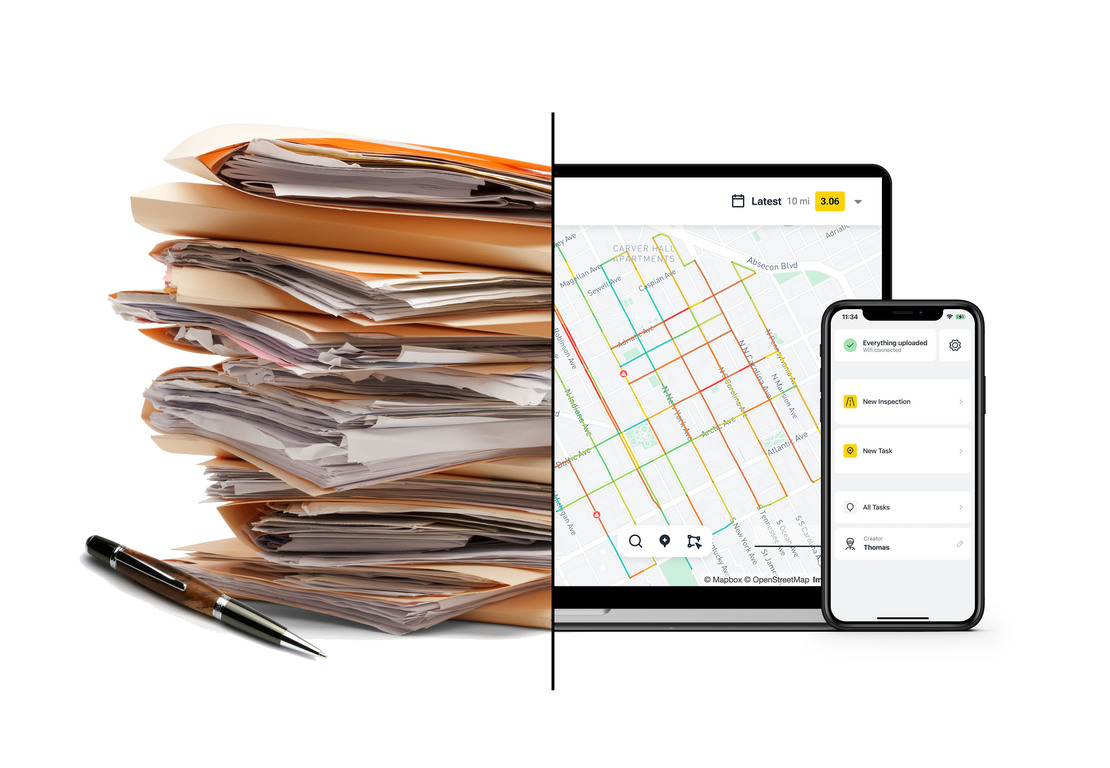
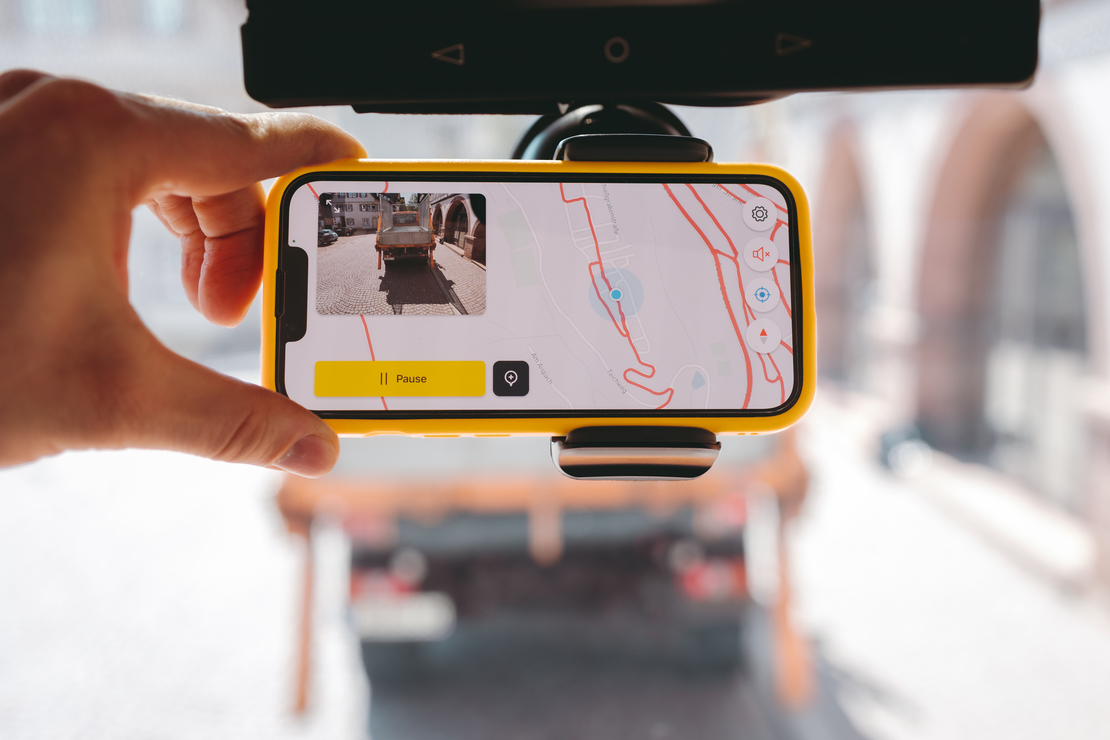
    With already over 300 municipalities across seven countries using their system, vialytics is setting the standard for AI-based road management systems. The company's cloud software has proven instrumental in streamlining processes for municipal administrations, providing actionable insights that contribute to more efficient road maintenance strategies.

    One of their contributions to the field is its artificial intelligence system designed for objective, rapid, and accurate analysis of asphalt surfaces. This innovation addresses the significant cost and time associated with traditional road condition assessments. By leveraging AI algorithms, the start-up ensures precise evaluation of asphalt conditions to be able to make informed decisions for optimal road maintenance planning.

    "In the dynamic landscape of road management, vialytics is proud to lead the way with cutting-edge AI solutions that revolutionize the industry," says Co-Founder and Chief Evangelist Danilo Jovicic-Albrecht at vialytics. "Our commitment to innovation through AI and sustainability aligns perfectly with the values of the Cyber Valley Start-up Network. We are excited to collaborate within this growing AI ecosystem in Southern Germany."

    Through joining the Cyber Valley Start-up Network, vialytics is now part of a dynamic AI community that is focused on driving technological advancements and fostering collaboration between start-ups, researchers, and industry leaders.

  • Cyber Valley Research Fund Event

    Cyber Valley Research Fund Event

    Experts from industry and academia came together to discuss scientific advancement and to brainstorm future research paths. “The Cyber Valley Ecosystem continues to grow as a hotspot for innovation and research in AI and robotics”, Cyber Valley Scientific Coordinator Janell Lia-Breitmayer emphasized in her opening speech. This event lies at the heart of Cyber Valley, which originated from a collaboration between industry and academia to bring scientific excellence for the benefit of society. 

    Cyber Valley Research Fund Initiatives 

    The first cornerstone of the symposium was the presentation of five independent research initiatives that have thrived under the support of the Cyber Valley Research Fund. Prof. Dr. Jörg-Dieter Stückler, who heads the Embodied Vision Research Group, showed how the use of an adaptive dynamics model can improve the trajectory estimation and prediction of a robot. By optimizing its parameters in a self-supervised manner, the robot can adapt to variations in system dynamics and plan a more efficient path through unknown terrain. 

    In a second research project supervised by Stückler under the Cyber Valley iniative, the group combined extended Kalman filtering with a differentiable physics simulator to estimate trajectories of 3D objects. In addition to reconstructing an object’s shape and pose, the model is able to infer physical properties, such as velocity and friction, from RGB-D images. This information can be used to simulate physically plausible trajectories of sliding and colliding objects.

    Subsequently, two projects of the Physics for Inference and Optimization Research Group led by Caterina De Bacco were presented. PhD student Martina Contisciani discussed advancements in network reconstruction from data. By relaxing assumptions about the conditional independence of edges, she enhances the detection of communities and clusters. In addition, her probabilistic model is able to infer the reliability of nodes, which is particularly valuable in reconstructing networks from social sciences data, where conflicting reports from multiple individuals are common.

    Postdoctoral researcher Dr. Hadiseh Safdari continued the discourse by looking at anomaly detection within networks. To identify parts of the network that deviate from the norm, she and her colleagues use a probabilistic generative model that compares the observed network with synthetic data, generated based on assumptions about community membership and reciprocity. Safdari highlighted applications such as uncovering fake users on social media platforms and detecting fraudulent activities in financial transactions. 

    Prof. Dr. Georg Martius, leader of the Autonomous Learning Research Group, explored the fusion of combinatorial algorithms and machine learning. He presented a method that implements a backward pass for combinatorial solvers with linear objective functions, allowing them to be used as building blocks in deep learning pipelines. This novel approach exploits both the reliability and efficiency of discrete optimization and the flexibility of deep learning, resulting in architectures that can solve tasks beyond the capabilities of conventional neural networks.

    After the lunch break, Rebecca Beiter's presentation on public engagement for the industry resonated as a powerful call for a modern communication paradigm. Engaging with the public entails more than just information dissemination, she emphasized — it requires active and ongoing interaction with all relevant knowledge actors, including politicians, journalists, NGOs, start-ups, and educational institutions. Beiter underlined the evolution of public engagement, defining it as a field, a practice, and above all, an attitude: "It will change the culture in which you work!”.

    Cyber Valley Founding Partner Industry Research 

    In the final round of presentations, representatives from Porsche, Amazon, and Fraunhofer shared insights into industry research. Dr.-Ing Bruno Kistner, Head of Data-Driven Development at Porsche AG, highlighted Porsche's use of AI in customer-centric applications, exemplified by intelligent climate control among its smart products and services. He outlined Porsche's AI-driven optimization of production processes, ensuring quality and support to employees throughout the design and production phases.

    Amazon Applied Principal Scientist, Dr. Betty Mohler-Tesch, demonstrated how Amazon aims to enhance customer experience with innovation, such as virtual avatars and AI-powered personal shoppers. Stressing the importance of inclusivity, she remarked: “Fashion is for everyone – you can’t avoid putting clothes on in the morning”. Her research group aims to improve the generation of realistic three-dimensional human avatars. Their goal is to enable customers to digitally try on clothes and order custom-fit garments, thereby reducing stress and lowering return rates. 

    Fraunhofer IAO researcher Ravi Kanth Kosuru spoke about Fraunhofer’s research in applied neurocognitive systems. Aiming to promote human-machine partnership, the group employs neuro-technology, such as EEG systems, to measure cognitive and emotional states of users. Their work involves refining brain-computer interfaces to enable the interpretation of brain signals, data classification, and automatic error detection.

    In the final presentation, Fraunhofer IPA Researcher Tim Nickel presented model-free 3D bin packing as an innovative solution for the growing need for warehouse automation. Physically demanding yet mentally unstimulating, packaging is prone to error, making it ideal for automation. Nickel presented a robot system capable of densely packing arbitrarily shaped objects with ad hoc planning. Unlike static approaches, this method enables unexpected circumstance, such as rolling or shifting of objects, without collision.

    The evening was rounded off by a lively networking session, which included discussions on open research questions and potential future collaborations.

    For any questions regarding the Cyber Valley Research Fund, please contact: