User Group: Journalist

  • EuroEAP 2024 comes to Stuttgart

    EuroEAP 2024 comes to Stuttgart

    What is the topic of this conference?

    The 21st century is experiencing a paradigm change from the age of passive synthetic materials to the age of stimuli-responsive and multi-functional materials. Among them, soft transducers and electromechanically active materials represent a fast growing scientific field of research and development. Soft transducers consist of soft polymeric materials, devices, or systems that react or adapt to external stimulus, such as electrical, magnetic, and mechanical forces. This leads to changes in shape, size, force, stiffness, surface texture, or even colour.

    These transducers can be used for various needs, including actuation, sensing and energy harvesting. These applications make this research field inherently and highly interdisciplinary, bridging the gap between chemistry and physics of materials, electrical and mechanical engineering, user interface science, and intelligent systems.

    These technologies will play an increasingly important role in the future, thanks to their unique combination of stimuli-responsiveness and soft structure. They are already opening numerous possibilities of application in various fields, such as soft robotics, biomedical devices, human-machine interaction, wearables, and smart textiles, to name a few. 

    What is EuroEAP?

    The EuroEAP international conference, organized by the EuroEAP Society with a not-for-profit distinctive character and always held in Europe, primarily aims to share the latest advances and findings in this emerging field. It gathers experts from all over the world in a highly multidisciplinary event driven by scientific quality and industrial impact, with an organization that enables significant opportunities for one-to-one discussions in a friendly atmosphere. Since 2011, the conference has been focused on electromechanically active polymers. Today, the event expands its scope to the larger international and diverse research community of soft smart materials and soft transducers.

    About the venue

    The goal of the Max Planck Institute for Intelligent Systems is to investigate and understand the organizing principles of intelligent systems and the underlying perception-action-learning loop. The Max Planck Institute for Intelligent Systems combines – within one center – theory, software, and hardware expertise in the research field of intelligent systems. Research at the Stuttgart campus of the institute covers small-scale robotics, self-organization, haptic perception, bio-inspired systems, medical robotics, robotic materials, and physical intelligence; that is, the embodiment of intelligent behavior in physical, rather than computational, systems. 

    The program will be released closer to the conference.

  • AI House Davos: Catalyzing AI tech transfer in Europe

    AI House Davos: Catalyzing AI tech transfer in Europe


    It will address the facilitation of cross-sector AI innovation (like ELLIS), discussing the synergy between academia, industry, and government to accelerate tech transfer, drive economic growth, and meet societal needs with cutting-edge AI solutions.


    When?

    Wed, 17. January 2024, 10:30 – 10:55


    Format

    • Round table
    • Open to the press


    Speakers

    • Bernhard Schölkopf, Professor – Max Planck Institute for Intelligent Systems & ETH
    • Alexander Diehl, Investor & Entrepreneur
    • Rebecca C. Reisch, CEO Cyber Valley


    Moderator

    • Julian Enz, Chief Innovation Office, Cyber Valley


    Further information


  • AI House Davos: From lab to market

    AI House Davos: From lab to market


    The roundtable will center on the transition of AI from scientific discovery to economic implementation. We'll dissect the mechanisms that enable scientific AI innovations to be adapted for economic use, including intellectual property, licensing, and market strategy. The conversation will highlight collaborative models between research institutions and industry partners that facilitate the transfer of AI technologies into commercial ventures.


    When?

    Thursday January 18, 2024, 10:00-10:55 CET


    Where?

    Partner Room 2, AI House Davos, Promenade 68, 7270 Davos Platz


    Format

    • Round table
    • Open to the press


    Speakers

    • Evan Sparks, Vice President of AI and High Performance Computing at HP

    • Max-Frederik Gerken, CEO of Optocycle

    • Alexander Diehl, Investor & Entrepreneur, Cyber Valley


    Moderator

    • Julian Enz, Chief Innovation Office, Cyber Valley


    Further information

    Register

  • AI House Davos: AI & Sustainability

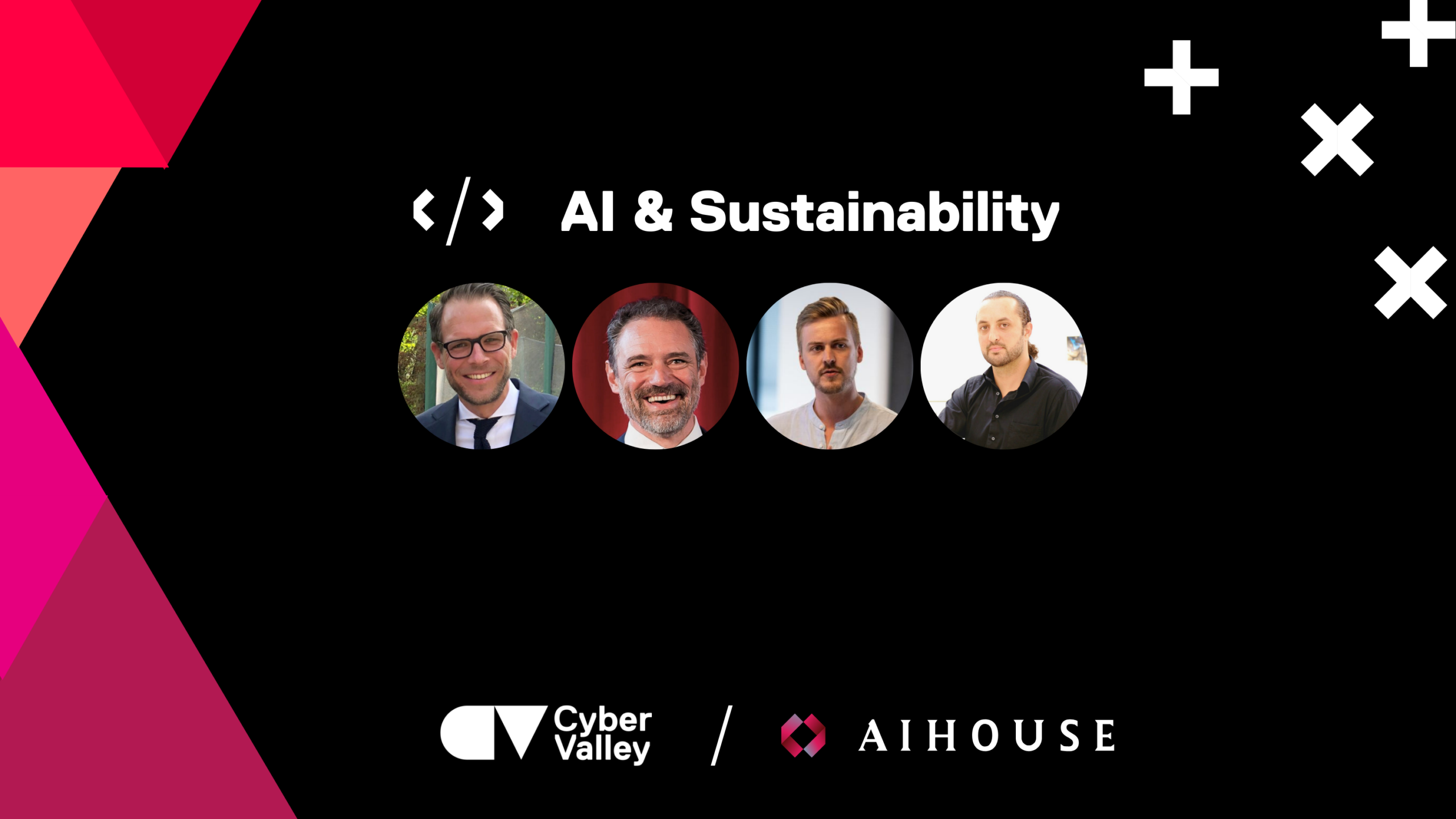
    AI House Davos: AI & Sustainability


    This roundtable will explore how AI technologies are being applied to tackle critical sustainability challenges. Discussions will examine real-world AI innovations in areas such as renewable energy, resource conservation, and climate change mitigation. Emphasizing actionable solutions, we'll consider the role of AI in driving environmental progress, enhancing global sustainability efforts, and the partnerships propelling this mission forward.


    When?

    Wednesday, January 17 2024, 11:30-12:00 CET


    Where?

    Partner Room 2, AI House Davos, Promenade 68, 7270 Davos Platz


    Format

    • Roundtable
    • Open to the press
    • Interactive panel discussion
    • Audience Q&A


    Speakers

    • Christoph Kellenberger, Sustainable Architect
    • Max Gercken, CEO Optocycle
    • Dieter Gerdemann, MD & Partner Sustainability, A.T. Kearney
    • Samuel Widmann, Entrepreneur and ex-Google Maps CEO
       

    Moderators

    • Julian Enz, Director Innovation & Economy (CIO), Cyber Valley
    • Rebecca Beiter, Director Communications & Society (CCO), Cyber Valley


    Further information

    Register


  • AI House Davos: Frontiers of AI & ML

    AI House Davos: Frontiers of AI & ML


    Exploring cutting-edge developments in machine learning and AI, this discussion delves into recent research breakthroughs including related fields like computational neuroscience. Focused on advanced algorithms, neural network innovations, and deep learning techniques, we'll address challenges and future directions in AI, with insights from leading European AI researchers. Emphasis will be on scientific depth, practical applications, and ethical considerations. 


    When?

    Wednesday, January 17, 2024, 16:15-16:45


    Where?

    Partner Room 3, AI House Davos, Promenade 68, 7270 Davos Platz


    Format

    • Round table
    • Open to the press


    Speakers

    • Bernhard Schölkopf, Director of the ELLIS-Institute, Director Max Planck Institute for Intelligent Systems & Cyber Valley Speaker
    • Tobias Bonhoeffer, Director of the Max Planck Institute for Biological Intelligence
    • Auguste von Bayern, Group Leader Max Planck Institute for Biological Intelligence
    • Evan Sparks, Vice President of AI and High Performance Computing at HPI


    Moderator

    • Alexander Diehl, Investor & Entrepreneur, Cyber Valley 


    Further information

    Register

  • Hype oder Hoffnung?

    Hype oder Hoffnung?


    Maschinelles Lernen ist nicht das Wundermittel, mit dem wir unseren Planeten retten können. Keine einzelne Lösung wird den Klimawandel "reparieren". Aber viele Anwendungen, die auf maschinellem Lernen basieren, haben großes Potenzial. Manchmal wird Künstliche Intelligenz bereits eingesetzt. Oft sind die Anwendungen noch Ideen. Wie kann man über die faszinierenden Lösungen berichten ohne falsche Erwartungen zu wecken?
     

    Wann?

    25. Januar, 2024, 12:00-13:00 Uhr


    Wie?

    Zur Anmeldung via zoom: Registrierung zum Event


    Was?

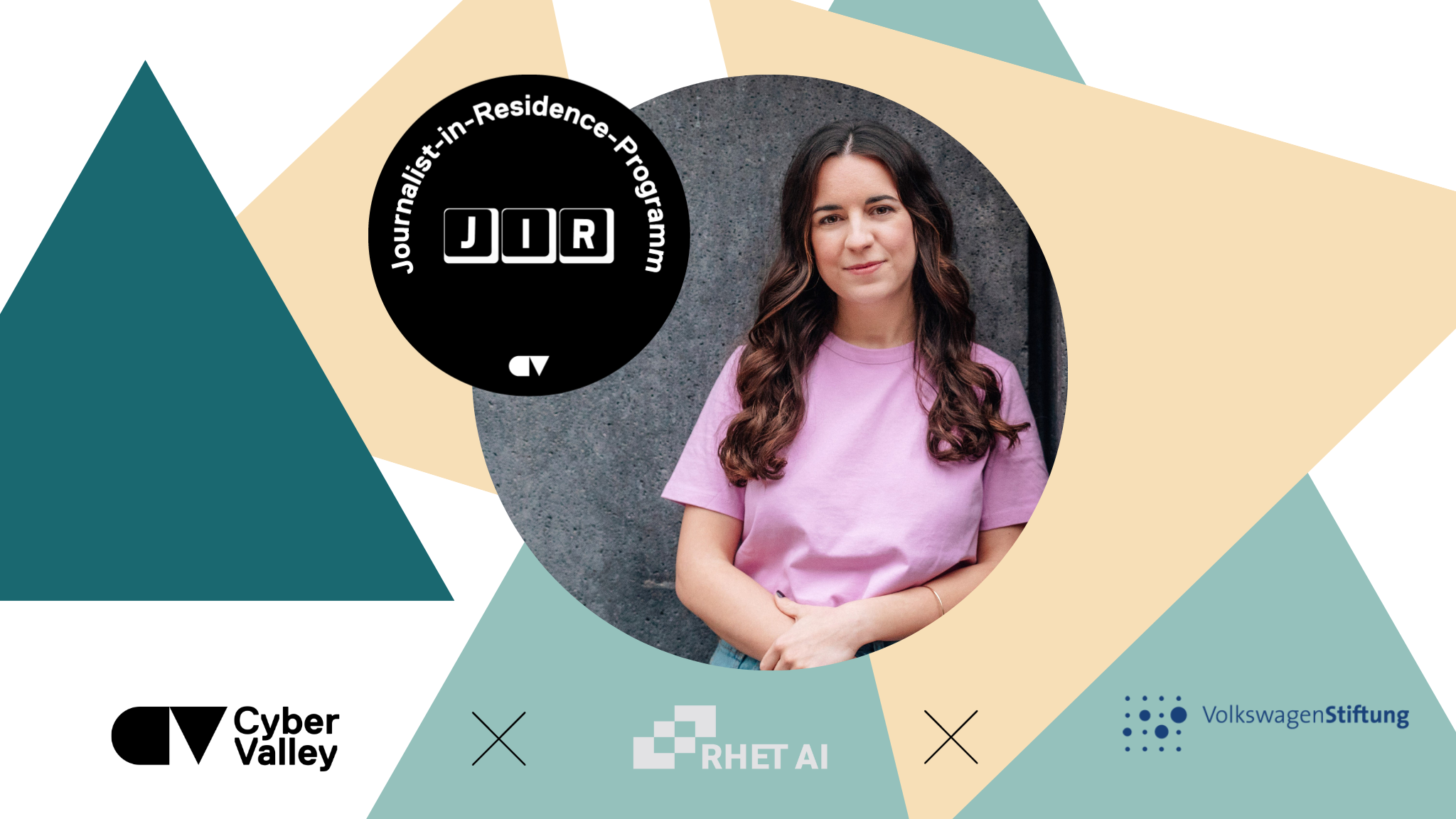
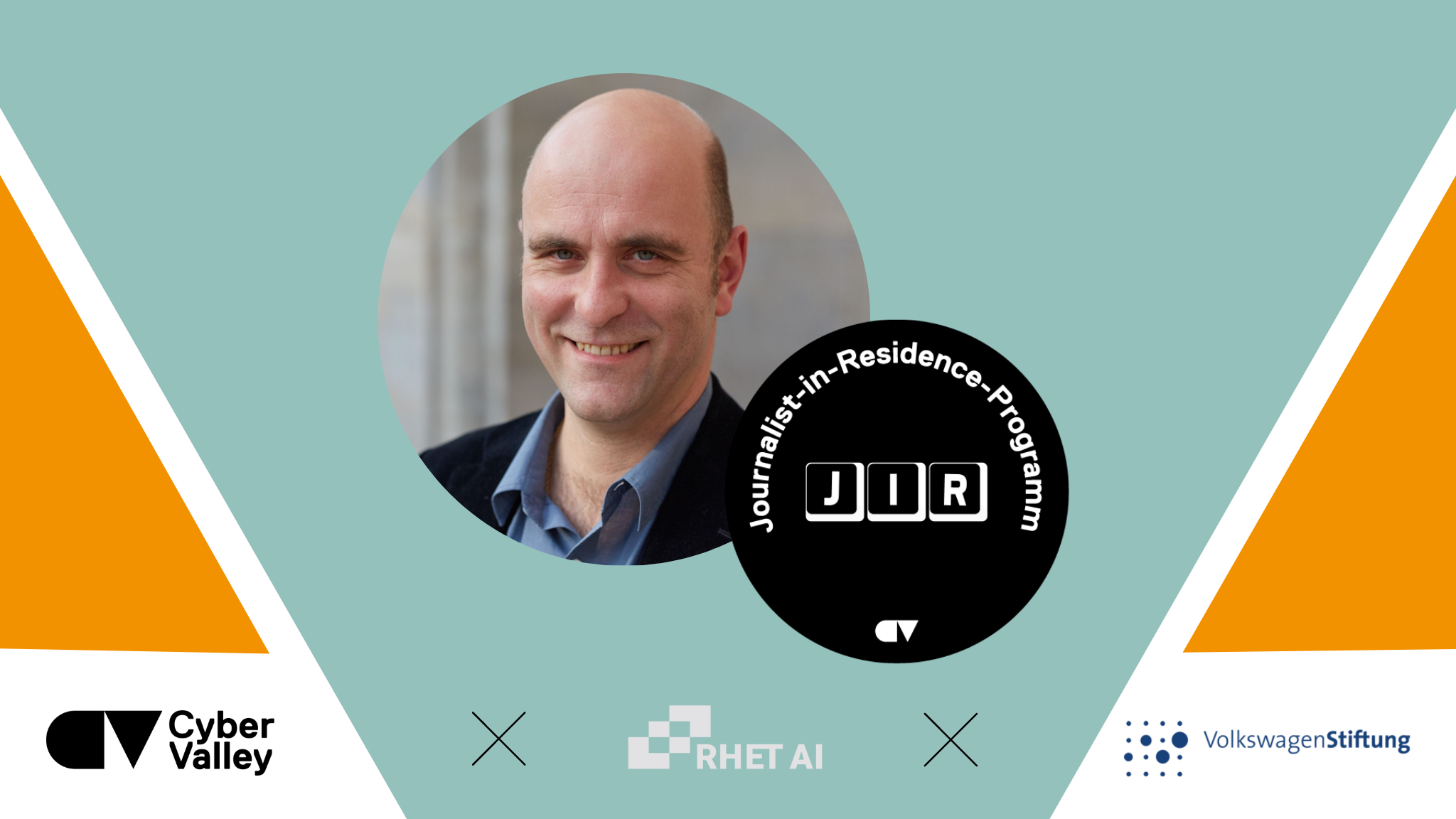
    Tobias Asmuth, “Journalist-in-Residence" im Cyber Valley, spricht mit Prof. Dr. Lynn Kaack (Assistenzprofessorin für Informatik und öffentliche Ordnung an der Hertie School) und Wieland Brendel, der am Max-Planck-Institut für Intelligente Systeme die unabhängige Forschungsgruppe „Robust Machine Learning“ leitet.

    Um an dieser Veranstaltung teilzunehmen, registrieren Sie sich bitte hier und wir senden Ihnen einen Link zur Online-Veranstaltung.
    Die Veranstaltung wird aufgezeichnet. Die Veranstaltung findet auf Deutsch statt. 


    Über Cyber Valley Journalist-in-Residence 

    In einem drei- bis sechsmonatigen Aufenthalt erforschen ein oder zwei Journalisten, wie KI-Anwendungen für guten Journalismus genutzt werden können und wie Journalist*innen sicherstellen können, dass ihre Berichterstattung über die Technologien hinter dem Schlagwort "künstliche Intelligenz" angemessen und evidenzbasiert ist. Die Journalist*innen werden von einer unabhängigen Jury ausgewählt. In dieser Zeit kann der oder die Journalist-in-Residence zu einer selbst gewählten Fragestellung im Austausch mit KI-Forschenden unterschiedlicher Disziplinen recherchieren – absolut unabhängig. Cyber Valley erwartet in dieser Zeit ausdrücklich keine Berichterstattung über KI-Themen oder über Cyber Valley. Das Programm findet zweimal jährlich in einer Kooperation zwischen Cyber Valley und dem Zentrum für Rhetorische Wissenschaftskommunikation – Forschung zur Künstlichen Intelligenz (RHET AI Center) statt. Es wird von der Volkswagen Stiftung gefördert.

  • AI House Davos: Leading the Global Conversation on AI

    AI House Davos: Leading the Global Conversation on AI

    We are thrilled to announce the launch of AI House Davos 2024: A Global Forum for AI Progress during the World Economic Forum (WEF) Annual Meeting. AI House Davos will convene thought-leaders, academics, industry experts, government officials, investors, and entrepreneurs to foster discussions that will influence the responsible scaling, integration, and regulation of artificial intelligence. This inclusive and multidisciplinary platform will embrace diverse stakeholders, including academia, government, industry, finance, civil society, and entrepreneurship. It aims to provide solutions for addressing the global impact of artificial intelligence.

    The AI House

    AI was one of the main topics during the last annual meeting of the World Economic Forum and the conversation has only accelerated since then. Today, there is an urgent need for a global discussion that includes policymakers, academics, civil society, venture, and industry. The AI House Davos provides an independent platform to have this global conversation on neutral ground and invites you to join us as we embark on this remarkable endeavor.

    During the Annual Meeting of the World Economic Forum, the AI House Davos will unite prominent figures to engage in discussions on the most critical issues concerning artificial intelligence, exploring its impact on society. By establishing a long-term presence and fostering a community of AI thought-leaders during the Annual Meeting of the World Economic Forum, the AI House will have enduring global effects on a long-term scale. Together with other partners, sponsors, contributors, and media partners, we are poised to make a significant impact on the future of AI.

    The Leaders of the Global Conversation on AI

    AI House Davos is a joint initiative by Merantix and the ETH AI Center together with Swisscom, UTokyo Institute for AI and Beyond, and Hewlett Packard Enterprise (HPE). Cyber Valley is a contributor to the planned program.

    Stay tuned for more updates, and mark your calendars for AI House Davos from January 15 to January 19, 2024. More information can be found here: Cyber Valley at AI House Davos


    Media contact

    Dr. Hazel Rowland
    Media Manager, Cyber Valley GmbH
    Email: hazel.rowland@cyber-valley.de