Please read the latest edition of our public engagement newsletter below in German.
Liebe Leserinnen und Leser,
dies ist die letzte Ausgabe des Public-Engagement-Newsletters im Jahr 2022. Wenn wir zurückschauen, können wir sagen: Es war ganz schön was los! Wir haben gezählt: An unseren 50 Public-Engagement-Veranstaltungen haben insgesamt über 1.900 Menschen teilgenommen. Zwar waren der Großteil eher Informationsveranstaltungen, aber in immerhin über 30 Prozent der Aktivitäten ging es hauptsächlich um Ihre Einschätzung und die Einbindung Ihrer Expertise.
Wir finden, das ist ein guter Anfang. Im nächsten Jahr wollen wir aber weitere Gelegenheiten für eine intensivere Zusammenarbeit von KI-Forschenden und Menschen mit nicht-akademischem Wissen aus der Gesellschaft bieten. Kommen Sie gerne auf uns zu, wenn Sie hierzu Wünsche und Vorschläge haben. Wir können Ideen für Sie oder gemeinsam mit Ihnen umsetzen – das ist unsere Aufgabe als Public-Engagement-Manager.
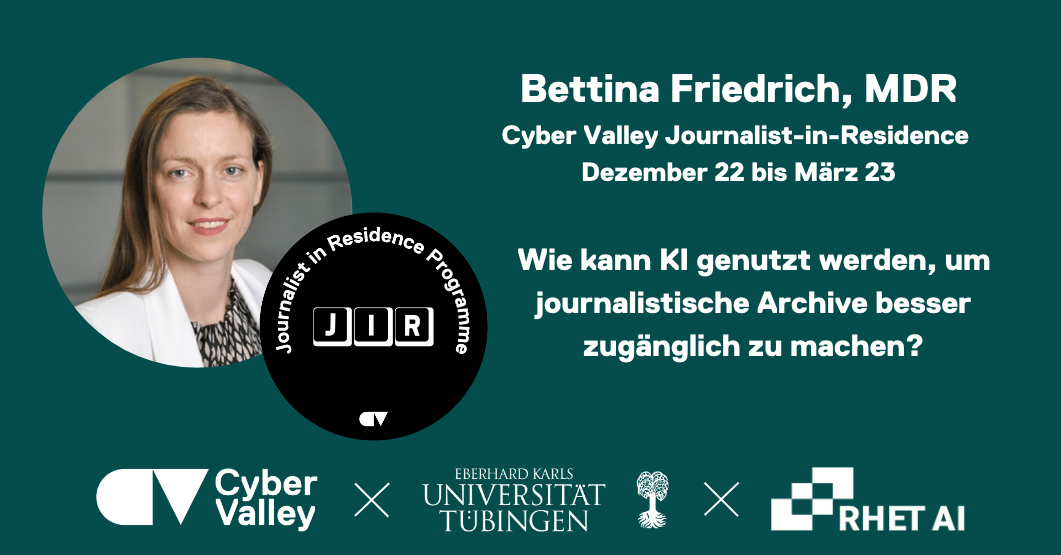
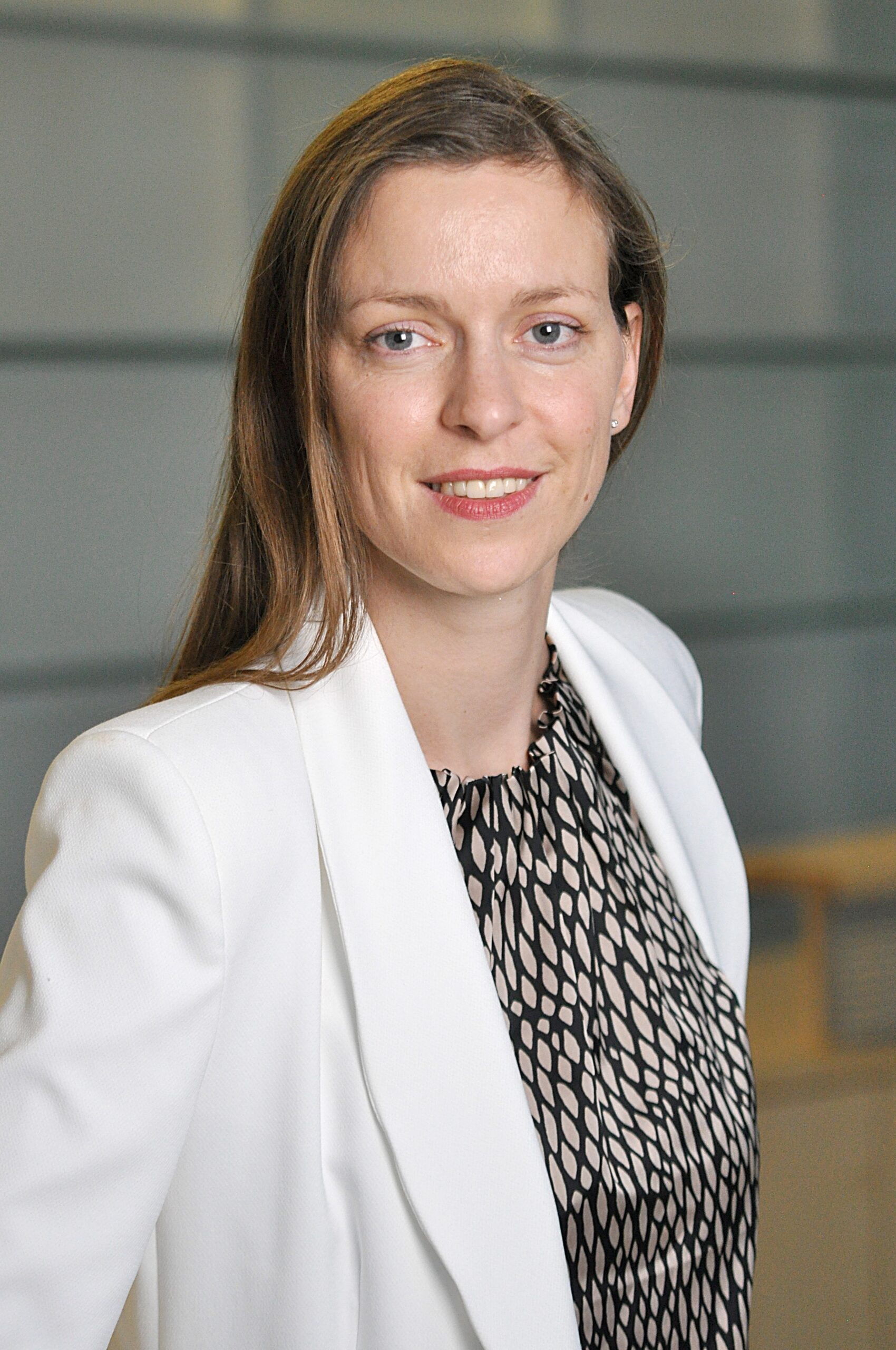
Die Zusammenarbeit mit Computerlinguist:innen und Expert:innen, die sich mit Sprache und maschinellem Lernen auskennen, sucht unsere neue Cyber Valley Journalist-in-Residence. Bettina Friedrich vom Mitteldeutschen Rundfunk (MDR) beschäftigt sich mit der Frage, wie KI genutzt werden kann, um journalistische Archive besser zugänglich zu machen. Sie können dabei sein, wenn sie am 19. Dezember Ihr Vorhaben ausführlich vorstellt.
Viel Spaß beim Lesen, eine schöne Weihnachtszeit und einen guten Jahresausklang wünschen Ihnen
Rebecca Beiter und Patrick Klügel
Berichte und Ankündigungen
Neue Journalist-in-Residence: MDR-Journalistin Bettina Friedrich
Wie kann KI sinnvoll eingesetzt werden, um journalistische Archive einfacher zugänglich zu machen? Bettina Friedrich (MDR) beschäftigt sich während ihres Aufenthalts als Cyber Valley Journalist-in-Residence mit der Nutzung von künstlicher Intelligenz für die journalistische Arbeit. „Journalist:innen stellen viele Fragen. Wichtig sind die Antworten. Um die geht es in meinem Projekt.“
Wie können „Interviewschätze“ so aufbereitet werden, dass Bild- und Ton-Aufnahmen schneller, zielgerichteter und idealerweise für jede und jeden nachgenutzt werden können? Wie können ganz bestimmte Teile eines Interviews angehört werden – zum Beispiel jene, die in dem fertigen redaktionellen Beitrag nicht verwendet wurden? Friedrich stellt sich und ihr Vorhaben am 19. Dezember 2022 von 12:00–12:45 Uhr in einer Online-Präsentation vor.
Zur Anmeldung
Basteln und Programmieren – Bericht aus dem KI-Makerspace
Roboter? Das können große Maschinen sein, die Autos bauen, oder fahrbare Plattformen, die Material transportieren. Sie können sogar Drinks mixen. Was auf den ersten Blick so einfach aussieht und was uns Menschen so leichtfällt, bedeutet bei Robotern viel Mathematik und Geometrie: die Bewegung eines Körpers. Im KI-Makerspace-Workshop von Hans-Günter Nussek konnten Schüler:innen ganz praktisch lernen, wie man einen Roboter mit „Lernmaschine“ mit Daten füttern, so dass er lernt, wie er seine Motoren bewegen muss, um beispielsweise das Haus vom Nikolaus zu zeichnen.
Zum ausführlichen Bericht
Starke Beteiligung am Dialogprojekt „I am a scientist“
Die Tübinger Doktorandin Kerstin Rau wurde im bundesweiten Chat-Wettbewerb „I am a Scientist“, in dem es um Wissenschaftskommunikation zu KI geht, von den teilnehmenden Schüler:innen zur Gewinnerin gewählt. Im Interview mit „Wissenschaft im Dialog“ gibt sie an, dass sie durch ihren Auftritt bei den Tübinger Science und Innovation Days im Sommer 2022 angeregt wurde, sich stärker für den Austausch von Wissenschaft und Gesellschaft zu engagieren.
Zum Interview
Veranstaltungen
Merken Sie sich gerne schon die ersten Veranstaltungen im neuen Jahr vor.
Digital im Alter: Online-Frühstück zu KI
Dienstag, 17. Januar 2023, 10:00–11:00 Uhr, online
Gemeinsam mit der Fachstelle „Digitale und Soziale Teilhabe im Alter“ der Stadt Stuttgart und dem „Treffpunkt 50+“ veranstaltet Cyber Valley ein digitales Brezelfrühstück für Senior:innen und Interessierte. Cyber Valley Public Engagement Managerin Rebecca Beiter gibt eine interaktive Einführung zum Thema KI und stellt die Cyber Valley Forschung vor. Im Anschluss wollen wir gemeinsam diskutieren: Was soll KI können und was nicht? Welche Szenarien fühlen sich für mich gut an? Die Veranstaltung ist kostenfrei und finden online statt.
Weitere Informationen
„Train the Trainer“: KI im Unterricht. Seminar für Lehrkräfte
Mittwoch, 8. Februar 2023, 18:00–19:00 Uhr, online
Wie kann ich mit Schüler:innen über künstliche Intelligenz sprechen und kritisch-ethisch über das Thema reflektieren? Tabea Berberena, vom Lehr- und Lernforums RISING an der Universität Stuttgart, stellt im Seminar die Unterrichtseinheit „Künstliche Intelligenz – was ist das überhaupt und was hat das mit mir zu tun?” vor. Der Kurs ist Teil des Begleitprogramms zur KI-Kunstausstellung „SHIFT“ im Kunstmuseum Stuttgart, kostenfrei und findet online statt.
Weitere Informationen
Fundstücke
Offener Brief für mehr Regulierung
AlgorithmWatch und 26 andere Organisationen haben die Bundesregierung in einem offenen Brief aufgefordert, sich in den EU-Verhandlungen zur KI-Verordnung gegen die biometrische Überwachung einzusetzen. So steht es auch im Koalitionsvertrag. Bis Anfang Dezember will sich der EU-Rat auf eine gemeinsame Ausrichtung geeinigt haben. Zwar ist das Verbot zur biometrischen Überwachung schon verankert, doch noch birgt es Schlupflöcher, die gefährlich werden können. Deswegen will der offene Brief die deutsche Regierung dazu auffordern, an ihrer Position festzuhalten.
Zum offenen Brief
Neue Lösung zur Bestimmung des CO2-Fußabdrucks von KI
Das Start-up Hugging Face hat eine neue Möglichkeit getestet, den CO2-Ausstoß von intelligenten Sprach-Systemen genauer zu bestimmen. Bei dieser Methode werden nicht nur die Emissionen der Trainingsphasen des Systems bestimmt, sondern geschätzt, wie viel das System während seinen ganzen Lebenszyklus verbraucht. Dieser neue Ansatz könnte Unternehmen und Forschenden dabei helfen, den CO2-Fußabdruck von KI-Produkten realistischer einzuschätzen und an effizienteren Lösungen zu arbeiten.
Zum vollständigen Artikel
Unendliche fiktive Gespräche
In diesem Jahr feierte der Regisseur Werner Herzog seinen 80. Geburtstag. Nun gibt es eine KI, die eine endlose, fiktive Konversation zwischen Herzog und dem slowenischen Philosophen Slavoj Žižek generiert. Jeden Tag werden neue Gesprächssegmente erstellt, so dass man beim Öffnen der Seite immer einem anderen Teil der Konversation zuhört. Mit dem Projekt wollen die Entwickler:innen unter anderem deutlich machen, wie leistungsfähig maschinelles Lernen mittlerweile ist – und dass mit dieser Technologie auch leicht Deepfakes produziert werden können.
Zur Website
Spielpartner:in KI
Meta hat eine KI entwickelt, die menschliche Spieler:innen in einer Online-Version des Strategiespiels „Diplomacy“ geschlagen hat. In der Vergangenheit waren künstliche Systeme schon erfolgreich in logischen Spielen wie Schach. Bei Diplomacy aber sind andere Kompetenzen gefragt: Es geht darum, miteinander zu kommunizieren, strategische Allianzen zu schließen und Bluffs zu erkennen, um die Kontrolle über eine fiktive Version von Europa zu gewinnen. In Zukunft könnten diese KIs für Bereiche eingesetzt werde, in denen es darum geht, Kompromisse einzugehen, wie beispielsweise beim Umfahren von Staus.
Zum vollständigen Artikel