CV Tag: AI in Medicine

  • Pierre Schumacher receives RIG “Outstanding Doctoral Thesis Award” at the German Robotics Conference 2026

    Pierre Schumacher receives RIG “Outstanding Doctoral Thesis Award” at the German Robotics Conference 2026

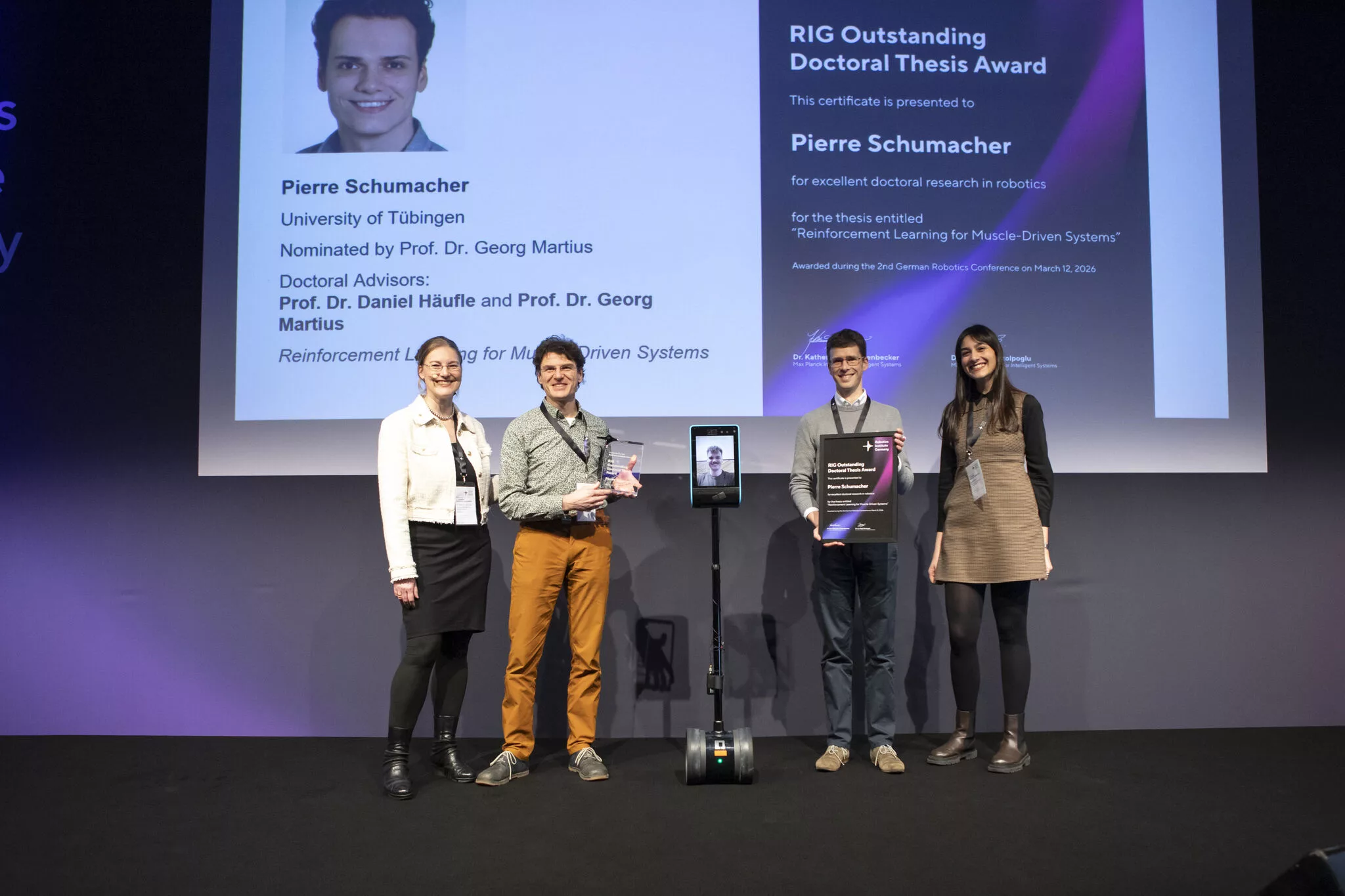
    Pierre Schumacher has been selected as one of the two recipients of the “RIG Outstanding Doctoral Thesis Award”, recognizing exceptional doctoral research in robotics in Germany. The award was officially announced during the “RIG Heroes Award Night 2026” at the German Robotics Conference 2026, organized by the Robotics Institute Germany (RIG), in Cologne on March 12.

    Schumacher’s dissertation, “Reinforcement Learning for Muscle-Driven Systems,” was selected from 27 nominations submitted by 16 institutions across Germany. Following an extensive evaluation process, an international selection committee chose two equal awardees, citing Schumacher’s work for its “scientific depth, originality, and impact”.

    Pierre Schumacher conducted his doctoral research at the Max Planck Institute for Intelligent Systems in Tübingen under the supervision of Prof. Georg Martius (University of Tübingen) and Prof. Daniel Häufle (Hertie Institute for Clinical Brain Research) funded by the Cyber Valley Research grant “Learning effcient control of non-linear muscle-driven systems: Morphological computation as guiding principle”. His project was part of the Cluster of Excellence “Machine Learning: New Perspectives for Science” and the Center for Bionic Intelligence Tübingen Stuttgart (BITS). His dissertation, “Reinforcement Learning for Muscle-Driven Systems,” addresses challenges in controlling complex, highly overactuated robotic and biomechanical systems by developing new machine learning methods.

    A central contribution of the work is the development of DEP-RL, a reinforcement learning approach that improves exploration and learning in systems with many redundant actuators, such as musculoskeletal models. Using this method, Schumacher demonstrated efficient learning for tasks involving complex simulated bodies, including a human model with dozens of muscles and animal-inspired locomotion systems.

    Pierre’s research also explored how muscle-like actuation can improve learning performance and robustness in robotic systems. In collaborative studies, Schumacher and colleagues showed that musculoskeletal models can lead to more data-efficient and stable learning in anthropomorphic control tasks. More recent work demonstrated that reinforcement learning can produce natural and robust bipedal walking in musculoskeletal simulations without relying on motion-capture demonstrations.

    Schumacher began his academic path with a trinational bachelor’s degree in physics that took him to universities in France, Luxembourg, and Germany. After completing his B.Sc. in physics in Saarbrücken 2017, he shifted toward computational approaches and pursued a master’s degree at Goethe University Frankfurt in Frankfurt am Main. In 2021, he joined the Max Planck Institute for Intelligent Systems and the Hertie Institute for Clinical Brain Research in Tübingen with Prof. Georg Martius and Prof. Daniel Häufle for his PhD in Computer Science, which he completed in 2025.Schumacher’s expertise has also attracted industry attention: he joined MyoLab, a startup based in New York focusing on musculoskeletal control technologies, last year.

    The RIG Outstanding Doctoral Thesis Award highlights emerging researchers whose doctoral work significantly advances robotics research in Germany. Schumacher’s selection underscores the growing importance of combining machine learning, biomechanics, and embodied intelligence to enable the next generation of adaptive robotic systems.

  • Mira Vision accelerates innovation at VENTURE SPRIN-D

    Mira Vision accelerates innovation at VENTURE SPRIN-D

    At VENTURE SPRIN-D 2025, over 50 teams presented their innovative ideas to more than 250 international investors. The event featured live pitches, a networking exhibition area, and opportunities to make valuable connections. Alongside other members of the Cyber Valley Community, Cyber Valley Start-up MIRA Vision seized this opportunity to show how they are revolutionizing the health industry.

    We interviewed MIRA Vision founders, Lukas Mürdter and Leonid Mill, to gain insights into VENTURE SPRIN-D and what their start-up is all about. 

    Cyber Valley: How has attending this event impacted Mira Vision? What were your key takeaways? 
     
    Leonid Mill, MIRA Vision CTO & Founder, explains, “Attending the VENTURE SPRIN-D event was an outstanding experience for us. VENTURE SPRIN-D showcased the incredible innovation power of all the SPRIN-D portfolio start-ups, and it was truly inspiring to be part of such a dynamic environment. We deeply appreciated the opportunity to be part of this ecosystem and to participate and pitch on stage during the Superconnector session — it was a fantastic moment for us.” 

    “The event provided an excellent platform to connect with like-minded entrepreneurs, industry experts, and investors. We had the pleasure of engaging in valuable conversations, receiving insightful feedback from investors, and exchanging ideas with other forward-thinking innovators.” 

    “Overall, it was an exceptional opportunity that has positively impacted our journey, and we are grateful to have been part of it. Shoutout to SPRIN-D for this amazing event, creating such an inspiring platform that brings together so many bright minds and visionary thinkers – it’s initiatives like this that truly accelerate innovation,” Mill concludes.  

    Cyber Valley: What is MIRA Vision? How is it already revolutionizing the health industry? 

    CEO & Founder, Lukas Mürdter, explains: “MIRA Vision is a pioneering company in medical diagnostics. We use synthetic intelligence to analyze pathological images faster, more accurately, and at a fraction of the cost compared to traditional methods. By relying on fully parametric synthetic training data – not real patient data and without using generative models – we’re solving three of the biggest issues in medical AI: bias, privacy, and data scarcity.”  

    Mürdter further clarifies, “Right now, we’re already outperforming state-of-the-art models in key areas with just a fraction of the resources that are normally needed to train such systems. This means not only better diagnostics but also global accessibility – even in regions with limited infrastructure.” 

    Cyber Valley: Where do you see MIRA Vision being used in the future?  

    Lukas emphasizes, “Our vision goes beyond pathology. We see MIRA Vision as the backbone of diagnostics across all image-based disciplines – radiology, dermatology, ophthalmology, even surgery. Wherever an image can be taken, MIRA will analyze it. Ultimately, we want to give every doctor on this planet an AI-powered assistant that helps detect diseases early, accurately, and affordably – no matter where they are.” 

    Cyber Valley: What are your plans to make a positive impact on the world? 

    Lukas responds enthusiastically, “By being radically different – and radically better. Instead of building another AI that requires millions of patient records and insane GPU farms, we’ve designed a lightweight, scalable system built on expert-guided synthetic data. Our platform works out of the box, is regulation-friendly, and can be used for free in non-commercial settings.” 

    “We’re opening the platform to the global pathology community, offering unmatched accuracy, no data privacy concerns, and unbeatable economics. Once they start using it – they won’t want to stop. That’s how we scale. And yes – we’re just getting started,” Mürdter concludes.

  • Cyber Valley unites AI and robotics expertise for the healthcare sector

    Cyber Valley unites AI and robotics expertise for the healthcare sector

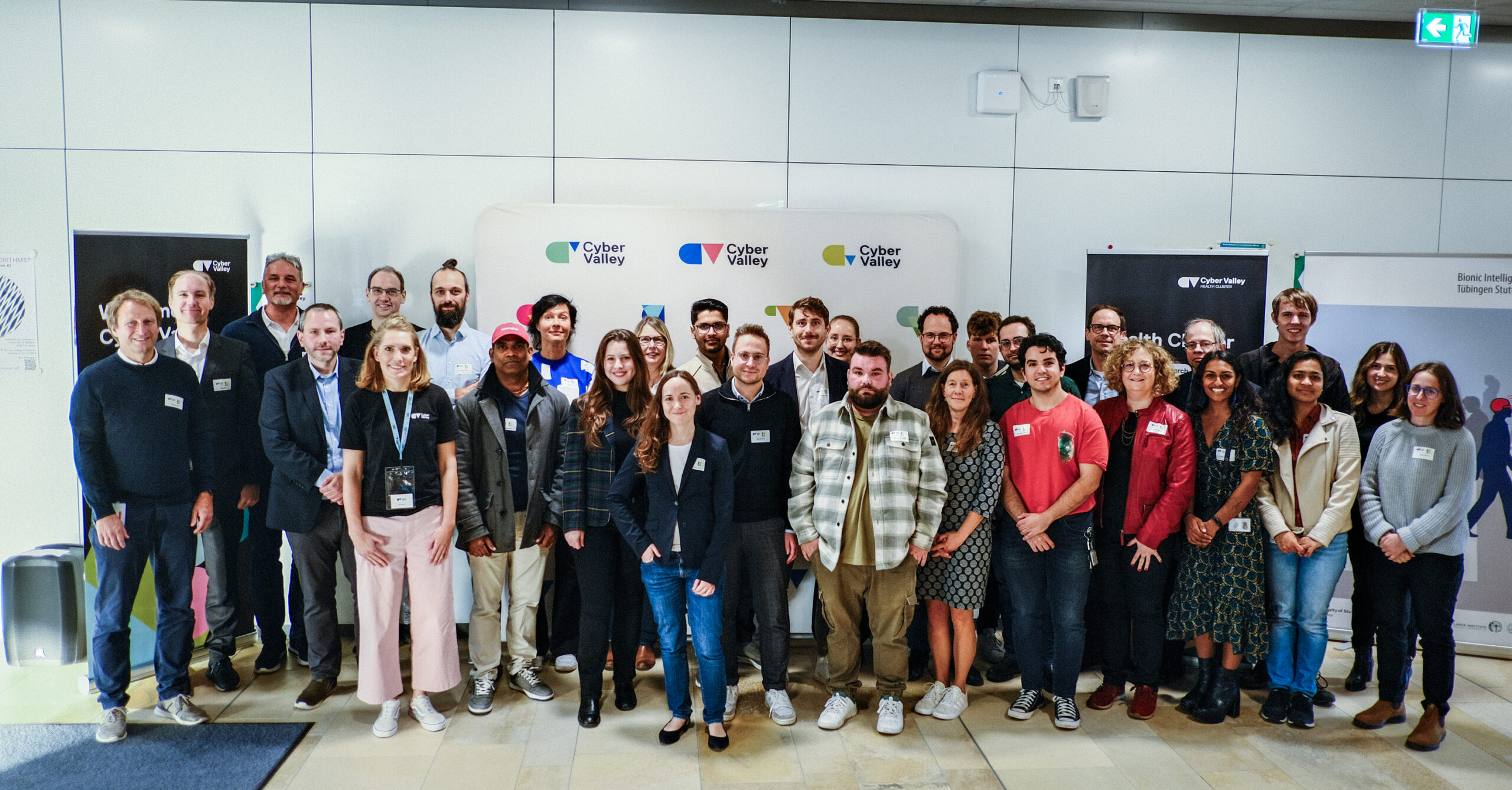
    Stuttgart, October 28, 2024 – The Cyber Valley Health Cluster officially launched last Thursday with a public kickoff event in Tübingen. This initiative launched by Cyber Valley aims to unite the forces of science, industry, and start-ups to improve people’s long-term health through artificial intelligence and modern robotics. 

    Collaboration between research and industry for AI-driven health technologies 

    The Cyber Valley Health Cluster aims to integrate research, practice, and technology. It promotes joint projects between AI experts, scientists, and companies to develop innovative solutions for current and future challenges in the healthcare sector. The Health Cluster emphasizes interdisciplinary knowledge exchange, enabling new approaches and solutions that go beyond individual technological advances.  

    Rebecca C. Reisch, Managing Director of Cyber Valley GmbH, highlights the importance of this collaboration: “The Cyber Valley Health Cluster is more than an academic endeavor; it’s a collaborative alliance that encourages exchange between industry, start-ups, and research. The Health Cluster is where AI-based solutions can be developed to address the most pressing challenges in modern medicine and beyond.”

    Strong Cyber Valley Partners and Friends are already on board  

    The Cyber Valley Health Cluster is backed by strong partnerships. Among the already confirmed Cyber Valley Partners are well-known players such as Boehringer Ingelheim, ZEISS, the University of Tübingen, the University of Stuttgart, and the Max Planck Institute for Intelligent Systems (MPI-IS). These partners are investing significantly in the Cyber Valley Community and are playing a central role in the further development of the Health Cluster. 

    In addition, the Cyber Valley Health Cluster is supported by numerous committed Cyber Valley Friends who enrich the network with their expertise and connections. These include Immatics, Cegat, Ovesco, BIOPRO Baden-Württemberg, BioRegio STERN Management, as well as the Medical Innovations Incubator, and the start-ups Osora and Cerebri.  Further candidates are already under consideration.  

    Reisch emphasizes the role of the Cyber Valley Community: “Together with our Partners and Friends, we are creating an environment that drives the development of technologies that are not only groundbreaking but also practical and ethical. Because only by working together do we have the chance to establish Baden-Württemberg and the whole of Germany at the forefront of global AI health innovations.” 

    Long-term goal: a lasting healthcare alliance 

    The Cyber Valley Health Cluster supports start-ups and innovation projects to create real value by generating new jobs and health solutions. Health Cluster participants moreover benefit from extensive connections and new networking opportunities that enable the development of pioneering healthcare solutions and rapid knowledge transfer between research and industry. 

    The long-term goal of the Cyber Valley Health Cluster is to create a lasting and active community, pooling health expertise to enable interdisciplinary teams to tackle global health challenges. Further events and interaction formats are planned for the Cyber Valley Health Cluster in the coming months. 

    About Cyber Valley 

    Cyber Valley is Europe’s largest and leading center for excellence in artificial intelligence and modern robotics. Its mission and public mandate are to advocate for the research, development, application, and acceptance of technologies and methods in the field of intelligent systems. Cyber Valley encourages entrepreneurship by uniting scientific excellence with innovation and technology transfer. In addition, Cyber Valley facilitates critical reflection on the ethical and social implications of AI through public engagement. Cyber Valley envisions a future in which the full potential of intelligent systems is leveraged for the greater good of the world. 

    Media Contact: 

    Laura Neusser 
    Public Outreach Manager 
    Cyber Valley GmbH 
    laura.neusser@cyber-valley.de 

  • Cyber Valley Research Fund drives advancements in soft robotics

    Cyber Valley Research Fund drives advancements in soft robotics

    Dr. Ardian Jusufi and his team researched innovative materials that improve proprioception (the body’s ability to sense movement and position) in unpredictable and irregular environments. Insights from the project have deepened understanding of how the body moves and interacts with its environment. These advancements in soft active materials and sensors will revolutionize the fields of biomedical devices and soft robotics.  

    Some of the project’s key achievements include:  

    • Enhanced pumping system performance: The project team improved a hydrogel-encapsulated soft actuator pumping system. The system demonstrated improved competitive pressure and fluid velocity performance, offering potential insights for cardiovascular and renal applications. 

    • Addressing sensor challenges: The project addressed the inherent trade-offs of soft sensors. While offering greater flexibility and sensitivity, these sensors often lack robustness, repeatability, linearity, and durability. Various use cases were evaluated to balance these trade-offs effectively. 

    • Innovative manufacturing and materials: The team developed advanced manufacturing techniques and synthesized new materials responsive to environmental stimuli, such as hydrodynamic pressure. This was relevant for studying locomotion, like the undulatory swimming of fish, using fluidic actuators. 

    • System integration with mobile soft actuators: Soft sensors were integrated with mobile soft fluidic actuators in robots. This integration provided valuable insights into the neuromechanics of movement, particularly in aquatic environments. 

    • Electroactive polymer-driven pumping systems: The team aimed to reduce the tissue stress associated with traditional implanted pumps. Although current limitations related to in-body electricity use means that these systems are not yet feasible for in vivo applications, the research marks significant progress in understanding the biomechanics of movement. 

    This project yielded the following publications:  

    1. Souri H, Banerjee H, Jusufi A, Radacsi N, Stokes A, Park I, Sitti M, Amjadi M. Advanced Int. Sys. 2 (8) 2000039. Wearable and Stretchable Strain Sensors: Materials, Sensing Mechanisms, and Applications. 2020. Advanced Intelligent Systems, Volume: 2, Issue: 8, 2020. DOI: https://doi.org/10.1002/aisy.202000039 
    2. Banerjee H, Kalairaj MS, Ren H, and Jusufi A*. Advanced Engineering Materials. Strong, Ultrastretchable Hydrogel-Based Multilayered Soft Actuator Composites Enhancing Biologically Inspired Pumping Systems. [Cover inside] Adv. Eng. Mater 2021, 23, 2100121. 
    3. Wright B, Vogt D, Wood R, Jusufi A*. IEEE International Conference on Soft Robotics (RoboSoft). Soft Sensors for Curvature Estimation under Water in a Soft Robotic Fish. COEX, Seoul, Korea, 2019.
    4. Siddall R, Fukushima T, Bardhi D, Perteshoni B, Morina A, Hasimja E, Dujaka Y, Haziri G, Martin L, Banerjee H, Jusufi A*. Advanced Robotics 35 (7). Compliance, Mass Distribution and Contact Forces in Cursorial and Scansorial Locomotion with Biorobotic Physical Models. 2021. https://www.tandfonline.com/doi/full/10.1080/01691864.2021.1887760.
    5. Fukushima Toshihiko, Robert Siddall,Fabian Schwab, Severine Toussaint, Greg Byrnes, John Nyakatura, and Ardian Jusufi. Inertial tail effects during righting of squirrels in unexpected falls: From behavior to robotics. Integrative and Comparative Biology, icab 023, 2021.
    6. Lin Yu-Hsiang, Siddall R, Schwab F, Fukushima T, Banerjee H, Youngjoon Baek, Daniel Vogt, Yong-Lae Park, and Jusufi A. Modeling and control of a soft robotic fish with integrated soft sensing. Advanced Intelligent Systems, 2000244, 2021.
    7. Fabian Schwab, Elias T Lunsford, Taehwa Hong, Fabian Wiesemüller, Kovac M, Park YL, Akanyeti O, Liao J C, and Jusufi A. Body caudal undulation measured by soft sensors and emulated by soft artificial muscles. Integrative and Comparative Biology, 2021.
    8. Fabian Schwab, Fabian Wiesemüller, Claudio Mucignat, Yong-Lae Park, Ivan Lunati,Mirko Kovac, and Ardian Jusufi. Undulatory swimming performance explored with a biorobotic fish and measured by soft sensors and particle image velocimetry. Frontiers in Robotics and AI, page 387, 2021.
    9. Robert Siddall, Greg Byrnes, Rob J. Full and Ardian Jusufi, Tails stabilize landing of gliding geckos crashing head-first into tree trunks', Communications Biology, 2021. 

    This research project primarily aimed to expand knowledge of biomechanics through robophysical models, rather than immediate practical applications. It started in April 2020 and concluded in February 2023. Dr. Ardian Jusufi was formerly a Max Planck Research Group Leader at the MPI for Intelligent Systems (March 2018–January 2024). He is now Head of Soft Kinetic group in the Engineering Sciences Department of the Empa Swiss Federal Labs for Materials Science and Technology. 

  • Cyber-physical twins of human organs

    Cyber-physical twins of human organs

    Dr. Tian Qiu led the project in collaboration with three medical departments at the University Hospitals in Tübingen and Freiburg. The project team successfully created and studied six highly realistic organ models, including the kidney, bladder, prostate, liver, vagina, and brain. These models combine the advantages of physical and cyber models to improve the collection of hard-to-get biomedical data under realistic conditions for analysis and modeling.

    For the physical models, the project team optimized 3D printing and soft material molding techniques to replicate the anatomy and texture of human organs. Additionally, they engineered new hydrogel materials that behave like real soft tissue in surgical procedures. The team also created a brain model comprising composite hydrogel that exhibits life-like mechanical properties and high optical transparency, enabling high-resolution imaging. 

    The project’s cyber models incorporated sensing technologies such as optical imaging, ultrasound imaging, and electrical sensing. These integrated systems can generate large amounts of data, making possible real-time feedback and quantitative evaluation of surgical outcomes. The project also leveraged Augmented Reality (AR) to enhance medical training. Medics participated in initial trials by applying the new cyber-physical organ models to optimize surgical instruments and digital surgical training.  

    The Cyber Valley Research Fund has allocated five million euros to promote innovation and scientific excellence. Research groups were encouraged to submit project proposals that were evaluated according to ethical and societal considerations.  
     

    This project yielded the following peer-reviewed publications:

    1. Choi et al. (2021): Soft urinary bladder phantom for endoscopic training, Ann. Biomed. Eng., 49, 2412-2420, DOI: 10.1007/s10439-021-02793-0 

    2. Hackner et al. (2021): Panoramic imaging assessment of different bladder phantoms – an evaluation study, Urology, 156, e103-e110, DOI: 10.1016/j.urology.2021.05.036

    3. Kim et al. (2022): A high-fidelity artificial urological system for the quantitative assessment of endoscopic skills, J. Funct. Biomater., 13(4)301, DOI: 10.3390/jfb13040301 

    4. Tan et al. (2021): Soft liver phantom with a hollow biliary system, Ann. Biomed. Eng., 49, 2139-2149, DOI: 10.1007/s10439-021-02726-x 

    5. Tonyali S., Mueller A.-S. et al. (2024): Automated and quantitative surgical technique evaluation for TURP. In preparation

    6. Mueller A.-S., et al. (2024): Surgical training of bladder tumor resection on hydrogel models with quantitative assessment based on 3D ultrasound scanning. In preparation

    7. Li et al. (2020): Realistic full urinary tract phantom for endoscopic training, The European Association of Endoscopic Surgery (EAES), Poster 

    8. Kim et al. (2021): Organ Phantom for the Assessment of Robotic Surgeries, Hamlyn Symposium on Medical Robotics (HSMR), Poster 

    9. Kim et al. (2021): Computer-assisted quantitative assessment of endo. skills based on a urological phantom, 55th DGBMT Ann. Conf. on Biomed. Eng., Talk, 66, S212-217, Link to abstract

    10. Kim et al. (2022): A hybrid surgical simulator for interactive endoscopic training, IEEE Inter. Conf. of the Engineering in Medicine and Biology Society (EMBC), Poster, DOI: 10.1109/EMBC48229.2022.9871697 

    11. Tan et al. (2021): A realistic liver phantom for the training and quantitative evaluation of endoscopic skills, 17th World Congress of Endo. Surgery (WCES), Poster, 344272, P201 

    12. Mueller A.-S., et al. (2023): Surgical training of tumor resection on hydrogel models with quantitative assessment based on 3D ultrasound scanning. DKFK German Cancer Research Congress (GCRC). Poster 

    13. Fischer, F.; et al. (2023): Wireless force sensing of a micro-robot penetrating a viscoelastic solid, International Nonlinear Dynamics Conference (NODYCON), Talk 

    14. Fischer, F. et al. (2022): 3D fabrication of microvascular networks on artificial organ models for endoscopic surgical simulation. Poster. Future 3D Additive Manufacturing – The 3DMM2O Conference

    Public events and public media reports: 

    1. Presentation of German Chancellor Dr. Merkel during virtual visit of Cyber Valley, 2020; Link to article

    2. University of Stuttgart representing at Hannover Messe 2023; Link to article

    3. Stuttgarter Zeitung; Link to article

    4. Spotify, Cyber Valley Podcast, AI in Medicine; Link to spotify episode

  • KI und die Zukunft der Radiologie

    KI und die Zukunft der Radiologie

    About the Speaker:

    Since 2020, Daniel Rückert is Alexander von Humboldt Professor for AI in Medicine and Healthcare at the Technical University of Munich. He is also a Professor at Imperial College London. He gained a MSc from Technical University Berlin in 1993, a PhD from Imperial College in 1997, followed by a post-doc at King’s College London. In 1999 he joined Imperial College as a Lecturer, becoming Senior Lecturer in 2003 and full Professor in 2005. From 2016 to 2020, he served as Head of the Department of Computing at Imperial College.

    When?

    Monday, July 29, 2024 at 03:00 PM

    Where?

    AI Research Building (MvL6), Lecture Hall

    Maria-von-Linden-Str. 6, 72076 Tübingen

    Additional information:

    IMBI Website

    Tübingen Talks

  • Cyber Valley grants 500K to CELL’n’ROLL via 2023 Innovation Fellowship Program

    Cyber Valley grants 500K to CELL’n’ROLL via 2023 Innovation Fellowship Program

    CELL’n’ROLL aims to develop next-generation diagnostic solutions for detecting complex diseases such as cancer. Leveraging robotics, artificial intelligence, and microtechnology, the initiative aims to democratize access to these diagnostic tools worldwide. CELL’n’ROLL envisions a future where diagnostics are not only swift and precise but also accessible in resource-constrained settings by harnessing the power of robotics, artificial intelligence, and microfluidics. 

    The CELL’n’ROLL team consists of Postdoctoral Researchers Alp Can Karacakol, Erdost Yildiz, and the project leader Ugur Bozuyuk. As emerging scientific talents, the team comprises three scientists from the Max Planck Institute for Intelligent Systems, each with interdisciplinary expertise spanning medicine and engineering, and a collective experience exceeding three years of collaboration. Additionally, the team benefits from mentorship provided by international experts from academia and industry. 

    The Innovation Fellowship program will support their journey from outstanding research to practical application. The program’s aim is to bridge the gap between research and commercial application by fostering scientific breakthroughs that add value to science, economy, and society. The Innovation Fellowship program is funded by the Carl-Zeiss-Stiftung (CZS) and offers talented individuals or teams the opportunity to translate their research into tangible applications. With a duration of up to 24 months, researchers work on a project that is not yet commercially viable and requires time for further development and product transformation in a research environment. The program focuses on application-oriented research related to artificial intelligence and robotics. Its goal is to create an innovative spin-off from the project after the funding term has ended.  

    With its mission of creating “an open environment for scientific breakthroughs”, the Carl Zeiss Foundation is an essential Cyber Valley partner. The foundation aims to accompany the entrepreneurial path of young talent from research to application. It strives to achieve scientific breakthroughs that support research, the economy, and society through funding elementary research and specific applications.  

    The next Cyber Valley Innovation Fellowship call for proposals will be announced in April 2024. Scientists employed by the Max Planck Institute for Intelligent Systems, the University of Stuttgart, and the University of Tübingen are eligible to apply. All external scientists affiliated with these Institutes may also apply.  

    About Cyber Valley  

    Cyber Valley is Europe’s largest and leading center for excellence in artificial intelligence and modern robotics. Its mission and public mandate are to advocate for research, development, application, and acceptance of technologies and methods in the field of intelligent systems. Cyber Valley encourages entrepreneurship by uniting scientific excellence with innovation and technology transfer. In addition, Cyber Valley facilitates critical reflection on the ethical and social implications of AI through public engagement. Cyber Valley envisions a future in which the full potential of intelligent systems is leveraged for the greater good of the world. Cyber Valley GmbH, with locations in Stuttgart in Tübingen, is owned by the State of Baden-Württemberg and the Max Planck Society.  
     

    About the Carl-Zeiss-Stiftung  

    The Carl-Zeiss-Stiftung’s mission is to create an open environment for scientific breakthroughs. As a partner of excellence in science, it supports basic research as well as applied sciences in the STEM subject areas (science, technology, and mathematics). Founded in 1889 by the physicist and mathematician Ernst Abbe, the Carl-Zeiss-Stiftung is one of the oldest and biggest private science funding institutions in Germany. It is the sole owner of Carl Zeiss AG and SCHOTT AG. Its projects are financed from the dividend distributions of the two foundation companies.  

    About CELL’n’ROLL 

    CELL’n’ROLL, established two years ago, is driven by a team of three dedicated scientists with varied expertise, spanning engineering and medicine. Their collective passion lies in pioneering cutting-edge diagnostic systems for the detection of complex diseases, such as cancer. They envision a future where diagnostics are not only swift and precise but also accessible in resource-constrained settings by harnessing the power of robotics, artificial intelligence, and microfluidics. 

  • University of Stuttgart successful with cluster draft proposals

    University of Stuttgart successful with cluster draft proposals

    "The decision of the panel of experts offers us the opportunity to sharpen and further expand our excellent profile as an interdisciplinary university with great strength in research. We will seize this opportunity and use our cutting-edge research to make an even greater contribution to solving major global challenges," explains Prof. Wolfram Ressel, Rector of the University of Stuttgart. Ressel was delighted with the success of the cluster outlines, congratulated the scientists at the University of Stuttgart and their cooperation partners, and thanked everyone involved for their commitment. Initiatives for the clusters of excellence "Bionic Intelligence for Health" and "Chem4Quant" are eligible to apply.

    Bionic Intelligence for Health: New approaches to the therapy and diagnosis of neuronal diseases

    “The Bionic Intelligence for Health cluster project is searching for fundamentally new approaches to integrate technology and medicine in order to better diagnose and treat neuronal diseases. It thus addresses one of the greatest challenges facing our healthcare system and our society as a whole", says Wolfram Ressel.

    In the Bionic Intelligence for Health cluster project, an interdisciplinary research team is combining the neuronal and physical intelligence of the human body with a fundamentally new approach to intelligent technology. The aim is to better recognize neuronal diseases, treat them adaptively, and thereby improve the quality of life of those affected in their everday lives. To this end, innovative technical systems are to be intelligently integrated with the body. The cluster project is an initiative of the University of Stuttgart in cooperation with the University of Tübingen. The Max Planck Institute for Intelligent Systems in Stuttgart and Tübingen as well as the Max Planck Institute for Biological Cybernetics in Tübingen are involved as cooperation partners. The project builds on the complementary expertise of outstanding scientists from the fields of neuroscience, materials science, biomechanics and systems theory, among others. It benefits from the excellent Stuttgart-Tübingen ecosystem and has the potential to significantly reduce the social challenges posed by neuronal diseases.

    Chem4Quant: Chemical platform for high-precision quantum architectures

    "Quantum technology has the potential to revolutionize numerous applications, such as making communication secure or exponentially accelerating computing power. Our cluster initiative Chem4Quant researches novel quantum materials and structures and thus makes a fundamentally new contribution to achieving this goal”, says Wolfram Ressel.

    Researchers from the Karlsruhe Institute of Technology (KIT), the University of Ulm and the University of Stuttgart want to purposefully develop material structures for future quantum technologies in the joint Chem4Quant initiative. Despite the breakthroughs already achieved in quantum technologies, many of the platforms currently in use are limited in terms of scalability, adjustability, positionability, and error correction. Chem4Quant is therefore proposing a fundamentally new approach with a chemistry-based platform: Chemically, precisely-definable quantum architectures can be used to plan atomically accurate material structures and their quantum properties in a targeted manner. For example, qubits can be positioned in electrical or photonic components with a precision below the nanometer range. The initiative aims to develop novel qubit materials and create the first components for the future quantum internet. Chem4Quant can draw on globally unique expertise in the field of molecular quantum systems as well as established collaborations.

    Successful Clusters of Excellence apply for further funding period

    "Our already very successful Clusters of Excellence Integrative Computational Design and Construction for Architecture (IntCDC) and Data-integrated Simulation Science (SimTech) also stand for cutting-edge interdisciplinary research that uses fundamentally new investigative approaches and methods to advance solutions for social challenges," emphasizes Ressel.  For example, IntCDC is paving the way towards greater sustainability in the construction industry, and thus making a decisive contribution to the development of a climate- and environmentally-friendly society. With its innovative data-based simulation models, SimTech enables significant progress in the research, testing, and application of new technologies. Both Clusters of Excellence are now applying for a further funding period.

    IntCDC: Research for more sustainability in the construction industry

    Launched in 2019, the Integrative Computational Design and Construction for Architecture (IntCDC) cluster uses digital technologies to rethink planning and construction in an integrative and interdisciplinary approach, and thus enable greater sustainability in the construction industry. To this end, the University of Stuttgart and the Max Planck Institute for Intelligent Systems (MPI-IS) merge their internationally recognized research expertise. More than 150 scientists from the fields of architecture, computer science and robotics, engineering, production and systems technology as well as the humanities and social sciences are currently working together to modernize the construction sector. They are focusing on the co-design of integrative computer-based planning and construction methods, on cyber-physical manufacturing and construction processes, as well as on next-generation sustainable material and construction systems. In the second funding phase, the cluster aims to take up new initiatives and scientific challenges in order to lay the methodological foundations for sustainable architecture.

    SimTech: New simulation models for science and innovation

    Without simulations, advances in science and technological innovations for the benefit of society are not possible. Since 2019, researchers at the Cluster of Excellence Data-integrated Simulation Science (SimTech) have been working on new data-driven methods that go beyond improving the applicability and accuracy of simulation models. The systematic integration of data into simulation science is also changing the way science and technology are conducted. Developments include data-based representations of physical phenomena, new methods for designing and optimizing micro-materials, and data-based models for optimizing control processes and algorithms. Although we have already come a long way in data-integrated simulation science, there is still a great deal of untapped potential in dealing with knowledge and understanding. This untapped potential will be the focus of research in the next funding phase and will be systematically integrated into models, methods, and algorithms in the future in order to further promote our insights.

    Press contact

    Dr. Florian Krüger, University of Stuttgart, Head of University Communi­ca­tions, Phone: +49 711 685-82555.

    Dr. Jutta Witte, University of Stuttgart, University Communi­ca­tions, Phone: +49 711 685-82176.