CV Tag: Computer Vision

  • Funded Doctoral Positions at the International Max Planck Research School for Intelligent Systems (IMPRS-IS)

    Funded Doctoral Positions at the International Max Planck Research School for Intelligent Systems (IMPRS-IS)

    The school is a key element of to accelerate basic research and commercial development in artificial intelligence and robotics. IMPRS-IS seeks students who want to earn a doctorate while contributing to world-leading research in areas such as:

    • Artificial Intelligence

    • Biomedical Technology

    • Computational Cognitive Science

    • Computer Vision and Graphics

    • Control Systems and Optimization

    • Data Science and Visualization

    • Haptics and Human-Computer Interaction

    • Machine Learning

    • Micro- and Nano-Robotics

    • Natural Language Processing

    • Neuroscience

    • Perceptual Inference

    • Robotics and Human-Robot Interaction

    • Soft Robotics and Materials

    Renowned faculty include Sahar Abdelnabi, Rediet Abebe, Amirreza Aghakhani, Aamir Ahmad, Buse Aktaş, Frank Allgöwer, Maksym Andriushchenko, Kai Arras, Robert Bamler, Philipp Berens, Matthias Bethge, Michael J. Black, Wieland Brendel, Andrés Bruhn, Andreas Bulling, Martin Butz, Manfred Claassen, Maximilian Dax, Katharina Eggensperger, Benedikt Ehinger, Carsten Eickhoff, Andreas Geiger, Jonas Geiping, Antonia Georgopoulou, Martin A. Giese, Thilo Hagendorff, Moritz Hardt, Florian Hartmann, Daniel Häufle, Matthias Hein, Philipp Hennig, Niels Henze, Christian Holm, Andrea Iannelli, Christoph Keplinger, Mario Krenn, Katherine J. Kuchenbecker, Hilde Kuehne, Anja Lauer, Hendrik Lensch, Anna Levina, Shiwei Liu, Nicole Ludwig, Sabine Ludwigs, Jakob Macke, Georg Martius, Kristof Meding, Celestine Mendler-Dünner, Michael Mühlebach, Philipp Müller, Sven Nahnsen, Mathias Niepert, Seong Joon Oh, Antonio Orvieto, Aniket Pal, Nico Pfeifer, Gerard Pons-Moll, Michael Pradel, C. David Remy, Kerstin Ritter, Philipp Rothemund, Konstantin Rusch, Renate Sachse, Samira Samadi, Harry Scells, Dieter Schmalstieg, Syn Schmitt, Bernhard Schölkopf, Sabine Schulte im Walde, Janneke Schwaner, Michael Sedlmair, Thomas Speck, Steffen Staab, Ingo Steinwart, Alexander Verl, Claire Vernade, Ulrike von Luxburg, Daniel Weiskopf, Felix Wichmann, Bob Williamson, Andreas Wortmann, Thomas Wortmann, and Charley Wu.

    Associated faculty include R. Harald Baayen, Franz Baumdicker, Peter Dayan, Jonathan Fiene, Volker Franz, Ksenia Keplinger, Miriam Klopotek, Kay Nieselt, Senya Polikovsky, Peter Pott, Gunther Richter, Cornelia Sindermann, Maria Wirzberger, Isabell Wochner, and Thomas Wolfers.

    About the program:

    Intelligent systems that can successfully perceive, act, and learn in complex environments hold great potential for aiding society. The school seeks doctoral students who are curious, creative, and passionate about research to join and help advance human knowledge about intelligent systems.

    • Admitted students can join the program starting in 2026.

    • You will be mentored by an internationally renowned faculty.

    • You will register as a university doctoral student and conduct research.

    • IMPRS-IS offers a wide variety of scientific seminars, workshops, and social activities.

    • All aspects of the program are in English.

    • Your doctoral degree will be conferred when you successfully complete your doctoral project.

    • Dedicated staff members will assist you throughout your time as a doctoral student.

    IMPRS-IS is an equal opportunity employer dedicated to excellence through diversity and does not discriminate on the basis of age, race, sex, disability, sexual orientation, national origin, religion, marital status, gender identity, or any other non-job-related criteria. They believe in the importance of a multicultural community of students, faculty, and staff who seek to advance our commitment to diversity and inclusion. IMPRS-IS strives to create and maintain working and learning environments that are inclusive, equitable, and welcoming.

    Admission will be competitive. If selected, you will receive funding via an employment contract, subject to the rules of the Max Planck Society and the two participating universities.

    Application deadline: 

    November 16, 2025 (End of Day, AoE)

    Selection interviews: 

    February 5–13, 2026

    Apply now: 

    https://imprs.is.mpg.de/application

    For more information, please visit https://imprs.is.mpg.de.

  • SimTech2023

    SimTech2023


    Vom 4. bis 6. Oktober 2023 laden die Universität Stuttgart und der Exzellenzcluster EXC 20275 "Data-integrated Simulation Science" (SimTech) führende Forscher im Bereich der datenintegrierten Simulationswissenschaft zur SimTech2023-Konferenz nach Stuttgart ein. Diese neue Art der Simulation integriert verschiedene Arten von Daten, von experimentellen Daten über Simulationsergebnisse bis hin zu Metadaten, um die Effizienz und Zuverlässigkeit von Simulationen zu verbessern.


    Conference Webpage


    Topics of the conference

    The conference will cover topics such as

    • classical computational science enhanced by learning based components,
    • data-based scale bridging,
    • high performance computing,
    • numerical solvers optimized by meta-data based methods,
    • machine learning for simulation and visualization,
    • data-based (surrogate) modeling for interactive applications and control problems,
    • Bayesian approaches for uncertainty reduction and model assessment and many more.


    Is this conference for you?

    The conference is intended to be a major platform for promoting exchange amongst representatives of the international research community in these interdisciplinary fields, bringing together mathematicians and life scientists, engineers and chemists, computer scientists and sociologists, physicists and philosophers. In keynote lectures, renowned scientists present the latest ideas at the interface between data and simulation. With this multi-disciplinary environment, we continue to advance towards our goal at the Stuttgart Cluster of Excellence SimTech: From Multi-X Simulations and Data-Driven Approaches to Data-Integrated Simulation Science.

    We are looking forward to welcome you all in Stuttgart!


    Organizer:

    Professor Miriam Schulte

  • ERC Starting Grant for Philipp Berens

    ERC Starting Grant for Philipp Berens

    Vision is one of the most important senses for many animals as well as for humans. However, the retina of the eye, which is also called the retina, has not been fully explored to date. The amacrine cells in particular still puzzle researchers. These special nerve cells are cross-connected with the other nerve cell layers of the retina and form the main class of inhibitory cells. More than 60 types of amacrine cells are now known from the mouse retina – they differ, for example, in their appearance, function and circuitry. They are particularly challenging for modeling because their activity is difficult to measure and their function can only be inferred from their interconnection in the network.
     
    To better understand their role, Philipp Berens and his team are developing a new type of model in their ERC project “Next generation mechanistic models of retinal interneurons” (NextMechMod). Models have always played an important role in the history of research on information processing in the nervous system. Alan Lloyd Hodgkin and Andrew Fielding Huxley received the Nobel Prize in Medicine in 1963 for their biophysical model of ionic currents during excitation and inhibition at the nerve cell membrane, presented in 1952. This model, while very detailed, is difficult to fit to measured data. This is easier for statistical models, but these lack the relationship to biological reality.
     
    To capitalize on their respective strengths, Berens aims to develop a new generation of hybrid mechanistic model that combines the different model levels. To do this, he is taking advantage of the latest advances in machine learning and “computational neuroscience”. His team is working closely with collaborators to make the models realistic with data obtained from imaging techniques and with methods from genetics. In doing so, he hopes to develop a toolbox to decipher the role of amacrine cells during the natural processing of visual information. A better understanding of the functions of the healthy eye can form the basis for new therapies for eye diseases.
     
    Philipp Berens studied bioinformatics and philosophy at the University of Tübingen, where he also received his PhD in 2013. After spending time as a postdoctoral researcher at the Bernstein Center for Computational Neuroscience, he joined the Tübingen Institute for Ophthalmic Research as a research group leader in 2016. There, he was appointed in 2018 to a Heisenberg Professorship for “Data Science for Vision Research” funded by the German Research Foundation. Together with Professor Ulrike von Luxburg, Philipp Berens heads the Cluster of Excellence “Machine Learning: New Perspectives for Science”. He is a member of the Tübingen AI Center.

  • Andreas Geiger wins Longuet-Higgins prize

    “It is fantastic to see how KITTI has been driving research in computer vision over the last ten years as recognized by this award”, said Geiger. “When we started out, we were not sure if all the hard work would pay off eventually. It was a risky project that has continuously evolved with new benchmarks and data. It is still actively maintained by myself and many international collaborators that contributed time and dedication.”

    This is the second high-profile award for Geiger and his team – in October 2021, the researchers were honored with the Everingham Prize for KITTI. It’s also the second time in three years, that the Longuet-Higgins prize is awarded to a scientist from the Cyber Valley ecosystem: In 2020, Michael J. Black, Director at the Max Planck Institute for Intelligent Systems, won it along with his former students Deqing Sun and Stefan Roth for their paper “Secrets of optical flow estimation and their principles”.

    KITTI is among the world’s most popular datasets used in the development of self-driving cars and related machine vision applications. The dataset established new tasks and fostered new research in the area of perception for self-driving vehicles, in particular in stereo, flow, scene flow, monodepth, odometry, detection, tracking and semantic segmentation. The KITTI benchmark has over 24,500 registered users, has received more than 28,500 submissions since its inception and currently lists 1905 public entries in its various leaderboards. The KITTI benchmarks has led to various follow-up datasets, benchmarks and workshops in the computer vision community.

    The original paper “Are we ready for Autonomous Driving? The KITTI Vision Benchmark Suite” by Geiger, Lenz and Urtasun was published at CVPR in 2012. Now, ten years later, it is recognized by this award due to its significant impact on computer vision research in the past decade. The prize is named after theoretical chemist and cognitive scientist H. Christopher Longuet-Higgins. The award is presented by IEEE Pattern Analysis and Machine Intelligence (PAMI) Technical Committee at each year’s CVPR. Winners are decided by a committee appointed by the TCPAMI Awards Committee.

  • AI GameDev Preisverleihung

    AI GameDev Preisverleihung

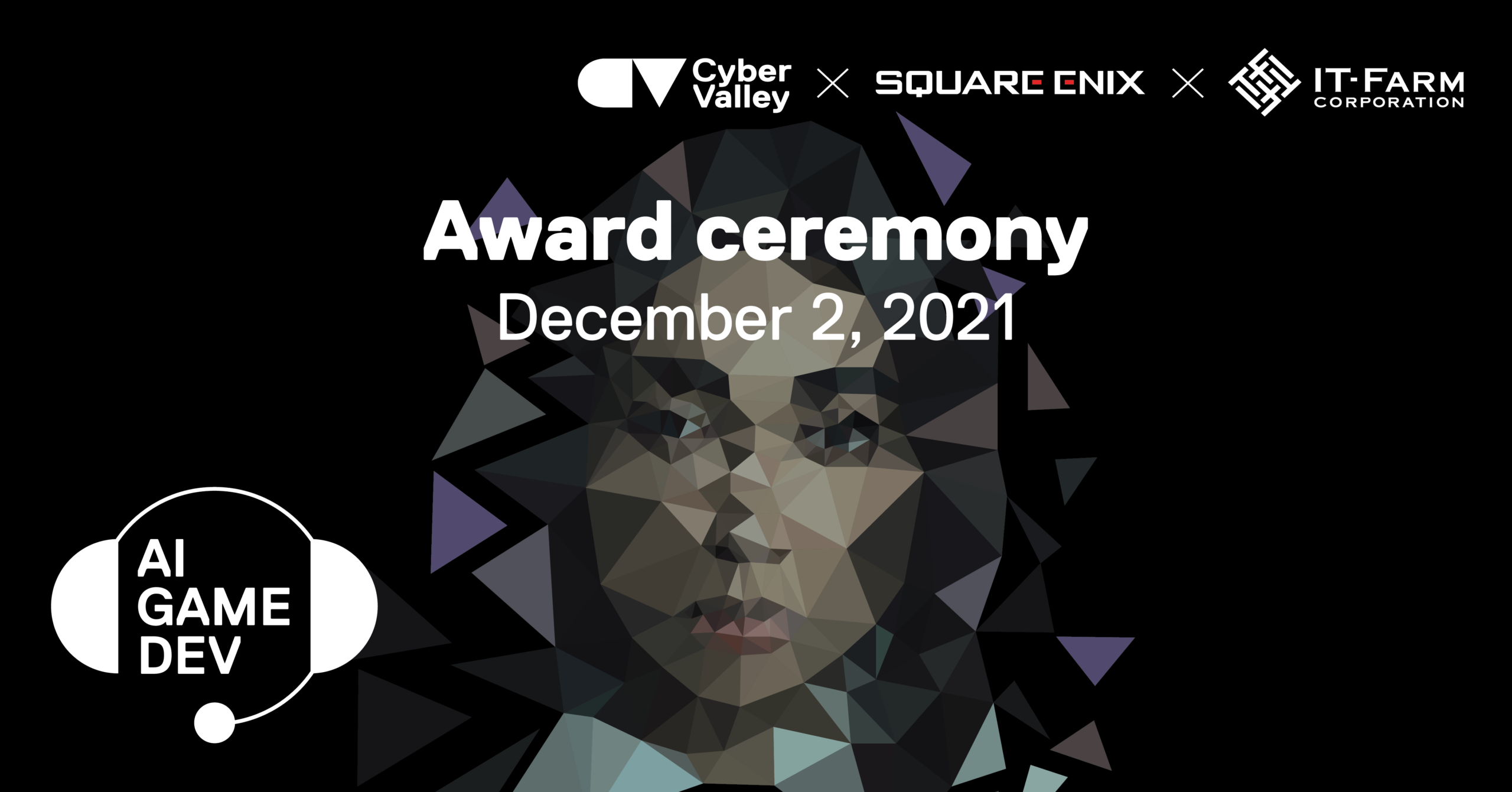
    Die sieben Finalist:innen der AI GameDev wurden ausgewählt. Bei der Preisverleihung am 2. Dezember 2021 haben die Nominiterten die Möglichkeit, drei prestigeträchtige Preise mit nach Hause zu nehmen:

    Main Award

    powered by Square Enix für die innovativste KI-Lösung

    Scientific Award

    powered by Cyber Valley für die vielversprechenste wissenschaftliche Leistung

    Audience Award

    powered by IT-Farm und ausgewählt von euch


    Erfahre mehr über die Finalist:innen und die AI GameDev in unserer News und auf aigame.dev.


  • Bosch AI Con 2021

    Bosch AI Con 2021

    What is the AI CON 2021 about?

    Industrial AI or how to bring AI to the real world: A topic that not only Bosch is affected by. Learn about the Bosch way in this field through an exciting Keynote of Bosch’s CTO Michael Bolle on the AIoT Cycle and on the importance of Hybrid Models. You will also get insights into how other industrial companies handle this exciting field. But there is even more! You will have the chance to learn from renown researchers and AI experts from the industry sector like Raquel Urtasun (Uber ATG), Zico Kolter (Carnegie Mellon University), Jun Zhu (Tsinghua University), Nuria Oliver (MIT) or George Em Karniadakis (Brown University) about the latest findings and hot topics in the field of AI.

    Listen to exciting keynotes about various AI hot topics

    Experience what is possible through AI at our virtual exhibition

    Meet in instructive technical deep dives our AI experts and renowned researchers from the AI Community on innovative and hot topics

    Exchange with like-minded people to get new impulses and enable future collaborations

    From 13:00 – 17:00 Cyber Valley representatives will be available for virtual coffee breaks during BOSCH AI Con. If you’re interested in finding out about research and founding opportunities in Europe’s largest ecosystem for research and innovation in modern AI, please feel free to join for one of these 20-minute sessions. Our representatives will be talking about their experiences and answering questions about life as a researcher or entrepreneur in Cyber Valley.


    Be excited about what awaits you at the 2021 virtual AI CON!

  • NeurIPS 2020

    NeurIPS 2020

    Monday, 7. December, 21:00-21:30 CET

    Katja Schwarz 

    Katja Schwarz is a PhD Student at Tuebingen University and scholar at the International Max Planck Research School (IMPRS) for Intelligent Systems (IS). She started her PhD in 2019 and is supervised by Prof. Andreas Geiger. Katja works at the intersection of Machine Learning, Deep Learning and Computer Vision. Currently, she is particularly interested in geometric scene understanding and 3D generative models.

    REGISTRATION

    Tuesday, 8. December, 21:00-21:30 CET

    Junhyung Park

    Junhyung Park has been a PhD student in the Empirical Inference Department at the Max Planck Institute for Intelligent Systems since November 2019. His work focuses primarily on reproducing kernel Hilbert space embeddings and causal inference. Outside work, he plays football and the piano, and also enjoys reading, traveling, and learning new languages.

    REGISTRATION

    Wednesday, 9. December, 21:00-21:30 CET

    Yiyi Liao

    Yiyi Liao is a postdoctoral researcher in the Autonomous Vision Group, which is affiliated with the University of Tübingen and the Max Planck Institute for Intelligent Systems. Her research interests include 3D scene understanding, reconstruction, and 3D-aware generative models.

    REGISTRATION

    Thursday, 10. December, 21:00-21:30 CET

    Fabian Sinz

    Fabian Sinz's research interests lie in the combination of machine learning and neuroscience. In 2018, he was appointed leader of the newly established independent Cyber Valley Neuronal Intelligence Research Group at the University of Tübingen. He is also currently an Adjunct Assistant Professor at the Baylor College of Medicine’s Center for Neuroscience and Artificial Intelligence in Houston, Texas.

    REGISTRATION

    Friday, 11. December, 21:00-21:30 CET

    Wieland Brendel 

    Wieland Brendel is a team lead at the University of Tübingen. His research focuses on robust and interpretable machine vision algorithms and the theory of representation learning. He studied theoretical physics and completed a PhD in computational neuroscience. Later, he switched to machine learning at the start of his postdoc. In addition to his position at the university, Wieland co-founded Layer7 AI in 2018, and was recently named one of Germany’s “Top 40 under 40” by Capital Magazin.

    REGISTRATION