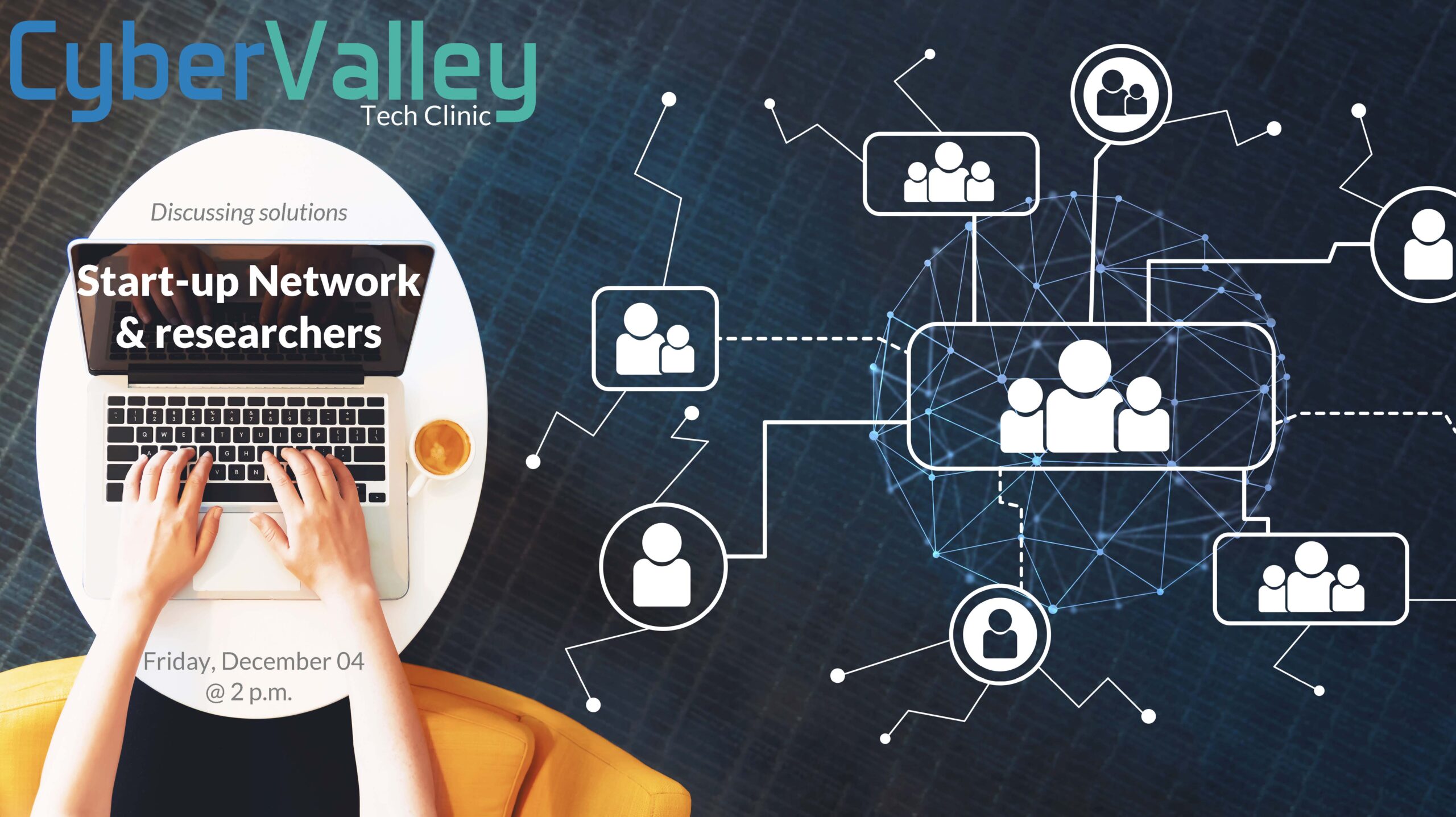
On Friday, December 4th a computer vision problem regarding “6d Pose Estimation of Boxes and Trailers in Logistics” will be discussed.
CV Tag: Computer Vision
-
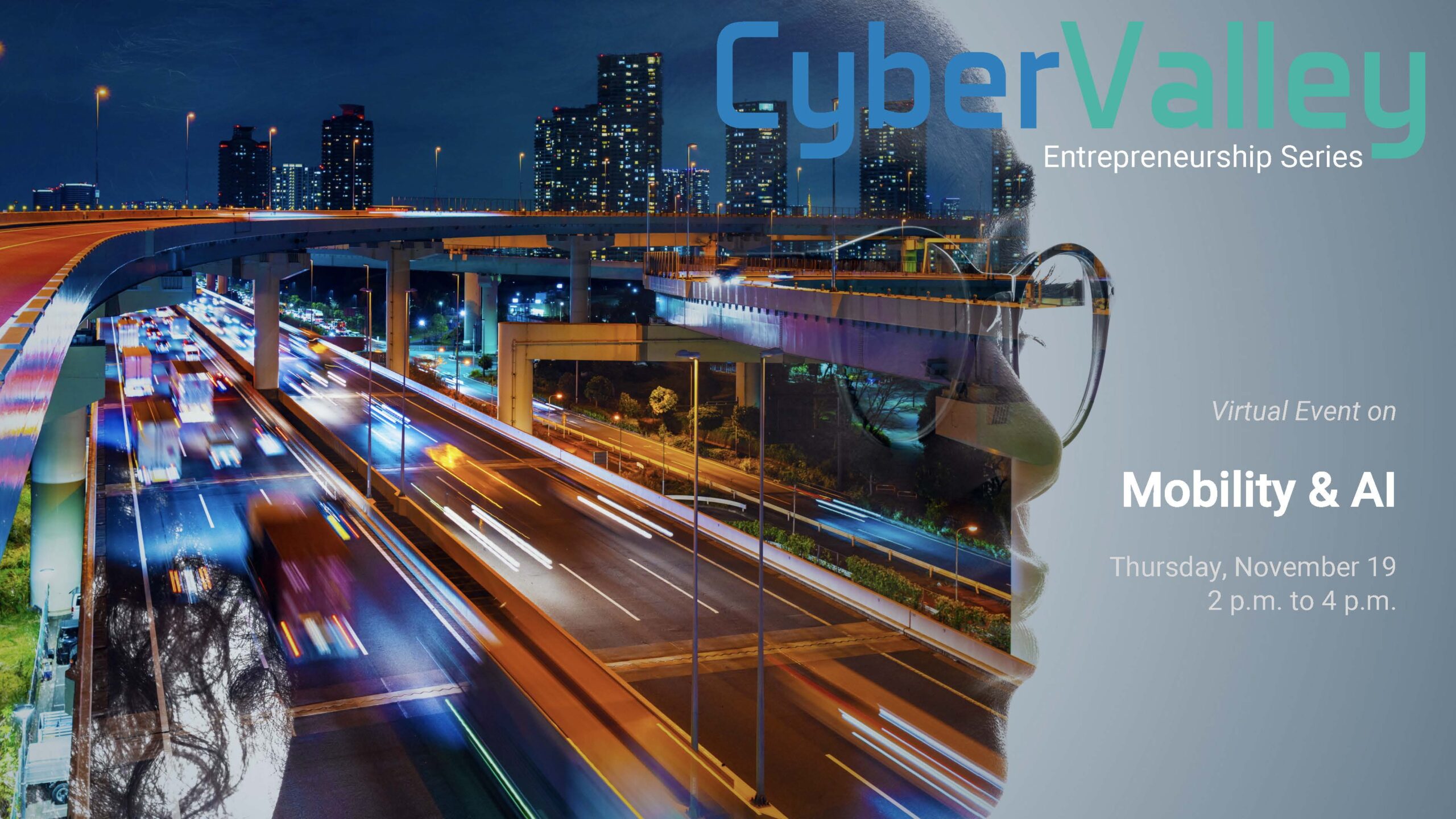
Mobility & AI
Schedule
- Welcome and Introduction – Michael Black | Cyber Valley Spokesperson
- Keynote – Michael Halbherr | Co-Founder HERE and Technology Investor
- Textual Explanations for Self-Driving Vehicles – Zeynep Akata | Uni Tübingen
- Scientific Perspective on Mobility & AI – Andreas Geiger | Uni Tübingen / MPI IS
- Investment – Tobias Jahn | BMW i Ventures
- Companies & Start-ups
- Kai Przybysz-Herz | NAiSE GmbH
- Martynas Gudonavicius und Jurgis Pašukonis | Trafi
- Philipp Gneiting | STARTUP AUTOBAHN / Mercedes Benz AG
- Discussion
Registration
-
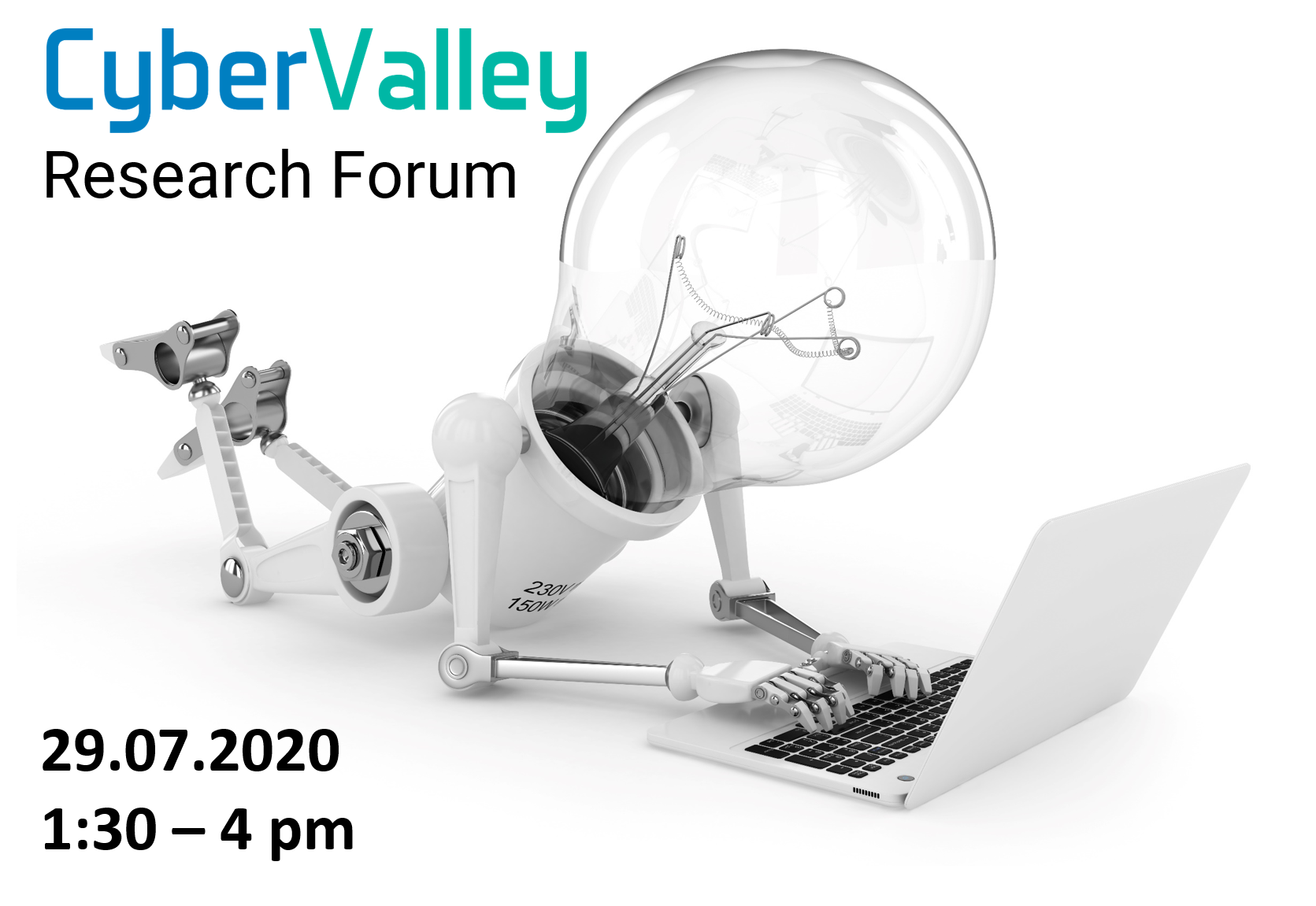
Cyber Valley Research Forum (virtual)
At this edition of the event, we will focus on the University of Stuttgart's Cyber Valley groups as well as on a recently established group at the University of Tübingen. In addition, our partners from Fraunhofer IPA and IAO will present the AI Innovation Center "Learning Systems" and their AI-related areas of research.
Due to COVID-19 restrictions, the workshop will be held online (Zoom). If you would like to participate, please register here.
Schedule
13:30 Welcome 13:30 – 13:40 AI Innovation Center “Learning Systems”
https://www.ki-fortschrittszentrum.de13:40 – 14:00 Dr. Tian Qiu
Biomedical Microsystems, Institute of Physical Chemistry, University of Stuttgart
Title: Augmented Reality Organ Phantom for the Generation of Biomedical Data
Abstract:
Biomedical data of the human body is complex and difficult to acquire for safety, ethical, legal, and technical reasons. Building a realistic organ phantom based on rapid prototyping and augmented reality technologies is one of our group's research focuses. The phantom system represents the anatomy and the material properties of real organs. Moreover, the model can sense what it experiences and generate a large amount of data, which is not even possible with a real organ. The data will offer unique opportunities to train surgeons and optimize surgeries, and to develop new medical instruments and life protection systems.14:00 – 14:20 Prof. Dr. Michael Sedlmair
Virtual Reality and Augmented Reality, Visualization Research Center (VISUS), University of Stuttgart
Title: VR/AR research at VISUS
Abstract:
I will introduce several examples of current Virtual/Augmented Reality (VR/AR) projects from the Visualization Research Center (VISUS) at the University of Stuttgart. Much of our work focuses on how data visualization can be meaningfully combined with VR/AR. Also referred to as Immersive Analytics, this combination is a popular topic. However, many things can go wrong. We will look at some of these pitfalls, identify ways of overcoming them, and outline scenarios that could have a truly significant and lasting effect.14:20 – 14:40 Prof. Dr. Jakob Macke
Machine Learning in Science, Cluster of Excellence "Machine Learning", University of Tübingen
Title: Simulation-based inference: Bridging the gap between machine learning and scientific modelling
Abstract:
Many fields of science and engineering make extensive use of complex simulations that describe the structure and dynamics of the process being investigated. These models are derived from knowledge of the underlying mechanisms and are of critical importance for scientific hypothesis-building. However, linking such complex models to high-dimensional empirical data can be challenging. My group develops computational tools that aim to bridge the gap between data-driven machine learning and theory-driven, scientific modelling, with a focus on applications in the life sciences. In this talk, I will focus on our recent work on using neural conditional density estimators to perform Bayesian inference on simulation-based models. I will demonstrate the efficiency and flexibility of this approach and highlight applications to dynamical models of biological systems and source-reconstruction in biological imaging.14:40 – 15:00 Prof. Dr. Alexander Brem
Entrepreneurship in Technology and Digitization, Institute of Entrepreneurship in Technology and Science, University of Stuttgart
Title: How AI-driven applications enhance Innovation and Entrepreneurship
Abstract:
Artificial intelligence (AI) is changing how entrepreneurs and companies innovate. Startups and established companies are developing a wide range of AI-driven applications, addressing different tasks along the innovation process. These tasks include, just to mention a few, the detection of emerging technologies and trends, the identification of customer needs or lead users, the generation of user feedback from emotional facial recognition, or the automated creation of new product designs.
In light of such rapid developments, we offer an overview on how AI is being current used in creativity, innovation, and entrepreneurship. We describe how technology and management researchers in these fields are studying the applications and impact of AI. Finally, we outline the current research areas (still emerging) and suggest areas for further management research using AI and research on AI’s impact on innovation and entrepreneurship processes.15:00 – 15:25 Fraunhofer Institute for Manufacturing Engineering and Automation (IPA)
Dependable AI built on Explainability, Verification and Uncertainty Quantification
(Nina Schaaf, Xinyang Wu, Marcel Albus)Computer Vision for Quality Control and Robotics
(Bernd Meese, Johannes Stoll)Cognitive Robotics: Deep Learning for Robotic Grasping and Assembly
(Marius Moosmann, Arik Lämmle)15:25 – 15:50 Fraunhofer Institute for Industrial Engineering (IAO)
X-tended Reality@Fraunhofer IAO – Labs and Usecases in the field of Building Construction
(Alexandros Giannakidis, Günter Wenzel)AI-based solutions for text documents analysis
(Maximilien Kintz)Applied Neuroscience and Neuroadaptive Technology
(Katharina Lingelbach, Mathias Vukelic)Variable and adaptive driving behaviour and vehicle interior: Robust, safe and fun with AI
(Frederik Diederichs, Mathias Vukelic, Matthias Bues)15:50 – 16:00 Wrap-up -
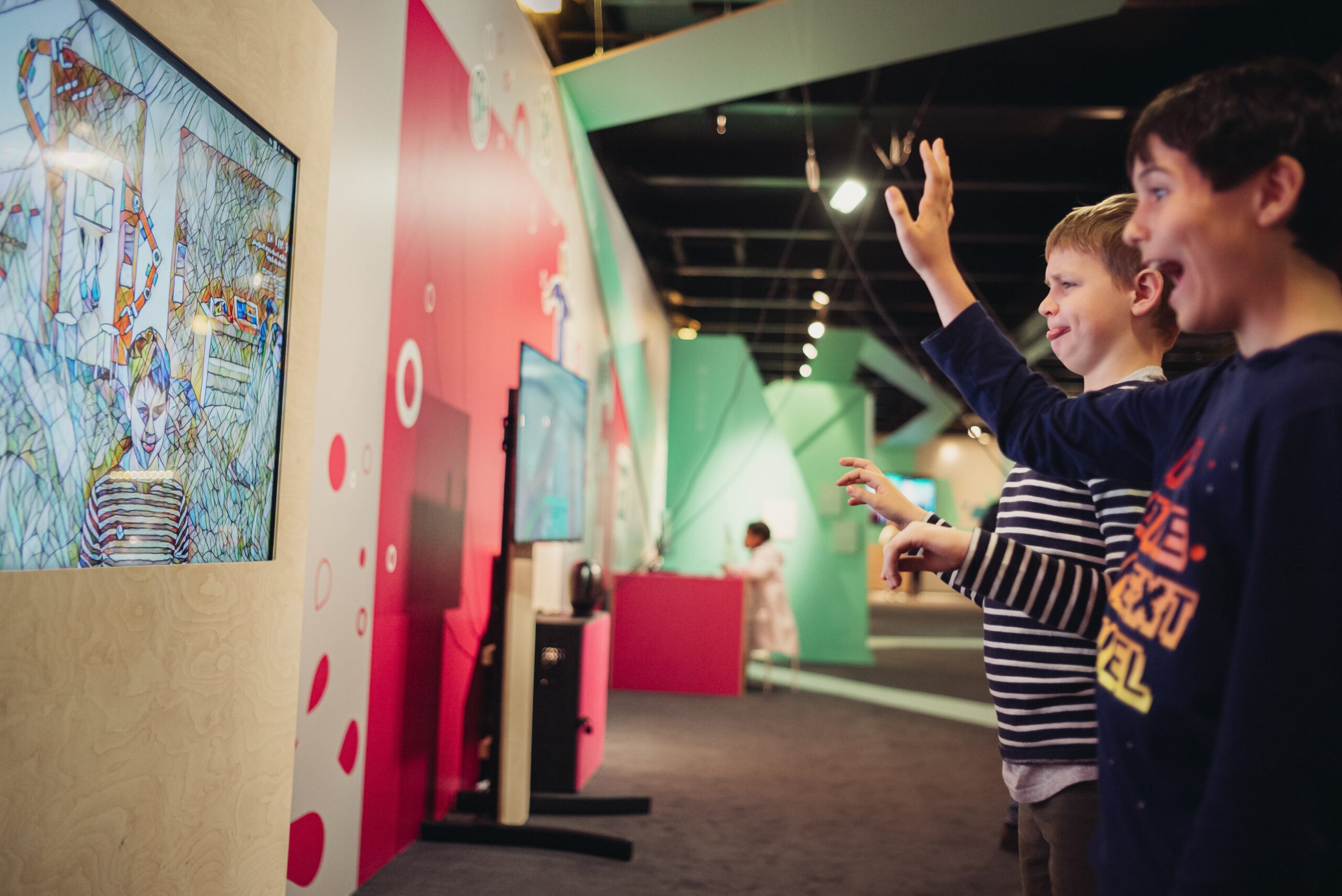
Ausstellung ‚Künstliche Intelligenz‘ an Bord der MS Wissenschaft 2019
Gestern ging es los! Der Künstlerische Spiegel des Cyber Valley Start-ups DeepArt fährt mit auf der MS Wissenschaft, einem ehemaliges Güterfrachtschiff. In diesem Jahr steuert sie mit einer Mitmach-Ausstellung zu künstlicher Intelligenz 27 Städte in Deutschland an – von Berlin bis Würzburg. Vom 12. bis 16. September legt die MS Wissenschaft in Esslingen bei Stuttgart an. Mehr Infos gibt es hier: https://ms-wissenschaft.de/
Mit dem künstlerischen Spiegel wird ein (live) Bild zu einem Kunstwerk. Doch wie „sehen“ und „verstehen“ Maschinen Kunstwerke? Wenn eine künstliche Intelligenz ein Gemälde betrachtet, sollte sie es nicht nur in seine Objekte zerlegen können. Sie muss dazu auch den verwendeten Stil der Künstlerin oder des Künstlers entschlüsseln. Wenn sie das beherrscht, kann sie im gleichen Stil sogar neue Kunstwerke schaffen – in Echtzeit von jeder Person, die vor der Kamera herumhüpft. Vorübergehende Besucher werden nämlich dabei gefilmt und in Echtzeit auf dem Monitor in verschiedenen Kunststilen dargestellt. Der künstlerische Spiegel ist ein Forschungsexponat der Universität Tübingen, die Partner im Cyber Valley ist und woraus das Start-up DeepArt hervorging.
Vom 12.09. – 16.09.2019 legt das Schiff in Esslingen an der Liegestelle Färbertörlesweg, Nähe Pliensauturm, an.
Alle Interessierten sind herzlich eingeladen, die Ausstellung zu besuchen. Sie spricht insbesondere auch Schulklassen, Familien und Jugendliche an. Wir empfehlen den Besuch der Ausstellung ab einem Alter von 12 Jahren. Viele Ausstellungsstücke sind aber auch für jüngere Kinder geeignet.
Der Eintritt ist frei.


Bundesforschungsministerin Anja Karliczek (Mitte) hat sich natürlich auch die Ausstellung auf der MS Wissenschaft angesehen:

Quelle der Fotos: Ilja Hendel/WiD