While modern language models do a great job at finding documents, extracting information from them and generating naturally sounding language, the progress in helping humans read, connect, and make sense of interrelated long texts has been very much limited.
Funded by the European Research Council, the InterText project brings natural language processing (NLP) forward by developing a general framework for modeling and analyzing fine-grained relationships between texts – intertextual relationships. This crucial milestone for AI would allow tracing the origin and evolution of texts and ideas and enable a new generation of AI applications for text work and critical reading.
This talk will elaborate their intertextual approach to NLP using the scientific domain as a prototypical, challenging application area. Specifically, they will highlight two lines of our work. The first one is related to task design, practical applications and intricacies of data collection in the peer-review domain. The second one is about scientific text generation targeting (i) citation text and (ii) attitude and theme-guided rebuttals. To conclude, they will briefly describe our ongoing efforts towards fine-grained linking of multiple documents, temporal analysis of scientific datasets and research novelty modeling.
About the speaker:
Iryna Gurevych (PhD 2003, U. Duisburg-Essen, Germany) is professor of Computer Science and director of the Ubiquitous Knowledge Processing (UKP) Lab at the Technical University of Darmstadt in Germany. In addition, she is an adjunct professor at MBZUAI in Abu-Dhabi, UAE and an affiliated professor at INSAIT in Sofia, Bulgaria. Her main research interests are in machine learning for large-scale language understanding and text semantics.
Iryna’s work has received numerous awards. Those include the ACL fellow award 2020, the first-ever Hessian LOEWE Distinguished Chair award (2,5 mil. Euro) in 2021 and an ERC Advanced Grant in 2022 (2,5 Mil. Euro). Iryna is co-director of the NLP program within ELLIS, a European network of excellence in machine learning. In 2023, she was the president of the Association for Computational Linguistics (ACL).
When?
May 8, 2024. 11:30am
Where?
Universitätstraße 32.101, Campus Vaihingen of the University of Stuttgart
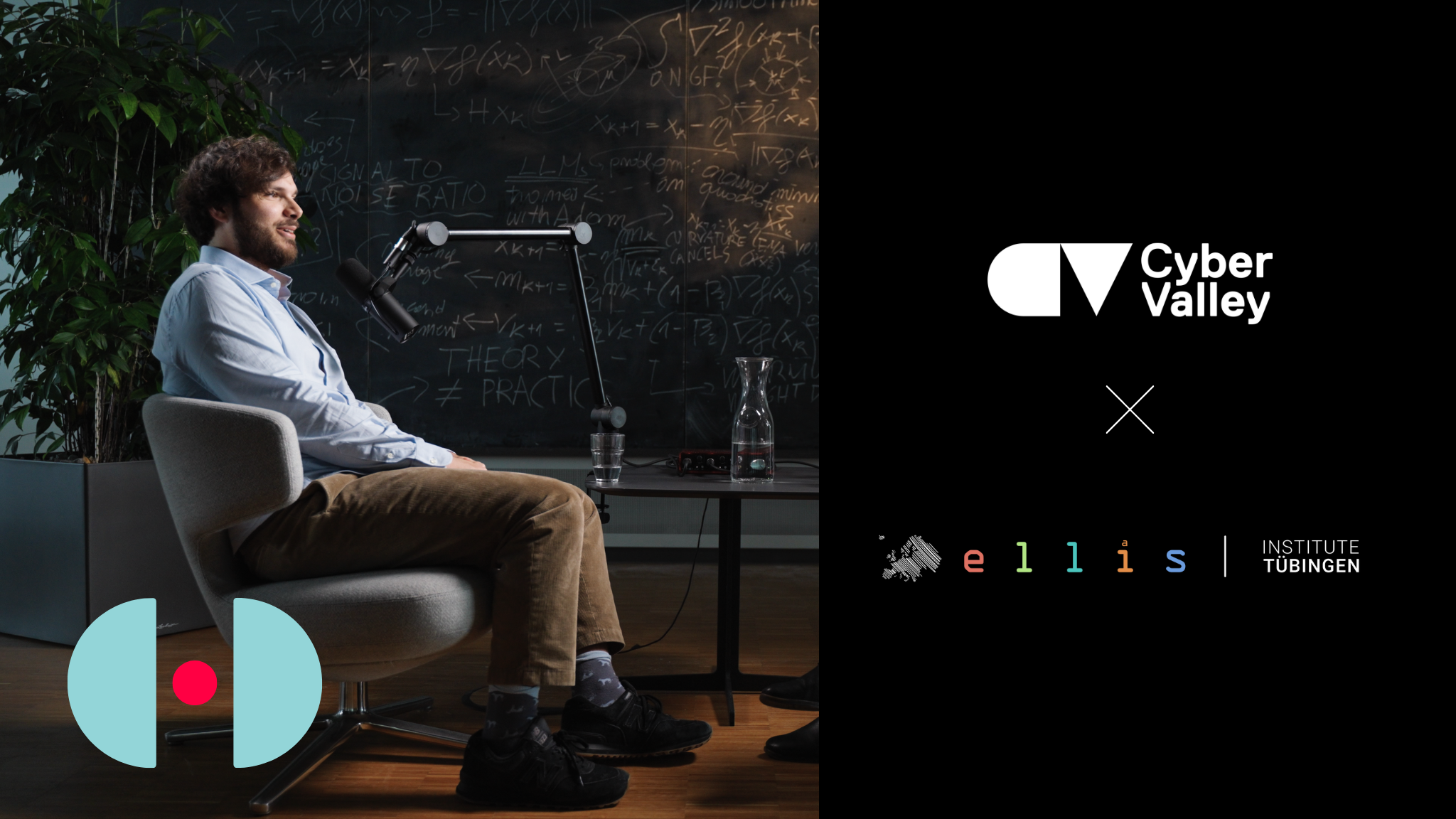
Episodes will feature exclusive interviews with Principal Investigators from the first ever established ELLIS Institute Tübingen, providing listeners with their insights on what artificial intelligence truly means. Listeners will also gain an understanding of what it means to be part of the Institute and the Cyber Valley Community.
The first guest is Antonio Orvieto, a Principal Investigator leading the Deep Models and Optimization Group. Orvieto will offer insights on his current research, shedding light on the challenges it addresses, discussing the limitations of AI, and sharing his vision for the future.
Don't miss this exploration into the heart of AI innovation, as the Cyber Valley Podcast unveils the latest trends and developments shaping the landscape of artificial intelligence.
Find an overview of the different initiatives below and visit the units’ web pages for more information on upcoming sessions. Many of the talks can be joined online.
Unit Stuttgart
The ELLIS Unit in Stuttgart regularly invites outstanding scientists to present their latest research projects. Learn more about past and upcoming sessions and about how to join them here.
Unit Alicante
With the Distinguished Speaker Series, ELLIS Alicante invites top AI researchers from around the world to present their work to the team of ELLIS Alicante. In collaboration with the University of Alicante, the event is open to any student and researcher of the university.Find all the details here.
Unit Cambridge
The Cambridge ELLIS Unit Seminar Series holds talks by leading researchers in the area of machine learning and AI.Learn more about upcoming sessions here.
Unit Helsinki
The distinguished lecture series organized by the ELLIS Unit in Helsinki is open for everyone and can be joined online. Find all information and registration details here.
Unit Jena
The ELLIS Unit Jena organizes the AI4Good hosted online webinar series “AI for Earth and Sustainability Science”. The series highlights seminal and recent progress in AI-enabled modelling and understanding of the Earth system from local to global scale and AI-science based diagnosis, prediction, and remedy of environmental crises. Interdisciplinary researchers from academia, industry, UN and government agencies as well as NGOs will talk about tackling systemic real-world challenges with AI, including disaster risk reduction and preparedness, environmental degradation, climate change, societal impacts and dynamics, and the sustainable and responsible use of natural resources such as water and energy. The webinar series is curated by the ELLIS Unit Jena and the ELLIS Program “Machine Learning for Earth and Climate Sciences”.
Unit Lisbon
The ELLIS Lisbon & Unbabel seminars on Machine Learning and Natural Language Processing, organised jointly by members of the ELLIS Unit Lisbon & Portuguese translation start-up Unbabel, aim to provide, on a regular basis, an outlet for discussion of the latest research on Machine Learning and Natural Language Processing by researchers and students from all over the world. The seminars are open to all and streamed online. Find all details and information here.
Unit Munich
The Munich AI Lectures are a joint initiative of the ELLIS Unit Munich, the Munich Center for Machine Learning (MCML), the Munich Data Science Institute (MDSI) at TUM, the Center for Advanced Studies (CAS) at LMU, and the Konrad Zuse School of Excellence in Reliable AI (relAI). On a monthly basis, they invite top-level AI researchers to give the audience a glimpse into their work and the future of AI. Join them for the next sessions here.
ELLIS Student & Postdoc Reading Groups
As part of its educational activities, ELLIS aims to connect PhDs and postdocs in the network and supports them in creating opportunities to discuss science. Currently, two student-led reading groups on machine learning-related topics (Human-Centric Machine Learning & Mathematics of Deep Learning) meet regularly to discuss a paper the group previously voted on. ELLIS Reading Groups are initiated and organized by ELLIS PhD students and postdocs across Europe. Take a look at this page for details and upcoming sessions.
Artificial Intelligence Doctoral Academy (AIDA)
AIDA, the Artificial Intelligence Doctoral Academy, has been created to nurture a new generation of AI talent by offering knowledge and expertise in AI through educational and training activities. It’s a joint initiative of the EU-funded projects ELISE, AI4media, VISION, HUMANE AI and TAILOR. ELLIS Fellows often participate in the AIDA AI Excellence Lecture Series. Find a list of upcoming sessions here and an overview of past sessions here.
The European Laboratory for Learning and Intelligent Systems (ELLIS) is a pan-European AI network of excellence which focuses on fundamental science, technical innovation and societal impact. Founded in 2018, ELLIS builds upon machine learning as the driver for modern AI and aims to secure Europe’s sovereignty in this competitive field by creating a multi-centric AI research laboratory. ELLIS has established 41 units in 16 different countries in Europe. It has also launched the ELLIS PhD Program, one of Europe’s most competitive PhD programs which aims to foster and educate the best talent in machine learning and related research areas by pairing outstanding students with leading academic and industrial researchers across Europe. The ELLIS PhD Program has received funding from the European Union’s Horizon research and innovation programme under ELIAS Grant Agreement No. 101120237 (2023-2027) and from the Horizon Europe research and innovation programme under ELISE Grant Agreement No. 951847 (2020–2024).
What is EDS2024?
The ELLIS Doctoral Symposium is an annual conference for ELLIS PhD students and other PhD students to meet in person and share knowledge about machine learning. The ELLIS Doctoral Symposium 2024 (EDS2024) is the fourth edition, which is co-organised by the University of Tübingen and the Institut Polytechnique de Paris, and will be held in Paris, France. It is expected to host 150 attendees during one week from Monday, August 26 to Friday, August 30.
The focus of this year’s symposium is AI & Sustainability.
Participants are expected to prepare a poster or a tooling session with a strong machine-learning component. The topic of the poster or tooling session is completely open, as the ELLIS Programs bring together researchers from multiple disciplines within the machine learning community (Computer Vision, NLP, Theoretical ML, Reinforcement Learning, Human-Centric ML, etc.). If upon registering you are unsure about the material you wish to present, do feel free to submit a tentative title. EDS2024 follows in the footsteps of the previous EDS iterations held in Helsinki (EDS2023), Alicante (EDS2022) and Tübingen (EDS2021). Save the date and join us for keynotes, poster & tooling sessions and social events in the beautiful City of Light!
Students requiring a short-stay visa for the event can apply here.
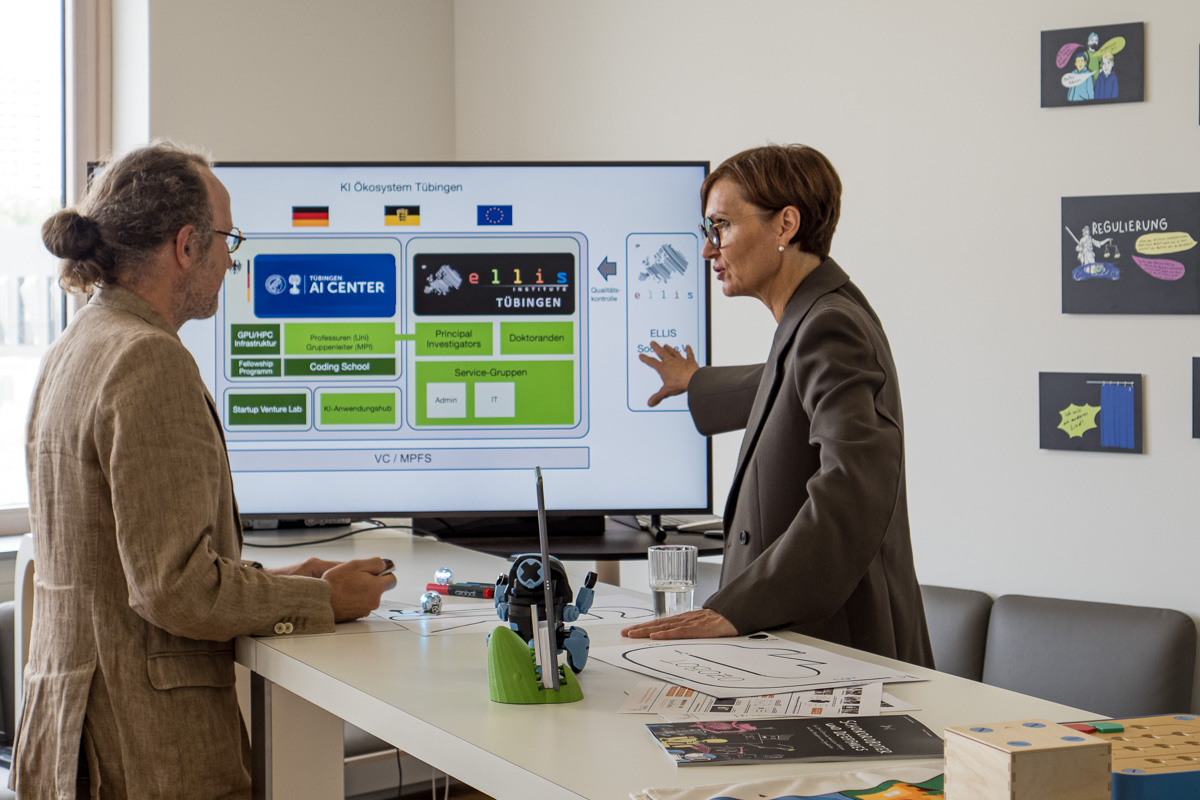
Among the speakers and panelists of the workshop in January were the German Federal Minister of Education and Research Bettina Stark-Watzinger, the French Minister for Higher Education and Research Sylvie Retailleau, the Undersecretary of State at the Polish Ministry of Science and Higher Education Andrzej Szeptycki, as well as representatives from the EU and AI research institutions in Europe. ELLIS was represented by President Bernhard Schölkopf and Board Member Florence d'Alché-Buc, and referred to by multiple other speakers, including German State Secretary Sabine Döring and the Polish representative Andrzej Szeptycki.
“Too many research programs at national and European levels go in the same direction and create a funding jungle instead of a coordinated program. In order to be attractive to top researchers from all over the world, we therefore need an overarching and networked European initiative”, highlights Sabine Döring. “Our aim is to work with our partners in Europe to create a platform as a contact point for top researchers from all over the world in order to actively promote this idea”, she adds.
During the high-level meeting, discussions centered around opportunities for organizing, distributing, and financing AI infrastructures at both the European and EU member state levels. The group also explored ideas for jointly promoting young international AI talent in Europe – a topic that is a strategic priority for ELLIS. With the ELLIS PhD Program, the network has implemented a competitive pan-European PhD program aimed at attracting and retaining outstanding young researchers from around the world.
ELLIS PhD students benefit from joint supervision in the European ELLIS network
The ELLIS representatives provided insights into the program and outlined its potential for facilitating PhD training in Europe: Since its inception in 2020, the program has attracted more than 7,000 applications from all over the world, around 300 of which successfully secured a PhD position in the program. ELLIS PhD students benefit from joint supervision by two leading AI researchers at different institutions in Europe and are integrated into an international network of top scientists early in their careers. European cooperation is essential for the program: In the challenge of attracting international talent, many European institutions face difficulty when acting alone. ELLIS, however, offers a significant added value by leveraging its extensive research network for the joint training of doctoral students. Moreover, the program’s central application portal has proven to be a key success factor, as it allows PhD candidates to reach many European top AI labs with just a single application.
“The IDEAS institute in Warsaw has just founded an ELLIS unit, following a rigorous selection process where international reviewers got convinced that the unit will make a major contribution towards strategically developing the ELLIS network. This further extends our talent base, and we are happy to invite Poland to join France and Germany to develop the ELLIS PhD Program into the leading international networking platform for AI talent”, says Bernhard Schölkopf.
BMBF established ELLIS as an international networking platform for young AI researchers
As part of its AI Action Plan presented last year, the German Federal Ministry of Education and Research (BMBF) established ELLIS as a European and international networking platform for young AI researchers. The successful use of AI in Europe requires excellence and cooperation on a large scale. At ELLIS, 41 units in 16 countries and more than 1,000 members collaborate to build up a pan-European AI network of excellence. The most recent unit that joined the network is the ELLIS Unit in Warsaw hosted by IDEAS NCBR. IDEAS NCBR was represented at the workshop in Brussels by their Board Member Garzyna Zebrowska.
About ELLIS
ELLIS is a pan-European AI network of excellence. It builds upon machine learning as the driver for modern AI and aims to secure lasting international leadership of AI made in Europe by connecting top researchers in this field and by creating a multi-centric AI research laboratory. Founded in 2018, ELLIS has grown into a network that counts 41 ELLIS units at world-class institutions in 16 countries, 16 ELLIS programs and a pan-European PhD program. The members of ELLIS are committed to shaping the future of AI in Europe by pushing the scientific and technological boundaries for human-centered, beneficial, and safe AI.
More Information
Read the article “German Federal Ministry of Education and Research establishes ELLIS as a European and international networking platform for young AI researchers” here.
Learn more about the ELLIS PhD Program here. This program has received funding from the European Union’s Horizon 2020 research and innovation programme under ELISE Grant Agreement No. 951847.
Contact
For interview requests regarding ELLIS or further information, please contact pr@ellis.eu.
Supercomputing facilities is essential for AI-based technologies
Artificial intelligence has a profound economic and societal impact on a global scale and can help combat challenges such as climate change and pandemics. However, not all players, especially in the global south, have the same access to expertise and computing resources which are crucial for the development and implementation of innovative AI-based technologies.
This is where ICAIN comes in: By broadening access to such resources, the founders of ICAIN aim to enable international research projects that benefit society as a whole and are in line with the United Nations Sustainable Development Goals (SDGs). With the European LUMI and the Swiss ‘Alps’, the new network includes two of the most powerful supercomputers in the world. All founding partners will further contribute to ICAIN by sharing their AI expertise.
Powering the future of AI excellence internationally
ICAIN is set to have a strong impact on AI entrepreneurs and scientists internationally, providing them with the knowledge and necessary tools needed to push their AI advancements to unprecedented heights. This initiative positions Europe as a global leader in AI excellence, fostering innovation and collaboration to drive the capabilities of AI forward.
ICAIN is driven by the recognition of artificial intelligence as a crucial technology with the potential to address global challenges. The initiative aims to ensure inclusive participation in AI research and viewing AI solutions as global public goods accessible to all. It prioritizes addressing major scientific and social issues in AI collaboratively and transparently. This also illustrates the importance of collaborative efforts between politics and science to ensure that AI remains at the forefront of future developments.
Cyber Valley Community Member ELLIS joins forces
“ELLIS is a pan-European AI network aiming to create outstanding conditions for AI researchers. More than 1,000 top scientists and leading AI research institutions such as ETH Zurich, Cambridge, Oxford, Paris and Max Planck Institute for Intelligent Systems are part of ELLIS”, says Bernhard Schölkopf, Director of the ELLIS, Director of Max Planck Institute for Intelligent Systems, and Cyber Valley Board Member. “We will contribute our network’s scientific expertise to provide meaningful input on how the compute resources get used, ensuring that the major scientific and social issues of AI are tackled jointly and transparently. We like to think that having ELLIS as a founding partner and co-initiator will be essential to the success of the proposal.”
Launch highlights
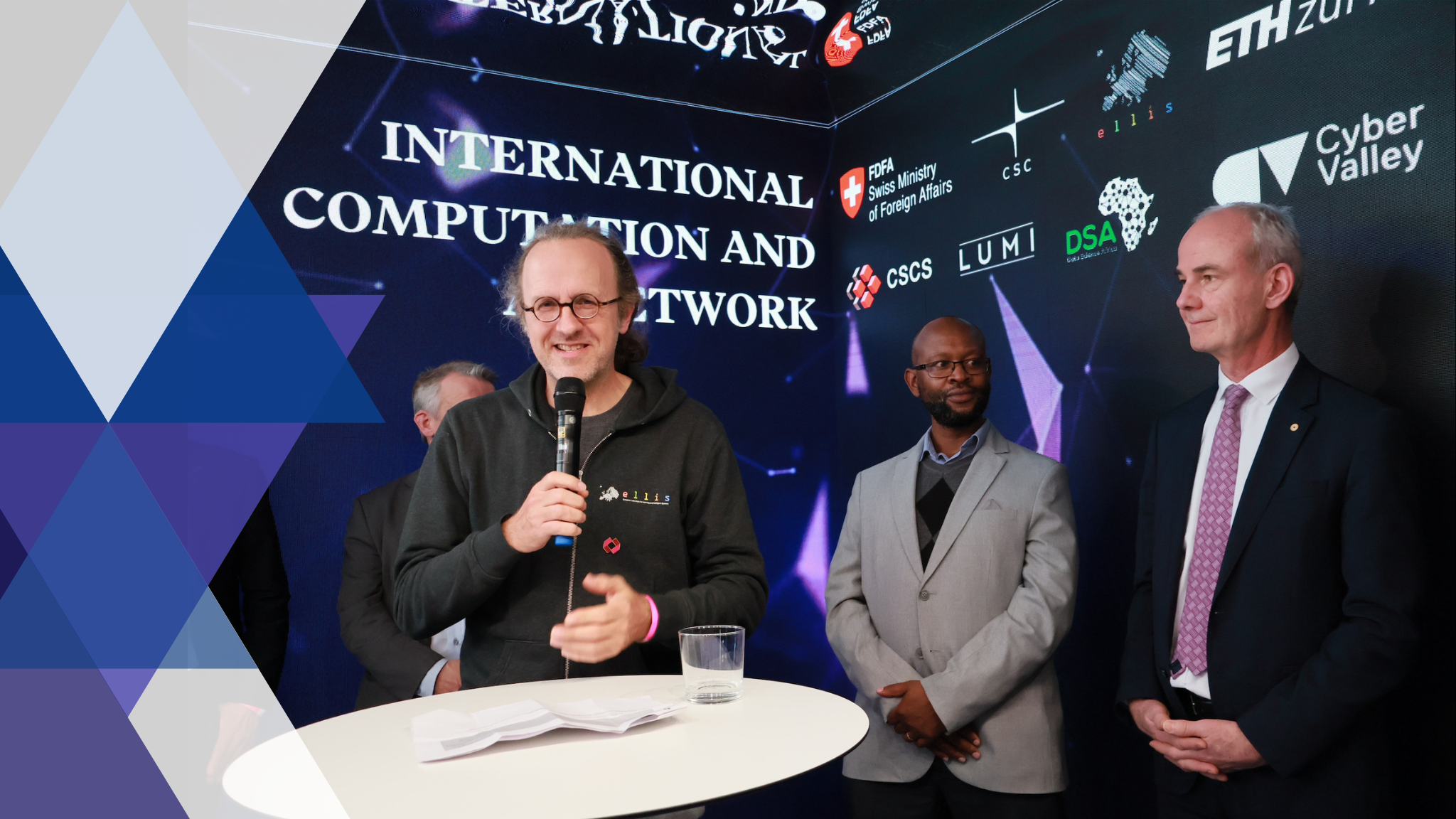
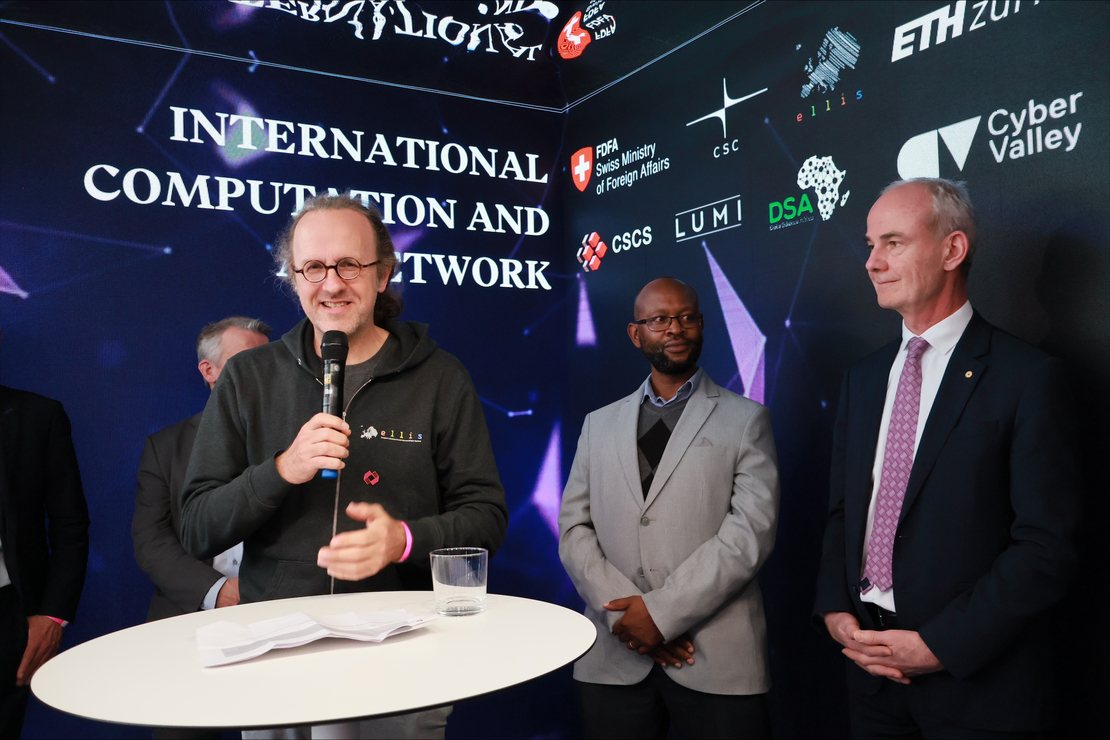
ICAIN’s launch was announced at a joint press conference at the World Economic Forum in Davos on January 17, 2024, followed by an inaugural panel discussion:
Panelists
State Secretary Alexandre Fasel, Swiss Foreign Ministry;
Prof. Bernhard Schölkopf, Director of the ELLIS-Institute, Director Max Planck Institute for Intelligent Systems, and Cyber Valley Board Member
ETH Vice President Prof. Christian Wolfrum;
Prof. Ciira Maina, Director of Data Science for Africa
Fully operational by 2025
The ICAIN initiative aims to achieve full completion by 2025. As part of their objectives for the current year, they are actively seeking additional partners, including research institutes, international organizations, companies, or foundations, to join their mission and provide active support. These partners may contribute financial support or offer contributions in kind, such as computing power or specialized expertise.
Throughout the ongoing incubation phase, governance rule, coordination processes, and financing for ICAIN will be formulated. Simultaneously, the first pilot projects, in collaboration with other entities, will begin to gather valuable experience in partnership collaboration. By 2025, ICAIN aims to have all its organizational structures firmly established.
Cyber Valley is Europe’s largest and leading center for excellence in artificial intelligence and modern robotics. Its mission and public mandate are to advocate for research, development, application, and acceptance of technologies and methods in the field of intelligent systems. Cyber Valley encourages entrepreneurship by uniting scientific excellence with innovation and technology transfer. In addition, Cyber Valley facilitates critical reflection on the ethical and social implications of AI through public engagement. Cyber Valley envisions a future in which the full potential of intelligent systems is leveraged for the greater good of the world.
The Cyber Valley Community is a network of AI researchers, entrepreneurs, investors, and start-ups, alongside partners from academia, industry, and society. Cyber Valley GmbH is owned by the State of Baden-Württemberg and the Max Planck Gesellschaft. It acts as the service provider, central organizer, and host for the Cyber Valley Community. While Cyber Valley GmbH is located in Stuttgart and Tübingen, it operates across Baden-Württemberg with a global reach, attracting the best talent from across the world to create the future with AI.
About ELLIS
ELLIS is a pan-European AI network of excellence. It builds upon machine learning as the driver for modern AI and aims to secure lasting international leadership of AI made in Europe by connecting top researchers in this field and by creating a multi-centric AI research laboratory. Founded in 2018, ELLIS has grown into a network that counts 41 ELLIS units at world-class institutions in 16 countries, 16 ELLIS programs and a pan-European PhD program. The members of ELLIS are committed to shaping the future of AI in Europe by pushing the scientific and technological boundaries for human-centered, beneficial and safe AI.
The German Federal Ministry for Education and Research (BMBF) is establishing ELLIS, the European Laboratory for Learning and Intelligent Systems, as a European and international networking platform for young AI researchers. This is part of the BMBF's AI action plan, which was presented by the Federal Minister of Education and Research, Bettina Stark-Watzinger, at Germany's AI strategy press conference on November 7th. As part of the Cyber Valley Community, ELLIS brings European research excellence to the German AI strategy.
The successful use of AI requires excellence and networking on a large scale. At ELLIS, European AI excellence meets a European network. This AI network is now officially supported by the BMBF. To ensure that Germany continues to use AI successfully in the future, the country wants to "seek even greater European and international cooperation", as stated in the BMBF's "Artificial Intelligence" action plan ((https://www.bmbf.de/bmbf/de/forschung/digitale-wirtschaft-und-gesellschaft/kuenstliche-intelligenz/ki-aktionsplan.html). Market size is essential for the global technology competition and excellent cross-border alliances are a strategic advantage. Targeted collaboration between German stakeholders at a European level with international partners is therefore at the heart of the AI strategy. ELLIS now plays a key role in this.
Ahead of the press conference, State Secretary Prof. Sabine Döring and Prof. Bernhard Schölkopf, Director of the Tübingen AI Center, the ELLIS Institute and the Max Planck Institute for Intelligent Systems as well as Cyber Valley Speaker, discussed how Europe's strength in AI can be used and how the research challenges can be taken on.
ELLIS – Connecting AI talent across Germany and Europe
The European Laboratory for Learning and Intelligent Systems (ELLIS) is a pan-European AI network of excellence and part of the Cyber Valley Community. It has more than 1,000 members, 16 transnational research programs, a pan-European PhD program and 41 ELLIS units at world-class institutions such as the Max Planck Institute for Intelligent Systems, universities in Paris, the Universities of Cambridge and Oxford, ETH Zurich, EPFL in Lausanne and the Technion in Haifa. Founded in 2018, ELLIS aims to secure the international leadership of AI made in Europe by networking top researchers and creating a multi-center AI research laboratory.
Germany is strongly represented in ELLIS: Ten entities are located at leading institutions in Germany (Berlin, Darmstadt, Freiburg, Heidelberg, Jena, Munich, Potsdam, Saarbrücken, Stuttgart and Tübingen). Funded by the Hector Foundation in the amount of 100 million euros, the first ELLIS institute in Tübingen began operations in July. It is set to become a globally recognized center for pioneering basic research in the field of artificial intelligence.
Attracting and supporting the best young researchers
One focus of ELLIS is to attract, retain and connect outstanding young AI talent in Europe through the ELLIS PhD and postdoc program. It has attracted more than 7,000 applications from all over the world since its inception in 2020. Students benefit from joint supervision by two leading AI researchers at different institutions in Europe, giving them an excellent starting point for their career in modern AI research.
"Germany wants to create the basis for us to develop responsible European AI in science and application. This is precisely the goal of Cyber Valley and ELLIS, and we look forward to realizing this together", said Prof. Schölkopf.
About Cyber Valley
ELLIS is embedded in Cyber Valley, Europe’s largest and leading research consortium in the field of artificial intelligence (AI) and modern robotics. Cyber Valley has a mission and a public mandate to advocate for entrepreneurship, research, development, application, and acceptance of technologies and methods in the field of intelligent systems.
The Cyber Valley Community connects partners from science, industry, and society, along with AI researchers and entrepreneurs. The Cyber Valley GmbH is funded by the state of Baden-Württemberg and acts as the central organizer, service provider, and host for the Cyber Valley Community. While the GmbH operates from Stuttgart and Tübingen, Cyber Valley has a larger scope: As a national and European driving force, it attracts the best people from all over the world to create the future with AI. Cyber Valley envisions a future where the full potential of intelligent systems is leveraged for the greater good of the world. www.cyber-valley.de
Wissenschaftsministerin Petra Olschowski: „Das ELLIS Institut in Tübingen wird ideale Rahmenbedingungen für weltweit führende KI-Wissenschaftlerinnen und Wissenschaftler bieten.“
Dr. h.c. Hector: „Es liegt an uns, die transformative Kraft der Künstlichen Intelligenz zu nutzen und sie zum Wohl der Menschen einzusetzen.“
Prof. Dr. Schölkopf: „Wir wollen KI-Spitzenforschung ermöglichen, eingebettet in die Kultur Europas und verankert in europäischen Werten.“
„Das ELLIS Institut wird als einzigartige Forschungseinrichtung dank der außerordentlich großzügigen Spende der Hector Stiftung ideale Rahmenbedingun-gen für KI-Spitzenforscherinnen und Spitzenforscher aus der ganzen Welt schaffen. Es wird damit auch konkurrenzfähig sein zu den Forschungs- und Entwicklungsabteilungen der großen Unternehmen im Bereich KI“, erklärte Wissenschaftsministerin Petra Olschowski am Freitag, 30. Juni 2023, in Stuttgart. „Das Land geht hier mit neuen innovativen Strukturen im Forschungsbereich bundes- und europaweit voran – wie bereits mit dem Aufbau des Cyber Valley als erfolgreiches Innovationsökosystem für KI. Das ELLIS Institut ist im europäischen ELLIS-Netzwerk das erste seiner Art. Es wird stilbildend sein.“
Mit der Gründung des ersten ELLIS Institut am Standort Tübingen wird die internationale Sichtbarkeit und Strahlkraft sowie die Forschungsexzellenz des Innovationscampus Cyber Valley noch weiter gestärkt. Die Hector Stiftung fördert die Gründung mit 100 Millionen Euro.
Dr. h.c. Hans-Werner Hector sagte: „Die Künstliche Intelligenz hat das Potential, unsere Gesellschaft und Wirtschaft grundlegend zu verändern. Es liegt an uns, diese transformative Kraft zu nutzen und sie zum Wohl der Menschen einzusetzen. Mit der Gründung des ELLIS Instituts wollen wir eine internationale Plattform schaffen, auf der Spitzenforscherinnen und Spitzenforscher gemeinsam an den Herausforderungen und Chancen der KI arbeiten. Denn nur durch For-schungsexzellenz können wir innovative Lösungen entwickeln und eine nach-haltige Zukunft gestalten.“
„Die Gründung des ersten ELLIS-Instituts ist ein Meilenstein, erreicht durch eine vertrauensvolle Zusammenarbeit und ein gemeinsames Ziel: Wir wollen KI-Spitzenforschung ermöglichen, eingebettet in die Kultur Europas und verankert in europäischen Werten. Ich danke dem Land Baden-Württemberg, der Max-Planck-Gesellschaft, der Universität Tübingen und vor allem dem weitsichtigen und großzügigen Spender Hans-Werner Hector“, sagte Prof. Dr. Bernhard Schölkopf.
Weitere Informationen:
ELLIS Institut ELLIS steht für „European Laboratory for Learning and Intelligent Systems”. Am Institut erhalten die talentiertesten KI-Wissenschaftlerinnen und -Wissenschaftler aus der ganzen Welt die Gelegenheit, neue Ansätze und Ideen unter hervorragenden Arbeitsbedingungen zu entwickeln. Mit dem ELLIS Institut wird in Baden-Württemberg ein international sichtbarer Leuchtturm für die Erforschung Künstlicher Intelligenz errichtet. Dies innerhalb eines starken europäischen Netzwerks von mittlerweile 39 ELLIS-Units in 14 Ländern, in denen herausragende KI-Forschende arbeiten – vier Units davon alleine in Baden-Württemberg.
Cyber Valley und das ELLIS Institut Der Innovationscampus Cyber Valley ist ein zentrales Element der KI-Strategie des Landes. Mit ihm wird seit 2016 in einer gemeinsamen Initiative von Wissenschaft und Wirtschaft in Kooperation mit dem Land Baden-Württemberg und der Max-Planck-Gesellschaft ein international führender Forschungsstandort in den Bereichen des maschinellen Lernens, des maschinellen Sehens und der Robotik aufgebaut.
Mit dem ELLIS Institut soll für die Erforschung der Künstlichen Intelligenz ein neuer europäischer Leuchtturm in Baden-Württemberg errichtet werden. Das ELLIS Institut soll mit Hilfe der Förderung der Hector Stiftung das Cyber Valley um ein Institut ergänzen, das international rekrutierten und hoch qualifizierten Forschenden für eine befristete Zeit (in der Regel sechs Jahre mit der Möglichkeit der Verlängerung) größtmögliche Freiräume und außergewöhnlich attraktive und flexible Rahmenbedingungen bietet.
Mit dem ELLIS Institut positioniert sich Cyber Valley im globalen Wettbewerb sowohl im Hinblick auf wissenschaftliche Exzellenz als auch im Hinblick auf inspirierende Arbeitsmöglichkeiten als „the place to be“ und unterstützt damit eine globale und wertebasierte technologische Wettbewerbsfähigkeit des Landes, des Bundes und der Europäischen Union.
Am 30. September findet auf der Messe Stuttgart der Startup BW Summit statt, eine Messe auf der sich Start-ups, Investoren und Partner aus Deutschland und ganz Europa vernetzen und austauschen können.
Auch Cyber Valley wird mit einem Stand beim Startup BW Summit vertreten sein. Außerdem sind verschiedene Start-ups aus dem Cyber Valley Netzwerk dabei, u.a. Aleph Alpha, eye2you, BAUTA, DeepCare, GaussML, MARKT-PILOT.
Ein weiterer Teil der Ein-Tages-Messe ist die „Sciencepreneur Fair 2022“, die vom Tübingen AI Center veranstaltet wird. Dort sind mehrere Personen aus dem Cyber Valley Ökosystem als Speaker bei Round Tables und Talks dabei, u.a. Marco Huber, Matthias Bethge und Alexander Diehl.
Veranstaltungsort: Messe Stuttgart Halle 4 (Mahle Halle) und ICS