CV Tag: Keynotes

  • The AI Festival in Baden-Württemberg: Cyber Valley Days Begin!

    The AI Festival in Baden-Württemberg: Cyber Valley Days Begin!

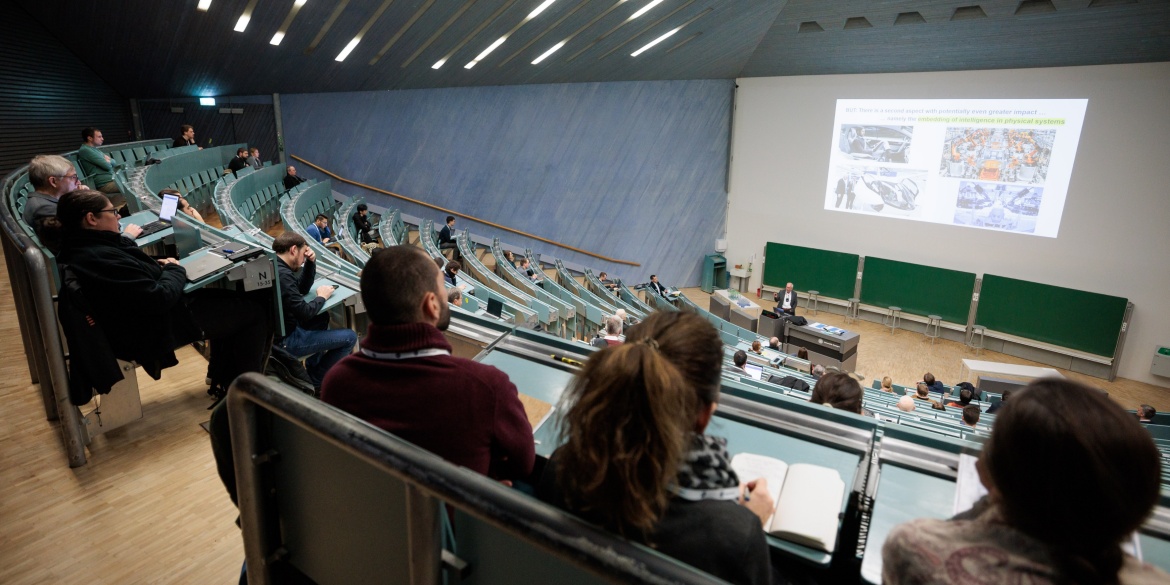
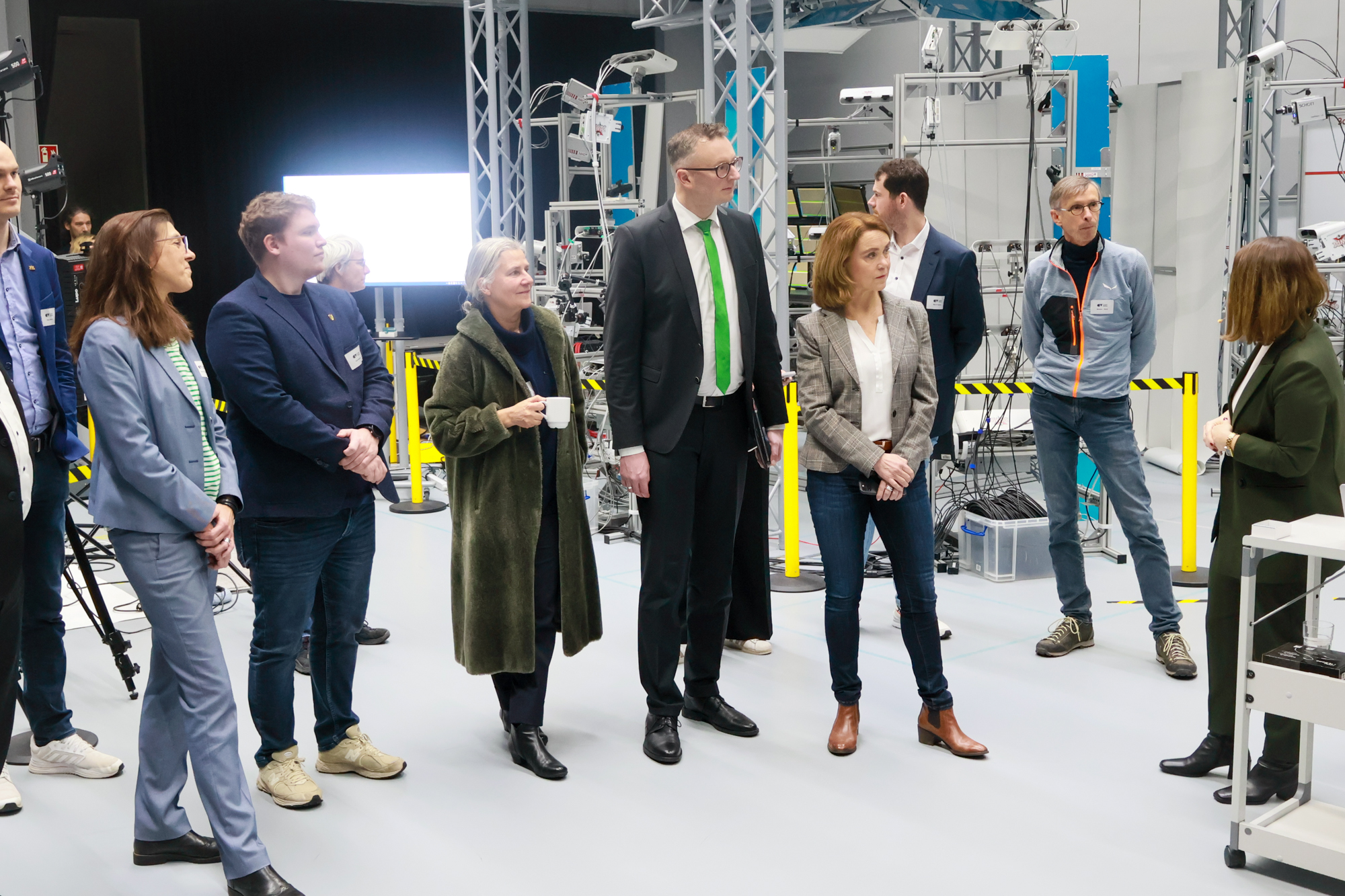
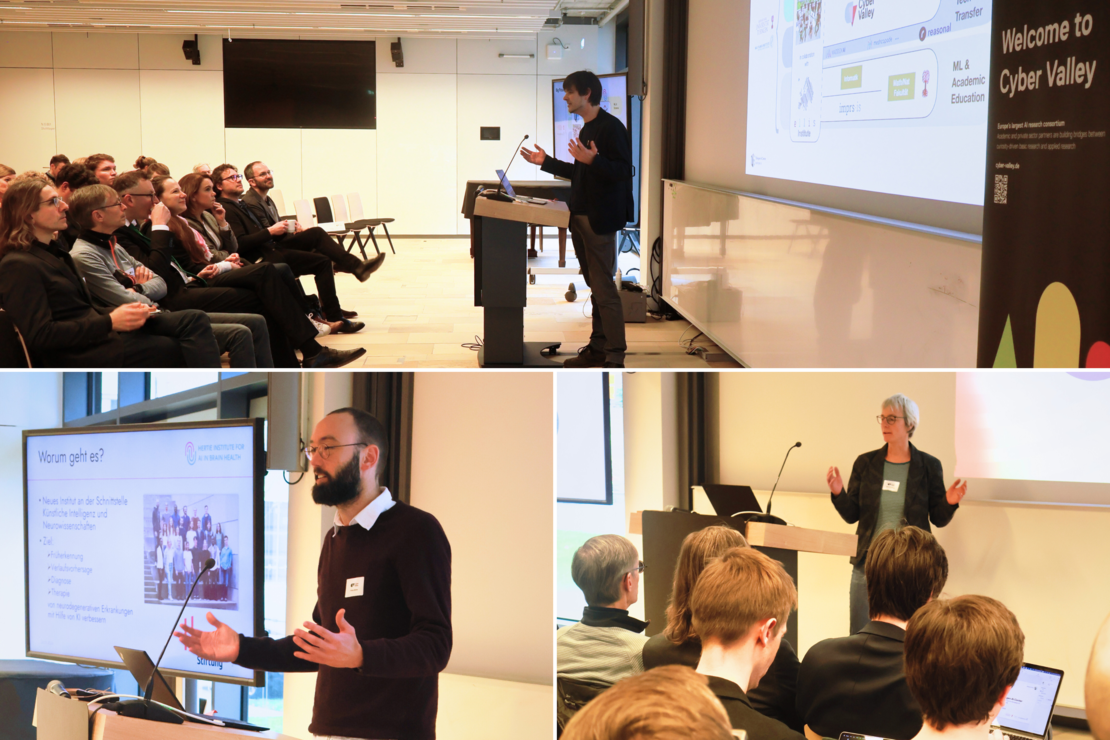
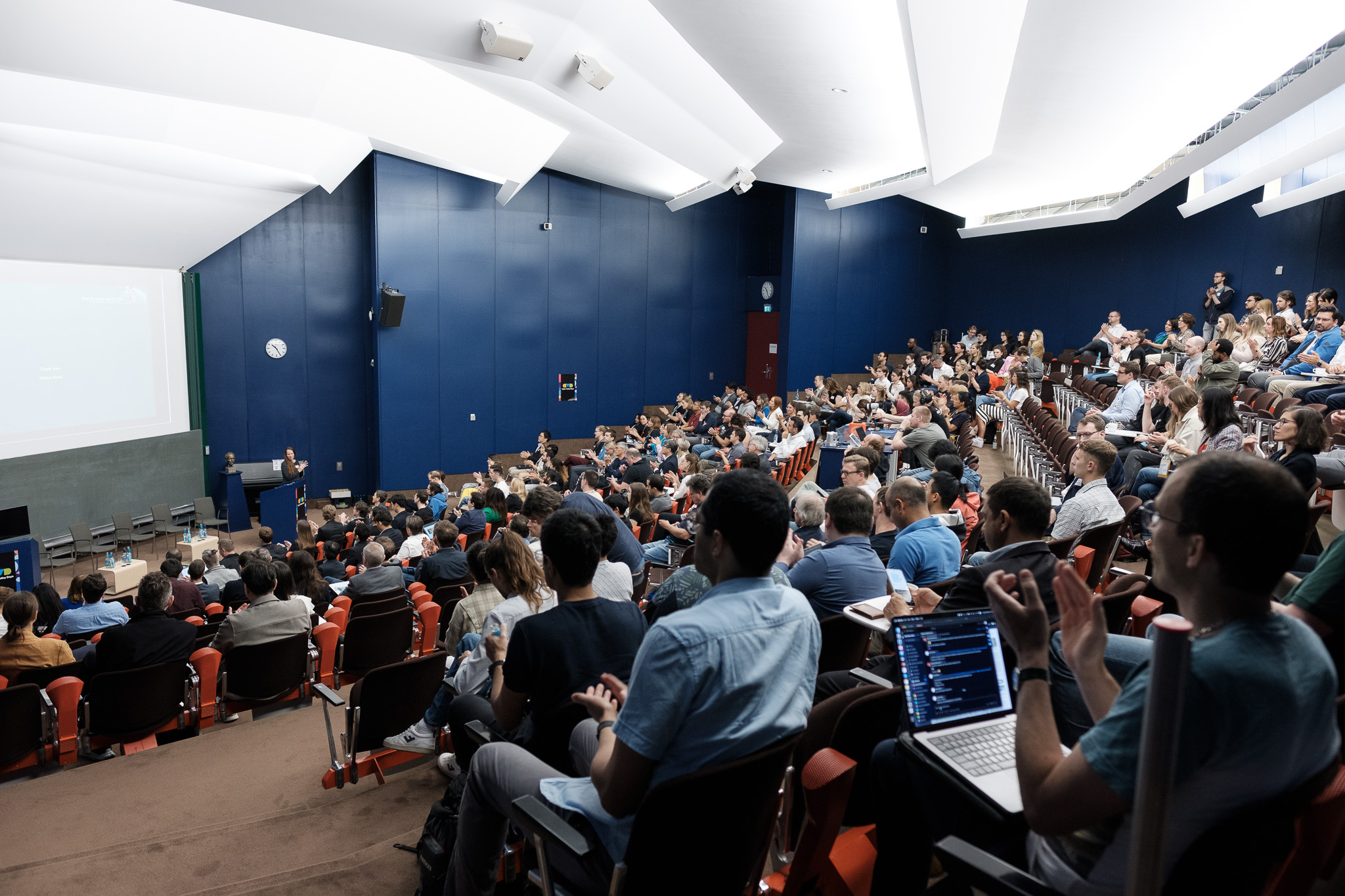
    Stuttgart, June 19, 2024 – Our future will be shaped by the brightest minds of our time, especially through the use of AI. Experts from the German and international AI and robotics community will celebrate Cyber Valley Days from June 19 to 21. For today's kick-off event, entrepreneurs from the Cyber Valley Start-up Network, international AI experts from the Cyber Valley Community, and political representatives are gathering in Stuttgart at the Max Planck Institute for Intelligent Systems.  

    “Our Cyber Valley Innovation Campus represents groundbreaking research and serves as a best-practice example of close collaboration between science and industry”, says Dr. Stegmann, Minister of State and Head of the State Chancellery. “Cyber Valley Days – with their numerous regional and international partners – show us the level of expertise in AI technology we already have here, as well as the significant untapped potential. The event proves the leading role of this internationally renowned research consortium. Through collective efforts, we are shaping the future of trustworthy AI in Germany and Europe to drive important innovations forward.” 

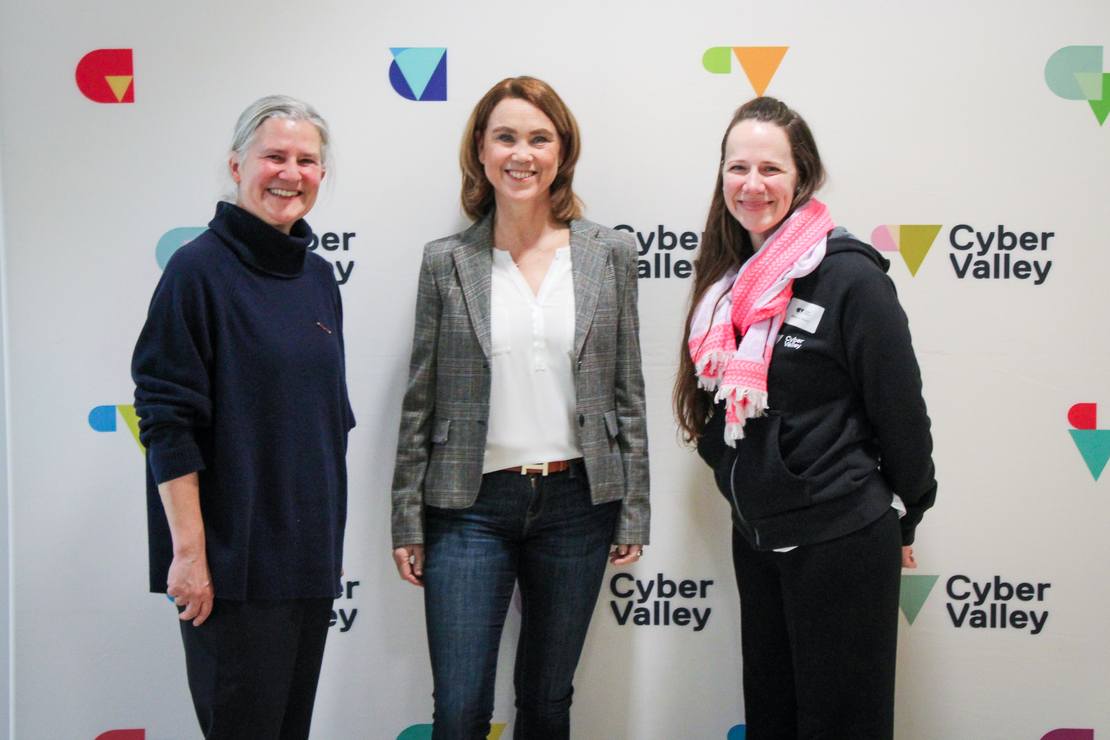
    “The Cyber Valley Days mark an important milestone: With our network, we have already established ourselves as an internationally recognized, excellent research location with spin-off dynamics. Our community is not only innovative – it is also growing, according to the motto #bettertogether. In this way, we are putting Baden-Württemberg on the global map in the field of intelligent systems in the long term,” says Rebecca C. Reisch, Managing Director of Cyber Valley GmbH.  

    The AI Incubator as a springboard for founders  

    At the Expo, the exhibition of the Cyber Valley Community, the public can get to know the minds behind the future of AI and gain an insight into Baden-Württemberg’s innovative power. With close to 70 AI companies, the Cyber Valley Start-up Network is active in a wide range of industries, including healthcare, construction, mobility, and agriculture. Established and leading AI companies from Baden-Württemberg include vialytics, Sereact and Computomics. Other network members such as preML, hydrop systems and Swarm Logistics Technologies will be showcasing the latest AI trends at their booths at the Cyber Valley Days opening.

    Pitches from the participants of the AI Incubator in the afternoon will provide an insight into what the AI business models of the future will look like. Through The AI Incubator program, Cyber Valley supports AI researchers and young entrepreneurs in expanding their start-up ideas and successfully implementing them in the market. Renowned entrepreneurs and start-up coaches are on hand to provide them with free advice and support. The program is currently in its fourth round with 25 AI founders. The AI Incubator is financed by the Carl Zeiss Foundation.  

    Cyber Valley Days are a three-day event in Stuttgart and Tübingen from June 19 to 21, 2024 to celebrate the Cyber Valley Community. Its program focuses on entrepreneurship and scientific innovation in artificial intelligence and modern robotics from Baden-Württemberg.  

    Information about Cyber Valley Days 

    cyber-valley.de/cyber-valley-days

    Photos of the Cyber Valley Days can be downloaded from 18:00 CEST. 


    About Cyber Valley 

    Cyber Valley is Europe’s largest and leading center for excellence in artificial intelligence and modern robotics. Its mission and public mandate are to advocate for the research, development, application, and acceptance of technologies and methods in the field of intelligent systems. Cyber Valley encourages entrepreneurship by uniting scientific excellence with innovation and technology transfer. In addition, Cyber Valley facilitates critical reflection on the ethical and social implications of AI through public engagement. Cyber Valley envisions a future in which the full potential of intelligent systems is leveraged for the greater good of the world.   


    About the Cyber Valley Start-up Network 

    The Cyber Valley Start-up Network builds and promotes a vibrant community of AI entrepreneurs. Members get access to exclusive events and a diverse network of AI researchers, investors, and other start-up founders. The prerequisite for membership is a connection to Cyber Valley, such as being members or alumni of the Cyber Valley Community, or a location in Baden-Württemberg. The business models must have intelligent systems at their core. Further information: cyber-valley.de/start-up-network. 

    Media Contact: 
    Rebecca Beiter 
    Rebecca.beiter@cyber-valley.de 
    +49 (0) 160 9448 1797 

  • #KIdeasInMotion

    #KIdeasInMotion


    Programm – Praxisnahe Einblicke in die KI Welt


    11.45-13.15 Uhr: Workshop mit GEBIT Solutions

    Aktuelle Entwicklungen in KI und praktische Anwendung im Handel

    Erhaltet einen umfassenden Überblick über den Stand der KI im Handel. Von generativen und diskriminativen KI-Konzepten bis hin zu praxisnahen Anwendungsbeispielen wie intelligenter Artikelerkennung für Kassen und unternehmensinternen Wissensdatenbanken basierend auf Large Language Models (LLMs).

    Mit Matti Frind und Felix Kleinsteuber, Werkstudierende bei GEBIT Solutions.


    14.15-15.45 Uhr: Workshop mit Drees und Sommer

    Lösungsstrategien für die fünf größten Herausforderungen in der Bau- und Immobilienbranche 2035

    Wie kann die Bau- und Immobilienbranche der Zukunft gestaltet werden? Ob neue Ansätze für nachhaltiges Bauen oder der Einsatz von KI: Taucht ein in innovative Ansätze!

    Mit Frieder Blum, Junior Innovation Manager, und Selina Weigele, Innovation Manager von Drees und Sommer.


    16.15-17.15 Uhr: Keynote, Anja Unglaub von Bosch Power Tools und Bastian Kruse, Bosch Digital

    Vom Werkzeug zum Meisterwerk: KI in Vertrieb und Marketing bei Bosch PowerTools

    Freut euch auf eine inspirierende Keynote von Anja Unglaub, Senior Vice President bei Bosch Power Tools und Bastian Kruse, Chief Product Owner bei Bosch Digital. In ihrer Keynote teilen sie Einblicke in die transformative Kraft von KI im Business und zeigen, wie KI strategische Geschäftsziele unterstützt und die Zukunft gestaltet.


    Ab 17:15 Uhr: Networking mit Peers und Unternehmen

    Nutzt die Gelegenheit, euch mit anderen Studierenden zu vernetzen, Ideen auszutauschen und Kontakte für zukünftige Projekte und Karrieremöglichkeiten mit teilnehmenden Unternehmen zu knüpfen!


    Wo? 

    Universität Stuttgart, Campus Vaihingen


    Wann? 

    2. Mai 2024, ab 11:45 Uhr 


    Anmeldung: 

    Die Anmeldung ist bis zum 28. April 2024 hier möglich.


  • Spinoff Summit 2024

    Spinoff Summit 2024


    About the Summit: 

    With an invite-only audience of around 150 hand-selected researchers, spinoff founders, universities, TTOs, VCs, industry, and ecosystem players, this summit is a launchpad for innovation, inspiration, and invaluable connections. We will bridge the gap between academia and entrepreneurship through talks, workshops, 1-on-1 meetings, panels, and a poster competition.

    This is a continuation of First Momentum’s successful Clueless No More online panels that were attended by more than 150 aspiring scientist founders and joined by VCs like Lakestar, Earlybird, and UVC, as well as research-driven founders from Wandelbots, DeepDrive, and Kipu Quantum.


    Our Speakers: 


    Dr. Stephan Herrmann (Co-Founder & CEO at Reverion) 

    Stephan is a physicist and engineer and the strategic mastermind and inventor of Reverion’s technology. Formerly heading a research group at TUM, he is now CEO and managing director of Reverion. As spin-off from the TU Munich, Reverion is paving the way to 100% renewable, decarbonized future by making the most of biogas.


    Dr. Ana Koller (Head of Research at First Momentum)

    As a VC, Ana is interested in everything Climate Tech and Energy related. She has a background in Nuclear Fusion, doing her PhD at the Max Planck Institute for Plasma Physics and a research stint at MIT. Ana continued her career as an Engineering Lead at the world’s biggest fusion startup, Commonwealth Fusion Systems in the US, before joining First Momentum.


    Dr. Fleming Bruckmaier (Co-Founder & CTO at QuantumDiamonds) 

    QuantumDiamonds is building a global quantum sensing platform that enables advancements across a variety of fields, from semiconductor manufacturing to biotechnology and chemistry. With a PhD in Quantumsensing from the TU Munich, their CTO Fleming is responsible for improving existing and developing new diamond materials for quantum sensing applications.


    Barbara Diehl (Chief Partnership Officer at SPRIN-D)

    Barbara aims to facilitate new disruptive innovations from Germany and support scientists through public funding. Before SPRIN-D, Barbara was Director of Transfer and Innovation at the Helmholtz-Gemeinschaft, and leading early-stage investment programs and an executive education program at the University of Oxford's Entrepreneurship Centre and the Innovation Academy at the University College Dublin.


    Tom Nugent (Editor at Sifted)

    Tom is Sifted’s Digital Editor covering university spinouts. Sifted is Europe’s leading tech and startup media outlet. Backed by the Financial Times, its newsletter reaches more than 150,000 founders, VCs and other members of the startup ecosystem in Europe.


    Wolfgang Kerler (Editor-in-Chief at 1E9)

    Wolfgang is a co-founder of 1E9, creating optimistic journalism about future technologies and innovations, but also developing a new kind of tech journalism – journalism that is created together with the tech community. Before 1E9, he was a Burns Fellow at The Verge, a Vox Media brand, in New York, and Editorial Director of WIRED Germany.


    Where?

    ESO Supernova

    Karl-Schwarzschild-Straße 2

    85748 Garching, Germany


    When?

    4th of June, 2024. 9:00 – 18:00


    Registration: 

    More information for the event can be found here.

    Please register here.


  • Entrepreneurial Ecosystem Spring School

    Entrepreneurial Ecosystem Spring School


    In this Research Spring School, we aim to provide a unique opportunity for early-career researchers to network, collaborate, and test research ideas with fellow academics involved in research on the configuration, mechanisms, and evolutionary dynamics of Entrepreneurial Ecosystems. Expect a dynamic three-day program featuring intensive feedback sessions, interactive workshops, and discussions with leading academics and peers worldwide.


    Topics:

    • The evolutionary dynamics of entrepreneurial ecosystems
    • Unlocking the mechanisms within and between entrepreneurial ecosystems
    • Inclusiveness of entrepreneurial ecosystems
    • Theoretical challenges towards entrepreneurial ecosystem research
    • Methods for entrepreneurial ecosystem research, with a specific interest in longitudinal studies, web scraping, and natural language processing approaches


    The program will include:

    • Keynote Sessions: Erik Stam (Utrecht University), Niels Bosma (Utrecht University), Christina Theodoraki (TBS Education), Bernd Wurth (University of Glasgow), Friederike Welter (University Siegen), Angelo Cavallo (Politecnico di Milano), Karim Messeghem (University of Montpellier)
    • A Meet the Editors Session: Erik Stam (ET&P), Christina Theodoraki (SBEJ, JSBM), Riccardo Fini (JMS), Jean-Michael Sahut (Management & Prospective/Gestion 2000)
    • Paper Development Workshops
    • A Methods Workshop
    • An Interactive Session to discuss the future of entrepreneurial ecosystem research


    Scientific committee: 

    Erik Stam (Universiteit Utrecht, Netherlands), Christina Theodoraki (TBS Education, France), Niels Bosma (Universiteit Utrecht, Netherlands), Didier Chabaud (IAE Paris – Sorbonne Business School, Chaire ETI – IAE Paris Sorbonne School, France), Grégory GUENEAU, PhD (ADALIA School of Business, Morocco), Alexander Brem (University of Stuttgart, Germany), Ferran Giones Valls (University of Stuttgart, Germany), Andreas Wahl (University of Stuttgart, Germany), Sophia Hess (University of Stuttgart, Germany)


    Sponsors: 

    Gründermotor, Académie de l'Entrepreneuriat et de l'Innovation, AIREPME – Association Internationale de Recherche en Entrepreneuriat et PME, EUROPEAN ACADEMY OF MANAGEMENT, Entrepreneurial Ecosystem Lab, Landeshauptstadt Stuttgart


    Deadline for abstract submission: March 7 2024

    Submission system: https://ecosys24.sciencesconf.org/

  • Engineering Intelligence

    Engineering Intelligence

    Practicing the piano, researching the behavior of animals, developing sustainable building materials, analyzing political speeches, explaining emotions to chatbots, preventing operational failures or putting autonomous satellites into orbit: The "Engineering Intelligence – Cyber Valley at the University of Stuttgart" event demonstrated how artificial intelligence, intelligent robotics and intelligent systems permeate almost all areas of our society – and what the University of Stuttgart and its partners are accomplishing in these fields.

    European hotspot for intelligent systems

    "Our common goal is to become a European hotspot for intelligent systems and to attract the next generation of students and researchers from all over the world," explained Professor Wolfram Ressel, Rector at the University of Stuttgart, in his welcome address. On November 29 and 30, 2023, around 400 interested parties and experts from the fields of science, business, and politics and around 50 speakers came together to learn more about the diverse research projects being developed by the University of Stuttgart and its partners, and to discuss the opportunities and risks of AI and strengthen the Cyber Valley network. 

    The two clusters of excellence SimTech and IntCDC, as well as the Institute for Artificial Intelligence, the Center for Bionic Intelligence Tübingen Stuttgart (BITS), Cyber Valley GmbH and the University of Stuttgart's new Transfer Center (TRACES) were among the participants. The event was organized by the Institute for Entrepreneurship and Innovation Science (ENI) in cooperation with the university's Office of the Rectorate.

    A man in a suit stands in front of a blackboard. The picture shows Professor Wolfram Ressel, Rector of the University of Stuttgart

    Prof. Wolfram Ressel, Rector of the University of Stuttgart, at the opening speech of the event. Photo: Jan Potente / University of Stuttgart

    Intelligent systems that benefit society

    "Advances in AI will have an enormous impact on society," emphasized Professor Frank Allgöwer, Head of the Institute for Systems Theory and Automatic Control (IST) at the University of Stuttgart. As part of the Cyber Valley research alliance, the University of Stuttgart is focusing on intelligent robotics and embedding intelligent robots in physical systems. The aim is not only to anchor modern AI developments in the engineering sciences, but also to utilize the potential of intelligent systems for the benefit of society. 

    Among other topics, research is being conducted into intelligent robots for healthcare applications, human-machine interaction, the perceptual and cognitive capabilities of intelligent systems, hardware components, modeling, and simulation technologies as well as ethical issues and exploitation possibilities. Five new professorships, two independent junior research groups and six tenure-track professorships have now been created as part of Cyber Valley.

    Leveraging opportunities and minimizing risk

    The two-day congress once again made it clear that the development and application scenarios of intelligent robots and systems encompass much more than just technical challenges. The experts agreed that it is impossible to exploit the full potential of artificial intelligence without the involvement of all disciplines and joint research by the fields of humanities, natural sciences, and engineering. How can intelligent systems be developed in a people-centered way and how can we counteract prejudices during their development? What are the limits of AI applications, for example in autonomous vehicles or in diagnostics and medical treatments? What long-term effects will AI have on our society, for example with regard to future jobs? These questions were also on the agenda at "Engineering Intelligence". It is clear that AI should remain a tool to support people, not replace them.

    A woman in a red jacket giving a presentation. The picture shows Professor Amrei Bahr, Institute for Philosophy (PHILO).

    Jun.-Prof. Amrei Bahr, expert in the philosophy of technology, during her keynote speech at the opening of the Transfer Center (TRACES). Photo: Jan Potente / University of Stuttgart

    A transfer of knowledge that benefits society

    Amrei Bahr, Junior Professor of Philosophy of Technology & Information at the University of Stuttgart, explained why not only AI, but also the transfer of knowledge and technologies need an "ethical foundation". The links being forged for the transfer of knowledge between university and industry are not one-way streets. Bahr emphasized that good scientific practice is needed to stabilize these new links, among other things, and also the responsible implementation of research findings. 

    A group of people standing in front of a podium. In the foreground: Doctor Rubina Zern-Breuer, in the background: Transfer Center team.

    Dr. Rubina Zern-Breuer, Head of the TRACES Transfer Centre with her team (from left to right: Eberhard Renz, Tamara Arutyunyants, Christine Kispert, Melanie Minderjahn, Kristina Winter and Dr. Jordi Mauri). Photo: Jan Potente / University of Stuttgart

    Dr. Rubina Zern-Breuer, head of the TRACES Transfer Centre, which was launched as part of this event, knows that the start-up-oriented transfer that the University of Stuttgart is committed to is not a sure-fire success. In the spirit of the so-called 'third mission', universities are not only sources of knowledge and training centers, but also places where innovation and ideas come to life. It is important that transfer from the university to business, politics and society enable solutions that benefit society. Prof. Peter Middendorf, Vice Rector for Knowledge and Technology Transfer at the University of Stuttgart, also made it clear in his keynote speech at the launch of the TRACES center, how important it is that the University of Stuttgart supports the "third mission" in terms of its transfer strategy and the practical implementation by the new transfer center.

  • WebSci’24:

    WebSci’24:


    The conference will present quantitative, qualitative, and mixed methods research, including techniques from the social sciences and computer science, as well as work exploring web-based data collection and research ethics. Other sessions will also present studies that combine analyses of web data and other types of data (e.g., from surveys or interviews) and help better understand user behavior online and offline.

    Keynotes and papers for this conference are now fixed. See the conference website for more information. 


    When?

    May 21–24, 2024


    Where?

    Stuttgart, Germany


    This event is organized by the University of Stuttgart and hosted by the Interchange Forum for Reflecting on Intelligent Systems (IRIS).

  • Humboldt Lecture

    Humboldt Lecture


    Each lecture will have two fellows sharing their findings and then a round of discussions and networking will be continued over drinks in the Kleiner Senat. The Humboldt Lecture Series is jointly organised by the College of Fellows and the Welcome Center of the University of Tübingen.

    Read the abstracts and the full programme of the Lecture Series here:
    Programme of the Lecture Series


    When?

    Wed, 7 February 2024, 6.30 pm
    Großer Senat, Neue Aula
    (Geschwister-Scholl-Platz, Tübingen)
     

    Who?

    Speakers:
    – Dr Stefano Floris (Institute of Biblical Archaeology):
    "History of a Punic City, Seen from Its Tophet: A Sardinian Perspective"
    – Dr Riccardo Marin (Tübingen AI Center):
    "Connecting the (Digital) Dots: Studying Relations in 3D Geometries for Human Virtualization"

  • IMPRS-IS 2024 Interview Symposium Keynotes

    IMPRS-IS 2024 Interview Symposium Keynotes

    The International Max Planck Research School for Intelligent Systems (IMPRS-IS) brings together the MPI for Intelligent Systems with the University of Stuttgart and the University of Tübingen to form a highly visible and unique graduate school of internationally recognized faculty, working at the leading edge of the field. This program is a key element of Baden-Württemberg’s Cyber Valley initiative to accelerate basic research and commercial development in artificial intelligence.

    Each year, the program hosts a symposium to interview IMPRS-IS Ph.D. applicants. As the scientific highlight of this year's program, Dr. Wieland Brendel (Max Planck Institute for Intelligent Systems and ELLIS) and Prof. Andreas Bulling (University of Stuttgart) will be featured as keynote speakers for the event.

    Their hybrid keynote talks will take place back-to-back at the two sites of MPI-IS on Thursday, February 8. All community members are encouraged to join these presentations, preferably onsite if possible. 

    Speakers:

    Wieland Brendel – Cracking the black box: how far are we from understanding the inner workings of deep vision models?
    Date: Thursday, Febrary 8, 2024
    Time: 15:30 – 16:15 CET
    Onsite Location: MPI-IS Tübingen, Main Lecture Hall, Room N0.002

    Andreas Bulling – The academic journey – a personal travel report
    Date: Thursday, Febrary 8, 2024
    Time: 16:30 – 17:15 CET
    Onsite Location: MPI-IS Stuttgart, Copper Lecture Hall (Formerly R204)

    Participants can watch these talks on-site in either Stuttgart or Tübingen. One talk will be presented live in each location, and the other will be streamed remotely in real time. Both talks can also be watched online via Webex, which is how most applicants will join.

    Each keynote talk is anticipated to be 30 minutes long plus about 15 minutes for questions and discussion, giving a break of about 15 minutes between them.

    Links to access this event will be distributed via our community mailing lists. 

    With questions about this event or how to join, please contact Sara Sorce (sara.sorce@tuebingen.mpg.de).

    Keep in mind: This event is for internal community members only. 

  • Demo Day for Batch #3 of The AI Incubator

    Demo Day for Batch #3 of The AI Incubator

    Over a six-week-period, participants of The AI Incubator attended workshops and received extensive coaching to transform their AI ideas into successful start-ups. The AI Incubator is organized by Cyber Valley, Europe’s largest and leading research consortium in the field of artificial intelligence (AI) and modern robotics.

    At the Demo Day, participants from The AI Incubator will pitch their final projects before a carefully selected jury and an audience of researchers, investors, and entrepreneurs. Jury members include distinguished figures in the fields of AI and start-ups: Matthias Bethge (Director of the Tübingen AI Center), Michael Black (Managing Director of the Max Planck Institute of Intelligent Systems), Alexander Diehl (investor and Co-Founder of Architizer), Lukas Findeisen (Carl-Zeiss-Stiftung), Betty Mohler-Tesch (Principle Research Scientist at Amazon), Naureen Mahmood (Co-Founder of Meshapade), and Rebecca C. Reisch (CEO of Cyber Valley).

    Following the pitches, Ingmar Hörr, Co-Founder of Curevac, will share insights on transferring scientific research into commercial success. An award ceremony will then take place, during which the jury will present prizes to the top-performing teams. This will be followed by a concluding networking event.

    The Demo Day is open to the public, but spaces are limited, and attendance must be registered in advance. Please register here.


    Demo Day Schedule

    15:00: Welcome & Intro from Rebecca C. Reisch (CEO of Cyber Valley)
    15:30: Team pitches
    17:45: Inspirational talk from Ingmar Hörr (Co-Founder of Curevac): “Sciencepreneur – How to turn science into commercial value”
    18:00: Award ceremony
    18:30 onwards: Networking with food and beverages


    About The AI Incubator

    The AI Incubator is a six-week program of intensive workshops and idea development. The program encourages scientists, technologists, and business talent to found their own companies, fostering the next generation of AI start-ups. With topics like prototyping, product-market fit, business strategy, and funding opportunities, The AI Incubator equips participants with the right knowledge, tools, and skills to transfer their cutting-edge AI and robotics research into products and applications. The program also provides participants with access to a network of experts, mentors, founders, and investors who offer guidance and inspiration on their journey into the AI business world.
     
    The AI Incubator is organized by Cyber Valley and funded by the Carl-Zeiss-Stiftung.


    About Cyber Valley

    Cyber Valley is Europe’s largest and leading research consortium in the field of artificial intelligence (AI) and modern robotics. It has a mission and a public mandate to advocate for entrepreneurship, research, development, application, and acceptance of technologies and methods in the field of intelligent systems. The company envisions a future where the full potential of intelligent systems is leveraged for the greater good of the world. 
     
    The Cyber Valley Community brings together partners from science, industry, and society, along with AI researchers and entrepreneurs. The Cyber Valley GmbH is funded by the state of Baden-Württemberg and acts as the central organizer, service provider, and host for the community. While the GmbH operates from Stuttgart and Tübingen, Cyber Valley has a larger scope: As a national and European driving force, it attracts the best people from all over the world to create the future with AI.


    About the Carl-Zeiss-Stiftung

    The Carl-Zeiss-Stiftung’s mission is to create an open environment for scientific breakthroughs. As a partner of excellence in science, it supports basic research as well as applied sciences in the STEM subject areas (science, technology, and mathematics). Founded in 1889 by the physicist and mathematician Ernst Abbe, the Carl-Zeiss-Stiftung is one of the oldest and biggest private science funding institutions in Germany. It is the sole owner of Carl Zeiss AG and SCHOTT AG. Its projects are financed from the dividend distributions of the two foundation companies.