CV Tag: University of Tübingen

  • Research Forum

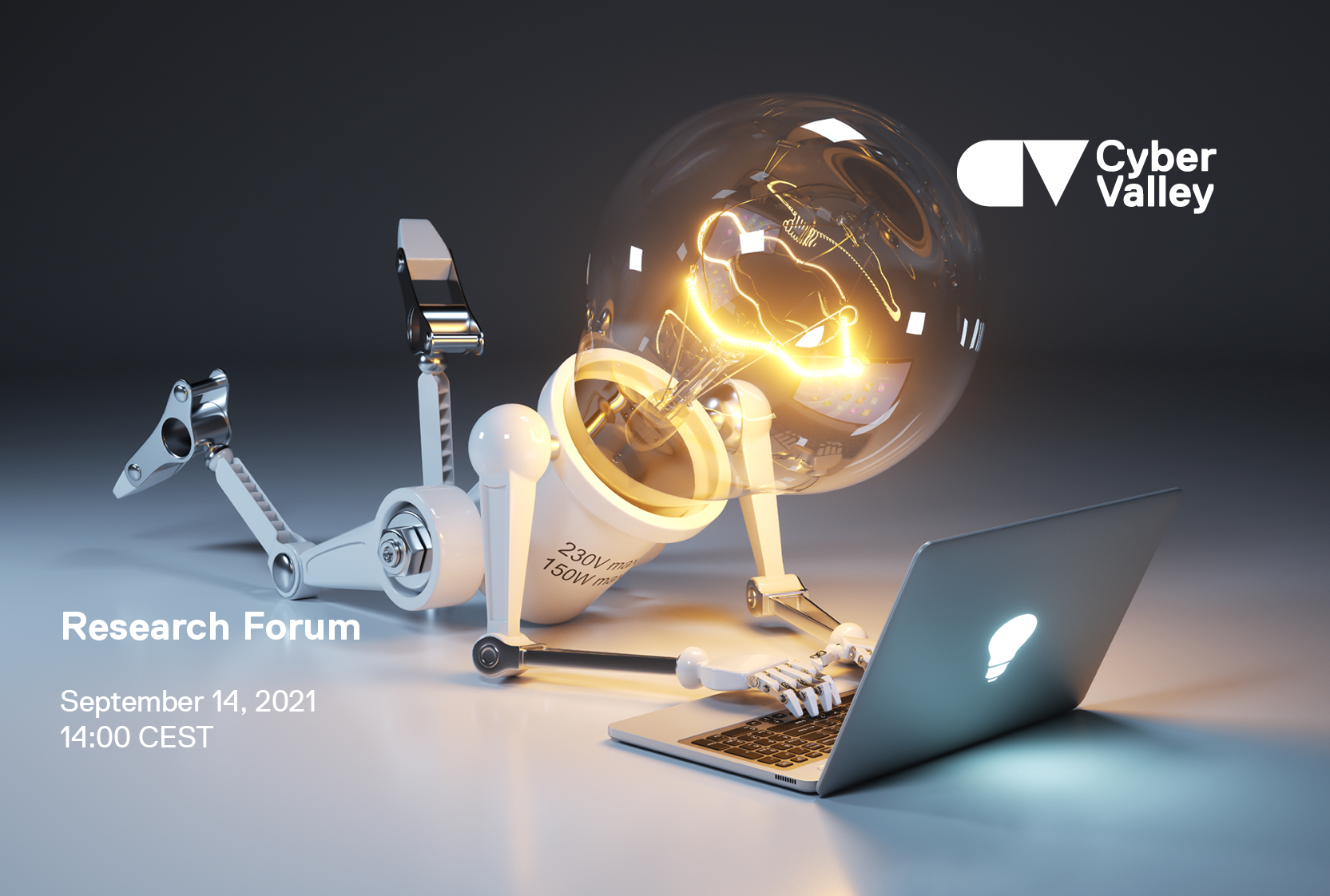
    Research Forum

    Aufgrund der COVID-19-Beschränkungen wird der Workshop online (Zoom) abgehalten. Wenn Sie teilnehmen möchten, registrieren Sie sich bitte hier.


    Schedule
    14:00 Welcome
    14:05 – 14:15

    Prof. Achim Menges

    Institute for Computational Design and Construction, University of Stuttgart, IntCDC

    Title: Introduction to IntCDC

    Abstract: The vision of the Cluster of Excellence Integrative Computational Design and Construction for Architecture (IntCDC) is to harness the full potential of digital technologies in order to rethink design, fabrication and construction based on integration and interdisciplinarity, with the goal of enabling game-changing innovation in the building sector as it can only occur through highly integrative fundamental research in an interdisciplinary, large-scale research undertaking.

    14:15 – 14:35

    Prof. Dr.-Ing Cristina Tarín

    Institute for System Dynamics, University of Stuttgart, IntCDC

    Title: Co-Design for Architecture, Engineering and Construction using Bipartite Graphs

    Abstract: The architecture, engineering and construction (AEC) industry consists of several players from different domains. They usually work in a sequential process, which is slow, costly and problems are identified in late stages. Co-design helps to identify and predict problems in early stages throughout different domains such that the design, engineering, manufacturing and construction process can be improved. We present an approach to enable co-design using bipartite graphs, which are capable to integrate expert knowledge, physical models and machine learning models from different domains. The different models form a computational network, which allows e.g. the architect to automatically analyze the feasibility of manufacturing a design.

    14:35 – 14:55

    Prof. Dr.-Ing. Peter Middendorf

    Institute of Aircraft Design, University of Stuttgart, IntCDC

    Title: Data-driven approaches for fiber composites technologies and simulation

    Abstract: Fibre composites for lightweight and wide-span architecture applications are one research area within IntCDC. The technology focus is laid here on freeform winding using collaborative robotics and the respective winding path is generated in a co-design approach. Whilst this is a collaborative effort from a group of IntCDC PIs, there is also a growing activity of supporting data-driven approaches at the Institute of Aircraft Design to make use of various sensor data along the process chain of a composite structure and thus to overcome limitations of classical modelling and simulation techniques.

    14:55 – 15:15

    Tenure-Track Prof. Dr. Thomas Wortmann

    Chair for Computing in Architecture, Institute for Computational Design and Construction, University of Stuttgart, IntCDC

    Title: AI for AEC

    Abstract: Tenure-Track Prof. Wortmann will present examples of the rich opportunities to apply AI in the Architecture, Engineering and Construction (AEC) sector, including architectural design optimization, modelling design and construction processes, predicting wind flow around buildings, predicting the behavior of heterogenous materials, and adaptive robotic control. Ultimately, these applications contribute to a reimagining of how our built environment is planned and constructed, which is an urgent need in light of the impending climate catastrophe.

    15:15 – 15:35

    Dr. Nicole Ludwig

    Machine Learning in Sustainable Energy Systems, Cluster of Excellence Machine Learning: New Perspectives for Science, University of Tübingen

    Title: Forecasting Sustainable Energy under Uncertain Weather

    Abstract: The increasing share of sustainable energy generation in the electricity system comes with significant challenges. One of the main challenges is the volatility of sustainable energy generation, due to their dependency on the weather. To efficiently integrate sustainable energy into the grid, the expected electricity supply and demand have to be forecast accurately. In this talk I will introduce the challenges we face when forecasting weather-dependent energy supply and demand and how probabilistic machine learning can help alleviate some of these challenges.

    15:35 – 15:55

    Dr. Bedartha Goswami

    Machine Learning in Climate Science, Cluster of Excellence Machine Learning: New Perspectives for Science, University of Tübingen

    Title: Uncovering hidden structure in climate data

    Abstract: The last decades have witnessed an unprecedented increase in data related to climatic processes all around the globe, which contain till yet undiscovered mechanisms of how the climate functions and how it is currently changing. We present the idea of "climate networks," which allow us to reveal non-trivial patterns in databases of climate data, and reveal potentially new climatic mechanisms and connections that have not been studied till date. We will look at how climate networks are estimated, what they can do for us, and three examples of how they are used in practice. Towards the end, we will also talk briefly about other projects that are ongoing in the "Machine Learning for Climate Science" research group, in the hope that we find common interests for cross-pollination of ideas and efforts.

    15:55 – 16:15

    Prof. Dr. Thomas Scholten

    Chair of Soil Science and Geomorphology, Department of Geosciences, University of Tübingen

    Title: Machine Learning in Soil Science

    Abstract: Soils are the most important basis for our nutrition. Their quality determines the food security of the world. Machine learning methods help to determine the underlying soil properties and to predict their spatial distribution on Earth. The presentation will explain the underlying theoretical approach of state factors and address the concept of relevant range of scales for multi-scale contextual spatial modeling of soil properties. Further, I will show results from my research of different parts of the world and demonstrate the potential of data-driven models for geo- and environmental science.

    16:15 – 16:30 Wrap-up
  • Cyber Valley Evening Colloquium on Autonomous Systems

    Cyber Valley Evening Colloquium on Autonomous Systems

    Tuesday, April 27, 2021

    17:00

    Multi-agent Replicator Reinforcement Learning Dynamics (Webex)

    Dr. Wolfram Barfuss (University of Tübingen)

    More information
     
    Abstract

    Autonomous multi-agent systems are important for various applications towards a sustainable future. However, without an adequate theoretical foundation, multi-agent learning applications are not only hindered by missing interpretability, their safe and beneficial application for a sustainable future cannot be ensured. In this talk, I will give an overview of my research on the link between evolutionary game theory and reinforcement learning, i.e., replicator reinforcement learning (RRL) dynamics. RRL is a semi-formal method to study idealised multi-agent learning behaviour for improved interpretability. Focusing on the example of social dilemmas, I will show how the agents’ caring for the future parameter alone can turn a tragedy of the commons into a comedy, given a sufficiently severe environmental threat. Regarding the safe and beneficial application of autonomous multi-agent systems, I will show conditions under which an optimisation paradigm is neither sustainable nor safe and reinforcement learning is neither stable nor predictable. I will end with a brief outlook on future work.

    Biographical Information

    Wolfram Barfuss is a postdoctoral research scientist working on collective learning for a sustainable future. He recently moved to the Tuebingen AI Center (Uni Tuebingen) and holds guest research positions at the Potsdam Institute for Climate Impact Research and Princeton University. Previously, he was a research fellow at the School of Mathematics (Uni Leeds) and the Max Planck Institute for Mathematics in the Sciences, Leipzig. He obtained his PhD from the Humboldt University of Berlin and the Potsdam Institute for Climate Impact Research in 2019.

    Link to talk details

    19:00

    Multimodal Traffic Operations with Connected and Automated Vehicles (Webex)

    Dr. Kaidi Yang (Stanford University, USA)

    More information
     
    Abstract

    Transportation systems are undertaking rapid transformation, thanks to the advances of disruptive technologies such as connected and automated vehicles. My research aims to leverage these advances to address the challenges in transportation systems. First, I will present my work on improving multimodal traffic operations using the information provided by connected vehicles. In particular, I will develop a multi-scale and multimodal perimeter control approach for large-scale traffic networks in a connected vehicle environment. Second, I will exploit the benefits of automated vehicles and devise strategies to innovate traffic operations in mobility-on-demand systems in a scenario with mixed autonomy.

    Biographical Information

    Dr. Kaidi Yang is currently a postdoctoral scholar with the Autonomous Systems Laboratory in the Department of Aeronautics and Astronautics at Stanford University. He obtained a Ph.D. degree from ETH Zurich in 2019, with a concentration on intelligent transportation systems. Before this, he received a BEng. in Automation, a BSc. in Pure and Applied Mathematics, and an MSc. in Control Science and Engineering from Tsinghua University. His main research interest lies in the design and operations of future mobility systems utilizing disruptive paradigms such as connected and automated vehicles, shared mobility, etc. He has published 11 papers in academic journals and made presentations at multiple international conferences, including a lectern presentation at International Symposium on Transportation and Traffic Theory (ISTTT). He is the recipient of two projects from the Swiss National Science Foundation (SNSF) Postdoc Mobility Fellowship. He has won the Best Paper Award for a paper published in 2019 on the journal Omega, the 2019 Chinese Government Award for Outstanding Self Finance Students Abroad, and the Best Student Paper (2nd place) in IEEE Intelligent Transportation Systems Conference. He serves as a Review Editor for Frontiers in Future Transportation.

    Link to talk details

    Wednesday, April 28, 2021

    16:00

    On the Rational Bounds of Human Cognition (Webex)

    Sebastian Musslick (Princeton University, USA)

    More information
     
    Abstract

    The human brain is one of the most complex autonomous systems on earth, with billions of neurons operating in parallel, giving rise to mental faculties such as reasoning, problem solving and the use of symbolic language. Despite the enormous capacity that the brain holds for parallel processing, humans are remarkably limited in the number of tasks they can execute simultaneously. Limitations in our ability to multitask are not only apparent in daily life. They are also universal assumptions of most general theories of human cognition. Yet, a rationale for why the human brain is subject to these constraints remains elusive. In this talk, I will draw on insights from neuroscience, psychology and machine learning to suggest that limitations in the brain’s ability to multitask result from a fundamental computational dilemma in neural architectures. Using a combination of graph-theoretic analysis, neural network simulation and behavioral experimentation, I will demonstrate that neural systems can face a tradeoff between learning efficacy, that is promoted through the shared use of neural representations across tasks, and multitasking capability, that is achieved through the separation of neural representations between tasks. This work suggests that it can be optimal for a neural system to sacrifice multitasking capability, to learn single tasks more quickly by sharing rather than separating representations between tasks. I will conclude by demonstrating that this tradeoff can explain a variety of behavioral and neural phenomena related to human multitasking and that it can inform the design of autonomous artificial agents tasked to navigate this tradeoff.

    Biographical Information

    Sebastian Musslick is a Fellow of the Cognitive Science Program at Princeton University where he is about to receive his PhD degree in Quantitative and Computational Neuroscience. His research program involves the study of fundamental computational dilemmas in neural systems, to explain limitations of human and artificial cognition. Sebastian received his diploma in Psychology at the Technische Universität Dresden in 2014, as well as a Master’s degree in Neuroscience at Princeton University. During his diploma studies, he joined the University of Colorado in Boulder as a short-term research scholar from 2012 to 2013 where he developed biologically inspired models of human task switching performance. Sebastian amassed a strong record of publishing and collaborating with partners from academia and industry across disciplines, including psychology, neuroscience, mathematics, physics and computer science. In an effort to facilitate interdisciplinary exchange about the study of human and artificial cognition, he co-organized several international workshops and conferences, including the annual Conference on the Mathematical Theory of Deep Neural Networks and the annual Workshop on Mental Effort.

    Link to talk details

    18:00

    Creating an Efficient Whole-body Tactile Skin using a Piezoresistive Structure and Contact Inference (Webex)

    Dr. Hyosang Lee (Max Planck Institute for Intelligent Systems, Stuttgart)

    More information
     
    Abstract

    Autonomous robots operating in complex and contact-rich environments are becoming essential for industry. These robots would benefit from a soft tactile skin that detects the location and strength of contacts over the entire robot's body surface. Implementing such tactile skin is challenging as the skin should seamlessly cover large and curved surfaces to monitor unexpected physical contacts. Human tactile skin efficiently resolves this challenge using an overlapped receptive field structure and cognitive processing. My research mimics this efficient feature by designing a piezoresistive structure with sparsely distributed electrodes and indirectly inferring contact locations and magnitudes from the electrodes. This approach considerably simplifies wholebody tactile sensor design and fabrication while achieving its contact sensing performance comparable to that of human skin. This talk will introduce key design components of a fabric-based tactile sensor and evaluation results, showing its potential toward efficient whole-body tactile skin applications.

    Biographical Information

    Dr. Hyosang Lee is currently a research scientist at the Max Planck Institute for Intelligent Systems, Stuttgart, Germany. He received a B.S. in Mechanical Engineering from Korea University in 2010. His passion for robotics led him to obtain an M.S. in Robotics from Korea Advanced Institute of Science and Technologies (KAIST), Daejeon, South Korea, in 2012, and a Ph. D. in Mechanical Engineering from KAIST in 2017 where he developed soft tactile skin using piezoresistive nanocomposites. Moved by his interest in haptics, he joined Max Planck Institute for Intelligent Systems as a postdoctoral research fellow in 2017. Since then, he works on the development of a feasible whole-body tactile skin and its possible applications.

    Link to talk details

  • NeurIPS 2020

    NeurIPS 2020

    Monday, 7. December, 21:00-21:30 CET

    Katja Schwarz 

    Katja Schwarz is a PhD Student at Tuebingen University and scholar at the International Max Planck Research School (IMPRS) for Intelligent Systems (IS). She started her PhD in 2019 and is supervised by Prof. Andreas Geiger. Katja works at the intersection of Machine Learning, Deep Learning and Computer Vision. Currently, she is particularly interested in geometric scene understanding and 3D generative models.

    REGISTRATION

    Tuesday, 8. December, 21:00-21:30 CET

    Junhyung Park

    Junhyung Park has been a PhD student in the Empirical Inference Department at the Max Planck Institute for Intelligent Systems since November 2019. His work focuses primarily on reproducing kernel Hilbert space embeddings and causal inference. Outside work, he plays football and the piano, and also enjoys reading, traveling, and learning new languages.

    REGISTRATION

    Wednesday, 9. December, 21:00-21:30 CET

    Yiyi Liao

    Yiyi Liao is a postdoctoral researcher in the Autonomous Vision Group, which is affiliated with the University of Tübingen and the Max Planck Institute for Intelligent Systems. Her research interests include 3D scene understanding, reconstruction, and 3D-aware generative models.

    REGISTRATION

    Thursday, 10. December, 21:00-21:30 CET

    Fabian Sinz

    Fabian Sinz's research interests lie in the combination of machine learning and neuroscience. In 2018, he was appointed leader of the newly established independent Cyber Valley Neuronal Intelligence Research Group at the University of Tübingen. He is also currently an Adjunct Assistant Professor at the Baylor College of Medicine’s Center for Neuroscience and Artificial Intelligence in Houston, Texas.

    REGISTRATION

    Friday, 11. December, 21:00-21:30 CET

    Wieland Brendel 

    Wieland Brendel is a team lead at the University of Tübingen. His research focuses on robust and interpretable machine vision algorithms and the theory of representation learning. He studied theoretical physics and completed a PhD in computational neuroscience. Later, he switched to machine learning at the start of his postdoc. In addition to his position at the university, Wieland co-founded Layer7 AI in 2018, and was recently named one of Germany’s “Top 40 under 40” by Capital Magazin.

    REGISTRATION