User Group: Gesellschaft

  • 2020: Founding the Cyber Valley Investor Network—Interview with Alex Diehl

    2020: Founding the Cyber Valley Investor Network—Interview with Alex Diehl

    In 2016, important actors from science, industry, and politics founded the Cyber Valley Consortium, which became the first Innovation Campus in Baden-Württemberg. Ten years on in 2026, we’re revisiting the most important milestones from the last decade. Each month, we’ll focus on a particular year since Cyber Valley’s beginning. 

    This month, we’re looking back to 2020, when the Cyber Valley Investor Network was founded. The network was established to bring together venture capital (VC) firms to support Cyber Valley scientists in transferring their research into applications that benefit people, industry, and society.

    Alex Diehl, Senior Advisor at Cyber Valley GmbH, played a pivotal role in establishing the Cyber Valley Investor Network. In the following interview, he describes his initial ambitions for the network, how it has supported Cyber Valley scientists, and where he sees the network developing in the future.

    What was the motivation behind founding the Cyber Valley Investor Network, and what gap did it aim to close?

    We had a surplus of brilliant AI talent in our academic institutions, but the region lacked a defined start-up ecosystem. Our researchers were world-class, yet they had almost no touchpoints with venture culture or experienced founders. In the global AI race, deep-tech teams need to understand the venture-backed “playbook” early—otherwise, they risk making structural or capital mistakes that can kill a company before it starts. We founded the Investor Network to bridge this gap by “importing” global expertise. We wanted our researchers to meet VCs and angels who could provide that mentorship early on, even while our local ecosystem was still in its infancy.

    Beyond capital, what role do investors play in supporting researchers and start-ups moving toward long-term applications?

    It’s about operational excellence from day one. The start-up journey is a series of unpredictable pivots, and a great VC acts like an additional co-founder who is focused entirely on the company’s trajectory. There is a whole suite of “operational hygiene” that shouldn’t be reinvented: shareholder contracts, cap table management, go-to-market planning, and hiring incentives. An investor provides the proven methods for these tasks so the founders can focus on the tech. Beyond the check, they provide the “blueprint” and the network to transform a research project into a scalable, professional organization.

    Why are investors engaging with scientists working on basic research so early, and what value do both sides gain?

    Unlike the SaaS era, where founders could build on mature, standardized technology, AI and robotics are deeply technical and evolving in real-time. In deeptech, the science is the competitive advantage. By engaging early, investors help scientists translate a technical breakthrough into a viable business model before the first line of commercial code is even written. For investors, it’s a front-row seat to the next frontier of innovation; for scientists, it ensures their research has a clear, responsible path to real-world impact from the very beginning.

    What would you say has been the biggest success story for the Cyber Valley Investor Network so far?

    The real success story is that we’ve ignited a cultural movement. We started nearly eight years ago with only a handful of start-ups, and now we’re seeing a big number of teams, significant follow-on investments from global VCs and even several exits. Beyond the capital, the most important shift is the surge of interest from researchers who are now eager to participate in our incubator programs and become AI and robotics entrepreneurs. The fact that partners from Japan, Canada, France, the US, and others are now looking toward Cyber Valley and ELLIS proves we have achieved some international relevance, at least to a degree.

    Looking ahead, how do you see the Investor Network evolving to support Cyber Valley’s goal of turning AI and robotics research into a sustainable future?

    We have passed the point of critical momentum where the network is now evolving organically. It has become much larger and more informal, with global VCs proactively reaching out to visit hubs like Tübingen, Stuttgart, Karlsruhe, Freiburg, Heidelberg, and Heilbronn to see the innovation happening in Baden-Württemberg. As “THE AI Länd” continues to accelerate as a community, I think the focus will be on maintaining this energy to ensure our research translates into a sustainable and impactful future for everyone.

    Since the Investor Network’s founding in 2020, Cyber Valley has grown to include:

    • 40+ investor partners and friends actively engaging across the network
    • 100+ Baden-Württemberg start-ups working across AI, robotics, and deep tech
    • Seven batches of the Cyber Valley AI Incubator, supporting more than 150 future founders and entrepreneurial researchers
    • More than €1 billion invested into start-ups connected to Cyber Valley’s broader ecosystem in recent years
    • International investor engagement spanning Europe, North America, and Asia

    The Investor Network has evolved from offering an initial access point for investors to building long-term relationships between them and researchers. “What is exciting now is seeing founders from our ecosystem engage with international investors with growing confidence while still maintaining the grounded and collaborative culture that makes Baden-Württemberg unique”—Blanca Büechl (Business Development Manager: Investors, Cyber Valley GmbH).

    Reach out to Blanca Büechl (blanca.bueechl@cyber-valley.de) to find out more about the Investor Network and how you can play a pivotal role in turning AI and robotics research into real-world solutions for a better future for all.

    To celebrate Cyber Valley’s ten-year anniversary, we’ll be sharing a variety of content across our website and social media channels reflecting on milestones from the last decade. Stay tuned for the next installments! 

  • Last month at Cyber Valley

    Last month at Cyber Valley

    There was a lot happening at Cyber Valley last month: here’s a quick roundup of our highlights. Read on to discover how Cyber Valley is translating excellent research into real-world applications for a better future for everyone. 

    Cyber Valley at VENTURE SPRIND 2026 

    On April 14, Cyber Valley hosted a session at VENTURE SPRIND 2026 at the Futurium in Berlin. 

    The session explored how the Cyber Valley ecosystem, together with the Federal Agency for Breakthrough Innovation (SPRIN-D), supports the transition from research to market. Scientists and founders who have experienced this journey shared practical insights into what makes research transfer successful. The discussion highlighted key elements such as strong ecosystem support, effective funding structures, and the shift from research to building a company. 

    Many thanks to Alex Diehl (Senior Advisor at Cyber Valley GmbH), Martin Kiefel (Co-founder of polybot), and Wieland Brendel (University of Tübingen, ELLS Institute Tübingen, and Co-founder of polybot) for their contributions. 

    Exchange with FastCode AI Labs 

    On April 20, Arjun Jain, founder of FastCode AI Labs, visited Cyber Valley in Tübingen to discuss potential collaboration. 

    FastCode AI Labs helps organizations harness AI to transform how they innovate, operate, and compete from research to real-world deployment. Now registered in Baden-Württemberg, FastCode AI Labs is applying to join the Cyber Valley Start-up Network. Thank you for the visit. We look forward to welcoming you to the network! 

    Delegation visit from JTC Singapore 

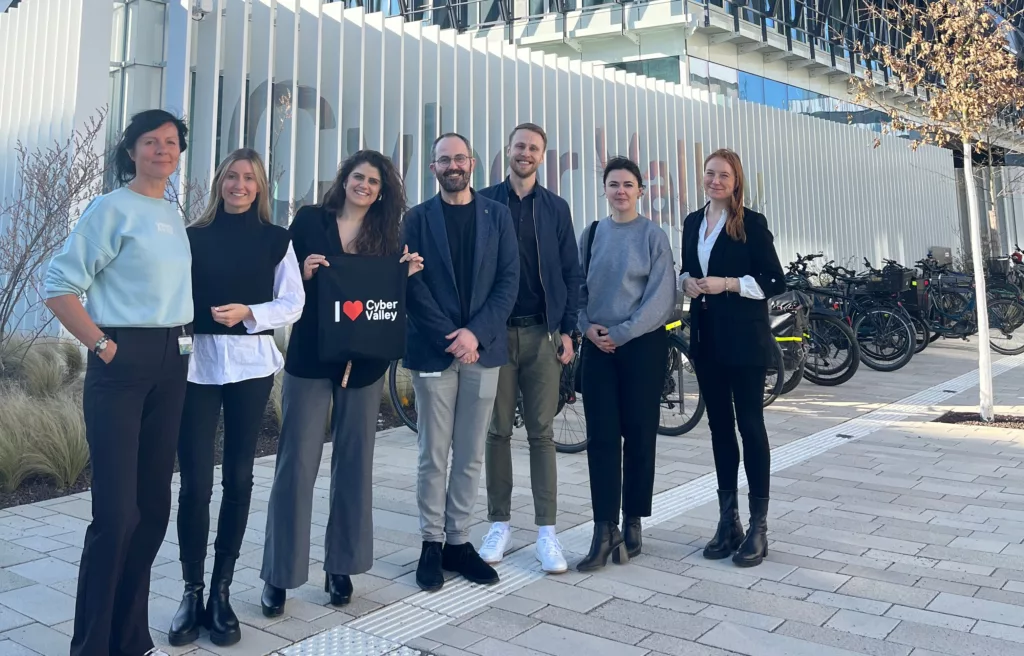
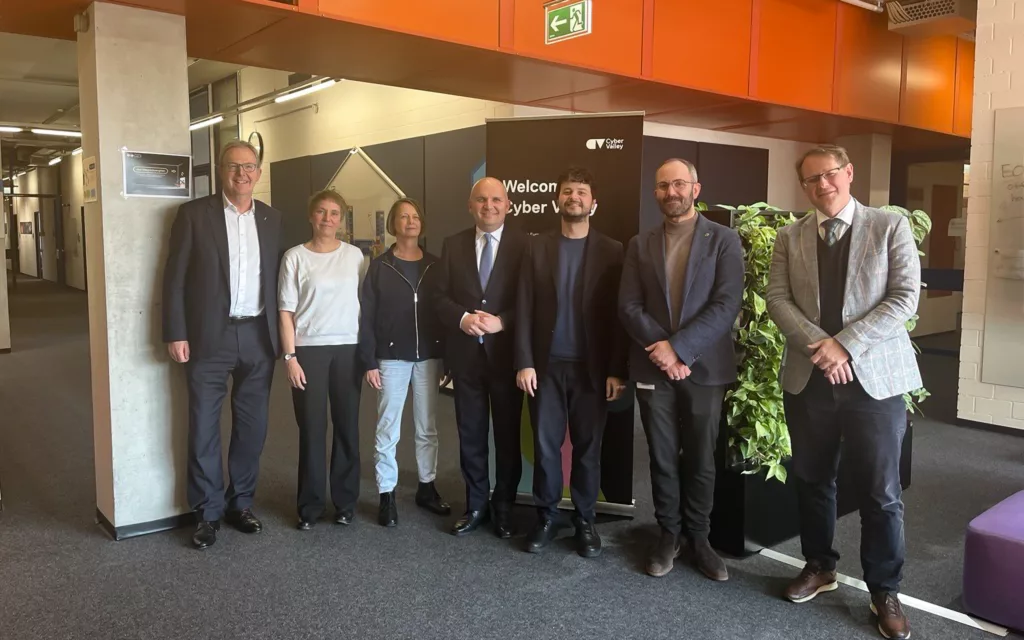
    On April 23, we welcomed a delegation from JTC Corporation to Cyber Valley in Stuttgart. The corporation is Singapore’s master developer behind the Jurong Innovation District (JID), the country’s leading advanced manufacturing hub. 

    The delegation, including Christine Wong (Assistant CEO, Cluster Group), Lim Junwei (Director, Industrial Estates (North) Cluster), and Jessica Chen (Manager, Precision Engineering Department), received an overview of the regional ecosystem. With JTC’s network of around 700 start-ups and Cyber Valley’s network of more than 100, there is strong potential for collaboration, including a possible joint exchange initiative. 

    Spektrum der Wissenschaft readers visit  

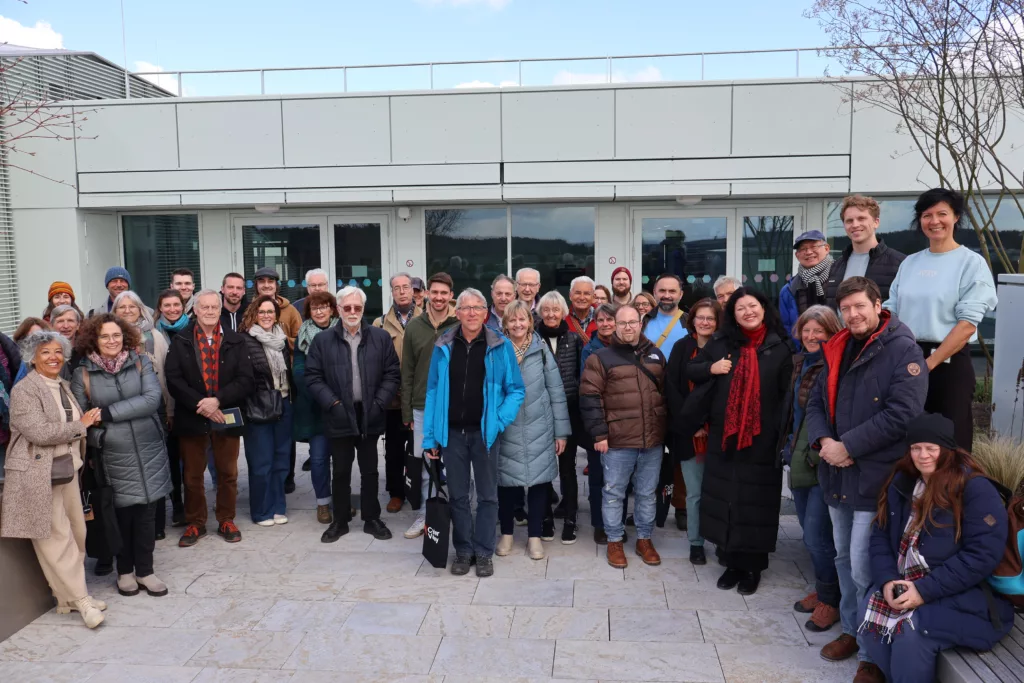
    On April 24, we had the pleasure of welcoming readers from “Spektrum der Wissenschaft” at Cyber Valley in Tübingen. 

    Organized by the Max Planck Institute for Biological Cybernetics, guests enjoyed neuroscientific talks and lab visits. Moreover, they got a glimpse into one of Europe’s leading centers for AI and modern robotics, showing them how excellent research can be transferred into real-world applications that benefit society. After an introduction to the Cyber Valley Innovation Campus, there was plenty of time for questions and the chance to enjoy the view of the Swabian Alb from our roof terrace. Thanks for the visit and the lively discussions! 

    Cyber Valley Impulse on health and life sciences 

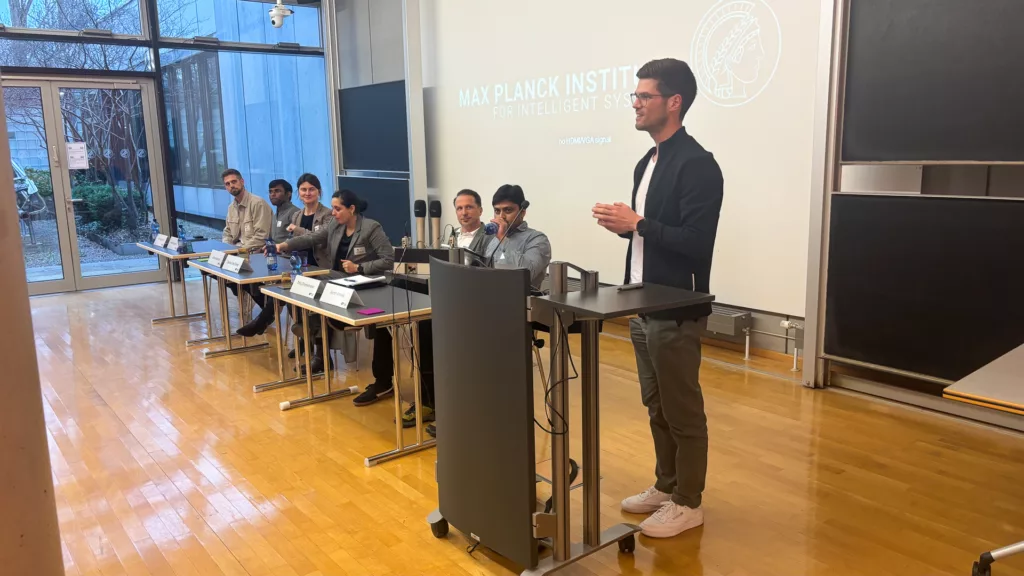
    On April 28, the Cyber Valley Impulse on health and life sciences took place in Tübingen. Experts from science and industry shared insights on how AI-driven technologies can enhance healthcare, biomedical research, and life-science applications. 

    Thanks to our excellent speakers and contributors: Katja Mombaur (High Performance Humanoid Technologies (H2T), Institute for Anthropomatics and Robotics (IAR), Karlsruher Institut für Technologie (KIT)), Max B. Schäfer (Institut für Medizingerätetechnik, Universität Stuttgart), Andrea Leibfried (Health + Life Science Alliance Heidelberg Mannheim), Yannick Sauer (Carl Zeiss Vision International GmbH), Christian M. Schürch; (Vicinity Bio GmbH), and Klara Altintoprak (BioRegio STERN Management GmbH).

    The next Impulse on govtech and cyber security will happen on June 16 in Karlsruhe. Registration will open in early June. Find out more.

  • 2019: Reducing construction waste with AI—interview with Optocycle

    2019: Reducing construction waste with AI—interview with Optocycle

    In 2016, important actors from science, industry, and politics founded the Cyber Valley Consortium, which became the first Innovation Campus in Baden-Württemberg. Ten years on in 2026, we’re revisiting the most important milestones from the last decade. Each month, we’ll focus on a particular year since Cyber Valley’s beginning. 

    This month, we’re looking back to 2019, when the Cyber Valley Start-up Network was founded to build and nurture a community of start-up entrepreneurs. The Cyber Valley Start-up Network has grown rapidly over the past years, from the initial seven founding members at the end of 2019 to more than 100 start-ups in 2026.

    In 2022, Optocycle joined the Start-up Network. Optocycle develops AI-based systems for the optical classification of construction waste. Their technology enables optimal use of demolition material, promoting a circular economy.

    In the following interview, CEO Max-Frederick Gerken explains how the idea for Optocycle emerged, how being part of the Start-up Network has supported the company’s development, and how AI-driven material classification can contribute to a more circular and sustainable construction industry.

    How did the idea for Optocycle originate, and what problem were you initially trying to solve?

    Interestingly, we didn’t start in construction. Initially, we were building AI to recognize fruits and vegetables at supermarket checkouts. The pivot came when a contact from the recycling industry highlighted a much bigger problem: construction waste is still classified manually: slow, subjective, and inefficient.

    We realized that the core issue is missing data. That’s why we built Optocycle: combining optical sensor systems with AI to create a reliable, real-time data layer for material flows and enable true circular construction.

    How did your research and experience within the Cyber Valley ecosystem contribute to founding the company?

    It didn’t directly contribute to founding the company, as Optocycle was already established at that point. However, we did benefit from funding within the Cyber Valley ecosystem, which supported us in scaling our team and further developing our technology. Beyond that, the ongoing exchange within the network has been consistently valuable and interesting.

    The Optocycle team | (c) Optocycle

    How do you see Optocycle’s work contributing to a future where AI research has a long‑term, positive, and sustainable impact on society?

    At Optocycle, we see our work as a very applied example of how AI can drive tangible, long-term positive impact, particularly in industries that have historically been difficult to transform, such as construction and circular materials management.

    Our core contribution lies in using AI and advanced sensing technologies to make material flows transparent and measurable. This is a prerequisite for any functioning circular economy. Today, a significant share of valuable materials is still downcycled or lost entirely because there is insufficient data about their composition and quality. By generating reliable, real-time data, we enable better decision-making across the value chain, from sorting and recycling to reintegration into new products.

    From a sustainability perspective, this directly contributes to reducing waste, lowering CO₂ emissions, and preserving finite resources. But beyond the environmental aspect, we also see a structural impact: AI, when deployed thoughtfully, can help modernize traditionally analog industries and make them more efficient, data-driven, and resilient.

    Importantly, we believe that the long-term societal value of AI will depend less on abstract breakthroughs and more on its integration into real-world systems. Our approach is therefore to embed AI into physical processes with clear economic and ecological benefits. This ensures that the technology is not only innovative, but also scalable, economically viable, and aligned with sustainability goals

    What was the biggest lesson you learned from your founding journey? And what advice would you give to others who are considering taking the leap?

    The biggest lesson from our founding journey has been the importance of building solutions strictly around real customer needs, not for the sake of technology or innovation itself. Especially in deeptech and AI, there’s a strong temptation to develop sophisticated solutions first and look for applications later. In practice, that approach rarely leads to sustainable businesses.

    What truly made a difference for us was maintaining a strong customer focus from early on: deeply understanding pain points, validating assumptions quickly, and iterating based on real-world feedback. This ensures that what you build is not only technically impressive, but also commercially relevant and scalable.

    For anyone considering taking the leap, the advice would be: stay as close to your customers as possible. Talk to them early, challenge your own assumptions, and be willing to adapt your solution, even if that means pivoting away from your original idea. Execution matters, but direction matters more, and that should always be guided by real demand.

    To celebrate Cyber Valley’s ten-year anniversary, we’ll be sharing a variety of content across our website and social media channels reflecting on milestones from the last decade. Stay tuned for the next installments! 

  • Cyber Valley Impulse on govtech and cybersecurity

    Cyber Valley Impulse on govtech and cybersecurity

    This edition of Cyber Valley Impulse focuses on govTech and cybersecurity. Experts from research, industry, the public sector, and the innovation ecosystem will exchange insights on how AI-driven technologies can strengthen digital governance, enhance public services, and improve cybersecurity resilience.

    As part of the Cyber Valley Impulse event series, this edition highlights applications of intelligent systems in government technology and cybersecurity. Advances in artificial intelligence, machine learning, and data-driven approaches are reshaping public services, digital governance, and cybersecurity, creating new opportunities for secure, efficient, and citizen-centric innovation.

    The event provides a platform for knowledge exchange, discussion, and networking between academia, industry, and the innovation ecosystem.

    What to expect

    • Insights into current developments and challenges in AI for health and life sciences.
    • A science marketplace to showcase emerging AI projects in the field.
    • Exchange between researchers, industry practitioners, and innovators.
    • Opportunities for collaboration and community building within the region.
    • Informal networking with experts and stakeholders.

    Program

    A detailed agenda, speakers, and session format will be announced soon.

  • Der letzte Monat im Cyber Valley

    Der letzte Monat im Cyber Valley

    Letzten Monat war bei Cyber Valley einiges los. Hier gibt’s eine kleine Übersicht unserer Highlights:

    Am 4. März besuchten Journalistinnen und Journalisten aus Europa das Cyber Valley in Tübingen. Das Programm, organisiert in Zusammenarbeit mit dem Deutsch-Französischen Institut Ludwigsburg, bot einen Überblick über Forschung, Innovation und Zusammenarbeit auf unserem Innovationscampus. Der Nachmittag begann mit Beiträgen von Florian K. Mayer (CEO der Cyber Valley GmbH), Tobias Leismann (Managing Director am ELLIS Institute Tübingen) und Philipp Hennig (Direktor am Tübingen AI Center). Christoph Koch, ehemaliger „Journalist in Residence“, gab Einblicke in das Journalist-in-Residence-Programm. Anschließend folgten Pitches aus dem Cyber Valley Start-up Network von Laura Neusser (Chief Communication Officer bei Optocycle) und Anand Waghmare (CEO & Co-Founder von Yugen Space). Abgerundet wurde der Nachmittag durch Laborbesuche bei Tsvetelina Alexiadis und Michael Muehlebach am Max-Planck-Institut für Intelligente Systeme sowie bei Martin Kiefel, Co-Founder von polybot.

    Image: Cyber Valley GmbH

    Am 17. März startete die neue Veranstaltungsreihe „Cyber Valley Impulse“ mit dem Schwerpunkt „Mobility and Aerospace“. Forschende, Start-ups, Unternehmen und Investoren trafen sich am Max-Planck-Institut für Intelligente Systeme in Stuttgart, um über bildbasierte Wahrnehmung für Flugroboter, KI in Luft- und Raumfahrtsystemen, autonomes Fahren und neue Finanzierungsmöglichkeiten im Bereich Mobilitätstechnologien zu diskutieren. Zu den Referenten und Referentinnen gehörten: Aamir Ahmad (Universität Stuttgart), Thilo Zimmermann (InnovationsCampus Mobilität der Zukunft), Zamira Daw Perez (Institut für Flugzeugsysteme), Ulrike Weinrich (FKFS Forschungsinstitut für Kraftfahrzeugtechnik und Antriebssysteme), Anand Waghmare (Yugen Space) und Frederik Boenke (NUVUS).

    Image: Cyber Valley GmbH

    Am 19. März konnten wir Vertreterinnen von IPAI und der IPAI Foundation im Cyber Valley in Tübingen zu einem spannenden Austausch über zukünftige Kooperationsmöglichkeiten begrüßen: Jana Strattner, Tamara Pyter und Sofia Willhauk– drei treibende Kräfte hinter der Mission von IPAI, ein lebendiges Ökosystem für angewandte künstliche Intelligenz aufzubauen.

    Indem wir unsere Stärken bündeln und zusammenarbeiten, können wir noch größeren Mehrwert für das gesamte Ökosystem in Baden-Württemberg schaffen – im Sinne eines verantwortungsvollen Ansatzes, der auch die sozialen und ethischen Auswirkungen von KI berücksichtigt. Der Austausch machte unsere gemeinsamen Ziele deutlich: den Transfer von KI-Forschung in Anwendungen zu beschleunigen, Netzwerke zu stärken und sinnvolle Kooperationen über Regionen hinweg aufzubauen. Durch diese Zusammenarbeit wollen wir Brücken zwischen Forschung, Gesellschaft und Industrie schlagen, um gemeinsam ein lebendiges Ökosystem für angewandte KI in Baden-Württemberg zu gestalten.

    Image: Cyber Valley GmbH

    Am 27. März besuchten Vertreterinnen und Vertreter der Tourismus und Stadtmarketing Tübingen GmbH das Cyber Valley in Tübingen. Die Tübinger Stadtführerinnen und Stadtführer sowie Stocherkahn-Fahrer und -Fahrerinnen erhielten zunächst eine Einführung in den Innovationscampus, bevor sie zu einer geführten Tour über den Campus in Tübingen starteten.

    Unsere Mission ist es, Forschung zu KI und Robotik in reale Lösungen zu überführen, die Menschen, Industrie und Gesellschaft zugutekommen. Ein wichtiger Teil davon ist der Austausch mit der Öffentlichkeit. Deshalb freuen wir uns, unsere kommenden Campus Tours in Tübingen anzukündigen, bei denen alle Interessierten den Campus erkunden und mehr über die hier stattfindende Forschung erfahren können. Die Termine werden bald bekannt gegeben.

    Image: Cyber Valley GmbH

    Am 30. März hießen wir die Mitglieder des Europäisches Parlamentes Ilhan Kyuchyuk, Axel Voss, Brando Benifei und Anze Erbeznik im Cyber Valley in Stuttgart zu einem Austausch über die sich entwickelnde KI-Landschaft in Europa willkommen. Gemeinsam mit Regina Ammicht Quinn und Jessica Heesen vom Internationalen Zentrum für Ethik in den Wissenschaften der Eberhard Karls Universität Tübingen sowie Florian K. Mayer, CEO der Cyber Valley GmbH, diskutierten sie zentrale Entwicklungen, die das europäische KI-Ökosystem prägen. Themen waren unter anderem die europäische KI-Gesetzgebung und der EU Artificial Intelligence Act, die ethischen Implikationen von KI, digitale Autonomie sowie neue Fragen rund um unser digitales Nachleben.

    Image: Cyber Valley GmbH
  • Soft-Sensing Interfaces with Multifunctional Smart Materials

    Overview

    Led by Ardian Jusufi, this project investigated how biology and biomechanics can inform the design of soft robotic systems. Its goal was to develop flexible, stretchable, and potentially biocompatible materials that can sense deformation, pressure, and movement while adapting to complex surfaces.

    The research combined soft sensors, hydrogel actuators, and bio-inspired robot designs. It also used robophysical models—simplified physical robots that allow researchers to test how biological bodies move and interact with their environment. The project concluded in February 2023.

    Key results

    • Developed flexible and stretchable sensors for measuring strain, pressure, curvature, and body deformation.
    • Improved pressure sensing in situations where the sensor itself is stretched, addressing the trade-off between sensitivity, robustness, and durability.
    • Created multilayer hydrogel actuators with improved strength, stretchability, and fluidic performance.
    • Integrated soft sensors into bio-inspired robots, including an underwater robotic fish, to measure body movement and provide feedback during locomotion.
    • Used soft robotic fish and animal-inspired robots to study swimming, obstacle traversal, tail movements, mass distribution, and landing stability.
    • Demonstrated that soft sensors can measure body undulation and support closed-loop control, allowing a robotic fish to respond to changing flow conditions.
    • Used biorobotic models to test biological hypotheses, including how squirrels use their tails to reorient themselves during falls and how geckos use their tails to stabilise crash landings.

    Why it matters

    Soft robots can deform, absorb impacts, and adapt to their surroundings more easily than rigid machines. Sensors that stretch and move with a robot are therefore essential for reliable control and for measuring the robot’s interaction with its environment.

    This research contributes to more adaptable soft robots, wearable and skin-like sensors, underwater systems, and bio-inspired machines. It also shows how soft robotics can function as a scientific tool: robotic models make it possible to measure forces and movements that are difficult to study directly in living animals.

    Publications and output

    • Souri H, Banerjee H, Jusufi A, Radacsi N, Stokes A, Park I, Sitti M, Amjadi M. Advanced Int. Sys. 2 (8) 2000039. Wearable and Stretchable Strain Sensors: Materials, Sensing Mechanisms, and Applications. 2020. Advanced Intelligent Systems, Volume: 2, Issue: 8, 2020. DOI: https://doi.org/10.1002/aisy.202000039
    • Banerjee H, Kalairaj MS, Ren H, and Jusufi A*. Advanced Engineering Materials. Strong, Ultrastretchable Hydrogel-Based Multilayered Soft Actuator Composites Enhancing Biologically Inspired Pumping Systems. [Cover inside] Adv. Eng. Mater 2021, 23, 2100121. 
    • Wright B, Vogt D, Wood R, Jusufi A*. IEEE International Conference on Soft Robotics (RoboSoft). Soft Sensors for Curvature Estimation under Water in a Soft Robotic Fish. COEX, Seoul, Korea, 2019.
    • Siddall R, Fukushima T, Bardhi D, Perteshoni B, Morina A, Hasimja E, Dujaka Y, Haziri G, Martin L, Banerjee H, Jusufi A*. Advanced Robotics 35 (7). Compliance, Mass Distribution and Contact Forces in Cursorial and Scansorial Locomotion with Biorobotic Physical Models. 2021. https://www.tandfonline.com/doi/full/10.1080/01691864.2021.1887760.
    • Fukushima Toshihiko, Robert Siddall,Fabian Schwab, Severine Toussaint, Greg Byrnes, John Nyakatura, and Ardian Jusufi. Inertial tail effects during righting of squirrels in unexpected falls: From behavior to robotics. Integrative and Comparative Biology, icab 023, 2021.
    • Lin Yu-Hsiang, Siddall R, Schwab F, Fukushima T, Banerjee H, Youngjoon Baek, Daniel Vogt, Yong-Lae Park, and Jusufi A. Modeling and control of a soft robotic fish with integrated soft sensing. Advanced Intelligent Systems, 2000244, 2021.
    • Fabian Schwab, Elias T Lunsford, Taehwa Hong, Fabian Wiesemüller, Kovac M, Park YL, Akanyeti O, Liao J C, and Jusufi A. Body caudal undulation measured by soft sensors and emulated by soft artificial muscles. Integrative and Comparative Biology, 2021.
    • Fabian Schwab, Fabian Wiesemüller, Claudio Mucignat, Yong-Lae Park, Ivan Lunati,Mirko Kovac, and Ardian Jusufi. Undulatory swimming performance explored with a biorobotic fish and measured by soft sensors and particle image velocimetry. Frontiers in Robotics and AI, page 387, 2021.
    • Robert Siddall, Greg Byrnes, Rob J. Full and Ardian Jusufi, Tails stabilize landing of gliding geckos crashing head-first into tree trunks‘, Communications Biology, 2021. 

  • 2018: Building a network of excellent scientists—interview with Caterina De Bacco

    2018: Building a network of excellent scientists—interview with Caterina De Bacco


    In 2016, important actors from science, industry, and politics founded the Cyber Valley Consortium, which became the first Innovation Campus in Baden-Württemberg. Ten years on in 2026, we’re revisiting the most important milestones from the last decade. Each month, we’ll focus on a particular year since Cyber Valley’s beginning. 

    This month, we’re looking back to 2018, when the first Cyber Valley Research Groups were established. One of these research groups was led by Caterina De Bacco: between 2018 and 2024, she led the Physics for Inference and Optimization group at the Max Planck Institute for Intelligent Systems before becoming an Associate Professor at Delft University of Technology.

    In the following interview, she explains how Cyber Valley’s network of scientists and innovators provided a thriving environment for her research, and how her research could be used for managing traffic in transportation networks.

    What were your research group’s main aims and outcomes?

    In my group, we were combining expertise from physics, mathematics, and statistics to effectively model complex systems; systems made of many individual elements that interact in complex ways, often referred to as networks. Our research approach aimed at developing mathematically rigorous models to learn patterns from network data or to optimize the design of these systems. We studied applications like clustering, anomaly detection, or optimal transport on networks, spanning various domains, in particular, the social sciences and engineering.

    How did your research address real-world challenges, and what kind of applications or long-term benefits could it have?

    Learning patterns from network data has applications in a variety of domains, as network data is ubiquitous. One of the challenges is to perform these inferences efficiently. Hence, special focus is given to the development of interpretable and principled models that are also computationally efficient, so that practitioners such as social scientists and engineers can use them without needing large resources, making these tools accessible to a wider audience. All the models we developed have a corresponding open-source implementation of the codes available online. With our models, practitioners can detect hidden clusters of similar nodes from network data or estimate the likelihood that certain observations are anomalous.

    In addition, our research on optimal transport has natural applications in managing traffic in transportation or communication networks. With our models, we can design optimal networks that can be used by network managers to assess the efficiency of existing transportation infrastructures.

    Cyber Valley is a network of leading research institutions, industry partners, and start-ups working in AI and robotics. How did being part of this network shape your research, skills, or career path?

    The exposure to this diverse network of experts was beneficial for the creative process of stimulating ideas, ideation. You have the feeling that there is always something cutting-edge going on around you, and you are among the first ones to know. There are not that many ecosystems connecting research and technology at this high level, so being immersed in it gives you valuable stimuli and ideas.


    The Cyber Valley Research Fund was also an important support for advancing our research (I obtained two grants from it). With little administrative burden and a smooth application and reporting process, I could focus mainly on the research itself, in contrast to other mainstream funding opportunities, where you end up spending much more time on non-research-related activities. As a result, our research thrived during these years, with an even higher level of productivity than we originally planned.

    How did your experience as a Cyber Valley Research Group Leader prepare you for your next career step?

    The opportunity to combine freedom and resources was unique and extremely valuable. This allowed me to grow in several aspects that are important for an academic career beyond pure research, for example, managerial responsibilities. Being able to independently manage a budget and to make key decisions (such as recruiting, deciding how to contribute to teaching) gives you a sense of responsibility and agency that makes you grow significantly faster compared to other young academics who are not as independent. As scientists, we are required to take on different roles (managers, mentors, supervisors, teachers, accountants, fundraisers) that we must learn on the job, as we are usually only trained in the science itself. To be able to effectively learn all these skills, I needed to be given the opportunity. The independence and support I got from Cyber Valley were key in this respect.

    As a result, I could start my next career step (as an Associate Professor at Delft University of Technology) with a significant advantage in terms of experience, compared to my peers. Needless to say, being a Cyber Valley Group Leader played a big role in increasing my chances of finding the right job for my next career step.

    To celebrate Cyber Valley’s ten-year anniversary, we’ll be sharing a variety of content across our website and social media channels reflecting on milestones from the last decade. Stay tuned for the next installments!

  • Innovation Campus tours

    Innovation Campus tours

    Cyber Valley Innovation Campus opens its doors!

    Our regular guided tours offer visitors an authentic insight into Cyber Valley. In about 90 minutes, you’ll get an exciting overview of Cyber Valley and learn in a short presentation how artificial intelligence is researched and developed. During the subsequent tour of the Tübingen campus, we’ll open the doors to selected research institutes and give you a glimpse into the world of science.

    Please note: tours are offered in German.

    Tour highlights

    • Overview of Cyber Valley: clear explanation in a short introductory presentation
    • Visit to selected institutes and projects at the Cyber Valley Innovation Campus

    Meeting point

    Foyer of the Cyber Valley Building, Maria-von-Linden-Str. 1, 72076 Tübingen

    Registration

    New dates will be published soon. Stay tuned!

    Contact for Innovation Campus tours

    Silke Dutz manages Cyber Valley’s Public Engagement by opening its doors to the community and engaging with the public through formats such as Campus Tours, Open House Days, and Science Festivals, while keeping in mind the critical reflection on the ethical and social implications of AI research.

  • 2017: Training outstanding doctoral students at IMPRS-IS – Interview with Leila Masri

    2017: Training outstanding doctoral students at IMPRS-IS – Interview with Leila Masri


    In 2016, important actors from science, industry, and politics founded the Cyber Valley Consortium, which became the first Innovation Campus in Baden-Württemberg. Ten years on in 2026, we’re revisiting the most important milestones from the last decade. Each month, we’ll focus on a particular year since Cyber Valley’s beginning. 

    This month, we’re looking back to 2017 when Cyber Valley’s graduate school, the International Max Planck Research School for Intelligent Systems (IMPRS-IS), was founded. IMPRS-IS trains outstanding doctoral students from around the world and supports them in their PhD research so they can use their AI expertise to build a better future in Europe.

    Leila Masri has been the scientific coordinator at IMPRS-IS since 2017. She has supported its growth into one of Germany’s largest doctoral programs, now comprising more than 300 doctoral researchers and nearly 100 faculty members. Committed to fostering diversity in science, she also contributes to initiatives broadening access to research, including the CaCTüS and RIGI internship programs in Tübingen and Stuttgart. In the following interview, she reflects on IMPRS-IS’s founding and what makes the graduate school unique.

    When you helped launch IMPRS-IS in 2017, what vision did you have for the program, both for the students and for the broader research community?

    As a scientist myself, I completed my PhD in Tübingen and Kiel and later worked as a postdoctoral researcher in Austria. Throughout my academic career, I have been deeply committed to supporting students and teaching, an interest I further developed by earning a university teaching diploma from the University of Stuttgart. When Michael J. Black and Katherine J. Kuchenbecker at the Max Planck Institute for Intelligent Systems (MPI-IS) launched IMPRS-IS in 2017 and were looking for a coordinator, it felt like a natural fit. My vision was to help build a welcoming international community where doctoral researchers and faculty could connect, exchange ideas, and thrive together, while providing an environment in which excellent research can flourish. It has been incredibly rewarding to see this vision come to life.

    Looking back over the past years, which moments or milestones felt particularly defining for IMPRS-IS, and why do they stand out to you personally?

    Looking back, one of the defining milestones was how quickly IMPRS-IS grew. Our original goal was to build a doctoral program with around 100 PhD students over six years, so reaching that number in less than two years was incredibly encouraging. Over those six years, we ended up recruiting more than 400 doctoral researchers, making IMPRS-IS one of the largest yet youngest doctoral programs in Germany.

    Furthermore, we had long wanted to organize industry visits so our students could see how research works outside academia and exchange ideas with researchers working in industry. Interestingly, this happened quite naturally through our alumni, who started hosting us at companies like Bosch, with a visit to Amazon coming up soon; both also partners in Cyber Valley. That organic development has been particularly rewarding to see.

    From your perspective, what is unique about IMPRS-IS? What distinguishes it from other doctoral training programs? 

    What makes the program special is how it brings together the Max Planck Institute for Intelligent Systems with the Universities of Stuttgart and Tübingen. This gives doctoral researchers access to both cutting-edge research infrastructure and strong academic networks. The focus on intelligent systems naturally connects AI, robotics, engineering, and related fields, and the close ties to the Cyber Valley ecosystem help link fundamental research with industry and innovation.

    At the same time, the structured doctoral program – with thesis advisory committees, Think & Link gatherings, annual boot camps, and professional development opportunities – provides valuable support to its doctoral students as well as to its senior scientists. Furthermore, beyond all the institutional and program strengths, what truly sets IMPRS-IS apart for me is its people and culture. It genuinely feels like a home: a place defined by trust, support, warmth, and collaboration. 

    That strong sense of community, alongside research excellence, is what makes IMPRS-IS truly unique.

    IMPRS-IS students come from a broad range of backgrounds, but do you think that they share any particular mindsets or qualities?

    Yes – although IMPRS-IS students come from very different academic, cultural, and personal backgrounds, I do think they share common mindsets and qualities. The program is highly international, with doctoral researchers from over 35 countries, more than 60% non-German speakers, and about 28% female researchers, alongside a wide range of academic backgrounds and expertise. That diversity enriches the research they conduct, as people approach problems in different ways and contribute their own personal touch to the research they pursue.
    There’s a noticeable culture of empathy, openness, and mutual support – people are approachable, willing to exchange ideas, and genuinely invested in each other’s academic and personal success.

    What aspects of the program are you personally most proud of today?

    Honestly, I don’t think I can point to one single aspect in isolation – what I’m most proud of is really the people who make IMPRS-IS what it is. The program’s success stems from the collective effort and commitment of many individuals: the strong guidance from our spokesperson Katherine J. Kuchenbecker, the steady support of the executive board and coordination office, and the genuine engagement of faculty members and scholars who are consistently willing to support doctoral researchers. That level of dedication creates an environment where doctoral candidates feel encouraged, guided, and valued. We can now measure this success: IMPRS-IS has attracted top-tier scientists from around the world, involves nearly 100 faculty members, hosts over 300 doctoral candidates, and has graduated more than 150 PhD students since 2017.

    Combined with the program’s diversity, interdisciplinarity, and culture of openness and mutual support, IMPRS-IS is not just a strong academic program – it is a place where people can thrive both scientifically and personally.

    To celebrate Cyber Valley’s ten-year anniversary, we’ll be sharing a variety of content across our website and social media channels reflecting on milestones from the last decade. Stay tuned for the next installments!