




Network Role: Partner

  • 2016: The foundation of an AI ecosystem

    2016: The foundation of an AI ecosystem

    In 2016, important actors from science, industry, and politics founded the Cyber Valley Consortium, which became the first Innovation Campus in Baden-Württemberg. Ten years on in 2026, we’re revisiting the most important milestones from the last decade. Each month, we’ll focus on a particular year since Cyber Valley’s beginning.

    This month, we’re returning to 2016 to look back at Cyber Valley’s foundation. Back then, the AI boom and the wholesale use of LLMs were still some years away. Actors from science, industry, and politics in Baden-Württemberg nevertheless knew that this technology would play an essential role in the state’s future.  

    Baden-Württemberg was already in an unrivalled position to create AI for the benefit of future society since it is home to several top AI research institutions: the Max Planck Institute for Intelligent Systems, the University of Stuttgart, the University of Tübingen, Fraunhofer-Gesellschaft, and Karlsruhe Institute of Technology (KIT). The next step was to apply their cutting-edge research to solving real-world problems.

    This was where Cyber Valley came in. In 2016, the Cyber Valley Consortium was founded with the mission of advocating for the research, development, application, and acceptance of AI and modern robotics. Cyber Valley was to unite excellent research with practical application to build the AI of tomorrow in Baden-Württemberg.

    At its founding, Cyber Valley Consortium consisted of the Max Planck Society (which includes the Max Planck Institute for Intelligent Systems, MPI-IS), the state of Baden-Württemberg, and the Universities of Stuttgart and Tübingen, alongside partners from industry: Amazon, BMW, Bosch, IAV, Mercedes-Benz Group, Porsche AG, and ZF Friedrichshafen. Other research institutions joined later, including Fraunhofer-Gesellschaft (in 2019), KIT, and ELLIS Institute Tübingen (both 2024).

    Winfried Kretschmann, Minister-President of Baden-Württemberg, Theresia Bauer, who was then Minister of Science, Research and Art in Baden-Württemberg, and Martin Stratmann, who was then President of the Max Planck Society, launched the consortium on December 15, 2016, in Stuttgart’s Neues Schloss along with other participants from the consortium, including Bernhard Schölkopf(MPI-IS), Frank Allgöwer (University of Stuttgart) and Bernd Engler (University of Tübingen). The result was one of the largest research–industry partnerships for AI and modern robotics in Europe.

    Photo: MPI-IS / U. Regenscheit

    Theresia Bauer, Managing Director of the Baden-Württemberg-Stiftung, and Baden-Württemberg’s Minister of Science, Research and Art at the time of Cyber Valley’s founding:

    “At the time, I was thrilled by the great opportunity to bundle the excellent research landscape in the fields of AI and computer science in a condensed innovation ecosystem and make it more attractive for top international talent. When Cyber Valley was founded, I hoped that this concentration of cutting-edge research, the promotion of young talent, and responsible innovation would have what it takes to develop great appeal and grow rapidly. Today, you can see that we have succeeded in developing such a positive dynamic, which has a far-reaching impact on science, business, and the entire location.”

    Bernhard Schölkopf, Scientific Director of the ELLIS Institute Tübingen and Director of Empirical Inference at MPI-IS:

    “We started Cyber Valley with the belief that AI has the potential to change the world, and with the goal to do so in a positive way. This is now commonplace, but launching in 2016 gave us a head start and with a number of exciting start-ups, outstanding research institutions, and initiatives such as ELLIS and MP-AIX, we now have one of the most vibrant AI ecosystems in Europe.”

    Michael Black, Director of Perceiving Systems at MPI-IS:

    “The goal of Cyber Valley has always been to give Germany the chance to build a new high-growth economy around AI. In 2016, AI was not in the headlines, but we believed that we had the raw materials needed to succeed. Through the partnership of government, academia, and industry, we grew the AI faculty, attracted top researchers, built a top graduate program, trained hundreds of AI scientists, attracted investment, and helped launch a network of start-ups. These start-ups were always the goal and they hold the promise of a new Germany economy.” 
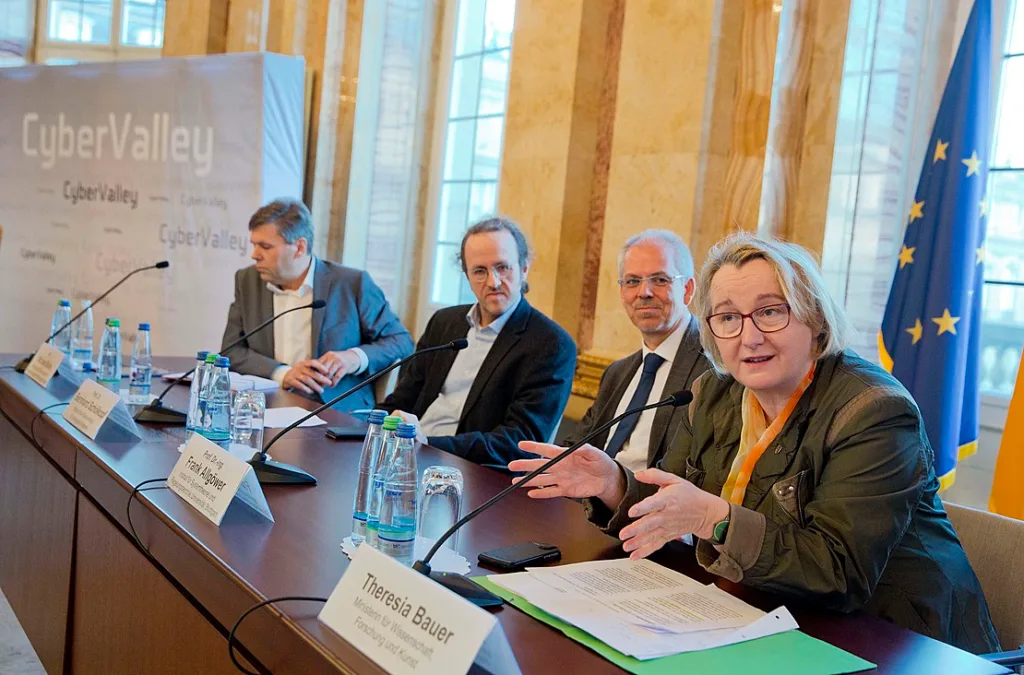
    Photo: MPI-IS / U. Regenscheit

    Peter Middendorf, Rector of the University of Stuttgart:

    “From the very beginning, the University of Stuttgart pursued the goal of pooling expertise in artificial intelligence and particularly in robotics, within and for the Stuttgart region. Together with the University of Tübingen, the Max Planck Institute for Intelligent Systems, and other partners, we have played a decisive role in shaping and advancing Cyber Valley. This strong network has given rise to excellent research, new professorships, and innovative projects, which we continue to actively drive forward – soon also in the new Cyber Valley building here in Stuttgart.” 

    Philipp Hennig, Director of Tübingen AI Center, University of Tübingen:

    “The world was a different place ten years ago, but even then it was clear that Europe, Germany, and Baden-Württemberg had to increase their efforts to stay relevant for AI. A decade later, I’m glad that we got the political mandate to get started then. The urgency of our tasks has only grown since then; but so have our opportunities.” 

    Bernhard Beckert, Dean of the KIT Department of Informatics:

    “When Cyber Valley was founded in 2016, we saw its potential to increase the visibility of AI research in Baden-Württemberg and to build a regional network that connects talent and accelerates scientific progress. Today, more than ever, this collaborative approach remains essential for supporting responsible AI development and for strengthening the region’s position within an increasingly complex international environment.”

    Matthias Tröndle, Head of the Scientific Coordination Office, MPI-IS:

    “When we founded Cyber Valley in 2016, we envisioned creating a bold innovation ecosystem focused on artificial intelligence at a time when its transformative impact was not yet widely recognized. By bringing together universities, non-university research institutions, industry, start-ups, foundations, and government in an unprecedented partnership, we broke new ground. The outstanding success of Cyber Valley has since made it a blueprint for subsequent innovation campuses.” 

    To celebrate Cyber Valley’s ten-year anniversary, we’ll be sharing a variety of content across our website and social media channels reflecting on milestones from the last decade. Stay tuned for the next instalments!
  • Mirelo AI: Shaping the Future of AI from Cyber Valley

    Mirelo AI: Shaping the Future of AI from Cyber Valley

    Carl Johann Simon-Gabriel’s career exemplifies the successful translation of cutting-edge research into entrepreneurial innovation. After completing his PhD under the supervision of Prof. Bernhard Schölkopf at the Max Planck Institute for Intelligent Systems in Tübingen, he spent several years working in leading technology companies in the United States before co-founding Mirelo AI.

    Mirelo AI develops generative AI models capable of producing high-quality, production-ready sound effects directly from video content. This technology addresses a largely untapped area of audiovisual production and offers substantial potential for applications in film, gaming, and advertising.

    Founded in 2023, since joining the Cyber Valley Startup Network in 2024, Mirelo AI has become a strong example of how scientific excellence, ambitious vision, and effective execution converge within the region’s AI ecosystem. The successful completion of this seed round underscores both the company’s potential and the international relevance of the Cyber Valley research and innovation environment.

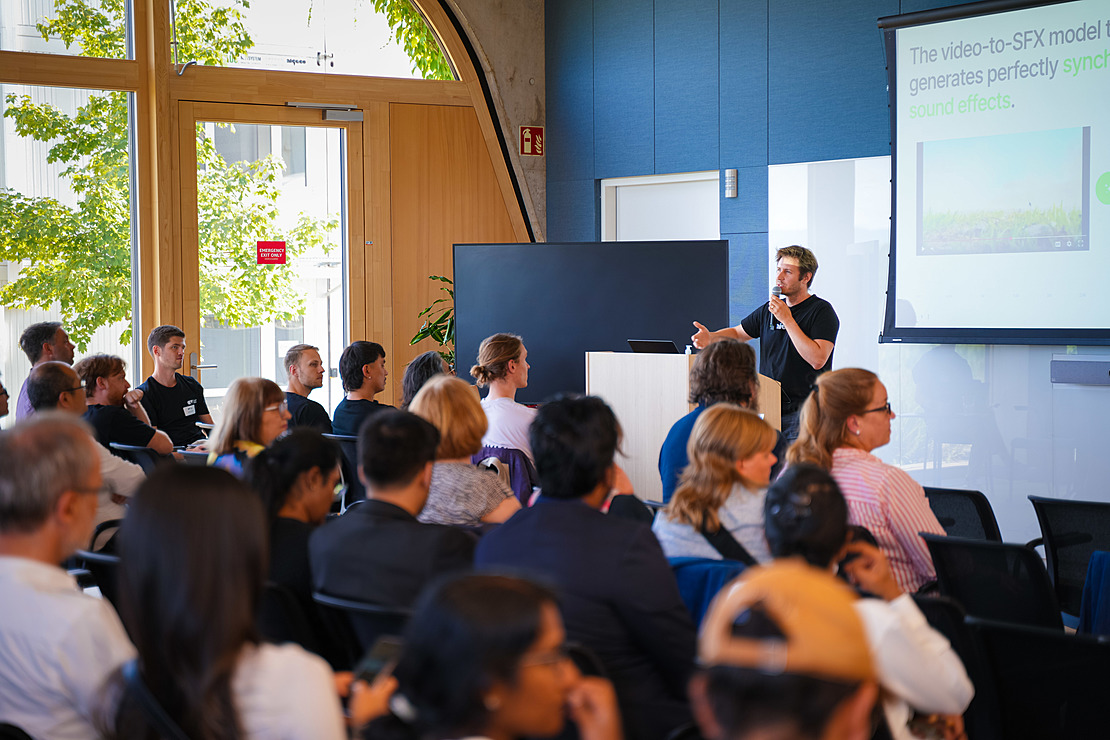
    Image: Flügelmann

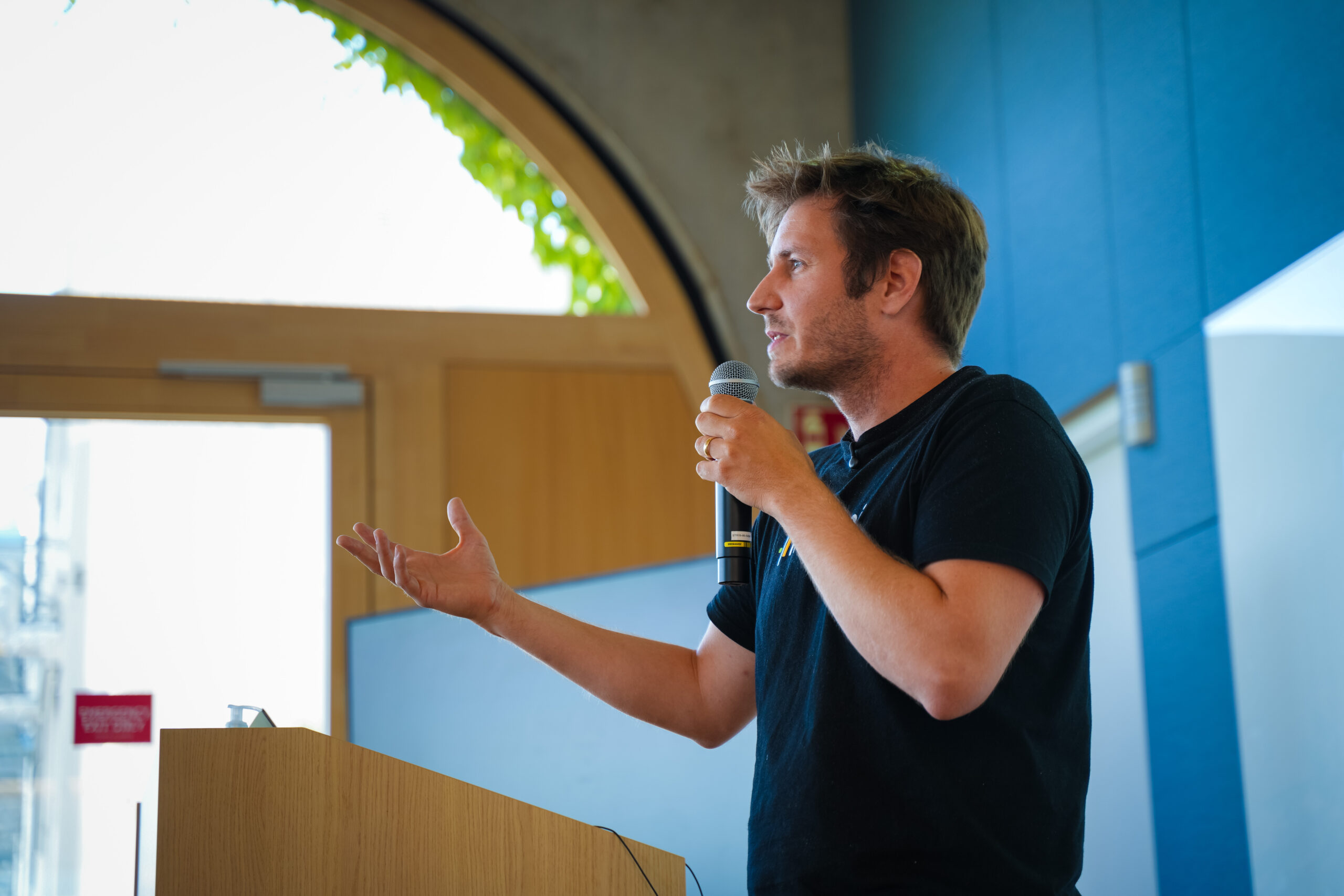
    At the Demo Day of the Cyber Valley AI Incubator (Batch #6), Carl Johann Simon-Gabriel participated as a keynote speaker, sharing insights from his entrepreneurial journey and inspiring the next generation of founders. Reflecting on his experience, he noted:

    “Cyber Valley is a great initiative for emerging AI startups, especially because it is rooted in Tübingen’s world-renowned AI research scene and its talent pool.”

    Mirelo AI is continuing to expand its team and is actively recruiting talent to develop next-generation generative AI models for audio and video. Open positions are available on the company’s website: Mirelo.ai

    Related Start-Ups

    • Mirelo AI

      Mirelo AI

  • Cyber Valley at Heilbronn Slush’D

    Cyber Valley at Heilbronn Slush’D

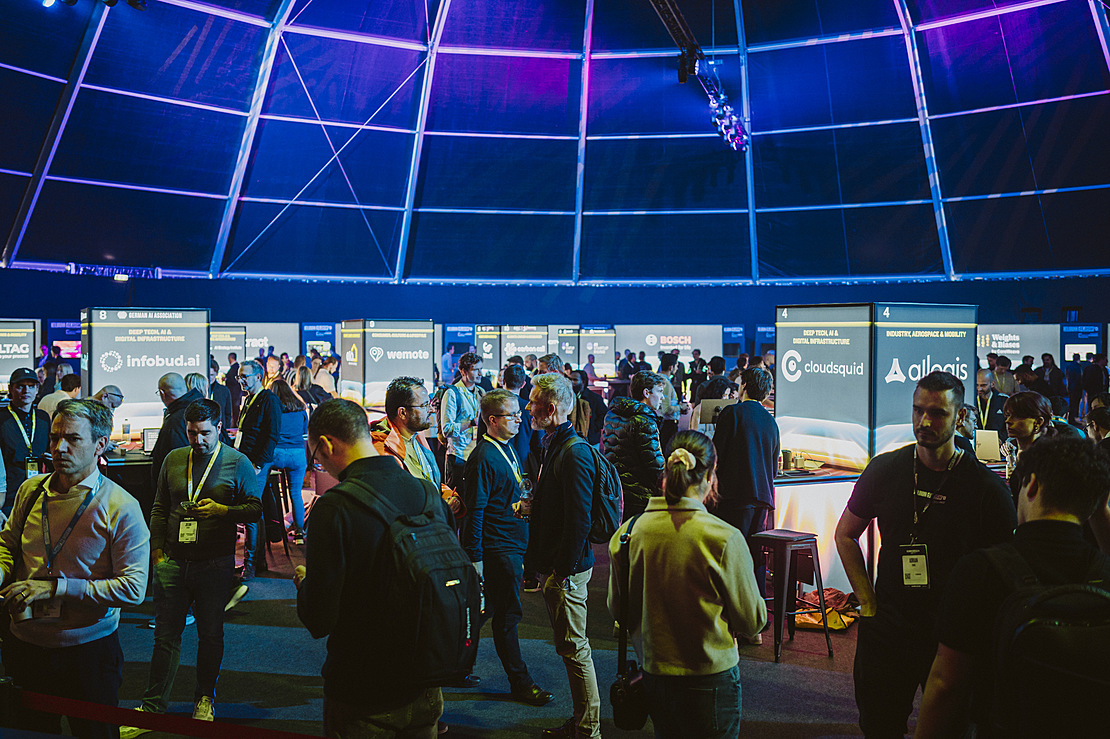
    Heilbronn Slush’D is organized by Campus Founders, a start-up and innovation hub based in Heilbronn. The event was sold out, with over 1,000 participants from across Europe taking part in talks, panel discussions, workshops, and networking sessions. The festival enabled start-ups and founders to connect with key stakeholders and develop their ideas.

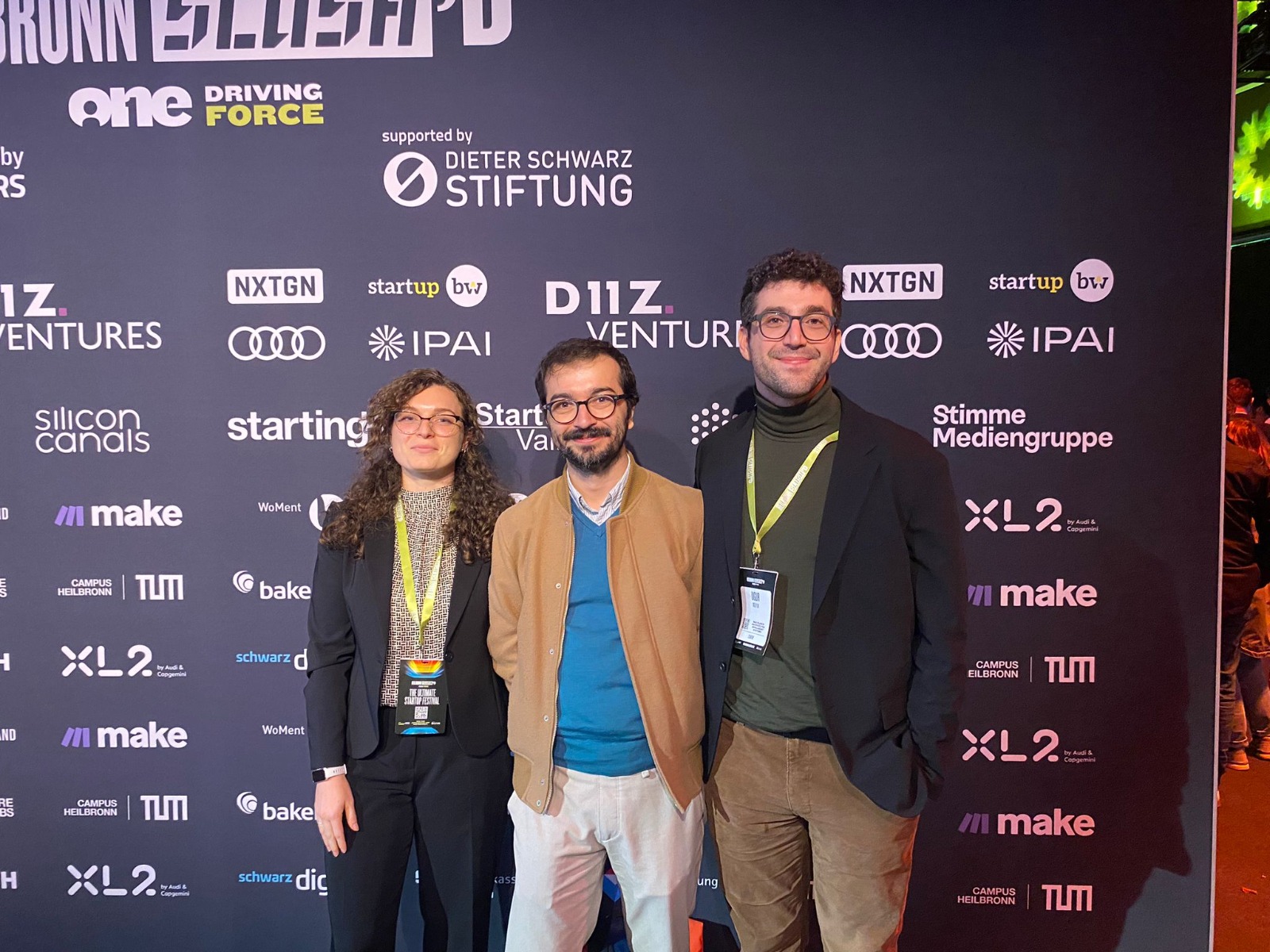
    For CELLnROLL (recipients of the Cyber Valley Innovation Fellowship Program) Heilbronn Slush’D was ‘an inspiring event bringing together founders, investors, and innovation leaders from across Europe.’ Following the event, they were ‘inspired, energized, and full of new ideas for what’s next!’

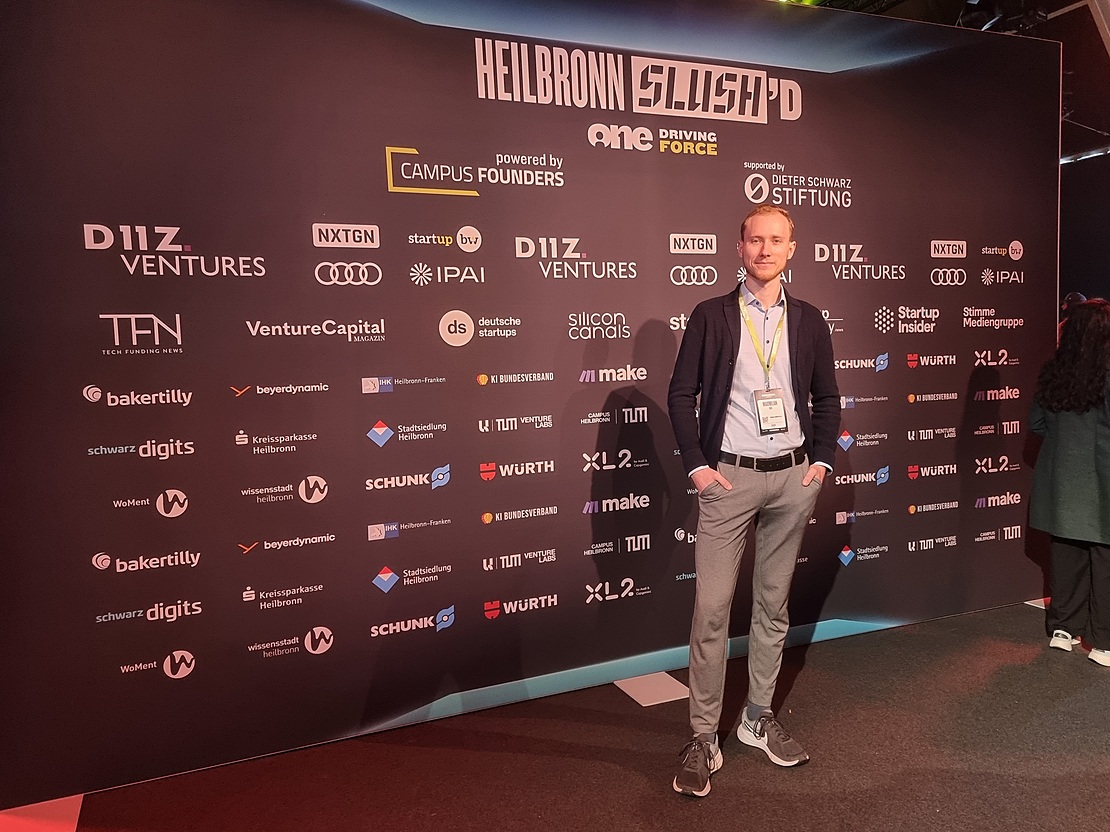
    Maximilian Bode, Co-founder of Cyber Valley Start-up Biocompile, was in attendance for the first time: ‘Despite the bad weather, it was a great experience!’ For Max, events like Heilbronn Slush’D are ‘places where the most interesting people meet.’

    Maximilian Bode (Biocompile) at Heilbronn Slush'D. Photo courtesy of Maximilian Bode.

    Maximilian Bode (Biocompile) at Heilbronn Slush’D. Photo courtesy of Maximilian Bode

    Johanna Kreßel from the University of Tübingen’s Startup Center also shared her impressions from her first time at Heilbronn Slush’D: ‘I really enjoyed the energy and open atmosphere that made it so easy to connect and have meaningful conversations.’

    Johanna Kreßel at Heilbronn Slush'D. Photo courtesy of Johanna Kreßel

    Johanna Kreßel (Tübingen Startup Center) at Heilbronn Slush’D. Photo courtesy of Johanna Kreßel

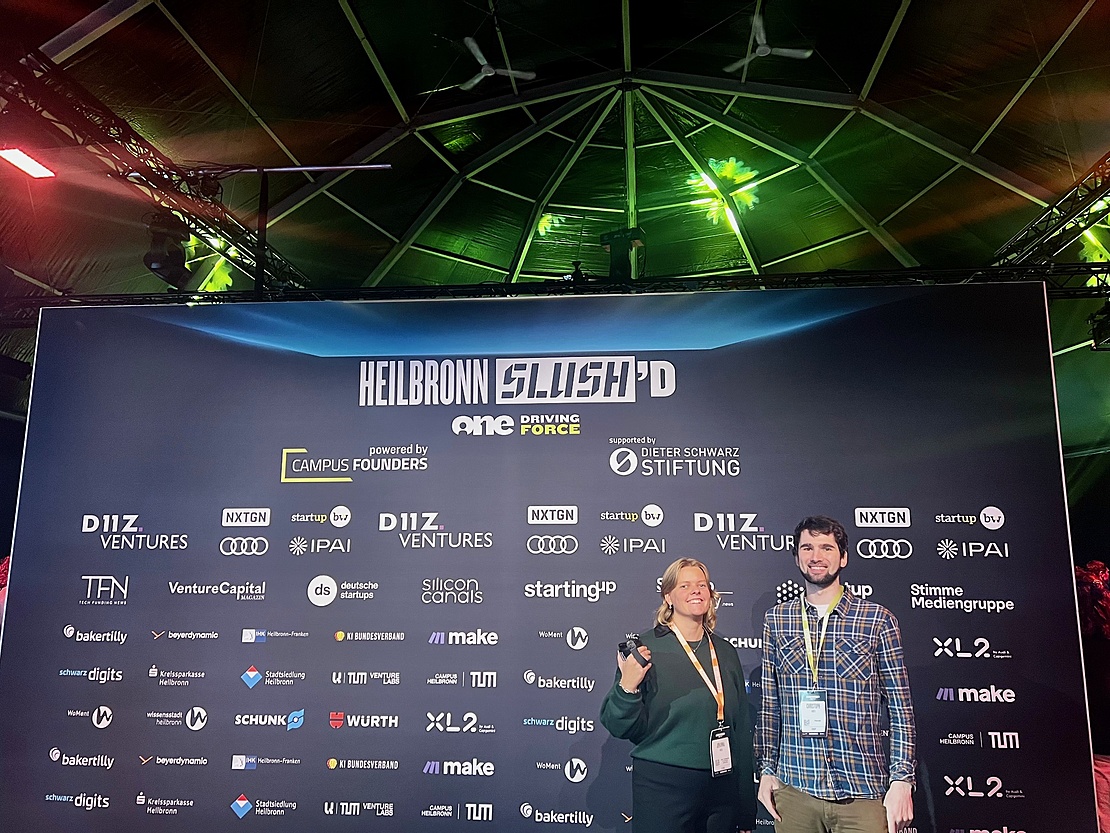
    KIT Gründerschmiede took part too. For them, Heilbronn Slush’D ‘was again a real experience – not only because of the wild weather, but above all because of the incredible energy that could be felt between impulses on stage, networking around the campfire, and conversations at the food trucks.’

    KIT Gründerschmeide at Heilbronn Slush'D

    KIT Gründerschmiede at Heilbronn Slush’D. Photo courtesy of KIT Gründerschmiede

    Members of the Cyber Valley Start-up Network have been recognized at previous iterations of the festival. Ventus Technologies secured the top prize of €100,000 in investment in 2023, followed by Tabularis AI claiming the same award in 2024. These examples show how Cyber Valley start-ups have benefited from the support provided by Campus Founders at Heilbronn Slush’D.

    By attending Heilbronn Slush’D, members of the Cyber Valley Community demonstrated the value of collaboration and were impressed by the growing momentum in Heilbronn. Through their scientific expertise and diverse perspectives, they are playing an essential role in the success of Germany’s research and innovation ecosystem.

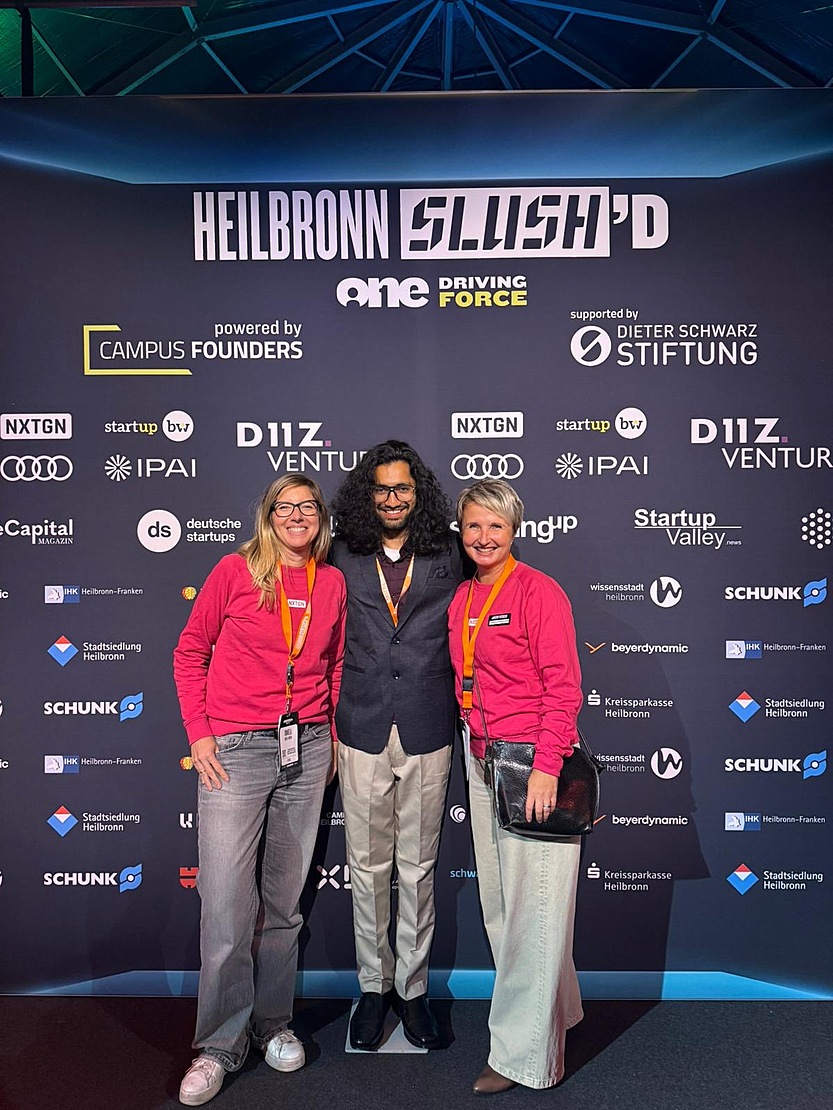
    Photo courtesy of Heilbronn Slush’D

  • Funded Doctoral Positions at the International Max Planck Research School for Intelligent Systems (IMPRS-IS)

    Funded Doctoral Positions at the International Max Planck Research School for Intelligent Systems (IMPRS-IS)

    The school is a key element of to accelerate basic research and commercial development in artificial intelligence and robotics. IMPRS-IS seeks students who want to earn a doctorate while contributing to world-leading research in areas such as:

    • Artificial Intelligence

    • Biomedical Technology

    • Computational Cognitive Science

    • Computer Vision and Graphics

    • Control Systems and Optimization

    • Data Science and Visualization

    • Haptics and Human-Computer Interaction

    • Machine Learning

    • Micro- and Nano-Robotics

    • Natural Language Processing

    • Neuroscience

    • Perceptual Inference

    • Robotics and Human-Robot Interaction

    • Soft Robotics and Materials

    Renowned faculty include Sahar Abdelnabi, Rediet Abebe, Amirreza Aghakhani, Aamir Ahmad, Buse Aktaş, Frank Allgöwer, Maksym Andriushchenko, Kai Arras, Robert Bamler, Philipp Berens, Matthias Bethge, Michael J. Black, Wieland Brendel, Andrés Bruhn, Andreas Bulling, Martin Butz, Manfred Claassen, Maximilian Dax, Katharina Eggensperger, Benedikt Ehinger, Carsten Eickhoff, Andreas Geiger, Jonas Geiping, Antonia Georgopoulou, Martin A. Giese, Thilo Hagendorff, Moritz Hardt, Florian Hartmann, Daniel Häufle, Matthias Hein, Philipp Hennig, Niels Henze, Christian Holm, Andrea Iannelli, Christoph Keplinger, Mario Krenn, Katherine J. Kuchenbecker, Hilde Kuehne, Anja Lauer, Hendrik Lensch, Anna Levina, Shiwei Liu, Nicole Ludwig, Sabine Ludwigs, Jakob Macke, Georg Martius, Kristof Meding, Celestine Mendler-Dünner, Michael Mühlebach, Philipp Müller, Sven Nahnsen, Mathias Niepert, Seong Joon Oh, Antonio Orvieto, Aniket Pal, Nico Pfeifer, Gerard Pons-Moll, Michael Pradel, C. David Remy, Kerstin Ritter, Philipp Rothemund, Konstantin Rusch, Renate Sachse, Samira Samadi, Harry Scells, Dieter Schmalstieg, Syn Schmitt, Bernhard Schölkopf, Sabine Schulte im Walde, Janneke Schwaner, Michael Sedlmair, Thomas Speck, Steffen Staab, Ingo Steinwart, Alexander Verl, Claire Vernade, Ulrike von Luxburg, Daniel Weiskopf, Felix Wichmann, Bob Williamson, Andreas Wortmann, Thomas Wortmann, and Charley Wu.

    Associated faculty include R. Harald Baayen, Franz Baumdicker, Peter Dayan, Jonathan Fiene, Volker Franz, Ksenia Keplinger, Miriam Klopotek, Kay Nieselt, Senya Polikovsky, Peter Pott, Gunther Richter, Cornelia Sindermann, Maria Wirzberger, Isabell Wochner, and Thomas Wolfers.

    About the program:

    Intelligent systems that can successfully perceive, act, and learn in complex environments hold great potential for aiding society. The school seeks doctoral students who are curious, creative, and passionate about research to join and help advance human knowledge about intelligent systems.

    • Admitted students can join the program starting in 2026.

    • You will be mentored by an internationally renowned faculty.

    • You will register as a university doctoral student and conduct research.

    • IMPRS-IS offers a wide variety of scientific seminars, workshops, and social activities.

    • All aspects of the program are in English.

    • Your doctoral degree will be conferred when you successfully complete your doctoral project.

    • Dedicated staff members will assist you throughout your time as a doctoral student.

    IMPRS-IS is an equal opportunity employer dedicated to excellence through diversity and does not discriminate on the basis of age, race, sex, disability, sexual orientation, national origin, religion, marital status, gender identity, or any other non-job-related criteria. They believe in the importance of a multicultural community of students, faculty, and staff who seek to advance our commitment to diversity and inclusion. IMPRS-IS strives to create and maintain working and learning environments that are inclusive, equitable, and welcoming.

    Admission will be competitive. If selected, you will receive funding via an employment contract, subject to the rules of the Max Planck Society and the two participating universities.

    Application deadline: 

    November 16, 2025 (End of Day, AoE)

    Selection interviews: 

    February 5–13, 2026

    Apply now: 

    https://imprs.is.mpg.de/application

    For more information, please visit https://imprs.is.mpg.de.