Network Role: Partner

  • Cyber Valley Research Fund drives advancements in soft robotics

    Cyber Valley Research Fund drives advancements in soft robotics

    Dr. Ardian Jusufi and his team researched innovative materials that improve proprioception (the body’s ability to sense movement and position) in unpredictable and irregular environments. Insights from the project have deepened understanding of how the body moves and interacts with its environment. These advancements in soft active materials and sensors will revolutionize the fields of biomedical devices and soft robotics.  

    Some of the project’s key achievements include:  

    • Enhanced pumping system performance: The project team improved a hydrogel-encapsulated soft actuator pumping system. The system demonstrated improved competitive pressure and fluid velocity performance, offering potential insights for cardiovascular and renal applications. 

    • Addressing sensor challenges: The project addressed the inherent trade-offs of soft sensors. While offering greater flexibility and sensitivity, these sensors often lack robustness, repeatability, linearity, and durability. Various use cases were evaluated to balance these trade-offs effectively. 

    • Innovative manufacturing and materials: The team developed advanced manufacturing techniques and synthesized new materials responsive to environmental stimuli, such as hydrodynamic pressure. This was relevant for studying locomotion, like the undulatory swimming of fish, using fluidic actuators. 

    • System integration with mobile soft actuators: Soft sensors were integrated with mobile soft fluidic actuators in robots. This integration provided valuable insights into the neuromechanics of movement, particularly in aquatic environments. 

    • Electroactive polymer-driven pumping systems: The team aimed to reduce the tissue stress associated with traditional implanted pumps. Although current limitations related to in-body electricity use means that these systems are not yet feasible for in vivo applications, the research marks significant progress in understanding the biomechanics of movement. 

    This project yielded the following publications:  

    1. Souri H, Banerjee H, Jusufi A, Radacsi N, Stokes A, Park I, Sitti M, Amjadi M. Advanced Int. Sys. 2 (8) 2000039. Wearable and Stretchable Strain Sensors: Materials, Sensing Mechanisms, and Applications. 2020. Advanced Intelligent Systems, Volume: 2, Issue: 8, 2020. DOI: https://doi.org/10.1002/aisy.202000039 
    2. Banerjee H, Kalairaj MS, Ren H, and Jusufi A*. Advanced Engineering Materials. Strong, Ultrastretchable Hydrogel-Based Multilayered Soft Actuator Composites Enhancing Biologically Inspired Pumping Systems. [Cover inside] Adv. Eng. Mater 2021, 23, 2100121. 
    3. Wright B, Vogt D, Wood R, Jusufi A*. IEEE International Conference on Soft Robotics (RoboSoft). Soft Sensors for Curvature Estimation under Water in a Soft Robotic Fish. COEX, Seoul, Korea, 2019.
    4. Siddall R, Fukushima T, Bardhi D, Perteshoni B, Morina A, Hasimja E, Dujaka Y, Haziri G, Martin L, Banerjee H, Jusufi A*. Advanced Robotics 35 (7). Compliance, Mass Distribution and Contact Forces in Cursorial and Scansorial Locomotion with Biorobotic Physical Models. 2021. https://www.tandfonline.com/doi/full/10.1080/01691864.2021.1887760.
    5. Fukushima Toshihiko, Robert Siddall,Fabian Schwab, Severine Toussaint, Greg Byrnes, John Nyakatura, and Ardian Jusufi. Inertial tail effects during righting of squirrels in unexpected falls: From behavior to robotics. Integrative and Comparative Biology, icab 023, 2021.
    6. Lin Yu-Hsiang, Siddall R, Schwab F, Fukushima T, Banerjee H, Youngjoon Baek, Daniel Vogt, Yong-Lae Park, and Jusufi A. Modeling and control of a soft robotic fish with integrated soft sensing. Advanced Intelligent Systems, 2000244, 2021.
    7. Fabian Schwab, Elias T Lunsford, Taehwa Hong, Fabian Wiesemüller, Kovac M, Park YL, Akanyeti O, Liao J C, and Jusufi A. Body caudal undulation measured by soft sensors and emulated by soft artificial muscles. Integrative and Comparative Biology, 2021.
    8. Fabian Schwab, Fabian Wiesemüller, Claudio Mucignat, Yong-Lae Park, Ivan Lunati,Mirko Kovac, and Ardian Jusufi. Undulatory swimming performance explored with a biorobotic fish and measured by soft sensors and particle image velocimetry. Frontiers in Robotics and AI, page 387, 2021.
    9. Robert Siddall, Greg Byrnes, Rob J. Full and Ardian Jusufi, Tails stabilize landing of gliding geckos crashing head-first into tree trunks', Communications Biology, 2021. 

    This research project primarily aimed to expand knowledge of biomechanics through robophysical models, rather than immediate practical applications. It started in April 2020 and concluded in February 2023. Dr. Ardian Jusufi was formerly a Max Planck Research Group Leader at the MPI for Intelligent Systems (March 2018–January 2024). He is now Head of Soft Kinetic group in the Engineering Sciences Department of the Empa Swiss Federal Labs for Materials Science and Technology. 

  • Cyber Valley Research Fund improves human decision-making with AI

    Cyber Valley Research Fund improves human decision-making with AI

    From February 2020 to February 2024, Dr. Falk Lieder led a major project supported by the Research Fund, titled “A Scalable Machine Learning Approach to Improve Human Decision Making,”. The project aimed to prepare for a future where effective decision-making is crucial. 

    Good decision-making involves planning, gathering relevant information, and handling uncertainty. As automation transforms the workforce by taking over routine tasks, the demand for jobs requiring decision-making in complex and novel situations will rise. Future roles will emphasize critical thinking and adaptability. To prepare, society must focus on retraining workers and equipping the next generation with advanced decision-making skills. 

    Lieder’s project leveraged artificial intelligence to uncover optimal decision strategies that help individuals navigate complex challenges. The team also designed and tested interactive tutorials, allowing participants to learn and apply these strategies effectively. 

    They evaluated their approach on a series of more realistic decision problems, ranging from an abstract planning task without uncertainty, to planning under uncertainty, to a company choosing between alternative projects. In each case, the new AI methods found decision strategies that outperformed both human decision-making and strategies identified by previous techniques. 

    Their interactive tutorials improved decision-making by explaining the strategy in clear language, demonstrating it through examples, and offering hands-on practice with feedback. In all three applications, individuals who completed the AI-driven strategy tutorials made better decisions than those who practiced decision-making independently. 

    This project yielded the following peer-reviewed publications: 

    1.  Consul, S., Heindrich, L., Stojchewski, J., & Lieder, F. (2022), Improving Human Decision-Making by Discovering Efficient Strategies for Hierarchical Planning, Computational Brain & Behavior, 5(2), 185-216. https://doi.org/10.1007/s42113-022-00128-3 

    2. Callaway, F., Jain, Y. R., van Opheusden, B., Das, P., Iwama, G., Gul, S., Krueger, P.M., Becker, F., Griffiths, T. L., & Lieder, F. (2022). Leveraging Artificial Intelligence to Improve People's Planning Strategies. PNAS, 119 (12) e2117432119. https://doi.org/10.1073/pnas.2117432119 

    3.  Mehta, A., Jain, Y. R., Kemtur, A., Stojcheski, J., Consul, S., Tosic, M., & Lieder, F. (2022). Leveraging machine learning to automatically derive robust decision strategies from imperfect knowledge of the real world. Computational Brain & Behavior, 5(3), 343-377. https://doi.org/10.1007/s42113-022-00141-6 

    4.  Becker, F., Skirzynski, J., van Opheusden, B., & Lieder, F. (2022). Boosting human farsightedness with automatically discovered planning instructions. Computational Brain & Behavior, 5(4), 467–490. https://doi.org/10.1007/s42113-022-00149-y 

    5. Skirzynski, J., Jain, Y. R., & Lieder, F. (2024). Automatic discovery and description of human planning strategies. Behavior Research Methods, 56(3), 1065-1103. https://doi.org/10.3758/s13428-023-02062-z 

    6. Skirzyński, J., Becker, F., Lieder, F. (2021). Automatic Discovery of Interpretable Planning Strategies. Machine Learning, 110, pp. 2641–2683. https://doi.org/10.1007/s10994-021-05963-2

    7. Kemtur, A., Jain, Y. R., Mehta, A., Callaway, F., Consul, S., Stojcheski, J., & Lieder, F. (2020). Leveraging machine learning to automatically derive robust planning strategies from biased models of the environment. Proceedings of the 42nd Annual Meeting of the Cognitive Science Society. 

    Preprints of articles yet to be published: 

    1. Heindrich, L., Consul, C. & Lieder, F. (2024). Leveraging AI to improve human planning in large partially observable environments. arXiv Preprint. https://arxiv.org/abs/2302.02785 

    2.  Heindrich, L., & Lieder, F. (2024). Leveraging automatic strategy discovery to teach people how to select better projects. https://arxiv.org/abs/2406.04082 

    Dr. Falk Lieder is now an Assistant Professor of Psychology at UCLA and the Director of the Rational Altruism Lab. 

  • ELLIS PhD Program 2025: Call for Applications

    ELLIS PhD Program 2025: Call for Applications

    About the program

    The ELLIS PhD program is designed for outstanding students interested in conducting high-impact research in AI, machine learning, and related areas, including computer vision, robotics, and computational neuroscience.

    The program offers students the chance to work with leading researchers at top European academic institutions and industrial partners, while benefiting from the collaborative environment fostered by ELLIS. The program emphasizes both scientific excellence and ethical AI, encouraging students to tackle some of the most pressing challenges in AI development.

    How to apply? 

    Applications for the ELLIS PhD program opens in October and will be accepted until November 15, 2024, 23:59 CET. The application should be submitted via the ELLIS application portal. 

    Applicants are encouraged to carefully read the instructions and eligibility criteria available on the ELLIS website before submitting their application.

    Interested?

    For more detailed information, please visit the ELLIS PhD Program website. 

  • Cyber Valley Research Fund advances robotic perception techniques

    Cyber Valley Research Fund advances robotic perception techniques

    Current autonomous systems still lack the capabilities of humans in scene perception and object manipulation tasks. Jörg Stückler and his team developed a method that combines differentiable physics and deep learning to estimate an object’s position, orientation, and velocity, while also simultaneously determining the friction between an object and its surface. The team also explored how understanding an object’s dynamics could improve control strategies, such as predicting how a robot’s actions will impact the object and guiding it to a desired location.  

    Their findings inspire new methods and approaches that adapt robotics object manipulation skills to the physical properties of objects. Although the research is still in its scientific development stage, it has the potential to revolutionize applications by enabling robots to manipulate objects more flexibly and adaptively.  

    This project yielded the following publications: 


    1. Kandukuri, R. K., Strecke, M., Stueckler, J. Physics-Based Rigid Body Object Tracking and Friction Filtering From RGB-D Videos. Accepted for International Conference on 3D Vision (3DV), 2024. Preprint arXiv:2309.15703. 

    2. EV-SynPhys and EV-RealPhys datasets accompanying at https://keeper.mpdl.mpg.de/d/5ec213b655b44e40a382/ 

    3. The 3DV 2024 paper was presented as poster presentation at the International Conference on 3D Vision 2024. Parts of the results reported in the paper have been also presented in a keynote given at the IEEE International Conference on Multi-Sensor Fusion and Integration / Symposium on Sensor and Data Fusion (MFI/SDF) in Bonn in November 2023. Parts of the project results have been presented at the Cyber Valley Research Fund symposium in November 2023. 

    This research project started in June 2020 and concluded in December 2023. Dr. Jörg Stückler is now a Professor of Computer Science at the University of Augsburg. 

  • Cyber Valley Days: Start-ups and scientists connect

    Cyber Valley Days: Start-ups and scientists connect

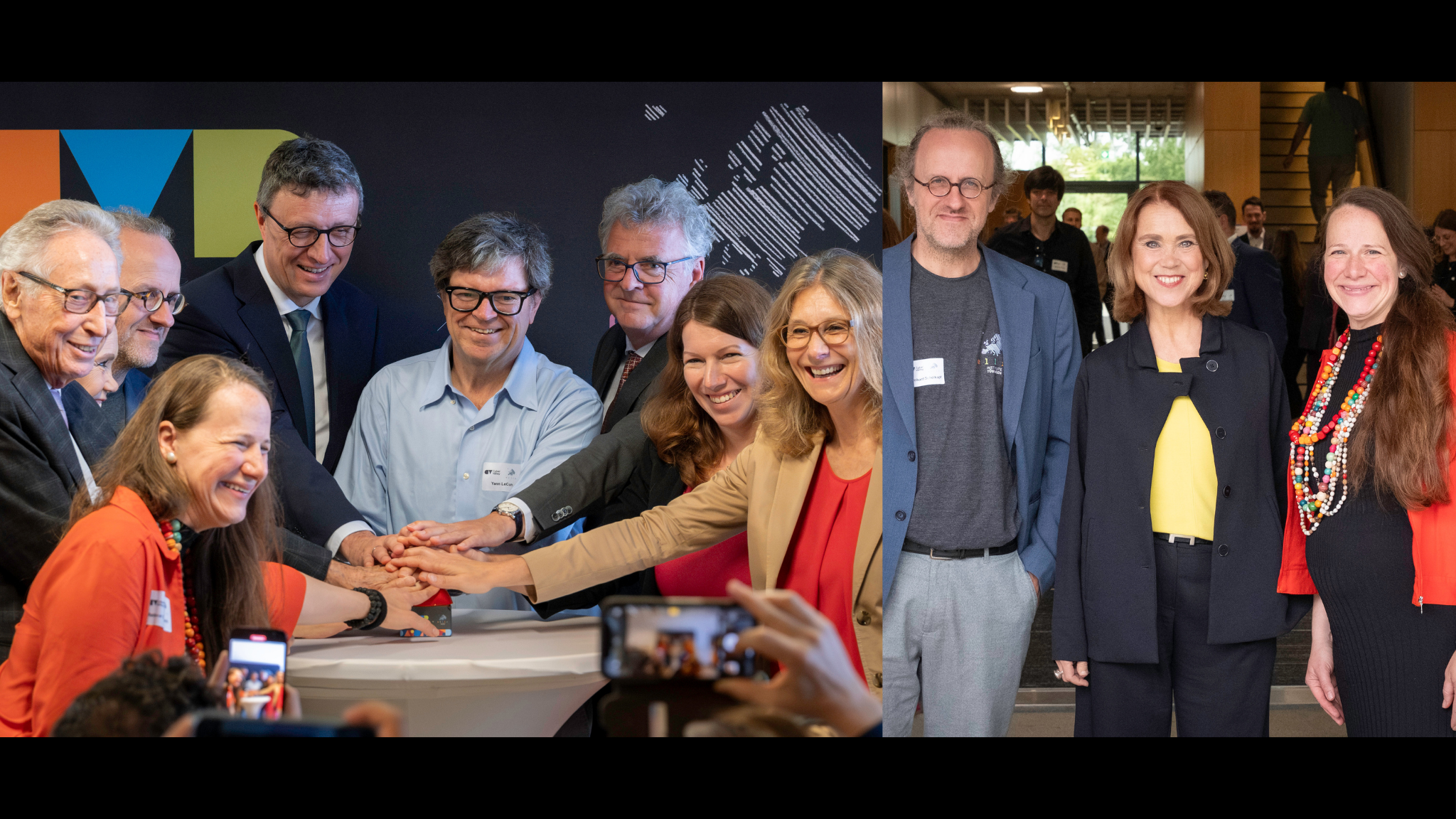
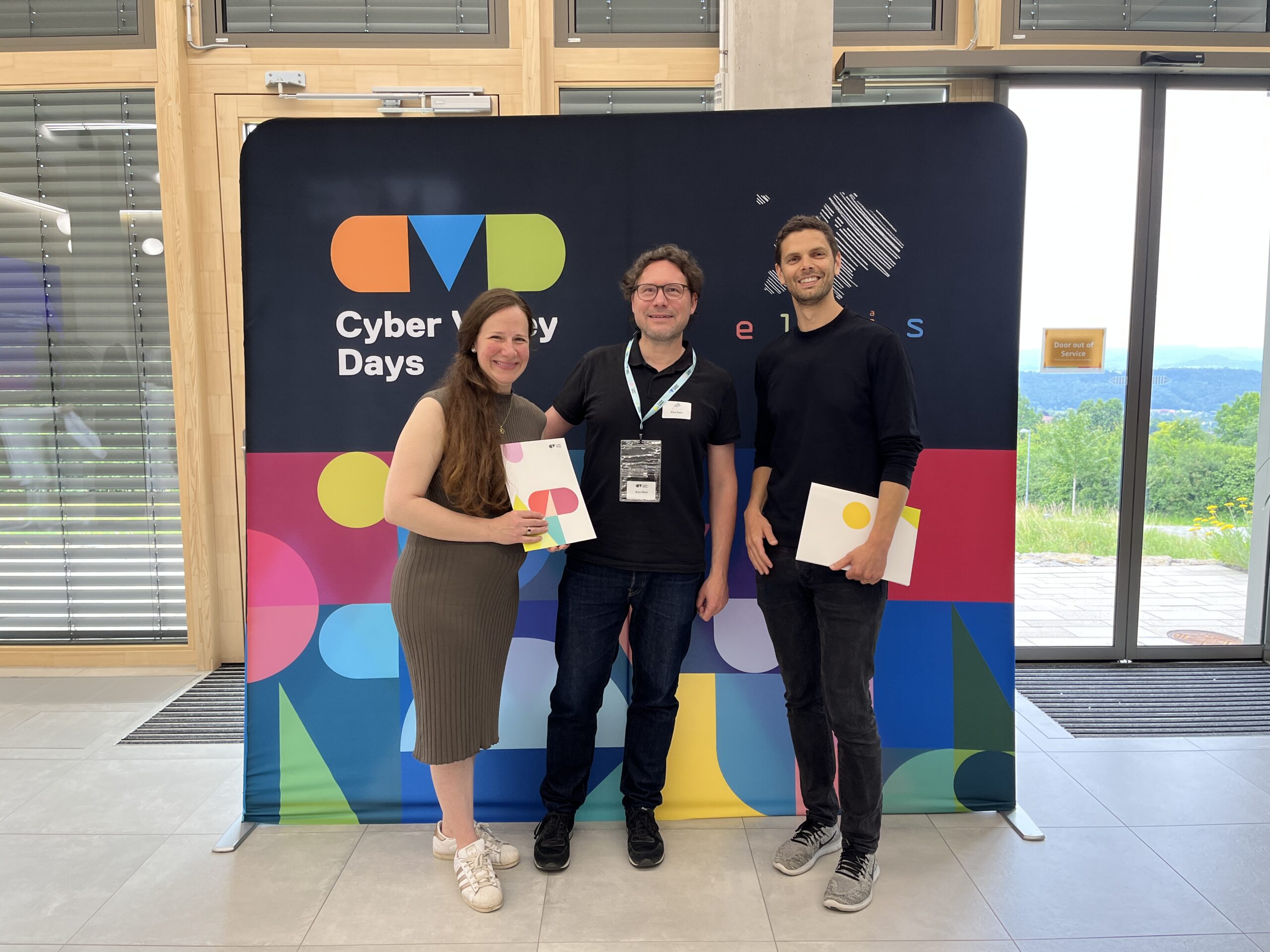
    In this series of interviews on Cyber Valley Days, we share behind-the-scenes stories and personal experiences of this three-day celebration from the Cyber Valley Team. Our first interview is with Janell Lia-Breitmayer, Scientific Coordinator for Cyber Valley GmbH.  

    What were your highlights during Cyber Valley Days? 

    One of the standout features of Cyber Valley Days was the sheer number of start-ups present. Scientists were genuinely impressed by the diversity and breadth of fields in which these start-ups are engaged. One scientist remarked that the Community Expo during Day 1 felt “almost like a top scientific conference” and found it “very rewarding.” It was especially gratifying to hear our partners praise the event: RHET AI told me, “This expo is so great, you are our hero!”. 

    The visual aspects of the event were equally striking. Unlike typical science conferences where only a few banners are displayed, the Community Expo featured numerous banners, providing ample opportunities for conversations between scientists and representatives from various sectors. Some of the scientists I spoke to were surprised by the number of AI and robotics start-ups in Cyber Valley. This was an eye-opener for many, highlighting the growth and variety of innovative projects underway. 

    What was one of your key takeaways from the event? 

    Bernhard Schölkopf made a poignant comment about the role of technology in addressing global challenges like climate mitigation, emphasizing that climate mitigation “cannot be solved by political solutions alone, but with technological solutions”. This sentiment resonated deeply with many attendees.  

    What surprised you the most about Cyber Valley Days? 

    I was amazed at how much Cyber Valley has grown: there are so many scientists who are part of our community! The diversity of our partners is also impressive, spanning science, industry, and society. This growth is a testament to the collaborative spirit and innovative ecosystem Cyber Valley cultivates. 

  • The Cyber Valley Start-up Network welcomes four new members

    The Cyber Valley Start-up Network welcomes four new members

    Beyondbots

    BeyondBots provides intelligent business automation solutions to streamline workflows and enhance operational efficiency. The company is an Intelligent Automation Provider, dedicated to scaling process automation using No Code / Low Code and AI-based technology. As a specialized solution partner, Beyondbots supports companies through every phase of their automation journey. This includes taking the initial first steps, developing an effective blueprint, and scaling existing initiatives in experienced organizations. Their holistic perspective on automation provides a unique advantage, combining expertise in change management, business processes, and technology.

    Casculate

    Casculate provides AI-based software solutions for the manufacturing industry. The company develops custom apps to streamline commercial processes from cost calculation to production planning. Integration with ERP systems ensures continuous monitoring throughout the entire product lifecycle. The design and development process is tailored to individual needs. It begins with domain experts visiting facilities to understand unique challenges. Subsequent steps involve collaborative design sessions with specialists to align visions with the development team. Development proceeds iteratively, with frequent feedback.

    NextStepHR

    NextStepHR specializes in employer branding and social media recruiting campaigns for small- and medium-sized businesses. The company is developing an artificial intelligence system that gathers data from job listings and filled positions across online portals. This AI system autonomously places job ads for companies on multiple platforms based on their location. It analyzes job postings and user activity on different channels, correlating this information to identify the best platforms for ad placement. The goal is to post job ads on platforms with a high concentration of qualified candidates and low competition. Additionally, the AI system can create social media ads if it detects promising opportunities to attract potential employees. All these processes are analyzed and evaluated automatically.

    Ventecon Technologies

    Ventecon Technologies is transforming the world of product management with AI. Product managers, the backbone of any company, juggle market demands, resource constraints, and fierce competition. To support them, Ventecon Technologies provides AI Co-Workers that streamline their work, making it easier to innovate and succeed. By enhancing product management with AI, the company solves internal challenges. Their AI Co-Workers boost efficiency, drive innovation, and ultimately improve the well-being of communities everywhere.

    In joining the Cyber Valley Start-up Network, these four start-ups enhance the diversity and collaborative culture of the Cyber Valley Community. We are pleased to have them on board.

  • The Cyber Valley Start-up Network continues to grow

    The Cyber Valley Start-up Network continues to grow

    AskUI

    AskUI is an AI-powered automation platform that allows users to automate user interfaces (UI) across different operating systems, devices, and applications using natural language instructions. It does not rely on traditional selectors like XPath or CSS to identify UI elements. Instead, it uses computer vision and machine learning to visually recognize and interact with UI components.

    Subsequent

    Subsequent is a provider of highly accurate, real-time tracking systems and motion analysis based on simple video recordings. No complex multi-camera infrastructures are required. Subsequent's customers include sports clubs and associations, as well as clinics, research institutes and home fitness companies.

    NeurCG

    NeurCG provides cutting-edge AI-based graphics technologies and services that produce realistic human faces. It aims to revolutionize various industries by leveraging their advanced AI capabilities to generate highly realistic human faces, offering innovative and intelligent services to their clients. 

    EndoSurge 

    EndoSurge provides robotic interventional tools compatible with existing clinical magnetic reasonance imaging (MRI) scanners. This extends surgeons' capabilities by enabling radiation-free and image-guided treatment of heart disease for improved patient outcomes. 

    Ventus Technologies

    Ventus Technologies specializes in high-resolution weather forecasts and nowcasts for roads, enhancing the safety and efficiency of electric and autonomous vehicles. Utilizing advanced physical downscaling and AI, the start-up delivers precise, location-specific weather data. It also helps car makers and fleet operators integrate these into exisiting range and consumption estimation systems. 

    In joining the Cyber Valley Start-up Network, these five start-ups enhance the diversity and collaborative culture of the Cyber Valley Community. We are pleased to have them on board!

  • Silo AI and Cyber Valley forge partnership to advance multilingual open-source AI

    Silo AI and Cyber Valley forge partnership to advance multilingual open-source AI

    Helsinki & Tübingen, 21.06.2024 – Silo AI, Europe’s largest private AI lab, and Cyber Valley, the largest center for excellence in AI research, have established a strategic partnership. The joint initiative is aimed at strengthening Europe’s position in the AI landscape and building an open-source foundation for multilingual AI, covering all official European Union languages. Additionally, the partnership will explore cooperation with Cyber Valley’s industrial and scientific partners. 

    “We’re very happy to partner with the leading center for excellence in AI and modern robotics in Europe, with partners from both academia and industry. Silo AI’s existing research co-operation with the professors Frank Hutter and Matthias Bethge at the co-located University of Tuebingen and ELLIS Institute on open LLMs provides a good basis for collaboration among Cyber Valley’s industrial partners Amazon, BMW, IAV, Mercedes-Benz, Porsche, Bosch, and ZF”, says Peter Sarlin, CEO and co-founder of Silo AI. 

    Rebecca C. Reisch, Managing Director of Cyber Valley, adds: “This alliance represents a remarkable turning  point, not just for Cyber Valley and Silo AI, but for multilingual AI development. It resonates with our goal to assist in fostering an AI ecosystem that respects cultural and ethical values that we as the Cyber Valley Community stand for. We are excited to explore this and other opportunities with Europe’s leading private AI lab.”

    Together with partners, Silo AI is committed to developing a series of state-of-the-art, open-source and transparent foundation models for European languages, starting with all the official ones, and aiming to include other languages of significant economic and cultural value. The partnership will aim to support this objective and enable even tighter cooperation not just between Cyber Valley and Silo AI, but also with other research and industrial partners. Open-source models based on these LLMs will serve as platforms to leverage data for generating wider economic and societal benefits while upholding stringent standards of privacy, security, safety, and ethics.

    About Silo AI

    Silo AI is Europe’s largest private AI lab on a mission to ensure Europe has a flagship AI company. We’re a trusted AI partner that brings competitive advantage to product R&D. We build AI-driven solutions and products to enable smart devices, autonomous vehicles, industry 4.0, and smart cities. Silo AI provides its customers unique access to world-class AI models and expertise, as well as the SiloGen model-as-a-service platform. As part of SiloGen, Silo AI is currently building market leading open-source LLMst to ensure European digital sovereignty and democratize access to LLMs.

    About Cyber Valley

    Cyber Valley is Europe’s largest and leading center for excellence in artificial intelligence and modern robotics. Its mission and public mandate are to advocate for the research, development, application, and acceptance of technologies and methods in the field of intelligent systems. Cyber Valley encourages entrepreneurship by uniting scientific excellence with innovation and technology transfer. In addition, Cyber Valley facilitates critical reflection on the ethical and social implications of AI through public engagement. Cyber Valley envisions a future in which the full potential of intelligent systems is leveraged for the greater good of the world.   

    Press Contact Silo AI

    Heli Thoren
    heli.thoren@silo.ai
    +358 (0) 50 572 9377
     

    Press Contact Cyber Valley

    Rebecca Beiter 
    Rebecca.beiter@cyber-valley.de 
    +49 (0) 160 9448 1797