User Group: Entrepreneur

  • Cyber Valley Day 2026

    Cyber Valley Day 2026

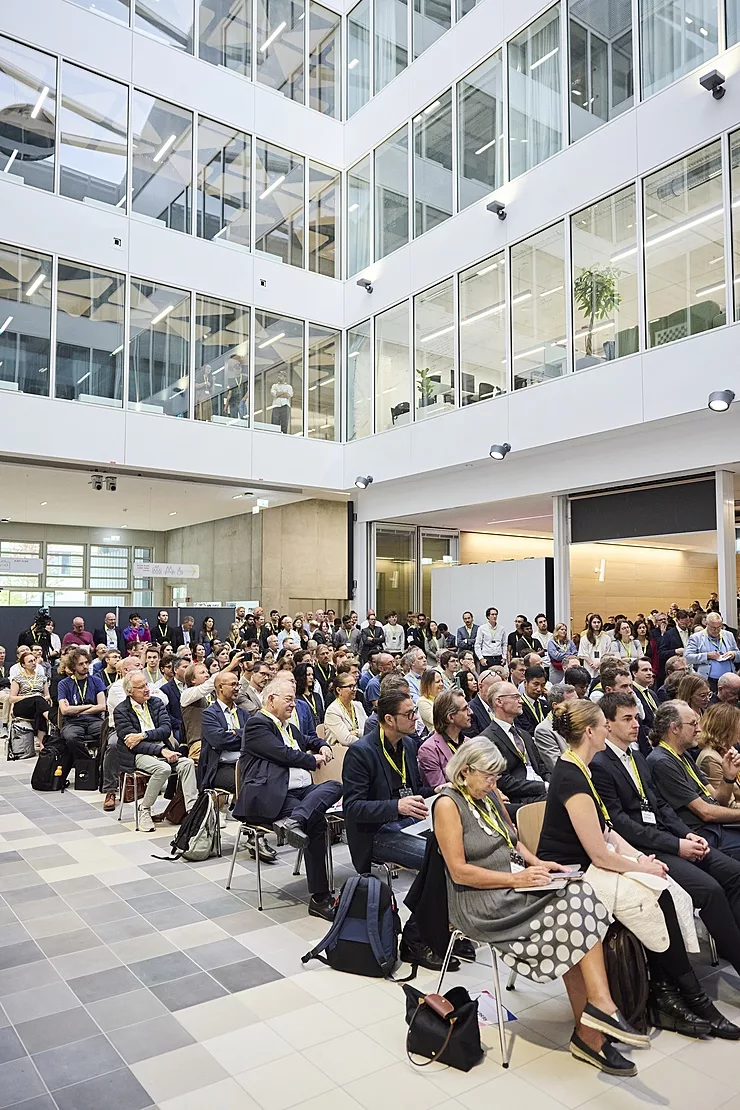
    On September 9, more than 850 guests came to Tübingen to celebrate a very special milestone: ten years of the Cyber Valley Innovation Campus. Researchers, start-ups, investors, policymakers, partners from industry and society, as well as many other guests gathered for a day full of inspiring talks, surprising keynotes, a research exhibition, start-up presentations, investor sessions, and networking.

    Cyber Valley Day opened with welcome addresses from leading representatives from politics, science, and our Innovation Campus: Moritz Hardt, Director at the Max Planck Institute for Intelligent Systems; Cem Özdemir, Minister President of Baden-Württemberg; Boris Palmer, Lord Mayor of Tübingen; Karla Pollmann, President of the University of Tübingen; Simone Schwanitz, Secretary General of the Max Planck Society; and Florian Mayer, Managing Director of Cyber Valley GmbH, welcomed guests to the anniversary celebration.
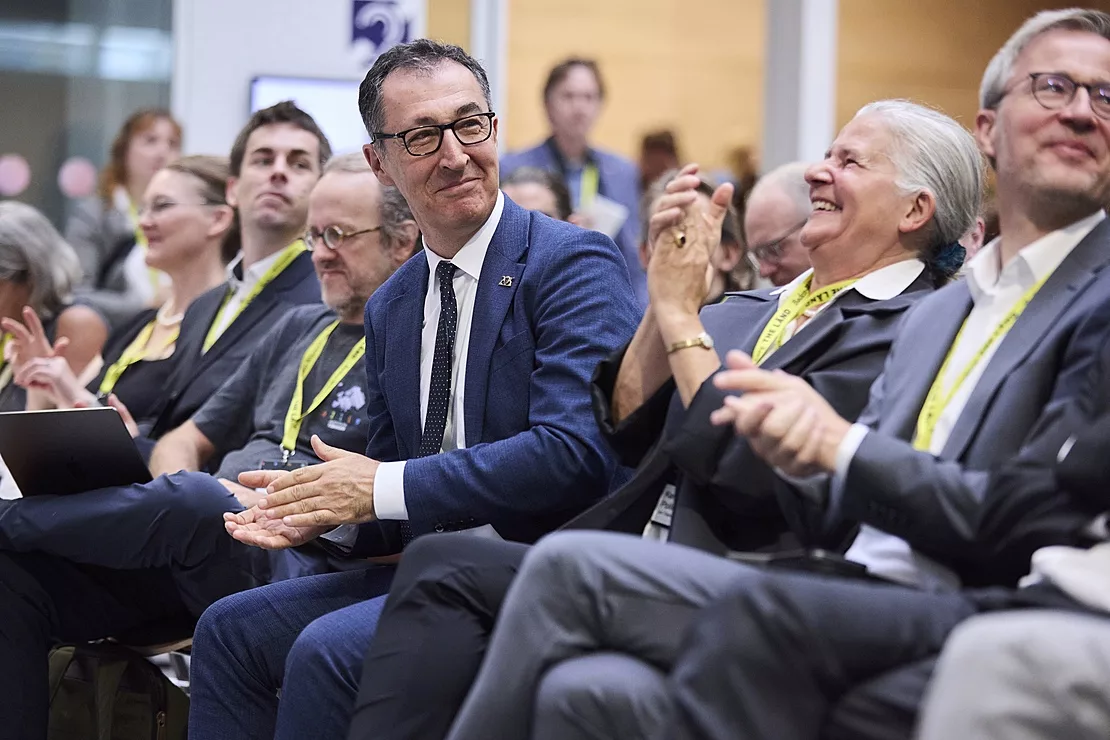
    Cem Özdemir_Minister President
    © Christian Borth

    Scientific program at the main stage

    Hosted by Linda Behringer, press officer at the Max Planck Institute for Intelligent Systems, the main stage program brought together voices from across the international AI and innovation landscape.

    A keynote by Manuela Veloso, Herbert A. Simon University Professor Emerita at Carnegie Mellon University, provided one of the early highlights of the day. Throughout the program, the Cyber Valley Voices sessions on the main stage featured leading researchers from across our Innovation Campus, including Bernhard Schölkopf from the ELLIS Institute Tübingen, Matthias Bethge from the Tübingen AI Center at the University of Tübingen, Tamim Asfour from the Karlsruhe Institute of Technology, Katherine J. Kuchenbecker from the Max Planck Institute for Intelligent Systems, Steffen Staab from the University of Stuttgart, and Werner Kraus from Fraunhofer IPA.

    In the Auditorium, C. David Remy and Philipp Rothemund from the University of Stuttgart, as well as Chandan Kumar from Fraunhofer IAO, shared insights into their research. The afternoon continued with a keynote by Alex Smola, CEO and co-founder of Boson AI, as well as a talk by Rafael Laguna de la Vera from the Federal Agency for Disruptive Innovation (SPRIN-D).
    © Christian Borth

    Surprise keynote speaker

    One of the biggest highlights of the day was our surprise keynote speaker: Yoshua Bengio, one of the pioneers of modern artificial intelligence. He has become one of the most prominent voices discussing the societal implications of AI, discussing questions regarding safety, and he calls for a responsible development of AI. Having Yoshua Bengio join us for our anniversary was very special!
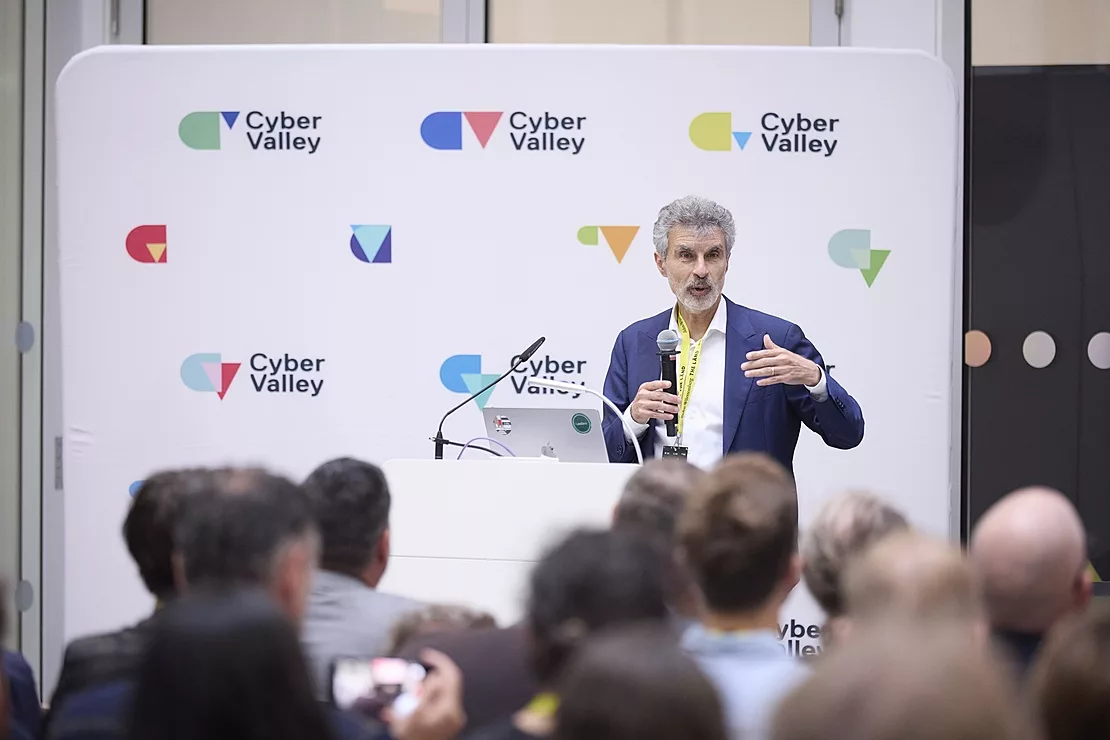
    Cyber Valley Day 10 Year Anniversary
    © Christian Borth

    From excellent scientific ideas to real-world applications and impact

    The panel discussion “Building what’s next: How bold ideas move from research to impact” brought together researchers, founders, and innovation experts to discuss how ambitious ideas can move beyond research and into society and industry. Moderated by Larissa Holzki from Handelsblatt, the discussion featured Saadet Baltaci and Antonia Georgopoulou from the Max Planck Institute for Intelligent Systems, Aline Defranceski from Data Coffee, Maike Kaufman from Polybot, Theodora Preda from Plug and Play, and Katharina Schmidt from apic.ai.
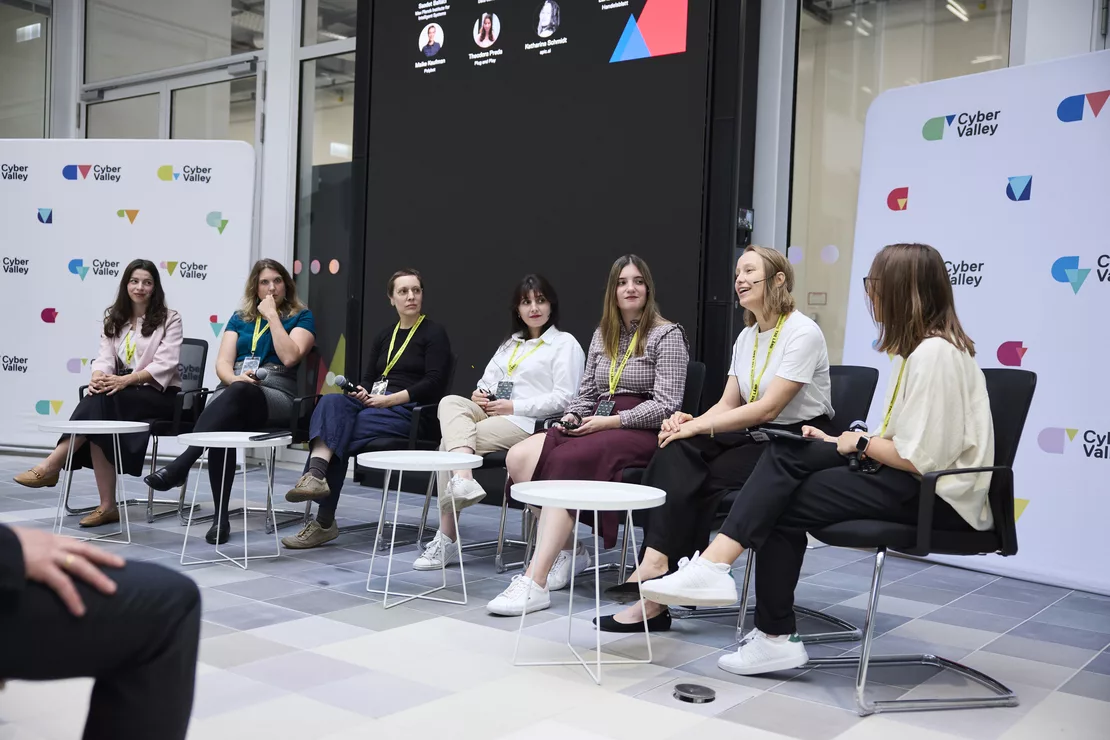
    © Christian Borth

    The Cyber Valley Start-up Voices session offered further perspectives on innovation and entrepreneurship, with contributions from Prashanth Halady of Bosch, Mario Krenn of Feyer, and Jonas Müller of Black Forest Labs.

    Research from our Innovation Campus

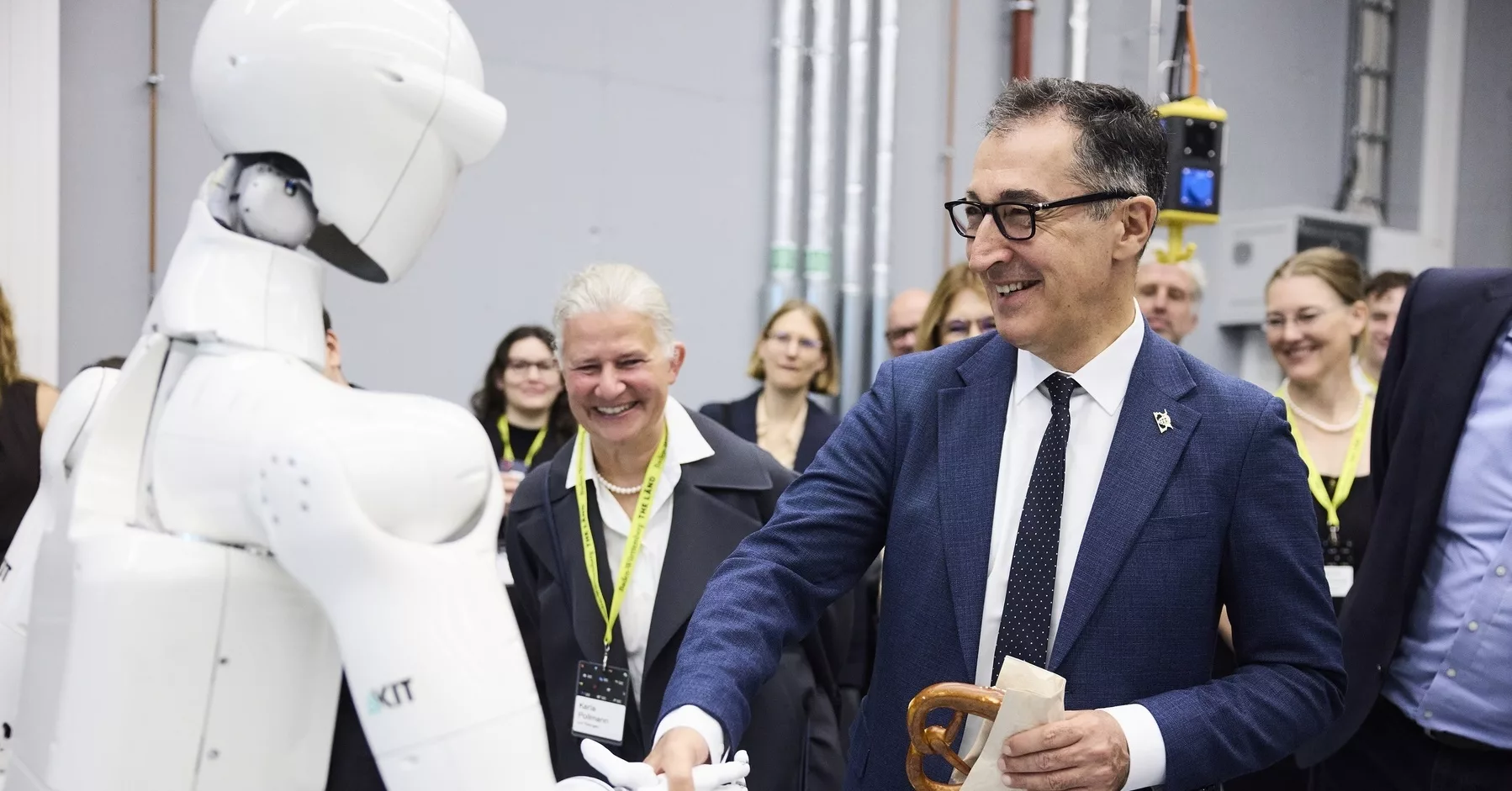
    The exhibition with more than 40 exhibitors on the ground floor brought together academic partners, research projects, and organizations from across our Innovation Campus, including the Max Planck Institute for Intelligent Systems, the Haptic Intelligence Department, Max Planck Foundation, the IMPRS-IS, the University of Stuttgart (IntCDC, IRIS, MLIP, KI-SIR), the University of Tübingen (ML Cluster, Tübingen AI Center), Bionic Intelligence Tübingen Stuttgart (BITS), ELLIS Institute Tübingen, Hertie Institute for AI in Brain Health, ARENA2036, BWKI, Cyber Valley GmbH and PAB, High Performance Humanoid Technologies Lab (H²T) from KIT, KE:SAI, Oktonex, Polybot, Prior Labs, and more!
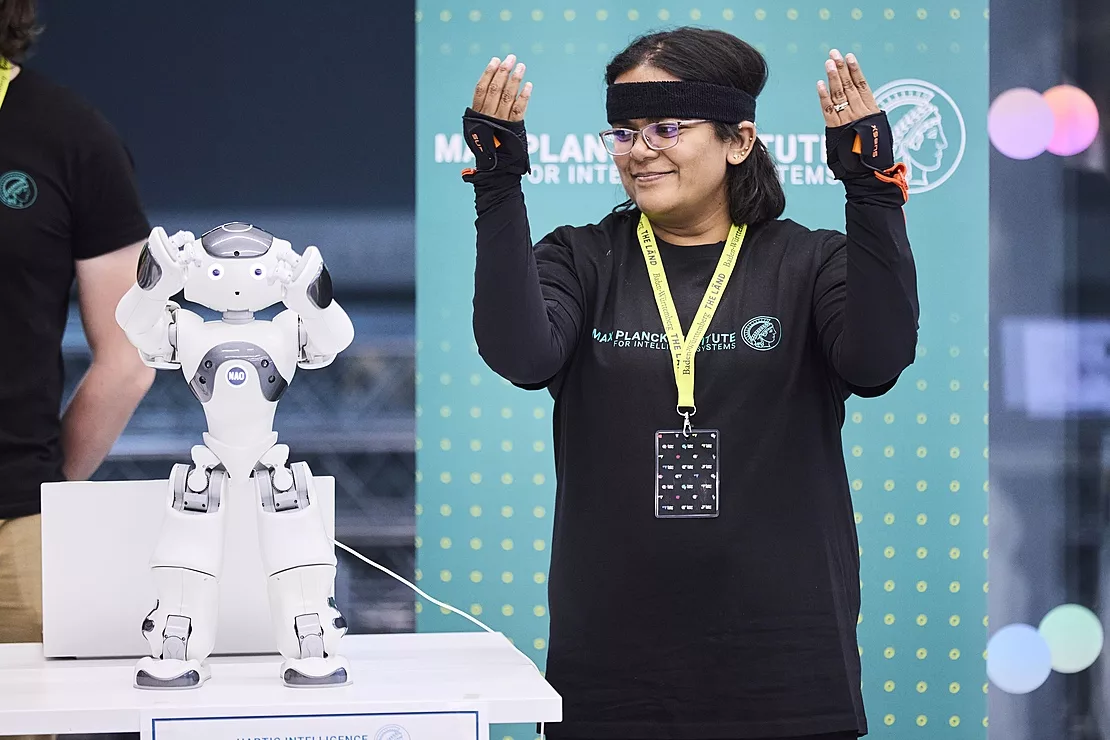
    Robot at Cyber Valley Day
    © Christian Borth

    A stage for the next generation of founders

    On the sixth floor, the Start-up Basecamp put entrepreneurship and emerging innovation at the center of the conversation.
    Start-ups and initiatives including Bergsonne Labs, Denkbox, NUVUS, Computomics, Feyer, MaiTY, Istari AI, TextVerstehen, Tanocrix, Data Coffee, Yugen Space, IntegraSkin, MIRA vision, the Startup Center Tübingen, and the Tübingen AI Center presented their work and connected with researchers, investors, and other members of the ecosystem.

    An investor “Ask Me Anything” session also gave researchers and future founders the opportunity to gain practical insights into early-stage investment and entrepreneurship. Representatives from Capnamic, Fly Ventures, AI Fund, and Mätch VC shared their perspectives on what investors look for and what researchers should consider when exploring the path from research to start-up.
    During more than 40 1:1 sessions with investors, researchers and prospective founders had the opportunity to discuss their individual ideas, receive tailored feedback, and explore potential pathways toward funding and venture creation.
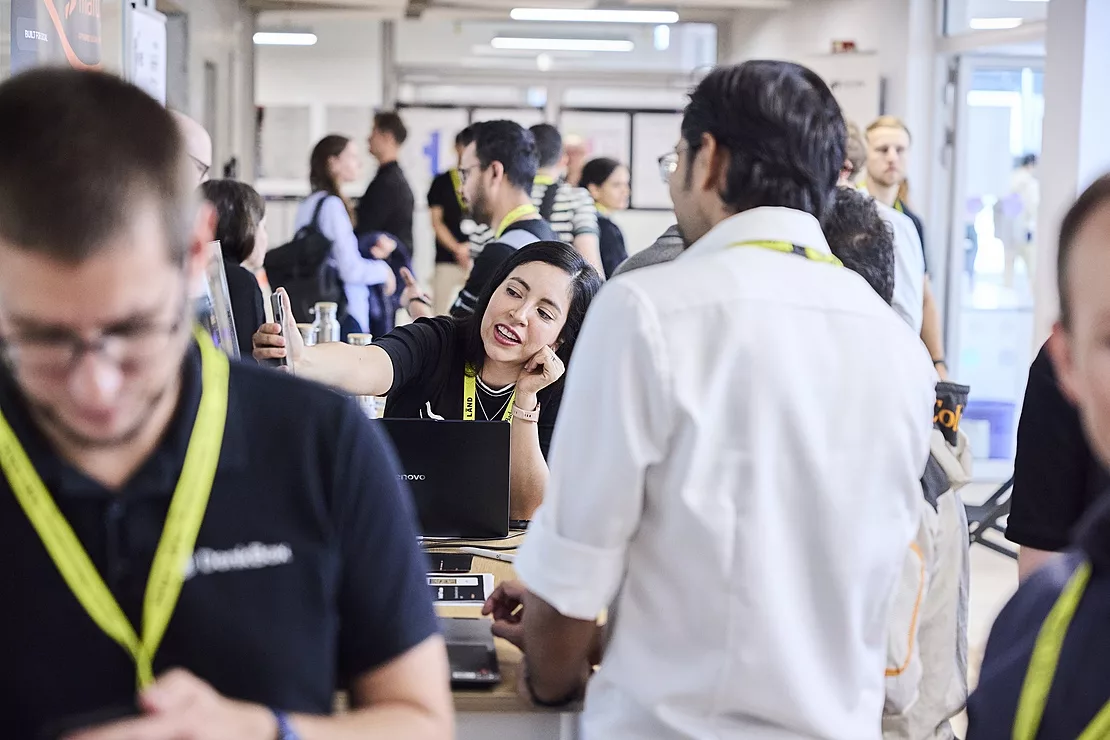
    Cyber Valley Day start-ups
    © Christian Borth

    Special announcement

    The final highlight of the day was grubel, which announced its launch during Cyber Valley Day. Founded by Moritz Hardt, Reinhard Heckel, Vedant Nanda and Navid Rekabsaz, grubel is building AI systems specialized to individual legal matters. Its vision: every matter should be able to build its own AI by combining data curation, adaptation, and evaluation to create specialized systems that can deliver high performance while keeping sensitive data under the customer’s control. We’re excited to see this research-driven venture take its next step and look forward to following its journey! 
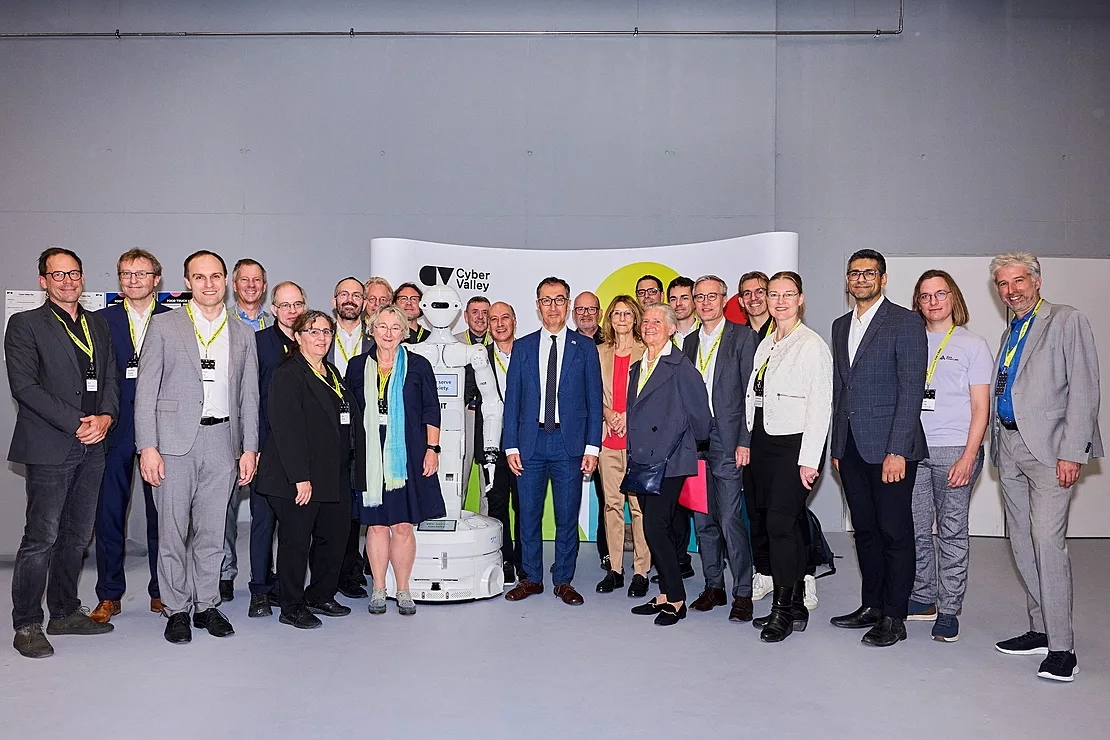
    © Christian Borth

    Looking ahead

    Ten years ago, a group of visionary partners laid the foundation for Cyber Valley. Today, it has grown into a vibrant ecosystem connecting excellent research, entrepreneurship, industry, and society. Thank you to everyone who joined us and helped make this celebration a very memorable day!


  • Computomics raises EUR 6.3 Mio to scale climate-smart plant breeding

    Computomics raises EUR 6.3 Mio to scale climate-smart plant breeding

    Computomics GmbH, a member of the Cyber Valley Start-up Network since 2020, has raised EUR 6.3 million in new equity in a Series B financing round led by Convent Capital Agri Food Fund, which invested EUR 5 million. Existing investors including High-Tech Gründerfonds, MBG Baden-Württemberg and Amathaon Capital participated, alongside founders and scientific advisors. The proceeds will be used to scale commercial delivery of the company’s climate-smart breeding platform. 

    Computomics was founded in 2012 as a spin-off of the Max Planck Institute for Biology in Tübingen. Its team comprises leading experts in machine learning, plant breeding, and bioinformatics.  

    Computomics builds machine learning models that predict how a given genotype will perform under a given set of conditions, combining genomic data with environmental data such as temperature, rainfall and soil, and with field measurements. Breeders use the predictions to answer questions that trial data alone cannot answer in time: which candidates hold up under hotter and drier conditions, which are stable across environments rather than strong in one, and where a variety should be placed. Its ×SeedScore® platform runs those predictions at the scale of a commercial breeding program. Customers include commercial breeders working in field crops, forages, vegetables and specialty crops. 

    “Breeders have never lacked ambition about climate resilience. What they have lacked is a way to see it before the field tells them, which takes years they no longer have,” said Dr. Sebastian J. Schultheiss, co-founder and Chief Executive Officer of Computomics. “This financing is about getting that capability into far more breeding programs, faster.” 

    Read the full article here: https://www.computomics.com/news-reader/eur-6.3-million-raised.html  

  • Cyber Valley Day 2026

    Cyber Valley Day 2026

    On September 9, 2026, we are celebrating our ten-year anniversary at the Cyber Valley building in Tübingen.

    The event shines a spotlight on the scientific backbone of our ecosystem, the Cyber Valley Innovation Campus, while bringing together the people, ideas, and organizations that make Cyber Valley what it is today. Throughout the day, you can look forward to inspiring talks from leading researchers and innovators, an exhibition showcasing cutting-edge research projects, and plenty of opportunities to connect across disciplines and organizations.

    The exhibition will highlight the diversity of the Cyber Valley community and offer a space for participants to discover new projects, exchange ideas, and start conversations with researchers, entrepreneurs, and partners from across the ecosystem. Start-ups from the Cyber Valley network will present their work and connect with visitors, while dedicated networking opportunities and an investor program will help foster new collaborations and future ventures.

    Beyond the stage program, the anniversary celebration is designed as a meeting point for the entire community. Our shared goal is to strengthen Cyber Valley, create new connections, and further grow the sense of community that has shaped the ecosystem over the past decade. We are all Cyber Valley, and this celebration is something we create together.

    Join us to network with distinguished guests from science, politics, industry, and society, enjoy the exhibition and start-up showcase, and end the day with refreshments from a food truck food court.

    With contributions from:

    • Max Planck Institute for Intelligent Systems (MPI-IS)
    • ELLIS Institute Tübingen
    • University of Tübingen
    • University of Stuttgart
    • Fraunhofer IPA and IAO
    • Karlsruhe Institute of Technology (KIT)
    • Start-ups from the Cyber Valley ecosystem
    • Welcome speeches from Cem Özdemir (Minister President of Baden-Württemberg), Boris Palmer (Mayor of Tübingen), Simone Schwanitz (Secretary General of the Max Planck Society), and Karla Pollmann (President of the University of Tübingen)
    • Inputs from Bernhard Schölkopf (MPI-IS and ELLIS), Katherine J. Kuchenbecker (MPI-IS), Matthias Bethge (Tübingen AI Center), Werner Kraus (Fraunhofer IPA), Tamim Asfour (KIT), Steffen Staab (University of Stuttgart), Rafael Laguna de la Vera (SPRIN-D), David Remy (University of Stuttgart), Naureen Mahmood (Epic Games), Mario Krenn (Feyer), Jonas Müller (Black Forest Labs), Manuela Veloso (JPMorganChase AI Resarch).
    • …and many more!

    Agenda

    10:00-12:30 | Inputs from key players from the Cyber Valley ecosystem
    12:30-13:30 | Lunch
    13:30-17:00 | Inputs from key players from the Cyber Valley ecosystem, exhibition, networking opportunities, and start-up presentations
    17:30-20:00 | Networking and complimentary refreshments at the food truck food court


    When registering, please indicate whether you will be staying for networking and refreshments from 17:30.

    Please note that a shuttle bus from KIT to Tübingen is planned. Further details and timings will be communicated closer to the event.

    We look forward to celebrating this special anniversary with you.

  • Machine Learning Lead

    About MATVIS

    MATVIS secures AI agents. They inspect traffic inline, on any model and any infrastructure, and stop prompt injection, PII leakage, data exfiltration and shadow AI before they reach anything that matters. Model-agnostic, ISO 27001 certified, and deployed inside their customers’ own environments so their data never leaves.

    Founded in Tübingen in 2023. Enterprise customers run them in production today, most of them working against AI Act and NIS2 deadlines, so they can deploy AI with confidence.

    Your role

    As one of their two Machine Learning Leads, you will:

    • Own core detection and analysis features end to end: dataset collection, training, evaluation, deployment, and everything that breaks afterwards.
    • Work across the full threat surface: prompt injection, jailbreaks, PII detection and redaction, content filtering, data exfiltration, agent misuse.
    • Build the parts of the detection stack that are not models: traffic analysis for Policy Autopilot, parametrization, and the business logic that turns a signal into a decision.
    • Build and defend the benchmark harness. Detection rate, false positive rate and latency are product metrics here, and customers feel all three.
    • Design security into the pipeline itself. They build their detection infrastructure in house, from data provenance through to their own training and evaluation tooling.
    • Ship containerized services into Docker and Kubernetes environments.
    • Debug across the full stack, from model output through runtime, container and network.

    Must have

    • Full MLOps ownership. You have taken a model from raw data into production and kept it running.
    • Strong Python and PyTorch.
    • A security instinct: pentesting, red teaming, CTF, bug bounty or adversarial ML. If you can attack systems and train models, they are interested regardless of what your degree says.
    • Benchmarking and evaluation discipline.
    • Clear written communication and a collaborative, adaptable way of working. Small team, high async load.
    • Docker and REST APIs.
    • Fluent English, written and spoken.

    Nice to have

    • Experience attacking LLM applications that were already in production.
    • Kubernetes, SQL.
    • German.

    What they offer

    • Competitive salary based on industry standards.
    • Tübingen, in the middle of Cyber Valley, next to the Max Planck Institute, ELLIS and the Tübingen AI Center. Or remote within Germany.
    • Flexible working hours.
    • A team small enough that what you build ships within weeks.

    Connect with them and apply now!

    Take the next step in your career and apply today. Send them your CV as a PDF to career@matvis.com with Machine Learning Lead in the subject line. No cover letter needed. If you have public work, such as CVEs, CTF write-ups, papers or repositories, send the links. They count for more than the CV. They read every application and reply either way.

    MATVIS is committed to diversity and inclusion. They strive to build a diverse team and welcome applications from people of different backgrounds, skin color, religion, sexual identity, gender, disability or age. Follow them on LinkedIn to stay up to date with what’s happening at MATVIS.

  • Last month at Cyber Valley: July

    Last month at Cyber Valley: July

    There was a lot happening at Cyber Valley last month. Here’s a quick roundup of our highlights—find out how Cyber Valley’s mission to translate excellent research into real-world applications for a better future for everyone came to life. 

    Lindau Nobel Laureate Meeting at Lake Constance 

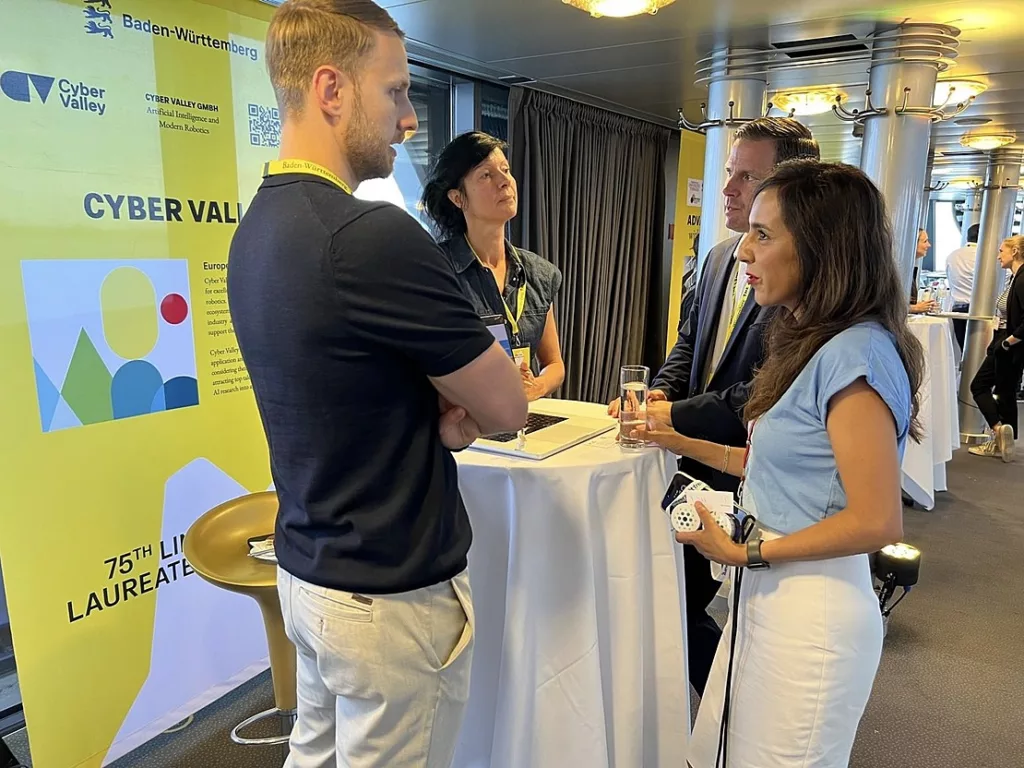
    On July 3, we took part in the 75th Lindau Nobel Laureate Meeting, where around 75 Nobel laureates and several hundred young scientists from around the world gathered for a boat trip across Lake Constance to the island of Mainau. 

    Invited to introduce the Cyber Valley in a three-minute pitch, we presented our mission to translate excellent AI research into practical applications. We also welcomed participants at the Cyber Valley booth and discussed career opportunities with young researchers. 

    The day concluded with a high-ranking panel discussion, “How to Rebuild Trust in Science?” on the island of Mainau with Nobel Laureate of 2011 Saul Perlmutter, Nobel Laureate of 2013 Randy W. Schekman, Nobel Laureate of 2018 Donna Strickland, and others. The discussion explored how in an age of misinformation and polarization, education can rebuild trust in science. The panel explored the foundations of credibility, curiosity, and critical thinking in a rapidly changing world. 

    Photo: Cyber Valley

    International researchers in Tübingen 

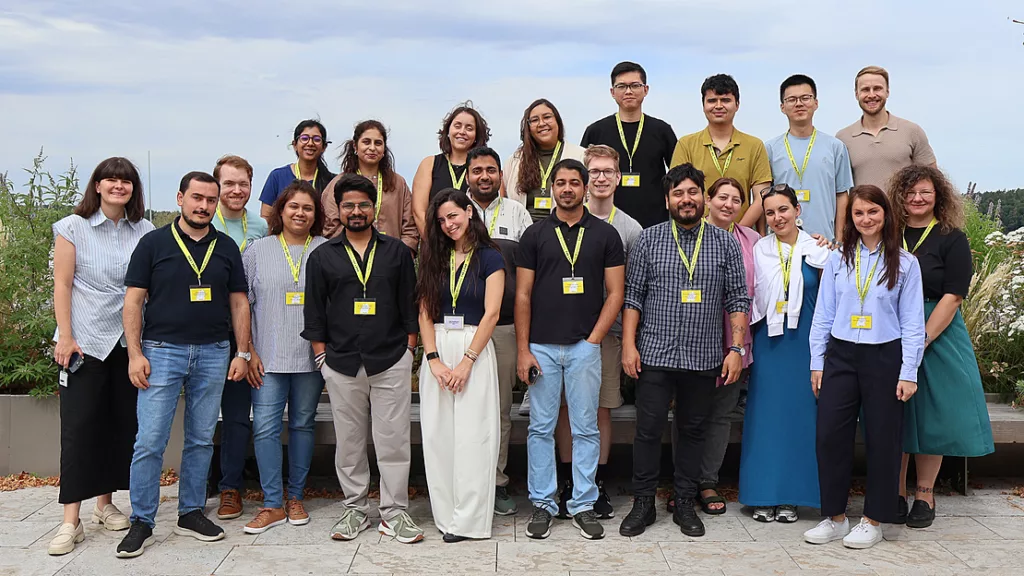
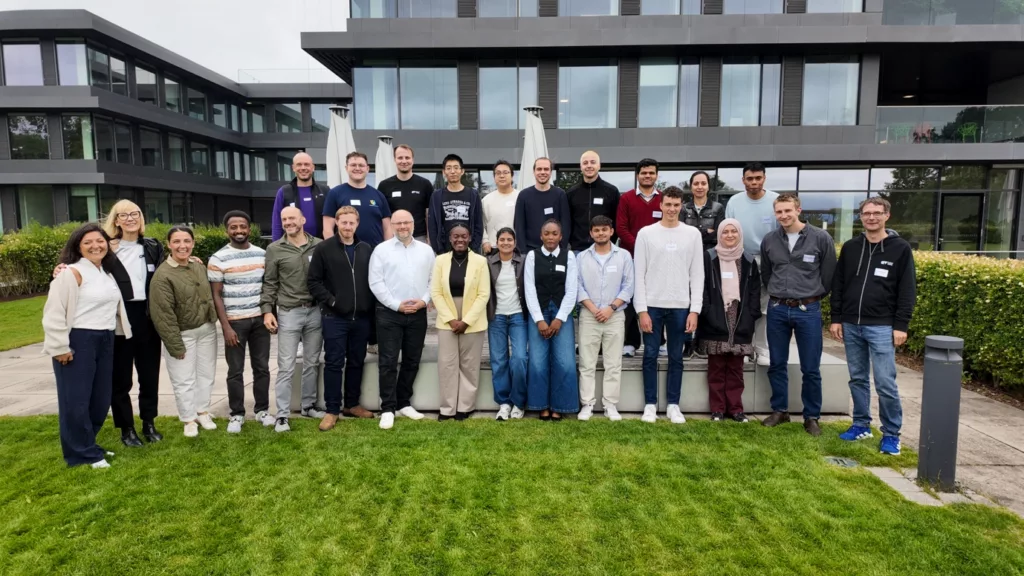
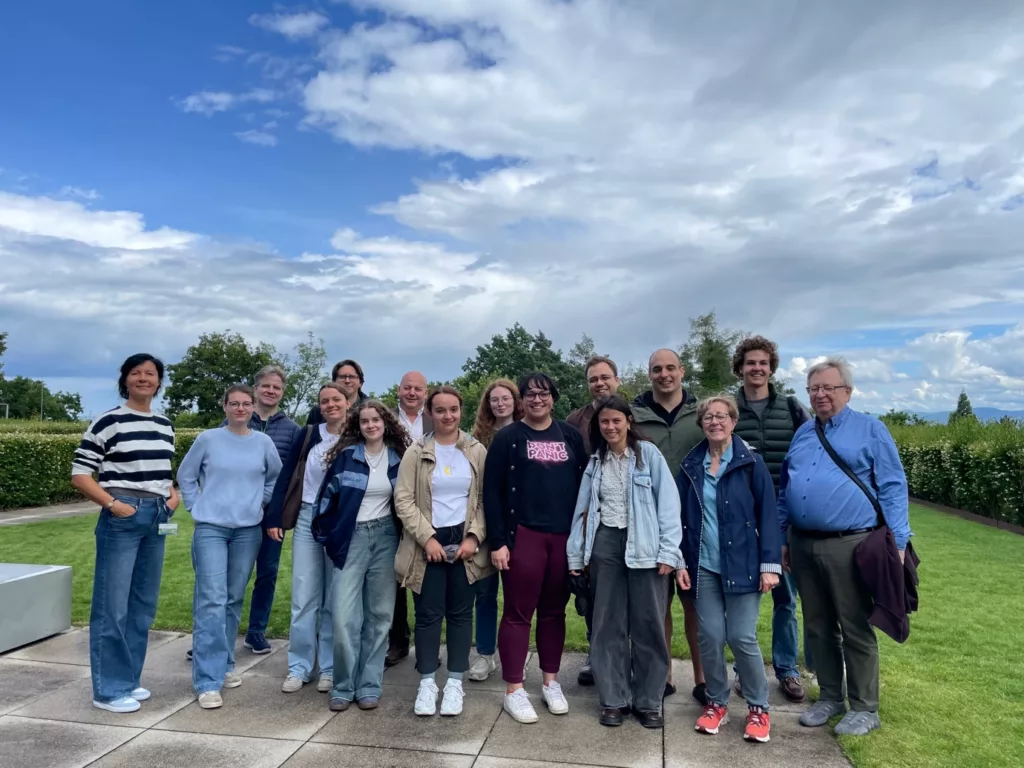
    One week later, it was a pleasure to welcome a group of early-career researchers to Tübingen on July 7 after the Lindau Nobel Laureate Meetings. 

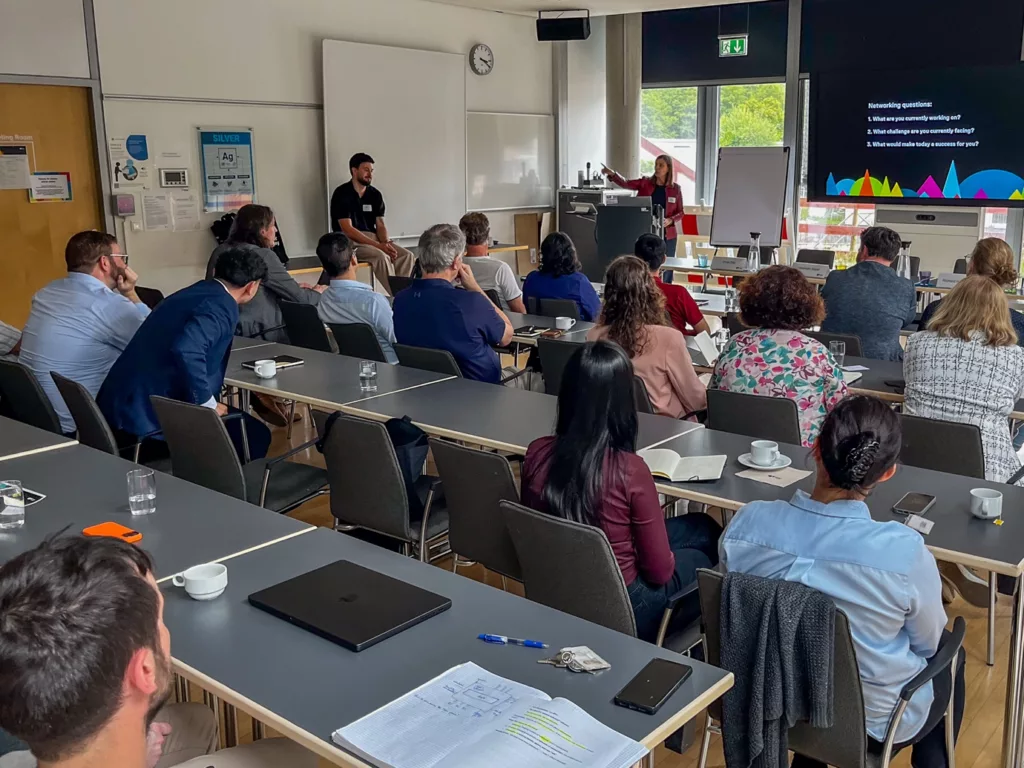
    During their stop at Cyber Valley, around 18 international PhD and postdoc researchers explored AI research and career opportunities in Baden-Württemberg. The visit included exchange with our network, lab tours, and insights from academia and start-ups. 

    The program included talks by Anand Waghmare (Yugen Space), Colin Dumont (Tübingen AI Center), and Ivan De Araujo (Max Planck Institute for Biological Cybernetics), as well as a lab visit to the Max Planck Institute for Biology. 

    Such exchanges demonstrate the importance of collaboration for the Cyber Valley mission: turning AI and robotics research into a more sustainable future for all.

    Photo: Cyber Valley

    Cyber Valley Impulse on agriculture, sustainability, and the environment 

    On July 8, the Cyber Valley Impulse on agriculture, sustainability, and the environment, co-hosted with Zukunftsstiftung Remstal, took place in Weinstadt. Experts from research and industry came together to exchange ideas and explore real-world applications. The event considered the applications of intelligent systems in agriculture, landscape management, and sustainability. With advances in AI, machine learning, and robotics, new forms of agricultural and landscape-care automation are becoming increasingly realistic, opening up questions about which tasks robots should take on first, what kinds of farming systems and landscapes we want to create, and how research, industry, and practice can contribute to this transformation. 

    Thanks to all our speakers and start-ups for sharing their insights and driving the conversation forward: Wieland Brendel (ELLIS Institute Tübingen, Max-Planck-Institut für Intelligente Systeme), Paul Hofmann (ELLIS Institute Tübingen, Max-Planck-Institut für Intelligente Systeme), Peter Ohlhausen (Fakultät NXT Nachhaltigkeit und Technologie – Hochschule Reutlingen), Zoe Rühlmann (SAM-DIMENSION), Christian Dreischer (Computomics), Johannes Schwegler (Zukunftsstiftung Remstal, TREEO)), Martin Kiefel and Sebastian Blaes(polybot), and Andy Clifton (enerlace). 

    Photo: Cyber Valley 

    Cyber Valley AI Incubator Batch #8: Demo Day 

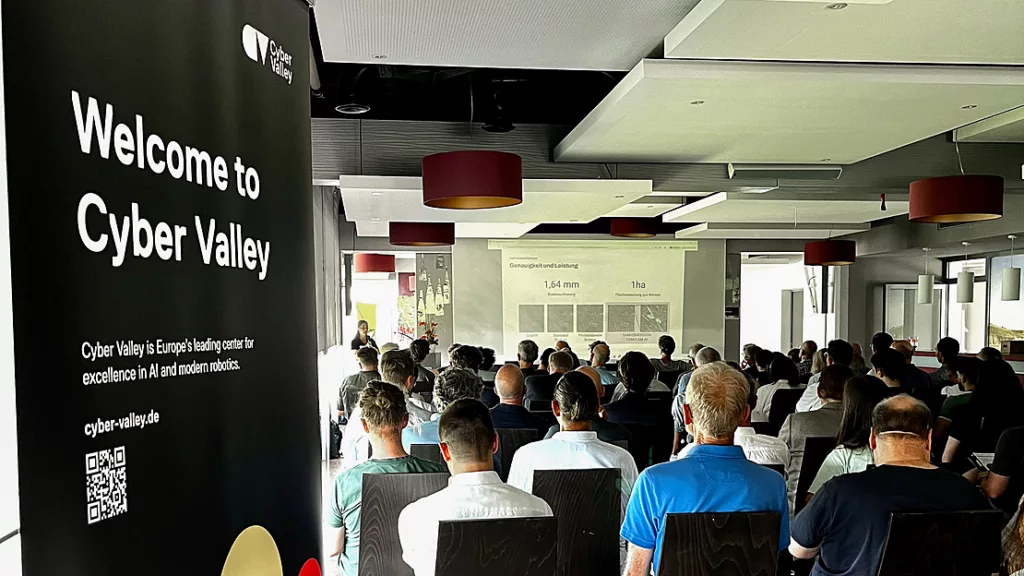
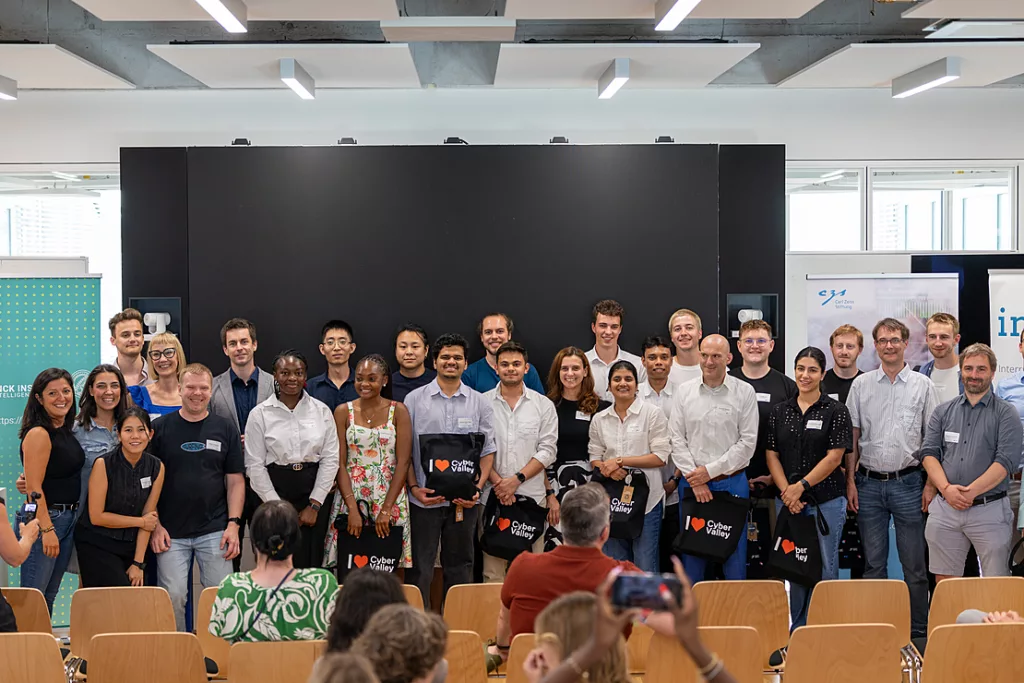
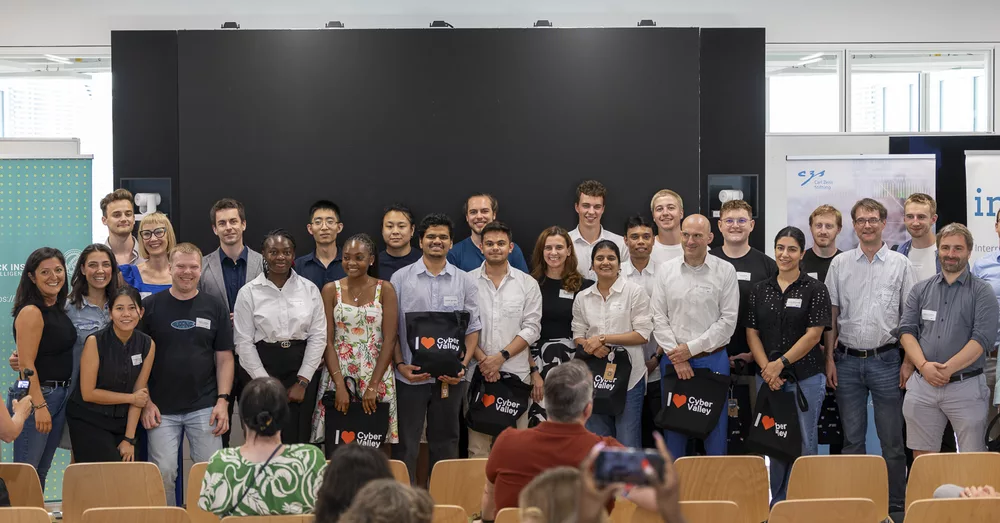
    The Demo Day of the Cyber Valley AI Incubator, hosted at Cyber Valley in Tübingen, brought together a full auditorium of founders, investors, researchers, industry leaders, and AI enthusiasts to celebrate the next generation of AI start-ups on July 10. 

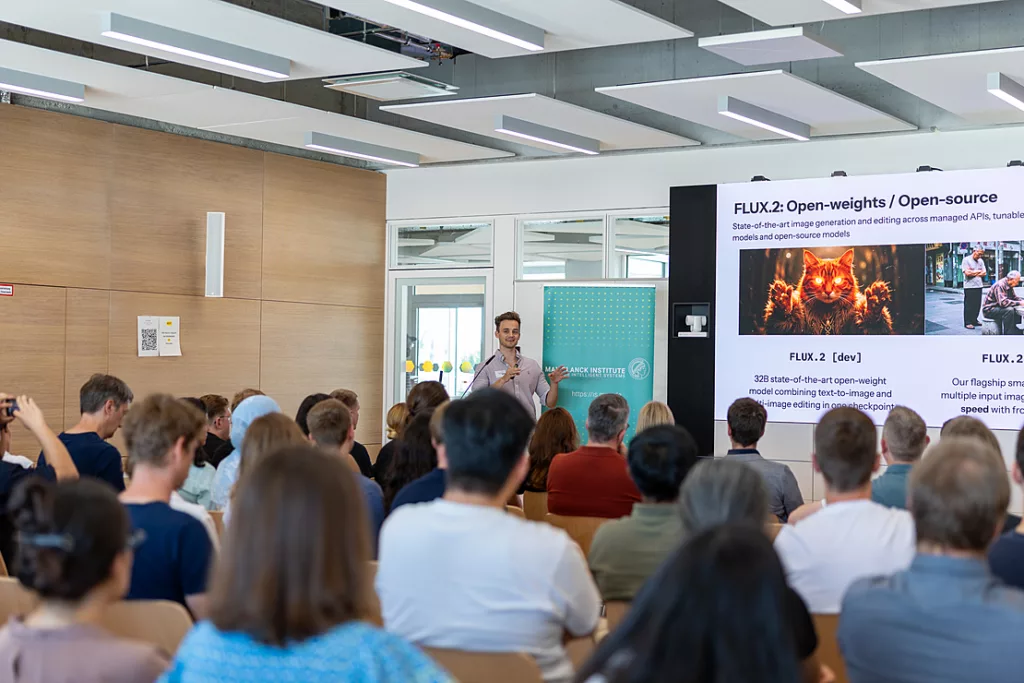
    The event opened with remarks from Christoph Keplinger and Leila Masri (Max-Planck-Institut für Intelligente Systeme), who reflected on the remarkable journey of Batch #8. We also welcomed Phil-Alan Gaertig, PhD from the Carl-Zeiss-Stiftung, whose continued support makes this program possible. The keynote, Axel Sauer from Black Forest Labs, introduced the company’s work and shared valuable insights into the development of AI models and the future of visual intelligence. 

    The spotlight then turned to the seven AI Incubator teams, who pitched their ideas before an outstanding jury consisting of: Daisy Paiva (ZEISS Ventures), Franziska Ivens (Silicon Allee at Fraunhofer Heinrich Hertz Institute HHI), and Christoph Keplinger (Max-Planck-Institut für Intelligente Systeme). 

    Selecting the winners was no easy task, as every team demonstrated impressive innovation, technical excellence, and entrepreneurial potential. 

    Congratulations to our award winners! 

    • Audience and presentation award: 

    Sehnsora: Mohammed Raihan Soniwala, Shweta K. Yograj Yadav, and Abhishek Vijay P. 

    • Best business model award: 

    CoGraph: Magnus T. Hornstein and Bela Thraen. 

    • Use of AI award: 

    OptiGrocer: Ifeoma Veronica Nwabufo and Ornela Megne. 

    Thanks to all founders, mentors, trainers, jury members, speakers, partners, and guests who made this journey so memorable. We can’t wait to see where these start-ups go next. Congratulations to all teams for an outstanding Demo Day!  

    The Cyber Valley AI Incubator empowers scientists and entrepreneurs with promising AI ideas to begin their entrepreneurial journey. Over several weeks, participants receive hands-on training, mentoring, and access to leading experts, founders, and investors. Each full-day session focuses on a specific topic — from team building and market analysis to prototyping, business models, and pitching — equipping participants with actionable insights and a growing network. 

    The Cyber Valley AI Incubator is funded by the Carl-Zeiss-Stiftung and organized by the Max Planck Institute for Intelligent Systems.

    Photo: MPI-IS

    Campus Tour in Tübingen 

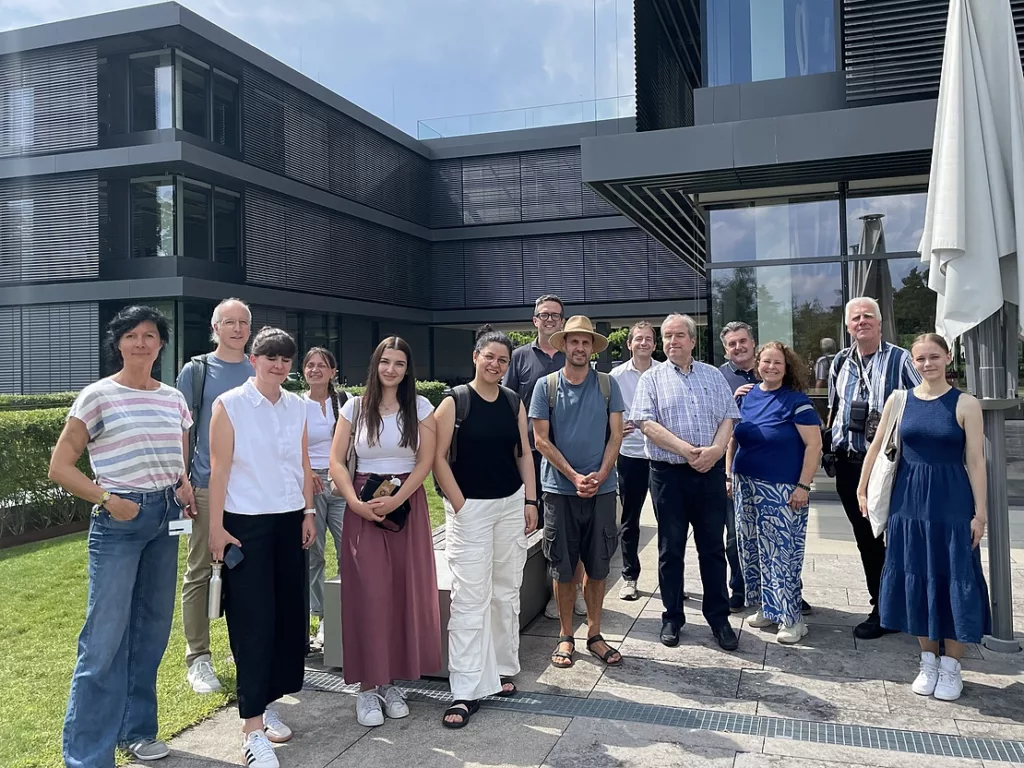
    It was a pleasure to welcome so many interested guests to our Campus Tour in Tübingen on July 16! 

    As part of our new Cyber Valley Innovation Campus Tours series, participants get an exclusive behind-the-scenes look at Europe’s largest center for excellence in AI and robotics. In addition to an introductory presentation, guests can join a guided tour of the Campus in Tübingen and learn more about the people, research, and innovation driving the ecosystem. 

    At Cyber Valley, our mission is to translate AI and robotics research into real-world solutions that benefit people, industry, and society. Engaging with the public and opening our doors to the community is an important part of that mission.  

    Photo: Cyber Valley

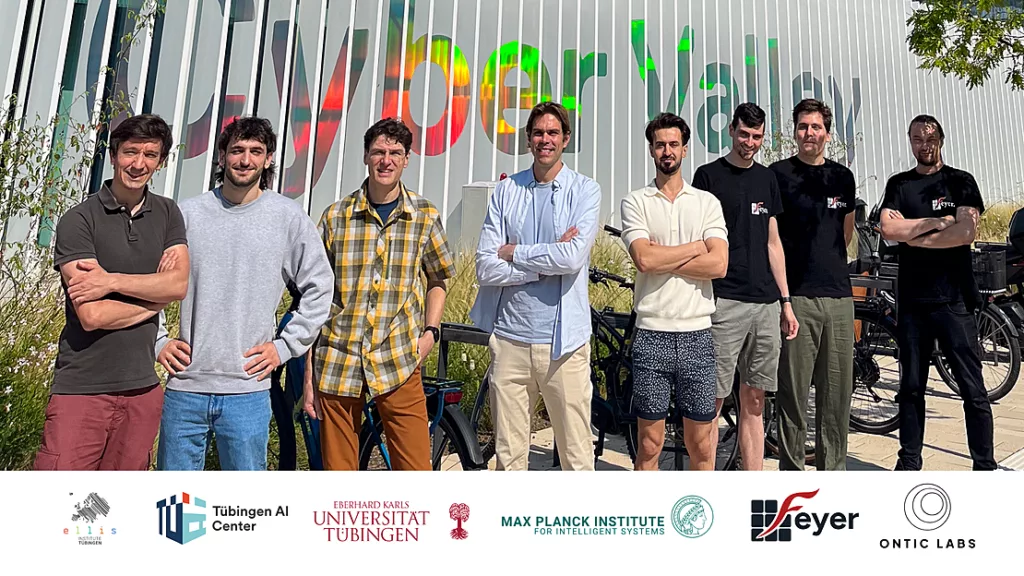
    Ontic Labs and Feyer selected for SPRIND’s Next Frontier AI Challenge 

    Ontic Labs and Feyer have been selected for the first stage of the German Federal Agency for Breakthrough Innovation’s (SPRIND) Next Frontier AI Challenge. The two start-ups are among just ten teams across Europe that have been selected and will receive €3 million to develop technologies beyond today’s AI models.  

    Read more here: https://cyber-valley.de/en/news/two-cyber-valley-start-ups-selected-to-shape-europe-s-frontier-ai-future 

    Photo: Cyber Valley 

    KI Festival by IPAI Foundation in Heilbronn 

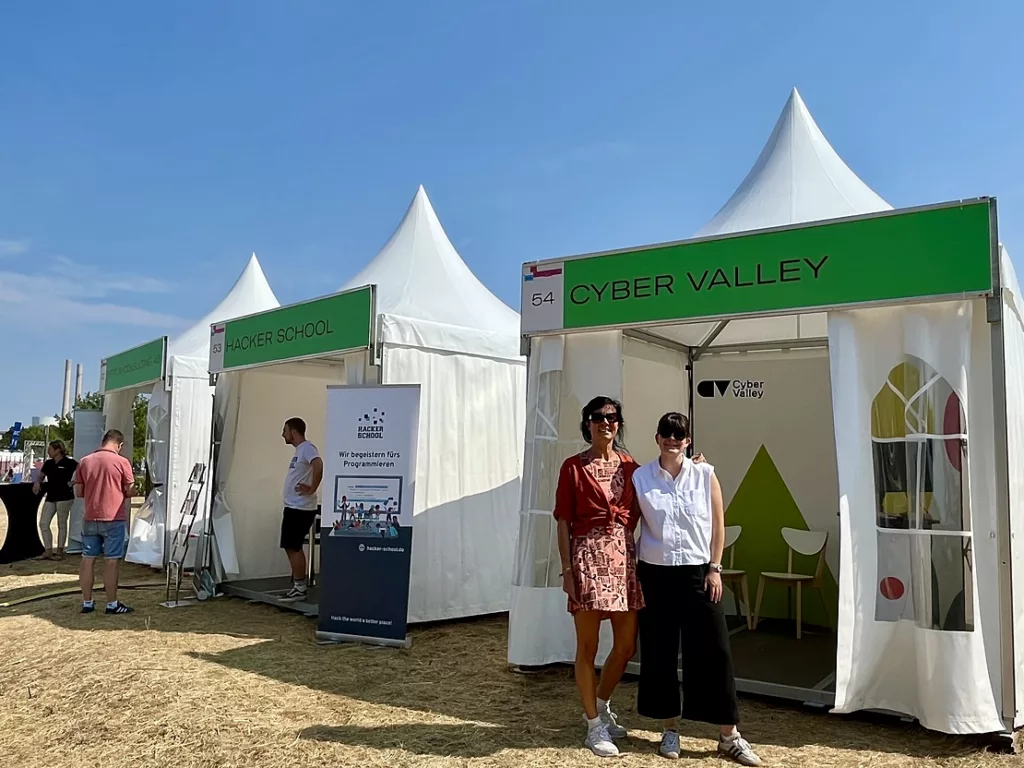
    On July 25 and 26, we had a great time at the KI Festival by IPAI Foundation in Heilbronn!  

    During the weekend, we had the pleasure of joining the KI Festival with our own booth. It was a great opportunity to connect with the Heilbronn community, engage with a curious public, and meet inspiring innovators and companies while sharing more about the Cyber Valley ecosystem. A big thank you to everyone who stopped by our booth and took the time to chat with us!  

    We are grateful to the IPAI Foundation for bringing together such a great community and creating a great space for exchange around AI and innovation. 

    We’re looking forward to future collaborations with IPAI and to continuing to strengthen the AI ecosystem together!  

    Photo: Cyber Valley
  • Plans for new buildings at the “Cyber Valley Start-up Campus” in Tübingen

    Plans for new buildings at the “Cyber Valley Start-up Campus” in Tübingen

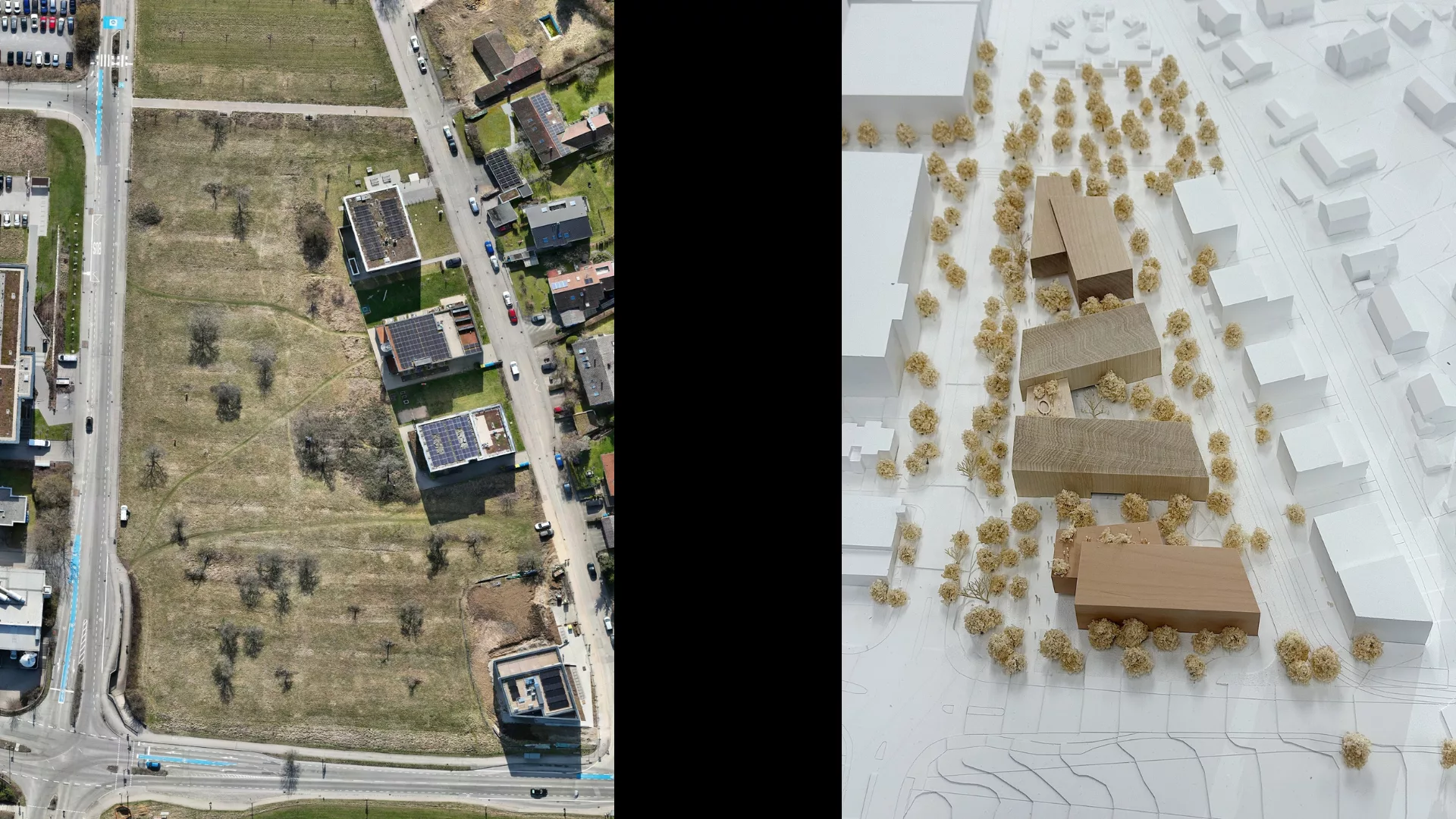
    Tübingen is gaining a new flagship project in its science and research landscape: With the construction of the “Cyber Valley Start-up Campus” in Tübingen at the “Obere Viehweide” Science and Technology Park, a forward-looking hub is being created with a focus on startups in the field of artificial intelligence (AI). It is now clear what the buildings of the Tübingen-Reutlingen Technology Park (TTR) will look like in the future: The architectural firm 121 Architekten GmbH Florian Danner & Suleiman Mukarker, Tübingen, together with Machleidt GmbH, Berlin, and freiraumconcept Landschaftsarchitekten PartGmbB, Rottenburg a. N., have won first prize in the architectural competition. The jury reached this decision at its meeting on Friday, July 24, 2026.

    New space for over 1,000 workstations

    The planned spaces are designed to accommodate over 1,000 workstations, allowing for highly flexible use. The site is part of a dynamically growing innovation ecosystem featuring companies in the fields of medicine, biotechnology, and AI research, as well as university institutions, Cyber Valley GmbH, the ELLIS Institute, the Tübingen AI Center, and the Max Planck Institutes.

    Read the full press release from the L-Bank in German here

  • Cyber Valley AI Incubator announces batch #8 winners

    Cyber Valley AI Incubator announces batch #8 winners

    The Cyber Valley AI Incubator batch 8 has successfully concluded with its Demo Day, where seven emerging AI ventures presented their innovations to an audience of founders, investors, researchers, industry leaders, and members of the wider AI community. Made possible through the generous support of the Carl Zeiss Foundation (CSZ), the program continues to foster research-driven AI entrepreneurship by helping innovators transform cutting-edge ideas into startup ventures.

    Photo: A. Posada @MPI-IS

    The event opened with welcome remarks from Christoph Keplinger and Leila Masri of the Max Planck Institute for Intelligent Systems (MPI-IS), who reflected on the achievements of batch 8 and the growing impact of the AI Incubator. Phil-Alan Gärtig of the Carl-Zeiss-Stiftung, the program’s principal sponsor, highlighted the foundation’s continued commitment to advancing innovation and research-driven entrepreneurship.

    In his keynote, “Towards Visual Intelligence: From Image Generation to Physical AI,” Axel Sauer explored the evolution of generative AI and the development of increasingly capable AI models. Drawing on the work of Black Forest Labs, he shared perspectives on the rapid progress of AI technologies and their potential to shape the future of visual intelligence and embodied AI systems.

    Photo: A. Posada @MPI-IS

    The spotlight then turned to the batch 8 teams, who presented their final venture pitches before an expert jury consisting of:

    • Daisy Paiva (ZEISS Ventures)
    • Franziska Ivens (Silicon Allee Venture Lab at Fraunhofer Heinrich Hertz Institute)
    • Christoph Keplinger (Max Planck Institute for Intelligent Systems)

    With an exceptionally high standard across all seven teams, selecting the winners proved to be a challenging task.
     

    Read the full press release on the Max Planck Institute for Intelligent System’s website. 

  • From Cyber Valley to Europe’s AI frontier

    From Cyber Valley to Europe’s AI frontier

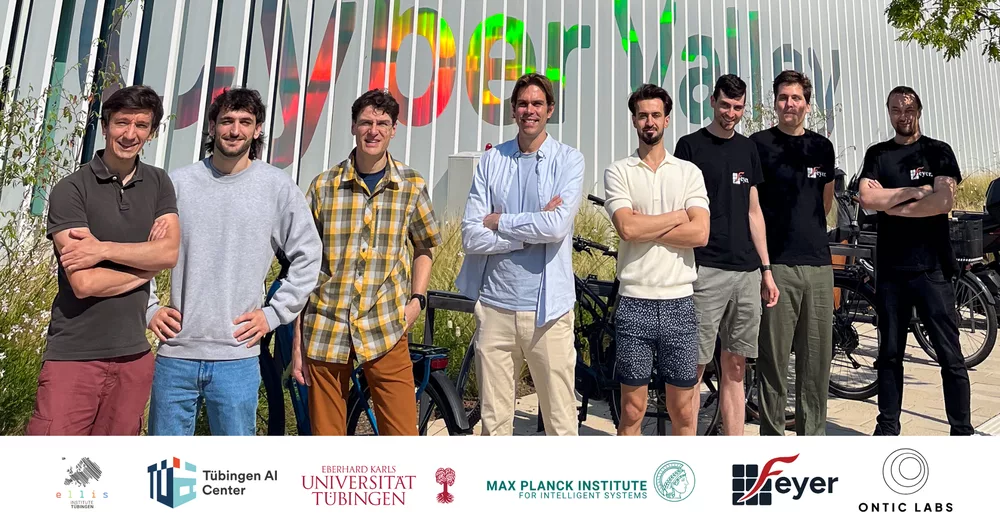
    Ontic Labs and Feyer.ai have been selected for the first stage of the German Federal Agency for Breakthrough Innovation’s (SPRIND) Next Frontier AI Challenge. The two start-ups are among just ten teams across Europe that have been selected and will receive €3 million to develop technologies beyond today’s AI models. 

    Ontic Labs and Feyer.ai have been selected for the first stage of the German Federal Agency for Breakthrough Innovation’s (SPRIND) Next Frontier AI Challenge. The two start-ups are among just ten teams across Europe that have been selected and will receive €3 million to develop technologies beyond today’s AI models. 

    Of the three selected teams from Germany, two originate from the Cyber Valley ecosystem in Baden-Württemberg as spin-outs from several of Cyber Valley’s academic partners, including the ELLIS Institute Tübingen, Max Planck Institute for Intelligent Systems, Tübingen AI Center, and the University of Tübingen. Their success highlights the growing momentum with which AI research is being translated into innovative companies and how excellent AI research from Baden-Württemberg is playing a key role in the European race for frontier AI models.

    The Next Frontier AI Challenge is aimed at European teams developing fundamental AI technologies with exceptionally high innovation potential. The goal is to promote new approaches that go beyond the current state of the art and can have a long-term economic and societal impact.

    “Ontic Labs and Feyer.ai are excellent examples of what the Cyber Valley ecosystem is designed to achieve: turning outstanding research into technologies with societal and economic relevance,” said Florian K. Mayer, Managing Director of Cyber Valley GmbH. “Their success reflects the strength of the innovation pipeline in Baden-Württemberg, where leading researchers, entrepreneurs, and partners work together to transform scientific advances into new ventures and applications.”

    Ontic Labs: Building AI for Physical Intelligence

    Ontic Labs is developing a foundation model for physical intelligence. The company aims to enable machines to understand the physical dynamics of their environment rather than only recognizing visual patterns. This could allow robots to predict future states, reason about physical interactions, and operate more effectively in complex real-world settings.

    The company brings together researchers from the Max Planck Institute for Intelligent Systems, the University of Tübingen’s Cluster of Excellence Machine Learning: New Perspectives for Science, the Tübingen AI Center, and the ELLIS Institute Tübingen. Ontic Labs was founded by Omid Taheri, Mikel Zhobro, Wieland Brendel, Georg Martius, and Gerard Pons-Moll.

    Ontic Labs team. Photo: SPRIND

    Feyer.ai: AI for Industrial Hardware Innovation

    Feyer.ai develops AI systems that autonomously design new industrial hardware. Its approach combines modern AI methods with physics-based simulations to generate and evaluate technical solutions. By applying AI-driven invention to industrial challenges, Feyer.ai aims to accelerate the development of new technologies across fields including photonics, quantum technologies, microscopy, semiconductor manufacturing, and energy systems.

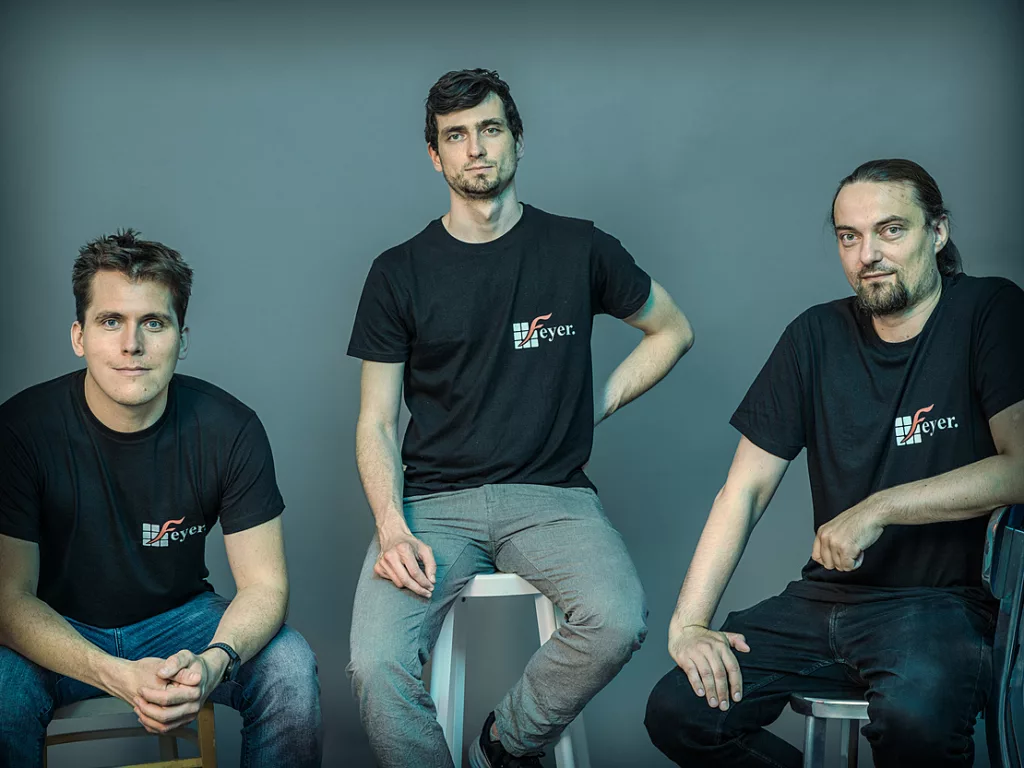
    The company emerged from the research group of Mario Krenn, Professor at the Cluster of Excellence Machine Learning: New Perspectives for Science at the University of Tübingen. The founding team consists of Jonathan Klimesch, Sören Arlt, and Mario Krenn.

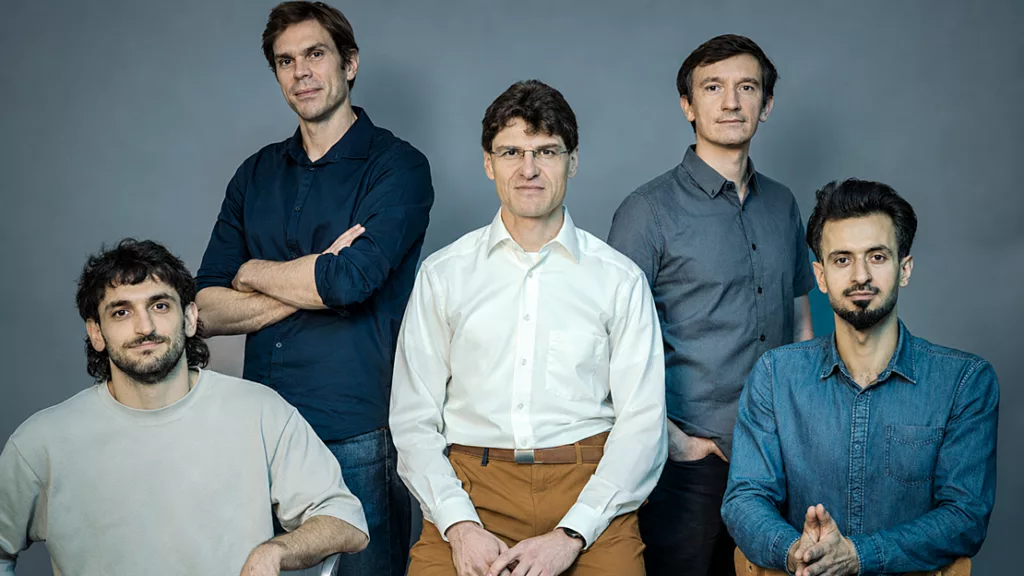
    Feyer team. Photo: SPRIND

    The selection of Ontic Labs and Feyer.ai reflects the strength of the Cyber Valley ecosystem, which connects leading AI research with entrepreneurship and start-up support. Both companies build on research conducted at institutions that are central to Baden-Württemberg’s AI landscape and demonstrate how advances in AI research are being translated into to real-world impact, powering industry, and driving Europe’s sustainable future.

    Read SPRIND’s press release here.

    Read the press release from the University of Tübingen (in German) here.

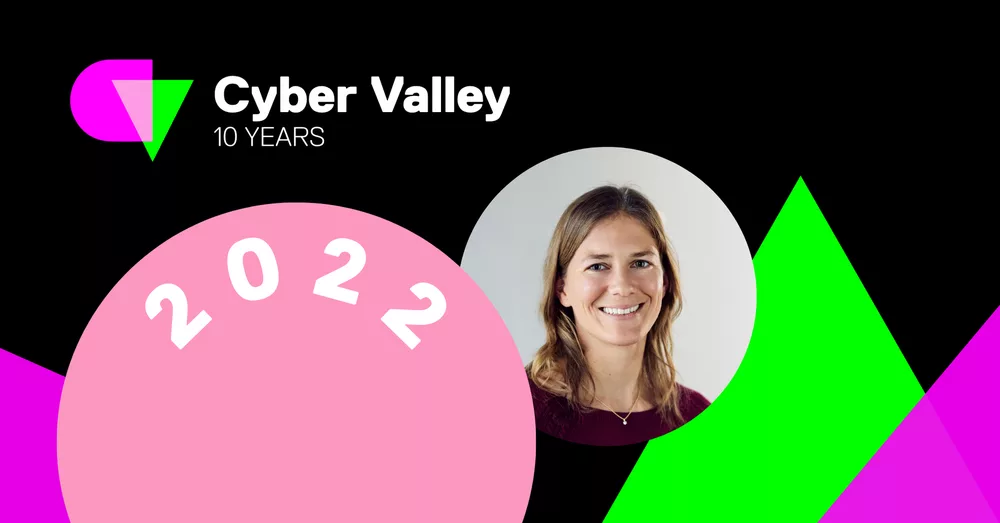
  • 2022: Hector Foundation supports founding of ELLIS Institute Tübingen

    2022: Hector Foundation supports founding of ELLIS Institute Tübingen

    In 2016, important actors from science, industry, and politics founded the Cyber Valley Consortium, which became the first Innovation Campus in Baden-Württemberg. Ten years on in 2026, we’re revisiting the most significant milestones from the last decade. Each month, we’ll focus on a particular year since Cyber Valley’s beginning. 

    This month, we’re looking back to 2022, when the Hector Foundation announced that it would support the establishment of the ELLIS Institute Tübingen with 100 million euros. The Institute was created to attract the world’s best machine learning talent to Baden-Württemberg by offering them outstanding conditions for undertaking pioneering AI research. Celestine Mendler-Dünner was among the first group leaders recruited to join the ELLIS Institute. In the following interview, she explains what it was like to play a crucial role at the ELLIS Institute from its beginning and how it has advanced her research and career.

    Why did you want to join the ELLIS Institute? What advantages did you see it offering?

    As the first institute of its kind, the ELLIS Institute Tübingen promised to be something very special and I did not want to miss the opportunity of being part of it. And this turned out to be an incredible journey. The ELLIS Institute offers a unique environment for research with full academic freedom and the financial means to pursue impactful research. This is hard to find elsewhere. Centered within the striving Tübingen AI ecosystem, it offered a strong reason for me personally to continue my research career in Europe.

    How would you describe the experience of being among the first PIs (group leaders) shaping the Institute in its formative phase?

    It was an exciting opportunity to help shape a new institute as one of the first PIs. Many things still had to be built, from office space, to outreach, to internal processes which was very enjoyable with a team that was committed to making things possible as efficiently as possible. I am very proud of how the institute has grown and the visibility it has gained globally.

    ELLIS places strong emphasis on building AI that is aligned with social values. How does the institute support this mission?

    The institute and the Tübingen AI community play a leading role in building the technical foundations for addressing social questions in AI. With the flexibility we have here to pursue research that does not immediately create economic value we can center objectives, such as social values and the common good, in our core efforts, which I am very thankful for.

    How has the ELLIS Institute supported your career and what are the next steps?

    It allowed me to push the frontiers of research with minimal distraction, and benefit from close collaboration with the Max Planck Institute for Intelligent Systems, as well as the Tübingen AI Center and the ELLIS Network more broadly. This was an invaluable asset at a pivotal stage of my career. This fall I will move on to take up a professorship at ETH Zurich and I am very excited about the next chapter. I will deeply miss Tübingen and I look forward to staying connected with the wonderful people I have met here.

    To celebrate Cyber Valley’s ten-year anniversary, we’ll be sharing a variety of content across our website and social media channels reflecting on milestones from the last decade. Stay tuned for the next installments!

  • Last month at Cyber Valley: June

    Last month at Cyber Valley: June

    A lot was happening at Cyber Valley last month. Here’s a quick roundup of our highlights from June. Find out how Cyber Valley’s mission to translate excellent research into real-world applications for a better future for everyone came to life.

    TECH by Handelsblatt in Heilbronn

    Cyber Valley enjoyed three exciting days at TECH by Handelsblatt in Heilbronn from May 31 to June 2.

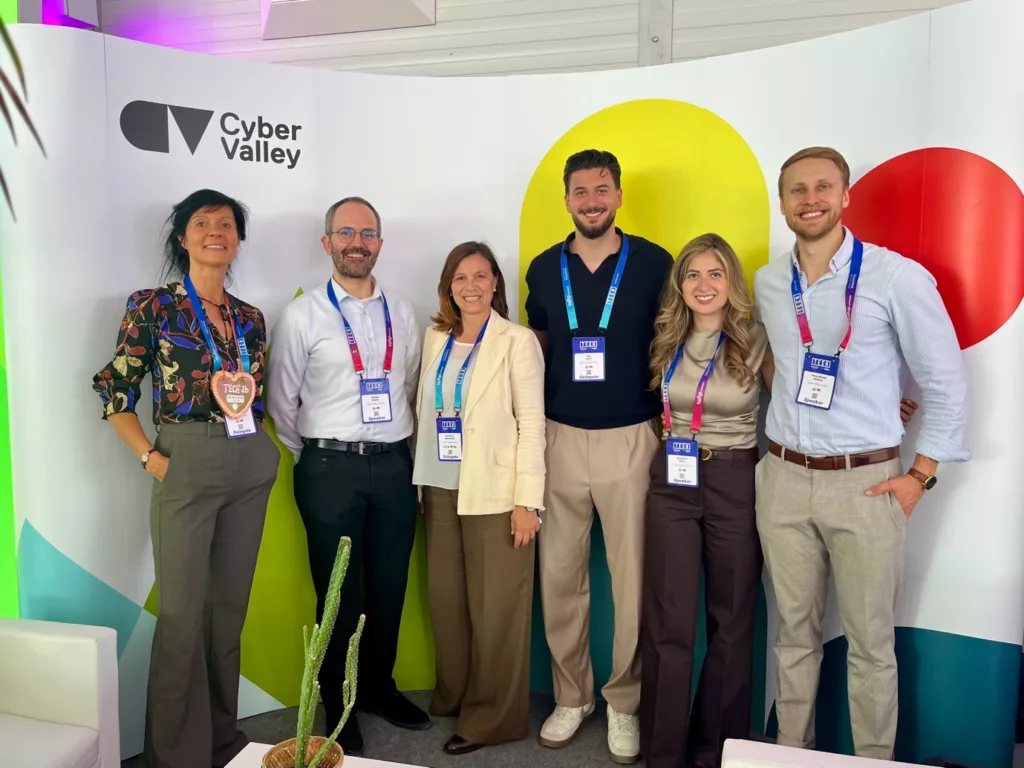
    On June 1, our panel “From Research to Business: AI and Robotics Start-ups from Cyber Valley” brought together founders from across the Cyber Valley Start-up Network to show how excellent research is being transformed into innovative products, companies, and technologies.

    A big thank you to our speakers: Laura Neusser (Optocycle), Frederik Wulle (Collectu), Maximilian Bode (Biocompile), Lisa Raab (Spotium), Richard Hans Schreiber (Tabularis.AI), John Achim Holzhauer (Semorai GmbH), Partha Ghosh and Felix Leeb (MaiTY), as well as Anand Waghmare (Yugen Space).

    These start-ups emerged from our academic partner institutions—Max Planck Institute for Intelligent Systems (MPI-IS), Karlsruhe Institute of Technology (KIT), and the Universities of Stuttgart and Tübingen—and exemplify the strength of our ecosystem in turning research excellence into entrepreneurial success.

    Another special moment was the visit of Cem Özdemir, Minister President of Baden-Württemberg, Petra Olschowski, State Minister of Science, Research and the Arts of Baden-Württemberg, and Karsten Wildberger, Federal Minister for Digital Transformation and Government Modernization, to the exhibition area, underscoring the growing importance of AI, robotics, and deep-tech innovation for Baden-Württemberg.

    Photo: Cyber Valley

    IEEE International Conference on Robotics and Automation (ICRA) in Vienna

    On June 1–5, Cyber Valley had a fantastic time attending the IEEE International Conference on Robotics and Automation (ICRA) in Vienna for the first time! The conference brought together top researchers, industry leaders, and robotics enthusiasts to share ideas and advance the field of robotics. We enjoyed engaging conversations and connecting with leading AI researchers from the Cyber Valley Community and beyond.

    Through fostering connections with researchers, we’re turning AI and robotics research into real-world applications that will help secure Europe’s technological and economic future.

    Photo: Cyber Valley

    Cyber Valley AI Incubator Batch #8

    In June, we welcomed the participants of Batch #8 of the Cyber Valley AI Incubator in Tübingen for the first three days of an exciting multi-week journey.

    Here are some highlights from the first weeks:

    Day 1 opened with a welcome from Leila El Masri (MPI-IS) and Paul-David Bittner (Cyber Valley). Participants explored the public funding landscape with Daniel Heblik (Startup Center Tübingen), sharpened their understanding of customers and business models with Michael Raschke (Blickshift GmbH), and learned how to turn AI ideas into viable ventures using the Business Model Canvas with Jörg Büechl (ESB Business School, Reutlingen University).

    Day 2 brought founder and investor perspectives: Katrin Renz (Physical AI) shared her path from research to start-up, Björn Brenner (NEXTGN) spoke about making investment decisions, and Franziska Ivens (Silicon Allee Venture Lab at Fraunhofer Heinrich Hertz Institute HHI) explored different funding models from lab to market. In the Ask-an-Investor panel, Franziska Ivens, together with Chris Ferle (Bosch Ventures), and Benedikt Battke (Grazia Equity) answered questions on funding, investing, and building scalable start-ups.

    Day 3 brought together legal expertise and entrepreneurial thinking as teams explored how to move responsibly from ideas to prototypes. Thanks to our speakers for guiding the teams:

    • Benjamin Krahmer (DORNKAMP Law Firm) for sharing practical insights on AI regulation and key legal challenges.
    • Kevin Sartori (Auterion) for leading an engaging venture-building workshop, guiding teams in turning ideas into early prototypes.

    The Cyber Valley AI Incubator empowers scientists and entrepreneurs with promising AI ideas to begin their entrepreneurial journey. Over several weeks, participants receive hands-on training, mentoring, and access to leading experts, founders, and investors. Each full-day session focuses on a specific topic—from team building and market analysis to prototyping, business models, and pitching—equipping participants with actionable insights and a growing network.

    The Cyber Valley AI Incubator is funded by the Carl-Zeiss-Stiftung and organized by MPI-IS.

    Photo: MPI-IS

    Campus Tour in Tübingen

    It was a pleasure to welcome so many interested guests to our Campus Tour in Tübingen on June 11!

    As part of our new Cyber Valley Innovation Campus Tours series, participants get an exclusive behind-the-scenes look at Europe’s largest center for excellence in AI and robotics. In addition to an introductory presentation, guests can join a guided tour of the Campus in Tübingen and learn more about the people, research, and innovation driving the ecosystem.

    At Cyber Valley, our mission is to translate AI and robotics research into real-world solutions that benefit people, industry, and society. Engaging with the public and opening our doors to the community is an important part of that mission.

    The next Campus Tour in Tübingen (held in German) will take place on Thursday, July 16. We look forward to welcoming you! Sign up here. 

    Photo: Cyber Valley

    Cyber Valley Impulse on cybersecurity

    On June 16, the Cyber Valley Impulse on cybersecurity took place in Stuttgart. Experts from science and industry shared insights on applications of intelligent systems in government technology and cybersecurity. Advances in artificial intelligence, machine learning, and data-driven approaches are reshaping public services, digital governance, and cybersecurity, creating new opportunities for secure, efficient, and citizen-centric innovation

    Thanks to our excellent speakers and contributors: Jonas Ditz (Bundesamt für Sicherheit in der Informationstechnik), Maximian Geyer (Fraunhofer IPA), Mirko Tochtermann (oneAI GmbH), Richard Hans Schreiber (Tabularis.AI), and Aleksandar Hudic (Schwarz Digits).

    The next Impulse on agriculture, sustainability, and the environment will take place on July 8 in Weinstadt. You can find out more here.

    Photo: Cyber Valley

    Open Science Day at University of Stuttgart

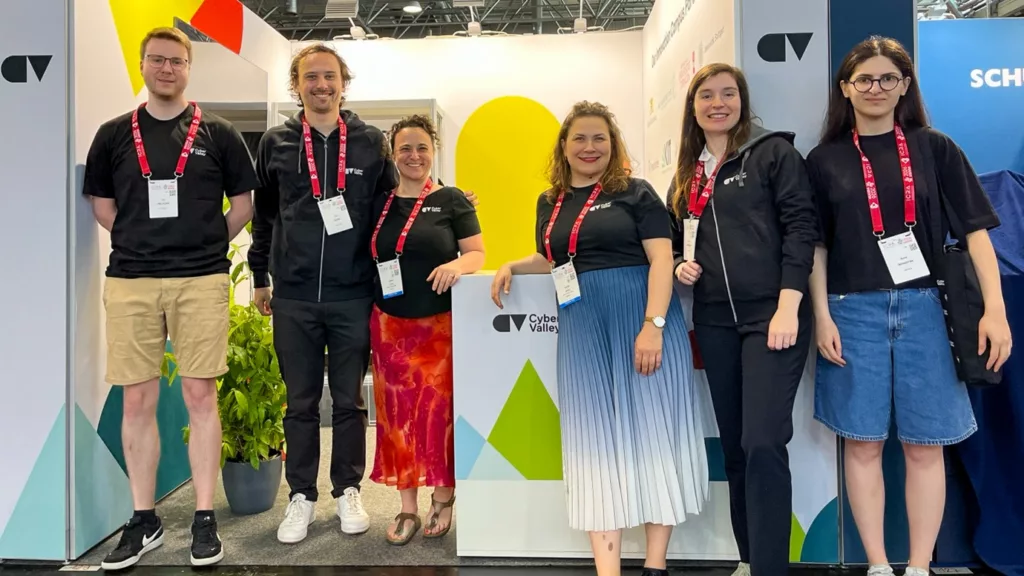
    On Saturday June 27, we had a great time at the University of Stuttgart’s Science Day on the Vaihingen Campus!

    We enjoyed welcoming so many curious visitors to our booth and sharing insights into AI research, innovation, and the Cyber Valley Innovation Campus. A special thank you to IRIS (Interchange Forum for Reflecting on Intelligent Systems) at the University of Stuttgart for organizing our joint booth and creating a great space for conversations about both AI innovation and its societal impact.

    Photo: Cyber Valley