User Group: Entrepreneur

  • 2019: Reducing construction waste with AI—interview with Optocycle

    2019: Reducing construction waste with AI—interview with Optocycle

    In 2016, important actors from science, industry, and politics founded the Cyber Valley Consortium, which became the first Innovation Campus in Baden-Württemberg. Ten years on in 2026, we’re revisiting the most important milestones from the last decade. Each month, we’ll focus on a particular year since Cyber Valley’s beginning. 

    This month, we’re looking back to 2019, when the Cyber Valley Start-up Network was founded to build and nurture a community of start-up entrepreneurs. The Cyber Valley Start-up Network has grown rapidly over the past years, from the initial seven founding members at the end of 2019 to more than 100 start-ups in 2026.

    In 2022, Optocycle joined the Start-up Network. Optocycle develops AI-based systems for the optical classification of construction waste. Their technology enables optimal use of demolition material, promoting a circular economy.

    In the following interview, CEO Max-Frederick Gerken explains how the idea for Optocycle emerged, how being part of the Start-up Network has supported the company’s development, and how AI-driven material classification can contribute to a more circular and sustainable construction industry.

    How did the idea for Optocycle originate, and what problem were you initially trying to solve?

    Interestingly, we didn’t start in construction. Initially, we were building AI to recognize fruits and vegetables at supermarket checkouts. The pivot came when a contact from the recycling industry highlighted a much bigger problem: construction waste is still classified manually: slow, subjective, and inefficient.

    We realized that the core issue is missing data. That’s why we built Optocycle: combining optical sensor systems with AI to create a reliable, real-time data layer for material flows and enable true circular construction.

    How did your research and experience within the Cyber Valley ecosystem contribute to founding the company?

    It didn’t directly contribute to founding the company, as Optocycle was already established at that point. However, we did benefit from funding within the Cyber Valley ecosystem, which supported us in scaling our team and further developing our technology. Beyond that, the ongoing exchange within the network has been consistently valuable and interesting.
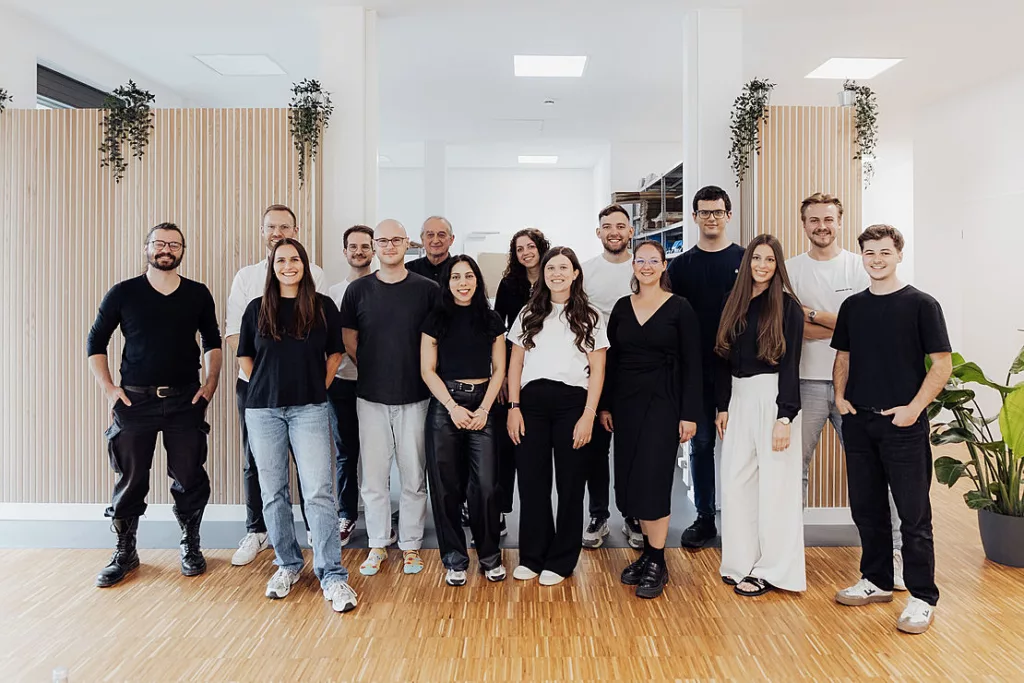
    The Optocycle team | (c) Optocycle

    How do you see Optocycle’s work contributing to a future where AI research has a long‑term, positive, and sustainable impact on society?

    At Optocycle, we see our work as a very applied example of how AI can drive tangible, long-term positive impact, particularly in industries that have historically been difficult to transform, such as construction and circular materials management.

    Our core contribution lies in using AI and advanced sensing technologies to make material flows transparent and measurable. This is a prerequisite for any functioning circular economy. Today, a significant share of valuable materials is still downcycled or lost entirely because there is insufficient data about their composition and quality. By generating reliable, real-time data, we enable better decision-making across the value chain, from sorting and recycling to reintegration into new products.

    From a sustainability perspective, this directly contributes to reducing waste, lowering CO₂ emissions, and preserving finite resources. But beyond the environmental aspect, we also see a structural impact: AI, when deployed thoughtfully, can help modernize traditionally analog industries and make them more efficient, data-driven, and resilient.

    Importantly, we believe that the long-term societal value of AI will depend less on abstract breakthroughs and more on its integration into real-world systems. Our approach is therefore to embed AI into physical processes with clear economic and ecological benefits. This ensures that the technology is not only innovative, but also scalable, economically viable, and aligned with sustainability goals

    What was the biggest lesson you learned from your founding journey? And what advice would you give to others who are considering taking the leap?

    The biggest lesson from our founding journey has been the importance of building solutions strictly around real customer needs, not for the sake of technology or innovation itself. Especially in deeptech and AI, there’s a strong temptation to develop sophisticated solutions first and look for applications later. In practice, that approach rarely leads to sustainable businesses.

    What truly made a difference for us was maintaining a strong customer focus from early on: deeply understanding pain points, validating assumptions quickly, and iterating based on real-world feedback. This ensures that what you build is not only technically impressive, but also commercially relevant and scalable.

    For anyone considering taking the leap, the advice would be: stay as close to your customers as possible. Talk to them early, challenge your own assumptions, and be willing to adapt your solution, even if that means pivoting away from your original idea. Execution matters, but direction matters more, and that should always be guided by real demand.


    To celebrate Cyber Valley’s ten-year anniversary, we’ll be sharing a variety of content across our website and social media channels reflecting on milestones from the last decade. Stay tuned for the next installments! 

  • Cyber Valley Impulse on govtech and cybersecurity

    Cyber Valley Impulse on govtech and cybersecurity

    This edition of Cyber Valley Impulse focuses on govTech and cybersecurity. Experts from research, industry, the public sector, and the innovation ecosystem will exchange insights on how AI-driven technologies can strengthen digital governance, enhance public services, and improve cybersecurity resilience.

    As part of the Cyber Valley Impulse event series, this edition highlights applications of intelligent systems in government technology and cybersecurity. Advances in artificial intelligence, machine learning, and data-driven approaches are reshaping public services, digital governance, and cybersecurity, creating new opportunities for secure, efficient, and citizen-centric innovation.

    The event provides a platform for knowledge exchange, discussion, and networking between academia, industry, and the innovation ecosystem.

    What to expect

    • Insights into current developments and challenges in AI for health and life sciences.
    • A science marketplace to showcase emerging AI projects in the field.

    • Exchange between researchers, industry practitioners, and innovators.

    • Opportunities for collaboration and community building within the region.
    • Informal networking with experts and stakeholders.

    Program

    A detailed agenda, speakers, and session format will be announced soon.

  • Next Frontier AI Roadshow at Cyber Valley

    Next Frontier AI Roadshow at Cyber Valley

    SPRIND is coming to Cyber Valley as part of its Next Frontier AI roadshow—Europe’s most radical initiative for genuine technological independence in AI. Sign up for a chance to learn more about frontier AI, the challenge and to connect with like-minded individuals.

    ​SPRIND is creating the conditions for Europe to discover and define the next frontier in AI—not by catching up, but by leaping forward with entirely new paradigms. Through massive funding (initially €125 million, non-dilutive), radical technological freedom, and a foundation of European values, SPRIND is establishing the environment to build three new Frontier AI Labs for research and deployment in Europe.

    As a leading center of excellence in AI research and robotics, Cyber Valley is proud to host this stop of the roadshow, bringing together top talent from academia, startups, and industry in our ecosystem.

    ​This isn’t your typical tech conference. No auditorium marathons. No sitting through panels while secretly checking your phone. This is an open, interactive ecosystem designed to go deep into what frontier AI actually means, to hear from Europe’s AI leaders, and know more about the initiative and the challenge.

    ​It’s designed to turn curiosity into clear intent, and strangers into potential co-founders.

    ​Who should attend–and why

    Top AI talent and promising juniors. Researchers with radical ideas. Engineers ready to build. Anyone who believes Europe can set the standard, not just keep up.

    Doors open at 14:00. Program starts at 14:45.

    Come if

    • ​You’re already certain you’re applying and want to meet potential co-founders and sharpen your thesis
    • ​You’re on the fence and need to see whether this is actually for you
    • ​You have a team but need more people to fill key roles
    • ​You’re flying solo with a strong idea and need to find your first collaborator
    • ​You work at a big lab and wonder “could I do this myself?”
    • ​You’re a professor, investor or run an AI network with access to the right people and teams

    What’s on the agenda

    Inputs on the Initiative, to shake up assumptions about where the next S-curve actually is.

    Open Q&A on the fundamentals of frontier AI, the labs we want you to build, and how the €125M → €1B funding path works. Ask us anything.

    Networking and the opportunity for 1:1 time with the Next Frontier AI team. Questions about your application, your idea, the fine print? We’re excited to talk. 

    Pressure-test your frontier thesis. Not a pitch. Not a spotlight. Just an open table for real feedback on your thinking.

    ​Food and drinks throughout – Continuous, distributed, designed to keep conversations going. No forced breaks. Standing, grazing, talking.

  • Last month at Cyber Valley

    Last month at Cyber Valley

    There was a lot going on at Cyber Valley last month. Here’s a quick rundown of our highlights:

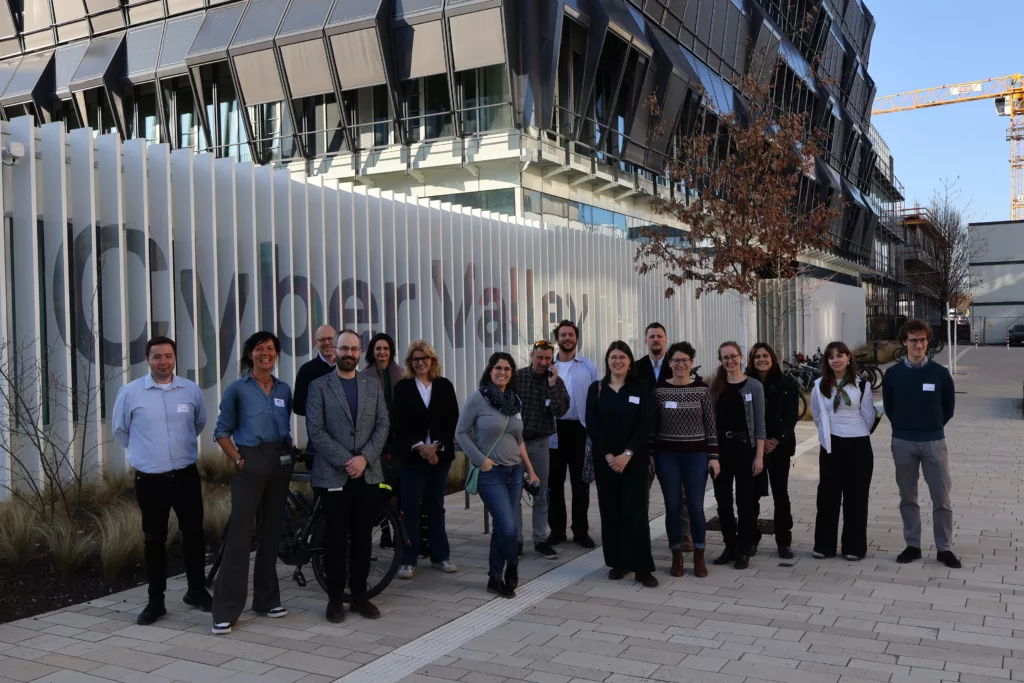
    On March 4, we had the pleasure of welcoming journalists from across Europe to Cyber Valley Tübingen. The program, organized in collaboration with the Deutsch-Französisches Institut in Ludwigsburg, offered a fantastic overview of the research, innovation, and collaboration happening across the Cyber Valley Innovation Campus. The afternoon kicked off with inputs from Florian K. Mayer (CEO of Cyber Valley GmbH), Tobias Leismann (Managing Director at ELLIS Institute Tübingen), and Philipp Hennig (Director at Tübingen AI Center). Christoph Koch, former “Journalist in Residence”, gave insights into the Journalist in Residence Program, followed by pitches from the Cyber Valley Start-up Network: Laura Neusser (Chief Communication Officer at Optocycle) and Anand Waghmare (CEO and Co-Founder of Yugen Space). The afternoon was rounded off by lab visits from Tsvetelina Alexiadis and Michael Muehlebach at the Max Planck Institute for Intelligent Systems, as well as Martin Kiefel, Co-Founder of polybot.

    Photo: Cyber Valley

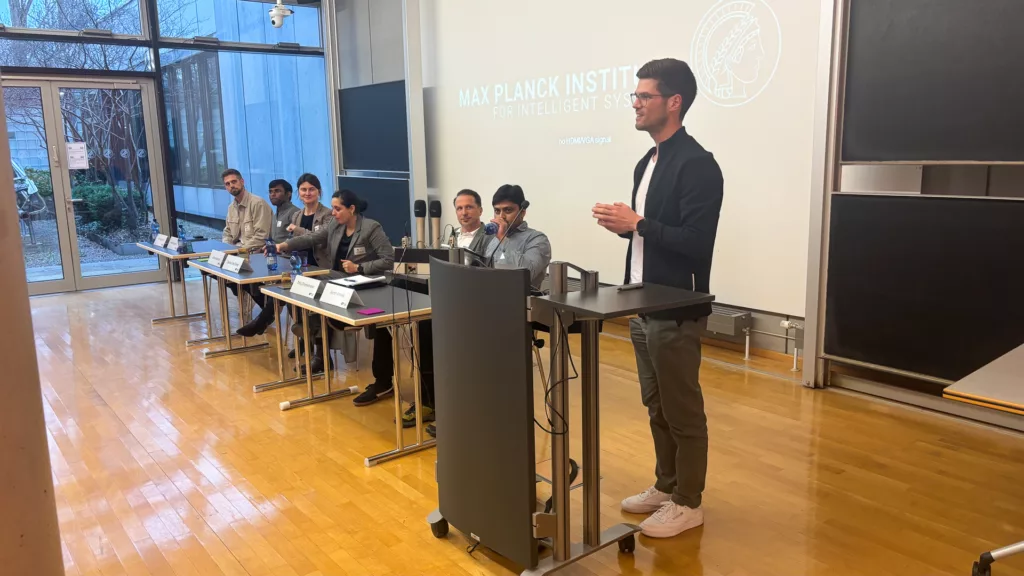
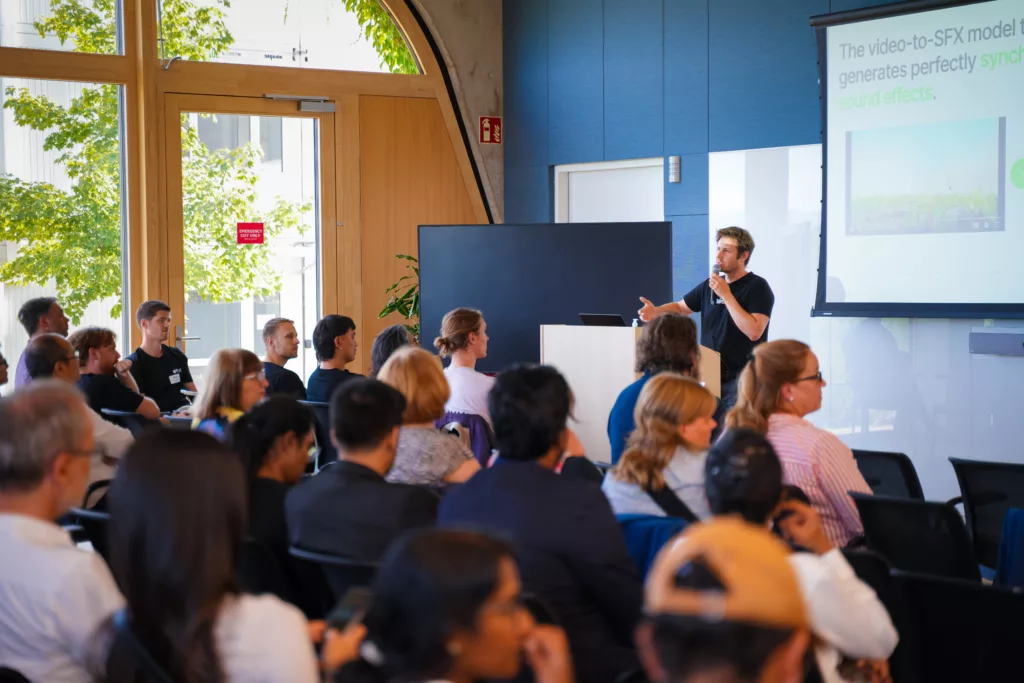
    On March 17, the Cyber Valley Impulse series began, focusing on AI in Mobility and Aerospace. Researchers, start-ups, corporates, and investors met at the Max Planck Institute for Intelligent Systems in Stuttgart to discuss vision-based perception for aerial robots, AI in aerospace systems, automated driving, and new funding opportunities in mobility technologies. Speakers included: Aamir Ahmad (University of Stuttgart), Thilo Zimmermann (Innovation Campus Future Mobility), Zamira Daw Perez (Institute of Aircraft Systems), Ulrike Weinrich (FKFS Research Institute for Automotive Engineering and Powertrain Systems), Anand Waghmare (Yugen Space), and Frederik Boenke (NUVUS).

    Photo: Cyber Valley

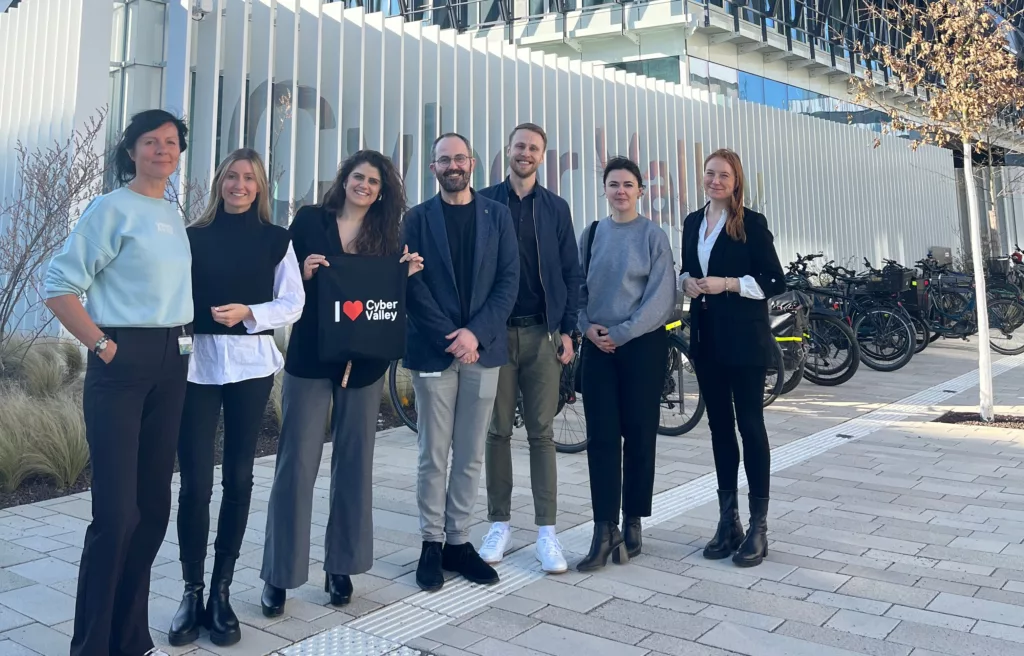
    On March 19, we were delighted to welcome representatives from IPAI and IPAI Foundation at Cyber Valley in Tübingen for an exchange on future collaboration opportunities. It was a pleasure to host Jana Strattner, Tamara Pyter, and Sofia Willhauk—three driving forces behind IPAI’s mission to build a vibrant ecosystem for applied artificial intelligence. 

    By aligning strengths and working together, we can create even greater value for the ecosystem as a whole in Baden-Württemberg—reflecting a responsible approach that also considers the social and ethical implications of AI. The exchange highlighted our common goals: accelerating the transfer of AI research into applications, strengthening networks, and building meaningful collaborations across regions. Through this collaboration, we aim to build bridges between research, society, and industry to create a vibrant ecosystem for applied AI in Baden-Württemberg.

    Photo: Cyber Valley

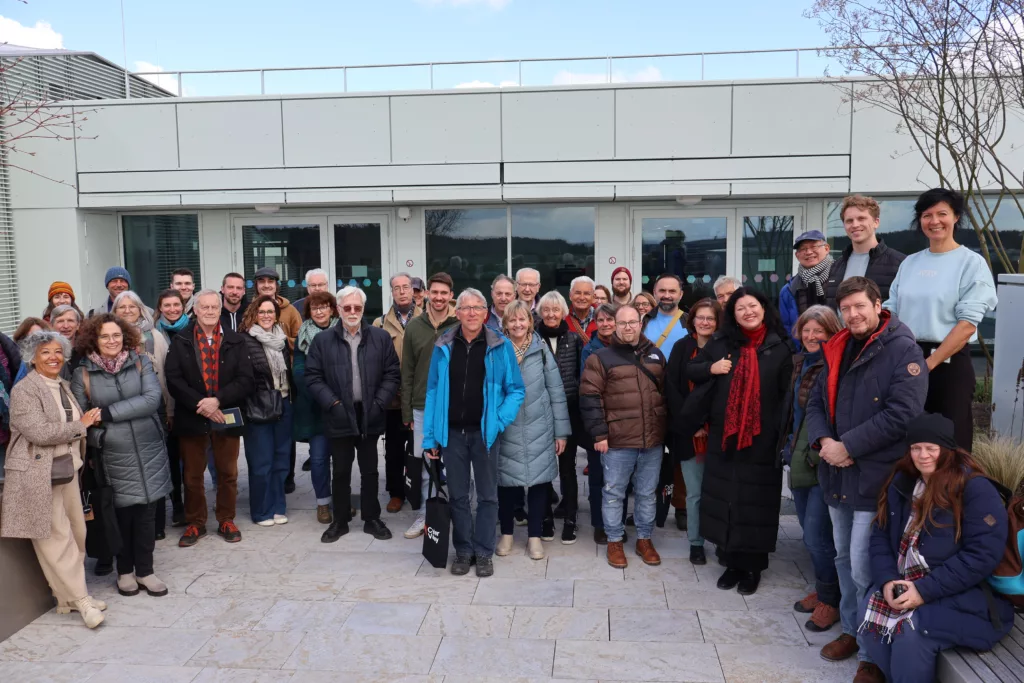
    On March 27, representatives from “Tourismus und Stadtmarketing Tübingen GmbH” visited Cyber Valley in Tübingen. Tübingen’s tour guides and Stocherkahn operators were given an introduction to the Cyber Valley Innovation Campus. After an overview presentation, our guests joined a guided tour through the campus in Tübingen. At Cyber Valley, our mission is to turn AI and robotics research into real-world solutions that benefit people, industry, and society. An important part of that is engaging with the public and opening our doors to the community. 

    That’s why we are excited to launch our upcoming Campus Tours in Tübingen, where everyone will be welcome to explore the campus and learn more about the research happening here. Dates will be announced soon.

    Photo: Cyber Valley

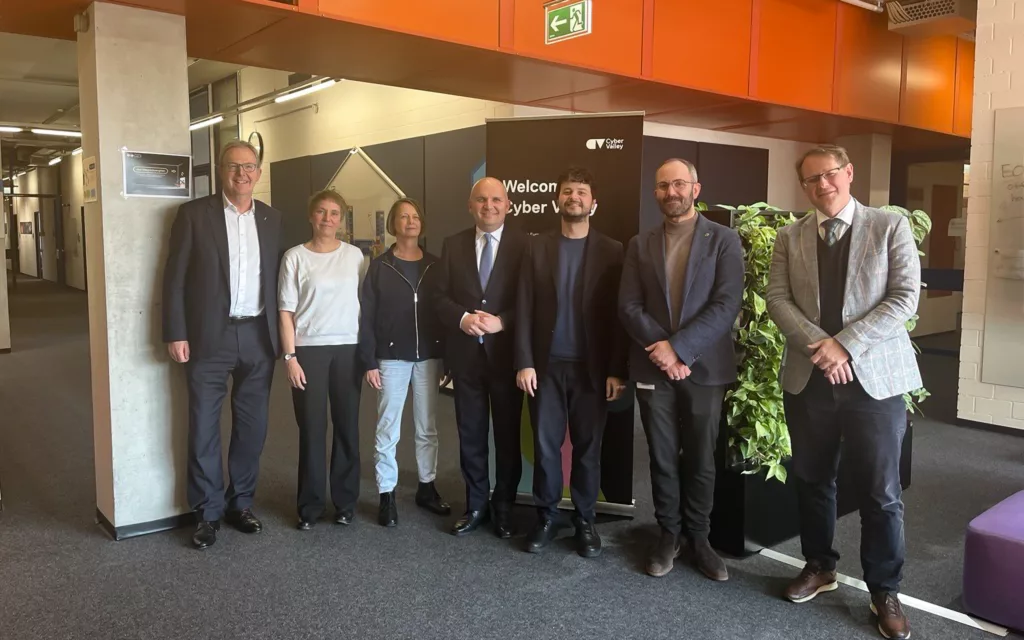
    On March 30, we welcomed members of the European Parliament Ilhan Kyuchyuk, Axel Voss, Brando Benifei, and Anze Erbeznik to Cyber Valley in Stuttgart for an engaging exchange on Europe’s evolving AI landscape. Together with Regina Ammicht Quinn and Jessica Heesen from the International Center for Ethics in the Sciences and Humanities at Eberhard Karls Universität Tübingen, as well as Florian K. Mayer, CEO of Cyber Valley GmbH, they discussed key developments shaping Europe’s AI ecosystem. Topics included European AI legislation and the EU Artificial Intelligence Act, the ethical implications of AI, digital autonomy, and questions surrounding our digital afterlife.  

    Photo: Cyber Valley
  • Another milestone for AI from the Stuttgart region

    Another milestone for AI from the Stuttgart region

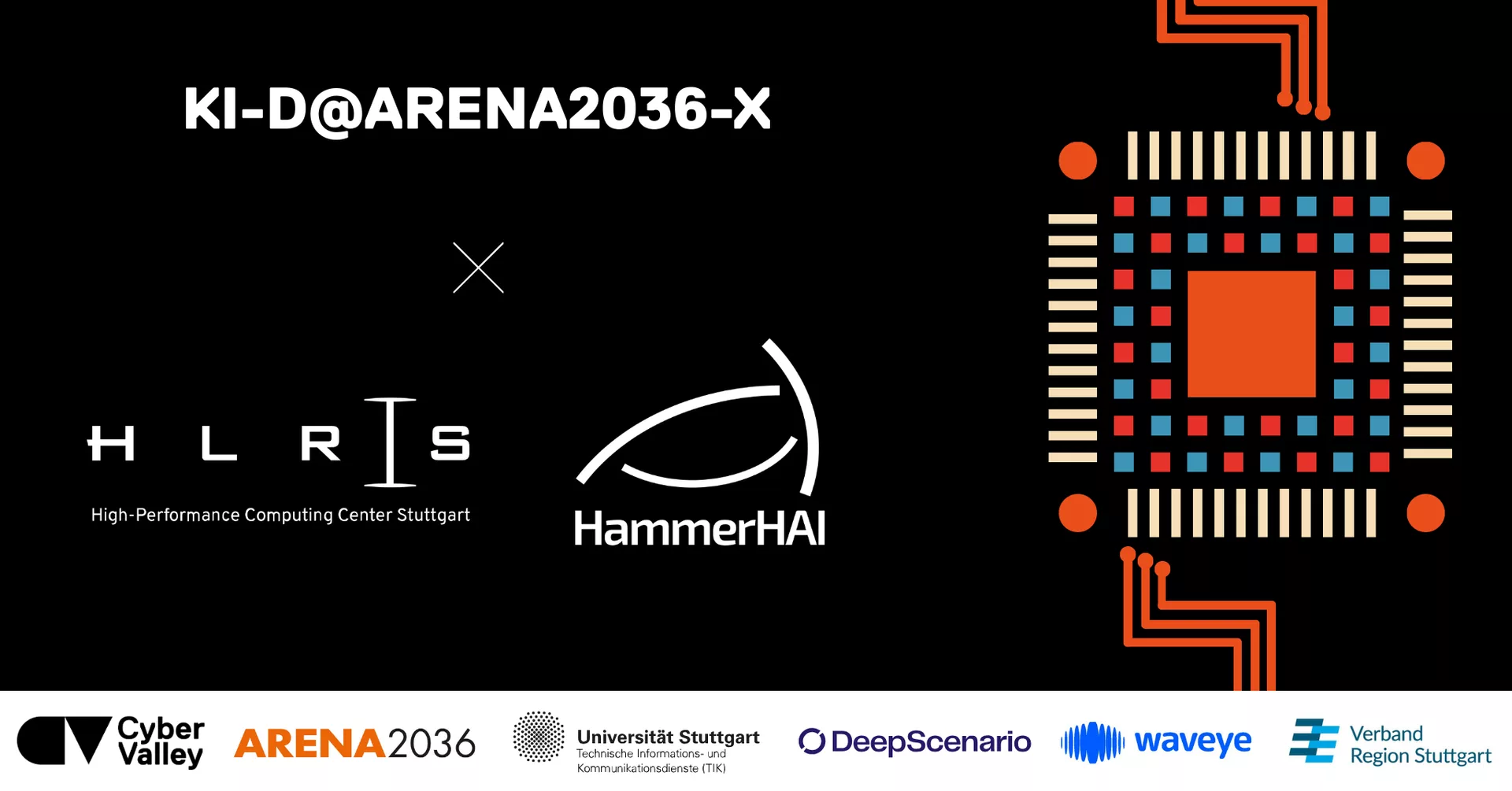
    The future of Artificial Intelligence (AI) is taking an important step forward in the heart of Baden-Württemberg: the High-Performance Computing Center Stuttgart (HLRS) is joining the ‘KI-D@ARENA2036-X” program as a new partner, contributing its expertise and computing capacity. 

    The program is jointly driven by ARENA2036, Cyber Valley GmbH, DeepScenario, waveye, and the Technical Information and Communication Services of the University of Stuttgart (TIK).

    With HLRS joining the initiative, the program gains an important new partner. This collaboration provides access to the infrastructure project HammerHAI. Starting in mid-year, extensive AI computing resources will be available across the entire development chain—from smaller systems directly integrated into machines or devices to powerful high-performance computing systems. This will make it possible to train and deploy very large and complex AI models.

    Infrastructure designed to accelerate AI development

    As part of the initiative, the partners are building an open IT and data infrastructure, including access to a data space for the sovereign exchange of data. The goal is to provide companies with easy access to powerful resources for AI applications—from the initial idea to practical deployment within companies. At the center of this effort is the networking of AI systems and data. Companies will be able to use the provided infrastructure without having to build large technical systems themselves. Access will be offered at competitive costs. Start-ups as well as small and medium-sized enterprises (SMEs) will particularly benefit, strengthening their innovative capacity and competitiveness.

    This will create a scalable, transparent, and collaboratively designed system in Baden-Württemberg. Instead of a black-box approach, the project deliberately focuses on an open infrastructure.

    This infrastructure is built on three key components:

    Integrating own hardware

    Companies can integrate their own computing hardware, allowing them to flexibly expand available computing capacity and address individual requirements.

    Shared data space

    A scalable, collaborative data space with marketplaces enables different organizations to work together on datasets, AI models, and concrete use cases.

    High-performance computing with HammerHAI

    Powerful high-performance computing resources enable the training and deployment of particularly large AI models.


    A program that accelerates companies

    Participating companies in the ‘KI-D@ARENA2036-X’ program benefit from practical access to powerful AI infrastructure and a strong innovation network.

    The program offers, among other things:

    • the opportunity to test and implement new ideas and proof-of-concepts without high upfront investments
    • access to powerful high-performance IT without having to operate their own data center
    • professional exchange with other AI developers facing similar technological challenges
    • a real-world testing environment at ARENA2036 that brings together requirements from different industries

    This means the program not only supports companies in their projects—it actively accelerates the development and implementation of new AI applications.

    Voices from the project team

    Prof. Dr. Peter Middendorf, Rector of the University of Stuttgart:

    “The IT and data infrastructure of ‘KI-D@ARENA2036-X’ is another important building block in our innovation ecosystem. The University of Stuttgart contributes to the success of this project through its Technical Information and Communication Services and as a partner of ARENA2036. I am therefore particularly pleased that the High-Performance Computing Center Stuttgart (HLRS) is now joining as another strong partner. With its powerful computing infrastructure, HLRS will support companies and start-ups in testing and optimizing state-of-the-art AI applications.”

    Dr. Alexander Lahl, Regional Director of the Verband Region Stuttgart:

    “Together with the HammerHAI infrastructure project, an important nucleus for AI development is emerging in the region. Start-ups and especially small and medium-sized enterprises will benefit greatly from this initiative. Through our support, we are significantly strengthening the Stuttgart Region as a location for AI applications and data infrastructures. At the same time, this project highlights the importance of collaboration across research, industry, and regional partners.”

    Michael Kaiser, Managing Director of Wirtschaftsförderung Region Stuttgart GmbH (WRS):

    “The collaboration between ‘KI-D@ARENA2036-X’ and HLRS and its European AI Factory HammerHAI is another important building block for the AI ecosystem of the Stuttgart Region. It enables companies to train and use very large AI models using efficient high-performance computers—without having to operate their own data center. This opens up new opportunities in AI development and application, especially for small and medium-sized companies.”

    Angelina Jukic, Program Manager at Cyber Valley GmbH:

    “Our goal within the KI-D@ARENA2036-X program is to create a highly connected ecosystem that brings together research, start-ups, and industry. This will make the development and training of AI models more efficient. HammerHAI is one of Germany’s leading AI computing infrastructures and works together with ARENA2036 on forward-looking solutions.”


    Project status and outlook

    Following the successful establishment of the basic infrastructure during the first year of the project, the program will enable operational access to the available computing and data resources in 2026.

    About the KI-D@ARENA2036-X program

    The KI-D@ARENA2036-X program is jointly implemented by ARENA2036, Cyber Valley GmbH, DeepScenario, waveye, and the Technical Information and Communication Services (TIK) of the University of Stuttgart. The goal is to build a collaborative infrastructure that accelerates AI innovation in Baden-Württemberg while ensuring security, transparency, and long-term economic sustainability.

    The program is funded by the Verband Region Stuttgart within the Co-Financing Program for Artificial Intelligence from 2024 to 2027 with a total of €685,000.

    Presscontact:

    Silke Dutz

    Public Outreach Manager      

    Email: silke.dutz@cyber-valley.de   

  • Cyber Valley Impulse on Mobility and Aerospace

    Cyber Valley Impulse on Mobility and Aerospace

    Join us for the first event of our new series “Cyber Valley Impulse”. It is dedicated to the role of AI in shaping the future of mobility and aerospace. This event brings together leading scientists, innovative start-ups, corporates, and investors who will share their research, success stories, and AI-driven breakthroughs.

    As part of the Cyber Valley Impulse event series, this edition focuses on the application of intelligent systems in mobility and aerospace. These sectors are rapidly evolving through advances in artificial intelligence, robotics, and data-driven technologies, creating new opportunities and challenges across reseach and industry.  

    A highlight of the event is our research marketplace, an open space to explore emerging AI projects, exchange insights, and connect with entrepreneurs and potential collaborators from academia and industry.

    Program

    15:00: Registration and Check-in

    15:30: Cyber Valley Impulse Welcome

    15:40: Get-Together Circles

    16:30: Science Impulses

    • “Vision-based perception and autonomous control of aerial robots” by Aamir Ahmad, Institute of Flight Mechanics and Controls, University of Stuttgart
    • “ICM – Research and funding opportunities in manufacturing systems & mobility technologies” by Thilo Zimmermann, InnovationCampus Future Mobility (ICM)
    • “Usage of AI in aerospace systems” by Zamira Daw Perez, Institute of Aircraft Systems, University of Stuttgart
    • “Automated driving” by Ulrike Weinrich, Electronics & Mobility, FKFS Research Institute for Automotive Engineering and Powertrain Systems Stuttgart

    17:15: Break

    17:30: Start-up Impulses

    • Anand Waghmare, Yugen Space
    • Frederik Boenke, NUVUS

    17:50: Q&A

    18:15: Science Marketplace and Networking

  • Cyber Valley and UTokyo IPC Announce Yugen Space as Winner of ‘Valley and Sunrise’ – Market Exploration Program

    Cyber Valley and UTokyo IPC Announce Yugen Space as Winner of ‘Valley and Sunrise’ – Market Exploration Program

    STUTTGART/TÜBINGEN, TOKYO, March 3, 2026 – Cyber Valley GmbH und UTokyo Innovation Platform Co., Ltd. have announced Yugen Space as the winner of the ‘Valley and Sunrise’ Program’s first edition.

    The ‘Valley and Sunrise’ Program empowers start-ups working in AI and robotics to find entry into the Japanese market. Driven by its goal of fostering international growth, the program offers participants hands-on mentorship, strategic insights, and access to UTokyo IPC’s network of industry leaders and partners.

    ‘We designed Valley and Sunrise to help talented founders accelerate their impact,’ said Angelina Jukic, Program Manager of Valley and Sunrise at Cyber Valley GmbH. ‘The quality of applications was exceptional, and our judges were impressed with how Yugen Space combined a bold vision with real-world traction.’

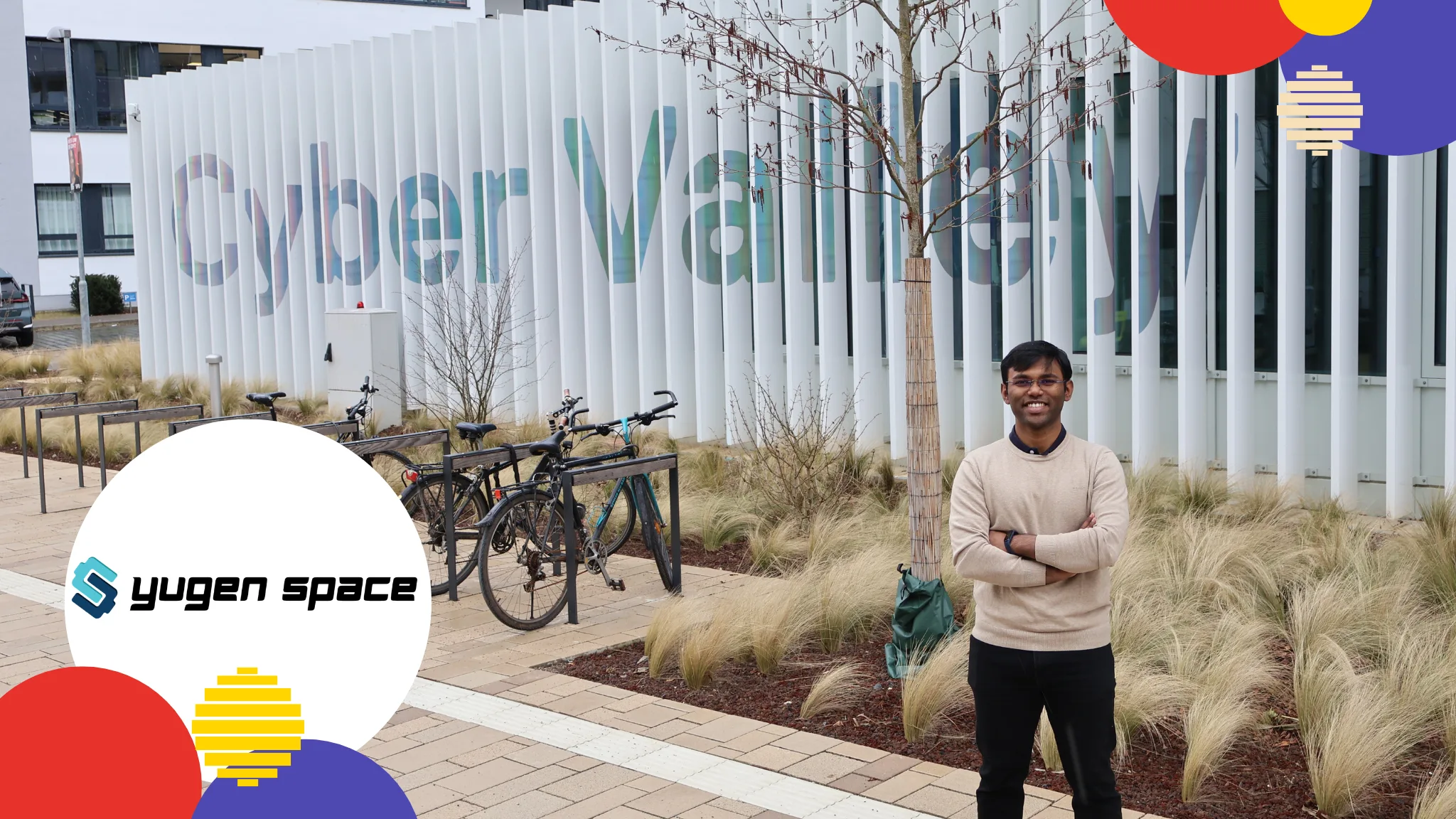
    Yugen Space was selected from a highly competitive pool of applicants for its innovative approach as well as its strong market potential. The start-up was founded by Anand Waghmare (CEO) and Parikshit Joshi (CTO) in June 2025 and has its headquarters in Tübingen. Yugen Space’s mission is to build the intelligence engine for satellite-driven decisions.

    Yugen Space combines raw satellite imagery and real-world decisions. It integrates multi-source satellite data, applies scientific and machine learning models, and converts planetary signals into decision-ready intelligence. Users select a location, ask a question, and receive decision-ready insights within minutes. 

    Over the course of the program, Yugen Space will work closely with mentors and industry experts to refine its market strategy and develop a roadmap for scaling its products and services.

    Anand Waghmare, CEO of Yugen Space:

    ‘Being selected for the Valley and Sunrise program is a pivotal milestone for Yugen Space. It allows us to bridge two of the world’s most advanced AI and deep-tech ecosystems: Cyber Valley here in Germany and UTokyo IPC in Japan. For us, this is a vital opportunity to scale our mission of democratizing planetary intelligence internationally. We look forward to working with Japanese industry leaders to prove how our products can solve complex environmental and industrial challenges on a global scale.’ 

    Hideki Nagasaka, Partner and Director, 1stRound, UTokyo IPC:

    ‘This selection marks a meaningful milestone in the collaboration framework we have steadily built between Japan and Germany over the years. We are confident that this milestone will serve as a critical step for Yugen Space as it accelerates its business development with a clear view toward expansion into the Japanese market. Through this initiative, we hope not only to contribute to the continued growth of the German innovation community, including Cyber Valley, but also to further deepen the ties between the German and Japanese ecosystems. We remain committed to strengthening the Japan-Germany network and advancing sustainable, long-term collaboration.‘

    For more information about Valley and Sunrise and future opportunities, visit: https://cyber-valley.de/en/websites/cyber-valley/pages/valley-and-sunrise-program/

    About UTokyo IPC

    UTokyo Innovation Platform Co., Ltd. (UTokyo IPC) is a venture capital firm wholly owned by the University of Tokyo, established in 2016 to strengthen Japan’s global industrial competitiveness through startup investment and ecosystem building. As a public–private venture capital firm, UTokyo IPC has invested in more than 80 university-affiliated startups and venture funds both in Japan and overseas. Beyond investment, UTokyo IPC operates the Startup Building Program, which supports the commercialization of research outcomes; 1stRound, Japan’s largest academia-linked accelerator; and DeepTech Dive, a program dedicated to cultivating deep-tech talent. In 2024, UTokyo IPC launched the ASA Fund under the Tokyo Metropolitan Government’s initiative to promote global collaboration and establish Japan as a hub for deep-tech innovation.

    About Cyber Valley

    Cyber Valley is Europe’s largest and leading center for excellence in artificial intelligence and modern robotics. Its mission and public mandate are to advocate for research, development, application, and acceptance of technologies and methods in intelligent systems. Cyber Valley encourages entrepreneurship by uniting scientific excellence with innovation and technology transfer. In addition, Cyber Valley facilitates critical reflection on the ethical and social implications of AI through public engagement. Cyber Valley envisions a future in which the full potential of intelligent systems is leveraged for the greater good of the world.

    Media Contact

    Silke Dutz, Cyber Valley GmbH: silke.dutz@cyber-valley.de

    Akiko Tsuchiya, UTokyo IPC: info2@utokyo-ipc.co.jp

  • Health Network

    Health Network

    About the Cyber Valley Health Network

    The Cyber Valley Health Network strengthens the cooperation between science and industry that utilize artificial intelligence and modern robotics in health and medical fields. The Network provides an ecosystem that brings together players working on this important intersection to consolidate Germany’s position as a beacon for artificial intelligence and improve global health. The Health Network promotes joint AI and health/medicine initiatives, supports start-ups and corporate innovations, and provides members access to relevant networks and business opportunities.

    ContacT

    Alina Benze is dedicated to building strong relationships with corporate partners. She connects them with start-ups, technologies, and leading researchers from Baden-Württemberg to enable impactful partnerships and successful knowledge transfer.

    Academic and state partners

    • Max Planck Institute for Intelligent Systems
    • University of Stuttgart
    • University of Tübingen

    Corporate partners

    • BioPro
    • BioRegio Stern
    • Boehringer Ingelheim
    • CeGat
    • Immatics
    • Medical Innovations Incubator GmbH
    • Ovesco
    • Roche
    • Zeiss

    Start-ups

    • Actimi
    • AIRAmed
    • Ambigate
    • Auditect
    • BinDoc
    • Biocompile
    • BrainKey
    • Cerebri Health
    • Cytolytics
    • Deep Care
    • Deep Scenario
    • dxOmics
    • Earlytrace
    • EndoSurge
    • Hellstern Medical
    • IntegraSkin
    • Medicalvalues
    • MiraVision Gmbh
    • OSORA
    • SKAI
    • Vicinity Bio
    • Visual Abstract
  • Cyber Valley AI Incubator

    Cyber Valley AI Incubator

    Supercharge your start-up idea!

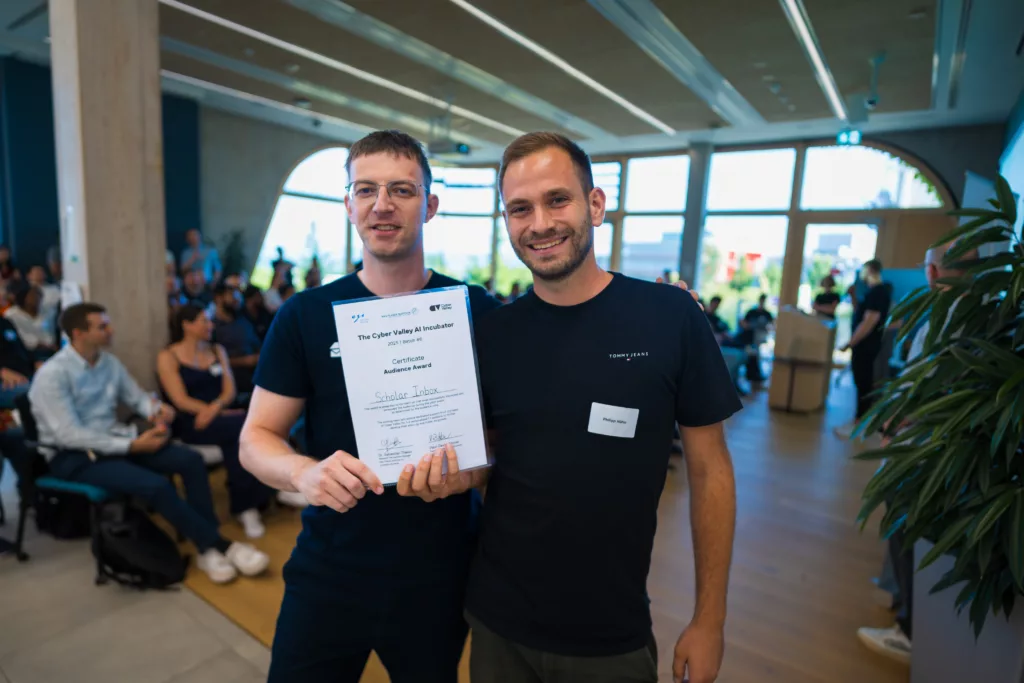
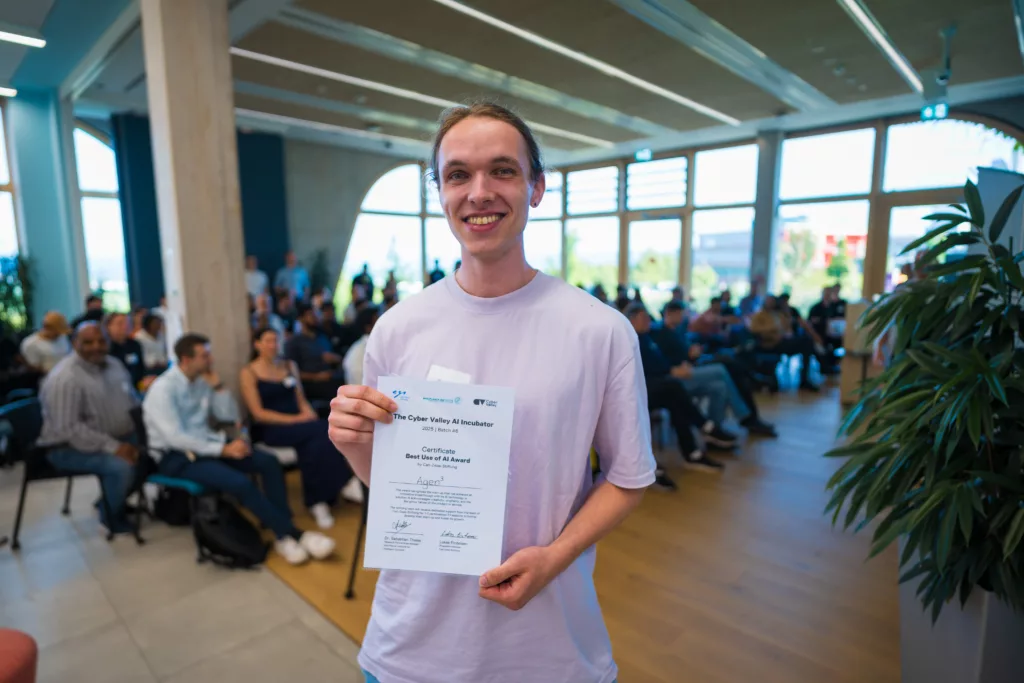
    The Cyber Valley AI Incubator empowers scientists and entrepreneurs with ingenious AI ideas. Begin your entrepreneurial journey and give your business ideas a successful lift-off! 

    Take advantage of start-up experts from the Cyber Valley Community, who will be on board to support the success of all participating teams.

    Interested?

    Check out the new

    Cyber Valley AI Incubator

    website and register

    for Batch #9!

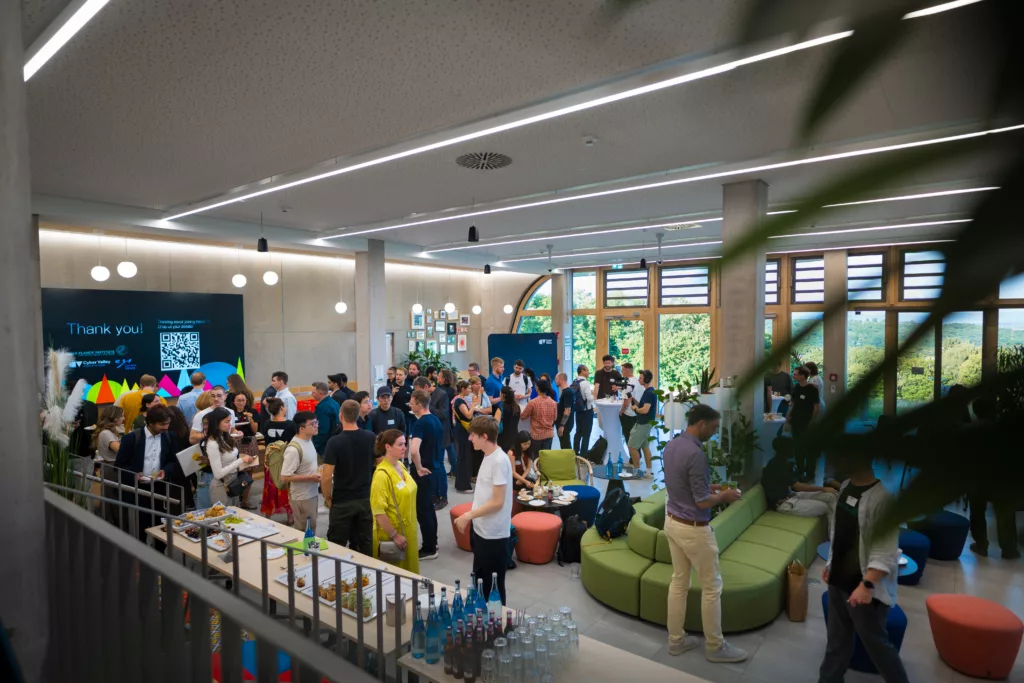
    The Cyber Valley AI Incubator in action

    You are currently viewing a placeholder content from YouTube. To access the actual content, click the button below. Please note that doing so will share data with third-party providers.

    More Information

    Organizers of the Cyber Valley AI Incubator

    The Cyber Valley AI Incubator is organized by the Max Planck Institute for Intelligent Systems, and funded by the Carl-Zeiss-Stiftung. Partners and start-up experts from the Cyber Valley Community will be on board to promote the success of all active participating teams. 


    The Max Planck Institute for Intelligent Systems spans two campuses in Stuttgart and Tübingen, working together toward a common goal: advancing the frontiers of artificial intelligence and robotics. By combining our expertise, we explore the fundamental principles of intelligent systems from multiple perspectives.

    The Carl-Zeiss-Stiftung’s mission is to create an open environment for scientific breakthroughs. As a partner of excellence in science, it supports basic research as well as applied sciences in the STEM subject areas (science, technology, engineering and mathematics). Founded in 1889 by the physicist and mathematician Ernst Abbe, the Carl-Zeiss-Stiftung is one of the oldest and biggest private science funding institutions in Germany. It is the sole owner of Carl Zeiss AG and SCHOTT AG. Its projects are financed from the dividend distributions of the two foundation companies.

    Cyber Valley is Europe’s leading center for excellence in advanced AI and robotics. Cyber Valley creates a vibrant ecosystem that enables seamless collaboration and rapid exchange between academia, business and society.

    As an ambassador for entrepreneurship, Cyber Valley’s mission is to strengthen the research, development, and application of intelligent systems, providing a platform for collaboration, resource sharing, and advancement of modern AI and robotics. With a focus on the ethical and societal aspects of AI, Cyber Valley fosters dialogue between society and AI researchers and strives for a future in which the full potential of intelligent systems is used for the benefit of society.

    Organizers

    • Max Planck Institute for Intelligent Systems
    • Carl Zeiss Stiftung