User Group: Investor

  • Startup:con Tübingen #6

    Startup:con Tübingen #6

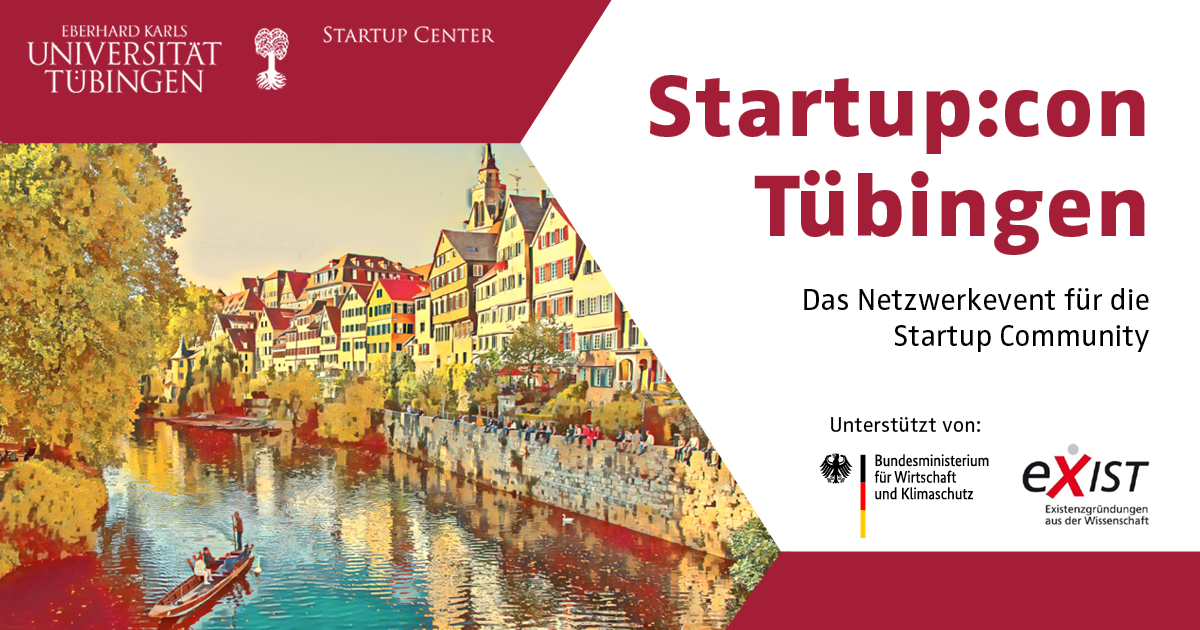
    Am  Donnerstag, dem 22.09.2022, ab 15:30 Uhr startet die sechste Runde der Startup:con Tübingen im Brauwerk Freistil.

    Erfolgreiche Kommunikation ist für Start-ups essenziell. Daher befasst sich das Netzwerk-Event des Startup Center der Universität Tübingen dieses Mal mit den Themen Marketing & PR.

    Darauf könnt ihr euch freuen:

    • Live-Podcast-Show mit dem Podcastduo von Spätzle Valley (Chris Veit und Sebastian Demuth)
    • Learn from the best mit den Startups Marktpilot und Kernique – Wie kommunizieren Start-ups erfolgreich? 
    • Open Pitches: Stelle dich und/oder dein Start-up vor!
    • Lerne andere Start-ups, Supporter und Gründungsinteressierte kennen
    • Live-Musik und Lounge im Freistil Biergarten

    Trefft außerdem Patrick Klügel (Public Engagement Manager) und Tobias Dürr (Innovation Manager) am Cyber Valley Stand und sichert euch ein kostenloses Ticket für eine Führung durch den KI-Makerspace.

    Treffpunkt ist im Brauwerk Freistil in der Wöhrdstr. 25 in Tübingen und die ersten 100 Anmeldungen erhalten ein Freigetränk.


    Registrierung

    Hier könnt ihr euch anmelden.

  • 1.5 million euros for micro-medical robots 

    1.5 million euros for micro-medical robots 

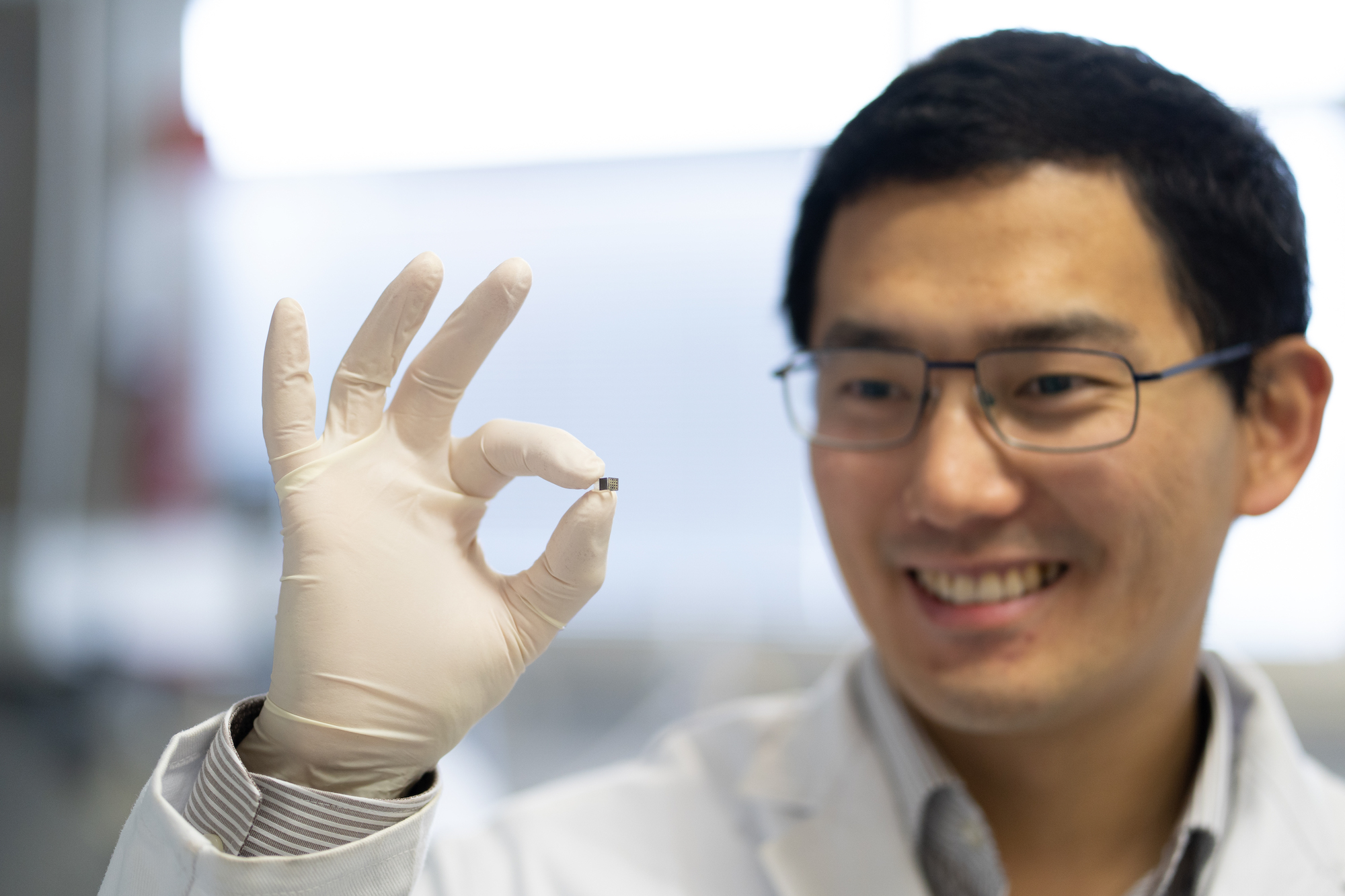
    How could drugs be used in the body in a more targeted way in the future? Biomedicine could provide an answer. Dr. Tian Qiu is researching tiny robots that travel through the human body. Tian Qiu and his team already succeeded in steering nanorobots through the dense tissue of an eyeball for minimally invasive drug delivery, which had never been achieved before.

    In the “VIBEBOT” project, Qiu and his team are taking this approach further: They are going to build the first micro-sized robot that can actively propel and wirelessly sense in deep biological tissues. For the project, Qui was inspired by nature: “We know that worms, for example, can penetrate human skin to infect humans. Why can't we build a similar-sized robotic system that can penetrate soft tissue to treat disease?” Research on this holds enormous potential for future minimally invasive medicine, “such as targeted drug delivery for tumor therapy,” Qiu said.

    Tian Qiu has been Cyber Valley research group leader for “Biomedical Microsystems” since 2019. The group is based at the Institute of Physical Chemistry at the University of Stuttgart. Previously, he studied mechanical and biomedical engineering at Tsinghua University in Beijing, which is considered China's leading technical university. He came to Europe in 2012, earning a PhD in biotechnology and bioengineering at Switzerland's Ecole Polytechnique Fédérale de Lausanne (EPFL) and conducting research at the Max Planck Institute for Intelligent Systems (MPI-IS).

    With the ERC Starting Grants, the European Research Council supports outstanding young scientists for innovative projects in basic research. The ERC evaluates the applications exclusively according to the criterion of scientific excellence. The research project “VIBEBOT” will receive funding of 1.5 million euros; the funding will run for five years. With the new grant, the University of Stuttgart is home to twelve active ERC grants, including six ERC Starting Grants (overview of scientists at the University of Stuttgart who have been awarded an ERC Grant). Two other Cyber Valley researchers were also awarded ERC Grants, an ERC Starting Grant and an ERC Consolidation Grant.

    _______________
    Further information
    From researcher to founder
    Scope of Cyber Valley research expanded to include intelligent biomedical microsystems

  • ETFA 2022

    ETFA 2022

    Über die ETFA

    Die ETFA 2022 ist die 27. Konferenz der IEEE Industrial Electronics Society (IES), die sich auf die neuesten Entwicklungen und neuen Technologien im Bereich der Industrieautomation konzentriert. Ziel der Konferenz ist die Verbreitung neuartiger Ideen und aufkommender Trends, Forschungsergebnisse und praktischer Errungenschaften. Die ETFA 2022 findet vom 6. bis 9. September 2022 statt. Sie bietet die Gelegenheit, sich zu vernetzen, Partnerschaften aufzubauen und Ideen auszutauschen, sowohl mit Branchenführern als auch mit einer Vielzahl erfahrener Wissenschaftler:innen, Entwickler:innen und Praktiker:innen aus verschiedenen Branchen, Universitäten und Forschungsinstituten.


    Cyber Valley auf der ETFA

    Cyber Valley, Europas größtes KI-Forschungskonsortium, wird auf der ETFA 2022 ab dem 7.September mit einem Stand vertreten sein und spannende Einblicke in die KI-Forschung sowie Innovationen und Start-ups aus dem Themenfeld der künstlichen Intelligenz. Kommen Sie gerne vorbei!


    Ort

    Die Konferenz ETFA 2022 findet an der Universität Stuttgart statt, Pfaffenwaldring 47, 70569 Stuttgart, Deutschland.


    Anmeldung

    Zur Anmeldung

  • ERC Consolidator Grant for Georg Martius

    ERC Consolidator Grant for Georg Martius

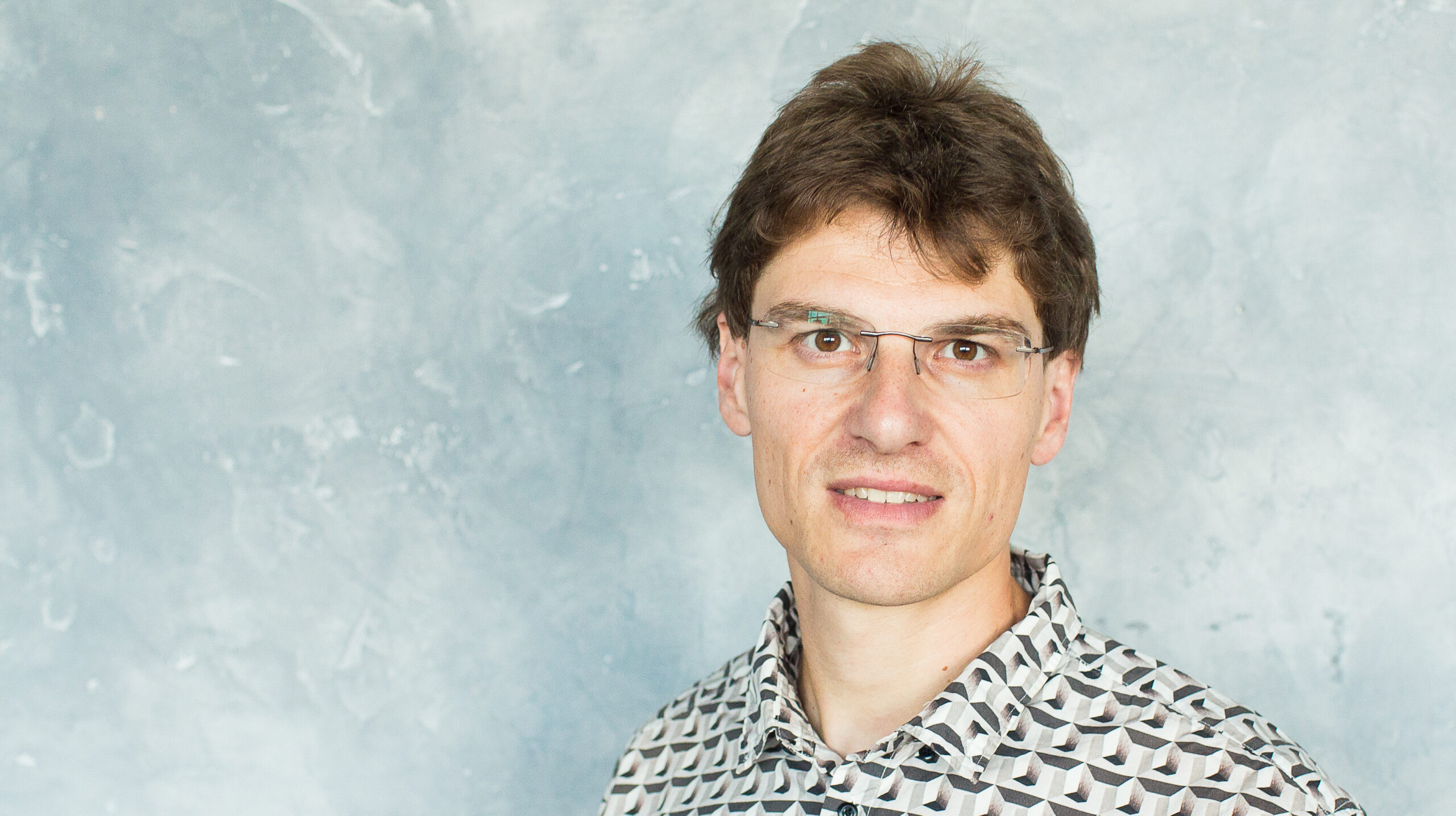
    Georg Martius’ project “REAL-RL = Model-based Reinforcement Learning for Versatile Robots in the Real World” will receive funding of two million euros from January 1, 2023. The funding will run for five years.

  • Cyber Valley makes strong showing at ICML 2022

    Cyber Valley makes strong showing at ICML 2022

    Like last year, Cyber Valley partner institutions successfully submitted 23 scientific articles to the ICML. The conference, held this year in Baltimore, USA, began on July 17 and continues through July 23.

    “Our enduring presence at leading global conferences such as ICML is not only a testament to the quality of research at Cyber Valley partner institutions, but also that we have established ourselves broadly at the international level,” says Philipp Hennig, professor of machine learning methods at the University of Tübingen and deputy speaker of the Cyber Valley Executive Board.

    Since Cyber Valley was founded at the end of 2016, the dynamic AI ecosystem in the Stuttgart/Tübingen region has consistently gained momentum in the fields of machine learning, robotics, and computer vision. In addition to attracting world-class senior scientists, Cyber Valley’s graduate programs have quickly gained a solid international reputation among young researchers in the field of modern AI.

    A full list of papers and authors is available below.

  • ERC Starting Grant for Philipp Berens

    ERC Starting Grant for Philipp Berens

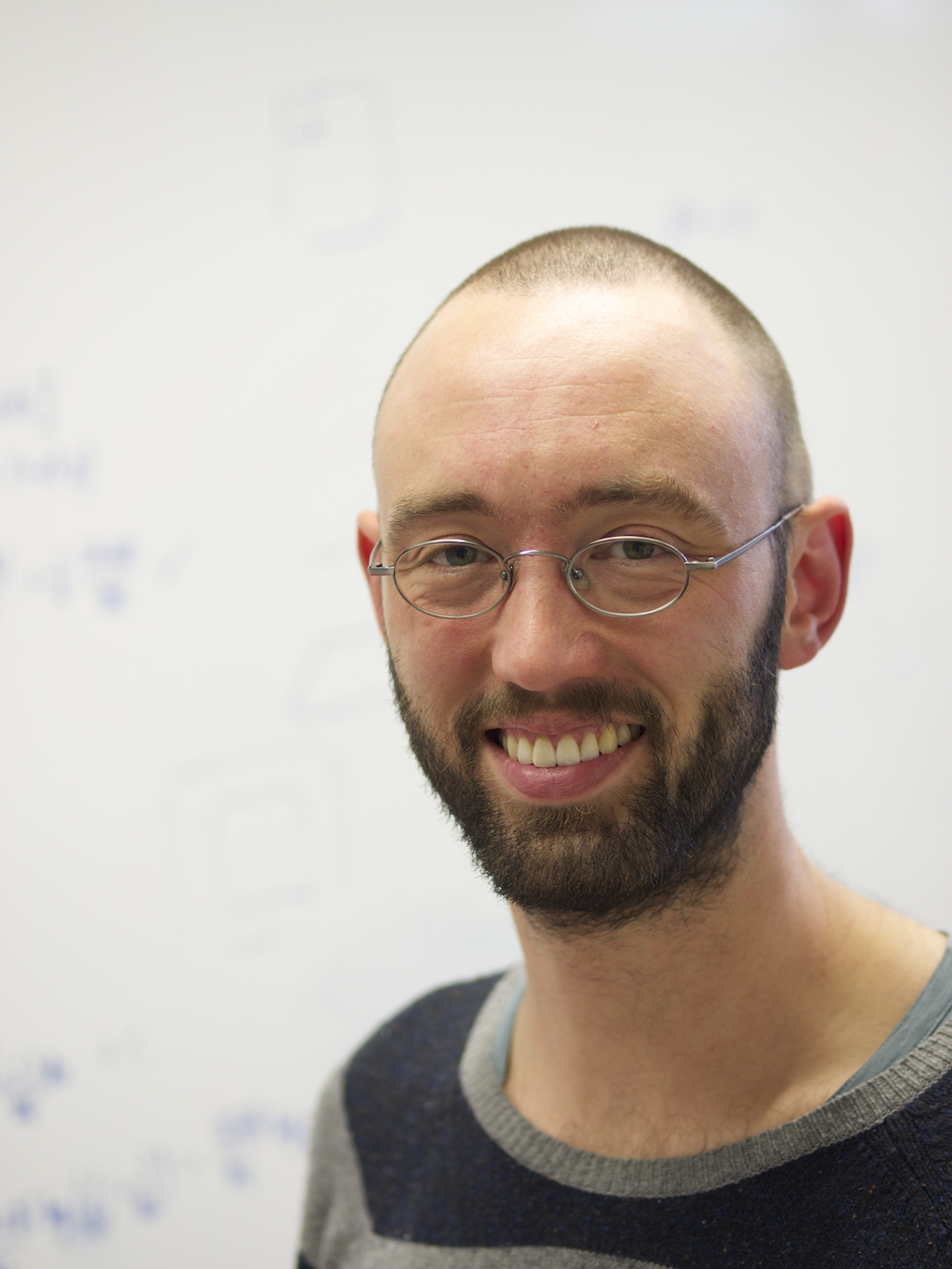
    Vision is one of the most important senses for many animals as well as for humans. However, the retina of the eye, which is also called the retina, has not been fully explored to date. The amacrine cells in particular still puzzle researchers. These special nerve cells are cross-connected with the other nerve cell layers of the retina and form the main class of inhibitory cells. More than 60 types of amacrine cells are now known from the mouse retina – they differ, for example, in their appearance, function and circuitry. They are particularly challenging for modeling because their activity is difficult to measure and their function can only be inferred from their interconnection in the network.
     
    To better understand their role, Philipp Berens and his team are developing a new type of model in their ERC project “Next generation mechanistic models of retinal interneurons” (NextMechMod). Models have always played an important role in the history of research on information processing in the nervous system. Alan Lloyd Hodgkin and Andrew Fielding Huxley received the Nobel Prize in Medicine in 1963 for their biophysical model of ionic currents during excitation and inhibition at the nerve cell membrane, presented in 1952. This model, while very detailed, is difficult to fit to measured data. This is easier for statistical models, but these lack the relationship to biological reality.
     
    To capitalize on their respective strengths, Berens aims to develop a new generation of hybrid mechanistic model that combines the different model levels. To do this, he is taking advantage of the latest advances in machine learning and “computational neuroscience”. His team is working closely with collaborators to make the models realistic with data obtained from imaging techniques and with methods from genetics. In doing so, he hopes to develop a toolbox to decipher the role of amacrine cells during the natural processing of visual information. A better understanding of the functions of the healthy eye can form the basis for new therapies for eye diseases.
     
    Philipp Berens studied bioinformatics and philosophy at the University of Tübingen, where he also received his PhD in 2013. After spending time as a postdoctoral researcher at the Bernstein Center for Computational Neuroscience, he joined the Tübingen Institute for Ophthalmic Research as a research group leader in 2016. There, he was appointed in 2018 to a Heisenberg Professorship for “Data Science for Vision Research” funded by the German Research Foundation. Together with Professor Ulrike von Luxburg, Philipp Berens heads the Cluster of Excellence “Machine Learning: New Perspectives for Science”. He is a member of the Tübingen AI Center.

  • Almost 20 million for Tübingen AI Center

    Almost 20 million for Tübingen AI Center

    “I am very pleased that with the financial support of the federal government we can offer highly attractive working conditions in order to be at the forefront of the competition for the best AI specialists in the world. The permanent funding will make it possible to pursue a long-term research strategy, train excellent scientists in the field of artificial intelligence and bring AI technology ‘made in The Länd’ to our companies. To this end, Cyber Valley now receives another important building block,” said Science Minister Theresia Bauer in Stuttgart on Friday (July 1).

    In 2018, the German government laid the foundation for the establishment and expansion of AI lighthouses with international appeal with its AI strategy. Together with the German Research Center for Artificial Intelligence (DFKI), the five new AI centers in Baden-Württemberg, Bavaria, Berlin, North Rhine-Westphalia and Saxony form an integral part of Germany’s AI research landscape and pursue the common goal of establishing a European and internationally competitive research network that will sustainably strengthen Germany as a leading location for research, teaching and technology transfer.

    The Tübingen AI Competence Center is integrated into the Cyber Valley ecosystem as part of the University of Tübingen and the Max Planck Institute for Intelligent Systems. It has its origins in the machine learning funding program initiated by the BMBF in 2018.

    Under the motto “Machine Learning in the World,” Tübingen scientists pursue a broad range of research questions, from fundamental new methods for machine learning and causal inference to the integration of intelligent systems into the broader socio-technical environment. In doing so, the Tübingen AI Center pays close attention to societal impact, on the one hand through research, and on the other hand through target group specific offerings. In addition, the center is committed to providing targeted support and attractive positions for young scientists at all stages of their scientific careers.

  • 3.4 million euros for IRIS3D

    “I am pleased that we are taking another important step in the right direction with the IRIS3D project at the University of Stuttgart – towards value- and human-centered AI, AI ‘made in THE LÄND’. We want to understand what influence intelligent systems have on our society and how we can use them. One goal is to enter into an intensive dialogue with society beyond the boundaries of universities. Only in this way can artificial intelligence be used as a key technology with the greatest possible added value for everyone,” said Science Minister Theresia Bauer in Stuttgart on Thursday (June 9).

    The area of diversity is about ensuring that stereotypes and prejudices are not transferred to intelligent systems. “One way to achieve this is to enrich the technology with data that is as diverse as possible and thereby also keep in mind special characteristics and support needs of the respective target groups, for example mental or physical limitations,” said tenure-track professor Maria Wirzberger, co-applicant of IRIS3D and spokesperson of the interdisciplinary research forum IRIS.

    Due to demographic change, society is changing and is also becoming increasingly culturally heterogeneous. This brings with it specific requirements for the design of intelligent systems in order to enable intuitive use, for example, also for older users. The area of demography deals with these aspects.

    The third topic area of democracy is particularly significant and deals with how intelligent systems can generally influence our understanding of democracy and thus also public opinion. “So far, we have mainly noted how digitalization is attacking our democracy. With IRIS3D, however, we want to develop procedures for using digitization to strengthen our democracy,” said Professor Steffen Staab, who developed the concept of IRIS3D and is co-spokesperson of IRIS.

    The IRIS3D research project creates structures to bring science, business, educational institutions and society closer together. In the process, ideas are to be developed on how intelligent systems can enrich our future. “The goal is to reflect and analyze together, but also to research and develop. In particular, the focus will be on how AI should look and be used in the future – and how not,” said Science Minister Bauer.

    Top young scientists are to be recruited for the Stuttgart location for the three topic areas. To this end, three junior research groups will be set up at the University of Stuttgart for five years each, which will be led by up-and-coming international researchers and will conduct independent and interdisciplinary research.

    The IRIS3D project is incorporated into the Cyber Valley ecosystem as part of IRIS, the “Interchange Forum for Reflecting on Intelligent Systems”.

    More information about IRIS and its research can be found here.

  • AI & Health

    AI & Health

    Forscher:innen, Start-ups und Investoren werden aus verschiedenen Blickwinkeln Einblicke in dieses Thema geben und ihre Erfahrungen und Ideen teilen.

    Wissenschaftler:innen, Gründer:innen, Studierende und alle, die sich für das Thema "AI & Health" interessieren, sind herzlich eingeladen, am Donnerstag, den 19. Mai, 14:00-15:30 Uhr MESZ dabei zu sein.

    Sprecher:innen

    Alona Shagan
    Postdoc, Max Planck Institut für Intelligente Systeme

    Milad Geravand
    CEO, Deep Care GmbH

    Manuel Heurich
    CEO, BinDoc GmbH

    Stephan Rauscher
    Partner, UNI-X

    Registrierung

    Bitte hier registrieren. Das Event findet via Zoom und in englischer Sprache statt.

    Kontakt

    Oliwia Gust –  Event Manager
    Telefon: +49 7071 601 1554
    Mobil: +49 151 4075 6302 
    E-Mail: oliwia.gust@cyber-valley.de

  • From business idea to seed funding

    From business idea to seed funding

    Um ein erfolgreiches Unternehmen aufzubauen, durchlaufen Gründer:innen verschiedene Phasen: von der ersten Idee für ein neues Start-up über die Akquise der ersten Kunden und die Entwicklung einer Wachstumsstrategie bis hin zur Zusammenarbeit mit Investoren und dem Abschluss einer Seed Finanzierungsrunde.

    In der nächsten Ausgabe unserer Cyber Valley Entrepreneurship Series werden Sprecher:innen aus dem Cyber Valley-Ökosystem ihre Erfahrungen teilen und darüber sprechen, wie man eine Geschäftsidee formuliert und ein Start-up aufbaut.
     
    Wissenschaftler:innen, Gründer:innen, Studierende und alle, die sich für dieses Thema interessieren, sind herzlich eingeladen, am Donnerstag, den 28. April, von 14:00-15:30 Uhr MESZ dabei zu sein.

    Sprecher:innen

    Michael Kosinski
    Strategy & Growth Executive, MARKT-PILOT GmbH

    Olga Mordvinova
    CEO incontext.technology GmbH

    Matthias Brunner
    Gründer & Geschäftsführer, tsenso GmbH

    Ferran Giones
    Stellvertretender Direktor Institut für Entrepreneurship und Innovationsforschung, Universität Stuttgart

    Registrierung 

    Bitte hier registrieren. Das Event findet via Zoom und in englischer Sprache statt.

    Kontakt

    Julia Schmaus – Innovation Manager
    E-mail: julia.schmaus@cyber-valley.de
    Telefon: +49 7071 601 1546
    Mobil: +49 151 6452 0213