User Group: Journalist

  • European Commission Vice-President Vestager visits Cyber Valley

    European Commission Vice-President Vestager visits Cyber Valley

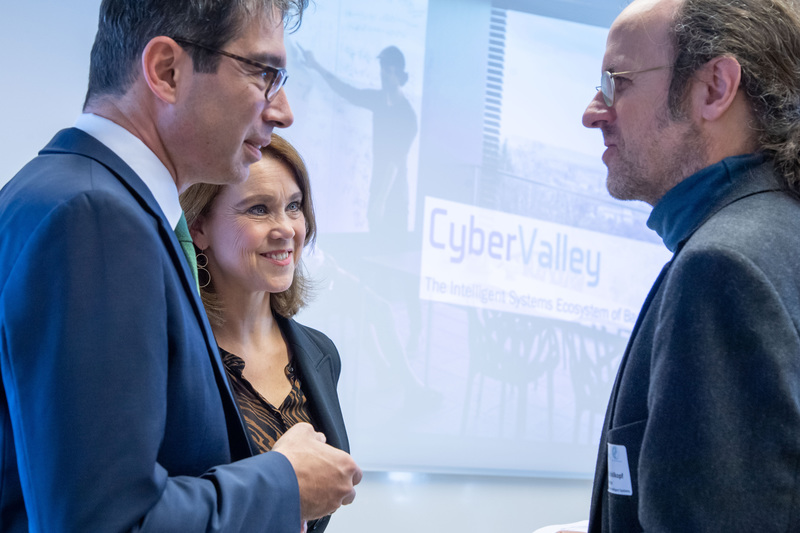
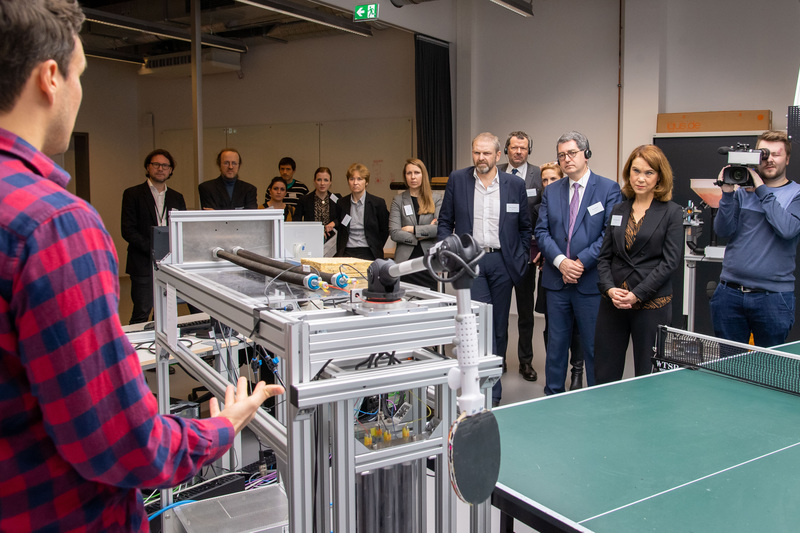
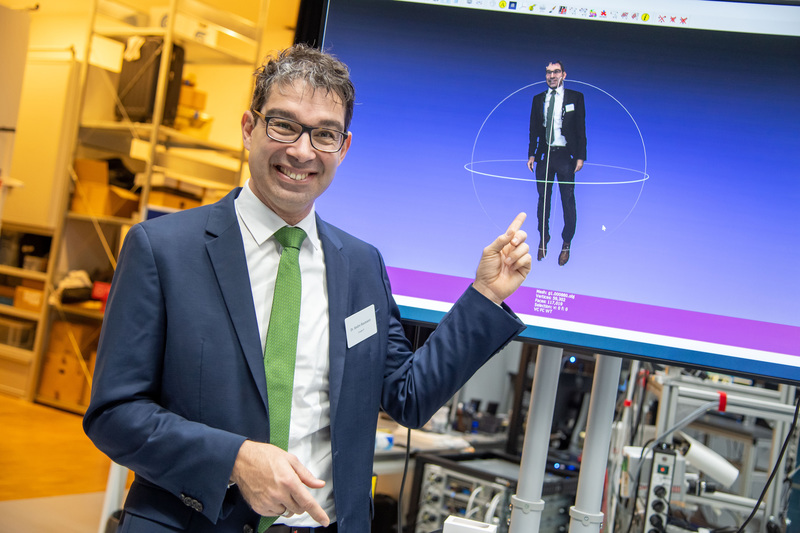
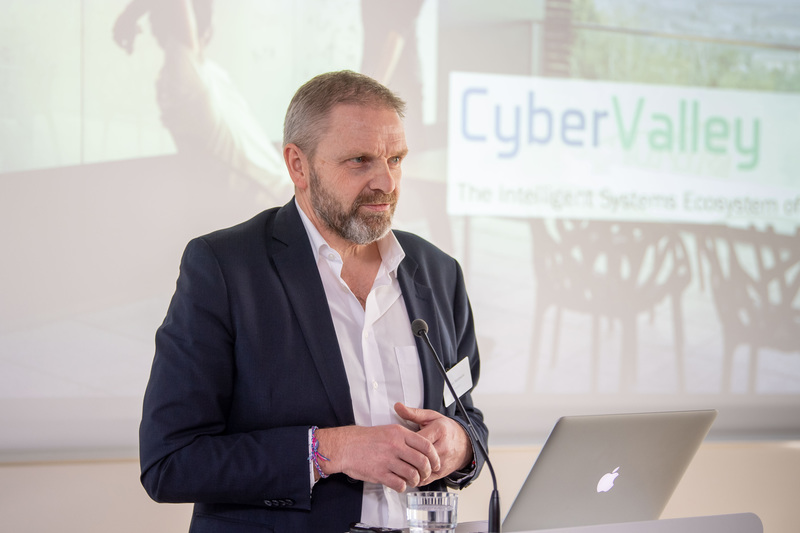
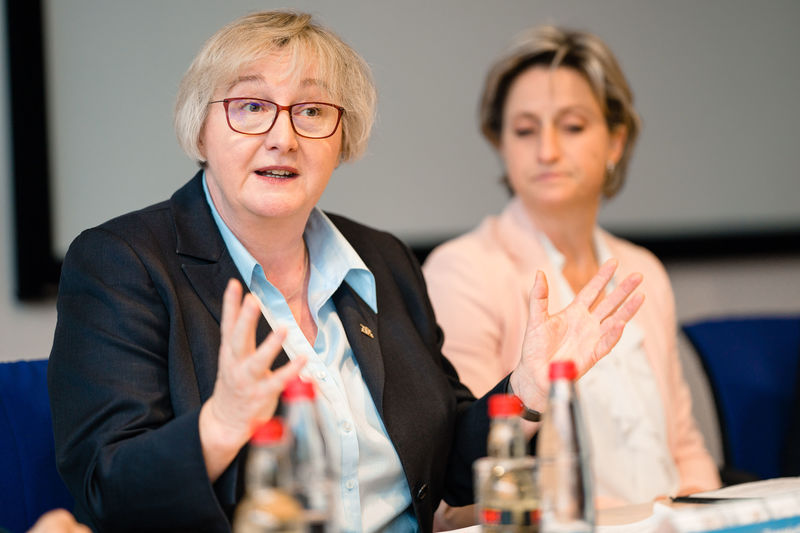
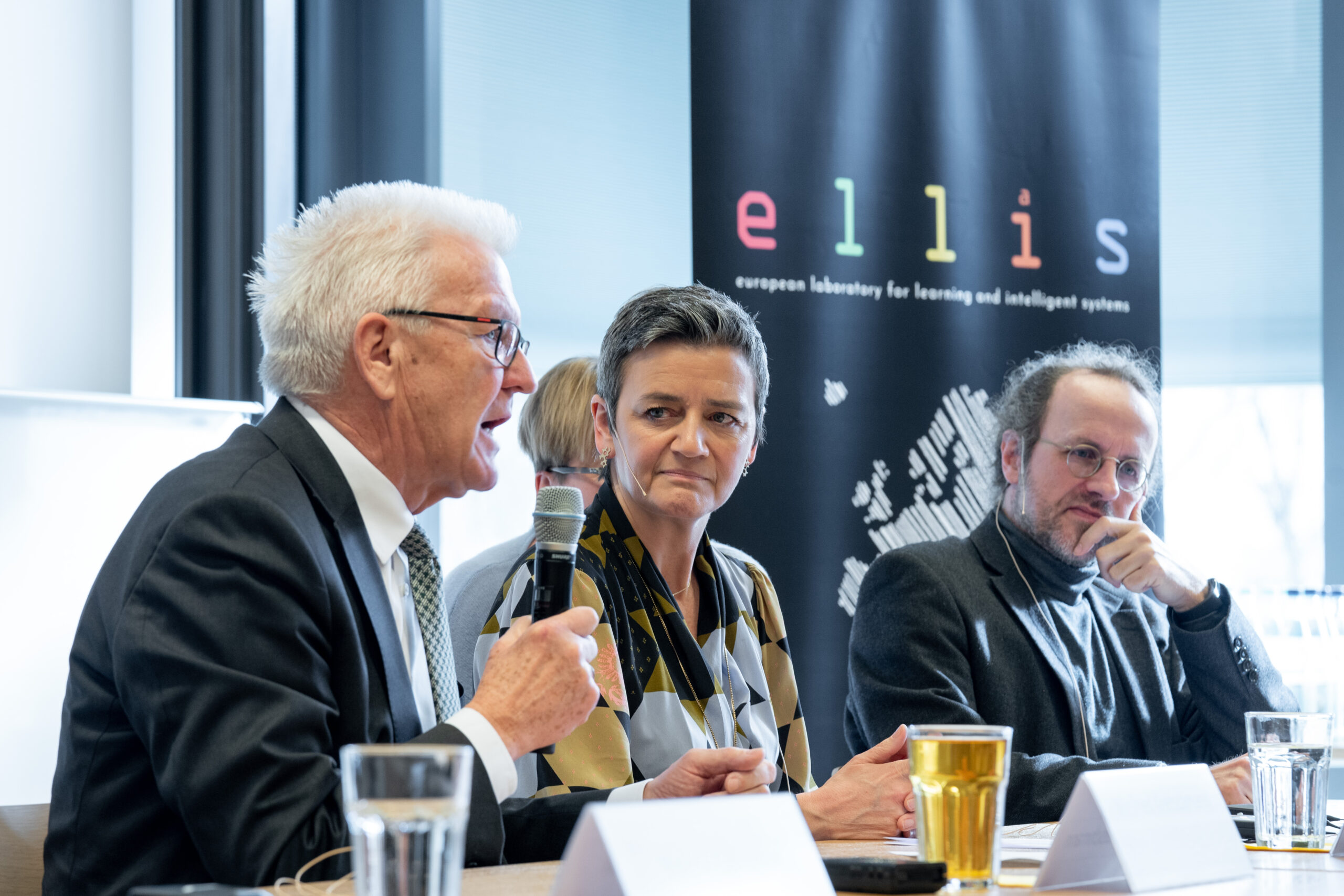
    Tübingen – One day following the publication of the European Commission’s White Paper on Artificial Intelligence, Margrethe Vestager, the EC’s Executive Vice-President and Chair of the “Commissioners’ Group on a Europe Fit for the Digital Age”, on Thursday met with scientists from the Cyber Valley ecosystem in Tübingen to discuss the future of AI research in Europe. She was accompanied by Winfried Kretschmann, the Minister-President of Baden-Württemberg, as well as Theresia Bauer, the state’s Science Minister.

     "With Cyber Valley, Baden-Württemberg is home to one of Europe‘s largest research cooperations between industry and science in the field of artificial intelligence. My state government alone has invested over 100 million euros in this innovation campus. Top-level research and entrepreneurial spirit are combined here so that Baden-Württemberg can play a pioneering role in the development of intelligent solutions for industry, mobility, and medicine. Europe is facing fierce competition in the field of top-level research; attracting and retaining the world’s best minds is decisive. The Europe-wide ELLIS initiative with sites in Tübingen and Freiburg will be helpful in this regard," said Minister-President Kretschmann. "In an international comparison, Europe still lags behind the USA and China, particularly when it comes to the economic exploitation of artificial intelligence. To prevent this gap from widening, we need to join forces. We need a European alliance in the field of AI. And we need AI 'Made in Europe' that combines innovation with our values. It is also about our individual freedom and the question of how AI applications affect our society. These matters are essential for the acceptance of these technologies.“

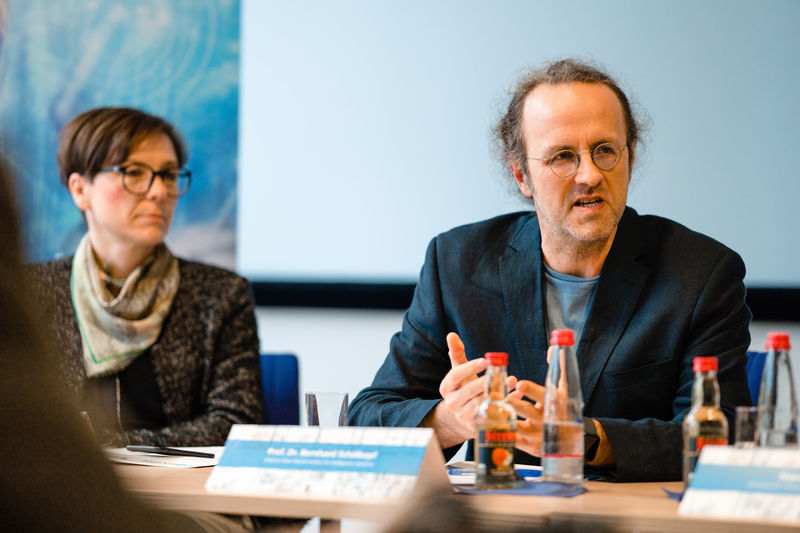
     “We welcome Vice-President Vestager’s visit and the opportunity to help drive the discussion on European AI forward,” said Bernhard Schölkopf, Director at the Max Planck Institute for Intelligent Systems, co-initiator of Cyber Valley, and co-founder of the European Laboratory for Learning and Intelligent Systems, ELLIS. “With Cyber Valley and ELLIS, we are building a strong European ecosystem for basic research in the field of modern AI. To secure Europe’s long-term global competitiveness and develop beneficial AI that is in line with the values of Europe’s open societies, we must establish research conditions that enable us to attract and keep the world’s top minds. To do this, we need the support of European policymakers.” 

    "We need to address the question of how we can enable artificial intelligence to happen. That is one of the reasons why I am particularly happy to be here today: what is happening here shows how we can enable things," says Commissioner Verstager. "It is very telling to hear about the warmth and interaction between the state, the businesses in the region, and the institute itself, and to see that they are working toward the same goal. Of course, I hope for a visible European dimension: the ELLIS program shows how Europe is coming together to create an ecosystem that will allow us not only to match what is happening elsewhere in the world, but also to do better.”

    ELLIS is on a clear upward trajectory. Initiated in 2018, the pan-European effort aims to promote research excellence in machine learning and related fields. In recent months, the initiative has established 11 research programs in broad-ranging AI-related fields and mobilized some 200 million euros in funding for an initial period of five years. Moreover, 17 ELLIS units have been created across Europe and in Israel, and proposals for additional units are presently under review. In the medium term, ELLIS plans to establish a network of sites and institutes analogous to the model of the European Molecular Biology Laboratory (EMBL), which is financed by 21 European countries and has laboratories across the continent.  

    “There is a need for funding, but also a need to organise our research and development efforts in a way that attracts talent. Because talent attracts more talent. Based on the discussions I have had today, what is being done here is the way to go,” Vestager continues.

    Cyber Valley has also gained significant momentum in recent months. The initiative reached several major milestones in 2019, including the accession of the Fraunhofer-Gesellschaft, the launch of the new Cyber Valley Start-up Network, additional investments by Cyber Valley industrial partners Robert Bosch GmbH and Amazon in Tübingen, and the successful completion of a third round of applications to the International Max Planck Research School for Intelligent Systems (IMPRS-IS), the doctoral program established as part of the Cyber Valley initiative.

  • Bernhard Schölkopf receives Frontiers of Knowledge Award

    Bernhard Schölkopf receives Frontiers of Knowledge Award

    The BBVA Foundation Frontiers of Knowledge Award in the Information and Communications Technology category has gone in this twelfth edition to Bernhard Schölkopf as well as to Isabelle Guyon and Vladimir Vapnik for their “fundamental contributions to machine learning,” in the words of the committee. The methods they developed in artificial intelligence are “transforming the everyday world, improving fields as diverse as medical diagnosis, computer vision, natural language processing and the monitoring of climate change.”


    “Vapnik, Guyon and Schölkopf,” the citation continues, “have collectively performed ground-breaking research that transcends traditional boundaries in computer science, and deservedly rank among the world’s leading innovators.”


    The awardees have developed methods that endow machines with the essential human skill of recognizing patterns in large volumes of data, enabling them to be sorted into categories. The goal is for the machine to learn through being presented with numerous examples.
    Vapnik and Guyon came up with the mathematical tools known as support vector machines (SVM), while Schölkopf extended their range and power through the use of kernel methods, which allow for the input of much more specific categories, thereby multiplying applications. These models are described by the committee as representing “a major machine learning paradigm in both research and applications.”


    Thanks to SVM and kernel methods, intelligent machines can now be trained to classify data sets with human precision, or at times even better, enabling them to recognize everything from voices, handwriting or faces to cancer cells or the fraudulent use of credit cards.
    SVMs are now being used in genomics, cancer research, neurology, diagnostic imaging, and even in HIV drug cocktail optimization, as well as finding diverse applications in climate research, geophysics and astrophysics.


    Schölkopf, Director at the Max Planck Institute for Intelligent Systems in Tübingen (Germany), has recently been employing these methods to analyze data from the NASA satellite Kepler 2. This has helped with the discovery of 21 extrasolar planets, including one with an atmosphere in which signs of water vapor have been detected for the first time.


    In the words of one of the nominators, Martin Stratmann, President of the Max Planck Society, machine learning is a core discipline of modern artificial intelligence, consisting of “the study of how to extract patterns or regularities from empirical data.” And Vapnik, Guyon and Schölkopf, he adds in his letter, are “the three scientists who have jointly shaped the field.”

    Machines that learn from examples

    The three laureates coincided at America’s Bell Laboratories in the early 1990s. Yet their backgrounds had little in common. Vapnik, born in 1936 in the former USSR, had worked until 1990 at the Institute of Control Sciences in Moscow, where he and his then pupil Alexey Chervonenkis – who died in 2014 – laid the mathematical foundations for automated pattern recognition methods. Vapnik is now widely recognized, the committee remarks, as “a living legend in machine learning.”


    Isabelle Guyon (Paris, France, 1961) was a postdoctoral researcher when she met Vapnik in 1991. Together they two would create the first proven method enabling optimal classification of data, the support vector machine. In 1994 they were joined in their efforts by one of Vapnik’s doctoral students, Bernhard Schölkopf, who expanded the application range of SVMs.


    For Vapnik, speaking on the phone after hearing of the award, “the main problem in artificial intelligence is how to get the machine to recognize things, how to distinguish, for instance, between men and women or between different medical diagnoses. You cannot give the machine the rule, the machine has to learn the rule. The support vector machine was developed precisely to fulfil this condition. The aim of all these methods of machine learning is simply so the machine can learn from examples.”


    “Machine learning technology is the foundation of almost everything in AI-related business, and will become more and more important in future,” affirms Vapnik, who confesses that he too has been greatly surprised at how much the field has expanded in the past few decades.
    The awardee also recalled the initial problem that gave rise to the machine learning field “over fifty years ago,” when he was asked “to solve a small, practical problem that consisted of distinguishing between oil and water, so as to achieve greater precision during prospections based on geological observations.”


    In search of cause-effect


    Although their paths have diverged, the three laureates have continued to collaborate. Specifically, Guyon and Schölkopf are working on what is seen as one of the key problems in the area: how to identify not just statistical correlations in a forest of data but also relations of causality. Advances in this terrain could tell us, for example, whether a genetic mutation is the cause or consequence of a cancerous process.


    The committee says in this respect that “Schölkopf and Guyon have independently and cooperatively advanced the science of causal discovery, uncovering cause-and-effect relationships in observed data, a problem considered by many to be unsolvable.”


    In conversation yesterday, Schölkopf explained how his work on causality aided in the discovery of exoplanets: “We had a causal model to distinguish between the signals coming from the star and planet, and the noise produced by the space telescope itself. With this model we managed to filter out the ‘noise’ and determine which signals really originated in outer space.”


    A fan of astronomy since childhood, Schölkopf cannot hide his satisfaction at the fact that one of the 21 exoplanets discovered with his aid lies in the habitable zone, and has been found to have water vapor in its atmosphere.


    Guyon, meantime, has founded not-for-profit educational initiatives, developed crowd-sourced research and worked on the application of AI techniques to address problems in electricity transmission.


    The future of AI


    Both Vapnik and Schölkopf are convinced that the AI-led transformation of society is only just starting, and that many of the tasks now performed by humans will be taken over by machines. But this is not to say that machines will actually surpass us in intelligence.
    “The machine can already do better than humans at recognizing things, for example, in cases of medical diagnosis or facial recognition,” says Vapnik. “But for me that doesn’t mean that the machine is intelligent. Intelligence is a whole lot more, and we are only just beginning to understand what it is.”


    Schölkopf agrees that “we are extremely far away from a machine being more intelligent than a human being.” It is true, he adds, that “in very specific applications, like playing chess or Go, or perhaps in optical recognition scenarios like the diagnosis of skin cancer, machines can do better than humans.” Like Vapnik, however, Schölkopf does not believe that pattern recognition “should really be defined as intelligence,” since what we are talking about is “performance in one very restricted task.”


    “What is interesting about our intelligence,” Schölkopf continues, “is that we can play Go then get up from the table and make dinner, which a machine cannot do.” By this general standard of intelligence, the German scientist insists that “machines are still much more stupid than humans.” That said, advances in machine learning are compelling enough, he believes, to cause “legitimate concern that the technology may in future take some kinds of jobs away,” and this is something “we should begin to think about as a society.”


    Laureate bio note
    Bernhard Schölkopf (Stuttgart, Germany, 1968) studied physics, mathematics and philosophy at the Universities of London and Tübingen (1988-1994), before going on to earn a Ph.D. in Computer Science at TU Berlin in 1997. After spells as a researcher and group leader at the National Research Center for Computer Science (Berlin), Microsoft Research (Cambridge) and Biowulf Technologies (New York), in 2001 he was appointed a Director at the Max Planck Institute for Biological Cybernetics in Tübingen. He remained there until 2010, and the following year took up the post of Director at the Max Planck Institute for Intelligent Systems, where he heads the Department of Empirical Inference.


    Author of more than 460 publications, he is also an Affiliated Professor at ETH Zurich and an Amazon Distinguished Scholar. He is one of three Editors-in-Chief of the Journal of Machine Learning Research and a Series Editor of Information Science and Statistics, as well as serving on the boards of the Neural Information Processing Systems Foundation and of the International Machine Learning Society.

    About the BBVA Foundation Frontiers of Knowledge Awards

    The BBVA Foundation centers its activity on the promotion of world-class scientific research and cultural creation, and the encouragement of talent.


    The BBVA Foundation Frontiers of Knowledge Awards, established in 2008, recognize and reward contributions of singular impact in diverse fields of science, technology, social sciences and the humanities that have demonstrably expanded the frontiers of the known world, opening up new paradigms and knowledge fields. Their eight categories are reflective of the knowledge map of the 21st century, encompassing basic research in Physics, Chemistry and Mathematics, Biology and Biomedicine, Information and Communication Technologies, Humanities and Social Sciences, Economics, Finance and Management, Ecology and Conservation Biology, Climate Change, and, within the arts, the supremely creative realm of music.


    The BBVA Foundation is aided in the evaluation process by the Spanish National Research Council (CSIC), the country’s premier public research organization. The Foundation and CSIC jointly appoint the evaluation support panels charged with undertaking an initial assessment of the candidates proposed by numerous institutions across the world and drawing up a reasoned shortlist for the consideration of the award committees. CSIC is also responsible for designating the chair of each committee, formed by eminent authorities in the subject area.

  • The Alan Turing Institute meets with scientists from the Cyber Valley ecosystem

    The Alan Turing Institute meets with scientists from the Cyber Valley ecosystem

    Tübingen – Representatives of the Alan Turing Institute, the UK’s national institute for data science and artificial intelligence, on Tuesday visited the Max Planck Institute for Intelligent Systems in Tübingen, where they met with scientists and gained insights into Cyber Valley.
     “The Cyber Valley model is very impressive in the way it combines the region’s academic and industrial strengths.” said Dr. Allaine Cerwonka, Director of Academic Research Programmes at the Alan Turing Institute. “I look forward to coming back in another five years to see how it’s developed. It’s clearly on an upward trajectory.”

    The Cyber Valley partnership is Europe’s largest research consortium in the field of modern AI with partners from science, industry, and society. Since it was founded at the end of 2016, the initiative has gained significant momentum and developed into a unique research ecosystem comprising world-class teaching and basic research as well as applied and industrial research.

    As the Alan Turing Institute’s visit demonstrated once again, the European research community’s interest in the model is very high. 

  • Enquete-Kommission Künstliche Intelligenz zu Besuch im Cyber Valley

    Enquete-Kommission Künstliche Intelligenz zu Besuch im Cyber Valley

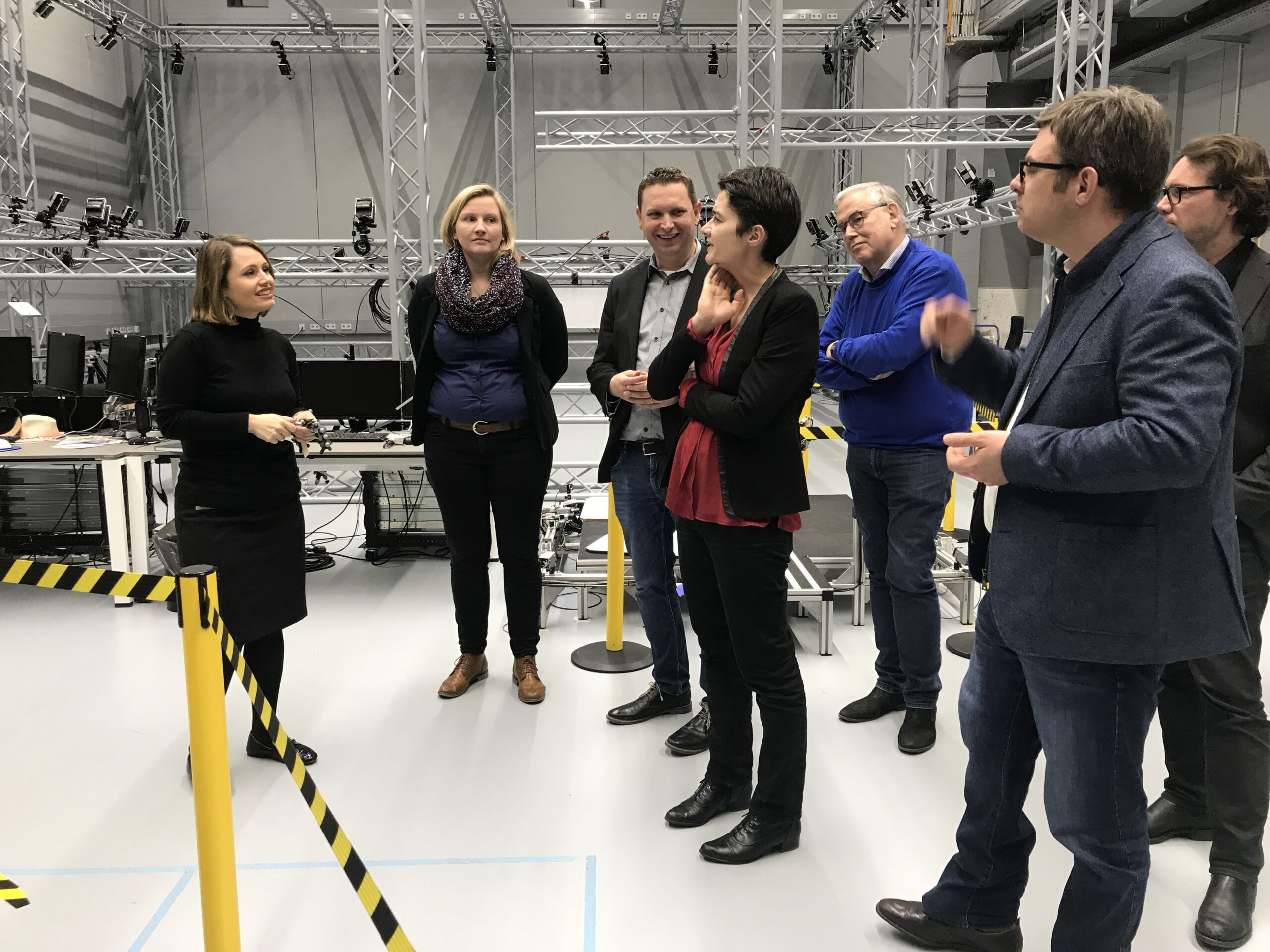
    Bei Laborbesuchen und Gesprächen mit führenden KI-Wissenschaftler*innen des Max-Planck-Instituts für Intelligente Systeme und der Universität Tübingen gewann gestern Daniela Kolbe, SPD Bundestagsabgeordnete und Vorsitzende der Enquete-Kommission „Künstliche Intelligenz: Gesellschaftliche Verantwortung und wirtschaftliche, soziale und ökologische Potenziale“, Einblicke in die Forschung des Cyber Valley Ökosystems. Begleitet wurde sie vom SPD Bundestagsabgeordneten Dr. Martin Rosemann. 

    Cyber Valley ist Europas größte Forschungskooperation im Bereich Künstliche Intelligenz (KI) mit Partnern aus Politik, Wissenschaft und Wirtschaft. 

     „Mit Cyber Valley entsteht ein Cluster, das Ausstrahlungskraft hat,“ sagte Daniela Kolbe. „Die Forschungsansätze und die gelungene Kooperation mit Unternehmen sind sehr beeindruckend. Das Modell Cyber Valley zeigt uns, wie wir in Deutschland im Bereich Machine Learning vorankommen können.“ 

    Die Enquete-Kommission wurde 2018 gegründet und besteht je zur Hälfte aus Abgeordneten des Deutschen Bundestages und Expertinnen und Experten aus allen gesellschaftlichen Bereichen. Die Kommission zielt darauf ab, eine kritische Diskussion über die Chancen der KI für Wirtschaft und Gesellschaft zu führen, um auch die Risiken der neuen Technologien möglichst zu minimieren.

    "Wir begrüßen den Besuch der Enquete-Kommission. Als KI-Forscher stehen wir in der Verantwortung, sich kritische Fragen zu stellen, um die gesellschaftliche Diskussion mitzugestalten,“ sagte Bernhard Schökopf, Direktor am Max-Planck-Institut für Intelligente Systeme und Mitgründer der Cyber Valley Initiative. "Maschinelles Lernen und Künstliche Intelligenz werden die Welt verändern. Mit der Cyber Valley Initiative wollen wir intelligente Systeme entwickeln, die die Gesellschaft voranbringen. Damit Europa in dieser Hinsicht eine führende Rolle spielen kann, ist die Unterstützung der Politik unabdingbar.“ 

    Die im Dezember 2016 im Südwesten Deutschlands gegründete Cyber Valley Initiative ist Europas führendes Forschungskonsortium auf dem Gebiet der künstlichen Intelligenz. Laut einem Ranking, das auf der Anzahl der Veröffentlichungen zwischen 2009 und 2019 auf den wichtigsten globalen Konferenzen für maschinelles Lernen – NeurIPS und ICML – basiert, belegen die akademischen Partner des Cyber Valley derzeit weltweit Platz 8, in Europa und Deutschland sogar Platz 1. 
    Allein in den vergangenen Monaten wurden mehrere wichtige Meilensteine erreicht, darunter der Beitritt der Fraunhofer-Gesellschaft, der Start des neuen Cyber-Valley-Start-Up-Netzwerks, zusätzliche Investitionen der Industriepartner Robert Bosch GmbH und Amazon in Tübingen sowie der erfolgreiche Abschluss einer dritten Bewerbungsrunde an der International Max Planck Research School for Intelligent Systems (IMPRS-IS), dem im Rahmen der Cyber-Valley-Initiative gegründeten Doktoranden-Programm. Derzeit promovieren etwa 120 Wissenschaftler an der IMPRS-IS. 

  • Cyber Valley empfängt Delegation aus der französischen Region Grand Est

    Cyber Valley empfängt Delegation aus der französischen Region Grand Est

    Tübingen – Am Donnerstag besuchten Staatssekretär und Bevollmächtigter beim Bund Volker Ratzmann, die Staatsekretärin im Wissenschaftsministerium Petra Olschowski, der Staatsekretär im Umweltministerium und der Nachfolger Ratzmanns, Andre Baumann, sowie  der Präsident der Région Grand Est Jean Rottner das Cyber Valley in Tübingen. Die Beteiligten loteten verschiedene Anknüpfungspunkte für eine zukünftige Zusammenarbeit aus. Zudem erhielt die Delegation einen Einblick in die Arbeit der Wissenschaftlerinnen und Wissenschaftler am Max-Planck-Institut für Intelligente Systeme, das eines der Cyber Valley Partner ist. Am Nachmittag dann wurden die französischen Gäste von Ministerpräsident Winfried Kretschmann empfangen. Die Themen Bildung, Wissenschaft, Sicherheit, Umwelt, Mobilität, Industrie 4.0 und Künstliche Intelligenz standen dabei im Vordergrund.

    „Die Grenzregion am Oberrhein ist heute eine der am tiefsten integrierten Grenzregionen der Welt. Das zeigt sich auch darin, wie ungeheuer konkret unser Arbeitsprogramm ist. Die Konferenz war ein erstmaliges Format dieser Art und bestens dafür geeignet, unsere Frankreich-Konzeption zu diskutieren und mit unseren französischen Partnerinnen und Partnern gemeinsam zu beraten, wie wir unsere Zusammenarbeit bestmöglich weiterentwickeln können“, so Ministerpräsident Winfried Kretschmann anlässlich des Besuches.

    Die Pressemitteilung des Staatsministeriums finden Sie hier.

    v.l.n.r.: Staatssekretär Andre Baumann, Staatssekretärin Petra Olschowski und Bernhard Schölkopf, Direktor der Abteilung für Empirische Inferenz am Max-Planck-Institut für Intelligente Systeme. Bildnachweis: Staatsministerium Baden-Württemberg

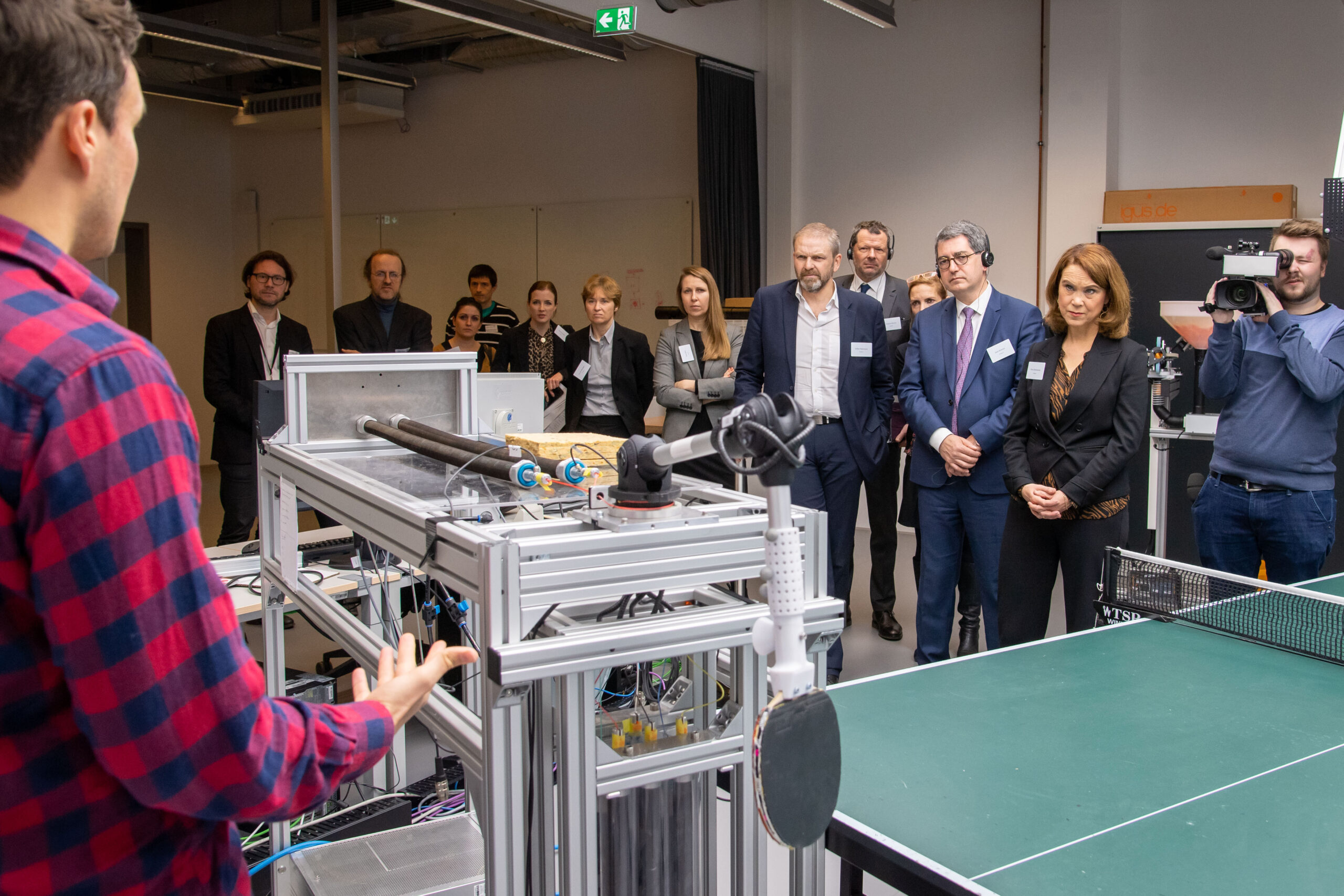
    Die Besuchergruppe bestaunt den Tischtennis spielenden Muskelroboter

    Staatssekretär Andre Baumann

    Staatssekretär Volker Ratzmann, Bevollmächtigter des Landes beim Bund

    Staatssekretärin Petra Olschowski

  • Cyber Valley ends third year on a high note at leading global Machine Learning conference

    Cyber Valley ends third year on a high note at leading global Machine Learning conference

    Stuttgart/Tübingen – With 27 accepted papers, researchers from the Cyber Valley ecosystem are set to make a strong showing at the upcoming 33rd Conference on Neural Information Processing Systems (NeurIPS). The world’s leading conference for machine learning is set to take place in Vancouver, Canada from December 8-14.


    Submissions to NeurIPS have doubled since 2017, reflecting rapid growth in the field of machine learning. This year, a record-breaking 6743 papers were submitted to the conference, of which 1428 were accepted.


    “Our solid presence at one of the world’s most competitive machine learning conferences clearly shows that scientists from Cyber Valley are among the very best,” said Professor Bernhard Schölkopf, Managing Director at the Max Planck Institute for Intelligent Systems in Tübingen and Director of the institute’s Empirical Inference department. “As Cyber Valley approaches its third anniversary, our success at NeurIPS unequivocally demonstrates the momentum the Stuttgart-Tübingen region has gained as a global hotspot for AI research.”


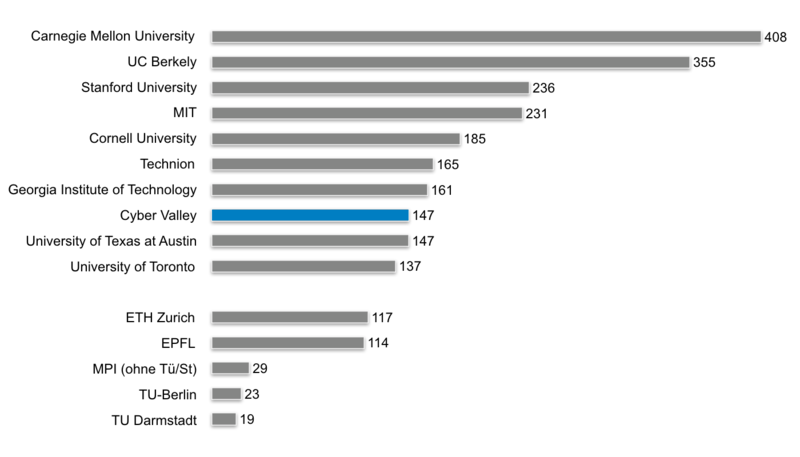
    Founded in December 2016 in southwestern Germany, the Cyber Valley initiative is Europe’s leading research consortium in the field of artificial intelligence. According to a ranking based on the number of publications at the top global conferences in machine learning NeurIPS and ICML from 2009 to 2019, Cyber Valley’s academic partners currently place eigth worldwide, and take first place in Europe and Germany.

    Leading research institutions worldwide, based on the number of publications at the two major machine learning conferences (NeurIPS/NIPS & ICML)1 (2009-2019)

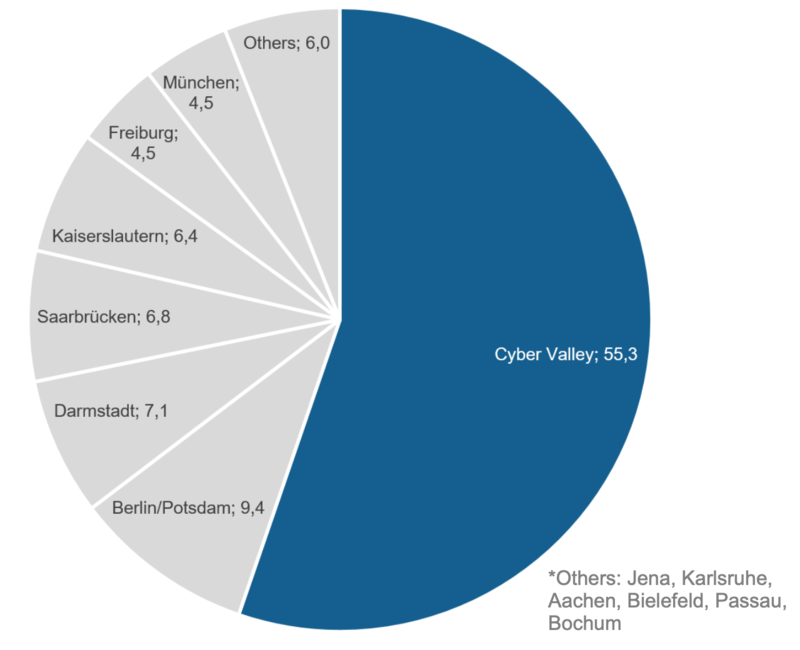
    Contributions from German research locations to the most important conferences for machine learning (NeurIPS/NIPS & ICML)2, in percent (2009 – 2019)

    1. Quelle: dlpb, 2. Quelle: interne Analyse


    “Research excellence is the main reason why the Cyber Valley initiative has grown in leaps and bounds since it was founded three years ago. An AI ecosystem has emerged in the heart of Baden-Württemberg that is unparalleled in Europe,” says Schölkopf. This ecosystem has seen several major milestones in the past month alone, among them the accession of Fraunhofer Gesellschaft; the launch of the new Cyber Valley Start-Up Network; additional investments by industrial partners Robert Bosch GmbH and Amazon in Tübingen; and the successful close of a third round of applications at the International Max Planck Research School for Intelligent Systems, the PhD program which was founded as part of the Cyber Valley initiative. 

    NeurIPS 2019: Accepted Submissions from the Cyber Valley Ecosystem (alphabetical)

    1. Provably robust boosted decision stumps and trees against adversarial attacks
      Maksym Andriushchenko (EPFL) Matthias Hein (University of Tübingen)
       
    2. Control What You Can: Intrinsically Motivated Task-Planning Agent
      Sebastian Blaes (Max Planck Institute for Intelligent Systems) Marin Vlastelica Pogan (Max-Planck Institute for Intelligent Systems, Tübingen) Jia-Jie Zhu (Max Planck Institute for Intelligent Systems) Georg Martius (MPI for Intelligent Systems)
       
    3. Accurate, reliable and fast robustness evaluation
      Wieland Brendel (AG Bethge, University of Tübingen) Jonas Rauber (University of Tübingen) Matthias Kämmerer (University of Tübingen) Ivan Ustyuzhaninov (University of Tübingen) Matthias Bethge (University of Tübingen)
       
    4. Disentangled behavioural representations
      Amir Dezfouli (Data61, CSIRO) Hassan Ashtiani (McMaster University) Omar Ghattas (CSIRO) Richard Nock (Data61, the Australian National University and the University of Sydney) Peter Dayan (Max Planck Institute for Biological Cybernetics) Cheng Soon Ong (Data61 and ANU)
       
    5. Foundations of Comparison-Based Hierarchical Clustering
      Debarghya Ghoshdastidar (University of Tübingen) MichaÎl Perrot (Max Planck Institute for Intelligent Systems) Ulrike von Luxburg (University of Tübingen)
       
    6. On the Role of Inductive Bias From Simulation and the Transfer to the Real World: a new Disentanglement Dataset
      Muhammad Waleed Gondal (Max Planck Institute for Intelligent Systems) Manuel Wuthrich (Max Planck Institute for Intelligent Systems) Djordje Miladinovic (ETH Zurich) Francesco Locatello (ETH Zürich – MPI Tübingen) Martin Breidt (MPI for Biological Cybernetics)  Valentin Volchkov (Max Planck Institute for Intelligent Systems) Joel Akpo (Max Planck Institute for Intelligent Systems) Olivier Bachem (Google Brain) Bernhard Schölkopf (MPI for Intelligent Systems) Stefan Bauer (MPI for Intelligent Systems)
    7. Grid Saliency for Context Explanations of Semantic Segmentation
      Lukas Hoyer (Bosch Center for Artificial Intelligence) · Mauricio Munoz (Bosch Center for Artificial Intelligence) · Prateek Katiyar (Bosch Center for Artificial Intelligence) · Anna Khoreva (Bosch Center for Artificial Intelligence) · Volker Fischer (Robert Bosch GmbH, Bosch Center for Artificial Intelligence)
       
    8. Causal regularization
      Dominik Janzing (Amazon)
       
    9. Convergence Guarantees for Adaptive Bayesian Quadrature Methods
      Motonobu Kanagawa (EURECOM) Philipp Hennig (University of Tübingen and MPI for Intelligent Systems Tübingen)
       
    10. On Tractable Computation of Expected Predictions
      Pasha Khosravi (UCLA) YooJung Choi (UCLA) Yitao Liang (UCLA) Antonio Vergari (Max Planck Institute for Intelligent Systems) Guy Van den Broeck (UCLA)

       
    11. Limitations of the empirical Fisher approximation
      Frederik Kunstner (EPFL) Philipp Hennig (University of Tübingen and MPI for Intelligent Systems Tübingen) Lukas Balles (University of Tuebingen)
       
    12. Learning from brains how to regularize machines
      Zhe Li (Baylor College of Medicine) Wieland Brendel (AG Bethge, University of Tübingen) Edgar Walker (Baylor College of Medicine) Erick Cobos (Baylor College of Medicine) Taliah Muhammad (Baylor College of Medicine) Jacob Reimer (Baylor College of Medicine) Matthias Bethge (University of Tübingen) Fabian Sinz (University Tübingen) Zachary Pitkow (BCM/Rice) Andreas Tolias (Baylor College of Medicine)
       
    13. On the Fairness of Disentangled Representations
      Francesco Locatello (ETH Zürich – MPI T¸bingen) Gabriele Abbati (University of Oxford) Tom Rainforth (University of Oxford) Stefan Bauer (MPI for Intelligent Systems) Bernhard Schölkopf (MPI for Intelligent Systems) Olivier Bachem (Google Brain)
       
    14. Stochastic Frank-Wolfe for Composite Convex Minimization
      Francesco Locatello (ETH Zürich – MPI Tübingen) Alp Yurtsever (EPFL) Olivier Fercoq (Telecom ParisTech) Volkan Cevher (EPFL)
       
    15. The Functional Neural Process
      Christos Louizos (University of Amsterdam) Xiahan Shi (Bosch Center for Artificial Intelligence) Klamer Schutte (TNO) Max Welling (University of Amsterdam / Qualcomm AI Research)
       
    16. Fisher Efficient Inference of Intractable Models
      Song Liu (University of Bristol) Takafumi Kanamori (Tokyo Institute of Technology/RIKEN) Wittawat Jitkrittum (Max Planck Institute for Intelligent Systems) Yu Chen (University of Bristol)
       
    17. Generalized Matrix Means for Semi-Supervised Learning with Multilayer Graphs
      Pedro Mercado (University of Tübingen) Francesco Tudisco (University of Strathclyde) Matthias Hein (University of Tübingen)
       
    18. Selecting causal brain features with a single conditional independence test per feature
      Atalanti Mastakouri (Max Planck Institute for Intelligent Systems) Bernhard Schölkopf (MPI for Intelligent Systems) Dominik Janzing (Amazon)
       
    19. Beating SGD Saturation with Tail-Averaging and Minibatching
      Nicole Muecke (University of Stuttgart) Gergely Neu (Universitat Pompeu Fabra) Lorenzo Rosasco (University of Genova – MIT – IIT)
       
    20. Perceiving the arrow of time in autoregressive motion
      Kristof Meding (Max Planck Institute for Intelligent Systems) Dominik Janzing (Amazon) Bernhard Schölkopf (MPI for Intelligent Systems) Felix A. Wichmann (University of Tübingen)
       
    21. DeepUSPS: Deep Robust Unsupervised Saliency Prediction via Self-supervision
      Tam Nguyen (Freiburg Computer Vision Lab) Maximilian Dax (Bosch GmbH) Chaithanya Kumar Mummadi (Bosch Center for Artificial Intelligence) Nhung Ngo (Bosch Center for Artificial Intelligence) · Thi Hoai Phuong Nguyen (Karlsruhe Institute of Technology (KIT))  Zhongyu Lou (Robert Bosch Gmbh) Thomas Brox (University of Freiburg)
       
    22. Practical and Consistent Estimation of f-Divergences
      Paul Rubenstein (Max Planck Institute for Intelligent Systems) Olivier Bousquet (Google Brain (Zurich)) Josip Djolonga (Google Research, Brain Team) Carlos Riquelme (Google Brain) Ilya Tolstikhin (MPI for Intelligent Systems)
       
    23. Kernel Stein Tests for Multiple Model Comparison
      Jen Ning Lim (Max Planck Institute for Intelligent Systems) Makoto Yamada (Kyoto University / RIKEN AIP) Bernhard Schölkopf (MPI for Intelligent Systems) Wittawat Jitkrittum (Max Planck Institute for Intelligent Systems)
       
    24. Invert to Learn to Invert
      Patrick Putzky (University of Amsterdam, Max Planck Institute for Intelligent Systems), Max Welling (University of Amsterdam)
       
    25. Approximate Bayesian Inference for a Mechanistic Model of Vesicle Release at a Ribbon Synapse
      Cornelius Schröder (University of Tübingen) Ben James (University of Sussex) Leon Lagnado (University of Sussex) Philipp Berens (University of Tübingen)
       
    26. Are Disentangled Representations Helpful for Abstract Visual Reasoning?
      Sjoerd van Steenkiste (The Swiss AI Lab – IDSIA) Francesco Locatello (ETH Zürich – MPI Tübingen) Jürgen Schmidhuber (Swiss AI Lab, IDSIA (USI & SUPSI) – NNAISENSE) Olivier Bachem (Google Brain)
       
    27. Progressive Augmentation of GANs
      Dan Zhang (Bosch Center for Artificial Intelligence) · Anna Khoreva (Bosch Center for Artificial Intelligence)
  • Amazon gründet Lablet zur Forschung an Künstlicher Intelligenz in Tübingen

    Amazon gründet Lablet zur Forschung an Künstlicher Intelligenz in Tübingen

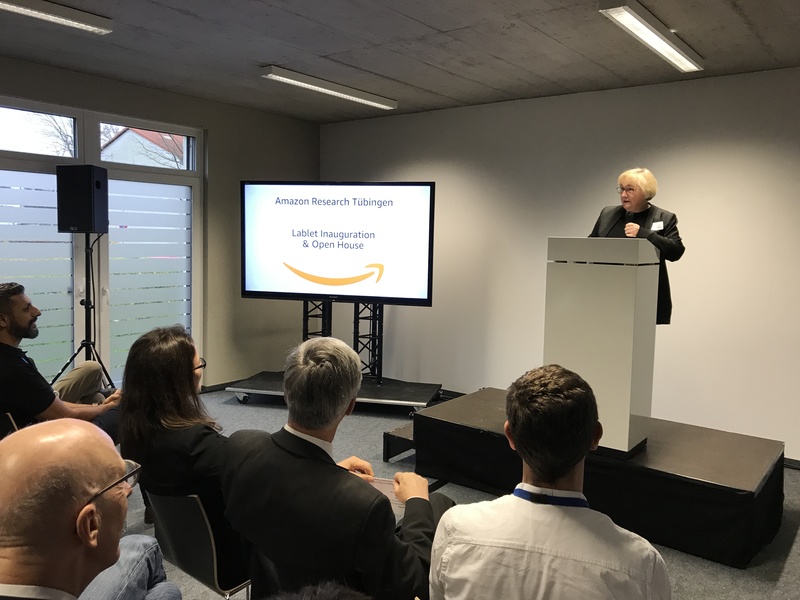
    Tübingen – Amazon hat die Gründung eines Lablets in Tübingen angekündigt. Diese neue Art einer Forschungsabteilung widmet sich der offenen Forschung in der Künstlichen Intelligenz (KI) und ihren Anwendungen, um an den langfristigen Fragestellungen im Bereich KI zu forschen. Ab Dezember 2019 arbeiten Wissenschaftler und Wissenschaftlerinnen verschiedener Fachrichtungen, darunter Informatik, Softwareentwicklung und Mathematik, an der KI Grundlagenforschung. Ihr besonderes Interesse gilt dabei der Erklärbarkeit, der Kausalität und der Erforschung von KI, die ihre Umgebung erfasst. Um den wissenschaftlichen Fortschritt und die Reproduzierbarkeit zu fördern, wird das Lablet-Team seine Forschungsergebnisse publizieren und in Form von Open-Source-Code oder als Datensatz bereitstellen.

    „Mit der Gründung des Lablets setzen wir auf einen Paradigmenwechsel. Anstatt darauf zu zielen, Produkte und Anwendungen schrittweise zu verbessern, ist die Forschung im Lablet neugiergetrieben. Die Freiheit der Forschung und vor allem die Freiheit zu wählen, was wissenschaftlich untersucht werden soll, sind nur die ersten beiden Schritte zu einer unvoreingenommenen, fairen und offenen KI,“ sagte Bernhard Schölkopf, Schirmherr des Tübinger Lablets und Direktor am Max-Planck-Institut für Intelligente Systeme. „Ein weiterer wichtiger Schritt ist der konstante Austausch mit Wissenschaft, Politik und Gesellschaft. Wir sind davon überzeugt, dass KI der Allgemeinheit dienen muss. Um das zu erreichen, müssen wir Vertrauen in KI schaffen, und das können wir nur erreichen, wenn wir KI so transparent und verständlich wie möglich machen.“ Amazon plant, weitere Lablets einzurichten, um weltweit KI-Grundlagenforschung zu betreiben.

    Schwerpunkt auf Austausch mit Wissenschaft und Stadtöffentlichkeit

    Die KI-Forschung im Tübinger Lablet wird sich auf folgende Bereiche konzentrieren: Kausalität und Erklärbarkeit,  Fairness, Datenschutz, Robustheit, Reinforcement Learning sowie Bildverarbeitung. Die Wahl des Standorts spiegelt diesen inhaltlichen Fokus wider. Als weltweit renommierter Forschungsstandort in Deutschland zeichnen sich Tübingen und die lokale Cyber-Valley-Initiative durch eine lebhafte und intensive Diskussionskultur aus. Amazon nutzt dieses Potenzial, um sowohl die wissenschaftliche Gemeinschaft als auch die Öffentlichkeit an der Forschung des Lablets teilhaben zu lassen. Das Forschungszentrum begrüßt einen offenen Dialog und lebhafte Diskussionen mit Vertretern aus Politik, Wissenschaft, Wirtschaft und Gesellschaft, beispielsweise in öffentlichen Veranstaltungen.

    „Amazon stellt langfristige Ergebnisse über den kurzfristigen Nutzen, was genau das ist, was wir für neugiergetriebene, langfristige Forschung benötigen,“ sagte Yasser Jadidi, operativer Leiter des Amazon Lablets in Tübingen. „Mit einer Mischung aus angewandten Wissenschaftlern, Softwareentwicklern, Doktoranden, Praktikanten und Amazon Scholars wollen wir die KI verstehen und die KI ihr Umfeld verstehen lassen. Unser Ziel ist es, den Menschen zu befähigen, datenbasierte Entscheidungen zu hinterfragen, zu erklären und kausale Erklärungen für das Verhalten eines Algorithmus zu liefern.“ Im Rahmen des lokalen Engagements in Tübingen arbeitet Amazon eng mit dem Max-Planck-Institut für Intelligente Systeme und der Universität Tübingen zusammen. Im Lablet steht diese Zusammenarbeit auch Wissenschaftlern anderer Institutionen offen.

    Neues Gebäude für die Forschung von Amazon

    2017 hatte Amazon angekündigt, ein Forschungszentrum in Tübingen zu eröffnen und innerhalb von fünf Jahren 100 hochqualifizierte Mitarbeiter einzustellen. Das Unternehmen trat außerdem der Cyber Valley-Initiative bei, die die Forschungsaktivitäten von internationalen Key-Playern aus Wissenschaft und Industrie auf dem Gebiet der bündelt. Der Standort in Tübingen ist nach Berlin, Dresden und Aachen das vierte Forschungs- und Entwicklungszentrum von Amazon in Deutschland. Das neue Lablet wird Teil dieses Forschungszentrums von Amazon in Tübingen.

    Mitte November genehmigte der Gemeinderat der Stadt Tübingen den Verkauf eines Grundstücks nahe des Max-Planck-Instituts für Intelligente Systeme an einen Projektentwickler, der darauf bis 2021 ein Gebäude errichten wird. Amazon wird dieses Gebäude mieten und es als neues Forschungszentrum in Tübingen nutzen. Das Gebäude wurde in enger Abstimmung mit dem Baubürgermeisteramt der Stadt Tübingen geplant und soll die räumlichen Anforderungen der Forschungsteams von Amazon erfüllen. Es wird außerdem ein Café, eine Veranstaltungsfläche und einen Co-Working Space beinhalten. Diese Bereiche werden für die Öffentlichkeit zugänglich sein, um den wissenschaftlichen Austausch und die Diskussion mit der Stadtgesellschaft zu fördern.

    Hier geht es zu der Pressemeldung im Amazon Newsroom.

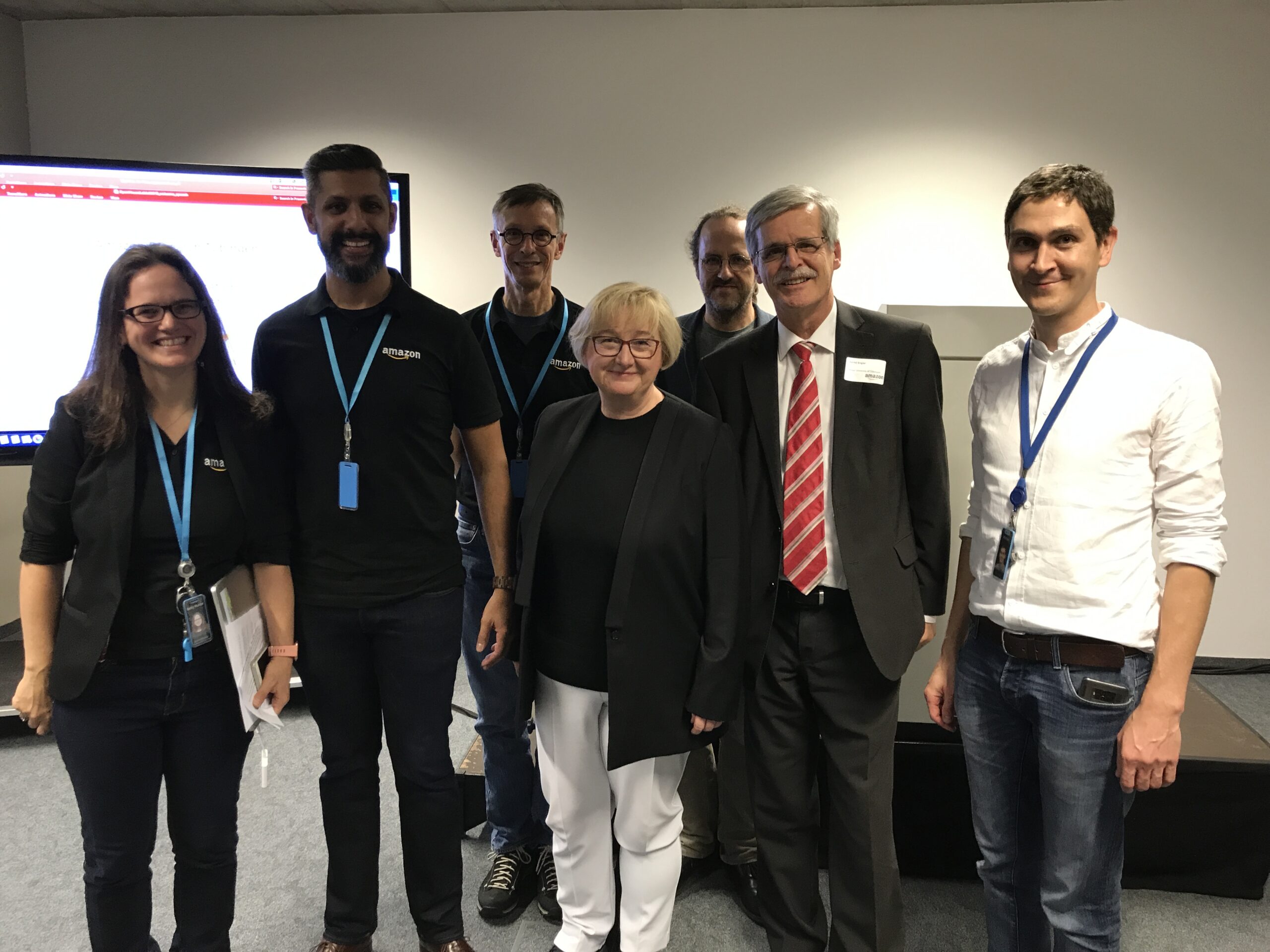
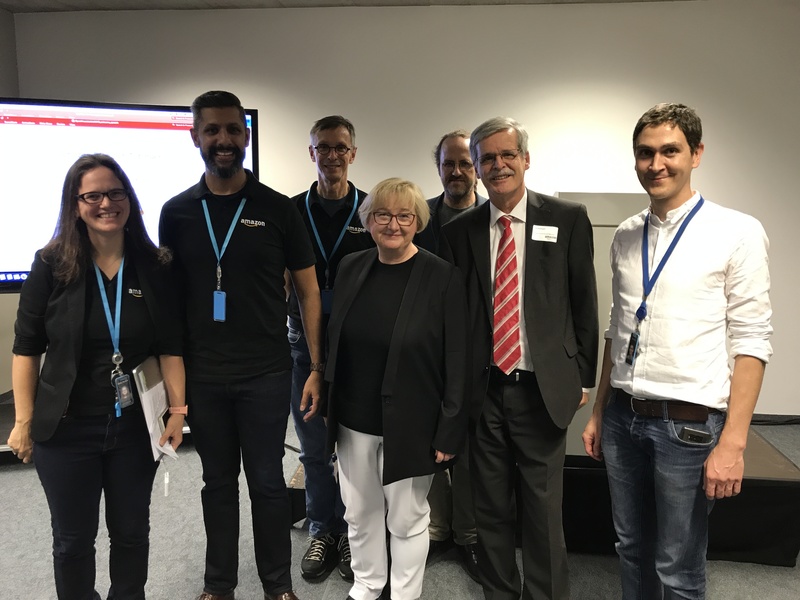
    From left to right: Amazon researcher Betty Mohler, Yasser Jadidi, Operative Head of Lablet at Amazon Tübingen, Michael Black, Director at the Max Planck Institute for Intelligent Systems (MPI-IS) and Cyber Valley Spokesperson, Theresia Bauer, Baden Württemberg’s Minister for Science, Research and Arts, Bernhard Schölkopf, Director at the MPI-IS, Bernd Engler, Rector of the University of Tübingen and Michael Hirsch, Research Science Manager & Site Lead at Amazon Tübingen.

  • Bundeswettbewerb Künstliche Intelligenz zeichnet Sieger aus

    Bundeswettbewerb Künstliche Intelligenz zeichnet Sieger aus

    Tübingen ‒ Mit der feierlichen Preisverleihung ist der Bundeswettbewerb Künstliche Intelligenz 2019 zu Ende gegangen. Vier Schülerteams aus Bayern, Baden-Württemberg und Niedersachsen wurden von der Jury prämiert. Die Auszeichnung „KI-Schule des Jahres“ erhielt das Saarpfalz-Gymnasium in Homburg/Saar. Insgesamt waren mehr als 2.500 Schülerinnen und Schüler im Alter von 14 bis 19 Jahren dem Aufruf des Max-Planck-Instituts für Intelligente Systeme und der Universität Tübingen gefolgt. Beide Einrichtungen sind Teil des Cyber Valley Projekts zur Erforschung von Künstlicher Intelligenz.

    „Mit dem Bundeswettbewerb Künstliche Intelligenz bringt das Cyber Valley die Methoden der KI mitten in die Gesellschaft“, sagte die baden-württembergische Wissenschaftsministerin Theresia Bauer bei der Preisverleihung am Samstag in Tübingen: „Es freut mich außerordentlich, dass der Wettbewerb gleich im ersten Jahr bei der Jugend auf so großes Interesse gestoßen ist. Er bringt Jugendliche und junge Erwachsene schon früh in Kontakt mit Künstlicher Intelligenz – und zwar nicht nur als passive Konsumenten, sondern als aktive Gestalter.“

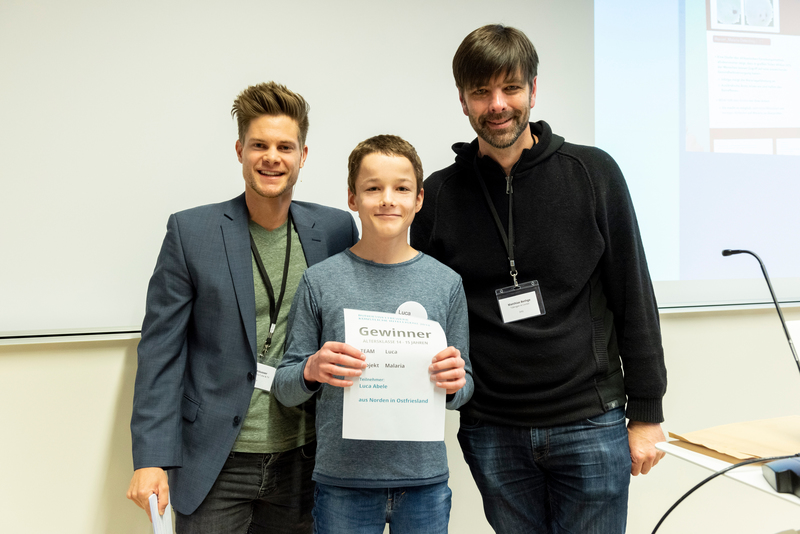
    In der Altersklasse 14 bis 15 Jahre siegte Luca Abele vom Ulrichsgymnasium im ostfriesischen Norden mit einem Projekt zur Identifizierung von Malaria-Erregern im menschlichen Körper. Er hat einen Algorithmus programmiert, der infizierte Zellen von nicht-infizierten Zellen unterscheiden kann. Der Einsatz Künstlicher Intelligenz auf diesem Gebiet könnte künftig medizinische Diagnosemethoden unterstützen.

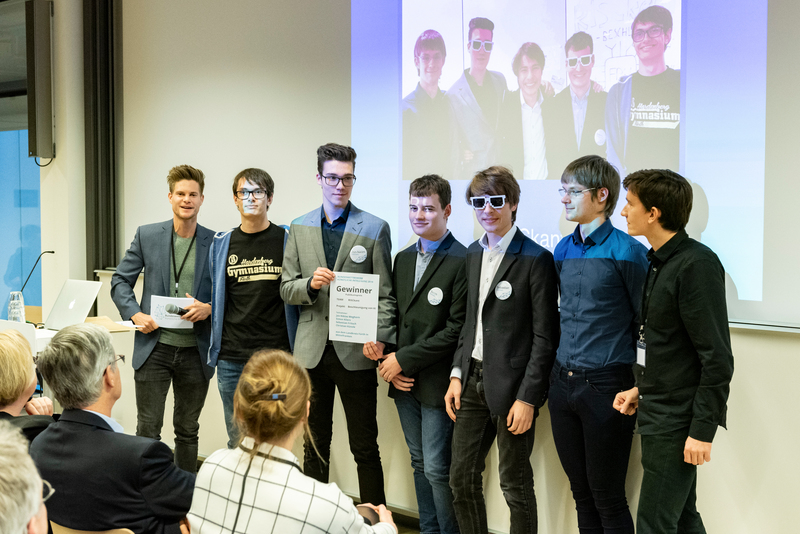
    In der Altersklasse 16 bis 19 Jahre gab es mit CellTorch aus Göttingen und Underscore aus Tübingen gleich zwei Siegerteams. Adrian Dobbelstein und Christian Helms vom Max-Planck-Gymnasium beziehungsweise vom Hainberg-Gymnasium in Göttingen entwickelten im Projekt CellTorch einen Algorithmus, der die genaue Position von Proteinen in fluoreszenz-gefärbten Mikroskop-Aufnahmen von Zellen bestimmen kann. Eine effiziente Lokalisierung der Proteine könnte Hinweise auf biologische Mechanismen geben, die unter anderem für die gezielte Entwicklung und den Einsatz von Medikamenten wichtig sind.

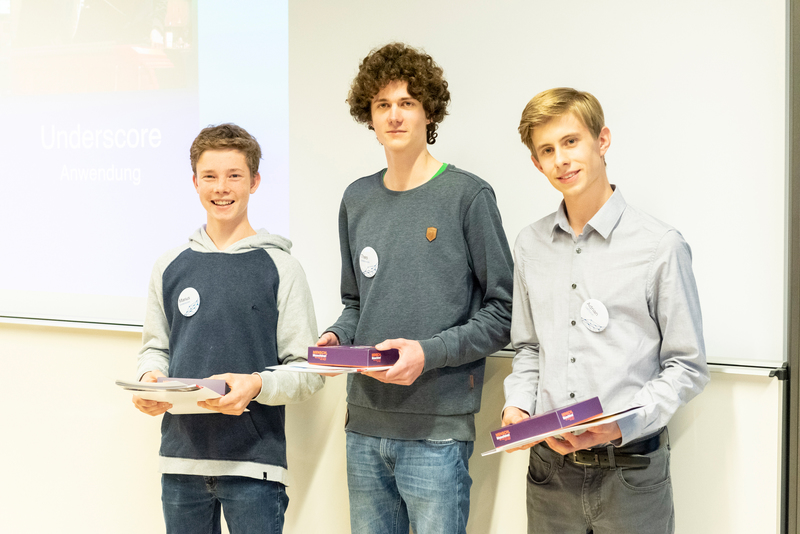
    Im Projekt Underscore befassten sich Theo Döllmann und Marius de Kuthy Meurers vom Tübinger Kepler-Gymnasium mit der Voraussage von Zugverspätungen. Die Schüler sammelten einen gewaltigen Datensatz über den tatsächlichen Verlauf von Bahnreisen. Basierend auf diesen Daten sowie Informationen über Wetter, Ferienzeiten und vielem mehr trifft die Künstliche Intelligenz eine Voraussage, ob eine Bahnverbindung Verspätung haben wird. Bahnfahrer können ihre geplante Zugverbindung in eine eigens programmierte Webseite eingeben und sich errechnen lassen, wie wahrscheinlich eine Verspätung ist.

    Alle Finalisten erhielten einen kleinen leistungsstarken Computer für KI Anwendungen von NVIDIA (JetsonNano). Die Preisträger können zudem ein Jahr lang das Journal Technology Review kostenlos beziehen.

    Der Publikumspreis schließlich ging an das Team RISCkant vom Hardenberg-Gymnasium im fränkischen Fürth. Samuel Arpert, Sebastian Fritsch, Simon Klier, Christian Künzle und Jan-Niklas Weghorn präsentierten einen Chip, der mithilfe von KI schneller und zugleich energieeffizienter arbeitet. Als Preis erhielt das Team ein Arduino-Starterset ‒ ein kleiner PC für die Programmierung spezifischer Aufgaben.

    Zudem wurde das Saarpfalz-Gymnasium aus Homburg mit dem Titel „KI Schule des Jahres“ ausgezeichnet. Mit fast 80 Teilnehmern in der ersten Runde des Wettbewerbes und der höchsten Punktzahl lag das Gymnasium vor allen anderen Mitbewerbern. Stellvertretend für die Schule nahmen Michael Bergau, Fachkoordinator Informatik am Saarpfalz-Gynasium, sowie die ehemaligen Schüler Benedikt Lothschütz und Nico Mansion die Auszeichnung entgegen. Die Schule erhielt als Preis zwei Drohnen, um zukünftig Luftaufnahmen mit KI in kreativen Projekten einzusetzen.

    Am Bundeswettbewerb Künstliche Intelligenz 2019 hatten mehr als 2.500 Schülerinnen und Schüler teilgenommen: In einer ersten Runde lösten sie unterschiedliche Programmieraufgaben. In der zweiten Runde fanden sich Teams zusammen, die über einen Zeitraum von fünf Monaten eigene Projektideen umsetzten. Insgesamt 50 Projekte zu medizinischen, technischen und ökologischen KI-Lösungen wurden in der Final-Runde eingereicht, unter anderem in Form von Webseiten und Apps. Acht Finalisten-Teams stellten ihre Projekte bei der Abschlussveranstaltung in Tübingen live einer Jury aus Forschung, Wirtschaft und Medien vor.

    Der Bundeswettbewerb Künstliche Intelligenz (BWKI) wird im kommenden Jahr erneut ausgeschrieben. Im Jahr 2019 war der Bundeswettbewerb maßgeblich von der Robert Bosch GmbH gefördert worden. Weitere Sponsoren waren die Gemeinnützige Hertie-Stiftung, Google, Amazon, Microsoft, die Alexander von Humboldt Stiftung und die Hochschule der Medien, Stuttgart. Der baden-württembergische Ministerpräsidenten Winfried Kretschmann übernahm die Schirmherrschaft.

    „Es ist einfach großartig und inspirierend, die Kreativität, das Können und die Ausdauer der Schüler bei diesem Wettbewerb zu sehen. Ich träume von einer Gesellschaft, in der wir uns noch viel mehr ermutigen, gute Ideen zu entwickeln und auszuprobieren“, sagte Professor Matthias Bethge, Direktor des Tübingen AI Center. „Unsere Zukunft wird von unseren Kindern gestaltet, daher muss unsere Förderung bei den Kindern anfangen“, ergänzte Professor Bernhard Schölkopf, Leiter des Max-Planck-Instituts für Intelligente Systeme.

    Die Jury des Wettbewerbs 2019: Professor Matthias Bethge, Dr. Wieland Brendel (Universität Tübingen), Professor Bernhard Schölkopf (Max Planck Institut für Intelligente Systeme), Dr. Saskia Biskup (Humangenetikerin, Cegat GmbH), Christoph Röscher (Bosch Center of Artificial Intelligence), Professorin Christiane Zarfl (Umweltsystemanalyse, Universität Tübingen), Professorin Theresa Veer (Wirtschaftswissenschaften, Universität Tübingen), Robert Thielicke (Chefredakteur Technology Review), Dr. Philip Häusser (Physiker, Fernsehmoderator, Webvideoproduzent), Dr. Kristina Kayatz (Wissenschaftsjournalistin, ZDF/heute Journal).

    BWKI Gewinner Luca Abele, der in der jüngeren Kategorie gewonnen hat, präsentiert sein Forschungsprojekt dem Machine Learning Forscher Bernhard Schölkopf (Mitte) und Wissenschaftsministerin Theresia Bauer.

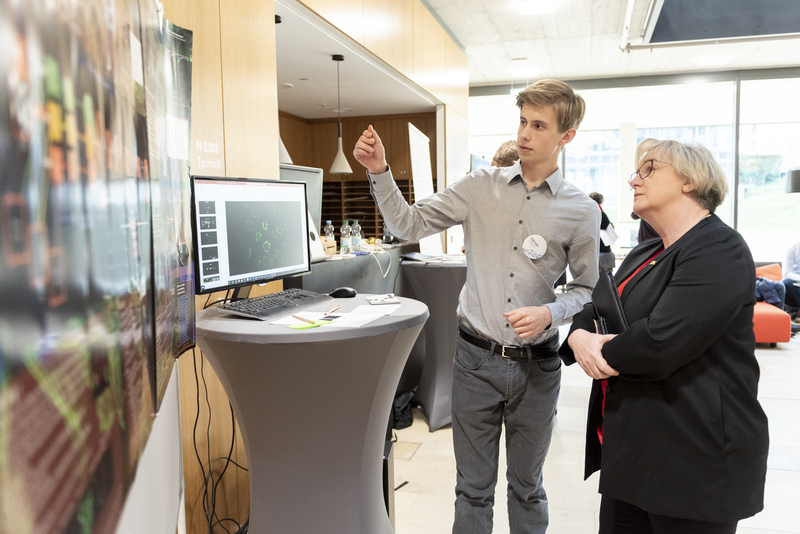
    Adrian Dobbelstein zeigt Wissenschaftministerin Theresia Bauer sein Projekt CellTorch, einen Algorithmus, der die genaue Position von Proteinen in fluoreszenz-gefärbten Mikroskop-Aufnahmen von Zellen bestimmen kann.

    Gewinner Luca Abele (Mitte) mit BWKI-Jurymitgliedern Dr. Philip Häusser (links) und Professor Matthias Bethge von der Uni Tübingen.

    Theo Döllmann und Marius de Kuthy Meurers vom Tübinger Kepler-Gymnasium (Projekt Underscore) sowie Adrian Dobbelstein vom Max-Planck-Gymnasium in Göttingen (Projekt CellTorch) sind die BWKI-Gewinner in der Altersgruppe 16-19.

    Der Publikumspreis ging an das Team RISCkant vom Hardenberg-Gymnasium im fränkischen Fürth.

    Die Informatik-Lehrer des Saarpfalz-Gymnasium aus Homburg nehmen den Preis als „KI Schule des Jahres“ entgegen.

  • The Cyber Valley Public Advisory Board elects Spokesperson

    The Cyber Valley Public Advisory Board elects Spokesperson

    The Cyber Valley Public Advisory Board convened for a second time on November 13, 2019, and elected Professor Regina Ammicht Quinn as its spokesperson. 

    Professor Ammicht Quinn is a professor of ethics at the University of Tübingen’s International Center for Ethics in Science (IZEW), where she also heads the Society, Culture, and Technological Transformation working group. Her research focus includes the ethical questions of digital life and digital technology development. 

    At its second meeting, the PAB also recommended that scientists take potential applications and their possible societal impact into account at an early stage of research. As part of its mandate, the board will now begin to formulate approaches to supporting scientists in this regard. The European Union’s Ethics Guidelines and the 17 United Nations Sustainable Development Goals (SDGs) could serve as the basis for the corresponding activities

  • Fraunhofer Gesellschaft joins Cyber Valley

    Fraunhofer Gesellschaft joins Cyber Valley

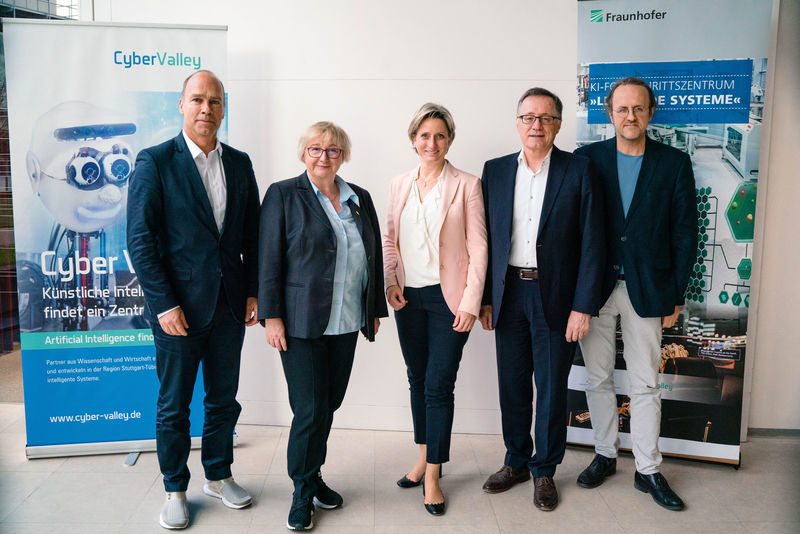
    Stuttgart – The Fraunhofer Institute for Manufacturing Engineering and Automation IPA and the Fraunhofer Institute for Industrial Engineering IAO have joined Cyber Valley, further strengthening Europe’s largest research consortium in the field of artificial intelligence (AI). The tie-up demonstrates once again that Baden-Württemberg is the AI hotspot in Europe, on a par with some of the world’s leading centers, for instance in North America.

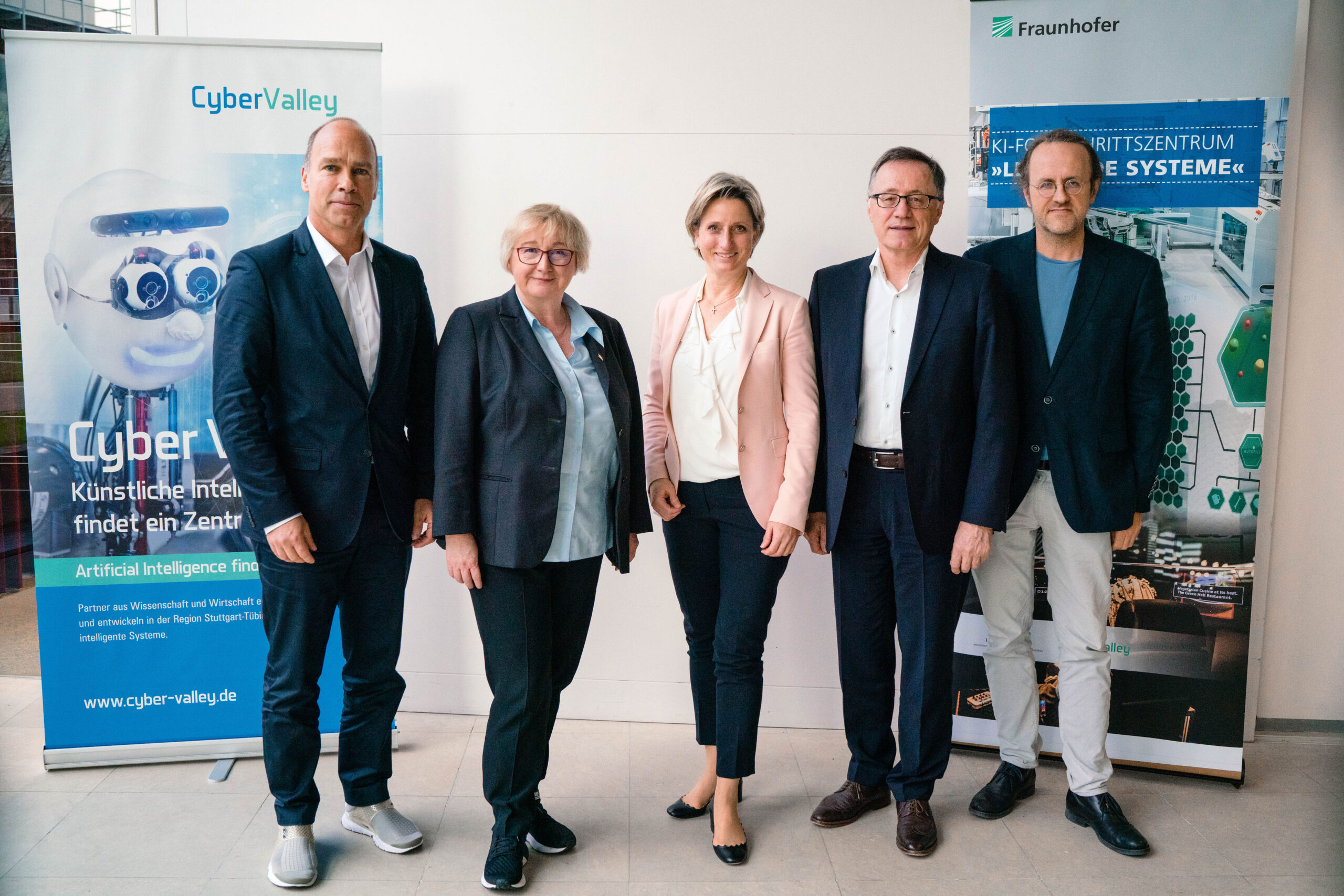
    From left to right: Silke Walter, press spokesperson Ministry of Economy, Prof. Bernhard Schölkopf, Baden-Württembergs Science Minister Theresia Bauer, Minister of Economy Dr. Hoffmeister-Kraut, and from Fraunhofer Prof. Wilhelm Bauer und Prof. Thomas Bauernhansl.

    “Artificial intelligence is a key driver of innovation and economic growth and holds enormous economic potential for our small and medium-sized enterprises,” said Baden-Württemberg's Minister of Economic Affairs, Labour and Housing Dr. Nicole Hoffmeister-Kraut. “We need more 'AI made in Baden-Württemberg' and we need to bring the results of our cutting-edge research even better and faster into the practical application of our companies. To this end, we must make massive progress in the research, development, and commercialisation of artificially intelligent systems.

    Baden-Württemberg's Science Minister Theresia Bauer added: “An internationally visible AI hotspot is created here. We warmly welcome the Fraunhofer-Gesellschaft to the ever-growing circle! The Cyber Valley research network is developing very dynamically and is attracting more and more scientists, young talents from all across the world, companies, and foundations. The boom has created the need to establish reliable management structures for the Cyber Valley network in order to effectively manage the growing organizational tasks.”

    "With their application-oriented focus, the Fraunhofer Institutes ideally complement the research of the Max Planck Institute for Intelligent Systems and the Universities of Tübingen and Stuttgart," said Professor Martin Stratmann, President of the Max Planck Society. "Fraunhofer’s engagement makes it easier to bridge the gap to the industrial partners within Cyber Valley: in this way, findings from basic research can be applied more quickly."
     
    Professor Reimund Neugebauer, President of the Fraunhofer-Gesellschaft, emphasized: "Artificial intelligence is one of the central digital issues of the future and will change our lives from the ground up. For the international economy and industrial value chains, it means a fundamental structural change. By joining Cyber Valley, together with our partners we will advance research and transfer from science to the market in order to fully exploit the potential of this key technology and strengthen Germany as a location for international competition.”

    "We very much welcome the Fraunhofer Gesellschaft’s participation, as it will help us apply the methods of modern AI, especially in small and medium-sized enterprises," said Professor Bernhard Schölkopf, Director at the Max Planck Institute for Intelligent Systems and co-founder of Cyber Valley.

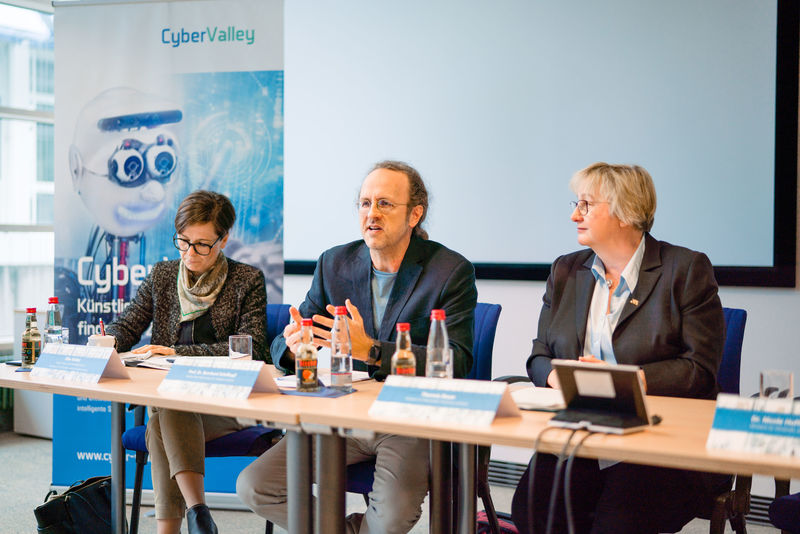
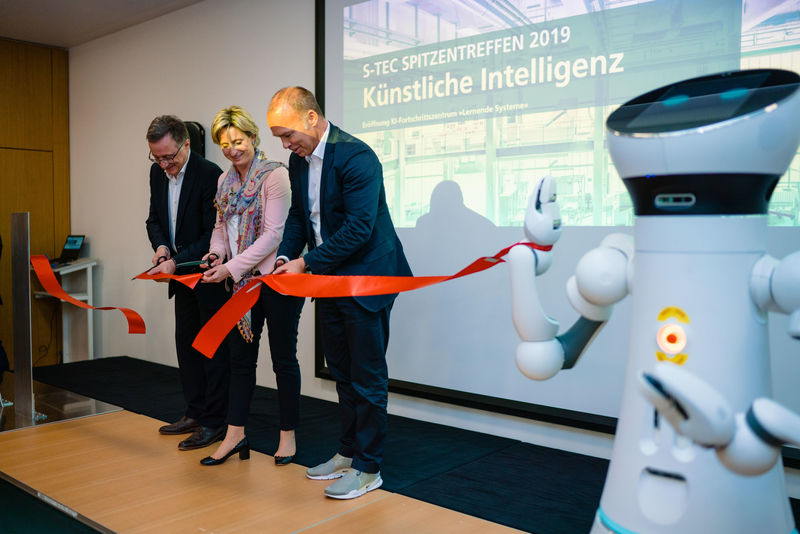
    Baden-Württemberg’s Ministry of Economic Affairs and the Fraunhofer Gesellschaft are co-financing the AI innovation center Learning Systems (KI-Fortschrittszentrum “Lernende Systeme”), which was incorporated into the Cyber Valley research consortium from October 1, 2019. The center is a laboratory with an initial team of 20 researchers and planned funding of ten million euros until the end of 2022.

    Central point of contact for application-oriented AI research

    For companies in Baden-Württemberg, the AI innovation center is a central point of contact for application-oriented research on artificial intelligence. The center explores applied research projects relevant to the manufacturing and service industries. It also acts as an interface between industry and the fundamental research conducted within the Cyber Valley consortium (the Universities of Tübingen and Stuttgart, the Max Planck Institute for Intelligent Systems, and several industry partners). The aim is to enable technology transfer to industry beyond the existing partners.

    As another component, joint research labs will be set up in which fundamental researchers will cooperate with more application-focused scientists at IPA or IAO. The projects will not be initiated by companies, but rather based on assessments of what the market needs. These joint research labs may thus bear the greatest potential for future start-ups.

    Direct cooperation with industry is a central focus of the AI innovation center. Feasibility studies and the development of prototypes of AI applications are partly financed by the innovation center’s budget. To establish strategic partnerships, industrial companies have the opportunity to operate and finance Enterprise Labs. At these labs, one or more researchers within the innovation center can give their full attention to the respective company’s specific needs. In all its activities, the AI innovation center Learning Systems aims to implement human-centered AI that people trust and accept. The full potential of AI can only be realized once people interact and work closely with new technology. To realize human-centered AI, research activities focus on topics such as explainability, privacy, safety, and the robustness of AI technologies.

    Benefit to industry and society

    With Cyber Valley, partners from science, business, and society are building a unique research ecosystem in the Stuttgart-Tübingen region. Supported by the state of Baden-Württemberg, Cyber Valley promotes an active exchange between science and industry. The initiative also focuses on training the best minds in the field of AI and creating a breeding ground for start-ups. The aim is to combine cutting-edge research with entrepreneurial spirit to promote spin-offs and technology transfer.

    The cooperation of the two Fraunhofer institutes and Cyber Valley is thus a major source of potential for all parties involved. Fraunhofer Gesellschaft has a 70-year history of excellence in business-oriented research. Its 72 institutes work closely with small and medium-sized enterprises, commonly referred to as the “German Mittelstand”, as well as with larger local and international enterprises. This expertise in realizing projects in close cooperation with industry is of immense value to Cyber Valley. With its proven track record of many successful start-ups, Fraunhofer Gesellschaft joining Cyber Valley will further enhance the research consortium's innovative and entrepreneurial strength. Fraunhofer Gesellschaft actively supports researchers who want to start their own companies based on the intellectual property they have developed while working with Fraunhofer. The mission of bringing technological pro-gress to companies and society is firmly anchored in the Fraunhofer mission statement.

    www.fraunhofer.de | www.iao.fraunhofer.de | www.ipa.fraunhofer.de

    Cyber Valley is Europe's largest research cooperation in the field of artificial intelligence with partners from politics, science, business, and society. The partnership strengthens research and teaching in the fields of machine learning, computer vision, and robotics as well as the links between these fields. Partners are the Max Planck Institute for Intelligent Systems, the University of Stuttgart, the University of Tübingen, the State of Baden-Württemberg and seven industrial partners: Amazon, the BMW Group, IAV GmbH, Daimler AG, Porsche AG, Robert Bosch GmbH and ZF Friedrichshafen AG. Cyber Valley is also supported by the Christian Bürkert Foundation, the Gips-Schüle Foundation, the Vector Foundation, and the Carl Zeiss Foundation.

    www.cyber-valley.de