User Group: Journalist

  • PR Basics & Good Practices

    PR Basics & Good Practices

    Speakers

    At this event, exciting speakers from our ecosystem will share their knowledge and experiences:

    Lennart Schmid

    Communications Manager, Cyber Valley | Communication Basics for Tech-Start-ups & working together with external service provider

    Linda Behringer

    Communications Manager, Cyber Valley | Working together with Press and Media

    Simone Betz

    Marketing Manager, Computomics GmbH | Tech-Start-up communication insights


    Registration

    Please register here, the meeting will be held in English on Zoom.


    Contact

    Oliwia Gust –  Event Manager for Cyber Valley
    Phone: +49 7071 601 1554
    Mobile: +49 151 4075 6302 
    Mail: oliwia.gust@cyber-valley.de

  • A real “gamechanger” for AI in the next decade

    A real “gamechanger” for AI in the next decade

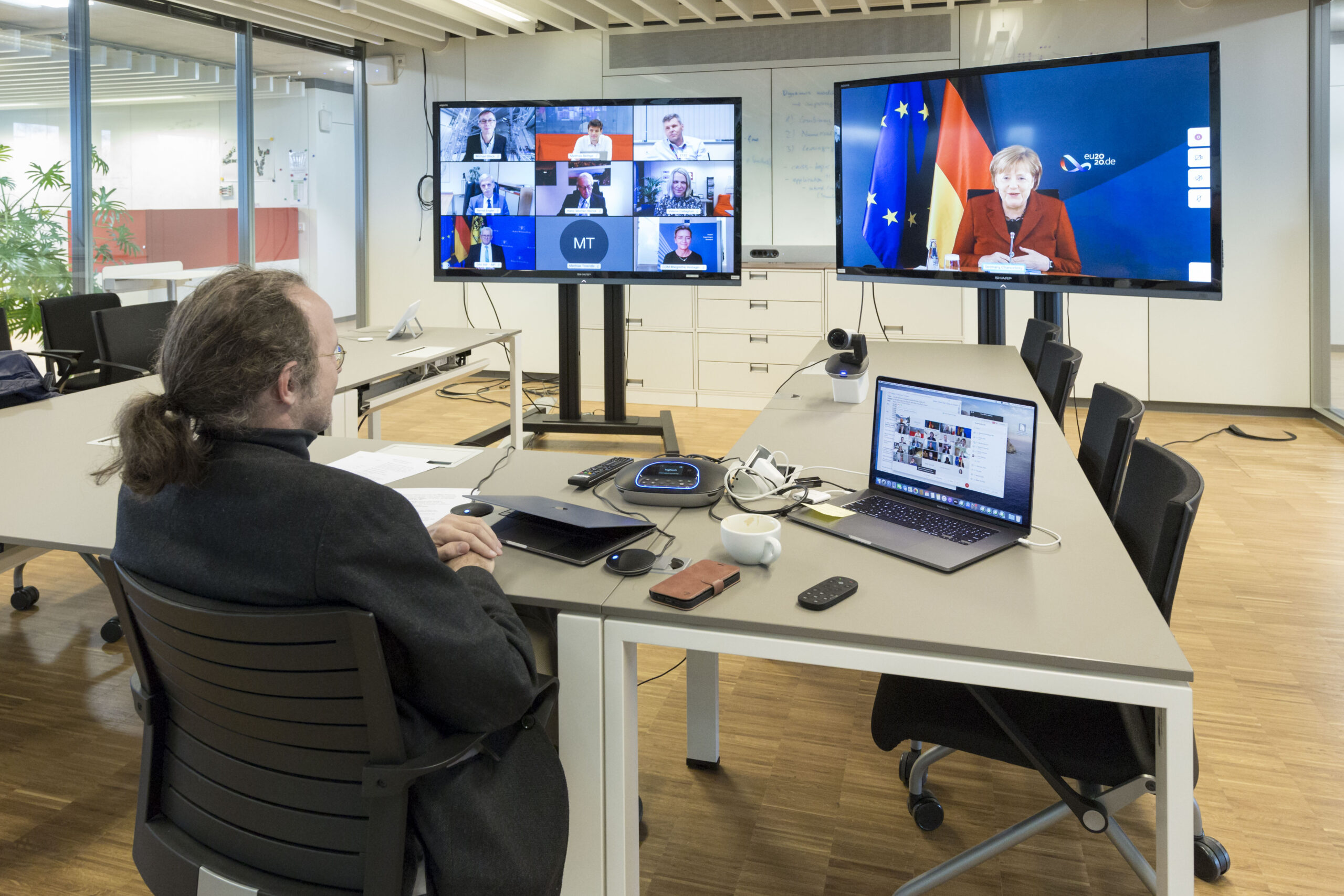
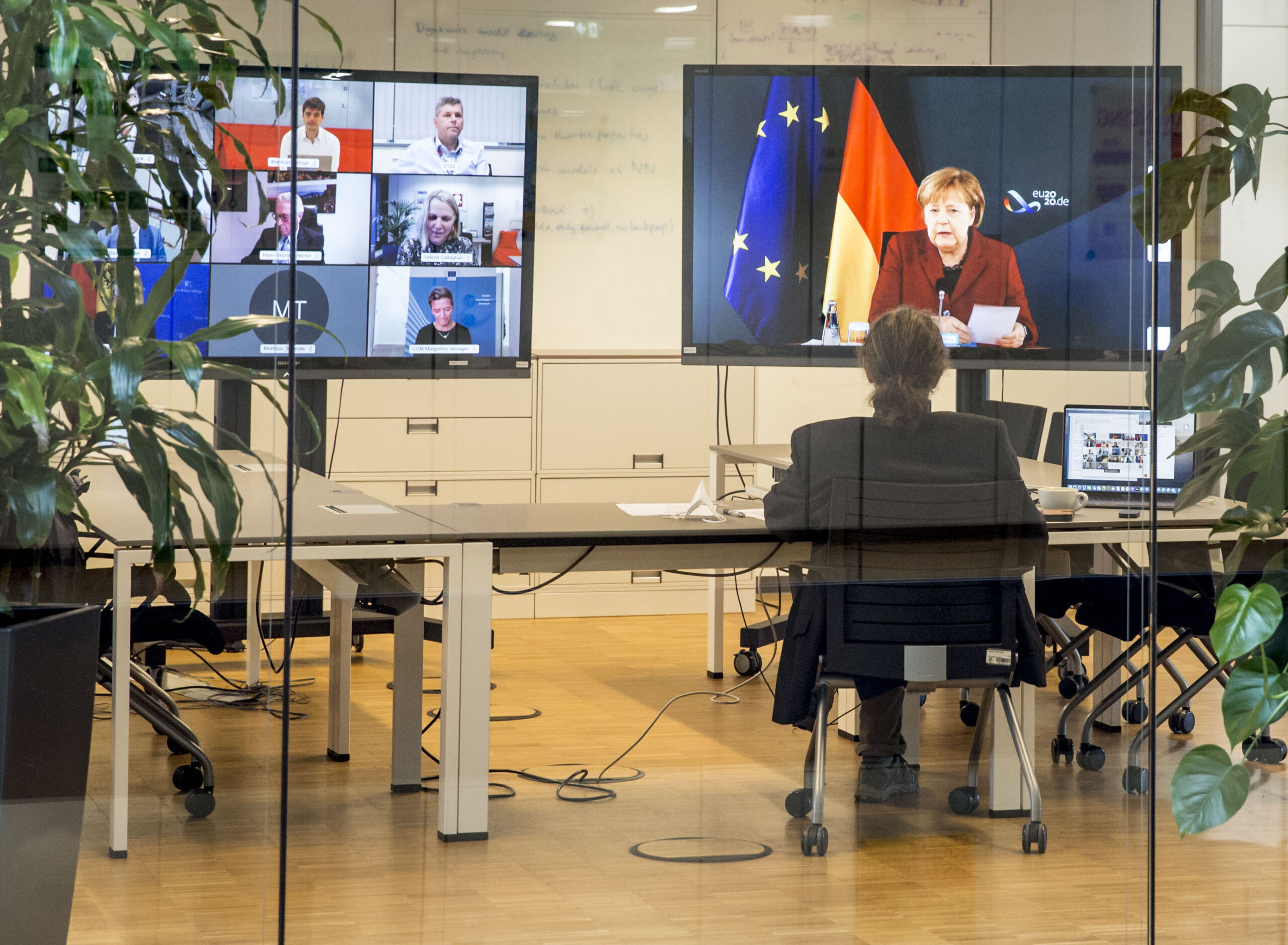
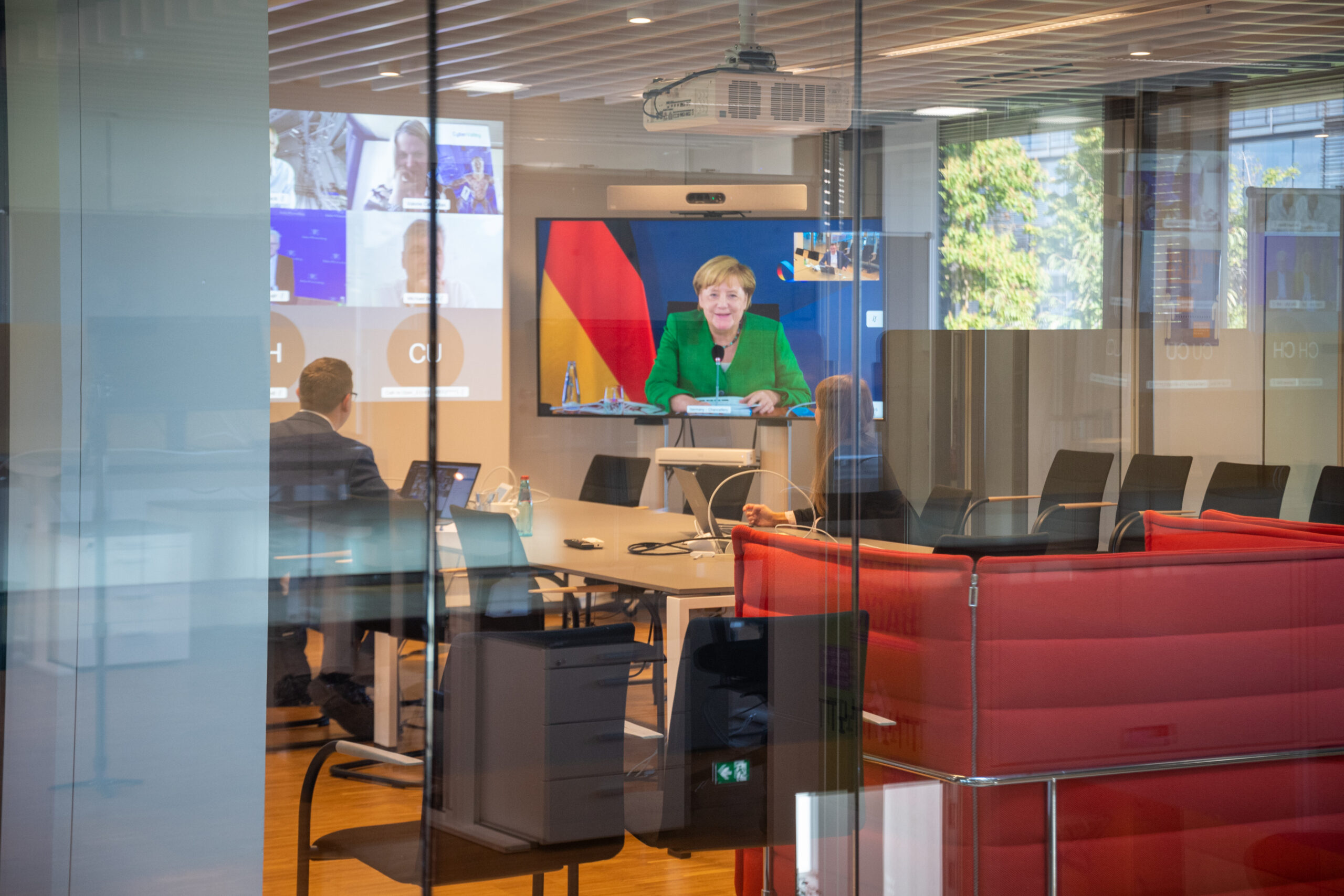
    “The German government will continue to support AI research as well as the transfer to application intensively,” said Federal Chancellor Angela Merkel on Thursday at a virtual event that marked the launch of the AI Breakthrough Hub. “We decided to update the German AI strategy. As part of the Future Package, we have pledged an additional two billion euros for AI. The investment should serve as a catalyst for state-of-the-art computing infrastructures, attractive conditions for top talent, and forward-looking AI ecosystems.”

    The AI Breakthrough Hub project, funded by the federal and state governments as well as the private sector, will be developed at the Tübingen AI Center, the joint competence center for machine learning of the University of Tübingen and the Max Planck Institute for Intelligent Systems. This growing AI ecosystem, which includes Cyber Valley and the European Laboratory for Learning and Intelligent Systems (ELLIS), is expected to significantly increase Germany’s appeal to international talent in the field of artificial intelligence. Planned measures include a fellowship program for high-level visiting scientists, an increase in computing power, a coding school for programming education, the establishment of a platform for future AI start-ups, and increased research in the field of AI applications for medicine.

    EU Vice President Margrethe Vestager pointed to the need to bring industrial applications into the AI era: “Connecting the industrial foundation to cutting-edge research in artificial intelligence is the best way forward. We also need to increase cooperation, which is the core of this new Breakthrough Hub. Our European approach is based on our values and this new hub will be a cornerstone to bring European artificial intelligence forward.”

    “Today, Cyber Valley is one of the largest research collaborations in Europe and an international beacon in AI research. And this is thanks to a joint show of strength by the federal government, the state, academia, industry and private donors,” said Minister President Winfried Kretschmann. The state of Baden-Württemberg has already invested 140 million euros into Cyber Valley’s successful path, he added. “Most recently, this Tuesday, an amount in the tens of millions of euros was earmarked to secure the joint funding of the AI Competence Center by the federal and state governments. Together with the federal government and Cyber Valley, we have created an excellent concept for promoting AI in this country with the ‘AI Breakthrough Hub’. In addition, I am pleased that the Hector Foundation will also support the training of top AI scientists in Cyber Valley with an amount of up to 100 million euros.”

    “In just a few years, Cyber Valley has managed to attract the best international AI talent and establish excellent networks with the top locations for AI research in the world,” said Baden-Württemberg’s Minister of Science Theresia Bauer. “With a major joint effort, we can now achieve a breakthrough, bringing Cyber Valley into the top league worldwide and keeping it there. Because we want to make rapid progress in the development of a European AI.”

    “For four years, we have been building something new here with outstanding colleagues. We founded Cyber Valley, a regional AI ecosystem with international appeal. Then we became part of the federal government's AI strategy – and in the past two years we set out to become a driver of European AI as well,” said Professor Bernhard Schölkopf, Director at the Max Planck Institute for Intelligent Systems. “The official launch of the first 30 ELLIS research facilities in September, including Tübingen, was a milestone on the road toward enabling Europe to compete with the world's AI hotspots, especially the United States and China. With the establishment of the new AI Breakthrough Hub, the federal government and the state of Baden-Württemberg are now kicking off a new era. I personally feel it is a privilege that we are allowed to further develop excellence in research and innovation together in order to advance Baden-Württemberg, Germany, and Europe.”

    Robert Bosch GmbH is planning an AI Campus in Tübingen, in which the global corporation will invest 100 million euros in the coming years. The company is planning an open campus that will also offer space for AI startups and external research groups. In addition, the Bosch Center for Artificial Intelligence (BCAI) will support the ELLIS units in Tübingen, Freiburg, and Amsterdam.


  • Kickoff AI Breakthrough Hub

    Kickoff AI Breakthrough Hub

    Die Teilnehmenden der Videokonferenz sind:

    Startschuss des „AI Breakthrough Hub“

    • Dr. Angela Merkel
      Bundeskanzlerin
    • Winfried Kretschmann
      Ministerpräsident
    • Margrethe Vestager
      Exekutiv-Vizepräsidentin der EU-Kommission und Kommissarin für Digitales und Wettbewerb
    • Prof. Dr. Matthias Bethge
      Direktor des Kompetenzzentrums Tuebingen.AI, Professor an der Universität Tübingen
    • Dr. Michael Black
      Direktor am Max-Planck-Institut für Intelligente Systeme, Sprecher Cyber Valley
    • Prof. Dr. Bernhard Schölkopf
      Direktor am Max-Planck-Institut für Intelligente Systeme, Co-Direktor des Kompetenzzentrums Tuebingen.AI
    • Dr. Katherine Kuchenbecker
      Geschäftsführende Direktorin des Max-Planck-Instituts für Intelligente Systeme
    • Dr. Michael Bolle
      CTO/CDO Bosch GmbH

    Panel I: „Excellence in Research and Talent“

    • Anja Karliczek
      Bundesministerin für Bildung und Forschung
    • Theresia Bauer
      Landesministerin für Wissenschaft, Forschung und Kunst
    • Prof. Dr. Martin Stratmann
      Präsident der Max-Planck-Gesellschaft
    • Dr. h.c. Hans-Werner Hector
      Gründer der der Hector Stiftung
    • Prof. Dr. Bernd Engler
      Rektor der Universität Tübingen

    Panel II: „Excellence in Transfer and Venture“

    • Alex Diehl
      Senior Advisor Cyber Valley
    • Prof. Dr. Matthias Bethge
      Direktor des Kompetenzzentrums Tuebingen.AI
    • Dr. Raquel Urtasun
      ATG Uber, Chief Scientist, Vector Institute Toronto
    • Dr. Ulrich Quay
      Managing Director BMW iVentures, Mountain View
    • Naureen Mahmood
      CEO, Co-Founder Meshcapade GmbH
    • Dr. Benedikt Battke
      Partner Grazia

    Weitere Links

  • “Science meets Fiction” – Künstliche Intelligenz im Film „Exit“

    Unmittelbar vor der Erstausstrahlung des Films am Mittwoch, 28. Oktober 2020, 20:35 Uhr in der ARD diskutieren wir gemeinsam mit den Machern von „Exit“ und mit KI-Forschenden, welche Folgen sogenannte Künstliche Intelligenzen für unsere Gesellschaft in Zukunft haben, und wie technologischer Fortschritt in einer gesellschaftlich wünschenswerten Weise gestaltet werden kann.

    Teilnehmerinnen und Teilnehmer: 

    • Katharina Dufner (SWR-Redakteurin)

    • Prof. Dr. Marco Huber (Leiter des Cyber Valley KI-Fortschrittszentrums „Lernende Systeme“, Fraunhofer IPA, Universität Stuttgart)

    • Prof. Dr. Ulrike von Luxburg (Professorin für Theorie des Maschinellen Lernens an der Universität Tübingen; Sprecherin des Exzellenzclusters “Maschinelles Lernen: Neue Perspektiven für die Wissenschaft”)

    • Sebastian Marka (Regisseur)

    • Erol Yesilkaya (Drehbuchautor)

    Moderation: Mirko Drotschmann (MrWissen2go)

    Anmeldung

    Sie können teilnehmen und mit-chatten im Zoom-Webinar (bitte hier anmelden) oder ohne Anmeldung den Live-Stream auf dem YouTube-Kanal des SWR anschauen. 

    Film

    Der Film "Exit" ist bereits jetzt in der ARD-Mediathek erhältlich.

  • Female Leadership in Cyber Valley

    Female Leadership in Cyber Valley

    Top female scientists and entrepreneurs from the Cyber Valley ecosystem will talk about their careers, their inspiration for a career in science and technology, and the challenges they faced along the way. Among the speakers are professors from the Universities of Stuttgart and Tübingen, a director of the Max Planck Institute for Intelligent Systems, a Cyber Valley research group leader and the managing director of a company from the Cyber Valley start-up network. A complete list can be found here. Participants of the event will have the opportunity to participate in the panel discussion with female executives in the research areas of machine learning, robotics, computer vision, human-computer interaction and simulation sciences. Afterwards, smaller break out rooms will also offer participants the opportunity to network.

    The Frauenwirtschaftstage are a nationwide campaign for equality to support the equal participation of women in working life and in the economy. For this reason, the Ministry of Economic Affairs, Labour and Housing Construction organizes the Frauenwirtschaftstage every year. This year’s main theme is “Female Leadership – Female Bosses Wanted!” From October 14 to 17, 2020, regional workshops, congresses, lectures and consultations will be offered by numerous local organizers for companies and interested parties. The focus will be on the topics of female entrepreneurs, start-ups and business succession, networking and cooperation, women on their way to management positions, women re-entering the workforce and the compatibility of work and family life. The event “Female Leadership in Cyber Valley” is part of this event series.

    You can register here. Please note that the event will be held in English and with the video conferencing service Zoom.

  • Bernhard Schölkopf gewinnt den Deutschen KI-Innovationspreis

    Bernhard Schölkopf gewinnt den Deutschen KI-Innovationspreis

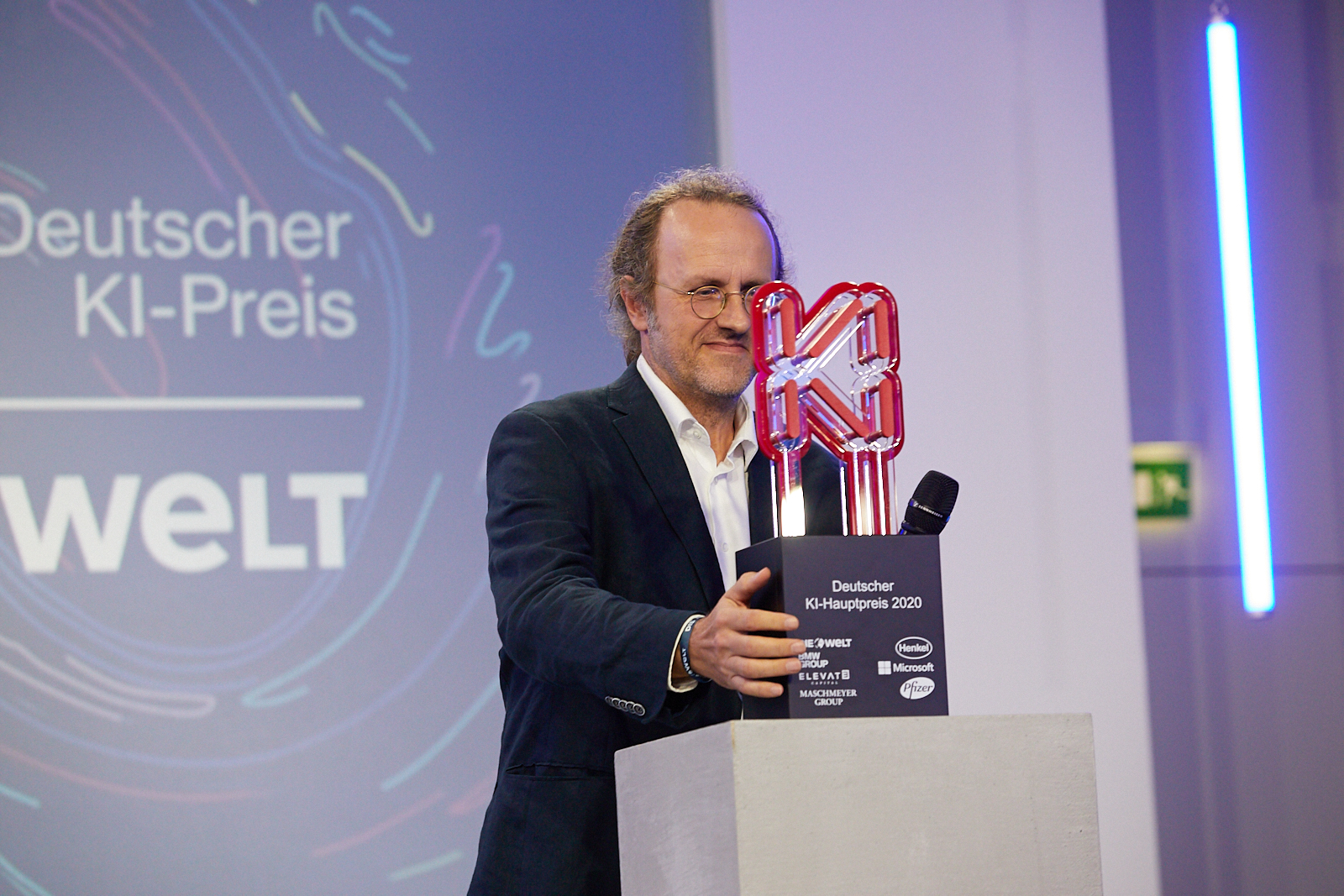
    Berlin – WELT hat am Donnerstag, 1. Oktober 2020, den Zweiten „Deutschen KI-Preis“ verliehen und damit bahnbrechende Leistungen auf dem Gebiet der Künstlichen Intelligenz gewürdigt. Bei Axel Springer kamen führende Persönlichkeiten aus Politik, Forschung, Wirtschaft sowie der Tech– und Start-up-Szene zusammen. Die Preisverleihung fand aufgrund der Corona-Krise in einer hybriden Form statt, viele weitere Gäste konnten per Live-Stream die Veranstaltung verfolgen.

    Peter Altmaier, Bundesminister für Wirtschaft und Energie, hielt die Eröffnungsrede und zeigte sich bereits im Vorfeld überzeugt von Deutschlands KI-Community: „Es sind genau solche Innovationen, wie sie die Preisträger und Teilnehmer hier geschaffen haben, die wir mit einem europäischen Ordnungsrahmen ermöglichen und fördern wollen. Wir setzen uns in unserer Ratspräsidentschaft daher dafür ein, bei der Ausgestaltung eines europäischen Ordnungsrahmens den Fokus ganz klar auf Innovationen zu legen.“

    Der „Deutsche KI-Preis“ wurde in drei Kategorien verliehen: Mit dem 100.000 Euro dotierten KI-Innovationspreis zeichnete WELT Professor Dr. Bernhard Schölkopf, Direktor der Abteilung für Empirische Inferenz am Max-Planck-Institut für Intelligente Systeme in Tübingen, aus. Schölkopf fördert und betreibt seit Jahren anwendungsnahe Spitzenforschung im Bereich der Künstlichen Intelligenz. Er ist einer der international angesehensten KI-Forscher und eine der prägendsten Persönlichkeiten der deutschen KI-Szene.

    „Maschinelles Lernen und Kausale Inferenz sind wesentliche Teilgebiete der modernen Künstlichen Intelligenz. Meine Forschungsgruppe entwickelt Algorithmen, die mit großen Datensätzen gefüttert werden und durch dieses Training lernen, selbstständig Regelmäßigkeiten in den Daten zu erkennen – ebenso, wie ein Gehirn aus Beobachtungen Gesetzmäßigkeiten erkennt und Schlussfolgerungen zieht. Daher das Wort „Inferenz“: es geht um Wissen, das durch Schlussfolgern gewonnen wird. Eine Maschine findet in großen Datenmengen oft Strukturen, die ein Mensch nicht finden würde. Ich möchte mit meiner Forschung dazu beitragen, dass die theoretischen Methoden des maschinellen Lernens Anwendung finden, so z.B. in der Medizin oder Astronomie“, erklärt Schölkopf seine Forschungsgebiet.

    Klaus Boldt, Senior Editor und Mitglied der Chefredaktion WELT: „Künstliche Intelligenz ist schon heute allgegenwärtig, doch ihr Einfluss und ihre Bedeutung wird in Zukunft noch rasanter ansteigen. Um zu verstehen, welchen Einfluss KI auf die Wirtschaft und Gesellschaft hat und um diesen verantwortungsvoll zu gestalten, gilt es, Forschung und Wissenschaft vor Ort in Deutschland zu fördern. Mit dem ‚Deutschen KI-Preis‘ verschafft WELT dem Thema eine große Bühne und bringt KI-Experten mit Entscheidern aus Politik und Wirtschaft zusammen.“

    Über die Preisvergabe des Haupt- und Anwenderpreises und die Nominierung für den Sonderpreis entschied eine Jury bestehend aus herausragenden Vertretern der KI-Anwendung und -Forschung, unter Vorsitz von Hans-Christian „Chris“ Boos, Gründer und Geschäftsführer der KI-Firma Arago und einer der Vordenker der Branche.

    Unterstützt wird der „Deutsche KI-Preis“ von der BMW Group, Berlin Partner für Wirtschaft und Technologie (Sonderpreis), Elevate Capital, Henkel, der Maschmeyer Group, Microsoft und Pfizer.

  • Bernhard Schölkopf im #ScienceTalk mit Theresia Bauer

    Bernhard Schölkopf im #ScienceTalk mit Theresia Bauer

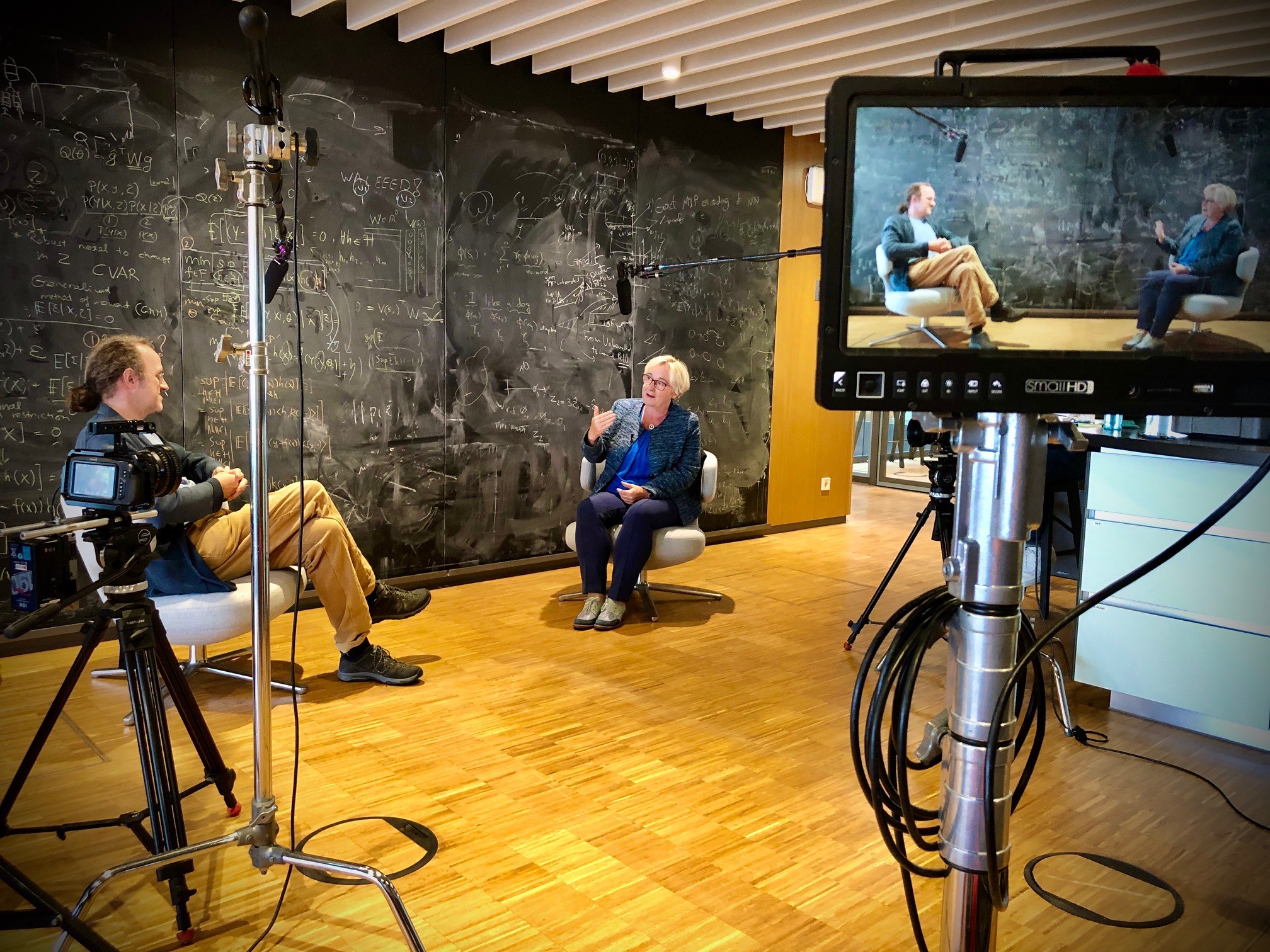
    Im zweiten #ScienceTalk des Wissenschaftsministeriums spricht Ministerin Theresia Bauer mit dem Direktor des Max-Planck-Instituts für Intelligente Systeme und Mitbegründer der Cyber Valley-Initiative, Prof. Dr. Bernhard Schölkopf, über diese Fragen und über die Potenziale der künstlichen Intelligenz für den Wissenschafts-, Wirtschafts- und Gesundheitsstandort Baden-Württemberg.

    „Künstliche Intelligenz ist die Schlüsseltechnologie für die Wertschöpfung der Zukunft, sie hat enorme Veränderungskraft für jeglichen technischen Fortschritt und für viele Wissenschaftsdisziplinen. Als Hochtechnologieland investieren wir in Baden-Württemberg daher kraftvoll in diese Zukunftstechnologie. Mit Erfolg: Wir sind das Land mit den meisten KI-Professuren in der Republik“, sagt Bauer.

    Künstliche Intelligenz im Einsatz für die Gesundheit

    KI kommt heute bereits in der Medizin zum Einsatz – beispielsweise bei der Diagnose von Hautkrebs. „Maschinelle Lernsysteme können trainiert werden auf der Erfahrung nicht nur von einem Arzt oder einer Ärztin, sondern von Hunderten von Ärzten. Daraus können komplexe Entscheidungsregeln abgeleitet werden, die dann genauso gut oder in manchen Fällen sogar besser sind als die besten Ärzte – und die nicht müde werden und Tag und Nacht arbeiten können“, so Schölkopf.

    Auch bei der Bekämpfung von COVID-19 werde künstliche Intelligenz eingesetzt: „Sie kann dabei helfen, Rückschlüsse zu ziehen, wie sich die Pandemie wo und wann verbreitet hat und welche politischen Entscheidungen welchen Einfluss hatten“, so Schölkopf weiter. Um ein detailliertes Bild zu erhalten, hätten die Cyber Valley-Forschenden ein exemplarisches epidemisches Modell für Tübingen entwickelt.

    Der #ScienceTalk ist nicht nur auf YouTube, sondern auch als Audio-Podcast abrufbar.

  • Chancellor Angela Merkel and Minister-President Winfried Kretschmann visit Cyber Valley

    Chancellor Angela Merkel and Minister-President Winfried Kretschmann visit Cyber Valley

    The virtual conference was also attended by the Federal Minister of Science Anja Karliczek, Baden-Württemberg’s Minister of Science Theresia Bauer, State Secretary Florian Stegmann, the directors of the Max Planck Institute for Intelligent Systems Bernhard Schölkopf and Michael Black, and the Managing Director of Technology of Robert Bosch GmbH Michael Bolle, among others. In a mixture of film clips and live contributions, the Cyber Valley research consortium presented its evolution since it was founded at the end of 2016, as well as concise examples of its research results. In addition, selected start-ups from the Cyber Valley Start-up Network presented their projects, and Cyber Valley leadership highlighted the initiative’s important for the German economy.

    “AI is one of the most important topics for the future of Germany and Europe. For this reason, we must now find answers to urgent questions and jointly develop solutions. We must use the COVID-19 pandemic to accelerate tangible technological successes. And this is where AI is the ideal tool,” said Kretschmann. The idea of ‘strengthening strengths’ should be the guiding principle, and existing AI hotspots should be developed further. With Cyber Valley, Baden-Württemberg already has one of the largest research consortia in Europe in the field of AI, with partners from science, industry, and society.

    “The state of Baden-Württemberg has so far invested around 180 million euros in Cyber Valley. We would like to further expand this important research cooperation, preferably in close cooperation with the Federal government. With joint funding from the federal, state, and private sectors, a European center for artificial intelligence could be realized that would also be perceived internationally as a relevant player,” Kretschmann said. “The consolidation of the AI competence centers planned by the Federal Government and the establishment of AI application hubs in Germany are important steps in this direction. In Baden-Württemberg, we are clearly focusing on excellence instead of quantity.”

    Bundeskanzlerin Angela Merkel, Cyber Valley

    “We see that many scientists from Europe are still being poached. If we want to help shape AI development from the European continent, we need an attractive and agile environment,” said Minister Theresia Bauer. “The close international networking of top AI research is a central component of this. That is why we now need an impetus in the direction of Europe.”

    “We are delighted that Chancellor Merkel and Prime Minister Kretschmann have visited us,” said Bernhard Schölkopf. “Our virtual working meeting was a good opportunity not only to present the current status of AI research in Cyber Valley, but also to discuss the national and European AI strategy. It is important for us to remain competitive in the future to develop AI that is in line with the values of Europe’s open societies. We are thus very pleased about the interest and support of the German and Baden-Württemberg governments, as we can create research conditions that attract the best minds from Germany and abroad.”

    “It is the primary goal of Cyber Valley to create the jobs of the future – right here in the Stuttgart-Tübingen region, which boasts the highest density of world-class AI researchers in Germany,” said Michael Black. “Furthermore, the Cyber Valley ecosystem with the universities of Stuttgart and Tübingen, as well as the Max-Planck-Institute for Intelligent Systems, provides first-class education to the world’s top young scientists in the broad field of intelligent systems, preparing them for careers in academia and industry. Last but not least, the strong economic infrastructure in Baden-Württemberg provides an ideal breeding ground for AI start-ups.”

  • Michael J. Black awarded major “test of time” prize at the 2020 Conference on Computer Vision and Pattern Recognition (CVPR)

    Michael J. Black awarded major “test of time” prize at the 2020 Conference on Computer Vision and Pattern Recognition (CVPR)

    Tübingen. June 16, 2020 – Michael J. Black, Director at the Max Planck Institute for Intelligent Systems (MPI-IS) and Distinguished Amazon Scholar, has been awarded the 2020 Longuet-Higgins Prize at the IEEE Conference on Computer Vision and Pattern Recognition (CVPR). The award was announced today at the conference, which is being held online until June 18. 

    The prize is awarded annually by the IEEE Pattern Analysis and Machine Intelligence (PAMI) Technical Committee for “Contributions in Computer Vision that Have Withstood the Test of Time.” It recognizes CVPR papers from ten years ago that have made a significant impact on computer vision research. Black shares the award with his former students Deqing Sun (Google) and Professor Stefan Roth (TU Darmstadt) for their paper “Secrets of optical flow estimation and their principles”. 

    “I am deeply honored to have worked with great students and collaborators like Deqing and Stefan and I thank the Technical Committee for recognizing our work,” said Black, who is now the only researcher to have won all three major test-of-time prizes in the field of computer vision. In 2010, he received the Koenderink Prize at the European Conference on Computer Vision (ECCV). He was also awarded the Helmholtz Prize at the International Conference on Computer Vision (ICCV) in 2013. 

    The paper addressed the problem of computing motion in video sequences, that is, “optical flow”. It was presented at CVPR in 2010 and has since been widely cited. The researchers carefully evaluated many of the dominant techniques in the field to understand which ones were most important.  This revealed that a simple heuristic was a key to accuracy. By formalizing this heuristic, the scientists were able to improve upon it and incorporate it into a principled optical flow algorithm called “Classic+NL”, which was state-of-the-art at the time.

    Over the past decade, Michael J. Black has continued to drive groundbreaking research in the field of computer vision forward. He and his Perceiving Systems department have had 57 papers published at CVPR since 2010.

    More information:
    Michael J. Black: https://ps.is.tuebingen.mpg.de/person/black
    CVPR 2020: http://cvpr2020.thecvf.com/
    Longuet-Higgins Prize: https://www.thecvf.com/?page_id=534
    Award-winning paper: http://www.cs.brown.edu/people/dqsun/pubs/cvpr_2010_flow.pdf
    Cyber Valley: https://cyber-valley.de/en
    Max Planck Institute for Intelligent Systems: https://is.mpg.de/
    Amazon Science: https://www.amazon.science/
    Deqing Sun: https://deqings.github.io/
    Stefan Roth: https://www.visinf.tu-darmstadt.de/team_members/sroth/sroth.en.jsp

  • Bundeswettbewerb Künstliche Intelligenz startet in die nächste Runde

    Bundeswettbewerb Künstliche Intelligenz startet in die nächste Runde

    Am 30. März geht der Bundeswettbewerb Künstliche Intelligenz (BWKI) in die nächste Runde: Schülerinnen und Schüler können ‒ allein oder im Team ‒ Projektideen für Algorithmen einreichen und bis Oktober 2020 an ihren kreativen Lösungen für die Herausforderungen unserer Zukunft arbeiten. Neben vielen attraktiven Preisen gibt es einen Besuch bei der Konferenz AI Con zu gewinnen, ermöglicht durch die Firma Bosch.

    Im BWKI entwickeln Schülerinnen und Schüler Algorithmen mit ökologischem, medizinischem, technischem oder gesellschaftlichem Anwendungspotential. Nach einer hohen Resonanz mit mehr als 2500 Teilnehmenden im Vorjahr, wird der Wettbewerb in diesem Jahr zum zweiten Mal durchgeführt. Die Veranstalter sind das Tübingen AI Center der Universität Tübingen und das Max-Planck-Institut für Intelligente Systeme in Kooperation mit der Cyber Valley Initiative.

    Der BWKI bietet allen Interessierten ab April die Möglichkeit, über social media Kanäle (facebook, instagram und twitter) eine sog. Programmieraufgabe der Woche zu lösen.

    Erstmals gibt es zudem die Möglichkeit, einen umfangreichen KI-Kurs online zu besuchen – ein Kurs, der viele wichtige Werkzeuge der Künstlichen Intelligenz vermittelt und gleichzeitig eine interessante Abwechslung für Schülerinnen und Schüler ist, die zuhause bleiben müssen und erst mal nicht wieder in die Schule dürfen. In dem KI-Kurs werden die Grundlagen Künstlicher Intelligenz durch Programmier-Tutorials vermittelt und eine Auseinandersetzung mit ethischen Grundfragen angeboten. Abschließend können Teilnehmende sich an einem der Finalisten- Projekte des Vorjahres ausprobieren. Der Kurs eignet sich besonders für Schulen und bietet die Möglichkeit, zukunftsweisende Methoden in den Schulalltag einzubinden. Die Schule mit den meisten und aktivsten Teilnehmenden am KI-Kurs wird im November zur >KI-Schule des Jahres ernannt und erhält Bionik-Bildungsbaukästen (bionics4education), gestiftet von der Firma Festo.

    Im November werden die Finalisten zur Preisverleihung an das Max- Planck-Institut für Intelligente Systeme eingeladen. Die nominierten Projekte werden dort einer hochrangigen Jury mit Vertretern aus Wissenschaft, Wirtschaft und Medien vorgestellt. Zu den diesjährigen Jurymitgliedern gehört unter anderem der Wissenschaftsjournalist Ranga Yogeshwar und international bekannte KI-Forscher (https://bw-ki.de/jury). Die Veranstaltung wird wieder durch Fernsehmoderator und Webvideoproduzent Philip Häusser moderiert.

    Der Wettbewerb steht unter der Schirmherrschaft der baden-württembergischen Wissenschaftsministerin Theresia Bauer. Die Carl-Zeiss-Stiftung ist Hauptförderer des Wettbewerbs. Weitere Unterstützer sind die Unternehmen Bosch, Amazon, Festo und NVIDIA.

    Informationen und Anmeldung unter https://bw-ki.de und https://ki-kurs.org