User Group: Journalist

  • Das neue Cyber Valley Public Advisory Board legt Roadmap fest

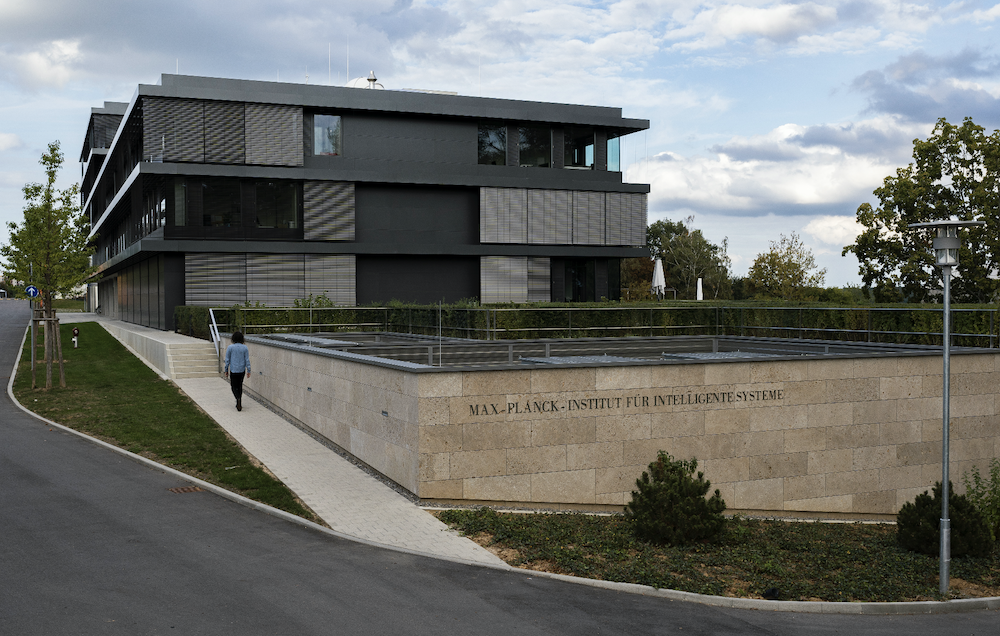
    Am 17.09. fand die konstituierende Sitzung des neu eingerichteten Cyber Valley Public Advisory Boards (PAB) am Max-Planck Institut für Intelligente Systeme in Tübingen statt. Dabei hat das PAB hat eine Roadmap für seine Arbeit festgelegt:

    1. Die Mitglieder des Beirats sind sich einig, dass die Einrichtung des PAB ein wichtiger Schritt ist, um eine neue Qualität der wissenschaftlichen und gesellschaftlichen Diskussion zu Forschung und Anwendung von KI-Systemen zu erreichen.

    2. Das PAB sieht seine Aufgabe darin, den Dialog zwischen den Disziplinen der KI-Forschung und den Disziplinen der ethischen und gesellschaftswissenschaftlichen Forschung zu befördern. Das PAB wird die Cyber Valley Forschungsgruppen und die Cyber Valley Partner dabei beraten, ethische und gesellschaftlich relevante Aspekte ihrer Arbeit zu adressieren.

    3. Das PAB wird Maßnahmen erarbeiten, wie ein Austausch mit der Öffentlichkeit über gesellschaftliche Fragestellungen, die sich durch die Anwendung von KI-Systemen ergeben, erfolgen kann und wie Anregungen aus der Zivilgesellschaft einbezogen werden können.

    4. In den weiteren Beratungen des Beirats sollen zudem Empfehlungen erarbeitet werden, wie eine Kompetenzbildung und der Einbezug der Ethik und anderer gesellschaftswissenschaftlicher Disziplinen auch strukturell stärker verankert und ein entsprechendes Leitbild entwickelt werden könnte.

  • Cyber Valley establishes Public Advisory Board

    Cyber Valley establishes Public Advisory Board

    With the Public Advisory Board (PAB), Cyber Valley is establishing an independent committee to evaluate research projects with regard to their ethical and social implications. Europe's largest research cooperation in the field of artificial intelligence (AI) thus creates an additional element of transparency.

    The members of the PAB are appointed by Theresia Bauer, Baden-Württemberg's Minister of Science, Research and the Arts. "Artificial intelligence has enormous potential for social change. In order to make use of this potential, people also need to have confidence in the opportunities offered by AI. Transparency and dialogue are indispensable. The Public Advisory Board will contribute to the development of an ethical and social model for AI research. In this sense, we also want to foster an open dialogue between science and society on the possible applications of AI," says Theresia Bauer.

    "Artificial intelligence will significantly change the way we live and work," says Bernhard Schölkopf, Director at the Max Planck Institute for Intelligent Systems. "It is of crucial importance for society that we anticipate these changes and prepare for them.” His colleague and Cyber Valley spokesman Michael J. Black adds: "It is critical that we use AI to improve our lives. For this reason we are pleased that Cyber Valley provides a vehicle to engage AI researchers in this important and evolving ethical discussion. The dialog between the independent advisory board and scientists will help shape the future of AI for the benefit of humanity.”

    The PAB’s role is to review project proposals from Cyber Valley research groups prior to approval by the Cyber Valley Research Fund Board. The Cyber Valley Research Fund Board is a joint commission of the partners from politics, science and industry in which the academic representatives have the majority. It decides on the basis of scientific excellence which research projects are to be financed with funds from the Research Fund. Only the Cyber Valley research groups can apply for Cyber Valley Research Fund money. The Cyber Valley Research Fund finances free research projects, i.e. projects that are not specified by industry, even though it is the industrial partners who fill the funding pot. It has a volume of 5 million euros for the next four years.

    The members of the PAB have access to all funding applications and are thus in a position to check, on which projects the funds are spent. The PAB members participate in the meetings of the Research Fund Board. They can ask for further information, make recommendations, express concerns and engage in a debate.

    The appointed members come from different areas of science and society and thus represent a broad spectrum of relevant disciplines and backgrounds.

    Science Minister Theresia Bauer: "In addition to the technical expertise of the members of the Public Advisory Board in the fields of artificial intelligence, ethics, technology assessment and digital civil society, it is very important to us to include the perspective of the younger generation, for it is their everyday lives that will be significantly influenced by the increasing penetration of artificially intelligent systems".

    The following experts were appointed to the PAB:

    • Prof. Dr. Regina Ammicht Quinn is a Professor of Ethics at the International Centre for Ethics in the Sciences and Humanities (IZEW) at the University of Tübingen and Head of the Department of Society, Culture and Technical Change, where she deals with ethical issues of digital life and digital technology development.
    • Prof. Dr. Heinrich Bülthoff is Emeritus Director of the Max Planck Institute for Biological Cybernetics in Tübingen. As head of the department "Human Perception, Cognition and Action" he researches the fundamental processes of human perception and behaviour in virtual environments.
    • Prof. Dr. Armin Grunwald is Professor of Technology Philosophy and Head of the Institute for Technology Assessment and Systems Analysis (ITAS) at the Karlsruhe Institute of Technology and Head of the Office for Technology Assessment at the German Bundestag.
    • Prof. Dr. Dr. Ulrich Hemel is Director of the Weltethos-Institute in Tübingen, which accompanies and shapes the critical dialogue on the topic of ethics and AI in general as well as specifically on Cyber Valley with conferences, public events and lectures.
    • Lorena Jaume-Palasí is the Founder of the non-profit organization The Ethical Tech Society, which at the interface of technology, ethics and society pursues the goal of researching processes of automation and digitization and classifying them normatively with regard to their social relevance. As a member of the High-Level Expert Group on AI of the EU, she was involved in the development of the European ethical guidelines for trustworthy AI.
    • Prof. Dr. Sandra Richter is the Director of the German Literature Archive in Marbach, where she deals with digitalization and products of digital culture as well as the question of how digital technologies can be used in literary and cultural mediation.
    • Katharina Schmidt is Founder of the AI start-up apic.ai, which uses artificial intelligence to investigate the causes of bee mortality. The company thus demonstrates a successful application of AI in the field of environmental protection and nature conservation. She is also involved in the G-Lab research project at the Karlsruhe University of Applied Sciences. Based on her experience in founding her own company, she develops new concepts for the promotion of a start-up culture among University students and supports the cooperation of Universities with start-ups and small and medium-sized enterprises.
    • Lukas Weber is a committed representative and Co-organizer of the Fridays for Future activities in Heidelberg and a student at the University of Heidelberg. He is committed to taking a closer look at the consequences for future generations of today's decisions that will strongly shape and change our society, such as the further development and application of artificial intelligence.
    • Nicola Wettmarshausen is a Journalist with a focus on science, environment and technology and founder of the citizen science initiative EcoCurious, which uses innovative projects and do-it-yourself formats to explore new applications for digital technologies and create new perspectives for an even closer exchange between science and society..
    • In addition, an elected member of the Tübingen Municipal Council will be appointed to the committee, based on the great commitment in shaping and accompanying the local discourse on the Cyber Valley initiative in a constructive and critical manner.

    All Cyber Valley partners are committed to transparency. Regular events are held on the topic of artificial intelligence. The spectrum ranges from a Studium Generale series on AI, open days, lab tours, science slams or participation in exhibitions such as MS Wissenschaft or the Tübinger Fenster für Forschung. The researchers, who are part of the Cyber Valley ecosystem, take part in panel discussions – whether with politicians in Stuttgart's New Palace or with student representatives in University auditoriums. The scientists regularly hold lectures in front of a broad audience, take part in research and digital summits, are open to the media and welcome their reports.

    Cyber Valley is Europe‘s largest research cooperation with partners from science and industry in the field of artificial intelligence. The Max Planck Society with the Max Planck Institute for Intelligent Systems, the two Universities of Stuttgart and Tübingen as well as the companies Amazon, BMW AG, Daimler AG, IAV GmbH, Porsche SE, Robert Bosch GmbH and ZF Friedrichshafen AG are involved in the initiative, which is supported by the state of Baden-Württemberg. Cyber Valley is also supported by the Christian Bürkert Foundation, the Gips-Schüle Foundation, the Vector Foundation and the Carl Zeiss Foundation.

    Press contact:

    Linda Behringer

    c/o Max Planck Institute for Intelligent Systems, Stuttgart
    T: +49 711 689 3552
    M: +49 151 2300 1111
    linda.behringer@cyber-valley.de

  • Universität Tübingen bei Exzellenzstrategie erfolgreich

    Universität Tübingen bei Exzellenzstrategie erfolgreich

    Dies ist eine Pressemitteilung der Universität Tübingen:

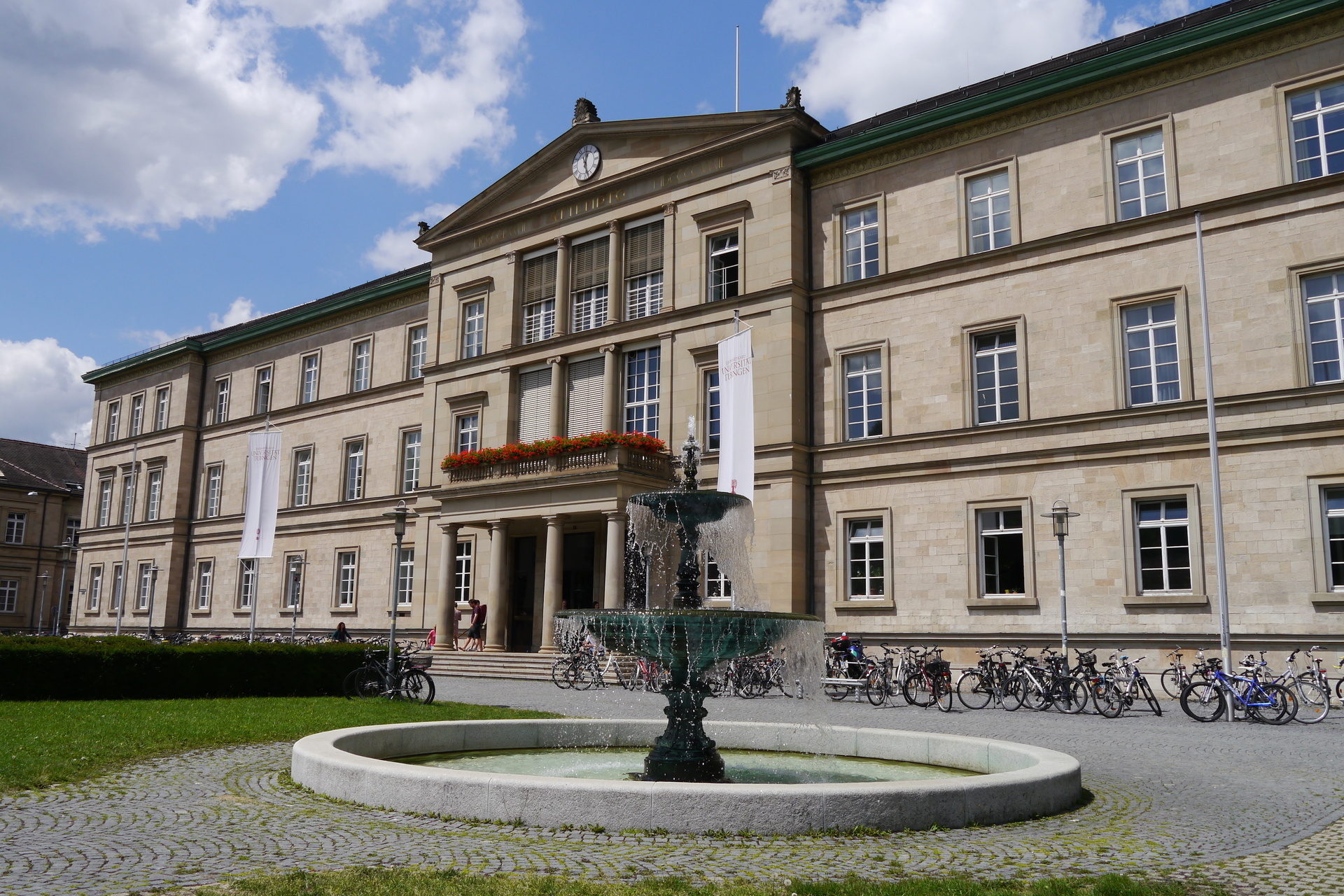
    Die Universität Tübingen bleibt exzellent. Eine Kommission aus Wissenschaftlerinnen und Wissenschaftlern sowie Vertreterinnen und Vertretern von Bund und Ländern hat am Freitag entschieden, dass Tübingen für weitere sieben Jahre den Status einer Exzellenzuniversität erhält und entsprechend finanziell gefördert wird. „Mit diesem hart erkämpften Erfolg ist die Grundlage gelegt, um Tübingen dauerhaft in der kleinen Gruppe der weltweit besten Universitäten zu etablieren“, sagte Rektor Professor Bernd Engler. Die finanzielle Förderung durch Bund und Länder eröffne die Möglichkeit, die Universität nicht nur in einzelnen Forschungsgebieten, sondern strukturell und in einer großen thematischen Breite weiterzuentwickeln.

    „Die Welt wandelt sich derzeit rasch und die Wissenschaft macht da keine Ausnahme“, sagte Engler. „Genome Editing, Personalisierte Medizin, Digitalisierung und Künstliche Intelligenz sind hier nur einige Beispiele für Entwicklungen, deren Auswirkungen langfristig die Gesellschaft insgesamt verändern werden. Angesichts dieser Situation muss die Universität in der Lage sein, rascher als bisher auf die damit verbundenen Herausforderungen zu reagieren.“ Die Mittel aus der Exzellenzstrategie werde die Universität daher nutzen, um neue, vielversprechende Forschungsfelder an der Universität zu implementieren und flexibel auf Herausforderungen zu reagieren. Dazu würden unabhängige Nachwuchsforschungsgruppen und Tenure-Track-Professuren eingerichtet sowie das bewährte Instrument der „Exploration Funds“ eingesetzt. So könne die Universität junge Wissenschaftlerinnen und Wissenschaftler mit hohem Potenzial nach Tübingen holen beziehungsweise hier halten.

    Engler sagte, zahlreiche der in der ersten Förderphase gestarteten Projekte und Initiativen hätten sich bewährt und würden daher fortgesetzt. Dazu zählten etwa das Athene-Programm für Wissenschaftlerinnen, die „Innovation Grants“ für junge Postdocs zur Förderung des Wissenstransfers oder auch die „Exploration Funds“ für Forscherinnen und Forscher in den Geistes- und Sozialwissenschaften. Auch die Forschungsplattformen und die sogenannten Core Facilities wie QBiC, LISA+ und das eScience Center hätten sich bestens etabliert und blieben erhalten.

    Die Universität werde mit den Mitteln aus der künftigen Exzellenzförderung aber auch eine Reihe neuer Projekte starten. Darunter seien zum Beispiel: 

    • „Tübingen Structural Microscopy“ (TSM) wird als Core Facility in Zukunft die Kapazitäten der Universität Tübingen auf dem Gebiet der Elektronen- und Ionen-Mikroskopie bündeln. Einen Schwerpunkt der Arbeit wird der Einsatz modernster Untersuchungsverfahren auf der Mikro- und Nanoebene bilden.
       
    • Als neue Core Facility in den Wirtschafts- und Sozialwissenschaften wird das Methodenzentrum für empirische Forschung in erster Linie die Grundlagenforschung auf dem Gebiet quantitativer und qualitativer Methoden voranbringen. Das Zentrum wird zu interdisziplinären Methoden und neuen Techniken der Datenanalyse forschen und Lösungsansätze für unterschiedliche Modelle in den Sozial- und Wirtschaftswissenschaften sowie der Psychologie entwickeln, nicht zuletzt unter Einsatz von Techniken des Maschinellen Lernens.
       
    • Die Universität Tübingen wird ein College of Fellows für internationale Wissenschaftlerinnen und Wissenschaftler gründen und damit die Internationalisierung der Universität in Forschung und Lehre vorantreiben. Das College richtet sich insbesondere an internationale Postdoktoranden, die eine Chance erhalten, bis zu zwei Jahre lang in Tübingen an einem Projekt zu forschen und sich über Fachgrenzen hinweg auszutauschen. Während dieser Zeit werden die Fellows in das akademische Leben ihres gastgebenden Fachbereichs integriert und leisten auch Aufgaben in der Lehre.
       
    • Die Universität hat in den vergangenen Jahren ihre Aktivitäten in den Bereichen Innovation und Wissenstransfer erheblich ausgebaut. Beispielgebend dafür ist die Cyber Valley-Initiative, eine Kooperation von Universitäten, Forschungseinrichtungen und Unternehmen auf dem Gebiet der Künstlichen Intelligenz. Aufbauend auf diesen Erfahrungen werden wir in der nächsten Förderphase ein universitäres Innovationszentrum gründen, in dem alle Start-up-Aktivitäten gebündelt werden. Forscherinnen und Forschern, die ihre wissenschaftlichen Erkenntnisse zu neuen Dienstleistungen und Produkten weiterentwickeln wollen, wird hier eine Infrastruktur geboten. 
       
    • Mit der Forschungsplattform „Global Encounters“ wird sich die Universität auch in den Geistes- und Sozialwissenschaften verstärkt auf globale Handlungsräume ausrichten. Aufbauend auf bereits bestehenden Forschungskooperationen wird die Plattform Forscherinnen und Forscher zusammenbringen, um die sozialen und kulturellen Auswirkungen von Globalisierung, Mobilität und Systemveränderungen im Bereich der Politik und Ökonomie zu untersuchen.
       
    • Die Universität will ihre Studierenden durch ein „Global Awareness Education Program“ ermutigen, sich stärker für die globalen Horizonte ihrer Studien und auch ihrer künftigen Arbeitswelt zu öffnen und interkulturelle Kompetenzen stärker zu entwickeln. Dazu wird die Universität die Zahl der fremdsprachigen Lehrveranstaltungen deutlich erhöhen und verstärkt auf globale Themen setzen. Das Kursangebot zu interkultureller Kompetenz und ökologischer Nachhaltigkeit werden wir ausweiten und das Angebot auch den Beschäftigten zugänglich machen.

    Der Rektor betonte, die Exzellenzentscheidung werde positive Auswirkungen auf die gesamte Region haben: „Universitäten sind im 21. Jahrhundert die Motoren der wirtschaftlichen Entwicklung.“ Mit dem Erfolg Tübingens im Exzellenzwettbewerb sei die Region in einer hervorragenden Position, um die demographischen und wirtschaftlichen Herausforderungen der kommenden Jahrzehnte meistern zu können. 

    Engler dankte allen, die in den vergangenen drei Jahren an der erfolgreichen Exzellenzbewerbung mitgewirkt haben. „Unsere Wissenschaftlerinnen und Wissenschaftler, nicht zuletzt aber auch die Mitarbeiterinnen und Mitarbeiter im Forschungsdezernat haben eine enorme Leistung vollbracht und sich weit über das Selbstverständliche hinaus für das große Ziel engagiert“, sagte der Rektor. „Darüber hinaus gilt unser Dank unserem International Advisory Board und unserem weltweiten Netzwerk aus Hochschulexpertinnen und -experten, die uns auf diesem langen Weg zur Exzellenz mit ihrem Rat zur Seite gestanden haben.“ Sie alle hätten sich um die Universität Tübingen verdient gemacht.

    Kontakt:

    Eberhard Karls Universität Tübingen
    Hochschulkommunikation
    Dr. Karl Guido Rijkhoek
    Leitung

    Antje Karbe
    Pressereferentin
     +49 7071 29-76789
    Telefax +49 7071 29-5566
    antje.karbe@uni-tuebingen.de 

  • Bosch is expanding its involvement in Cyber Valley

    Bosch is expanding its involvement in Cyber Valley

    Stuttgart/Tübingen − Bosch plans to ramp up its activities in the emerging technology of artificial intelligence (AI): in Tübingen in Germany’s Cyber Valley, the supplier of technology and services intends to invest some 35 million euros in a new “Bosch AI Campus.” Bosch is currently in talks with the city of Tübingen to negotiate the purchase of a rough 12,000 square-meter plot on which to build the campus. The move into the new research complex is planned for the end of 2022. Roughly 700 experts will work on applied AI there. “Bosch aims to be among the global leaders in industrial AI research,” said Bosch CDO/CTO Dr. Michael Bolle. “The new Bosch AI Campus will bring us a step closer to achieving this goal.”

    Space for startups and in-depth exchange

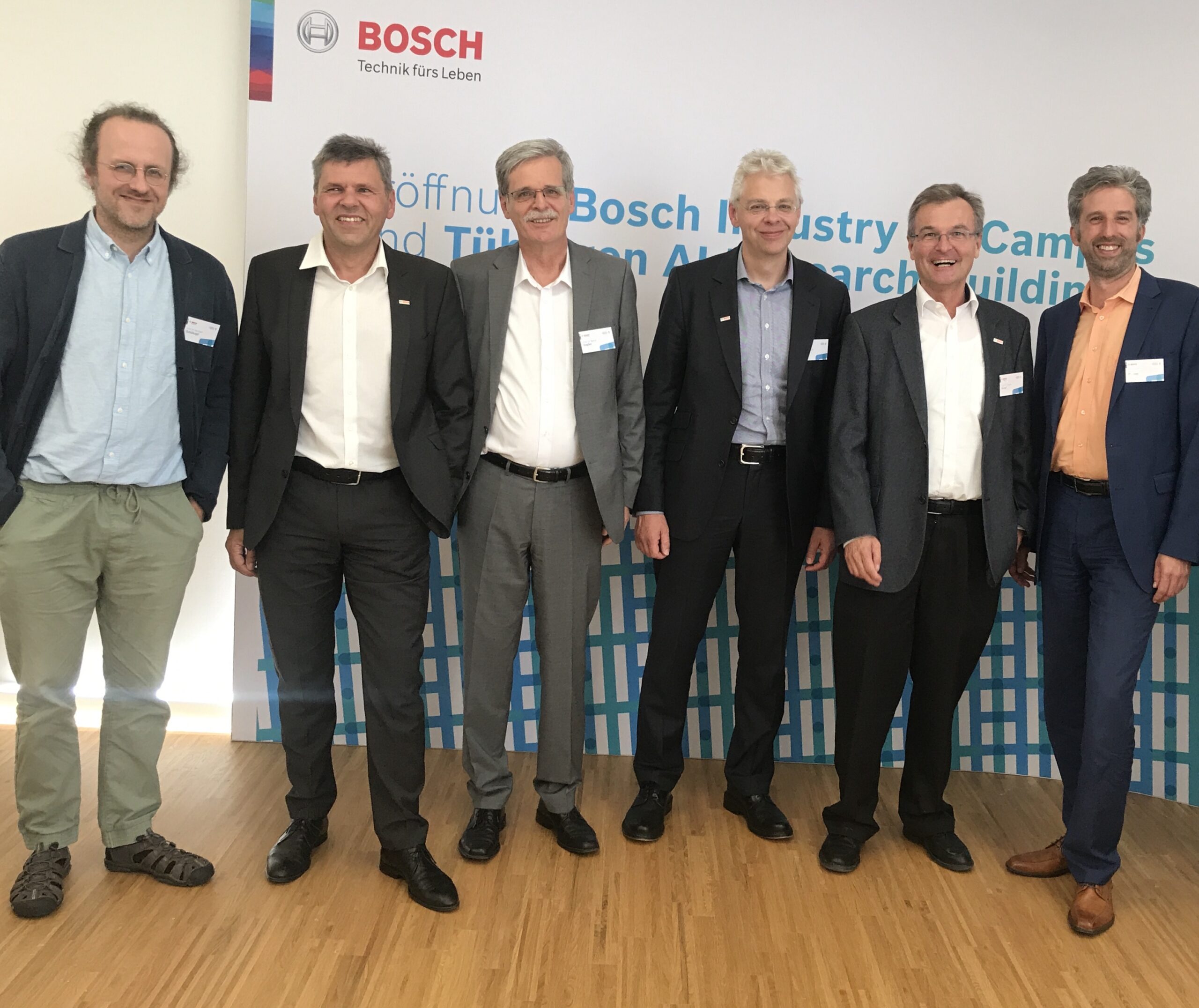
    The Bosch AI Campus in Tübingen will be situated close to the research facilities of the Max Planck Institute for Intelligent Systems and the University of Tübingen’s AI research building. Besides laboratories and offices, the campus will offer spaces in which startups and external AI research groups can take up temporary residence. Freely accessible areas on the first floor of the campus will serve to foster exchange among Cyber Valley experts. Other parts of the facility will also be open to the public. “In the new building, experts from the Bosch Center for Artificial Intelligence (BCAI) will work on projects together with experts from other Bosch divisions and from startups. The campus structure will do a lot to foster an exchange of ideas,” Bolle said.

    Bosch is a founding member of Cyber Valley, which was established in 2016. This joint research venture brings together partners from industry, academia, and politics to drive forward AI research in the German state of Baden-Württemberg. The idea is to quickly transfer research findings into real-world industrial applications. “Excellence clusters like Cyber Valley are important, as they make Germany even more attractive to top AI experts and strengthen our position in international competition,” Bolle continued. “The Bosch AI Campus also enhances Baden-Württemberg’s international appeal as an AI hub.”

    From research to practical application

    Bosch is researching artificial intelligence that is safe, robust, and explainable. Its investment in the new AI campus is yet another step by the company to strengthen AI research in Cyber Valley. Last year, Professor Matthias Hein was appointed to a Bosch-endowed chair at the University of Tübingen. The company sponsors two Industry on Campus professorships, which allow the university to integrate practical industrial expertise into its research and teaching.

    These professorships focus on the issues that arise when preparing for industrial applications. One example is predictive diagnostics, which makes it possible to predict machine breakdowns long before a fault actually occurs. Well-timed maintenance can avoid protracted machine downtimes. Predictive diagnostics is an example of machine learning, which is the focus of the research conducted at the BCAI. Currently, the BCAI has some 200 associates at a total of six locations in Germany, the United States, India, and Israel.

    Contact person for press inquiries:

  • Cyber Valley präsentiert KI-Spitzenforschung in Berlin

    Cyber Valley präsentiert KI-Spitzenforschung in Berlin

    Berlin, 27.06.2019 – Die Cyber Valley Initiative wird heute auf der traditionellen Stallwächterparty der Landesvertretung Baden-Württemberg in Berlin vertreten sein. Schon seit 1964 gehört die Stallwächterparty zu den Höhepunkten des Berliner Sommers, mit hochrangigen Gästen aus Politik und Wirtschaft. Unter dem Motto „im Herzen Europas“ zeigt die diesjährige Veranstaltung die Stärken des Standorts Baden-Württembergs. Mit einem Infostand und Mitmachaktionen gibt die Cyber Valley Initiative, Europas größte Forschungskooperation in Bereich künstliche Intelligenz, Einblicke in die Forschungsexzellenz der Region Stuttgart-Tübingen. 

    „Cyber Valley zieht Spitzenwissenschaftler von den Top-Universitäten der ganzen Welt an. Es ist ein Forschungsstandort, der das Zusammenspiel von exzellenter Grundlagenforschung und leistungsstarken Unternehmen fördert und damit wissenschaftliche Durchbrüche und eine hohe Gründungsdynamik ermöglicht. Damit bringen wir die europäische Zusammenarbeit in der KI-Spitzenforschung weiter voran“, sagt Theresia Bauer, Ministerin für Wissenschaft, Forschung und Kunst. 

    Das Ende 2016 gegründete Cyber Valley stärkt Forschung und Lehre in den Bereichen Machine Learning, Computer Vision und Robotik und fördert Technologietransfer und Ausgründungen in diesen Bereichen.Bereits heute ist das Cyber Valley der führende Forschungsstandort in Deutschland für künstliche Intelligenz und unter den zehn führenden KI-Forschungsstandorten weltweit. Knapp die Hälfte der Spitzenpublikationen von deutschen Forschungseinrichtungen im Bereich Machine Learning stammen derzeit aus der Region Stuttgart-Tübingen. Die Cyber Valley Initiative zielt unter anderem darauf ab, diese Position im globalen Wettbewerb um die besten Köpfe zu sichern und weiter auszubauen, um die Wettbewerbsfähigkeit europäischen KI-Forschung zu sichern.  

    „Die Zukunft wird maßgeblich durch neue Technologien gestaltet, die nicht an Ländergrenzen halt machen. Eine besonders schlagkräftige Rolle spielt dabei das Maschinelle Lernen, das gerade dabei ist, Industrie und Gesellschaft global im rasanten Tempo zu verändern,“ sagt Matthias Bethge, Professor für Computational Neuroscience und Machine Learning an der Universität Tübingen,und Mitgründer der European Laboratory for Learning and Intelligent Systems (ELLIS). DieELLIS-Initiative, die im Cyber Valley entstanden ist, fördert die Entwicklung eines starken europäischen KI-Forschungsnetzwerks. „Damit Europa die Zukunft gestalten kann, brauchen wir eine europäische Exzellenz-Institution, die in der Lage ist, Spitzenforscher aus aller Welt anzuziehen und in Europa tätig werden zu lassen. Das ist das Ziel der ELLIS-Initiative," so Bethge.

    „Ich freue mich, dass ELLIS bei der Stallwächterparty des Landes zum Thema Europa vertreten ist. Das Thema KI gehört neben der Landes- und Bundesebene unbedingt auf die europäische Ebene. ELLIS ist dabei ein zentrales Projekt, das die Landesregierung unterstützt“, sagt Ministerin Bauer.

    Das Landeskabinett hatte am 26. März 2019 ein Maßnahmenpaket von 20 Mio. € zur weiteren Stärkung der Künstliche Intelligenz bewilligt, ergänzend zu den 100 Millionen Euro, die bereits 2018 für die Ko-Finanzierung von Projekten des Bundes zu Künstlicher Intelligenz und für Batterieforschung vorgesehen wurden. Ziel ist es, Baden-Württemberg zum Vorreiter der europäischen Künstlichen Intelligenz zu machen. Das Cyber Valley soll dabei eine maßgebliche Rolle spielen.

  • Körber Prize 2019 goes to Bernhard Schölkopf

    Körber Prize 2019 goes to Bernhard Schölkopf

    Hamburg, 26 June 2019. The 2019 Körber European Science Prize, endowed with one million euros, is to be awarded to the German physicist, mathematician and computer scientist Bernhard Schölkopf. He has developed mathematical methods that have made a significant contribution to helping artificial intelligence (AI) reach its most recent heights. Schölkopf achieved worldwide renown with support-vector machines (SVMs). These are not machines in the classical sense, but sophisticated algorithms (program instructions) with which computers can perform highly complicated AI calculations quickly and precisely. 

    Bernhard Schölkopf, 51, is a pioneer of this new industrial revolution based on information. After studying physics, mathematics and philosophy in Tübingen and London, the Stuttgart native went on a scholarship to the American Bell Labs, where his subsequent PhD supervisor Vladimir Vapnik was just beginning to conduct research into SVMs. In 1997, Schölkopf received his doctorate in computer science from the TU Berlin. He already contributed decisively to the development of SVM technology to application maturity in the Vapnik team. After working in Cambridge, England, and at a New York biotech start-up, Schölkopf became Director of the Max Planck Institute (MPI) for Biological Cybernetics in Tübingen in 2001. In 2011, he was one of the founding directors of the MPI for Intelligent Systems in Tübingen.

    Although almost everyone comes into contact with it on a daily basis, around half of Germans do not know what exactly is meant by the term "artificial intelligence". "AI is in play when a smart phone automatically groups stored photos according to faces and topics such as holidays," explains Schölkopf, "or translates texts from one language into another."

    AI is currently experiencing a global boom, not least because of its growing economic importance. The USA and China are investing billions in this technology, which is likely to fundamentally change working life throughout the world. Even before the turn of the millennium, intelligent robots were moving into factories on a large scale, for example in the automotive industry. In the future, intelligent systems will increasingly take over routine tasks in offices.

    The support-vector machines co-developed by Bernhard Schölkopf are similar to neural networks modelled on the brain, but provide more precise results for some tasks. In addition, they are based on solid mathematical principles, which makes their mode of operation more transparent. SVMs initially need to be trained, just as the human brain does when learning. Their special attribute is that their algorithms make clean-cut classifications in mathematical spaces of higher dimensions, but the computer can do this with comparatively simple and fast calculations.

    The first SVM systems from the 1990s were able to recognise handwritten numbers on letters almost as well as humans and were better than any competing systems. They also gave a significant boost to computer science because of their systematic mathematical approach. Schölkopf is today's most frequently cited German computer scientist and, according to the research magazine "Science", ranks among the ten most influential computer scientists in the world.

    The Schölkopf team at the MPI Tübingen is currently investigating algorithms that can also identify causal relationships from data. This promising new field of research is referred to as causal inference. One of its goals is to make AI systems more robust against interference. "If, in a built-up area, a 30 km/h speed limit sign has been pasted over in such a way that it looks like a 120 km/h sign, then the AI system of a driverless car must be able to infer from the context that this sign is to be ignored," says Bernhard Schölkopf.

    Another of Schölkopf's concern is to help Germany achieve a leading position in the tough international competition for AI. He is co-founder of the world-renowned "Cyber Valley" in the Stuttgart-Tübingen region – a centre of excellence funded by the state of Baden-Württemberg that has also been able to integrate leading American companies. As part of the planned ELLIS programme (European Laboratory for Learning and Intelligent Systems), Schölkopf hopes to "better network leading European locations, set up joint programmes and train doctoral students. Young top researchers should not have to go to the USA to work at the highest level". In addition, it is important to have even more extensive state AI funding. Schölkopf intends to use the funds of the Körber Prize in his Causal Inference area of expertise and for workshops to promote the ELLIS project.

    The Körber European Science Prize 2019 will be presented to Bernhard Schölkopf on 13 September in the Great Festival Hall of Hamburg City Hall. To mark its 60th anniversary, the Körber Foundation is increasing the prize endowment to one million euros as of this year. This makes the Körber Prize one of the world's most highly endowed research prizes. "We want to set an example for the recognition of top-class research in Europe," says Dr. Lothar Dittmer, Chairman of the Executive Board of the Körber Foundation, "and with our new stipulation that five percent of the prize money is to be used for science communication, we want to contribute to this recognition also growing in the public sphere." Every year since 1985, the Körber Foundation has honoured a major breakthrough in the physical or life sciences in Europe. The prize is awarded to excellent and innovative research approaches with high application potential. To date, six prize winners have also been awarded the Nobel Prize after receiving the Körber Prize.

    More information and photos to download here:

    www.koerber-prize.org

  • Eine Bundes- und eine Landesministerin zu Besuch im Cyber Valley in Tübingen

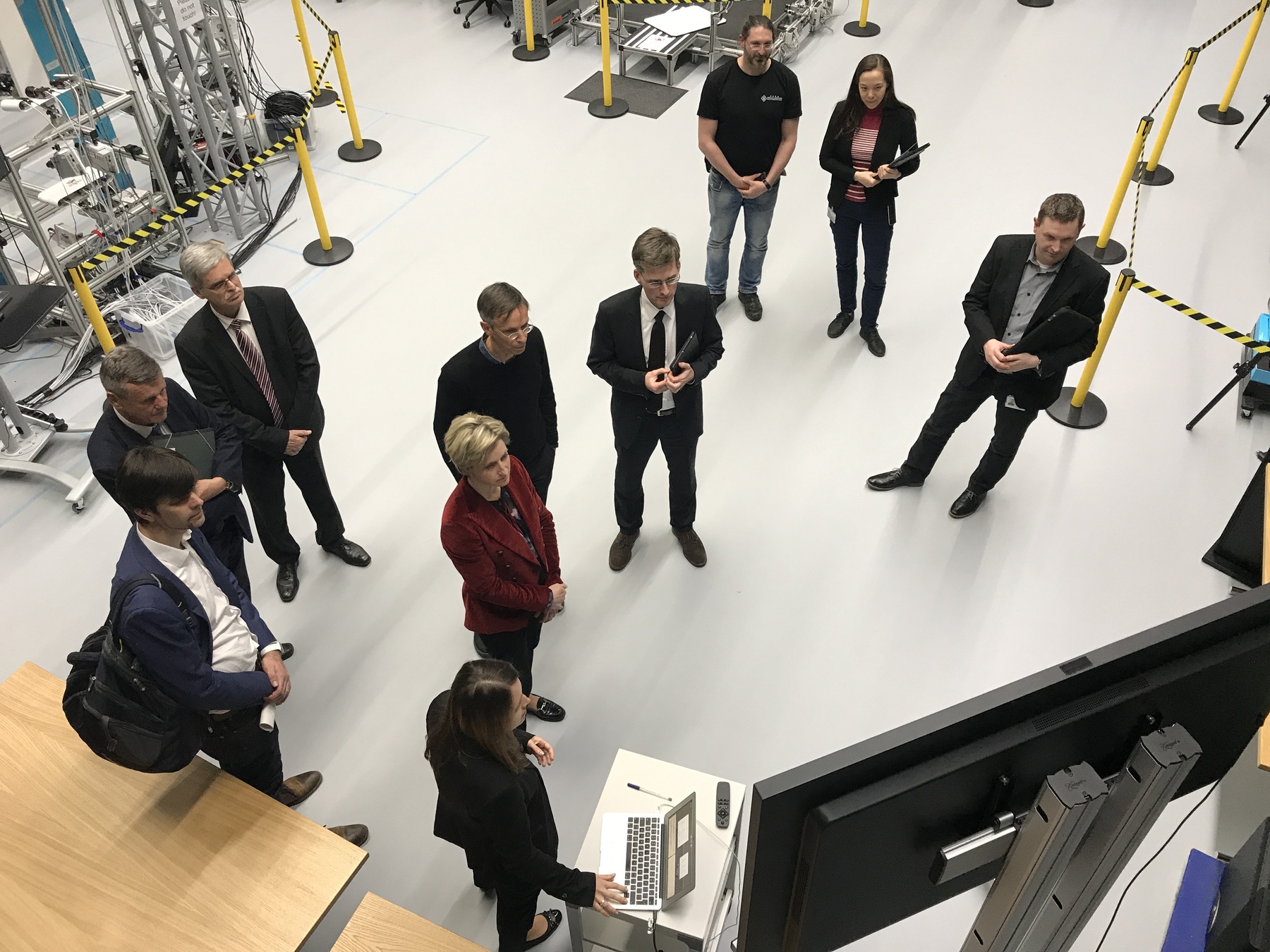
    Die Bundesministerin für Bildung und Forschung in Berlin, Anja Karliczek, besuchte am Donnerstag Vormittag das Kompetenzzentrum für Künstliche Intelligenz und Maschinelles Lernen im AI Research Building der Eberhard Karls Universität Tübingen und des Cyber Valley am Standort Tübingen und bekam auf ihrem Rundgang Einblicke in die Baupläne des Zentrums sowie in aktuelle Forschungsarbeiten zu Künstlicher Intelligenz und Maschinellem Lernen.

    Sie wurde dabei begleitet von der Ministerin für Wissenschaft, Forschung und Kunst in Baden-Württemberg, Theresia Bauer, dem Rektor der Universität Tübingen, Prof. Dr. Bernd Engler sowie Prof. Dr. Bernhard Schölkopf vom Max-Planck-Institut für Intelligente Systeme.

    Das Bundesministerium für Bildung und Forschung (BMBF) hatte zum ersten Oktober 2018 der Universität Tübingen und der Max Planck Gesellschaft eine Förderung in Höhe von 6,6 Millionen Euro für das neu entstehende Kompetenzzentrum für Künstliche Intelligenz und Maschinelles Lernen zugesagt.

    Die Universität Tübingen ist ebenso wie die Universität Stuttgart, das Max-Planck-Institut für Intelligente Systeme, das Land Baden-Württemberg sowie verschiedene Industriepartner sind Kooperationspartner für den Forschungsschwerpunkt Cyber Valley.

    Prof. Dr. Bernd Engler, Rektor der Universität Tübingen: „Der Besuch von Bundesministerin Anja Karliczek nur neun Monate nach dem Gründungstermin hat uns sehr gefreut. Wir haben die langfristige Entwicklungsstrategie, die Bauplanung und einzelne Forschungsprojekte vorgestellt und gezeigt, welche Vorteile Machine Learning für die Gesellschaft schaffen kann.“

    Prof. Dr, Matthias Bethge, Professor für Computational Neuroscience und Machine Learning an der Universität Tübingen, hat Projekte für die Ausbildung von der Schule bis in die Promotion vorgestellt. „Der frühe Zugang zu den digitalen Technologien ist von hohem Interesse für die Wettbewerbsfähigkeit von Deutschland und Europa gegenüber dem Rest der Welt,“ so Bethge.

  • Canada comes to Cyber Valley

    Canada comes to Cyber Valley

    Tübingen – During a visit to the Max Planck Institute for Intelligent Systems (MPI-IS) in Tübingen on Monday, a high-ranking delegation of Canadian AI experts gained insights into the institute’s research activities and engaged in discussions with Cyber Valley representatives. Cyber Valley is Europe's largest research cooperation in the field of artificial intelligence (AI) with partners from politics, science, and industry. The Canadian delegation was invited by the German Federal Foreign Office as part of the Federal Republic of Germany’s Visitors‘ Program. 

    "For us, the visit was a wonderful opportunity to learn more about the Canadian approach," said Matthias Tröndle, research coordinator at MPI-IS and representative of the Cyber Valley management office. "Canada recognized at a very early stage that machine learning showed promise for the future, acted accordingly. Canadian structures and institutions in the field of AI are already well established, and we can learn a great deal from them.” 

    The visit focused in part on AI and society. "Our societies are facing major changes. We need to work together to find solutions that will ensure AI is of benefit to humanity,” said Lyse Langlois, Managing Director of the Observatory on the Societal Impacts of AI and Digital Technologies in Québec City, which was founded at the end of 2018. "This is why we aim to strengthen exchange with European partners," she said. 

    The topic of AI and society are also a central part of the Cyber Valley initiative. "With its universities, research institutes and civil society, the Stuttgart-Tübingen region offers the best conditions to help shape the global discourse on the use of AI," said Matthias Tröndle.

    Press contacts: 

    Linda Behringer

    Public Relations
    c/o Max Planck Insitute for Intelligent Systems, Stuttgart

    T: +49 711 689 3552

    M: +49 151 2300 1111

    linda.behringer@cyber-valley.de

    Valérie Callaghan

    c/o Max Planck Institute for Intelligent Systems, Tübingen

    T: +49 7071 601 1832             
    M: +49 151 1560 4276

    valerie.callaghan@cyber-valley.de

  • Bundeswettbewerb Künstliche Intelligenz: Schüler programmieren eigenen Algorithmus

    Bundeswettbewerb Künstliche Intelligenz: Schüler programmieren eigenen Algorithmus

    Der Bundeswettbewerb Künstliche Intelligenz (KI) geht in die zweite Runde. Seit dem Start am 28. Februar haben mehr als 2.500 Schülerinnen und Schüler in über 1.700 Schulteams aus ganz Deutschland teilgenommen. Die meisten Teams kamen aus Nordrhein-Westfalen (355), gefolgt von Baden-Württemberg (332). Unter den Schulen belegt das Saarpfalz Gymnasium aus Homburg (Saarland) den Spitzenplatz mit 83 angemeldeten Teams, dicht gefolgt vom Gymnasium Heide-Ost (Schleswig-Holstein) mit 70 Teams. Die Teilnehmenden waren zwischen 14 und 19 Jahren alt, die größte Gruppe stellten mit einem Drittel die 17-Jährigen.

    Um die erste Runde zu bestehen, musste mindestens eines dieser drei Kriterien erfüllt sein: Die Teilnehmenden mussten eine ausreichende Punktzahl in den Quiz- und Programmieraufgaben erreichen, unter die besten 50 Prozent der Programmier-Challenge kommen oder eine überzeugende Projektidee liefern. Insgesamt 159 Teams reichten Projektvorschläge ein, die von einer unabhängigen Jury auf ihre praktische Relevanz, die Lösbarkeit durch KI, den Innovationsgehalt und die Durchführbarkeit bewertet wurden.

    In der zweiten Runde setzen Schülerinnen und Schüler nun die von ihnen eingereichten Projektideen um. Zugelassen wurden 398 Teams und 642 Schülerinnen und Schüler. Für die Teilnahme an dieser Runde genügt, dass mindestens ein Teammitglied die erste Runde bestanden hat: Dieses kann nun auch neue Mitstreiter ins Boot holen, um die Projektidee weiter zu bearbeiten. „Mit unserer offenen Bewertungsmatrix wollen wir sicherstellen, dass neben talentierten Programmierern auch kreative Denker ohne Coding Skills weiterkommen“, sagt Dr. Wieland Brendel, Wissenschaftler am Tübinger Kompetenzzentrum für Maschinelles Lernen.

    Im November 2019 endet der Schülerwettbewerb mit einer Abschlussfeier und Preisverleihung in Tübingen. Die viel-versprechendsten Projekte werden im Vorfeld zur AI CON 2019 eingeladen, einer vom Bosch Center for Artificial Intelligence in Kooperation mit dem Cyber Valley ausgerichteten Konferenz zum Thema Künstliche Intelligenz. Zudem wird Microsoft einen KI-Workshop für Schülerinnen und Schüler sowie Lehrkräfte anbieten. Als „KI-Schule des Jahres“ wird die Schule mit den meisten und erfolgreichsten Teilnehmenden geehrt.

    Der Bundeswettbewerb Künstliche Intelligenz ist eine gemeinsame Veranstaltung des Max-Planck-Instituts für Intelligente Systeme und der Universität Tübingen im Rahmen der Cyber Valley Initiative. Teilnehmen können Schülerinnen und Schüler im Alter zwischen 14 und 19 Jahren, die sich für naturwissenschaftliche Fächer wie Mathematik, Informatik oder Physik interessieren.

    Der baden-württembergische Ministerpräsidenten Winfried Kretschmann hat die Schirmherrschaft für den Wettbewerb übernommen. Hauptsponsor des Wettbewerbs ist die Robert Bosch GmbH. Weitere Sponsoren sind die Gemeinnützige Hertie-Stiftung, Google, Amazon, Microsoft, die Alexander von Humboldt Stiftung und die Hochschule der Medien.

    Informationen unter https://bw-ki.de

    Kontakt: 

    Dr. Wieland Brendel

    Universität Tübingen

    Tübinger Kompetenzzentrum AI

    Telefon +49 7071 29-70863
    wieland.brendel@cin.uni-tuebingen.de

  • Minister of Economy Hoffmeister-Kraut visits Cyber Valley

    Minister of Economy Hoffmeister-Kraut visits Cyber Valley

    Tübingen – During a visit to the Max Planck Institute for Intelligent Systems (MPI-IS) in Tübingen on 15th April 2019, Dr. Nicole Hoffmeister-Kraut, Baden-Württemberg's Minister of Economic Affairs, Labour and Housing, once again emphasised the state's support for Cyber Valley, Europe's largest research cooperation in the field of artificial intelligence (AI) with partners from politics, science and industry.

    "Cyber Valley is already one of the world's top locations for AI research and thus a flagship for Baden-Württemberg as a high-tech hot spot. We want to further develop this potential. It is also a question of bringing the already existing excellence even more specifically to small and medium-sized companies," said Minister Hoffmeister-Kraut.

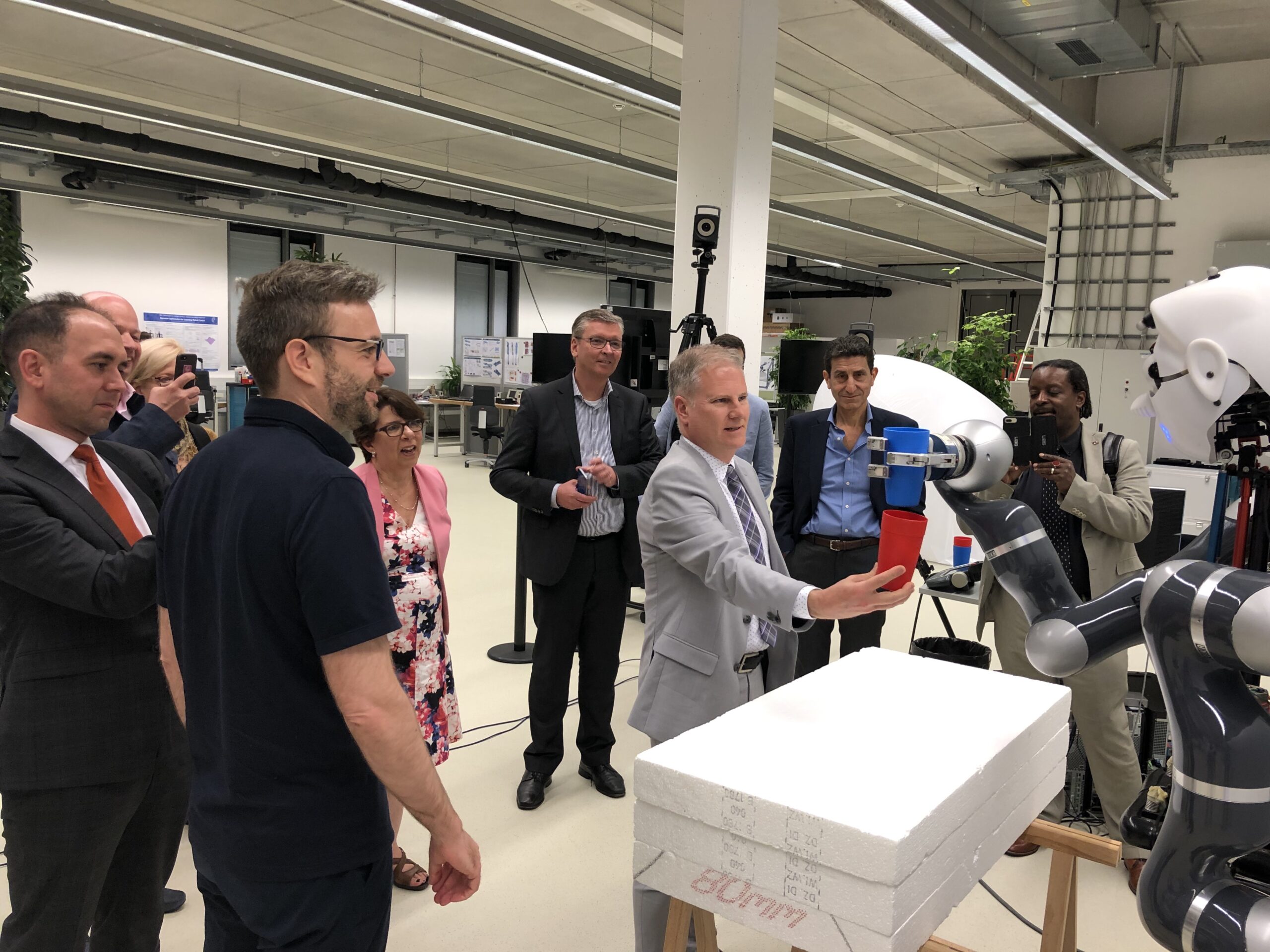
    During several lab visits and talks with leading AI scientists from the Max Planck Institute for Intelligent Systems and the University of Tübingen, Minister Hoffmeister-Kraut and a delegation from the Ministry of Economic Affairs discussed research topics as well as milestones and developments of the Cyber Valley Initiative.

    "We are delighted to have this opportunity to introduce our activities to Minister Hoffmeister-Kraut," said Professor Bernhard Schölkopf, Managing Director of the Max Planck Institute for Intelligent Systems and one of the world's leading researchers in the field of machine learning. "Machine learning and artificial intelligence will change the world. We want Europe to play a leading role in this. The support from policymakers will be crucial." He also stressed that the key motivation behind the Cyber Valley was to create an ecosystem for spin-offs, i.e. to offer doctoral students the opportunity to found start-ups in order to harness knowledge. This will boost the domestic economy and strengthen southern Germany as a business location. "In addition, we want the Cyber Valley to create a radiance and attract more companies and top talents. It works, as the current figures for our doctoral program show. In just two years, we have attracted over 100 doctoral students from all over the world to our International Max Planck Research School for Intelligent Systems. That's just the beginning."

    On 26th March 2019, the State Cabinet approved a €20 million package of measures to further strengthen artificial intelligence, in addition to the €100 million already earmarked in 2018 for co-financing federal projects on artificial intelligence and battery research. The goal is to make Baden-Württemberg a pioneer in the field of AI. Cyber Valley is expected to play an important role in this.

    The research network was founded at the end of 2016. The founding partners are the MPI-IS, the University of Stuttgart, the University of Tübingen, the State of Baden-Württemberg and the following seven industrial partners: Amazon, the BMW Group, IAV GmbH, Daimler AG, Porsche AG, Robert Bosch GmbH and ZF Friedrichshafen AG. Cyber Valley is also supported by the Christian Bürkert Foundation, the Gips-Schüle Foundation, the Vector Foundation and the Carl Zeiss Foundation. Together, the partners want to support the region by strengthening research activities, creating an ecosystem for start-ups and technology transfer and increasing the visibility of Baden-Württemberg as a global hotspot for AI research and development.

    As core elements of the Cyber Valley initiative, new research groups have been established at the Max Planck Institute for Intelligent Systems (MPI-IS), the University of Stuttgart and the University of Tübingen. The Cyber Valley Partners and the foundations finance these groups.

    In addition to the three existing Cyber Valley professorships, additional chairs will be established at the universities in the coming years.

    Another focus of the project is the promotion of young researchers with an internationally renowned, interdisciplinary doctoral programme: the International Max Planck Research School for Intelligent Systems. The IMPRS-IS is a key element of the Cyber Valley research cooperation, which aims, among other things, to offer the world's best young researchers in the field of artificial intelligence a first-class education.

    www.cyber-valley.de