User Group: Journalist

  • Science & Innovation Days 2022

    Science & Innovation Days 2022

    Lesen Sie die vollständige Meldung hier in deutscher Sprache:

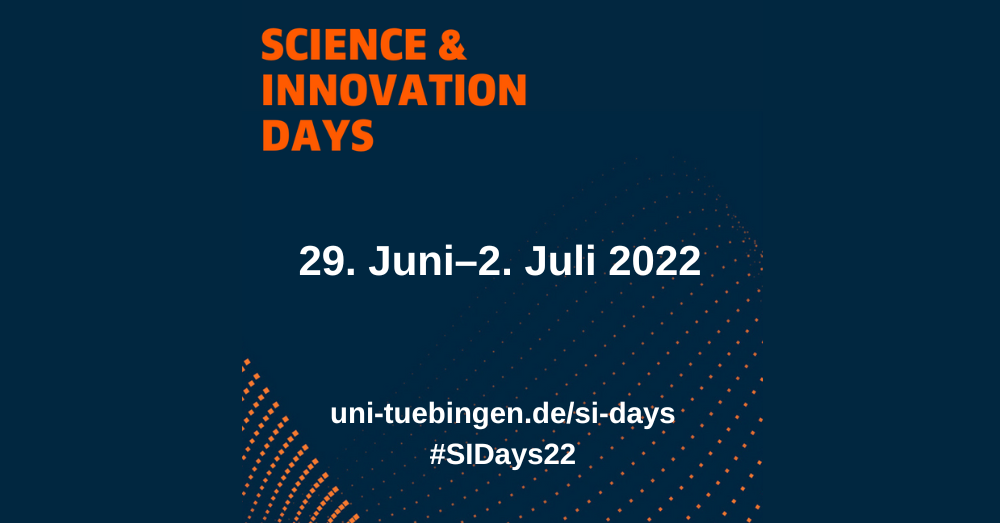
    Mitdiskutieren und Mitmachen erwünscht: Bei den Tübinger Science & Innovation Days vom 29. Juni bis zum 2. Juli 2022 laden die Universität Tübingen, der Max-Planck-Campus, Cyber Valley, das Leibniz-Institut für Wissensmedien und die Technologieförderung Reutlingen-Tübingen erstmals gemeinsam interessierte Bürgerinnen und Bürger der gesamten Region ein. Zum vielseitigen Programm gehören interaktive Veranstaltungen, Vorträge, Workshops und Spaziergänge über den Campus. Alle Programmpunkte sind kostenlos, zu einzelnen Veranstaltungen wird um Anmeldung gebeten. Alle Details zu Programm und Anmeldung unter https://uni-tuebingen.de/si-days:

    Mittwoch, 29. Juni

    • 18:15 Uhr: Kick Off mit Podiumsdiskussion: „Wissen schafft Zukunft – Wissenschaft und Gesellschaft im Dialog“ (Festsaal, Neue Aula, Geschwister-Scholl-Platz)
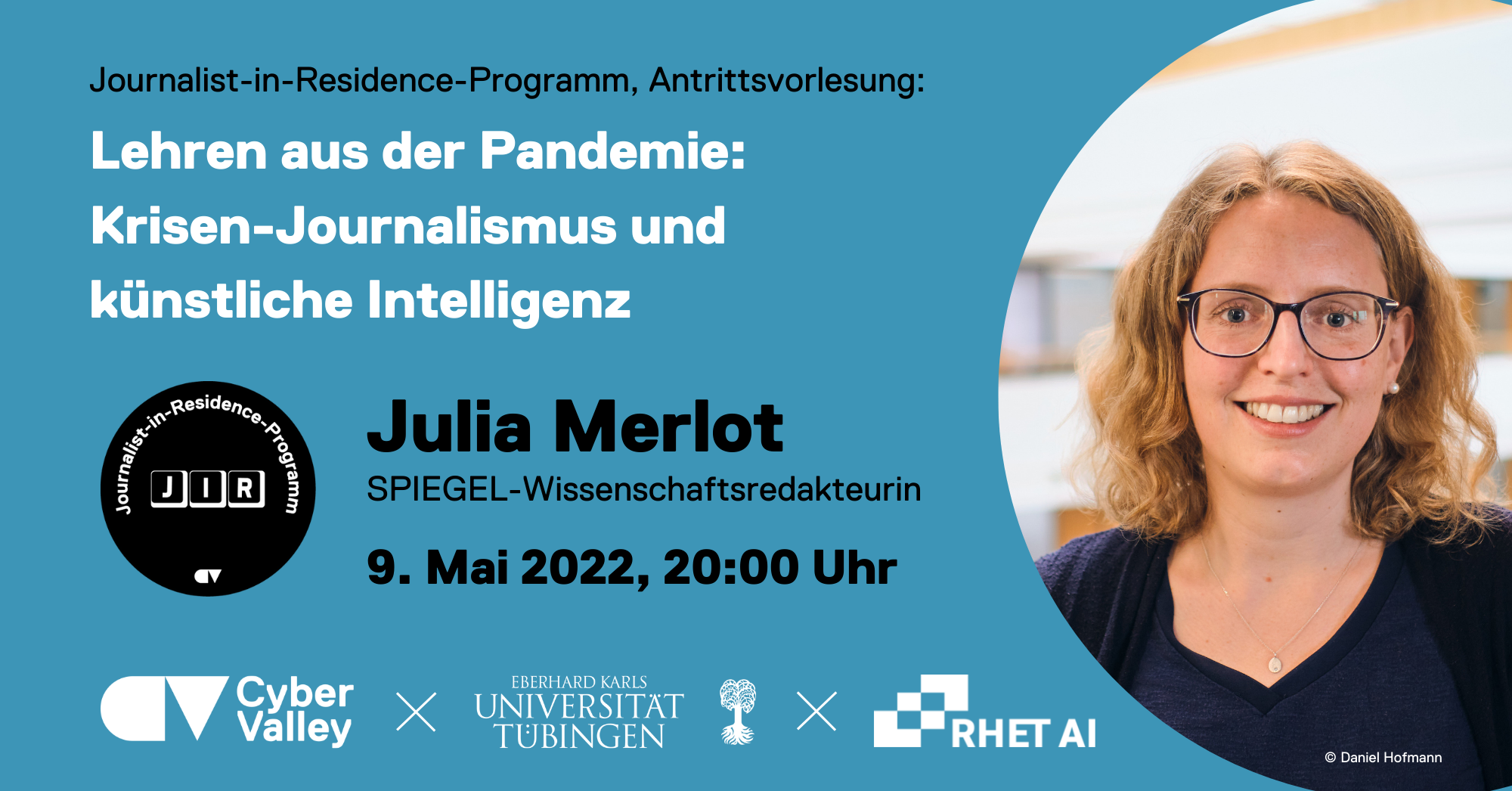
      Gesellschaftliche Herausforderungen brauchen die Expertise der Wissenschaft ‒ Wissenschaft braucht aber auch die Gesellschaft. Wie kommen BürgerInnen und Forschende noch besser ins Gespräch? Best Practice-Beispiele und Diskussion mit Prof. Peter Grathwohl (Universität Tübingen), Prof. Ulrike Cress (Leibniz-Institut für Wissensmedien Tübingen), Dr. Eric Schulz (Max-Planck-Institut für biologische Kybernetik), Julia Merlot (Magazin „Der Spiegel“, derzeit Cyber Valley Journalist-in-Residence), Prof. Thomas Thiemeyer (LUI Tübingen).

    Weitere Programmpunkte am Mittwoch:

    • „Medizin der Zukunft – ein Werkstattbericht aus dem Tübinger Technologiepark“ mit den UnternehmerInnen (16:15 Uhr, mit Anmeldung, Hörsaal 25, Kupferbau, Hölderlinstr. 4)
    • Lesung mit der Autorin Emma Braslavsky zu „Künstlichen Intelligenzen der Zukunft“ (20:30 Uhr, Cafe Willi, Wilhelmstr. 3/1, 72074 Tübingen)

    Donnerstag, 30. Juni

    • 14:00–16.30 Uhr: Spaziergang im Technologiepark Tübingen-Reutlingen am Standort Tübingen mit Stopps bei den Unternehmen (Treffpunkt: Sternwarte Tübingen, Waldhäuser Str. 70) Auf dem Spaziergang unter Führung von Thorsten Flink (TF R-T GmbH) stellen sich die Unternehmen vor und beantworten Fragen.
    • 17:00–20:00 Uhr: Startup:con Tübingen „Science Edition“ des Startup Centers (Hörsaalzentrum Morgenstelle, Auf der Morgenstelle 16)
      Paneldiskussion „Gründungen aus der Wissenschaft – Chancen und Herausforderungen“ mit Dr. Ingmar Hoerr (CureVac), Dr. Saskia Biskup (CeGat), Dr. Philip Häusser (Ablacon), Prof. Lars Angenent (Universität Tübingen) und Dr. Philipp Lies (eye2you). Im Anschluss präsentieren sich Startups aus der Wissenschaft und Forschungsgruppen. (Anmeldung unter https://uni-tuebingen.de/de/200653)
    • 20:15–22:00 Uhr: Fishbowl-Diskussion „Gemeinschaft in der Krise. Was hält unsere Gesellschaft noch zusammen?“ (DAI, Karlstr. 3, mit Anmeldung)
      Was bedeutet gesellschaftlicher Zusammenhalt? Wie können wir unsere Gesellschaft stärken – und welche Rolle spielt der Dialog zwischen Wissenschaft und Gesellschaft? Prof. Otfried Höffe, Prof. Regina Ammicht-Quinn und Dr. Davina Höll, (alle Universität Tübingen) erörtern dies mit Besucherinnen und Besuchern. Bei einer Fishbowl-Diskussion bleibt ein Stuhl auf dem Podium frei für jede(n), die oder der gerne mitdiskutieren möchte. Musikalische Umrahmung durch Eric Biscalchin.

    Weitere Programmpunkte am Donnerstag:

    • Führungen (jeweils mit Anmeldung): Technologiepark Tübingen-Reutlingen (14:00 Uhr, Sternwarte Tübingen, Waldhäuserstr. 70); iFIT Excellenzcluster (16:00 Uhr, Röntgenweg 11); Geo- und Umweltforschungszentrum (16:00 Uhr, Schnarrenbergstr. 94-96); Zentrum für Molekularbiologie der Pflanzen (17:00 Uhr / 18:00 Uhr, Auf der Morgenstelle 32)
    • Vortrag „Lügen, Fake-News, Propaganda“ mit Prof. Bernhard Pörksen (18:30 Uhr, Audimax)
    • Alumni-Lounge im Hörsaalzentrum Morgenstelle (16:00–20:00 Uhr, mit Anmeldung)

    Freitag, 1. Juli

    • 17:00 Uhr: Die Universität Tübingen verleiht den Preis für Wissenschaftskommunikation an Prof. Carla Cederbaum (Ernst von Sieglin-Hörsaal, Schloss Hohentübingen, Burgsteige 11)
    • 18:00 Uhr: Diskussion „Klimawandel – Vom Wissen zum Handeln: Wo liegen die Schwierigkeiten?“ und im Anschluss Konzert mit Dizzy Krisch im Trio
      Dass der Klimawandel existiert ist unbestritten, dass wir etwas unternehmen müssen, ebenfalls. Wie weit können wir gehen, damit alle mitziehen? Es diskutieren Prof. Reinhard Drews, Prof. Thomas Potthast und Prof. Kira Rehfeld, alle Universität Tübingen. (DAI, Karlstr. 3, mit Anmeldung)

    Weitere Programmpunkte am Freitag

    • 14:00–18:00 Uhr: Tag der offenen Tür im Leibniz-Institut für Wissensmedien (Schleichstraße 6)
      Das IWM erforscht bereits seit 2001, wie digitale Technologien dabei helfen, Wissen in unsere Köpfe zu befördern. An Demo und Mitmach-Stationen demonstriert es, wie das Klassenzimmer der Zukunft aussieht und wie wir mit künstlichen Intelligenzen im Team arbeiten.
    • 16:00 Uhr: Schulstunde mit der Bildungsforscherin: Wie die Schule der Zukunft aussehen könnte, skizziert IWM-Direktorin Prof. Ulrike Cress in einem Vortrag.
    • Offenes Museum MUT – freier Eintritt; Führung und Alumni-Lounge im Rittersaal (ab 14:00 Uhr, Schloss Hohentübingen, Burgsteige 11)
    • Workshop: Einführung in den Sensorjournalismus (ganztags, mit Anmeldung, KI-Makerspace, Wöhrdstr. 25)
    • Vorträge: Aktuelle Forschung aus der Biochemie (14:00 Uhr, IFIB, Auf der Morgenstelle 34); Tübingen – die Wiege der Biochemie (15:15 Uhr, IFIB, Auf der Morgenstelle 34); Cyanobakterien – Zukunft der Plastikindustrie? (15:00 Uhr, DAI, Karlstr. 3); Organisierte Kriminalität (16:00 Uhr, Fürstenzimmer, Schloss Hohentübingen, Burgsteige 11)
    • Film und Diskussion im Kino Arsenal: Wie viel Science steckt in der Fiction? (20:00 Uhr, mit Anmeldung, Kino Arsenal, Hintere Grabenstr. 20)

    Samstag, 2. Juli

    • 10:00–14:00 Uhr: Tag der offenen Tür auf dem Max-Planck-Campus Tübingen
      Die Tübinger Max-Planck-Institute, das Friedrich-Miescher-Laboratorium und Cyber Valley bieten Rundgänge, Ausstellungen und Mitmach-Angebote zu den Themen Genetik, Evolution, Hirnforschung und künstliche Intelligenz an. (Anmeldung für einzelne Veranstaltungen vor Ort erforderlich)
    • ab 20:30 Uhr: Science Notes – Thema Reisen (Parkplatz hinter dem Technischen Rathaus, Brunnenstr. 3, mit Anmeldung)
      An einem lauen Sommerabend begeben wir uns auf Reisen: Wir folgen einem Gletscherforscher auf eine Antarktisexpedition, wandern mit einer Journalistin über den Grund des Atlantiks, reisen mit einer Paläontologin in die Vergangenheit und begleiten mit ihr den frühen Menschen bei seinen ersten Schritten. Außerdem geht es um Jetlags, Fledermäuse und den Klang der Wissenschaft. Brandt Brauer Frick spielt live elektronische Musik.

    Weitere Programmpunkte am Samstag:

    • ab 10:00 Uhr: Kinderuni-Forschertag für Kinder zwischen 7 und 12 Jahren (mit Anmeldung)
    • 11:00–15:00 Uhr: Tag der offenen Tür im Universitätsarchiv (Bonatzbau, Wilhelmstr. 32)

  • Environment meets app

    Environment meets app

    About 560 native wild bee species are known, and their habits are as varied and diverse as their outward appearance. Some of these species are so-called oligolectic insects that can only attain their food source from very specific plants. If such plants are destroyed over a wide area, the wild bee species depending on them cannot survive either – one of the reasons why approximately half of the native species are on the Red List or have already gone extinct. This is tragic because wild bees are extremely lively and very efficient pollinators. Without them, not only would our gardens be less colorful, but our tables would have a very limited assortment as well.

    To raise awareness of this specific problem, the German Federal Environmental Foundation (DBU) has been funding a joint project at the University of Stuttgart and Chemnitz University of Technology since December 2020, which is specifically targeting a younger age group. “BeeLife can help to spark schoolchildren’s interest in sustainability, environmental protection and bee conservation. This represents education for the best benefit of our planet,” says Dr. Thomas Pyhel, DBU specialist for environmental education. “In this way, environmentally conscious behavior can be promoted as early and sustainably as possible.”

    The project makes particular use of the diversity and fascination of the different wild bee species being represented in the playful app “BeeLife,” which was created by an interdisciplinary development team together with teachers and experts for environmental didactics and species protection. In addition to the project leader, Jun.-Prof. Dr. Maria Wirzberger, this team includes Julia Mönch, Adrian Stock and Oliver Stock at the Stuttgart site, while Felix Krieglstein and Markus Suren work with Prof. Dr. Günter Daniel Rey at the Chemnitz site. The app will be embedded in accompanying environmental activities such as the construction of nesting aids in the school garden. After intense periods of technical development, the concept will be evaluated in selected schools in Baden-Württemberg and Bavaria over the next few months.

    Wild bee protection at the Day of Science of the University of Stuttgart

    On June 25, 2022, the interested public will have the opportunity to try out the app at the Science Day of the University of Stuttgart and to gather practical tips for wild bee protection in everyday life by exciting hands-on activities and lectures from the experts involved in the project, Undine Westphal and Frank Geggus. First insights into the project are provided by the promotional video, which is accessible via the project website.

  • Rebecca C. Reisch new Cyber Valley Managing Director

    Rebecca C. Reisch new Cyber Valley Managing Director

    “Cyber Valley GmbH keeps the AI ecosystem together with all its players, establishes ties with society overall, connects various target groups and offers a series of exciting events. In this way, Cyber Valley also advances the public dialogue on artificial intelligence as one of the key technologies of our time, that affects each and every one of us," said Science Minister Theresia Bauer in Stuttgart on Friday, May 13.

    Finance Minister Dr. Danyal Bayaz said “Cutting-edge research is part of our state’s DNA. Artificial intelligence can become a future source of our prosperity. A well-connected and experienced managing director like Rebecca Reisch is a stroke of luck for Cyber Valley GmbH.”

    Cyber Valley gains entrepreneurial and commercial competence in Rebecca Reisch. The 41-year-old from Stuttgart is also very well connected in the start-up and venture capital scene. In addition to cutting-edge scientific research, promoting top talent and raising the profile of the Stuttgart-Tübingen region, Reisch will focus in particular on innovation and entrepreneurship.

    “With Rebecca Reisch as Cyber Valley Managing Director, we have added an experienced leader who can advance the vision of Cyber Valley as a leading hub for research and entrepreneurship in AI. She is the ideal leader to grow Cyber Valley into the engine of a new AI economy,” said Michael J. Black, Cyber Valley spokesperson and Director at the Max Planck Institute for Intelligent Systems (MPI-IS) in Tübingen. “We have already established Cyber Valley as a permanent home for world-class AI research – and now Cyber Valley is becoming the platform where cutting-edge research, spin-offs, SMEs and industry are even more closely connected. The focus now is increasingly on making Cyber Valley the best place to start new AI-focused businesses that leverage the ecosystem.”

    “Artificial intelligence is not just for start-ups and large corporations; mid-sized companies can also ensure their competitiveness by embracing intelligent systems now,” Rebecca Reisch said, “The foundations have been laid. Together with my team, I would like to continue Cyber Valley’s success story to date. Continuously advancing the networking of AI research with business is our goal. Entrepreneurship is my passion.”


    Additional information

    Rebecca C. Reisch

    Reisch was most recently deputy managing director at nexMart. There, as Director of Customer Success & Operations, she was responsible for project and process management, data intelligence, connectivity and customer support & solutions. She is also a certified coach for teams and individuals with a focus on leadership and entrepreneurship. With first-hand experience in start-ups, Reisch brings in perspectives not only from the outside but also from the inside of start-up culture to the Cyber Valley ecosystem. In 2002, she earned a Master of Business Administration (MBA) from the Katz Graduate School of Business in Pittsburgh, USA, and in 2003, she graduated from the European Business School in Oestrich-Winkel, Germany, with a degree in business administration.

    About Cyber Valley

    Cyber Valley is Europe’s largest research consortium in the field of artificial intelligence with partners from science and industry. The state of Baden-Württemberg, the Max Planck Society with the Max Planck Institute for Intelligent Systems, the Universities of Stuttgart and Tübingen, as well as Amazon, BMW AG, IAV GmbH, Mercedes-Benz Group AG, Dr. Ing. h.c. F. Porsche AG, Robert Bosch GmbH, and ZF Friedrichshafen AG are Cyber Valley’s founding partners. In 2019, Fraunhofer-Gesellschaft also joined Cyber Valley as a partner. Moreover, Cyber Valley also receives support from the Christian Bürkert Foundation, the Gips-Schüle Foundation, the Vector Foundation, and the Carl Zeiss Foundation.

    The Cyber Valley research consortium celebrated its fifth anniversary last December – and can point to numerous milestones in its development: These include the ever-growing number of researchers in the ecosystem, the expanding start-up and investor networks, and the dialog formats from the public engagement and innovation management sectors that are enjoying ever-increasing popularity.

    Cyber Valley GmbH

    Cyber Valley GmbH was founded at the turn of the year 2021/22 by the shareholders, the state of Baden-Württemberg (51%) and the Max-Planck-Gesellschaft zur Förderung der Wissenschaften e. V. (49%). Its purpose is to strengthen, develop and publicize Cyber Valley and its locations in Stuttgart and Tübingen as an internationally prominent innovation campus for artificial intelligence and robotics, and to connect the players with each other and with third parties. This management unit will not be active in science, but will take on marketing and support tasks in particular. It is mainly financed by the state.

  • The dialog about AI

    The dialog about AI

    This article was published in German in the March edition of forschung leben, the magazine of the University of Stuttgart.
    Author: Jens Eber
      

    Wird künstliche Intelligenz (KI) bald unser Leben bestimmen? Oder wird die Technologie den Menschen vor allem nützen? Sicher ist für Rebecca Beiter jedenfalls: „Künstliche Intelligenz ruft in der Bevölkerung starke Emotionen hervor.“ Die 27­-Jährige ist Public­-Engagement­-Managerin in Cyber Valley, Europas größtem Forschungskonsortium im Bereich KI. Gründungspartner waren die Universitäten Stuttgart und Tübingen sowie weitere Forschungseinrichtungen, das Land Baden­-Württemberg, aber auch Unternehmen wie Daimler, Bosch oder Amazon.

    Rebecca Beiter ist für das Public Engagement in der Region Stuttgart zuständig, ihr Kollege Patrick Klügel arbeitet von der Uni Tübingen aus daran, eine Brücke zwischen Wissenschaft und Bevölkerung zu bauen. Ihre Aufgabe ist es nicht, ein positives KI­-Image zu vermitteln, sondern Gesellschaft und Forschung in einen Dialog über diese Technologie zu bringen. Am Ende sollen beide Seiten voneinander lernen können.

    „Unser Ziel ist ein langfristiges Netzwerk“, sagt Beiter. Darin soll einerseits die For­schung über Entwicklungen in der KI informieren. Die Bevölkerung erhält aber auch Raum, um Meinungen, Sorgen und Hoffnungen in die Wissenschaft zu tragen. Auf inter­nationaler Ebene gibt es vergleichbare Stellen schon etwas länger, in Deutschland gehören Beiter und Klügel zu den Ersten, die sich als Public­-Engagement-­Manager:innen professionell mit dem Dialog zwischen Forschung und Bevölkerung befassen.

    Realistisches Bild über KI vermitteln

    Dass diese Pionierarbeit mit Fokus auf künstlicher Intelligenz erfolgt, hat gute Grün­de: „Es existiert Unsicherheit in der Bevölkerung in Bezug auf KI“, bestätigt Beiter. Eine Befürchtung sei, dass die Technologie einzelne Berufe überflüssig machen könnte. Es gebe aber auch unrealistische, geradezu utopische Hoffnungen. „Ich halte es für wichtig, rea­listische Narrative zu vermitteln“, sagt die Public­ Engagement­-Managerin. Als Beispiel nennt sie die Wissenschaftlerin Annika Liebgott, die am Institut für Signalverarbeitung und Systemtheorie der Universität Stuttgart an der automatischen Erkennung von Be­wegungsunschärfen auf MRT­-Aufnahmen forscht. Diese Entwicklung soll dazu beitragen, dass verwackelte MRT-­Bilder unmittelbar erkannt und neu erstellt werden können. „Das ist eine Anwendung, die Ressourcen und Patienten schont, aber es dauert sehr lange, die KI dafür zu entwickeln“, sagt Beiter und fügt hinzu: „Wenn man das sieht, weiß man: KI kann viel, aber sie ist längst nicht das, was viele Menschen von ihr halten.“ Über­all dort, wo jedoch in großen Datenmengen Strukturen erkannt werden müssten, könne KI wertvolle Unterstützung leisten.

    Podcast und KI-Sprechstunde

    Die Public­-Engagement­-Strategie, die Beiter und Klügel für Cyber Valley entwickeln, hat bereits eine Reihe interessanter Bausteine hervorgebracht, die Wissenschaft und Gesell­schaft zusammenbringen können. Da ist etwa der Podcast „Direktdurchwahl“, in dem Forschende mit Bürger:innen über konkrete KI­-Forschungsprojekte und deren Heraus­forderungen sprechen. Auf wachsendes Interesse stößt auch die KI­-Sprechstunde, in der sich Interessierte mit ihren Fragen an die Forschung wenden können. Für 2022 plant Rebecca Beiter einen Kurzgeschichtenwettbewerb. Schüler:innen sollen dabei ihre Ge­danken zum Thema KI aufschreiben, in Folgeveranstaltungen können Forschende dann Bezug auf die Storys nehmen.

    Im Mittelpunkt der Arbeit von Rebecca Beiter und Patrick Klügel steht ein Berufs­kodex für Public­-Engagement-­Manager:innen, den sie aktuell erstellen. „Wir wollen den Dialog mit der Gesellschaft stärken“, erklärt Beiter. „Daher wollen wir eine Wertebasis schaffen, auf deren Grundlage das geschehen kann“, fügt die ausgebildete Unternehmens­kommunikatorin hinzu.

    Zu diesem Kodex soll beispielsweise ein sogenanntes Kontroversitätsgebot gehören. „Das heißt, dass wir Themen, die in der Wissenschaft kontrovers sind, auch kontrovers darstellen“, sagt Beiter. Auch ein Überwältigungsverbot soll zu den Grundwerten des Public Engagement gehören. Ziel sei, der Bevölkerung keine Ansichten vorzugeben, son­dern alle für die Meinungsbildung wichtigen Informationen zu liefern. Den Kodex wollen sie so weit fassen, dass er für die Wissenschaftskommunikation außerhalb des Themen­komplexes KI anwendbar wird. Zugleich wollen sie den Gedanken des Public Engagement in andere Hochschulen hineintragen.

    forschung leben
    Das Magazin der Universität Stuttgart
    Spannende Themen, sprechende Bilder, renommierte Gastautoren: Das Magazin forschung leben greift Fragestellungen und Probleme aus der Gesellschaft auf. In journalistischen Beiträgen zeigt es Lösungsansätze aus dem vielfältigen Forschungsspektrum der Universität Stuttgart. 

  • First ELLIS Institute in Tübingen gets go-ahead

    First ELLIS Institute in Tübingen gets go-ahead

    The ELLIS Institute will be funded by the Hector Foundation with a total of 100 million euros over the next ten years. This will add an institute to the Cyber Valley ecosystem that offers internationally recruited and highly qualified researchers the greatest possible freedom and exceptionally attractive and flexible framework conditions. Due to these framework conditions, the ELLIS Institute will also be perceived internationally as a particularly attractive proposition. The goal is to attract scientific talent from top-level research to move to Baden-Württemberg. The state of Baden-Württemberg is contributing an additional 25 million euros and will provide the structural accommodation and administration for the ELLIS Institute in addition to its previous commitment to Cyber Valley. With the ELLIS Institute, a new European lighthouse with model character is thus being created in Baden-Württemberg for research into artificial intelligence (AI).

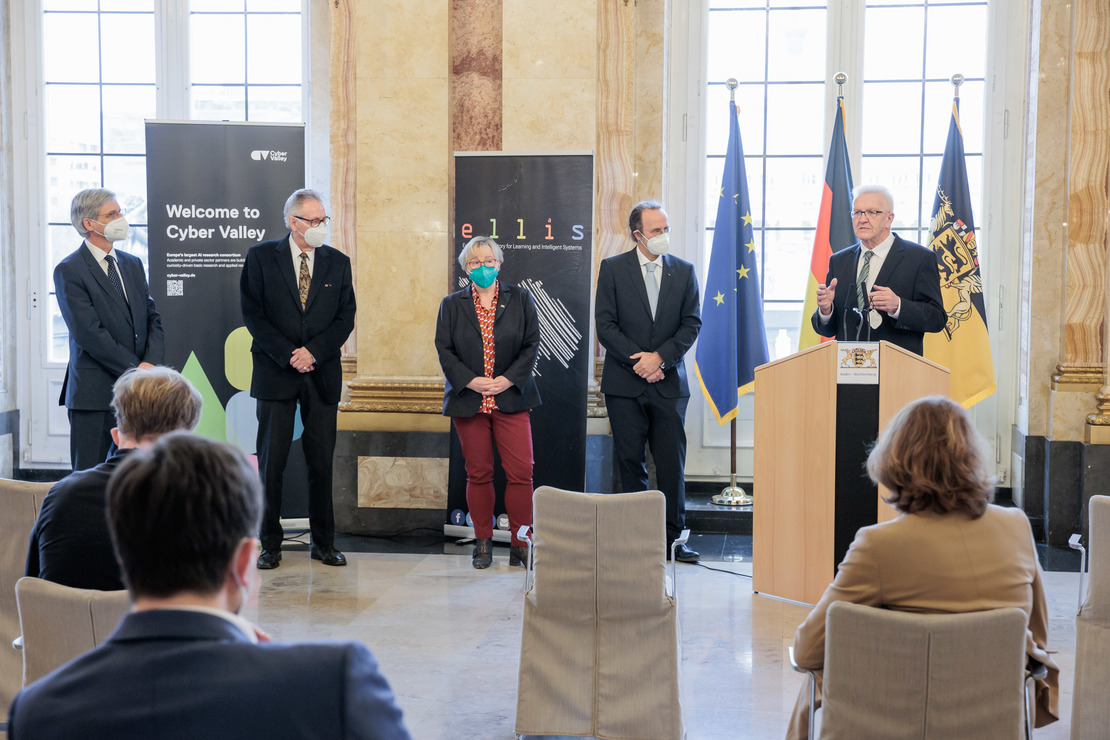
    “With the ELLIS Institute, we are igniting the next stage in Cyber Valley. We are making this institute a node in the entire ELLIS network, a network in which top researchers from all over Europe come together. This with exactly one fixed location: the Cyber Valley here in Baden-Württemberg. In the future, the ELLIS Institute will attract the best minds in science from all over the world – the stars of the scene, but just as much our young scientists,” said Minister-President Winfried Kretschmann. “Those who come to the ELLIS Institute can expect the greatest possible legroom, the best possible equipment, an inspiring network of business and science, and the hottest topics on the AI scene. With the Hector Foundation’s generous funding of 100 million euros over the next ten years, ELLIS will be a true research ‘El Dorado’ in Baden-Württemberg.”

    The founder Dr. h. c. Hans-Werner Hector explains his commitment to the ELLIS Institute as follows: “AI is becoming a key technology for many research areas such as medicine, production processes, climate protection and transport – to name just a few. Due to the wide variety of application areas, our lives will be strongly influenced by it in the future. Germany should play an important role in the research field of AI. That’s why we want to support this development with our foundation.”

    Private funding can decisively advance public research

    “The ELLIS Institute is now turning a top European location for artificial intelligence into the top AI location in Europe: Here, experience and vision come together and meet with the outstanding support of the Hector Foundation and the state – we will support the new ELLIS Institute with 25 million euros. With these unique framework conditions, together we will succeed in playing at the very top in the competition for the best minds,” emphasized Science Minister Theresia Bauer.

    Bernhard Schölkopf, who as director at the Max Planck Institute for Intelligent Systems in Tübingen played a key role in the founding of Cyber Valley in 2016 and the European Learning and Intelligent Systems Laboratory (ELLIS) two years later, will chair the new ELLIS Institute as founding director. “Future systems will deal with the complexity of the world by learning from observations – from astronomy to climate research to medicine. We created Cyber Valley and the ELLIS initiative to help shape them. I was very grateful for the opportunity to share extensively with Dr. Hans-Werner Hector about this paradigm shift, and I am now grateful for his generous support. His vision and drive fall on fertile ground here. I hope that the ELLIS Institute will bring many talented people to Baden-Württemberg, radiate far beyond our borders, and contribute to an AI based on our European values,” Schölkopf said.

    “It is great that the Hector Foundation is further expanding its commitment to Tübingen as a research location with its extraordinarily generous support of the ELLIS Institute,” added President Engler. “With the Hector Institute for Empirical Educational Research at the University of Tübingen, which was founded in 2014, the foundation already showed that it is capable of setting forward-looking accents for building the profile of the location and proved that additional private funding can decisively advance public research. The ELLIS Institute is an important step towards positioning Tübingen at the European forefront of a research field that is essential for the further development of society and the economy. In addition, ELLIS will contribute significantly to permanently establish the Cyber Valley ecosystem as a beacon in the EU and beyond.”

    Cyber Valley in Tübingen to be further expanded

    A few weeks ago, the state government of Baden-Württemberg cleared the way for the expansion of the Cyber Valley Campus at the Tübingen site by several buildings with an investment of 180 million euros. One of these planned buildings (“Cyber Valley III”, Maria-von-Linden-Strasse 8) will be the future home of the ELLIS Institute, among others. With Cyber Valley – a central element of the state’s AI strategy – a leading international research location in the field of machine learning, machine vision and robotics has been established since 2016 in a joint initiative of science and industry in cooperation with the state of Baden-Württemberg and the Max Planck Society. With its sites in Stuttgart and Tübingen, Cyber Valley is already one of Europe’s largest research collaborations in the field of artificial intelligence on its fifth birthday in December 2021. Excellent basic research is combined with interdisciplinary and industrial research and a vibrant startup scene to form an innovation ecosystem.

    The research focus in Tübingen is on building learning systems that approach the versatility and robustness of natural intelligent systems. Many AI-based applications are locked into a specific problem, but stop working when that problem changes. They cannot recognize causal relationships. Research is underway in Tübingen on approaches to close this gap.

    ELLIS Institute aims to attract the world’s best AI talent

    One of the goals in Tübingen is also to establish the new ELLIS Institute, a research facility that will attract and retain the world’s top machine learning talent. The “Hector Endowed ELLIS Fellowships” will make it even easier in the future to attract highly qualified and globally sought-after researchers at all career levels, and to offer the greatest possible freedom as well as flexible framework conditions. “Scientists should be offered the best possible conditions to conduct pioneering basic research and to contribute with their research to breakthroughs in application areas,” Schölkopf said.

    The funded Hector Endowed ELLIS Fellows will find an excellent research environment and high-performance commercial enterprises in Cyber Valley. In particular, close cooperation with the Max Planck Institute for Intelligent Systems (MPI-IS) and the University of Tübingen is planned, for example in the form of joint appointments, doctorates and in the use of infrastructure. MPI-IS and the university already operate the Tübingen AI Center, one of Germany’s five AI competence centers, which is jointly funded by the federal and state governments.

    The ELLIS institute in Tübingen is to be followed by other institutes at other locations throughout Europe as part of the ELLIS initiative. The long-term goal of ELLIS is to build a pan-European research organization that can rival the leading AI sites worldwide and whose institutes each act as the nucleus of a highly innovative local ecosystem.

    About ELLIS:

    The European Laboratory for Learning and Intelligent Systems (ELLIS) aims to secure the lasting competitiveness of European AI by pooling the expertise of top researchers in machine learning and related fields across the continent. Founded in 2018, the ELLIS initiative has quickly grown into a pan-European network that counts 34 research units at world-class institutions in 20 countries, four of them in the state of Baden-Württemberg (Freiburg, Heidelberg, Stuttgart, Tübingen). At present, there are 14 ELLIS research programs as well as pan-European PhD program, which was launched in September 2020. With these and other initiatives, the members of the ELLIS network hope to promote excellence in basic research. This will enable European scientists to actively shape the technological and societal revolution of the 21st century with human-centered, beneficial AI.