User Group: Researcher

  • Cyber Valley Research Fund improves human decision-making with AI

    Cyber Valley Research Fund improves human decision-making with AI

    From February 2020 to February 2024, Dr. Falk Lieder led a major project supported by the Research Fund, titled “A Scalable Machine Learning Approach to Improve Human Decision Making,”. The project aimed to prepare for a future where effective decision-making is crucial. 

    Good decision-making involves planning, gathering relevant information, and handling uncertainty. As automation transforms the workforce by taking over routine tasks, the demand for jobs requiring decision-making in complex and novel situations will rise. Future roles will emphasize critical thinking and adaptability. To prepare, society must focus on retraining workers and equipping the next generation with advanced decision-making skills. 

    Lieder’s project leveraged artificial intelligence to uncover optimal decision strategies that help individuals navigate complex challenges. The team also designed and tested interactive tutorials, allowing participants to learn and apply these strategies effectively. 

    They evaluated their approach on a series of more realistic decision problems, ranging from an abstract planning task without uncertainty, to planning under uncertainty, to a company choosing between alternative projects. In each case, the new AI methods found decision strategies that outperformed both human decision-making and strategies identified by previous techniques. 

    Their interactive tutorials improved decision-making by explaining the strategy in clear language, demonstrating it through examples, and offering hands-on practice with feedback. In all three applications, individuals who completed the AI-driven strategy tutorials made better decisions than those who practiced decision-making independently. 

    This project yielded the following peer-reviewed publications: 

    1.  Consul, S., Heindrich, L., Stojchewski, J., & Lieder, F. (2022), Improving Human Decision-Making by Discovering Efficient Strategies for Hierarchical Planning, Computational Brain & Behavior, 5(2), 185-216. https://doi.org/10.1007/s42113-022-00128-3 

    2. Callaway, F., Jain, Y. R., van Opheusden, B., Das, P., Iwama, G., Gul, S., Krueger, P.M., Becker, F., Griffiths, T. L., & Lieder, F. (2022). Leveraging Artificial Intelligence to Improve People's Planning Strategies. PNAS, 119 (12) e2117432119. https://doi.org/10.1073/pnas.2117432119 

    3.  Mehta, A., Jain, Y. R., Kemtur, A., Stojcheski, J., Consul, S., Tosic, M., & Lieder, F. (2022). Leveraging machine learning to automatically derive robust decision strategies from imperfect knowledge of the real world. Computational Brain & Behavior, 5(3), 343-377. https://doi.org/10.1007/s42113-022-00141-6 

    4.  Becker, F., Skirzynski, J., van Opheusden, B., & Lieder, F. (2022). Boosting human farsightedness with automatically discovered planning instructions. Computational Brain & Behavior, 5(4), 467–490. https://doi.org/10.1007/s42113-022-00149-y 

    5. Skirzynski, J., Jain, Y. R., & Lieder, F. (2024). Automatic discovery and description of human planning strategies. Behavior Research Methods, 56(3), 1065-1103. https://doi.org/10.3758/s13428-023-02062-z 

    6. Skirzyński, J., Becker, F., Lieder, F. (2021). Automatic Discovery of Interpretable Planning Strategies. Machine Learning, 110, pp. 2641–2683. https://doi.org/10.1007/s10994-021-05963-2

    7. Kemtur, A., Jain, Y. R., Mehta, A., Callaway, F., Consul, S., Stojcheski, J., & Lieder, F. (2020). Leveraging machine learning to automatically derive robust planning strategies from biased models of the environment. Proceedings of the 42nd Annual Meeting of the Cognitive Science Society. 

    Preprints of articles yet to be published: 

    1. Heindrich, L., Consul, C. & Lieder, F. (2024). Leveraging AI to improve human planning in large partially observable environments. arXiv Preprint. https://arxiv.org/abs/2302.02785 

    2.  Heindrich, L., & Lieder, F. (2024). Leveraging automatic strategy discovery to teach people how to select better projects. https://arxiv.org/abs/2406.04082 

    Dr. Falk Lieder is now an Assistant Professor of Psychology at UCLA and the Director of the Rational Altruism Lab. 

  • ELLIS PhD Program 2025: Call for Applications

    ELLIS PhD Program 2025: Call for Applications

    About the program

    The ELLIS PhD program is designed for outstanding students interested in conducting high-impact research in AI, machine learning, and related areas, including computer vision, robotics, and computational neuroscience.

    The program offers students the chance to work with leading researchers at top European academic institutions and industrial partners, while benefiting from the collaborative environment fostered by ELLIS. The program emphasizes both scientific excellence and ethical AI, encouraging students to tackle some of the most pressing challenges in AI development.

    How to apply? 

    Applications for the ELLIS PhD program opens in October and will be accepted until November 15, 2024, 23:59 CET. The application should be submitted via the ELLIS application portal. 

    Applicants are encouraged to carefully read the instructions and eligibility criteria available on the ELLIS website before submitting their application.

    Interested?

    For more detailed information, please visit the ELLIS PhD Program website. 

  • Cyber Valley Days: Innovation through collaboration

    Cyber Valley Days: Innovation through collaboration

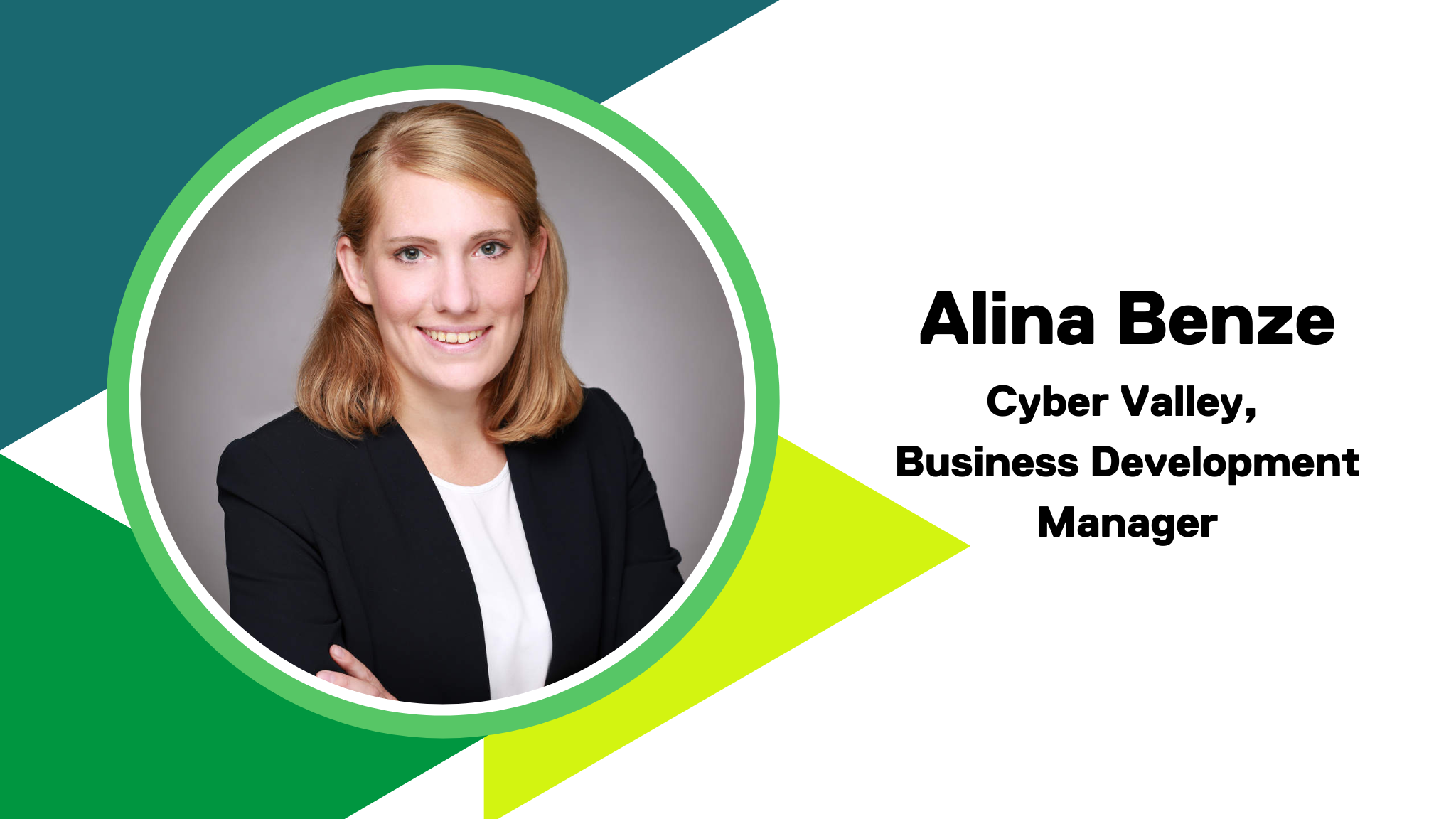
    In the following interview, Alina Benze, Business Development Manager at Cyber Valley GmbH, shares her experiences of the three-day event.

    What was your key takeaway from Cyber Valley Days?

    One of the standout moments for me was Thomas Reith’s (Site Lead Biberach, Boehringer Ingelheim) speech at the Finale of Cyber Valley Days. He highlighted that Boehringer Ingelheim is already generating 50% of its innovation through external collaboration. This proved the success of a key message I’m always sharing with new or existing members of the Cyber Valley Community. The topic of AI and robotics is so dynamic and development cycles are so short that it is important to partner up with other players to stay ahead in the game.

    Was there a particular moment during Cyber Valley Days that you found especially inspiring?

    Hearing Yann LeCun’s (VP and Chief AI Scientist, Meta) talk was overall a very impressive moment and for sure something extraordinary. Apart from the interesting perspective he shared on the current status of intelligent systems and its limitations, I found the following call-to-action very inspiring: He asked us not to be scared but to appreciate both the people and machines working for us that are also in fact smarter than us. I think this is a very unique attitude from a lead scientist at a global technology company. This should inspire the many others who are leading big and small teams in all forms of organizations – from research institutes, start-ups, SMEs to global corporates.

    Read further interviews with Rebecca Beiter (Director of Communication & Society), Janell Lia-Breitmeyer (Scientific Coordinator), and Paul-David Bittner (Business Development Manager, Start-ups) to discover their perspectives on Cyber Valley Days. 

  • Cyber Valley Days: Building a better future

    Cyber Valley Days: Building a better future

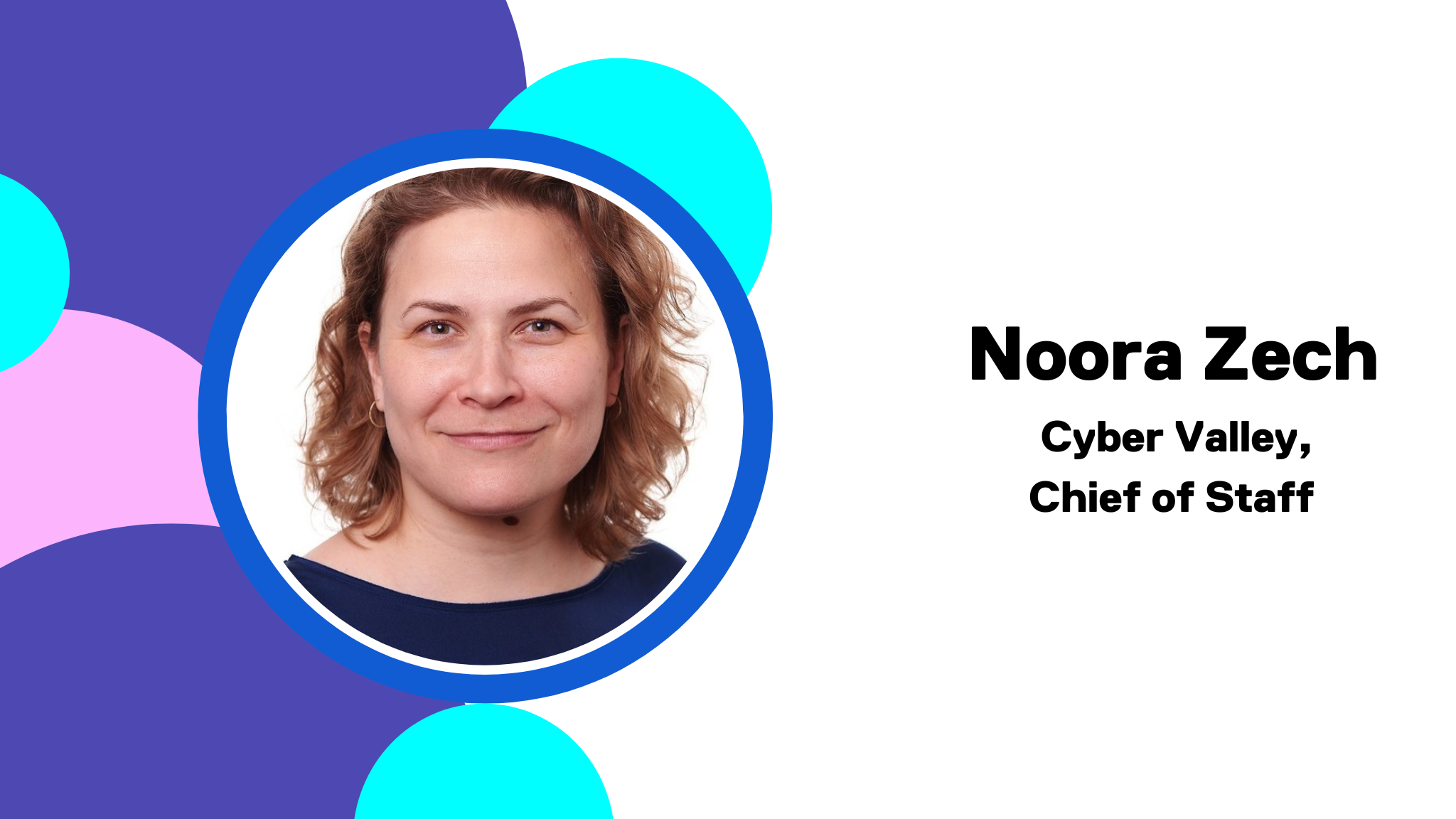
    In the following interview, Noora Zech, Chief of Staff for Cyber Valley GmbH, shares her perspective on this three-day event.

    What was your biggest surprise during Cyber Valley Days? 

    It was not the number of visitors but the quality, as well as the international, diverse, and clearly thriving community, which I found impressive and inspiring.

    What did you learn about the Cyber Valley Community?

    I was amazed at how big our community is. It is one thing to talk about what we are and what we do on an abstract level but seeing it in real life made me realize how much we have achieved and how we’ve grown. Our community spans the excellent research from the Max-Planck Institutes, and the Universities of Stuttgart and Tübingen; post-docs and students establishing start-ups; partners from industry enabling transfer; worldwide collaborations with institutions and companies such as Silo AI, Seoul AI Hub, AIIS, and the University of Tokyo who are expanding and maximizing our potential. All these ultimately benefit society. 

    I love it when people come together to create something for the better! 

    What was your personal highlight from Cyber Valley Days and what were your key takeaways?

    I had the chance to listen to Sepp Hochreiter’s interview, which was both exciting and funny. To see the person who invented LSTM (long short-term memory) felt a bit surreal. 

    Even though there were many high-ranking scientists present, it was reassuring how smart yet normal they were, and I felt I could relate to them.

    On the other hand, they also pointed out what we still lack and what we need to work on in the future to achieve our vision of using AI for the greater good of the world. As an example, we need more pragmatic and realistic regulations to enable innovative research and spin-offs. We should encourage scientists to stay in research and support them with the resources they need.  We must rethink and recreate the current system if we want innovation and solutions.

    Read further interviews with Angelina Jukic (Program Manager), Alina Benze (Business Development Manager, Corporates), Rebecca Beiter (Director of Communication & Society), Janell Lia-Breitmeyer (Scientific Coordinator), and Paul-David Bittner (Business Development Manager, Start-ups) to discover their perspectives on Cyber Valley Days. 

     
  • Maschinelles Lernen in der Wissenschaft

    Maschinelles Lernen in der Wissenschaft


    AI has been a hot topic, especially since the release of Chat GPT-3 in November 2022. But what role do AI and machine learning play in the natural sciences? Could they transform scientific research or are the current expectations set too high? Join the discussion as these questions are explored.


    What?

    A podium discussion will take place, moderated by TT-Prof. Pascal Friederich (Institute of Theoretical Informatics)

    Participants
    TT-Prof. Peer Nowack (Institute of Theoretical Informatics)
    TT-Prof. Benjamin Schäfer (Institute for Automation and Applied Informatics)
    Dr. Charlotte Debus (Scientific Computing Center)
     

    When?

    Date: Tuesday, September 10, 2024

    Time: 19:00–21:00


    Where?

    Triangel Karlsruhe 
    Kaiserstraße 93, 76133 Karlsruhe


    Find out more information about this event here.

  • Cyber Valley Days: Bringing together AI visionaries

    Cyber Valley Days: Bringing together AI visionaries

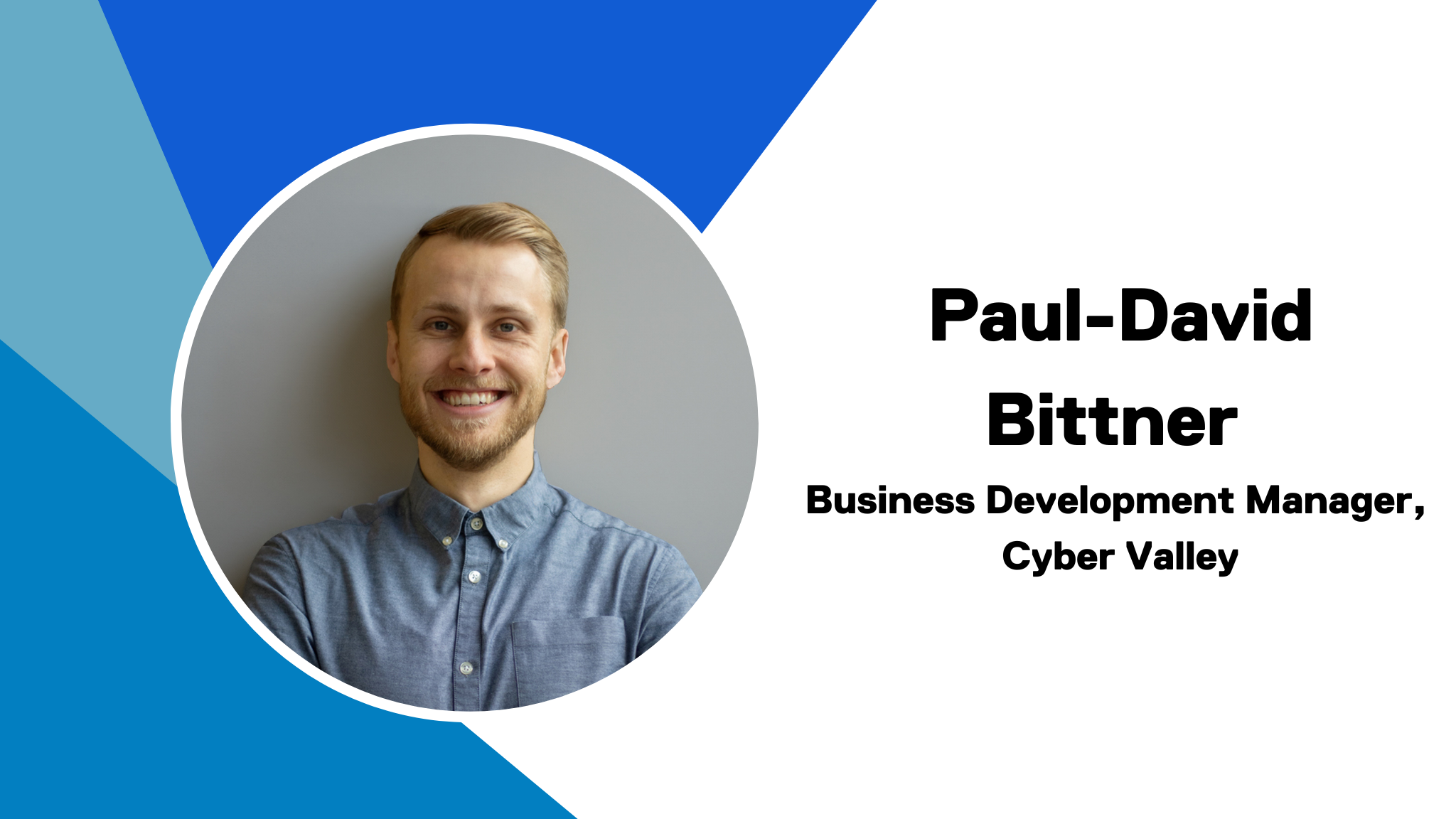
    In the following interview, Paul-David Bittner, Business Development Manager at Cyber Valley GmbH, shares his perspective on the three-day event. 

    What was your personal highlight from Cyber Valley Days? 

    The Demo Day for The AI Incubator was my personal highlight. It was amazing to see eight teams pitch their start-up ideas to such a large audience and a top-notch panel of judges. I was really proud to see their progress and how everyone outdid themselves on the day.

    Which session did you find most inspiring?

    The Investor & Deep Tech Day really brought the crème de la crème of the investment world to Cyber Valley. It was inspiring to hear their panel discussions and opinions on the AI start-up scene in Germany and Europe. Their presence and interest clearly demonstrated the high potential of these promising young deep-tech start-ups coming out of our community.

     
    How did Cyber Valley Days help reinforce a sense of community?

    It was great to see brilliant people from all kinds of backgrounds – start-ups, researchers, corporations, and politicians – mixing and mingling, and sharing ideas and visions. I am sure many of them made new connections that will lead to fruitful collaborations and more in the future.

    Cyber Valley's Start-up Network builds and fosters a community of entrepreneurs. Learn more about the network and apply to join here.

    The next round of The AI Incubator will start on November 7. Learn more about The AI Incubator here. 

    Read our interviews with Rebecca Beiter (Director of Communication & Society) and Janell Lia-Breitmeyer (Scientific Coordinator) to discover their perspectives on Cyber Valley Days. 

  • Science Hub Research Symposium 2024

    Science Hub Research Symposium 2024


    This two-day event will bring research communities together to highlight the latest innovations and breakthroughs. Attendees can look forward to keynote speeches, lightning talks, breakout sessions, and networking opportunities.


    What?

    The event will cover a range of topics, including:

    • Haptic intelligence and the simulation of clothing pressure fields
    • Physically plausible object pose refinement in cluttered scenes and insights into what foundation models know about 3D humans
    • Advances in machine learning, such as root cause analysis at Amazon, thermodynamics-guided techniques to improve aluminum recycling, and making time series classification more understandable using multiple instance learning
    • Cutting-edge research in document-level relation extraction and entity linking, deep selective state-space models, and improving decision-making with machine learning

    Further program information can be found here.


    When and where?

    On September 16th, the event will take place at MPI-IS Tübingen.

    On September 17th, the event will take place at Amazon Entwicklungszentrum in Tübingen.


    Registration

    Please RSVP through the event website.