User Group: Researcher

  • ELLIS Distinguished Lecture Series: Jens Kober

    ELLIS Distinguished Lecture Series: Jens Kober

    About the talk:

    The acquisition and self-improvement of novel motor skills is among the most important problems in robotics. Complexity arises from interactions with their environment and humans, dealing with high-dimensional input data, non-linear dynamics in general and contacts in particular, multiple reference frames, and variability in objects, environments, tasks, and human behavior. A human teacher is always involved in the learning process, either directly (providing data) or indirectly (designing the optimization criterion), which raises the question: How to best make use of the interactions with the human teacher to render the learning process efficient and effective? In this talk I’ll argue that there are tremendous benefits in having a human teacher intermittently interact with a robot also while it is learning. I will discuss various methods we have developed in the fields of supervised learning, imitation learning, reinforcement learning, and interactive learning. All these concepts will be illustrated with benchmark tasks and real robot experiments ranging from fun (ball-in-a-cup) to more applied (retail environments).

    About Jens Kober:

    Jens Kober is an associate professor at the TU Delft, Netherlands and an ELLIS Fellow. He worked as a postdoctoral scholar jointly at the CoR-Lab, Bielefeld University, Germany and at the Honda Research Institute Europe, Germany. He graduated in 2012 with a PhD Degree in Engineering from TU Darmstadt and the MPI for Intelligent Systems. For his research he received the annually awarded Georges Giralt PhD Award for the best PhD thesis in robotics in Europe, the 2018 IEEE RAS Early Academic Career Award, the 2022 RSS Early Career Award, and has received an ERC Starting grant. His research interests include motor skill learning, (deep) reinforcement learning, imitation learning, interactive learning, and machine learning for control.

    When?

    March 5, 2025, 09:45 CET

    Where?

    Universitätsstraße 32, Room 101, Campus Vaihingen of the University of Stuttgart

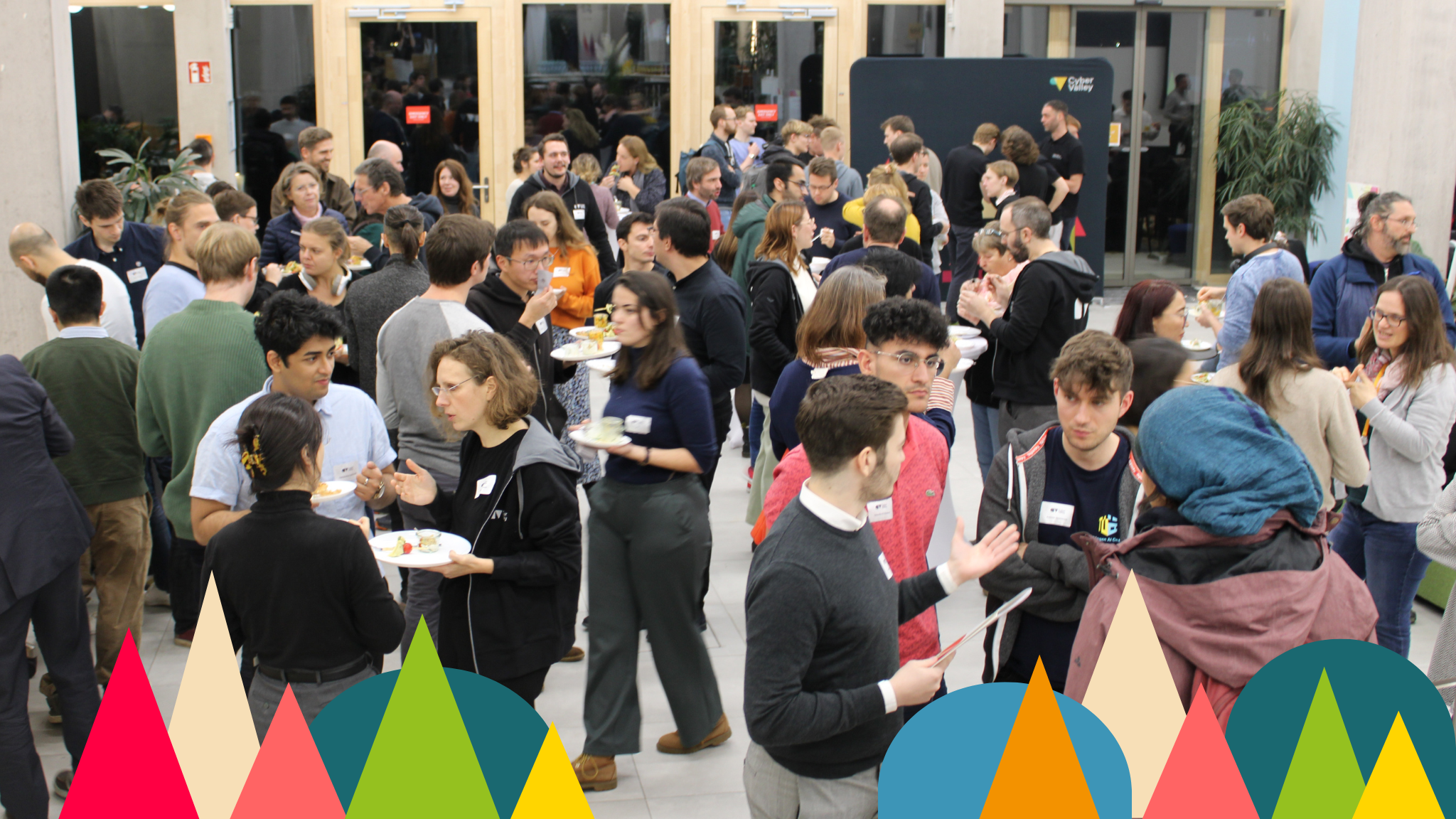
    The talk will be followed by an informal reception during which finger food and drinks will be provided.

    Professor Kober will also be available for meetings. If you are interested in scheduling a meeting, please email ellis-office@uni-stuttgart.de.

  • Spiegel Spezial: Cyber Valley in the Neckar Valley

    Spiegel Spezial: Cyber Valley in the Neckar Valley

    Despite certain challenges such as limited venture capital and data availability, Germany benefits from renowned research institutions and the necessary computing power to train AI models. However, to fully capitalize on AI's economic and productivity benefits, the country must focus more on practical applications of the technology. 

    Cyber Valley Public Outreach Manager, Laura Neusser, expresses her personal impression: “Of course, the general tone of the question whether Europe can keep up with the US in AI is a bit tricky, but all interview partners explain the amazing opportunities that can be found in this region." At the end of the article, one sentence summarizes this very well:

    Whether Germany will catch up with the rapid AI development in the USA has yet to be determined. The local AI scene is certainly not lacking in enthusiasm and willingness to innovate.

    Illustrating the vibrancy of Germany’s AI landscape, this quote further highlights the groundbreaking innovations emerging from the region within the Cyber Valley Community: 

    An innovative AI scene is emerging in Germany: the Cyber Valley in the Neckar Valley. Artificial intelligence is conquering the world, and start-ups in Baden-Württemberg are striving to compete in the global market. They are developing remote-controlled heart catheters, AI-generated film music, and agricultural robots.


    The Cyber Valley Community

    The article puts the spotlight on the following:

    Meshcapade 
    Max Planck Institute for Intelligent Systems 
    Tübingen AI Center 
    SPRIND – Bundesagentur für Sprunginnovationen 
    OSORA medical GmbH 
    EndoSurge 
    Max Planck Society 
    Mirelo AI 
    Maddox AI 
    Fraunhofer IPA 
    Fraunhofer IAO 
    KI-Fortschrittszentrum 
    Polybot 

    Check out the article online, or pick up a copy of the January print edition of the Spiegel Spezial at your local store.  

  • Demo Day for Batch #5 of The AI Incubator

    Demo Day for Batch #5 of The AI Incubator


    After six weeks of workshops and inspiring sessions, participants from Batch #5 of The AI Incubator will present their final ideas to a jury and an esteemed audience of investors, corporate leaders, researchers, and entrepreneurs. The top teams will be recognized by the jury and have the opportunity to win attractive prizes. Event attendees can meet the teams during the closing networking event, complete with beverages and finger foods.


    When? 

    December 12, 2024, 16:00–19:00 CET


    Where? 

    Amazon Research & Development Center
    Friedrich-Miescher-Straße 4, 72076 Tübingen


    Schedule

    16:00–16:30: Welcome & Drinks

    16:30–16:45: Introduction to Batch#5 of the AI Incubator

    16:45–17:30: Pitches from the AI Incubator Teams

    17:30–17:45: Keynote: Sciencepreneurship and AI

    17:45–18:15: Award ceremony

    18:15: Networking with drinks & fingerfood


    Registration

    Tickets for this event are sold out, registration is closed. 


    The AI Incubator

    The AI Incubator is a six-week program for AI talents with brilliant ideas. The program encourages scientists, technologists, and business talent to found their own companies, fostering the next generation of AI start-ups. The AI Incubator equips participants with the right knowledge, tools, and skills to transfer their cutting-edge AI and robotics research into products and applications.

    It covers topics such as, AI prototyping, product-market fit, business strategy, and funding. The program also provides participants with access to a network of experts, mentors, founders, and investors who offer guidance and inspiration on their journey into the AI business world.

    The AI Incubator is organized by Cyber Valley and funded by the Carl Zeiss Foundation. 

  • Cyber Valley celebrates the launch of ELLIS Institute Finland

    Cyber Valley celebrates the launch of ELLIS Institute Finland

    The new institute is part of the European Laboratory for Learning and Intelligent Systems (ELLIS) – a pan-European AI research network that is an important player in the Cyber Valley Community. It will position Finland as a key player in AI, attract international talent, and drive cutting-edge research. This announcement marks a major step towards achieving Cyber Valley’s vision of a closely connected, pan-European AI research network, strengthening Europe’s global standing in AI and machine learning.

    The Finnish Ministry of Education and Culture has pledged substantial financial backing, committing €10 million annually from 2025 to 2028, in addition to a launch-phase investment of €6 million. Further support comes from the Post Scriptum Foundation, established by Peter Sarlin, CEO and co-founder of Silo AI. Silo AI joined the Cyber Valley Community in June 2024 at Cyber Valley Days. The foundation has pledged an additional €10 million to fund up to 15 professorships at the ELLIS Institute Finland. 

    This ELLIS Institute, which will be based at Aalto University, is the second in the prestigious pan-European ELLIS network, following the establishment of the first institute in Tübingen, Germany, in 2023. Aalto University will lead the initiative in Finland, working collaboratively with other Finnish universities.

    The new institute will build on the achievements of the Finnish Center for Artificial Intelligence (FCAI), which currently hosts ELLIS Unit Helsinki—the Finnish node of ELLIS. Professor Samuel Kaski, director of FCAI and ELLIS Unit Helsinki, will play a central role in the development of ELLIS Institute Finland.

    This initiative underlines Finland’s commitment to becoming a major hub for AI research and innovation, leveraging its longstanding expertise to address both local and global challenges through AI-driven solutions.

    Cyber Valley is proud to support and collaborate with ELLIS Institute Finland. Together, we look forward to advancing European AI research, fostering collaborative innovation, and addressing global challenges through the power of intelligent systems. This marks a significant step in uniting Europe’s AI efforts, strengthening our shared goals and vision for a more connected, forward-thinking AI research ecosystem.

  • Cyber Valley unites AI and robotics expertise for the healthcare sector

    Cyber Valley unites AI and robotics expertise for the healthcare sector

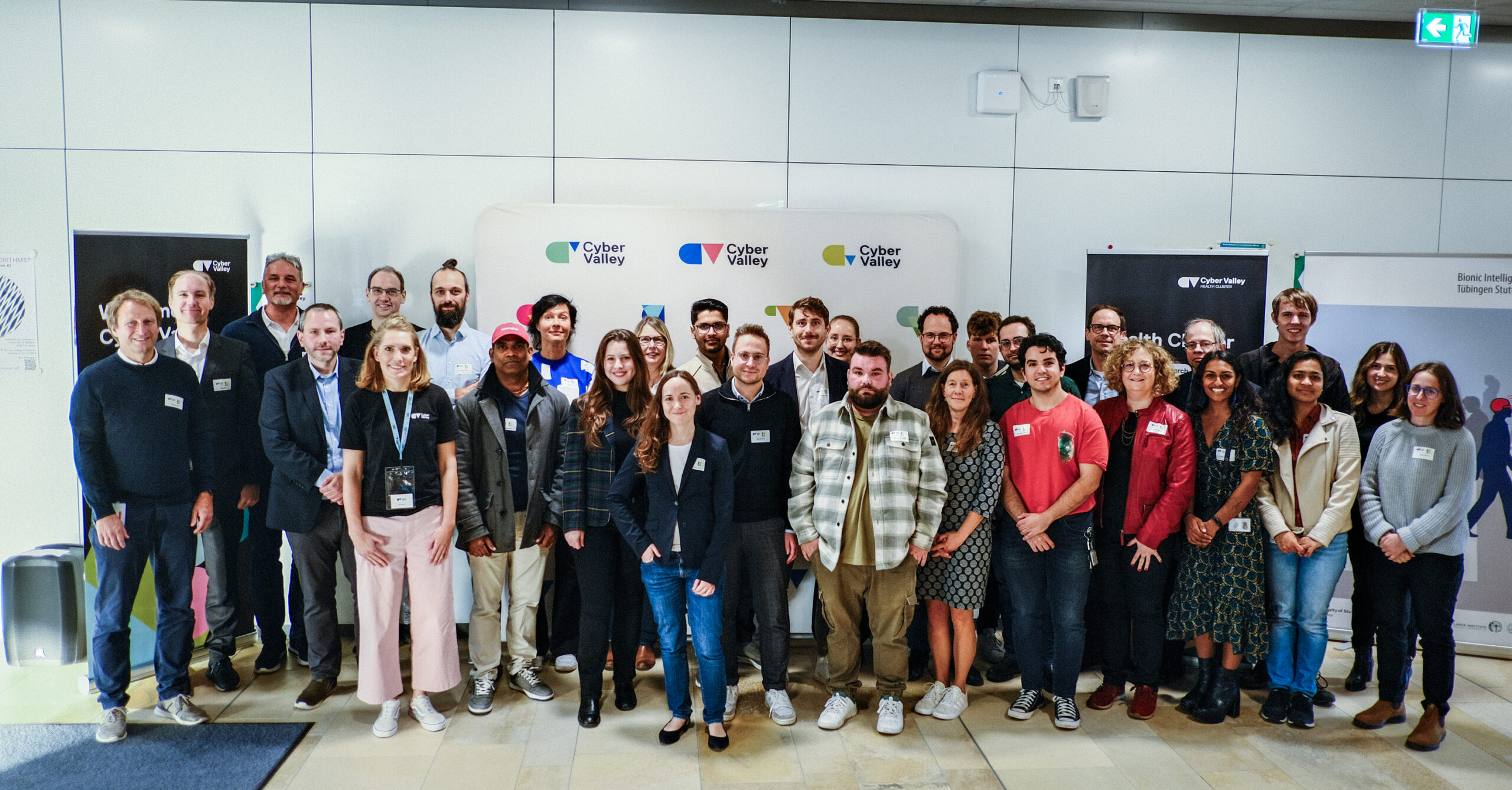
    Stuttgart, October 28, 2024 – The Cyber Valley Health Cluster officially launched last Thursday with a public kickoff event in Tübingen. This initiative launched by Cyber Valley aims to unite the forces of science, industry, and start-ups to improve people’s long-term health through artificial intelligence and modern robotics. 

    Collaboration between research and industry for AI-driven health technologies 

    The Cyber Valley Health Cluster aims to integrate research, practice, and technology. It promotes joint projects between AI experts, scientists, and companies to develop innovative solutions for current and future challenges in the healthcare sector. The Health Cluster emphasizes interdisciplinary knowledge exchange, enabling new approaches and solutions that go beyond individual technological advances.  

    Rebecca C. Reisch, Managing Director of Cyber Valley GmbH, highlights the importance of this collaboration: “The Cyber Valley Health Cluster is more than an academic endeavor; it’s a collaborative alliance that encourages exchange between industry, start-ups, and research. The Health Cluster is where AI-based solutions can be developed to address the most pressing challenges in modern medicine and beyond.”

    Strong Cyber Valley Partners and Friends are already on board  

    The Cyber Valley Health Cluster is backed by strong partnerships. Among the already confirmed Cyber Valley Partners are well-known players such as Boehringer Ingelheim, ZEISS, the University of Tübingen, the University of Stuttgart, and the Max Planck Institute for Intelligent Systems (MPI-IS). These partners are investing significantly in the Cyber Valley Community and are playing a central role in the further development of the Health Cluster. 

    In addition, the Cyber Valley Health Cluster is supported by numerous committed Cyber Valley Friends who enrich the network with their expertise and connections. These include Immatics, Cegat, Ovesco, BIOPRO Baden-Württemberg, BioRegio STERN Management, as well as the Medical Innovations Incubator, and the start-ups Osora and Cerebri.  Further candidates are already under consideration.  

    Reisch emphasizes the role of the Cyber Valley Community: “Together with our Partners and Friends, we are creating an environment that drives the development of technologies that are not only groundbreaking but also practical and ethical. Because only by working together do we have the chance to establish Baden-Württemberg and the whole of Germany at the forefront of global AI health innovations.” 

    Long-term goal: a lasting healthcare alliance 

    The Cyber Valley Health Cluster supports start-ups and innovation projects to create real value by generating new jobs and health solutions. Health Cluster participants moreover benefit from extensive connections and new networking opportunities that enable the development of pioneering healthcare solutions and rapid knowledge transfer between research and industry. 

    The long-term goal of the Cyber Valley Health Cluster is to create a lasting and active community, pooling health expertise to enable interdisciplinary teams to tackle global health challenges. Further events and interaction formats are planned for the Cyber Valley Health Cluster in the coming months. 

    About Cyber Valley 

    Cyber Valley is Europe’s largest and leading center for excellence in artificial intelligence and modern robotics. Its mission and public mandate are to advocate for the research, development, application, and acceptance of technologies and methods in the field of intelligent systems. Cyber Valley encourages entrepreneurship by uniting scientific excellence with innovation and technology transfer. In addition, Cyber Valley facilitates critical reflection on the ethical and social implications of AI through public engagement. Cyber Valley envisions a future in which the full potential of intelligent systems is leveraged for the greater good of the world. 

    Media Contact: 

    Laura Neusser 
    Public Outreach Manager 
    Cyber Valley GmbH 
    laura.neusser@cyber-valley.de 

  • Cyber Valley Research Fund project optimizes focus and productivity

    Cyber Valley Research Fund project optimizes focus and productivity

    Unlike conventional attention training programs that rely on unrelated tasks or video games, ACTrain seamlessly integrates into the work environment, allowing users to enhance focus while actively engaged in their tasks. Users can specify the documents or applications on which they wish to concentrate and set a desired focus duration. The app then delivers real-time feedback on attention levels, transforming the workspace into a dynamic gym for strengthening focus and attention skills.  

    ACTrain uses a unique point system that is awarded based on a mathematical principle, which aligns short-term rewards with long-term value, helping users see the benefits of staying focused over time. The software is available for free on both Mac and Windows platforms at https://osf.io/8f6hx/. 

    Additionally, Lieder and his team collaborated with the non-profit organization Solve Education to integrate this point system into their educational game, The Dawn of Civilization, designed to help disadvantaged youth in developing countries learn English. An experiment revealed that this optimized point system led to significantly enhanced learning outcomes. 

    ACTrain is poised to redefine productivity and learning, enabling individuals to more effectively achieve goals and sustain focus in an ever more distracting world. 

    This project yielded the following peer-reviewed publications:  

    1. Wirzberger, M., Lado, A., Prentice, M., Oreshnikov, I., Passy, J.-C., Stock, A., & Lieder, F. (2024). Optimal feedback improves behavioral focus during self-regulated computer-based work. Scientific Reports, 14(3134). https://doi.org/10.1038/s41598-024-53388-3 
    2. Kukamjad, T., Pauly, R., Heindrich, L., Amo, V., & Lieder, F. (2024, May). Evaluation of Brain Point Intervention in The Dawn of Civilization. UCLA Psychology Undergraduate Research Conference.  https://doi.org/10.13140/RG.2.2.11284.48008 
    3. Pauly, R., Heindrich, L., Amo, V., & Lieder, F. (2022, June). What to learn next? Aligning gamification rewards to long-term goals using reinforcement learning. The 5th Multidisciplinary Conference on Reinforcement Learning and Decision Making (RLDM2022). https://doi.org/10.13140/RG.2.2.32661.19684 
    4. Teo. J., Pauly, R., Heindrich, L., Amo, V., & Lieder, F. (2021, June). Leveraging AI to support the self-directed learning of disadvantaged youth in developing countries. The first Life Improvement Science Conference. https://is.mpg.de/publications/paulyteoheindrichamolieder2021lisa-leveraging 
    5. Wirzberger, M., Lado, A., Eckerstorfer, L., Oreshnikov, I., Passy, J. C., Stock, A., Shenhav, A., & Lieder, F. (2020). How to navigate everyday distractions: Leveraging optimal feedback to train attention control. CogSci 2020. https://www.cognitivesciencesociety.org/cogsci20/papers/0380/ 
    6. Wirzberger, M., Oreshnikov, I., Passy, J., Lado, A., Shenhav, A., Lieder, F. (2020). ACTrain: Ein KI-basiertes Aufmerksamkeitstraining für die Wissensarbeit. 66th Spring Conference of the German Ergonomics Society. https://doi.org/10.13140/RG.2.2.14709.50406 

    Dr. Falk Lieder is now an Assistant Professor of Psychology at UCLA and the Director of the Rational Altruism Lab. 

  • Cyber Valley Research Fund drives advancements in soft robotics

    Cyber Valley Research Fund drives advancements in soft robotics

    Dr. Ardian Jusufi and his team researched innovative materials that improve proprioception (the body’s ability to sense movement and position) in unpredictable and irregular environments. Insights from the project have deepened understanding of how the body moves and interacts with its environment. These advancements in soft active materials and sensors will revolutionize the fields of biomedical devices and soft robotics.  

    Some of the project’s key achievements include:  

    • Enhanced pumping system performance: The project team improved a hydrogel-encapsulated soft actuator pumping system. The system demonstrated improved competitive pressure and fluid velocity performance, offering potential insights for cardiovascular and renal applications. 

    • Addressing sensor challenges: The project addressed the inherent trade-offs of soft sensors. While offering greater flexibility and sensitivity, these sensors often lack robustness, repeatability, linearity, and durability. Various use cases were evaluated to balance these trade-offs effectively. 

    • Innovative manufacturing and materials: The team developed advanced manufacturing techniques and synthesized new materials responsive to environmental stimuli, such as hydrodynamic pressure. This was relevant for studying locomotion, like the undulatory swimming of fish, using fluidic actuators. 

    • System integration with mobile soft actuators: Soft sensors were integrated with mobile soft fluidic actuators in robots. This integration provided valuable insights into the neuromechanics of movement, particularly in aquatic environments. 

    • Electroactive polymer-driven pumping systems: The team aimed to reduce the tissue stress associated with traditional implanted pumps. Although current limitations related to in-body electricity use means that these systems are not yet feasible for in vivo applications, the research marks significant progress in understanding the biomechanics of movement. 

    This project yielded the following publications:  

    1. Souri H, Banerjee H, Jusufi A, Radacsi N, Stokes A, Park I, Sitti M, Amjadi M. Advanced Int. Sys. 2 (8) 2000039. Wearable and Stretchable Strain Sensors: Materials, Sensing Mechanisms, and Applications. 2020. Advanced Intelligent Systems, Volume: 2, Issue: 8, 2020. DOI: https://doi.org/10.1002/aisy.202000039 
    2. Banerjee H, Kalairaj MS, Ren H, and Jusufi A*. Advanced Engineering Materials. Strong, Ultrastretchable Hydrogel-Based Multilayered Soft Actuator Composites Enhancing Biologically Inspired Pumping Systems. [Cover inside] Adv. Eng. Mater 2021, 23, 2100121. 
    3. Wright B, Vogt D, Wood R, Jusufi A*. IEEE International Conference on Soft Robotics (RoboSoft). Soft Sensors for Curvature Estimation under Water in a Soft Robotic Fish. COEX, Seoul, Korea, 2019.
    4. Siddall R, Fukushima T, Bardhi D, Perteshoni B, Morina A, Hasimja E, Dujaka Y, Haziri G, Martin L, Banerjee H, Jusufi A*. Advanced Robotics 35 (7). Compliance, Mass Distribution and Contact Forces in Cursorial and Scansorial Locomotion with Biorobotic Physical Models. 2021. https://www.tandfonline.com/doi/full/10.1080/01691864.2021.1887760.
    5. Fukushima Toshihiko, Robert Siddall,Fabian Schwab, Severine Toussaint, Greg Byrnes, John Nyakatura, and Ardian Jusufi. Inertial tail effects during righting of squirrels in unexpected falls: From behavior to robotics. Integrative and Comparative Biology, icab 023, 2021.
    6. Lin Yu-Hsiang, Siddall R, Schwab F, Fukushima T, Banerjee H, Youngjoon Baek, Daniel Vogt, Yong-Lae Park, and Jusufi A. Modeling and control of a soft robotic fish with integrated soft sensing. Advanced Intelligent Systems, 2000244, 2021.
    7. Fabian Schwab, Elias T Lunsford, Taehwa Hong, Fabian Wiesemüller, Kovac M, Park YL, Akanyeti O, Liao J C, and Jusufi A. Body caudal undulation measured by soft sensors and emulated by soft artificial muscles. Integrative and Comparative Biology, 2021.
    8. Fabian Schwab, Fabian Wiesemüller, Claudio Mucignat, Yong-Lae Park, Ivan Lunati,Mirko Kovac, and Ardian Jusufi. Undulatory swimming performance explored with a biorobotic fish and measured by soft sensors and particle image velocimetry. Frontiers in Robotics and AI, page 387, 2021.
    9. Robert Siddall, Greg Byrnes, Rob J. Full and Ardian Jusufi, Tails stabilize landing of gliding geckos crashing head-first into tree trunks', Communications Biology, 2021. 

    This research project primarily aimed to expand knowledge of biomechanics through robophysical models, rather than immediate practical applications. It started in April 2020 and concluded in February 2023. Dr. Ardian Jusufi was formerly a Max Planck Research Group Leader at the MPI for Intelligent Systems (March 2018–January 2024). He is now Head of Soft Kinetic group in the Engineering Sciences Department of the Empa Swiss Federal Labs for Materials Science and Technology.