The latest update of a database published by Elsevier provides information on the most cited researchers in 2022 for each scientific field, including extensive figures on publications, citations, self-citation rates, and indices. The dataset contains more than 200,000 authors and takes into account the different publication cultures of the individual subject areas by including the top 2 percent of the world's most frequently cited researchers in their field in the list.
These include 119 academics from the University of Stuttgart, which are spread across a total of 12 departments and listed as follows.
Discipline
# of scientists at the University of Stuttgart in the top 2%
Physics & Astronomy
35
Engineering
21
Enabling & Strategic Technologies
16
Information & Communication Technologies
11
Biomedical Research
7
Mathematics & Statistics
7
Built Environment & Design
3
Clinical Medicine
3
Psychology & Cognitive Sciences
2
Economics & Business
1
Philosophy & Theology
1
Total number
119
Strong individual performances in a global comparison
Over 20 percent of the University of Stuttgart's current faculty members are accounted for.
The researchers from the University of Stuttgart, active in the year under review, are listed below as the most frequently cited in their respective fields (in alphabetical order):
Scientists
Occupies place # in the field of…
Allgöwer, Frank
605 of 106.863 in Industrial Engineering & Automation
Bárdossy, András
148 of 57.175 in Environmental Engineering
Birkmann, Joern
41 of 21.624 in Strategic, Defence & Security Studies
Brem, Alexander
209 of 52.318 in Business & Management
Brink, Stephan ten
310 of 197.500 in Networking & Telecommunications
Buchmeiser, Michael R.
345 of 108.979 in Polymers
Bulling, Andreas
60 of 14.370 in Human Factors
Bürkner, Paul Christian
26 of 21.194 in Statistics & Probability
Dressel, Martin
1595 of 295.432 in Applied Physics
Giessen, Harald
205 of 64.789 in Optics
Hauer, Bernhard
570 of 161.671 in Organic Chemistry
Hilfer, Rudolf
277 of 50.409 in Fluids & Plasmas
Jeltsch, Albert
334 of 204.091 in Biochemistry & Molecular Biology
Kaim, Wolfgang
70 of 72.729 in Inorganic & Nuclear Chemistry
Kästner, Johannes
271 of 100.804 in Chemical Physics
Kontermann, Roland E.
646 of 147.556 in Immunology
Liu, Na
474 of 117.692 in Nanoscience & Nanotechnology
Lutz, Eric
191 of 73.580 in General Physics
Menges, Achim
2 of 1.681 in Architecture
Seifert, Udo
17 of 50.409 in Fluids & Plasmas
Speck, Thomas
253 of 50.409 in Fluids & Plasmas
Steinwart, Ingo
1578 of 356.955 in Artificial Intelligence & Image Processing
Weitkamp, Jens
127 of 38.735 in Physical Chemistry
Werner, Hans Joachim
97 of 100.804 in Chemical Physics
Wrachtrup, Jörg
371 of 295.432 in Applied Physics
Yang, Bin
335 of 197.500 in Networking & Telecommunications
More names of top-cited scientists can be found in the database.
Cyber Valley would like to congratulate these and all other researchers on their success!
In spring 2024 the new Alps supercomputer goes live at the Swiss National Supercomputing Centre (CSCS) of ETH Zurich in Lugano. Boasting the next generation of more than 10,000 graphics processing units (GPUs), Alps is one of the world’s most powerful computers for applications in the field of artificial intelligence (AI). This new computer gives Swiss scientists access to the sort of computing power only available to the world’s biggest tech companies.
Transparency and Open Source
The initiative aims to develop and train new large language models (LLM). These must be transparent, deliver comprehensible results, and ensure legal, ethical, and scientific criteria are met. “Unlike the large language models that are usually available in the public domain today, the Swiss AI Initiative strongly emphasized transparency and Open Source. Everyone must be able to understand how the models were trained, the sort of data used, and how results are recovered,” stresses Jan Hesthaven, Provost and Vice President for Academic Affairs at EPFL.
To develop such models, the Swiss AI Initiative will use ten million GPU hours on the new Alps computer over the next 12 months, equivalent to the computing power of a single GPU running at full load for over 1,100 years. Switzerland is therefore the first country in the world to operate a research infrastructure on the next-generation NVIDIA Grace Hopper Superchip.
Swiss AI Initiative is already up and running
This additional computing capacity will be used to develop new, industry-specific AI-based models for use in different areas such as robotics, medicine, climate sciences, or diagnostics. In addition, the Initiative will also explore fundamental questions in the development and use of LLM models, such as: What form will future interaction between humans and AI take? What is the appropriate ethical framework? How do we manage security and data privacy? What new approaches can be used to scale up models and make them more energy efficient?
AI for industry and public administration
The Swiss AI Initiative has set itself the goal of bringing together science, industry, and politics to collaborate in shaping and driving forward the development and use of artificial intelligence in Switzerland. Existing partnerships with companies, hospitals, and public-sector bodies will be expanded further. Swisscom’s CTO Gerd Niehage commented: “Here at Swisscom we welcome the Swiss AI Initiative, especially as we are convinced this will be an important building block in Switzerland’s digital future. It accelerates the digital transformation and creates new capabilities our country needs to play a dominant role in the area of generative artificial intelligence. For Swisscom, AI solutions like the Swiss AI Initiative are a key element of innovative digital solutions that our customers can trust.”
The software infrastructure, accumulated expertise and base models developed in Switzerland should be transferable as openly and directly as possible to society and industry. To remain competitive, SME’s will also have to rely increasingly on the use of AI in the future. Like public services, they will be able to directly benefit from the open Swiss AI Initiative. On top of that, the Swiss AI Initiative is developing a program for supporting start-ups in the area of artificial intelligence.
Networking researchers all over Switzerland
ETH Zurich and EPFL operate their own AI centers that will work closely together in the future, along with the Swiss Data Science Center, to conduct world-class, interdisciplinary AI research. This initiative aims to pool the specialist knowledge of around a dozen Swiss universities, technical universities, and research institutes. Over the past few months over 75 professors from all over Switzerland have signed up for the initiative. In addition, other international researchers have also been invited to work together on the development of multilingual, cross-border, open-source LLMs. ETH Zurich and EPFL are already members of ELLIS, the European network of AI excellence, which incudes some 40 AI hot spots in Europe.
Bei I’m a Scientist drehte sich in dieser Themenrunde alles um Künstliche Intelligenz. Schüler*innen haben die Möglichkeit, vielen spannenden Fragen rund um das Thema nachzugehen:
Inwiefern beeinflussen KI unseren Alltag?
Warum entwickelt sich Künstliche Intelligenz so schnell?
Wie schlau ist eine KI?
Wo werden uns in nächster Zeit mehr KIs begegnen?
Diese und viele weitere Fragen, zum Beispiel nach ihrem Berufsweg oder ihren Hobbys, können die Kinder und Jugendlichen Wissenschaftler*innen stellen, die rund um das Thema forschen. Die Schüler*innen treten dabei direkt in den Dialog mit den Forschenden.
The conference will present quantitative, qualitative, and mixed methods research, including techniques from the social sciences and computer science, as well as work exploring web-based data collection and research ethics. Other sessions will also present studies that combine analyses of web data and other types of data (e.g., from surveys or interviews) and help better understand user behavior online and offline.
Keynotes and papers for this conference are now fixed. See the conference website for more information.
When?
May 21–24, 2024
Where?
Stuttgart, Germany
This event is organized by the University of Stuttgart and hosted by the Interchange Forum for Reflecting on Intelligent Systems (IRIS).
The EuroEAP international conference, organized by the EuroEAP Society with a not-for-profit distinctive character and always held in Europe, primarily aims to share the latest advances and findings in this emerging field. It gathers experts from all over the world in a highly multidisciplinary event driven by scientific quality and industrial impact, with an organization that enables significant opportunities for one-to-one discussions in a friendly atmosphere. Today, the event expands its scope to the larger international and diverse research community of soft smart materials and soft transducers. The event is conceived as an exclusive forum for international experts and professionals seeking scientific quality, industrial impact, and opportunities for cooperation.
When?
June 11–13
Important deadlines:
Hotel reservation (special rate): 10 APRIL 2024 (70 pre-booked rooms)
Early registration & abstract submission: 10 APRIL 2024
A social dinner will be organized on Tuesday evening in the Stuttgart city center.
Transport from the MPI to the dinner and from the dinner to the hotel will be provided.
The cost to attend this event is covered by the conference registration fee.
More details will be released closer to the conference start.
Wednesday, 12 June
Castle tour:
A castle tour for the participants of the conference will be organized on Wednesday. We will get a guided tour through Residenzschloss Ludwigsburg, one of the most beautiful baroque castles in Germany.
The tour will start at 16:00.
Social dinner:
Following the castle tour, there will be a social dinner at the restaurant Württemberger Hof (http://www.wuerttemberger-hof-ludwigsburg.de/), which is in walking distance from the castle.
The dinner will start at 19:00.
Transport from the MPI to Ludwigsburg and from the dinner to the hotel will be provided.
The cost to attend this event is covered by the conference registration fee.
Accompanying persons
The castle tour and social dinners are open to accompanying people.
The participation fees for each accompanying person will be announced closer to the conference start.
The fees should be paid in cash at the conference desk (credit cards are NOT acceptable).
Attendees willing to join the castle tour and the social dinners should specify the option (including the number of accompanying persons) during the online registration to the conference.
Thursday, 13 June
SOFTWEAR Days:
This year there is a satellite event to the EuroEAP 2024 conference: SOFTWEAR Days 2024. There will be an oral session also open to all EuroEAP participants, free of charge, on Thursday 13th of June in the afternoon at the same venue and room as the EuroEAP 2024. Oral presentations will be given by the SOFTWEAR PhD students presenting their research.
A few slots have also been reserved for presentations by other PhD students outside SOFTWEAR. The topic of the presentation must be in the broad category of soft actuators for wearables. If you, as a non-SOFTWEAR student, want to give an oral presentation (15 mins incl. questions), please contact edwin.jager@liu.se.
SOFTWEAR is a Marie Skłodowska-Curie Actions Doctoral Network in the emerging and rapidly growing field of wearables, with a unique focus on soft actuators for wearables and exoskeletons. The primary objective of SOFTWEAR is to train young researchers in the multidisciplinary science of soft actuators for integration in wearables and augmenting textiles. This will be achieved by merging chemistry, physics, mechanics, electronics, textile technology, design, human-technology interaction, and ethics in a truly interdisciplinary manner, while teaching essential skills in ethics, product development, IPR, and industrial realization, thus providing a unique added value to the careers of the researchers. For more information, see: https://softwear-dn.eu/
EuroEAP Society Challenge:
During the EuroEAP 2024, we’ll be having a challenge with € 400 worth of prizes. It is an open competition where teams of talented researchers can showcase a project of their choice and compete with colleagues in academia and industry. The final aim of the Challenge is to captivate and inspire the imagination of experts and the public alike with the possibilities that soft smart materials and soft transducers empower. More information on the challenge web page: http://www.euroeap.eu/index.php/euroeap-society-challenge-home.
Deadlines
Enrolment: 23 APRIL 2024
Final submission: 23 MAY 2024
Cyber Valley is looking forward to this event happening within the Cyber Valley community and welcomes our international guests!
Philipp Hennig is Professor of Machine Learning Methods in the Department of Informatics at the University of Tübingen, part of Cyber Valley, and a member of the board of the Tübingen AI Center and the cluster of excellence Machine Learning: New Perspectives for Science.
ANUBIS objectives
The ANUBIS project aims to manage the computing resources of scientific AI applications comprehensively and consistently. In climate models, geological and neuroscientific simulations, many inference problems occur in which information or a data set is used to indirectly deduce or “infer” the information that is actually being sought. "To solve such inference problems, we need large amounts of data and large computing resources," Hennig explains. "A single partial data set from climate research, for example, can be as large as 100 terabytes (i.e. 100,000 gigabytes)."
Data processing challenges
In the project, what a computer does – computing – is regarded as a source of information. This information relates to questions that cannot be answered definitively and perfectly (such as "What will the weather be like in 10 years' time?"). Such questions usually consist of an infinite number of sub-questions that are not fully answered by the calculation. Therefore, while the computer is answering these sub-questions, it should simultaneously keep a record of which parts of the question have already been answered and how well. This is not so easy, because the record-keeping itself is also a calculation. For the whole thing to remain feasible, the record-keeping must therefore be simpler than the calculation itself.
Innovative approaches to solutions
To do this, it will be necessary to extend modern machine learning methods so that their functionality harmonizes with the new concept. The advantages of the extended methodology are not only more economical algorithms, but also new functionality. "It will then be easier for researchers from the geosciences, climate sciences and neurosciences, for example, to flexibly incorporate very different types of data such as specific measurements, simulation data and expert knowledge into their code," says Hennig. "The uncertainty of the information from the different data sources must be quantified. Neither was possible with the previous methods."
Each lecture will have two fellows sharing their findings and then a round of discussions and networking will be continued over drinks in the Kleiner Senat. The Humboldt Lecture Series is jointly organised by the College of Fellows and the Welcome Center of the University of Tübingen.
Wed, 7 February 2024, 6.30 pm
Großer Senat, Neue Aula
(Geschwister-Scholl-Platz, Tübingen)
Who?
Speakers:
– Dr Stefano Floris (Institute of Biblical Archaeology):
"History of a Punic City, Seen from Its Tophet: A Sardinian Perspective"
– Dr Riccardo Marin (Tübingen AI Center):
"Connecting the (Digital) Dots: Studying Relations in 3D Geometries for Human Virtualization"
Among the speakers and panelists of the workshop in January were the German Federal Minister of Education and Research Bettina Stark-Watzinger, the French Minister for Higher Education and Research Sylvie Retailleau, the Undersecretary of State at the Polish Ministry of Science and Higher Education Andrzej Szeptycki, as well as representatives from the EU and AI research institutions in Europe. ELLIS was represented by President Bernhard Schölkopf and Board Member Florence d'Alché-Buc, and referred to by multiple other speakers, including German State Secretary Sabine Döring and the Polish representative Andrzej Szeptycki.
“Too many research programs at national and European levels go in the same direction and create a funding jungle instead of a coordinated program. In order to be attractive to top researchers from all over the world, we therefore need an overarching and networked European initiative”, highlights Sabine Döring. “Our aim is to work with our partners in Europe to create a platform as a contact point for top researchers from all over the world in order to actively promote this idea”, she adds.
During the high-level meeting, discussions centered around opportunities for organizing, distributing, and financing AI infrastructures at both the European and EU member state levels. The group also explored ideas for jointly promoting young international AI talent in Europe – a topic that is a strategic priority for ELLIS. With the ELLIS PhD Program, the network has implemented a competitive pan-European PhD program aimed at attracting and retaining outstanding young researchers from around the world.
ELLIS PhD students benefit from joint supervision in the European ELLIS network
The ELLIS representatives provided insights into the program and outlined its potential for facilitating PhD training in Europe: Since its inception in 2020, the program has attracted more than 7,000 applications from all over the world, around 300 of which successfully secured a PhD position in the program. ELLIS PhD students benefit from joint supervision by two leading AI researchers at different institutions in Europe and are integrated into an international network of top scientists early in their careers. European cooperation is essential for the program: In the challenge of attracting international talent, many European institutions face difficulty when acting alone. ELLIS, however, offers a significant added value by leveraging its extensive research network for the joint training of doctoral students. Moreover, the program’s central application portal has proven to be a key success factor, as it allows PhD candidates to reach many European top AI labs with just a single application.
“The IDEAS institute in Warsaw has just founded an ELLIS unit, following a rigorous selection process where international reviewers got convinced that the unit will make a major contribution towards strategically developing the ELLIS network. This further extends our talent base, and we are happy to invite Poland to join France and Germany to develop the ELLIS PhD Program into the leading international networking platform for AI talent”, says Bernhard Schölkopf.
BMBF established ELLIS as an international networking platform for young AI researchers
As part of its AI Action Plan presented last year, the German Federal Ministry of Education and Research (BMBF) established ELLIS as a European and international networking platform for young AI researchers. The successful use of AI in Europe requires excellence and cooperation on a large scale. At ELLIS, 41 units in 16 countries and more than 1,000 members collaborate to build up a pan-European AI network of excellence. The most recent unit that joined the network is the ELLIS Unit in Warsaw hosted by IDEAS NCBR. IDEAS NCBR was represented at the workshop in Brussels by their Board Member Garzyna Zebrowska.
About ELLIS
ELLIS is a pan-European AI network of excellence. It builds upon machine learning as the driver for modern AI and aims to secure lasting international leadership of AI made in Europe by connecting top researchers in this field and by creating a multi-centric AI research laboratory. Founded in 2018, ELLIS has grown into a network that counts 41 ELLIS units at world-class institutions in 16 countries, 16 ELLIS programs and a pan-European PhD program. The members of ELLIS are committed to shaping the future of AI in Europe by pushing the scientific and technological boundaries for human-centered, beneficial, and safe AI.
More Information
Read the article “German Federal Ministry of Education and Research establishes ELLIS as a European and international networking platform for young AI researchers” here.
Learn more about the ELLIS PhD Program here. This program has received funding from the European Union’s Horizon 2020 research and innovation programme under ELISE Grant Agreement No. 951847.
Contact
For interview requests regarding ELLIS or further information, please contact pr@ellis.eu.
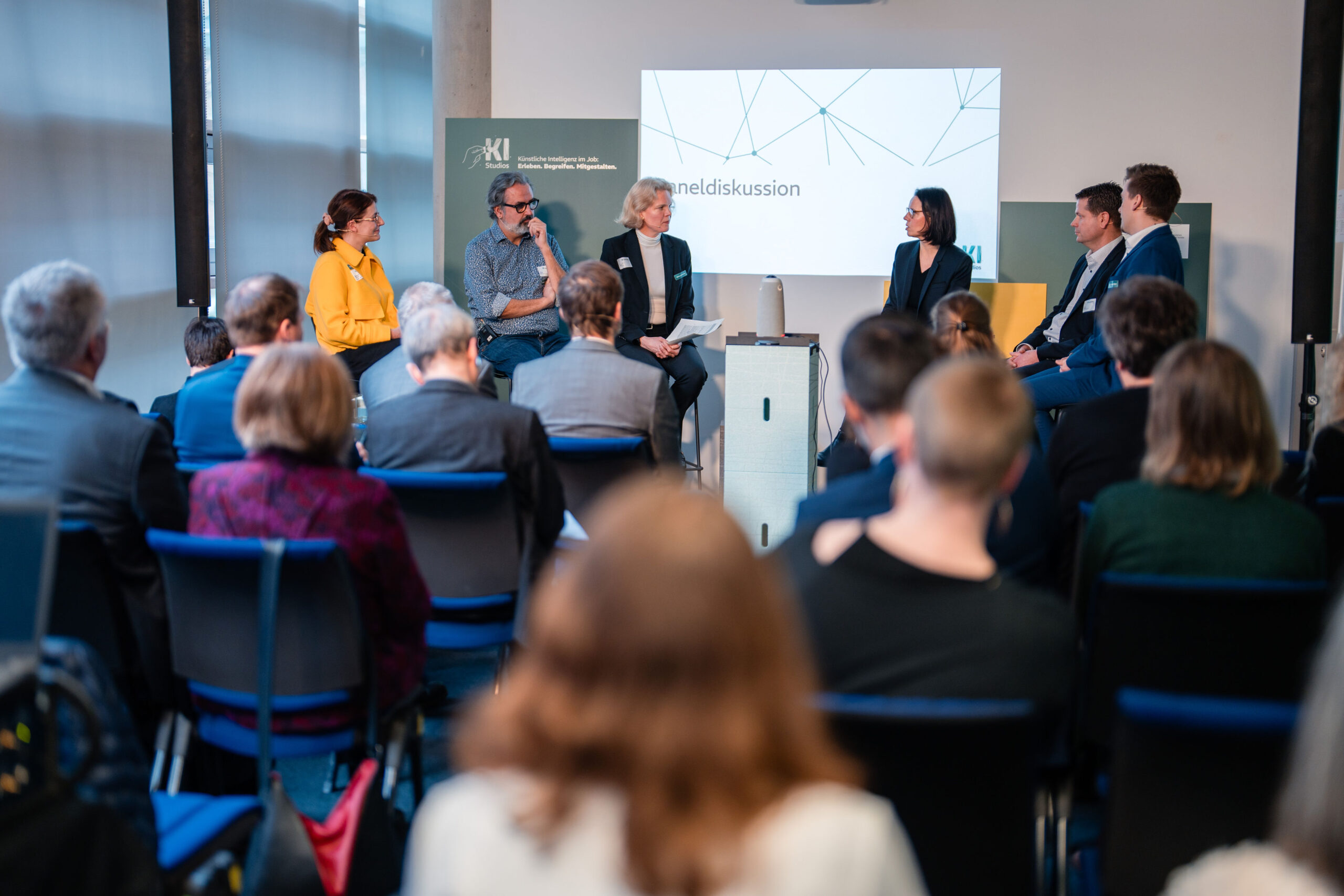
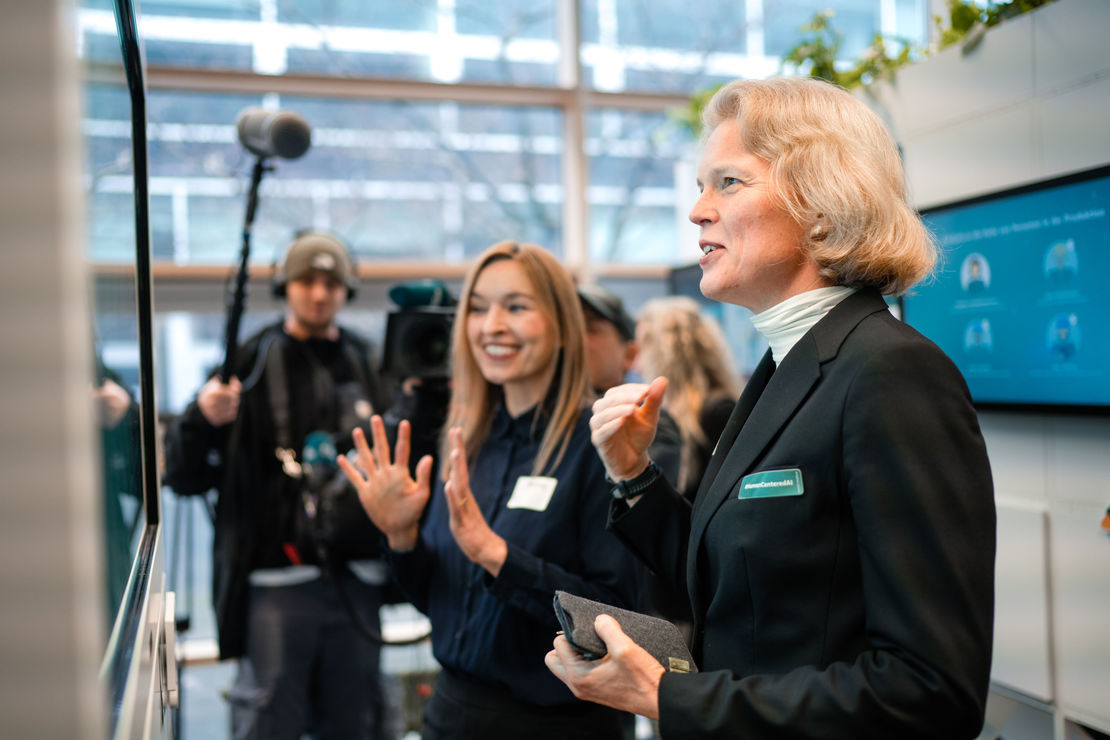
Stuttgart, February 1, 2024 – Cyber Valley was delighted to take part in the opening of the KI-Studios (AI Studios) by Fraunhofer IAO (Fraunhofer-Institut für Arbeitswirtschaft und Organisation IAO). The KI-Studios aims to show possible applications of artificial intelligence (AI) in the working world by enabling companies to try out interactive AI demonstrations from various sectors and then apply their knowledge. The event took place at the Institut für Arbeitswissenschaft und Technologiemanagement (Institute of Human Factors and Technology Management, IAT of the University of Stuttgart).
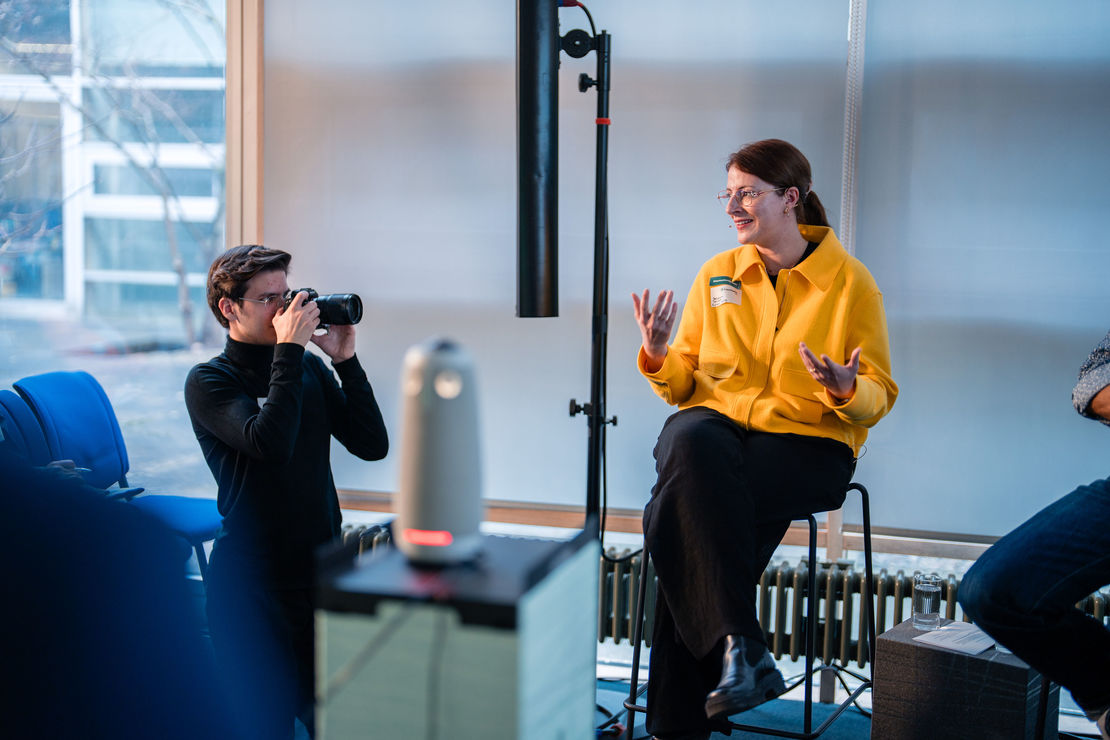
State Secretary Lilian Tschan (Federal Ministry of Labor and Social Affairs), Prof. Dr. Katharina Hölzle (Director IAT of the University of Stuttgart and the Fraunhofer IAO), and Dr. Matthias Peissner (Head of Human-Technology Interaction Research Unit and Team Leader Interaction Design and Technologies at Fraunhofer IAO) opened the KI-Studios by welcoming the guests to this special event. A panel discussion followed with Cyber Valley Director Communication & Society (CCO) Rebecca Beiter, Ana Dujic (Federal Ministry of Labor and Social Affairs), Carsten Gauch (BGV),Thomas Kniehl (Kaiser+Kraft Gmbh), and Claudius Messerschmidt (TRUMPF)
The panel discussed the impact artificial intelligence will have on the world of work and how to involve employees in AI’s implementation. When asked how KI-Studios could learn from Cyber Valley’s experiences, Rebecca Beiter had an easy answer: #bettertogether. Only together with inputs from society, science, and the economy can AI be developed and used in the best possible way. Cyber Valley has greatly benefited from the diversity of the Cyber Valley Community which itself consists of multiple perspectives.
One of the main topics during the event was how to find a balance between avoiding risks while taking full advantage of AI’s potential. AI is already everywhere and will support us even more in the future. If we want to shape this future, we need well-informed employees, corporates, curious scientists, and bold entrepreneurs eager to participate in AI’s development. The KI-Studios will support this by showcasing concrete examples of AI’s useful application and embedding this in a dialogue with employees.
Rebecca Beiter was honored to be one of the five panelists to share her perspective on AI‘s potential role in the world of work, and how AI can be leveraged to drive innovation. “As we continue to explore the innovative opportunities that AI can bring to various industries, it is important to promote AI in the workplace. The KI-Studios can play a crucial role in this regard. I am honored to have been one of the panelists to share my perspective on the impact of AI on the industry and how it can be leveraged to drive innovation.”
Cyber Valley was excited to be part of this event and is looking forward to future collaborations with Fraunhofer IAO.
About Cyber Valley
Cyber Valley is Europe’s largest and leading center for excellence in artificial intelligence and modern robotics. Its mission and public mandate are to advocate for research, development, application, and acceptance of technologies and methods in the field of intelligent systems. Cyber Valley encourages entrepreneurship by uniting scientific excellence with innovation and technology transfer. In addition, Cyber Valley facilitates critical reflection on the ethical and social implications of AI through public engagement. Cyber Valley envisions a future in which the full potential of intelligent systems is leveraged for the greater good of the world.
The Cyber Valley Community is a network of AI researchers, entrepreneurs, investors, and start-ups, alongside partners from academia, industry, and society. Cyber Valley GmbH is owned by the State of Baden-Württemberg and the Max Planck Gesellschaft. It acts as the service provider, central organizer, and host for the Cyber Valley Community. While Cyber Valley GmbH is located in Stuttgart and Tübingen, it operates across Baden-Württemberg with a global reach, attracting the best talent from across the world to create the future with AI.
About KI-Studios
KI-Studios (AI Studios) project aims to empower employees and their interest groups from all sectors to help shape company applications of artificial intelligence. The prerequisite for this is that employees have a concrete understanding of the possibilities, areas of application, and limitations of AI. They must be aware of the positive potential of AI for their workplace, but also its risks and challenges.
The KI-Studios project is being undertaken by the Fraunhofer IAO and the University of Stuttgart and funded by the Federal Ministry of Labor and Social Affairs with around 4.1 million euros. The project involves interactive demonstrators who provide information, raise awareness, and bring AI to life with vivid and realistic application examples from the working world of today and tomorrow. In specially developed innovative workshop formats, employees are methodically supported in dealing with AI systems and empowered to participate in implementation processes.
The KI-Studios project launched an ideas competition in autumn 2023, in which organizations and companies from all over Germany applied to become part of the network. From February, seven teams will expand the network and develop further innovative demonstrators and event formats for the AI Studios. This means that even more employees and employees and their interest groups throughout Germany can now take advantage of the diverse offers throughout Germany.
Following the opening of the first AI studio in Munich in September 2023 and the start of the roadshow with the “KI Infomobile”, the range of services is now being expanded with a second AI studio in Stuttgart.
About Fraunhofer IAO
How will people live and work in the future? Asking this and similar questions, researchers at Fraunhofer Institute for Industrial Engineering IAO apply their findings in practice to achieve concrete results. Our experts shape the interaction between humans, technology and organization with a view to the whole, keeping each customer’s specific needs in mind. We help companies and institutions recognize the potential of new technologies, harness them for profit, and open up attractive future markets. Employ our knowledge advantage to make your business a success!
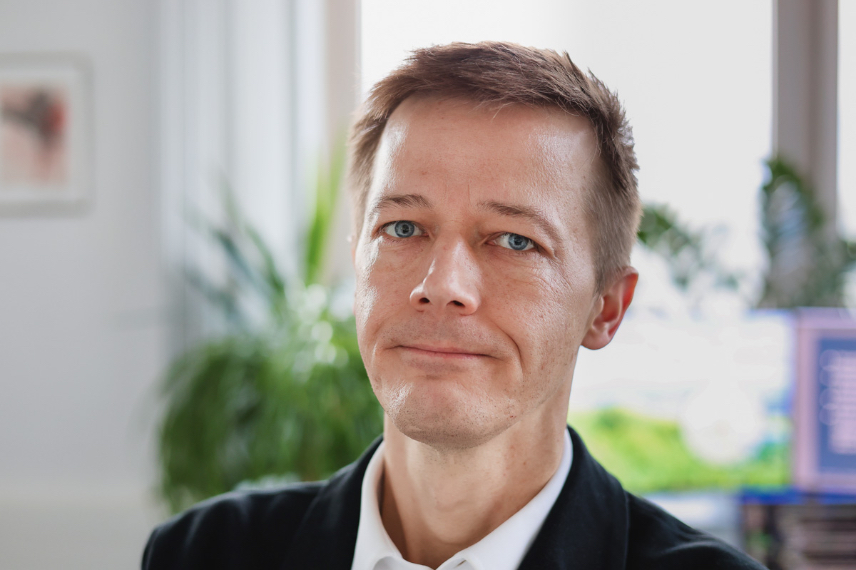
"I am delighted to have been honored with this title, which has only been awarded to a few German-speaking researchers to date," said Staab. The 54-year-old is researching ways in which computers can be made to solve complex problems through data and knowledge-based learning. "Up to now,” Staab explains, “artificial intelligence algorithms have been trained using datasets, which however, are often insufficient to comprehensively train an algorithm. This is why,” he continues, “my team and I are looking into ways to solve this problem by exploiting existing knowledge, which we have so far made insufficient use of." The computer scientist is pursuing this problem through interdisciplinary collaboration at the University of Stuttgart, within the "Data-integrated Simulation Science" (SimTech) Cluster of Excellence and in Cyber Valley, Europe's leading academic and industry consortium for AI research.
Better synthetic fertilizer and cancer simulations
Examples that illustrate Staab's research include artificial fertilizers and cancer. It would be ideal for both the agricultural sector and society in general if only the minimum amount of fertilizer were spread over a field to achieve the necessary concentration in the soil, which is not so easy because soil conditions vary greatly. Cancer is also subject to wide variations: whereas one tumor may grow in a branching form, another may remain compact, which has implications in terms of treatment. Researchers, such as Staab, are currently working at SimTech on the development of simulations that make such complex processes more predictable.
As Staab explains: "We often don't know which part of the complex mathematical description – which is the starting point for a simulation – is of particular relevance when it comes to achieving meaningful results." Yet this would be important for the simulation. “This,” he continues, “is where AI algorithms can help but we need to train them on existing data, which is often rather scarce. If, however, we could also draw upon existing knowledge, the simulations could be carried out in a more stringent and realistic manner.” In many cases in fact, this knowledge is already available from laboratory studies carried out by other researchers – in some cases many years ago – on both synthetic fertilizers and tumors. "One could also refer to our approach as knowledge-infused simulation science," says Staab.
About the Association for Computing Machinery
The ACM is the world's largest and oldest scientific association for computer science. It comprises experts from the fields of education and research and aims to promote computer science both as a science and as a profession. The ACM also awards the Turing Prize, the highest honor in computer science. To be selected as an ACM Fellow, one's personal achievements in the fields studied by the ACM members must be outstanding.
About Prof. Steffen Staab
Steffen Staab was born in Würzburg in 1970 and studied Computer Science and Computer Linguistics at both the University of Erlangen-Nuremberg and the University of Pennsylvania. He received his doctorate in Computer Science from the University of Freiburg in 1998. He then went on to work at the University of Stuttgart’s Institute of Human Factors and Technology Management (IAT) as well as at the Fraunhofer Institute for Industrial Engineering (IAO), and later moved to the University of Karlsruhe (now known as KIT). In 2004, Staab was appointed Professor of Databases and Information Systems at the University of Koblenz and Landau, where he founded the Institute for Web Science and Technologies (WeST) in 2009. He has also held the Chair for Web and Computer Science at the University of Southampton since March 2015.
Staab took up a Cyber Valley Professorship for Analytical Computing at the University of Stuttgart in February 2020. He founded the University's Institute for Artificial Intelligence where he serves as Managing Director and is also one of the two spokespersons for the SimTech Cluster of Excellence.
Expert contact:
Prof. Steffen Staab, University of Stuttgart, Institute for Artificial Intelligence, Phone: +49 711 685-88100, E-Mail: steffen.staab@ki.uni-stuttgart.de